

Nucleosome Clustering as a Biomarker and Mechanistic Switch for Reprogramming Cells


Abstract
1. Introduction
2. Materials and Methods
2.1. Cell Culture and MTT Assay
2.2. Application of Biophysical Stimuli
2.3. Western Blot Analysis
2.4. RNA Interference
2.5. Live/Dead Cell Staining Assay
2.6. Stochastic Optical Reconstruction Microscopy (STORM)
2.7. Immunofluorescence (IF) Staining
2.8. PCA (Principal Component Analysis)
2.9. Quantification of Nuclear Envelope Surface Roughness
2.10. Statistical Analysis
3. Results
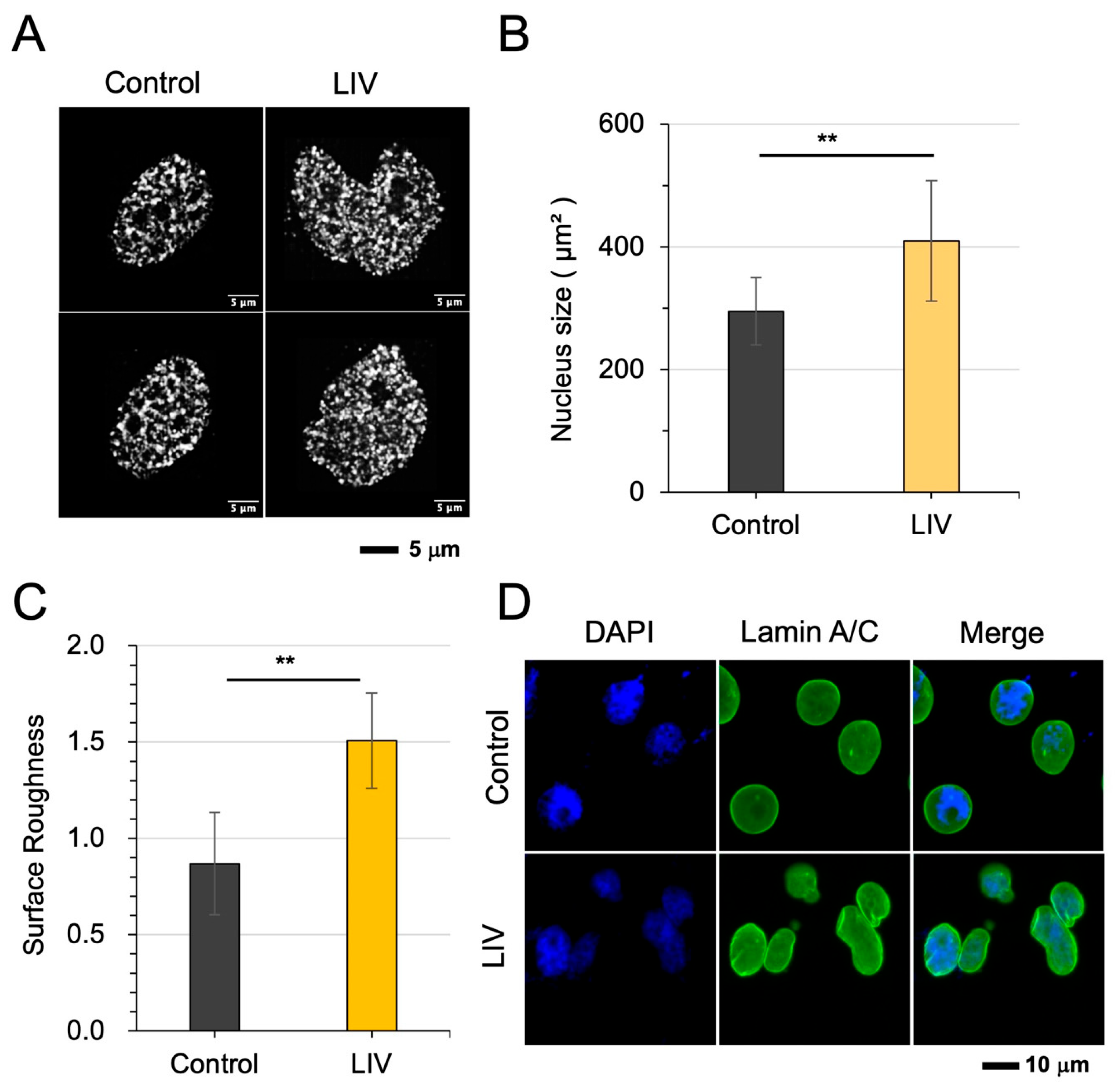
3.1. Mechanical Vibration (LIV) Induced Chromatin Loosening and Nuclear Envelope Remodeling
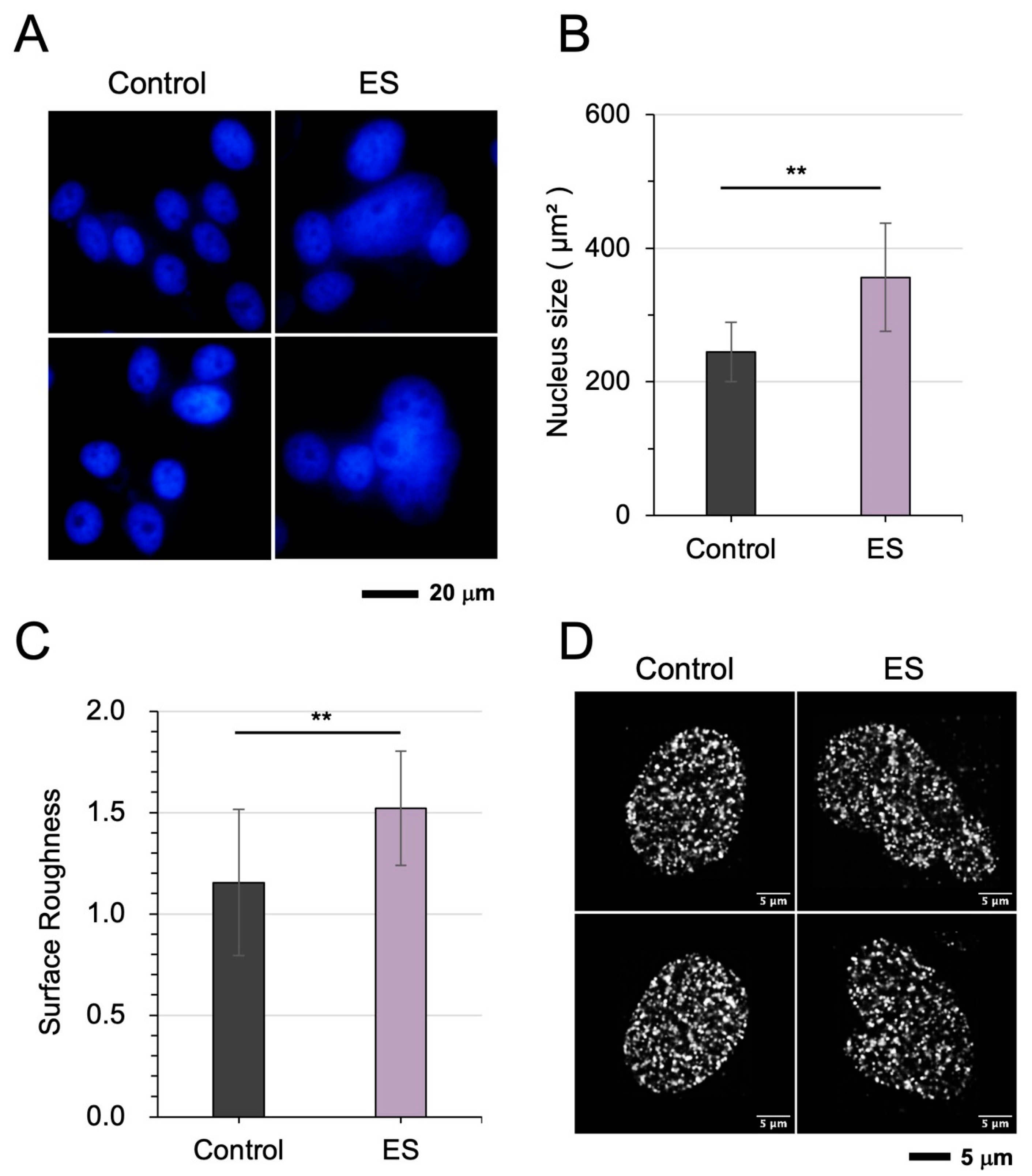
3.2. ES Induced Chromatin Dispersion and Nuclear Remodeling
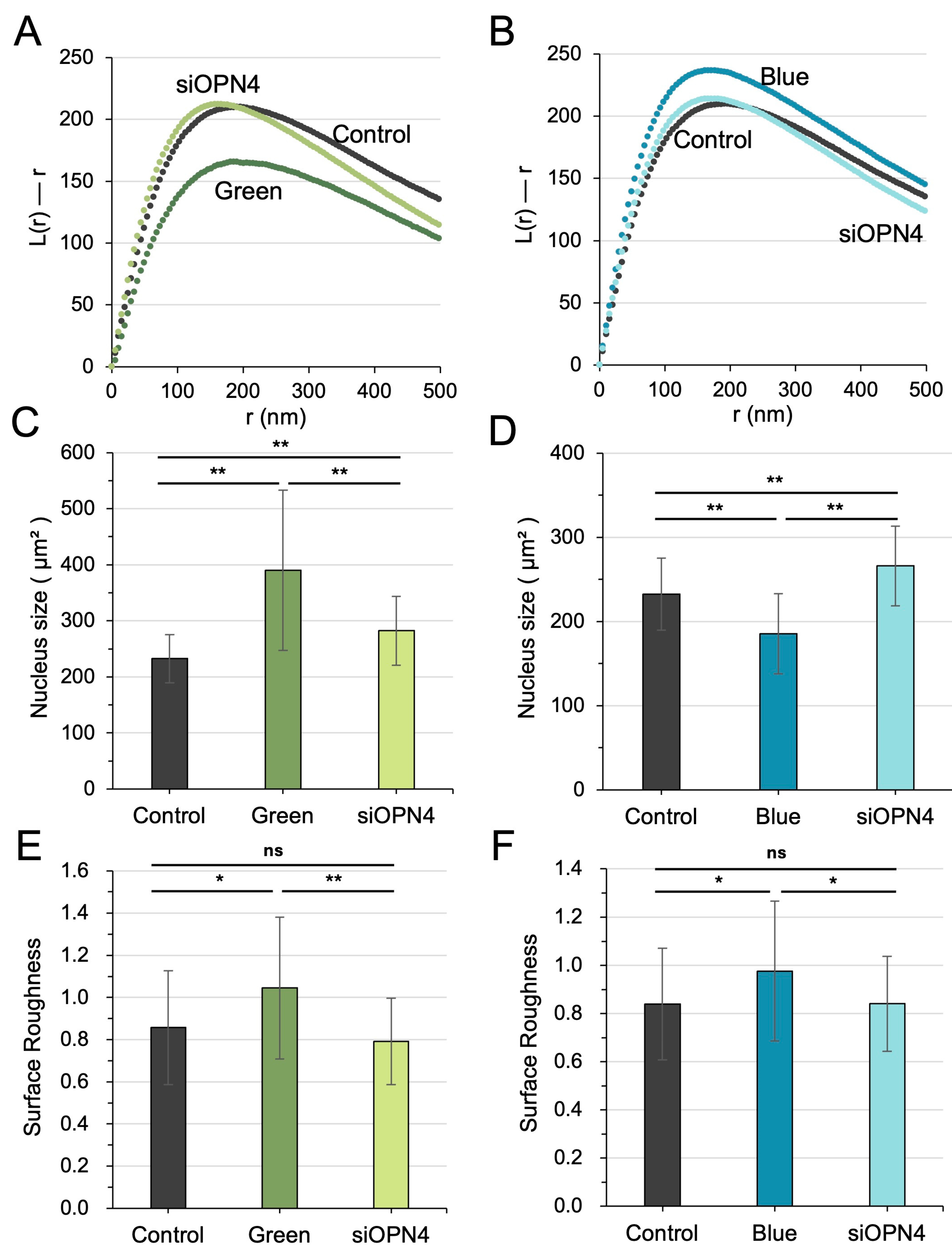
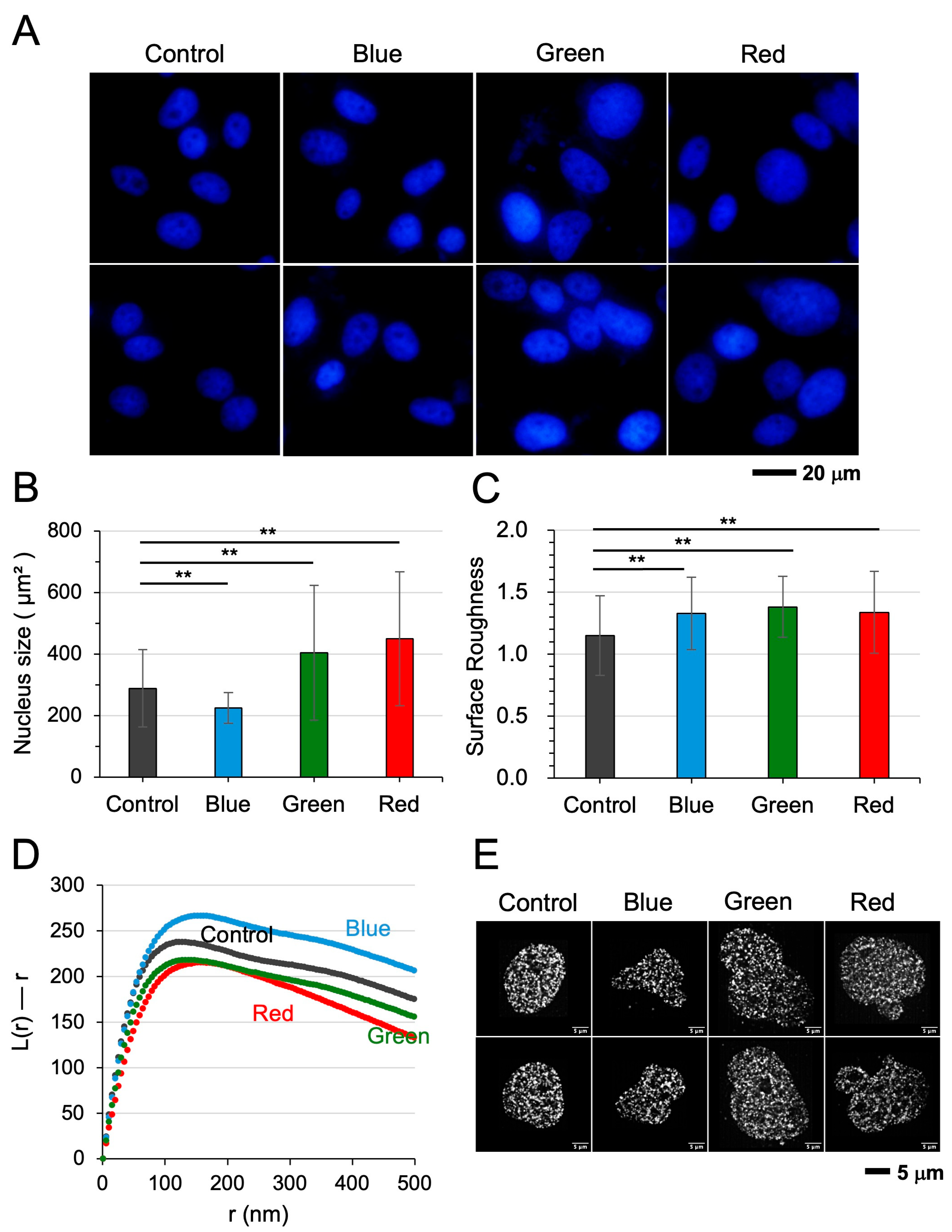
3.3. Optical Pulses Modulated Chromatin Clustering in a Wavelength-Dependent Manner
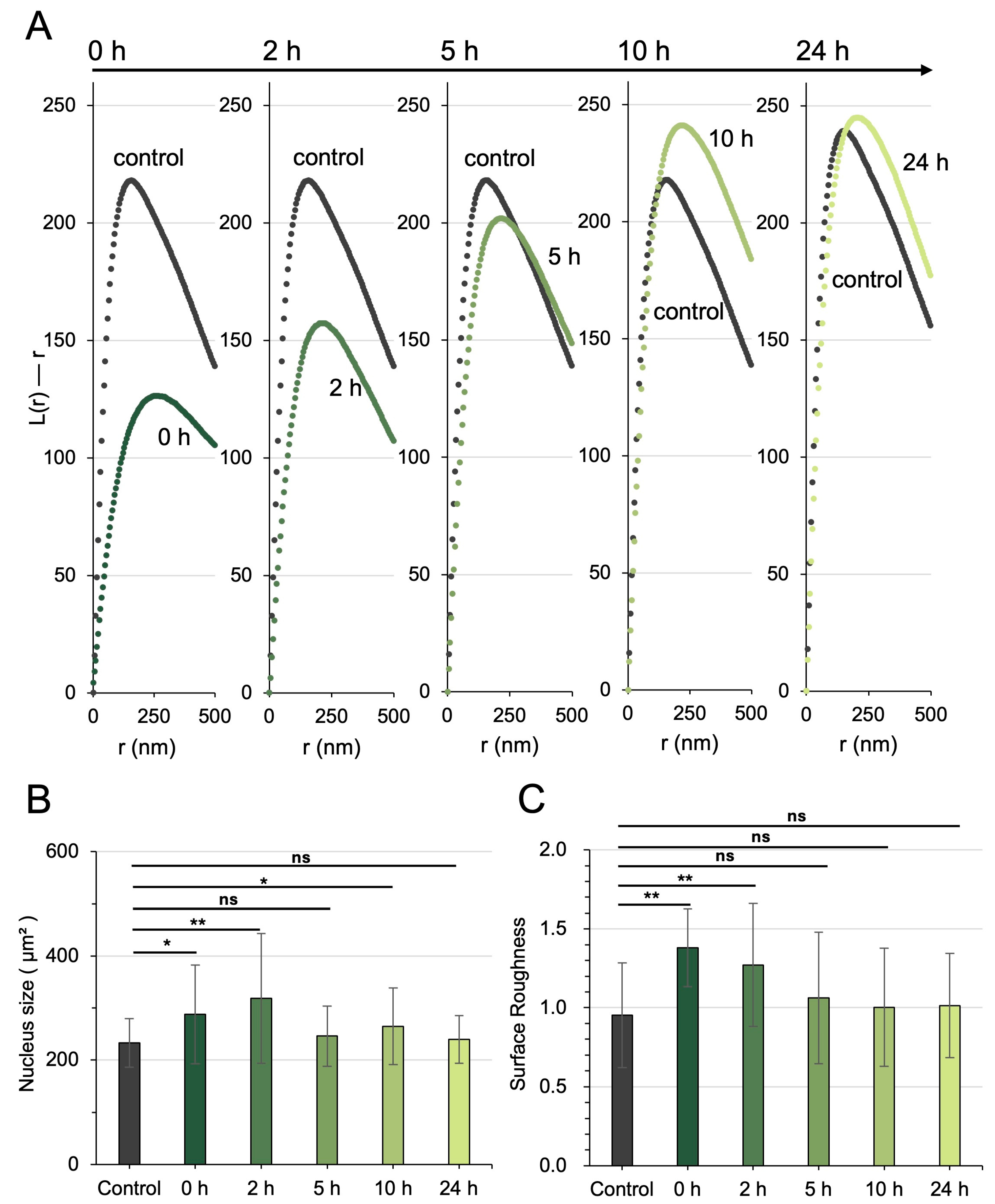
3.4. The Effects of Green Light Pulses on Nucleosome Clustering and Nuclear Morphology Were Transient
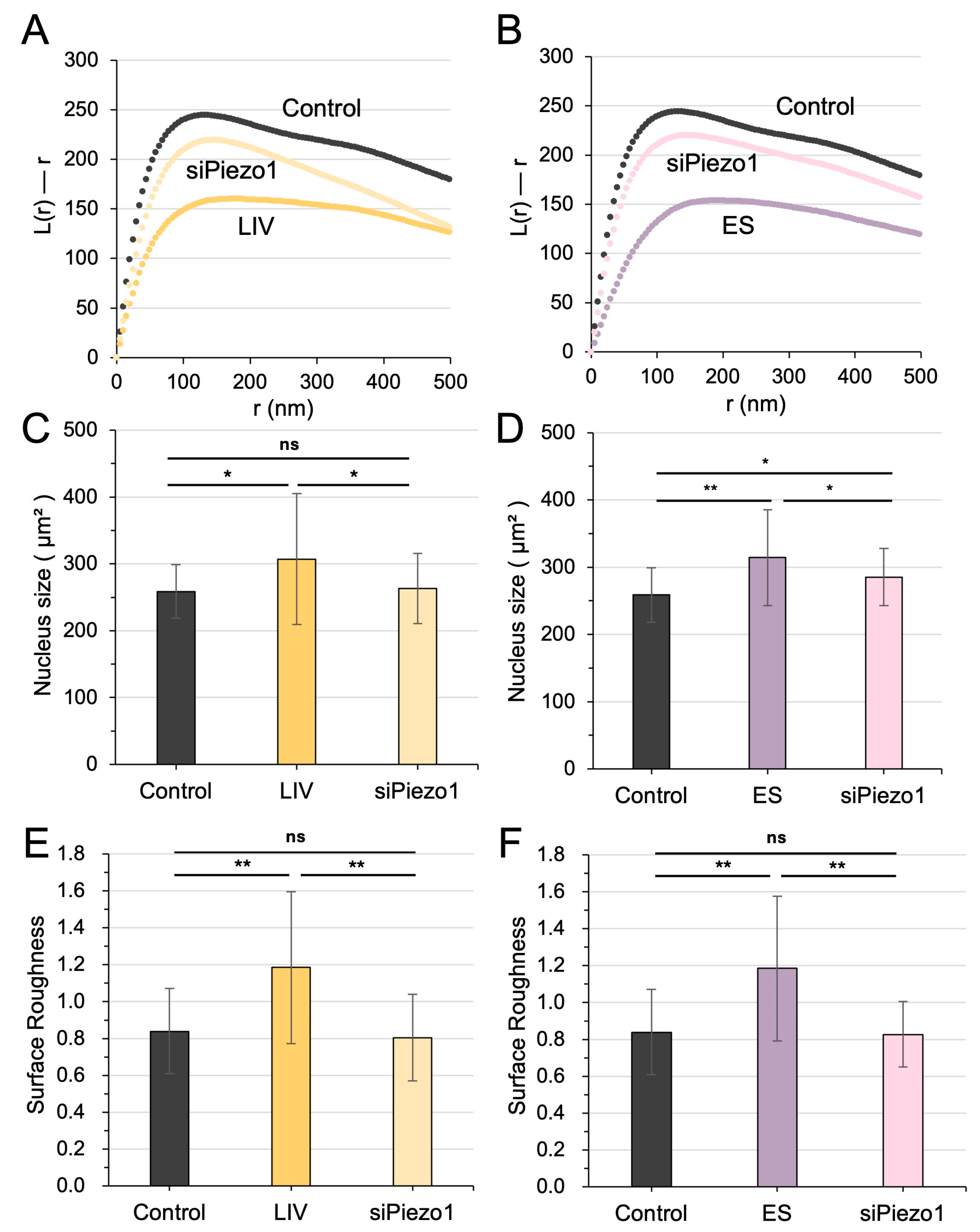
3.5. PIEZO1 Mediated Nuclear Responses to LIV and ES
3.6. OPN4 Mediated Nuclear Responses to Optical Pulses
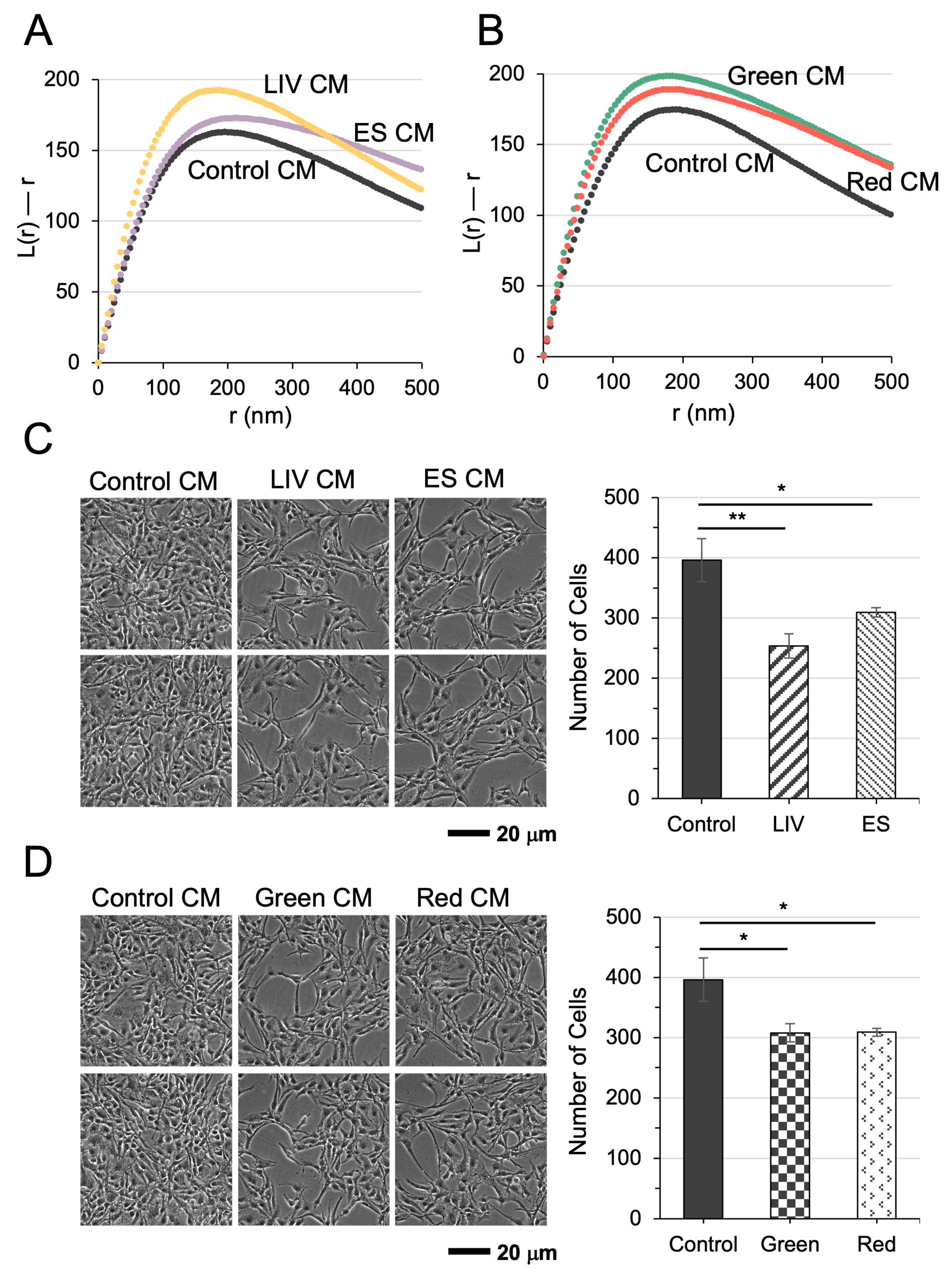
3.7. Tumor-Suppressive Effects of CM from Biophysically Stimulated iTS Cells
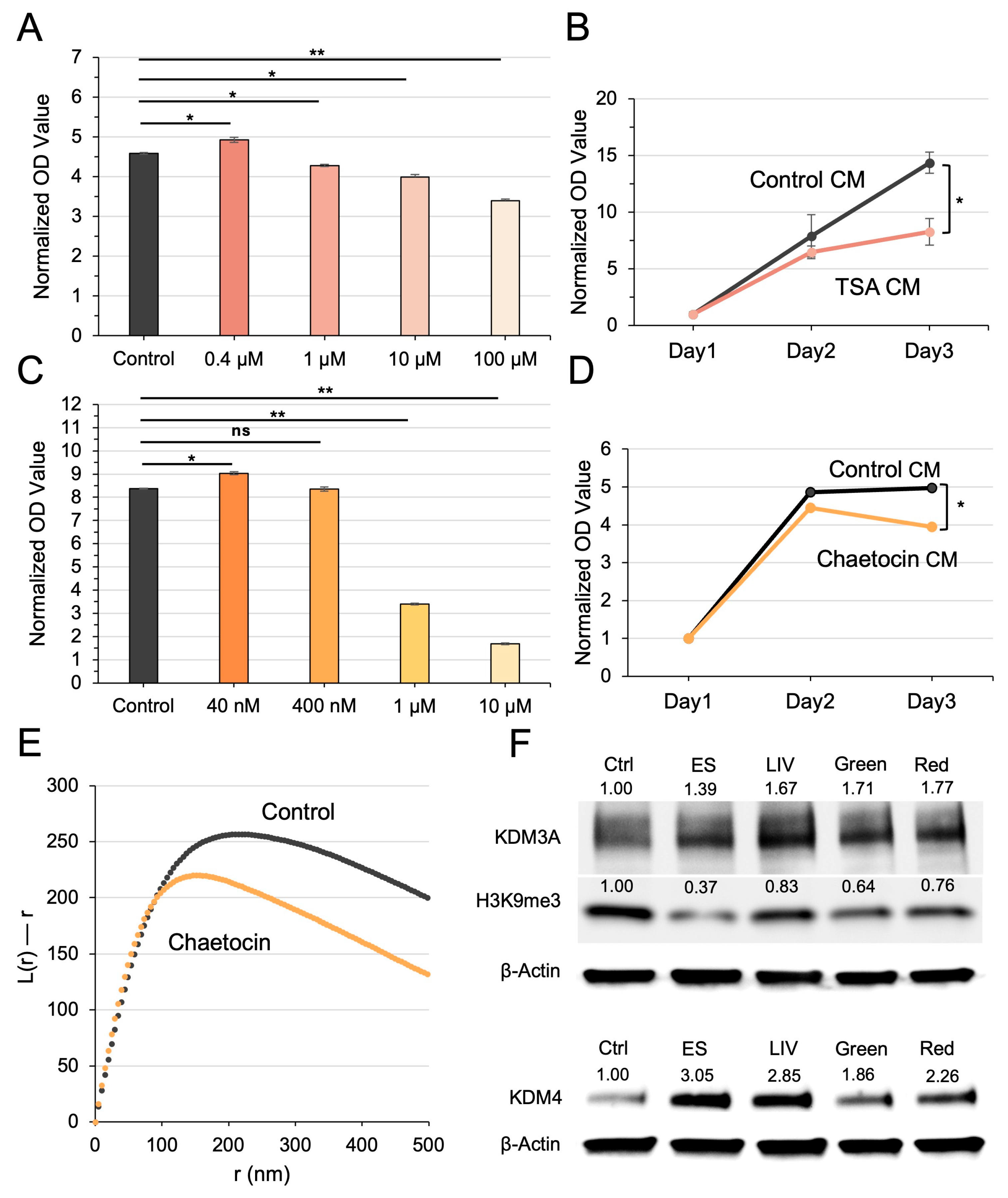
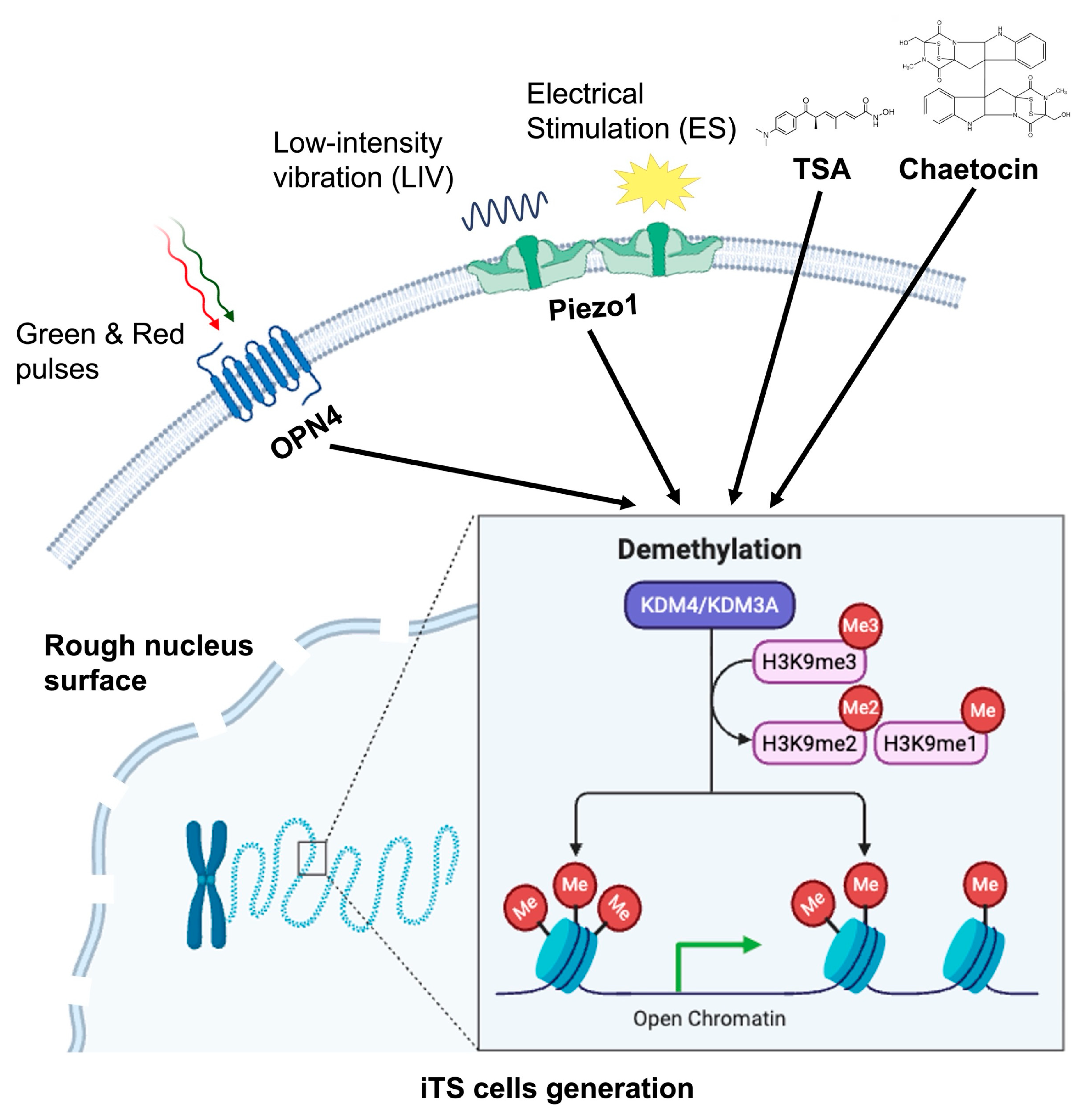
3.8. Generation of iTS Cells via TSA and Chaetocin
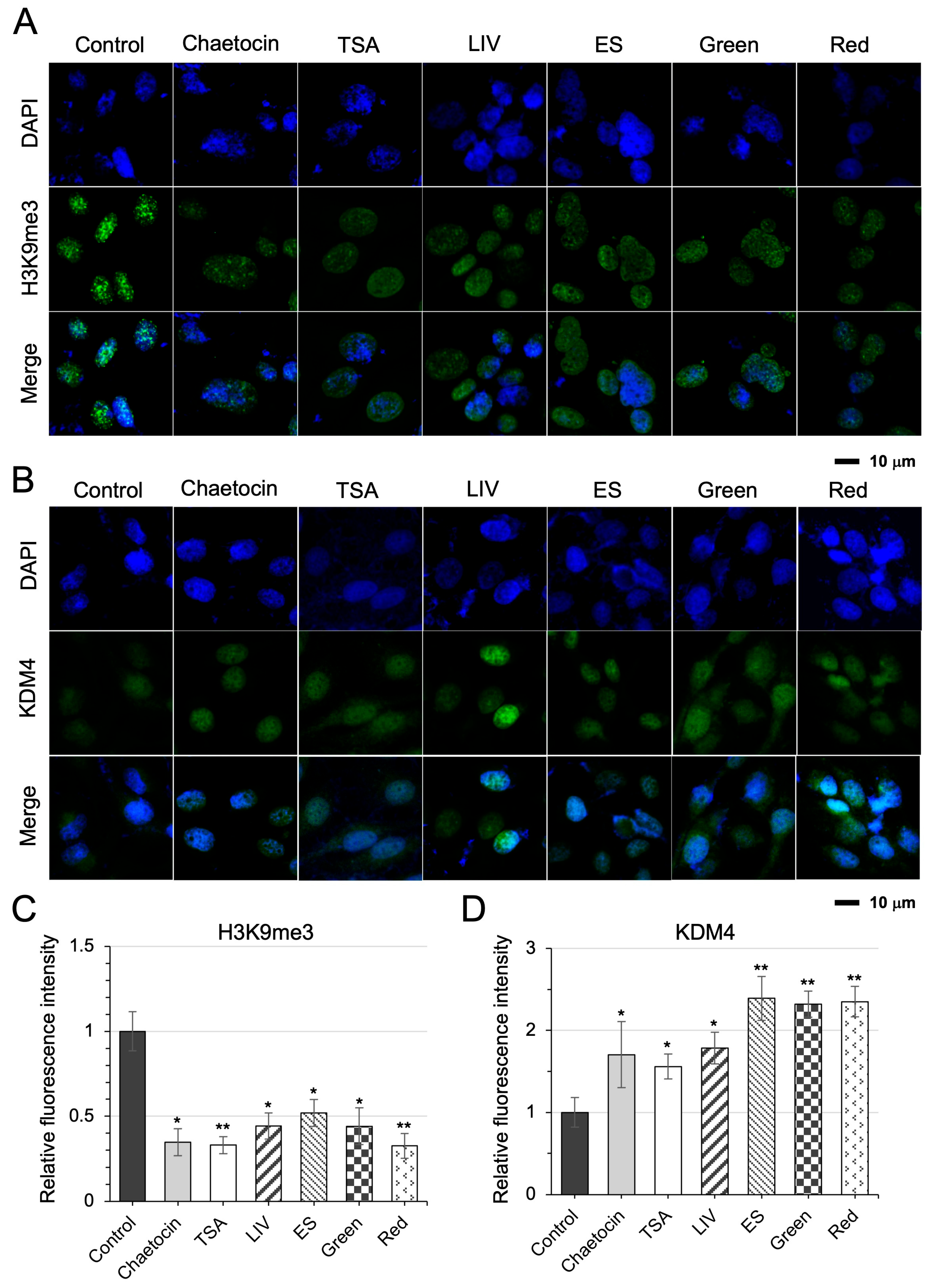
3.9. Elevation of KDM3A/KDM4 and Reduction in H3K9me3 in iTS Cell Reprogramming
4. Discussion
- Nuclear pore dilation accelerates YAP/TAZ import, linking nuclear mechanics to transcription [24].
- NE wrinkling predicts YAP/TAZ localization and mechanosensitive responses in progenitors [35].
- Cytoskeletal forces are transmitted through the LINC complex and lamins, forming a structural bridge from actomyosin tension to chromatin regulation [36].
- Lamin A/C acts as a “mechanostat,” scaling with matrix stiffness to adjust nuclear stiffness and lineage fate [37].
- A- and B-type lamins differentially couple to LINC complexes and cortical filaments, modulating force transmission and nuclear mechanics [38].
- The perinuclear actin cap serves as a high-tension conduit for YAP-driven nuclear mechanotransduction under flow and mechanical load [39].
Supplementary Materials
Author Contributions
Funding
Institutional Review Board Statement
Informed Consent Statement
Data Availability Statement
Acknowledgments
Conflicts of Interest
References
- Esteller, M.; Dawson, M.A.; Kadoch, C.; Rassool, F.V.; Jones, P.A.; Baylin, S.B. The Epigenetic Hallmarks of Cancer. Cancer Discov. 2024, 14, 1783–1809. [Google Scholar] [CrossRef] [Scilit]
- Wang, M.; Sunkel, B.D.; Ray, W.C.; Stanton, B.Z. Chromatin structure in cancer. BMC Mol. Cell Biol. 2022, 23, 35. [Google Scholar] [CrossRef] [Scilit]
- Deng, S.; Feng, Y.; Pauklin, S. 3D chromatin architecture and transcription regulation in cancer. J. Hematol. Oncol. 2022, 15, 49. [Google Scholar] [CrossRef] [Scilit]
- Lu, B.; Qiu, R.; Wei, J.; Wang, L.; Zhang, Q.; Li, M.; Zhan, X.; Chen, J.; Hsieh, I.Y.; Yang, C.; et al. Phase separation of phospho-HDAC6 drives aberrant chromatin architecture in triple-negative breast cancer. Nat. Cancer 2024, 5, 1622–1640. [Google Scholar] [CrossRef] [Scilit]
- Zhou, L.; Yu, C.W. Epigenetic modulations in triple-negative breast cancer: Therapeutic implications for tumor microenvironment. Pharmacol. Res. 2024, 204, 107205. [Google Scholar] [CrossRef] [Scilit] [PubMed]
- Li, K.; Huo, Q.; Li, B.Y.; Yokota, H. Three unconventional maxims in the natural selection of cancer cells: Generation of induced tumor-suppressing cells (iTSCs). Int. J. Biol. Sci. 2023, 19, 1403–1412. [Google Scholar] [CrossRef] [Scilit] [PubMed]
- Sun, X.; Li, K.; Zha, R.; Liu, S.; Fan, Y.; Wu, D.; Hase, M.; Aryal, U.K.; Lin, C.C.; Li, B.Y.; et al. Preventing tumor progression to the bone by induced tumor-suppressing MSCs. Theranostics 2021, 11, 5143–5159. [Google Scholar] [CrossRef] [Scilit] [PubMed]
- Zoldi, M.; Katona, I. STORM Super-Resolution Imaging of CB1 Receptors in Tissue Preparations; Methods in Molecular Biology; Humana: New York, NY, USA, 2023; Volume 2576, pp. 437–451. [Google Scholar] [CrossRef] [Scilit]
- Xiong, X.; Huo, Q.; Li, K.; Cui, C.; Chang, C.; Park, C.; Ku, B.; Hong, C.S.; Lim, H.; Pandya, P.H.; et al. Enhancing anti-tumor potential: Low-intensity vibration suppresses osteosarcoma progression and augments MSCs’ tumor-suppressive abilities. Theranostics 2024, 14, 1430–1449. [Google Scholar] [CrossRef] [Scilit]
- Cui, C.; Xu, Y.; Xiong, X.; Aryal, U.K.; Chen, A.; Chien, S.; You, L.; Li, B.; Yokota, H. Electrical Stimulation Generates Induced Tumor-Suppressing Cells, Offering a Potential Option for Combatting Breast Cancer and Bone Metastasis. Int. J. Mol. Sci. 2025, 26, 1030. [Google Scholar] [CrossRef] [Scilit]
- Cheng, B.; Pan, W.; Xiao, Y.; Ding, Z.; Zhou, Y.; Fei, X.; Liu, J.; Su, Z.; Peng, X.; Chen, J. HDAC-targeting epigenetic modulators for cancer immunotherapy. Eur. J. Med. Chem. 2024, 265, 116129. [Google Scholar] [CrossRef] [Scilit]
- Jeong, P.S.; Yang, H.J.; Park, S.H.; Gwon, M.A.; Joo, Y.E.; Kim, M.J.; Kang, H.G.; Lee, S.; Park, Y.H.; Song, B.S.; et al. Combined Chaetocin/Trichostatin A Treatment Improves the Epigenetic Modification and Developmental Competence of Porcine Somatic Cell Nuclear Transfer Embryos. Front. Cell Dev. Biol. 2021, 9, 709574. [Google Scholar] [CrossRef] [Scilit]
- Wang, H.; Guo, S.; Kim, S.J.; Shao, F.; Ho, J.W.K.; Wong, K.U.; Miao, Z.; Hao, D.; Zhao, M.; Xu, J.; et al. Cisplatin prevents breast cancer metastasis through blocking early EMT and retards cancer growth together with paclitaxel. Theranostics 2021, 11, 2442–2459. [Google Scholar] [CrossRef] [Scilit]
- Li, N.; Pang, F.X.; Zhou, Y.W.; Ding, S.C.; Shi, C.J.; Wen, R.J.; Mai, Y.X.; Wu, X.L.; Zhang, J.F. Polydatin sensitizes osteosarcoma cells to methotrexate through suppressing the H19/H3K27me3/H3K9me3 mediated folate metabolism regulatory axis. Bioorganic Chem. 2025, 162, 108583. [Google Scholar] [CrossRef] [Scilit]
- Fan, L.; Sudeep, K.; Qi, J. Histone Demethylase KDM3 (JMJD1) in Transcriptional Regulation and Cancer Progression. In Targeting Lysine Demethylases in Cancer and Other Human Diseases; Advances in Experimental Medicine and Biology; Springer: Cham, Swithzerland, 2023; Volume 1433, pp. 69–86. [Google Scholar] [CrossRef] [Scilit]
- Wang, F.; Wu, P.; Qin, S.; Deng, Y.; Han, P.; Li, X.; Fan, C.; Xu, Y. Curcin C inhibit osteosarcoma cell line U2OS proliferation by ROS induced apoptosis, autophagy and cell cycle arrest through activating JNK signal pathway. Int. J. Biol. Macromol. 2022, 195, 433–439. [Google Scholar] [CrossRef] [Scilit]
- Gao, Y.Y.; Ling, Z.Y.; Zhu, Y.R.; Shi, C.; Wang, Y.; Zhang, X.Y.; Zhang, Z.Q.; Jiang, Q.; Chen, M.B.; Yang, S.; et al. The histone acetyltransferase HBO1 functions as a novel oncogenic gene in osteosarcoma. Theranostics 2021, 11, 4599–4615. [Google Scholar] [CrossRef] [Scilit] [PubMed]
- Minami, K.; Nakazato, K.; Ide, S.; Kaizu, K.; Higashi, K.; Tamura, S.; Toyoda, A.; Takahashi, K.; Kurokawa, K.; Maeshima, K. Replication-dependent histone labeling dissects the physical properties of euchromatin/heterochromatin in living human cells. Sci. Adv. 2025, 11, eadu8400. [Google Scholar] [CrossRef] [Scilit]
- Nozaki, T.; Imai, R.; Tanbo, M.; Nagashima, R.; Tamura, S.; Tani, T.; Joti, Y.; Tomita, M.; Hibino, K.; Kanemaki, M.T.; et al. Dynamic Organization of Chromatin Domains Revealed by Super-Resolution Live-Cell Imaging. Mol. Cell 2017, 67, 282–293 e287. [Google Scholar] [CrossRef] [Scilit] [PubMed]
- Jolliffe, I.T.; Cadima, J. Principal component analysis: A review and recent developments. Philos. Trans. A Math. Phys. Eng. Sci. 2016, 374, 20150202. [Google Scholar] [CrossRef] [Scilit]
- Seaman, L.; Meixner, W.; Snyder, J.; Rajapakse, I. Periodicity of nuclear morphology in human fibroblasts. Nucleus 2015, 6, 408–416. [Google Scholar] [CrossRef] [Scilit]
- Sun, X.; Li, K.; Hase, M.; Zha, R.; Feng, Y.; Li, B.Y.; Yokota, H. Suppression of breast cancer-associated bone loss with osteoblast proteomes via Hsp90ab1/moesin-mediated inhibition of TGFβ/FN1/CD44 signaling. Theranostics 2022, 12, 929–943. [Google Scholar] [CrossRef] [Scilit]
- Sun, X.M.; Bowman, A.; Priestman, M.; Bertaux, F.; Martinez-Segura, A.; Tang, W.; Whilding, C.; Dormann, D.; Shahrezaei, V.; Marguerat, S. Size-Dependent Increase in RNA Polymerase II Initiation Rates Mediates Gene Expression Scaling with Cell Size. Curr. Biol. 2020, 30, 1217–1230.e7. [Google Scholar] [CrossRef] [Scilit]
- Elosegui-Artola, A.; Andreu, I.; Beedle, A.E.M.; Lezamiz, A.; Uroz, M.; Kosmalska, A.J.; Oria, R.; Kechagia, J.Z.; Rico-Lastres, P.; Le Roux, A.L.; et al. Force Triggers YAP Nuclear Entry by Regulating Transport across Nuclear Pores. Cell 2017, 171, 1397–1410.e14. [Google Scholar] [CrossRef] [Scilit] [PubMed]
- Li, K.; Huo, Q.; Li, B.Y.; Yokota, H. The Double-Edged Proteins in Cancer Proteomes and the Generation of Induced Tumor-Suppressing Cells (iTSCs). Proteomes 2023, 11, 5. [Google Scholar] [CrossRef] [Scilit] [PubMed]
- Li, K.; Sun, X.; Li, H.; Ma, H.; Zhou, M.; Minami, K.; Tamari, K.; Ogawa, K.; Pandya, P.H.; Saadatzadeh, M.R.; et al. Suppression of osteosarcoma progression by engineered lymphocyte-derived proteomes. Genes Dis. 2023, 10, 1641–1656. [Google Scholar] [CrossRef] [Scilit]
- Li, K.X.; Sun, X.; Li, B.Y.; Yokota, H. Conversion of Osteoclasts into Bone-Protective, Tumor-Suppressing Cells. Cancers 2021, 13, 5593. [Google Scholar] [CrossRef] [Scilit] [PubMed]
- Li, K.; Sun, X.; Zha, R.; Liu, S.; Feng, Y.; Sano, T.; Aryal, U.K.; Sudo, A.; Li, B.Y.; Yokota, H. Counterintuitive production of tumor-suppressive secretomes from Oct4- and c-Myc-overexpressing tumor cells and MSCs. Theranostics 2022, 12, 3084–3103. [Google Scholar] [CrossRef] [Scilit]
- Sun, X.; Li, K.; Aryal, U.K.; Li, B.Y.; Yokota, H. PI3K-activated MSC proteomes inhibit mammary tumors via Hsp90ab1 and Myh9. Mol. Ther. Oncolytics 2022, 26, 360–371. [Google Scholar] [CrossRef] [Scilit]
- Lin, C.Y.; Sassi, A.; Wu, Y.; Seaman, K.; Tang, W.; Song, X.; Bienenstock, R.; Yokota, H.; Sun, Y.; Geng, F.; et al. Mechanotransduction pathways regulating YAP nuclear translocation under Yoda1 and vibration in osteocytes. Bone 2025, 190, 117283. [Google Scholar] [CrossRef] [Scilit]
- Pan, D.; Wang, Z.; Chen, Y.; Cao, J. Melanopsin-mediated optical entrainment regulates circadian rhythms in vertebrates. Commun. Biol. 2023, 6, 1054. [Google Scholar] [CrossRef] [Scilit]
- Oleksiewicz, U.; Kuciak, M.; Jaworska, A.; Adamczak, D.; Bisok, A.; Mierzejewska, J.; Sadowska, J.; Czerwinska, P.; Mackiewicz, A.A. The Roles of H3K9me3 Writers, Readers, and Erasers in Cancer Immunotherapy. Int. J. Mol. Sci. 2024, 25, 11466. [Google Scholar] [CrossRef] [Scilit]
- Marsolier, J.; Prompsy, P.; Durand, A.; Lyne, A.M.; Landragin, C.; Trouchet, A.; Bento, S.T.; Eisele, A.; Foulon, S.; Baudre, L.; et al. H3K27me3 conditions chemotolerance in triple-negative breast cancer. Nat. Genet. 2022, 54, 459–468. [Google Scholar] [CrossRef] [Scilit] [PubMed]
- Tsai, F.L.; Huang, H.L.; Lai, M.J.; Liou, J.P.; Pan, S.L.; Yang, C.R. Anticancer Study of a Novel Pan-HDAC Inhibitor MPT0G236 in Colorectal Cancer Cells. Int. J. Mol. Sci. 2023, 24, 12588. [Google Scholar] [CrossRef] [Scilit] [PubMed]
- Cosgrove, B.D.; Loebel, C.; Driscoll, T.P.; Tsinman, T.K.; Dai, E.N.; Heo, S.J.; Dyment, N.A.; Burdick, J.A.; Mauck, R.L. Nuclear envelope wrinkling predicts mesenchymal progenitor cell mechano-response in 2D and 3D microenvironments. Biomaterials 2021, 270, 120662. [Google Scholar] [CrossRef] [Scilit] [PubMed]
- Lityagina, O.; Dobreva, G. The LINC Between Mechanical Forces and Chromatin. Front. Physiol. 2021, 12, 710809. [Google Scholar] [CrossRef] [Scilit]
- Alcorta-Sevillano, N.; Macias, I.; Rodriguez, C.I.; Infante, A. Crucial Role of Lamin A/C in the Migration and Differentiation of MSCs in Bone. Cells 2020, 9, 1330. [Google Scholar] [CrossRef] [Scilit]
- Vahabikashi, A.; Sivagurunathan, S.; Nicdao, F.A.S.; Han, Y.L.; Park, C.Y.; Kittisopikul, M.; Wong, X.; Tran, J.R.; Gundersen, G.G.; Reddy, K.L.; et al. Nuclear lamin isoforms differentially contribute to LINC complex-dependent nucleocytoskeletal coupling and whole-cell mechanics. Proc. Natl. Acad. Sci. USA 2022, 119, e2121816119. [Google Scholar] [CrossRef] [Scilit] [PubMed]
- Ma, T.; Liu, X.; Su, H.; Shi, Q.; He, Y.; Wu, F.; Gao, C.; Li, K.; Liang, Z.; Zhang, D.; et al. Coupling of Perinuclear Actin Cap and Nuclear Mechanics in Regulating Flow-Induced Yap Spatiotemporal Nucleocytoplasmic Transport. Adv. Sci. 2024, 11, e2305867. [Google Scholar] [CrossRef] [Scilit]




Disclaimer/Publisher’s Note: The statements, opinions and data contained in all publications are solely those of the individual author(s) and contributor(s) and not of MDPI and/or the editor(s). MDPI and/or the editor(s) disclaim responsibility for any injury to people or property resulting from any ideas, methods, instructions or products referred to in the content. |
© 2026 by the authors. Licensee MDPI, Basel, Switzerland. This article is an open access article distributed under the terms and conditions of the Creative Commons Attribution (CC BY) license.
Share and Cite
Xu, Z.; Xu, Y.; You, L.; Yokota, H. Nucleosome Clustering as a Biomarker and Mechanistic Switch for Reprogramming Cells. Cells 2026, 15, 113. https://doi.org/10.3390/cells15020113
Xu Z, Xu Y, You L, Yokota H. Nucleosome Clustering as a Biomarker and Mechanistic Switch for Reprogramming Cells. Cells. 2026; 15(2):113. https://doi.org/10.3390/cells15020113
Chicago/Turabian StyleXu, Zhaoyuan, Yinzhi Xu, Lidan You, and Hiroki Yokota. 2026. "Nucleosome Clustering as a Biomarker and Mechanistic Switch for Reprogramming Cells" Cells 15, no. 2: 113. https://doi.org/10.3390/cells15020113
APA StyleXu, Z., Xu, Y., You, L., & Yokota, H. (2026). Nucleosome Clustering as a Biomarker and Mechanistic Switch for Reprogramming Cells. Cells, 15(2), 113. https://doi.org/10.3390/cells15020113