Microstructural and Thermo-Optical Properties of Cassava and Gellan Gum Films: A Photoacoustic Study


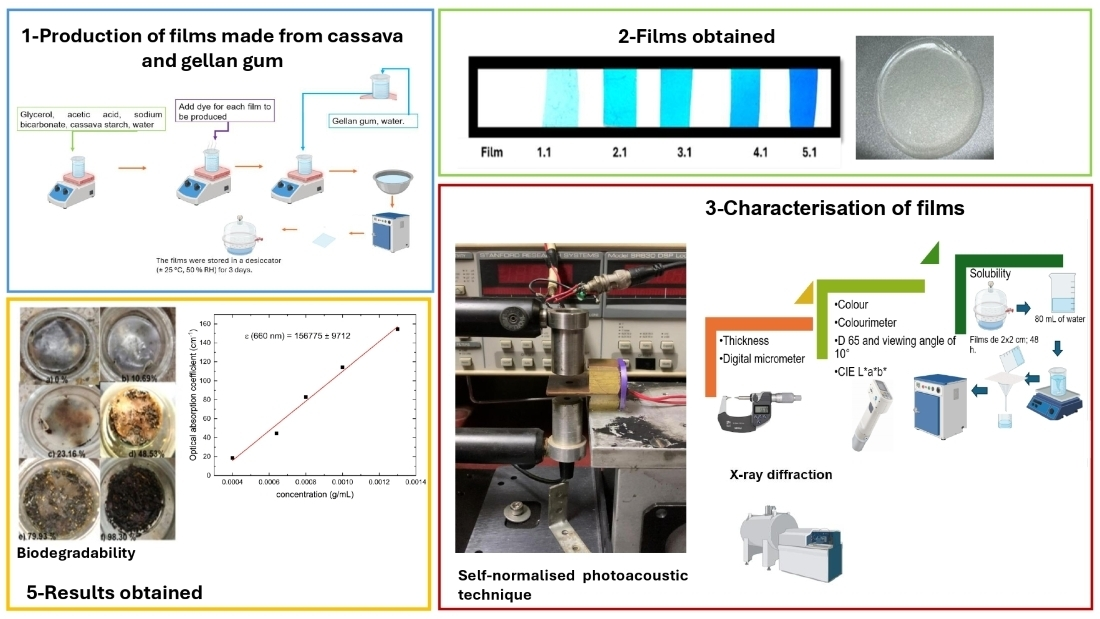
Abstract
Share and Cite
Ortega-Rubio, Á.B.; Balderas-López, J.A.; Jaime-Fonseca, M.R. Microstructural and Thermo-Optical Properties of Cassava and Gellan Gum Films: A Photoacoustic Study. Polymers 2026, 18, 313. https://doi.org/10.3390/polym18030313
Ortega-Rubio ÁB, Balderas-López JA, Jaime-Fonseca MR. Microstructural and Thermo-Optical Properties of Cassava and Gellan Gum Films: A Photoacoustic Study. Polymers. 2026; 18(3):313. https://doi.org/10.3390/polym18030313
Chicago/Turabian StyleOrtega-Rubio, Ámbar Belén, José Abraham Balderas-López, and Mónica Rosalía Jaime-Fonseca. 2026. "Microstructural and Thermo-Optical Properties of Cassava and Gellan Gum Films: A Photoacoustic Study" Polymers 18, no. 3: 313. https://doi.org/10.3390/polym18030313
APA StyleOrtega-Rubio, Á. B., Balderas-López, J. A., & Jaime-Fonseca, M. R. (2026). Microstructural and Thermo-Optical Properties of Cassava and Gellan Gum Films: A Photoacoustic Study. Polymers, 18(3), 313. https://doi.org/10.3390/polym18030313