Reversible Joining Technology for Polyolefins Using Electromagnetic Energy and Homologous Hot-Melt Adhesives Containing Metallic and Ferrite Additives

 ,
,
Abstract
1. Introduction
2. Materials and Methods
2.1. Materials and Compounding Technology
2.2. Electromagnetic Bonding Method
2.3. Methods for Characterization and Associated Equipment
3. Results and Discussion
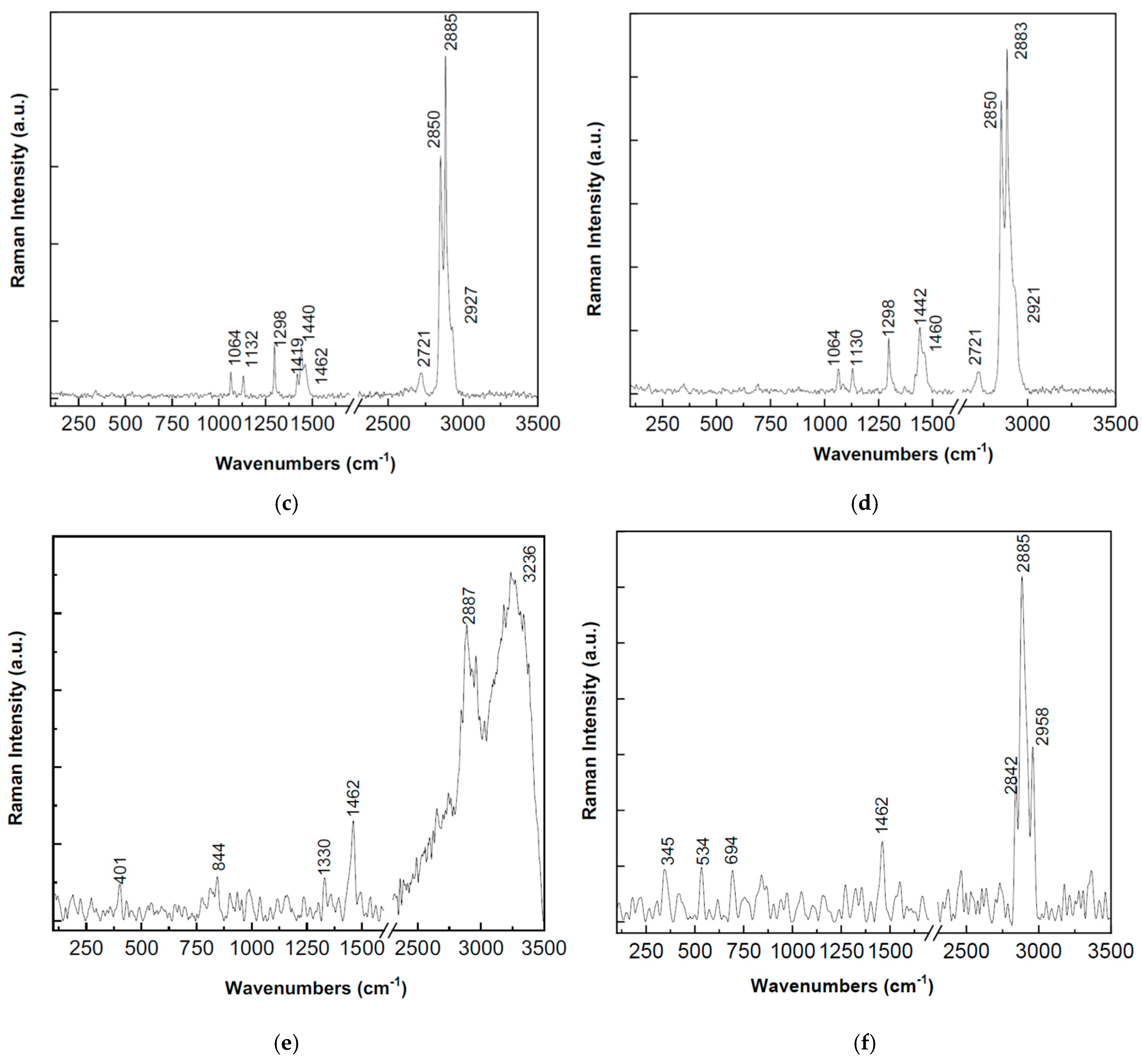
3.1. Raman Spectra Analysis
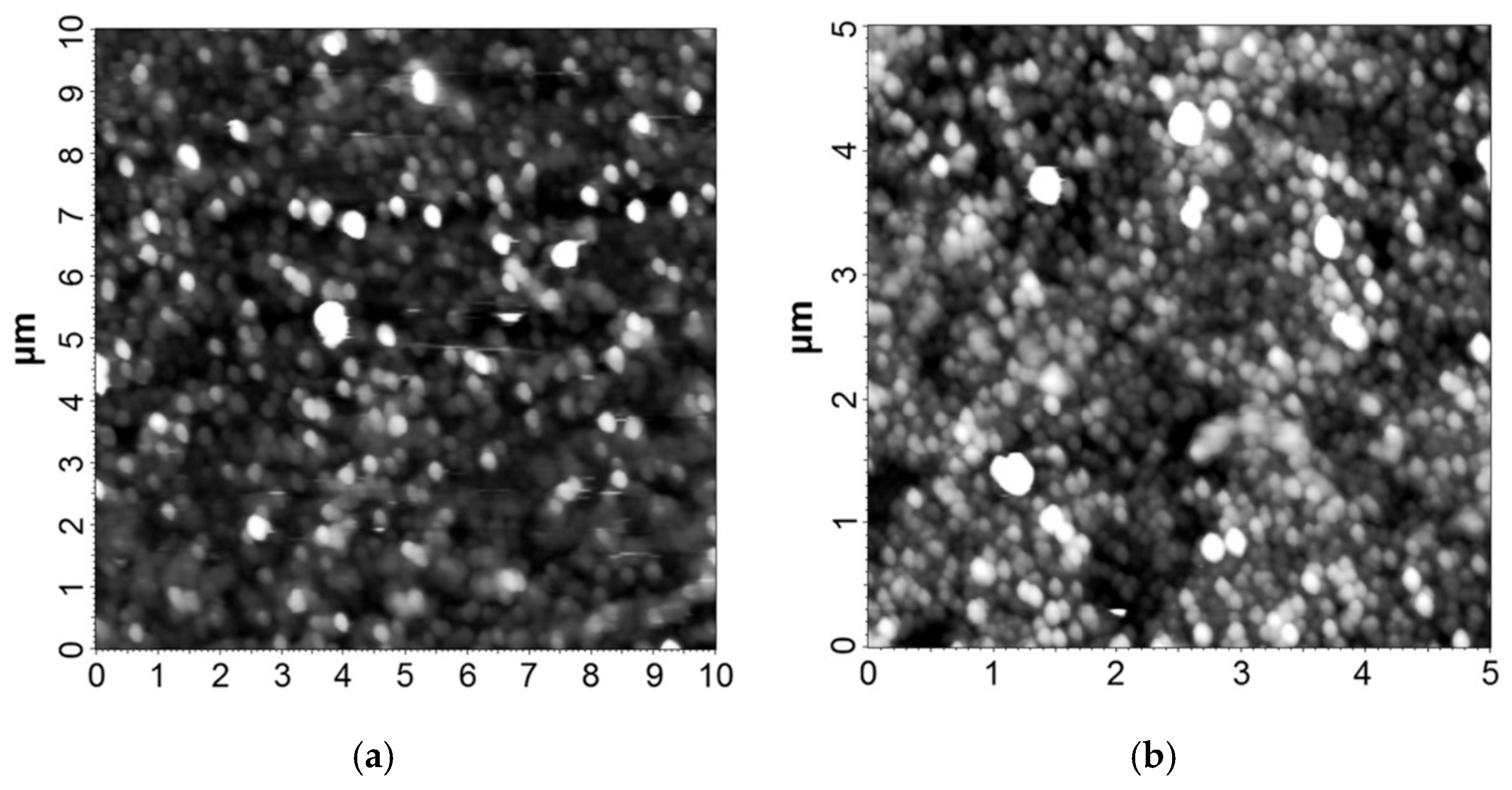
3.2. Afm Analysis
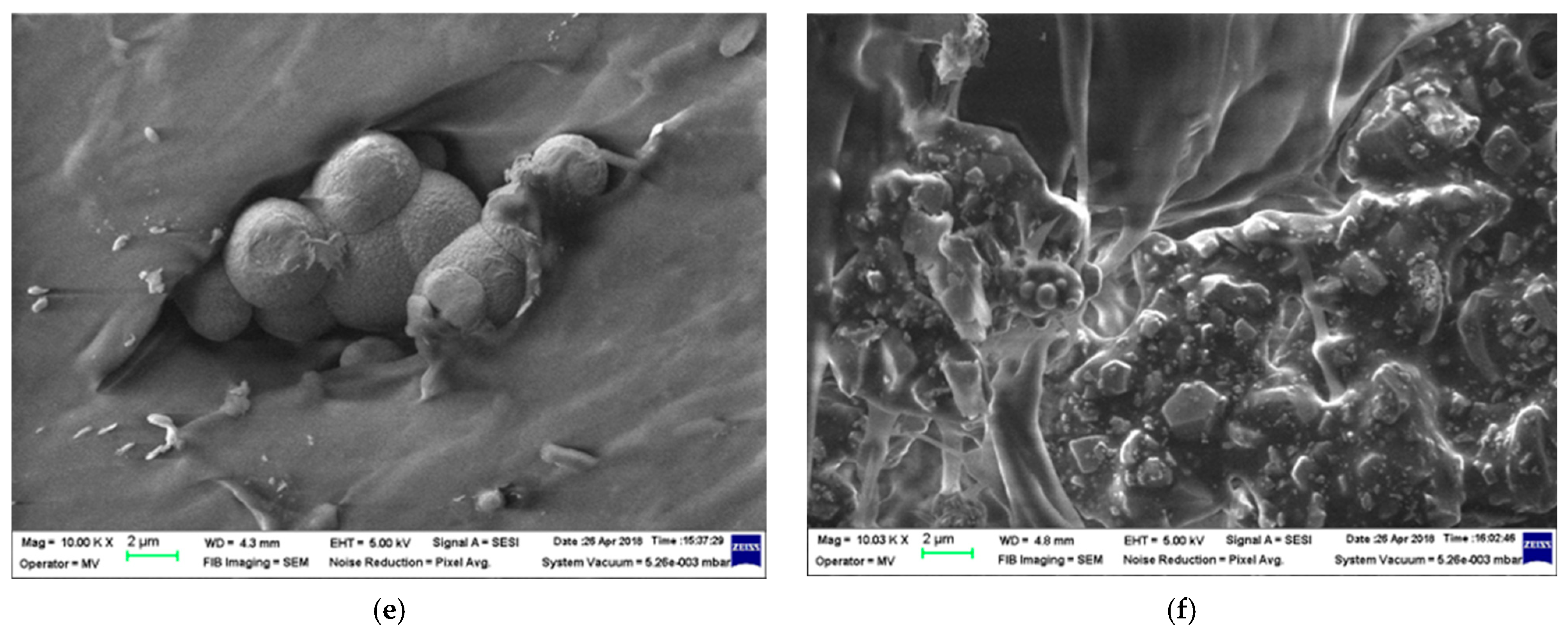
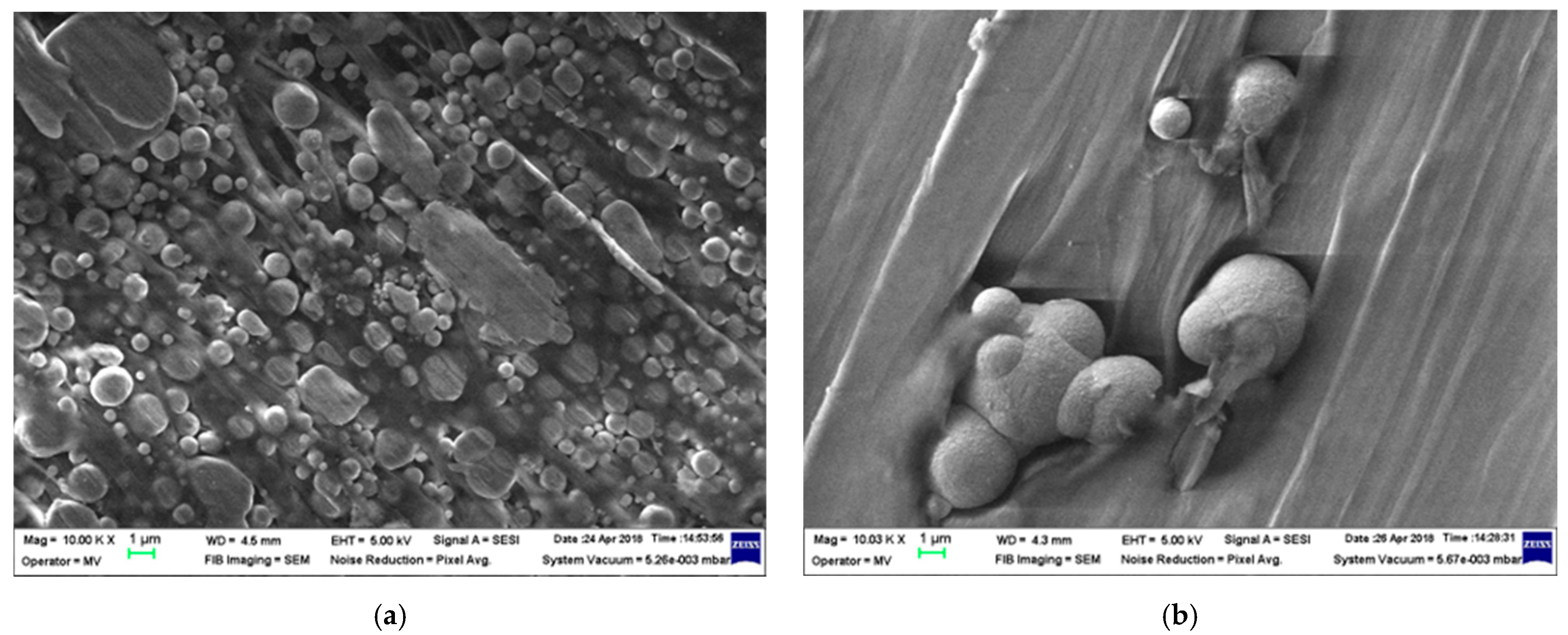
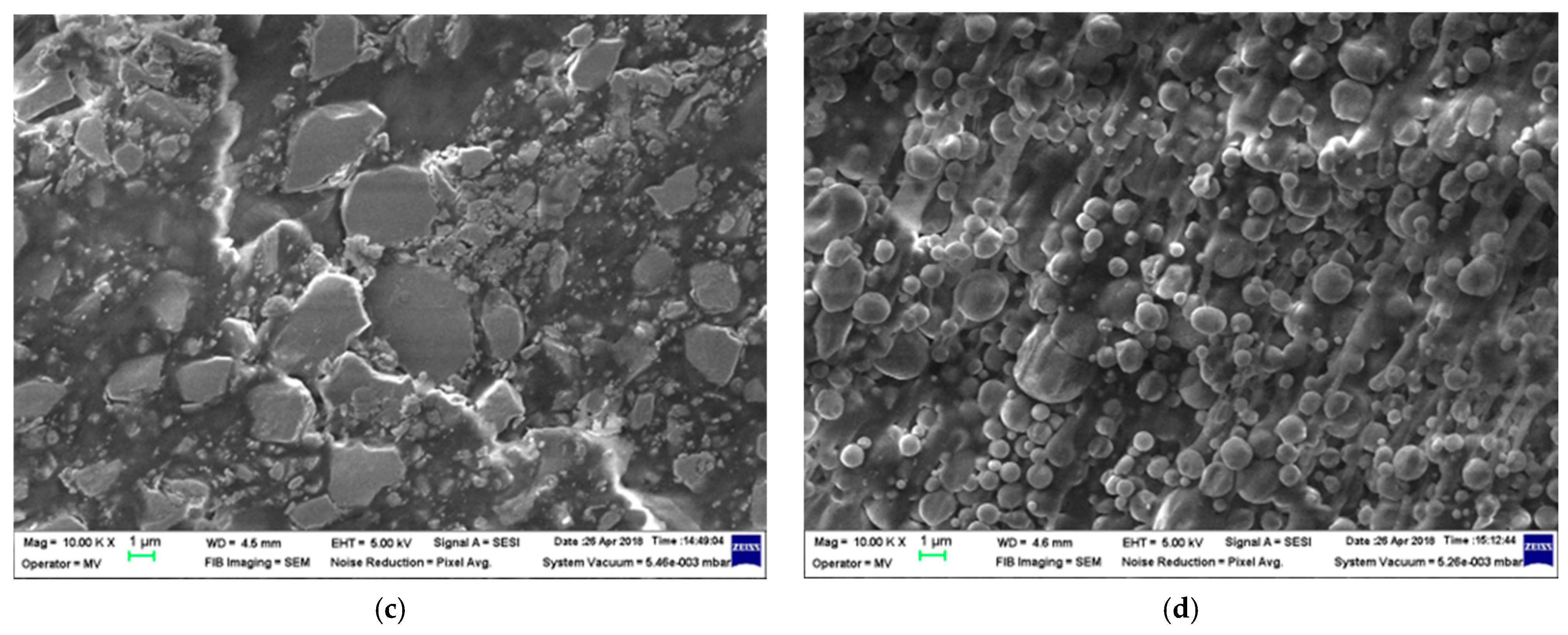
3.3. Sem Analysis
3.4. Density Analysis
3.5. Mechanical Tests
3.6. Microindentation Tests
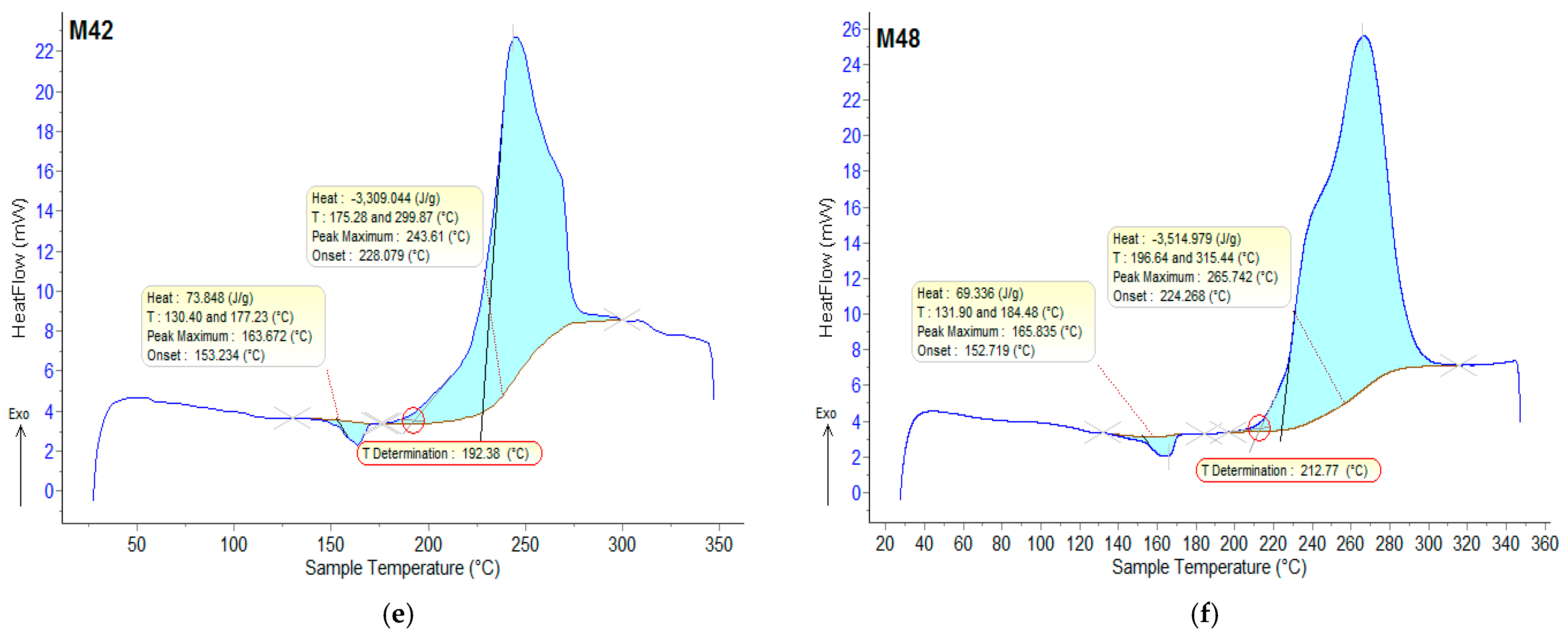
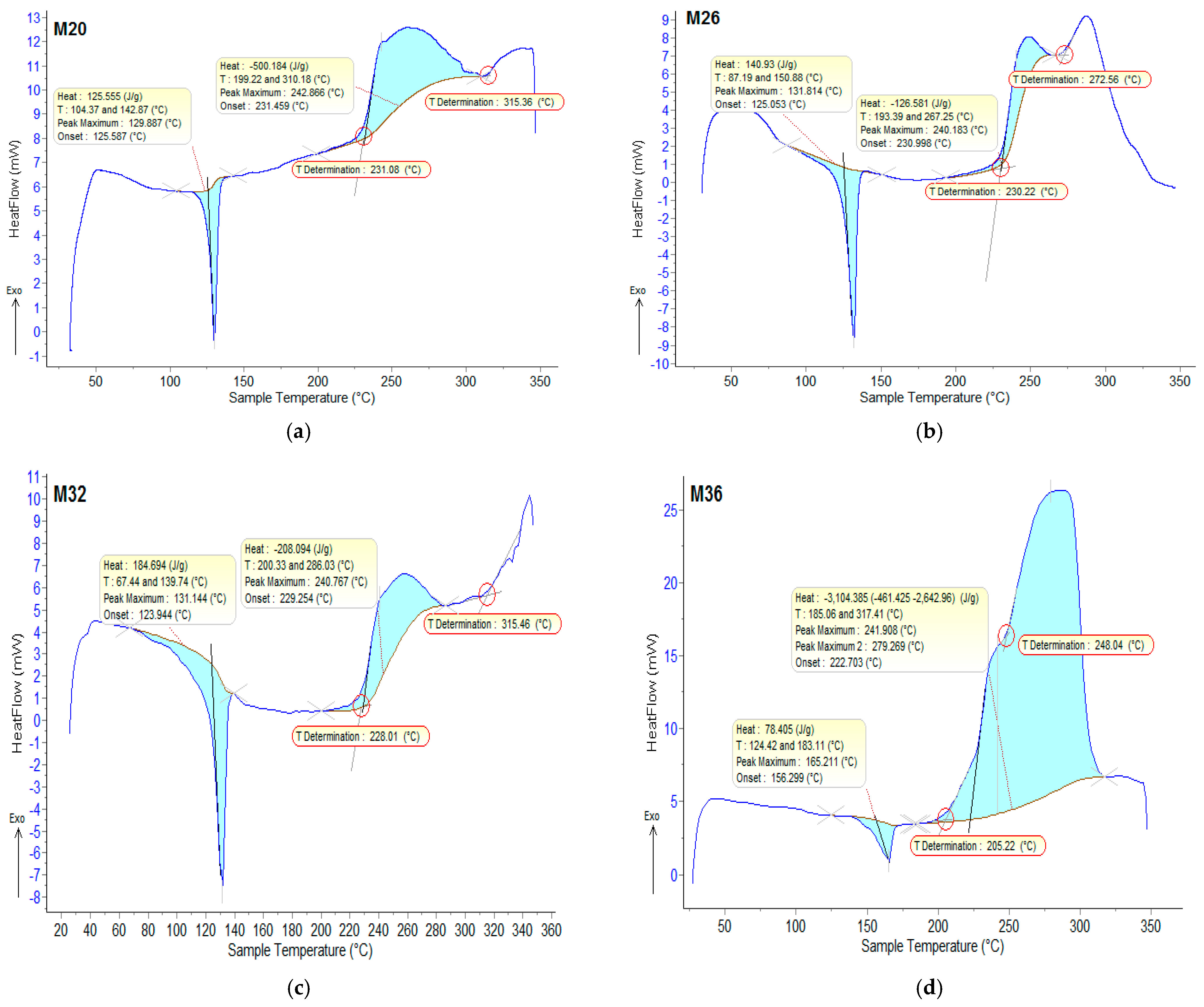
3.7. Thermogravimetric Measurements
3.8. Thermal Conductivity Tests
3.9. Results Obtained for the Degree of Swelling in Water and Solvent
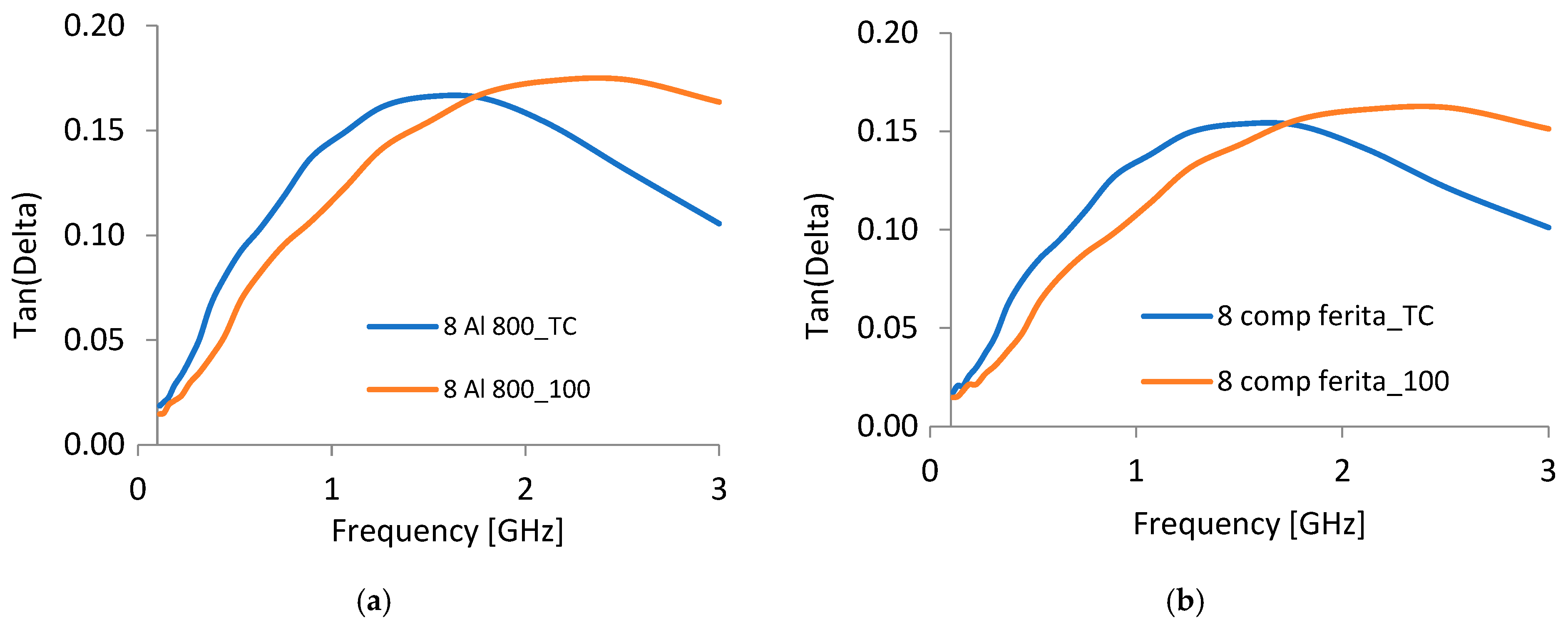
3.10. Dielectric Tests
3.11. Thermal Endurance Tests
4. Bonding Technology Concept and Evaluation
5. Conclusions
Author Contributions
Funding
Institutional Review Board Statement
Data Availability Statement
Conflicts of Interest
References
- Market Research Future. Global Hot Melt Adhesives Market Overview. Available online: www.marketresearchfuture.com/reports/hot-melt-adhesives-market-4640?utm_term=&utm_campaign=&utm_source=adwords&utm_medium=ppc&hsa_acc=2893753364&hsa_cam=23142126851&hsa_grp=190076755674&hsa_ad=779453194505&hsa_src=g&hsa_tgt=dsa-2468543828154&hsa_kw=&hsa_mt=&hsa_net=adwords&hsa_ver=3&gad_source=1 (accessed on 8 December 2025).
- Gharde, S.; Sharma, G.; Kandasubramanian, B. Hot-Melt Adhesives: Fundamentals, Formulations, and Applications: A Critical Review. In Progress in Adhesion and Adhesives; Mittal, K.L., Ed.; Scrivener Publishing LLC: Austin, TX, USA, 2021; Available online: https://onlinelibrary.wiley.com/doi/pdf/10.1002/9781119846703.ch1 (accessed on 8 December 2025).
- European Commission. End of Life Vehicles Directive. Available online: https://environment.ec.europa.eu/topics/waste-and-recycling/end-life-vehicles_en (accessed on 8 December 2025).
- Morgese, G.; Siegmann, K.; Winkler, M. Specific, nondestructive, and durable adhesion primer for polyolefins. J. Coat. Technol. Res. 2024, 21, 1921–1930. [Google Scholar] [CrossRef] [Scilit]
- Kruszynski, J.; Nowicka, W.; Pasha, F.A.; Yang, L.; Rozanski, A.; Bouyahyi, M.; Kleppinger, R.; Jasinska-Walc, L.; Duchateau, R. Tuning the Adhesive Strength of Functionalized Polyolefin-Based Hot Melt Adhesives: Unexpected Results Leading to New Opportunities. Macromolecules 2025, 58, 2894–2904. [Google Scholar] [CrossRef] [Scilit] [PubMed]
- Matsumoto, T.; Shimizu, Y.; Nishino, T. Analyses of the Adhesion Interphase of Isotactic Polypropylene Using Hot-Melt Polyolefin Adhesives. Macromolecules 2021, 54, 7226–7233. [Google Scholar] [CrossRef] [Scilit]
- Gray, S.D.; Freund, D.F.; Hamann, R.E.; Hu, M.; Flores, F.N.-H. Polyolefin-Based Hot Melt Adhesives with Improved Processing and Bonding Performance. US Patent US20160102230A1, 14 April 2016. Available online: https://patents.google.com/patent/US20160102230A1/en (accessed on 8 December 2025).
- Gray, S.D.; Hu, M. Polyolefin-Based Hot Melt Adhesives with Improved Properties. Patent WO2015161039A1, 22 October 2015. Available online: https://patents.google.com/patent/WO2015161039A1/en (accessed on 8 December 2025).
- Tuominen, M.; Saloranta, P.; Toivakka, M.; Kuusipalo, J. The Effect of Flame Treatment on Surface Properties and Heat Sealability of Low-Density Polyethylene Coating. Packag. Technol. Sci. 2013, 26, 201–214. [Google Scholar] [CrossRef] [Scilit]
- Das, B.; Chakrabarty, D.; Guha, C.; Bose, S. Effects of corona treatment on surface properties of co-extruded transparent polyethylene film. Polym. Eng. Sci. 2021, 61, 1449–1462. [Google Scholar] [CrossRef] [Scilit]
- Lee, K.T.; Goddard, J.M.; Hotchkiss, J.H. Plasma Modification of Polyolefin Surfaces. Packag. Technol. Sci. 2009, 22, 139–150. [Google Scholar] [CrossRef] [Scilit]
- Nagel, J.; Lehmann, D.; Steiner, V.; Zschoche, S.; Hupfer, B.D.-I.; Bräuer, M. Process for Modifying Polyolefin Surfaces. German Patent DE102005011594B4, 24 January 2008. Available online: https://patents.google.com/patent/DE102005011594B4/en (accessed on 8 December 2025).
- He, J.; Wang, Y.; Qian, Y.; Guo, J.; Lu, J.; Yang, W. Surface Modification of Ultra-High-Molecular-Weight Polyethylene and Applications: A Review. Polymers 2024, 16, 3431. [Google Scholar] [CrossRef] [Scilit] [PubMed]
- Productos Colcar. Polyolefin-Based Hotmelt Adhesives Are Winning Over EVA-Based Adhesives. 2023. Available online: https://productoscolcar.com/en/polyolefin-based-hotmelt-adhesives-are-winning-over-eva-based-adhesives/ (accessed on 8 December 2025).
- Hellmann, H.; Krieger, R. Microwave-Activatable Hot-Melt Adhesive. US Patent US4906497A, 6 March 1988. [Google Scholar]
- Hasan, S.; Borhani, S.; Ramamurthy, S.S.; Andar, A.; Ge, X.; Choa, F.-S.; Kostov, Y.; Rao, G. Microwave induced thermally assisted solvent-based bonding of biodegradable thermoplastics: An eco-friendly rapid approach for fabrication of microfluidic devices and analyte detection. Sci. Rep. 2022, 12, 16075. [Google Scholar] [CrossRef] [Scilit] [PubMed]
- Tsao, C.; Chang, C.; Chien, P. Microwave-Assisted Solvent Bonding for Polymethyl Methacrylate Microfluidic Device. Micromachines 2022, 13, 1131. [Google Scholar] [CrossRef] [Scilit] [PubMed]
- Ciardiello, R. The Mechanical Performance of Re-Bonded and Healed Adhesive Joints Activable through Induction Heating Systems. Materials 2021, 14, 6351. [Google Scholar] [CrossRef] [Scilit] [PubMed]
- Ciardiello, R.; Belingardi, G.; Litterio, F.; Brunella, V. Thermomechanical characterization of reinforced and dismountable thermoplastic adhesive joints activated by microwave and induction processes. Compos. Struct. 2020, 244, 112314. [Google Scholar] [CrossRef] [Scilit]
- Verna, E.; Cannavaro, I.; Brunella, V.; Koricho, E.G.; Belingardi, G.; Roncato, D.; Martorana, B.; Lambertini, V.; Neamtu, V.A.; Ciobanu, R. Adhesive joining technologies activated by electro-magnetic external trims. Int. J. Adhes. Adhes. 2013, 46, 21–25. [Google Scholar] [CrossRef] [Scilit]
- Littlefield, A.; Maurer, J.; Bartolucci, S. Graphene-peek composites as microwave-activated high-temperature adhesives. In Proceedings of the SAMPE’s 2018 Spring Technical Conference and Exhibition, Long Beach, CA, USA, 21–24 May 2018; Technical Report ARWSB-TR-18014. Available online: https://apps.dtic.mil/sti/tr/pdf/AD1052094.pdf (accessed on 8 December 2025).
- Wang, T.; Fu, Y.; Becker, M.; Liu, J. Microwave cure of metal-filled electrically conductive adhesive. In Proceedings of the 2001 Proceedings, 51st Electronic Components and Technology Conference (Cat. No.01CH37220), Orlando, FL, USA, 29 May–1 June 2001; pp. 593–597. [Google Scholar] [CrossRef] [Scilit]
- Ciardiello, R.; Belingardi, G.; Litterio, F.; Brunella, V. Effect of iron oxide and graphene particles on joint strength and dismounting characteristics of a thermoplastic adhesive. Int. J. Adhes. Adhes. 2021, 107, 102850. [Google Scholar] [CrossRef] [Scilit]
- Polymershapes. Plastic Products for Semiconductor Applications. Available online: https://polymershapes.com/industry-semiconductor/ (accessed on 8 December 2025).
- Michalos, G.; Makris, S.; Papakostas, N.; Mourtzis, D.; Chryssolouris, G. Automotive assembly technologies review: Challenges and outlook for a flexible and adaptive approach. CIRP J. Manuf. Sci. Technol. 2010, 2, 81–91. [Google Scholar] [CrossRef] [Scilit]
- Aradoaei, M.; Ciobanu, R.C.; Schreiner, C.; Ursan, A.G.; Hitruc, E.G.; Aflori, M. Thermoplastic Electromagnetic Shielding Materials from the Integral Recycling of Waste from Electronic Equipment. Polymers 2023, 15, 3859. [Google Scholar] [CrossRef] [Scilit] [PubMed]
- Caramitu, A.R.; Lungu, M.V.; Ciobanu, R.C.; Ion, I.; Marin, M.; Marinescu, V.; Pintea, J.; Aradoaei, S.; Schreiner, O.D. Recycled Polypropylene/Strontium Ferrite Polymer Composite Materials with Electromagnetic Shielding Properties. Polymers 2024, 16, 1129. [Google Scholar] [CrossRef] [Scilit] [PubMed]
- Ciobanu, R.C.; Aradoaei, M.; Caramitu, A.R.; Ion, I.; Schreiner, C.M.; Tsakiris, V.; Marinescu, V.; Hitruc, E.G.; Aflori, M. Special Packaging Materials from Recycled PET and Metallic Nano-Powders. Polymers 2023, 15, 3161. [Google Scholar] [CrossRef] [Scilit] [PubMed]
- Damian, R.; Ciobanu, R. Modeling Absorbed Energy in Microwave Range for Nanocomposite Hot Melts Containing Metallic Additives. Appl. Sci. 2025, 15, 541. [Google Scholar] [CrossRef] [Scilit]
- Ciobanu, R.; Aradoaei, M.; Ursan, G. Thermoplastic Composite Hot-Melt Adhesives with Metallic Nano-Particles for Reversible Bonding Techniques Utilizing Microwave Energy. Polymers 2024, 16, 3496. [Google Scholar] [CrossRef] [Scilit] [PubMed]
- ASTM D638-10; Standard Test Method for Tensile Properties of Plastics. ASTM International: West Conshohocken, PA, USA, 2022. Available online: https://www.astm.org/d0638-14.html (accessed on 8 December 2025).
- ASTM E-1461:2007; Standard Test Procedure for Flash Method Measurement of Thermal Diffusivity in Solids. ASTM International: West Conshohocken, PA, USA, 2007.
- SR EN ISO 175/2011; Plastics—Methods of Test for the Determination of the Effects of Immersion in Liquid Chemicals. ISO: Geneva, Switzerland, 2010. Available online: https://e-standard.eu/en/standard/186982 (accessed on 8 December 2025).
- IEC 60034-1; Insulation Class and Temperature Rise. IEC: Geneva, Switzerland, 2010. Available online: https://avsld.com.sg/insulation-class-and-temperature-rise/ (accessed on 8 December 2025).







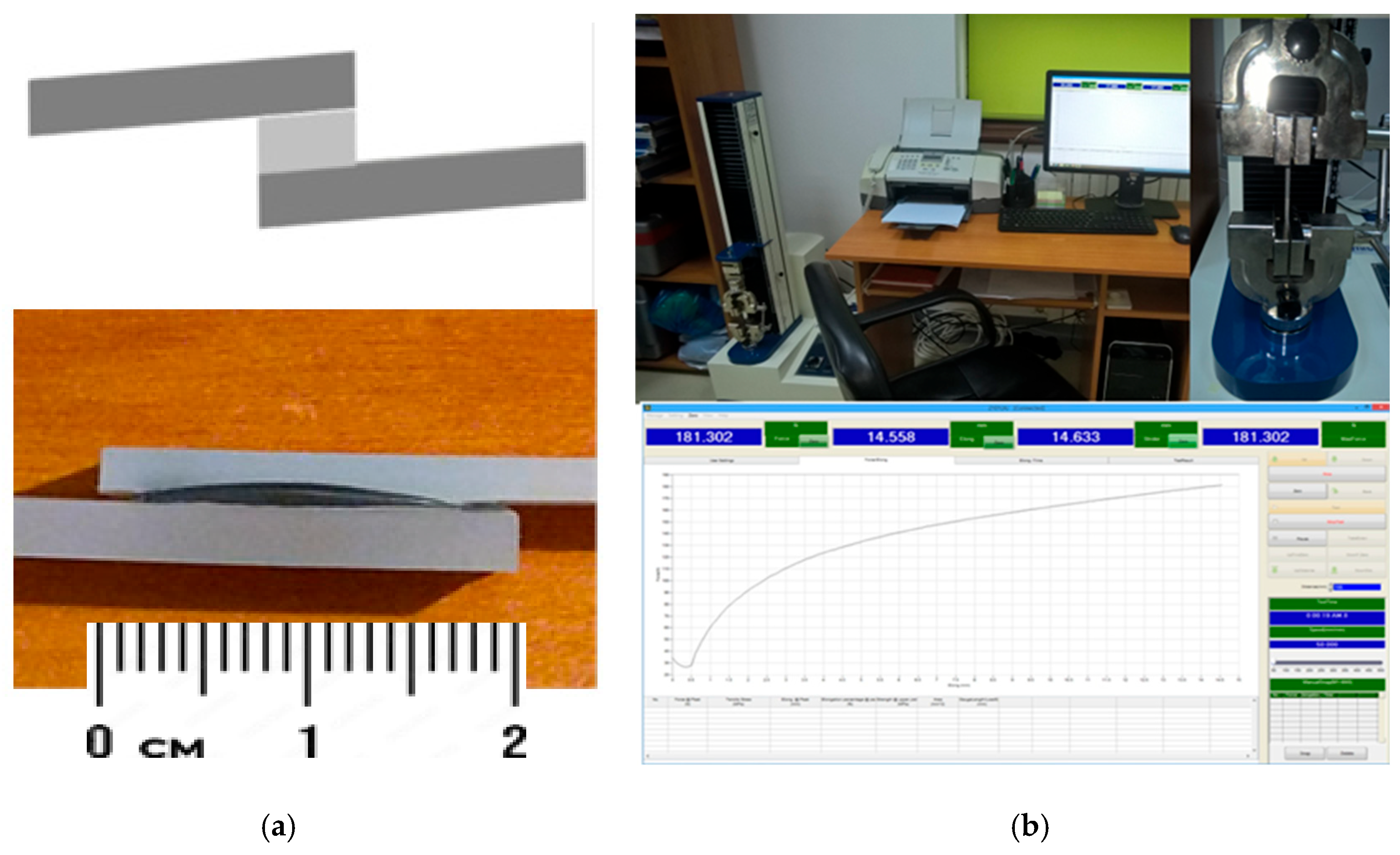


| Sample Code | Formulation |
|---|---|
| M1 | rHDPE + 8% Al + 3% Additives |
| M2 | rHDPE + 8% Fe + 3% Additives |
| M3 | rHDPE + 8% Ferrite + 3% Additives |
| M4 | rPP + 8% Al + 3% Additives |
| M5 | rPP + 8% Fe + 3% Additives |
| M6 | rPP + 8% Ferrite + 3% Additives |
| Sample | Density (g/cm3) |
|---|---|
| M1 | 0.924 |
| M2 | 0.953 |
| M3 | 0.941 |
| M4 | 0.959 |
| M5 | 0.976 |
| M6 | 0.967 |
| Sample | Average Shore Hardness A (HS) |
|---|---|
| M1 | 55 |
| M2 | 59 |
| M3 | 60 |
| M4 | 59 |
| M5 | 63 |
| M6 | 67 |
| Sample | Mechanical Resistance Rm [MPa] | Flow Resistance Rp [MPa] | Elongation A [%] | Young’s Modulus [GPa] |
|---|---|---|---|---|
| M1 | 14.47 | 0.37 | 108 | 0.39 |
| M2 | 16.36 | 0.24 | 98 | 0.53 |
| M3 | 17.71 | 0.28 | 94 | 0.56 |
| M4 | 14.88 | 0.41 | 102 | 0.44 |
| M5 | 16.98 | 0.32 | 88 | 0.61 |
| M6 | 18.22 | 0.36 | 79 | 0.73 |
| Sample | HIT (MPa) | HV | EIT (GPa) | S (N/µm) | hmax (µm) | Welastic (µJ) | Wplastic (µJ) | Wtotal (µJ) | ηIT (%) |
|---|---|---|---|---|---|---|---|---|---|
| M1 | 54.1 ± 1.6 | 5.1 ± 0.2 | 1.2 ± 0.14 | 0.22 ± 0.03 | 30.9 ± 0.2 | 3.3 ± 0.1 | 8.2 ± 0.2 | 11.5 ± 0.2 | 28.5 ± 0.6 |
| M2 | 78.0 ± 3.5 | 7.4 ± 0.3 | 0.9 ± 0.01 | 0.14 ± 0.01 | 27.8 ± 0.2 | 1.1 ± 0.2 | 9.2 ± 0.5 | 10.3 ± 0.4 | 10.9 ± 2.0 |
| M3 | 64.6 ± 9.7 | 6.1 ± 0.9 | 1.1 ± 0.13 | 0.18 ± 0.03 | 29.7 ± 0.4 | 3.6 ± 0.3 | 8.0 ± 0.6 | 11.6 ± 0.9 | 30.7 ± 0.2 |
| M4 | 97.4 ± 19.8 | 9.2 ± 1.9 | 1.4 ± 0.16 | 0.16 ± 0.01 | 25.5 ± 2.3 | 3.4 ± 0.1 | 5.5 ± 0.3 | 8.9 ± 0.4 | 38.2 ± 0.1 |
| M5 | 104.3 ± 14.1 | 9.8 ± 1.3 | 1.3 ± 0.07 | 0.18 ± 0.02 | 23.9 ± 0.9 | 3.2 ± 0.1 | 5.7 ± 0.1 | 8.7 ± 0.1 | 37.0 ± 0.1 |
| M6 | 103.8 ± 21 | 9.8 ± 2 | 1.5 ± 0.04 | 0.21 ± 0.02 | 23.6 ± 1.8 | 2.5 ± 0.7 | 6.0 ± 0.4 | 8.5 ± 1.0 | 28.9 ± 4.3 |
| Sample | Tt (°C) | ΔHt (J/g) | χcr (%) | OOT1 (°C) | OOT2 (°C) |
|---|---|---|---|---|---|
| M1 | 129.9 | 125.5 | 46.5 | 231 | 315.4 |
| M2 | 131.8 | 140.9 | 52.2 | 230.2 | 272.5 |
| M3 | 131.1 | 184.7 | 68.5 | 228 | 315.5 |
| M4 | 165.2 | 78.4 | 41.1 | 205.2 | 248 |
| M5 | 163.7 | 73.8 | 38.7 | 192.4 | - |
| M6 | 165.8 | 69.3 | 36.4 | 212.8 | - |
| Sample | Thermal Conductivity (W/(m*K) |
|---|---|
| M1 | 0.252 |
| M2 | 0.241 |
| M3 | 0.233 |
| M4 | 0.304 |
| M5 | 0.264 |
| M6 | 0.251 |
| Sample | Q Water 72 h | Q Water 168 h | Q Water 240 h | Q Water 336 h | Q Water 408 h | Q Water 504 h | Q Water 576 h |
|---|---|---|---|---|---|---|---|
| M1 | 1.7866 | 3.9336 | 5.8172 | 7.4451 | 8.8801 | 10.6814 | 10.6834 |
| M2 | 1.0067 | 1.9934 | 2.9605 | 3.9088 | 4.8387 | 6.2498 | 6.2518 |
| M3 | 1.3232 | 2.4444 | 3.5423 | 4.3555 | 5.5657 | 6.6050 | 6.6070 |
| M4 | 1.8759 | 3.6828 | 5.4243 | 7.1040 | 8.7250 | 9.9440 | 9.9440 |
| M5 | 0.9297 | 1.8423 | 2.7382 | 3.6179 | 4.4819 | 5.6663 | 5.6663 |
| M6 | 1.2288 | 2.1308 | 3.0164 | 3.8862 | 4.7405 | 6.2583 | 6.2583 |
| Sample | Q toluene 72 h | Q toluene 168 h | Q toluene 240 h | Q toluene 336 h | Q toluene 408 h | Q toluene 504 h | Q toluene 576 h |
|---|---|---|---|---|---|---|---|
| M1 | 8.2747 | 8.7031 | 9.8129 | 9.6596 | 10.7580 | 11.8056 | 11.8081 |
| M2 | 9.4533 | 9.3585 | 9.8262 | 10.7390 | 11.3286 | 11.1341 | 11.1366 |
| M3 | 9.1263 | 9.0407 | 9.5821 | 10.0196 | 10.7968 | 10.9435 | 10.9460 |
| M4 | 8.5626 | 8.7265 | 10.1008 | 9.6719 | 11.0459 | 11.8179 | 11.8204 |
| M5 | 9.7412 | 9.3819 | 10.1141 | 10.7514 | 11.6165 | 11.1464 | 11.1489 |
| M6 | 9.4142 | 9.0641 | 9.8700 | 10.0319 | 11.0847 | 10.9559 | 10.9584 |
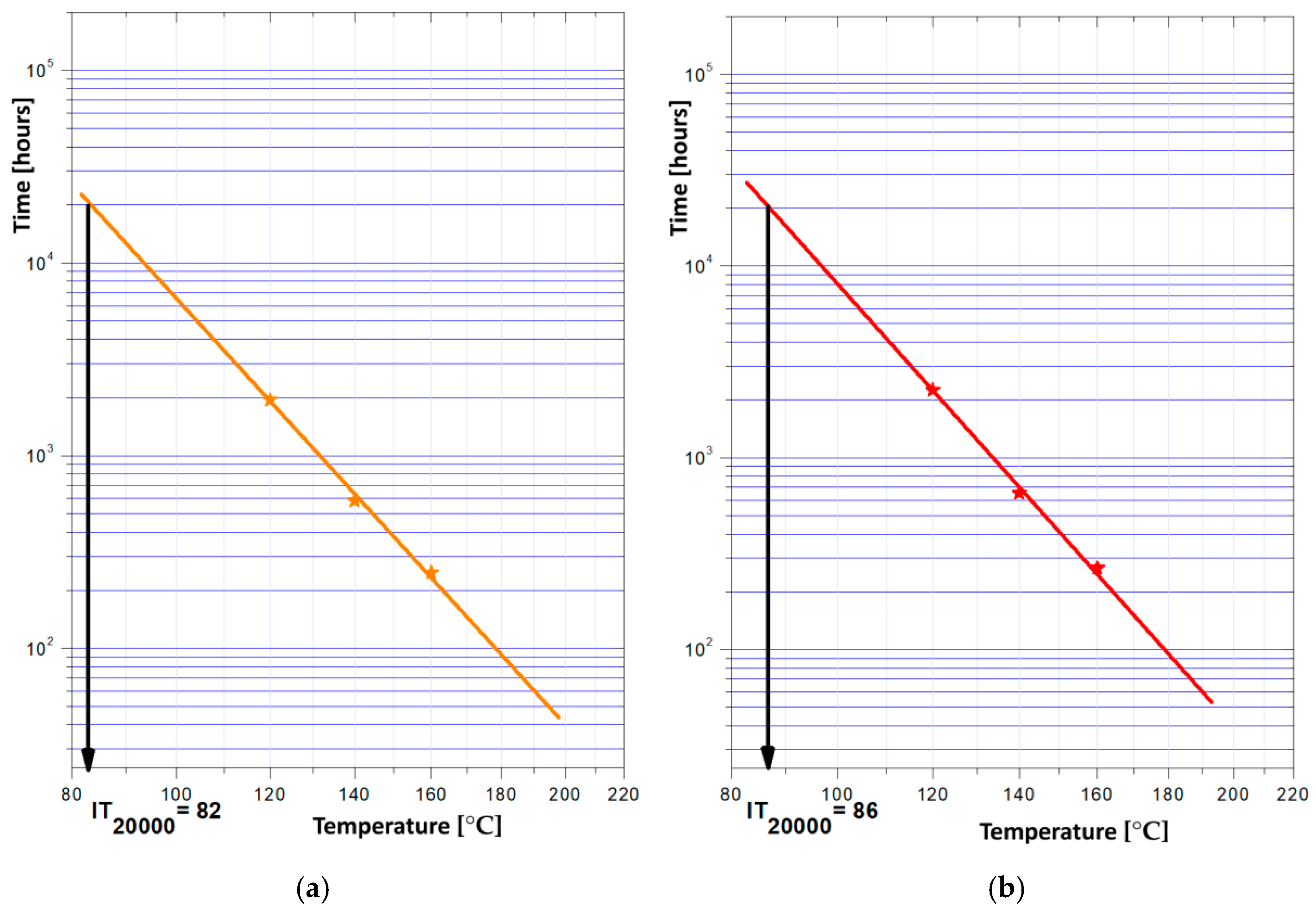
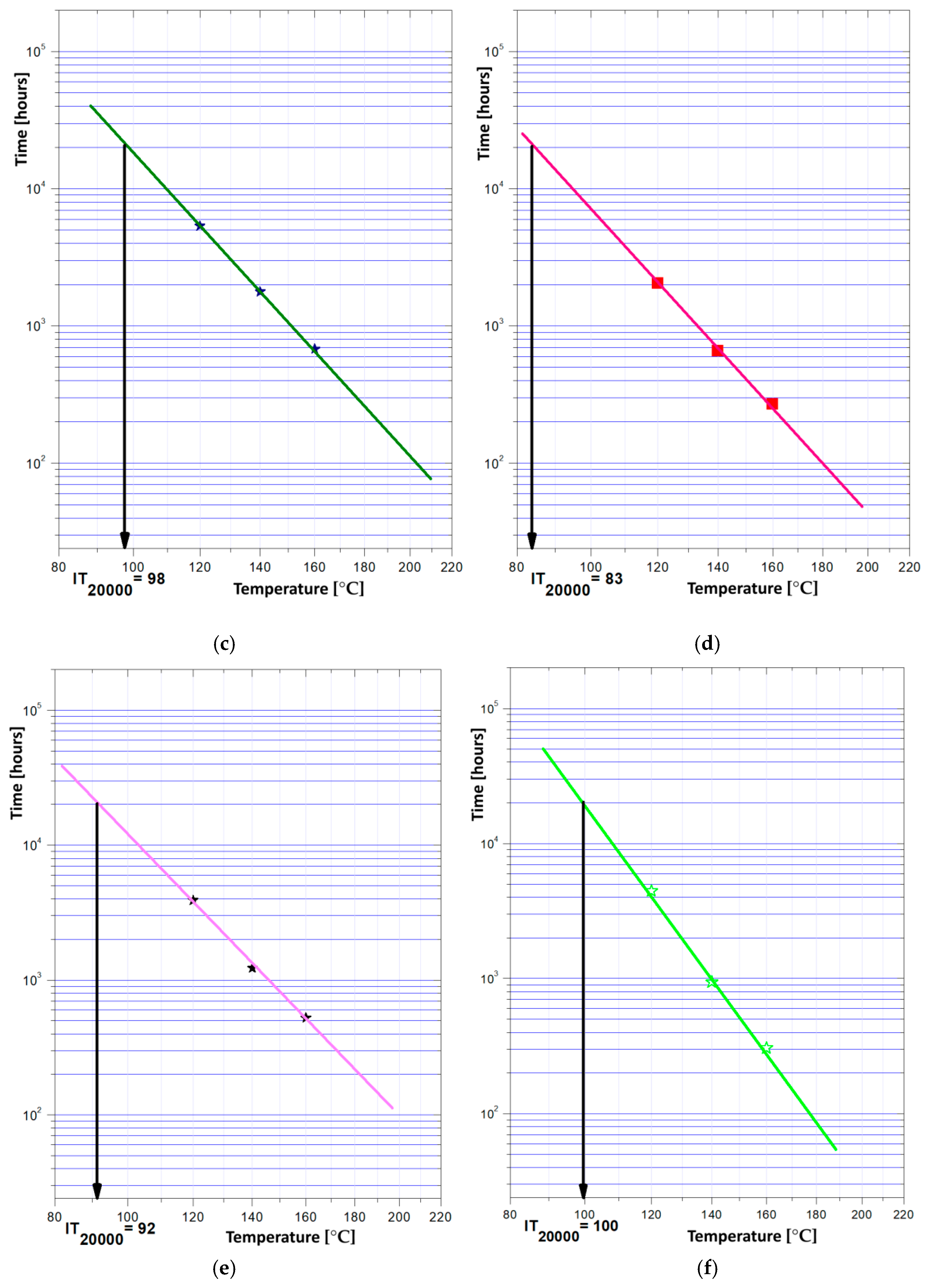
| Temperature [°C] | Exposure Time (Hours) |
|---|---|
| 120 | 120 |
| 140 | 72 |
| 160 | 24 |
| Sample | IT 20,000 [°C] |
|---|---|
| M1 | 82 |
| M2 | 86 |
| M3 | 98 |
| M4 | 83 |
| M5 | 92 |
| M6 | 100 |
| Bonded Samples Code | Type of Substrates and Hot-Melt Combination | Mechanical Tensile Strength of the Joint [MPa] | Elongation [%] |
|---|---|---|---|
| SL1 | Substrate of HDPE-M1 | 7.28 | 31 |
| SL2 | Substrate of HDPE-M2 | 6.84 | 28 |
| SL3 | Substrate of HDPE-M3 | 7.11 | 33 |
| SL4 | Substrate of PP-M4 | 7.12 | 25 |
| SL5 | Substrate of PP-M5 | 6.75 | 21 |
| SL6 | Substrate of PP-M6 | 6.78 | 24 |
| SL7 | Substrate of HDPE with PP-M1 | 6.83 | 32 |
| SL8 | Substrate of HDPE with PP-M4 | 6.93 | 27 |
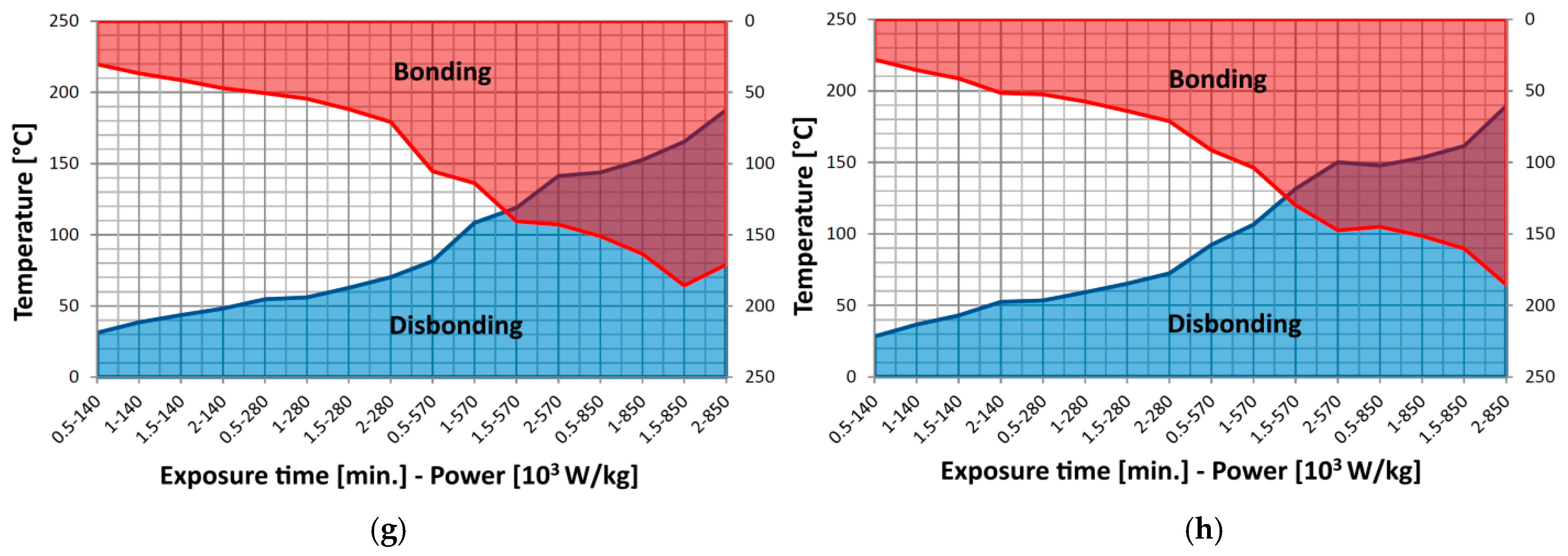
| Bonded Samples Code | Type of Substrates and Hot-Melt Combination | Applied Microwave Power [×103 W/kg] | Exposure Time [min] |
|---|---|---|---|
| SL1 | Substrate of HDPE-M1 | 850 | 1 |
| SL2 | Substrate of HDPE-M2 | 850 | 0.5 |
| SL3 | Substrate of HDPE-M3 | 850 | 1 |
| SL4 | Substrate of PP-M4 | 850 | 0.5 |
| SL5 | Substrate of PP-M5 | 850 | 1 |
| SL6 | Substrate of PP-M6 | 570 | 1.5 |
| SL7 | Substrate of HDPE with PP-M1 | 850 | 1 |
| SL8 | Substrate of HDPE with PP-M4 | 850 | 1 |
Disclaimer/Publisher’s Note: The statements, opinions and data contained in all publications are solely those of the individual author(s) and contributor(s) and not of MDPI and/or the editor(s). MDPI and/or the editor(s) disclaim responsibility for any injury to people or property resulting from any ideas, methods, instructions or products referred to in the content. |
© 2026 by the authors. Licensee MDPI, Basel, Switzerland. This article is an open access article distributed under the terms and conditions of the Creative Commons Attribution (CC BY) license.
Share and Cite
Ciobanu, R.C.; Aradoaei, M.; Ursan, G.A.; Caramitu, A.R.; Marinescu, V.; Eva, R.L. Reversible Joining Technology for Polyolefins Using Electromagnetic Energy and Homologous Hot-Melt Adhesives Containing Metallic and Ferrite Additives. Polymers 2026, 18, 228. https://doi.org/10.3390/polym18020228
Ciobanu RC, Aradoaei M, Ursan GA, Caramitu AR, Marinescu V, Eva RL. Reversible Joining Technology for Polyolefins Using Electromagnetic Energy and Homologous Hot-Melt Adhesives Containing Metallic and Ferrite Additives. Polymers. 2026; 18(2):228. https://doi.org/10.3390/polym18020228
Chicago/Turabian StyleCiobanu, Romeo Cristian, Mihaela Aradoaei, George Andrei Ursan, Alina Ruxandra Caramitu, Virgil Marinescu, and Rolland Luigi Eva. 2026. "Reversible Joining Technology for Polyolefins Using Electromagnetic Energy and Homologous Hot-Melt Adhesives Containing Metallic and Ferrite Additives" Polymers 18, no. 2: 228. https://doi.org/10.3390/polym18020228
APA StyleCiobanu, R. C., Aradoaei, M., Ursan, G. A., Caramitu, A. R., Marinescu, V., & Eva, R. L. (2026). Reversible Joining Technology for Polyolefins Using Electromagnetic Energy and Homologous Hot-Melt Adhesives Containing Metallic and Ferrite Additives. Polymers, 18(2), 228. https://doi.org/10.3390/polym18020228