Active Packaging Based on Chitosan, Fish Gelatin, Zein, and Kafirin Biopolymers: A Promising Strategy for Innovation in the Cosmetic Sector

 ,
,  , ,
, , 
Abstract
1. Introduction
2. Biopolymers Frequently Used in the Development of Active Packaging
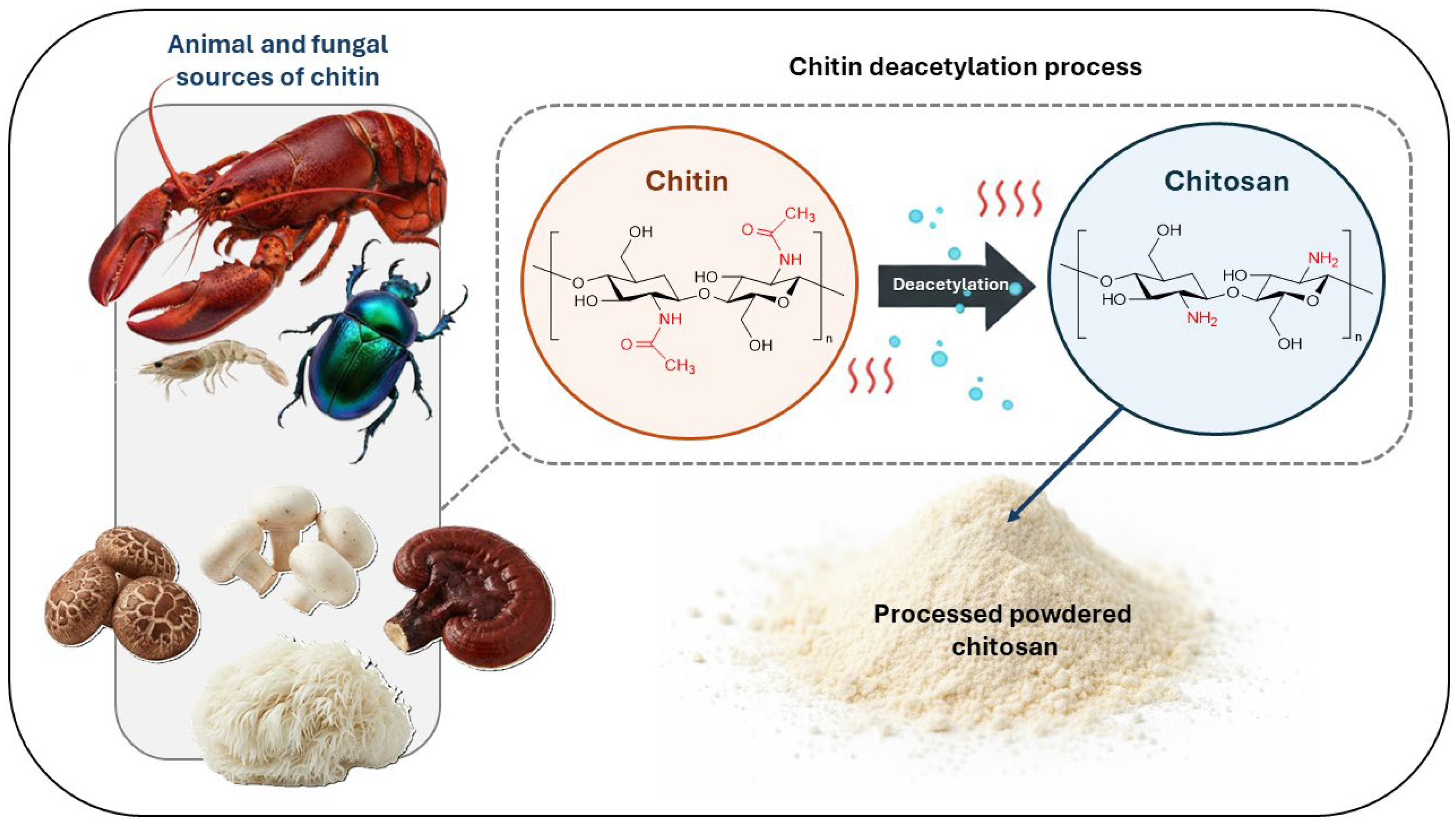
2.1. Chitosan
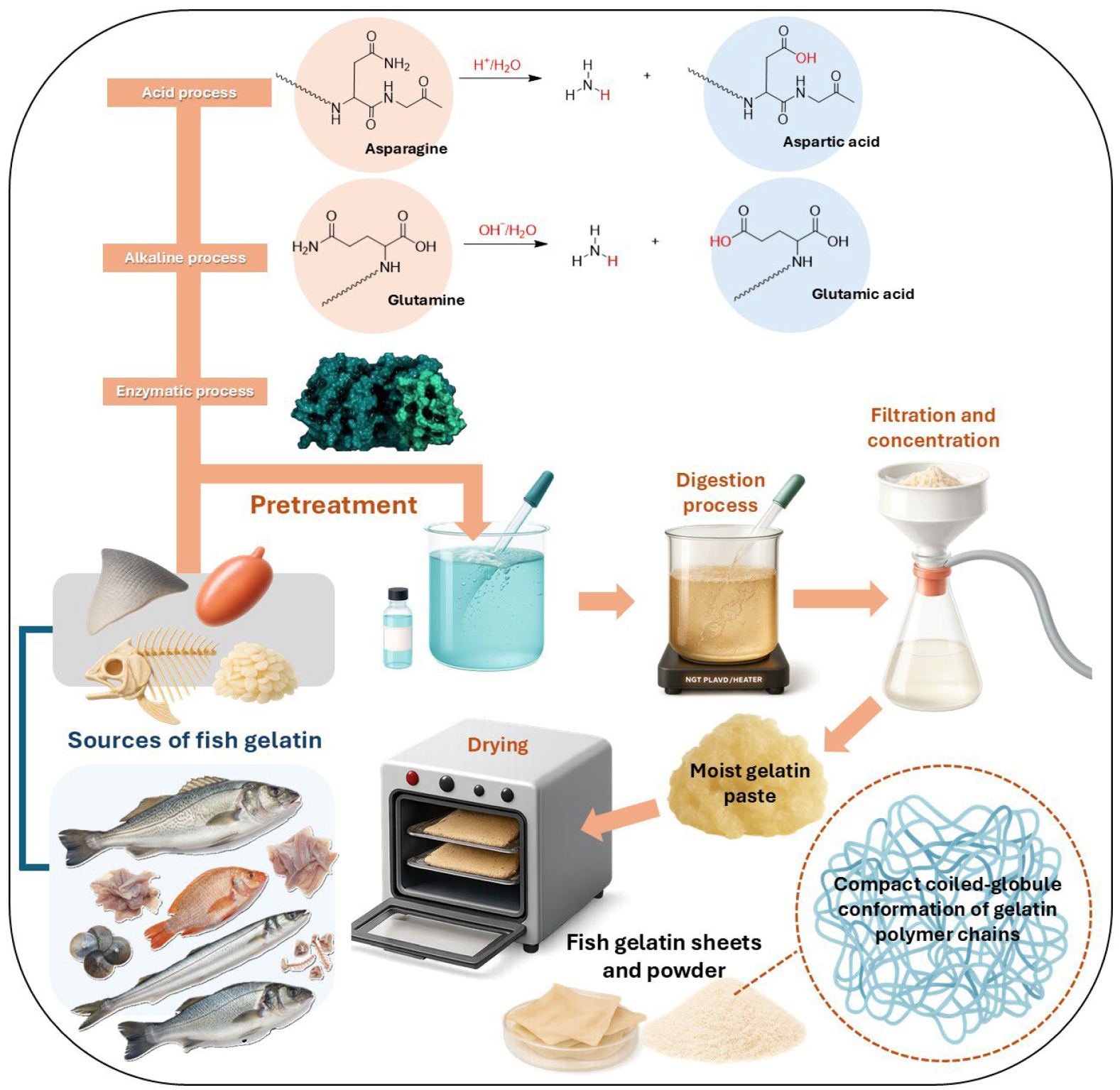
2.2. Fish Gelatin
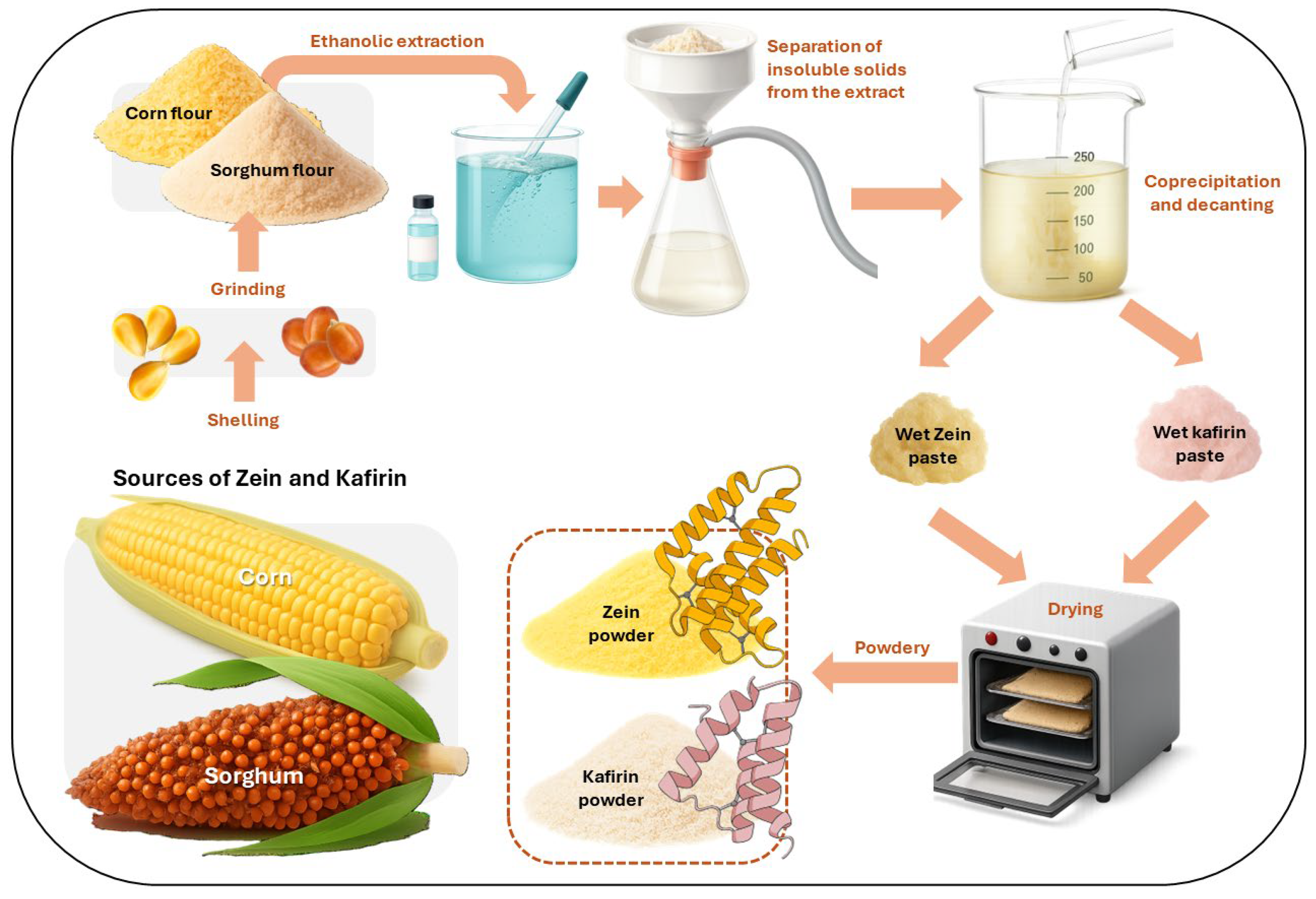
2.3. Plant-Based Proteins (Zein and Kafirin)
2.4. Moisture Sensitivity and Functional Suitability of Biopolymers for Cosmetic Packaging
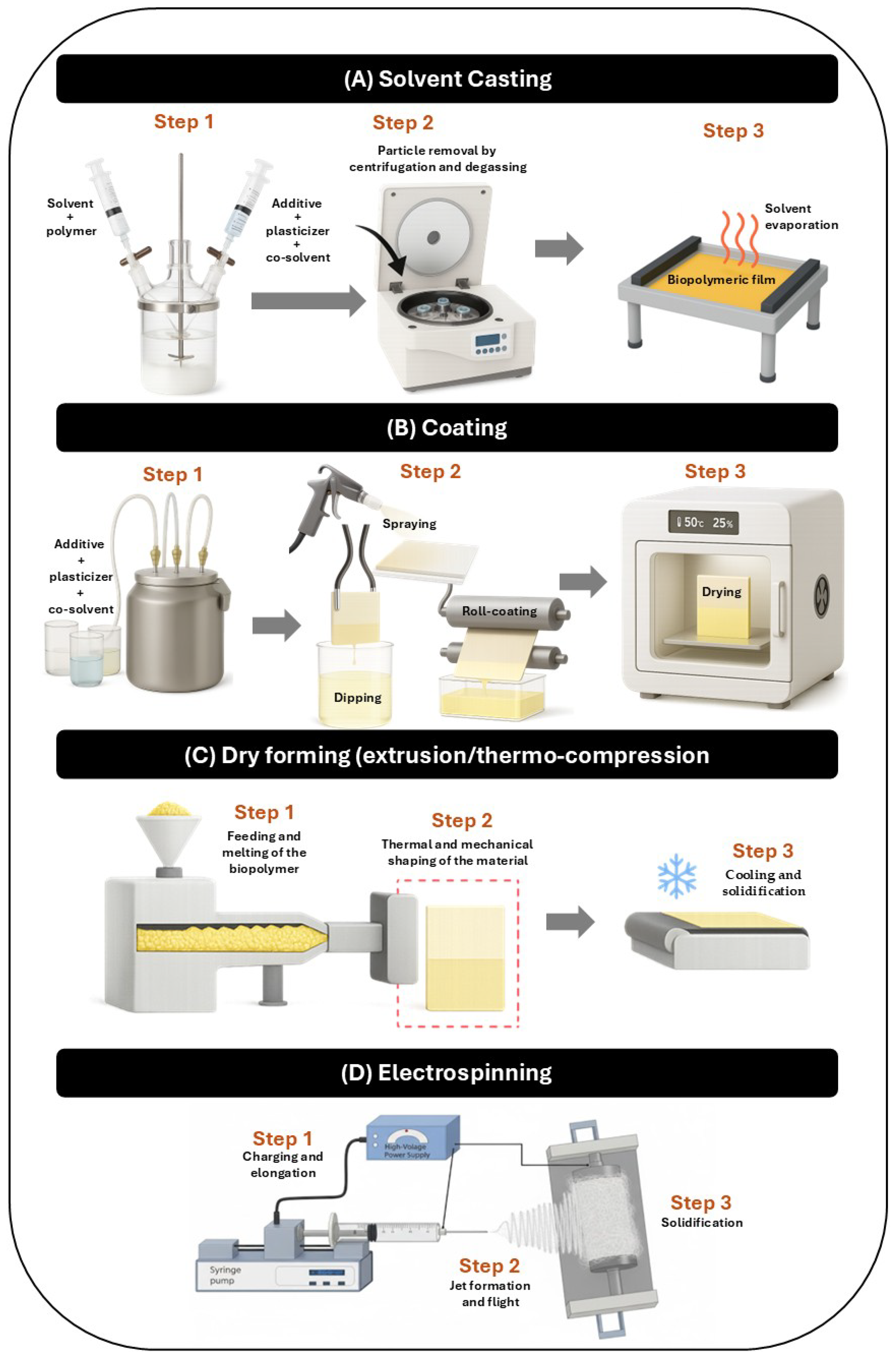
3. Methods for the Development of Active Packaging
3.1. Solvent Casting
3.2. Coating
3.3. Dry Forming (Extrusion and Thermo-Compression)
3.4. Electrospinning
3.5. Other Emerging Methodologies
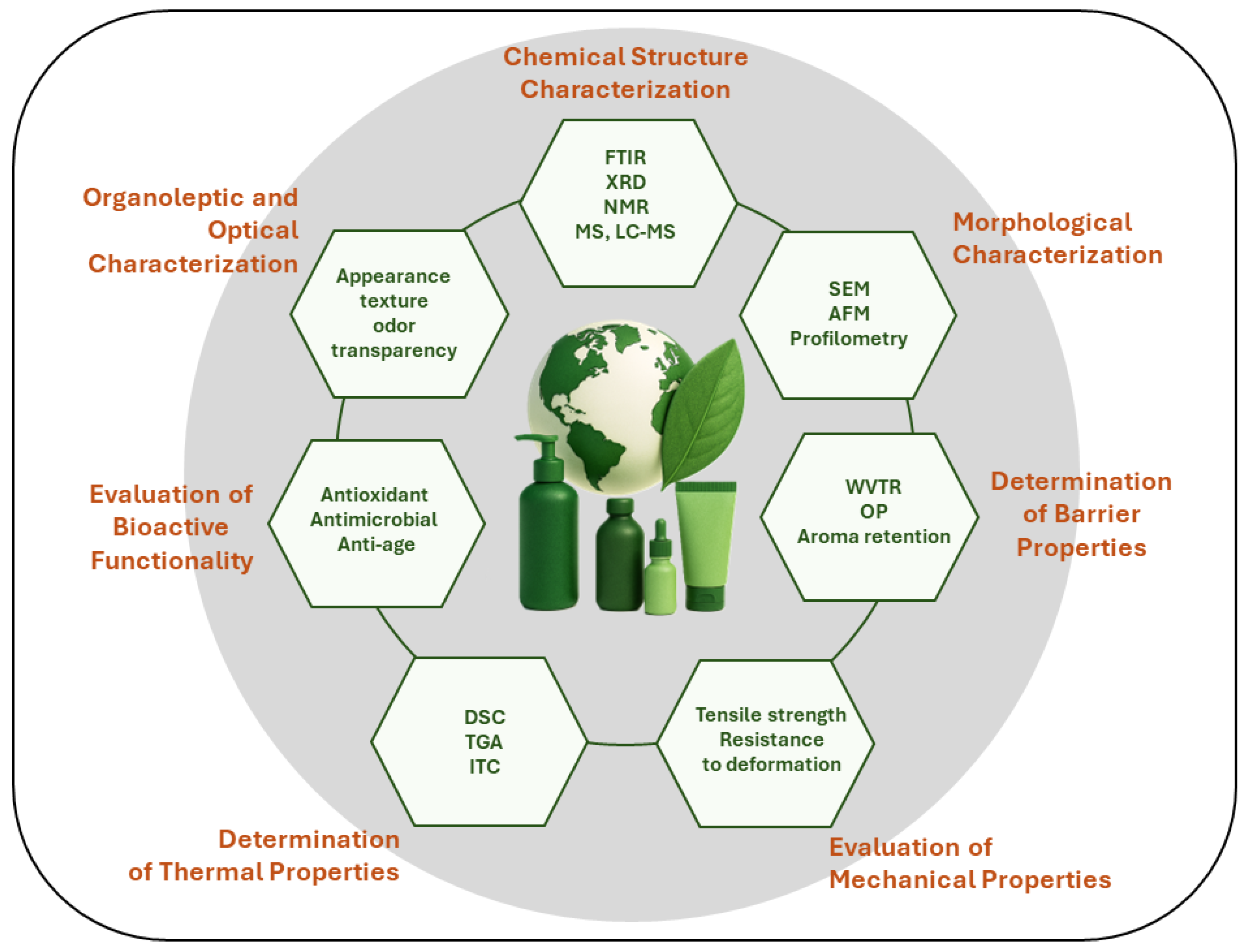
4. Fundamental Methodologies for Characterizing Active Packaging
4.1. Chemical Structure Characterization
4.2. Morphological Characterization
4.3. Determination of Barrier Properties
4.4. Evaluation of Mechanical Properties
4.5. Determination of Thermal Properties
4.6. Evaluation of Bioactive Functionality
4.7. Organoleptic and Optical Characterization
5. Challenges and Future Perspectives: Transferability to the Cosmetics Sector
6. Conclusions
Author Contributions
Funding
Data Availability Statement
Acknowledgments
Conflicts of Interest
References
- Euromonitor Beauty and Personal Care: Euromonitor from Trade Sources/National Statistics. Available online: https://nebulosa.icesi.edu.co:3174/statisticsevolution/index (accessed on 15 September 2025).
- Biyimba, B.N.; Ekaette, I.; Cobbinah-Sam, E. Starch Functionality in Cosmetics and Personal Care Products. Carbohydr. Polym. 2025, 364, 123597. [Google Scholar] [CrossRef]
- Nowak, K.; Jabłońska, E.; Ratajczak-Wrona, W. Controversy around Parabens: Alternative Strategies for Preservative Use in Cosmetics and Personal Care Products. Environ. Res. 2021, 198, 110488. [Google Scholar] [CrossRef]
- Guaratini, T.; Gianeti, M.D.; Campos, P.M.B.G.M. Stability of Cosmetic Formulations Containing Esters of Vitamins E and A: Chemical and Physical Aspects. Int. J. Pharm. 2006, 327, 12–16. [Google Scholar] [CrossRef]
- Kočevar Glavač, N.; Lunder, M. Preservative Efficacy of Selected Antimicrobials of Natural Origin in a Cosmetic Emulsion. Int. J. Cosmet. Sci. 2018, 40, 276–284. [Google Scholar] [CrossRef] [PubMed]
- Ryu, O.; Park, B.K.; Bang, M.; Cho, K.S.; Lee, S.H.; Gonzales, E.L.T.; Yang, S.M.; Kim, S.; Eun, P.H.; Lee, J.Y.; et al. Effects of Several Cosmetic Preservatives on ROS-Dependent Apoptosis of Rat Neural Progenitor Cells. Biomol. Ther. 2018, 26, 608–615. [Google Scholar] [CrossRef]
- Alshehrei, F.M. Microbiological Quality Assessment of Skin and Body Care Cosmetics by Using Challenge Test. Saudi J. Biol. Sci. 2024, 31, 103965. [Google Scholar] [CrossRef] [PubMed]
- Dalmaz, A.; Sivrikaya Özak, S. DES-Based Vortex-Assisted Liquid-Liquid Microextraction Procedure Developed for the Determination of Paraben Preservatives in Mouthwashes. Microchem. J. 2022, 179, 107445. [Google Scholar] [CrossRef]
- Chen, X.; Sullivan, D.A.; Sullivan, A.G.; Kam, W.R.; Liu, Y. Toxicity of Cosmetic Preservatives on Human Ocular Surface and Adnexal Cells. Exp. Eye Res. 2018, 170, 188–197. [Google Scholar] [CrossRef]
- Lefebvre, M.A.; Meuling, W.J.A.; Engel, R.; Coroama, M.C.; Renner, G.; Pape, W.; Nohynek, G.J. Consumer Inhalation Exposure to Formaldehyde from the Use of Personal Care Products/Cosmetics. Regul. Toxicol. Pharmacol. 2012, 63, 171–176. [Google Scholar] [CrossRef] [PubMed]
- Lv, C.; Hou, J.; Xie, W.; Cheng, H. Investigation on Formaldehyde Release from Preservatives in Cosmetics. Int. J. Cosmet. Sci. 2015, 37, 474–478. [Google Scholar] [CrossRef]
- Malinauskiene, L.; Blaziene, A.; Chomiciene, A.; Isaksson, M. Formaldehyde May Be Found in Cosmetic Products Even When Unlabelled. Open Med. 2015, 10, 323–328. [Google Scholar] [CrossRef]
- Mikami, E.; Goto, T.; Ohno, T.; Matsumoto, H.; Nishida, M. Simultaneous Analysis of Dehydroacetic Acid, Benzoic Acid, Sorbic Acid and Salicylic Acid in Cosmetic Products by Solid-Phase Extraction and High-Performance Liquid Chromatography. J. Pharm. Biomed. Anal. 2002, 28, 261–267. [Google Scholar] [CrossRef] [PubMed]
- Johnson, W.; Bergfeld, W.F.; Belsito, D.V.; Hill, R.A.; Klaassen, C.D.; Liebler, D.C.; Marks, J.G.; Shank, R.C.; Slaga, T.J.; Snyder, P.W.; et al. Safety Assessment of Benzyl Alcohol, Benzoic Acid and Its Salts, and Benzyl Benzoate. Int. J. Toxicol. 2017, 36, 5S–30S. [Google Scholar] [CrossRef]
- Alanazi, S.; Tabassum, H.; Abudawood, M.; Alrashoudi, R.; Alrashed, M.; Alsheikh, Y.A.; Alkaff, S.; Alghamdi, M.; Alenzi, N. Quantification of Methylisothiazolinone and Methylchloroisothiazolinone Preservatives by High-Performance Liquid Chromatography. Molecules 2023, 28, 1760. [Google Scholar] [CrossRef]
- Higgins, E.; Kirby, B.; Rogers, S.; Collins, P. Methylchloroisothiazolinone and Methylisothiazolinone Allergic Contact Dermatitis and the Effect of Patch Test Concentration. Dermatitis 2013, 24, 73–76. [Google Scholar] [CrossRef]
- Padilla, M.; Palma, M.; Barroso, C.G. Determination of Phenolics in Cosmetic Creams and Similar Emulsions. J. Chromatogr. A 2005, 1091, 83–88. [Google Scholar] [CrossRef]
- Dréno, B.; Zuberbier, T.; Gelmetti, C.; Gontijo, G.; Marinovich, M. Safety Review of Phenoxyethanol When Used as a Preservative in Cosmetics. J. Eur. Acad. Dermatol. Venereol. 2019, 33, 15–24. [Google Scholar] [CrossRef]
- Yaripour, S.; Bandekar, M.; Vihavainen, J.; More, K.; Eronen, A.; Durão, M.F.; Daneliya, M.; Houni, T.; Halonen, T.; Leskinen, J.T.T.; et al. Effects of Polymethylmethacrylate Nanoplastics on the Swimming Behaviour and Gut Microbiome of the Freshwater Amphipod Gammarus Pulex. Ecotoxicol. Environ. Saf. 2025, 289, 117501. [Google Scholar] [CrossRef] [PubMed]
- Klaiber, M.; Moreno-Gordaliza, E.; Gómez-Gómez, M.M.; Marazuela, M.D. Human Intake Assessment of Triclosan Associated with the Daily Use of Polypropylene-Made Antimicrobial Food Packaging. Food Chem. 2024, 451, 139475. [Google Scholar] [CrossRef] [PubMed]
- Tacker, M.; Hafner-Kuhn, T.; Gstöhl, A.; Nduagu, E.; Vozzola, E.; Roux, T.W.; Auras, R. Life Cycle Assessment of Polyethylene Packaging and Alternatives on the European Market. Clean. Environ. Syst. 2025, 17, 100270. [Google Scholar] [CrossRef]
- Kim, S.T.; Shao, K.; Oleschkewitz, C.; Hamilton, R. Margin of Exposure to Free Formaldehyde in Personal Care Products Containing Formaldehyde-Donor Preservatives: Evidence for Consumer Safety. Regul. Toxicol. Pharmacol. 2023, 145, 105519. [Google Scholar] [CrossRef]
- Lillo, M.A.; Nichols, C.; Perry, C.; Runke, S.; Krutilina, R.; Seagroves, T.N.; Miranda-Carboni, G.A.; Krum, S.A. Methylparaben Stimulates Tumor Initiating Cells in ER+ Breast Cancer Models. J. Appl. Toxicol. 2017, 37, 417–425. [Google Scholar] [CrossRef]
- Amin, M.M.; Tabatabaeian, M.; Chavoshani, A.; Amjadi, E.; Hashemi, M.; Ebrahimpour, K.; Klishadi, R.; Khazaei, S.; Mansourian, M.; Amin, M.M.; et al. Paraben Content in Adjacent Normal-Malignant Breast Tissues from Women with Breast Cancer. Biomed. Environ. Sci. 2019, 32, 893–904. [Google Scholar] [CrossRef] [PubMed]
- Syed, T.R.; Sharaby, M.R.; Salmieri, S.; Lacroix, M. Innovations in Active Food Packaging: Harnessing Waste Valorization and Irradiation-Assisted Functionalization for Sustainable Food Preservation. Trends Food Sci. Technol. 2025, 163, 105183. [Google Scholar] [CrossRef]
- Li, S.; Łopusiewicz, Ł.; Merino, D.; Sani, M.A.; Kalita, P.; Roy, S.; Yang, T.; Fei, T.; Zhang, W. High-Performance Ethyl Cellulose Composite Films: Innovations in Functional Enhancement for Sustainable Food Packaging. Carbohydr. Polym. 2025, 368, 124154. [Google Scholar] [CrossRef]
- Karnwal, A.; Rauf, A.; Jassim, A.Y.; Selvaraj, M.; Al-Tawaha, A.R.M.S.; Kashyap, P.; Kumar, D.; Malik, T. Advanced Starch-Based Films for Food Packaging: Innovations in Sustainability and Functional Properties. Food Chem. X 2025, 29, 102662. [Google Scholar] [CrossRef]
- Du, H.; Sun, X.; Chong, X.; Yang, M.; Zhu, Z.; Wen, Y. A Review on Smart Active Packaging Systems for Food Preservation: Applications and Future Trends. Trends Food Sci. Technol. 2023, 141, 104200. [Google Scholar] [CrossRef]
- Li, X.; Zhang, R.; Hassan, M.M.; Cheng, Z.; Mills, J.; Hou, C.; Realini, C.E.; Chen, L.; Day, L.; Zheng, X.; et al. Active Packaging for the Extended Shelf-Life of Meat: Perspectives from Consumption Habits, Market Requirements and Packaging Practices in China and New Zealand. Foods 2022, 11, 2903. [Google Scholar] [CrossRef] [PubMed]
- Vasile, C.; Baican, M. Progresses in Food Packaging, Food Quality, and Safety—Controlled-Release Antioxidant and/or Antimicrobial Packaging. Molecules 2021, 26, 1263. [Google Scholar] [CrossRef] [PubMed]
- Rachtanapun, C.; Rachtanapun, P.; Tantala, J.; Kasi, G.; Jantanasakulwong, K.; Halder, J.N.; Sringam, K.; Sommano, S.R.; Worajittiphon, P.; Seo, J.; et al. Synthesis of Calcium Oxide and Antimicrobial Activity Enhancement of Chitosan Bio-Composite Films: An Active Packaging Material. Int. J. Biol. Macromol. 2025, 322, 146971. [Google Scholar] [CrossRef]
- Sam, S.; Aguado, R.J.; Fiol, N.; Bastida, G.; Delgado-Aguilar, M.; Tarrés, Q. Antioxidant Coatings with Selenium Nanoparticles, Stabilized by Chitosan and Nanocellulose, for Active Paper Packaging. Int. J. Biol. Macromol. 2025, 319, 145721. [Google Scholar] [CrossRef]
- Ansari, J.R.; Park, K.; Seo, J. Improving the Oxygen Barrier Properties of Composite Films Using Green Tea Extracted CQDs and PVA for Active Packaging Applications. Food Packag. Shelf Life 2025, 48, 101460. [Google Scholar] [CrossRef]
- Hrádková, I.; Kumherová, M.; Šmidrkal, J. Preservatives in Cosmetics: Regulatory Aspects and Analytical Methods. Chem. Listy 2018, 115, 175–224. [Google Scholar] [CrossRef]
- Campana, R.; Scesa, C.; Patrone, V.; Vittoria, E.; Baffone, W. Microbiological Study of Cosmetic Products during Their Use by Consumers: Health Risk and Efficacy of Preservative Systems. Lett. Appl. Microbiol. 2006, 43, 301–306. [Google Scholar] [CrossRef] [PubMed]
- Almukainzi, M.; Alotaibi, L.; Abdulwahab, A.; Albukhary, N.; El Mahdy, A.M. Quality and Safety Investigation of Commonly Used Topical Cosmetic Preparations. Sci. Rep. 2022, 12, 18299. [Google Scholar] [CrossRef] [PubMed]
- Bhatt, P.; Trehan, S.; Inamdar, N.; Mourya, V.K.; Misra, A. Polymers in Drug Delivery: An Update. Appl. Polym. Drug Deliv. 2021, 1–42. [Google Scholar] [CrossRef]
- Priyadarshi, R.; Rhim, J.W. Chitosan-Based Biodegradable Functional Films for Food Packaging Applications. Innov. Food Sci. Emerg. Technol. 2020, 62, 102346. [Google Scholar] [CrossRef]
- Galani, E.; Ly, I.; Laurichesse, E.; Zoumpopoulou, G.; Tsakalidou, E.; Schmitt, V.; Xenakis, A.; Chatzidaki, M.D. Fungi-Derived Chitosan as an Emulsion Stabilizer for the Encapsulation of Bioactives. Colloids Surf. A Physicochem. Eng. Asp. 2024, 683, 133002. [Google Scholar] [CrossRef]
- Felix-Sagaste, K.G.; García-Armenta, E.; Picos-Corrales, L.A.; Bastidas-Bastidas, P.; Clemente-Soto, A.F.; Licea-Claverie, A.; Torres-Iribe, A.M. Insect Extract-Chitosan Microemulsions Stabilized by Alginate Hydrogels for Improved Wound Healing. Mater. Today Commun. 2025, 47, 113231. [Google Scholar] [CrossRef]
- Remesh, S.D.; Sandrasaigaran, P.; Remesh, S.; Perumal, V.; Lip Vun, J.Y.; Gandhi, S.; Hasan, H. Antimicrobial and Anti-Biofilm Activity of Crustacean-Derived Chitosan against Salmonella Typhimurium, Staphylococcus Aureus and Listeria Monocytogenes. Food Biosci. 2025, 68, 106697. [Google Scholar] [CrossRef]
- Muhammed, H.; Faheema, S.; Thayyil, M.S.; Udayan, G.; Ramesan, M.T. Multifunctional Chitosan/Chloro-Aspirin Composites for Energy Storage and Biomedical Applications. J. Indian Chem. Soc. 2025, 102, 101866. [Google Scholar] [CrossRef]
- Sun, S.; Wang, C.; Tang, W.; Cao, Y.; Zhang, Y.; Du, C.; Jiang, W. From Preparation to Application: Mushroom-Derived Chitosan in Wine-Making Exerts Microbial Suppression and Triggers Transcriptomic Response of Saccharomyces Cerevisiae. Food Biosci. 2025, 71, 107291. [Google Scholar] [CrossRef]
- Althagbi, H.I.; Alorfi, H.S. Green Synthesis of Multifunctional Ag/SeO2 and Ag/SeO2-Chitosan Nanocomposites Derived from Matricaria Chamomilla (L.) Extract: A Promising Platform for Natural Product Delivery and Antimicrobial Applications. Mater. Chem. Phys. 2025, 346, 131402. [Google Scholar] [CrossRef]
- Olariu, D.-I.; Platon, V.M.; Ibanescu, A.; Vlad, M.D.; Zara-Danceanu, C.M.; Lutic, D.; Marin, L.; Dragoi, B. LDH-Chitosan Bionanocomposites for Oncologic Applications: A Refreshing Perspective on the Mutual Influence through Intermolecular Forces toward Controlled Morphology and Dispersion. Int. J. Biol. Macromol. 2025, 329, 147495. [Google Scholar] [CrossRef]
- Jeyanthi, R.; Praveen, E.; Mohan, C.R. Boosting of Mechanical Sensitivity of ZnO through Imprinting on the Chitosan/PVDF Matrix for Vibration Sensor Applications. Int. J. Biol. Macromol. 2025, 321, 146257. [Google Scholar] [CrossRef] [PubMed]
- Lillo-Pérez, S.; Monsalve, Y.; Mesa, M.; Martínez, R.; Bernal, C. Encapsulation of Glucose Oxidase and Asparaginase in Silica–Chitosan Hybrids: Stability and PH-Modulated Release for Potential Biomedical Applications. Int. J. Biol. Macromol. 2025, 323, 146890. [Google Scholar] [CrossRef] [PubMed]
- Yi, K.; Miao, S.; Yang, B.; Li, S.; Hu, Y.; Lu, Y. Application of Chitosan Extracted from Silkworm Pupae by Ultrasound-Assisted Enzymatic Method on Strawberry Preservation. Int. J. Biol. Macromol. 2025, 327, 147489. [Google Scholar] [CrossRef]
- Sagar, B.M.; Islam, M.M.; Habib, M.L.; Ahmed, S.; Sahadat Hossain, M. Utilization of Natural and Waste Sources for Synthesis of Cellulose, Chitin, and Chitosan for a Suitable Environment. RSC Adv. 2025, 15, 26276–26301. [Google Scholar] [CrossRef] [PubMed]
- Bhutto, R.A.; Bhutto, N.U.A.H.; Wang, M.; Iqbal, S.; Yi, J. Curcumin-Loaded Pickering Emulsion Stabilized by PH-Induced Self-Aggregated Chitosan Particles: Effects of Degree of Deacetylation and Molecular Weight. Food Hydrocoll. 2024, 147, 109422. [Google Scholar] [CrossRef]
- de Alvarenga, E.S.; de Oliveira, P.C.; Bellato, C.R. An Approach to Understanding the Deacetylation Degree of Chitosan. Carbohydr. Polym. 2010, 80, 1155–1160. [Google Scholar] [CrossRef]
- Ganesan, T.L.; Pitchai, A.; Ramasamy, P. Antimicrobial Activity of Chitosan Phosphate Derived from Cuttlebone of Sepia Brevimana against Dental Pathogens. Next Res. 2025, 2, 100568. [Google Scholar] [CrossRef]
- Manimohan, M.; Pugalmani, S.; Sithique, M.A. Biologically Active Novel N, N, O Donor Tridentate Water Soluble Hydrazide Based O-Carboxymethyl Chitosan Schiff Base Cu (II) Metal Complexes: Synthesis and Characterisation. Int. J. Biol. Macromol. 2019, 136, 738–754. [Google Scholar] [CrossRef] [PubMed]
- Andoko, A.; Prasetya, R.; Cakra, B.D.; Syah, M.Z.; Santoso, A. Autoclave-Assisted Multi-Objective Optimization of the Deacetylation Process in Chitosan Production from Shrimp Shell Waste via Response Surface Methodology. Results Eng. 2025, 27, 106353. [Google Scholar] [CrossRef]
- Lertjindaporn, M.; Geng, J.T.; Keratimanoch, S.; Lee, G.Y.; Ryo, K.; Osako, K. Chitin and Chitosan from North Pacific Krill (Euphausia Pacifica): Comparative Study of Conventional and Microwave-Assisted Extraction Methods and the Potential Use in Chitosan Film Production. Int. J. Biol. Macromol. 2025, 296, 139692. [Google Scholar] [CrossRef] [PubMed]
- Román-Doval, R.; Torres-Arellanes, S.P.; Tenorio-Barajas, A.Y.; Gómez-Sánchez, A.; Valencia-Lazcano, A.A. Chitosan: Properties and Its Application in Agriculture in Context of Molecular Weight. Polymers 2023, 15, 2867. [Google Scholar] [CrossRef]
- Khubiev, O.M.; Egorov, A.R.; Kirichuk, A.A.; Khrustalev, V.N.; Tskhovrebov, A.G.; Kritchenkov, A.S. Chitosan-Based Antibacterial Films for Biomedical and Food Applications. Int. J. Mol. Sci. 2023, 24, 10738. [Google Scholar] [CrossRef]
- Zhang, W.; Cao, J.; Jiang, W. Analysis of Film-Forming Properties of Chitosan with Different Molecular Weights and Its Adhesion Properties with Different Postharvest Fruit Surfaces. Food Chem. 2022, 395, 133605. [Google Scholar] [CrossRef]
- Wang, M.; Wang, Y.; Chen, G.; Gao, H.; Peng, Q. Chitosan-Based Multifunctional Biomaterials as Active Agents or Delivery Systems for Antibacterial Therapy. Bioengineering 2024, 11, 1278. [Google Scholar] [CrossRef] [PubMed]
- Fatmawati, A.; Suseno, N.; Savitri, E.; Masui, G.T.; Ivony, F.A. Chitosan-Based Coating Application to Enhance Antimicrobial and Water Vapor Barrier Properties of Industry-Manufactured Paper. J. Kim. Sains Dan Apl. 2024, 27, 515–522. [Google Scholar] [CrossRef]
- Vázquez-Aldana, M.; Sixto-Berrocal, A.M.; Arcos-Casarrubias, J.A.; Martínez-Trujillo, M.A.; Cruz-Díaz, M.R. Biological and Chemical Synergy in Chitin and Chitosan Production: The Role of Process Sequencing in Shrimp Shell Waste Treatment. Int. J. Biol. Macromol. 2025, 306, 141247. [Google Scholar] [CrossRef]
- No, H.K.; Meyers, S.P. Preparation and Characterization of Chitin and Chitosan—A Review. J. Aquat. Food Prod. Technol. 1995, 4, 27–52. [Google Scholar] [CrossRef]
- Liu, W.; Qin, Y.; Liu, S.; Xing, R.; Yu, H.; Chen, X.; Li, K.; Li, P. C-Coordinated O-Carboxymethyl Chitosan Metal Complexes: Synthesis, Characterization and Antifungal Efficacy. Int. J. Biol. Macromol. 2018, 106, 68–77. [Google Scholar] [CrossRef]
- Chen, A.H.; Yang, C.Y.; Chen, C.Y.; Chen, C.Y.; Chen, C.W. The Chemically Crosslinked Metal-Complexed Chitosans for Comparative Adsorptions of Cu(II), Zn(II), Ni(II) and Pb(II) Ions in Aqueous Medium. J. Hazard Mater. 2009, 163, 1068–1075. [Google Scholar] [CrossRef]
- Manimohan, M.; Paulpandiyan, R.; Pugalmani, S.; Sithique, M.A. Biologically Active Co (II), Cu (II), Zn (II) Centered Water Soluble Novel Isoniazid Grafted O-Carboxymethyl Chitosan Schiff Base Ligand Metal Complexes: Synthesis, Spectral Characterisation and DNA Nuclease Activity. Int. J. Biol. Macromol. 2020, 163, 801–816. [Google Scholar] [CrossRef] [PubMed]
- El-Kattan, N.; Ibrahim, M.A.; Emam, A.N.; Metwally, K.; Youssef, F.S.; Nassar, N.A.; Mansour, A.S. Evaluation of the Antimicrobial Activity of Chitosan- and Curcumin-Capped Copper Oxide Nanostructures against Multi-Drug-Resistant Microorganisms. Nanoscale Adv. 2025, 7, 2988–3007. [Google Scholar] [CrossRef]
- Wang, Q.Z.; Chen, X.G.; Liu, N.; Wang, S.X.; Liu, C.S.; Meng, X.H.; Liu, C.G. Protonation Constants of Chitosan with Different Molecular Weight and Degree of Deacetylation. Carbohydr. Polym. 2006, 65, 194–201. [Google Scholar] [CrossRef]
- Fabiano, A.; Beconcini, D.; Migone, C.; Piras, A.M.; Zambito, Y. Quaternary Ammonium Chitosans: The Importance of the Positive Fixed Charge of the Drug Delivery Systems. Int. J. Mol. Sci. 2020, 21, 6617. [Google Scholar] [CrossRef]
- Davydova, V.N.; Komleva, D.D.; Volod’ko, A.V.; Sidorin, E.V.; Pimenova, E.A.; Kitan’, S.A.; Shulgin, A.A.; Spirin, P.V.; Sidorin, A.E.; Prassolov, V.S.; et al. Comparative Analysis of Physicochemical Properties and Biological Activities of Chitosans from Squid Gladius and Crab Shell. Carbohydr. Polym. 2025, 365, 123812. [Google Scholar] [CrossRef]
- Wu, S.; Wu, S.; Feng, T.; Shi, X.; Yan, Y.; Wang, Y.; Wang, Q.; Hu, N.; Wang, L.; Ding, F. Development of Multifunctional Green Food Packaging Based on Chitosan and Quercetin for Visual Monitoring of Fish Spoilage. Food Packag. Shelf Life 2025, 52, 101605. [Google Scholar] [CrossRef]
- Wang, X.; Guo, J.; Zhou, H.; Hou, Y.; Jin, P.; Zheng, Y.; Wu, Z. Chitosan-Based Aerogel Food Active Packaging with Integrated Preservation and Buffering Functions. J. Adv. Res. 2025, in press. [Google Scholar] [CrossRef] [PubMed]
- Yang, A.; Xu, X.; Deng, S.; Lee, S.H.; Lum, W.C.; Zhou, X.; Du, G.; Zhang, J. Sustainable Bio-Based Film Based on Chitosan Resin Crosslinking with Tannin, Phytic Acid and Octadecylamine for Food Packaging Application. Int. J. Biol. Macromol. 2025, 327, 147446. [Google Scholar] [CrossRef]
- Lv, L.C.; Huang, Q.Y.; Ding, W.; Xiao, X.H.; Zhang, H.Y.; Xiong, L.X. Fish Gelatin: The Novel Potential Applications. J. Funct. Foods 2019, 63, 103581. [Google Scholar] [CrossRef]
- Gomez-Guillen, M.C.; Gimenez, B.; Lopez-Caballero, M.E.; Montero, M.P. Functional and Bioactive Properties of Collagen and Gelatin from Alternative Sources: A Review. Food Hydrocoll. 2011, 25, 1813–1827. [Google Scholar] [CrossRef]
- Haug, I.J.; Draget, K.I.; Smidsrød, O. Physical and Rheological Properties of Fish Gelatin Compared to Mammalian Gelatin. Food Hydrocoll. 2004, 18, 203–213. [Google Scholar] [CrossRef]
- Derkach, S.R.; Voron’ko, N.G.; Kuchina, Y.A.; Kolotova, D.S. Modified Fish Gelatin as an Alternative to Mammalian Gelatin in Modern Food Technologies. Polymers 2020, 12, 3051. [Google Scholar] [CrossRef]
- Rather, J.A.; Akhter, N.; Ashraf, Q.S.; Mir, S.A.; Makroo, H.A.; Majid, D.; Barba, F.J.; Khaneghah, A.M.; Dar, B.N. A Comprehensive Review on Gelatin: Understanding Impact of the Sources, Extraction Methods, and Modifications on Potential Packaging Applications. Food Packag. Shelf Life 2022, 34, 100945. [Google Scholar] [CrossRef]
- Usman, M.; Regenstein, J.M.; Rahman, H.U.U.; Sahar, A.; Aadil, R.M.; Tariq, A.; Fatima, I.; Bilal, A.; He, L. Physicochemical and Functional Properties of Rainbow Trout (Oncorhynchus Mykiss) Skin Gelatin in Comparison to Commercial Bovine Gelatin. Food Chem. Adv. 2025, 8, 101088. [Google Scholar] [CrossRef]
- Wu, J.; Xiao, J.; Zhu, M.; Yang, H.; Liu, J.; Liu, Y. Study of Physicochemical and Gelation Properties of Fish Gelatin from Different Sources. Appl. Sci. 2023, 13, 5337. [Google Scholar] [CrossRef]
- Staroszczyk, H.; Kusznierewicz, B.; Malinowska-Pańczyk, E.; Sinkiewicz, I.; Gottfried, K.; Kołodziejska, I. Fish Gelatin Films Containing Aqueous Extracts from Phenolic-Rich Fruit Pomace. LWT 2020, 117, 108613. [Google Scholar] [CrossRef]
- Kato, K.; Nakayoshi, T.; Kurimoto, E.; Oda, A. Mechanisms of Deamidation of Asparagine Residues and Effects of Main-Chain Conformation on Activation Energy. Int. J. Mol. Sci. 2020, 21, 7035. [Google Scholar] [CrossRef]
- Catak, S.; Monard, G.; Aviyente, V.; Ruiz-López, M.F. Deamidation of Asparagine Residues: Direct Hydrolysis versus Succinimide-Mediated Deamidation Mechanisms. J. Phys. Chem. A 2009, 113, 1111–1120. [Google Scholar] [CrossRef]
- Ramsøe, A.; van Heekeren, V.; Ponce, P.; Fischer, R.; Barnes, I.; Speller, C.; Collins, M.J. DeamiDATE 1.0: Site-Specific Deamidation as a Tool to Assess Authenticity of Members of Ancient Proteomes. J. Archaeol. Sci. 2020, 115, 105080. [Google Scholar] [CrossRef]
- Shakeri, F.; Bahmani, Z.; Mirmoghtadaie, L. Effect of Deamination and Agar Addition on Physical Properties of Gelatin Extracted from Thunnus Tonggol Skin. J. Food Qual. Hazards Control 2025, 12, 183–191. [Google Scholar] [CrossRef]
- Jafari, M.; Afkhami, R.; Sedaghat, N. Preparation and Characterization of Active Cirish Fructans–Fish Gelatin Film: Physicochemical, Antioxidant, and Antimicrobial Properties. Food Sci. Nutr. 2023, 11, 709–721. [Google Scholar] [CrossRef]
- León-López, A.; Fuentes-Jiménez, L.; Hernández-Fuentes, A.D.; Campos-Montiel, R.G.; Aguirre-álvarez, G. Hydrolysed Collagen from Sheepskins as a Source of Functional Peptides with Antioxidant Activity. Int. J. Mol. Sci. 2019, 20, 3931. [Google Scholar] [CrossRef] [PubMed]
- Murugan, G.; Nilsuwan, K.; Prodpran, T.; Ponnusamy, A.; Rhim, J.W.; Kim, J.T.; Benjakul, S. Active Fish Gelatin/Chitosan Blend Film Incorporated with Guava Leaf Powder Carbon Dots: Properties, Release and Antioxidant Activity. Gels 2024, 10, 281. [Google Scholar] [CrossRef] [PubMed]
- Huang, T.; Tu, Z.-C.; Shangguan, X.; Wang, H.; Sha, X.; Bansal, N. Rheological Behavior, Emulsifying Properties and Structural Characterization of Phosphorylated Fish Gelatin. Food Chem. 2018, 246, 428–436. [Google Scholar] [CrossRef] [PubMed]
- Gómez-Estaca, J.; Bravo, L.; Gómez-Guillén, M.C.; Alemán, A.; Montero, P. Antioxidant Properties of Tuna-Skin and Bovine-Hide Gelatin Films Induced by the Addition of Oregano and Rosemary Extracts. Food Chem. 2009, 112, 18–25. [Google Scholar] [CrossRef]
- Giménez, B.; López de Lacey, A.; Pérez-Santín, E.; López-Caballero, M.E.; Montero, P. Release of Active Compounds from Agar and Agar–Gelatin Films with Green Tea Extract. Food Hydrocoll. 2013, 30, 264–271. [Google Scholar] [CrossRef]
- Derkach, S.R.; Voron’ko, N.G.; Kuchina, Y.A.; Kolotova, D.S.; Grokhovsky, V.A.; Nikiforova, A.A.; Sedov, I.A.; Faizullin, D.A.; Zuev, Y.F. Rheological Properties of Fish and Mammalian Gelatin Hydrogels as Bases for Potential Practical Formulations. Gels 2024, 10, 486. [Google Scholar] [CrossRef]
- Fakhreddin Hosseini, S.; Rezaei, M.; Zandi, M.; Ghavi, F.F. Preparation and Functional Properties of Fish Gelatin–Chitosan Blend Edible Films. Food Chem. 2013, 136, 1490–1495. [Google Scholar] [CrossRef]
- Jeya Shakila, R.; Jeevithan, E.; Varatharajakumar, A.; Jeyasekaran, G.; Sukumar, D. Comparison of the Properties of Multi-Composite Fish Gelatin Films with That of Mammalian Gelatin Films. Food Chem. 2012, 135, 2260–2267. [Google Scholar] [CrossRef]
- See, S.F.; Ghassem, M.; Mamot, S.; Babji, A.S. Effect of Different Pretreatments on Functional Properties of African Catfish (Clarias Gariepinus) Skin Gelatin. J. Food Sci. Technol. 2015, 52, 753–762. [Google Scholar] [CrossRef]
- Joy, J.M.; Padmaprakashan, A.; Pradeep, A.; Paul, P.T.; Mannuthy, R.J.; Mathew, S. A Review on Fish Skin-Derived Gelatin: Elucidating the Gelatin Peptides—Preparation, Bioactivity, Mechanistic Insights, and Strategies for Stability Improvement. Foods 2024, 13, 2793. [Google Scholar] [CrossRef]
- Nitsuwat, S.; Zhang, P.; Ng, K.; Fang, Z. Fish Gelatin as an Alternative to Mammalian Gelatin for Food Industry: A Meta-Analysis. LWT 2021, 141, 110899. [Google Scholar] [CrossRef]
- Tongnuanchan, P.; Benjakul, S.; Prodpran, T. Comparative Studies on Properties and Antioxidative Activity of Fish Skin Gelatin Films Incorporated with Essential Oils from Various Sources. Int. Aquat. Res. 2014, 6, 62. [Google Scholar] [CrossRef]
- Liu, J.; Song, Z.; Wang, Y.; Pei, Y.; Tang, K. Edible Films Based on Fish Gelatin and Soluble Soybean Polysaccharide Enriched with Tea Polyphenol for Active Food Packaging. Polymers 2025, 17, 2174. [Google Scholar] [CrossRef] [PubMed]
- Azizah, F.; Nursakti, H.; Ningrum, A. Supriyadi Development of Edible Composite Film from Fish Gelatin–Pectin Incorporated with Lemongrass Essential Oil and Its Application in Chicken Meat. Polymers 2023, 15, 2075. [Google Scholar] [CrossRef]
- Shukla, R.; Cheryan, M. Zein: The Industrial Protein from Corn. Ind. Crops Prod. 2001, 13, 171–192. [Google Scholar] [CrossRef]
- Zhang, S.; Zhao, H. Preparation and Properties of Zein–Rutin Composite Nanoparticle/Corn Starch Films. Carbohydr. Polym. 2017, 169, 385–392. [Google Scholar] [CrossRef]
- Gaona-Sánchez, V.A.; Calderón-Domínguez, G.; Morales-Sánchez, E.; Chanona-Pérez, J.J.; Velázquez-de la Cruz, G.; Méndez-Méndez, J.V.; Terrés-Rojas, E.; Farrera-Rebollo, R.R. Preparation and Characterisation of Zein Films Obtained by Electrospraying. Food Hydrocoll. 2015, 49, 1–10. [Google Scholar] [CrossRef]
- da Silva, C.E.P.; de Oliveira, M.A.S.; Simas, F.F.; Riegel-Vidotti, I.C. Physical Chemical Study of Zein and Arabinogalactans or Glucuronomannans Polyelectrolyte Complexes and Their Film-Forming Properties. Food Hydrocoll. 2020, 100, 105394. [Google Scholar] [CrossRef]
- Liu, Z.; Cao, X.; Ren, S.; Wang, J.; Zhang, H. Physicochemical Characterization of a Zein Prepared Using a Novel Aqueous Extraction Technology and Tensile Properties of the Zein Film. Ind. Crops Prod. 2019, 130, 57–62. [Google Scholar] [CrossRef]
- Kumar, P.; Lau, P.W.; Kale, S.; Johnson, S.; Pareek, V.; Utikar, R.; Lali, A. Kafirin Adsorption on Ion-Exchange Resins: Isotherm and Kinetic Studies. J. Chromatogr. A 2014, 1356, 105–116. [Google Scholar] [CrossRef] [PubMed]
- Taylor, J.; Taylor, J.R.N.; Dutton, M.F.; De Kock, S. Identification of Kafirin Film Casting Solvents. Food Chem. 2005, 90, 401–408. [Google Scholar] [CrossRef]
- Oom, A.; Pettersson, A.; Taylor, J.R.N.; Stading, M. Rheological Properties of Kafirin and Zein Prolamins. J. Cereal Sci. 2008, 47, 109–116. [Google Scholar] [CrossRef]
- Belton, P.S.; Delgadillo, I.; Halford, N.G.; Shewry, P.R. Kafirin Structure and Functionality. J. Cereal Sci. 2006, 44, 272–286. [Google Scholar] [CrossRef]
- Oguntoyinbo, S.I.; Taylor, J.R.N.; Taylor, J. Comparative Functional Properties of Kafirin and Zein Viscoelastic Masses Formed by Simple Coacervation at Different Acetic Acid and Protein Concentrations. J. Cereal Sci. 2018, 83, 16–24. [Google Scholar] [CrossRef]
- Giteru, S.G.; Coorey, R.; Bertolatti, D.; Watkin, E.; Johnson, S.; Fang, Z. Physicochemical and Antimicrobial Properties of Citral and Quercetin Incorporated Kafirin-Based Bioactive Films. Food Chem. 2015, 168, 341–347. [Google Scholar] [CrossRef]
- Bhat, R.; Karim, A.A. Towards Producing Novel Fish Gelatin Films by Combination Treatments of Ultraviolet Radiation and Sugars (Ribose and Lactose) as Cross-Linking Agents. J. Food Sci. Technol. 2012, 51, 1326–1333. [Google Scholar] [CrossRef]
- Kołodziejska, I.; Piotrowska, B. The Water Vapour Permeability, Mechanical Properties and Solubility of Fish Gelatin–Chitosan Films Modified with Transglutaminase or 1-Ethyl-3-(3-Dimethylaminopropyl) Carbodiimide (EDC) and Plasticized with Glycerol. Food Chem. 2007, 103, 295–300. [Google Scholar] [CrossRef]
- Bajpai, M.; Bajpai, S.K.; Jyotishi, P. Water Absorption and Moisture Permeation Properties of Chitosan/Poly(Acrylamide-Co-Itaconic Acid) IPC Films. Int. J. Biol. Macromol. 2016, 84, 1–9. [Google Scholar] [CrossRef]
- Remuñán-López, C.; Bodmeier, R. Mechanical, Water Uptake and Permeability Properties of Crosslinked Chitosan Glutamate and Alginate Films. J. Control. Release 1997, 44, 215–225. [Google Scholar] [CrossRef]
- Ahammed, S.; Liu, F.; Khin, M.N.; Yokoyama, W.H.; Zhong, F. Improvement of the Water Resistance and Ductility of Gelatin Film by Zein. Food Hydrocoll. 2020, 105, 105804. [Google Scholar] [CrossRef]
- Olivera, N.; Rouf, T.B.; Bonilla, J.C.; Carriazo, J.G.; Dianda, N.; Kokini, J.L. Effect of LAPONITE® Addition on the Mechanical, Barrier and Surface Properties of Novel Biodegradable Kafirin Nanocomposite Films. J. Food Eng. 2019, 245, 24–32. [Google Scholar] [CrossRef]
- Emmambux, M.N.; Stading, M.; Taylor, J.R.N. Sorghum Kafirin Film Property Modification with Hydrolysable and Condensed Tannins. J. Cereal Sci. 2004, 40, 127–135. [Google Scholar] [CrossRef]
- Xiao, F.H.; Wang, J.; Wang, D.G.; Zhai, J.Q.; Lu, G.X.; Chen, C.Z. Influence of TiO2 Nanoparticles on the Performance and Inner Structure of Zein/Eugenol Films. Food Packag. Shelf Life 2022, 31, 100782. [Google Scholar] [CrossRef]
- Nicosia, C.; Pulvirenti, A.; Licciardello, F. Development of Solvent-Cast Antimicrobial PHBV Films for the Inhibition of Spoilage Microflora. LWT 2025, 218, 117486. [Google Scholar] [CrossRef]
- Ponce, P.; Ávila, E.; Morales, Z.; Reinoso, C.; Díaz, A.; Loyo, C.; Saucedo-Vázquez, J.P.; Terencio, T.; Mora, J.; López, F. Mechanical Parameters of Chitosan Film with Glycerol and Propylene Carbonate. Carbon Trends 2025, 21, 100563. [Google Scholar] [CrossRef]
- C.-Eulalio, H.Y.; B.-Rodrigues, J.F.; O.-Santos, K.; Peniche, C.; V.-LiaFook, M. Characterization and Thermal Properties of Chitosan Films Prepared with Different Acid Solvents. Rev. Cuba. de Química 2019, 31, 309–323. [Google Scholar]
- Theerawitayaart, W.; Prodpran, T.; Benjakul, S.; Sookchoo, P. Properties of Films from Fish Gelatin Prepared by Molecular Modification and Direct Addition of Oxidized Linoleic Acid. Food Hydrocoll. 2019, 88, 291–300. [Google Scholar] [CrossRef]
- Pouralkhas, M.; Kordjazi, M.; Ojagh, S.M.; Farsani, O.A. Physicochemical and Functional Characterization of Gelatin Edible Film Incorporated with Fucoidan Isolated from Sargassum Tenerrimum. Food Sci. Nutr. 2023, 11, 4124–4135. [Google Scholar] [CrossRef]
- Avena-Bustillos, R.J.; Olsen, C.W.; Olson, D.A.; Chiou, B.; Yee, E.; Bechtel, P.J.; McHugh, T.H. Water Vapor Permeability of Mammalian and Fish Gelatin Films. J. Food Sci. 2006, 71, E202–E207. [Google Scholar] [CrossRef]
- Ahammed, S.; Easdani, M.; Liu, F.; Zhong, F. Encapsulation of Tea Polyphenol in Zein through Complex Coacervation Technique to Control the Release of the Phenolic Compound from Gelatin–Zein Composite Film. Polymers 2023, 15, 2882. [Google Scholar] [CrossRef] [PubMed]
- Gennadios, A. Formation and Properties of Corn Zein Films and Coatings. In Protein-Based Films and Coatings; Gennadios, A., Ed.; CRC Press: Boca Raton, FL, USA, 2002; pp. 63–88. [Google Scholar]
- Anyango, J.O.; Taylor, J.; Taylor, J.R.N. Improvement in Water Stability and Other Related Functional Properties of Thin Cast Kafirin Protein Films. J. Agric Food Chem. 2011, 59, 12674–12682. [Google Scholar] [CrossRef] [PubMed]
- Hussain, R.; Batool, S.A.; Aizaz, A.; Abbas, M.; Ur Rehman, M.A. Biodegradable Packaging Based on Poly(Vinyl Alcohol) and Carboxymethyl Cellulose Films Incorporated with Ascorbic Acid for Food Packaging Applications. ACS Omega 2023, 8, 42301–42310. [Google Scholar] [CrossRef] [PubMed]
- Kanmani, P.; Rhim, J.W. Antimicrobial and Physical-Mechanical Properties of Agar-Based Films Incorporated with Grapefruit Seed Extract. Carbohydr. Polym. 2014, 102, 708–716. [Google Scholar] [CrossRef]
- Singh, S.; Gaikwad, K.K.; Lee, Y.S. Antimicrobial and Antioxidant Properties of Polyvinyl Alcohol Bio Composite Films Containing Seaweed Extracted Cellulose Nano-Crystal and Basil Leaves Extract. Int. J. Biol. Macromol. 2018, 107, 1879–1887. [Google Scholar] [CrossRef]
- Borbolla-Jiménez, F.V.; Peña-Corona, S.I.; Farah, S.J.; Jiménez-Valdés, M.T.; Pineda-Pérez, E.; Romero-Montero, A.; Del Prado-Audelo, M.L.; Bernal-Chávez, S.A.; Magaña, J.J.; Leyva-Gómez, G. Films for Wound Healing Fabricated Using a Solvent Casting Technique. Pharmaceutics 2023, 15, 1914. [Google Scholar] [CrossRef]
- de Carvalho, A.C.W.; Paiva, N.F.; Demonari, I.K.; Duarte, M.P.F.; do Couto, R.O.; de Freitas, O.; Vicentini, F.T.M.d.C. The Potential of Films as Transmucosal Drug Delivery Systems. Pharmaceutics 2023, 15, 2583. [Google Scholar] [CrossRef]
- Ghosh, M.; Kshirsagar, S.M.; Kipping, T.; Banga, A.K. Vacuum Compression-Molded Polyvinyl Alcohol Microneedles for Sustained Three-Day Transdermal Delivery of Palonosetron Hydrochloride. Drug Deliv. Transl. Res. 2025, 2025, 1–20. [Google Scholar] [CrossRef]
- Konopka, T.; Jurczyszyn, K.; Karolewicz, B.; Kida, D.; Konopka, T.; Jurczyszyn, K.; Zena Karolewicz, B. Technological Aspects and Evaluation Methods for Polymer Matrices as Dental Drug Carriers. Biomedicines 2023, 11, 1274. [Google Scholar] [CrossRef]
- Di Muzio, L.; Simonetti, P.; Carriero, V.C.; Brandelli, C.; Trilli, J.; Sergi, C.; Tirillò, J.; Cairone, F.; Cesa, S.; Radocchia, G.; et al. Solvent Casting and UV Photocuring for Easy and Safe Fabrication of Nanocomposite Film Dressings. Molecules 2022, 27, 2959. [Google Scholar] [CrossRef] [PubMed]
- Weng, S.; Marcet, I.; Rendueles, M.; Díaz, M. Edible Films from the Laboratory to Industry: A Review of the Different Production Methods. Food Bioprocess Technol. 2024, 18, 3245–3271. [Google Scholar] [CrossRef]
- Wang, Q.; Chen, W.; Zhu, W.; McClements, D.J.; Liu, X.; Liu, F. A Review of Multilayer and Composite Films and Coatings for Active Biodegradable Packaging. npj Sci. Food 2022, 6, 18. [Google Scholar] [CrossRef]
- Mihalca, V.; Kerezsi, A.D.; Weber, A.; Gruber-traub, C.; Schmucker, J.; Vodnar, D.C.; Dulf, F.V.; Socaci, S.A.; Fărcaș, A.; Mureșan, C.I.; et al. Protein-Based Films and Coatings for Food Industry Applications. Polymers 2021, 13, 769. [Google Scholar] [CrossRef] [PubMed]
- Chen, H.; Lan, X.; Zhang, S.; Zhang, Q.; Zhang, X.; Chi, H.; Meng, Q.; Fan, F.; Tang, J. Properties of Gelatin-Zein Films Prepared by Blending Method and Layer-by-Layer Self-Assembly Method. Int. J. Biol. Macromol. 2025, 292, 139172. [Google Scholar] [CrossRef] [PubMed]
- Zhang, Q.; Sando, D.; Nagarajan, V. Chemical Route Derived Bismuth Ferrite Thin Films and Nanomaterials. J. Mater. Chem. C Mater. 2016, 4, 4092–4124. [Google Scholar] [CrossRef]
- Park, H.J.; Chinnan, M.S.; Shewfelt, R.L. Edible corn-zein film coatings to extend storage life of tomatoes. J. Food Process Preserv. 1994, 18, 317–331. [Google Scholar] [CrossRef]
- Suresh, P.V.; Raj, K.R.; Nidheesh, T.; Pal, G.K.; Sakhare, P.Z. Application of Chitosan for Improvement of Quality and Shelf Life of Table Eggs under Tropical Room Conditions. J. Food Sci. Technol. 2015, 52, 6345–6354. [Google Scholar] [CrossRef]
- Xu, D.; Wang, J.; Ren, D.; Wu, X. Effects of Chitosan Coating Structure and Changes during Storage on Their Egg Preservation Performance. Coatings 2018, 8, 317. [Google Scholar] [CrossRef]
- Baxamusa, S.H.; Stadermann, M.; Aracne-Ruddle, C.; Nelson, A.J.; Chea, M.; Li, S.; Youngblood, K.; Suratwala, T.I. Enhanced Delamination of Ultrathin Free-Standing Polymer Films via Self-Limiting Surface Modification. Langmuir 2014, 30, 5126–5132. [Google Scholar] [CrossRef] [PubMed]
- Nathanael, A.J.; Oh, T.H. Biopolymer Coatings for Biomedical Applications. Polymers 2020, 12, 3061. [Google Scholar] [CrossRef]
- Jahangiri, F.; Mohanty, A.K.; Misra, M. Sustainable Biodegradable Coatings for Food Packaging: Challenges and Opportunities. Green Chem. 2024, 26, 4934–4974. [Google Scholar] [CrossRef]
- Vartiainen, J.; Vähä-Nissi, M.; Harlin, A.; Vartiainen, J.; Vähä-Nissi, M.; Harlin, A. Biopolymer Films and Coatings in Packaging Applications—A Review of Recent Developments. Mater. Sci. Appl. 2014, 5, 708–718. [Google Scholar] [CrossRef]
- Eranda, D.H.U.; Chaijan, M.; Panpipat, W.; Karnjanapratum, S.; Cerqueira, M.A.; Castro-Muñoz, R. Gelatin-Chitosan Interactions in Edible Films and Coatings Doped with Plant Extracts for Biopreservation of Fresh Tuna Fish Products: A Review. Int. J. Biol. Macromol. 2024, 280, 135661. [Google Scholar] [CrossRef]
- Adhikari, M.; Koirala, S.; Anal, A.K. Edible Multilayer Coating Using Electrostatic Layer-by-Layer Deposition of Chitosan and Pectin Enhances Shelf Life of Fresh Strawberries. Int. J. Food Sci. Technol. 2023, 58, 871–879. [Google Scholar] [CrossRef]
- Rossi-Márquez, G.; Dávalos-Saucedo, C.A.; Farris, S.; Mayek-Pérez, N.; Di Pierro, P. Multilayered Edible Coatings to Enhance Some Quality Attributes of Ready-to-Eat Cherimoya (Annona cherimola). Coatings 2022, 13, 41. [Google Scholar] [CrossRef]
- Wentz, F.; Olofsson, S. A Study on Lignin or Zein Based Hydrophobic Coatings. Master’s Thesis, Lund University, Lund, Sweden, 2023. [Google Scholar]
- Jose, C.; Thomas, S.; Ahmad, I.; Marin, L.; Vesel, A. Deposition of Chitosan on Plasma-Treated Polymers—A Review. Polymers 2023, 15, 1109. [Google Scholar] [CrossRef]
- Theapsak, S.; Watthanaphanit, A.; Rujiravanit, R. Preparation of Chitosan-Coated Polyethylene Packaging Films by DBD Plasma Treatment. ACS Appl. Mater. Interfaces 2012, 4, 2474–2482. [Google Scholar] [CrossRef]
- Oliviero, M.; Di Maio, E.; Iannace, S. Effect of Molecular Structure on Film Blowing Ability of Thermoplastic Zein. J. Appl. Polym. Sci. 2010, 115, 277–287. [Google Scholar] [CrossRef]
- Di Maio, E.; Mali, R.; Iannace, S. Investigation of Thermoplasticity of Zein and Kafirin Proteins: Mixing Process and Mechanical Properties. J. Polym. Environ. 2010, 18, 626–633. [Google Scholar] [CrossRef]
- Rojas-Lema, S.; Gomez-Caturla, J.; Balart, R.; Arrieta, M.P.; Garcia-Sanoguera, D. Development and Characterization of Thermoplastic Zein Biopolymers Plasticized with Glycerol Suitable for Injection Molding. Ind. Crops Prod. 2024, 218, 119035. [Google Scholar] [CrossRef]
- Long, J.; Qian, M. Biodegradable Protein-Based Plastics with Improved Mechanical Strength and Water Resistance. U.S. Patent US11739216B2, 4 December 2020. [Google Scholar]
- Zhang, Y.; Liu, B.L.; Wang, L.J.; Deng, Y.H.; Zhou, S.Y.; Feng, J.W. Preparation, Structure and Properties of Acid Aqueous Solution Plasticized Thermoplastic Chitosan. Polymers 2019, 11, 818. [Google Scholar] [CrossRef]
- Krishna, M.; Nindo, C.I.; Min, S.C. Development of Fish Gelatin Edible Films Using Extrusion and Compression Molding. J. Food Eng. 2012, 108, 337–344. [Google Scholar] [CrossRef]
- Matet, M.; Heuzey, M.C.; Pollet, E.; Ajji, A.; Avérous, L. Innovative Thermoplastic Chitosan Obtained by Thermo-Mechanical Mixing with Polyol Plasticizers. Carbohydr. Polym. 2013, 95, 241–251. [Google Scholar] [CrossRef] [PubMed]
- Byaruhanga, Y.B.; Erasmus, C.; Emmambux, M.N.; Taylor, J.R.N. Effect of Heating Cast Kafirin Films on Their Functional Properties. J. Sci. Food Agric 2007, 87, 167–175. [Google Scholar] [CrossRef]
- Georget, D.M.R.; Elkhalifa, A.E.O.; Peter, S.B. Structural Changes in Kafirin Extracted from a White Type II Tannin Sorghum during Germination. J. Cereal Sci. 2012, 55, 106–111. [Google Scholar] [CrossRef]
- Wang, Y.; Zhang, L.; Cao, G.; Li, Z.; Du, M. Effect of Heat Treatment on Gelatin Properties and the Construction of High Internal Phase Emulsions for 3D Printing. Foods 2024, 13, 4009. [Google Scholar] [CrossRef]
- Hoque, M.S.; Benjakul, S.; Prodpran, T. Effect of Heat Treatment of Film-Forming Solution on the Properties of Film from Cuttlefish (Sepia Pharaonis) Skin Gelatin. J. Food Eng. 2010, 96, 66–73. [Google Scholar] [CrossRef]
- Mahanta, B.P.; Bora, P.K.; Kemprai, P.; Borah, G.; Lal, M.; Haldar, S. Thermolabile Essential Oils, Aromas and Flavours: Degradation Pathways, Effect of Thermal Processing and Alteration of Sensory Quality. Food Res. Int. 2021, 145, 110404. [Google Scholar] [CrossRef] [PubMed]
- Yang, H.; Hou, L.; Sun, H.M.; Ye, S.H. Degradation Kinetics of Vitamins in Different Enteral Feeding Formulas during Storage at Different Temperatures. Heliyon 2024, 10, e29653. [Google Scholar] [CrossRef] [PubMed]
- de Vilela Silva, E.T.; de Queiroz, A.J.M.; de Figueirêdo, R.M.F.; Moura, H.V.; dos Santos, F.S.; de Franςa Silva, A.P.; Cavalcanti, C.F.; Gregório, M.G.; Galdino, P.O.; Gomes, J.P. Dynamic Modelling of Degradation Kinetics of Phenolic Compounds, Phenolic Profiles, Mineral Content, and Overall Antioxidant Capacity of Germinated Peanut Flours. LWT 2023, 183, 114927. [Google Scholar] [CrossRef]
- Gharsallaoui, A.; Roudaut, G.; Chambin, O.; Voilley, A.; Saurel, R. Applications of Spray-Drying in Microencapsulation of Food Ingredients: An Overview. Food Res. Int. 2007, 40, 1107–1121. [Google Scholar] [CrossRef]
- Zhang, L.; Kosaraju, S.L. Biopolymeric Delivery System for Controlled Release of Polyphenolic Antioxidants. Eur Polym. J. 2007, 43, 2956–2966. [Google Scholar] [CrossRef]
- da Rocha, C.B.; Noreña, C.P.Z. Microencapsulation and Controlled Release of Bioactive Compounds from Grape Pomace. Dry. Technol. 2021, 39, 1018–1032. [Google Scholar] [CrossRef]
- Bisharat, L.; Alkhatib, H.S.; Abdelhafez, A.; Barqawi, A.; Aljaberi, A.; Qi, S.; Berardi, A. Hot Melt Extruded Zein for Controlled Delivery of Diclofenac Sodium: Effect of Drug Loading and Medium Composition. Int. J. Pharm. 2020, 585, 119503. [Google Scholar] [CrossRef]
- Bouman, J.; Belton, P.; Venema, P.; Van Der Linden, E.; De Vries, R.; Qi, S. Controlled Release from Zein Matrices: Interplay of Drug Hydrophobicity and PH. Pharm. Res. 2015, 33, 673–685. [Google Scholar] [CrossRef]
- Masanabo, M.A.; Ray, S.S.; Emmambux, M.N. Properties of Thermoplastic Maize Starch-Zein Composite Films Prepared by Extrusion Process under Alkaline Conditions. Int. J. Biol. Macromol. 2022, 208, 443–452. [Google Scholar] [CrossRef]
- Chen, Y.; Ye, R.; Xu, H. Physicochemical Properties of Zein-Based Films by Electrophoretic Deposition Using Indium Tin Oxide Electrodes: Vertical and Horizontal Electric Fields. Int. J. Food Prop 2016, 19, 945–957. [Google Scholar] [CrossRef]
- Taylor, J.R.N.; Taylor, J. Do Kafirin Bioplastic Materials Have Unique Functional Characteristics? Cereal Chem. 2023, 100, 539–555. [Google Scholar] [CrossRef]
- Giteru, S.G.; Oey, I.; Ali, M.A.; Johnson, S.K.; Fang, Z. Effect of Kafirin-Based Films Incorporating Citral and Quercetin on Storage of Fresh Chicken Fillets. Food Control 2017, 80, 37–44. [Google Scholar] [CrossRef]
- Pavlatkova, L.; Sogut, E.; Sedlarikova, J.; Pleva, P.; Petit, L.; Masar, M.; Peer, P.; Janalikova, M.; Uysal-Unalan, I. Zein/Chitosan/Cellulose Nanocrystal Based Active Food Contact Layer: Unlocking the Interrelations between Release Behavior, Mechanical Stability, and Hydrolysis. Food Hydrocoll. 2025, 166, 111316. [Google Scholar] [CrossRef]
- Velásquez, E.; Rojas, A.; Piña, C.; Galotto, M.J.; de Dicastillo, C.L. Development of Bilayer Biodegradable Composites Containing Cellulose Nanocrystals with Antioxidant Properties. Polymers 2019, 11, 1945. [Google Scholar] [CrossRef]
- De Almeida, C.B.; Corradini, E.; Forato, L.A.; Fujihara, R.; Filho, J.F.L. Microstructure and Thermal and Functional Properties of Biodegradable Films Produced Using Zein. Polímeros 2018, 28, 30–37. [Google Scholar] [CrossRef]
- AL-Hassan, A.A.; Norziah, M.H. Effect of Transglutaminase Induced Crosslinking on the Properties of Starch/Gelatin Films. Food Packag. Shelf Life 2017, 13, 15–19. [Google Scholar] [CrossRef]
- Hou, B.Y.; Wang, B.J.; Weng, Y.M. Transglutaminase Cross-Linked and Lysozyme-Incorporated Antimicrobial Tilapia Collagen Edible Films: Development and Characterization. Foods 2023, 12, 1475. [Google Scholar] [CrossRef]
- Masamba, K.; Li, Y.; Hategekimana, J.; Zehadi, M.; Ma, J.; Zhong, F. Evaluation of Mechanical and Water Barrier Properties of Transglutaminase Cross-Linked Zein Films Incorporated with Oleic Acid. Int. J. Food Sci. Technol. 2016, 51, 1159–1167. [Google Scholar] [CrossRef]
- Westlake, J.R.; Tran, M.W.; Jiang, Y.; Zhang, X.; Burrows, A.D.; Xie, M. Biodegradable Active Packaging with Controlled Release: Principles, Progress, and Prospects. ACS Food Sci. Technol. 2022, 2, 1166–1183. [Google Scholar] [CrossRef]
- Li, Y.; Zhu, J.; Cheng, H.; Li, G.; Cho, H.; Jiang, M.; Gao, Q.; Zhang, X. Developments of Advanced Electrospinning Techniques: A Critical Review. Adv. Mater. Technol. 2021, 6, 2100410. [Google Scholar] [CrossRef]
- Castillo-Henríquez, L.; Vargas-Zúñiga, R.; Pacheco-Molina, J.; Vega-Baudrit, J. Electrospun Nanofibers: A Nanotechnological Approach for Drug Delivery and Dissolution Optimization in Poorly Water-Soluble Drugs. ADMET DMPK 2020, 8, 325–353. [Google Scholar] [CrossRef]
- Jahanbakhsh Oskouei, M.; Alizadeh Khaledabad, M.; Almasi, H.; Hamishekar, H.; Amiri, S. Preparation and Characterization of Kafirin/PLA Electrospun Nanofibers Activated by Syzygium Aromaticum Essential Oil. Polym. Bull. 2024, 81, 10061–10079. [Google Scholar] [CrossRef]
- Moradinezhad, F.; Aliabadi, M.; Ansarifar, E. Zein Multilayer Electrospun Nanofibers Contain Essential Oil: Release Kinetic, Functional Effectiveness, and Application to Fruit Preservation. Foods 2024, 13, 700. [Google Scholar] [CrossRef]
- Wang, H.; Xia, R.; Zhou, M.; Williams, G.R.; Amler, E.; Zhou, F.L.; Tamaddon, M.; Liu, C. The Development of a Coaxial Electrospinning Formula Using Fish Gelatin/PBS as the Core for Structurally Intact Liposome Loading and Release. Polymers 2025, 17, 944. [Google Scholar] [CrossRef]
- Ali, S.H.; Mahammed, M.A.; Yasin, S.A. Characterization of Electrospinning Chitosan Nanofibers Used for Wound Dressing. Polymers 2024, 16, 1984. [Google Scholar] [CrossRef] [PubMed]
- Songchotikunpan, P.; Tattiyakul, J.; Supaphol, P. Extraction and Electrospinning of Gelatin from Fish Skin. Int. J. Biol. Macromol. 2008, 42, 247–255. [Google Scholar] [CrossRef] [PubMed]
- Isik, B.S.; Bayram, S.; Altay, F. Electrospinning Encapsulation of Chlorophylls Microwave-Extracted from Spinach Waste and Utilization as Coloring Agent in Yogurt. Food Bioprocess Technol. 2025, 18, 4684–4706. [Google Scholar] [CrossRef]
- Yao, Z.C.; Chen, S.C.; Ahmad, Z.; Huang, J.; Chang, M.W.; Li, J.S. Essential Oil Bioactive Fibrous Membranes Prepared via Coaxial Electrospinning. J. Food Sci. 2017, 82, 1412–1422. [Google Scholar] [CrossRef]
- Camerlo, A.; Bühlmann-Popa, A.M.; Vebert-Nardin, C.; Rossi, R.M.; Fortunato, G. Environmentally Controlled Emulsion Electrospinning for the Encapsulation of Temperature-Sensitive Compounds. J. Mater. Sci. 2014, 49, 8154–8162. [Google Scholar] [CrossRef]
- Topuz, F.; Uyar, T. Electrospinning of Sustainable Polymers from Biomass for Active Food Packaging. Sustain. Food Technol. 2024, 2, 1266–1296. [Google Scholar] [CrossRef]
- Amorim, L.F.A.; Mouro, C.; Gouveia, I.C. Electrospun Fiber Materials Based on Polysaccharides and Natural Colorants for Food Packaging Applications. Cellulose 2024, 31, 6043–6069. [Google Scholar] [CrossRef]
- Angel, N.; Li, S.; Yan, F.; Kong, L. Recent Advances in Electrospinning of Nanofibers from Bio-Based Carbohydrate Polymers and Their Applications. Trends Food Sci. Technol. 2022, 120, 308–324. [Google Scholar] [CrossRef]
- Tan, S.M.; Teoh, X.Y.; Le Hwang, J.; Khong, Z.P.; Sejare, R.; Almashhadani, A.Q.; Assi, R.A.; Chan, S.Y. Electrospinning and Its Potential in Fabricating Pharmaceutical Dosage Form. J. Drug Deliv. Sci. Technol. 2022, 76, 103761. [Google Scholar] [CrossRef]
- Peresin, M.S.; Habibi, Y.; Vesterinen, A.H.; Rojas, O.J.; Pawlak, J.J.; Seppälä, J.V. Effect of Moisture on Electrospun Nanofiber Composites of Poly(Vinyl Alcohol) and Cellulose Nanocrystals. Biomacromolecules 2010, 11, 2471–2477. [Google Scholar] [CrossRef]
- Jiang, Q.; Reddy, N.; Zhang, S.; Roscioli, N.; Yang, Y. Water-Stable Electrospun Collagen Fibers from a Non-Toxic Solvent and Crosslinking System. J. Biomed. Mater. Res. A 2013, 101A, 1237–1247. [Google Scholar] [CrossRef]
- Khatri, M.; Khatri, Z.; El-Ghazali, S.; Hussain, N.; Qureshi, U.A.; Kobayashi, S.; Ahmed, F.; Kim, I.S. Zein Nanofibers via Deep Eutectic Solvent Electrospinning: Tunable Morphology with Super Hydrophilic Properties. Sci. Rep. 2020, 10, 15307. [Google Scholar] [CrossRef]
- Uhljar, L.É.; Alshweiat, A.; Katona, G.; Chung, M.; Radacsi, N.; Kókai, D.; Burián, K.; Ambrus, R. Comparison of Nozzle-Based and Nozzle-Free Electrospinning for Preparation of Fast-Dissolving Nanofibers Loaded with Ciprofloxacin. Pharmaceutics 2022, 14, 1559. [Google Scholar] [CrossRef] [PubMed]
- Rosenthal, T.; Weller, J.M.; Chan, C.K. Needleless Electrospinning for High Throughput Production of Li7La3Zr2O12 Solid Electrolyte Nanofibers. Ind. Eng. Chem. Res. 2019, 58, 17399–17405. [Google Scholar] [CrossRef]
- Kianfar, P.; Vitale, A.; Dalle Vacche, S.; Bongiovanni, R. Enhancing Properties and Water Resistance of PEO-Based Electrospun Nanofibrous Membranes by Photo-Crosslinking. J. Mater. Sci. 2020, 56, 1879–1896. [Google Scholar] [CrossRef]
- Mirzaei, R.; Tangestaninejad, S.; Marandi, A.; Moghadam, M.; Mohammadpoor-Baltork, I.; Kardanpour, R.; Abdolvand, H. Innovative Cross-Linked Electrospun PVA/MOF Nanocomposites for Removal of Cefixime Antibiotic. Sci. Rep. 2025, 15, 83. [Google Scholar] [CrossRef]
- Li, C.; Wang, C.; Liu, Y.; Zhang, Y.; Wang, S.; Zhao, R.; Xu, A. Electrospinning and Multilayer Modification to Construct NH2/EPSP-Modified Polyacrylonitrile Nanofiber Films for Humidity Regulation. Prog. Org. Coat. 2023, 178, 107485. [Google Scholar] [CrossRef]
- Aflaha, R.; Putri, L.A.; Maharani, C.N.; Rianjanu, A.; Roto, R.; Wasisto, H.S.; Triyana, K. Tuning a Superhydrophobic Surface on an Electrospun Polyacrylonitrile Nanofiber Membrane by Polysulfone Blending. ACS Omega 2024, 9, 29840–29847. [Google Scholar] [CrossRef] [PubMed]
- Sun, W.; Ren, G.; Li, B.; Li, D.; Hu, S.; Zhang, Y.; Cui, Z.; Yue, W.; Yu, H.; Lu, D. Novel Dry Facial Mask Based on Emulsion Electrospinning. Surf. Interfaces 2024, 51, 104823. [Google Scholar] [CrossRef]
- Vostrejs, P.; Kovalcik, A.; Schaubeder, J.B.; Spirk, S.; Hricovini, M.; Nypelö, T.; Kalina, M.; Cernekova, N.; Brezina, M.; Kargl, R. Biobased Antimicrobial Coatings: Layer-by-Layer Assemblies Based on Natural Polyphenols. ACS Appl. Polym. Mater. 2025, 7, 3601–3610. [Google Scholar] [CrossRef]
- dos Santos, V.L.S.; Araújo, R.C.; Lisboa, E.S.; Lopes, A.M.; de Albuquerque-Júnior, R.L.; Cardoso, J.C.; Blanco-Llamero, C.; Deshpande, T.A.; Anderson, H.O.W.; Priefer, R.; et al. Layer-by-Layer Assembly: A Versatile Approach for Tailored Biomedical Films and Drug Delivery. J. Drug Deliv Sci. Technol. 2024, 91, 105243. [Google Scholar] [CrossRef]
- Partheniadis, I.; Nikolakakis, I.; Laidmäe, I.; Heinämäki, J. A Mini-Review: Needleless Electrospinning of Nanofibers for Pharmaceutical and Biomedical Applications. Processes 2020, 8, 673. [Google Scholar] [CrossRef]
- Saleh-Bey-Kinj, Z.; Heller, Y.; Socratous, G.; Christodoulou, P. 3D Printing in Oral Drug Delivery: Technologies, Clinical Applications and Future Perspectives in Precision Medicine. Pharmaceuticals 2025, 18, 973. [Google Scholar] [CrossRef]
- Nath, D.; Pal, A.K.; Misra, M.; Mohanty, A.K. Biodegradable Blown Film Composites from Bioplastic and Talc: Effect of Uniaxial Stretching on Mechanical and Barrier Properties. Macromol. Mater. Eng. 2023, 308, 2300214. [Google Scholar] [CrossRef]
- Kim, S.H.; Kang, S.E.; Kim, Y.D.; Park, M.K. Industrial-Scale Blown Active Packaging Film with Essential Oils: Properties, Dual-Functional Performance, and Box Packaging Application of Instant Noodles. Food Packag. Shelf Life 2024, 43, 101276. [Google Scholar] [CrossRef]
- Klinmalai, P.; Leelapatarapun, J.; Wongphan, P.; Harnkarnsujarit, N. Antibacterial and Antifungal Activities of Protease Loaded Modified Thermoplastic Starch Blown PBAT Films for Active Packaging. Food Packag. Shelf Life 2025, 50, 101541. [Google Scholar] [CrossRef]
- Semenova, M. Advances in Molecular Design of Biopolymer-Based Delivery Micro/Nanovehicles for Essential Fatty Acids. Food Hydrocoll. 2017, 68, 114–121. [Google Scholar] [CrossRef]
- Leyva-Porras, C.; Saavedra-Leos, Z.; Periyasamy, T.; Asrafali, S.P.; Lee, J. Recent Advances in Functional Biopolymer Films with Antimicrobial and Antioxidant Properties for Enhanced Food Packaging. Polymers 2025, 17, 1257. [Google Scholar] [CrossRef] [PubMed]
- Upadhyay, P.; Ullah, A. Enhancement of Mechanical and Barrier Properties of Chitosan-Based Bionanocomposites Films Reinforced with Eggshell-Derived Hydroxyapatite Nanoparticles. Int. J. Biol. Macromol. 2024, 261, 129764. [Google Scholar] [CrossRef]
- Westlake, J.R.; Tran, M.W.; Jiang, Y.; Zhang, X.; Burrows, A.D.; Xie, M. Biodegradable Biopolymers for Active Packaging: Demand, Development and Directions. Sustain. Food Technol. 2023, 1, 50–72. [Google Scholar] [CrossRef]
- Acosta-Humánez, M.F.; Arrieta, A.A.; Hernández, J.; Garay, Y.; Combatt, E.M.; Libreros-Castillo, K.H.; Afanasjeva, N.; Palencia, M. An Overview of Basic Characterization Techniques for Natural-Originated Biopolymers: UV-Vis and FTIR Spectroscopy-A Review. J. Sci. Technol. Appl. 2025, 18, 1–9. [Google Scholar] [CrossRef]
- Chen, H.; Wang, Q.; Deng, Y.; Zhang, J.; Wang, Y.; Zhao, H.; Zhu, Y.; Zhang, Y.; Javed, M.; Zhuang, L.; et al. Experimental and Theoretical Studies on Antioxidant and Antibacterial Properties of Chitosan-Gelatin Functional Composite Films Loaded with Flavonoids. Int. J. Biol. Macromol. 2024, 282, 137449. [Google Scholar] [CrossRef]
- Cullity, B.D.; Stock, S.R. Elements of X-Ray Diffraction; Pearson New International Edition: Harlow, UK, 2014; ISBN 1269374508. [Google Scholar]
- Sun, Y.; Wu, S.; Jiao, Z.; Liu, D.; Li, X.; Shang, T.; Tian, Z. Preparation and Characterization of Active Packaging Film Containing Chitosan/Gelatin/Brassica Crude Extract. Sci. Rep. 2025, 15, 6729. [Google Scholar] [CrossRef]
- Mishra, G.; Praharaj, P.; Pandey, S.; Parida, S. Biodegradable Layered Double Hydroxide Based Polymeric Films for Sustainable Food Packaging Applications. Appl. Clay Sci. 2023, 240, 106978. [Google Scholar] [CrossRef]
- Kargupta, T.; Pooja, N.; Rahman, M.H.; Vij, I.; Biswas, R.; Roy, S.; Mazumder, N. An Insight into Thermal, Chemical, and Structural Characterization of Biopolymers. Discov. Appl. Sci. 2025, 7, 865. [Google Scholar] [CrossRef]
- Saalwächter, K. Applications of NMR in Polymer Characterization—An Introduction. In NMR Methods for Characterization of Synthetic and Natural Polymers; Zhang, R., Miyoshi, T., Sun, P., Eds.; The Royal Society of Chemistry: London, UK, 2019; pp. 1–22. [Google Scholar]
- Zhao, R.; Sandström, C.; Zhang, H.; Tan, T. NMR Study on the Inclusion Complexes of β-Cyclodextrin with Isoflavones. Molecules 2016, 21, 372. [Google Scholar] [CrossRef]
- Kfoury, M.; Landy, D.; Ruellan, S.; Auezova, L.; Greige-Gerges, H.; Fourmentin, S. Determination of Formation Constants and Structural Characterization of Cyclodextrin Inclusion Complexes with Two Phenolic Isomers: Carvacrol and Thymol. Beilstein J. Org. Chem. 2016, 12, 29. [Google Scholar] [CrossRef]
- Pradhan, B.L.; Sen, P.; Dey, K.K.; Ghosh, M. Investigating Structural and Dynamic Changes in Cellulose Due to Nanocrystallization. J. Biomol. NMR 2025, 79, 259–280. [Google Scholar] [CrossRef]
- Wang, W.; Cai, J.; Xu, Z.; Zhang, Y.; Niu, F.; Gao, M.; Yang, J. Structural Characteristics of Plant Cell Wall Elucidated by Solution-State 2D NMR Spectroscopy with an Optimized Procedure. Green Process. Synth. 2020, 9, 650–663. [Google Scholar] [CrossRef]
- Aznar, M.; Rodriguez-Lafuente, A.; Alfaro, P.; Nerin, C. UPLC-Q-TOF-MS Analysis of Non-Volatile Migrants from New Active Packaging Materials. Anal. Bioanal Chem. 2012, 404, 1945–1957. [Google Scholar] [CrossRef]
- Otero-Pazos, P.; Sendón, R.; Blanco-Fernandez, B.; Blanco-Dorado, S.; Alvarez-Lorenzo, C.; Concheiro, A.; Angulo, I.; Paseiro-Losada, P.; Rodríguez-Bernaldo de Quirós, A. Preparation of Antioxidant Active Films Based on Chitosan: Diffusivity Study of α-Tocopherol into Food Simulants. J. Food Sci. Technol. 2016, 53, 2817–2826. [Google Scholar] [CrossRef]
- Kandioller, W.; Theiner, J.; Keppler, B.K.; Kowol, C.R. Elemental Analysis: An Important Purity Control but Prone to Manipulations. Inorg. Chem. Front. 2022, 9, 412–416. [Google Scholar] [CrossRef]
- dos Santos, Z.M.; Caroni, A.L.P.F.; Pereira, M.R.; da Silva, D.R.; Fonseca, J.L.C. Determination of Deacetylation Degree of Chitosan: A Comparison between Conductometric Titration and CHN Elemental Analysis. Carbohydr. Res. 2009, 344, 2591–2595. [Google Scholar] [CrossRef]
- Santos, D.S.; Matos, R.S.; Pinto, E.P.; Santos, S.B.; da Fonseca Filho, H.D.; Prioli, R.; Ferreira, I.M.; Souza, T.M. Probing the Physicochemical, Nanomorphological, and Antimicrobial Attributes of Sustainable Silk Fibroin/Copaiba Oleoresin-Loaded PVA Films for Food Packaging Applications. Polymers 2025, 17, 375. [Google Scholar] [CrossRef] [PubMed]
- Rizal, S.; Alfatah, T.; Abdul Khalil, H.P.S.; Yahya, E.B.; Abdullah, C.K.; Mistar, E.M.; Ikramullah, I.; Kurniawan, R.; Bairwan, R.D. Enhanced Functional Properties of Bioplastic Films Using Lignin Nanoparticles from Oil Palm-Processing Residue. Polymers 2022, 14, 5126. [Google Scholar] [CrossRef] [PubMed]
- Cabrera-Barjas, G.; González, M.; Benavides-Valenzuela, S.; Preza, X.; Paredes-Padilla, Y.A.; Castaño-Rivera, P.; Segura, R.; Durán-Lara, E.F.; Nesic, A. Active Packaging Based on Hydroxypropyl Methyl Cellulose/Fungal Chitin Nanofibers Films for Controlled Release of Ferulic Acid. Polymers 2025, 17, 2113. [Google Scholar] [CrossRef] [PubMed]
- Gautam, S.; Verma, M.; Lakhanpal, T.S. Machine-Learning Driven Design of Bio-Based Active Food Packaging Films with Improved Mechanical Properties. Sustain. Food Technol. 2025, 3, 1705–1722. [Google Scholar] [CrossRef]
- Chen, H.W.; Lin, M.F. Characterization, Biocompatibility, and Optimization of Electrospun SF/PCL/CS Composite Nanofibers. Polymers 2020, 12, 1439. [Google Scholar] [CrossRef]
- Yang, X.; Ma, Y.; Huang, T.; Zhang, K.; Zhang, Q.; Huang, J.; Huang, M. Optimization and Characterization of Modified Starch-Chitosan Composite Films Incorporated with Gongju Extract. LWT 2025, 226, 117965. [Google Scholar] [CrossRef]
- Sun, R.; Li, L.; Zhou, J.; Zhang, Y.; Sun, H.; Zhang, D.; Wu, Q. Development of Zein–PEG400/PVA–Chitosan Bilayer Films for Intelligent Packaging. Polymers 2025, 17, 387. [Google Scholar] [CrossRef]
- Lal, R.; Ramachandran, S.; Arnsdorf, M.F. Multidimensional Atomic Force Microscopy: A Versatile Novel Technology for Nanopharmacology Research. AAPS J. 2010, 12, 716–728. [Google Scholar] [CrossRef]
- Variola, F. Atomic Force Microscopy in Biomaterials Surface Science. Phys. Chem. Chem. Phys. 2015, 17, 2950–2959. [Google Scholar] [CrossRef]
- Mulla, M.F.Z.; Ahmed, J.; Vahora, A.; Pathania, S.; Rashed, M.S. Characterization of Biopolymers Based Antibacterial Films Enriched with Thyme Essential Oil and Their Application for Milk Cake Preservation. Front. Food Sci. Technol. 2024, 4, 1356582. [Google Scholar] [CrossRef]
- Sánchez, J.T.; García, A.V.; Martínez-Abad, A.; Vilaplana, F.; Jiménez, A.; Garrigós, M.C. Physicochemical and Functional Properties of Active Fish Gelatin-Based Edible Films Added with Aloe Vera Gel. Foods 2020, 9, 1248. [Google Scholar] [CrossRef] [PubMed]
- Ghanbarzodeh, B.; Oromiehie, A.R.; Musavi, M.; Falcone, P.M.; D-Jomeh, Z.E.; Rad, E.R. Study of Mechanical Properties, Oxygen Permeability and AFM Topography of Zein Films Plasticized by Polyols. Packag. Technol. Sci. 2007, 20, 155–163. [Google Scholar] [CrossRef]
- Juarez-Salazar, R.; Esquivel-Hernandez, S.; Diaz-Ramirez, V.H. Optical Fringe Projection: A Straightforward Approach to 3D Metrology. Metrology 2025, 5, 47. [Google Scholar] [CrossRef]
- Chen, L.C.; Duong, D.H.; Chen, C.S. Optical 3-D Profilometry for Measuring Semiconductor Wafer Surfaces with Extremely Variant Reflectivities. Appl. Sci. 2019, 9, 2060. [Google Scholar] [CrossRef]
- Kaewprachu, P.; Jaisan, C. Physicochemical Properties of Chitosan from Green Mussel Shells (Perna Viridis): A Comparative Study. Polymers 2023, 15, 2816. [Google Scholar] [CrossRef]
- Türksever, C.; Koç, B.; Esmer, O.K. Sustainable Alternatives in Multilayer Packaging: Storage Stability of Pudding Powder Under Accelerated Storage Conditions. Foods 2025, 14, 3806. [Google Scholar] [CrossRef]
- Miranda, S.P.; Garnica, O.; Lara-Sagahon, V.; Cárdenas, G. Water Vapor Permeability and Mechanical Properties of Chitosan Composite Films. J. Chil. Chem. Soc. 2004, 49, 173–178. [Google Scholar] [CrossRef]
- Liu, F.; Chang, W.; Chen, M.; Xu, F.; Ma, J.; Zhong, F. Tailoring Physicochemical Properties of Chitosan Films and Their Protective Effects on Meat by Varying Drying Temperature. Carbohydr. Polym. 2019, 212, 150–159. [Google Scholar] [CrossRef] [PubMed]
- Bordenave, N.; Grelier, S.; Pichavant, F.; Coma, V. Water and Moisture Susceptibility of Chitosan and Paper-Based Materials: Structure–Property Relationships. J. Agric Food Chem. 2007, 55, 9479–9488. [Google Scholar] [CrossRef] [PubMed]
- Patil, D.A.; Tated, S.; Mhaske, S.T. Plasticized Kafirin-Based Films: Analysis of Thermal, Barrier and Mechanical Properties. Polym. Bull. 2021, 78, 1721–1733. [Google Scholar] [CrossRef]
- Arruda, T.R.; de Oliveira Machado, G.; Marques, C.S.; de Souza, A.L.; Pelissari, F.M.; de Oliveira, T.V.; Silva, R.R.A. An Overview of Starch-Based Materials for Sustainable Food Packaging: Recent Advances, Limitations, and Perspectives. Macromolecules 2025, 5, 19. [Google Scholar] [CrossRef]
- Khanal, B.P.; Imoro, Y.; Chen, Y.H.; Straube, J.; Knoche, M. Surface Moisture Increases Microcracking and Water Vapour Permeance of Apple Fruit Skin. Plant Biol. 2021, 23, 74–82. [Google Scholar] [CrossRef]
- Liu, Y.; Xu, H.; Chen, Z.; Xie, Z.; Wen, H.; Chang, X.; Li, G. Development of Lily Starch Films Reinforced with Chitosan–Honeysuckle Essential Oil Hybrid Particles and Cellulose Nanofibers for Enhanced Properties. Foods 2025, 14, 589. [Google Scholar] [CrossRef]
- Daza, L.D.; Parra, D.O.; Rosselló, C.; Arango, W.M.; Eim, V.S.; Váquiro, H.A. Influence of Ulluco Starch Modified by Annealing on the Physicochemical Properties of Biodegradable Films. Polymers 2022, 14, 4251. [Google Scholar] [CrossRef]
- Daza, L.D.; Montealegre, M.Á.; Sandoval Aldana, A.; Obando, M.; Váquiro, H.A.; Eim, V.S.; Simal, S. Effect of Essential Oils from Lemongrass and Tahiti Lime Residues on the Physicochemical Properties of Chitosan-Based Biodegradable Films. Foods 2023, 12, 1824. [Google Scholar] [CrossRef] [PubMed]
- Sosa, A.M.; Cottet, C.; Berin, B.E.; Martínez, L.M.; Peltzer, M.A.; Prieto, M.J.; Martinez, C.S. Development of Films for Wound Healing Based on Gelatin and Oil/Water Emulsions as Carriers of Bioactive Compounds. Pharmaceutics 2025, 17, 357. [Google Scholar] [CrossRef]
- Kim, J.M.; Lee, M.H.; Ko, J.A.; Kang, D.H.; Bae, H.; Park, H.J. Influence of Food with High Moisture Content on Oxygen Barrier Property of Polyvinyl Alcohol (PVA)/Vermiculite Nanocomposite Coated Multilayer Packaging Film. J. Food Sci. 2018, 83, 349–357. [Google Scholar] [CrossRef]
- Argel-Pérez, S.; Velásquez-Cock, J.; Zuluaga, R.; Gómez-Hoyos, C. Improving Hydrophobicity and Water Vapor Barrier Properties in Paper Using Cellulose Nanofiber-Stabilized Cocoa Butter and PLA Emulsions. Coatings 2024, 14, 1310. [Google Scholar] [CrossRef]
- Teoh, R.W.; Ting, A.S.Y.; Thoo, Y.Y. Characterization and Modeling of Diffusion Kinetics of Rosemary Oleoresin Extract from Gellan Gum-Based Film. J. Food Sci. Technol. 2023, 60, 2978–2989. [Google Scholar] [CrossRef]
- Olewnik-Kruszkowska, E.; Vishwakarma, A.; Wrona, M.; Bertella, A.; Rudawska, A.; Gierszewska, M.; Schmidt, B. Comparative Study of Crucial Properties of Packaging Based on Polylactide and Selected Essential Oils. Foods 2025, 14, 204. [Google Scholar] [CrossRef]
- Sharma, C.; Kundu, S.; Singh, S.; Saxena, J.; Gautam, S.; Kumar, A.; Pathak, P. From Concept to Shelf: Engineering Biopolymer-Based Food Packaging for Sustainability. RSC Sustain. 2025, 3, 4992–5026. [Google Scholar] [CrossRef]
- Attallah, O.A.; Mojicevic, M.; Garcia, E.L.; Azeem, M.; Chen, Y.; Asmawi, S.; Fournet, M.B. Macro and Micro Routes to High Performance Bioplastics: Bioplastic Biodegradability and Mechanical and Barrier Properties. Polymers 2021, 13, 2155. [Google Scholar] [CrossRef] [PubMed]
- Mccurdy, C.; Dixion, D.; Archer, E.; Dooher, T.; Edwards, I. A Comparison of the Sealing, Forming and Moisture Vapour Transmission Properties of Polylactic Acid (PLA), Polyethene (PE) and Polyethylene Terephthalate (PET) Coated Boards for Packaging Applications. J. Packag. Technol. Res. 2022, 6, 91–100. [Google Scholar] [CrossRef]
- American Society for Testing and Materials. Standard Test Methods for Gravimetric Determination of Water Vapor Transmission Rate of Materials; ASTM International: West Conshohocken, PA, USA, 2024. [Google Scholar]
- Murugan, G.; Benjakul, S.; Prodpran, T.; Rajasekaran, B.; Baboonsundaram, A.; Nagarajan, M. Enhancement of Barrier Properties of Fish Skin Gelatin Based Film Layered with PLA and PBAT. J. Polym. Environ. 2023, 31, 5416–5431. [Google Scholar] [CrossRef]
- Piñeros-Guerrero, N.; Collazo-Bigliardi, S.; Ortega-Toro, R. Mechanical and Barrier Properties of Thermoplastic Starch Based Composites by the Incorporation of Montmorillonite Clays. Investig. Desarro. Cienc. Tecnol. Aliment. 2020, 5, 558–562. [Google Scholar]
- Kalita, P.; Bhattacharjee, B.; Goswami, A.; Pachuau, L.; Roy, S. Development of Zein-Based Functional Packaging in Food Preservation: A Comprehensive Review. J. Food Meas. Charact. 2025, 19, 6239–6263. [Google Scholar] [CrossRef]
- Alvarado, S.; Sandoval, G.; Palos, I.; Tellez, S.; Aguirre-Loredo, Y.; Velazquez, G. The Effect of Relative Humidity on Tensile Strength and Water Vapor Permeability in Chitosan, Fish Gelatin and Transglutaminase Edible Films. Food Sci. Technol. 2015, 35, 690–695. [Google Scholar] [CrossRef]
- Zehra, A.; Wani, S.M.; Jan, N.; Bhat, T.A.; Rather, S.A.; Malik, A.R.; Hussain, S.Z. Development of Chitosan-Based Biodegradable Films Enriched with Thyme Essential Oil and Additives for Potential Applications in Packaging of Fresh Collard Greens. Sci. Rep. 2022, 12, 16923. [Google Scholar] [CrossRef]
- Azlin, T.N.; Lyn, F.H.; Hanani, Z.A.N. Active Food Packaging Development: Rambutan (Nephelium Lappaceum L.) Peel Extract Incorporated into Starch-Protein Blend Films. Sustain. Food Technol. 2025, 3, 2032–2040. [Google Scholar] [CrossRef]
- Hasanin, M.S.; Hassan, Y.R.; Youssef, A.M. Active Packaging Films Based on the Nanoform of Chitin, Alginate, and Layered Double Hydroxides: Characterization, Mechanical Properties, Permeability, and Bioactive Properties. RSC Adv. 2024, 14, 37380–37391. [Google Scholar] [CrossRef]
- Koppolu, R.; Lahti, J.; Abitbol, T.; Aulin, C.; Kuusipalo, J.; Toivakka, M. Tailoring the Performance of Nanocellulose-Based Multilayer-Barrier Paperboard Using Biodegradable-Thermoplastics, Pigments, and Plasticizers. Cellulose 2023, 30, 6945–6958. [Google Scholar] [CrossRef]
- American Society for Testing and Materials. Test Method for Tensile Properties of Thin Plastic Sheeting; ASTM International: West Conshohocken, PA, USA, 2018. [Google Scholar]
- Morel, S.; Mura, G.; Gallarate, M.; Sapino, S. Cosmetic Packaging: European Regulatory Aspects and Sustainability. Cosmetics 2024, 11, 110. [Google Scholar] [CrossRef]
- Omira, A.; Grira, S.; Mourad, A.H.I.; Alkhedher, M. The New Generation of Cosmetics Packaging: A Paradigm Shift. Glob. Transit. 2025, 7, 223–246. [Google Scholar] [CrossRef]
- Blanco, I.; Siracusa, V. The Use of Thermal Techniques in the Characterization of Bio-Sourced Polymers. Materials 2021, 14, 1686. [Google Scholar] [CrossRef] [PubMed]
- Lynch, J.M.; Corniuk, R.N.; Brignac, K.C.; Jung, M.R.; Sellona, K.; Marchiani, J.; Weatherford, W. Differential Scanning Calorimetry (DSC): An Important Tool for Polymer Identification and Characterization of Plastic Marine Debris. Environ. Pollut. 2024, 346, 123607. [Google Scholar] [CrossRef]
- Makowskaya, K.; Jargieło, P.; Worzakowska, M.; Rogulska, M. Thermal Properties and the Decomposition Path of Novel UV Polymers of Terpene-Based Monomer: Citronellyl Methacrylate. J. Therm. Anal. Calorim. 2023, 148, 13349–13362. [Google Scholar] [CrossRef]
- Zolghadr, A.; Foroozandehfar, A.; Kulas, D.G.; Shonnard, D. Study of the Viscosity and Thermal Characteristics of Polyolefins/Solvent Mixtures: Applications for Plastic Pyrolysis. ACS Omega 2021, 6, 32832–32840. [Google Scholar] [CrossRef]
- Browne, J.; Gough, J. Application Note SEC/GPC, DSC, and TGA Analysis of Low Molecular Weight Poly-L-Lactic Acid; Waters Corporation: Milford, CT, USA, 2021. [Google Scholar]
- Gill, P.; Moghadam, T.T.; Ranjbar, B. Differential Scanning Calorimetry Techniques: Applications in Biology and Nanoscience. J. Biomol. Tech 2010, 21, 167. [Google Scholar]
- Righetti, M.C. Crystallization of Polymers Investigated by Temperature-Modulated DSC. Materials 2017, 10, 442. [Google Scholar] [CrossRef] [PubMed]
- Thomas, L.C. Modulated DSC ® Paper #1 Why Modulated DSC ®?; An Overview and Summary of Advantages and Disadvantages Relative to Traditional DSC; TA Instruments: New Castle, DE, USA, 2005. [Google Scholar]
- Wesolowski, M.; Leyk, E.; Wesolowski, M.; Leyk, E. Coupled and Simultaneous Thermal Analysis Techniques in the Study of Pharmaceuticals. Pharmaceutics 2023, 15, 1596. [Google Scholar] [CrossRef]
- Archer, W.R.; Schulz, M.D. Isothermal Titration Calorimetry: Practical Approaches and Current Applications in Soft Matter. Soft Matter 2020, 16, 8760–8774. [Google Scholar] [CrossRef]
- Nuvoli, L.; Conte, P.; Fadda, C.; Reglero Ruiz, J.A.; García, J.M.; Baldino, S.; Mannu, A. Structural, Thermal, and Mechanical Properties of Gelatin-Based Films Integrated with Tara Gum. Polymer 2021, 214, 123244. [Google Scholar] [CrossRef]
- Li, Y.; Yang, J.; Sun, L.; Liu, B.; Li, H.; Peng, L. Crosslinked Fish Scale Gelatin/Alginate Dialdehyde Functional Films Incorporated with Carbon Dots Derived from Pomelo Peel Waste for Active Food Packaging. Int. J. Biol. Macromol. 2023, 253, 127290. [Google Scholar] [CrossRef]
- Xu, H.; Chai, Y.; Zhang, G. Synergistic Effect of Oleic Acid and Glycerol on Zein Film Plasticization. J. Agric Food Chem. 2012, 60, 10075–10081. [Google Scholar] [CrossRef] [PubMed]
- Da Silva, L.S.; Taylor, J.R.N. Physical, Mechanical, and Barrier Properties of Kafirin Films from Red and White Sorghum Milling Fractions. Cereal Chem. 2005, 82, 9–14. [Google Scholar] [CrossRef]
- Nordin, N.; Othman, S.H.; Basha, K.; Rashid, A. Mechanical and Thermal Properties of Starch Films Reinforced with Microcellulose Fibres. Food Res. 2018, 2, 555–563. [Google Scholar] [CrossRef]
- Wu, H.; Lei, Y.; Lu, J.; Zhu, R.; Xiao, D.; Jiao, C.; Xia, R.; Zhang, Z.; Shen, G.; Liu, Y.; et al. Effect of Citric Acid Induced Crosslinking on the Structure and Properties of Potato Starch/Chitosan Composite Films. Food Hydrocoll. 2019, 97, 105208. [Google Scholar] [CrossRef]
- International Council for Harmonisation of Technical Requirements for Pharmaceuticals for Human Use. ICH Topic Q 1 A (R2) Stability Testing of New Drug Substances and Products; European Medicines Agency: London, UK, 2003. [Google Scholar]
- Lee, C.M.; Jin, S.P.; Doh, E.J.; Lee, D.H.; Chung, J.H. Regional Variation of Human Skin Surface Temperature. Ann. Dermatol. 2019, 31, 349–352. [Google Scholar] [CrossRef]
- Zhang, Q.; Murawsky, M.; LaCount, T.; Hao, J.; Kasting, G.B.; Newman, B.; Ghosh, P.; Raney, S.G.; Li, S.K. Characterization of Temperature Profiles in Skin and Transdermal Delivery System When Exposed to Temperature Gradients In Vivo and In Vitro. Pharm. Res. 2017, 34, 1491–1504. [Google Scholar] [CrossRef]
- Zemitis, J.; Borodinecs, A.; Frolova, M. Measurements of Moisture Production Caused by Various Sources. Energy Build. 2016, 127, 884–891. [Google Scholar] [CrossRef]
- Singh, S.; Habib, M.; Rao, E.S.; Kumar, Y.; Bashir, K.; Jan, S.; Jan, K. A Comprehensive Overview of Biodegradable Packaging Films: Part I—Sources, Additives, and Preparation Methods. Discov. Food 2025, 5, 41. [Google Scholar] [CrossRef]
- Sharma, S.; Mulrey, L.; Byrne, M.; Jaiswal, A.K.; Jaiswal, S. Encapsulation of Essential Oils in Nanocarriers for Active Food Packaging. Foods 2022, 11, 2337. [Google Scholar] [CrossRef]
- Wicochea-Rodríguez, J.D.; Chalier, P.; Ruiz, T.; Gastaldi, E. Active Food Packaging Based on Biopolymers and Aroma Compounds: How to Design and Control the Release. Front Chem. 2019, 7, 452563. [Google Scholar] [CrossRef]
- Brandelli, A. Nanocomposites and Their Application in Antimicrobial Packaging. Front Chem. 2024, 12, 1356304. [Google Scholar] [CrossRef]
- Reis, C.A.; Gomes, A.; do Amaral Sobral, P.J. Films Based on Biopolymers Incorporated with Active Compounds Encapsulated in Emulsions: Properties and Potential Applications—A Review. Foods 2023, 12, 3602. [Google Scholar] [CrossRef] [PubMed]
- Nogueira, G.F.; de Oliveira, R.A.; Velasco, J.I.; Fakhouri, F.M. Methods of Incorporating Plant-Derived Bioactive Compounds into Films Made with Agro-Based Polymers for Application as Food Packaging: A Brief Review. Polymers 2020, 12, 2518. [Google Scholar] [CrossRef] [PubMed]
- Zema, L.; Sangalli, M.E.; Maroni, A.; Foppoli, A.; Bettero, A.; Gazzaniga, A. Active Packaging for Topical Cosmetic/Drug Products: A Hot-Melt Extruded Preservative Delivery Device. Eur. J. Pharm. Biopharm. 2010, 75, 291–296. [Google Scholar] [CrossRef]
- Peng, Y.; Wu, Y.; Li, Y. Development of Tea Extracts and Chitosan Composite Films for Active Packaging Materials. Int. J. Biol. Macromol. 2013, 59, 282–289. [Google Scholar] [CrossRef]
- Zhang, Y.; Liu, G.; Ren, F.; Liu, N.; Tong, Y.; Li, Y.; Liu, A.; Wu, L.; Wang, P. Delivery of Curcumin Using Zein-Gum Arabic-Tannic Acid Composite Particles: Fabrication, Characterization, and in Vitro Release Properties. Front. Nutr. 2022, 9, 842850. [Google Scholar] [CrossRef]
- Cadinoiu, A.N.; Rata, D.M.; Daraba, O.M.; Ichim, D.L.; Popescu, I.; Solcan, C.; Solcan, G. Silver Nanoparticles Biocomposite Films with Antimicrobial Activity: In Vitro and In Vivo Tests. Int. J. Mol. Sci. 2022, 23, 10671. [Google Scholar] [CrossRef] [PubMed]
- Ferreira, R.R.; Souza, A.G.; Quispe, Y.M.; Rosa, D.S. Essential Oils Loaded-Chitosan Nanocapsules Incorporation in Biodegradable Starch Films: A Strategy to Improve Fruits Shelf Life. Int. J. Biol. Macromol. 2021, 188, 628–638. [Google Scholar] [CrossRef]
- Zhang, W.; Rhim, J.W. Functional Edible Films/Coatings Integrated with Lactoperoxidase and Lysozyme and Their Application in Food Preservation. Food Control 2022, 133, 108670. [Google Scholar] [CrossRef]
- Benaissa, S.; Benmansour, K.; Zenagui, C.; Bouchenak Khelladi, M.; Belyagoubi, L. Development of Antioxidant and Antimicrobial Chitosan Nanocomposite Films Incorporating with Eco-Friendly Silver Nanoparticles Synthesized with Arabic Gum. Polym. Bull. 2025, 82, 9275–9301. [Google Scholar] [CrossRef]
- Shehabeldine, A.M.; Salem, S.S.; Ali, O.M.; Abd-Elsalam, K.A.; Elkady, F.M.; Hashem, A.H. Multifunctional Silver Nanoparticles Based on Chitosan: Antibacterial, Antibiofilm, Antifungal, Antioxidant, and Wound-Healing Activities. J. Fungi 2022, 8, 612. [Google Scholar] [CrossRef]
- Theerthavathy, B.S.; Arakhanum, S.; Ravi Kumar, B.S.; Ravi Kiran, S. Anti-Oxidant and Anti-Microbial Activities of Silver Nanoparticles of Essential Oil Extracts from Leaves of Zanthoxylum Ovalifolium. Eur. J. Med. Plants 2019, 29, 1–11. [Google Scholar] [CrossRef]
- Mussin, J.; Giusiano, G. Synergistic Antimicrobial Activity of Biogenic Silver Nanoparticles and Acanthospermum Australe Essential Oil against Skin Infection Pathogens. Antibiotics 2024, 13, 674. [Google Scholar] [CrossRef]
- Singh, B.K.; Maurya, A. Antioxidant Activity of Essential Oils: A Mechanistic Approach. In Plant Essential Oils: From Traditional to Modern-Day Application; Springer: Berlin/Heidelberg, Germany, 2024; pp. 59–76. [Google Scholar] [CrossRef]
- Sheng, Y.; Sun, Y.; Tang, Y.; Yu, Y.; Wang, J.; Zheng, F.; Li, Y.; Sun, Y. Catechins: Protective Mechanism of Antioxidant Stress in Atherosclerosis. Front. Pharmacol. 2023, 14, 1144878. [Google Scholar] [CrossRef]
- Tit, D.M.; Bungau, S.G. Antioxidant Activity of Essential Oils. Antioxidants 2023, 12, 383. [Google Scholar] [CrossRef]
- Kuai, L.; Liu, F.; Chiou, B.S.; Avena-Bustillos, R.J.; McHugh, T.H.; Zhong, F. Controlled Release of Antioxidants from Active Food Packaging: A Review. Food Hydrocoll. 2021, 120, 106992. [Google Scholar] [CrossRef]
- Vidal, O.L.; Barros Santos, M.C.; Batista, A.P.; Andrigo, F.F.; Baréa, B.; Lecomte, J.; Figueroa-Espinoza, M.C.; Gontard, N.; Villeneuve, P.; Guillard, V.; et al. Active Packaging Films Containing Antioxidant Extracts from Green Coffee Oil By-Products to Prevent Lipid Oxidation. J. Food Eng. 2022, 312, 110744. [Google Scholar] [CrossRef]
- Singh, A.; Gu, Y.; Castellarin, S.D.; Kitts, D.D.; Pratap-Singh, A. Development and Characterization of the Edible Packaging Films Incorporated with Blueberry Pomace. Foods 2020, 9, 1599. [Google Scholar] [CrossRef] [PubMed]
- Akhter, R.; Masoodi, F.A.; Wani, T.A.; Rather, S.A. Functional Characterization of Biopolymer Based Composite Film: Incorporation of Natural Essential Oils and Antimicrobial Agents. Int. J. Biol. Macromol. 2019, 137, 1245–1255. [Google Scholar] [CrossRef] [PubMed]
- Wang, I.-C.; Jiang, Y.-R.; Wang, Y.-W.; Li, C.-Y.; Wang, I.-C.; Jiang, Y.-R.; Wang, Y.-W.; Li, C.-Y. Exploring the Multisensory Attractiveness of Cosmetic Packaging: A Study of Visual and Tactile Design Elements and Attractiveness Factors. Sustainability 2024, 16, 5716. [Google Scholar] [CrossRef]
- Quanjiao, L.; Jianfeng, L.; Shun, L.; Shaotong, J.; Lin, L. Effect of Sodium Alginate on Physicochemical Properties of Fish Skin Gelatin Films. Food Sci. 2019, 40, 81. [Google Scholar] [CrossRef]
- Pena-Serna, C.; Lopes Filho, J.F. Biodegradable Zein-Based Blend Films: Structural, Mechanical and Barrier Properties. Food Technol. Biotechnol 2015, 53, 348–353. [Google Scholar] [CrossRef]
- Gao, C.; Taylor, J.; Wellner, N.; Byaruhanga, Y.B.; Parker, M.L.; Mills, E.N.C.; Belton, P.S. Effect of Preparation Conditions on Protein Secondary Structure and Biofilm Formation of Kafirin. J. Agric. Food Chem. 2004, 53, 306–312. [Google Scholar] [CrossRef]
- Busato, S.; Kremer, D.; Perevedentsev, A. Imaging-Based Metrics Drawn from Visual Perception of Haze and Clarity of Materials. I. Method, Analysis, and Distance-Dependent Transparency. Macromol. Mater. Eng. 2021, 306, 2100045. [Google Scholar] [CrossRef]
- Jain, A.; Mason, B.; Brooks, M.S.-L. Development of Tailored Composite Biopolymer Film Formulations Using Minimally Refined Chitosan from American Lobster (Homarus americanus) Shell Waste for Different Food Packaging Applications. Polymers 2025, 17, 3132. [Google Scholar] [CrossRef] [PubMed]
- Chabni, A.; Bañares, C.; Sanchez-Rey, I.; Torres, C.F. Active Biodegradable Packaging Films Based on the Revalorization of Food-Grade Olive Oil Mill By-Products. Appl. Sci. 2024, 15, 312. [Google Scholar] [CrossRef]
- Stable Micro Systems Measure Stickiness/Adhesiveness. Available online: https://www.stablemicrosystems.com/properties/stickiness-adhesiveness/ (accessed on 24 November 2025).
- Romruen, O.; Kaewprachu, P.; Sai-Ut, S.; Kingwascharapong, P.; Karbowiak, T.; Zhang, W.; Rawdkuen, S. Impact of Environmental Storage Conditions on Properties and Stability of a Smart Bilayer Film. Sci. Rep. 2024, 14, 23038. [Google Scholar] [CrossRef] [PubMed]
- Holm, V.K.; Ndoni, S.; Risbo, J. The Stability of Poly(Lactic Acid) Packaging Films as Influenced by Humidity and Temperature. J. Food Sci. 2006, 71, E40–E44. [Google Scholar] [CrossRef]
- Jiang, C.; Cui, H.; Tan, P.; Huang, Q.; Liu, Q.; Dong, J.; Tang, Y. Chitosan Membrane Tailored for Topical Acne Treatment by Incorporating Pickering Encapsulated Tea Tree Oil Based on Organosilane-Modified Palygorskite. Int. J. Biol. Macromol. 2025, 321, 146317. [Google Scholar] [CrossRef]
- Wang, Z.; Zhang, M.; Liang, S.; Li, Y. Enhanced Antioxidant and Antibacterial Activities of Chitosan/Zein Nanoparticle Pickering Emulsion-Incorporated Chitosan Coatings in the Presence of Cinnamaldehyde and Tea Polyphenol. Int. J. Biol. Macromol. 2024, 266, 131181. [Google Scholar] [CrossRef]
- Subramani, G.; Manian, R. Bioactive Chitosan Films: Integrating Antibacterial, Antioxidant, and Antifungal Properties in Food Packaging. Int. J. Biol. Macromol. 2024, 278, 134596. [Google Scholar] [CrossRef]
- Dong, J.; Wang, S.; Li, M.; Liu, J.; Sun, Z.; Mandlaa; Chen, Z. Application of a Chitosan-Based Active Packaging Film Prepared with Cell-Free Supernatant of Lacticaseibacillus Paracasei ALAC-4 in Mongolian Cheese Preservation. J. Food Prot. 2023, 86, 100158. [Google Scholar] [CrossRef]
- Wang, F.; Xie, C.; Ye, R.; Tang, H.; Jiang, L.; Liu, Y. Development of Active Packaging with Chitosan, Guar Gum and Watermelon Rind Extract: Characterization, Application and Performance Improvement Mechanism. Int. J. Biol. Macromol. 2023, 227, 711–725. [Google Scholar] [CrossRef] [PubMed]
- Xie, C.; Wang, F.; He, Z.; Tang, H.; Li, H.; Hou, J.; Liu, Y.; Jiang, L. Development and Characterization of Active Packaging Based on Chitosan/Chitin Nanofibers Incorporated with Scallion Flower Extract and Its Preservation in Fresh-Cut Bananas. Int. J. Biol. Macromol. 2023, 242, 125045. [Google Scholar] [CrossRef]
- Yadav, S.; Mehrotra, G.K.; Dutta, P.K. Chitosan Based ZnO Nanoparticles Loaded Gallic-Acid Films for Active Food Packaging. Food Chem. 2021, 334, 127605. [Google Scholar] [CrossRef]
- Qin, Z.; Fang, W.; Jiang, Q.; Li, J.; Zhang, H. The Urchin-like Gold Nanoparticles/Poly(ε-Caprolactone)/Chitosan Electrospun Nanofibers for Antibacterial Active Packaging. Int. J. Biol. Macromol. 2024, 274, 133287. [Google Scholar] [CrossRef]
- Alirezalu, K.; Pirouzi, S.; Yaghoubi, M.; Karimi-Dehkordi, M.; Jafarzadeh, S.; Mousavi Khaneghah, A. Packaging of Beef Fillet with Active Chitosan Film Incorporated with Ɛ-Polylysine: An Assessment of Quality Indices and Shelf Life. Meat Sci. 2021, 176, 108475. [Google Scholar] [CrossRef]
- Basumatary, I.B.; Mukherjee, A.; Kumar, S. Chitosan-Based Composite Films Containing Eugenol Nanoemulsion, ZnO Nanoparticles and Aloe Vera Gel for Active Food Packaging. Int. J. Biol. Macromol. 2023, 242, 124826. [Google Scholar] [CrossRef] [PubMed]
- Bi, F.; Qin, Y.; Chen, D.; Kan, J.; Liu, J. Development of Active Packaging Films Based on Chitosan and Nano-Encapsulated Luteolin. Int. J. Biol. Macromol. 2021, 182, 545–553. [Google Scholar] [CrossRef] [PubMed]
- Salem, A.; Jridi, M.; Abdelhedi, O.; Fakhfakh, N.; Nasri, M.; Debeaufort, F.; Zouari, N. Development and Characterization of Fish Gelatin-Based Biodegradable Film Enriched with Lepidium Sativum Extract as Active Packaging for Cheese Preservation. Heliyon 2021, 7, e08099. [Google Scholar] [CrossRef]
- Hanani, Z.A.N.; Yee, F.C.; Nor-Khaizura, M.A.R. Effect of Pomegranate (Punica granatum L.) Peel Powder on the Antioxidant and Antimicrobial Properties of Fish Gelatin Films as Active Packaging. Food Hydrocoll. 2019, 89, 253–259. [Google Scholar] [CrossRef]
- Liu, Y.; Wang, J.; Zhang, A.; Xu, L.; Li, X.; Hu, T.; Shi, X. Characterization of Fish Gelatin-Artemisia Sphaerocephala Krasch Gum Films Prepared by Adding Bamboo Leaf Flavonoids as an Active Substrate: Application in Chilled Pork Preservation. LWT 2025, 231, 118367. [Google Scholar] [CrossRef]
- Ponnusamy, A.; Khan, A.; Prodpran, T.; Kim, J.T.; Benjakul, S.; Rhim, J.W. Active Packaging Film Based on Chitosan/Gelatin Blend Incorporated with Mango Peel Carbon Dots: Properties and Shelf Life Extension of Minced Pork. Int. J. Biol. Macromol. 2025, 288, 138692. [Google Scholar] [CrossRef]
- Zheng, H.; Chen, X.; Li, L.; Qi, D.; Wang, J.; Lou, J.; Wang, W. Development of Gelatin-Based Active Packaging and Its Application in Bread Preservation. J. Renew. Mater. 2023, 11, 3693–3709. [Google Scholar] [CrossRef]
- Fathihatunnisa, R.; Sedayu, B.B.; Nurimala, M.; Purwaningsih, S.; Hakim, A.R.; Fauzi, A. Performance of Fish Gelatin Coating Incorporated with Liquid Smoke in Tilapia Fillet Preservation. Food Packag. Shelf Life 2025, 49, 101485. [Google Scholar] [CrossRef]
- Nilsuwan, K.; Rajagukguk, Y.V.; Patil, U.; Prodpran, T.; Benjakul, S. Fish Gelatin-Based Film Containing Maillard Reaction Products: Properties and Its Use as Bag for Packing Chicken Skin Oil. J. Renew Mater. 2024, 12, 1125–1143. [Google Scholar] [CrossRef]
- Stephen Inbaraj, B.; Sridhar, K.; Sharma, M.; Giannakas, A.; Rizqy Fauzan, H.; Ningrum, A.; Supriyadi, S. Evaluation of a Fish Gelatin-Based Edible Film Incorporated with Ficus Carica L. Leaf Extract as Active Packaging. Gels 2023, 9, 918. [Google Scholar] [CrossRef]
- Li, Y.; Shan, P.; Yu, F.; Li, H.; Peng, L. Fabrication and Characterization of Waste Fish Scale-Derived Gelatin/Sodium Alginate/Carvacrol Loaded ZIF-8 Nanoparticles Composite Films with Sustained Antibacterial Activity for Active Food Packaging. Int. J. Biol. Macromol. 2023, 230, 123192. [Google Scholar] [CrossRef]
- Ali, M.S.; Haq, M.; Roy, V.C.; Ho, T.C.; Park, J.S.; Han, J.M.; Chun, B.S. Development of Fish Gelatin/Carrageenan/Zein Bio-Nanocomposite Active-Films Incorporated with Turmeric Essential Oil and Their Application in Chicken Meat Preservation. Colloids Surf. B Biointerfaces 2023, 226, 113320. [Google Scholar] [CrossRef]
- Wu, J.; Song, G.; Huang, R.; Yan, Y.; Li, Q.; Guo, X.; Shi, X.; Tian, Y.; Wang, J.; Wang, S. Fish Gelatin Films Incorporated with Cinnamaldehyde and Its Sulfobutyl Ether-β-Cyclodextrin Inclusion Complex and Their Application in Fish Preservation. Food Chem. 2023, 418, 135871. [Google Scholar] [CrossRef]
- Nurdiani, R.; Ma’rifah, R.D.A.; Busyro, I.K.; Jaziri, A.A.; Prihanto, A.A.; Firdaus, M.; Talib, R.A.; Huda, N. Physical and Functional Properties of Fish Gelatin-Based Film Incorporated with Mangrove Extracts. PeerJ 2022, 10, 13062. [Google Scholar] [CrossRef]
- Tavana, F.; Hematian Sourki, A.; Golmakani, M.T. Enhancing the Accuracy, Speed, and Efficiency of Kafirin-PEO Electrospun Bio-Nanocomposite PH Indicators with Red Beetroot Extract Using Image Processing. Food Sci. Nutr. 2024, 12, 2874–2885. [Google Scholar] [CrossRef]
- Huang, T.; Lin, J.; Fang, Z.; Yu, W.; Li, Z.; Xu, D.; Yang, W.; Zhang, J. Preparation and Characterization of Irradiated Kafirin-Quercetin Film for Packaging Cod (Gadus morhua) during Cold Storage at 4 °C. Food Bioproc. Tech. 2020, 13, 522–532. [Google Scholar] [CrossRef]
- Xiao, J.; Shi, C.; Zheng, H.; Shi, Z.; Jiang, D.; Li, Y.; Huang, Q. Kafirin Protein Based Electrospun Fibers with Tunable Mechanical Property, Wettability, and Release Profile. J. Agric Food Chem. 2016, 64, 3226–3233. [Google Scholar] [CrossRef]
- Wang, W.; Xiao, J.; Chen, X.; Luo, M.; Liu, H.; Shao, P. Fabrication and Characterization of Multilayered Kafirin/Gelatin Film with One-Way Water Barrier Property. Food Hydrocoll. 2018, 81, 159–168. [Google Scholar] [CrossRef]
- Jin, C.; Zhu, L.; Zhang, H.; Zhang, H. Electrospun Wheat Gluten/Zein Nanofibers Co-Loaded with Ferulic Acid and TiO2 as Potential Food Active Packaging. Food Res. Int. 2025, 221, 117285. [Google Scholar] [CrossRef] [PubMed]
- Wang, J.; Shan, H.; Qin, Y.; Qin, D.; Zhao, W.; Yang, Z.; Kong, L.; Li, S. Electrospinning Zein with Theaflavin: Production, Characterization, and Application in Active Packaging for Cold-Fresh Pork. Int. J. Biol. Macromol. 2025, 287, 138594. [Google Scholar] [CrossRef]
- Cheng, K.; Du, J.; Xu, F.; Wang, Z.; Zhang, L.; Bai, M.; Wang, X.; Liu, J. Preparation and Characterization of Zein-Based Active Packaging Films Integrated with TiO2 Nanotube Arrays. Food Packag. Shelf Life 2024, 45, 101348. [Google Scholar] [CrossRef]
- Shahbazi, Y.; Shavisi, N.; Daraei, P. Characterization of Zein Nanofiber Mats Encapsulated with Foeniculum Vulgare and Carum Carvi Essential Oils as Active Packaging Materials. LWT 2024, 206, 116615. [Google Scholar] [CrossRef]
- Xia, L.; Li, L.; Xiao, Y.; Xiao, F.; Ji, W.; Pang, M.; Wang, H. Hydrophobic Electrospun Membrane of Peppermint Oil Loaded Zein with Coating of Methyltriethoxysilane for Active Packaging. Food Hydrocoll. 2023, 144, 109031. [Google Scholar] [CrossRef]
- Altan, A.; Aytac, Z.; Uyar, T. Carvacrol Loaded Electrospun Fibrous Films from Zein and Poly(Lactic Acid) for Active Food Packaging. Food Hydrocoll. 2018, 81, 48–59. [Google Scholar] [CrossRef]
- Perdana, M.I.; Ruamcharoen, J.; Panphon, S.; Leelakriangsak, M. Antimicrobial Activity and Physical Properties of Starch/Chitosan Film Incorporated with Lemongrass Essential Oil and Its Application. LWT 2021, 141, 110934. [Google Scholar] [CrossRef]
- Chawla, R.; Sivakumar, S.; Kaur, H.; Mishra, S.K. Effect of Starch Based Edible Antimicrobial Films and Modified Atmospheric Packaging (MAP) on Extended Life of Composite Sweetmeat. Carbohydr. Polym. Technol. Appl. 2021, 2, 100055. [Google Scholar] [CrossRef]



| Biopolymer | Advantages | Disadvantages |
|---|---|---|
| Chitosan | Biodegradable; antimicrobial and antioxidant activity; compatible with plant extracts; film-forming; supports natural claims | Higher cost than synthetics; limited solubility at neutral pH; may require plasticizers or blending |
| Fish Gelatin | Renewable origin; good film-forming ability; compatible with bioactives; biodegradable; supports clean-label claims | Odor and low thermal/mechanical stability; sensitive to humidity; may require composite reinforcement |
| Zein | Hydrophobic; good barrier properties; thermal stability; antioxidant potential; food-grade; supports UV protection claims | Brittle without plasticizers; yellow coloration; limited solubility; moderate cost |
| Kafirin | Strong hydrophobicity; stable films; antioxidant and antimicrobial potential; compatible with essential oils | Difficult extraction; low solubility; residual lipids; limited industrial availability |
| Starch (complementary) | Abundant; biodegradable; low cost; compatible with essential oils and antioxidants; supports “natural origin” claims | Poor water resistance; low mechanical strength; requires crosslinking or reinforcement |
| Based Biomaterial | Functional Ingredient | Preparation Method | Reported Functional Properties | Potential Cosmetic Packaging Application | Ref. |
|---|---|---|---|---|---|
| Chitosan | Tea tree oil in modified palygorskite | Solvent casting method | Enhanced mechanical strength, fluid absorption, controlled release (10 h), antimicrobial activity (P. acnes, S. aureus), antioxidant activity (93% DPPH). | This composite film is suitable for solid or semi-solid cosmetic formats such as acne patches, solid bars, and therapeutic spot dressings, where its antimicrobial and antioxidant activities provide functional value. Due to the hydrophilic and swelling-prone nature of chitosan, direct long-term contact with aqueous emulsions or gels is not recommended. Instead, it can be incorporated as an antimicrobial liner or internal protective sheet within containers for natural or preservative-free formulations. | [332] |
| Chitosan | Naringenin, apigenin, luteolin | Solvent casting method | Improved strength, thermal stability, antioxidant activity (ABTS: luteolin > naringenin > apigenin), antibacterial activity (S. aureus). | The film is appropriate for dry or low-moisture cosmetics such as antioxidant facial patches, solid balms, and compact topical bars, where controlled release and phenolic bioactivity are advantageous. Its water sensitivity limits direct use with high-moisture emulsions, but it may act as an internal stabilizing insert to reduce oxidative degradation in natural creams or serums. This makes it particularly relevant for formulations requiring enhanced oxidative protection. | [220] |
| Chitosan/Zein | Zein/chitosan nanoparticles, tea polyphenols, cinnamaldehyde | Solvent casting method | Significant increase in antioxidant activity (57.6% DPPH), antibacterial activity (S. aureus, E. coli), improved structural stability. | Improved moisture tolerance due to zein incorporation enables application in semi-solid or moderately hydrated cosmetics, including balms, butters, or anhydrous creams. Its antimicrobial and antioxidant performance also supports use as an active inner coating for natural emulsions. While not optimal as primary packaging for water-rich systems, it provides functional stabilization and shelf-life extension as a barrier-enhancing internal layer. | [333] |
| Chitosan | Kaolin clay and biovanillin | Solvent casting method | Antioxidant activity (80% DPPH), antimicrobial activity (90% reduction of E. coli and S. aureus), antifungal activity (75% reduction), biodegradability (88% within 20 days). | This biodegradable film is suitable for solid cosmetic formats such as cleansing bars, dry masks, or pressed balms, where its antioxidant, antimicrobial, and antifungal effects enhance preservation. Its moisture sensitivity limits direct exposure to liquid formulations, but it can serve as an internal sachet or secondary liner to protect oxidation-prone creams. This makes it particularly useful for clean-label, low-preservative cosmetic systems. | [334] |
| Chitosan | Calcium oxide nanoparticles | Solvent casting method | Outstanding antimicrobial properties (>99.999% reduction of S. aureus and E. coli), improved thermal and mechanical resistance, reduced water vapor permeability. | The composite exhibits strong antimicrobial activity and enhanced barrier performance, making it suitable for solid or semi-solid cosmetics that require microbiological protection, such as deodorant bars or compact skincare sticks. It may be employed as an antimicrobial lid liner or insert for preservative-free creams. However, its hydrophilicity still restricts direct long-term contact with aqueous emulsions. | [31] |
| Chitosan | Cell-free supernatant (CFS) of Lacticaseibacillus paracasei ALAC-4 | Solvent casting method | Strong antifungal activity against molds and yeasts (notably Candida albicans); improved mechanical strength; formation of hydrogen bonds between CS and CFS (FTIR evidence); smooth and compact morphology (SEM). | This antifungal film is appropriate for dry facial masks, compressed mask sheets, or powder-to-gel systems where fungal contamination is a risk. In aqueous or emulsion-based cosmetics, it may act as an internal antifungal protective layer, reducing mold and yeast growth without functioning as the primary contact surface. Its bio-based origin aligns well with natural and probiotic-inspired cosmetic lines. | [335] |
| Chitosan/Guar gum composite | Watermelon rind extract (WRE) | Solvent casting method | Formation of hydrogen-bonded intermolecular network (FTIR, XRD, SEM evidence); improved mechanical strength and barrier properties (reduced WVTR and O2 permeability); enhanced antioxidant activity (83.24% DPPH) and antibacterial effect; sustainable bio-based additive from agro-waste. | The film is suitable for low-moisture and solid cosmetic applications such as bars, balms, and powder masks, benefiting from its antioxidant and antimicrobial activities. Although not ideal as primary packaging for liquid formulations, it may serve as an internal protective insert for natural emulsions susceptible to oxidation. Its sustainability profile makes it particularly attractive for eco-conscious brands. | [336] |
| Chitosan | Scallion flower extract (SFE) | Solvent casting method | Enhanced mechanical and oxygen-barrier properties due to hydrogen bonding and electrostatic interactions; improved antioxidant activity (DPPH 74.8%, ABTS 84.1%) and antibacterial performance (1.9x vs. control); reduced water solubility and moisture content; eco-friendly (no toxic reagents). | This bioactive film is well-suited for solid or semi-solid cosmetic formats requiring antioxidant and antimicrobial enhancement, such as cleansing bars or solid serums. For creams and gels, it functions best as an internal barrier layer that reduces microbial and oxidative degradation. Its reduced solubility improves performance but does not fully overcome limitations in high-moisture environments. | [337] |
| Chitosan | Zinc oxide nanoparticles loaded with gallic acid (ZnO@gal) | Solvent casting method | Improved mechanical strength and elongation; reduced oxygen and water vapor permeability; decreased water solubility and swelling; strong UV–VIS light barrier; enhanced antioxidant and antibacterial activity; homogeneous nanoparticle dispersion (SEM); hydrogen bonding interactions between CS and ZnO@gal (FTIR). | The composite’s UV-protective and antimicrobial properties make it valuable for solid or oil-based cosmetics sensitive to light or oxidation, including balms, sticks, and facial oils. In emulsions or serums, it can act as a UV-protective internal liner to mitigate photodegradation. Its reduced water solubility improves stability but still limits direct-intimate contact with high-moisture matrices. | [338] |
| Poly(ε-caprolactone)/Chitosan (PCL/CS) nanofiber composite | Urchin-like gold nanoparticles (UGNP) | Electrospinning | Enhanced antibacterial activity against S. aureus and E. coli (dependent on UGNP spine length and loading); good thermal stability, hydrophilicity, and mechanical strength; optimized water vapor permeability; improved surface interaction due to topographic nanostructure. | This nanofibrous system provides antimicrobial and barrier performance suitable for high-value semi-solid cosmetics such as gel patches, sheet masks, or serum-infused pads. Its structural robustness supports use as an inner functional layer in containers for natural emulsions, though chitosan restricts use as primary packaging for water-rich systems. Engineered nanofiber morphology enhances interfacial stability and protective functionality. | [339] |
| Chitosan | ɛ-Polylysine (ɛ-PL) | Solvent casting method | Improved thickness and tensile strength; reduced water vapor permeability (WVP); enhanced antioxidant and antimicrobial properties (synergistic effect between CS and ɛ-PL); significant inhibition of microbial growth (total viable count, coliforms, molds, yeasts) and oxidative degradation; non-toxic and biodegradable. | This composite film is suitable for solid and semi-solid cosmetic formats requiring enhanced antimicrobial protection, such as natural deodorant bars, cleansing sticks, or solid balms. In emulsions or gels, it performs best as an internal antimicrobial insert that suppresses bacterial, yeast, and mold proliferation without being in continuous direct contact with water phases. Its synergistic antimicrobial activity is particularly valuable for preservative-free cosmetic systems. | [340] |
| Chitosan | Eugenol nanoemulsion (EuNE), Aloe vera gel (AVG), Zinc oxide nanoparticles (ZnONP) | Solvent casting method | Improved UV-barrier, antioxidant activity (up to 95% DPPH scavenging), antimicrobial activity (enhanced antibacterial performance), increased tensile strength, improved hydrophobicity, reduced solubility, maintained transparency, good component compatibility (XRD). | This multifunctional film is appropriate for solid or anhydrous cosmetic products, where its UV-protective, antioxidant, and antimicrobial performance benefits stability. In light-sensitive creams or serums, it can serve as an internal UV-shielding and antimicrobial liner, reducing degradation while avoiding direct immersion in aqueous matrices. Its enhanced hydrophobicity improves tolerance to moisture but still limits use as primary packaging for liquid formulations. | [341] |
| Chitosan | Luteolin | Solvent casting method | Improved microstructural compactness and homogeneity, enhanced water vapor and oxygen barrier, increased mechanical strength, controlled release of luteolin (up to 10 days), antioxidant and antimicrobial activity, high encapsulation efficiency (89.52%), zeta potential −39.8 mV. | This antioxidant and antimicrobial film is suitable for solid balms, solid serums, and pressed cosmetic formats where controlled release of luteolin enhances stability. For emulsions and serums, it functions effectively as an internal controlled-release antioxidant layer that delays oxidative deterioration. Its improved barrier properties offer added protection but do not fully overcome chitosan’s incompatibility with continuous water exposure. | [342] |
| Chitosan | Crude Brassica extract | Solvent casting method | Enhanced mechanical strength, light transmittance, and oxygen/water vapor barrier properties; improved antioxidant and antimicrobial activity due to Brassica extract; compatible and homogeneous chitosan/gelatin matrix confirmed by FTIR and SEM; overall active film performance superior to control formulations. | The composite film is ideal for solid and semi-solid cosmetics enriched with natural oils or botanical extracts, benefiting from its antioxidant and antimicrobial activity. In emulsions, it may be used as a secondary liner that enhances microbial and oxidative stability while minimizing direct contact with aqueous phases. Its structural integrity and bioactivity align well with eco-friendly and “clean beauty” packaging approaches. | [222] |
| Chitosan | Thyme essential oil (TEO) | Solution casting method | Enhanced mechanical strength (TS = 7.43 MPa), elongation at break (up to 28.22%), and barrier properties (improved WVP and OP); formation of hydrogen bonds between chitosan, pectin, and TEO confirmed by FTIR; significant antimicrobial activity (complete inhibition of S. typhimurium at 20% TEO); microstructural homogeneity improved by SEM and AFM analysis. | This antimicrobial active film is suitable for solid soaps, cleansing bars, and semisolid balms where fungal and bacterial contamination is a concern. It may be incorporated as an internal antimicrobial barrier in containers for natural creams or gels, providing surface protection without functioning as the primary moisture-exposed material. Its enhanced mechanical properties support usage in solid cosmetic applications. | [243] |
| Chitosan | Hydroxyapatite nanoparticles (HASP) derived from eggshell waste | Solvent casting method | Films with 3 wt% HANP showed 61.5% higher tensile strength and 1 wt% HANP film reduced WVP by 52%; improved thermal stability (higher Tg) and storage modulus; homogeneous nanoparticle dispersion confirmed by SEM/TEM/XRD; FTIR and XPS indicated strong Chitosan–HANP interactions. | The reinforced film is suitable for solid and semi-solid products that require strong barrier performance, such as facial bars, powdered cosmetics, and compact balms. In emulsions, it may serve as an internal oxygen- and moisture-reducing insert, extending stability without prolonged direct contact with the liquid phase. Its improved thermal and mechanical performance makes it an attractive biodegradable alternative to synthetic barrier materials. | [217] |
| Fish Gelatin | Ethanolic extract of Lepidium sativum seeds. | Solvent casting method | Preservation of thickness, tensile strength, and elongation, with slight alteration in color. High antioxidant capacity and reduction of bacterial growth. | This antioxidant and antimicrobial gelatin film is best suited for solid or oil-rich cosmetic formulations where its bioactivity enhances preservation. Due to its hydrophilicity, it is not ideal for direct contact with aqueous emulsions but may function as an internal protective liner that delays oxidation and microbial growth. Its biodegradability aligns well with sustainable cosmetic packaging initiatives. | [343] |
| Fish Gelatin | Pomegranate peel powder | Solvent casting method | Improvement in tensile strength and water vapor permeability. Enhanced antioxidant activity measured by DPPH and ABTS assays, with inhibition of S. aureus, L. monocytogenes, and E. coli. | This bioactive film is appropriate for solid cosmetics, makeup pans, and balm-based formulations that benefit from its antioxidant and antibacterial properties. In emulsions or creams, it can be used as an internal antioxidant layer enhancing shelf life while avoiding continuous water exposure. Its improved mechanical and barrier performance makes it suitable for eco-friendly packaging solutions. | [344] |
| Fish Gelatin | Artemisia sphaerocephala gum and bamboo flavonoids | Solvent casting method | Improvement in mechanical strength, barrier properties, and thermal stability, with reduction in elongation and permeability. Strong antioxidant and antimicrobial effects. | The mechanically reinforced and antioxidant-rich film is suitable for solid or semi-solid cosmetic formats, particularly those sensitive to oxidation or microbial contamination. As a liner for oil-based creams or anhydrous balms, it enhances stability while protecting bioactive compounds. Its limited water resistance still restricts direct contact with high-moisture emulsions. | [345] |
| Chitosan/Fish Gelatin | Chitosan and mango peel carbon dots | Solvent casting method | Improvement in mechanical strength, hydrophobicity, and UV barrier capacity, with additional luminescent properties. Outstanding antioxidant and antimicrobial effects. | This intelligent, luminescent, antimicrobial film is well-suited for solid cosmetics or semi-solid anhydrous formulations that benefit from visual detection and active protection. It can act as a UV-shielding and antioxidant liner inside packaging for serums or natural emulsions requiring enhanced stability. Due to hydrophilicity from both biopolymers, it should not be used as the primary packaging for liquid products. | [346] |
| Fish Gelatin | Essential oils (clove and oregano) | Extrusion method | Improvement in elasticity and elongation with a decrease in oxygen barrier properties. High antioxidant activity from clove and strong antimicrobial effects from oregano. | This active film provides strong antimicrobial and antioxidant protection, making it suitable for solid or oil-based cosmetics such as balms, makeup cakes, and solid perfumes. Its elasticity and bioactivity offer stabilization against microbial contamination in low-moisture formats. However, due to its high hydrophilicity, it is not recommended for direct-contact packaging of aqueous emulsions or gels but may be used as an internal antimicrobial liner. | [347] |
| Fish Gelatin | Liquid smoke (phenols and organic acids) | Solvent casting method | Improvement in water resistance and vapor barrier properties. Strong antimicrobial effect and inhibition of lipid oxidation. | Enhanced water resistance and vapor barrier properties allow this film to serve as protective packaging for semi-solid balms, ointments, or oil-based cosmetics. Its potent antimicrobial action makes it effective as an internal coating for containers storing natural emulsions, reducing lipid oxidation and surface contamination. Nonetheless, its limited moisture tolerance restricts use as direct-contact packaging for high-moisture formulations. | [348] |
| Fish Gelatin | Maillard reaction products (gelatin and fructose) | Solvent casting method | Improvement in mechanical strength, water vapor barrier properties, and reduction of light transmission. Strong antioxidant activity. | This thermally and mechanically improved film is suited for packaging oil-based cosmetics, facial oils, and solid balms that require antioxidant protection and reduced light-induced degradation. Its improved water vapor barrier enhances stability of oxidative-sensitive actives. Still, the hydrophilic nature of gelatin prevents safe direct use with aqueous formulations, making it more suitable as an inner liner rather than primary contact material. | [349] |
| Fish gelatin (from mackerel skin) | Ficus carica L. leaf extract (FLE) | Solvent casting method | Enhanced tensile strength (2.74 MPa), elongation at break (372.82%), reduced solubility (36.2%), low water vapor permeability (3.96 × 10⁻¹¹ g/msPa), antioxidant activity (45.49%), antibacterial activity against S. aureus and E. coli. Biodegradable and eco-friendly | The enhanced tensile strength, reduced solubility, and strong antioxidant and antibacterial activities make this film suitable for solid cosmetics such as bars, sticks, and compact skincare formats. It may function as an internal antioxidant and antimicrobial liner for emulsions or serums, improving stability without continuous water exposure. Its biodegradability aligns well with sustainable packaging initiatives. | [350] |
| Fish scale gelatin (FSG) and sodium alginate (SA) | Carvacrol-loaded ZIF-8 nanoparticles (CV@ZIF-8) | Solvent casting method | Improved UV-light blocking, elongation at break (+20.86%), reduced water solubility (−1.85×), reduced WVP (−19%), enhanced thermal stability. Exhibited strong antioxidant activity (92.35% DPPH scavenging) and sustained antibacterial effect against E. coli and S. aureus due to slow release of carvacrol. Extended strawberry shelf life by 8 days. | With improved UV-blocking, reduced solubility, and sustained antimicrobial release, this film is suitable for solid or semi-solid cosmetics prone to oxidation or microbial spoilage. It can be used as a functional insert for natural emulsions requiring slow release of preservative agents. Its partial water sensitivity still limits direct use as a primary packaging layer for liquid formulations. | [351] |
| Fish gelatin and carrageenan | Turmeric essential oil (TEO) encapsulated in zein nanoparticles (ZNP) | Solvent casting method | Improved physicochemical and mechanical properties; sustained release of TEO; strong antimicrobial activity against Salmonella enterica; reduced bacterial load from 6.66 to 2.81 log CFU/g after 14 days; enhanced stability and bioactivity due to ZNP incorporation. | The composite film, featuring sustained release of turmeric essential oil and improved multidimensional stability, is suitable for solid and semi-solid cosmetics needing antimicrobial protection. It may serve as an internal antimicrobial and antioxidant layer for creams and emulsions. Water sensitivity still restricts its use as direct-contact packaging in fully aqueous formulations. | [352] |
| Fish gelatin and soluble soybean polysaccharide | Tea polyphenols | Solvent casting method | Enhanced antioxidant activity, UV protection, and lipid oxidation inhibition; modified flexibility and surface hydrophilicity; amorphous film structure improving mechanical and optical properties. | This UV-protective, antioxidant film is ideal for packaging light-sensitive solid or semi-solid cosmetics, including balms, makeup pans, and high-oil formulations. Its enhanced bioactivity supports use as an internal protective liner for oxidation-prone emulsions. Nonetheless, its hydrophilic character limits direct exposure to high-moisture cosmetics. | [98] |
| Fish scale gelatin/dialdehyde alginate | Carbon dots derived from grapefruit peel | Solvent casting method | Enhanced mechanical strength, UV-blocking, water vapor and moisture resistance, fluorescence, and thermal stability; strong antioxidant activity (91.7% DPPH, ~100% ABTS) and antimicrobial activity against bacteria and fungi; extended strawberry shelf life by 7 days. | The film’s enhanced mechanical strength, UV-blocking activity, and moisture resistance make it suitable for solid cosmetics and anhydrous skincare formulations. Its potent antioxidant and antimicrobial properties support use as an intelligent internal liner for natural emulsions vulnerable to microbial and oxidative degradation. However, gelatin-derived sensitivity to water limits primary-contact usage for liquid systems. | [290] |
| Fish gelatin | Cinnamaldehyde and sulfobutyl ether-β-cyclodextrin inclusion complex | Solvent casting method | Improved elongation at break and light barrier properties; strong antibacterial activity against Pseudomonas aeruginosa (98.4% inhibition initially, 82.9% at 72 h); prolonged microbial inhibition and protein preservation during storage; environmentally friendly formulation. | This controlled-release antimicrobial film is appropriate for solid or semi-solid cosmetics requiring prolonged microbial protection, such as balms, sticks, or pressed skincare products. For creams and hydrous emulsions, it may serve as a long-acting antimicrobial insert that maintains formulation integrity. Its moderate water sensitivity limits use as direct-contact packaging material for aqueous products. | [353] |
| Fish skin gelatin | Mangrove leaf extracts from Bruguiera gymnorhiza and Sonneratia alba | Solvent casting method | Improved elongation (16.9–19.4%) and water vapor transmission (13.3–13.6 g/m2); strong antioxidant activity (12–61%, concentration-dependent); mild antibacterial effect; thickness and tensile strength not significantly affected. | This antioxidant film is suited for oil-based cosmetics, makeup pans, and solid formulations that benefit from protection against oxidative degradation. Although water vapor transmission is moderate, it can act as an internal antioxidant liner for natural emulsions. Direct-contact use with high-moisture products remains limited due to gelatin’s intrinsic hydrophilicity. | [354] |
| Fish gelatin | Aloe vera gel (AV) | Solvent casting | Addition of AV increased hydrophilicity and solubility; improved thermal and thermo-oxidative stability (higher onset degradation temperature); preserved transparency and homogeneity; showed antioxidant activity (high total phenolic content and radical scavenging activity); exhibited antimicrobial effect against S. aureus; FTIR confirmed intermolecular interactions and enhanced Tg due to hydrogen bonding. | Although this composite film offers strong antioxidant and antimicrobial properties suitable for stabilizing natural cosmetic actives, its markedly increased hydrophilicity and solubility restrict direct application to aqueous or gel-based formulations. It is best suited for solid cosmetics or as an internal bioactive liner providing antioxidant protection without prolonged water exposure. Transparency and biocompatibility also make it attractive for eco-friendly solid-product wraps. | [244] |
| Fish gelatin | Ball-milled tara gum (TG) | Solvent casting method | Film morphology and density influenced by TG particle size and glycerol content; ball-milled TG improved homogeneity, thermal stability, and mechanical strength; optimal plasticizer content (≤20 wt%) enhanced flexibility without compromising performance; SEM, AFM, and FTIR confirmed morphological and structural modifications linked to improved film performance. | This biodegradable film, with improved mechanical behavior and tunable flexibility, is suitable for solid cosmetics, facial mask matrices, or dehydrated skincare products requiring structural stability and controlled hydration. While hydrophilic, its enhanced density and compactness allow short-term contact with mildly hydrated formulations, but it remains unsuitable for direct packaging of liquid cosmetics. | [289] |
| Kafirin | Citral and quercetin | Solvent casting method | Increased flexibility, reduction in maximum stress and stiffness, increase in strain at break, development of yellow coloration. Antimicrobial activity against viable counts in chicken fillets; antioxidant activity through inhibition of lipid oxidation and reduction of TBARS. | The enhanced antioxidant and antimicrobial performance makes this hydrophobic prolamin-based film ideal for solid and semi-solid cosmetics susceptible to oxidation or microbial growth, such as solid creams, balms, and oil-rich formulations. Its low water sensitivity allows safer interaction with moderately hydrated systems compared to polysaccharide- or gelatin-based films. | [176] |
| Kafirin | Citral and quercetin | Solvent casting method | Decrease in tensile strength and increase in elongation at break with citral incorporation; reduction in oxygen permeability and water vapor transmission rate; yellow coloration of films. Strong antimicrobial activity against Campylobacter jejuni, Listeria monocytogenes and Pseudomonas fluorescens. | Reduced oxygen and water-vapor permeability, together with potent antimicrobial activity, support applications in semi-solid or oil-based cosmetics that require oxidative and microbial stabilization. Its hydrophobic nature provides better resistance to moisture than chitosan or gelatin films, enabling use as direct-contact packaging for moderately hydrated emulsions. | [110] |
| Kafirin and polyethylene oxide (PEO) nanocomposite | Red beet extract (natural pH-sensitive pigment) | Electrospinning method | High color stability and reversibility to pH changes (1–10), temperature, and environmental conditions; reversible color transitions; reusable without loss of efficiency; sensitive to aqueous environments due to PEO solubility. | This pH-sensitive, chromatically responsive film is suitable for smart cosmetic packaging aimed at detecting oxidation or pH changes in emulsions, serums, or natural creams. Due to PEO solubility, it should not serve as primary packaging for liquid cosmetics but is effective as an internal diagnostic layer or indicator strip within secondary packaging. | [355] |
| Kafirin | Quercetin | Solvent casting method (followed by electron beam (EB) irradiation curing) | EB irradiation enhanced mechanical and thermal stability; reduced water vapor permeability, solubility, and transparency; formation of dense crosslinked structure; inhibited microbial growth and oxidative degradation during storage. | Its enhanced mechanical and thermal stability, coupled with reduced solubility and permeability, make this crosslinked film suitable for solid and semi-solid cosmetics, especially those sensitive to oxidation. The hydrophobicity gained through EB irradiation allows limited contact with emulsions, although prolonged exposure to high-water systems should still be avoided. | [356] |
| Kafirin protein blended with polycaprolactone (PCL) | Carnosic acid (CA) | Electrospinning method | Formation of flexible, hydrophilic fibrous mats with tunable mechanical strength and swelling; hydrogen bonding between kafirin and PCL; controlled release of CA via diffusion; structural stability due to PCL crystalline domains. | This fibrous mat enables controlled antioxidant release and offers moderate water resistance, making it suitable for semi-solid cosmetics requiring slow diffusion of actives (e.g., antioxidant patches, solid balms, or topical delivery matrices). Its stability derives from PCL crystalline domains, supporting safe use near moderately hydrated formulations but not fully aqueous ones. | [357] |
| Kafirin protein | Glutaraldehyde | Solvent casting method | Microparticle-cast films (<50 μm) exhibited greater water stability than conventional kafirin films. Glutaraldehyde treatment increased tensile strength up to 43%, maintained structural integrity despite plasticizer loss, and enhanced covalent crosslinking between amino and carbonyl groups. | The high water stability achieved through covalent crosslinking renders this film suitable for direct packaging of semi-solid cosmetics or anhydrous pastes that require moisture resistance and mechanical robustness. Its enhanced integrity supports applications where controlled exposure to hydration occurs, though full immersion or high-water emulsions still require caution. | [127] |
| Kafirin and gelatin | None (focus on structural and barrier design) | Solvent casting method | Distinct multilayer morphology with defined interfaces; intermolecular interactions confirmed by FTIR; enhanced UV protection, mechanical strength, and transparency; asymmetric water vapor barrier—kafirin side more moisture-resistant while gelatin side retains humidity; surface hydrophilicity tunable by layer orientation. | This asymmetric multilayer structure is ideal for cosmetics requiring directional moisture control—such as solid skincare products, pressed powders, or semi-solid formulations that benefit from a hydrophobic external layer and a humidity-retaining internal surface. UV protection and mechanical strength make it useful for formulations containing photosensitive or oxidative-sensitive actives. | [358] |
| Wheat gluten/zein composite | Ferulic acid and TiO2 nanoparticles | Electrospinning method | Enhanced hydrophobicity, mechanical strength, and thermal stability; improved barrier performance; reduced water vapor transmission rate. Antimicrobial effect and ethylene scavenging capacity. | This hydrophobic, thermally stable composite is well suited for semi-solid and oil-based cosmetics that require strong oxidative and UV protection. Its low water vapor transmission rate allows safe contact with moderately hydrated formulations while offering a durable barrier against microbial and oxidative degradation in natural cosmetics. | [359] |
| Zein | Theaflavins. | Electrospinning method | Improved hydrophobicity and thermo-mechanical stability; alterations in secondary and crystalline structure. Antimicrobial activity against S. aureus and Salmonella paratyphi B; antioxidant effect with reduced TBARS in meat. | This hydrophobic zein-based film, reinforced with antioxidant theaflavins, is suitable for packaging solid or oil-rich cosmetics requiring oxidative protection and antimicrobial functionality. Its moisture resistance favors applications involving anhydrous balms, pigmented cosmetics, and solid skincare bars. Due to its limited water tolerance, it is better suited for products with low hydration rather than aqueous emulsions. | [360] |
| Zein | TiO2 nanotube arrays (700 nm–5.2 µm) | Solvent casting method | Increased mechanical strength and water resistance; intermolecular hydrogen bonding with zein matrix. Antimicrobial activity against E. coli under UV irradiation. | The increased mechanical strength and water resistance make this composite useful for semi-solid cosmetics that benefit from enhanced stability and UV protection. Its hydrophobic profile supports direct contact with moderately hydrated formulations, while the photoactive antimicrobial response offers added value for packaging of natural creams or gel-like products stored under ambient light. | [361] |
| Zein | Foeniculum vulgare and Carum carvi essential oils. | Electrospinning method | Mechanical strength in the range of 6–9 MPa; low water vapor permeability; molecular interactions confirmed by FTIR. Antimicrobial activity against S. aureus, L. monocytogenes, and Y. enterocolitica. | Low water-vapor permeability and strong antimicrobial activity make this system appropriate for solid and semi-solid cosmetics with microbial sensitivity, such as natural deodorants, balms, and essential oil–based formulations. Its hydrophobic matrix prevents excessive moisture absorption, supporting improved stability of moderately hydrated products but not fully aqueous systems. | [362] |
| Zein | Peppermint oil with methyltriethoxysilane coating | Electrospinning method | High hydrophobicity (water contact angle 138°); controlled release of peppermint oil; stable structural properties. Antimicrobial activity against S. aureus; antioxidant activity; extension of pork shelf-life by 100%. | This highly hydrophobic and structurally stable film is suitable for solid cosmetics requiring fragrance retention or controlled volatile release, such as solid perfumes or aromatherapeutic balms. Although it offers antimicrobial activity, its water-repellent nature limits use with aqueous emulsions, making it ideal primarily for anhydrous or low-moisture products. | [363] |
| Zein, polyvinyl alcohol and chitosan | Anthocyanin extract | Solvent casting method | Enhanced interfacial compatibility and flexibility; improved mechanical strength (elongation at break 68.7%, elastic modulus 187.2 MPa); excellent UV protection (200–350 nm) and reduced water vapor permeability (6.60 × 10⁻¹¹ g·m·m−2·s−1·Pa−1); antioxidant activity (45.8%) and colorimetric response (ΔE = 20.2) to volatile amines. | This intelligent, UV-protective, antioxidant composite is well-suited for semi-solid or oil-containing cosmetic formulations that benefit from oxidation monitoring and barrier reinforcement. While the presence of PVA and chitosan introduces some hydrophilicity, the reduced WVP supports short-term contact with mildly hydrated products, though it remains unsuitable for high-water emulsions as primary packaging. | [240] |
| Zein and poly(lactic acid) (PLA) composite fibrous films | Carvacrol | Electrospinning method | Successful encapsulation of carvacrol; smooth bead-free fibers; enhanced antioxidant activity (62–75% for zein fibers, 53–65% for PLA fibers); sustained diffusion-controlled release; antimicrobial inhibition of mold and yeast (99.6% for zein, 91.3% for PLA); improved thermal stability in PLA fibers. | These fibrous mats are ideal for solid and semi-solid cosmetics requiring antimicrobial and antioxidant protection, such as masks, balms, or natural creams. The hydrophobicity of zein and PLA supports controlled release while maintaining structural integrity in moderately hydrated formulations. However, they are not recommended for direct packaging of high-moisture products. | [364] |
| Cassava starch and chitosan | Lemongrass essential oil (LEO) | Solution casting method | Optimal physical and mechanical properties at 20% glycerol; antimicrobial activity of LEO against E. coli, S. typhimurium, S. aureus, B. cereus, C. albicans, and A. niger; reduced water vapor permeability (WVP) and solubility; effective in reducing microbial growth and extending chili shelf life to 16 days. | Antimicrobial and antioxidant film suitable for solid or semi-solid cosmetic products (bars, balms, oil-based creams); may serve as an inner antimicrobial sachet within containers for natural emulsions, but not intended for direct long-term contact with high-moisture formulations. | [365] |
| Maize starch | Nisin and Natamycin | Solution casting method | Exhibited strong antimicrobial activity against Bacillus cereus and Aspergillus niger; synergistic effect with modified atmosphere packaging (MAP: N2/CO2 70:30) extended the shelf life of dairy-based confection from 21 to 42 days; maintained physicochemical, microbiological, and sensory quality. | Active antimicrobial coating or insert for protecting preservative-free cosmetic creams and emulsions from fungal or bacterial contamination; recommended as a secondary or internal element rather than a primary packaging layer in contact with liquid formulations due to the hydrophilic nature of starch. | [366] |
Disclaimer/Publisher’s Note: The statements, opinions and data contained in all publications are solely those of the individual author(s) and contributor(s) and not of MDPI and/or the editor(s). MDPI and/or the editor(s) disclaim responsibility for any injury to people or property resulting from any ideas, methods, instructions or products referred to in the content. |
© 2025 by the authors. Licensee MDPI, Basel, Switzerland. This article is an open access article distributed under the terms and conditions of the Creative Commons Attribution (CC BY) license (https://creativecommons.org/licenses/by/4.0/).
Share and Cite
Arana-Linares, A.C.; Barrera-Ocampo, A.; Patiño, A.C.; Ciro, Y.; Salamanca, C.H. Active Packaging Based on Chitosan, Fish Gelatin, Zein, and Kafirin Biopolymers: A Promising Strategy for Innovation in the Cosmetic Sector. Polymers 2025, 17, 3329. https://doi.org/10.3390/polym17243329
Arana-Linares AC, Barrera-Ocampo A, Patiño AC, Ciro Y, Salamanca CH. Active Packaging Based on Chitosan, Fish Gelatin, Zein, and Kafirin Biopolymers: A Promising Strategy for Innovation in the Cosmetic Sector. Polymers. 2025; 17(24):3329. https://doi.org/10.3390/polym17243329
Chicago/Turabian StyleArana-Linares, Andres C., Alvaro Barrera-Ocampo, Arley Camilo Patiño, Yhors Ciro, and Constain H. Salamanca. 2025. "Active Packaging Based on Chitosan, Fish Gelatin, Zein, and Kafirin Biopolymers: A Promising Strategy for Innovation in the Cosmetic Sector" Polymers 17, no. 24: 3329. https://doi.org/10.3390/polym17243329
APA StyleArana-Linares, A. C., Barrera-Ocampo, A., Patiño, A. C., Ciro, Y., & Salamanca, C. H. (2025). Active Packaging Based on Chitosan, Fish Gelatin, Zein, and Kafirin Biopolymers: A Promising Strategy for Innovation in the Cosmetic Sector. Polymers, 17(24), 3329. https://doi.org/10.3390/polym17243329