

Enhancing the Light-Extraction Efficiency of AlGaN-Based Deep-Ultraviolet Light-Emitting Diodes by Optimizing the Diameter and Tilt of the Aluminum Sidewall

 ,
, 

Abstract
:1. Introduction
Light Extraction Efficiency
2. Optical Design of DUV-LED Reflector Inclined Plane
2.1. DUV-LED Specifications
2.2. Ray-Tracing Simulation of DUV-LED Metal Diameter of Cavity Bottom
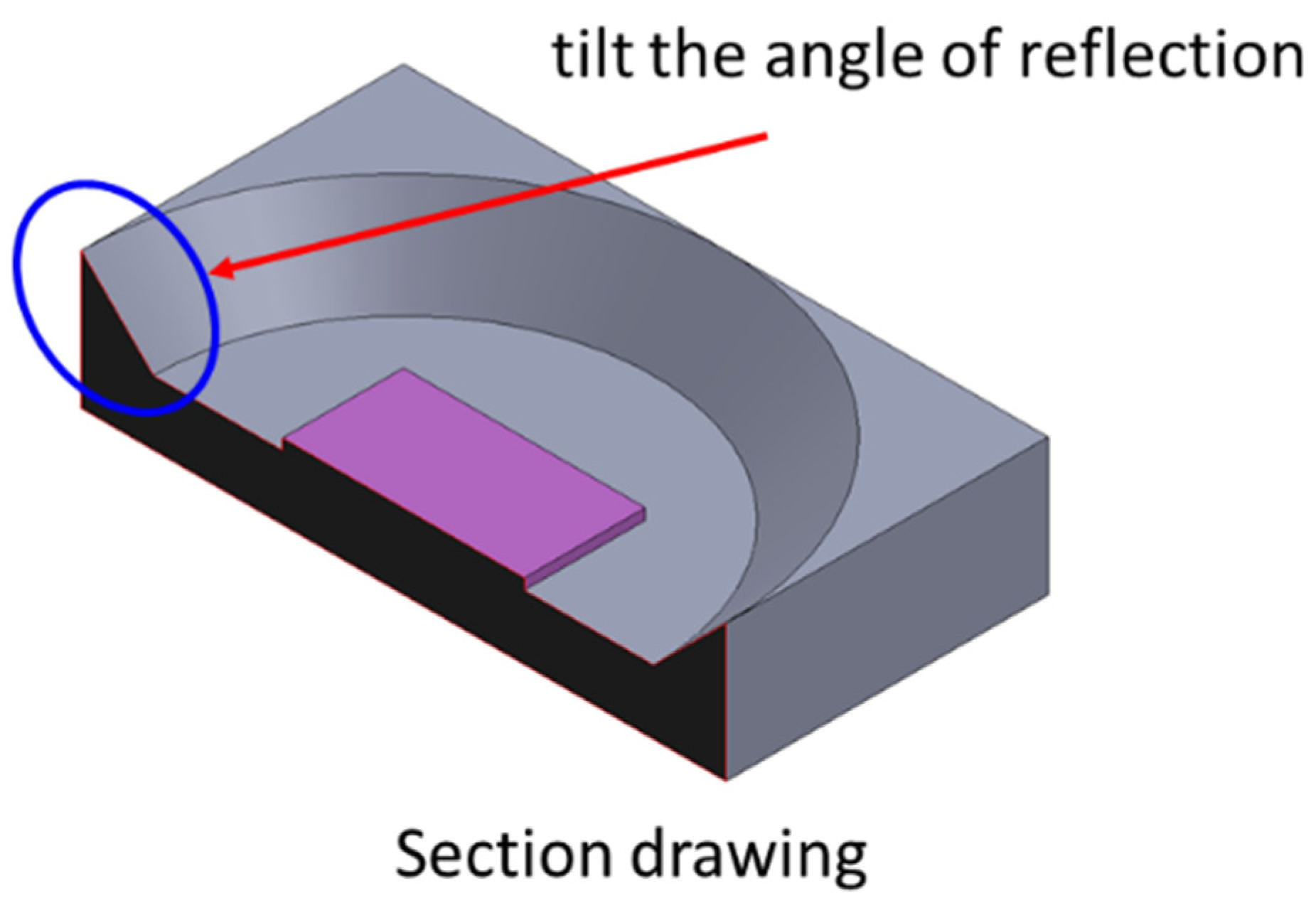
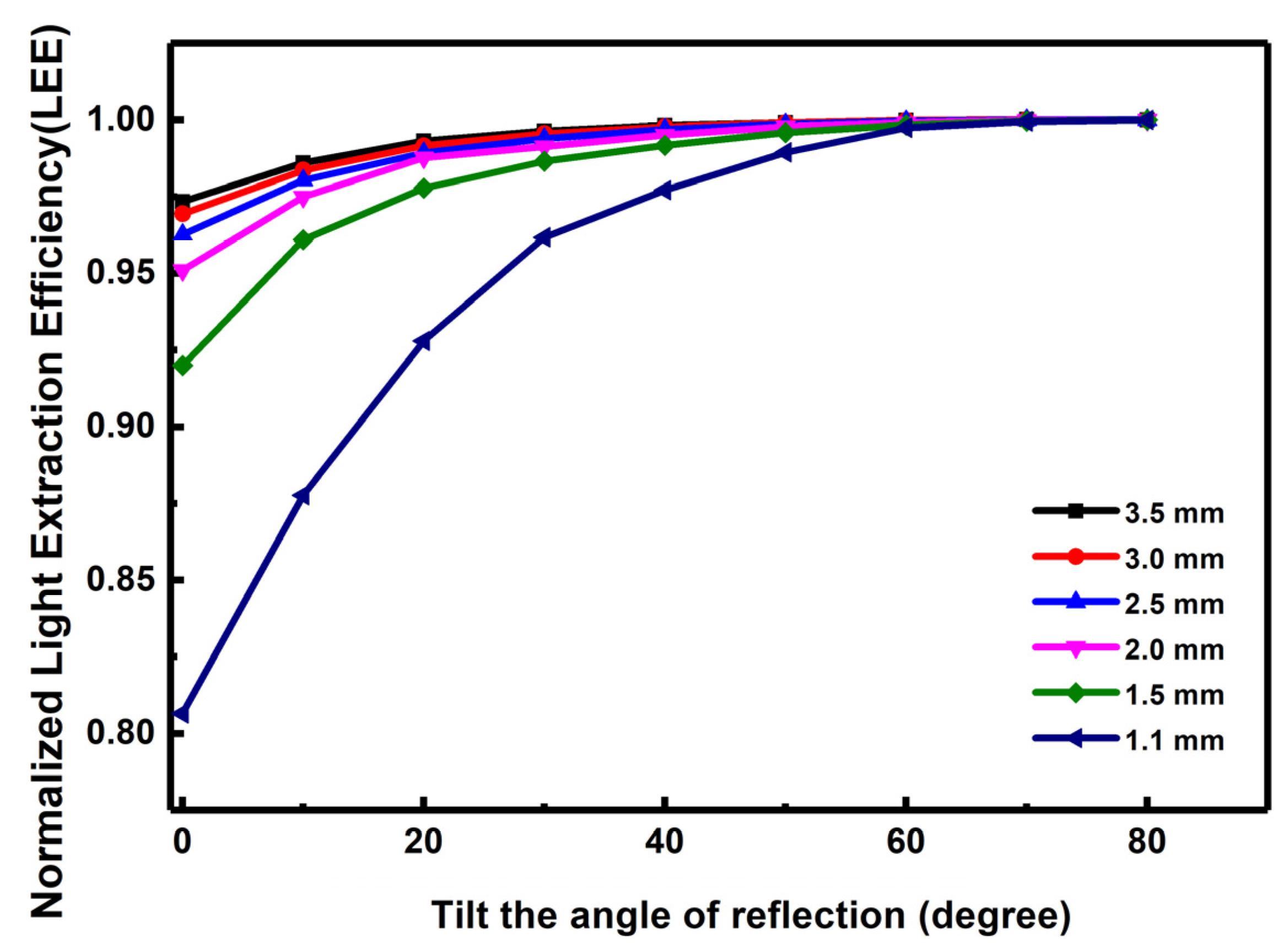
2.3. Ray-Tracing Simulation of a DUV-LED’s Tilt Angle of Reflection
3. Experiment
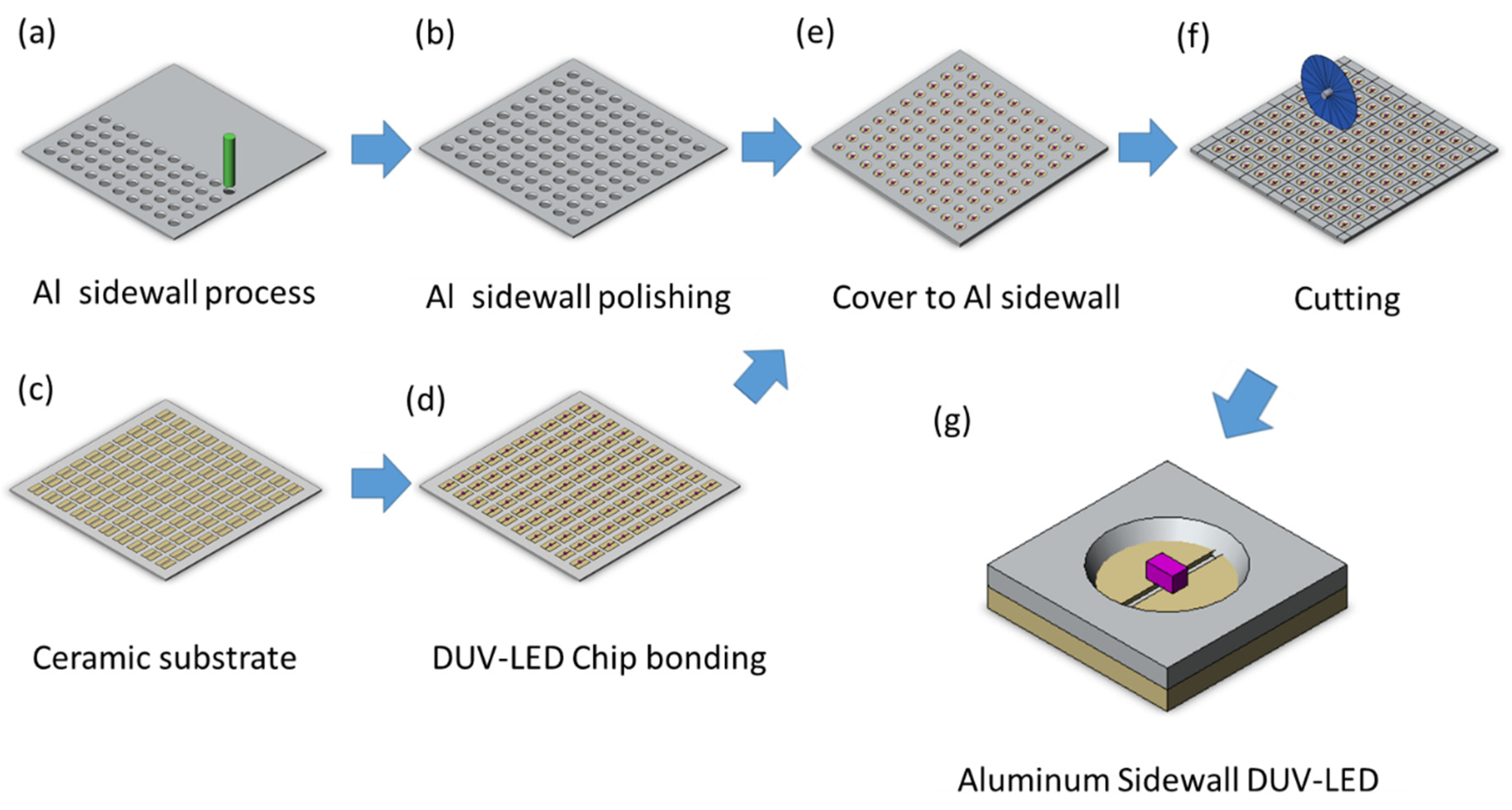
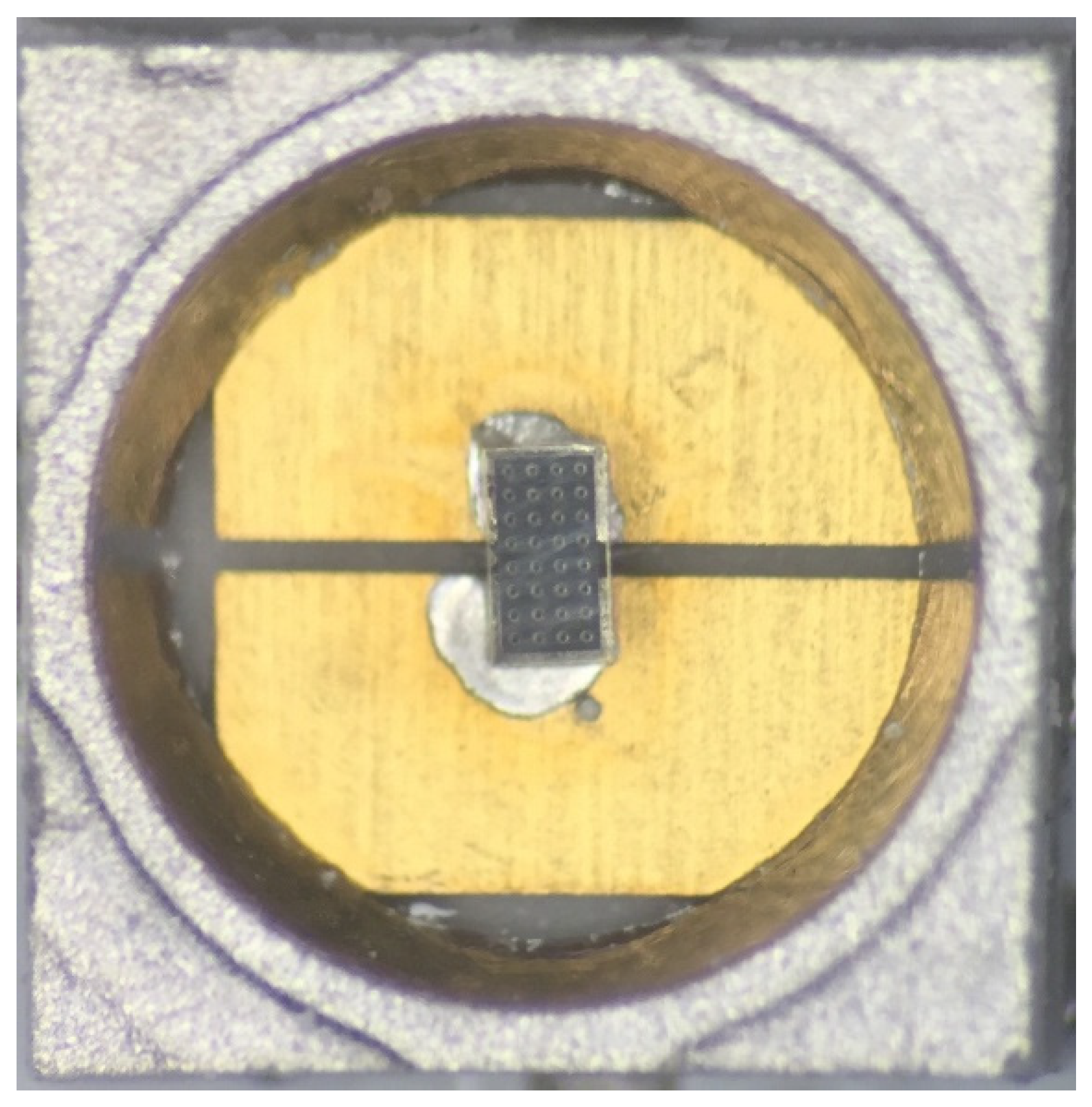
Fabrication
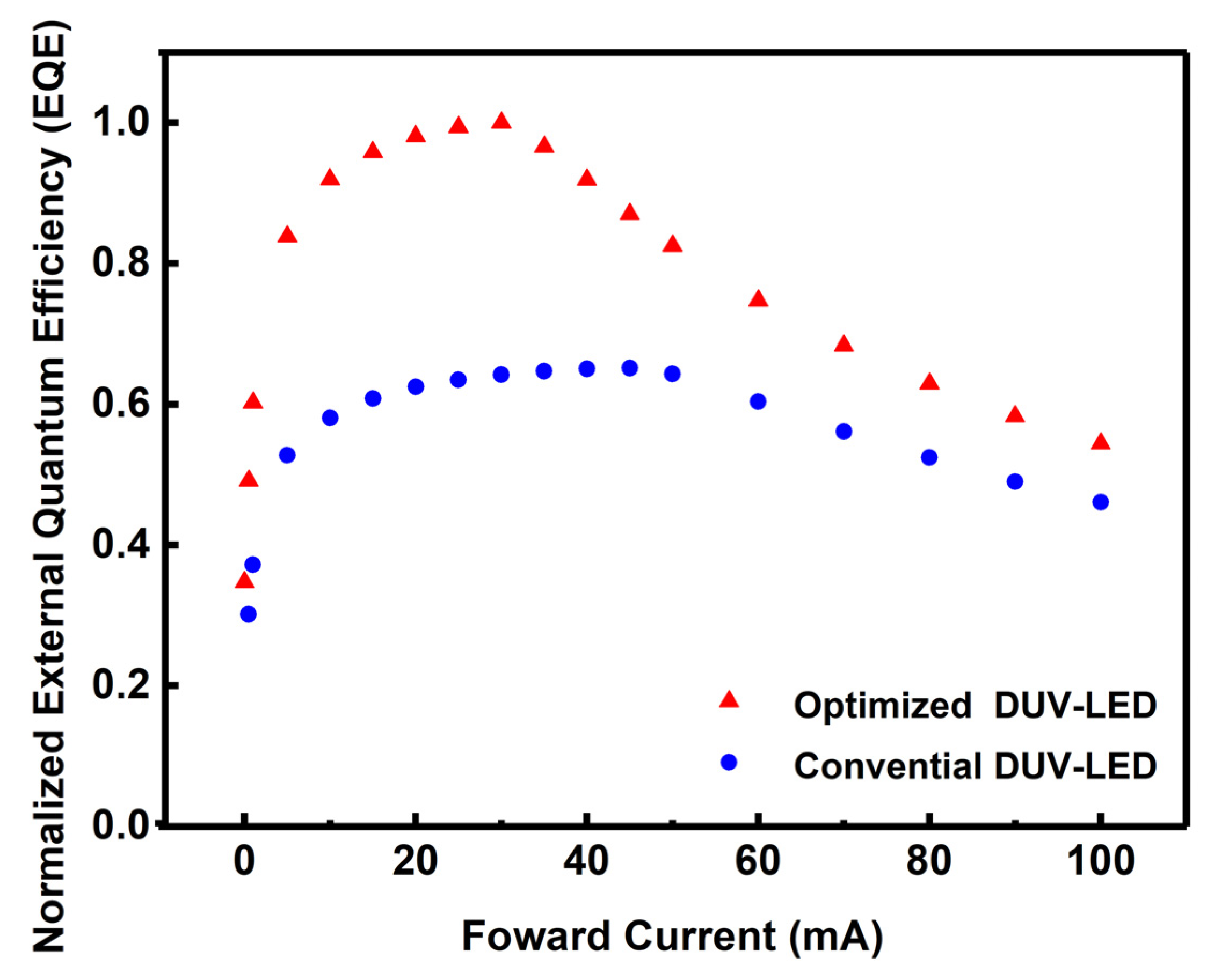
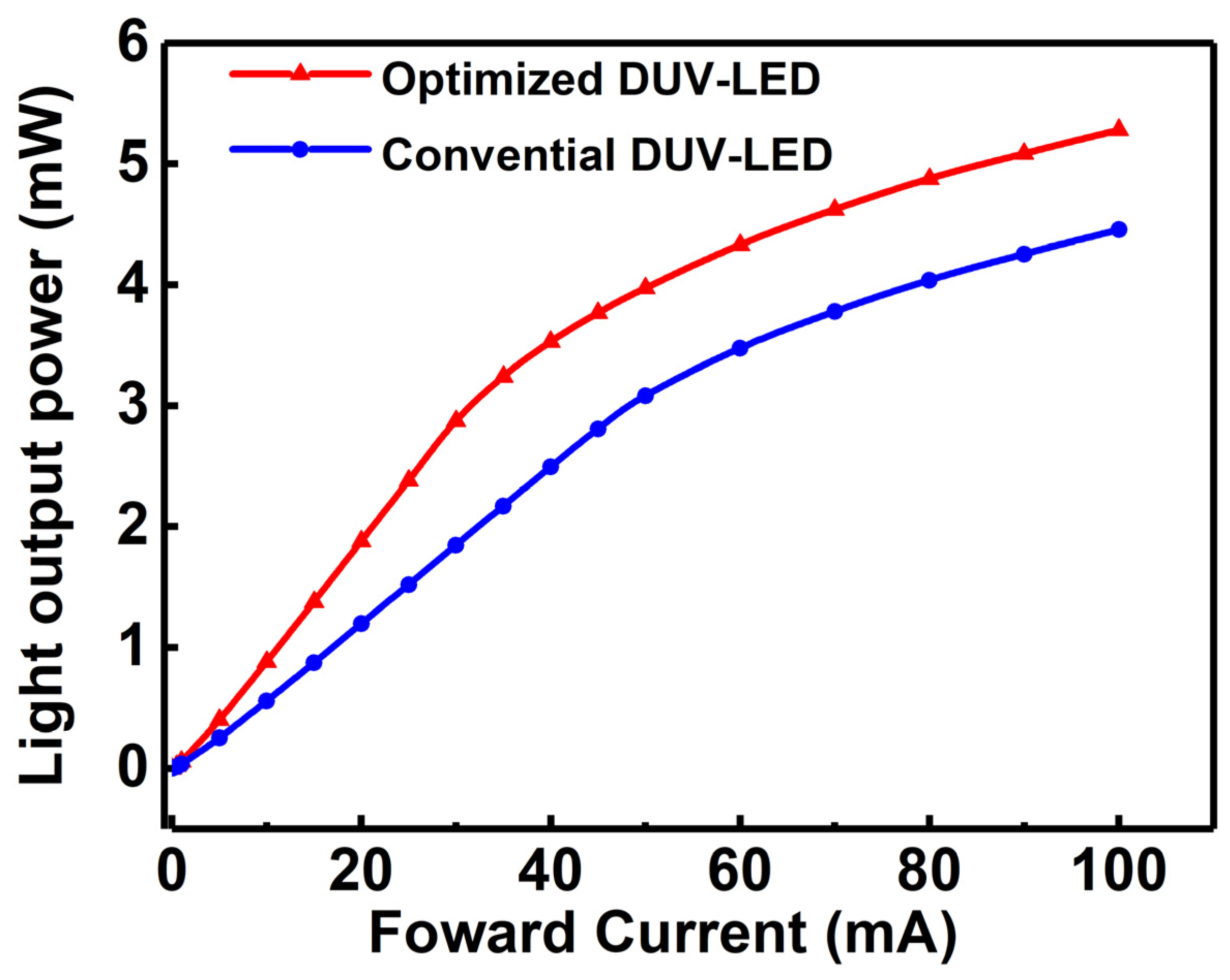
4. Results and Discussion
5. Conclusions
Author Contributions
Funding
Conflicts of Interest
References
- Taniyasu, Y.; Kasu, M.; Makimoto, T. An aluminium nitride light-emitting diode with a wavelength of 210 nanometres. Nature 2006, 441, 325. [Google Scholar] [CrossRef] [PubMed]
- Shur, M.S.; Gaska, R. Deep-ultraviolet light-emitting diodes. IEEE Trans. Electron. Devices 2010, 57, 12–25. [Google Scholar] [CrossRef]
- Muramoto, Y.; Kimura, M.; Nouda, S. Development and future of ultraviolet light-emitting diodes: Uv-led will replace the uv lamp. Semicond. Sci. Technol. 2014, 29, 084004. [Google Scholar] [CrossRef]
- Shatalov, M.; Sun, W.; Jain, R.; Lunev, A.; Hu, X.; Dobrinsky, A.; Bilenko, Y.; Yang, J.; Garrett, G.A.; Rodak, L.E. High power algan ultraviolet light emitters. Semicond. Sci. Technol. 2014, 29, 084007. [Google Scholar] [CrossRef]
- Khizar, M.; Fan, Z.; Kim, K.; Lin, J.; Jiang, H. Nitride deep-ultraviolet light-emitting diodes with microlens array. Appl. Phys. Lett. 2005, 86, 173504. [Google Scholar] [CrossRef]
- Hirayama, H.; Maeda, N.; Fujikawa, S.; Toyoda, S.; Kamata, N. Recent progress and future prospects of algan-based high-efficiency deep-ultraviolet light-emitting diodes. Jpn. J. Appl. Phys. 2014, 53, 100209. [Google Scholar] [CrossRef]
- Fujioka, A.; Asada, K.; Yamada, H.; Ohtsuka, T.; Ogawa, T.; Kosugi, T.; Kishikawa, D.; Mukai, T. High-output-power 255/280/310 nm deep ultraviolet light-emitting diodes and their lifetime characteristics. Semicond. Sci. Technol. 2014, 29, 084005. [Google Scholar] [CrossRef]
- Inoue, S.-I.; Naoki, T.; Kinoshita, T.; Obata, T.; Yanagi, H. Light extraction enhancement of 265 nm deep-ultraviolet light-emitting diodes with over 90 mw output power via an aln hybrid nanostructure. Appl. Phys. Lett. 2015, 106, 131104. [Google Scholar] [CrossRef]
- Liu, B.; Nie, H.; Zhou, X.; Hu, S.; Luo, D.; Gao, D.; Zou, J.; Xu, M.; Wang, L.; Zhao, Z. Manipulation of charge and exciton distribution based on blue aggregation-induced emission fluorophors: A novel concept to achieve high-performance hybrid white organic light-emitting diodes. Adv. Funct. Mater. 2016, 26, 776–783. [Google Scholar] [CrossRef]
- Liu, B.; Xu, M.; Wang, L.; Tao, H.; Su, Y.; Gao, D.; Lan, L.; Zou, J.; Peng, J. Very-high color rendering index hybrid white organic light-emitting diodes with double emitting nanolayers. Nano-Micro Lett. 2014, 6, 335–339. [Google Scholar] [CrossRef]
- Luo, D.; Chen, Q.; Gao, Y.; Zhang, M.; Liu, B. Extremely simplified, high-performance, and doping-free white organic light-emitting diodes based on a single thermally activated delayed fluorescent emitter. ACS Energy Lett. 2018, 3, 1531–1538. [Google Scholar] [CrossRef]
- Luo, X.; Hu, R.; Liu, S.; Wang, K. Heat and fluid flow in high-power led packaging and applications. Prog. Energy Combust. Sci. 2016, 56, 1–32. [Google Scholar] [CrossRef]
- Shatalov, M.; Sun, W.; Lunev, A.; Hu, X.; Dobrinsky, A.; Bilenko, Y.; Yang, J.; Shur, M.; Gaska, R.; Moe, C. Algan deep-ultraviolet light-emitting diodes with external quantum efficiency above 10%. Appl. Phys. Express 2012, 5, 082101. [Google Scholar] [CrossRef]
- Wu, J.; Zhang, Z.; Zheng, H.; Liu, S. Realization of conformal phosphor coating by ionic wind patterning for phosphor-converted white leds. IEEE Photon. Technol. Lett. 2017, 29, 299–301. [Google Scholar] [CrossRef]
- Zheng, H.; Li, L.; Lei, X.; Yu, X.; Liu, S.; Luo, X. Optical performance enhancement for chip-on-board packaging leds by adding tio 2/silicone encapsulation layer. IEEE Electron. Device Lett. 2014, 35, 1046–1048. [Google Scholar] [CrossRef]
- Huang, J.C.; Chu, Y.P.; Wei, M.; Deanin, R.D. Comparison of epoxy resins for applications in light-emitting diodes. Adv. Polym. Technol. J. Polym. Process. Inst. 2004, 23, 298–306. [Google Scholar] [CrossRef]
- Krames, M.R.; Shchekin, O.B.; Mueller-Mach, R.; Mueller, G.O.; Zhou, L.; Harbers, G.; Craford, M.G. Status and future of high-power light-emitting diodes for solid-state lighting. J. Disp. Technol. 2007, 3, 160–175. [Google Scholar] [CrossRef]
- Liu, S.; Luo, X. Led Packaging for Lighting Applications: Design, Manufacturing, and Testing; John Wiley & Sons: Hoboken, NJ, USA, 2011. [Google Scholar]
- Qin, Z.; Feng, J.; Zhaohui, C.; Ling, X.; Simin, W.; Sheng, L. Effect of temperature and moisture on the luminescence properties of silicone filled with yag phosphor. Semicond. Sci. Technol. 2011, 32, 012002. [Google Scholar]
- Lobo, N.; Rodriguez, H.; Knauer, A.; Hoppe, M.; Einfeldt, S.; Vogt, P.; Weyers, M.; Kneissl, M. Enhancement of light extraction in ultraviolet light-emitting diodes using nanopixel contact design with al reflector. Appl. Phys. Lett. 2010, 96, 081109. [Google Scholar] [CrossRef]
- Chen, I.-C.; Chen, Y.-D.; Hsieh, C.-C.; Kuo, C.-H.; Chang, L.-C. Highly reflective ag/la bilayer ohmic contacts to p-type gan. J. Electrochem. Soc. 2011, 158, H285–H288. [Google Scholar] [CrossRef]
- Kim, H.; Baik, K.H.; Cho, J.; Lee, J.W.; Yoon, S.; Kim, H.; Lee, S.-N.; Sone, C.; Park, Y.; Seong, T.-Y. High-reflectance and thermally stable agcu alloy p-type reflectors for gan-based light-emitting diodes. IEEE Photonics Technol. Lett. 2007, 19, 336–338. [Google Scholar] [CrossRef]
- Lee, W.H.; Chae, D.J.; Kim, D.Y.; Kim, T.G. Improved electrical and optical properties of vertical gan leds using fluorine-doped ito/al ohmic reflectors. IEEE J. Quantum Electron. 2011, 47, 1277–1282. [Google Scholar] [CrossRef]
- Takehara, K.; Takeda, K.; Ito, S.; Aoshima, H.; Iwaya, M.; Takeuchi, T.; Kamiyama, S.; Akasaki, I.; Amano, H. Indium–tin oxide/al reflective electrodes for ultraviolet light-emitting diodes. Jpn. J. Appl. Phys. 2012, 51, 042101. [Google Scholar] [CrossRef]
- Song, J.-O.; Hong, W.-K.; Park, Y.; Kwak, J.; Seong, T.-Y. Low-resistance al-based reflectors for high-power gan-based flip-chip light-emitting diodes. Appl. Phys. Lett. 2005, 86, 133503. [Google Scholar] [CrossRef]
- Song, J.-O.; Leem, D.-S.; Kwak, J.; Nam, O.; Park, Y.; Seong, T.-Y. Low-resistance and highly-reflective zn–ni solid solution/ag ohmic contacts for flip-chip light-emitting diodes. Appl. Phys. Lett. 2003, 83, 4990–4992. [Google Scholar] [CrossRef]
- Jang, H.W.; Lee, J.-L. Mechanism for ohmic contact formation of ni/ag contacts on p-type gan. Appl. Phys. Lett. 2004, 85, 5920–5922. [Google Scholar] [CrossRef]
- Song, J.O.; Ha, J.-S.; Seong, T.-Y. Ohmic-contact technology for gan-based light-emitting diodes: Role of p-type contact. IEEE Trans. Electron. Devices 2010, 57, 42–59. [Google Scholar] [CrossRef]
- Narendran, N.; Gu, Y.; Freyssinier, J.; Yu, H.; Deng, L. Solid-state lighting: Failure analysis of white leds. J. Cryst. Growth 2004, 268, 449–456. [Google Scholar] [CrossRef]
- Luther, B.; DeLucca, J.; Mohney, S.; Karlicek, R., Jr. Analysis of a thin aln interfacial layer in ti/al and pd/al ohmic contacts to n-type gan. Appl. Phys. Lett. 1997, 71, 3859–3861. [Google Scholar] [CrossRef]
- Chiu, C.; Li, Z.-Y.; Chao, C.; Lo, M.; Kuo, H.; Yu, P.; Lu, T.-C.; Wang, S.; Lau, K.M.; Cheng, S. Efficiency enhancement of uv/blue light emitting diodes via nanoscaled epitaxial lateral overgrowth of gan on a SiO2 nanorod-array patterned sapphire substrate. J. Cryst. Growth 2008, 310, 5170–5174. [Google Scholar] [CrossRef]
- Inazu, T.; Fukahori, S.; Pernot, C.; Kim, M.H.; Fujita, T.; Nagasawa, Y.; Hirano, A.; Ippommatsu, M.; Iwaya, M.; Takeuchi, T. Improvement of light extraction efficiency for algan-based deep ultraviolet light-emitting diodes. Jpn. J. Appl. Phys. 2011, 50, 122101. [Google Scholar] [CrossRef]
- Peng, Y.; Wang, S.; Cheng, H.; Wang, H.; Chen, M.; Liu, S. Light efficiency enhancement of deep ultraviolet light-emitting diodes packaged by nanostructured silica glass. J. Disp. Technol. 2016, 12, 1106–1111. [Google Scholar] [CrossRef]
- Peng, Y.; Guo, X.; Liang, R.; Cheng, H.; Chen, M. Enhanced light extraction from duv-leds by aln-doped fluoropolymer encapsulation. IEEE Photonics Technol. Lett. 2017, 29, 1151–1154. [Google Scholar] [CrossRef]
- Ichikawa, M.; Fujioka, A.; Kosugi, T.; Endo, S.; Sagawa, H.; Tamaki, H.; Mukai, T.; Uomoto, M.; Shimatsu, T. High-output-power deep ultraviolet light-emitting diode assembly using direct bonding. Appl. Phys. Express 2016, 9, 072101. [Google Scholar] [CrossRef]
- Song, D.-Y.; Sprague, R.; Macleod, H.A.; Jacobson, M.R. Progress in the development of a durable silver-based high-reflectance coating for astronomical telescopes. Appl. Opt. 1985, 24, 1164–1170. [Google Scholar] [CrossRef] [PubMed]
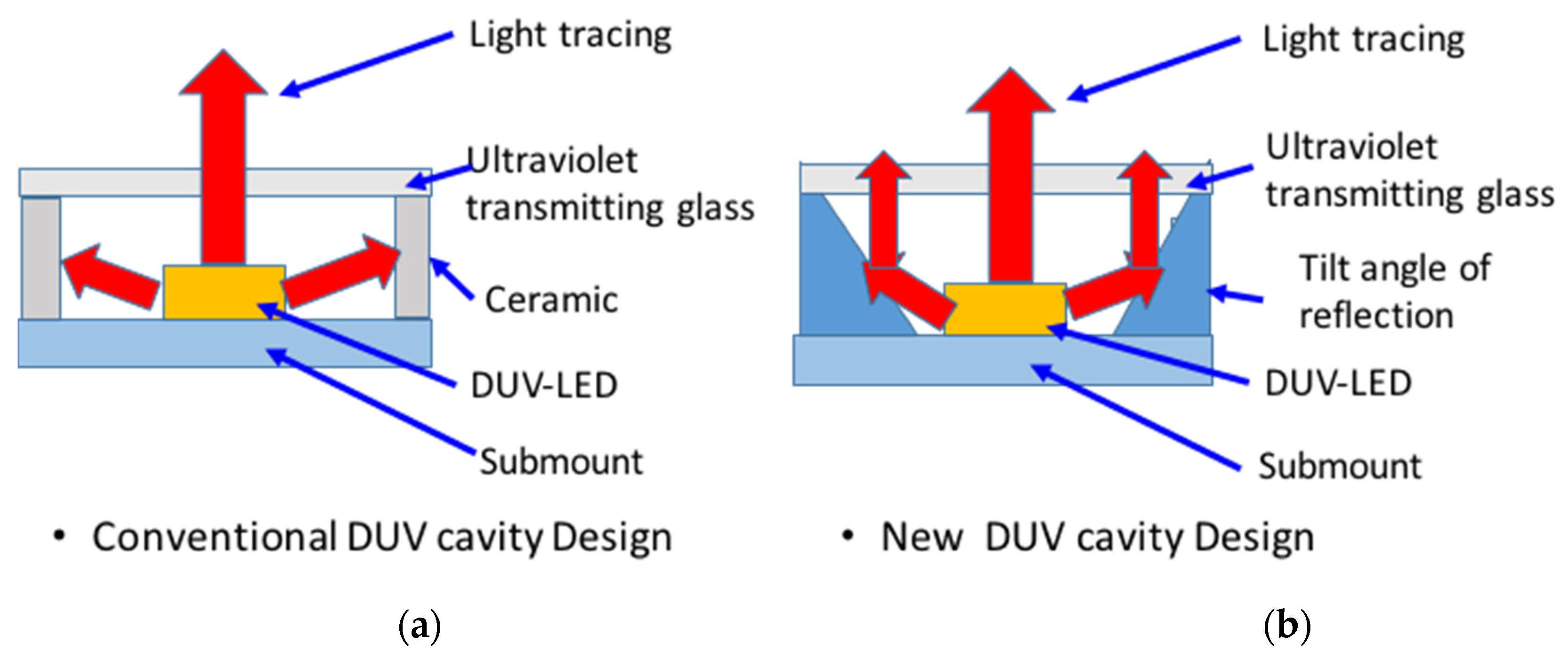
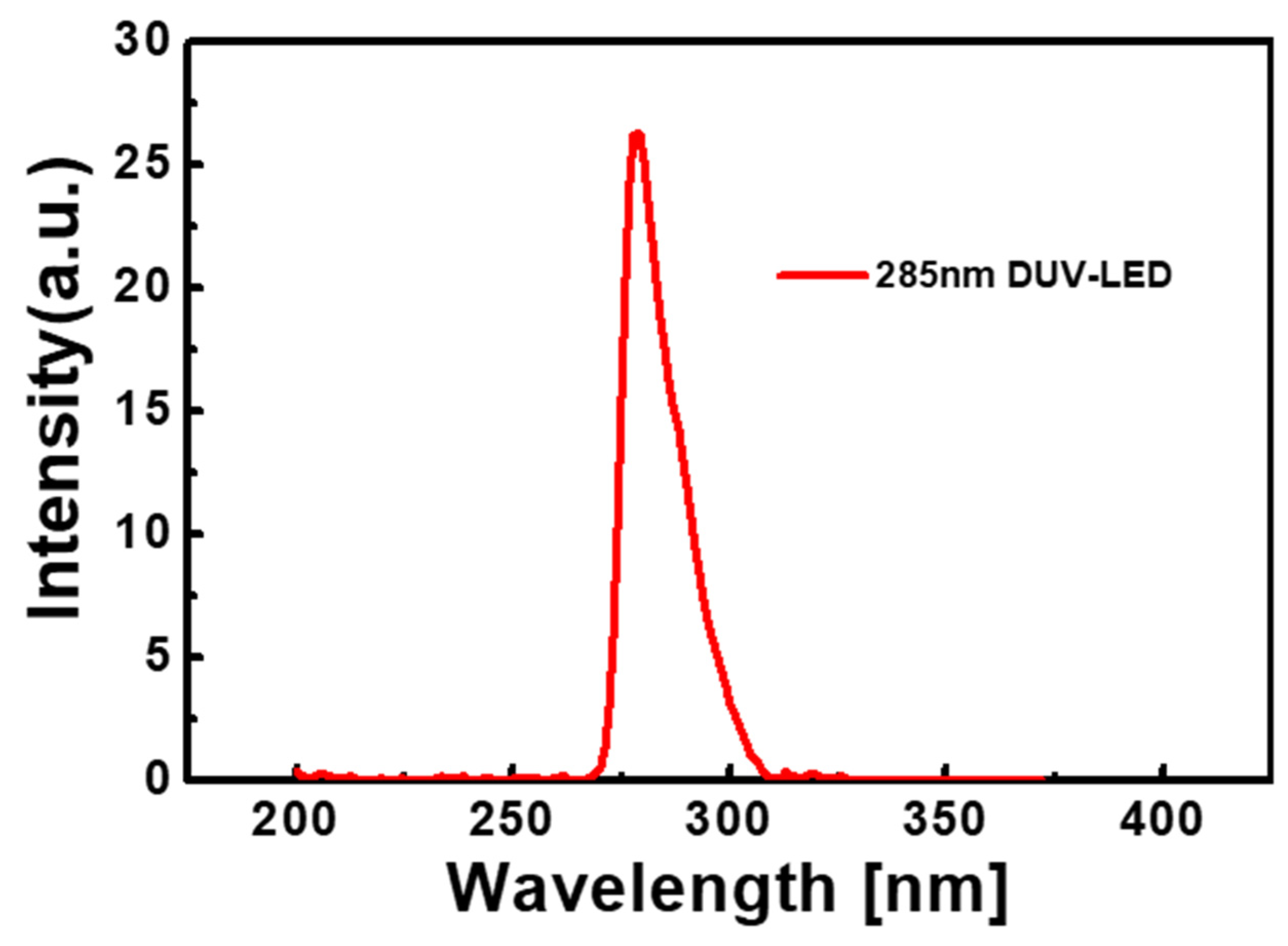
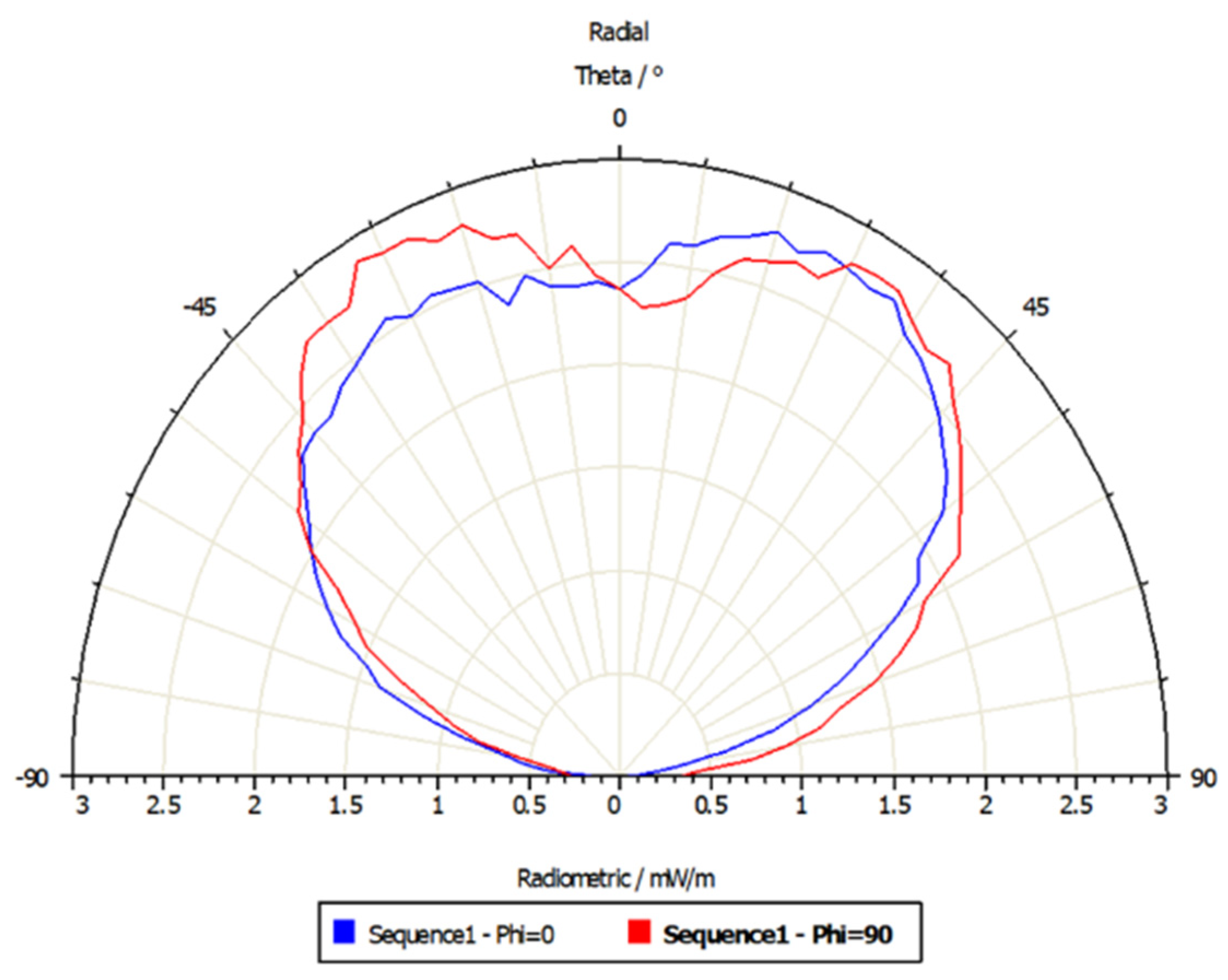
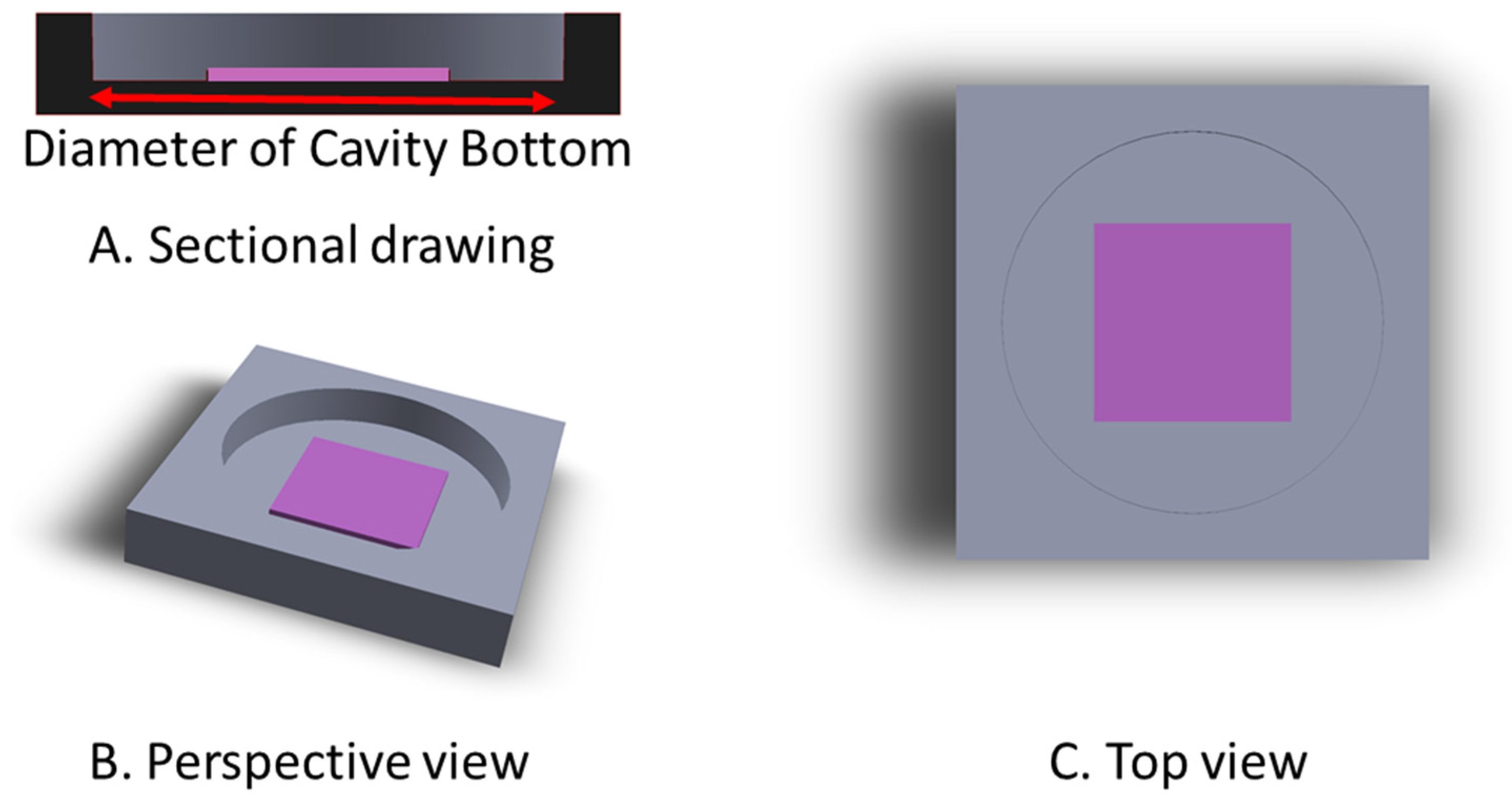
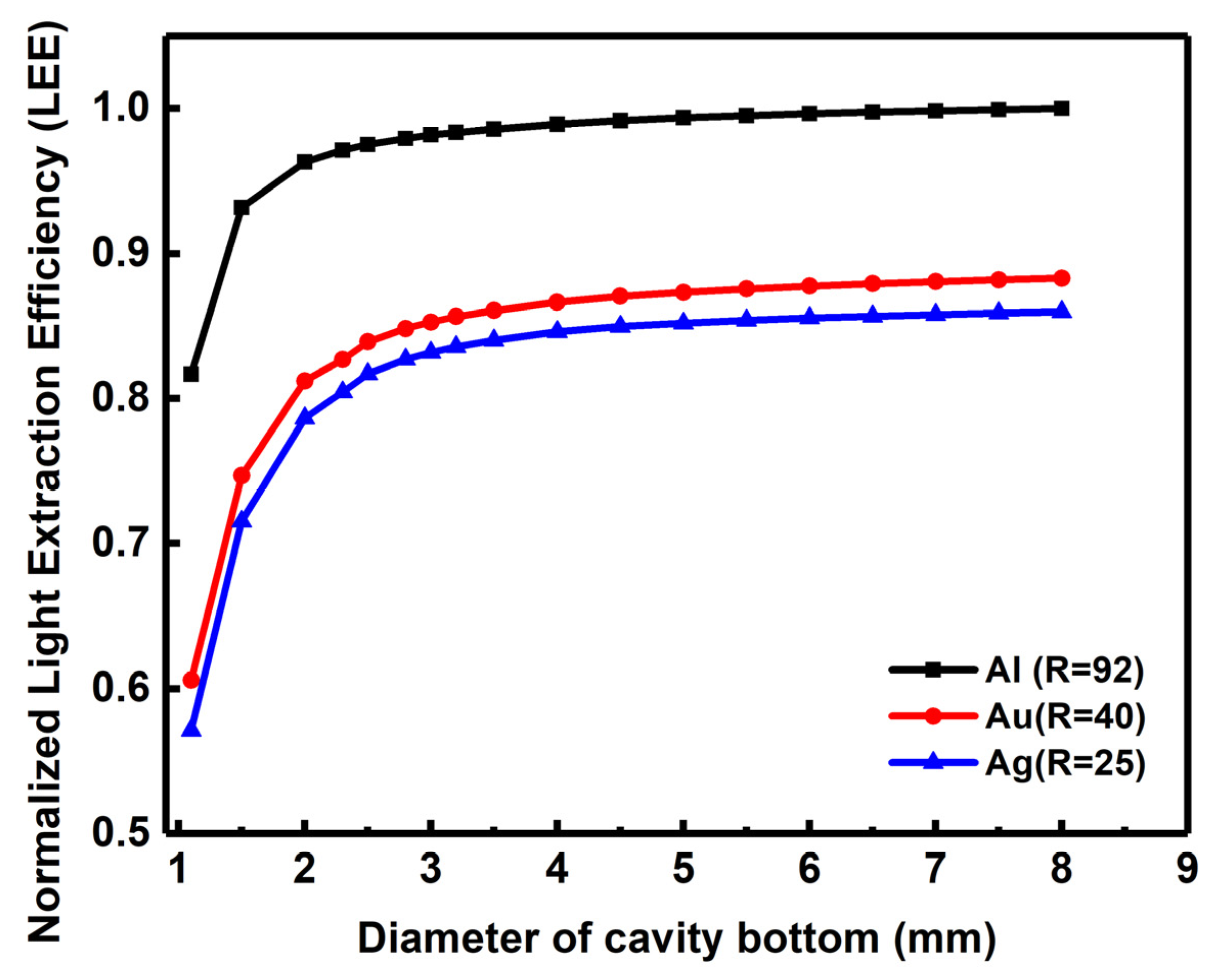
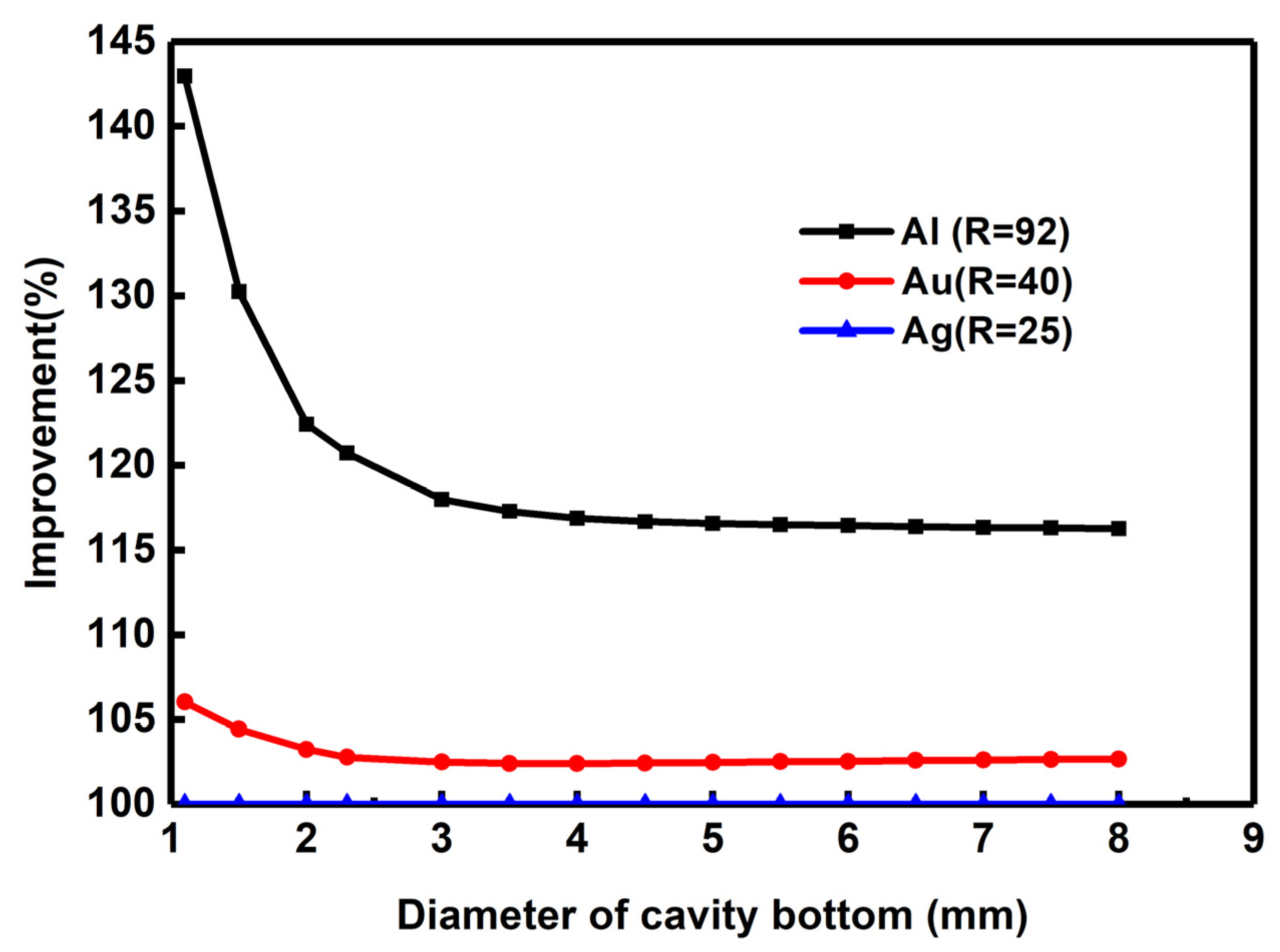

| Component | Characteristics | Material |
|---|---|---|
| DUV-LED | Peak wavelength = 285 nm | AlGaN |
| Cavity sidewall [36] | Mirror R = 92% | Aluminum |
| Mirror R = 40% | Gold | |
| Mirror R = 25% | Silver | |
| Packing structure | Polished | Ceramics |
© 2018 by the authors. Licensee MDPI, Basel, Switzerland. This article is an open access article distributed under the terms and conditions of the Creative Commons Attribution (CC BY) license (http://creativecommons.org/licenses/by/4.0/).
Share and Cite
Pai, Y.-M.; Lin, C.-H.; Lee, C.-F.; Lin, C.-P.; Chen, C.-H.; Kuo, H.-C.; Ye, Z.-T. Enhancing the Light-Extraction Efficiency of AlGaN-Based Deep-Ultraviolet Light-Emitting Diodes by Optimizing the Diameter and Tilt of the Aluminum Sidewall. Crystals 2018, 8, 420. https://doi.org/10.3390/cryst8110420
Pai Y-M, Lin C-H, Lee C-F, Lin C-P, Chen C-H, Kuo H-C, Ye Z-T. Enhancing the Light-Extraction Efficiency of AlGaN-Based Deep-Ultraviolet Light-Emitting Diodes by Optimizing the Diameter and Tilt of the Aluminum Sidewall. Crystals. 2018; 8(11):420. https://doi.org/10.3390/cryst8110420
Chicago/Turabian StylePai, Yung-Min, Chih-Hao Lin, Chun-Fu Lee, Chun-Peng Lin, Cheng-Huan Chen, Hao-Chung Kuo, and Zhi-Ting Ye. 2018. "Enhancing the Light-Extraction Efficiency of AlGaN-Based Deep-Ultraviolet Light-Emitting Diodes by Optimizing the Diameter and Tilt of the Aluminum Sidewall" Crystals 8, no. 11: 420. https://doi.org/10.3390/cryst8110420
APA StylePai, Y.-M., Lin, C.-H., Lee, C.-F., Lin, C.-P., Chen, C.-H., Kuo, H.-C., & Ye, Z.-T. (2018). Enhancing the Light-Extraction Efficiency of AlGaN-Based Deep-Ultraviolet Light-Emitting Diodes by Optimizing the Diameter and Tilt of the Aluminum Sidewall. Crystals, 8(11), 420. https://doi.org/10.3390/cryst8110420

