


Abstract
The first example of silver-mediated phosphine-promoted methoxylation of aryl C(sp2)–H bonds with the commercially available reagent for the preparation of alkyl aryl ethers has been developed. This protocol is characterized by mild reaction conditions, broad substrate scope, and high regioselectivity.
1. Introduction
Alkyl aryl ethers are ubiquitous structural motifs present in both natural and synthetic compounds, particularly in bioactive molecules targeted as pharmaceuticals (Scheme 1) [1,2]. Compared to the traditional method for carbon-oxygen bond coupling [3,4,5,6], transition metal catalyzed C–H alkoxylation with alcohols has received much attention in recent decades in terms of atom and step economy [7,8,9,10]. However, direct C–H bond alkoxylation has been mostly limited to a palladium- [11,12,13,14,15] or copper-catalyzed system [16,17,18,19,20] which are both more biological toxicity metals.

Scheme 1.
Selected pharmaceuticals containing aryl alkyl ether units.
Recently, the first-row transition metals such as iron, cobalt, and nickel for C–H alkoxylation, have attracted more attention owing to low biological toxicity as well as low cost [21,22,23,24,25]. In 2015, Niu and co-workers have first reported cobalt-catalyzed alkoxylation of C(sp2)–H bond in aromatic and olefinic carboxamides with Ag2O as oxidant (Scheme 2a) [21]. Lately, a new cobalt-catalyzed system has reported by same group for C8 alkoxylation of naphthylamine derivatives with both primary and secondary alcohols [22]. In 2018, an efficient Nickel-catalyzed C–H bond alkoxylation of benzamides and olefinic carboxamides with alcohols was also achieved for the first time by Sundararaju’s group (Scheme 2b) [23]. In the same year, our group also reported an iron-catalyzed ethoxylation of aryl C(sp2)–H bonds with cobalt co-catalyst (Scheme 2c) [24]. However, all of these reactions were carried out with silver reagents. While silver is also a common transition metal catalyst for C–H functionalization [26,27,28,29,30,31,32], silver-mediated alkoxylation of aryl C(sp2)–H bonds will be attractive but challenging.
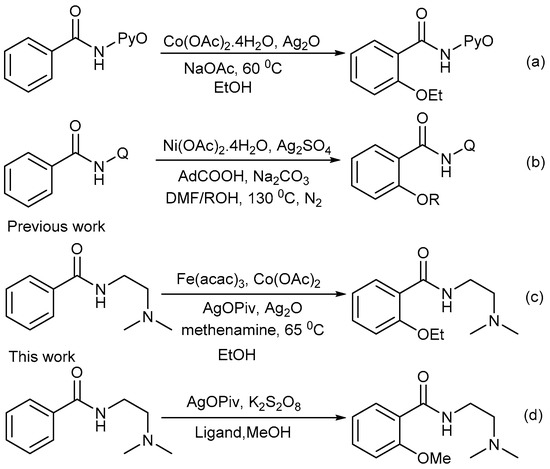
Scheme 2.
Direct alkoxylation of C–H bonds using low biotoxicity transition metals.
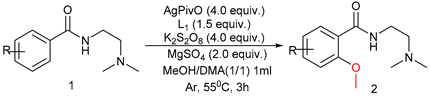
As a part of our continuous interest towards using the newly developed directing group derived from the drug structure N,N′-dimethylethanediamine (DMEDA), we also realized the copper-catalyzed DMEDA-directed methoxylation recently [33]. Considering silver is the heavier congener of copper in the Periodic Table and it also has high catalytic activity for C–H functionalization, we speculated that the DMEDA directing group may facilitate the silver-mediated methoxylation of aryl C(sp2)–H bonds. We found that this is indeed the case, and we report herein a silver-mediated methoxylation of aryl C(sp2)–H bonds with methanol to prepare Alkyl aryl ethers for the first time (Scheme 2d).
2. Results
Initially, the synthesis study was carried out with N-(2-(dimethylamino)ethyl)benzamide (1a) as a model substrate (Table 1). While this transformation is a cross-dehydrogenative coupling (CDC) reaction, high-valent metal is needed for the electrophilic activation of C(sp2)–H bonds [34,35,36,37]. Since high-valent silver is rare in relation to copper under normal conditions, [38] the combination of Ag(I) and K2S2O8 which proved to be efficient for a silver-catalyzed or silver-mediated system was used in this system [31,32]. However, no good result was observed after the preliminary screening. Fortunately, the reaction was found to proceed efficiently in the presence of triphenylphosphine as a ligand (Entry 1, 63%). It is obviously that the phosphine ligand was critical for this transformation, when the desired product 3a was almost unobserved except without the phosphine ligand (Entry 8). In this system, we also found that a large number of phosphine ligands were oxidized to phosphine oxides, while phosphine oxides did not promote this transformation (Entry 3). Subsequently, 1.5 equivalents were screened out as the necessary amount of phosphine ligand (for more details, see Supplementary Materials). The effects of various structures of phosphine ligands for this system was also investigated, and trivalent phosphine ligands were found to promote this transformation efficiently (Scheme 3, Entry 1–7). What’s more, by comparing the results of L2 and L4, it was obvious that the steric effect had a great influence on this reaction (Entry 2,4). On the basis of that, a series of silver salts such as AgNO3, Ag2CO3, AgOAc, AgOTf, Ag2O, Ag2SO4, AgOPiv, and AgF were screened, then AgOPiv was found to be the optimal condition for this reaction (for more details, see SI). Meanwhile, different cosolvents were evaluated, it could be found that polar solvents such as DMSO, DMF and DMA were favorable for promoting the reaction, and DMA was found to be the most suitable cosolvent (Entry 9–12). Various additives were then tested, and the results showed that methoxylated yield increased in the presence of Na2SO4 (Entry 13, 72%). While MgSO4 were used as an additive, the yield was improved to 78% (Entry 14, Isolated yield 71%). However, no obvious improvement could be observed when other additives were added to this system (Entry 15–19). This may due to the high binding energy of Ag(3d5/2) states for AgSO4, a Ag(II) compuond [39]. The effect of the amount of AgOPiv was also investigated, decreasing the amount of AgOPiv to 3.0 equivalent reduced the yield of 1a to 55% (Entry 20). Furthermore, the reaction was found to be sensitive to air and moisture, switching the atmosphere from argon to air led to no reaction at all (Entry 21). Finally, different temperatures were also evaluated, and 55 °C was found to be the optimum temperature (for more details, see SI).

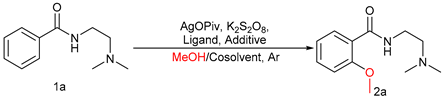
Table 1.
Optimization of the reaction conditions a.
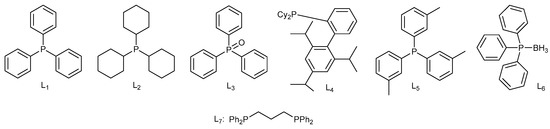
Scheme 3.
The structure of phosphine ligands.
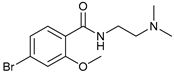
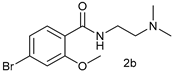
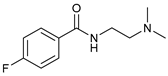
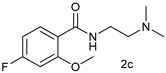
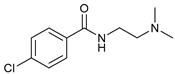
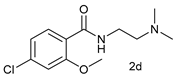
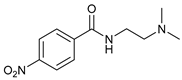
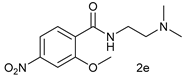
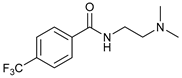
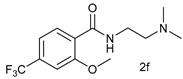
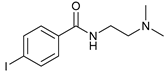
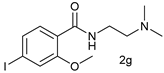
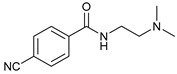
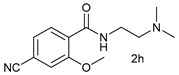
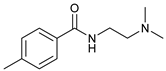
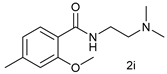
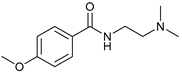
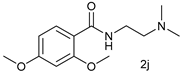
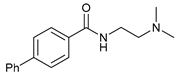
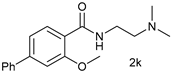
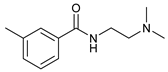
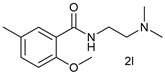
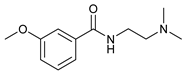
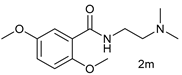
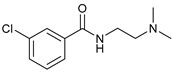
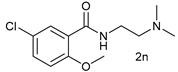
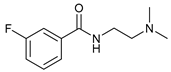
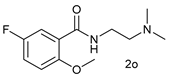
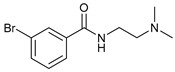
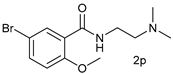
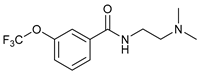
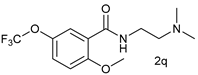
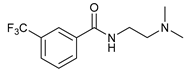
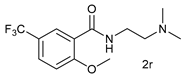
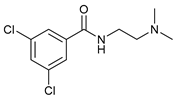
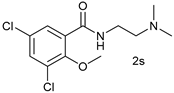
Using the optimal reaction conditions, the reaction scope with respect to aromatic substrates is presented in Table 2. In general, the demonstrated transformation was found to be compatible with a variety of benzamide derivatives bearing either electron-withdrawing or electron-donating groups, providing the corresponding methoxylated products with moderate to good yields (2b–2s). For example, fluoro (2c,2o), chloro (2d,2n,2s), bromo (2b,2p), nitro (2e), and cyano (2h) groups are well tolerated, which are convenient handles for further functionality. Due to the reactive activity of the iodine functional group, the reaction of 1g only gave the methoxylated product in 14% yield accompanied by the compounds 1a (yield 23%) and 2a (yield 31%). The reaction protocol was sensitive to steric hindrance, methoxylation with ortho-substituted substrates gave no encouraging results. But gratifyingly, the methoxylation of meta-substituted substrates showed high regioselectivity, which proceeded exclusively at the less hindered C–H bonds irrespective of the electronic properties of the substrates (2l–2r). Disubstituted substrate such as 3,5-dichloro-N-(2-(dimethylamino)ethyl) benzamide were also tolerated well under the optimized conditions (2s). Finally, other alcohols such as ethanol, propanol, isopropanol, butanol, and 2-butyl alcohol were also screened; however, encouraging results were not obtained.
Table 2.
Substrate scope of aromatic compounds a.
3. Discussion
A plausible mechanism is proposed in Scheme 4 on the basis of the above observations and preliminary mechanistic studies. [38,39,40,41] It is known that in the presence of peroxydisulfate, the silver(I) salt is oxidized to a silver(II) species [40,41]. Complexation of benzamide 1a and phosphine ligand (L) to the silver(II) species (intermediate A), followed by C–H activation, affords the intermediate B. The intermediate B undergoes reductive elimination to give intermediate C, which was followed by protonation to generate the desired product 2a. While silver also existed as an oxidant in the stage of C–H activation, the stoichiometric silver reagent was indispensable.
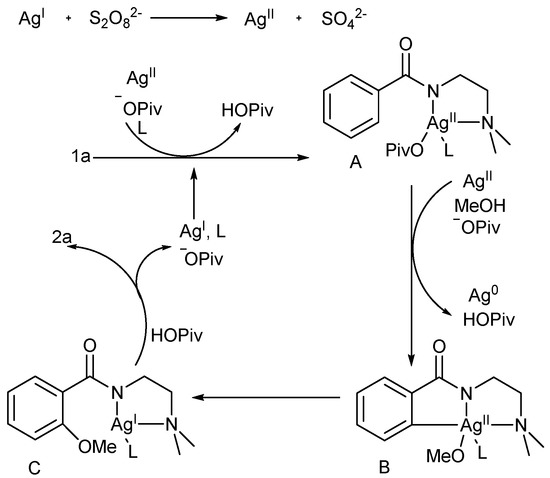
Scheme 4.
Plausible mechanism for C–H ethoxylation catalyzed by iron.
4. Materials and Methods
4.1. Materials
Methanol, MeCN, THF, Toluene, EA, DMSO, DMF, DMA, 1,4-dioxane was dried by distillation over CaH2 and distilled under reduced pressure, then stored in dry argon atmosphere. All reagents were purchased from commercial suppliers and used without purification unless otherwise stated. Column chromatography was performed with silica gel (300–400 mesh) produced by Qingdao Marine Chemical Factory, Qingdao (China). NMR spectra were recorded on Bruker AVANCE III 500MHz instrument (Bruker, Hamburg, Germany) with TMS as internal standard. Coupling constants were reported in Hertz (Hz). HRMS analysis of determination of conversion was performed on the instrument of Waters Q-TOF.
4.2. General Procedure for Silver-Mediated Methoxylation
Under argon atmosphere, AgOPiv (0.40 mmol), K2S2O8 (0.40 mmol), L1 (0.15 mmol), 1a (0.10 mmol), MgSO4 (0.20 mmol), and MeOH/DMA (1/1, 1 mL) were introduced into a 15 mL seal tube. The mixture was fiercely stirred at 55 °C for 3 h. After cooling in an ice bath, the mixture was diluted in the mixed solvent of dichloromethane (30 mL) and edetate tetrasodium saturated aqueous solution (30 mL). After separated, the aqueous phase was extracted thrice with dichloromethane (30 mL). The organic layers were combined and evaporated under vacuum and the crude product was purified by column chromatograph using silica gel with n-hexane/ethyl acetate (v/v 1:2) to n-hexane/ethyl acetate/triethylamine (v/v/v 1:2:0.03) as eluent to afford 2a. Isolated yield: 15.8 mg (71%).
5. Conclusions
We presented the first example of silver-mediated phosphine-promoted methoxylation of aryl C(sp2)–H bonds with the commercially available reagent for the preparation of alkyl aryl ethers. This protocol is characterized by mild reaction conditions, broad substrate scope, and high regioselectivity. In addition, without the use of more biological toxicity metals such as copper and palladium, this system will be more suitable for the synthesis of related active drug molecules. Further exploration of this strategy to the synthesis of related active drug molecules is currently in progress.
Supplementary Materials
The following are available online at http://www.mdpi.com/2073-4344/9/2/171/s1.
Author Contributions
Conceptualization, C.D; methodology, J.Z.; formal analysis, L.X.; and Writing—Original Draft preparation, G.Z.
Funding
This research was funded by the National Natural Science Foundation of China (no. 20702051), the Natural Science Foundation of Zhejiang Province (LY13B020017).
Conflicts of Interest
The authors declare no conflict of interest.
References
- Maligres, P.E.; Li, J.; Krska, S.W.; Schreier, J.D.; Raheem, I.T. C–O cross-coupling of activated aryl and heteroaryl halides with aliphatic alcohols. Angew. Chem. Int. Ed. 2012, 51, 9071–9074. [Google Scholar] [CrossRef] [PubMed]
- Anand, M.; Sunoj, R.B. Role of Explicit Solvents in Palladium(II)-Catalyzed Alkoxylation of Arenes: An Interesting Paradigm for Preferred Outer-Sphere Reductive Elimination over Inner-Sphere Pathway. Organometallics 2012, 31, 6466–6481. [Google Scholar] [CrossRef]
- Qiao, J.X.; Lam, P.Y.S. Copper-Promoted Carbon-Heteroatom Bond Cross-Coupling with Boronic Acids and Derivative. Synthesis 2011, 6, 829–856. [Google Scholar] [CrossRef]
- Monnier, F.; Taillefer, M. Catalytic C–C, C–N, and C–O Ullmann-Type Coupling Reactions. Angew. Chem. Int. Ed. 2009, 48, 6954–6971. [Google Scholar] [CrossRef] [PubMed]
- Hartwig, J.F. Carbon–Heteroatom Bond Formation Catalysed by Organometallic Complexes. Nature 2008, 455, 314–322. [Google Scholar] [CrossRef] [PubMed]
- Ley, S.V.; Thomas, A.W. Modern Synthetic Methods for Copper-Mediated C(aryl)–O, C(aryl)–N, and C(aryl)–S Bond Formation. Angew. Chem. Int. Ed. 2003, 42, 5400–5449. [Google Scholar] [CrossRef] [PubMed]
- Hu, Y.; Zhou, B.; Wang, C. Inert C–H Bond Transformations Enabled by Organometallic Manganese Catalysis. Acc. Chem. Res. 2018, 51, 816–827. [Google Scholar] [CrossRef] [PubMed]
- Wei, D.; Zhu, X.; Niu, J.-L.; Song, M.-P. High-Valent-Cobalt-Catalyzed C–H Functionalization Based on Concerted Metalation-Deprotonation and Single-Electron-Transfer Mechanisms. ChemCatChem 2016, 8, 1242–1263. [Google Scholar] [CrossRef]
- Su, B.; Cao, Z.-C.; Shi, Z.-J. Exploration of Earth-Abundant Transition Metals (Fe, Co, and Ni) as Catalysts in Unreactive Chemical Bond Activations. Acc. Chem. Res. 2015, 48, 886–896. [Google Scholar] [CrossRef]
- Liu, C.; Liu, D.; Lei, A. Recent Advances of Transition-Metal Catalyzed Radical Oxidative Cross-Couplings. Acc. Chem. Res. 2014, 47, 3459–3470. [Google Scholar] [CrossRef]
- Qiu, F.-C.; Xie, Q.; Guan, B.-T. Palladium-Catalyzed ortho-Alkoxylation of Tertiary Benzamides: H2SO4 as an Effective Additive. Asian J. Org. Chem. 2018, 7, 107–110. [Google Scholar] [CrossRef]
- Li, S.; Zhu, W.; Gao, F.; Li, C.; Wang, J.; Liu, H. Palladium-Catalyzed Ortho-Alkoxylation of N-Benzoyl alpha-Amino Acid Derivatives at Room Temperature. J. Org. Chem. 2017, 82, 126–134. [Google Scholar] [CrossRef] [PubMed]
- Shan, G.; Yang, X.; Zong, Y.; Rao, Y. An Efficient Palladium-Catalyzed C–H Alkoxylation of Unactivated Methylene and Methyl Groups with Cyclic Hypervalent Iodine (I3+) Oxidants. Angew. Chem. Int. Ed. 2013, 52, 13606–13610. [Google Scholar] [CrossRef] [PubMed]
- Zhang, S.-Y.; He, G.; Zhao, Y.; Wright, K.; Nack, W.A.; Chen, G. Efficient Alkyl Ether Synthesis via Palladium-Catalyzed, Picolinamide-Directed Alkoxylation of Unactivated C(sp3)–H and C(sp2)–H Bonds at Remote Positions. J. Am. Chem. Soc. 2012, 134, 7313–7316. [Google Scholar] [CrossRef] [PubMed]
- Anand, M.; Sunoj, R.B. Palladium(II)-Catalyzed Direct Alkoxylation of Arenes: Evidence for Solvent-Assisted Concerted Metalation Deprotonation. Org. Lett. 2011, 13, 4802–4805. [Google Scholar] [CrossRef] [PubMed]
- Tran, C.B.; Duong, X.N.T.; Lu, H.D.; Cao, T.T.V.; Thanh, T. Auxiliary-Directed Etherification of sp2 C–H Bonds Under Heterogeneous Metal-Organic Framework Catalysis: Synthesis of Ethenzamide. RSC Adv. 2018, 8, 2829–2836. [Google Scholar] [CrossRef]
- Salvador, T.K.; Arnett, C.H.; Kundu, S.; Sapiezynski, N.G.; Bertke, J.A.; Boroujeni, M.R.; Warren, T.H. Copper Catalyzed sp3 C–H Etherification with Acyl Protected Phenols. J. Am. Chem. Soc. 2016, 138, 16580–16583. [Google Scholar] [CrossRef] [PubMed]
- Yu, M.; Wang, Z.; Hu, J.; Li, S.; Du, H. Copper-Catalyzed Intramolecular Alkoxylation of Purine Nucleosides: One-Step Synthesis of 5’-O,8-Cyclopurine Nucleosides. J. Org. Chem. 2015, 80, 9446–9453. [Google Scholar] [CrossRef]
- Yin, X.-S.; Li, Y.-C.; Yuan, J.; Gu, W.-J.; Shi, B.-F. Copper(II)-Catalyzed Methoxylation of Unactivated (hetero)Aryl C–H Bonds Using a Removable Bidentate Auxiliary. Org. Chem. Front. 2015, 2, 119–123. [Google Scholar] [CrossRef]
- Bhadra, S.; Dzik, W.I.; Goossen, L.J. Synthesis of Aryl Ethers from Benzoates through Carboxylate-Directed C–H-Activating Alkoxylation with Concomitant Protodecarboxylation. Angew. Chem. Int. Ed. 2013, 52, 2959–2962. [Google Scholar] [CrossRef] [PubMed]
- Zhang, L.-B.; Hao, X.-Q.; Zhang, S.-K.; Liu, Z.-J.; Zheng, X.-X.; Gong, J.-F.; Niu, J.-L.; Song, M.-P. Cobalt-Catalyzed C(sp2)–H Alkoxylation of Aromatic and Olefinic Carboxamides. Angew. Chem. Int. Ed. 2015, 54, 272–275. [Google Scholar] [CrossRef] [PubMed]
- Han, J.-N.; Du, C.; Zhu, X.; Wang, Z.-L.; Zhu, Y.; Chu, Z.-Y.; Niu, J.-L.; Song, M.-P. Cobalt-Catalyzed peri-Selective Alkoxylation of 1-Naphthylamine Derivatives. Beilstein J. Org. Chem. 2018, 14, 2090–2097. [Google Scholar] [CrossRef] [PubMed]
- Rajesh, N.; Sundararaju, B. Nickel-catalyzed C–H bond Alkoxylation of Amides with Alcohols. Asian J. Org. Chem. 2018, 7, 1368–1371. [Google Scholar] [CrossRef]
- Zhang, G.; Zhu, J.; Ding, C. Pharmaceutical-Oriented Iron-Catalyzed Ethoxylation of Aryl C(sp2)–H Bonds with Cobalt Co-Catalyst. Chemistryselect 2018, 3, 9803–9806. [Google Scholar] [CrossRef]
- Liu, S.-K.; Cui, X.-F.; Liu, X.-X.; Ma, H.-J.; Wei, D.-D.; Luo, X.-L.; Huang, G.-S. Cobalt(II)-Catalyzed Cross- Dehydrogenative Coupling Reaction of Benzamides with Alcohols to Build C–O Bond. Chemistryselect 2018, 3, 3989–3992. [Google Scholar] [CrossRef]
- Zhu, S.-Q.; Xu, X.-H.; Qing, F.-L. Silver-Mediated Oxidative C–H Difluoromethylation of Phenanthridines and 1,10-Phenanthrolines. Chem. Commun. 2017, 53, 11484–11487. [Google Scholar] [CrossRef] [PubMed]
- Ouyang, X.-H.; Song, R.-J.; Hu, M.; Yang, Y.; Li, J.-H. Silver-Mediated Intermolecular 1,2-Alkylarylation of Styrenes with Carbonyl Alkyl Bromides and Indoles. Angew. Chem. Int. Ed. 2016, 55, 3187–3191. [Google Scholar] [CrossRef] [PubMed]
- Liu, J.; Liu, Z.; Liao, P.; Zhang, L.; Tu, T.; Bi, X. Silver-Catalyzed Cross-Coupling of Isocyanides and Active Methylene Compounds by a Radical Process. Angew. Chem. Int. Ed. 2015, 54, 10618–10622. [Google Scholar] [CrossRef] [PubMed]
- Yang, M.; Su, B.; Wang, Y.; Chen, K.; Jiang, X.; Zhang, Y.-F.; Zhang, X.-S.; Chen, G.; Cheng, Y.; Cao, Z.; et al. Silver-Catalysed Direct Amination of Unactivated C–H Bonds of Functionalized Molecules. Nature Commun. 2014, 5, 4707. [Google Scholar] [CrossRef] [PubMed]
- Xu, P.; Guo, S.; Wang, L.; Tang, P. Silver-Catalyzed Oxidative Activation of Benzylic C–H Bonds for the Synthesis of Difluoromethylated Arenes. Angew. Chem. Int. Ed. 2014, 53, 5955–5958. [Google Scholar] [CrossRef] [PubMed]
- Yang, H.; Wang, F.; Jiang, X.; Zhou, Y.; Xu, X.; Tang, P. Silver-Promoted Oxidative Benzylic C–H Trifluoromethoxylation. Angew. Chem. Int. Ed. 2018, 57, 13266–13270. [Google Scholar] [CrossRef]
- Zhu, Y.; Huang, K.; Pan, J.; Qiu, X.; Luo, X.; Qin, Q.; Wei, J.; Wen, X.; Zhang, L.; Jiao, N. Silver-Catalyzed Remote Csp3-H Functionalization of Aliphatic Alcohols. Nature Commun. 2018, 9, 2625. [Google Scholar] [CrossRef] [PubMed]
- Zhang, G.; Zhu, J.; Tong, C.; Ding, C. Pharmaceutical-Oriented Methoxylation of Aryl C(sp2)–H Bonds using Copper Catalysts. Synlett 2018, 29, 1451–1454. [Google Scholar]
- Girard, S.A.; Knauber, T.; Li, C.-J. The Cross-Dehydrogenative Coupling of Csp3–H Bonds: A Versatile Strategy for C–C Bond Formations. Angew. Chem. Int. Ed. 2014, 53, 74–100. [Google Scholar] [CrossRef] [PubMed]
- Yeung, C.S.; Dong, V.M. Catalytic Dehydrogenative Cross-Coupling: Forming Carbon-Carbon Bonds by Oxidizing Two Carbon-Hydrogen Bonds. Chem. Rev. 2011, 111, 1215–1292. [Google Scholar] [CrossRef] [PubMed]
- Li, C.-J. Cross-Dehydrogenative Coupling (CDC): Exploring C–C Bond Formations beyond Functional Group Transformations. Acc. Chem. Res. 2009, 42, 335–344. [Google Scholar] [CrossRef] [PubMed]
- Ackermann, L.; Vicente, R.; Kapdi, A.R. Transition-Metal-Catalyzed Direct Arylation of (Hetero)Arenes by C–H Bond Cleavage. Angew. Chem. Int. Ed. 2009, 48, 9792–9826. [Google Scholar] [CrossRef] [PubMed]
- Grochala, W.; Mazej, Z. Chemistry of Silver(II): A Cornucopia of Peculiarities. Philos. T. Roy. Soc. A 2015, 373, 12. [Google Scholar] [CrossRef] [PubMed]
- Grzelak, A.; Jaron, T.; Mazej, Z.; Michalowski, T.; Szarek, P.; Grochala, W. Anomalous Chemical Shifts In X-ray Photoelectron Spectra of Sulfur-Containing Compounds of Silver (I) and (II). J. Electron Spectrosc. Relat. Phenom. 2015, 202, 38–45. [Google Scholar] [CrossRef]
- Seo, S.; Taylor, J.B.; Greaney, M.F. Protodecarboxylation of Benzoic Acids under Radical Conditions. Chem. Commun. 2012, 48, 8270–8272. [Google Scholar] [CrossRef]
- Anderson, J.M.; Kochi, J.K. Silver(I)-Catalyzed Oxidative Decarboxylation of Acids by Peroxydisulfate. Role of Silver(II). J. Am. Chem. Soc. 1970, 92, 1651–1659. [Google Scholar] [CrossRef]
© 2019 by the authors. Licensee MDPI, Basel, Switzerland. This article is an open access article distributed under the terms and conditions of the Creative Commons Attribution (CC BY) license (http://creativecommons.org/licenses/by/4.0/).