Effects of Tobacco Use on Oral Cancer Screening Algorithm Performance
 , , and
Simple Summary
Abstract
1. Introduction
2. Materials and Methods
2.1. Subjects
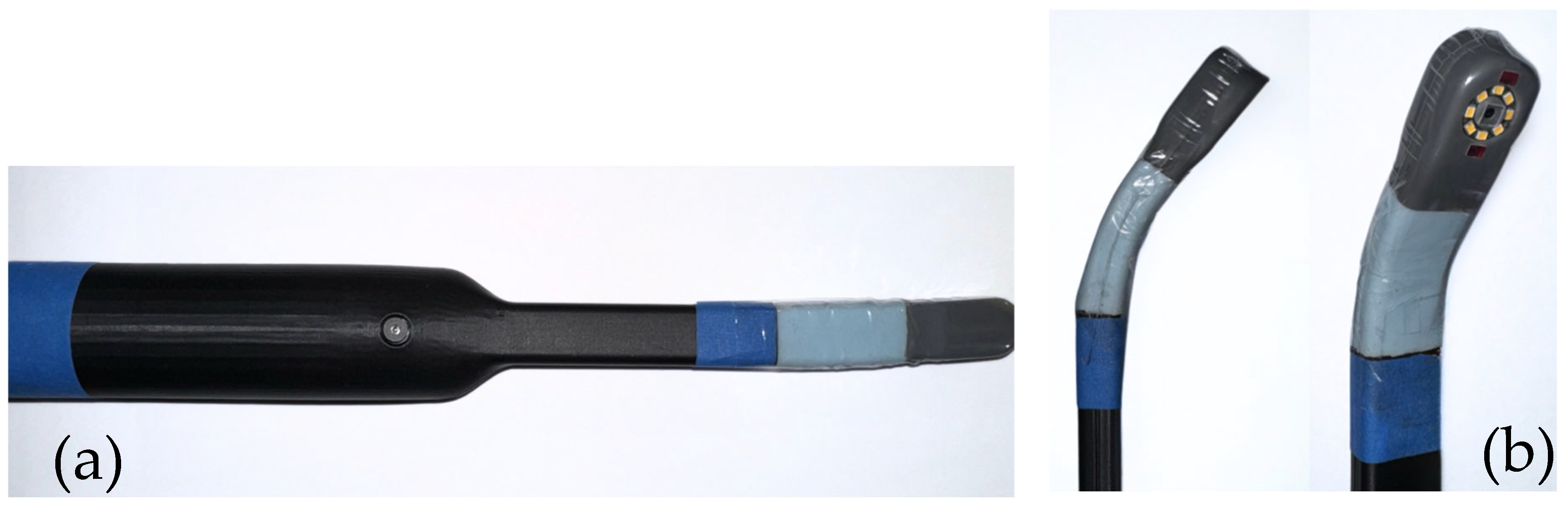
2.2. Oral Cancer Screening Platform
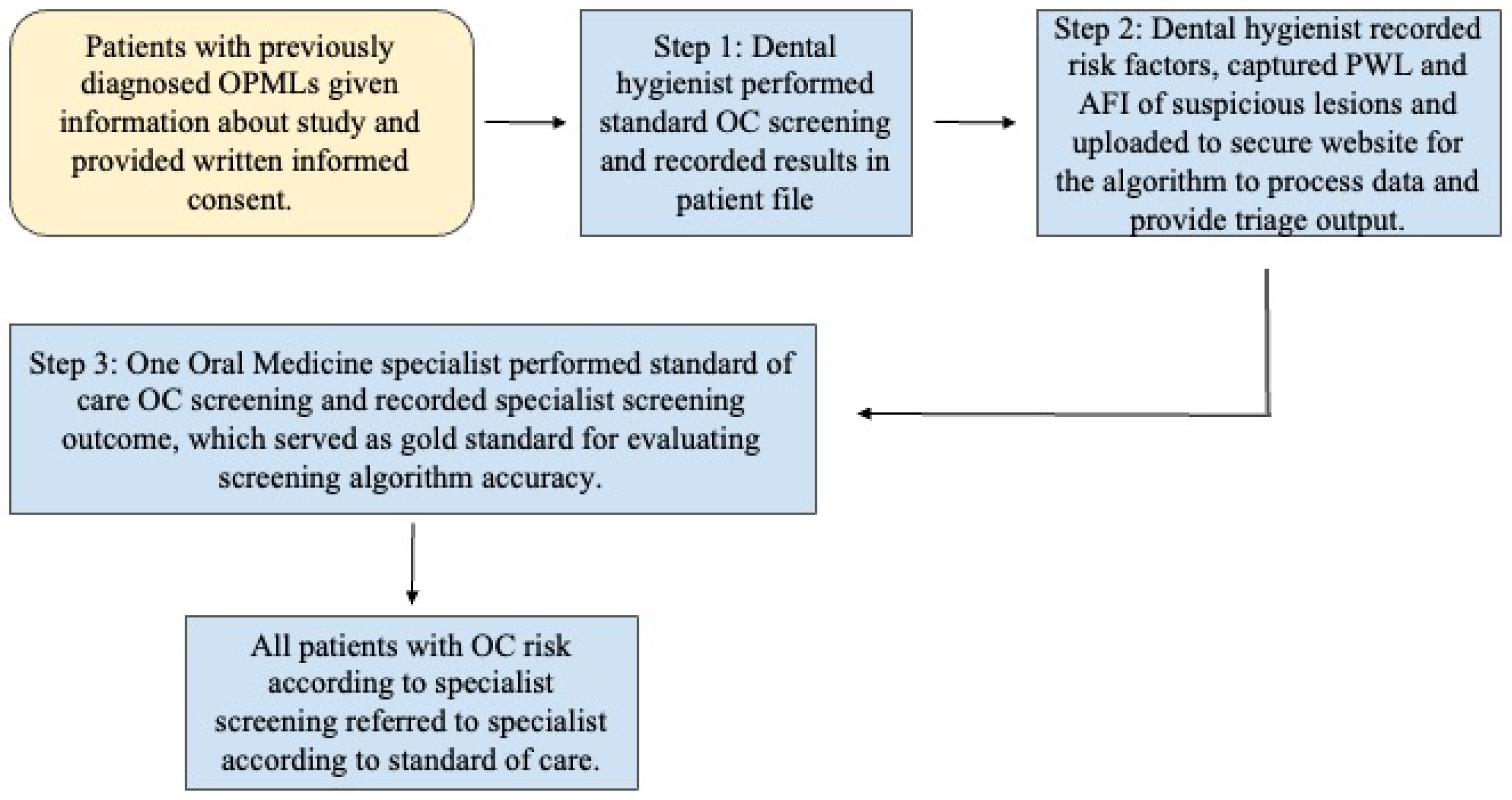
2.3. Protocol
2.4. Statistical Analysis
3. Results
Screening Accuracy vs. Specialist (Gold Standard)
4. Discussion
5. Conclusions
Author Contributions
Funding
Institutional Review Board Statement
Informed Consent Statement
Data Availability Statement
Acknowledgments
Conflicts of Interest
References
- World Health Organization. Oral Health. Available online: https://www.who.int/news-room/fact-sheets/detail/oral-health (accessed on 22 February 2025).
- National Institute of Dental and Craniofacial Research. Oral Cancer. Available online: https://www.nidcr.nih.gov/research/data-statistics/oral-cancer (accessed on 22 February 2025).
- Oral Cancer Foundation. Oral Cancer Facts. Available online: https://oralcancerfoundation.org/facts/ (accessed on 22 February 2025).
- González-Moles, M.Á.; Aguilar-Ruiz, M.; Ramos-García, P. Challenges in the Early Diagnosis of Oral Cancer, Evidence Gaps and Strategies for Improvement: A Scoping Review of Systematic Reviews. Cancers 2022, 14, 4967. [Google Scholar] [CrossRef] [PubMed]
- Neville, B.W.; Day, T.A. Oral Cancer and Precancerous Lesions. CA Cancer J. Clin. 2002, 52, 195–215. [Google Scholar] [CrossRef]
- Vernham, G.A.; Crowther, J.A. Head and Neck Carcinoma—Stage at Presentation. Clin. Otolaryngol. 1994, 19, 120–124. [Google Scholar] [CrossRef]
- McGurk, M.; Chan, C.; Jones, J.; O’Regan, E.; Sherriff, M. Delay in Diagnosis and Its Effect on Outcome in Head and Neck Cancer. Br. J. Oral Maxillofac. Surg. 2005, 43, 281–284. [Google Scholar] [CrossRef]
- Stathopoulos, P.; Smith, W.P. Analysis of Survival Rates Following Primary Surgery of 178 Consecutive Patients with Oral Cancer in a Large District General Hospital. J. Maxillofac. Oral Surg. 2017, 16, 158–163. [Google Scholar] [CrossRef]
- Chhabra, N.; Chhabra, S.; Sapra, N. Diagnostic Modalities for Squamous Cell Carcinoma: An Extensive Review of Literature-Considering Toluidine Blue as a Useful Adjunct. J. Maxillofac. Oral Surg. 2015, 14, 188–200. [Google Scholar] [CrossRef]
- Jiang, X.; Wu, J.; Wang, J.; Huang, R. Tobacco and Oral Squamous Cell Carcinoma: A Review of Carcinogenic Pathways. Tob. Induc. Dis. 2019, 17, 29. [Google Scholar] [CrossRef]
- Kaur, J.; Srivastava, R.; Borse, V. Recent Advances in Point-of-Care Diagnostics for Oral Cancer. Biosens. Bioelectron. 2021, 178, 112995. [Google Scholar] [CrossRef]
- Khariwala, S.S.; Ma, B.; Ruszczak, C.; Carmella, S.G.; Lindgren, B.; Hatsukami, D.K.; Hecht, S.S.; Stepanov, I. High Level of Tobacco Carcinogen–Derived DNA Damage in Oral Cells Is an Independent Predictor of Oral/Head and Neck Cancer Risk in Smokers. Cancer Prev. Res. 2017, 10, 507–513. [Google Scholar] [CrossRef] [PubMed]
- Gupta, B.; Johnson, N.W. Systematic Review and Meta-Analysis of Association of Smokeless Tobacco and of Betel Quid without Tobacco with Incidence of Oral Cancer in South Asia and the Pacific. PLoS ONE 2014, 9, e113385. [Google Scholar] [CrossRef] [PubMed]
- Gajendra, S.; McIntosh, S.; Ghosh, S. Effects of Tobacco Product Use on Oral Health and the Role of Oral Healthcare Providers in Cessation: A Narrative Review. Tob. Induc. Dis. 2023, 21, 1–16. [Google Scholar] [CrossRef]
- Mashberg, A.; Boffetta, P.; Winkelman, R.; Garfinkel, L. Tobacco Smoking, Alcohol Drinking, and Cancer of the Oral Cavity and Oropharynx among U.S. Veterans. Cancer 1993, 72, 1369–1375. [Google Scholar] [CrossRef]
- Varshney, P.K.; Agrawal, N.; Bariar, L.M. Tobacco and Alcohol Consumption in Relation to Oral Cancer. Indian J. Otolaryngol. Head Neck Surg. 2003, 55, 25–28. [Google Scholar] [CrossRef]
- Blot, W.J.; McLaughlin, J.K.; Winn, D.M.; Austin, D.F.; Greenberg, R.S.; Preston-Martin, S.; Bernstein, L.; Schoenberg, J.B.; Stemhagen, A.; Fraumeni, J.F. Smoking and Drinking in Relation to Oral and Pharyngeal Cancer. Cancer Res. 1988, 48, 3282–3287. [Google Scholar] [PubMed]
- Morse, D.E.; Psoter, W.J.; Cleveland, D.; Cohen, D.; Mohit-Tabatabai, M.; Kosis, D.L.; Eisenberg, E. Smoking and Drinking in Relation to Oral Cancer and Oral Epithelial Dysplasia. Cancer Causes Control 2007, 18, 919–929. [Google Scholar] [CrossRef] [PubMed]
- Lewin, F.; Norell, S.E.; Johansson, H.; Gustavsson, P.; Wennerberg, J.; Biӧrklund, A.; Rutqvist, L.E. Smoking Tobacco, Oral Snuff, and Alcohol in the Etiology of Squamous Cell Carcinoma of the Head and Neck. Cancer 1998, 82, 1367–1375. [Google Scholar] [CrossRef]
- Alkhubaizi, Q.; Khalaf, M.M.; Dashti, H.; Sharma, P.N. Oral Cancer Screening among Smokers and Nonsmokers. J. Int. Soc. Prev. Community Dent. 2018, 8, 553. [Google Scholar] [CrossRef]
- Brown, R.L.; Suh, J.M.; Scarborough, J.E.; Wilkins, S.A.; Smith, R.R. Snuff Dippers’ Intraoral Cancer: Clinical Characteristics and Response to Therapy. Cancer 1965, 18, 2–13. [Google Scholar] [CrossRef]
- Winn, D.M.; Blot, W.J.; Shy, C.M.; Pickle, L.W.; Toledo, A.; Fraumeni, J.F. Snuff Dipping and Oral Cancer among Women in the Southern United States. N. Engl. J. Med. 1981, 304, 745–749. [Google Scholar] [CrossRef]
- Johnson, N. Tobacco Use and Oral Cancer: A Global Perspective. J. Dent. Educ. 2001, 65, 328–339. [Google Scholar] [CrossRef]
- Noor, A.E.; Ramanarayana, B. Relationship of Smokeless Tobacco Uses in the Perspective of Oral Cancer: A Global Burden. Oral Oncol. Rep. 2024, 10, 100516. [Google Scholar] [CrossRef]
- Taybos, G.; Crews, K.; AAOM Web Writing Group. Oral Changes Associated with Tobacco Use. The American Academy of Oral Medicine 2008. Available online: https://www.aaom.com/index.php?option=com_content&view=article&id=136%3Aoral-changes-associated-with-tobacco-use&catid=22%3Apatient-condition-information&Itemid=120 (accessed on 24 February 2025).
- Taybos, G. Oral Changes Associated with Tobacco Use. Am. J. Med. Sci. 2003, 326, 179–182. [Google Scholar] [CrossRef]
- Kumari, P.; Debta, P.; Dixit, A. Oral Potentially Malignant Disorders: Etiology, Pathogenesis, and Transformation into Oral Cancer. Front. Pharmacol. 2022, 13, 825266. [Google Scholar] [CrossRef]
- IARC Working Group on the Evaluation of Carcinogenic Risks to Humans. Smokeless Tobacco and Some Tobacco-Specific N-Nitrosamines; International Agency for Research on Cancer: Lyon, France, 2007; ISBN 9789283212898. [Google Scholar]
- Kusiak, A.; Maj, A.; Cichońska, D.; Kochańska, B.; Cydejko, A.; Świetlik, D. The Analysis of the Frequency of Leukoplakia in Reference of Tobacco Smoking among Northern Polish Population. Int. J. Environ. Res. Public Health 2020, 17, 6919. [Google Scholar] [CrossRef]
- Cullen, J.W.; Blot, W.; Henningfield, J.; Boyd, G.; Mecklenburg, R.; Massey, M.M. Health Consequences of Using Smokeless Tobacco: Summary of the Advisory Committee’s Report to the Surgeon General. Public Health Rep. 1986, 101, 355–373. [Google Scholar] [PubMed]
- Office of the Surgeon General. The Health Consequences of Smoking; Centers for Disease Control and Prevention: Atlanta, GA, USA, 2004; ISBN 0160515762. [Google Scholar]
- Grajewski, S.; Groneberg, D. Leukoplakia and Erythroplakia—Two Orale Precursor Lesions. Laryngo-Rhino-Otol. 2009, 88, 673–675. [Google Scholar] [CrossRef] [PubMed]
- Khan, S.; Sinha, A.; Kumar, S.; Iqbal, H. Oral Submucous Fibrosis: Current Concepts on Aetiology and Management—A Review. J. Indian Acad. Oral Med. Radiol. 2018, 30, 407–411. [Google Scholar] [CrossRef]
- Ekanayaka, R.P.; Tilakaratne, W.M. Oral Submucous Fibrosis: Review on Mechanisms of Malignant Transformation. Oral Surg. Oral Med. Oral Pathol. Oral Radiol. 2016, 122, 192–199. [Google Scholar] [CrossRef]
- Warnakulasuriya, S.; Kujan, O.; Aguirre-Urizar, J.M.; Bagan, J.V.; González-Moles, M.Á.; Kerr, A.R.; Lodi, G.; Mello, F.W.; Monteiro, L.; Ogden, G.R.; et al. Oral Potentially Malignant Disorders: A Consensus Report from an International Seminar on Nomenclature and Classification, Convened by the WHO Collaborating Centre for Oral Cancer. Oral Dis. 2020, 27, 1862–1880. [Google Scholar] [CrossRef]
- Warnakulasuriya, S.; Johnson, N.W.; Van Der Waal, I. Nomenclature and Classification of Potentially Malignant Disorders of the Oral Mucosa. J. Oral Pathol. Med. 2007, 36, 575–580. [Google Scholar] [CrossRef]
- Gallagher, K.P.; Vargas, P.A.; Santos-Silva, A.R. The Use of E-Cigarettes as a Risk Factor for Oral Potentially Malignant Disorders and Oral Cancer: A Rapid Review of Clinical Evidence. Med. Oral Patol. Oral Cir. Bucal 2024, 29, 18–26. [Google Scholar] [CrossRef] [PubMed]
- National Cancer Institute. Tobacco Use Supplement Current Population Survey; National Cancer Institute: Bethesda, MD, USA, 2020. Available online: https://cancercontrol.cancer.gov/sites/default/files/2020-06/2018-19-tus-factsheet.pdf (accessed on 22 February 2025).
- Lingen, M.W.; Abt, E.; Agrawal, N.; Chaturvedi, A.K.; Cohen, E.; D’Souza, G.; Gurenlian, J.; Kalmar, J.R.; Kerr, A.R.; Lambert, P.M.; et al. Evidence-Based Clinical Practice Guideline for the Evaluation of Potentially Malignant Disorders in the Oral Cavity. J. Am. Dent. Assoc. 2017, 148, 712–727.e10. [Google Scholar] [CrossRef]
- Villa, A.; Woo, S.B. Leukoplakia—A Diagnostic and Management Algorithm. J. Oral Maxillofac. Surg. 2017, 75, 723–734. [Google Scholar] [CrossRef]
- Qi, M.; Li, L.; Tang, X.; Lu, Y.; Wang, M.; Yang, J.; Zhang, M. Nicotine Promotes the Development of Oral Leukoplakia via Regulating Peroxiredoxin 1 and Its Binding Proteins. Braz. J. Med. Biol. Res. 2021, 54, e10931. [Google Scholar] [CrossRef] [PubMed]
- Chaouachi, K. Hookah Epidemic. Br. Dent. J. 2009, 207, 192–193. [Google Scholar] [CrossRef][Green Version]
- Elmahdi, F.M.; Alsebaee, R.O.; Ballaji, M.M.; Alharbi, A.M.; Alhejaili, M.E.; Altamimi, H.S.; Abu Altaher, M.J.; Ballaji, M.B.; Aljohani, A.S.; Alahmdi, A.A.; et al. Cytological Changes and Immunocytochemistry Expression of P53 in Oral Mucosa among Waterpipe Users in the Kingdom of Saudi Arabia. Cureus 2022, 14, e31190. [Google Scholar] [CrossRef]
- Hegde, S.; Ajila, V.; Zhu, W.; Zeng, C. Artificial Intelligence in Early Diagnosis and Prevention of Oral Cancer. Asia-Pac. J. Oncol. Nurs. 2022, 9, 100133. [Google Scholar] [CrossRef] [PubMed]
- Conway, D.I.; Petticrew, M.; Marlborough, H.; Berthiller, J.; Hashibe, M.; Macpherson, L.M.D. Socioeconomic Inequalities and Oral Cancer Risk: A Systematic Review and Meta-Analysis of Case-Control Studies. Int. J. Cancer 2008, 122, 2811–2819. [Google Scholar] [CrossRef]
- Güneri, P.; Çankaya, H.; Yavuzer, A.; Güneri, E.A.; Erişen, L.; Özkul, D.; El, S.N.; Karakaya, S.; Arican, A.; Boyacioğlu, H. Primary Oral Cancer in a Turkish Population Sample: Association with Sociodemographic Features, Smoking, Alcohol, Diet and Dentition. Oral Oncol. 2005, 41, 1005–1012. [Google Scholar] [CrossRef]
- Rejineveld, S.A. The Impact of Individual and Area Characteristics on Urban Socioeconomic Differences in Health and Smoking. Int. J. Epidemiol. 1998, 27, 33–40. [Google Scholar] [CrossRef]
- Barbeau, E.M.; Krieger, N.; Soobader, M.-J. Working Class Matters: Socioeconomic Disadvantage, Race/Ethnicity, Gender, and Smoking in NHIS 2000. Am. J. Public Health 2004, 94, 269–278. [Google Scholar] [CrossRef]
- Sharma, A.; Lewis, S.; Szatkowski, L. Insights into Social Disparities in Smoking Prevalence Using Mosaic, a Novel Measure of Socioeconomic Status: An Analysis Using a Large Primary Care Dataset. BMC Public Health 2010, 10, 755. [Google Scholar] [CrossRef]
- Hiscock, R.; Bauld, L.; Amos, A.; Fidler, J.A.; Munafò, M. Socioeconomic Status and Smoking: A Review. Ann. N. Y. Acad. Sci. 2012, 1248, 107–123. [Google Scholar] [CrossRef]
- Hosseinpoor, A.R.; Parker, L.A.; Tursan d’Espaignet, E.; Chatterji, S. Social Determinants of Smoking in Low- and Middle-Income Countries: Results from the World Health Survey. PLoS ONE 2011, 6, e20331. [Google Scholar] [CrossRef]
- Branstetter, S.; Lengerich, E.; Dignan, M.; Muscat, J. Knowledge and Perceptions of Tobacco-Related Media in Rural Appalachia. Rural Remote Health 2015, 15, 3136. [Google Scholar] [CrossRef] [PubMed]
- Chen, A.; Machiorlatti, M.; Krebs, N.M.; Muscat, J.E. Socioeconomic Differences in Nicotine Exposure and Dependence in Adult Daily Smokers. BMC Public Health 2019, 19, 375. [Google Scholar] [CrossRef] [PubMed]
- Birch, S.; Jerrett, M.; Eyles, J. Heterogeneity in the Determinants of Health and Illness: The Example of Socioeconomic Status and Smoking. Soc. Sci. Med. 2000, 51, 307–317. [Google Scholar] [CrossRef] [PubMed]
- Peretti-Watel, P.; Seror, V.; Constance, J.; Beck, F. Poverty as a Smoking Trap. Int. J. Drug Policy 2009, 20, 230–236. [Google Scholar] [CrossRef]
- Clare, P.; Bradford, D.; Courtney, R.J.; Martire, K.; Mattick, R.P. The Relationship between Socioeconomic Status and “Hardcore” Smoking over Time—Greater Accumulation of Hardened Smokers in Low-SES than High-SES Smokers. Tob. Control 2014, 23, e133–e138. [Google Scholar] [CrossRef]
- Warnakulasuriya, S. Significant Oral Cancer Risk Associated with Low Socioeconomic Status. Evid.-Based Dent. 2009, 10, 4–5. [Google Scholar] [CrossRef]
- Jamal, A.; Agaku, I.T.; O’Connor, E.; King, B.A.; Kenemer, J.B.; Neff, L. Current Cigarette Smoking among Adults—United States, 2005–2013. Morb. Mortal. Wkly. Rep. 2014, 63, 1108. [Google Scholar]
- Silverman, S.; Bhargava, K.; Mani, N.J.; Smith, L.W.; Malaowalla, A.M. Malignant Transformation and Natural History of Oral Leukoplakia in 57,518 Industrial Workers of Gujarat, India. Cancer 1976, 38, 1790–1795. [Google Scholar] [CrossRef] [PubMed]
- Speight, P.M.; Khurram, S.A.; Kujan, O. Oral Potentially Malignant Disorders: Risk of Progression to Malignancy. Oral Surg. Oral Med. Oral Pathol. Oral Radiol. 2018, 125, 612–627. [Google Scholar] [CrossRef]
- Kar, A.; Wreesmann, V.B.; Shwetha, V.; Thakur, S.; Rao, V.U.S.; Arakeri, G.; Brennan, P.A. Improvement of Oral Cancer Screening Quality and Reach: The Promise of Artificial Intelligence. J. Oral Pathol. Med. 2020, 49, 727–730. [Google Scholar] [CrossRef]
- Barik, D.; Thorat, A. Issues of Unequal Access to Public Health in India. Front. Public Health 2015, 3, 245. [Google Scholar] [CrossRef] [PubMed]
- Frydrych, A.M.; Slack-Smith, L.M.; Parsons, R.; Threlfall, T. Oral Cavity Squamous Cell Carcinoma—Characteristics and Survival in Aboriginal and Non-Aboriginal Western Australians. Open Dent. J. 2014, 8, 168–174. [Google Scholar]
- Shiboski, C.H.; Schmidt, B.L.; Jordan, R.C.K. Racial Disparity in Stage at Diagnosis and Survival among Adults with Oral Cancer in the US. Community Dent. Oral Epidemiol. 2007, 35, 233–240. [Google Scholar] [CrossRef]
- Chhabra, A.; Hussain, S.; Rashid, S. Recent Trends of Tobacco Use in India. J. Public Health 2019, 29, 27–36. [Google Scholar] [CrossRef]
- Laprise, C.; Shahul, H.P.; Madathil, S.A.; Thekkepurakkal, A.S.; Castonguay, G.; Varghese, I.; Shiraz, S.; Allison, P.; Schlecht, N.F.; Rousseau, M.-C.; et al. Periodontal Diseases and Risk of Oral Cancer in Southern India: Results from the HeNCe Life Study. Int. J. Cancer 2016, 139, 1512–1519. [Google Scholar] [CrossRef]
- Akashanand; Zahiruddin, Q.S.; Jena, D.; Ballal, S.; Kumar, S.; Bhat, M.; Sharma, S.; Kumar, M.R.; Rustagi, S.; Gaidhane, A.M.; et al. Burden of Oral Cancer and Associated Risk Factors at National and State Levels: A Systematic Analysis from the Global Burden of Disease in India, 1990–2021. Oral Oncol. 2024, 159, 107063. [Google Scholar] [CrossRef]
- Thavarool, S.B.; Muttath, G.; Nayanar, S.; Duraisamy, K.; Bhat, P.; Shringarpure, K.; Nayak, P.; Tripathy, J.P.; Thaddeus, A.; Philip, S.; et al. Improved Survival among Oral Cancer Patients: Findings from a Retrospective Study at a Tertiary Care Cancer Centre in Rural Kerala, India. World J. Surg. Oncol. 2019, 17, 15. [Google Scholar] [CrossRef]
- Jena, D.; Swain, P.K.; Gandhi, N.C.; Guthi, V.R.; Ramasamy, A.; TY, S.S.; P, P.; Valli Sreepada, S.S.; Quispevicuna, C.; Beig, M.A.; et al. Cancer Burden and Trends across India (1990–2021): Insights from the Global Burden of Disease Study. Evidence 2024, 2. [Google Scholar] [CrossRef]
- Cancer Research UK. Survival for Mouth and Oropharyngeal Cancer. Available online: https://www.cancerresearchuk.org/about-cancer/mouth-cancer/survival (accessed on 23 February 2025).
- Walsh, T.; Warnakulasuriya, S.; Lingen, M.W.; Kerr, A.R.; Ogden, G.R.; Glenny, A.-M.; Macey, R. Clinical Assessment for the Detection of Oral Cavity Cancer and Potentially Malignant Disorders in Apparently Healthy Adults. Cochrane Database Syst. Rev. 2021, 12, CD010173. [Google Scholar]
- Epstein, J.B.; Güneri, P.; Boyacioglu, H.; Abt, E. The Limitations of the Clinical Oral Examination in Detecting Dysplastic Oral Lesions and Oral Squamous Cell Carcinoma. J. Am. Dent. Assoc. 2012, 143, 1332–1342. [Google Scholar] [CrossRef] [PubMed]
- Essat, M.; Cooper, K.; Bessey, A.; Clowes, M.; Chilcott, J.B.; Hunter, K.D. Diagnostic Accuracy of Conventional Oral Examination for Detecting Oral Cavity Cancer and Potentially Malignant Disorders in Patients with Clinically Evident Oral Lesions: Systematic Review and Meta–Analysis. Head Neck 2022, 44, 998–1013. [Google Scholar] [CrossRef] [PubMed]
- Sankaranarayanan, R.; Ramadas, K.; Thomas, G.; Muwonge, R.; Thara, S.; Mathew, B.; Rajan, B. Effect of Screening on Oral Cancer Mortality in Kerala, India: A Cluster-Randomised Controlled Trial. Lancet 2005, 365, 1927–1933. [Google Scholar] [CrossRef] [PubMed]
- Sankaranarayanan, R.; Ramadas, K.; Thara, S.; Muwonge, R.; Thomas, G.; Anju, G.; Mathew, B. Long Term Effect of Visual Screening on Oral Cancer Incidence and Mortality in a Randomized Trial in Kerala, India. Oral Oncol. 2013, 49, 314–321. [Google Scholar] [CrossRef]
- Chuang, S.-L.; Su, W.; Hsiu, T.; Ming, A.; Wang, C.-P.; Ching, J.; Yueh, S.; Lee, Y.-C.; Chiu, H.-M.; Chang, D.-C.; et al. Population-Based Screening Program for Reducing Oral Cancer Mortality in 2,334,299 Taiwanese Cigarette Smokers And/or Betel Quid Chewers. Cancer 2017, 123, 1597–1609. [Google Scholar] [CrossRef]
- Ford, P.J.; Farah, C.S. Early Detection and Diagnosis of Oral Cancer: Strategies for Improvement. J. Cancer Policy 2013, 1, e2–e7. [Google Scholar] [CrossRef]
- Speer, K. Workforce Strategies to Improve Access to Oral Health Care. National Conference of State Legislatures. 2023. Available online: https://www.ncsl.org/health/workforce-strategies-to-improve-access-to-oral-health-care (accessed on 23 February 2025).
- Shuman, A.G.; Entezami, P.; Chernin, A.S.; Wallace, N.E.; Taylor, J.M.G.; Hogikyan, N.D. Demographics and Efficacy of Head and Neck Cancer Screening. Otolaryngol.–Head Neck Surg. 2010, 143, 353–360. [Google Scholar] [CrossRef]
- Garrote, L.F.; Sankaranarayanan, R.; Lence Anta, J.J.; Salvá, A.R.; Parkin, D.M. An Evaluation of the Oral Cancer Control Program in Cuba. Epidemiology 1995, 6, 428–431. [Google Scholar] [CrossRef]
- Santana, J.; Delgado, L.; Miranda, J.; Sanchez, M. Oral Cancer Case Finding Program (OCCFP). Oral Oncol. 1997, 33, 10–12. [Google Scholar] [CrossRef] [PubMed]
- Petersen, P.E. The World Oral Health Report 2003: Continuous Improvement of Oral Health in the 21st Century—The Approach of the WHO Global Oral Health Programme. Community Dent. Oral Epidemiol. 2003, 31, 3–24. [Google Scholar] [CrossRef] [PubMed]
- Northridge, M.E.; Kumar, A.; Kaur, R. Disparities in Access to Oral Health Care. Annu. Rev. Public Health 2020, 41, 513–535. [Google Scholar] [CrossRef]
- Nicotera, G.; Di Stasio, S.M.; Angelillo, I.F. Knowledge and Behaviors of Primary Care Physicians on Oral Cancer in Italy. Oral Oncol. 2004, 40, 490–495. [Google Scholar] [CrossRef]
- Shepperd, J.A.; Howell, J.L.; Logan, H. A Survey of Barriers to Screening for Oral Cancer among Rural Black Americans. Psycho-Oncol. 2013, 23, 276–282. [Google Scholar] [CrossRef]
- Edwards, P.; Subramanian, S.; Hoover, S.; Ramesh, C.; Ramadas, K. Financial Barriers to Oral Cancer Treatment in India. J. Cancer Policy 2016, 7, 28–31. [Google Scholar] [CrossRef]
- Panzarella, V.; Pizzo, G.; Calvino, F.; Domenico, C.; Colella, G.; Campisi, G. Diagnostic Delay in Oral Squamous Cell Carcinoma: The Role of Cognitive and Psychological Variables. Int. J. Oral Sci. 2014, 6, 39–45. [Google Scholar] [CrossRef]
- Warnakulasuriya, S.; Kerr, A.R. Oral Cancer Screening: Past, Present, and Future. J. Dent. Res. 2021, 100, 002203452110147. [Google Scholar] [CrossRef] [PubMed]
- Farah, C.S.; McIntosh, L.; Georgiou, A.; McCullough, M.J. Efficacy of Tissue Autofluorescence Imaging (Velscope) in the Visualization of Oral Mucosal Lesions. Head Neck 2012, 34, 856–862. [Google Scholar] [CrossRef]
- Macey, R.; Walsh, T.; Brocklehurst, P.; Kerr, A.R.; Liu, J.L.; Lingen, M.W.; Ogden, G.R.; Warnakulasuriya, S.; Scully, C. Diagnostic Tests for Oral Cancer and Potentially Malignant Disorders in Patients Presenting with Clinically Evident Lesions. Cochrane Database Syst. Rev. 2015, 7, CD010276. [Google Scholar] [CrossRef]
- Awan, K.H.; Morgan, P.R.; Warnakulasuriya, S. Evaluation of an Autofluorescence Based Imaging System (VELscopeTM) in the Detection of Oral Potentially Malignant Disorders and Benign Keratoses. Oral Oncol. 2011, 47, 274–277. [Google Scholar] [CrossRef]
- Jayaprakash, V.; Sullivan, M.; Merzianu, M.; Rigual, N.R.; Loree, T.R.; Popat, S.R.; Moysich, K.B.; Ramananda, S.; Johnson, T.; Marshall, J.R.; et al. Autofluorescence-Guided Surveillance for Oral Cancer. Cancer Prev. Res. 2009, 2, 966–974. [Google Scholar] [CrossRef]
- Tanriver, G.; Soluk Tekkesin, M.; Ergen, O. Automated Detection and Classification of Oral Lesions Using Deep Learning to Detect Oral Potentially Malignant Disorders. Cancers 2021, 13, 2766. [Google Scholar] [CrossRef]
- Birur, N.P.; Gurushanth, K.; Patrick, S.; Sunny, S.; Raghavan, S.; Gurudath, S.; Hegde, U.; Tiwari, V.; Jain, V.; Imran, M.; et al. Role of Community Health Worker in a Mobile Health Program for Early Detection of Oral Cancer. Indian J. Cancer 2019, 56, 107. [Google Scholar] [CrossRef]
- Lane, P.M.; Gilhuly, T.; Whitehead, P.; Zeng, H.; Poh, C.F.; Ng, S.; Williams, P.M.; Zhang, L.; Rosin, M.P.; MacAulay, C.E. Simple Device for the Direct Visualization of Oral-Cavity Tissue Fluorescence. J. Biomed. Opt. 2006, 11, 024006. [Google Scholar] [CrossRef] [PubMed]
- Pavlova, I.; Williams, M.; El-Naggar, A.; Richards-Kortum, R.; Gillenwater, A. Understanding the Biological Basis of Autofluorescence Imaging for Oral Cancer Detection: High-Resolution Fluorescence Microscopy in Viable Tissue. Clin. Cancer Res. Off. J. Am. Assoc. Cancer Res. 2008, 14, 2396–2404. [Google Scholar] [CrossRef] [PubMed]
- Ramezani, K.; Tofangchiha, M. Oral Cancer Screening by Artificial Intelligence-Oriented Interpretation of Optical Coherence Tomography Images. Radiol. Res. Pract. 2022, 2022, 1614838. [Google Scholar] [CrossRef] [PubMed]
- Roblyer, D.; Kurachi, C.; Stepanek, V.M.; Schwarz, R.A.; Williams, M.; El-Naggar, A.K.; Lee, J.; Gillenwater, A.M.; Richards-Kortum, R. Comparison of Multispectral Wide-Field Optical Imaging Modalities to Maximize Image Contrast for Objective Discrimination of Oral Neoplasia. J. Biomed. Opt. 2010, 15, 066017. [Google Scholar] [CrossRef]
- Yang, S.M.; Song, B.; Wink, C.; Abouakl, M.; Takesh, T.; Hurlbutt, M.; Dinica, D.; Davis, A.; Liang, R.; Wilder-Smith, P. Performance of Automated Oral Cancer Screening Algorithm in Tobacco Users vs. Tobacco non-users. Appl. Sci. 2023, 13, 3370. [Google Scholar] [CrossRef]
- Rahman, M.S.; Ingole, N.; Roblyer, D.; Stepanek, V.; Richards-Kortum, R.; Gillenwater, A.; Shastri, S.; Chaturvedi, P. Evaluation of a Low-Cost, Portable Imaging System for Early Detection of Oral Cancer. Head Neck Oncol. 2010, 2, 10. [Google Scholar] [CrossRef]
- Ilhan, B.; Lin, K.; Guneri, P.; Wilder-Smith, P. Improving Oral Cancer Outcomes with Imaging and Artificial Intelligence. J. Dent. Res. 2020, 99, 241–248. [Google Scholar] [CrossRef]
- Cicciù, M.; Herford, A.S.; Cervino, G.; Troiano, G.; Lauritano, F.; Laino, L. Tissue Fluorescence Imaging (VELscope) for Quick Non-Invasive Diagnosis in Oral Pathology. J. Craniofacial Surg. 2017, 28, e112–e115. [Google Scholar] [CrossRef]
- Jeyaraj, P.R.; Samuel Nadar, E.R. Computer-Assisted Medical Image Classification for Early Diagnosis of Oral Cancer Employing Deep Learning Algorithm. J. Cancer Res. Clin. Oncol. 2019, 145, 829–837. [Google Scholar] [CrossRef]
- Cooper, M.; Pacek, L.R.; Guy, M.C.; Barrington-Trimis, J.L.; Simon, P.; Stanton, C.; Kong, G. Hookah Use among US Youth: A Systematic Review of the Literature from 2009 to 2017. Nicotine Tob. Res. 2018, 21, 1590–1599. [Google Scholar] [CrossRef]
- Olson, C.M.; Burda, B.U.; Beil, T.; Whitlock, E.P. Screening for Oral Cancer: A Targeted Evidence Update for the U.S. Preventive Services Task Force; Evidence Syntheses, No. 102; Agency for Healthcare Research and Quality: Rockville, MD, USA, 2013; p. 4. [Google Scholar]
- McKinney, R.; Buhler, C.; Brizuela, M. Smokeless Tobacco Oral Pathology. In StatPearls [Internet]; StatPearls Publishing: Treasure Island, FL, USA, 2025. [Google Scholar]
- Song, B.; Sunny, S.; Li, S.; Gurushanth, K.; Mendonca, P.; Mukhia, N.; Patrick, S.; Gurudath, S.; Raghavan, S.; Imchen, T.; et al. Mobile-based oral cancer classification for point-of-care screening. J. Biomed. Opt. 2021, 26, 065003. [Google Scholar] [CrossRef]
- Figueroa, K.C.; Song, B.; Sunny, S.; Li, S.; Gurushanth, K.; Mendonca, P.; Mukhia, N.; Patrick, S.; Gurudath, S.; Raghavan, S.; et al. Interpretable deep learning approach for oral cancer classification using guided attention inference network. J. Biomed. Opt. 2022, 27, 015001. [Google Scholar] [CrossRef] [PubMed]
- Song, B.; Li, S.; Sunny, S.; Gurushanth, K.; Mendonca, P.; Mukhia, N.; Patrick, S.; Peterson, T.; Gurudath, S.; Raghavan, S.; et al. Exploring uncertainty measures in convolutional neural network for semantic segmentation of oral cancer images. J. Biomed. Opt. 2022, 27, 115001. [Google Scholar] [CrossRef]
- Uthoff, R.D.; Song, B.; Sunny, S.; Patrick, S.; Suresh, A.; Kolur, T.; Keerthi, G.; Spires, O.; Anbarani, A.; Wilder-Smith, P.; et al. Point-of-care, smartphone-based, dual-modality, dual-view, oral cancer screening device with neural network classification for low-resource communities. PLoS ONE 2018, 13, e0207493. [Google Scholar] [CrossRef] [PubMed]
- Uthoff, R.D.; Song, B.; Sunny, S.; Patrick, S.; Suresh, A.; Kolur, T.; Gurushanth, K.; Wooten, K.; Gupta, V.; Platek, M.E.; et al. Small form factor, flexible, dual-modality handheld probe for smartphone-based, point-of-care oral and oropharyngeal cancer screening. J. Biomed. Opt. 2019, 24, 1–8. [Google Scholar] [CrossRef] [PubMed]
- Song, B.; Sunny, S.; Uthoff, R.D.; Patrick, S.; Suresh, A.; Kolur, T.; Keerthi, G.; Anbarani, A.; Wilder-Smith, P.; Kuriakose, M.A.; et al. Automatic classification of dual-modalilty, smartphone-based oral dysplasia and malignancy images using deep learning. Biomed. Opt. Express 2018, 9, 5318–5329. [Google Scholar] [CrossRef] [PubMed]



| Tobacco Smoker | Tobacco Vaper | Tobacco Chewer | Hookah | Multiple | Tobacco Non-User | ||
|---|---|---|---|---|---|---|---|
| Mean age | 52 | 63 | 28 | 41 | 48 | 54 | 51 |
| Age range | 21–82 | 21–82 | 21–36 | 23–66 | 31–62 | 21–66 | 21–79 |
| African American | 21 | 8 | 4 | 4 | 0 | 1 | 4 |
| American Indian/Alaska Native | 0 | 0 | 0 | 0 | 0 | 0 | 0 |
| Asian | 112 | 33 | 41 | 5 | 1 | 16 | 16 |
| Multiple Categories | 31 | 6 | 9 | 4 | 6 | 1 | 5 |
| Native Hawaiian or Pacific Islander | 4 | 1 | 2 | 0 | 1 | ||
| White Hispanic | 102 | 41 | 32 | 6 | 0 | 10 | 13 |
| White non-Hispanic | 48 | 9 | 11 | 6 | 10 | 5 | 7 |
| Female | 117 | 37 | 33 | 0 | 3 | 11 | 33 |
| Male | 201 | 55 | 57 | 21 | 8 | 21 | 39 |
| Non-binary | 0 | ||||||
| TOTAL | 318 | 98 | 99 | 25 | 17 | 33 | 46 |
| VALUE | SE | LOWER CI | UPPER CI | ||
|---|---|---|---|---|---|
| No Tobacco | Sensitivity | 0.800 | 0.073 | 0.657 | 0.943 |
| Specificity | 1.000 | 0.000 | 1.000 | 1.000 | |
| FNR (False Negative Rate) | 0.200 | 0.073 | 0.057 | 0.343 | |
| FPR (False Positive Rate) | 0.000 | 0.000 | 0.000 | 0.000 | |
| Agreement with specialist | 0.824 | 0.065 | 0.695 | 0.952 | |
| PPV (Positive Predictive Value) | 1.000 | 0.000 | 1.000 | 1.000 | |
| NPV (Negative Predictive Value) | 0.400 | 0.155 | 0.096 | 0.704 | |
| Tobacco Smoker | Sensitivity | 0.900 | 0.055 | 0.793 | 1.007 |
| Specificity | 0.625 | 0.171 | 0.290 | 0.960 | |
| FNR (False Negative Rate) | 0.100 | 0.055 | −0.007 | 0.207 | |
| FPR (False Positive Rate) | 0.375 | 0.171 | 0.040 | 0.710 | |
| Agreement with specialist | 0.842 | 0.059 | 0.726 | 0.958 | |
| PPV (Positive Predictive Value) | 0.900 | 0.055 | 0.793 | 1.007 | |
| NPV (Negative Predictive Value) | 0.625 | 0.171 | 0.290 | 0.960 |
| VALUE | SE | LOWER CI | UPPER CI | ||
|---|---|---|---|---|---|
| Tobacco Vaper | Sensitivity | 0.933 | 0.046 | 0.844 | 1.023 |
| Specificity | 0.556 | 0.166 | 0.231 | 0.880 | |
| FNR (False Negative Rate) | 0.067 | 0.046 | −0.023 | 0.156 | |
| FPR (False Positive Rate) | 0.444 | 0.166 | 0.120 | 0.769 | |
| Agreement with specialist | 0.846 | 0.058 | 0.733 | 0.959 | |
| PPV (Positive Predictive Value) | 0.875 | 0.058 | 0.760 | 0.990 | |
| NPV (Negative Predictive Value) | 0.714 | 0.171 | 0.380 | 1.049 |
| VALUE | SE | LOWER CI | UPPER CI | ||
|---|---|---|---|---|---|
| Tobacco Chewer | Sensitivity | 1.000 | 0.000 | 1.000 | 1.000 |
| Specificity | 0.333 | 0.192 | −0.044 | 0.711 | |
| FNR (False Negative Rate) | 0.000 | 0.000 | 0.000 | 0.000 | |
| FPR (False Positive Rate) | 0.667 | 0.192 | 0.289 | 1.044 | |
| Agreement with specialist | 0.818 | 0.082 | 0.657 | 0.979 | |
| PPV (Positive Predictive Value) | 0.800 | 0.089 | 0.625 | 0.975 | |
| NPV (Negative Predictive Value) | 1.000 | 0.000 | 1.000 | 1.000 |
| VALUE | SE | LOWER CI | UPPER CI | ||
|---|---|---|---|---|---|
| Tobacco Hookah | Sensitivity | 1.000 | 0.000 | 1.000 | 1.000 |
| Specificity | 0.714 | 0.171 | 0.380 | 1.049 | |
| FNR (False Negative Rate) | 0.000 | 0.000 | 0.000 | 0.000 | |
| FPR (False Positive Rate) | 0.286 | 0.171 | −0.049 | 0.620 | |
| Agreement with specialist | 0.867 | 0.088 | 0.695 | 1.039 | |
| PPV (Positive Predictive Value) | 0.800 | 0.126 | 0.552 | 1.048 | |
| NPV (Negative Predictive Value) | 1.000 | 0.000 | 1.000 | 1.000 |
| VALUE | SE | LOWER CI | UPPER CI | ||
|---|---|---|---|---|---|
| Tobacco Multi-users | Sensitivity | 0.952 | 0.046 | 0.861 | −0.044 |
| Specificity | 0.333 | 0.192 | 1.043 | 0.711 | |
| FNR (False Negative Rate) | 0.048 | 0.046 | −0.043 | 0.139 | |
| FPR (False Positive Rate) | 0.667 | 0.192 | 0.289 | 1.044 | |
| Agreement with specialist | 0.815 | 0.075 | 0.668 | 0.961 | |
| PPV (Positive Predictive Value) | 0.833 | 0.076 | 0.684 | 0.982 | |
| NPV (Negative Predictive Value) | 0.667 | 0.272 | 0.133 | 1.200 |
| VALUE | SE | LOWER CI | UPPER CI | ||
|---|---|---|---|---|---|
| Tobacco-All | Sensitivity | 0.943 | 0.023 | 0.898 | 0.987 |
| Specificity | 0.528 | 0.083 | 0.365 | 0.691 | |
| FNR (False Negative Rate) | 0.057 | 0.023 | 0.013 | 0.309 | |
| FPR (False Positive Rate) | 0.472 | 0.083 | 0.102 | 0.635 | |
| Agreement with specialist | 0.837 | 0.031 | 0.776 | 0.898 | |
| PPV (Positive Predictive Value) | 0.853 | 0.033 | 0.789 | 0.593 | |
| NPV (Negative Predictive Value) | 0.760 | 0.085 | 0.918 | 0.927 |
| No Increased Risk | Moderate Increased Risk | High Risk | p-Value | |
|---|---|---|---|---|
| No Tobacco | 1.000 | 0.833 | 0.667 | |
| Smoker | 0.833 | 0.840 | 0.857 | 0.0478 |
| Vaper | 1.000 | 0.793 | 1.000 | 0.068 |
| Chewer | 0.667 | 0.667 | 1.000 | 0.0003 |
| Hookah user | 0.833 | 0.800 | 1.000 | 0.007 |
| Multi user | 0.667 | 0.769 | 0.909 | 0.0016 |
| All users | 0.826 | 0.802 | 0.946 | 0.0145 |
Disclaimer/Publisher’s Note: The statements, opinions and data contained in all publications are solely those of the individual author(s) and contributor(s) and not of MDPI and/or the editor(s). MDPI and/or the editor(s) disclaim responsibility for any injury to people or property resulting from any ideas, methods, instructions or products referred to in the content. |
© 2026 by the authors. Licensee MDPI, Basel, Switzerland. This article is an open access article distributed under the terms and conditions of the Creative Commons Attribution (CC BY) license.
Share and Cite
Kanagandram, E.; Alp, A.; Takesh, T.; Wink, C.; Yang, S.; Davis, A.; Hurlbutt, M.; Block, J.; Wilder-Smith, P. Effects of Tobacco Use on Oral Cancer Screening Algorithm Performance. Cancers 2026, 18, 176. https://doi.org/10.3390/cancers18010176
Kanagandram E, Alp A, Takesh T, Wink C, Yang S, Davis A, Hurlbutt M, Block J, Wilder-Smith P. Effects of Tobacco Use on Oral Cancer Screening Algorithm Performance. Cancers. 2026; 18(1):176. https://doi.org/10.3390/cancers18010176
Chicago/Turabian StyleKanagandram, Elyse, Aksel Alp, Thair Takesh, Cherie Wink, Susan Yang, Amber Davis, Michelle Hurlbutt, Jerica Block, and Petra Wilder-Smith. 2026. "Effects of Tobacco Use on Oral Cancer Screening Algorithm Performance" Cancers 18, no. 1: 176. https://doi.org/10.3390/cancers18010176
APA StyleKanagandram, E., Alp, A., Takesh, T., Wink, C., Yang, S., Davis, A., Hurlbutt, M., Block, J., & Wilder-Smith, P. (2026). Effects of Tobacco Use on Oral Cancer Screening Algorithm Performance. Cancers, 18(1), 176. https://doi.org/10.3390/cancers18010176