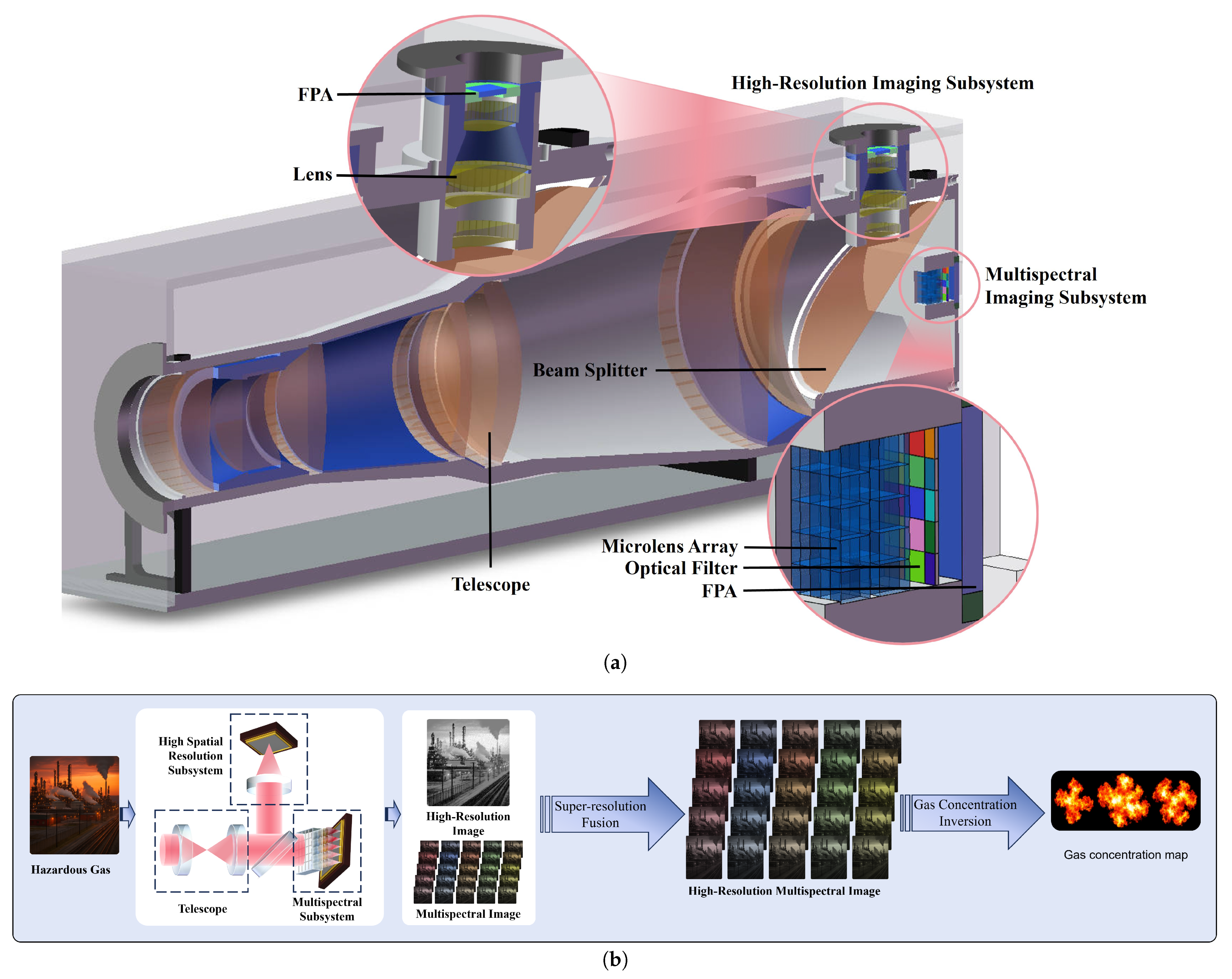
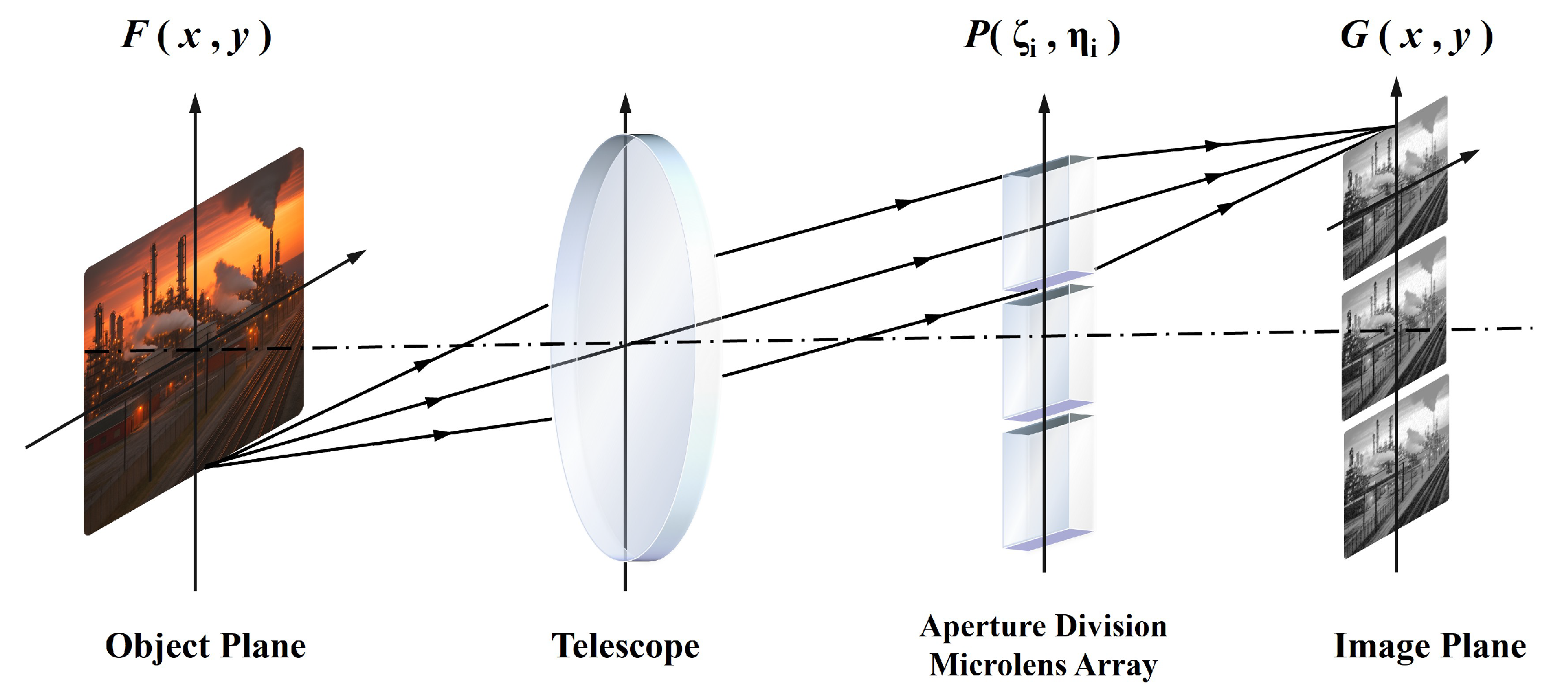
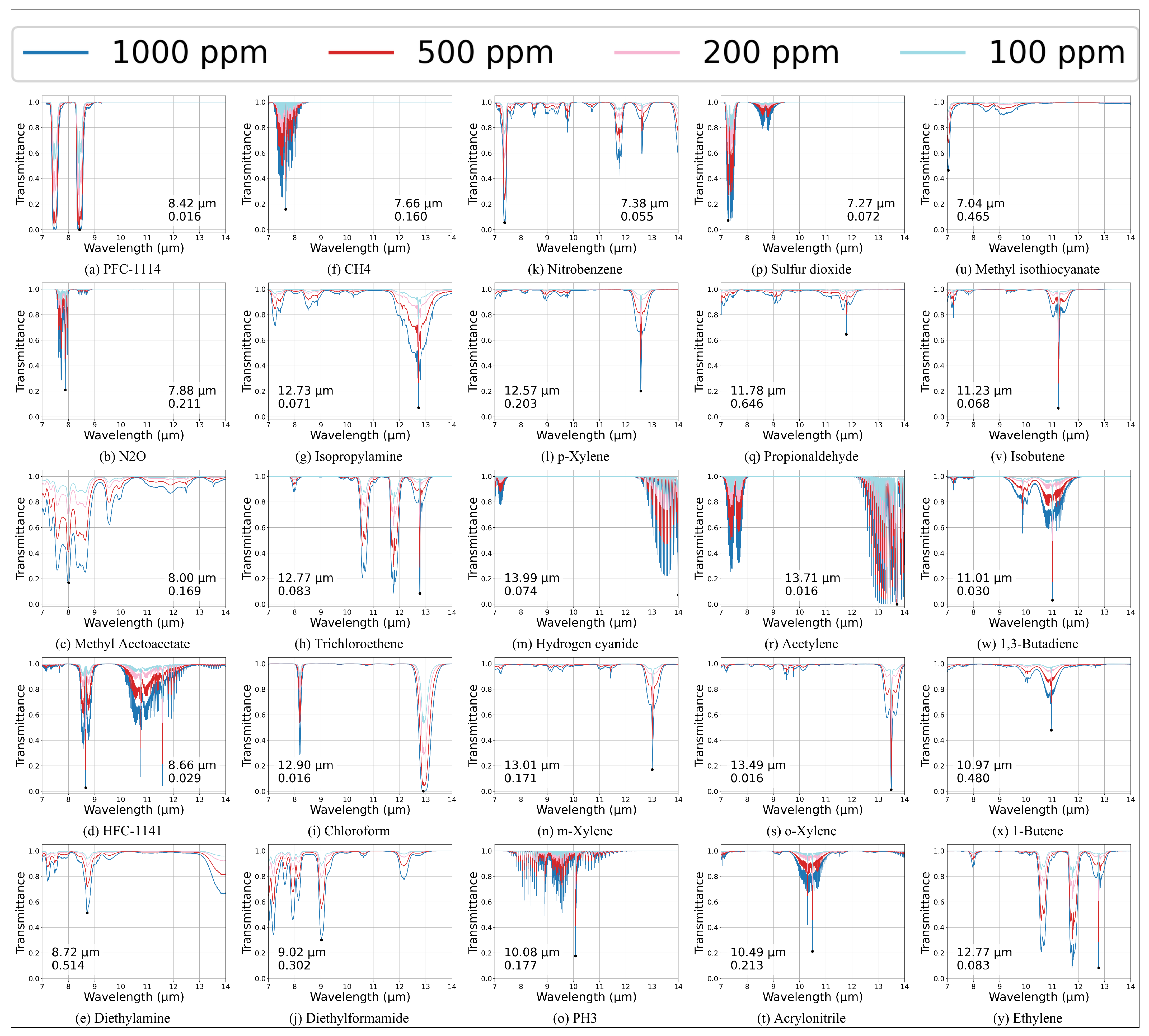
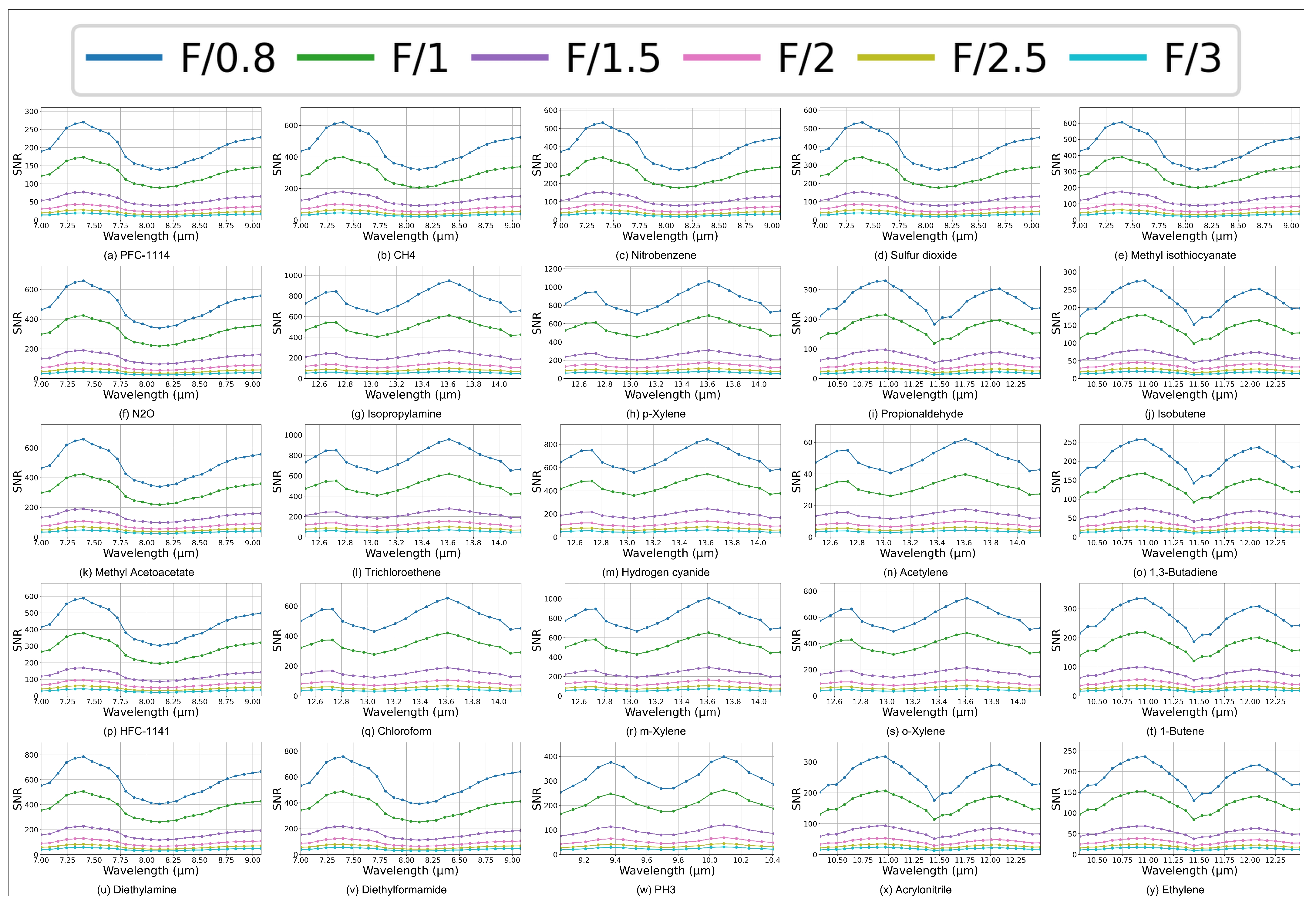
High-Resolution Snapshot Multispectral Imaging System for Hazardous Gas Classification and Dispersion Quantification

 , , , , and
Abstract
1. Introduction
2. HRSMIS Principle
2.1. Architectural Overview
2.2. Image Formation Model

3. HRSMIS Optical System Design
3.1. Parameter Constraints
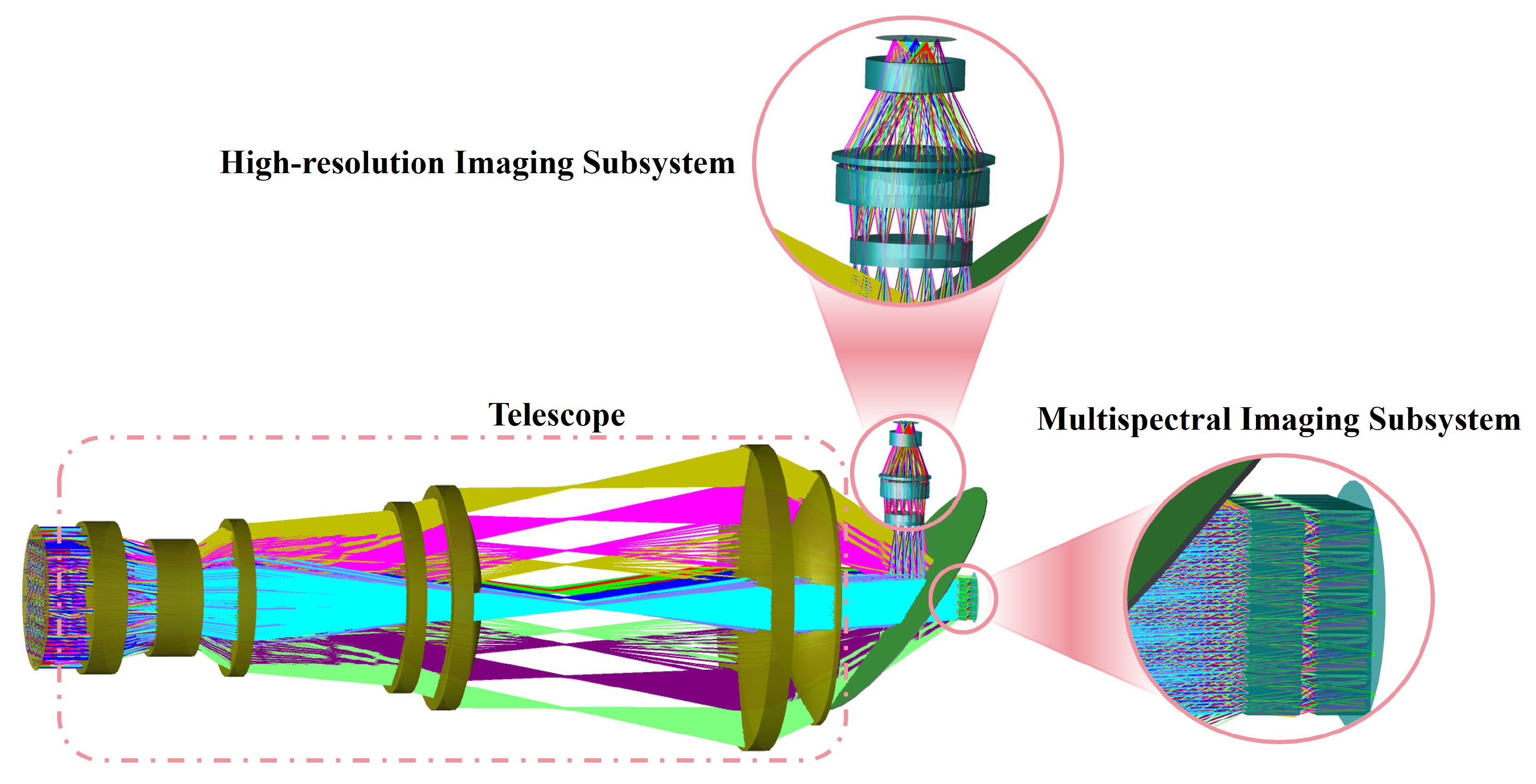
3.2. Optical Design of the HRSMIS
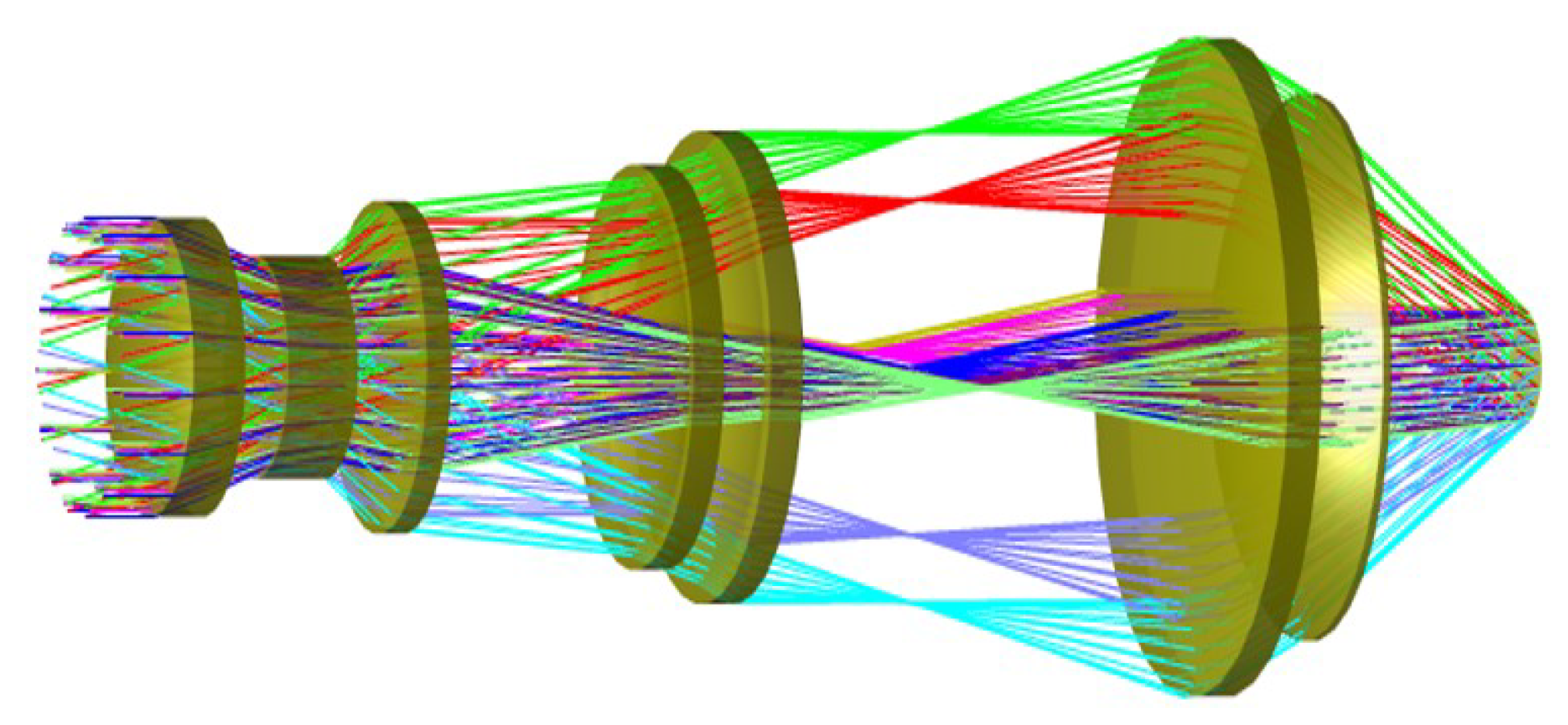
3.2.1. Telescope
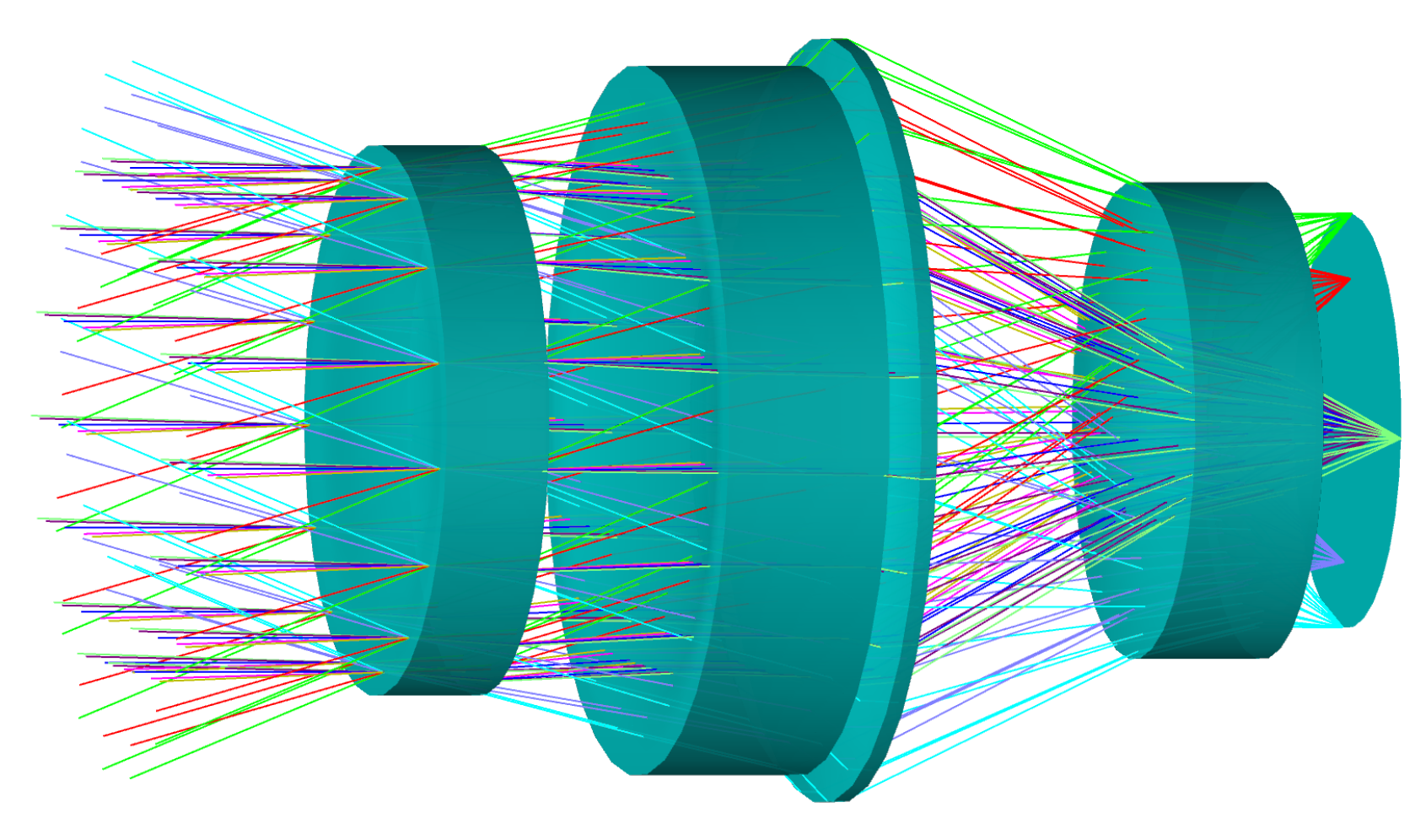
3.2.2. High-Resolution Imaging Subsystem
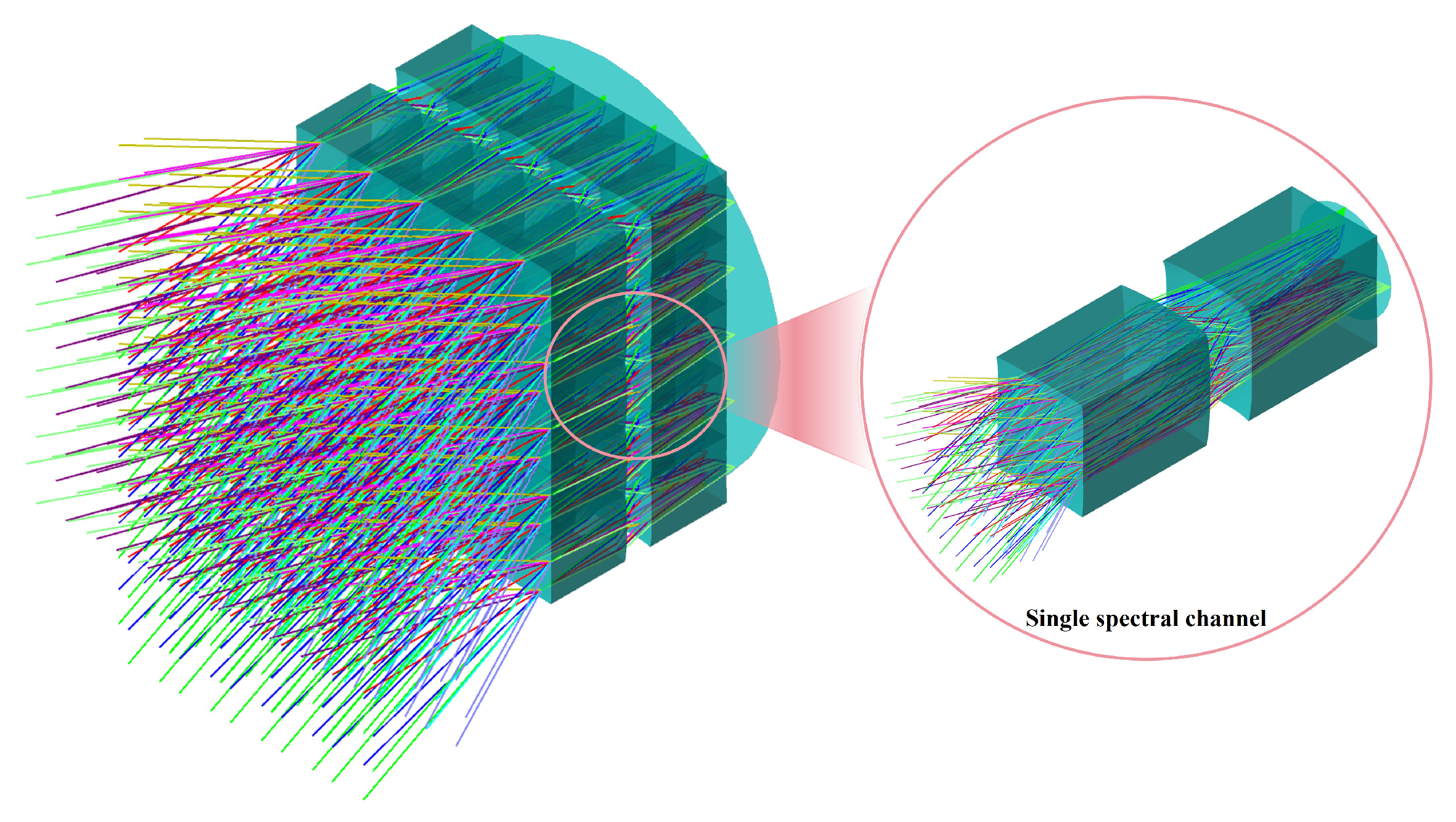
3.2.3. Multispectral Imaging Subsystem
4. Imaging Performance
4.1. Subsystem Performance
4.1.1. Telescope Performance
4.1.2. High-Resolution Imaging Subsystem Performance
4.1.3. Multispectral Imaging Subsystem Performance
4.2. Integrated System Performance
4.2.1. High-Resolution Channel
4.2.2. Multispectral Channel
5. Tolerance Analysis
6. Discussion
7. Conclusions
Author Contributions
Funding
Institutional Review Board Statement
Informed Consent Statement
Data Availability Statement
Conflicts of Interest
Abbreviations
| LWIR | Long-wave Infrared |
| FTIR | Fourier transform infrared spectroscopy |
| SNR | Signal-to-Noise Ratio |
| HRSMIS | High-Resolution Snapshot Multispectral Imaging System |
| NETD | Noise Equivalent Temperature Difference |
| MLA | Microlens Array |
| FPA | Focal Plane Array |
| PSF | point spread Function |
| LSI | Linear Shift-Invariant |
| IFOV | Instantaneous Field of View |
| GSD | Ground Sampling Distance |
| FOV | Field of View |
| MTF | Modulation Transfer Function |
| BFL | Back Focal Length |
| CRA | Chief Ray Angle |
| OPD | Optical Path Difference |
| PV | Peak-to-Valley |
| RSS | Root-Sum-Square |
References
- Cui, Z.; Li, Y.; Xiao, S.; Tian, S.; Tang, J.; Hao, Y.; Zhang, X. Recent progresses, challenges and proposals on SF6 emission reduction approaches. Sci. Total Environ. 2024, 906, 167347. [Google Scholar] [CrossRef] [PubMed]
- Xu, S.; Wang, X.; Sun, Q.; Dong, K. MWIRGas-YOLO: Gas leakage detection based on mid-wave infrared imaging. Sensors 2024, 24, 4345. [Google Scholar] [CrossRef] [PubMed]
- Johnson, J.E.; Shaw, J.A.; Lawrence, R.L.; Nugent, P.W.; Hogan, J.A.; Dobeck, L.M.; Spangler, L.H. Comparison of Long-Wave Infrared Imaging and Visible/Near-Infrared Imaging of Vegetation for Detecting Leaking CO2 Gas. IEEE J. Sel. Top. Appl. Earth Obs. Remote Sens. 2014, 7, 1651–1657. [Google Scholar] [CrossRef]
- Jia, J.; Chen, J.; Zheng, X.; Wang, Y.; Guo, S.; Sun, H.; Jiang, C.; Karjalainen, M.; Karila, K.; Duan, Z.; et al. Tradeoffs in the spatial and spectral resolution of airborne hyperspectral imaging systems: A crop identification case study. IEEE Trans. Geosci. Remote Sens. 2021, 60, 1–18. [Google Scholar] [CrossRef]
- Bogue, R. Detecting gases with light: A review of optical gas sensor technologies. Sens. Rev. 2015, 35, 133–140. [Google Scholar] [CrossRef]
- Abdel-Moati, H.; Morris, J.; Ruan, Y.; Zeng, Y. Advanced Techniques for Autonomous Detection of Gas Releases. In Proceedings of the SPE Middle East Health, Safety, Security, and Environment Conference and Exhibition, Doha, Qatar, 22–24 September 2014; SPE: Richardson, TX, USA, 2014; p. SPE-170377. [Google Scholar]
- Meribout, M. Gas leak-detection and measurement systems: Prospects and future trends. IEEE Trans. Instrum. Meas. 2021, 70, 1–13. [Google Scholar] [CrossRef]
- McAfee, J.M.; Stephens, E.R.; Fitz, D.R.; Pitts, J.N., Jr. Infrared absorptivity of the 9.6 μm ozone band as a function of spectral resolution and abundance. J. Quant. Spectrosc. Radiat. Transf. 1976, 16, 829–837. [Google Scholar] [CrossRef]
- Clapp, M.; Niedziela, R.; Richwine, L.; Dransfield, T.; Miller, R.; Worsnop, D. Infrared spectroscopy of sulfuric acid/water aerosols: Freezing characteristics. J. Geophys. Res. Atmos. 1997, 102, 8899–8907. [Google Scholar] [CrossRef]
- Russell, T.A.; McMackin, L.; Bridge, B.; Baraniuk, R. Compressive hyperspectral sensor for LWIR gas detection. In Proceedings of the Compressive Sensing, Baltimore, MD, USA, 23–25 April 2012; SPIE: Bellingham, WA, USA, 2012; Volume 8365, pp. 55–67. [Google Scholar]
- Broadwater, J.B.; Spisz, T.S.; Carr, A.K. Detection of gas plumes in cluttered environments using long-wave infrared hyperspectral sensors. In Proceedings of the Chemical, Biological, Radiological, Nuclear, and Explosives (CBRNE) Sensing IX, Baltimore, MD, USA, 16–17 April 2008; SPIE: Bellingham, WA, USA, 2008; Volume 6954, pp. 193–204. [Google Scholar]
- Al Hosani, A.; Alhmoudi, F.; Almurshidi, M.; Meribout, M. A real-time SWIR-image-based gas leak detection and localization system. In Proceedings of the Infrared Sensors, Devices, and Applications IX, San Diego, CA, USA, 11–15 August 2019; SPIE: Bellingham, WA, USA, 2019; Volume 11129, pp. 65–78. [Google Scholar]
- Zhang, M.; Chen, G.; Lin, P.; Dong, D.; Jiao, L. Gas Imaging with Uncooled Thermal Imager. Sensors 2024, 24, 1327. [Google Scholar] [CrossRef] [PubMed]
- Prel, F.; Moreau, L.; Lavoie, H.; Bouffard, F.; Thériault, J.M.; Vallieres, C.; Roy, C.; Dubé, D. Real time standoff gas detection and environmental monitoring with LWIR hyperspectral imager. In Proceedings of the Optics and Photonics for Counterterrorism, Crime Fighting, and Defence VIII, Edinburgh, UK, 24–26 September 2012; SPIE: Bellingham, WA, USA, 2012; Volume 8546, pp. 138–149. [Google Scholar]
- Hagen, N. Sensitivity limits on optical gas imaging due to air turbulence. Opt. Eng. 2018, 57, 114102. [Google Scholar] [CrossRef]
- Hagen, N.; Kester, R.T.; Morlier, C.G.; Panek, J.A.; Drayton, P.; Fashimpaur, D.; Stone, P.; Adams, E. Video-rate spectral imaging of gas leaks in the longwave infrared. In Proceedings of the Chemical, Biological, Radiological, Nuclear, and Explosives (CBRNE) Sensing XIV, Baltimore, MD, USA, 29 April–3 May 2013; SPIE: Bellingham, WA, USA, 2013; Volume 8710, pp. 36–42. [Google Scholar]
- Hagen, N.; Kester, R.T.; Walker, C. Real-time quantitative hydrocarbon gas imaging with the gas cloud imager (GCI). In Proceedings of the Chemical, Biological, Radiological, Nuclear, and Explosives (CBRNE) Sensing XIII, Edinburgh, UK, 24–26 September 2012; SPIE: Bellingham, WA, USA, 2012; Volume 8358, pp. 404–410. [Google Scholar]
- Chen, Y.; Liang, J.; Zhao, B.; Yue, W.; Zheng, K.; Zhao, Y.; Qin, Y.; Nie, H.; Wang, W.; Lv, J. Snapshot infrared Fourier transform imaging spectrometer for transient dynamic sensing. Opt. Express 2025, 33, 4024–4043. [Google Scholar] [CrossRef] [PubMed]
- Chen, Y.; Lv, J.; Zhao, B.; Tao, J.; Qin, Y.; Wang, W.; Liang, J. Medium-wave infrared static fourier transform spectrometer based on micro-optical elements. IEEE Access 2021, 9, 89452–89460. [Google Scholar] [CrossRef]
- Yang, Y.; Liu, S.; Wang, P.; Yuan, L.; Tang, G.; Liu, X.; Lu, J.; Kong, Y.; Li, C.; Wang, J. Uncooled snapshot infrared spectrometer with improved sensitivity for gas imaging. IEEE Trans. Instrum. Meas. 2023, 73, 1–9. [Google Scholar] [CrossRef]
- Wang, P.; Tang, G.; Liu, S.; Yang, Y.; Zhu, S.; Wang, S.; Liu, X.; Lu, J.; Wang, J.; Li, C.; et al. Study on the lower limit of gas detection based on the snapshot infrared multispectral imaging system. Opt. Express 2024, 32, 27919–27930. [Google Scholar] [CrossRef] [PubMed]
- Song, Y.; Lu, L.; Cheng, B.; Li, Z.; Tang, G.; Li, Q.; Liu, S.; Li, C.; Zhao, B.; Qi, H.; et al. Thermal design and on-orbit performance of remote sensing cameras on commercial microsatellites. Appl. Therm. Eng. 2025, 128505. [Google Scholar] [CrossRef]
- Farley, V.; Vallières, A.; Chamberland, M.; Villemaire, A.; Legault, J.F. Performance of the FIRST: A long-wave infrared hyperspectral imaging sensor. In Proceedings of the Optically Based Biological and Chemical Detection for Defence III, Stockholm, Sweden, 3–5 October 2006; SPIE: Bellingham, WA, USA, 2006; Volume 6398, pp. 164–174. [Google Scholar]
- Gålfalk, M.; Olofsson, G.; Crill, P.; Bastviken, D. Making methane visible. Nat. Clim. Change 2016, 6, 426–430. [Google Scholar] [CrossRef]
- Watremez, X.; Marblé, A.; Baron, T.; Marcarian, X.; Dubucq, D.; Donnat, L.; Cazes, L.; Foucher, P.Y.; Danno, R.; Elie, D.; et al. Remote sensing technologies for detecting, visualizing and quantifying gas leaks. In Proceedings of the SPE International Conference and Exhibition on Health, Safety, Environment, and Sustainability, Abu Dhabi, United Arab Emirates, 16–18 April 2018; SPE: Richardson, TX, USA, 2018; p. D021S006R003. [Google Scholar]
- Druart, G.; Foucher, P.Y.; Doz, S.; Watremez, X.; Jourdan, S.; Vanneau, E.; Pinot, H. Test of SIMAGAZ: A LWIR cryogenic multispectral infrared camera for methane gas leak detection and quantification. In Proceedings of the Algorithms, Technologies, and Applications for Multispectral and Hyperspectral Imaging XXVII, Online, 12–16 April 2021; SPIE: Bellingham, WA, USA, 2021; Volume 11727, pp. 53–59. [Google Scholar]
- Naranjo, E.; Baliga, S.; Bernascolle, P. IR gas imaging in an industrial setting. In Proceedings of the Thermosense XXXII, Orlando, FL, USA, 5–9 April 2010; SPIE: Bellingham, WA, USA, 2010; Volume 7661, pp. 160–167. [Google Scholar]
- Foucher, P.Y.; Domel, R.; Druart, G.; Giraud, W.; Le Floch, S.; Fachinetti, R. Multi-gas detection and quantification over HNS release at sea using LWIR multispectral system SIMAGAZ. In Proceedings of the 10th International Symposium on Optronics in Defence and Security (OPTRO) 2022, Paris, France, 14–16 March 2022. [Google Scholar]
- Olbrycht, R.; Kałuża, M. Optical Gas Imaging with Uncooled Thermal Imaging Camera—Impact of Warm Filters and Elevated Background Temperature. IEEE Trans. Ind. Electron. 2020, 67, 9824–9832. [Google Scholar] [CrossRef]
- Zeng, Y.; Morris, J.; Dombrowski, M. Multi-Spectral Infrared Imaging System for Flare Combustion Efficiency Monitoring. U.S. Patent 9,258,495, 9 February 2016. [Google Scholar]
- Kim, H.M.; Kim, M.S.; Lee, G.J.; Jang, H.J.; Song, Y.M. Miniaturized 3D Depth Sensing-Based Smartphone Light Field Camera. Sensors 2020, 20, 2129. [Google Scholar] [CrossRef] [PubMed]
- Ersoy, O.K. Diffraction, Fourier Optics and Imaging; John Wiley & Sons: Hoboken, NJ, USA, 2006. [Google Scholar]
- Li, Y. Research on Compact Division-Aperture Snapshot Spectral Imaging System. Ph.D. Thesis, University of Chinese Academy of Sciences, Xi’an, China, 2018. [Google Scholar]
- Zhang, H.; Ye, X.; Wang, Y.; Wu, D.; Yang, D.; Fang, W. Aperture division multispectral camera for the Earth’s reflected solar radiation observation based on the Lagrange L1 point of the Earth-Moon system. Opt. Express 2023, 31, 38077–38096. [Google Scholar] [CrossRef] [PubMed]
- Rothman, L.S.; Gordon, I.E.; Barbe, A.; Benner, D.C.; Bernath, P.F.; Birk, M.; Boudon, V.; Brown, L.R.; Campargue, A.; Champion, J.P.; et al. The HITRAN 2008 molecular spectroscopic database. J. Quant. Spectrosc. Radiat. Transf. 2009, 110, 533–572. [Google Scholar] [CrossRef]
- Johnson, T.J.; Sams, R.L.; Sharpe, S.W. The PNNL quantitative infrared database for gas-phase sensing: A spectral library for environmental, hazmat, and public safety standoff detection. In Proceedings of the Chemical and Biological Point Sensors for Homeland Defense, Providence, RI, USA, 13–14 October 2004; SPIE: Bellingham, WA, USA, 2004; Volume 5269, pp. 159–167. [Google Scholar]



| System | Focal Length (mm) | F-Number | Magnification | Field of View (FOV) |
|---|---|---|---|---|
| Telescope | – | 1 | 2.75× | |
| High-resolution subsystem | 40 | 1 | – | |
| Multispectral subsystem | 6 | 1 | – | |
| High-resolution channel | 110 | 1 | – | |
| Multispectral channel | 16.5 | 1 | – |
| Lens | Front Surface Curvature (mm) | Back Surface Curvature (mm) | Thickness (mm) | Material |
|---|---|---|---|---|
| 1st | 151.7736 | 210.7378 | 42.4606 | KR5S |
| 2nd | 916.1809 | 132.5733 | 44.1268 | CdSe |
| 3rd | 3546.4314 | −291.9926 | 24.8760 | IRG25 |
| 4th | −146.8931 | −250.9555 | 15.2536 | KBr |
| 5th | −173.1107 | −148.7792 | 31.7519 | AgCl |
| 6th | 513.7720 | −3162.6789 | 40.5067 | IRG23 |
| 7th | 130.7685 | 129.5465 | 10.6859 | Ge |
| Lens | Front Surface Curvature (mm) | Back Surface Curvature (mm) | Thickness (mm) | Material |
|---|---|---|---|---|
| 1st | −113.1185 | −165.5318 | 9.1516 | HWS7 |
| 2nd | 223.0038 | −48.7077 | 4.0000 | KBr |
| 3rd | −63.2260 | 177.4220 | 11.0001 | HWS5 |
| 4th | −53.7236 | −39.6538 | 9.8138 | GaAs |
| Lens | Front Surface Curvature (mm) | Back Surface Curvature (mm) | Thickness (mm) | Material |
|---|---|---|---|---|
| 1st | 35.8733 | −126.1961 | 8.7528 | Ge |
| 2nd | 19.3217 | 21.2755 | 8.4022 | Ge |
| Regime | Radius of Curvature Tolerance (Aperture Units) | Thickness Tolerance (mm) | Eccentric Distance of Lens Surface (mm) | Inclination of Lens Surface (°) | Inclination of Lens Element (°) | Refractive Index Tolerance | Abbe Number Tolerance/% |
|---|---|---|---|---|---|---|---|
| A | 1 | ||||||
| B | 2 | ||||||
| C | 3 |
Disclaimer/Publisher’s Note: The statements, opinions and data contained in all publications are solely those of the individual author(s) and contributor(s) and not of MDPI and/or the editor(s). MDPI and/or the editor(s) disclaim responsibility for any injury to people or property resulting from any ideas, methods, instructions or products referred to in the content. |
© 2026 by the authors. Licensee MDPI, Basel, Switzerland. This article is an open access article distributed under the terms and conditions of the Creative Commons Attribution (CC BY) license.
Share and Cite
Li, Z.; Zhang, H.; Li, Q.; Song, Y.; Chen, M.; Liu, S.; Li, D.; Li, C.; Wang, J.; Xie, R. High-Resolution Snapshot Multispectral Imaging System for Hazardous Gas Classification and Dispersion Quantification. Micromachines 2026, 17, 112. https://doi.org/10.3390/mi17010112
Li Z, Zhang H, Li Q, Song Y, Chen M, Liu S, Li D, Li C, Wang J, Xie R. High-Resolution Snapshot Multispectral Imaging System for Hazardous Gas Classification and Dispersion Quantification. Micromachines. 2026; 17(1):112. https://doi.org/10.3390/mi17010112
Chicago/Turabian StyleLi, Zhi, Hanyuan Zhang, Qiang Li, Yuxin Song, Mengyuan Chen, Shijie Liu, Dongjing Li, Chunlai Li, Jianyu Wang, and Renbiao Xie. 2026. "High-Resolution Snapshot Multispectral Imaging System for Hazardous Gas Classification and Dispersion Quantification" Micromachines 17, no. 1: 112. https://doi.org/10.3390/mi17010112
APA StyleLi, Z., Zhang, H., Li, Q., Song, Y., Chen, M., Liu, S., Li, D., Li, C., Wang, J., & Xie, R. (2026). High-Resolution Snapshot Multispectral Imaging System for Hazardous Gas Classification and Dispersion Quantification. Micromachines, 17(1), 112. https://doi.org/10.3390/mi17010112