Article

Electrochemical Performance of Micropillar Array Electrodes in Microflows

1
Center for Microflows and Nanoflows, Harbin Institute of Technology (Shenzhen), Shenzhen 518000, China
2
Shanghai Key Laboratory of Functional Materials Chemistry, School of Chemistry and Molecular Engineering, East China University of Science and Technology, Shanghai 200237, China
*
Author to whom correspondence should be addressed.
Micromachines 2020, 11(9), 858; https://doi.org/10.3390/mi11090858
Submission received: 31 August 2020 / Revised: 14 September 2020 / Accepted: 15 September 2020 / Published: 17 September 2020
(This article belongs to the Special Issue Advances in Nanofluidics)

Abstract

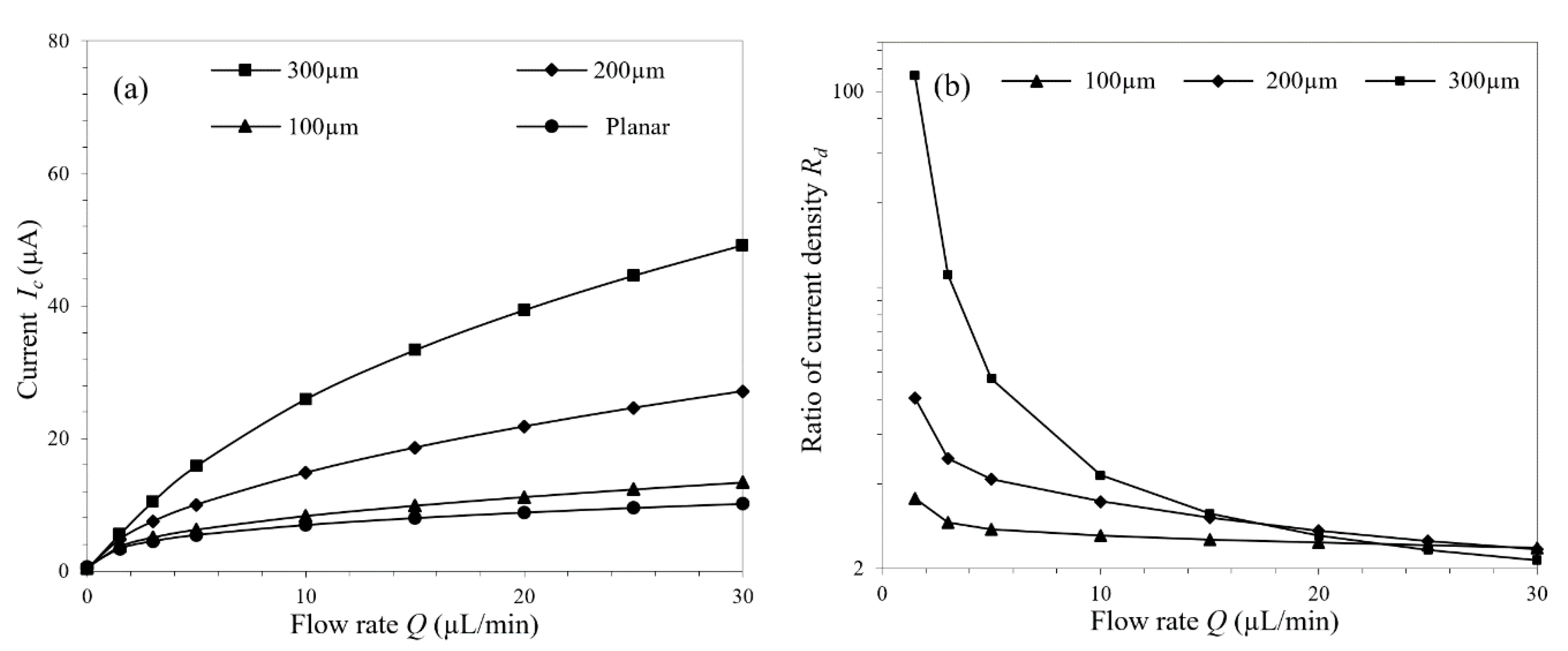
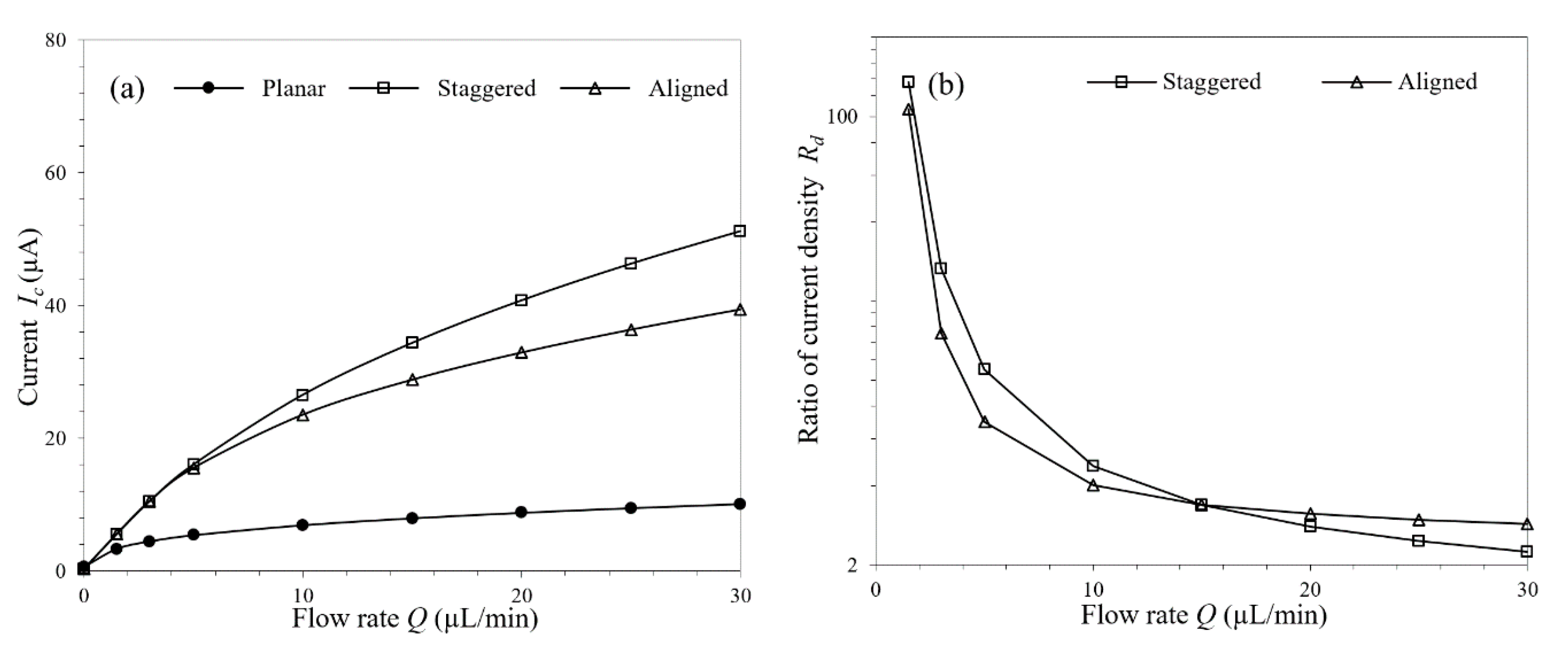
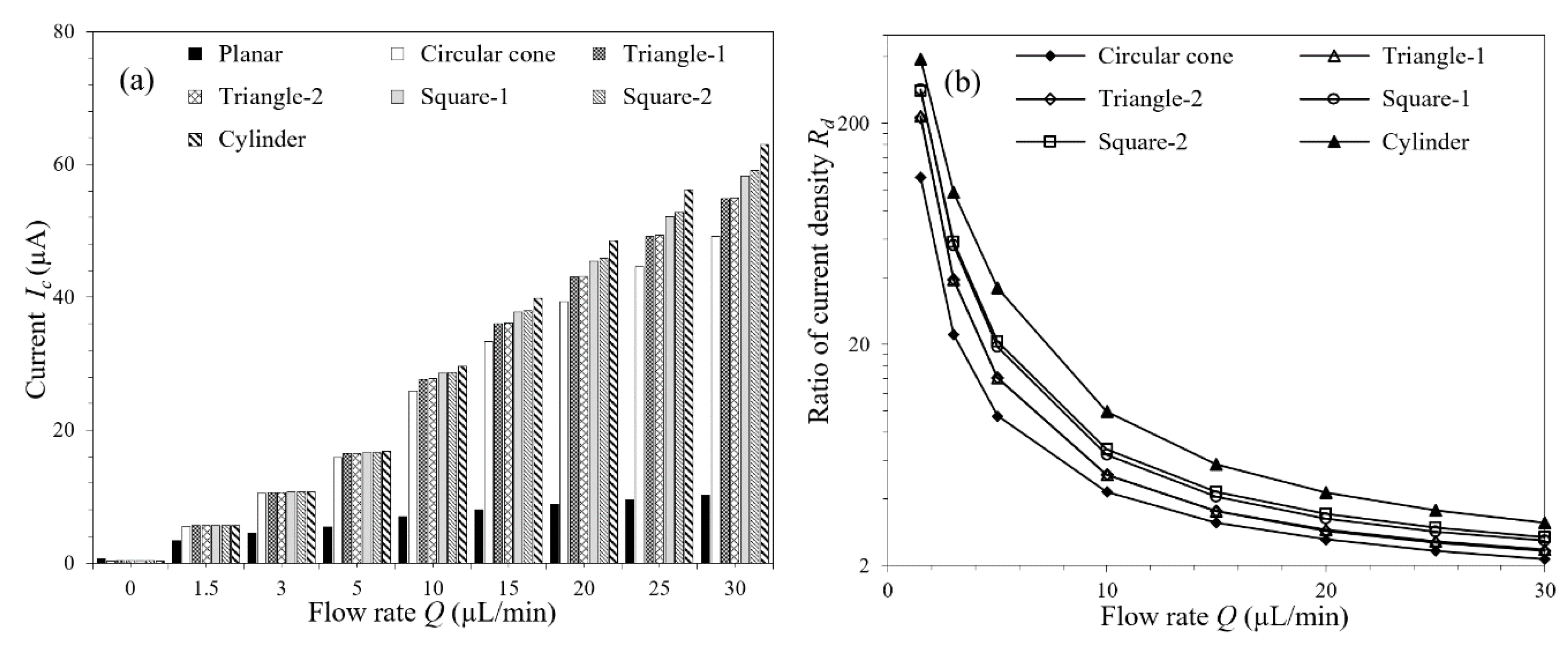
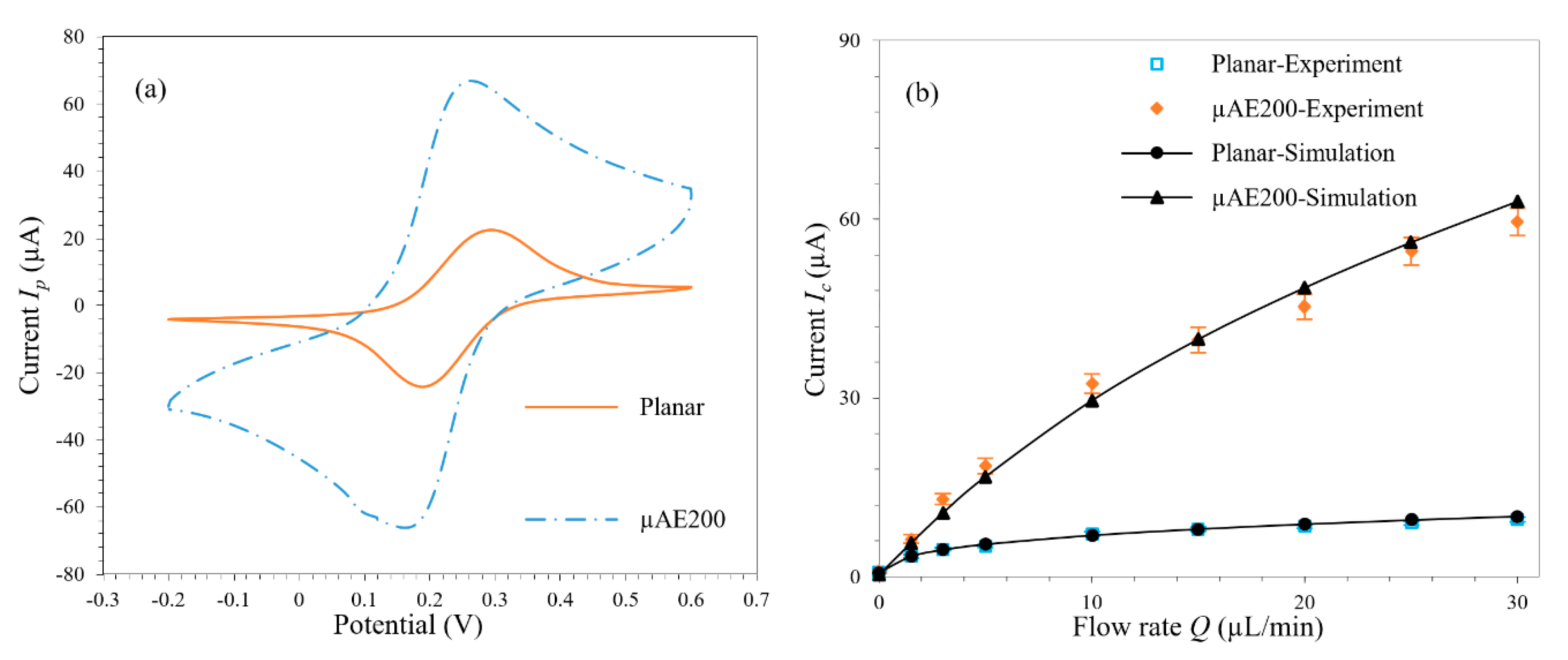
The microchip-based electrochemical detection system (μEDS) has attracted plenty of research attention due to its merits including the capability in high-density integration, high sensitivity, fast analysis time, and reduced reagent consumption. The miniaturized working electrode is usually regarded as the core component of the μEDS, since its characteristic directly determines the performance of the whole system. Compared with the microelectrodes with conventional shapes such as the band, ring and disk, the three-dimensional (3D) micropillar array electrode (μAE) has demonstrated significant potential in improving the current response and decreasing the limits of detection due to its much larger reaction area. In this study, the numerical simulation method was used to investigate the performance of the μEDS, and both the geometrical and hydrodynamic parameters, including the micropillars shape, height, arrangement form and the flow rate of the reactant solution, were taken into consideration. The tail effect in μAEs was also quantitatively analyzed based on a pre-defined parameter of the current density ratio. In addition, a PDMS-based 3D μAE was fabricated and integrated into the microchannel for the electrochemical detection. The experiments of cyclic voltammetry (CV) and chronoamperometry (CA) were conducted, and a good agreement was found between the experimental and simulation results. This study would be instructive for the configuration and parameters design of the μEDS, and the presented method can be adopted to analyze and optimize the performance of nanochip-based electrochemical detection system (nEDS).
Keywords: microchip-based electrochemical detection system; micropillars array electrode; numerical simulation; tail effect microchip-based electrochemical detection system; micropillars array electrode; numerical simulation; tail effect