The Pathological Role of LDL in Membranous Nephropathy and Diabetic Nephropathy and the Protective Efficacy of LDL Apheresis: A Narrative Review


Abstract
1. Introduction
2. Ox-LDL-Induced Inflammation Are Involved in the Progression of DN
3. Aberrant Inflammation Contributes to the Progression of DN
4. Ox-LDL and Excess LDL Interferes with Therapeutic Actions of Immunosuppressants Against MN
5. LDL-A Confers Reno-Protective Efficacy in a Wide Range of Glomerulonephritis, Including DN
6. Literature Search and Selection
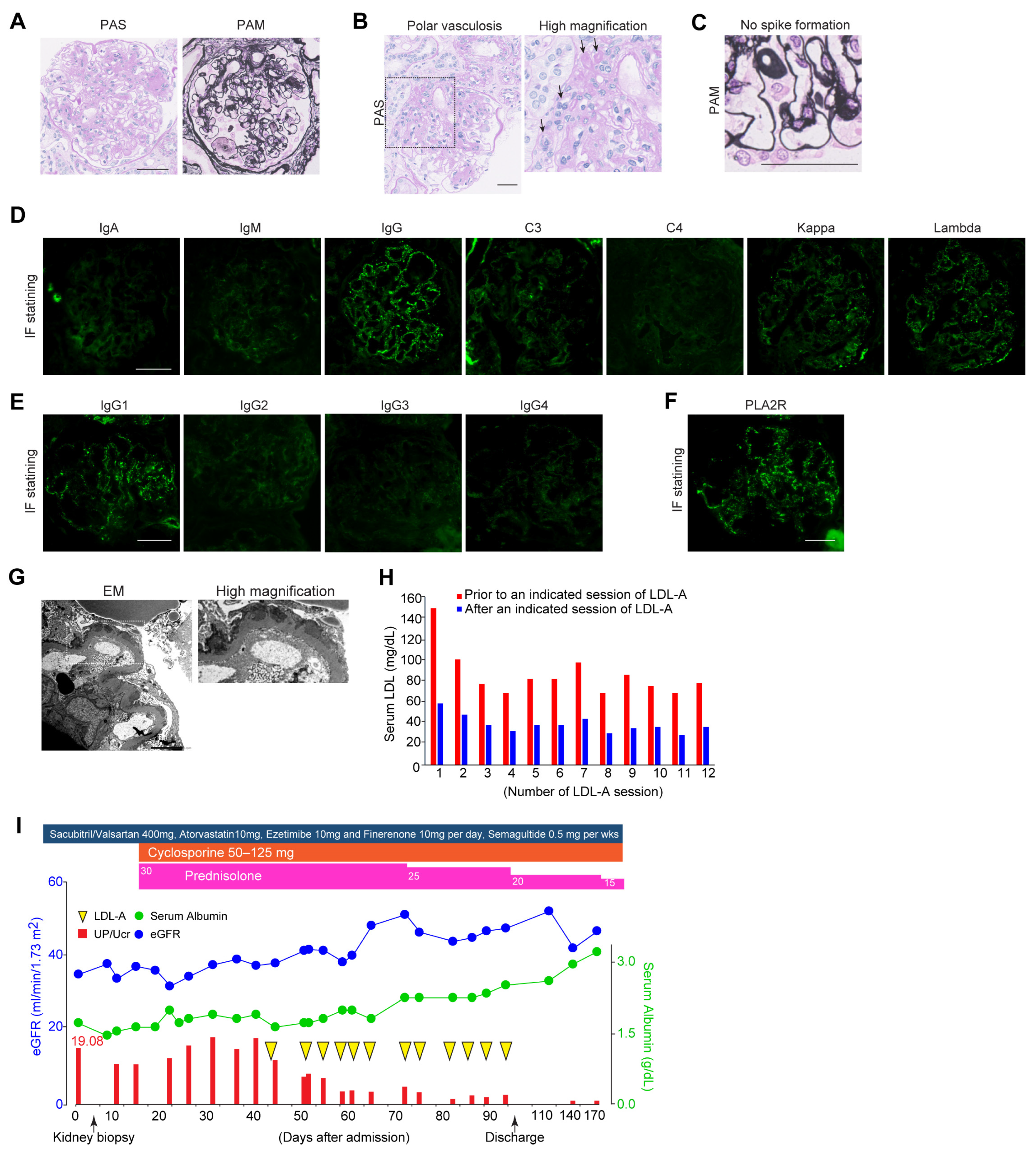
7. Representative Case Description
8. Discussion
9. Conclusions
Author Contributions
Funding
Informed Consent Statement
Data Availability Statement
Conflicts of Interest
References
- Samsu, N. Diabetic Nephropathy: Challenges in Pathogenesis, Diagnosis, and Treatment. BioMed Res. Int. 2021, 2021, 1497449. [Google Scholar] [CrossRef] [PubMed]
- Sun, H.; Saeedi, P.; Karuranga, S.; Pinkepank, M.; Ogurtsova, K.; Duncan, B.B.; Stein, C.; Basit, A.; Chan, J.C.; Mbanya, J.C.; et al. IDF Diabetes Atlas: Global, regional and country-level diabetes prevalence estimates for 2021 and projections for 2045. Diabetes Res. Clin. Pract. 2022, 183, 109119. [Google Scholar] [CrossRef]
- Troyanov, S.; Roasio, L.; Pandes, M.; Herzenberg, A.M.; Cattran, D.C. Renal pathology in idiopathic membranous nephropathy: A new perspective. Kidney Int. 2006, 69, 1641–1648. [Google Scholar] [CrossRef]
- Yokoyama, H.; Taguchi, T.; Sugiyama, H.; Sato, H. Membranous nephropathy in Japan: Analysis of the Japan Renal Biopsy Registry (J-RBR). Clin. Exp. Nephrol. 2012, 16, 557–563. [Google Scholar] [CrossRef]
- Busuioc, R.; Ștefan, G.; Stancu, S.; Zugravu, A.; Mircescu, G. Nephrotic Syndrome and Statin Therapy: An Outcome Analysis. Medicina 2023, 59, 512. [Google Scholar] [CrossRef] [PubMed]
- Zhao, Y.; Liu, K.; Zou, Y.; Wu, Y.; Yang, J.; Xiao, X.; Ju, X.; Yang, Q.; Lang, Y.; Liu, F. Remnant cholesterol and the risk of diabetic nephropathy progression to end-stage kidney disease in patients with type 2 diabetes mellitus: A longitudinal cohort study. Endocrine 2024, 86, 994–1002. [Google Scholar] [CrossRef] [PubMed]
- Lopes-Virella, M.F.; Carter, R.E.; Baker, N.L.; Lachin, J.; Virella, G. High levels of oxidized LDL in circulating immune complexes are associated with increased odds of developing abnormal albuminuria in Type 1 diabetes. Nephrol. Dial. Transpl. 2012, 27, 1416–1423. [Google Scholar] [CrossRef]
- Park, S.Y.; Song, C.Y.; Kim, B.C.; Hong, H.K.; Lee, H.S. Angiotensin II mediates LDL-induced superoxide generation in mesangial cells. Am. J. Physiol. Ren. Physiol. 2003, 285, F909–F915. [Google Scholar] [CrossRef]
- Podrez, E.A.; Febbraio, M.; Sheibani, N.; Schmitt, D.; Silverstein, R.L.; Hajjar, D.P.; Cohen, P.A.; Frazier, W.A.; Hoff, H.F.; Hazen, S.L. Macrophage scavenger receptor CD36 is the major receptor for LDL modified by monocyte-generated reactive nitrogen species. J. Clin. Investig. 2000, 105, 1095–1108. [Google Scholar] [CrossRef]
- Sun, L.; Ishida, T.; Yasuda, T.; Kojima, Y.; Honjo, T.; Yamamoto, Y.; Yamamoto, H.; Ishibashi, S.; Hirata, K.-I.; Hayashi, Y. RAGE mediates oxidized LDL-induced pro-inflammatory effects and atherosclerosis in non-diabetic LDL receptor-deficient mice. Cardiovasc. Res. 2009, 82, 371–381. [Google Scholar] [CrossRef]
- LaMoia, T.E.; Shulman, G.I. Cellular and Molecular Mechanisms of Metformin Action. Endocr. Rev. 2021, 42, 77–96. [Google Scholar] [CrossRef]
- Bakris, G.; Burgess, E.; Weir, M.; Davidai, G.; Koval, S. Telmisartan is more effective than losartan in reducing proteinuria in patients with diabetic nephropathy. Kidney Int. 2008, 74, 364–369. [Google Scholar] [CrossRef] [PubMed]
- Wanner, C.; Inzucchi, S.E.; Lachin, J.M.; Fitchett, D.; von Eynatten, M.; Mattheus, M.; Johansen, O.E.; Woerle, H.J.; Broedl, U.C.; Zinman, B. Empagliflozin and Progression of Kidney Disease in Type 2 Diabetes. N. Engl. J. Med. 2016, 375, 323–334. [Google Scholar] [CrossRef] [PubMed]
- Perkovic, V.; Tuttle, K.R.; Rossing, P.; Mahaffey, K.W.; Mann, J.F.E.; Bakris, G.; Baeres, F.M.; Idorn, T.; Bosch-Traberg, H.; Lausvig, N.L.; et al. Effects of Semaglutide on Chronic Kidney Disease in Patients with Type 2 Diabetes. N. Engl. J. Med. 2024, 391, 109–121. [Google Scholar] [CrossRef]
- Bakris, G.L.; Agarwal, R.; Anker, S.D.; Pitt, B.; Ruilope, L.M.; Rossing, P.; Kolkhof, P.; Nowack, C.; Schloemer, P.; Joseph, A.; et al. Effect of Finerenone on Chronic Kidney Disease Outcomes in Type 2 Diabetes. N. Engl. J. Med. 2020, 383, 2219–2229. [Google Scholar] [CrossRef]
- Agarwal, R.; Green, J.B.; Heerspink, H.J.L.; Mann, J.F.E.; McGill, J.B.; Mottl, A.K.; Rosenstock, J.; Rossing, P.; Vaduganathan, M.; Brinker, M.; et al. Finerenone with Empagliflozin in Chronic Kidney Disease and Type 2 Diabetes. N. Engl. J. Med. 2025, 393, 533–543. [Google Scholar] [CrossRef]
- Hanafusa, N.; Abe, M.; Joki, N.; Hoshino, J.; Taniguchi, M.; Kikuchi, K.; Hasegawa, T.; Goto, S.; Ogawa, T.; Kanda, E.; et al. Annual dialysis data report 2022, Japanese Society for Dialysis Therapy (JSDT) Renal Data Registry. Ren. Replace. Ther. 2025, 11, 54. [Google Scholar] [CrossRef]
- Gödel, M.; Hartleben, B.; Herbach, N.; Liu, S.; Zschiedrich, S.; Lu, S.; Debreczeni-Mór, A.; Lindenmeyer, M.T.; Rastaldi, M.-P.; Hartleben, G.; et al. Role of mTOR in podocyte function and diabetic nephropathy in humans and mice. J. Clin. Investig. 2011, 121, 2197–2209. [Google Scholar] [CrossRef]
- She, Y.; Yu, M.; Wang, L.; Wang, Y.; Fang, P.; Zhang, Z. Emerging Protective Actions of PGC-1α in Diabetic Nephropathy. Oxid. Med. Cell. Longev. 2022, 2022, 6580195. [Google Scholar] [CrossRef] [PubMed]
- Taguchi, K.; Fukami, K. RAGE signaling regulates the progression of diabetic complications. Front. Pharmacol. 2023, 14, 1128872. [Google Scholar] [CrossRef]
- Izquierdo, M.C.; Martin-Cleary, C.; Fernandez-Fernandez, B.; Elewa, U.; Sanchez-Niño, M.D.; Carrero, J.J.; Ortiz, A. CXCL16 in kidney and cardiovascular injury. Cytokine Growth Factor Rev. 2014, 25, 317–325. [Google Scholar] [CrossRef]
- Niewczas, M.A.; Gohda, T.; Skupien, J.; Smiles, A.M.; Walker, W.H.; Rosetti, F.; Cullere, X.; Eckfeldt, J.H.; Doria, A.; Mayadas, T.N.; et al. Circulating TNF receptors 1 and 2 predict ESRD in type 2 diabetes. J. Am. Soc. Nephrol. 2012, 23, 507–515. [Google Scholar] [CrossRef]
- Koopman, J.J.E.; van Essen, M.F.; Rennke, H.G.; de Vries, A.P.J.; van Kooten, C. Deposition of the Membrane Attack Complex in Healthy and Diseased Human Kidneys. Front. Immunol. 2020, 11, 599974. [Google Scholar] [CrossRef]
- Trambas, I.A.; Coughlan, M.T.; Tan, S.M. Therapeutic Potential of Targeting Complement C5a Receptors in Diabetic Kidney Disease. Int. J. Mol. Sci. 2023, 24, 8758. [Google Scholar] [CrossRef] [PubMed]
- Awad, A.S.; You, H.; Gao, T.; Cooper, T.K.; Nedospasov, S.A.; Vacher, J.; Wilkinson, P.F.; Farrell, F.X.; Reeves, W.B. Macrophage-derived tumor necrosis factor-α mediates diabetic renal injury. Kidney Int. 2015, 88, 722–733. [Google Scholar] [CrossRef] [PubMed]
- Donate-Correa, J.; Tagua, V.G.; Ferri, C.; Martín-Núñez, E.; Hernández-Carballo, C.; Ureña-Torres, P.; Ruiz-Ortega, M.; Ortiz, A.; Mora-Fernández, C.; Navarro-González, J.F. Pentoxifylline for Renal Protection in Diabetic Kidney Disease. A Model of Old Drugs for New Horizons. J. Clin. Med. 2019, 8, 287. [Google Scholar] [CrossRef]
- de Zeeuw, D.; Bekker, P.; Henkel, E.; Hasslacher, C.; Gouni-Berthold, I.; Mehling, H.; Potarca, A.; Tesar, V.; Heerspink, H.J.L.; Schall, T.J. The effect of CCR2 inhibitor CCX140-B on residual albuminuria in patients with type 2 diabetes and nephropathy: A randomised trial. Lancet Diabetes Endocrinol. 2015, 3, 687–696. [Google Scholar] [CrossRef] [PubMed]
- Chen, X.; Chen, Y.; Ding, X.; Zhou, Y.; Lv, Y.; Li, D.; Chen, B.; Chen, T.; Chen, C. Baseline proteinuria level is associated with prognosis in idiopathic membranous nephropathy. Ren. Fail. 2019, 41, 363–369. [Google Scholar] [CrossRef]
- Sethi, S.; Beck, L.H., Jr.; Glassock, R.J.; Haas, M.; De Vriese, A.S.; Caza, T.N.; Hoxha, E.; Lambeau, G.; Tomas, N.M.; Madden, B.; et al. Mayo Clinic Consensus Report on Membranous Nephropathy: Proposal for a Novel Classification. Mayo Clin. Proc. 2023, 98, 1671–1684. [Google Scholar] [CrossRef]
- Beck, L.H.; Salant, D.J., Jr. Membranous nephropathy: From models to man. J. Clin. Investig. 2014, 124, 2307–2314. [Google Scholar] [CrossRef]
- Gutwein, P.; Abdel-Bakky, M.S.; Doberstein, K.; Schramme, A.; Beckmann, J.; Schaefer, L.; Amann, K.; Doller, A.; Kämpfer-Kolb, N.; Abdel-Aziz, A.H.; et al. CXCL16 and oxLDL are induced in the onset of diabetic nephropathy. J. Cell. Mol. Med. 2009, 13, 3809–3825. [Google Scholar] [CrossRef]
- Nishi, S.; Ubara, Y.; Utsunomiya, Y.; Okada, K.; Obata, Y.; Kai, H.; Kiyomoto, H.; Goto, S.; Konta, T.; Sasatomi, Y.; et al. Evidence-based clinical practice guidelines for nephrotic syndrome 2014. Clin. Exp. Nephrol. 2016, 20, 342–370. [Google Scholar] [CrossRef] [PubMed]
- Ozeki, T.; Maruyama, S.; Nagata, M.; Shimizu, A.; Sugiyama, H.; Sato, H.; Yokoyama, H. The revised version 2018 of the nationwide web-based registry system for kidney diseases in Japan: Japan Renal Biopsy Registry and Japan Kidney Disease Registry. Clin. Exp. Nephrol. 2020, 24, 1058–1068. [Google Scholar] [CrossRef] [PubMed]
- Hughes, T.A.; Gaber, A.O.; Montgomery, C.E. Plasma distribution of cyclosporine within lipoproteins and “in vitro” transfer between very-low-density lipoproteins, low-density lipoproteins, and high-density lipoproteins. Ther. Drug Monit. 1991, 13, 289–295. [Google Scholar] [CrossRef] [PubMed]
- Muso, E. Beneficial effect of LDL-apheresis in refractory nephrotic syndrome. Clin. Exp. Nephrol. 2014, 18, 286–290. [Google Scholar] [CrossRef]
- Muso, E.; Mune, M.; Hirano, T.; Hattori, M.; Kimura, K.; Watanabe, T.; Yokoyama, H.; Sato, H.; Uchida, S.; Wada, T.; et al. A Prospective Observational Survey on the Long-Term Effect of LDL Apheresis on Drug-Resistant Nephrotic Syndrome. Nephron Extra 2015, 5, 58–66. [Google Scholar] [CrossRef]
- Masutani, K.; Katafuchi, R.; Ikeda, H.; Yamamoto, H.; Motoyama, K.; Sugitani, A.; Kanai, H.; Kumagai, H.; Hirakata, H.; Tanaka, M.; et al. Recurrent nephrotic syndrome after living-related renal transplantation resistant to plasma exchange: Report of two cases. Clin. Transplant. 2005, 19, 59–64. [Google Scholar] [CrossRef]
- Miyazono, M.; Tomiyoshi, Y.; Kishi, T.; Ikeda, Y.; Sakemi, T.; Sanai, T.; Node, K. A case report of nephrotic syndrome due to collapsing focal segmental glomerulosclerosis treated with low-density lipoprotein apheresis. Ther. Apher. Dial. 2008, 12, 333–336. [Google Scholar] [CrossRef]
- Miura, N.; Mizuno, N.; Aoyama, R.; Kitagawa, W.; Yamada, H.; Nishikawa, K.; Imai, H. Massive proteinuria and acute renal failure after oral bisphosphonate (alendronate) administration in a patient with focal segmental glomerulosclerosis. Clin. Exp. Nephrol. 2009, 13, 85–88. [Google Scholar] [CrossRef]
- Araki, H.; Ono, S.; Nishizawa, Y.; Deji, N.; Nakazawa, J.; Morita, Y.; Kume, S.; Chin-Kanasaki, M.; Isshiki, K.; Araki, S.-I.; et al. Focal Segmental Glomerular Sclerosis Ameliorated by Long-term Hemodialysis Therapy with Low-density Lipoprotein Apheresis. Intern. Med. 2015, 54, 2213–2217. [Google Scholar] [CrossRef][Green Version]
- Shima, H.; Doi, T.; Okamoto, T.; Higashiguchi, Y.; Harada, M.; Inoue, T.; Tashiro, M.; Wariishi, S.; Takamatsu, N.; Kawahara, K.; et al. Successful Treatment of Nephrotic Syndrome Due to Collapsing Focal Segmental Glomerulosclerosis Accompanied by Acute Interstitial Nephritis. Intern. Med. 2022, 61, 1863–1867. [Google Scholar] [CrossRef]
- Shima, H.; Higashiguchi, Y.; Doi, T.; Harada, M.; Okamoto, T.; Inoue, T.; Tashiro, M.; Okada, K.; Minakuchi, J. Low-density Lipoprotein Receptor Activities, Lipids, Apolipoprotein, and Clinical Course of Patients with Steroid-resistant Nephrotic Syndrome Treated with Low-density Lipoprotein Apheresis: A Case Series. Intern. Med. 2024, 63, 433–438. [Google Scholar] [CrossRef]
- Okada, T.; Takahashi, H.; Ogura, M.; Nakao, T.; Shimizu, T. Complete remission of steroid-resistant minimal-change nephrotic syndrome by cyclosporin after additional low-density lipoprotein apheresis treatment. Nihon Jinzo Gakkai Shi 1996, 38, 46–51. [Google Scholar] [PubMed]
- Stenvinkel, P.; Alvestrand, A.; Angelin, B.; Eriksson, M. LDL-apheresis in patients with nephrotic syndrome: Effects on serum albumin and urinary albumin excretion. Eur. J. Clin. Investig. 2000, 30, 866–870. [Google Scholar] [CrossRef]
- Yoshizawa, T.; Suzuki, T.; Kanmatsuse, K. Usefulness of LDL-apheresis for treatment of steroid-resistant nephrotic syndrome. Nihon Jinzo Gakkai Shi 2003, 45, 25–31. [Google Scholar]
- Kobayashi, S. Applications of LDL-apheresis in nephrology. Clin. Exp. Nephrol. 2008, 12, 9–15. [Google Scholar] [CrossRef]
- Miyata, H.; Uno, K.; Ono, T.; Yashiro, M.; Fukatsu, A.; Kita, T.; Kimura, T.; Muso, E. Low density lipoprotein apheresis ameliorates interferon-γ production in patients with nephrotic syndrome. Ther. Apher. Dial. 2012, 16, 189–194. [Google Scholar] [CrossRef]
- Nakatani, S.; Ishimura, E.; Okute, Y.; Nakatani, A.; Uedono, H.; Tsuda, A.; Naganuma, T.; Takemoto, Y.; Mori, K.; Emoto, M.; et al. The Efficacy of Low-Density Lipoprotein Apheresis in a Patient with Drug-Resistant Minimal Change Nephrotic Syndrome: A Case Report and A Review of the Literature. Nephrology 2018, 23, 603–604. [Google Scholar] [CrossRef] [PubMed]
- Terada, K.; Mugishima, K.; Kawasaki, S.; Itagaki, F.; Yamada, T.; Sakai, Y. Low-Density Lipoprotein Apheresis in Patients with Acute Kidney Injury Due to Minimal Change Disease Requiring Acute Renal Replacement Therapy. Int. J. Nephrol. Renov. Dis. 2020, 13, 157–162. [Google Scholar] [CrossRef]
- Hiramatsu, M.; Inoue, M.; Kamegai, N.; Michiya, O.; Yamamoto, J. Early low-density lipoprotein apheresis for steroid-resistant minimal change disease with acute kidney injury: A case report. CEN Case Rep. 2025, 14, 751–756. [Google Scholar] [CrossRef] [PubMed]
- Ideura, T.; Hora, K.; Kaneko, Y.; Yamazaki, T.; Tokunaga, S.; Shigematsu, H.; Kiyosawa, K. Effect of low-density lipoprotein-apheresis on nephrotic syndrome due to membranous nephropathy in renal allograft: A case report. Transpl. Proc. 2000, 32, 223–226. [Google Scholar] [CrossRef] [PubMed]
- Sato, Y.; Tsunoda, S.; Nozue, T.; Pan, Q.; Wakasugi, H.; Yoshimura, A. Low-density lipoprotein apheresis therapy for steroid- and cyclosporine-resistant idiopathic membranous nephropathy. Intern. Med. 2012, 51, 2597–2602. [Google Scholar] [CrossRef][Green Version]
- Yabuuchi, J.; Suwabe, T.; Mizuno, H.; Ueno, T.; Hoshino, J.; Sekine, A.; Kawada, M.; Yamanouchi, M.; Hayami, N.; Hiramatsu, R.; et al. Long-term Low-density Lipoprotein Apheresis in a Patient with Refractory Idiopathic Membranous Glomerulonephritis. Intern. Med. 2017, 56, 1543–1547. [Google Scholar] [CrossRef]
- Szymanski, J.M.; Waldman, M.; Conry-Cantilena, C.; West, K.A. Treatment-resistant PLA2R-negative membranous nephropathy responsive to low-density lipoprotein apheresis. J. Clin. Apher. 2019, 34, 495–498. [Google Scholar] [CrossRef] [PubMed]
- Nishizawa, Y.; Honda, K.; Aoyama, Y.; Hosoda, Y.; Tamura, T.; Horimoto, A.; Omae, K.; Higuchi, C.; Sakura, H.; Nitta, K.; et al. Low-density lipoprotein apheresis for PLA2R-related membranous glomerulonephritis accompanied by IgG4-related tubulointerstitial nephritis. CEN Case Rep. 2020, 9, 395–403. [Google Scholar] [CrossRef] [PubMed]
- Nishizawa, K.; Yamashita, T.; Ogawa, Y.; Kobayashi, H. Membranous nephropathy complicated by immune thrombocytopenia treated with low-density lipoprotein apheresis: A case report and literature review. CEN Case Rep. 2022, 11, 43–49. [Google Scholar] [CrossRef]
- Wada, T.; Hara, A.; Muso, E.; Maruyama, S.; Kato, S.; Furuichi, K.; Yoshimura, K.; Toyama, T.; Sakai, N.; Suzuki, H.; et al. Effects of LDL apheresis on proteinuria in patients with diabetes mellitus, severe proteinuria, and dyslipidemia. Clin. Exp. Nephrol. 2021, 25, 1–8. [Google Scholar] [CrossRef]
- Gianos, E.; Duell, P.B.; Toth, P.P.; Moriarty, P.M.; Thompson, G.R.; Brinton, E.A.; Hudgins, L.C.; Nametka, M.; Byrne, K.H.; Raghuveer, G.; et al. Lipoprotein Apheresis: Utility, Outcomes, and Implementation in Clinical Practice: A Scientific Statement from the American Heart Association. Arter. Thromb. Vasc. Biol. 2024, 44, e304–e321. [Google Scholar] [CrossRef]
- Mach, F.; Baigent, C.; Catapano, A.L.; Koskinas, K.C.; Casula, M.; Badimon, L.; Chapman, M.J.; De Backer, G.G.; Delgado, V.; Ference, B.A.; et al. 2019 ESC/EAS Guidelines for the management of dyslipidaemias: Lipid modification to reduce cardiovascular risk. Eur. Heart J. 2020, 41, 111–188. [Google Scholar] [CrossRef]
- Connelly-Smith, L.; Alquist, C.R.; Aqui, N.A.; Hofmann, J.C.; Klingel, R.; Onwuemene, O.A.; Patriquin, C.J.; Pham, H.P.; Sanchez, A.P.; Schneiderman, J.; et al. Guidelines on the Use of Therapeutic Apheresis in Clinical Practice—Evidence-Based Approach from the Writing Committee of the American Society for Apheresis: The Ninth Special Issue. J. Clin. Apher. 2023, 38, 77–278. [Google Scholar] [CrossRef]
- Stefanutti, C.; Vivenzio, A.; Di Giacomo, S.; Ferraro, P.M. Cytokines profile in serum of homozygous familial hypercholesterolemia is changed by LDL-apheresis. Cytokine 2011, 55, 245–250. [Google Scholar] [CrossRef] [PubMed]
- Utsumi, K.; Kawabe, M.; Hirama, A.; Ueda, K.; Kamada, Y.; Arii, K.; Komaba, Y.; Katsura, K.-I.; Iino, Y.; Katayama, Y. Effects of selective LDL apheresis on plasma concentrations of ICAM-1, VCAM-1 and P-selectin in diabetic patients with arteriosclerosis obliterans and receiving maintenance hemodialysis. Clin. Chim. Acta 2007, 377, 198–200. [Google Scholar] [CrossRef]
- Shimaoka, T.; Nakayama, T.; Hieshima, K.; Kume, N.; Fukumoto, N.; Minami, M.; Hayashida, K.; Kita, T.; Yoshie, O.; Yonehara, S. Chemokines generally exhibit scavenger receptor activity through their receptor-binding domain. J. Biol. Chem. 2004, 279, 26807–26810. [Google Scholar] [CrossRef]
- Nakamura, T.; Kawagoe, Y.; Ogawa, H.; Ueda, Y.; Hara, M.; Shimada, N.; Ebihara, I.; Koide, H. Effect of low-density lipoprotein apheresis on urinary protein and podocyte excretion in patients with nephrotic syndrome due to diabetic nephropathy. Am. J. Kidney Dis. 2005, 45, 48–53. [Google Scholar] [CrossRef]
- Ito, K.; Yokota, S.; Watanabe, M.; Inoue, Y.; Takahashi, K.; Himuro, N.; Yasuno, T.; Miyake, K.; Uesugi, N.; Masutani, K.; et al. Anemia in Diabetic Patients Reflects Severe Tubulointerstitial Injury and Aids in Clinically Predicting a Diagnosis of Diabetic Nephropathy. Intern. Med. 2021, 60, 1349–1357. [Google Scholar] [CrossRef]
- Lee, H.S.; Kim, Y.S. Identification of oxidized low density lipoprotein in human renal biopsies. Kidney Int. 1998, 54, 848–856. [Google Scholar] [CrossRef] [PubMed][Green Version]
- Gutwein, P.; Abdel-Bakky, M.S.; Schramme, A.; Doberstein, K.; Kämpfer-Kolb, N.; Amann, K.; Hauser, I.A.; Obermüller, N.; Bartel, C.; Abdel-Aziz, A.-A.H.; et al. CXCL16 is expressed in podocytes and acts as a scavenger receptor for oxidized low-density lipoprotein. Am. J. Pathol. 2009, 174, 2061–2072. [Google Scholar] [CrossRef]
- Bussolati, B.; Deregibus, M.C.; Fonsato, V.; Doublier, S.; Spatola, T.; Procida, S.; Di Carlo, F.; Camussi, G. Statins prevent oxidized LDL-induced injury of glomerular podocytes by activating the phosphatidylinositol 3-kinase/AKT-signaling pathway. J. Am. Soc. Nephrol. 2005, 16, 1936–1947. [Google Scholar] [CrossRef]
- Yamamoto, R.; Imai, E.; Maruyama, S.; Yokoyama, H.; Sugiyama, H.; Nitta, K.; Tsukamoto, T.; Uchida, S.; Takeda, A.; Sato, T.; et al. Incidence of remission and relapse of proteinuria, end-stage kidney disease, mortality, and major outcomes in primary nephrotic syndrome: The Japan Nephrotic Syndrome Cohort Study (JNSCS). Clin. Exp. Nephrol. 2020, 24, 526–540. [Google Scholar] [CrossRef] [PubMed]
- Dixon, W.G.; Suissa, S.; Hudson, M. The association between systemic glucocorticoid therapy and the risk of infection in patients with rheumatoid arthritis: Systematic review and meta-analyses. Arthritis Res. Ther. 2011, 13, R139. [Google Scholar] [CrossRef]
- Harding, J.L.; Benoit, S.R.; Gregg, E.W.; Pavkov, M.E.; Perreault, L. Trends in Rates of Infections Requiring Hospitalization Among Adults with Versus Without Diabetes in the U.S., 2000–2015. Diabetes Care 2020, 43, 106–116. [Google Scholar] [CrossRef]
- Sugiyama, H.; Yokoyama, H.; Sato, H.; Saito, T.; Kohda, Y.; Nishi, S.; Tsuruya, K.; Kiyomoto, H.; Iida, H.; Sasaki, T.; et al. Japan Renal Biopsy Registry and Japan Kidney Disease Registry: Committee Report for 2009 and 2010. Clin. Exp. Nephrol. 2013, 17, 155–173. [Google Scholar] [CrossRef] [PubMed]
- Tang, L.; Yao, J.; Kong, X.; Sun, Q.; Wang, Z.; Zhang, Y.; Wang, P.; Liu, Y.; Li, W.; Cui, M.; et al. Increasing prevalence of membranous nephropathy in patients with primary glomerular diseases: A cross-sectional study in China. Nephrology 2017, 22, 168–173. [Google Scholar] [CrossRef] [PubMed]


| Author (Year) | Age/Sex | Toal Session Number (n) | Initial Therapy with IS Prior to LDL-A | Required Dose of IS Following LDL-A | Clinical Outcome |
|---|---|---|---|---|---|
| Masutani et al. (2005) [37] | 45/M | 12 | mPSL 500 mg × 3, oral mPSL16 mg, MMF 50 mg, and TAC 6 mg | mPSL12 mg, MMF 50 mg, and TAC 6 mg | PU decreased from 6.8 to 2.0 g/day (PR). |
| Miyazono et al. (2008) [38] | 73/F | 6 | mPSL 500 mg × 3, GC 60 mg, CsA 150 mg, and required HD | GC 7.5 mg and CsA 75 mg | PU decreased from 7.6 to 2.3 g/day (PR). HD was discontinued. |
| Miura et al. (2009) [39] | 61/M | 4 | GC 50 mg and required HD | GC 40 mg | PU completely disappeared (CR). HD was discontinued. |
| Araki et al. (2015) [40] | 43/F | 12 | GC 40 mg and required HD | GC 30 mg | PU reduced to 1.1 g/day. HD was discontinued. |
| Shima et al. (2022) [41] | 39/F | 12 | mPSL 500 mg × 3, GC 40 mg, CsA 100 mg, and required HD | GC 20 mg and CsA 100 mg | PU decreased and CR was achieved. |
| Shima et al. (2024), Case 1–3 [42] | 52/F, 63/M, 79/F | 12 | mPSL 500–1000 mg × 6, GC 30–50 mg, and CsA 150 mg | GC 20 mg with or without CsA 175 mg | PU decreased to 0.18–0.56 g/g Cr, consistent with CR. |
| Author (Year) | Age/Sex | Toal Session Number (n) | Initial Therapy with IS Prior to LDL-A | Required Dose of IS Following LDL-A | Clinical Outcome |
|---|---|---|---|---|---|
| Okada et al. (1996) [43] | 20/M | 6 | GC 40 mg and CsA 300 mg | GC 15 mg, CsA 300 mg | PU decreased from 12.6 to 0.96 g/day. |
| Stenvinkel et al. (2000) [44] | 34/M 62/M | 13 | GC and CsA | GC and CsA discontinued | PU decreased. |
| Yoshizawa et al. (2003) [45] | 50/F, 25/M, 45/F | 12 | GC | GC | CR was achieved in all 3 patients. |
| Kobayashi et al. (2006) [46] | 17/M | 4 | GC 60 mg | GC discontinued | PU was reduced from 9.2 to 0.2 g/day. |
| Miyata et al. (2012) [47] | 48/M | 14 | GC and other ISA. | GC and other ISA | CR was achieved. |
| Nakatani et al. (2018) [48] | 48/F | mPSL 1000 mg × 3, GC and CsA 75 mg | GC continued and CsA 75 mg | PU decreased from 9.0 to 2.4 g/day. | |
| Terada et al. (2020) [49] | 49/F and 71/M | 6 | mPSL 500 mg × 3, GC 40 mg, and HD or PEX were required | GC 30–40 mg | CR was achieved in both cases. HD was discontinued. |
| Hiramatsu et al. (2025) [50] | 75/F | 7 | mPSL 500 mg × 6, GC40 mg, and HD was required | GC 20 mg and CsA50 mg | PU reduced from 11.3 to 0.69 g/day at day 350. HD was discontinued. |
| Author (Year) | Age/Sex | Toal Session Number (n) | Initial Therapy with IS Prior to LDL-A | Required Dose of IS Following LDL-A | Clinical Outcome |
|---|---|---|---|---|---|
| Ideura et al. (2000) [51] | 46/M | 12 | mPSL 1000 mg × 3, GC 10 mg, CsA 150 mg, and AZA 50 mg | GC 10 mg, CsA 150 mg, and AZA 50 mg | PU was reduced from 9.0 to 0.5 g/day. |
| Sato et al. (2012) [52] | 75/F, 35/M, 76/M | 6 | mPSL 500 mg × 6, GC 30–40 mg and CsA 150–200 mg | GC 12.5–25 mg and CsA 75–200 mg | PU was reduced from 4.06 to <0.3 g/day. CR was maintained for almost 2–8 years. |
| Yabuuchi et al. (2017) [53] | 61/M | 203 | GC 60 mg and CsA 360 mg | GC40 mg and CsA discontinued | PU was reduced from 13.1 to <1 g/day. |
| Szymanski et al. (2019) [54] | 49/F | 11 | mPSL, GC, rituximab, CsA, and CPA | GC continued while CsA and CPA discontinued | PU was reduced from 6.2 to 0.4 g/gCr. |
| Nishizawa et al. (2020) [55] | 68/M | 6 | mPSL 1000 mg × 6 and GC 60 mg | Betamathasone 5 mg | PU was reduced from 6.26 to 2.9 g/gCr. |
| Nishizawa et al. (2022) [56] | 39/M | 12 | GC 40 mg and CsA | GC 25 mg and CsA continued | PU was reduced from 10.6 to 2.3 g/gCr. |
Disclaimer/Publisher’s Note: The statements, opinions and data contained in all publications are solely those of the individual author(s) and contributor(s) and not of MDPI and/or the editor(s). MDPI and/or the editor(s) disclaim responsibility for any injury to people or property resulting from any ideas, methods, instructions or products referred to in the content. |
© 2026 by the authors. Licensee MDPI, Basel, Switzerland. This article is an open access article distributed under the terms and conditions of the Creative Commons Attribution (CC BY) license.
Share and Cite
Kodama, G.; Taguchi, K.; Wada, Y.; Nakano, K.; Shibata, R.; Fukami, K. The Pathological Role of LDL in Membranous Nephropathy and Diabetic Nephropathy and the Protective Efficacy of LDL Apheresis: A Narrative Review. Toxins 2026, 18, 29. https://doi.org/10.3390/toxins18010029
Kodama G, Taguchi K, Wada Y, Nakano K, Shibata R, Fukami K. The Pathological Role of LDL in Membranous Nephropathy and Diabetic Nephropathy and the Protective Efficacy of LDL Apheresis: A Narrative Review. Toxins. 2026; 18(1):29. https://doi.org/10.3390/toxins18010029
Chicago/Turabian StyleKodama, Goh, Kensei Taguchi, Yusei Wada, Kaoru Nakano, Ryo Shibata, and Kei Fukami. 2026. "The Pathological Role of LDL in Membranous Nephropathy and Diabetic Nephropathy and the Protective Efficacy of LDL Apheresis: A Narrative Review" Toxins 18, no. 1: 29. https://doi.org/10.3390/toxins18010029
APA StyleKodama, G., Taguchi, K., Wada, Y., Nakano, K., Shibata, R., & Fukami, K. (2026). The Pathological Role of LDL in Membranous Nephropathy and Diabetic Nephropathy and the Protective Efficacy of LDL Apheresis: A Narrative Review. Toxins, 18(1), 29. https://doi.org/10.3390/toxins18010029