

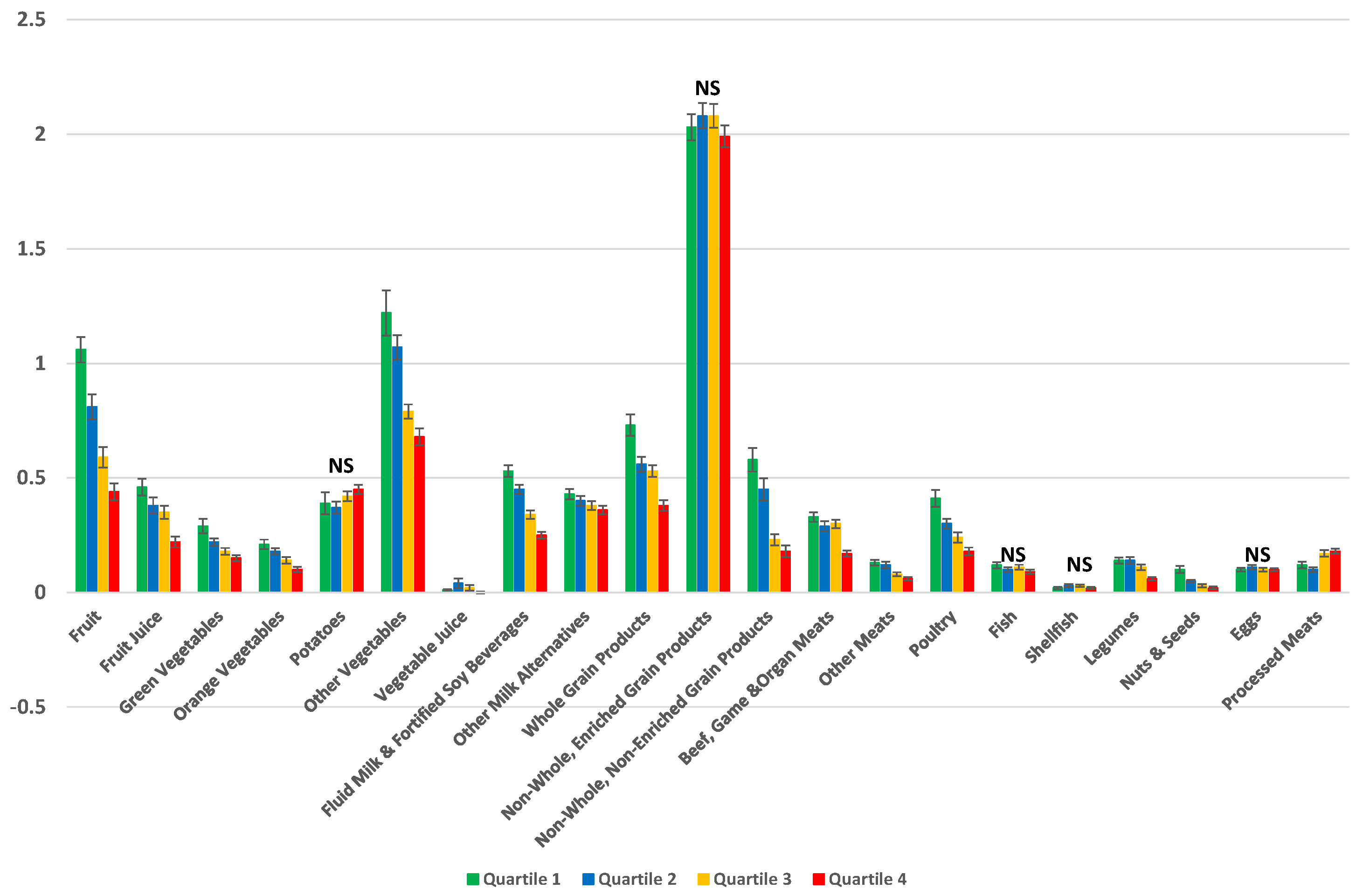
Correction: Jessri, M.; et al. Assessing the Nutritional Quality of Diets of Canadian Adults Using the 2014 Health Canada Surveillance Tool Tier System. Nutrients 2015, 7, 5543



Conflicts of Interest
Reference
- Jessri, M.; Nishi, S.K.; L’Abbé, M.R. Assessing the Nutritional Quality of Diets of Canadian Adults Using the 2014 Health Canada Surveillance Tool Tier System. Nutrients 2015, 7, 10447–10468. [Google Scholar] [CrossRef] [PubMed]
© 2017 by the authors; licensee MDPI, Basel, Switzerland. This article is an open access article distributed under the terms and conditions of the Creative Commons Attribution (CC-BY) license (http://creativecommons.org/licenses/by/4.0/).
Share and Cite
Jessri, M.; Nishi, S.K.; L’Abbé, M.R. Correction: Jessri, M.; et al. Assessing the Nutritional Quality of Diets of Canadian Adults Using the 2014 Health Canada Surveillance Tool Tier System. Nutrients 2015, 7, 5543. Nutrients 2017, 9, 58. https://doi.org/10.3390/nu9010058
Jessri M, Nishi SK, L’Abbé MR. Correction: Jessri, M.; et al. Assessing the Nutritional Quality of Diets of Canadian Adults Using the 2014 Health Canada Surveillance Tool Tier System. Nutrients 2015, 7, 5543. Nutrients. 2017; 9(1):58. https://doi.org/10.3390/nu9010058
Chicago/Turabian StyleJessri, Mahsa, Stephanie K. Nishi, and Mary R. L’Abbé. 2017. "Correction: Jessri, M.; et al. Assessing the Nutritional Quality of Diets of Canadian Adults Using the 2014 Health Canada Surveillance Tool Tier System. Nutrients 2015, 7, 5543" Nutrients 9, no. 1: 58. https://doi.org/10.3390/nu9010058
APA StyleJessri, M., Nishi, S. K., & L’Abbé, M. R. (2017). Correction: Jessri, M.; et al. Assessing the Nutritional Quality of Diets of Canadian Adults Using the 2014 Health Canada Surveillance Tool Tier System. Nutrients 2015, 7, 5543. Nutrients, 9(1), 58. https://doi.org/10.3390/nu9010058

