


Effectiveness of Vitamin D Supplementation on Biochemical, Clinical, and Inflammatory Parameters in Patients with Different Types of Diabetes: A Systematic Review and Meta-Analysis

 ,
,  , , , , and
Abstract
1. Introduction
2. Methods
2.1. Protocol and Registration
2.2. Search
2.3. Study Selection
2.4. Risk of Bias Assessment
2.5. Data Synthesis and Statistical Analysis
- Anthropometric and biochemical markers: BMI (kg/m2), 25-hydroxy vitamin D [25(OH)D] (nmol/L), HbA1c (%), HDL and LDL cholesterol, creatinine (mg/dL), PTH (ng/dL), total cholesterol, triglycerides, fasting blood glucose, calcium and phosphorus (mmol/L), fasting insulin, and CRP (mg/L).
- Inflammatory markers: Interleukin-6 (IL-6) and Interleukin-1β (pg/mL).
- Blood pressure: systolic and diastolic (mmHg).
- Biomarkers were interpreted against clinical reference ranges:
- BMI: underweight (<18.5), normal (18.5–24.9), overweight (25–29.9), obese (>30).
- LDL: <130 mg/dL (optimal), >190 mg/dL (high risk).
- HDL: >40 mg/dL (males), >45 mg/dL (females).
- Total cholesterol: <200 mg/dL; triglycerides: <150 mg/dL.
- Waist circumference: ≥102 cm (males), ≥88 cm (females).
- Body fat: 8.1–15.9% (males), 15.1–20.9% (females).
- Normal fasting glucose: <100 mg/dL.
2.6. Quality of Evidence
3. Results
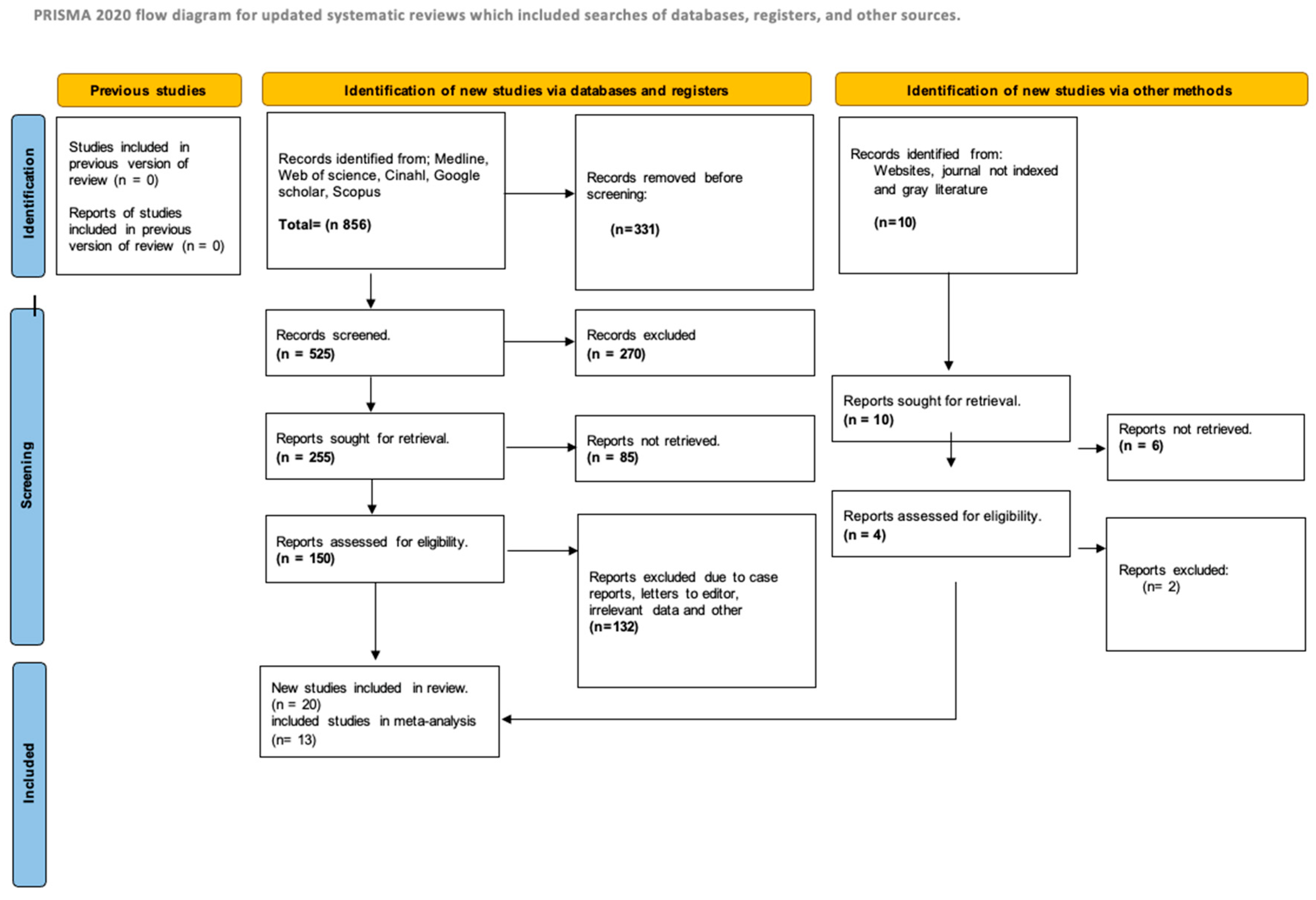
3.1. Study Selection
3.2. Study Characteristics

| Author | Country | Population | Intervention | Outcomes | Follow-Up | Results | ||
|---|---|---|---|---|---|---|---|---|
| Sample Size (n) | Patients Mean Age (SD) | Type of Intervention | Characteristics and Doses | |||||
| Cojic et al., 2021 [20] | Serbia | CG: 65 EG:49 | ≥30 | CG: Metformin EG: Metformin + Vitamin D3 | CG: 65 patients with T2DM were given metformin alone as a control treatment. EG: 49 patients with T2DM were given metformin and vitamin D3 as treatment. In total, 33 patients were given 50,000 IU/day (14 drops) of vitamin D3 for the first 3 months and then 14,000 IU/day (4 drops) for another 3 months. The other 16 patients were given 14,000 IU/day (4 drops) for the next 6 months. All patients were given their corresponding metformin | Vitamin D (nmol/L) HbA1c (%) IF (mU/L) BMI (kg/m2) WC (cm) HOMA-IR FBG (mmol/L) SBP (mmHg) DBP (mmHg) MDA (TBARS) (mM/L) AOPP (μM chloramine T equivalents) CRP (mg/L) TC (mmol/L) TG (mmol/L) HDL (mmol/L) LDL (mmol/L) Castelli I TG/TBARS AC Ca++ | 6 months | 6 months Vitamin D (nmol/L) p = <0.001 HbA1c (%) p = 0.045 IF (mU/L) p = 0.245 BMI (kg/m2) p = 0.288 WC (cm) p = 0.086 HOMA-IR p = 0.203 FBG (mmol/L) p = 0.116 SBP (mmHg) p = 0.373 DBP (mmHg) p = 0.299 MDA (TBARS) (mM/L) p = 0.215 AOPP (μM chloramine T equivalents) p = 0.776 CRP (mg/L) p = 0.385 TC (mmol/L) p = 0.756 TG (mmol/L) p = 0.156 HDL (mmol/L) p = 0.270 LDL (mmol/L) p = 0.209 Castelli I p = 0.409 TG/TBARS p = 0.288 AC p = 0.333 Ca++ p = 0.874 |
| Boer et al., 2019 [21] | USA | CG: 320 EG1: 370 EG2: 333 EG3: 289 | 67.6 | CG: 2 Placebos EG1: Omega 3 fatty acids + Vitamin D3 EG2: Vitamin D3 + Placebo EG3: Omega 3 fatty acids + Placebo | CG: 320 patients with type 2 diabetes were given two inert placebos. EG1: 370 patients with type 2 diabetes were administered vitamin D3 (cholecalciferol, 2000 IU) together with omega-3 fatty acids (fish oil, 1 g capsules containing 465 mg eicosapentaenoic acid [EPA] plus 375 mg docosahexaenoic acid [DHA]). EG2: 333 patients with type 2 diabetes were administered Vitamin D3 (cholecalciferol, 2000 IU) together with an inert placebo. EG3: 289 patients with type 2 diabetes were administered omega-3 fatty acids (fish oil, 1 g capsules containing 465 mg eicosapentaenoic acid [EPA] plus 375 mg docosahexaenoic acid [DHA]) together with inert placebo | Vitamin D Omega-3 fatty acids | 2 years and 9 months | Vitamin D p = 0.25 Omega-3 Fatty acids p = 0.27 |
| Byrn et al., 2022 [32] | USA | CG: 15 EG:15 | CG: 55.62 EG: 55.80 | CG: Vitamin D3 supplement in a ten times lower dose EG: High-dose Vitamin D3 supplement | CG: received a low-dose Vitamin D3 (Cholecalciferol) therapy of 5000 IU for 12 weeks EG: they received a therapy of a weekly supplement of vitamin D3 (Cholecalciferol) in high doses of 50,000 IU for 12 weeks | Symbol-Digit Modality Z-score Symbol-Digit Modality Z-score Verbal fluency Z-score HVLT total recall T-score HVLT delayed recall T-score HVLT retention T-score Stroop word reading Z-score Stroop color naming Z-score Stroop Interference Z-score Trail Making Test Part A Z-score | 3 months | Symbol-Digit Modality Z-score p value not reported Symbol-Digit Modality Z-score p value not reported Symbol-Digit Modality Z-score p value not reported Verbal fluency Z-score p value not reported HVLT total recall T-score p value not reported HVLT delayed recall T-score p value not reported HVLT retention T-score p value not reported Stroop word reading Z-score p value not reported Stroop color naming Z-score p value not reported Stroop Interference Z-score p value not reported Trail Making Test Part A Z-score p value not reported |
| Huang et al., 2021 [17] | China | CG:70 EG:80 | CG: 31.3 ± 4.7 EG:31.5 ± 4.1 | CG: placebo EG: intake of Vitamin D and omega-3 fatty acids. | CG: placebo EG: the test group took 40,000 IU of vitamin D and 8000 mg of omega-3 fatty acids twice daily | FBG (mmol/L) Fasting insulin (ulU/mL) HOMA-IR HOMA-β TGs (mmol/L) Total cholesterol (mmol/L) LDL (mmol/L) HDL (mmol/L) VLDL (mmol/L) | 6 weeks | FBG (mmol/L) p ≤ 0.001 Fasting insulin (ulU/mL) p ≤ 0.001 HOMA-IR p ≤ 0.001 HOMA-β p ≤ 0.001 TGs (mmol/L) p ≤ 0.001 Total cholesterol (mmol/L) p ≤ 0.001 LDL (mmol/L) p ≤ 0.001 HDL (mmol/L) p = 0.89 VLDL (mmol/L) p = 0.008 |
| Chou et al., 2021 [18] | USA | CG: 383 EG: 388 | CG: 63.9 EC: 63.7 | CG: Placebo EG: Vitamin D3 supplement and/or Omega-3 fatty acid d | CG: placebo EG: vitamin D3 supplement at a dose of 2000 IU per day and/or Omega-3 fatty acid 1 g per day | Weight, mean (SD), kg BMI, mean (SD), kg/m2 Waist circumference, mean (SD), cm % Body fat, mean (SD) IMF, mean (SD), kg/m2 Fat to lean mass ratio, mean (SD) VAT area, mean (SD), cm2 Truncal fat mass, mean (SD), kg Truncal-to-limb fat ratio, mean (SD) LMI, mean (SD), kg/m2 ALM, mean (SD), kg ALM/BMI, mean (SD) | 2 years | Weight, mean (SD), kg p = 0.76 BMI, mean (SD), kg/m2 p = 0.83 Waist circumference, mean (SD), cm p = 0.43 % Body fat, mean (SD) p = 0.93 IMF, mean (SD), kg/m2 p = 0.92 Fat to lean mass ratio, mean (SD) p = 0.83 VAT area, mean (SD), cm2 p = 0.58 Truncal fat mass, mean (SD), kg p = 0.69 Truncal-to-limb fat ratio, mean (SD) p = 0.29 LMI, mean (SD), kg/m2 p = 0.19 ALM, mean (SD), kg p = 0.89 ALM/BMI, mean (SD) p = 0.43 |
| Angellotti et al., 2019 [23] | USA | CG:61 EG:66 | average of 60 years | CG: Placebo EG: pill with 4000 IU of Vitamin D3 (cholecalciferol). | CG: they were given 1 placebo pill daily. EG: they were given a daily pill with 4000 IU of vitamin D3 (cholecalciferol) | Total cholesterol, mg/dL HDL, mg/dL TG, mg/dL TG/HDL ratio LDL, mg/dL C-reactive protein, mg/L CVD risk | 48 weeks | Total Cholesterol, mg/dL p = 0.666 HDL, mg/dL p = 0.323 TG, mg/dL p = 0.032 TG/HDL ratio p = 0.056 LDL, mg/d p = 0.99 C-reactive protein, mg/L p = 0.774 CVD risk p = 0.297 |
| Gnudi et al., 2023 [24] | UK | CG: 30 EG:25 | >40 years | CG: placebo EG: Calcitriol | CG: they were given placebo EG: they were given 0.5 mcg of Calcitriol per day | LVMI (g/m2) Interstitial myocardial fibrosis (% CVD) Left ventricular end systolic volume (mL/m2) Left ventricular end diastolic volume (mL/m2) Left ventricular ejection fraction (%) | 9 years | LVMI (g/m2) p = 0.24 Interstitial myocardial fibrosis (% CVD) p = 0.09 Left ventricular end systolic volume (mL/m2) p = 0.42 Left ventricular end diastolic volume (mL/m2) p = 0.28 Left ventricular ejection fraction (%) p = 0.84 |
| Huang et al., 2013 [26] | China | 2708 | 48.5 ± 12.6 years | Q1:677 Q2:677 Q3:677 Q4:677 | The patients in the study were separated into quartiles based on lipoprotein lipase levels, obtaining Q1 (<532.8), Q2 (532.9−653.2), Q3 (653.3–778.6), Q4 (>778.6) | 25(OH)D, ng/mL GFR, mmol/L PG, mmol/L HbAlc, % Insulin, mU/L HOMA-IR TC, mmol/L TG, mmol/L HDL-C, mmol/L LDL-C, mmol/L apoA, mmol/L apoB, mmol/L FFAs, μmol/L | One shot | 25(OH)D, ng/mL p < 0.001 GFR, mmol/L p = 0.021 PG, mmol/L p = 0.008 HbAlc, % p < 0.001 Insulin, mU/L p = 0.149 HOMA-IR p < 0.001 TC, mmol/L p = 0.201 TG, mmol/L p < 0.001 HDL-C, mmol/L p = 0.032 LDL-C, mmol/L p = 0.068 apoA, mmol/L p < 0.001 apoB, mmol/L p = 0.470 FFAs, μmol/L p < 0.001 |
| Yin et al., 2024 [28] | China | CG: 771 EG: 766 | 28.5 years average | CG: 400 IU/d vitamin D3 EG: 1600 IU/d vitamin D3 | CG: serum 25(OH)D concentration <75 nmol/L at a dose of 400 IU/day EG: serum 25(OH)D concentration <75 nmol/L at a dose of 1600 IU/day | HDLC, mmol/L LDLC, mmol/L TC, mmol/L TG, mmol/L CRP, mg/L TNF-a, pg/mL Il-6, pg/mL IL-1β, pg/mL E-Selectin, ng/mL ICAM, ng/mL SBP, mmHg DBP, mmHg TyG | 2 months | HDLC, mmol/L p = 0.01 LDLC, mmol/L p = 0.69 TC, mmol/L p = 0.20 TG, mmol/L p = 0.35 CRP, mg/L p = 0.11 TNF-a, pg/mL p = 0.09 Il-6, pg/mL p = 0.26 IL-1 β, pg/mL p = 0.45 E-Selectin, ng/mL p = 0.28 ICAM, ng/mL p = 0.17 SBP, mmHg p = 0.25 DBP, mmHg p = 0.32 TyG p = 0.61 |
| Rasouli et al., 2022 [29] | USA | CG: 886 EG: 888 | 60.5 ± 9.8 years | CG: placebo equivalent EG: 4000 IU of vitamin D3 (cholecalciferol) | CG: participants were asked to refrain from using specific diabetes or weight-loss medications during the study and to limit off-study vitamin D use to 1000 IU per day from all supplements, including multivitamins. Follow-up visits were carried out at months 12 and 24 EG: Participants were asked to refrain from using specific diabetes or weight-loss medications during the study and to limit off-study vitamin D use to 1000 IU per day from all supplements, including multivitamins. Follow-up visits were carried out at months 12 and 24 | CPI IGI DI | At the beginning, at month 12 and at month 24 | BASELINE 0.64 MONTH 12 0.61 MONTH 24 0.995 |
| Riek et al., 2018 [30] | USA | CG: 15 EG: 11 | CG: 57.6 ± 1.9 EG: 57.4 ± 1.8 | CG: placebo GA: 25(OH)D < 25 ng/mL randomly assigned to vitamin D3 4000 IU daily | Subjects were randomly assigned 1:1 to one of two groups: vitamin D3 4000 international units (IU) or matching placebo daily (supplied by Tishcon Corp.) for 4 months, with treatment allocation blinded to both investigators and participants. Both groups received calcium carbonate 500 mg twice daily. For safety reasons, patients They were examined at 2 weeks, 1 month, 2 months, 3 months and 4 months for evaluation of blood levels | BMI (kg/m2) Total cholesterol LDL HDL Triglycerides Hemoglobin A1c | They were observed at 2 weeks, 1 month, 2 months, 3 months and 4 months. | BMI (kg/m2) = 0.06 Total cholesterol = 0.61 LDL = 0.70 HDL = 0.79 Triglycerides = 0.36 Hemoglobin A1c = 0.81 |
| Pittas et al., 2019 [31] | USA | CG: 1212 placebo EG: 1211 vitamin D group | EG: 4000 IU of vitamin D3 CG a corresponding placebo. | Participants were asked to refrain from using specific diabetes or weight-loss medications during the trial and to limit their off-trial vitamin D use to 1000 IU per day from all supplements, including multivitamins. Participants were asked to limit calcium supplements to 600 mg per day. Participants were followed up for 4 years | Fasting plasma glucose 2 h post-load plasma glucose Glycated hemoglobin Serum 25-hydroxyvitamin D | Month 3, month 6 and twice a year thereafter until year 4 | Does not report | |
| Penckofer et al., 2022 [32] | USA | CG: EG: | 50.58 (11.13) | EG: 50,000 IU of calciferol weekly EG: 5000 IU of calciferol weekly | A total of 119 women (57 at the lowest dose and 62 at the highest dose) received weekly oral vitamin D3 supplements (50,000 IU) or an active comparator (5000 IU) for 6 months. Vitamin D, 25-hydroxyvitamin D [25(OH)D] levels, and depression were measured at baseline, 3, and 6 months. | Vitamin D laboratory values (ng/mL) Serum 25(OH)D Creatinine Mean systolic blood pressure Mean diastolic blood pressure Average body mass index Average HbA1c Average fasting blood glucose | Follow-up at 3 and 6 months. Women were contacted by telephone (2 months and 4 and 5 months) to assess depressive symptoms and adverse events | Laboratory values of serum vitamin D (ng/mL) 25 (OH) D: p = 0.06 Creatinine Mean systolic blood pressure Mean diastolic blood pressure Average body mass index Average HbA1c Average fasting blood glucose |
| Kawahara et al., 2022 [33] | JAPAN | CG: 626 EG:630 | 61.3 years. | EG: 75 μg of eldecalcitol CG: placebo equivalent. | Participants were randomly assigned to take a single hard gel tablet, once a day, containing 75 μg of eldecalcitol or a matching placebo, which has the same appearance | Glycated hemoglobin fasting plasma glucose concentration Plasma glucose concentration two hours after loading Random plasma glucose concentration | Three-month intervals, and the follow-up period concluded after three years | Primary outcome (p = 0.39) Secondary outcomes p = 0.020 |
| Karonova et al., 2020 [34] | RUSSIA | GC: 34 EG:33 | Average age 56 (49; 61) | GC: 5000 IU once a week EG: 40,000 IU | Patients were randomly assigned by odd/even method into two cholecalciferol treatment groups: Group I (n = 34) 5000 IU once weekly and Group II (n = 33) 40,000 IU once weekly, orally for 24 weeks | 25(OH)D—25-hydroxyvitamin D HbA1c—glycated hemoglobin; PTH—parathyroid hormone TC—total cholesterol TNFα—tumor necrosis factor α CRP—C-reactive protein IL-1β—interleukin 1β IL-6—interleukin-6 IL-10—interleukin-10 | 24 weeks | HbA1c (p = 0.031) IL-6 (p = 0.017) IL-10 (p = 0.030) |
| Johny et al., 2022 [35] | INDIA | CG:placeBO 29 EG:Vitamin D3 30 | CG: 55.06 ± 9.57 EG: 53.6 ± 9.6 | EG: 60,000 IU of cholecalciferol/week, control dose 60,000 IU/month CG: Placebo equivalent (powdered starch compound) | The vitamin D3 group received 60,000 IU of cholecalciferol/week for the initial 3 months as a control dose, followed by 60,000 IU/month for 3 months as a maintenance dose. The placebo group received a matching placebo (consisting of powdered starch) similar to vitamin D | HbA1c Total 25-OH vitamin D (ng/mL) Duration of type 2 diabetes (years) Total cholesterol (mg/dL) Triglycerides (mg/dL) HDL (mg/dL) LDL (mg/dL) Uric acid (mg/dL) Creatinine (mg/dL) | 6 months | p < 0.05 |
| Chao Gu et al., 2022 [36] | China | CG:92 EG:86 | Does not report | CG: received regular treatment (type 2 diabetes group) EG: They received an additional 400 IU of vitamin D per day | Patients with type 2 diabetes were randomly assigned to receive an additional vitamin D supplement (n = 86) or not (n = 92) in addition to standard drug treatments | Vitamin D GSH Metabolic enzyme GSH GCLC GR Inflammatory factor MCP-1 IL-8 | 90 days | p < 0.05 |
| Sadiya et al., 2015 [37] | United Arab Emirates | CG: 42 EG: 45 | CG: 48 ± 8 EG: 49 ± 8 | CG: They received starch capsules EG: 3000 IU/day of oral vitamin D | It was divided into two phases of 3 months each. In phase 1, group D (n = 45) received unlabeled oral vitamin D at 6000 IU/day, while group P (n = 42) received placebo capsules. In phase 2, group D (n = 45) received 3000 IU/day of oral vitamin D and group P (n = 42) continued on matching placebo capsules. Participants were advised to maintain their usual medical care and diets and to avoid taking calcium or vitamin D supplements on their own during the study period | yeah | 6 months | Does not report |
| Peivasteh Safarpour et al., 2020 [38] | Iran | CG: 43 EG: 42 | CG: 50.05 ± (10.7) EG: 50.36 ± (10.2) | CG: or took similar pearls containing oral paraffin without VD 50,000 IU/week EG: took 8 pearls of VD 50,000 IU/week | At baseline and endpoint, demographic, anthropometric, and dietary intake characteristics were determined using two 24 h food recalls (one weekend and one weekday). Physical activity was measured using a short version of the International Physical Activity Questionnaire (IPAQ). Sun exposure status was assessed using a valid questionnaire. Blood was drawn from the brachial vein at baseline and endpoint for measurement of serum factors | Vitamin D (ng/mL) HbA1c (%) SIRT1 (ng/mL) Irisin (ng/mL) HOMA-IR (N) QUICKI (N) | 8 weeks | GL: Vitamin D (ng/mL) < 0.001 HbA1c (%) 0.657 SIRT1 (ng/mL) < 0.001 Irisin (ng/mL) < 0.001 HOMA-IR (N) 0.003 FAST (N) 0.003 GA: Vitamin D (ng/mL) < 0.001 HbA1c (%) < 0.001 SIRT1 (ng/mL) < 0.001 Irisin (ng/mL) < 0.001 HOMA-IR (N) 0.006 FAST (N) 0.005 |
| Xiaomi Sun et al., 2023 [39] | China | CG: 15 EG: 46 | 50.1 years ± 7.3 years |
| This was a randomized controlled trial (RCT) with a 12-week intervention, followed by an additional 12-week follow-up period. In the 12-week intervention, participants in the intervention groups (EX + VD and VD) received vitamin D supplementation and/or exercise, while the control group received a placebo. After the intervention, follow-up was conducted to assess the persistence of the intervention’s effects on participants. This is important to understand whether the observed benefits are maintained over the long term | table page 8 | 12 weeks | Does not report |
| Shih et al., 2014 [47] | USA | CG:12 EG:13 | <18 years old | EG: Vitamin D3 for 6 months CG: no treatment for 6 months and then vitamin D3 treatment for another 6 months | EG: therapy with 20,000 IU of Vitamin D3 per week for 6 months followed by 6 months of observation CG: 6 months of observation without clinical intervention and then 6 months of treatment with 20,000 IU per week | BMI (kg/m) + SD Normal weight (<85th %ile) Overweight/obese (>85%) Systolic BP (mmHg) + SD Diastolic BP (mmHg) + SD Type 1 diabetes duration (yr) + SD Type of insulin − number (%) Lispro insulin Aspart insulin HbA1c (%) + SD HbA1c (mmol/mol) Total daily insulin dose + SD (units/kg/day 25-OH vitamin D (ng/mL) + SD CRP (mg/dL) IL-6 (pg/mL) TNF-a (pg/mL) | 6 months | BMI (kg/m) + SD p = 0.037 Normal weight (<85th %ile) p = 0.09 Overweight/obese (>85%) Systolic BP (mmHg) + SD p = 0.66 Diastolic BP (mmHg) + SD p = 0.23 Type 1 diabetes duration (yr) + SD p = 0.34 Type of insulin − number (%) p = 0.30 Lispro insulin Aspart insulin HbA1c (%) + SD p = 0.004 HbA1c (mmol/mol) Total daily insulin dose + SD (units/kg/day) p = 0.76 25-OH vitamin D (ng/mL) + SD p = 0.0001 CRP (mg/dL) p = 0.85 IL-6 (pg/mL) p = 0.026 TNF-a (pg/mL) p = 0.16 |
| Corbin et al., 2023 [48] | USA | CG:1212 EG:1211 | does not provide information | CG: Placebo EG: soft gel tablet once a day containing 4000 IU of vitamin D3 | CG: 1 placebo pill per day EG: soft gel tablet once a day containing 4000 IU of vitamin D3 | 25-hydroxyvitamin D Level (ng/mL) NAFLD-Liver Fat Score Fibrosis-4 Score AST to Platelet Ratio Index | 2.5 years | 25-hydroxyvitamin D Level (ng/mL) p = 0.005 NAFLD-Liver Fat Score p ≤ 0.001 Fibrosis-4 Score p = 0.310 AST to Platelet Ratio Index p = 0.286 |
| El Hajj et al., 2020 [49] | Lebanon | CG:43 EG:45 | 66.3 (±4.4) years | CG: Placebo Pill EG: Vitamin D supplement | CG: placebo pill three times a week for 6 months EG: received 30,000 IU of cholecalciferol per week (three doses of 10,000 IU per week) for a period of 6 months | 25(OH)D (ng/mL) BMI (kg/m2) Waist circumference (cm) Body fat (%) Systolic BP (mmHg) Diastolic BP (mmHg) TG (mg/dL) TC (mg/dL) HDL-C (mg/dL) LDL-C (mg/dL) FBG (mg/dL) HbA1c (%) HOMA-IR PTH (ng/L) | 6 months | 25(OH)D (ng/mL) p < 0.0001 BMI (kg/m2) p < 0.0001 Waist circumference (cm) p = 0.0001 Body fat (%) p = 0.05 Systolic BP (mmHg) p = 0.34 Diastolic BP (mmHg) p = 0.21 TG (mg/dL) p = 0.02 TC (mg/dL) p = 0.38 HDL-c (mg/dL) p = 0.022 LDL-c (mg/dL) p = 0.18 FBG (mg/dL) p = 0.84 HbA1c (%) p = 0.31 HOMA-IR p = 0.26 PTH (ng/L) p < 0.0001 |
| Gulseth et al., 2017 [40] | Norway | CG: 25 EG: 28 | average age 55.7 ± 9.5 years | CG: Placebo EG: Vitamin D Supplement | CG: they received a single dose of oral placebo EG: they received a single dose of 400,000 IU oral vitamin D3 (received an additional 200,000 IU of vitamin D3 if serum 25(OH)D is <100 nmol/L after 4 weeks) | HbA1c (%) Fasting insulin (mmol/L) Fasting C-peptide (pmol/L) AIRg 0–8 DC-peptide max Glucose infusion rate (mmol/kg FFM/min) Total Rd (mmol/kg FFM/min) Basal EGP (mmol/kg FFM/min) Clamp EGP (mmol/kg FFM/min) Basal glucose oxidation (mmol/kg FFM/min) Basal nonoxidative glucose consumption (mmol/kg FFM/min) Basal fat oxidation (mg/kg FFM/min) Clamp glucose oxidation (mmol/kg FFM/min) Clamp nonoxidative glucose consumption (mmol/kg FFM/min) Clamp fat oxidation (mg/kg FFM/min) Resting energy expenditure (kcal/day) Clamp energy expenditure (kcal/day) | 6 months | HbA1c (%) p = 0.98 Fasting insulin (mmol/L) p = 0.38 Fasting C-peptide (pmol/L) p = 0.73 AIRg 0–8 p = 0.10 DC-peptide max p = 0.04 Glucose infusion rate (mmol/kg FFM/min) p = 0.68 Total Rd (mmol/kg FFM/min) p = 0.52 Basal EGP (mmol/kg FFM/min) p = 0.37 Clamp EGP (mmol/kg FFM/min) p = 0.17 Basal glucose oxidation (mmol/kg FFM/min) p = 0.88 Basal nonoxidative glucose consumption (mmol/kg FFM/min) p = 0.66 Basal fat oxidation (mg/kg FFM/min) p = 0.61 Clamp glucose oxidation (mmol/kg FFM/min) p = 0.47 Clamp nonoxidative glucose consumption (mmol/kg FFM/min) p = 0.87 Clamp fat oxidation (mg/kg FFM/min) p = 0.20 Resting energy expenditure (kcal/day) p = 0.31 Clamp energy expenditure (kcal/day) p = 0.82 |
| Joergensen et al., 2014 [41] | Denmark | CG:23 EG:22 | average age 57 years | CG: Placebo capsule followed by paricalcitol capsule EG: Paricalcitol capsule followed by placebo capsule | CG: they received a daily placebo capsule for an initial 12 weeks, followed by a daily paricalcitol capsule for the subsequent 12 weeks EG: they received one capsule of paricalcitol daily for 12 weeks followed by one capsule of placebo daily for the next 12 weeks | Plasma N-terminal proBNP, pmol/L Plasma MR-proANP, pmol/L Plasma copeptin, pmol/L Urinary albumin excretion rate mg/24 h Estimated GFR mL/min/1.73 m2 GFR mL/min/1.73 m2 | 24 weeks | Plasma N-terminal proBNP, pmol/L p = 0.39 Plasma MR-proANP, pmol/L p = 0.57 Plasma copeptin, pmol/L p = 0.14 Urinary albumin excretion rate mg/24 h p = 0.03 Estimated GFR mL/min/1.73 m2 p = 0.012 GFR ml/min/1.73 m2 p = 0.2 |
| Limonte et al., 2021 [42] | USA | CG: 320 EG1: 333 EG2: 289 EG3: 370 | 67.6 years average | CG: Vitamin D3 placebo and n-3 fatty acid placebo EG1: Vitamin D3 and n-3 fatty acid placebo EG2: n-3 fatty acid and vitamin D3 placebo EG3: Vitamin D3 and n-3 fatty acid | CG: daily administration of placebos compatible with Vitamin D3 and placebo compatible with n-3 fatty acid EG1: daily administration of Vitamin D3 (2000 IU) and daily placebo compatible with n-3 fatty acid EG2: daily administration of n-3 fatty acid (1 g) and daily placebo compatible with Vitamin D3 EG3: daily administration of Vitamin D3 (2000 IU) and daily administration of n-3 fatty acid (1 g) | IL-6 (pg/mL) hsCRP (mg/L) NT-proBNP (ng/L) | 5 years | IL-6 (pg/mL) p = 0.38 hsCRP (mg/L) p = 0.33 NT-proBNP (ng/L) p = 0.0034 |
| Tabesh et al., 2014 [50] | Iran | CG: 30 EG1: 29 EG2: 29 EG3: 30 | >30 years | CG: Vitamin D placebo and Calcium placebo EG1: Vitamin D supplement and Calcium Placebo EG2: Calcium supplement and Vitamin D placebo EG3: Vitamin D and Calcium supplements | CG: received separate placebos of calcium and vitamin D3 EG1: received 50,000 U of vitamin D3 supplements weekly along with daily Calcium Placebo EG2: received a 1000 mg calcium carbonate supplement daily along with a weekly vitamin D3 placebo EG3: received 50,000 U of vitamin D3 supplements weekly along with 1000 mg of calcium carbonate supplements daily | FPG (mmol/L) HbA1c (%) Insulin (pmol/L) HOMA-IR QUICKI HOMA-β TG (mmol/L) HDL-C (mmol/L) LDL-C (mmol/L) TC (mmol/L) TC/HDL-C Non-HDL-C (mmol/L) | 8 weeks | FPG (mmol/L) p = 0.12 HbA1c (%) p = 0.61 Insulin (pmol/L) p = 0.16 HOMA-IR p = 0.54 QUICKI p = 0.02 HOMA-β p = 0.04 TG (mmol/L) p = 0.77 HDL-C (mmol/L) p = 0.11 LDL-C (mmol/L) p = 0.21 TC (mmol/L) p = 0.001 TC/HDL-C p < 0.001 Non-HDL-C (mmol/L) p < 0.001 |
| Upreti et al., 2018 [43] | India | CG:30 EG:30 | CG: 49.9 ± 6.9 EG:48.3 ± 9.8 | CG: Placebo EG: Vitamin D supplementation | CG: oral placebo (microcrystalline cellulose), both drugs were administered in identical containers. EG: they received oral vitamin D (calcirol 60,000 IU each week for the first six weeks and then once every 4 weeks weeks until the end of the study) | Vitamin D (ng/mL) FPG (mg/dL) PPPG (mg/dL) HbA1c (%) Systolic BP (mmHg) Diastolic BP (mmHg) Total cholesterol (mg/dL) Triglycerides (mg/dL) HDL cholesterol (mg/dL) LDL cholesterol (mg/dL) | 6 months | Vitamin D (ng/mL) p = <0.001 FPG (mg/dL) p = <0.001 PPPG (mg/dL) p = <0.001 HbA1c (%) p = 0.006 Systolic BP (mmHg) p = 0.002 Diastolic BP (mmHg) p = 0.03 Total cholesterol (mg/dL) p ≤ 0.001 Triglycerides (mg/dL) p = 0.39 HDL cholesterol (mg/dL) p = 0.17 LDL cholesterol (mg/dL) p = 0.05 |
| Mager et al., 2016 [44] | Canada | Group 1: 60 Group 2: 60 | From 18 to 80 years old. | Group 1: Daily Vitamin D3 Group 2: Monthly vitamin D3 | Group 1: daily dose of 2000 IU/D of vitamin D3 Group 2: monthly dose of 40,000 IU of vitamin D3 | Hemoglobin Alc, % Blood Glucose, mmol/L Creatinine, u mol/L Urea, mmol/L ACR, mg/mmol Albumin g/L Calcium, mmol/L Phosphorus, mmol/L Magnesium, mmol/L PTH, pmolL ALP4, U/L FGF-234 pg/mL | 6 months | Hemoglobin Alc, % p = 0.69 Blood Glucose, mmol/L p = 0.10 Creatinine, u mol/L p = 0.91 Urea, mmol/L p = 0.83 ACR, mg/mmol p = 0.20 Albumin g/L p = 0.69 Calcium, mmol/L p = 0.94 Phosphorus, mmol/L p = 0.92 Magnesium, mmol/L p = 0.93 PTH, pmolL p = 0.97 ALP4, U/L p = 0.77 FGF-234 pg/mL p = 0.36 |
| Ryu et al., 2014 [45] | Korea | CG:30 EG:32 | 30 to 69 years old. | CG: placebo EG: Vitamin D | CG: placebo containing 100 mg of elemental calcium twice daily EG: 1000 IU of cholecalciferol (inactive vitamin D3, Dalim BioTech, Hwaseong, Korea) combined with 100 mg of elemental calcium (vitamin D group) twice a day | HbA1c, % Fasting glucose, mg/dL HOMA-IR 25(0H)D, ng/mL Total cholesterol, mg/dL HDL-C, mg/dL Triglyceride, mg/dL LDL-C, mg/dL Calcium, mg/dL Phosphorus, mg/dL PTH, pg/mL hsCRP, mg/dL pSBP, mmHg pDBP, mmHg CSBP, mmHg AIx,% baPWV, cm/s? OA, h | 24 weeks | HbA1c, % p = 0.280 Fasting glucose, mg/dL p = 0.919 HOMA-IR p = 0.981 25(0H)D, ng/mL p = <0.001 Total cholesterol, mg/dL p = 0.248 HDL-C, mg/dL p = 0.998 Triglyceride, mg/dL p = 0.682 LDL-C, mg/dL p = 0.092 Calcium, mg/dL p = 0.768 Phosphorus, mg/dL p = 0.323 PTH, pg/mL p = 0.133 hsCRP, mg/dL p = 0.261 pSBP, mmHg p = 0.948 pDBP, mmHg p = 0.970 CSBP, mmHg p = 0.815 AIx,% p = 0.399 baPWV, cm/s p = 0.348 OA, h p = 0.990 |
3.3. Risk of Bias Assessment in Individual Studies
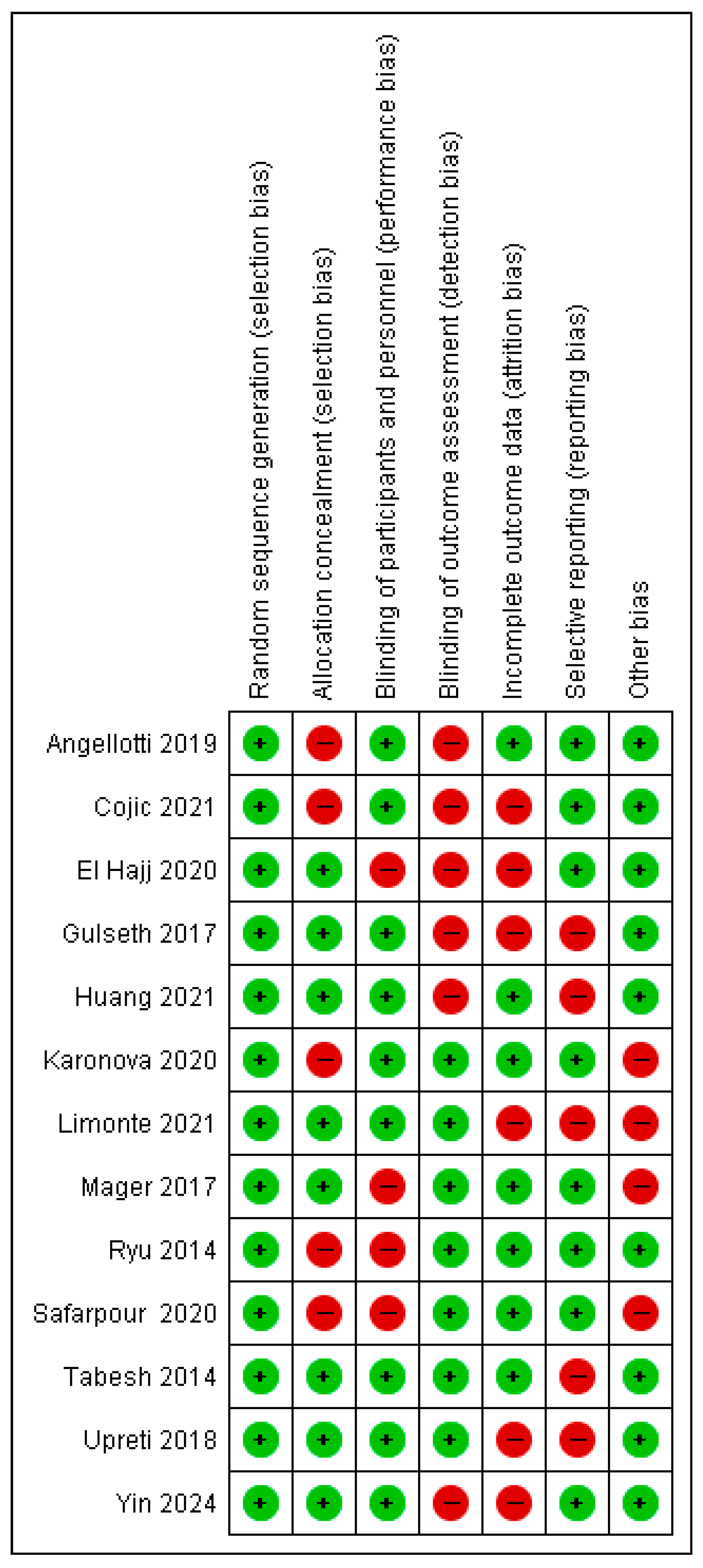
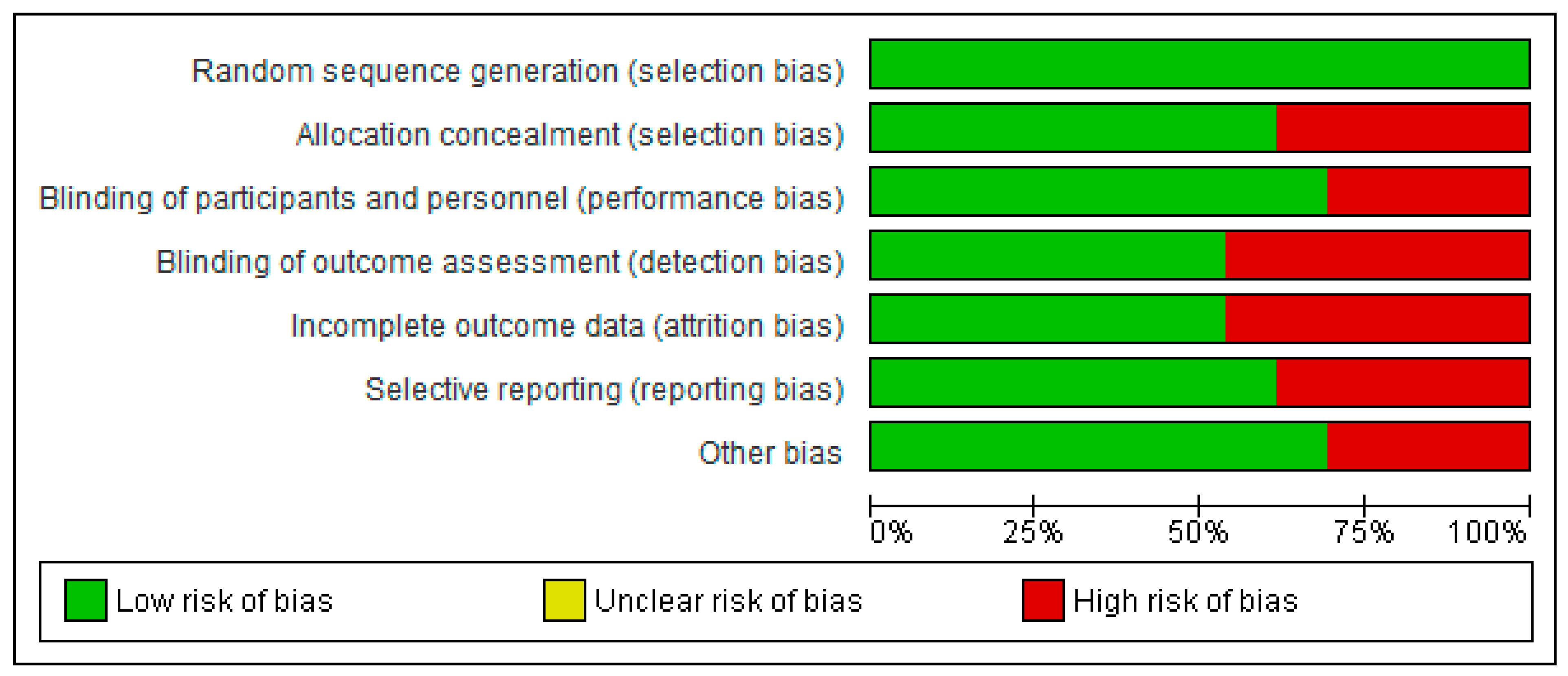
3.4. Synthesis of Results
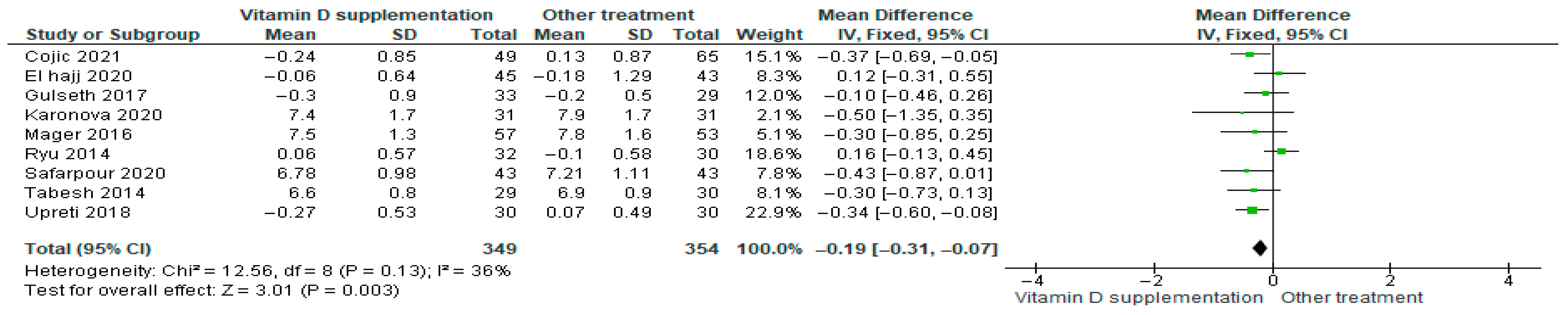
3.4.1. Body Mass Index (BMI)
3.4.2. Vitamin D
3.4.3. Glycosylated Hemoglobin HbA1c%
3.4.4. 25-Hydroxyvitamin D 25(OH)D
3.4.5. Homeostasis Model of Assessment Estimated Insulin Resistance HOMA-IR
3.4.6. Homeostasis Model Assessment of Beta Cell Function (HOMA-β)
3.4.7. HDL-Cholesterol (mg/dL)
3.4.8. LDL-Cholesterol (mg/dL)
3.4.9. Parathyroid Hormone (PTH)
3.4.10. Calcium (Ca2+)
3.4.11. Total Cholesterol
3.4.12. Interleukin-6 (IL-6)
3.4.13. Phosphorus
3.4.14. Interleukin-1β (IL-1β)
3.4.15. Fasting Insulin
3.4.16. Triglycerides (TG)
3.4.17. C-Reactive Protein (CRP)
3.4.18. Fasting Plasma/Blood Glucose
3.4.19. Systolic Blood Pressure (BP)
3.4.20. Diastolic Blood Pressure (BP)
3.4.21. QUIKI (Quantitative Insulin Sensitivity Check Index)
3.5. Adverse Effects of Vitamin D
3.6. Sensitivity Analysis
3.7. Meta-Regression
4. Discussion
5. Study Limitations
6. Conclusions
Supplementary Materials
Funding
Acknowledgments
Conflicts of Interest
References
- Biblioteca Nacional de Medicina. Vitamina, D. 2010. Available online: https://medlineplus.gov/spanish/vitamind.html (accessed on 2 March 2025).
- Biblioteca Nacional de Medicina. Deficiencia de Vitamina D. 2017. Available online: https://medlineplus.gov/spanish/vitaminddeficiency.html (accessed on 2 March 2025).
- Escrito por el Personal de Mayo Clinic. Vitamina, D. Available online: https://www.mayoclinic.org/es/drugs-supplements-vitamin-d/art-20363792 (accessed on 2 March 2025).
- Boron, W.; Emile, L. Fisiología Médica, 3rd ed.; Elsevier: Barcelona, Spain, 2017. [Google Scholar]
- Torres del Pliego, E.; Nogués Solán, X. Cómo utilizar la vitamina D y qué dosis de suplementación sería la más idónea para tener el mejor balance eficacia/seguridad? Rev. Osteoporos Metab. Miner. 2014, 6, 1–4. Available online: https://scielo.isciii.es/scielo.php?script=sci_arttext&pid=S1889-836X2014000500001 (accessed on 2 March 2025). [CrossRef]
- Nuszkiewicz, J.; Czuczejko, J.; Maruszak, M.; Pawłowska, M.; Woźniak, A.; Małkowski, B.; Szewczyk-Golec, K. Parameters of Oxidative Stress, Vitamin D, Osteopontin, and Melatonin in Patients with Lip, Oral Cavity, and Pharyngeal Cancer. Oxidative Med. Cell. Longev. 2021, 2021, 2364931. [Google Scholar] [CrossRef] [PubMed] [PubMed Central]
- Alshahrani, F.; Aljohani, N. Vitamin D: Deficiency, sufficiency and toxicity. Nutrients 2013, 5, 3605–3616. [Google Scholar] [CrossRef] [PubMed] [PubMed Central]
- Sciacqua, A.; Perticone, M.; Grillo, N.; Falbo, T.; Bencardino, G.; Angotti, E.; Arturi, F.; Parlato, G.; Sesti, G.; Perticone, F. Vitamin D and 1-hour post-load plasma glucose in hypertensive patients. Cardiovasc. Diabetol. 2014, 13, 48. [Google Scholar] [CrossRef] [PubMed] [PubMed Central]
- Bruna-Mejias, A.; San Martin, J.; Arciniegas-Diaz, D.; Meneses-Caroca, T.; Salamanca-Cerda, A.; Beas-Gambi, A.; Paola-Loaiza-Giraldo, J.; Ortiz-Ahumada, C.; Nova-Baeza, P.; Oyanedel-Amaro, G.; et al. Comparison of the Mediterranean Diet and Other Therapeutic Strategies in Metabolic Syndrome: A Systematic Review and Meta-Analysis. Int. J. Mol. Sci. 2025, 26, 5887. [Google Scholar] [CrossRef] [PubMed] [PubMed Central]
- Młynarska, E.; Czarnik, W.; Dzieża, N.; Jędraszak, W.; Majchrowicz, G.; Prusinowski, F.; Stabrawa, M.; Rysz, J.; Franczyk, B. Type 2 Diabetes Mellitus: New Pathogenetic Mechanisms, Treatment and the Most Important Complications. Int. J. Mol. Sci. 2025, 26, 1094. [Google Scholar] [CrossRef] [PubMed] [PubMed Central]
- American Diabetes Association. Diagnosis and classification of diabetes mellitus. Diabetes Care 2011, 34 (Suppl. 1), S62–S69. [Google Scholar] [CrossRef] [PubMed] [PubMed Central]
- Kao, K.T.; Sabin, M.A. Type 2 diabetes mellitus in children and adolescents. Aust. Fam. Physician 2016, 45, 401–406. [Google Scholar] [PubMed]
- Zheng, Y.; Ley, S.H.; Hu, F.B. Global aetiology and epidemiology of type 2 diabetes mellitus and its complications. Nat. Rev. Endocrinol. 2018, 14, 88–98. [Google Scholar] [CrossRef] [PubMed]
- Stevens, C.M.; Weeks, K.; Jain, S.K. Potential of Vitamin D and l-Cysteine Co-supplementation to Downregulate Mammalian Target of Rapamycin: A Novel Therapeutic Approach to Diabetes. Metab. Syndr. Relat. Disord. 2025, 23, 13–22. [Google Scholar] [CrossRef] [PubMed]
- Yu, J.; Sharma, P.; Girgis, C.M.; Gunton, J.E. Vitamin D and Beta Cells in Type 1 Diabetes: A Systematic Review. Int. J. Mol. Sci. 2022, 23, 14434. [Google Scholar] [CrossRef] [PubMed] [PubMed Central]
- Barcot, O.; Ivanda, M.; Buljan, I.; Pieper, D.; Puljak, L. Enhanced access to recommendations from the Cochrane Handbook for improving authors’ judgments about risk of bias: A randomized controlled trial. Res. Synth. Methods 2021, 12, 618–629. [Google Scholar] [CrossRef] [PubMed]
- Huang, S.; Fu, J.; Zhao, R.; Wang, B.; Zhang, M.; Li, L.; Shi, C. The effect of combined supplementation with vitamin D and omega-3 fatty acids on blood glucose and blood lipid levels in patients with gestational diabetes. Ann. Palliat. Med. 2021, 10, 5652–5658. [Google Scholar] [CrossRef] [PubMed]
- Chou, S.H.; Murata, E.M.; Yu, C.; Danik, J.; Kotler, G.; Cook, N.R.; Bubes, V.; Mora, S.; Chandler, P.D.; Tobias, D.K.; et al. Effects of Vitamin D3 Supplementation on Body Composition in the VITamin D and OmegA-3 TriaL (VITAL). J. Clin. Endocrinol. Metab. 2021, 106, 1377–1388. [Google Scholar] [CrossRef] [PubMed] [PubMed Central]
- Guyatt, G.; Oxman, A.D.; Akl, E.A.; Kunz, R.; Vist, G.; Brozek, J.; Norris, S.; Falck-Ytter, Y.; Glasziou, P.; DeBeer, H.; et al. GRADE guidelines: 1. Introduction-GRADE evidence profiles and summary of findings tables. J. Clin. Epidemiol. 2011, 64, 383–394. [Google Scholar] [CrossRef] [PubMed]
- Cojic, M.; Kocic, R.; Klisic, A.; Kocic, G. The Effects of Vitamin D Supplementation on Metabolic and Oxidative Stress Markers in Patients with Type 2 Diabetes: A 6-Month Follow Up Randomized Controlled Study. Front. Endocrinol. 2021, 12, 610893. [Google Scholar] [CrossRef] [PubMed] [PubMed Central]
- de Boer, I.H.; Zelnick, L.R.; Ruzinski, J.; Friedenberg, G.; Duszlak, J.; Bubes, V.Y.; Hoofnagle, A.N.; Thadhani, R.; Glynn, R.J.; Buring, J.E.; et al. Effect of Vitamin D and Omega-3 Fatty Acid Supplementation on Kidney Function in Patients with Type 2 Diabetes: A Randomized Clinical Trial. JAMA 2019, 322, 1899–1909. [Google Scholar] [CrossRef] [PubMed]
- Byrn, M.A.; Adams, W.; Penckofer, S.; Emanuele, M.A. Vitamin D Supplementation and Cognition in People with Type 2 Diabetes: A Randomized Control Trial. J. Diabetes Res. 2019, 2019, 5696391. [Google Scholar] [CrossRef] [PubMed] [PubMed Central]
- Angellotti, E.; D’ALessio, D.; Dawson-Hughes, B.; Chu, Y.; Nelson, J.; Hu, P.; Cohen, R.M.; Pittas, A.G. Effect of vitamin D supplementation on cardiovascular risk in type 2 diabetes. Clin. Nutr. 2019, 38, 2449–2453. [Google Scholar] [CrossRef] [PubMed] [PubMed Central]
- Gnudi, L.; Fountoulakis, N.; Panagiotou, A.; Corcillo, A.; Maltese, G.; Rife, M.F.; Ntalas, I.; Franks, R.; Chiribiri, A.; Ayis, S.; et al. Effect of active vitamin-D on left ventricular mass index: Results of a randomized controlled trial in type 2 diabetes and chronic kidney disease. Am. Heart J. 2023, 261, 1–9. [Google Scholar] [CrossRef] [PubMed]
- Best, C.M.; Zelnick, L.R.; E Thummel, K.; Hsu, S.; Limonte, C.; Thadhani, R.; Sesso, H.D.; E Manson, J.; E Buring, J.; Mora, S.; et al. Serum Vitamin D: Correlates of Baseline Concentration and Response to Supplementation in VITAL-DKD. J. Clin. Endocrinol. Metab. 2022, 107, 525–537. [Google Scholar] [CrossRef] [PubMed] [PubMed Central]
- Huang, Y.; Li, X.; Wang, M.; Ning, H.; A, L.; Li, Y.; Sun, C. Lipoprotein lipase links vitamin D, insulin resistance, and type 2 diabetes: A cross-sectional epidemiological study. Cardiovasc. Diabetol. 2013, 12, 17. [Google Scholar] [CrossRef] [PubMed] [PubMed Central]
- Mahmoodi, M.R.; Najafipour, H. Associations between serum vitamin D3, atherogenic indices of plasma and cardiometabolic biomarkers among patients with diabetes in the KERCADR study. BMC Endocr. Disord. 2022, 22, 126. [Google Scholar] [CrossRef] [PubMed] [PubMed Central]
- Yin, W.-J.; Wang, P.; Ma, S.-S.; Tao, R.-X.; Hu, H.-L.; Jiang, X.-M.; Zhang, Y.; Tao, F.-B.; Zhu, P. Vitamin D supplementation for cardiometabolic risk markers in pregnant women based on the gestational diabetes mellitus or obesity status: A randomized clinical trial. Eur. J. Nutr. 2024, 63, 2599–2609. [Google Scholar] [CrossRef] [PubMed]
- Rasouli, N.; Brodsky, I.G.; Chatterjee, R.; Kim, S.H.; E Pratley, R.; A Staten, M.; Pittas, A.G. D2d Research Group. Effects of Vitamin D Supplementation on Insulin Sensitivity and Secretion in Prediabetes. J. Clin. Endocrinol. Metab. 2022, 107, 230–240. [Google Scholar] [CrossRef] [PubMed] [PubMed Central]
- Riek, A.E.; Oh, J.; Darwech, I.; Worthy, V.; Lin, X.; Ostlund, R.E.; Zhang, R.M.; Bernal-Mizrachi, C. Vitamin D3 supplementation decreases a unique circulating monocyte cholesterol pool in patients with type 2 diabetes. J. Steroid Biochem. Mol. Biol. 2018, 177, 187–192. [Google Scholar] [CrossRef] [PubMed] [PubMed Central]
- Pittas, A.G.; Dawson-Hughes, B.; Sheehan, P.; Ware, J.H.; Knowler, W.C.; Aroda, V.R.; Brodsky, I.; Ceglia, L.; Chadha, C.; Chatterjee, R.; et al. Vitamin D Supplementation and Prevention of Type 2 Diabetes. N. Engl. J. Med. 2019, 381, 520–530. [Google Scholar] [CrossRef] [PubMed] [PubMed Central]
- Penckofer, S.; Ridosh, M.; Adams, W.; Grzesiak, M.; Woo, J.; Byrn, M.; Kouba, J.; Sheean, P.; Kordish, C.; Durazo-Arvizu, R.; et al. Vitamin D Supplementation for the Treatment of Depressive Symptoms in Women with Type 2 Diabetes: A Randomized Clinical Trial. J. Diabetes Res. 2022, 2022, 4090807. [Google Scholar] [CrossRef] [PubMed] [PubMed Central]
- Kawahara, T.; Suzuki, G.; Mizuno, S.; Inazu, T.; Kasagi, F.; Kawahara, C.; Okada, Y.; Tanaka, Y. Effect of active vitamin D treatment on development of type 2 diabetes: DPVD randomised controlled trial in Japanese population. BMJ 2022, 377, e066222. [Google Scholar] [CrossRef] [PubMed] [PubMed Central]
- Karonova, T.; Stepanova, A.; Bystrova, A.; Jude, E.B. High-Dose Vitamin D Supplementation Improves Microcirculation and Reduces Inflammation in Diabetic Neuropathy Patients. Nutrients 2020, 12, 2518. [Google Scholar] [CrossRef] [PubMed] [PubMed Central]
- Johny, E.; Jala, A.; Nath, B.; Alam, J.; Kuladhipati, I.; Das, R.; Borkar, R.M.; Adela, R. Vitamin D Supplementation Modulates Platelet-Mediated Inflammation in Subjects with Type 2 Diabetes: A Randomized, Double-Blind, Placebo-Controlled Trial. Front. Immunol. 2022, 13, 869591. [Google Scholar] [CrossRef] [PubMed] [PubMed Central]
- Gu, J.C.; Wu, Y.G.; Huang, W.G.; Fan, X.J.; Chen, X.H.; Zhou, B.; Lin, Z.J.; Feng, X.L. Effect of vitamin D on oxidative stress and serum inflammatory factors in the patients with type 2 diabetes. J. Clin. Lab. Anal. 2022, 36, e24430. [Google Scholar] [CrossRef] [PubMed] [PubMed Central]
- Sadiya, A.; Ahmed, S.M.; Carlsson, M.; Tesfa, Y.; George, M.; Ali, S.H.; Siddieg, H.H.; Abusnana, S. Vitamin D supplementation in obese type 2 diabetes subjects in Ajman, UAE: A randomized controlled double-blinded clinical trial. Eur. J. Clin. Nutr. 2015, 69, 707–711. [Google Scholar] [CrossRef] [PubMed] [PubMed Central]
- Safarpour, P.; Daneshi-Maskooni, M.; Vafa, M.; Nourbakhsh, M.; Janani, L.; Maddah, M.; Amiri, F.-S.; Mohammadi, F.; Sadeghi, H. Vitamin D supplementation improves SIRT1, Irisin, and glucose indices in overweight or obese type 2 diabetic patients: A double-blind randomized placebo-controlled clinical trial. BMC Fam. Pract. 2020, 21, 26. [Google Scholar] [CrossRef] [PubMed] [PubMed Central]
- Sun, X.; Yan, T.; Li, Z.; Zhou, S.; Peng, W.; Cui, W.; Xu, J.; Cao, Z.-B.; Shi, L.; Wang, Y. Effects of Endurance Exercise and Vitamin D Supplementation on Insulin Resistance and Plasma Lipidome in Middle-Aged Adults with Type 2 Diabetes. Nutrients 2023, 15, 3027. [Google Scholar] [CrossRef] [PubMed] [PubMed Central]
- Gulseth, H.L.; Wium, C.; Angel, K.; Eriksen, E.F.; Birkeland, K.I. Effects of Vitamin D Supplementation on Insulin Sensitivity and Insulin Secretion in Subjects with Type 2 Diabetes and Vitamin D Deficiency: A Randomized Controlled Trial. Diabetes Care 2017, 40, 872–878. [Google Scholar] [CrossRef] [PubMed]
- Joergensen, C.; Tarnow, L.; Goetze, J.P.; Rossing, P. Vitamin D analogue therapy, cardiovascular risk and kidney function in people with Type 1 diabetes mellitus and diabetic nephropathy: A randomized trial. Diabet. Med. 2015, 32, 374–381. [Google Scholar] [CrossRef] [PubMed]
- Limonte, C.P.; Zelnick, L.R.; Ruzinski, J.; Hoofnagle, A.N.; Thadhani, R.; Melamed, M.L.; Lee, I.M.; Buring, J.E.; Sesso, H.D.; Manson, J.E.; et al. Effects of long-term vitamin D and n-3 fatty acid supplementation on inflammatory and cardiac biomarkers in patients with type 2 diabetes: Secondary analyses from a randomised controlled trial. Diabetologia 2021, 64, 437–447. [Google Scholar] [CrossRef] [PubMed] [PubMed Central]
- Upreti, V.; Maitri, V.; Dhull, P.; Handa, A.; Prakash, M.; Behl, A. Effect of oral vitamin D supplementation on glycemic control in patients with type 2 diabetes mellitus with coexisting hypovitaminosis D: A parellel group placebo controlled randomized controlled pilot study. Diabetes Metab. Syndr. Clin. Res. Rev. 2018, 12, 509–512. [Google Scholar] [CrossRef] [PubMed]
- Mager, D.R.; Jackson, S.T.; Hoffmann, M.R.; Jindal, K.; Senior, P.A. Vitamin D3 supplementation, bone health and quality of life in adults with diabetes and chronic kidney disease: Results of an open label randomized clinical trial. Clin. Nutr. 2017, 36, 686–696. [Google Scholar] [CrossRef] [PubMed]
- Ryu, O.-H.; Chung, W.; Lee, S.; Hong, K.-S.; Choi, M.-G.; Yoo, H.J. The effect of high-dose vitamin D supplementation on insulin resistance and arterial stiffness in patients with type 2 diabetes. Korean J. Intern. Med. 2014, 29, 620–629. [Google Scholar] [CrossRef] [PubMed] [PubMed Central]
- Gasca, F. Efecto de la Suplementación con Vitamina D en el Control Glucémico Y Factores de Riesgo en la Diabetes Tipo 2. Available online: https://amhigo.com/actualidades/ultimas-noticias/120-nutricion-y-ejercicio/2235-efecto-de-la-suplementacion-con-vitamina-d-en-el-control-glucemico-y-factores-de-riesgo-en-la-diabetes-tipo-2 (accessed on 6 April 2025).
- Shih, E.M.; Mittelman, S.; Pitukcheewanont, P.; Azen, C.G.; Monzavi, R. Effects of vitamin D repletion on glycemic control and inflammatory cytokines in adolescents with type 1 diabetes. Pediatr. Diabetes 2016, 17, 36–43. [Google Scholar] [CrossRef] [PubMed]
- Corbin, K.D.; Pittas, A.G.; Desouza, C.; Grdinovac, K.K.; Herzig, K.-H.; Kashyap, S.R.; Kim, S.H.; Nelson, J.; Rasouli, N.; Vickery, E.M.; et al. Indices of hepatic steatosis and fibrosis in prediabetes and association with diabetes development in the vitamin D and type 2 diabetes study. J. Diabetes Complicat. 2023, 37, 108475. [Google Scholar] [CrossRef] [PubMed] [PubMed Central]
- El Hajj, C.; Walrand, S.; Helou, M.; Yammine, K. Effect of Vitamin D Supplementation on Inflammatory Markers in Non-Obese Lebanese Patients with Type 2 Diabetes: A Randomized Controlled Trial. Nutrients 2020, 12, 2033. [Google Scholar] [CrossRef] [PubMed] [PubMed Central]
- Azadbakht, L.; Faghihimani, E.; Tabesh, M.; Esmaillzadeh, A. Effects of calcium-vitamin D co-supplementation on metabolic profiles in vitamin D insufficient people with type 2 diabetes: A randomised controlled clinical trial. Diabetologia 2014, 57, 2038–2047. [Google Scholar] [CrossRef] [PubMed]
- Jódar-Gimeno, E.; Muñoz-Torres, M. Sistema hormonal D y diabetes mellitus: Lecciones de los activadores selectivos del receptor de vitamina D [Vitamin D hormone system and diabetes mellitus: Lessons from selective activators of vitamin D receptor and diabetes mellitus]. Endocrinol. Nutr. 2013, 60, 87–95. (In Spanish) [Google Scholar] [CrossRef] [PubMed]
- Despaigne, O.L.P.; Despaigne, M.S.P.; Cascaret, A.R.; Barros, R.M.N.; Mena, M.A.D. Hemoglobina glucosilada en pacientes con diabetes mellitus. Medisan 2015, 19, 555–561. Available online: https://medisan.sld.cu/index.php/san/article/view/271 (accessed on 6 April 2025).
- Zago, L.; Zugasti, B.; Fernández, J.; Zuleta, A.; de la Plaza, M. Vitamina D en la Prevención Y Evolución de la Diabetes Mellitus. ActNut 2023, 24, 103–110. Available online: https://fi-admin.bvsalud.org/document/view/8w5wj (accessed on 9 September 2025). [CrossRef]
- Wiedemann, T.G.; Jin, H.W.; Gallagher, B.; Witek, L.; Miron, R.J.; Talib, H.S. Vitamin D Screening and Supplementation-A Novel Approach to Higher Success: An Update and Review of the Current Literature. J. Biomed. Mater. Res. B Appl. Biomater. 2025, 113, e35558. [Google Scholar] [CrossRef] [PubMed]
- Takiishi, T.; Gysemans, C.; Bouillon, R.; Mathieu, C. Vitamin D and diabetes. Endocrinol. Metab. Clin. N. Am. 2010, 39, 419–446. [Google Scholar] [CrossRef]
- Hartweg, J.; Farmer, A.J.; Holman, R.R.; Neil, A. Potential impact of omega-3 treatment on cardiovascular disease in type 2 diabetes. Curr. Opin. Lipidol. 2009, 20, 30–38. [Google Scholar] [CrossRef] [PubMed]
- Barbarawi, M.; Zayed, Y.; Barbarawi, O.; Bala, A.; Alabdouh, A.; Gakhal, I.; Rizk, F.; Alkasasbeh, M.; Bachuwa, G.; Manson, J.E. Effect of Vitamin D Supplementation on the Incidence of Diabetes Mellitus. J. Clin. Endocrinol. Metab. 2020, 105, dgaa335. [Google Scholar] [CrossRef] [PubMed]
- Chewcharat, A.; Chewcharat, P.; Rutirapong, A.; Papatheodorou, S. The effects of omega-3 fatty acids on diabetic nephropathy: A meta-analysis of randomized controlled trials. PLoS ONE 2020, 15, e0228315. [Google Scholar] [CrossRef] [PubMed] [PubMed Central]
- Putranto, R.; Harimurti, K.; Setiati, S.; Safitri, E.D.; Saldi, S.R.F.; Subekti, I.; Nasrun, M.W.S.; Shatri, H. The Effect of Vitamin D Supplementation on Symptoms of Depression in Patients with Type 2 Diabetes Mellitus: A Systematic Review and Meta-Analysis of Randomized Controlled Trials. Acta. Med. Indones. 2022, 54, 574–584. [Google Scholar] [PubMed]
- Calmarza, P.; Pérez Ajami, R.I.; Prieto López, C.; Berrozpe-Villabona, C.; Pérez Ajami, D.T.; Molina Botella, M.I.; Francés, G.M.L.; Paris, A.S. Vitamin D concentration in type 1 diabetic children. Association with glycemic control, lipidic and bone metabolism. Nutr. Hosp. 2022, 39, 997–1003. Available online: https://zaguan.unizar.es/record/119881?ln=e (accessed on 9 September 2025). [CrossRef] [PubMed]
- Holick, M.F. Vitamin D deficiency. N. Engl. J. Med. 2007, 357, 266–281. [Google Scholar] [CrossRef] [PubMed]
- Pérez-Bravo, F.; Duarte, L.; Arredondo-Olguín, M.; Iñiguez, G.; Castillo-Valenzuela, O. Vitamin D status and obesity in children from Chile. Eur. J. Clin. Nutr. 2022, 76, 899–901. [Google Scholar] [CrossRef] [PubMed] [PubMed Central]

















| Outcome | Moderator | B | 95% LLCI | 95% ULCI | p-Value |
|---|---|---|---|---|---|
| HDL | Age | 0.04 | −0.08 | 0.16 | 0.48384 |
| HDL | Dose (mg) | −0.15 | −0.47 | 0.18 | 0.38439 |
| HDL | Treatment weeks | 0.04 | −0.09 | 0.17 | 0.56768 |
| HDL | Dose frequency per week | −0.27 | −0.59 | 0.06 | 0.10899 |
| LDL | Age | 0.04 | −0.08 | 0.16 | 0.48384 |
| LDL | Dose (mg) | −0.15 | −0.47 | 0.18 | 0.38439 |
| LDL | Treatment weeks | 0.04 | −0.09 | 0.17 | 0.56768 |
| LDL | Dose frequency per week | −0.27 | −0.59 | 0.06 | 0.10899 |
| Cholesterol | Age | 0.13 | −0.05 | 0.31 | 0.15484 |
| Cholesterol | Dose (mg) | −0.34 | −0.7 | 0.03 | 0.07351 |
| Cholesterol | Treatment weeks | 0.13 | −0.04 | 0.31 | 0.14254 |
| Cholesterol | Dose frequency per week | −0.24 | −0.83 | 0.35 | 0.42467 |
| Triglycerides | Age | −0.19 | −0.91 | 0.53 | 0.60387 |
| Triglycerides | Dose (mg) | −0.09 | −2.09 | 1.9 | 0.92790 |
| Triglycerides | Treatment weeks | 0.29 | −0.43 | 1.01 | 0.43522 |
| Triglycerides | Dose frequency per week | 0.67 | −1.29 | 2.64 | 0.50090 |
| 25(OH)D | Age | −0.01 | −0.03 | 0.02 | 0.70183 |
| 25(OH)D | Dose (mg) | −0.02 | −0.02 | −0.01 | 0.00166 |
| 25(OH)D | Treatment weeks | 0.01 | 0 | 0.01 | 0.00321 |
| 25(OH)D | Dose frequency per week | 0.01 | −0.02 | 0.03 | 0.66830 |
| HOMA-IR | Age | 0.41 | −0.01 | 0.83 | 0.05565 |
| HOMA-IR | Dose (mg) | −0.21 | −0.72 | 0.29 | 0.40873 |
| HOMA-IR | Treatment weeks | 0.01 | −0.14 | 0.16 | 0.90321 |
| HOMA-IR | Dose frequency per week | −0.56 | −0.94 | −0.19 | 0.00335 |
| Calcium | Age | 0.01 | −0.01 | 0.02 | 0.42613 |
| Calcium | Dose (mg) | −0.01 | −0.03 | 0.01 | 0.31830 |
| Calcium | Treatment weeks | 0 | 0 | 0.01 | 0.31830 |
| Calcium | Dose frequency per week | 0 | −0.03 | 0.02 | 0.76253 |
| Diastolic BP | Age | 0.03 | −0.19 | 0.26 | 0.78868 |
| Diastolic BP | Dose (mg) | −0.25 | −1.16 | 0.67 | 0.59782 |
| Diastolic BP | Treatment weeks | 0 | −0.4 | 0.4 | 0.99069 |
| Diastolic BP | Dose frequency per week | 0.19 | −0.54 | 0.91 | 0.61071 |
| Systolic BP | Age | 0.04 | −0.14 | 0.22 | 0.69207 |
| Systolic BP | Dose (mg) | −0.6 | −1.65 | 0.46 | 0.26602 |
| Systolic BP | Treatment weeks | 0.1 | −0.23 | 0.43 | 0.54804 |
| Systolic BP | Dose frequency per week | −0.01 | −0.71 | 0.7 | 0.98728 |
| IL-6 | Age | −0.03 | −0.14 | 0.08 | 0.56078 |
| IL-6 | Dose (mg) | −2.02 | −4.51 | 0.47 | 0.11225 |
| IL-6 | Dose frequency per week | 0.27 | −0.23 | 0.77 | 0.29067 |
| Level VD | Age | 0.96 | −1.4 | 3.33 | 0.42301 |
| Level VD | Dose (mg) | 1.73 | −2.17 | 5.62 | 0.38471 |
| Level VD | Treatment weeks | 1.05 | 0.68 | 1.42 | 0.00000 |
| Level VD | Dose frequency per week | 2.2 | −2.47 | 6.87 | 0.35614 |
| PTH | Age | 0.11 | −0.74 | 0.97 | 0.79645 |
| PTH | Dose (mg) | −3.3 | −13.18 | 6.58 | 0.51246 |
| PTH | Dose frequency per week | 0.2 | −0.61 | 1 | 0.62987 |
| C-reactive Protein | Age | −0.07 | −0.29 | 0.15 | 0.54776 |
| C-reactive Protein | Dose (mg) | −0.61 | −0.71 | −0.52 | 0.00000 |
| C-reactive Protein | Treatment weeks | 0.07 | −0.11 | 0.24 | 0.44845 |
| C-reactive Protein | Dose frequency per week | −0.41 | −1.53 | 0.7 | 0.46732 |
| Fasting Insulin | Age | 0.05 | −0.21 | 0.3 | 0.72676 |
| Fasting Insulin | Dose (mg) | −0.28 | −1.68 | 1.13 | 0.69917 |
| Fasting Insulin | Treatment weeks | 0 | −0.66 | 0.66 | 0.99293 |
| Fasting Insulin | Dose frequency per week | 0.07 | −1.34 | 1.47 | 0.92545 |
| Fasting plasma blood glucose | Age | 0.03 | 0.03 | 0.04 | 0.00000 |
| Fasting plasma blood glucose | Dose (mg) | −0.08 | −0.15 | 0 | 0.03875 |
| Fasting plasma blood glucose | Treatment weeks | −0.03 | −0.12 | 0.05 | 0.42847 |
| Fasting plasma blood glucose | Dose frequency per week | −0.1 | −0.15 | −0.06 | 0.00000 |
| Glycosylated hemoglobin | Age | 0.01 | −0.02 | 0.04 | 0.39986 |
| Glycosylated hemoglobin | Dose (mg) | −0.01 | −0.06 | 0.04 | 0.68259 |
| Glycosylated hemoglobin | Treatment weeks | 0.01 | −0.01 | 0.03 | 0.41729 |
| Glycosylated hemoglobin | Dose frequency per week | 0.03 | 0 | 0.06 | 0.05730 |
Disclaimer/Publisher’s Note: The statements, opinions and data contained in all publications are solely those of the individual author(s) and contributor(s) and not of MDPI and/or the editor(s). MDPI and/or the editor(s) disclaim responsibility for any injury to people or property resulting from any ideas, methods, instructions or products referred to in the content. |
© 2025 by the authors. Licensee MDPI, Basel, Switzerland. This article is an open access article distributed under the terms and conditions of the Creative Commons Attribution (CC BY) license (https://creativecommons.org/licenses/by/4.0/).
Share and Cite
Bruna-Mejías, A.; Valdivia-Arroyo, R.; Becerra-Rodríguez, E.S.; Clasing-Cárdenas, I.; Castaño-Gallego, Y.T.; Granite, G.; Orellana-Donoso, M.; Oyanedel-Amaro, G.; Nova-Baeza, P.; Cifuentes-Suazo, G.; et al. Effectiveness of Vitamin D Supplementation on Biochemical, Clinical, and Inflammatory Parameters in Patients with Different Types of Diabetes: A Systematic Review and Meta-Analysis. Nutrients 2025, 17, 2991. https://doi.org/10.3390/nu17182991
Bruna-Mejías A, Valdivia-Arroyo R, Becerra-Rodríguez ES, Clasing-Cárdenas I, Castaño-Gallego YT, Granite G, Orellana-Donoso M, Oyanedel-Amaro G, Nova-Baeza P, Cifuentes-Suazo G, et al. Effectiveness of Vitamin D Supplementation on Biochemical, Clinical, and Inflammatory Parameters in Patients with Different Types of Diabetes: A Systematic Review and Meta-Analysis. Nutrients. 2025; 17(18):2991. https://doi.org/10.3390/nu17182991
Chicago/Turabian StyleBruna-Mejías, Alejandro, Rocío Valdivia-Arroyo, Emelyn Sofia Becerra-Rodríguez, Ignacio Clasing-Cárdenas, Yesica Tatiana Castaño-Gallego, Guinevere Granite, Mathias Orellana-Donoso, Gustavo Oyanedel-Amaro, Pablo Nova-Baeza, Gloria Cifuentes-Suazo, and et al. 2025. "Effectiveness of Vitamin D Supplementation on Biochemical, Clinical, and Inflammatory Parameters in Patients with Different Types of Diabetes: A Systematic Review and Meta-Analysis" Nutrients 17, no. 18: 2991. https://doi.org/10.3390/nu17182991
APA StyleBruna-Mejías, A., Valdivia-Arroyo, R., Becerra-Rodríguez, E. S., Clasing-Cárdenas, I., Castaño-Gallego, Y. T., Granite, G., Orellana-Donoso, M., Oyanedel-Amaro, G., Nova-Baeza, P., Cifuentes-Suazo, G., Suazo-Santibañez, A., Sanchis-Gimeno, J., Gutiérrez Espinoza, H., & Valenzuela-Fuenzalida, J. J. (2025). Effectiveness of Vitamin D Supplementation on Biochemical, Clinical, and Inflammatory Parameters in Patients with Different Types of Diabetes: A Systematic Review and Meta-Analysis. Nutrients, 17(18), 2991. https://doi.org/10.3390/nu17182991

