


Abstract
Research related to food insecurity (FI) among European university student populations is currently limited, especially the studies carried out during the COVID-19 pandemic. The present study aimed to assess the prevalence and identify possible predictors of FI among students from a Spanish public university, the University of the Basque Country UPV/EHU, during the COVID-19 pandemic. A cross-sectional observational study design was used, in which a total of 422 students completed an online survey. Results were weighted according to age and field of education. Binary logistic regressions adjusted by sex, age, and campus were applied to identify FI predictors. FI in 19.6, 2.6, and 0.7% of the population was mild, moderate, and severe, respectively. The three main predictors of FI were a decrease in the main source of income (OR, 2.80; 95% IC, 2.57–3.06), not receiving scholarships during the pandemic (OR, 2.32; 95% IC, 2.18–2.47), and living arrangements before the pandemic (not living with parents/relatives) (OR, 2.03, 95% IC, 1.89–2.18). This study found a high prevalence of FI among the students surveyed, and the strongest predictors of this FI were related to socioeconomic status. A robust and comprehensive policy response is recommended to mitigate FI in this population.
1. Introduction
Food insecurity (FI) is defined as limited or uncertain access to nutritionally adequate, safe, and acceptable foods that can be obtained in socially acceptable ways [1]. Experiences with FI can refer to insufficient access to food and being unable to afford to buy more, having anxiety about affording meals or eating a poor-quality diet as a result of limited financial ability [1]. The coronavirus disease (COVID-19) pandemic has had a profound negative impact on health and economic well-being in the world. In addition to the loss of life associated with COVID-19, the measures taken by governments to reduce the virus’s spread have resulted in large increases in unemployment, FI, and hunger [2].
According to the Food and Agriculture Organization of the United Nations (FAO), FI has increased globally since mid-2014, with nearly one in ten people living in this condition [3]. Moreover, before the pandemic, 11% of US households were classified as food-insecure [4]. In Europe, studies indicated that FI (measured by an inability to afford meat or a vegetarian equivalent) was 11% in 2012. FI levels decreased between 2005 and 2009, when they were at their lowest (9%), but have been increasing since then [5]. A recent study conducted during the COVID-19 pandemic in Spain indicated that the level of FI, using the FAO Food Insecurity Experience Scale (FIES) [6], has rapidly risen, especially in households in which several family members live together, and those in which some of the family members are in precarious working conditions [7].
College and university students were also considered to be a high-risk group for FI in various countries. Two recent literature reviews showed that about one in three students experienced FI before the COVID-19 crisis [8,9]. These reviews mainly included studies from the USA, Australia, and Africa. In general, food-insecure college and university students were more likely to be younger [10], Black or Hispanic [11,12], low-income or unemployed [12], housing-insecure, and receiving financial aid [13]. An early report from data collected during the COVID-19 crisis suggested that FI has risen above pre-pandemic levels among college and university students [14]. The main factors identified that have placed students at a high risk for FI during the COVID-19 pandemic in the USA have been the following: (1) higher unemployment rates affecting both students and their parents [15]; (2) the cost of goods (e.g., board) and services (tuition and room) during spring of 2020 that students had to pay for, but could not use due to the campus shutdowns because of COVID-19 [16]; (3) the need to relocate when universities and colleges shut down [17]; (4) the poor ability of students to plan, shop for, prepare and cook nutritionally balanced meals [18] (the closure of campus dining halls and cafeterias forced many college and university students to purchase and prepare meals on their own); (5) the limited access to community resources by college/university students (since it is supposed that they are economically supported by their parents) [19].
To date, FI among college and university students has received less attention in European countries than elsewhere. To our knowledge, research related to FI among European college/university student populations is currently limited, both before the pandemic [20] and in the context of the pandemic [21,22,23]. Nevertheless, there is direct, as well as indirect, evidence that FI and its attendant consequences are present in European universities. Given the similarities in food security between the USA and Europe, previous research can offer numerous insights into the causes and consequences of FI in Europe and possible directions to address them through measurement and public policy [24].
To address these gaps in the literature, the present study aimed to assess the prevalence of FI, and identify possible predictors of FI, such as demographic, socio-economic, and educational variables, as well as weight status, in students from a Spanish public university, the University of the Basque Country UPV/EHU, during the COVID-19 pandemic. Findings from this project will support the development of evidence-based campus initiatives and policies to address student malnutrition and financial challenges, in order to mitigate FI during and after the COVID-19 pandemic.
2. Materials and Methods
2.1. Study Design
This study is part of the Food Insecurity among European University Students during the COVID-19 Pandemic (FINESCOP) project, an observational, cross-sectional investigation of students enrolled in European universities, which aimed to better understand the vulnerable and challenging situation that students were experiencing during the COVID-19 pandemic. Initially, 61 institutions from sixteen countries were invited to participate in FINESCOP, but finally, eleven universities (from ten countries) participated in this consortium. The UPV/EHU, a public university located in the north of Spain, is one of the participating universities, as well as the study coordinator, together with Oslo Metropolitan University—OsloMet. This manuscript presents part of the results registered at the UPV/EHU, whose faculties and schools are distributed among three campuses: Álava/Araba, Bizkaia, and Gipuzkoa.
2.2. Participant Recruitment and Enrollment
Subjects were eligible if (i) they were undergraduate or postgraduate students enrolled in the universities participating in FINESCOP during the study period, (ii) they were 18 years or older, and (iii) had access to the internet, since they had to complete an online questionnaire. No student was excluded, following the example of previous studies [14], in order to compare results.
The sample size was estimated using the Epidat 3.0 program [25], considering the total number of students enrolled at each university during the 2020/21 academic year (information source: data published or provided by the Vice-Rectorate or Directorate of each university) and the prevalence of FI recorded in a previous similar study [14]. For this purpose, a precision level of 5%, a confidence interval of 95%, and a p-value of 0.05 were established. The estimated average sample size per university was 342 students. Supplementary Table S1 displays the findings of other studies on the prevalence of FI among students of higher education, before and during the COVID-19 pandemic. At the UPV/EHU, the recruitment and data collection were conducted between December 2021 and January 2022. A timeline of the epidemiological situation and the state of Basque Country’s response to the COVID-19 pandemic and our survey administration is provided in Figure 1. The survey was advertised on all three campuses through the notice board (EHUTaula) and the website of the Sustainability Directorate of the UPV/EHU. Participants could complete the survey only if they consented to participate in this study on the first page. Participation was anonymous and an incentive of eight 50€ gift cards was used to encourage participation.
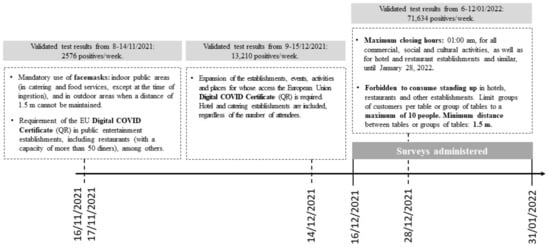
Figure 1.
Survey collection timeline, epidemiological situation, and Basque Country mandates in response to the COVID-19 pandemic (information sources: Servicio Web del Departamento de Salud de Gobierno Vasco (Web service of the Health Department of the Basque Government). Transparencia sobre el Nuevo coronavirus (COVID-19): Datos COVID-19 en Euskadi (Transparency on the new coronavirus [COVID-19]: Data in the Basque Country). https://www.euskadi.eus/boletin-de-datos-sobre-la-evolucion-del-coronavirus/web01-a2korona/es/ (accessed on 1 February 2022); Servicio Web del Departamento de Salud de Gobierno Vasco (Web service of the Health Department of the Basque Government). Transparencia sobre el Nuevo coronavirus (COVID-19): Últimas medidas adoptadas en Euskadi (Transparency on the new coronavirus [COVID-19]: The latest measures adopted in Euskadi). https://www.euskadi.eus/normativa-de-medidas-excepcionales-adoptadas-por-el-nuevo-coronavirus-covid-19/web01-a2korona/es/ (accessed on 1 February 2022)).
A total of 422 students from the three campuses of the UPV/EHU completed the survey, with a participation rate of 1.0%. Qualtrics software (Provo, UT, USA) was used to fill out the questionnaire. The complete online questionnaire was designed to be completed in approximately 20 min on a computer or mobile device. Supplementary Table S2 provides information on the population of the UPV/EHU, the theoretical sample achieved, the real sample obtained, the participation rate by field of education and age, and the weighting coefficient assigned to each participant. No students from the Services field participated in the survey, so it cannot be weighted for this field. The conduct and reporting of this work complies with STROBE-nut guidelines [26] (Supplementary Table S3).
2.3. Development of the Questionnaire
The questionnaire was developed in English through collaboration with all the partners in the FINESCOP consortium—who participated in the selection and consensus of the measurement variables and tools. The selection of variables to be studied was carried out regarding the experiences of other large multicenter studies, e.g., IDEFICS [27], and studies on FI previously conducted by partners of the FINESCOP consortium [28] and by other researchers [14,29].
For the evaluation of FI, the FIES [6] was used, which consisted of eight questions regarding people’s access to adequate food, and which could be easily integrated into several types of population surveys. At the UPV/EHU, we used the Spanish-translated FIES version for the Spanish population, available at the website: https://www.fao.org/in-action/voices-of-the-hungry/using-fies/en/ (accessed on 1 January 2021) (FIES survey module translations.zip).
In addition, the compulsory questionnaire included the following demographic variables: participant’s age, sex, birthplace, and migration status (if applicable); socio-economic variables: employment, income, living arrangements, participation in food assistance programs or other types of food assistance, and parents’ educational level; educational variables: campus, field of education, study level, academic year, teaching modality (campus attended, online only or blended), and scholarships; weight status (body mass index (BMI) calculated from self-reported weight and height data). Scholarships were considered an educational variable, because academic performance, in addition to financial income, was taken into account in their granting.
To better understand the impact of some socio-economic factors, in particular, employment status, income, living arrangements, and scholarships, on FI, the questions referred to before the COVID-19 pandemic and the changes experienced since the beginning of the pandemic. Moreover, it was asked if the changes in employment status, income, and living arrangements were due to the pandemic situation. In those cases, in which respondents reported an increase or decrease in the number of working hours, they were asked to indicate the number, and in the case that respondents reported an increase or decrease in income, they were asked to detail the percentage of this change. The weight status of the subjects was classified according to their BMI using the World Health Organization criteria [30].
All the questions related to demographic, socio-economic, and educational variables were taken from the questionnaires developed and used by Owens et al. [14] and Mahy [31], except the questions related to the migration status [32] and parents’ educational level [33]. The tools that had not been previously validated in languages other than English were translated into the local languages using the parallel translation/double translation method [34]. In the case of the UPV/EHU, they were translated into Spanish and Basque. The participants also answered questions about the impact of the pandemic on aspects related to academic performance, health, and lifestyle. The FINESCOP questionnaire includes a total of 70 items, and eight of them involve open-ended answers.
2.4. Questionnaire Piloting
A pilot study was carried out in five of the eleven participating universities in the FINESCOP project (including the UPV/EHU) before the approval of the final version of the questionnaire. The piloting involved three main phases: (1) early stages of questionnaire development, (2) structured field piloting, and (3) field implementation practice. The result of Phase 1 was a draft paper-based questionnaire in both English and the local language(s). The implementation of Phase 2 followed the Development Impact Evaluation’s survey piloting guide [35], and was structured in three parts: pre-pilot preparation, during piloting, and post-piloting feedback. Finally, the aims of Phase 3 were to practice the implementation of the survey, and to provide feedback and further practice to improve the implementation. The third phase of piloting included small convenient samples of college/university students.
In addition, Phase 3 at the UPV/EHU allowed us to analyze the transcultural adaptation and validation of the questionnaire, through a sample of 37 students who responded to the Spanish version and 37 students who answered to the Basque version, before the actual distribution of the questionnaire. Internal consistency was evaluated for two of the subsections: socio-economic and educational factors. The Cronbach’s α results for socio-economic and educational items in the Spanish version were 0.83 and 0.79, respectively; and in the Basque version they were 0.78 and 0.77, respectively.
2.5. Quality Management of Data and Categorisation of the Open-Ended Answers
Unique subject identification numbers were used and attached to each register. Only completed questionnaires, i.e., those that answered all the questions in the compulsory sections, were included. Data preparation consisted of data cleaning based on traditional approaches, such as identification of inconsistencies, lie scores and response sets. For the data cleaning, the method proposed by Bonillo [36] was used. Regarding the categorization of the open-ended answers of the questionnaire, the manual inductive coding and flat coding frames method was applied [37]. At the UPV/EHU, the coding was done by two coders, where each coder checked the other’s coding to help eliminate cognitive biases.
2.6. Statistical Analysis
Data were analyzed using IBM SPSS Statistics for Windows, version 28.0 (IBM Corp., Armonk, NY, USA). All descriptive statistics are presented as mean and standard deviation (SD) for continuous data, and as a percentage for categorical data. All results were weighted according to age and field of education, to ensure the representativeness of the UPV/EHU university students’ population, using weighting coefficients provided by the list of students enrolled in 2021/22 (data provided by Vice-rectorate of Digital Transformation and Communication of the UPV/EHU).
Differences in continuous variables were assessed with the Mann–Whitney U test (the variables were not normally distributed, because the data were weighted). Categorical variables were analyzed using the Chi-squared test. The FIES variable was categorized into two groups: food-secure (total raw score of 0) and food-insecure (total raw score of 1–8) [6]. We combined the three categories of food insecurity (mild, moderate, and severe), due to the low prevalence of moderate and severe cases.
To facilitate the analysis of associations between predictors and FI, some variables were dichotomized, as was in case of birthplace, migration status, employment, income, living arrangement, participation in food assistance programs/other types of food assistance, parental educational level, level of studies, and scholarships. Binary logistic regression adjusted by sex, age, and campus was used to identify the significant predictors, either as a cause or a consequence of FI. The results are presented in terms of odds ratios (OR), with a 95% confidence interval (CI). Multicollinearity between the independent variables was assessed by using variance inflation factors (VIF) before interpreting the final output, but no variables needed to be excluded.
The following independent variables referring to the situation of the participants were included in this analysis: socio-economic, and educational variables, and weight status. Participants with missing data for the covariates as a separate category were included. The reference categories were those reported in the literature to have a lower FI risk. All tests were 2-sided, and p-values less than 0.05 were considered statistically significant.
3. Results
3.1. Participant Characteristics
Table 1 shows the demographic and socio-economic characteristics of the sample. The average age of the participants was 22.7 (SD 5.5) years, most of them were women, born in Europe, and around 7% were immigrants. Immigrants had been residing in Spain for an average of 15.0 (SD 7.7) years.

Table 1.
Demographic and socio-economic characteristics of the sample: students of the University of the Basque Country UPV/EHU.
The percentage of subjects who had experienced changes in employment status since the pandemic was 36.5%, and 22.9% of them stated that this change was due to the pandemic situation. Among those who responded that they had increased the number of working hours since the start of the pandemic; the average number of weekly hours increased was 14.1 (SD 4.0). Regarding changes in the main source of income, 27.6% had experienced such changes, both increases (13.3%) or decreases (14.3%), and 30.3% of these changes were related to the pandemic situation. The average increase in the main source of income was 60.9% (SD 37.2) and the average decrease in the main source of income was 41.7% (SD 28.1). Most of the participants lived with their parents or other relatives before the COVID-19 pandemic and were not working. The percentage of participants who had experienced changes in their living arrangements since the COVID-19 pandemic was 26.6%, and 14.3% of them stated that these changes were due to the pandemic situation. Finally, most of the parents or legal guardians of the participants had an (upper) secondary education or higher educational level.
Regarding educational characteristics, most of the students were undergraduates (Table 2). The three most frequent fields of education, ordered from highest to lowest, were: “Engineering, industry and construction,” “Business and law,” and “Health and wellness.” In addition, nearly four out of five students received face-to-face teaching. The prevalence of underweight and overweight/obesity was 6.4 and 12.4%, respectively.
Table 2.
Educational characteristics and weight status of the sample: students of the University of the Basque Country UPV/EHU.
3.2. Prevalence and Predictors of FI during the COVID-19 Pandemic
A total of 22.9% of the population had experienced some form of FI during the COVID-19 pandemic, where 19.6% had experienced mild, 2.6% moderate, and 0.7% severe FI. Significant differences in age were found between the food-secure group (22.7 (5.8) years) and the food-insecure group (22.5 (4.1) years) (p < 0.001). Table 3 shows FI according to demographic, socio-economic, educational factors, and weight status. Participants who tended to have FI were males, immigrants, those who had worked before the pandemic, those whose employment status worsened during the pandemic, those who had suffered a decrease in the main source of income during the pandemic, those who did not live with their parents/other relatives, those whose parents/legal guardians had an educational level lower than tertiary education, and those who had lost their scholarship after the onset of the pandemic.
Table 3.
Food (in)security status according to demographic, socio-economic, and educational characteristics, and weight status in the sample: students of the University of the Basque Country UPV/EHU.
The regression analysis showed that the best predictors of FI were a decrease in the main source of income, not receiving scholarships during the pandemic, and not living with parents/relatives before the pandemic (Table 4). Other variables that were also related to FI, although to a lesser extent, were loss of scholarship after the onset of the pandemic, working before the pandemic, worsening of the employment status during the pandemic, parents/legal guardians had lower than tertiary education, and being an undergraduate student (as opposed to postgraduate). It should be noted that most of those living with parents/relatives were not working before the pandemic. Among those who lived with their parents, 76.3% did not work, and 23.7% did, while, among those with other type of living arrangement, 55.2% did not work, and 44.8% did (p < 0.001).
Table 4.
Predictors, either as a cause or as a consequence of food insecurity during the COVID-19 pandemic in the sample: students of the University of the Basque Country UPV/EHU.
However, participation in food assistance programs/other strategies and a decrease in other sources of income were associated with a lower risk of FI. Regarding the latter result, it is noteworthy that there was no significant difference in the percentage decrease of the other sources of income between those who were classified as food-insecure and food-secure (44.3 (5.0) vs. 51.1 (39.1), p = 0.05). However, the percentage of decrease in the main source of income was greater in those who were classified as food-insecure than in those who were food-secure (49.7 (30.5) vs. 37.1 (25.6), p < 0.001).
4. Discussion
This study sought to assess the prevalence and predictors of FI among university students from a Spanish public university, during the COVID-19 pandemic. We found that about one in four university students experienced FI during the pandemic. The high rates of FI reported in the current study appear to be driven by economic predictors, such as a decrease in the main source of income during the pandemic, and by other factors related, at least in part, to socio-economic status, such as not receiving scholarships during the pandemic, and living arrangements before the pandemic (not living with parents/relatives).
The prevalence of FI experienced by this population (22.9%) is consistent with previous research (19%−62.8%) conducted among a combination of under- and postgraduate students [11,14,38,39,40]. The prevalence of FI in our sample was comparable to the estimated U.S. college prevalence of 19% in 2019 [11], and that estimated among Portuguese university students (17.3%) during the pandemic [22]. However, it was considerably lower than the prevalence found by other previously mentioned studies carried out during the pandemic [14]. The discrepancy with data from the U.S.A. during the pandemic, could be due, in part, to differences in sample characteristics (e.g., age, ethnic groups, field of education, living arrangement, among others) and methodological factors, making direct comparisons difficult. For example, some of the studies carried out in college/university students have typically not included the use of a screener (e.g., the two-item Food Sufficiency Screener), using only the six-item U.S. Department of Agriculture Food Security Module (FFSM) to assess FI [38,39,40]. At the same time, our rates of FI were higher than those reported in the Spanish households (~13%) during the COVID-19 pandemic using the FIES scale [7]. In this regard, prior to the COVID-19 pandemic, studies had consistently showed that college students had higher rates of FI than non-student U.S. households [10,11,29].
Given the limitations associated with comparisons to prior work and the nature of our study design, it is unclear if FI in university students increased during the COVID-19 pandemic. However, given the impact of the prolonged COVID-19 pandemic on household’s FI in Spain [7] and in other low- and middle-income countries [41], and higher rates of FI reported by students whose main source of income decreased during the pandemic in the current study, we believe that FI may have increased among university students during the COVID-19 pandemic. In this regard, other authors have observed an important increase in the percentage of the American college students who experienced FI during the pandemic, with an increase of 22.6% in the percentage of students who became more food-insecure after the onset of COVID-19 [42].
In the current study, one characteristic that was associated with FI during the COVID-19 pandemic was the decrease in the main source of income. Approximately one in ten students reported that their income decreased during the COVID-19 pandemic; these students had 2.80 greater odds of being food-insecure compared to students who did not experience a decline in their main income. These findings were consistent with previous studies showing that low income is an important determinant of FI [12,39], and, at the same time, they were consistent with the association observed in the current study between FI and other socio-economic variables (scholarships, employment status, and educational level of parents/legal guardians). Specifically, in the present study, working before the pandemic and having suffered a worsening of employment status during the pandemic were associated with a higher risk of FI. In this sense, Patton-López et al. [12] have also observed among students, that being employed was associated with FI with a similar increased risk (OR, 1.73; 95% CI, 1.04–2.88) as that described in the present study (OR, 1.58; 95% CI, 1.45, 1.73), although the percentage of students combining studies with work at the sample studied by Patton-López et al. [12] was higher than that obtained at the UPV/EHU (50.3% vs. 26.7%). Owens et al. [14] have also found that students whose current employment was directly affected by the COVID-19 pandemic were more likely to be food-insecure.
In any case, the impact of the COVID-19 pandemic on unemployment or lack of resources and FI is not exclusive to college/university students [7,15]. It is likely that the pandemic also affected the parents or legal guardians of the surveyed students and, consequently, the FI of households. In fact, in a recent study on FI among Portuguese university students [22], it was found that households with a high number of unemployed members were more likely to be food-insecure. In the Spanish population, unemployment increased from 13.7% in February 2020 to 15.8% in June 2020 [43], with an increase in FI of 1.4% [7]. This rise in unemployment and FI was met with increased unemployment benefits, expanded food assistance programs, and other types of aid for disadvantaged people. However, many university students were not eligible for these emergency assistance programs that brought food and financial assistance to struggling people during the pandemic, because they were considered dependent on their parents’ tax returns. In addition to eligibility requirements, other reasons for the low participation of students in food assistance programs may have been application burden and stigma [44]. Indeed, despite the fact that about one in four university students experienced FI during the COVID-19 pandemic, less than 1% of students reported current participation in food assistance programs, while 2.7% turned to their parents/family/friends for food assistance or used other strategies for improving their access to food. Therefore, as other authors have previously pointed out [45], student-centered intervention strategies are necessary.
It should also be noted that the Basque Government provides scholarships to students to pay for tuition and transportation if necessary. Having a low income is not the only requirement to receive this scholarship, and academic requirements must also be met. It may be that the decrease in academic performance justified the loss of scholarships during the pandemic, and that such a loss is related to the FI. However, no data are available in the present study to confirm whether the decline in academic performance was the reason for the loss of the scholarship. It should also be noted that the rising cost of college attendance has outpaced the financial aid that students receive [46]; coupled with the shifting demographics of university enrolment, these financial constraints have created a more economically vulnerable student body, and are key factors underlying the substantial socio-economic disparities in degree completion [47].
The socio-economic factors (including the social, economic, and cultural situation of the student’s family, or their own in case they are independent of their families) are some of the main reasons reported for dropping out prior to obtaining a higher education degree [47]. At the institution where the current study was conducted, the number of reintegrated assistance to students who could not afford tuition was more than double in the academic year in which the COVID-19 pandemic was declared (2019/20, n = 60) compared to the previous academic year (2018/19, n = 29) (data provided by the Vice-Rectorate for Student Affairs and Employability of the UPV/EHU), although this figure was reduced the following academic year (2020/21, n = 22).
Another characteristic associated with FI during COVID-19 among UPV/EHU students was the living arrangement before the pandemic. Compared to students who lived with parents or other relatives, students with other living arrangements had greater odds of being food-insecure. These findings agree with those reported by Owens et al. [14], who found that students who lived with parents or other relatives during the pandemic had lower odds of being food-insecure than students who lived alone. Our results were also in agreement with those of Bruening et al. [48], who found that students whose parents did not regularly send/purchase food for them were more likely to report FI. Although other studies have found an association between changes in housing and change in raw food security status score after the onset of COVID-19 [40], we did not find this association. In the current study, about one in four university students (26.6%) experienced some change in their housing situation, however, there was no difference in the food security situation between those who moved compared to those who did not move. This difference could be due to sociocultural aspects of the samples and/or differences in the sample sizes. In this sense, a high percentage of UPV/EHU students (69.1%) lived with their parents or relatives before the pandemic. These data agree with those of Spanish university students (56%) and indicate higher values than their European counterparts [49]. It is probable that this late emancipation of the UPV/EHU university students was conditioned by economic reasons and by the proximity of the campuses to the family residence. Living close to parents is a key factor for Spanish students when choosing a university [49].
This study has several strengths. To start with, we used a validated scale, the FIES, a direct measure of the experience of FI, which in turn can be analyzed together with indicators of its determinants and consequences to contribute to a more comprehensive understanding and inform more effective policies and interventions [3]. Moreover, demographic, socio-economic, and educational characteristics were collected, underlining associations with FI after the onset of COVID-19. Furthermore, the addition of questions related to changes in living arrangements, employment status, and incomes, as well as participation in any type of food assistance program, provided better insight into the main driving factors of FI during this pandemic.
This study also has several limitations. First, this survey was cross-sectional and, as such, does not provide causality that the prevalence of FI observed in our sample was exclusively the result of the COVID-19 pandemic. However, given the predictive power of decreasing the main source of income and/or not receiving scholarships during the pandemic on FI in our survey sample, we believe that the COVID-19 pandemic is a likely contributor to the observed high rates of FI.
In addition, a convenience sample from a university was used, which was not fully representative of all university students at the institution where the study was conducted. Survey respondents could choose whether to participate in the survey, which may have introduced selection bias. However, the authors weighted the sample according to age and field of education to account for these discrepancies. Thirdly, the survey response rates were low. A potential contributor to the low response rates in the current study could be the timing of our survey. The survey request was emailed to students at the end of the first quadrimester (mid-December) when many students were busy doing homework and/or studying for final exams. In any case, similarly, low response rates have been reported by other investigators assessing FI prevalence in college and university students [50].
Fourthly, the survey included questions asking students to recall their food security situation over the past 12 months and other related aspects before and after the onset of COVID-19. Students may have experienced recall bias when answering these questions. Moreover, all items were self-reported and may have been prone to recall and social desirability biases, as well as misinterpretation of the questions. Finally, there were other predictors of food security that were not assessed in this study, including nutrition and food literacy [10,18]. It is plausible that poor cooking skills, food shortages, and fear of grocery shopping may have contributed to FI among university students. As such, future studies are needed to explore how the COVID-19 pandemic impacted food accessibility, food selection, food preparation, and overall dietary quality in university students. Despite these limitations, this study yields important contributions to the field, particularly given the paucity of research to date on the issue of FI among European university students.
5. Conclusions
In conclusion, this study found a high prevalence of FI among students surveyed at a southern European university during the COVID-19 pandemic. The strongest predictors of FI in this population were related to the socio-economic status, changes in the main source of income, receiving a scholarship during the pandemic, and student emancipation before the pandemic.
A robust, comprehensive policy response is needed to mitigate FI in this population of university students. In this sense, it is important that policies are enacted at the university, community, and/or state level to alleviate the financial and health burden that university students are facing currently. Additional research is needed to ensure that interventions increase food security and ultimately improve their overall health. In addition, it is necessary to include the measurement of the levels of FI at the tertiary education level to monitor the state of access to sustainable food and how it is guaranteed, promoting solutions aimed at people.
Supplementary Materials
The following supporting information can be downloaded at: https://www.mdpi.com/article/10.3390/nu15081836/s1, Table S1: Findings of other studies on the prevalence of food insecurity among students of higher education, before and during the COVID-19 pandemic; Table S2: Population and sample of the University of the Basque Country UPV/EHU by field of education and age; Table S3: STROBE-nut: An extension of the STROBE statement for nutritional epidemiology.
Author Contributions
This study was conceived and designed by M.A.-I., L.E.T., L.G.-I. and N.M.-P., L.G.-I. designed the data collection tool. M.A.-I., R.G.-P. and N.M.-P. designed and conducted the analysis for this paper. M.A.-I., R.G.-P., L.G.-I. and N.M.-P. wrote the first draft of the manuscript. All authors (R.G.-P., L.G.-I., N.M.-P., N.T.-A., S.T., S.P., L.E.T. and M.A.-I.) contributed to the final manuscript and are responsible for the final content. All authors have read and agreed to the published version of the manuscript.
Funding
This research was supported by the Vice Rectorate of Scientific and Social Development and Transfer of the UPV/EHU, funded by the contract program formalized with the Basque Government (code of the Campus Bizia Lab project: 21ARRO and 22ARRO). BIOMICs Research Group is supported by the Basque Government (No. IT1633-22). Open Access funding is provided by the UPV/EHU and OsloMet.
Institutional Review Board Statement
The study was conducted in accordance with the Declaration of Helsinki, and approved by the Ethics Committee for Research Involving Human Subjects (CEISH) of the University of the Basque Country (M10_2021_185).
Informed Consent Statement
Informed consent was obtained from all subjects involved in the study.
Data Availability Statement
Data are to be made available only via a request to the corresponding author. Data will be provided only after the acceptance and signature of a formal data sharing agreement.
Acknowledgments
The authors thank the participants enrolled in this survey for their participation. In addition, they are grateful to the UPV/EHU’s Social Psychology Research team (its full name is: Consolidated Research Group in Social Psychology: Culture, Cognition, and Emotion, grant number Ref. IT-1187-19) which allowed them to use the license of the application Qualtrics. Moreover, they want to acknowledge all the researchers of the project that funded this investigation for its collaboration (by alphabetical order according to the first surname): L. Ansotegui Alday, I. Hernández Pintor, P. Insúa Cerretani, E. Mateos Pérez, M. Mtz. de Pancorbo, M. Orive Calzada, E. Rebato Ochoa, and A. M. Rocandio Pablo; and all the researchers of the Food Insecurity among European University Students during the COVID-19 Pandemic (FINESCOP) project.
Conflicts of Interest
The authors declare no conflict of interest.
References
- United States Department of Agriculture Economic Research Service (USDA). Definitions of Food Security. 2020. Available online: https://www.ers.usda.gov/topics/food-nutrition-assistance/food-security-in-the-us/definitions-of-food-security.aspx (accessed on 5 May 2022).
- Niles, M.T.; Bertmann, F.; Belarmino, E.H.; Wentworth, T.; Biehl, E.; Neff, R. The Early Food Insecurity Impacts of COVID-19. Nutrients 2020, 12, 2096. [Google Scholar] [CrossRef] [PubMed]
- Food and Agriculture Organization of the United Nations (FAO). The State of Food Security and Nutrition in the World 2020. 2020. Available online: https://www.fao.org/publications/sofi/2021/es/ (accessed on 5 May 2022).
- Coleman-Jensen, A.; Rabbitt, M.P.; Gregory, C.A.; Singh, A. Household Food Security in the United States in 2018; United States Department of Agriculture, Economic Research Service: Washington, DC, USA, 2019. Available online: https://www.ers.usda.gov/webdocs/publications/94849/err-270.pdf?v=2321.7 (accessed on 20 February 2022).
- Loopstra, R.; Reeves, A.; Stuckler, D. Rising food insecurity in Europe. Lancet 2015, 385, 2041. [Google Scholar] [CrossRef] [PubMed]
- Ballard, T.J.; Kepple, A.W.; Cafiero, C. The Food Insecurity Experience Scale: Developing a Global Standard for Monitoring Hunger Worldwide; FAO: Italy, Rome, 2013; Available online: https://www.fao.org/documents/card/es/c/1f25bb40-7c4e-49e0-b79b-4d8b5e6354b5/ (accessed on 3 May 2022).
- Moragues Faus, A.; Magaña González, C.R. Alimentando un Futuro Sostenible: Estudio Sobre la Inseguridad Alimentaria antes y Durante la COVID-19 [Feeding a Sustainable Future: Study on Food Insecurity before and during COVID-19]; Universidad de Barcelona y Fundación Daniel y Nina Carasso: Barcelona, Spain, 2022; Available online: https://www.ub.edu/alimentandounfuturosostenible/documents/informe-alimentacion_una-pag.pdf (accessed on 18 April 2022).
- Bruening, M.; Argo, K.; Payne-Sturges, D.; Laska, M.N. The struggle is real: A systematic review of food insecurity on postsecondary education campuses. J. Acad. Nutr. Diet. 2017, 117, 1767–1791. [Google Scholar] [CrossRef] [PubMed]
- Nikolaus, C.J.; An, R.; Ellison, B.; Nickols-Richardson, S.M. Food insecurity among college students in the United States: A scoping review. Adv. Nutr. 2020, 11, 327–348. [Google Scholar] [CrossRef]
- Moore, C.E.; Davis, K.E.; Wang, W. Low food security present on college campuses despite high nutrition literacy. J. Hunger. Environ. Nutr. 2021, 16, 611–627. [Google Scholar] [CrossRef]
- El Zein, A.; Shelnutt, K.P.; Colby, S.; Vilaro, M.J.; Zhou, W.; Greene, G.; Olfert, M.D.; Riggsbee, K.; Morrell, J.S.; Mathews, A.E. Prevalence and correlates of food insecurity among U.S. college students: A multi-institutional study. BMC Public Health 2019, 19, 660. [Google Scholar] [CrossRef]
- Patton-López, M.M.; López-Cevallos, D.F.; Cancel-Tirado, D.I.; Vazquez, L. Prevalence and correlates of food insecurity among students attending a midsize rural university in Oregon. J. Nutr. Educ. Behav. 2014, 46, 209–214. [Google Scholar] [CrossRef]
- Adamovic, E.; Newton, P.; House, V. Food insecurity on a college campus: Prevalence, determinants, and solutions. J. Am. Coll. Health 2022, 70, 58–64. [Google Scholar] [CrossRef]
- Owens, M.R.; Brito-Silva, F.; Kirkland, T.; Moore, C.E.; Davis, K.E.; Patterson, M.A.; Miketinas, D.C.; Tucker, W.J. Prevalence and social determinants of food insecurity among college students during the COVID-19 pandemic. Nutrients 2020, 12, 2515. [Google Scholar] [CrossRef]
- Wolfson, J.A.; Leung, C.W. Food Insecurity and COVID-19: Disparities in early effects for US adults. Nutrients 2020, 12, 1648. [Google Scholar] [CrossRef]
- Dickler, J. Demand for Refunds Intensifies among College Students. CNBC. 2020. Available online: https://www.cnbc.com/2020/05/06/demand-for-refunds-intensifies-among-college-students.html (accessed on 5 April 2022).
- Kamenetz, A. When Colleges Shut Down, Some Students Have Nowhere to Go. NPR. 2020. Available online: https://www.npr.org/2020/03/17/816579130/when-colleges-shut-down-some-students-have-nowhere-to-go (accessed on 10 April 2022).
- Begley, A.M.; Paynter, E.; Butcher, L.M.; Dhaliwal, S.S. Examining the association between food literacy and food insecurity. Nutrients 2019, 11, 445. [Google Scholar] [CrossRef]
- Treisman, R. New SNAP Rule Impacts College Students by Limiting Benefits and Adding Confusion. NPR. 2019. Available online: https://www.npr.org/2019/12/21/789295697/new-snap-rule-impacts-college-students-by-limiting-benefits-and-adding-confusion (accessed on 20 April 2022).
- Theodoridis, X.; Grammatikopoulou, M.G.; Gkiouras, K.; Papadopoulou, S.E.; Agorastou, T.; Gkika, I.; Maraki, M.I.; Dardavessis, T.; Chourdakis, M. Food insecurity and Mediterranean diet adherence among Greek university students. Nutr. Metab. Cardiovasc. Dis. 2018, 28, 477–485. [Google Scholar] [CrossRef]
- Faculty of Health and Life Sciences, Northumbria University, Newcastle, UK. University Students Facing Food Insecurity Due to Pandemic. 2021. Available online: https://www.northumbria.ac.uk/about-us/news-events/news/university-students-facing-food-insecurity-due-to-pandemic/ (accessed on 15 May 2021).
- Marques, B.; Azevedo, J.; Rodrigues, I.; Rainho, C.; Gonçalves, C. Food insecurity levels among university students: A cross-sectional study. Societies 2022, 12, 174. [Google Scholar] [CrossRef]
- Mihrshahi, S.; Dharmayani, P.N.A.; Amin, J.; Bhatti, A.; Chau, J.Y.; Ronto, R.; Turnip, D.; Taylor, M. Higher prevalence of food insecurity and psychological distress among international university students during the COVID-19 pandemic: An Australian perspective. Int. J. Environ. Res. Public Health 2022, 19, 14101. [Google Scholar] [CrossRef]
- Gundersen, C. Understanding Food Insecurity in the USA and Canada: Potential Insights for Europe. World. Rev. Nutr. Diet 2016, 115, 54–60. [Google Scholar] [CrossRef]
- Hervada Vidal, X.; Santiago Pérez, M.I.; Vázquez Fernández, E.; Castillo Salgado, C.; Loyola Elizondo, E.; Silva Ayçaguer, L.C. Epidat v. 3.1: Análisis Epidemiológico de Datos Tabulados (Epidat v. 3.1: Epidemiological Analysis of Tabulated Data); Xunta de Galicia: A Coruna, Spain, 2006. [Google Scholar]
- Lachat, C.; Hawwash, D.; Ocké, M.C.; Berg, C.; Forsum, E.; Hörnell, A.; Larsson, C.; Sonestedt, E.; Wirfält, E.; Åkesson, A.; et al. Strengthening the Reporting of Observational Studies in Epidemiology-Nutritional Epidemiology (STROBE-nut): An Extension of the STROBE Statement. PLoS Med. 2016, 13, e1002036. [Google Scholar] [CrossRef]
- Ahrens, W.; Bammann, K.; Siani, A.; Buchecker, K.; De Henauw, S.; Iacoviello, L.; Hebestreit, A.; Krogh, V.; Lissner, L.; Mårild, S.; et al. The IDEFICS cohort: Design, characteristics and participation in the baseline survey. Int. J. Obes. 2011, 35 (Suppl. 1), S3–S15. [Google Scholar] [CrossRef]
- Zaçe, D.; Hoxhaj, I.; Pasciuto, T.; D’Anna, R.; Straface, G.; Reali, L.; De Santis, M.; Di Pietro, M.L. Association of maternal food insecurity before and during pregnancy with fetal structural anomalies: A multicenter case-control study protocol. Nutr. Health 2021, 27, 265–271. [Google Scholar] [CrossRef]
- Nikolaus, C.J.; Ellison, B.; Nickols-Richardson, S.M. Are estimates of food insecurity among college students accurate? Comparison of assessment protocols. PLoS ONE 2019, 14, e0215161. [Google Scholar] [CrossRef]
- WHO Consultation on Obesity (1999: Geneva, Switzerland) & World Health Organization. Obesity: Preventing and Managing the Global Epidemic. Report of a WHO Consultation; World Health Organization: Geneva, Switzerland, 2000; Available online: https://apps.who.int/iris/handle/10665/42330 (accessed on 25 October 2016).
- Mahdy, M.A.A. The Impact of COVID-19 Pandemic on the Academic Performance of Veterinary Medical Students. Front. Vet. Sci. 2020, 7, 594261. [Google Scholar] [CrossRef]
- United Nations Expert Group on Migration Statistics. Standard Questions on International Migration; UN Statistics Division: New York, NY, USA, 2018; Available online: https://unstats.un.org/unsd/demographic-social/migration-expert-group/methodology/Standard%20set%20of%20migration%20questions.pdf (accessed on 7 May 2022).
- International Standard Classification of Education (ISCED). Overview of the International Standard Level of Education [ISLED], ESS-R1-R4. Available online: http://www.harryganzeboom.nl/isled/isled_ESS1234.pdf (accessed on 12 May 2021).
- Tsang, S.; Royse, C.F.; Terkawi, A.S. Guidelines for developing, translating, and validating a questionnaire in perioperative and pain medicine. Saudi, J. Anaesth. 2017, 11 (Suppl. 1), S80–S89. [Google Scholar] [CrossRef] [PubMed]
- World Bank. Development Impact Evaluation’s Survey Piloting Guide. Available online: https://dimewiki.worldbank.org/Survey_Pilot (accessed on 21 June 2021).
- Bonillo, A. Sistematización del Proceso de Duración de los Datos en Estudios con Seguimientos [Systematization of the Data Duration Process in Studies with Follow-Ups]; Universidad Autónoma de Barcelona: Barcelona, Spain, 2023; Available online: https://www.tdx.cat/bitstream/handle/10803/5481/abm1de1.pdf?sequence=1 (accessed on 8 March 2022).
- Medelyan, A. Coding Qualitative Data: How to Code Qualitative Research. Available online: https://getthematic.com/insights/coding-qualitative-data/ (accessed on 12 March 2022).
- Raskind, I.G.; Haardörfer, R.; Berg, C.J. Food insecurity, psychosocial health and academic performance among college and university students in Georgia, USA. Public Health Nutr. 2019, 22, 476–485. [Google Scholar] [CrossRef] [PubMed]
- Sackey, J.D.; Pike, K.; Rothpletz-Puglia, P.; Brody, R.; Touger-Decker, R. Food Insecurity Among Health Sciences Graduate Students at a Large Northeastern University. J. Nutr. Educ. Behav. 2021, 53, 428–433. [Google Scholar] [CrossRef]
- Ahmad, N.S.S.; Sulaiman, N.; Sabri, M.F. Food Insecurity: Is It a Threat to University Students’ Well-Being and Success? Int. J. Environ. Res. Public Health 2021, 18, 5627. [Google Scholar] [CrossRef] [PubMed]
- Knowledge Centre for Global Food and Nutrition Security. COVID-19 and food and nutrition security. Available online: https://knowledge4policy.ec.europa.eu/global-food-nutrition-security/topic/covid-19-food-nutrition-security_en (accessed on 17 May 2022).
- Mialki, K.; House, L.A.; Mathews, A.E.; Shelnutt, K.P. Covid-19 and College Students: Food Security Status before and after the Onset of a Pandemic. Nutrients 2021, 13, 628. [Google Scholar] [CrossRef]
- Desempleo de España. Available online: https://datosmacro.expansion.com/paro/espana?dr=2020-02 (accessed on 11 May 2022).
- Freudenberg, N.; Manzo, L.; Mongiello, L.; Jones, H.; Boeri, N.; Lamberson, P. Promoting the health of young adults in urban public universities: A case study from City University of New York. J. Am. Coll. Health 2013, 61, 422–430. [Google Scholar] [CrossRef]
- Freudenberg, N.; Goldrick-Rab, S.; Poppendieck, J. College Students and SNAP: The New Face of Food Insecurity in the United States. Am. J. Public Health 2019, 109, 1652–1658. [Google Scholar] [CrossRef]
- Sánchez Caballero, D. El coste de Estudiar en la Universidad Pública ha Subido 12 veces más que los Salarios [The Cost of Studying at a Public University Has Risen 12 Times More Tan Wages]. 2019. Available online: https://www.eldiario.es/sociedad/estudiar-universidad-encarecido-empezo-salarios_1_1445811.html (accessed on 12 May 2022).
- Fernández-Mellizo, M. Análisis del Abandono de los Estudiantes de Grado en las Universidades Presenciales en España [Analysis of Academic Dropout in Undergraduate Students in Fase-to-Face Universities in Spain]; Ministerio de Universidades: Madrid, Spain, 2022; Available online: https://www.universidades.gob.es/stfls/universidades/ministerio/ficheros/Informe_Abandono_Universitario_completo_MFMS.pdf (accessed on 13 May 2022).
- Bruening, M.; Brennhofer, S.; van Woerden, I.; Todd, M.; Laska, M. Factors Related to the High Rates of Food Insecurity among Diverse, Urban College Freshmen. J. Acad. Nutr. Diet 2016, 116, 1450–1457. [Google Scholar] [CrossRef]
- Sodexo. The Sodexo International University Lifestyle Survey. 2017. Available online: https://us.sodexo.com/industry/campus/sls.html (accessed on 12 May 2022).
- Silva, M.R.; Kleinert, W.L.; Sheppard, A.V.; Cantrell, K.A.; Freeman-Coppadge, D.J.; Tsoy, E.; Roberts, T.; Pearrow, M. The relationship between food security, housing stability, and school performance among college students in an urban university. J. Coll. Stud. Ret. 2017, 19, 284–299. [Google Scholar] [CrossRef]
Disclaimer/Publisher’s Note: The statements, opinions and data contained in all publications are solely those of the individual author(s) and contributor(s) and not of MDPI and/or the editor(s). MDPI and/or the editor(s) disclaim responsibility for any injury to people or property resulting from any ideas, methods, instructions or products referred to in the content. |
© 2023 by the authors. Licensee MDPI, Basel, Switzerland. This article is an open access article distributed under the terms and conditions of the Creative Commons Attribution (CC BY) license (https://creativecommons.org/licenses/by/4.0/).