


Highlights
What are the main findings?
- Simulated PolCube-polarized radiances are highly sensitive to fine-dominated aerosols (e.g., sulfate and smoke), primarily due to distinct polarized radiance shapes at backscattering angles.
- The theoretical error analysis based on the Bayesian theorem revealed that the SMART-P algorithm, using PolCube-polarized radiances, can retrieve τaer, n, and Fnum with sufficient sensitivity compared with radiance-only measurements.
- Increased aerosol loading significantly enhances sensitivity to k, while reducing information content for τaer due to interference from enhanced absorption.
What are the implications of the main findings?
- PolCube aerosol products retrieved by SMART-P provide insights into aerosol microphysical properties related to particle composition.
- The SMART-P algorithm will support the operation of the PolCube onboard the BusanSat-B from 2026, providing aerosol optical properties for climate and air quality studies.
Abstract
The SMART-P (Spectral Measurements for Atmospheric Radiative Transfer–Polarimeter) algorithm was developed to retrieve aerosol and ocean parameters from PolCube measurements. The PolCube is a multi-angular polarimeter (MAP) aboard the BusanSat-B CubeSat scheduled for launch in 2026, which measures polarized radiances at 410, 555, 670, and 865 nm from four viewing angles. This study presents the theoretical basis of the algorithm and conducts a sensitivity analysis of aerosol inversions over the ocean processed by SMART-P under the expected measurement conditions for PolCube observations. The results indicate that the degree of linear polarization (DoLP) significantly increases the information content of the real part of the refractive index and of the fine-mode particle-size parameters relative to radiance-only measurements. Enhanced measurement sensitivity enables more accurate retrieval of fine-dominated aerosol properties, such as smoke and sulfate. The sensitivity analysis also shows that the ocean surface reflectivity is the most critical forward-model parameter affecting aerosol-property retrievals. The SMART-P algorithm will support the BusanSat-B mission to understand the role of aerosol particles in the climate system and air quality.
1. Introduction
As aerosol sources become more diverse and their lifetimes vary, their chemical and physical compositions have become increasingly heterogeneous, thereby complicating the understanding of the Earth system [1,2]. In particular, reliable information on the atmosphere (e.g., meteorology and composition) and the ocean (e.g., chlorophyll concentration and turbidity) globally is essential for understanding their interaction [3]. For example, when dust aerosols, composed of minerals and iron, are transported into the ocean, local biogeochemical processes (e.g., chlorophyll) change. Gao et al. (2001) reported that the Oceans in the Northern Hemisphere are seasonally affected by atmospheric particles (e.g., from the Saharan Desert, Africa) [4]. In contrast, the impact is smaller in the Southern Hemisphere due to lower aerosol concentrations [4]. In addition, aerosols themselves play a critical role in our understanding of climate systems, particularly through their influence on direct and indirect radiative forcing, which is quantified by their physicochemical properties, including particle-size distribution (PSD), morphology, and complex refractive indices [5,6].
Satellite data are essential, as they provide information on aerosols and the ocean over the globe [5,7]. Previous satellite-based aerosol remote sensing techniques utilized reflected solar radiances measured by various multi-channel sensors such as Moderate-Resolution Imaging Spectroradiometers (MODIS) and Visible Infrared Imaging Radiometer Suite (VIIRS). The aerosol-retrieval heritage from the Deep Blue [8] and Dark Target [9] algorithms has been applied over both land and ocean. They have successfully provided reliable long-term records on aerosol burden for climate and air quality research [10,11]. In addition, continuous efforts have focused on improving the algorithm not only to reduce uncertainties, but also to extend aerosol parameters (i.e., Aerosol Layer Height, ALH, and Single Scattering Albedo, ω0) by combining multiple satellite measurements [12].
Despite considerable efforts, aerosol remote sensing has limitations in accurately retrieving microphysical aerosol properties from radiance measurements. Even with observations from multiple angles (e.g., Multi-angle Imaging Spectro Radiometer, MISR), measurement sensitivity remains insufficient to derive information on major aerosol optical properties [13,14]. As an additional source of information, linear polarization can provide unique insights into aerosol properties. Unlike radiance, polarization shows distinct scattering phase function characteristics and is more sensitive to aerosol particle size, shape, and complex refractive indices [15,16,17,18]. The benefits of multi-angular polarimeter (MAP) measurements in aerosol property retrievals have been reported in previous studies [14,19,20,21]. Hasekamp (2010) demonstrated that the reduction in retrieval errors of aerosol properties with the number of measurement types and viewing angles [19]. Knobelspiesse and Nag (2018) further showed that information content increases when polarization is used in aerosol retrieval over the ocean [20].
Over the years, various MAPs have been developed. The use of polarimeters began with the Polarization and Directionality of the Earth’s Reflectances (POLDER) generations, which operated from 1996 to 2013 [22]. This heritage continued with the Aerosol Polarimetry Sensor (APS) on the National Aeronautics and Space Administration (NASA)’s Glory mission [17]. After a gap in the launch of polarimetric instruments, the Directional Polarimetric Camera (DPC) series was launched by China in 2018 and 2021 [23]. Then, two passive multi-angular polarimeters were launched in February 2024 as part of the Plankton, Aerosol, Cloud, ocean Ecosystem (PACE) mission [21]. These include the Hyper-Angular Rainbow Polarimeter 2 (HARP2) from the University of Maryland, Baltimore County (UMBC), and the Spectro-polarimeter for Planetary Exploration one (SPEXone) from the Space Research Organization Netherlands (SRON) [24]. HARP2 is influenced by the AirHARP and CubeSat HARP instruments [25,26]. The Multi-Angle Imager for Aerosols (MAIA), which operates in targeting mode, is scheduled for launch in the near future [27].
Alongside these developments, the PolCube polarimeter [28], which is onboard the BusanSat-B, was developed through international collaboration and is scheduled for launch in 2026. PolCube’s unique feature is its four viewing angles, enabled by two cameras that support dual-angle observations and operate in two modes: nadir and forward-looking [29]. It measures radiance and linear polarization across four channels in the visible and near-infrared (NIR) spectrum (i.e., 410, 555, 670, and 865 nm). Before its space deployment, an airborne campaign was conducted with the airborne version of PolCube (hereafter Air–PolCube). Air–PolCube was flown over the two major target regions (i.e., Busan and Incheon, South Korea) and showed qualitative agreement with the VIIRS Deep Blue aerosol product [30]. We anticipate that these datasets will enhance synergy with current and future satellite Earth observation missions in polar and geostationary orbits, including VIIRS, MODIS, and the Geostationary Environment Monitoring Spectrometer (GEMS).
Several algorithms have been developed to retrieve aerosol properties from MAP observations, each tailored to specific instrument characteristics. The Generalized Retrieval for Aerosol and Surface Properties (GRASP), designed for multi-pixel retrieval, has been successfully applied to POLDER3 [31,32,33]. SRON developed the Remote sensing of Trace gas and Aerosol Products (RemoTAP) algorithm, adapted for SPEXone aerosol retrievals [34,35]. This algorithm employs a coupled-retrieval approach integrated with a deep neural network to replace the radiative transfer model in retrieval. It is designed to handle large volumes of data from its multispectral, multi-angle observations. Initial retrieval results demonstrated promising performance [36]. NASA’s Goddard Space Flight Center (GSFC) has developed the Fast Multi-Angular Polarimetric Ocean coLor (FastMAPOL) algorithm, based on a neural network for HARP2 observations [37,38]. The Microphysical Aerosol Properties from Polarimetry (MAPP) algorithm at NASA Langley Research Center (LaRC) employs a joint-retrieval approach, using data from both the HARP2 and SPEXone sensors [39].
This study aims to establish the theoretical basis for the SMART-P (Spectral Measurements for Atmospheric Radiative Transfer–Polarimeter) algorithm, developed to process PolCube measurements operated by Busan Metropolitan City, South Korea. The SMART algorithm, initially developed by NASA’s GSFC, is based on the optimal-estimation method (OEM) [6,40], which aims to extract maximum information from measurements with minimal assumptions [6]. In this study, we assessed the expected accuracy of PolCube aerosol products using theoretical experiments, in preparation for operations in 2026. Section 2 outlines the theoretical background and experimental methods. In Section 3, we demonstrate the expected accuracy of the PolCube aerosol products using the OEM. Section 4 summarizes the overall results.
2. Methods
2.1. Generations of PolCube Synthetic Polarized Radiances
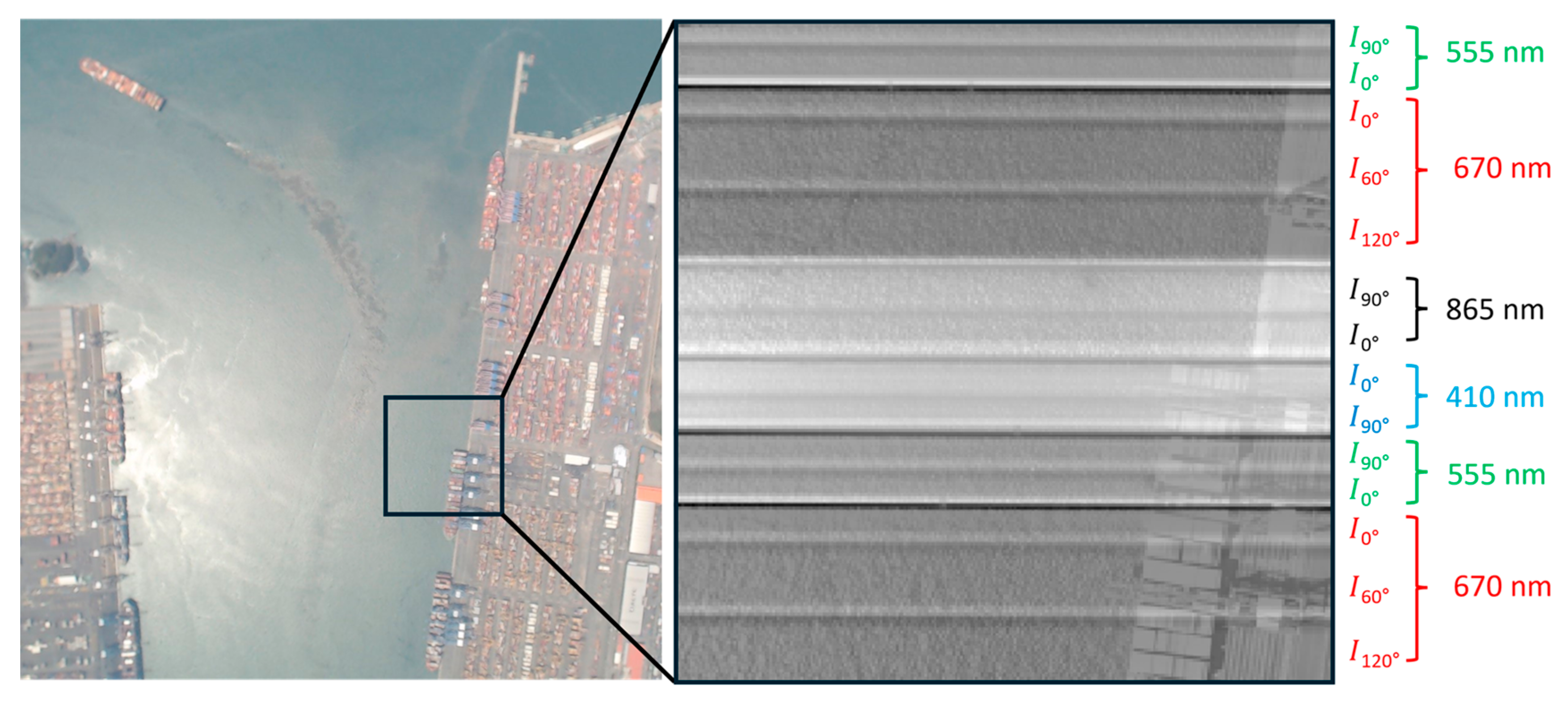
The PolCube is a 12U CubeSat, multi-angle, multi-band push-broom imaging polarimeter. It is designed to measure radiance and linear polarization at four bands: 410, 555, 670, and 865 nm, each with a full width at half maximum (FWHM) of 20 nm. Polarization states are collected at I0° and I90° for the 410, 555, and 865 nm bands, and at I0°, I60°, and I120° for the 670 nm band. By leveraging the spacecraft’s attitude control system, PolCube can capture data from four distinct viewing angles. PolCube’s required radiometric and degree of linear polarization (DoLP) uncertainties are 2% and 0.5%, respectively. Before its launch, an Engineering Qualification Model onboard an airplane (hereafter Air–PolCube), flew over two major port cities, Busan and Incheon, in South Korea from 8 to 10 May 2024. Figure 1 shows an RGB image and a sample of raw data captured during the flight over the New Port of Busan on 10 May 2024 (T 11:44 LST), with annotations on the right describing the measurement types and wavelengths. The right panel in Figure 1 illustrates how the instrument captures polarization across multiple spectral channels. The thin stripes in the raw data result from the spacing between filters for different wavelengths and polarization angles and will be removed during Level 1b data production.
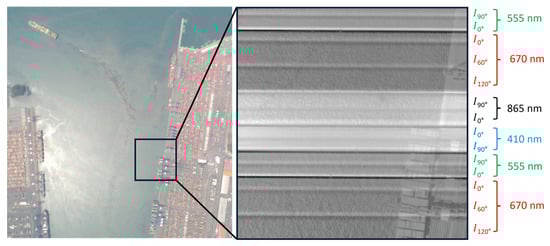
Figure 1.
An example of measurements from the Air–PolCube, which flew over the New Port of Busan on 10 May 2024 (T 11:44 LST). (Left panel) RGB image; (Right panel) raw data with annotations for wavelengths (410, 555, 670, and 865 nm) and polarization angles.
Stokes vectors (i.e., , , and ) and their weighting functions are calculated using the linearized pseudo-spherical vector Discrete Ordinate Radiative Transfer (VLIDORT) at carefully selected observation geometries for the sensitivity analysis [41,42,43]. The viewing zenith angles (57.0°, 52.0°, 0.0°, and 5.0°) were carefully selected, given the CubeSat’s limited capabilities. 0.0° and 5.0° represent typical Nadir observations, whereas 57.0° and 52.0° were selected to measure the maximum distinct scattering angles from Nadir while avoiding extreme geometry [29]. The solar zenith angle (SZA) at the overpass time in a sun-synchronous orbit typically ranges from 10° to 60° over the Korean Peninsula, depending on the season. For the sensitivity analysis, we calculated the radiances at SZA of 30° and four relative azimuth angles (RAAs) to represent nominal observation geometries, as listed in Table 1. Note that the overall results showed no meaningful differences across SZAs (10–70°). We assumed an aerosol optical depth (τaer) of 0.5 at 555 nm and a wind speed of 5.0 m/s, typical values in East Asia. The selection of τaer enhances the sensitivity of simulated radiances to aerosol properties, enabling an evaluation of retrieval sensitivity under significant aerosol loading (e.g., polluted conditions). While the primary results of this study focus on τaer of 0.5, τaer values from 0.1 to 1.0 (i.e., 0.1, 0.3, and 1.0) were additionally evaluated to account for the diverse aerosol loadings over the ocean. Since the SMART-P algorithm primarily targets aerosol and ocean retrievals, we adopted the Cox–Munk bidirectional reflectance distribution function (BRDF) model for surface reflectance [44]. The simulation conditions are summarized in Table 1.

Table 1.
Summary of PolCube Geometries and Input Parameters for Synthetic Polarized Radiance Calculations.
To represent various aerosol types, we adopted PSD parameters for sulfate, smoke, and dust from the OMAERUV algorithm, which is based on AERONET climatology [6,45]. The complex refractive indices were determined based on the OPAC database and Dubovik et al. (2002) to ensure realistic values [46,47]. The aerosol optical properties, including ω0, are summarized in Table 2. The lognormal number size distribution is given by:
Table 2.
Summary of aerosol models used in this study, including the particle size distribution parameters (rf, σf, rc, σc, and Fnum), real (n) and imaginary (k) parts of the complex refractive indices, and single-scattering albedo (ω0) at 555 nm.
We assumed the aerosols are spherical particles with a bimodal PSD characterized by the geometric mean radius (ri), standard deviation (), and the number fraction (Ni). To describe the bimodal distribution, we define i as either f (fine mode) or c (coarse mode). Therefore, the total distribution can be written as n(r) = nf(r) + nc(r). Nf is the number fine-mode fraction (Fnum). The last two parameters in Table 2 are the real (n) and imaginary (k) parts of the complex refractive index.
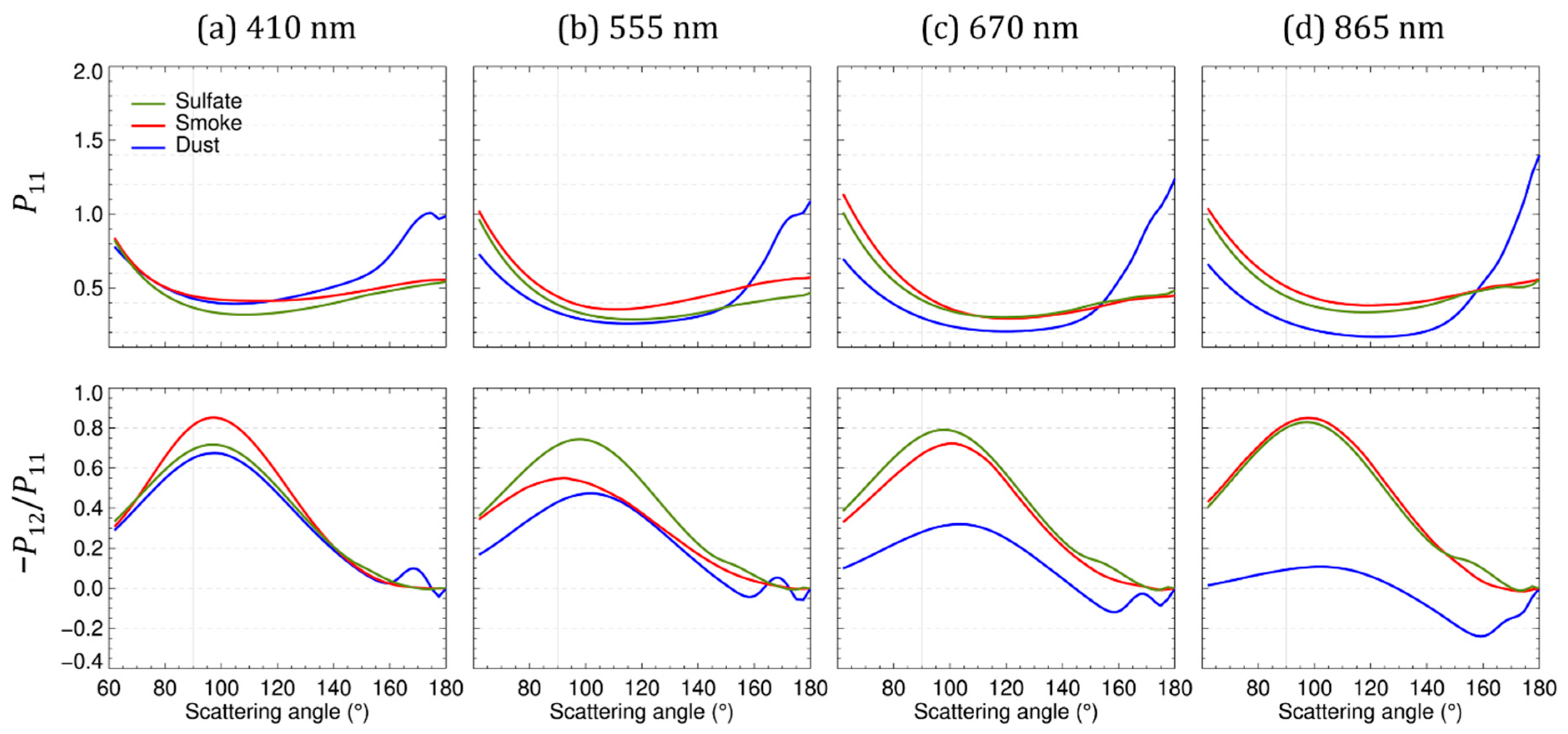
The intensity phase function (P11) and the polarized phase function (−P12/P11) show distinct patterns for different aerosol types, particularly in the backward-scattering direction. Figure 2 shows examples of P11 and −P12/P11 for sulfate, smoke (both fine-dominated; green and red, respectively), and dust (coarse-dominated; blue) aerosols at PolCube wavelengths: (a) 410, (b) 555, (c) 670, and (d) 865 nm. The −P12/P11 exhibits different scattering shapes across aerosol types and wavelengths, particularly at scattering angles between 60° and 180°. Because sun-synchronous satellites typically measure reflected radiance within this scattering angle, the −P12/P11 provides additional information for satellite-based aerosol remote sensing.
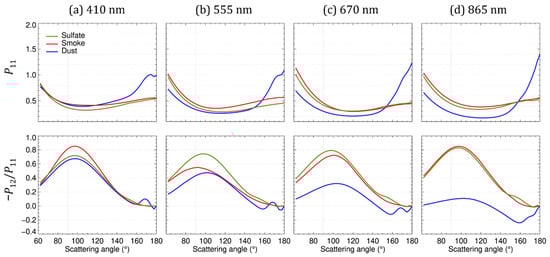
Figure 2.
Examples of the intensity phase function (P11), and the polarized phase function (−P12/P11) for sulfate (green), smoke (red), and dust (blue) aerosol at PolCube wavelengths: (a) 410, (b) 555, (c) 670, and (d) 865 nm. τaer for three aerosol models is assumed to be 0.5 at 555 nm.
2.2. Error Characterization Based on the Optimal Estimation Method
The measurement types and the number of viewing angles are strongly related to the information content of aerosol retrieval parameters, thereby affecting their uncertainties. An OEM-based algorithm with a well-tested linearized radiative transfer model provides reliable error estimates and analyses, which are valuable for studies using the products [6,48]. In this study, the sensitivity of the state vectors utilizing the PolCube measurements is analyzed based on the OEM [40]. While NASA/LaRC has performed a preliminary analysis of PolCube’s capabilities to retrieve aerosol and ocean parameters simultaneously using the MAPP algorithm [29], this study focuses on assessing the expected accuracy of the aerosol products to be provided by Busan Metropolitan City using the SMART-P package. We defined the state vectors (x) as Equation (2), which include bimodal PSD (i.e., rf, σf, rc, σc, and Fnum), ALH (i.e., zp and h), and complex refractive indices for both modes (i.e., nf, nc, kf, and kc). The parameters zp and h denote the peak height and vertical dispersion parameter of the Gaussian aerosol extinction profile, respectively [42,43].
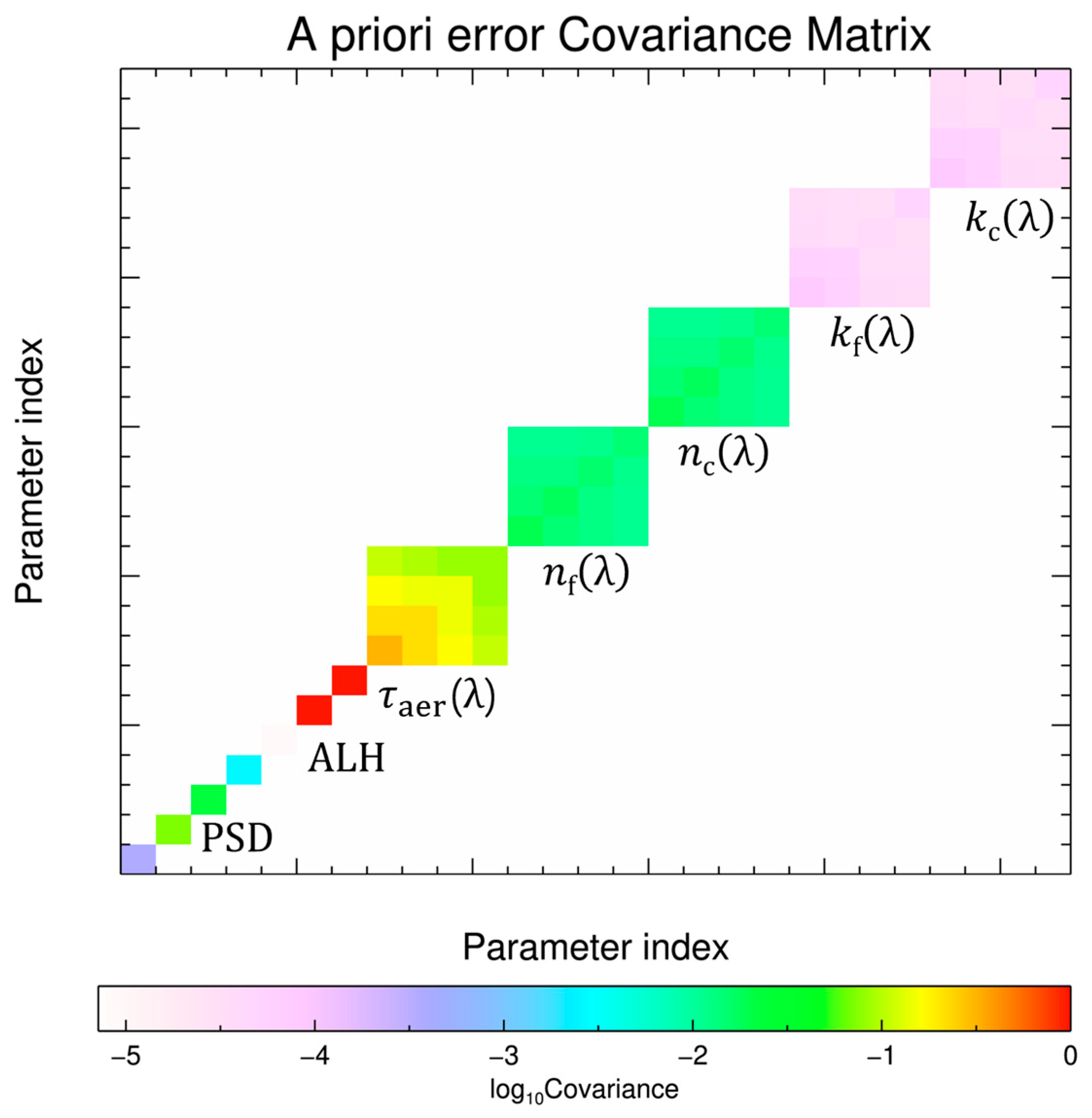
Based on the Bayesian theorem, the optimal solution at each iteration step is determined by the Levenberg–Marquardt method [40] as expressed in Equation (3). The state vector (xi) is updated to xi+1 in each iteration step with respect to the weighting function (K). The covariance matrix of measurement errors (Sϵ) is diagonal, indicating that there is no cross-correlation between the measurement errors. The damping factor (γ) controls the step size between gradient descent and Gauss–Newton methods during optimization. A priori mean state (xa) and the error covariance (Sa) are calculated by AERONET climatology [49,50] at Yonsei University in Seoul from 2011 to 2023. An example of a priori error covariance for SMART-P is illustrated in Figure 3. Wind speed is the most important forward-model parameter (b) and will be adopted from the European Centre for Medium-Range Weather Forecasts reanalysis 5 (ERA5) [51]. We assumed the uncertainty of approximately 0.5 m/s in this study.
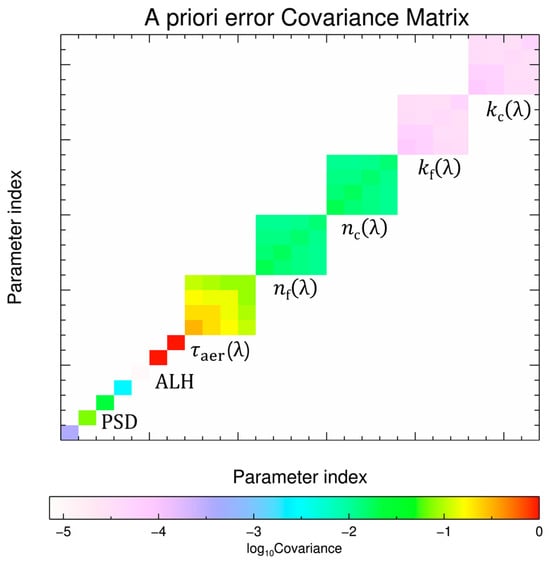
Figure 3.
An example of the a priori covariance matrix for PolCube measurement derived from AERONET climatology at Yonsei University from 2011 to 2023. The indices 1–7 are non-spectral parameters, including PSD (1–5) and aerosol layer height (ALH; 6–7) parameters. The larger indices present aerosol optical depth (τaer), real (n), and imaginary (k) parts of the complex refractive indices at PolCube wavelengths.
Equation (4) defines the normalized cost function (χ), which is minimized to find the optimal solution. The first term represents both the radiance and DoLP measurement constraints, whereas the second term is the a priori constraints. Nm and Na are the number of measurements and a priori data, respectively.
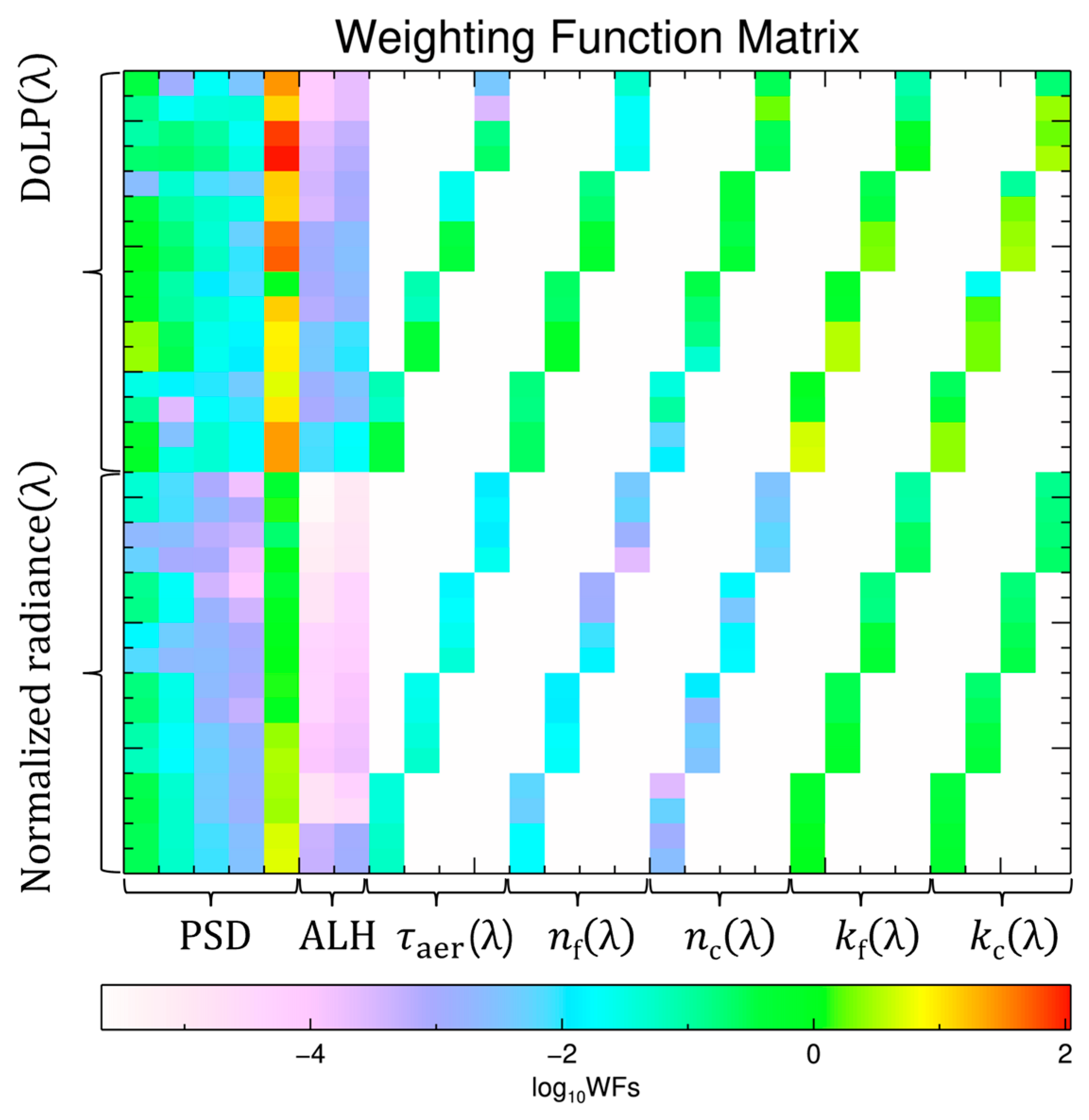
In this study, we used two scenarios for measurements (y): (1) using only radiance, and (2) combining radiance and DoLP (hereafter L + DoLP; Equation (5)). The radiance data are normalized by solar irradiance. DoLP is defined as , as the circular polarization is negligible in nature [52]. We aim to retrieve optimum aerosol optical properties as possible using the second scenario (i.e., L + DoLP). Figure 4 illustrates an example of the K matrix generated using Equation (5).
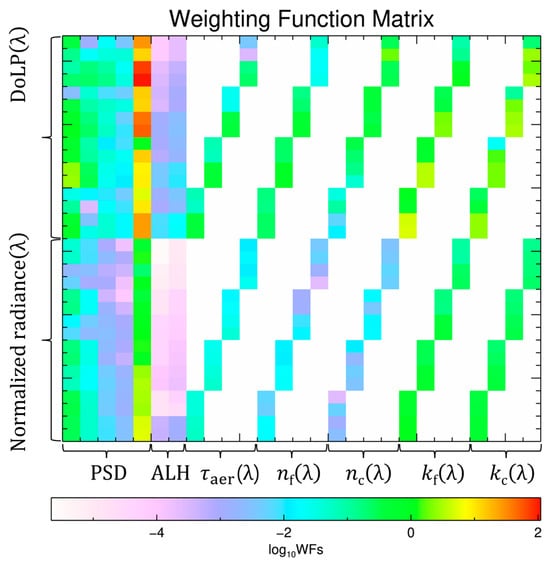
Figure 4.
An example of the weighting function (K) matrix using both normalized radiance and degree of linear polarization (DoLP). This calculation uses the sulfate aerosol model with specifications provided in Table 1.
VLIDORT provides the Ks for the , , and of the Stokes vector to x. The K for DoLP is calculated as follows:
Averaging kernel matrix (A; Equation (7)), which provides the sensitivity of retrievals to true states, is calculated with measurement gain matrix (Gy) defined as Gy , and a weighting function.
In the retrieval process, random errors are included. We estimated retrieval errors by three main sources: smoothing, retrieval noise, and forward model parameter error. The smoothing error is given by the covariance of the smoothing error (Ss) defined as Equation (8) with the identity matrix of parameters (In). Since estimating the absolute smoothing error is difficult, we can use Sa as an appropriate replacement [6,40].
Considering measurement uncertainties, the covariance of retrieval noise is calculated using the following equation:
As another critical consideration, BRDF, which depends on satellite and solar geometries, is important for analyzing error propagation to state vectors through the covariance of forward model parameter errors (Sf), as defined in Equation (10). Over the ocean, whitecap and shadow effects are incorporated into the Cox–Munk BRDF model through wind speed as a key parameter [44]. As discussed, Sb represents the covariance matrix of the forward model error suggested by ERA5 data uncertainty. We defined the retrieval error (εret) as the square root of the sum of the diagonal elements of Ss, Sm, and Sf.
3. Results
3.1. Information Contents
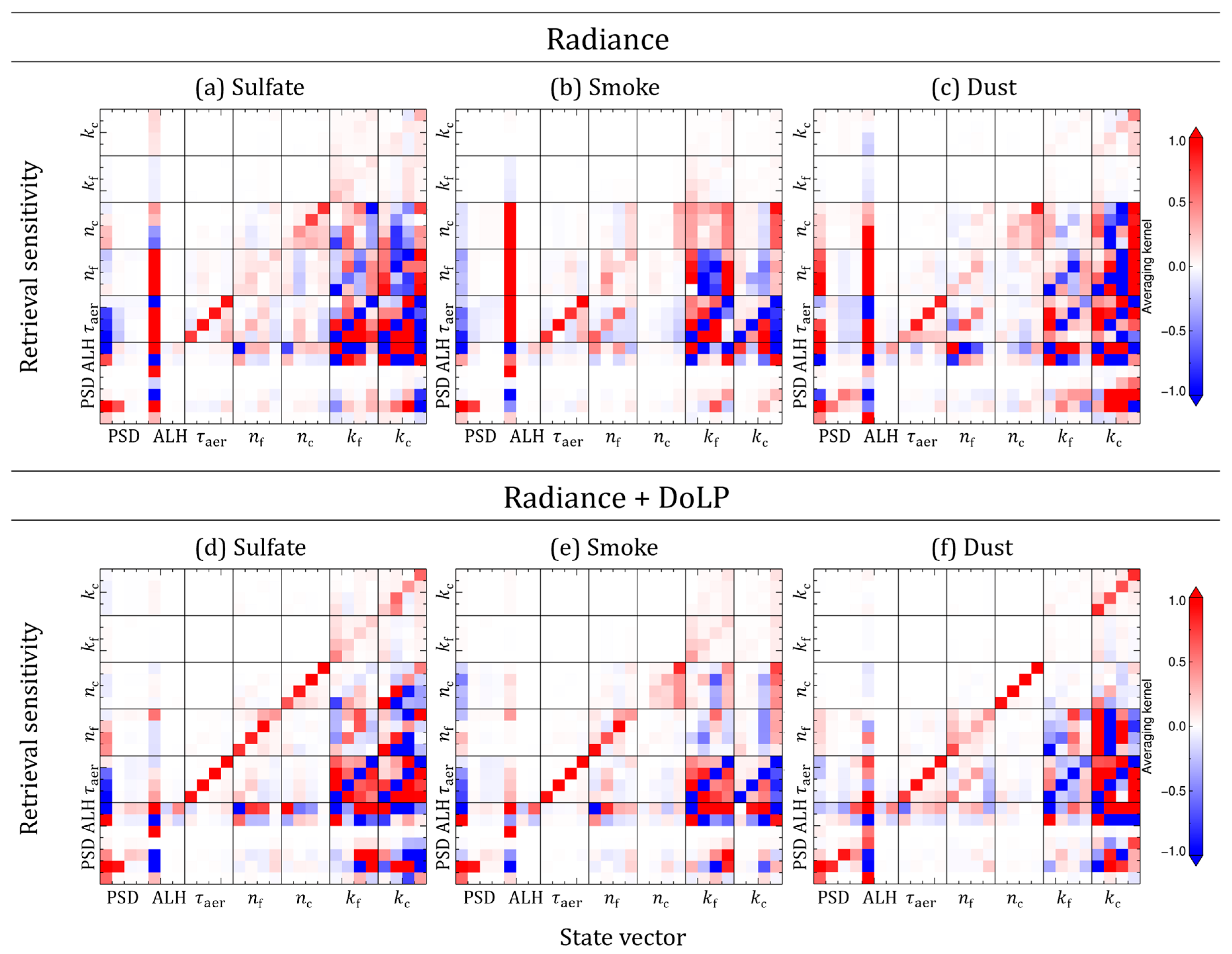
To assess the retrieval sensitivity of state vectors, A is analyzed for three aerosol models (i.e., sulfate, smoke, and dust aerosols). The diagonal elements of the A (DA) represent the sensitivity of the retrievals to the true state. When the value of DA is close to one, the parameter is expected to be well inverted. On the other hand, the off-diagonal elements in rows of A (RA) indicate retrieval interferences with other state vectors. This means that a retrieval parameter can be strongly affected by other elements of the state vector due to the cross-correlated measurement sensitivity.
Figure 5 shows the As for three aerosol models using only radiance measurements (upper panels), and L + DoLP (lower panels). These As are averaged over various scenarios summarized in Section 2.1. The PSD parameters (i.e., rf, σf, rc, σc, and Fnum) are presented in 1 to 5, and ALH parameters (i.e., zp and h) are indicated in 6 and 7. The following larger indices illustrate the spectral parameters, including τaer, n, and k at the PolCube wavelengths.
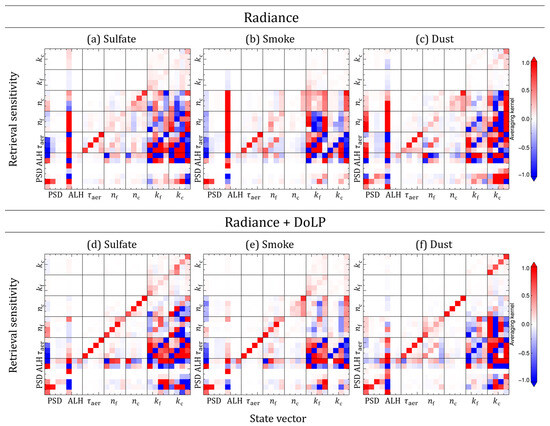
Figure 5.
(Top) Averaging kernel matrices of (a) sulfate, (b) smoke, and (c) dust aerosols using only radiance data. (Bottom) Averaging kernel matrix of these aerosols (panels d–f) using L + DoLP. For this calculation, we assume τaer at 555 nm is 0.5 with geometries provided in Table 1.
As shown in panels (a)–(c) in Figure 5, DAs of PSD parameters show partial sensitivity depending on the aerosol models. The DAs of PSD parameters for fine-dominated aerosols (i.e., sulfate and smoke) are sensitive to fine-mode parameters (i.e., rf, σf, and Fnum). For coarse-dominated aerosols (i.e., dust), sensitivity is observed in coarse-mode parameters (i.e., rc and σc) in addition to fine-mode parameters. The high DA value of Fnum with low RA at other state vectors indicates that this parameter is more reliable when retrieved for fine-dominant aerosol. DAs of τaer are consistently high across all aerosol models, as the radiance is highly sensitive to the aerosol burden. However, RAs of τaer show that τaer is notably influenced by Fnum, kf, and kc. DAs of nf and nc show wavelength-dependent sensitivities, which also possess strong interferences with other parameters. Interestingly, for sulfate aerosols (Figure 5a), the DAs for nc show slightly higher sensitivity than for nf except for the 410 nm, despite the aerosols being fine-particle dominated. This can be attributed to its high ω0: the radiance is also influenced by the coarse mode, due to its strong scattering. In contrast, smoke is moderately absorbing (ω0 = 0.92), which can suppress the scattering signal from the coarse mode. For the dust model, moderate sensitivity is specifically observed at 865 nm, where the coarse-mode scattering is most prominent. Conversely, DAs of kf and kc generally show low sensitivity across all aerosols. Overall, when multi-angle radiances are utilized, the current observation geometries and information content are insufficient for inversion of various aerosol optical properties.
When using the case of L + DoLP (Figure 5d–f), the sensitivities of several state vectors increased relative to those obtained from radiances alone. In particular, the retrieval sensitivity of fine-mode PSD parameters (i.e., rf and σf) is enhanced with DoLP. This improvement mainly stems from the sensitivity of polarization measurements to the angular information in the scattering of fine particles [53]. As demonstrated for the radiance measurements, DAs of τaer also exhibit sufficient sensitivity when DoLP data are used across all aerosol models and wavelengths. DAs for nf in the sulfate and smoke models, and for nc in the dust model, show a significant increase compared to those in Figure 5a–c. The values of DAs for kf and kc are also partially increased, depending on the dominant aerosol mode. For smoke aerosols, the sensitivity of kf increases slightly more than kc. On the contrary, for dust aerosols, DAs of show a greater enhancement compared to those of kf.
In the case of ALH, DAs remain consistently low in sensitivity across all aerosol models, with or without DoLP. In passive remote sensing at visible or infrared wavelengths, measurements have limited sensitivity to aerosol vertical profiles compared with active sensors such as the Cloud-Aerosol Lidar with Orthogonal Polarization (CALIOP). To retrieve ALH parameters from MAP measurements, ALH information is derived from UV or blue-band measurements, in which Rayleigh scattering is strong. A previous study using Research Scanning Polarimeter (RSP) data, with 152 viewing angles, reported a strong correlation between retrievals and true ALH values [54]. Moreover, Wu et al. (2016) demonstrate that wavelengths shorter than 410 nm are essential to retrieve ALH parameters [54]. Although the PolCube includes the 410 nm wavelength, the results reveal that the DoLP does not meaningfully enhance sensitivity to ALH, primarily due to the limited number of angular observations.
As described previously, the diagonal elements of As provide quantitative information content of each state vector, which can be expressed in terms of the degrees of freedom (df). The following Figures in Section 3.1 compare the df results for cases with and without DoLP measurements. The df with blue triangles represent results obtained from radiance measurements only, whereas those with red squares indicate results obtained from both radiance and DoLP.
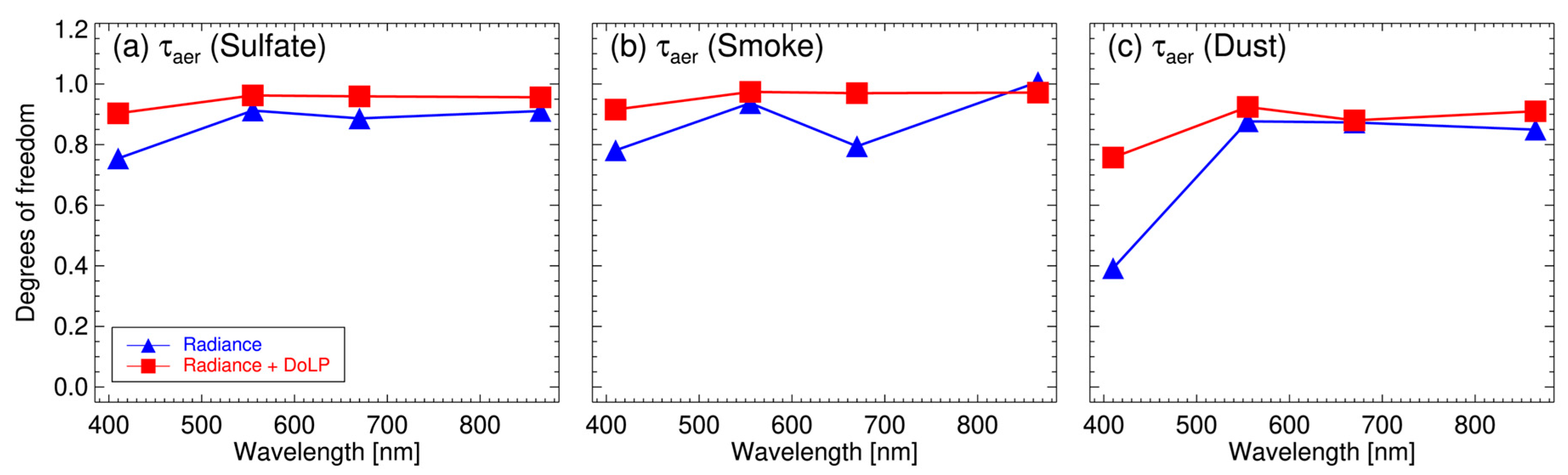
Figure 6 shows the dfs of τaer for all aerosol models. For fine-dominated aerosols such as sulfate and smoke, the dfs are sufficiently large across all wavelengths, regardless of whether DoLP is included. For dust aerosols, dfs remain generally high, except at 410 nm. At 410 nm, absorption predominates, and scattering from coarse-dominant particles is less sensitive to τaer. Nonetheless, these results demonstrate that the PolCube measurements contain sufficient information on τaer for both measurement types.
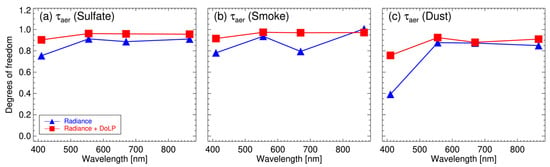
Figure 6.
Estimated degrees of freedom (df) for τaer of (a) sulfate, (b) smoke, and (c) dust. The blue triangles and red squares denote the df for radiance-only and for radiance and DoLP, respectively.
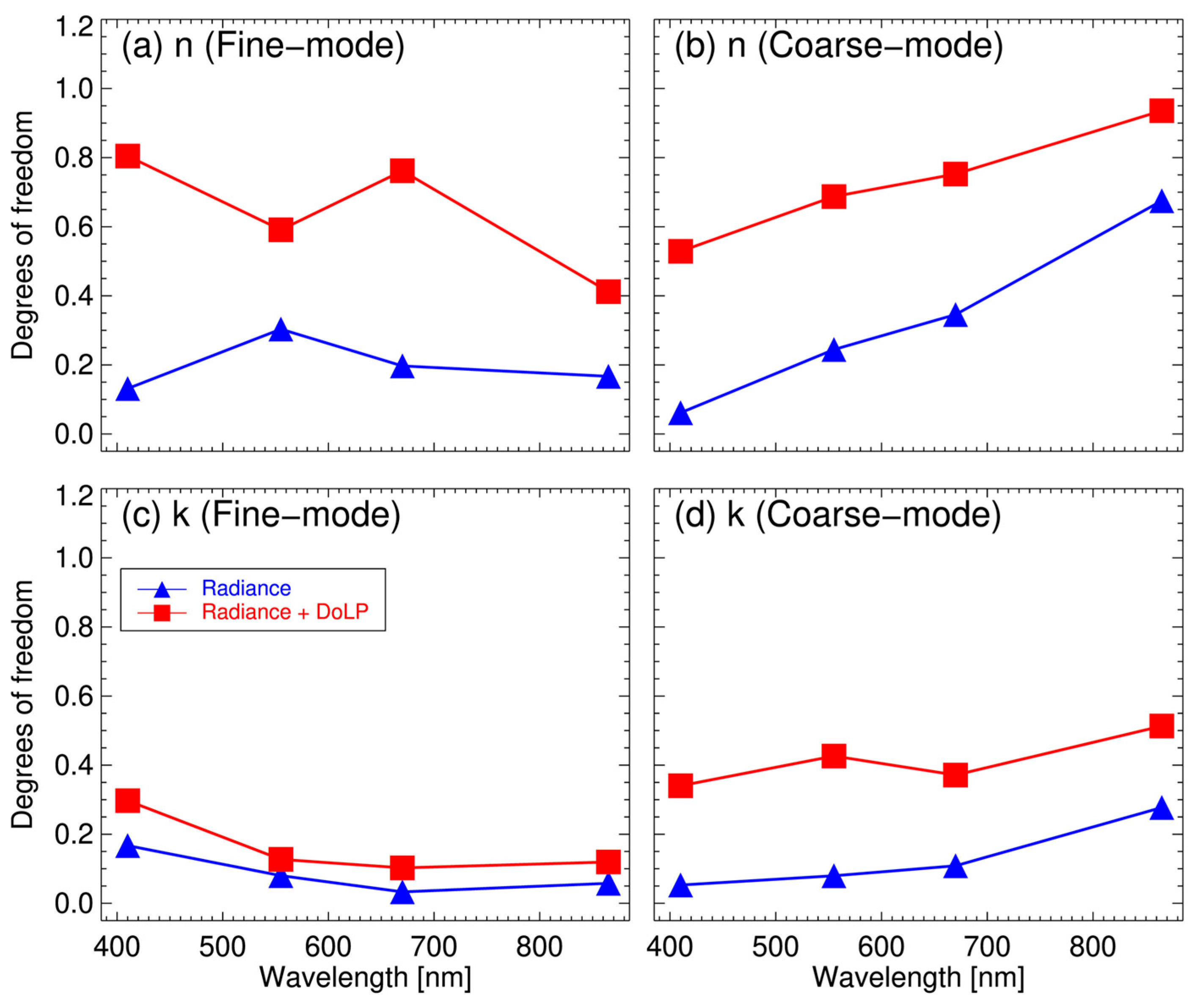
In Figure 7, the dfs of the complex refractive indices are averaged across all aerosol models. When both radiance and polarization measurements are used, the average dfs of nf remains high in the visible bands, while that of nc increases from the visible to the NIR band. Moreover, clear differences are observed between dfs with and without DoLP for n. This enhancement occurs because linear polarization measurements play a significant role in the angular scattering phase function. Although the dfs for k show noticeable improvements when polarization is used, the PolCube observations appear to be less sensitive to k than to n. However, despite these results, n is among the most difficult to invert because of interactions between n and PSD parameters (see Figure 5). Therefore, obtaining sufficient measurements across multiple angles and a broader wavelength range is essential for effectively characterizing the differences between them.
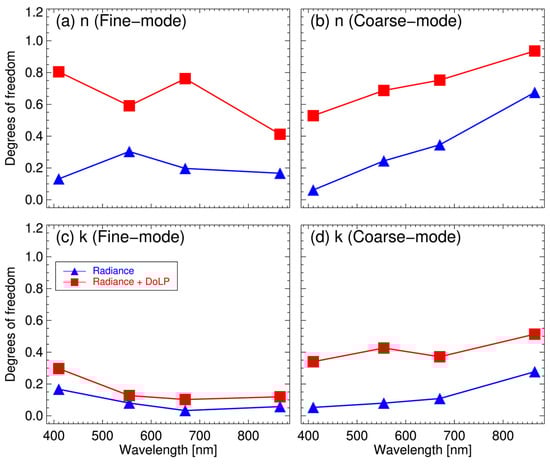
Figure 7.
Estimated mean df for the real part of the refractive index (n) for (a) fine-mode and (b) coarse-mode. (c,d) Similar plots for the imaginary part of the refractive index (k) for fine- and coarse-mode, respectively.
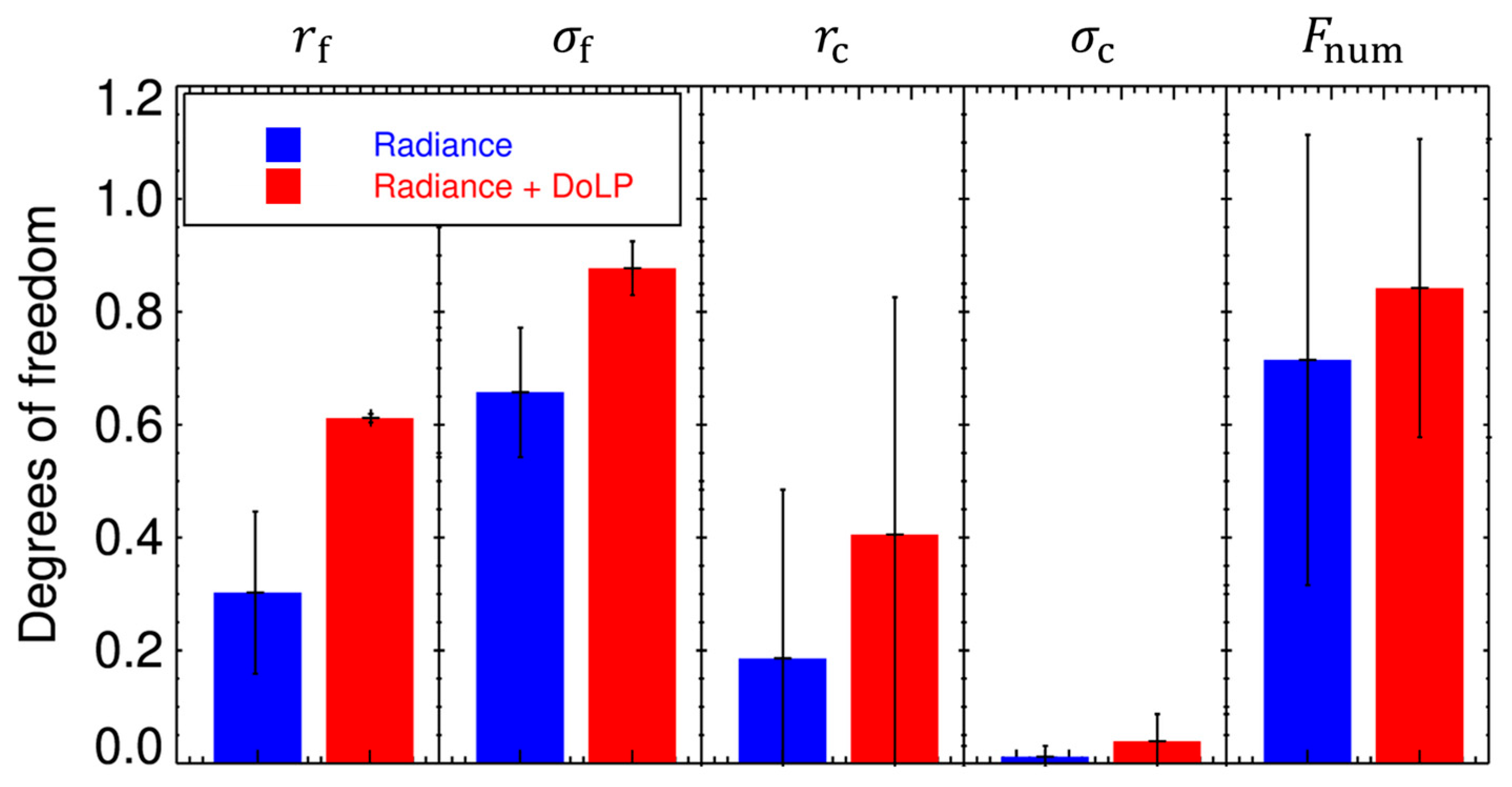
Figure 8 shows the mean dfs of the PSD parameters (i.e., rf, σf, rc, σc, and Fnum). The results indicate that combining radiance and DoLP measurements yields more reliable information for most PSD parameters, except for σc. Although PolCube is a multi-wavelength, multi-angle polarimeter, its spectral bands (410, 555, 670, and 865 nm) are insufficient to characterize variations in σc, which typically require longer wavelengths in the Short-Wave Infrared (SWIR). Furthermore, as shown in Figure 2, −P12/P11 shows a more pronounced backscattering signal for fine-dominated aerosols. Given that PolCube primarily detects the backscattered light, the σc retrievals contain less information than the other parameters.
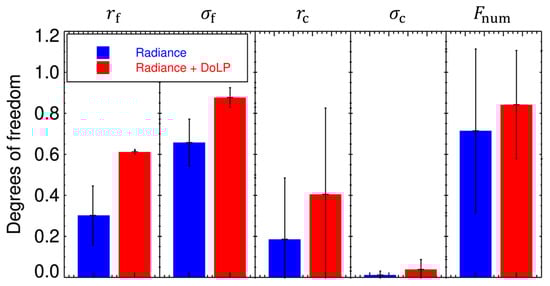
Figure 8.
Estimated mean dfs for PSD parameters (i.e., rf, σf, rc, σc, and Fnum). The error bar indicates the standard deviation of different aerosol types.
3.2. Retrieval Errors of Measurement Types
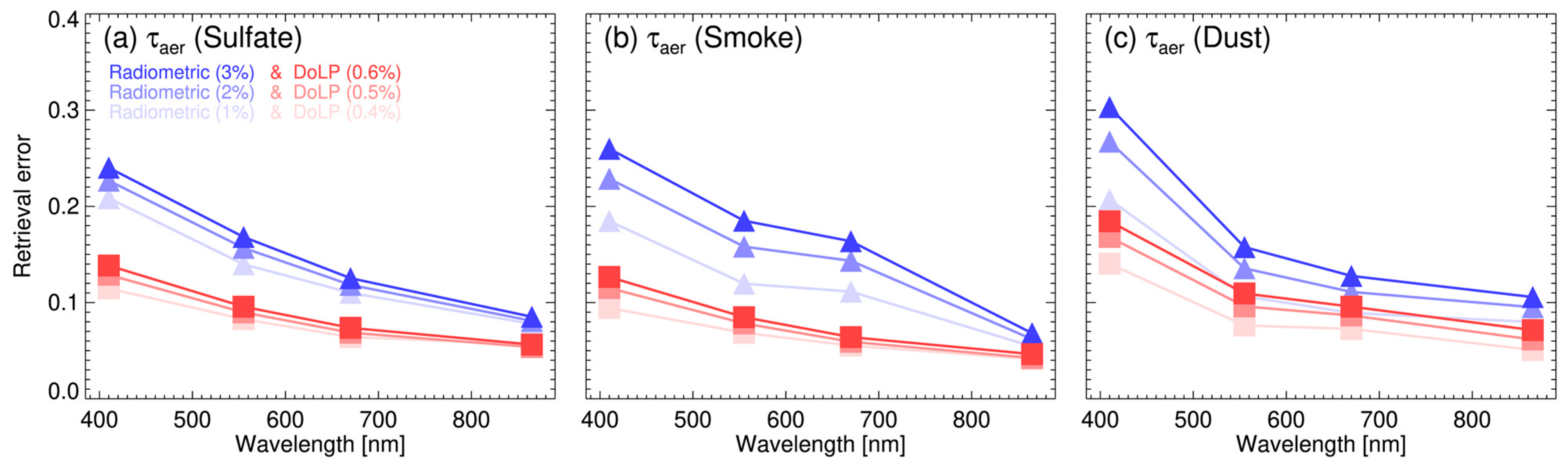
In this section, εrets are evaluated under both nominal and perturbed calibration conditions to assess how radiometric and DoLP precision impact retrieval accuracy. For the perturbed conditions, perturbations of ±1.0% and ±0.1% were applied to the radiometric (2%) and DoLP (0.5%) calibration uncertainties. These results reflect the anticipated operational variations in radiometric and polarimetric precision. For this analysis, we assume the scene is over the ocean, using each aerosol model’s characteristics (see Table 2) with τaer of 0.5 at 555 nm.
In Figure 9, the blue series of triangles indicates εrets when using only radiance data, whereas the red series of squares represents those when both radiance and DoLP data are used. Using both radiance and DoLP measurements significantly reduces εrets across all aerosol models. In particular, panels (a) and (b) in Figure 9 show that including DoLP data markedly improves τaer retrieval accuracy for fine-mode aerosols, such as sulfate and smoke. For the dust case (panel c), retrieval accuracy is slightly higher than in the absence of DoLP. Overall, these results demonstrate that the accuracy of both radiometric and DoLP measurements is crucial to τaer retrieval performance. Notably, polarimetric measurements at the PolCube wavelengths are more effective for fine-mode aerosols such as sulfate and smoke.
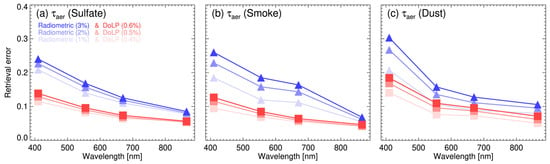
Figure 9.
Estimated retrieval errors (εret) for τaer under different calibration accuracy in radiometric and DoLP for all aerosol models: (a) sulfate, (b) smoke, and (c) dust aerosol. The blue and red series lines represent εrets computed from radiance alone and from L + DoLP, respectively. For this calculation, we assume the scene is over the ocean, using each aerosol model’s characteristics (see Table 2), with τaer of 0.5 at 555 nm.
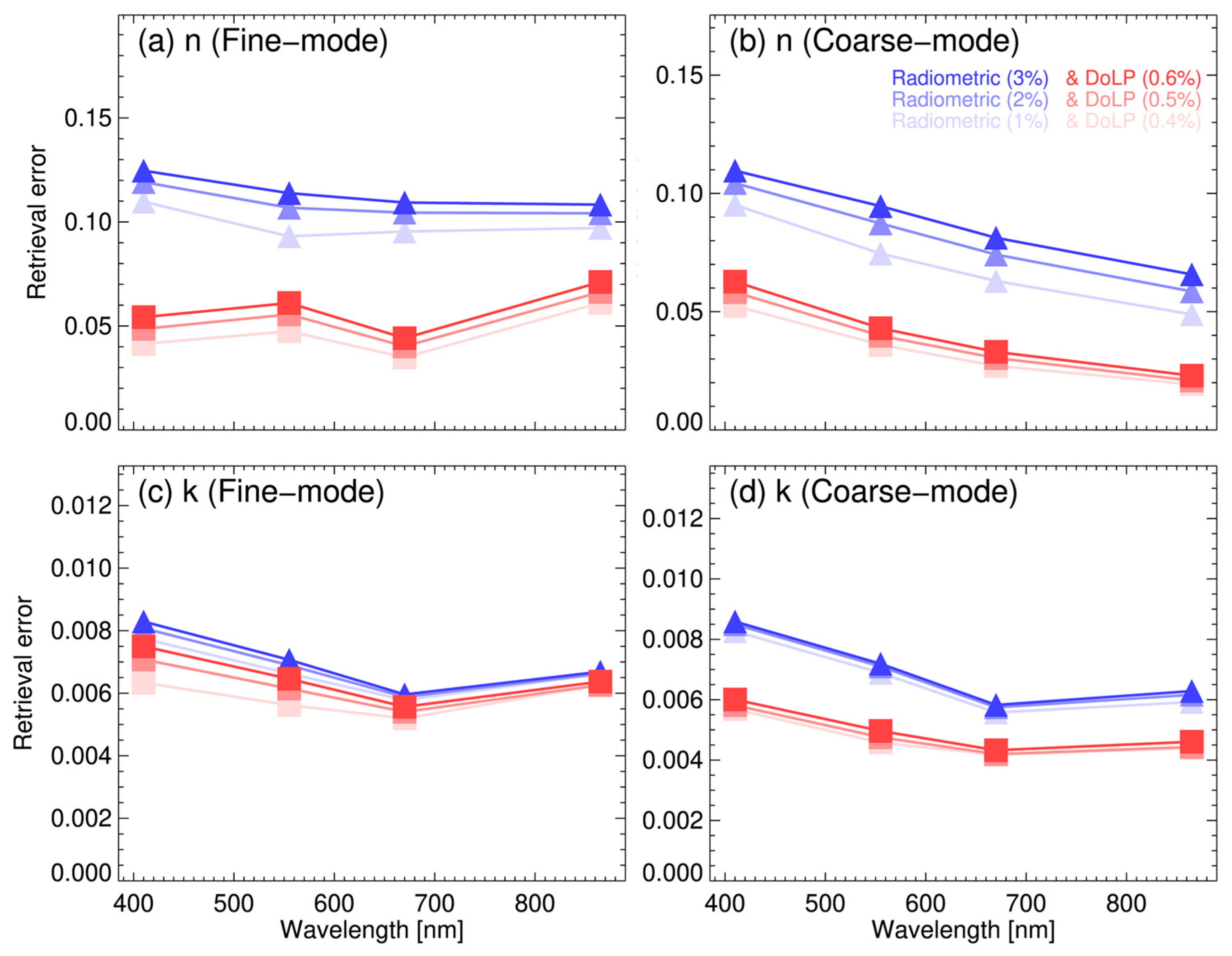
Figure 10 shows results similar to those in Figure 9, with the exception of the complex refractive indices. For this analysis, the εrets are averaged over all aerosol models. Panels (a) and (b) in Figure 10 show that retrieval accuracies for nf and nc are substantially improved when polarization measurements are used. For nf, retrieval errors are lower in the visible bands, which are more sensitive to fine-mode aerosols, than in the NIR band. By contrast, εrets for nc decrease from visible to NIR wavelengths, as NIR bands are sensitive to coarse-mode aerosols. In panels (c) and (d), including DoLP data also improves the retrieval accuracy of k in both aerosol modes. However, the improvement in k retrievals is smaller than that for n, as discussed in Figure 7. As shown in Figure 9 and Figure 10, the spectral parameters are notably influenced by the radiometric measurements and DoLP accuracies. This suggests that reliable radiometric calibrations are essential for accurate and consistent retrieval of spectral parameters.
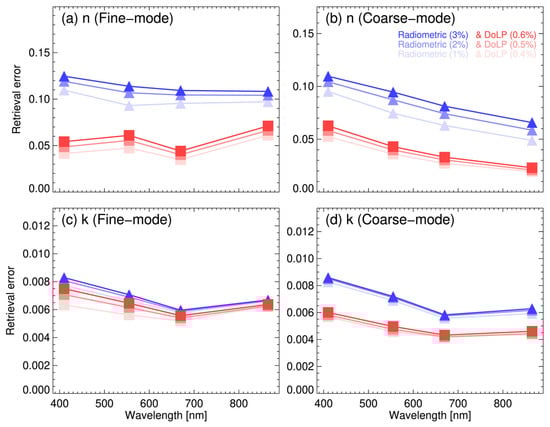
Figure 10.
Estimated εrets of the complex refractive indices under different radiometric and DoLP accuracies for both fine and coarse-mode aerosols. The results show when using radiance (blue-colored series triangles) and L + DoLP (red-colored series squares). Panels (a,b) display results of the real part (n) of refractive index for fine and coarse aerosols, while panels (c,d) show the results of the imaginary part (k) for the same aerosol modes.
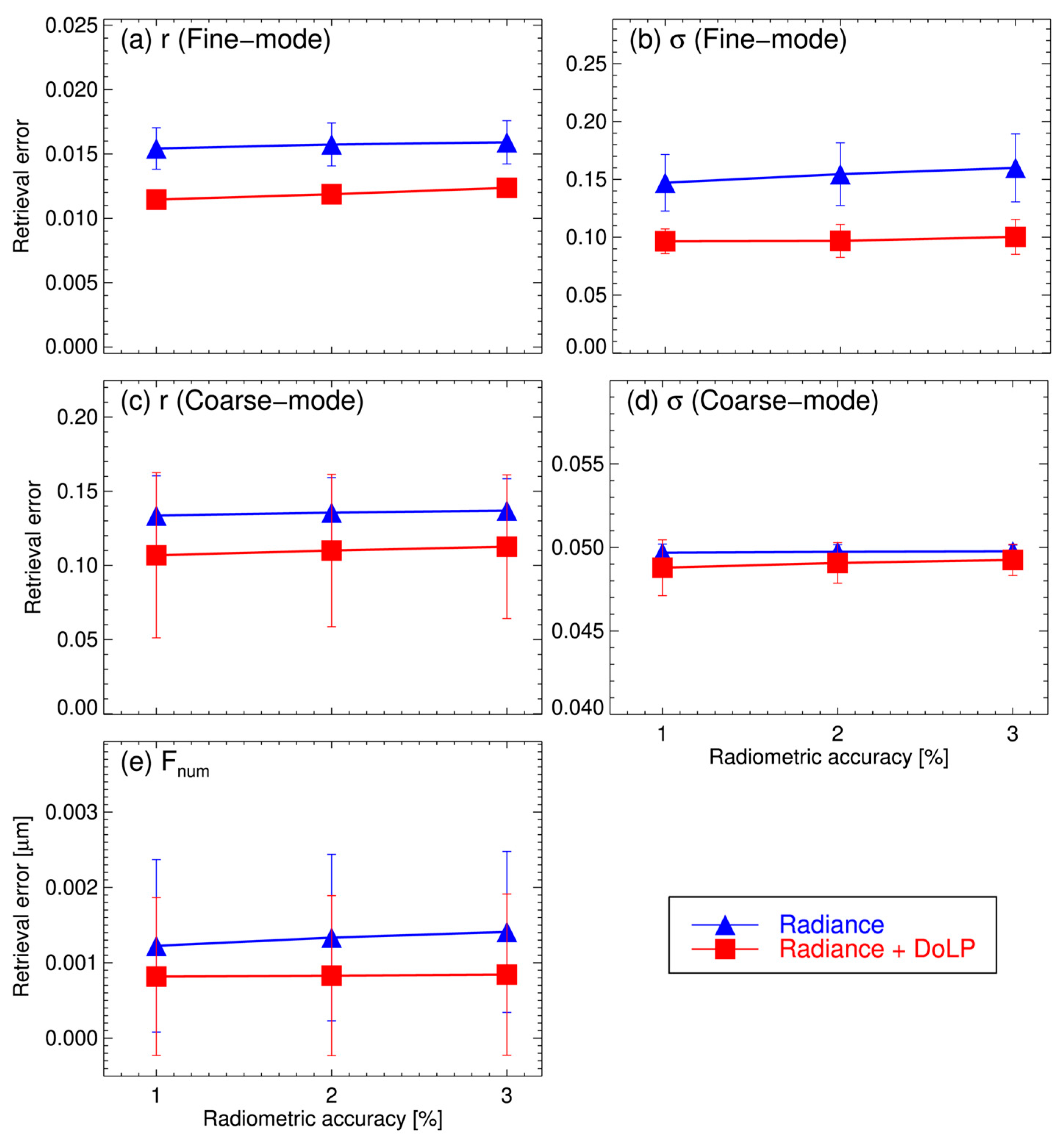
Figure 11 shows the εrets for PSD parameters (i.e., rf, σf, rc, σc, and Fnum), with standard deviations indicating variation across aerosol models. Unlike τaer, which is highly sensitive and effectively reflects measurement accuracy, PSD parameters are much less sensitive (compare Figure 9 and Figure 11). Due to the limited information content, PSD retrievals are more likely constrained by the a priori datasets. Consequently, the PSD retrieval results remain less variable regardless of improvements in measurement accuracy. As discussed for Figure 8, PolCube’s limited spectral coverage explains why coarse-mode parameters are significantly less sensitive to improvements in measurement accuracy. The retrieval accuracies of rc and Fnum vary significantly by aerosol type. In general, the trends in Figure 9, Figure 10 and Figure 11 are consistent with previous research on the retrieval sensitivity of aerosol optical properties derived from radiances or polarization data [14,18,19,20].
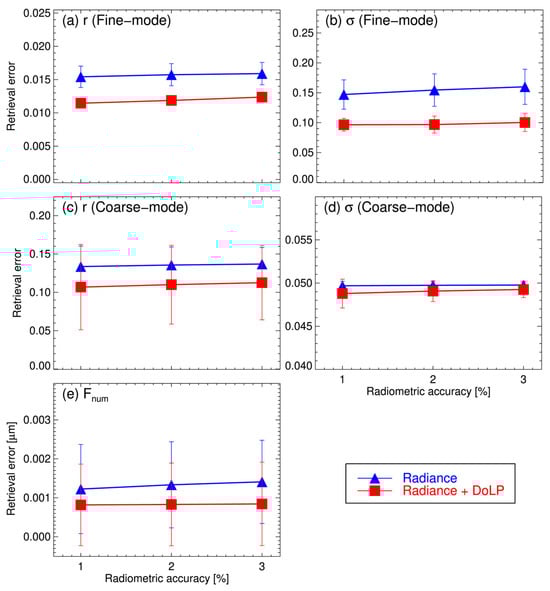
Figure 11.
Estimated εrets, averaged over all aerosol models, for particle-size distribution parameters (rf, σf, rc, σc, and Fnum) under different radiometric and DoLP accuracies. Error bars represent the standard deviation for different aerosol types.
One of the major forward model parameters is the wind speed over the ocean, which significantly influences the spectral radiance and polarization computed by the forward model. As wind speed determines ocean surface roughness, it substantially influences the ocean surface BRDF depending on observation geometry. Furthermore, the bidirectional polarization distribution function (BPDF) is also sensitive to the direction between the incident and reflected light, and the location of the glint region [20,55]. Therefore, the impact of wind speed on retrieval is evaluated separately.
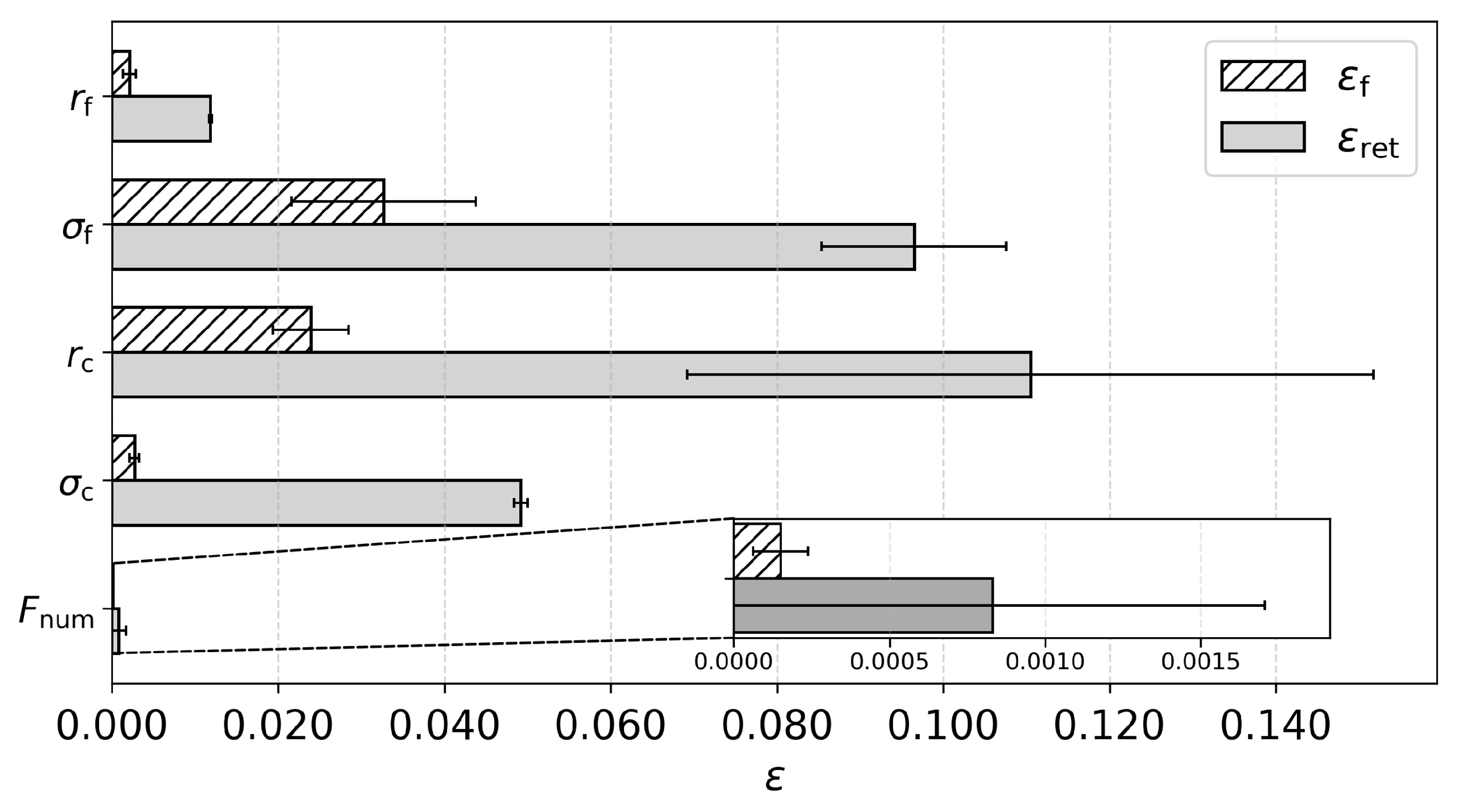
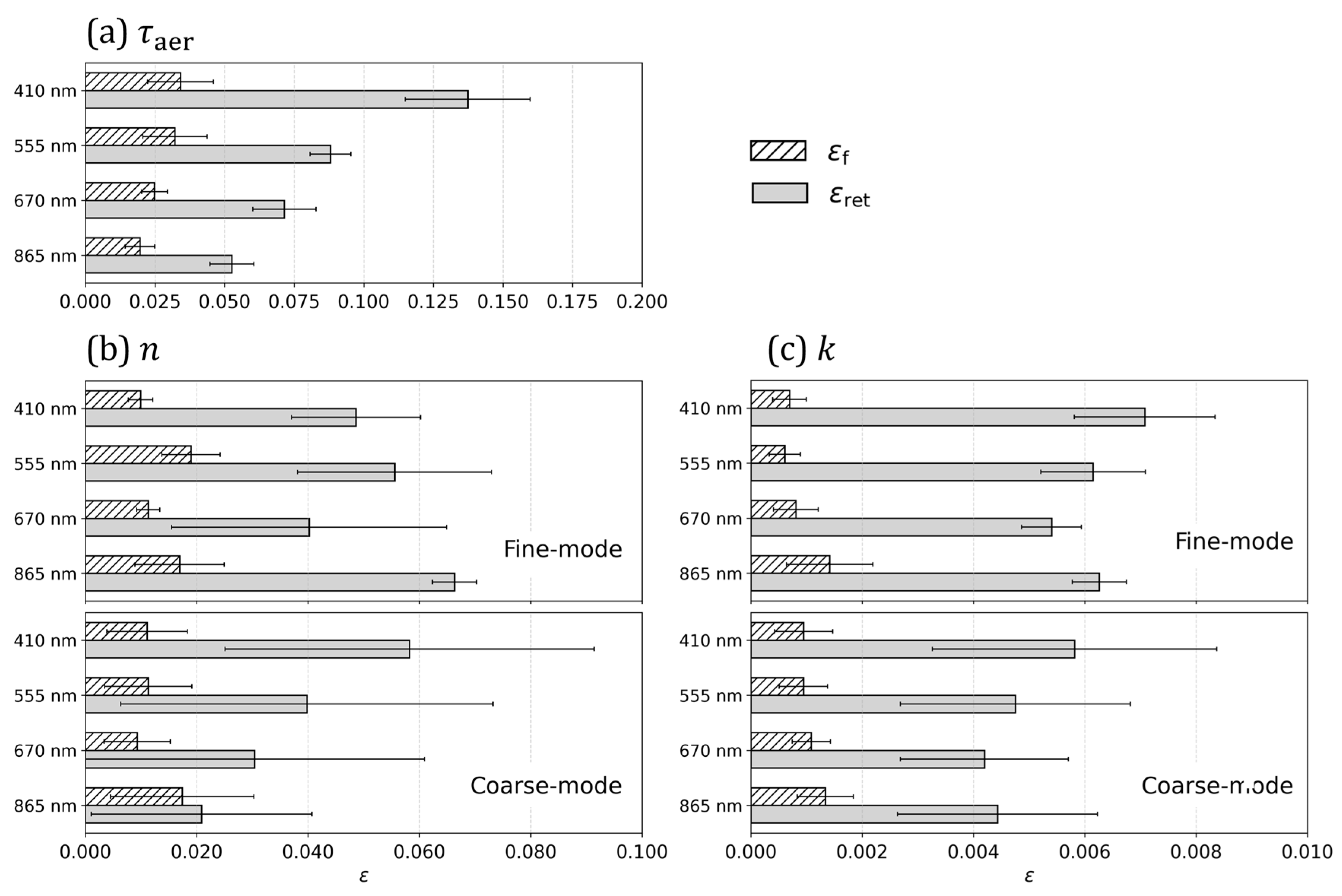
To evaluate the contribution of wind-speed uncertainties, the forward-model parameter error (εf) is compared with εret. As shown in Figure 12 and Figure 13, the hatched and gray bars indicate εf and εret, respectively. Both errors are averaged across all aerosol models and estimated for the L + DoLP case with known calibration accuracy [28]. Error bars indicate their standard deviation. Figure 12 compares εf and εret for the PSD parameters. The contribution of εf to εret is generally small across all PSD parameters. Nevertheless, it has a non-negligible impact on the retrieval of σf and rc.
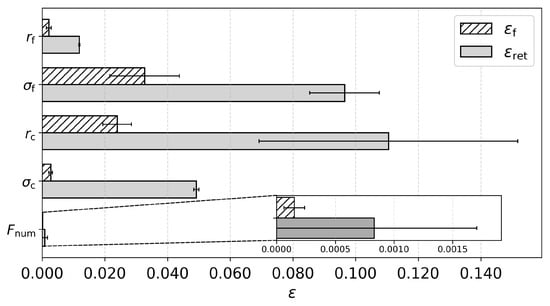
Figure 12.
Comparison of averaged εret (filled gray) and forward model parameter errors (εf; hatched) for PSD parameters (i.e., rf, σf, rc, σc, and Fnum). For this analysis, both radiance and DoLP measurements are assumed to be available with known calibration accuracies. The error bars indicate the standard deviation for different aerosol models.
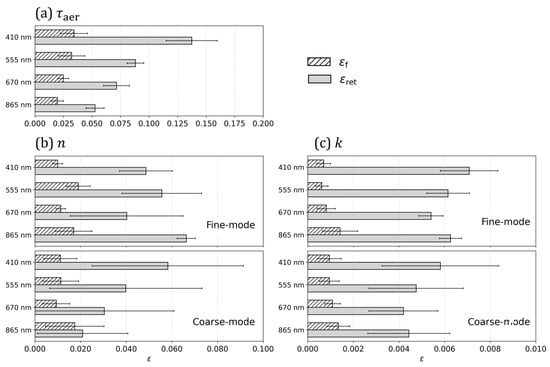
Figure 13.
Comparison of averaged εret (gray filled) and εf (hatched) with error bars (standard deviation) for (a) τaer, (b) n, and (c) k.
In Figure 13, the results are similar to those in Figure 12, but for (a) τaer, (b) n, and (c) k. The εf values of all spectral τaer are considerably larger, contributing 33 ± 1% than half of the total uncertainties. This suggests that wind speed is a major contributor to the retrieval of τaer. Therefore, accurate wind-speed data are essential for its retrieval. On the other hand, the εf values of n and k vary with wavelength and aerosol mode. Overall, the εfs of n and k contribute about 34 ± 2% and 19 ± 1% of the εret.
3.3. Retrieval Characterization Across Diverse Aerosol Loadings
To account for the diverse aerosol loading scenarios over the ocean, τaer values of 0.1, 0.3, 0.5, and 1.0 were evaluated, with results averaged across all aerosol models as shown in Table 3. The aerosol properties are typically retrieved for the τaer above 0.3, as sufficient aerosol loading is required to provide the signal for retrieval. For PSD and n, the dfs generally improve with increasing τaer and remain stable for τaer above 0.3. Notably, the dfs for k significantly increase as τaer increases. Conversely, the dfs for τaer itself decreases at high aerosol loadings. This seems likely due to the absorption effect of k (see Figure 5); the enhanced dfs for k at high τaer complicates, thereby reducing the dfs for τaer retrieval. The εret for PSD also improves alongside dfs as τaer increases, showing stabilized values for τaer above 0.3. While the absolute εrets for τaer increases with higher loading, the relative error significantly decreases from 31% at τaer of 0.1 to 14.8% at τaer of 1.0. Regarding the complex refractive indices, εrets for n (both fine and coarse modes) are improved with increasing τaer, whereas no remarkable changes for k are observed in the εrets across both modes.
Table 3.
Comparison of averaged information contents (dfs) and retrieval errors (εret) across all aerosol models, for PSD, τaer, and complex refractive indices across different τaer scenarios: 0.1, 0.3, 0.5, and 1.0.
4. Summary and Discussion
This study evaluated the PolCube aerosol products processed by the SMART-P algorithm, including PSD, τaer, and the complex refractive indices, which are planned for launch in 2026. Radiance and linear polarization were simulated under nominal measurement conditions and using the instrument characteristics of PolCube. The results in Section 3.1 clearly demonstrate that including DoLP data enhances sensitivity to most aerosol properties relative to using only radiance measurements. Theoretically, this additional polarimetric information from PolCube provides valuable constraints on aerosol properties during inversion. Accordingly, these enhancements enable reasonable retrieval of key aerosol parameters, particularly spectral τaer, n, and fine-mode PSD parameters (i.e., rf and Fnum).
The retrieval accuracy of aerosol properties is assessed under various calibration accuracies, as expected from onboard calibration. Overall, incorporating polarization data improves retrieval accuracy relative to omitting it, except for σf. In particular, the retrieval accuracies of τaer for fine-dominated aerosols and nf are improved by approximately a factor of two and are highly sensitive to calibration accuracy. Therefore, precise on-orbit calibration is essential to meet the required retrieval performance. Because wind speed is a major parameter determining ocean surface conditions, its uncertainty is assessed to evaluate its impact on aerosol properties. The εf of wind speed contributes about 33% of the εret in τaer and approximately 34% and 19% of the εrets in n and k.
Analysis of dfs and εret indicates that τaer above 0.3 ensures stable dfs and improved accuracy for PSD and n. While enhanced absorption at high loadings reduces the dfs for τaer, overall retrieval fidelity strengthens as loading increases, with τaer relative error reducing from 31% to 14.8%. These results confirm that higher aerosol loading enhances the characterization of most physical properties.
As natural aerosols are generally composed of particles with variable sphericity, the impact of sphericity will also be analyzed in the next study. Since polarimetric measurements are sensitive to particle shape, the polarized phase function is expected to show greater variability for coarse-dominant aerosols, such as desert dust, than in the preliminary sensitivity tests (Section 2.1). Therefore, the impact of sphericity will be rigorously analyzed in subsequent studies. Future improvements will address the complexity of particle sphericity and ALH.
Author Contributions
Conceptualization, S.L. and U.J.; methodology, S.L. and U.J.; software, R.J.D.S., S.L. and U.J.; validation, S.L. and U.J.; formal analysis, S.L. and U.J.; investigation, S.L.; resources, U.J., R.J.D.S. and H.L.; data curation, S.L.; writing—original draft preparation, S.L.; writing—review and editing, U.J., R.J.D.S., H.L. and Y.-C.R.; visualization, S.L.; supervision, U.J.; project administration, S.L. and U.J.; funding acquisition, U.J. and Y.-C.R. All authors have read and agreed to the published version of the manuscript.
Funding
This research was supported by Global—Learning & Academic research institution for Master’s·PhD students, and Postdocs (LAMP) Program of the National Research Foundation of Korea (NRF) grant funded by the Ministry of Education (No. RS-2023-00301702). Additionally, this work was supported by a grant from the National Institute of Environment Research (NIER), funded by the Ministry of Environment (MOE) of the Republic of Korea (NIER-2025-05-02-009).
Institutional Review Board Statement
Not applicable.
Informed Consent Statement
Not applicable.
Data Availability Statement
The AERONET data are available on the AERONET website (https://aeronet.gsfc.nasa.gov/) (accessed on 6 February 2026).
Acknowledgments
This research was also conducted as part of the “Marine Data-based New Industry Development project”, supported by the Busan Metropolitan City and managed by Busan Technopark in 2024.
Conflicts of Interest
Author Robert J. D. Spurr was employed by the company RT Solutions. The remaining authors declare that the research was conducted in the absence of any commercial or financial relationships that could be construed as a potential conflict of interest.
Abbreviations
The following abbreviations are used in this manuscript:
| AERONET | Aerosol Robotic Network |
| ALH | Aerosol layer height |
| APS | Aerosol Polarimetry Sensor |
| BPDF | Bidirectional polarization distribution function |
| BRDF | Bidirectional reflectance distribution function |
| CALIOP | Cloud-Aerosol Lidar with Orthogonal Polarization |
| DoLP | Degree of linear polarization |
| DPC | Directional Polarimetric Camera |
| ERA5 | European Centre for Medium-Range Weather Forecasts Reanalysis 5 |
| FastMAPOL | Fast Multi-Angular Polarimetric Ocean coLor |
| FWHM | Full width at half maximum |
| GEMS | Geostationary Environment Monitoring Spectrometer |
| GRASP | Generalized Retrieval for Aerosol and Surface Properties |
| GSFC | Goddard Space Flight Center |
| HARP2 | Hyper-Angular Rainbow Polarimeter 2 |
| LaRC | Langley Research Center |
| MAIA | Multi-Angle Imager for Aerosols |
| MAP | Multi-Angular Polarimeter |
| MAPP | Microphysical Aerosol Properties from Polarimetry |
| MISR | Multi-angle Imaging Spectro Radiometer |
| MODIS | Moderate-Resolution Imaging Spectroradiometers |
| NASA | National Aeronautics and Space Administration |
| NIR | Near-infrared |
| OEM | Optimal-estimation method |
| OMERAUV | Ozone Monitoring Instrument near-UV |
| OPAC | Optical Properties of Aerosols and Clouds |
| PACE | Plankton, Aerosol, Cloud, ocean Ecosystem |
| POLDER | Polarization and Directionality of the Earth’s Reflectances |
| PSD | Particle-size distribution |
| RAA | Relative azimuth angle |
| RemoTAP | Remote sensing of Trace gas and Aerosol Products |
| RSP | Research Scanning Polarimeter |
| SMART-P | Spectral Measurements for Atmospheric Radiative Transfer–Polarimeter |
| SPEXone | Spectro-polarimeter for Planetary Exploration one |
| SWIR | Short-wave infrared |
| SRON | Space Research Organization Netherlands |
| SZA | Solar zenith angle |
| UMBC | University of Maryland, Baltimore County |
| VIIRS | Visible Infrared Imaging Radiometer Suite |
| VLIDORT | Linearized pseudo-spherical vector Discrete Ordinate Radiative Transfer |
| VZA | Viewing zenith angle |
References
- Andreae, M.O.; Crutzen, P.J. Atmospheric aerosols: Biogeochemical sources and role in atmospheric chemistry. Science 1997, 276, 1052–1058. [Google Scholar] [CrossRef]
- Carslaw, K.S.; Boucher, O.; Spracklen, D.V.; Mann, G.W.; Rae, J.G.L.; Woodward, S.; Kulmala, M. A review of natural aerosol interactions and feedbacks within the Earth system. Atmos. Chem. Phys. 2010, 10, 1701–1737. [Google Scholar] [CrossRef]
- de Leeuw, G.; Guieu, C.; Arneth, A.; Bellouin, N.; Bopp, L.; Boyd, P.W.; van der Gon, H.A.C.D.; Desboeufs, K.V.; Dulac, F.; Facchini, M.C.; et al. Ocean—Atmosphere interactions of particles. In Ocean—Atmosphere Interactions of Gases and Particles; Liss, P.S., Johnson, M.T., Eds.; Springer: Berlin/Heidelberg, Germany, 2014; pp. 171–246. [Google Scholar]
- Gao, Y.; Kaufman, Y.J.; Tanré, D.; Kolber, D.; Falkowski, P.G. Seasonal distributions of aeolian iron fluxes to the global ocean. Geophys. Res. Lett. 2001, 28, 29–32. [Google Scholar] [CrossRef]
- Kaufman, Y.J.; Tanré, D.; Boucher, O. A satellite view of aerosols in the climate system. Nature 2002, 419, 215–223. [Google Scholar] [CrossRef]
- Jeong, U.; Tsay, S.C.; Giles, D.M.; Holben, B.N.; Swap, R.J.; Abuhassan, N.; Herman, J.R. The SMART-s trace gas and aerosol inversions: I. Algorithm theoretical basis for column property retrievals. J. Geophys. Res. Atmos. 2020, 125, e2019JD032088. [Google Scholar] [CrossRef]
- O’Reilly, J.E.; Maritorena, S.; Mitchell, B.G.; Siegel, D.A.; Carder, K.L.; Garver, S.A.; Kahru, M.; McClain, C. Ocean color chlorophyll algorithms for SeaWiFS. J. Geophys. Res. Oceans 1998, 103, 24937–24953. [Google Scholar] [CrossRef]
- Lee, J.; Hsu, N.C.; Kim, W.V.; Sayer, A.M.; Tsay, S.-C. VIIRS version 2 Deep Blue aerosol products. J. Geophys. Res. Atmos. 2024, 129, e2023JD040082. [Google Scholar] [CrossRef]
- Remer, L.A.; Levy, R.C.; Mattoo, S.; Tanré, D.; Gupta, P.; Shi, Y.; Sawyer, V.; Munchak, L.A.; Zhou, Y.; Kim, M.; et al. The dark target algorithm for observing the global aerosol system: Past, present, and future. Remote Sens. 2020, 12, 2900. [Google Scholar] [CrossRef]
- Hsu, N.C.; Gautam, R.; Sayer, A.M.; Bettenhausen, C.; Li, C.; Jeong, M.J.; Tsay, S.C.; Holben, B.N. Global and regional trends of aerosol optical depth over land and ocean using SeaWiFS measurements from 1997 to 2010. Atmos. Chem. Phys. 2012, 12, 8037–8053. [Google Scholar] [CrossRef]
- Hsu, N.C.; Lee, J.; Sayer, A.M.; Kim, W.; Bettenhausen, C.; Tsay, S.-C. VIIRS Deep Blue aerosol products over land: Extending the EOS long-term aerosol data records. J. Geophys. Res. Atmos. 2019, 124, 4026–4053. [Google Scholar] [CrossRef]
- Lee, J.; Hsu, N.C.; Sayer, A.M.; Seftor, C.J.; Kim, W.V. Aerosol layer height with enhanced spectral coverage achieved by synergy between VIIRS and OMPS-NM measurements. IEEE Geosci. Remote Sens. Lett. 2021, 18, 949–953. [Google Scholar] [CrossRef]
- Martonchik, J.V.; Diner, D.J.; Crean, K.A.; Bull, M.A. Regional aerosol retrieval results from MISR. IEEE Trans. Geosci. Remote Sens. 2002, 40, 1520–1531. [Google Scholar] [CrossRef]
- Knobelspiesse, K.; Cairns, B.; Mishchenko, M.; Chowdhary, J.; Tsigaridis, K.; van Diedenhoven, B.; Martin, W.; Ottaviani, M.; Alexandrov, M. Analysis of fine-mode aerosol retrieval capabilities by different passive remote sensing instrument designs. Opt. Express 2012, 20, 21457–21484. [Google Scholar] [CrossRef] [PubMed]
- Hansen, J.E.; Travis, L.D. Light scattering in planetary atmospheres. Space Sci. Rev. 1974, 16, 527–610. [Google Scholar] [CrossRef]
- Li, Z.; Goloub, P.; Devaux, C.; Gu, X.; Qiao, Y.; Zhao, F.; Chen, H. Aerosol polarized phase function and single-scattering albedo retrieved from ground-based measurements. Atmos. Res. 2004, 71, 233–241. [Google Scholar] [CrossRef]
- Mishchenko, M.I.; Cairns, B.; Kopp, G.; Schueler, C.F.; Fafaul, B.A.; Hansen, J.E.; Hooker, R.J.; Itchkawich, T.; Maring, H.B.; Travis, L.D. Accurate monitoring of terrestrial aerosols and total solar irradiance: Introducing the Glory mission. Bull. Am. Meteorol. Soc. 2007, 88, 677–691. [Google Scholar] [CrossRef]
- Emde, C.; Buras, R.; Mayer, B.; Blumthaler, M. The impact of aerosols on polarized sky radiance: Model development, validation, and applications. Atmos. Chem. Phys. 2010, 10, 383–396. [Google Scholar] [CrossRef]
- Hasekamp, O.P. Capability of multi-viewing-angle photo-polarimetric measurements for the simultaneous retrieval of aerosol and cloud properties. Atmos. Meas. Tech. 2010, 3, 839–851. [Google Scholar] [CrossRef]
- Knobelspiesse, K.; Nag, S. Remote sensing of aerosols with small satellites in formation flight. Atmos. Meas. Tech. 2018, 11, 3935–3954. [Google Scholar] [CrossRef]
- Remer, L.A.; Knobelspiesse, K.; Zhai, P.-W.; Xu, F.; Kalashnikova, O.V.; Chowdhary, J.; Hasekamp, O.; Dubovik, O.; Wu, L.; Ahmad, Z.; et al. Retrieving aerosol characteristics from the PACE mission, Part 2: Multi-angle and polarimetry. Front. Environ. Sci. 2019, 7, 94. [Google Scholar] [CrossRef]
- Deschamps, P.Y.; Bréon, F.M.; Herman, M.; Leroy, M.; Podaire, A.; Buriez, J.C.; Deuzé, J.L.; Bricaud, A.; Séze, G. The POLDER mission: Instrument characteristics and scientific objectives. IEEE Trans. Geosci. Remote Sens. 1994, 32, 598–615. [Google Scholar] [CrossRef]
- Ji, Z.; Li, Z.; Zhang, Z.; Fu, G.; Hasekamp, O.; Fan, C.; Liu, Q.; de Leeuw, G. Retrieval of aerosol properties over the ocean using data from the second-generation directional polarization camera (DPC-2) onboard the GF-5(02) satellite. J. Geophys. Res. Atmos. 2025, 130, 27. [Google Scholar] [CrossRef]
- Hasekamp, O.P.; Fu, G.; Rusli, S.P.; Wu, L.; Di Noia, A.; de Brugh, J.; Landgraf, J.; Smit, M.; Rietjens, J.; van Amerongen, A. Aerosol measurements by SPEXone on the NASA PACE mission: Expected retrieval capabilities. J. Quant. Spectrosc. Radiat. Transf. 2019, 227, 170–184. [Google Scholar] [CrossRef]
- Puthukkudy, A.; Martins, J.V.; Remer, L.A.; Xu, X.; Dubovik, O.; Litvinov, P.; McBride, B.; Burton, S.; Barbosa, H.M.J. Retrieval of aerosol properties from Airborne Hyper-Angular Rainbow Polarimeter observations during ACEPOL 2017. Atmos. Meas. Tech. 2020, 13, 5207–5236. [Google Scholar] [CrossRef]
- Martins, J.V.; Fernandez-Borda, R.; McBride, B.; Remer, L.; Barbosa, H.M.J. The HARP hyperangular imaging polarimeter and the need for small satellite payloads with high science payoff for Earth science remote sensing. In Proceedings of the IEEE International Geoscience and Remote Sensing Symposium, Valencia, Spain, 22–27 July 2018; pp. 6304–6307. [Google Scholar]
- Diner, D.J.; Boland, S.W.; Brauer, M.; Bruegge, C.; Burke, K.A.; Chipman, R.; Di Girolamo, L.; Garay, M.J.; Hasheminassab, S.; Hyer, E.; et al. Advances in multiangle satellite remote sensing of speciated airborne particulate matter and association with adverse health effects: From MISR to MAIA. J. Appl. Remote Sens. 2018, 12, 042603. [Google Scholar] [CrossRef]
- Moon, B.; Choi, Y.-J.; Jeong, M.; Lee, D.-H.; Park, Y.; Park, W.-K.; Nah, J.; Kim, W.; Shin, J.-H.; Kim, S.S.; et al. Design of polarimeter payload for 12U CubeSat. In CubeSats and SmallSats for Remote Sensing IV; SPIE: Bellingham, WA, USA, 2020; Volume 11505, pp. 114–120. [Google Scholar]
- Stamnes, S.; Baize, R.; Bontempi, P.; Cairns, B.; Chemyakin, E.; Choi, Y.-J.; Chowdhary, J.; Hu, Y.; Jeong, M.; Kang, K.-I.; et al. Simultaneous aerosol and ocean properties from the PolCube CubeSat polarimeter. Front. Remote Sens. 2021, 2, 709040. [Google Scholar] [CrossRef]
- Lee, S.; Jeong, U.; Moon, B.; Choi, Y.; Jeong, M.; Park, W.; Kim, W.J.; Ryu, Y.; Jung, I. Aerosol optical depth retrievals from BusanSat-B/PolCube polarimeter airborne campaign measurements. J. Korean Soc. Atmos. Environ. 2025, 41, 862–873. [Google Scholar] [CrossRef]
- Dubovik, O.; Fuertes, D.; Litvinov, P.; Lopatin, A.; Lapyonok, T.; Doubovik, I.; Xu, F.; Ducos, F.; Chen, C.; Torres, B.; et al. A comprehensive description of multi-term LSM for applying multiple a priori constraints in problems of atmospheric remote sensing: GRASP algorithm, concept, and applications. Front. Remote Sens. 2021, 2, 706851. [Google Scholar] [CrossRef]
- Dubovik, O.; Herman, M.; Holdak, A.; Lapyonok, T.; Tanré, D.; Deuzé, J.L.; Ducos, F.; Sinyuk, A.; Lopatin, A. Statistically optimized inversion algorithm for enhanced retrieval of aerosol properties from spectral multi-angle polarimetric satellite observations. Atmos. Meas. Tech. 2011, 4, 975–1018. [Google Scholar] [CrossRef]
- Li, L.; Dubovik, O.; Derimian, Y.; Schuster, G.L.; Lapyonok, T.; Litvinov, P.; Ducos, F.; Fuertes, D.; Chen, C.; Li, Z.; et al. Retrieval of aerosol components directly from satellite and ground-based measurements. Atmos. Chem. Phys. 2019, 19, 13409–13443. [Google Scholar] [CrossRef]
- Fan, C.; Fu, G.; Di Noia, A.; Smit, M.; Rietjens, J.H.H.; Ferrare, R.A.; Burton, S.; Li, Z.; Hasekamp, O.P. Use of a neural network-based ocean body radiative transfer model for aerosol retrievals from multi-angle polarimetric measurements. Remote Sens. 2019, 11, 2877. [Google Scholar] [CrossRef]
- Hasekamp, O.; Litvinov, P.; Fu, G.; Chen, C.; Dubovik, O. Algorithm evaluation for polarimetric remote sensing of atmospheric aerosols. Atmos. Meas. Tech. 2024, 17, 1497–1525. [Google Scholar] [CrossRef]
- Fu, G.; Rietjens, J.; Laasner, R.; van der Schaaf, L.; van Hees, R.; Yuan, Z.; van Diedenhoven, B.; Hannadige, N.; Landgraf, J.; Smit, M.; et al. Aerosol retrievals from SPEXone on the NASA PACE mission: First results and validation. Geophys. Res. Lett. 2025, 52, e2024GL113525. [Google Scholar] [CrossRef]
- Gao, M.; Franz, B.A.; Knobelspiesse, K.; Zhai, P.-W.; Martins, V.; Burton, S.; Cairns, B.; Ferrare, R.; Gales, J.; Hasekamp, O.; et al. Efficient multi-angle polarimetric inversion of aerosols and ocean color powered by a deep neural network forward model. Atmos. Meas. Tech. 2021, 14, 4083–4110. [Google Scholar] [CrossRef]
- Gao, M.; Franz, B.A.; Zhai, P.-W.; Knobelspiesse, K.; Sayer, A.M.; Xu, X.; Martins, J.V.; Cairns, B.; Castellanos, P.; Fu, G.; et al. Simultaneous retrieval of aerosol and ocean properties from PACE HARP2 with uncertainty assessment. Atmos. Meas. Tech. 2023, 16, 5863–5881. [Google Scholar] [CrossRef]
- Stamnes, S.; Hostetler, C.; Ferrare, R.; Burton, S.; Liu, X.; Hair, J.; Hu, Y.; Wasilewski, A.; Martin, W.; van Diedenhoven, B.; et al. Simultaneous polarimeter retrievals of microphysical aerosol and ocean color parameters from the MAPP algorithm. Appl. Opt. 2018, 57, 2394–2413. [Google Scholar] [CrossRef]
- Rodgers, C.D. Inverse Methods for Atmospheric Sounding: Theory and Practice; World Scientific: Singapore, 2000; Volume 2. [Google Scholar]
- Spurr, R.J.D. VLIDORT: A linearized pseudo-spherical vector discrete ordinate radiative transfer code. J. Quant. Spectrosc. Radiat. Transf. 2006, 102, 316–342. [Google Scholar] [CrossRef]
- Spurr, R.; Christi, M. On the generation of atmospheric property Jacobians from the (V)LIDORT linearized radiative transfer models. J. Quant. Spectrosc. Radiat. Transf. 2014, 142, 109–115. [Google Scholar] [CrossRef]
- Spurr, R.; Wang, J.; Zeng, J.; Mishchenko, M.I. Linearized T-matrix and Mie scattering computations. J. Quant. Spectrosc. Radiat. Transf. 2012, 113, 425–439. [Google Scholar] [CrossRef]
- Cox, C.; Munk, W. Measurement of the roughness of the sea surface from photographs of the sun’s glitter. J. Opt. Soc. Am. 1954, 44, 838–850. [Google Scholar] [CrossRef]
- Torres, O.; Tanskanen, A.; Veihelmann, B.; Ahn, C.; Braak, R.; Bhartia, P.K.; Veefkind, P.; Levelt, P. Aerosols and surface UV products from Ozone Monitoring Instrument observations. J. Geophys. Res. Atmos. 2007, 112, D24S47. [Google Scholar] [CrossRef]
- Hess, M.; Koepke, P.; Schult, I. Optical properties of aerosols and clouds: The software package OPAC. Bull. Amer. Meteor. Soc. 1998, 79, 831–844. [Google Scholar] [CrossRef]
- Dubovik, O.; Holben, B.; Eck, T.F.; Smirnov, A.; Kaufman, Y.J.; King, M.D.; Tanré, D.; Slutsker, I. Variability of absorption and optical properties of key aerosol types observed in worldwide locations. J. Atmos. Sci. 2002, 59, 590–608. [Google Scholar] [CrossRef]
- Jeong, U.; Kim, J.; Ahn, C.; Torres, O.; Liu, X.; Bhartia, P.K.; Spurr, R.J.D.; Haffner, D.; Chance, K.; Holben, B.N. An optimal-estimation-based aerosol retrieval algorithm using OMI near-UV observations. Atmos. Chem. Phys. 2016, 16, 177–193. [Google Scholar] [CrossRef]
- Giles, D.M.; Sinyuk, A.; Sorokin, M.G.; Schafer, J.S.; Smirnov, A.; Slutsker, I.; Eck, T.F.; Holben, B.N.; Lewis, J.R.; Campbell, J.R.; et al. Advancements in the Aerosol Robotic Network (AERONET) version 3 database. Atmos. Meas. Tech. 2019, 12, 169–209. [Google Scholar] [CrossRef]
- Sinyuk, A.; Holben, B.N.; Eck, T.F.; Giles, D.M.; Slutsker, I.; Korkin, S.; Schafer, J.S.; Smirnov, A.; Sorokin, M.; Lyapustin, A.I. The AERONET version 3 aerosol retrieval algorithm. Atmos. Meas. Tech. 2020, 13, 3375–3411. [Google Scholar] [CrossRef]
- Hersbach, H.; Bell, B.; Berrisford, P.; Hirahara, S.; Horányi, A.; Muñoz-Sabater, J.; Nicolas, J.; Peubey, C.; Radu, R.; Schepers, D.; et al. The ERA5 global reanalysis. Q. J. R. Meteorol. Soc. 2020, 146, 1999–2049. [Google Scholar] [CrossRef]
- Hansen, J.E. Multiple scattering of polarized light in planetary atmospheres, part 2: Sunlight reflected by terrestrial water clouds. J. Atmos. Sci. 1971, 28, 1400–1426. [Google Scholar] [CrossRef]
- Li, Z.; Goloub, P.; Dubovik, O.; Blarel, L.; Zhang, W.; Podvin, T.; Sinyuk, A.; Sorokin, M.; Chen, H.; Holben, B.; et al. Improvements for ground-based remote sensing of atmospheric aerosol properties by additional polarimetric measurements. J. Quant. Spectrosc. Radiat. Transf. 2009, 110, 1954–1961. [Google Scholar] [CrossRef]
- Wu, L.; Hasekamp, O.; van Diedenhoven, B.; Cairns, B.; Yorks, J.E.; Chowdhary, J. Passive remote sensing of aerosol layer height using near-UV multiangle polarization measurements. Geophys. Res. Lett. 2016, 43, 8783–8790. [Google Scholar] [CrossRef]
- Harmel, T.; Chami, M. Estimation of the sunglint radiance field from optical satellite imagery over open ocean: Multidirectional approach and polarization aspects. J. Geophys. Res. Oceans 2013, 118, 76–90. [Google Scholar] [CrossRef]
Disclaimer/Publisher’s Note: The statements, opinions and data contained in all publications are solely those of the individual author(s) and contributor(s) and not of MDPI and/or the editor(s). MDPI and/or the editor(s) disclaim responsibility for any injury to people or property resulting from any ideas, methods, instructions or products referred to in the content. |
© 2026 by the authors. Licensee MDPI, Basel, Switzerland. This article is an open access article distributed under the terms and conditions of the Creative Commons Attribution (CC BY) license.