Improvement of Snow Albedo Simulation Considering Water Content

Highlights
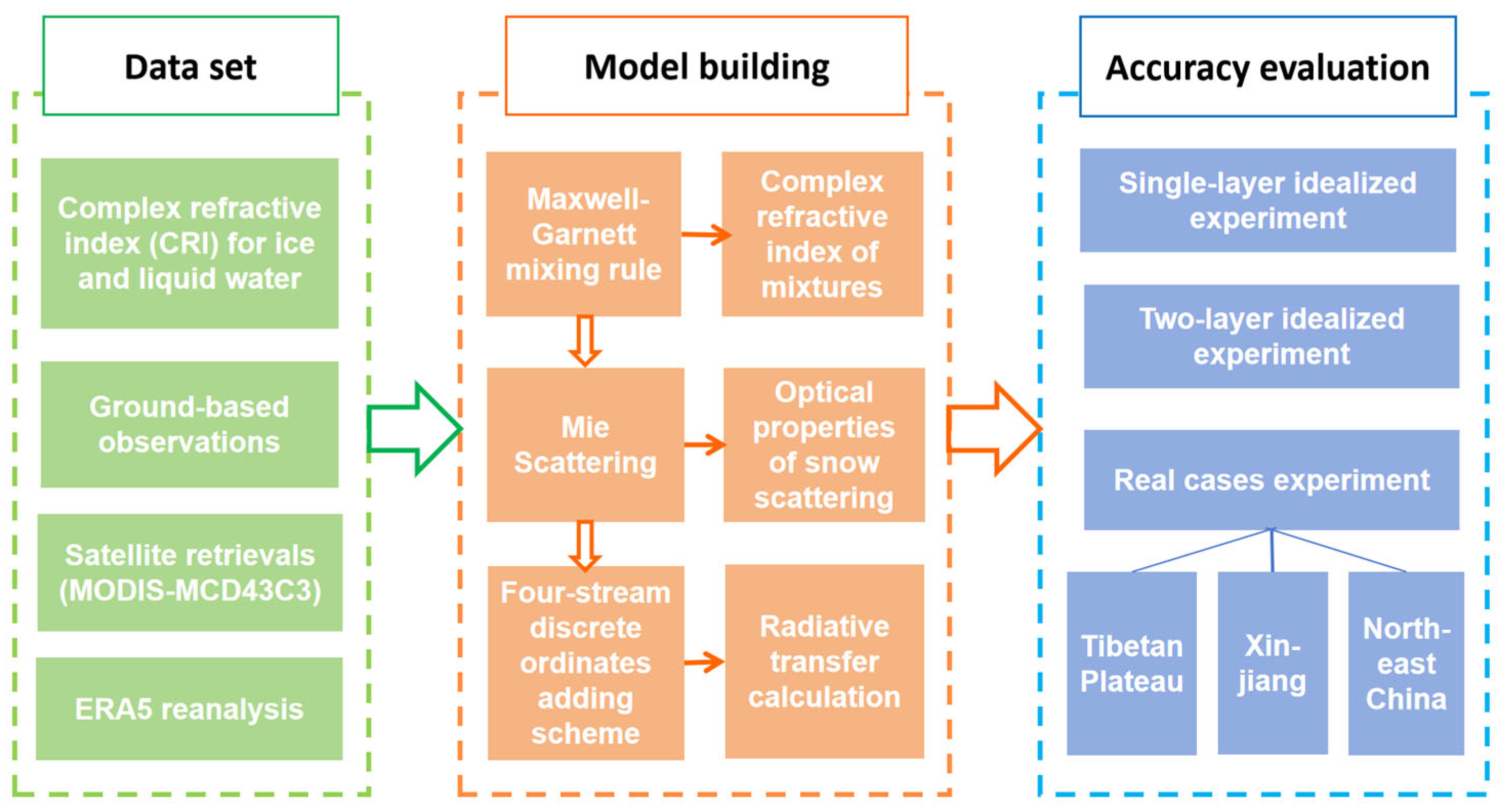
- Developed a snow albedo model that explicitly accounts for liquid water content (LWC) by integrating the Maxwell–Garnett mixing rule, Mie scattering theory, and a four-stream discrete ordinates adding method.
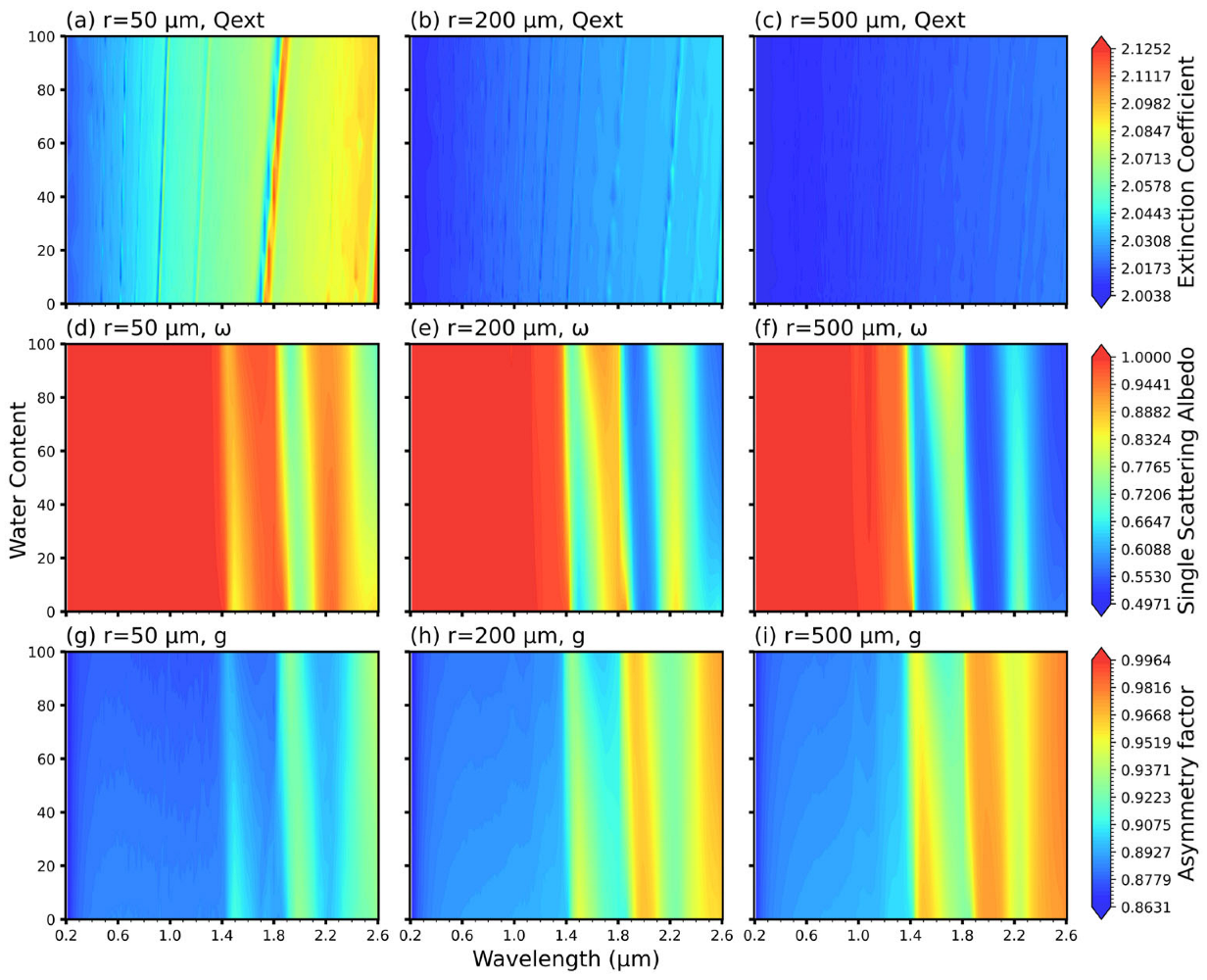
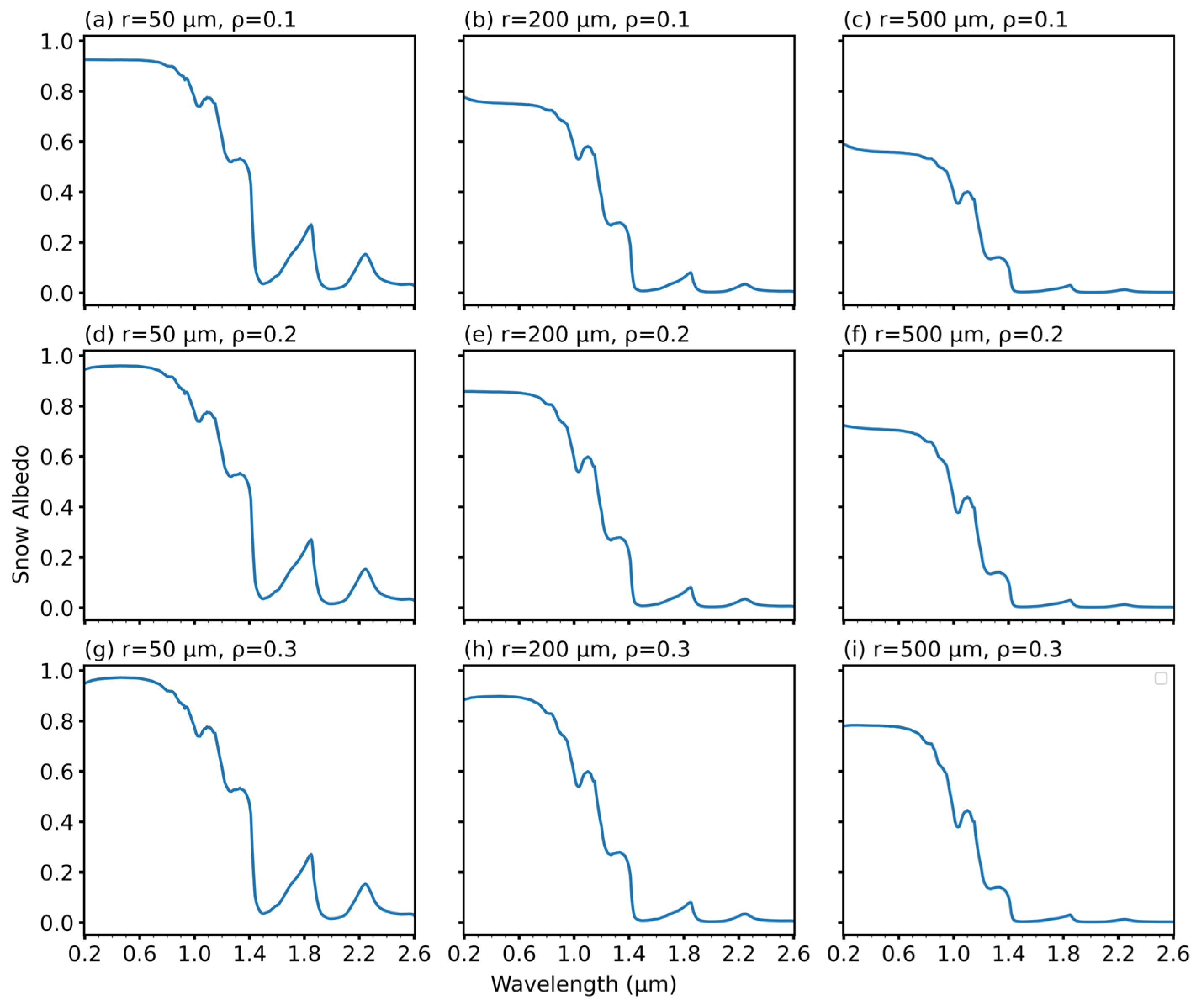
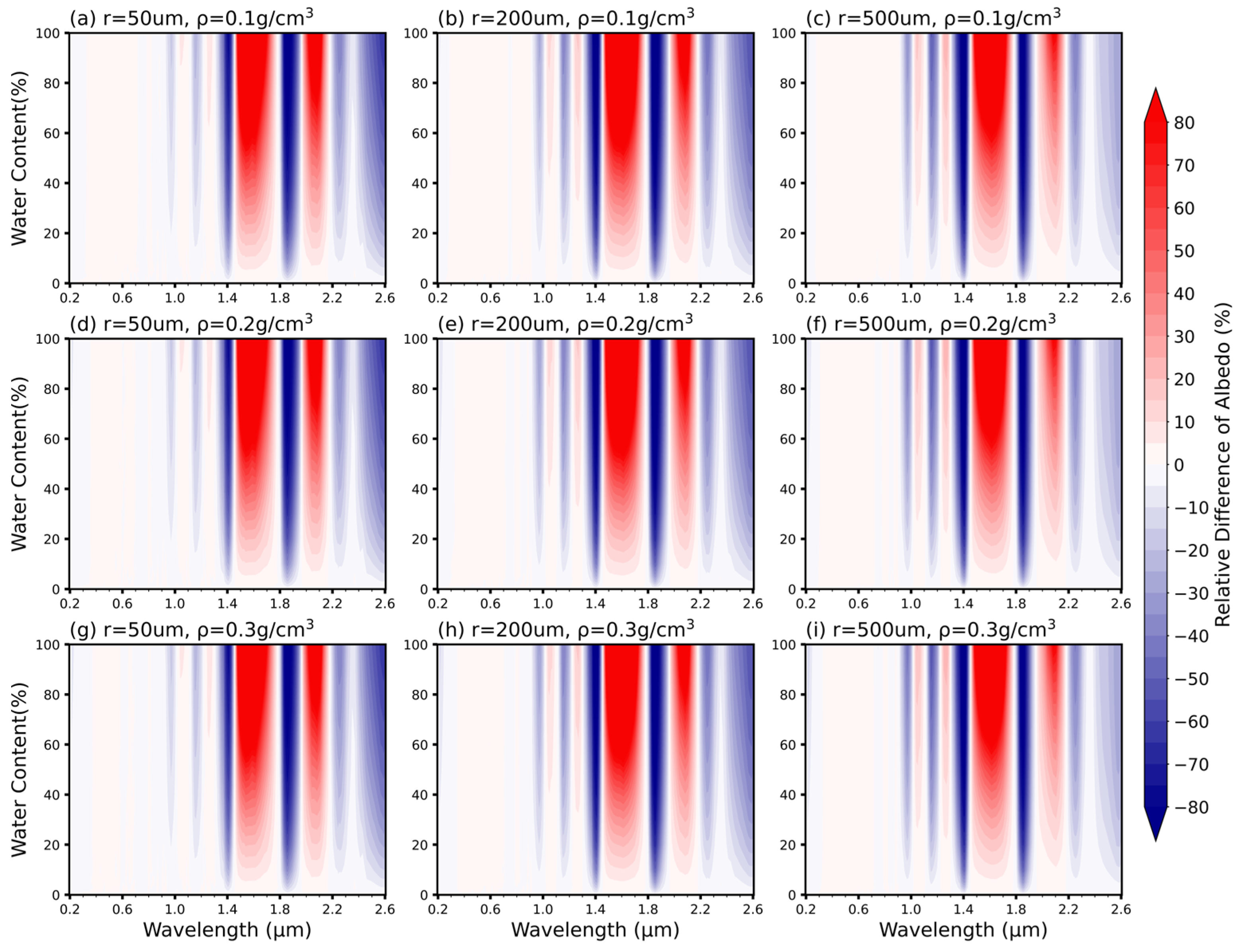
- The LWC on the surface of snow has a stronger impact on albedo, and snow with smaller particle sizes is more sensitive to changes in LWC.
- Achieved improved accuracy in albedo simulations under certain conditions when compared with observations.
- Demonstrated a strong ability to express physical mechanisms and maintain stable performance in complex environments, making it applicable to wet snow containing impurities.
Abstract
1. Introduction
2. Data and Methods
2.1. Data
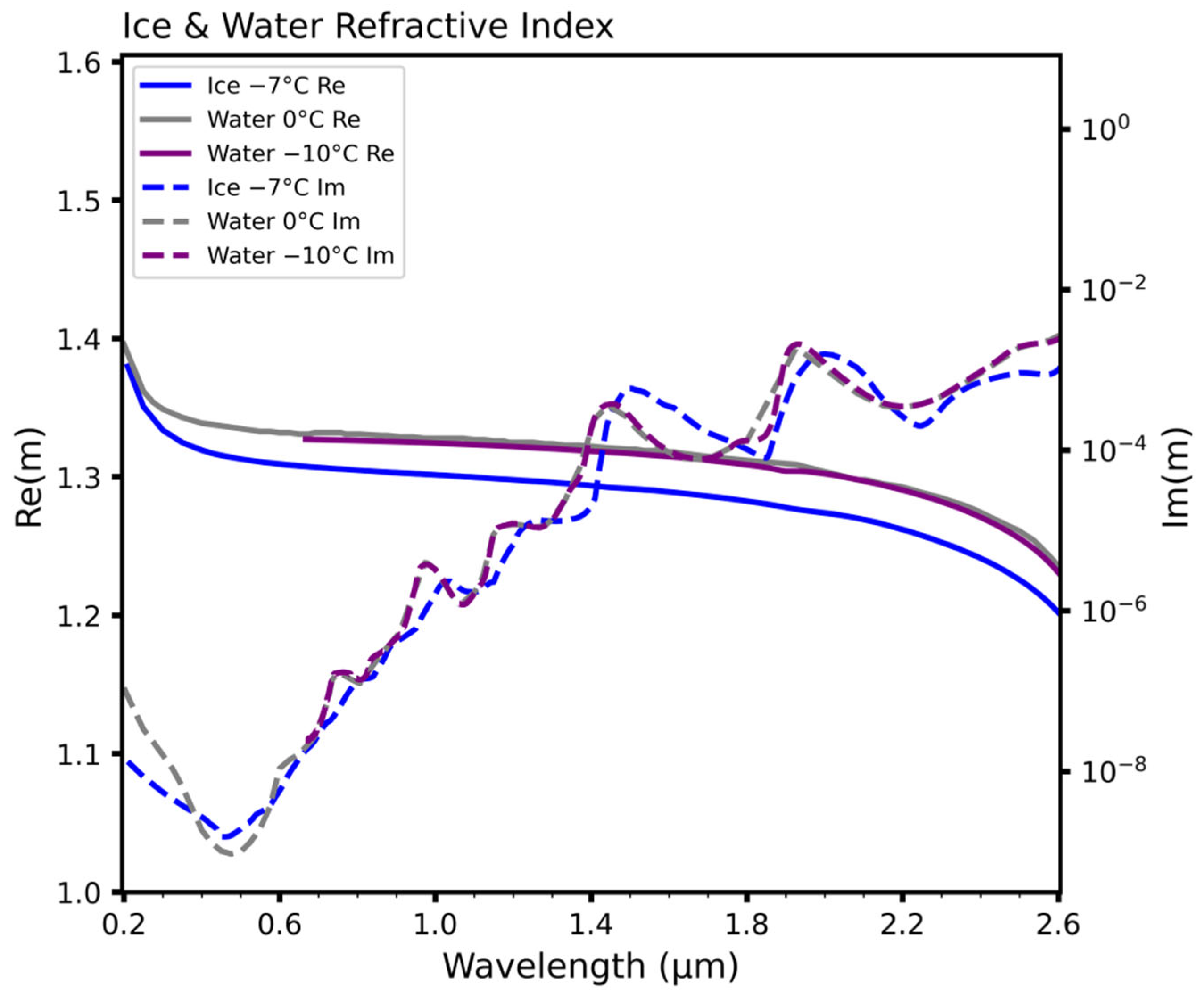
2.1.1. Complex Refractive Indices of Ice and Liquid Water
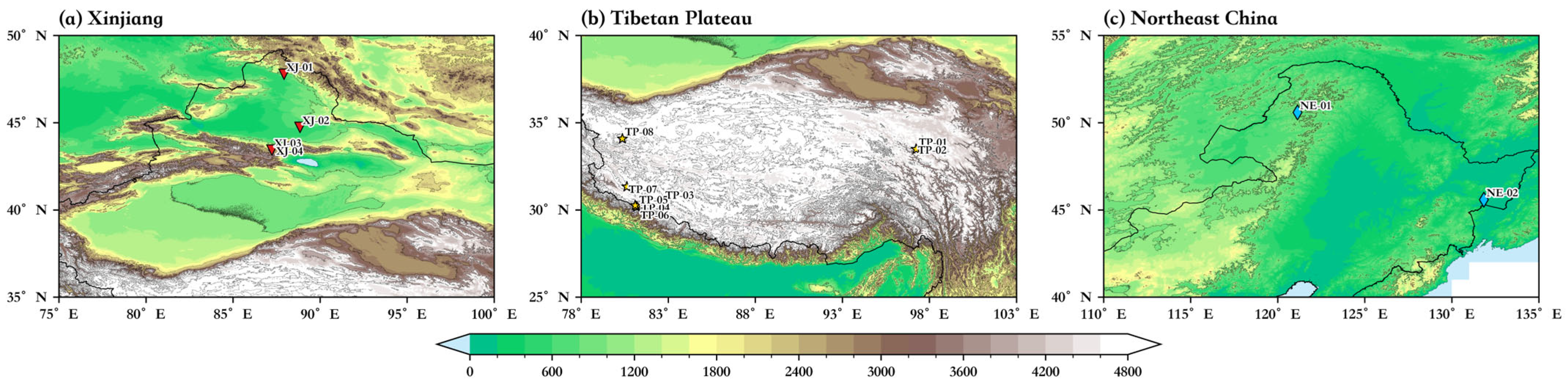
2.1.2. Ground-Based Observations
2.1.3. Satellite Retrievals
2.1.4. ERA5 Reanalysis
2.2. Methods
2.2.1. Maxwell–Garnett Mixing Rule
2.2.2. Mie Scattering
2.2.3. Four-Stream Radiative Transfer Approximation Scheme
2.2.4. Evaluation Metrics
3. Results
3.1. Results from Idealized Experiments
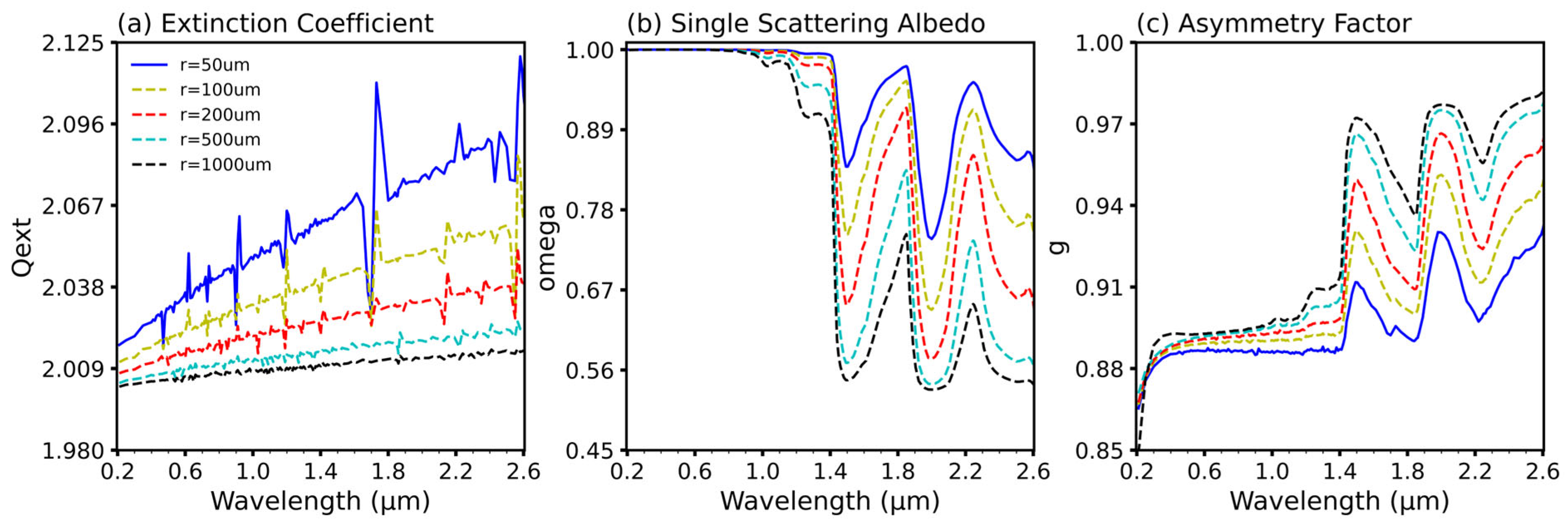
3.1.1. Snow Optical Properties
3.1.2. Single-Layer Idealized Experiment
3.2. Two-Layer Idealized Experiment
3.3. Snow Albedo Model Validation in the Real Case
4. Discussion
5. Conclusions
Author Contributions
Funding
Data Availability Statement
Acknowledgments
Conflicts of Interest
References
- Bormann, K.J.; Brown, R.D.; Derksen, C.; Painter, T.H. Estimating snow-cover trends from space. Nat. Clim. Change 2018, 8, 924–928. [Google Scholar] [CrossRef]
- Pablo, F.C.; Carlos, R.C.; Carlos, Y. Impact of snow cover on the surface energy balance and its contribution to the extreme cold wave in Spain after snowstorm Filomena. Atmos. Res. 2025, 320, 108015. [Google Scholar] [CrossRef]
- Ren, S.; Jia, L.; Miles, E.S.; Menenti, M.; Kneib, M.; Shaw, T.E.; Buri, P.; McCarthy, M.J.; Yang, W.; Pellicciotti, F.; et al. Observed and projected declines in glacier albedo across the Third Pole in the 21st century. One Earth 2024, 7, 1587–1599. [Google Scholar] [CrossRef]
- Wang, S.; Wyser, K.; Koenigk, T. Sensitivity of seasonal circulation response to snow reduction in the Northern Hemisphere and Eurasia and its impact on Eurasian climate. Clim. Dyn. 2023, 61, 5495–5515. [Google Scholar] [CrossRef]
- Xie, Y.; Pettersen, C.; Flanner, M.; Shates, J. Ground-observed snow albedo changes during rain-on-snow events in Northern Alaska. J. Geophys. Res. Atmos. 2024, 129, e2024JD040975. [Google Scholar] [CrossRef]
- Wiscombe, W.J.; Warren, S.G. A model for the spectral albedo of snow. I: Pure snow. J. Atmos. Sci. 1980, 37, 2712–2733. [Google Scholar] [CrossRef]
- Konzelmann, T.; Braithwaite, R.J. Variations of ablation, albedo and energy balance at the margin of the Greenland ice sheet, Kronprins Christian Land, eastern north Greenland. J. Glaciol. 1995, 41, 174–182. [Google Scholar] [CrossRef]
- Lundquist, J.D.; Flint, A.L. Onset of snowmelt and streamflow in 2004 in the western United States: How shading may affect spring streamflow timing in a warmer world. Hydrol. Process. 2006, 7, 1199–1217. [Google Scholar] [CrossRef]
- Dang, C.; Fu, Q.; Warren, S.G. Effect of snow grain shape on snow albedo. J. Atmos. Sci. 2016, 73, 3573–3583. [Google Scholar] [CrossRef]
- Gardner, A.S.; Sharp, M.J. A review of snow and ice albedo and the development of a new physically based broadband albedo parameterization. J. Geophys. Res. Earth Surf. 2010, 115, F01009. [Google Scholar] [CrossRef]
- Skiles, S.M.; Painter, T.H. Daily evolution in dust and black carbon content, snow grain size, and snow albedo during snowmelt, Rocky Mountains, Colorado. J. Glaciol. 2017, 63, 118–132. [Google Scholar] [CrossRef]
- Warren, S.G.; Wiscombe, W.J. A model for the spectral albedo of snow. II: Snow containing atmospheric aerosols. J. Atmos. Sci. 1980, 37, 2734–2745. [Google Scholar] [CrossRef]
- Bair, E.H.; Rittger, K.; Skiles, S.M.; Dozier, J. An examination of snow albedo estimates from MODIS and their impact on snow water equivalent reconstruction. Water Resour. Res. 2019, 55, 7826–7842. [Google Scholar] [CrossRef]
- Brock, B.W.; Willis, I.C.; Sharp, M.J. Measurement and parameterization of albedo variations at Haut Glacier d’Arolla, Switzerland. J. Glaciol. 2000, 46, 675–688. [Google Scholar] [CrossRef]
- Greuell, W.; Reijmer, C.; Oerlemans, J. Narrowband-to-broadband albedo conversion for glacier ice and snow based on aircraft and near-surface measurements. Remote Sens. Environ. 2002, 82, 48–63. [Google Scholar] [CrossRef]
- Magnusson, J.; Cluzet, B.; Queno, L.; Mott, R.; Oberrauch, M.; Mazzotti, G.; Marty, C.; Jonas, T. Evaluating methods to estimate the water equivalent of new snow from daily snow depth recordings. Cold Reg. Sci. Technol. 2025, 233, 104435. [Google Scholar] [CrossRef]
- Wang, H.; Zhang, X.; Xiao, P.; Che, T.; Zheng, Z.; Dai, L.; Luan, W. Towards large-scale daily snow density mapping with spatiotemporally aware model and multi-source data. Cryosphere 2023, 17, 33–50. [Google Scholar] [CrossRef]
- Zemp, M.; Huss, M.; Thibert, E.; Eckert, N.; McNabb, R.W.; Huber, J.; Barandun, M.; Machguth, H.; Nussbaumer, S.U.; Gärtner-Roer, I.; et al. Global glacier mass changes and their contributions to sea-level rise from 1961 to 2016. Nature 2019, 568, 382–386. [Google Scholar] [CrossRef]
- Dozier, J.; Painter, T.H. Multispectral and hyperspectral remote sensing of alpine snow properties. Annu. Rev. Earth Planet. Sci. 2004, 32, 465–494. [Google Scholar] [CrossRef]
- Kokhanovsky, A.A.; Zege, E.P. Scattering optics of snow. Appl. Opt. 2004, 43, 1589–1602. [Google Scholar] [CrossRef]
- Flanner, M.G.; Zender, C.S. Linking snowpack microphysics and albedo evolution. J. Geophys. Res. Atmos. 2006, 111, D12208. [Google Scholar] [CrossRef]
- Ravasio, C.; Garzonio, R.; Di Mauro, B.; Matta, E.; Giardino, C.; Pepe, M.; Cremonese, E.; Pogliotti, P.; Marin, C.; Colombo, R. Retrieval of snow liquid water content from radiative transfer model, field data and PRISMA satellite data. Remote Sens. Environ. 2024, 311, 114268. [Google Scholar] [CrossRef]
- Flanner, M.G.; Arnheim, J.B.; Cook, J.M.; Dang, C.; He, C.; Huang, X.; Singh, D.; Skiles, S.M.; Whicker, C.A.; Zender, C.S. SNICAR-ADv3: A community tool for modeling spectral snow albedo. Geosci. Model Dev. 2021, 14, 7673–7704. [Google Scholar] [CrossRef]
- Whicker, C.A.; Flanner, M.G.; Dang, C.; Zender, C.S.; Cook, J.M.; Gardner, A.S. SNICAR-ADv4: A physically based radiative transfer model to represent the spectral albedo of glacier ice. Cryosphere 2022, 16, 1197–1220. [Google Scholar] [CrossRef]
- Zhang, F.; Shen, Z.; Li, J.; Zhou, X.; Ma, L. Analytical delta-four-stream doubling–adding method for radiative transfer parameterizations. J. Atmos. Sci. 2013, 70, 794–808. [Google Scholar] [CrossRef]
- Warren, S.G.; Brandt, R.E. Optical constants of ice from the ultraviolet to the microwave: A revised compilation. J. Geophys. Res. Atmos. 2008, 113, D14220. [Google Scholar] [CrossRef]
- Rowe, P.M.; Fergoda, M.; Neshyba, S. Temperature-dependent optical properties of liquid water from 240 to 298 K. J. Geophys. Res. Atmos. 2020, 125, e2020JD032624. [Google Scholar] [CrossRef]
- Che, T.; Li, L.; Liu, Y. Snow Survey Dataset from Measurement Routes in the Typical Regions of China During 2017–2021 [Dataset]; National Cryosphere Desert Data Center: Lanzhou, China, 2021. [Google Scholar] [CrossRef]
- Hersbach, H.; Bell, B.; Berrisford, P.; Hirahara, S.; Horányi, A.; Muñoz-Sabater, J.; Nicolas, J.; Peubey, C.; Radu, R.; Schepers, D.; et al. The ERA5 global reanalysis. Q. J. R. Meteorol. Soc. 2020, 146, 1999–2049. [Google Scholar] [CrossRef]
- Markel, V.A. Introduction to the Maxwell Garnett approximation: Tutorial. J. Opt. Soc. Am. A 2016, 33, 1244–1256. [Google Scholar] [CrossRef]
- Wu, K.; Li, J.; von Salzen, K.; Zhang, F. Explicit solutions to the mixing rules with three-component inclusions. J. Quant. Spectrosc. Radiat. Transf. 2018, 207, 78–82. [Google Scholar] [CrossRef]
- Mie, G. Beiträge zur Optik trüber Medien, speziell kolloidaler Metallösungen. Ann. Phys. 1908, 330, 377–445. [Google Scholar] [CrossRef]
- Liu, K. Research on Snow Reflectivity Model. Master’s Thesis, Nanjing University of Information Science and Technology, Nanjing, China, 2017. [Google Scholar]
- Flanner, M.G.; Zender, C.S.; Randerson, J.T.; Rasch, P.J. Present-day climate forcing and response from black carbon in snow. J. Geophys. Res. Atmos. 2007, 112, D11202. [Google Scholar] [CrossRef]
- Grenfell, T.C.; Warren, S.G. Representation of a nonspherical ice particle by a collection of independent spheres for scattering and absorption of radiation. J. Geophys. Res. Atmos. 1999, 104, 31697–31709. [Google Scholar] [CrossRef]
- He, C.; Flanner, M.G.; Chen, F.; Barlage, M.; Liou, K.-N.; Kang, S.; Ming, J.; Qian, Y. Black carbon-induced snow albedo reduction over the Tibetan Plateau: Uncertainties from snow grain shape and aerosol-snow mixing state based on an updated SNICAR model. Atmos. Chem. Phys. 2018, 18, 11507–11527. [Google Scholar] [CrossRef]
- Fierz, C.; Armstrong, R.L.; Durand, Y.; Etchevers, P.; Greene, E.; McClung, D.M.; Nishimura, K.; Satyawali, P.K.; Sokratov, S.A. The International Classification for Seasonal Snow on the Ground; IHP-VII Technical Documents in Hydrology No. 83; IACS Contribution No. 1; UNESCO-IHP: Paris, France, 2009; p. 90. Available online: https://unesdoc.unesco.org/ark:/48223/pf0000186462 (accessed on 1 June 2025).




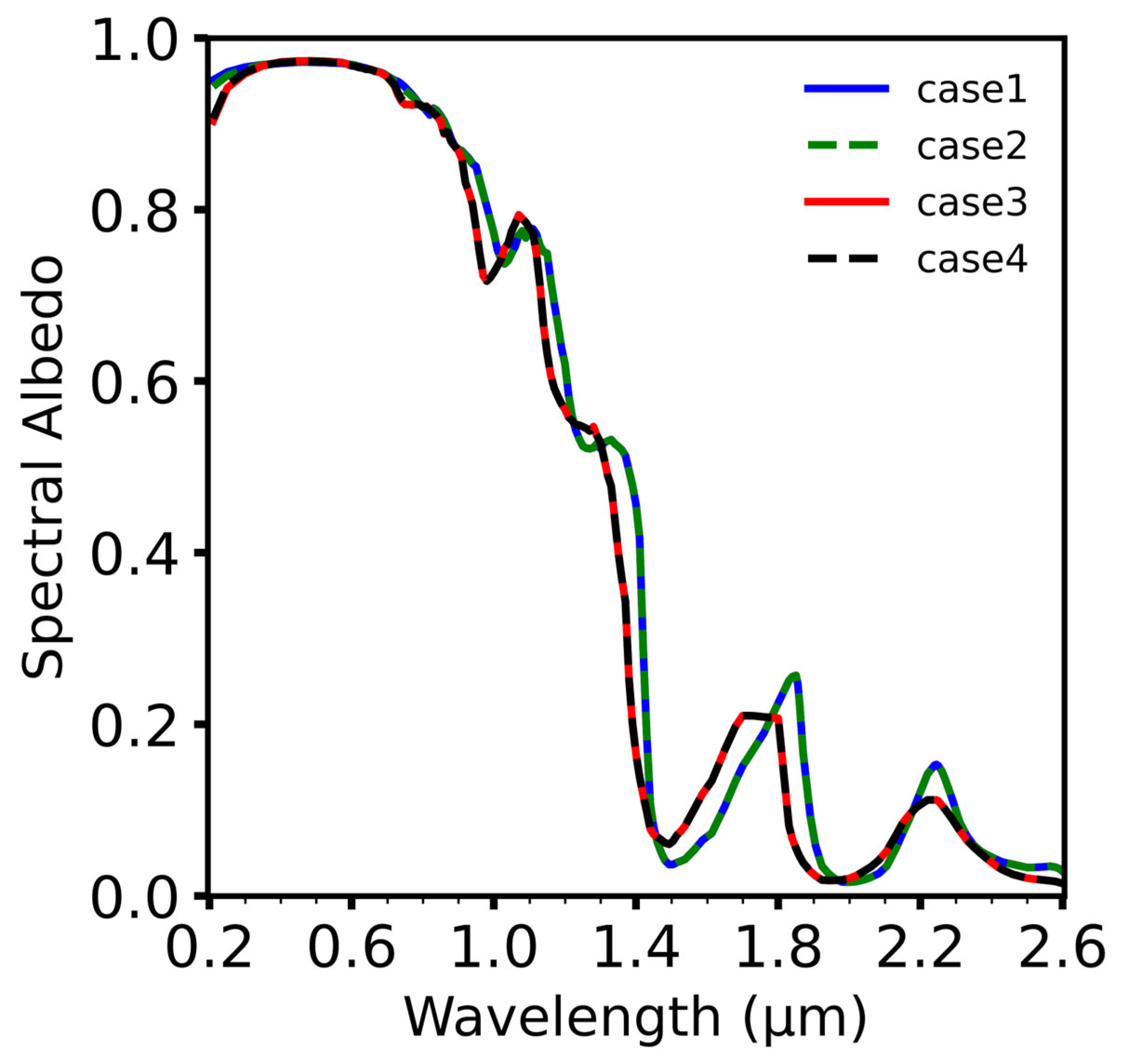
| Sample | Layer | Moisture Content (%) | Density (g cm−3) |
|---|---|---|---|
| Case1 | Layer1 | 1 | 0.1 |
| Layer2 | 1 | 0.2 | |
| Case2 | Layer1 | 1 | 0.1 |
| Layer2 | 60 | 0.2 | |
| Case3 | Layer1 | 60 | 0.1 |
| Layer2 | 60 | 0.2 | |
| Case4 | Layer1 | 60 | 0.1 |
| Layer2 | 1 | 0.2 |
| Station | Site | (Longitude, Latitude) | Time | Snow Depth (cm) | Layer (cm) | Moisture Content (%) | Density (g cm−3) | Particle Size (μm) |
|---|---|---|---|---|---|---|---|---|
| XJ-1 | Altay | (87.932°N,47.787°E) | 2018/8/9 16:40 | 13 | 0–5 | 0.526 | 0.1291 | 180 |
| 5–10 | 1.468 | 0.1383 | 150 | |||||
| 10–13 | 8.9723 | 0.3443 | 165 | |||||
| XJ-2 | Gumul County | (88.842°N,44.737°E) | 2018/12/20 16:00 | 10 | 0–5 | 0.2233 | 0.1493 | 169 |
| 5–10 | 0.8647 | 0.0999 | 158 | |||||
| XJ-3 | Nanshan Astronomical Observatory | (87.235°N,43.435°E) | 2018/1/23 13:40 | 9.5 | 0–5 | 0 | 0.1127 | 145 |
| 5–9.5 | 0.037 | 0.1229 | 128 | |||||
| XJ-4 | Baiyanggou | (87.235°N,43.435°E) | 2019/1/14 13:10 | 10 | 0–5 | 2.58 | 0.1407 | 186 |
| 5–10 | 0 | 0.259 | 213 | |||||
| TP-1 | Gangba Village, Dari County, Golog Prefecture | (97.236°N,33.485°E) | 2018/2/4 9:30 | 10 | 0–5 | 1.6193 | 0.1249 | 190 |
| 5–10 | 0.035 | 0.0936 | 190 | |||||
| TP-2 | Zhenqin Town, Chengduo County, Yushu Prefecture | (97.235°N,33.486°E) | 2018/2/25 13:00 | 10 | 0–5 | 0.354 | 0.1951 | 200 |
| 5–10 | 0 | 0.2398 | 121 | |||||
| TP-3 | Horba Township, Zhongba County, Shigatse Prefecture, TAR | (30.450°N, 82.673°E) | 2021/01/17 14:00 | 8 | 0–8 | 0.0300 | 0.1281 | 175 |
| TP-4 | Pulan Town, Pulan County, Ngari Prefecture, TAR | (30.186°N, 81.192°E) | 2021/01/19 12:00 | 10 | 0–5 | 0.2673 | 0.1661 | 193 |
| 5–10 | 0.0377 | 0.1558 | 174 | |||||
| TP-5 | Pulan Town, Pulan County, Ngari Prefecture, TAR | (30.183°N, 81.176°E) | 2021/01/20 12:00 | 15 | 0–5 | 0.3080 | 0.1646 | 191 |
| 5–10 | 0.0377 | 0.1592 | 194 | |||||
| 10–15 | 0.0380 | 0.1724 | 135 | |||||
| TP-6 | Dingsong, Pulan County, Ngari Prefecture, TAR | (30.256°N, 81.097°E) | 2021/01/19 12:00 | 12 | 0–5 | 0.1130 | 0.1518 | 173 |
| 5–12 | 0.0000 | 0.3965 | 138 | |||||
| TP-7 | Mentuo Township, Gar County, Ngari Prefecture, TAR | (31.335°N, 80.620°E) | 2021/01/19 15:00 | 10 | 0–5 | 2.4230 | 0.1566 | 174 |
| 5–10 | 0.4597 | 0.1645 | 177 | |||||
| TP-8 | Dongru Township, Ritu Count, Ngari Prefecture, TAR | (34.084°N, 80.359°E) | 2021/01/20 12:00 | 7 | 0–7 | 0.0820 | 0.1282 | 137 |
| NE-1 | Genhenan | (121.137°N,50.59°E) | 2018/3/9 16:50 | 15 | 0–5 | 0 | 0.1156 | 263 |
| 5–10 | 0.1417 | 0.1075 | 189 | |||||
| 10–15 | 2.0777 | 0.0366 | 121 | |||||
| NE-2 | Mishan North | (131.84°N,45.586°E) | 2018/1/2 12:05 | 16 | 0–14 | 2.106 | 0.0867 | 185 |
| 14–16 | 0.9173 | 0.0949 | 525 |
| Station | Time | Longitude | Latitude | White Sky Albedo | Black Sky Albedo | Albedo |
|---|---|---|---|---|---|---|
| XJ-1 | 2018/08/09 16:40 | 87.9318 | 47.7868 | 0.3835 | 0.3545 | 0.3676 |
| XJ-2 | 2018/12/20 16:00 | 88.8425 | 44.7371 | 0.3365 | 0.3510 | 0.3383 |
| XJ-3 | 2018/01/23 13:40 | 87.2350 | 43.4345 | 0.2508 | 0.2594 | 0.2547 |
| XJ-4 | 2019/01/14 13:10 | 87.2352 | 43.4346 | 0.2340 | 0.2436 | 0.2399 |
| TP-1 | 2018/02/04 09:30 | 97.2362 | 33.4851 | 0.3225 | 0.3157 | 0.3189 |
| TP-2 | 2018/02/25 13:00 | 97.2355 | 33.4862 | 0.3636 | 0.3505 | 0.357 |
| TP-3 | 2021/01/17 14:10 | 82.6732 | 30.4504 | 0.3985 | 0.3947 | 0.3973 |
| TP-4 | 2021/01/19 12:10 | 81.1923 | 30.1856 | 0.2932 | 0.2876 | 0.2925 |
| TP-5 | 2021/01/19 13:30 | 81.1764 | 30.1834 | 0.2869 | 0.2812 | 0.2847 |
| TP-6 | 2021/01/19 15:50 | 81.0966 | 30.2562 | 0.2950 | 0.2894 | 0.2937 |
| TP-7 | 2021/01/20 12:40 | 80.6204 | 31.3346 | 0.3138 | 0.3095 | 0.3131 |
| TP-8 | 2021/01/21 13:10 | 80.3590 | 34.0839 | 0.2339 | 0.2340 | 0.2339 |
| NE-1 | 2018/03/09 16:50 | 121.1370 | 50.5901 | 0.2769 | 0.2787 | 0.2784 |
| NE-2 | 2018/01/02 12:05 | 131.8397 | 45.5864 | 0.3275 | 0.3577 | 0.3362 |
Disclaimer/Publisher’s Note: The statements, opinions and data contained in all publications are solely those of the individual author(s) and contributor(s) and not of MDPI and/or the editor(s). MDPI and/or the editor(s) disclaim responsibility for any injury to people or property resulting from any ideas, methods, instructions or products referred to in the content. |
© 2025 by the authors. Licensee MDPI, Basel, Switzerland. This article is an open access article distributed under the terms and conditions of the Creative Commons Attribution (CC BY) license (https://creativecommons.org/licenses/by/4.0/).
Share and Cite
Li, F.; Wu, K. Improvement of Snow Albedo Simulation Considering Water Content. Remote Sens. 2025, 17, 3899. https://doi.org/10.3390/rs17233899
Li F, Wu K. Improvement of Snow Albedo Simulation Considering Water Content. Remote Sensing. 2025; 17(23):3899. https://doi.org/10.3390/rs17233899
Chicago/Turabian StyleLi, Fengyu, and Kun Wu. 2025. "Improvement of Snow Albedo Simulation Considering Water Content" Remote Sensing 17, no. 23: 3899. https://doi.org/10.3390/rs17233899
APA StyleLi, F., & Wu, K. (2025). Improvement of Snow Albedo Simulation Considering Water Content. Remote Sensing, 17(23), 3899. https://doi.org/10.3390/rs17233899