Article

GNSS-IR Soil Moisture Inversion Derived from Multi-GNSS and Multi-Frequency Data Accounting for Vegetation Effects

1
School of Civil Engineering, Nanjing Forestry University, Nanjing 210037, China
2
Laboratory and Base Management Division, Nanjing Forestry University, Nanjing 210037, China
3
School of Geography, Nanjing Normal University, Nanjing 210023, China
*
Author to whom correspondence should be addressed.
Remote Sens. 2023, 15(22), 5381; https://doi.org/10.3390/rs15225381
Submission received: 21 September 2023 / Revised: 2 November 2023 / Accepted: 9 November 2023 / Published: 16 November 2023
(This article belongs to the Special Issue SoOP-Reflectometry or GNSS-Reflectometry: Theory and Applications)

Abstract

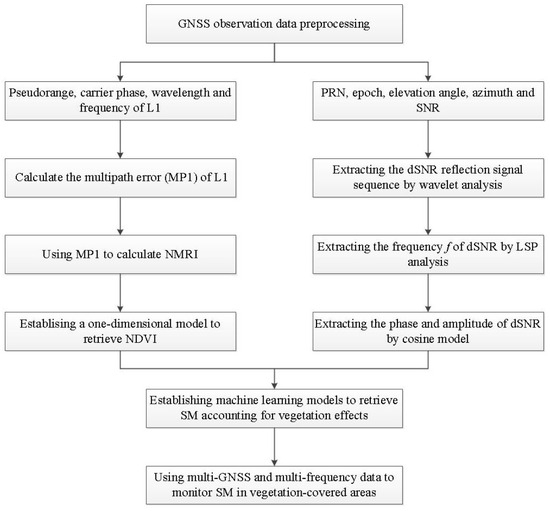
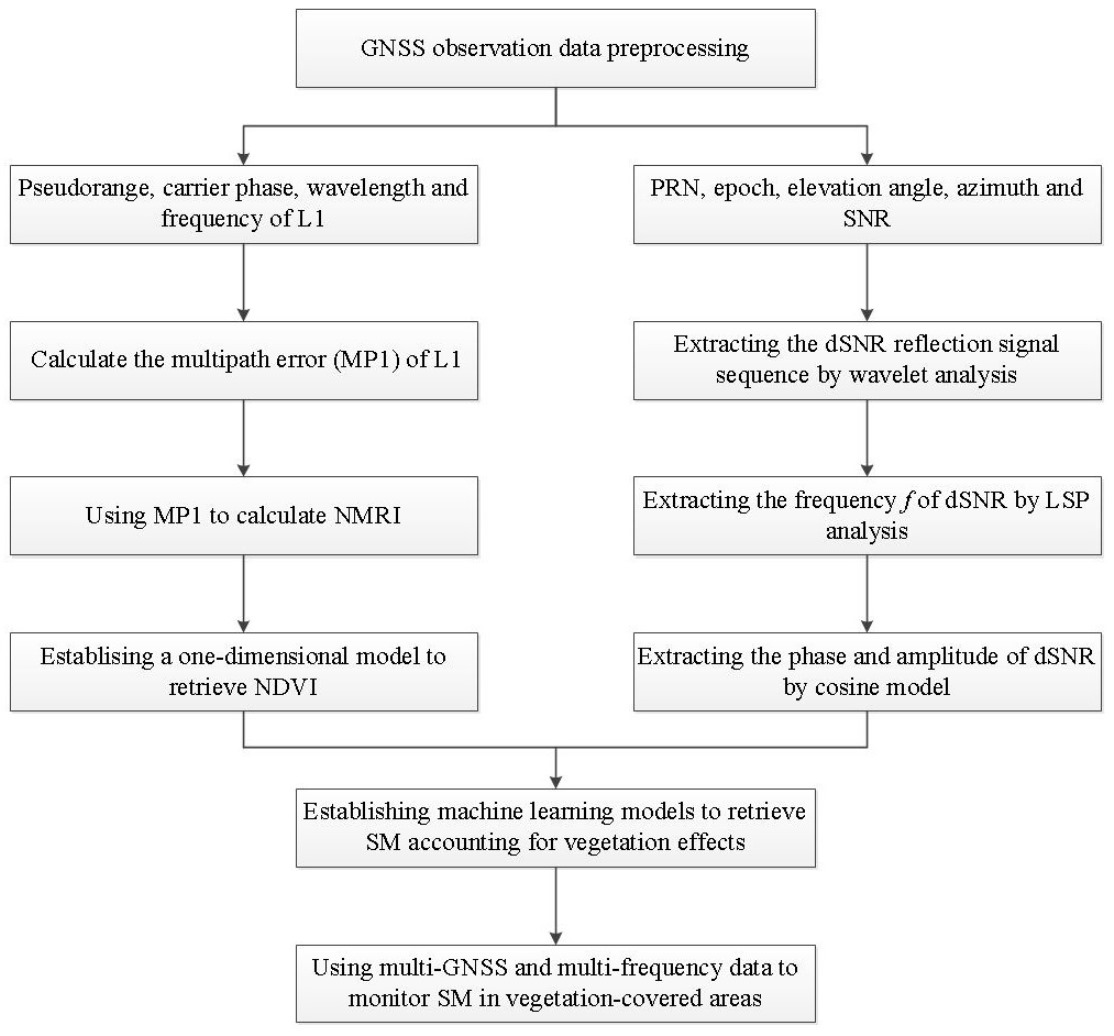
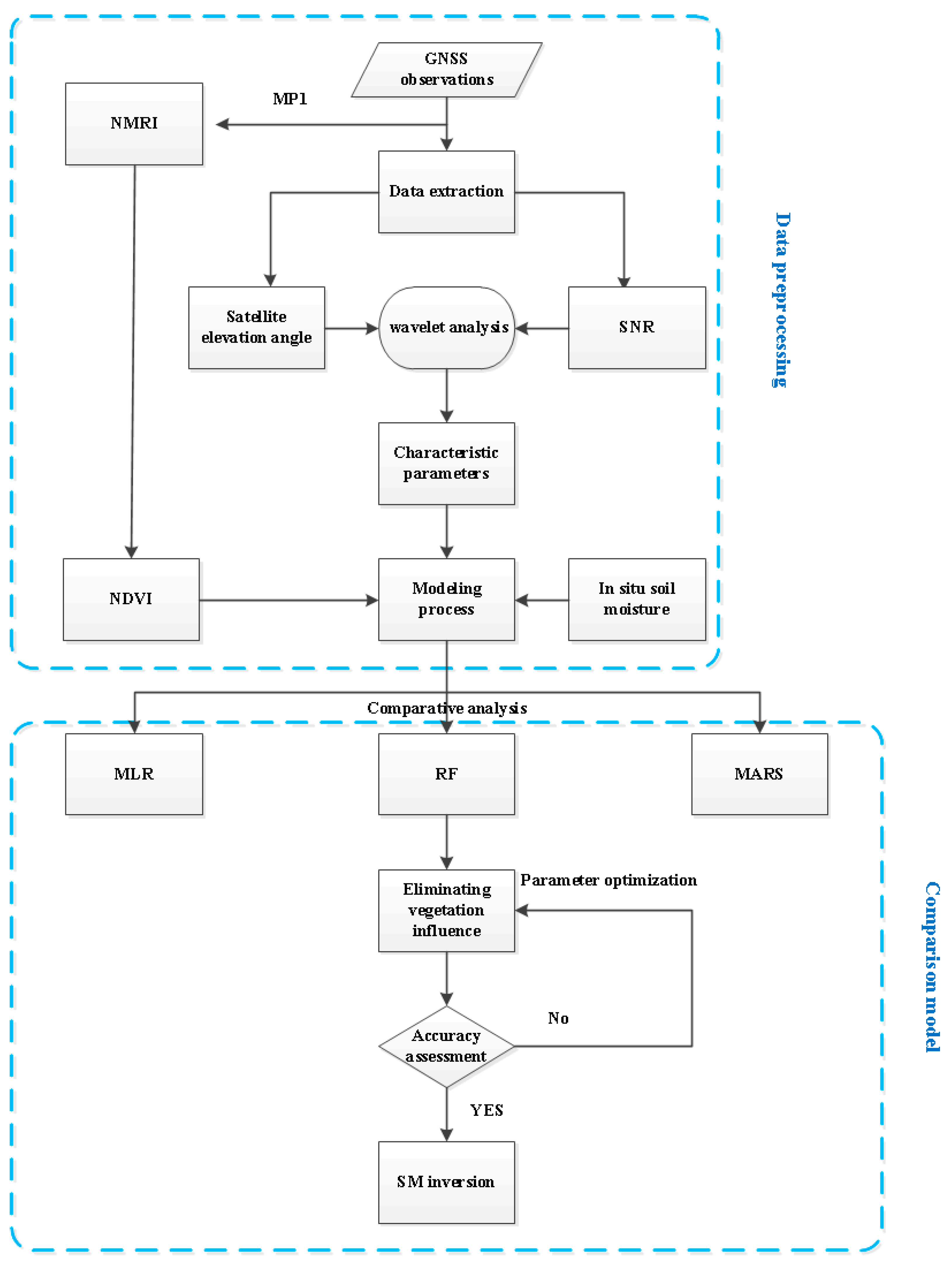
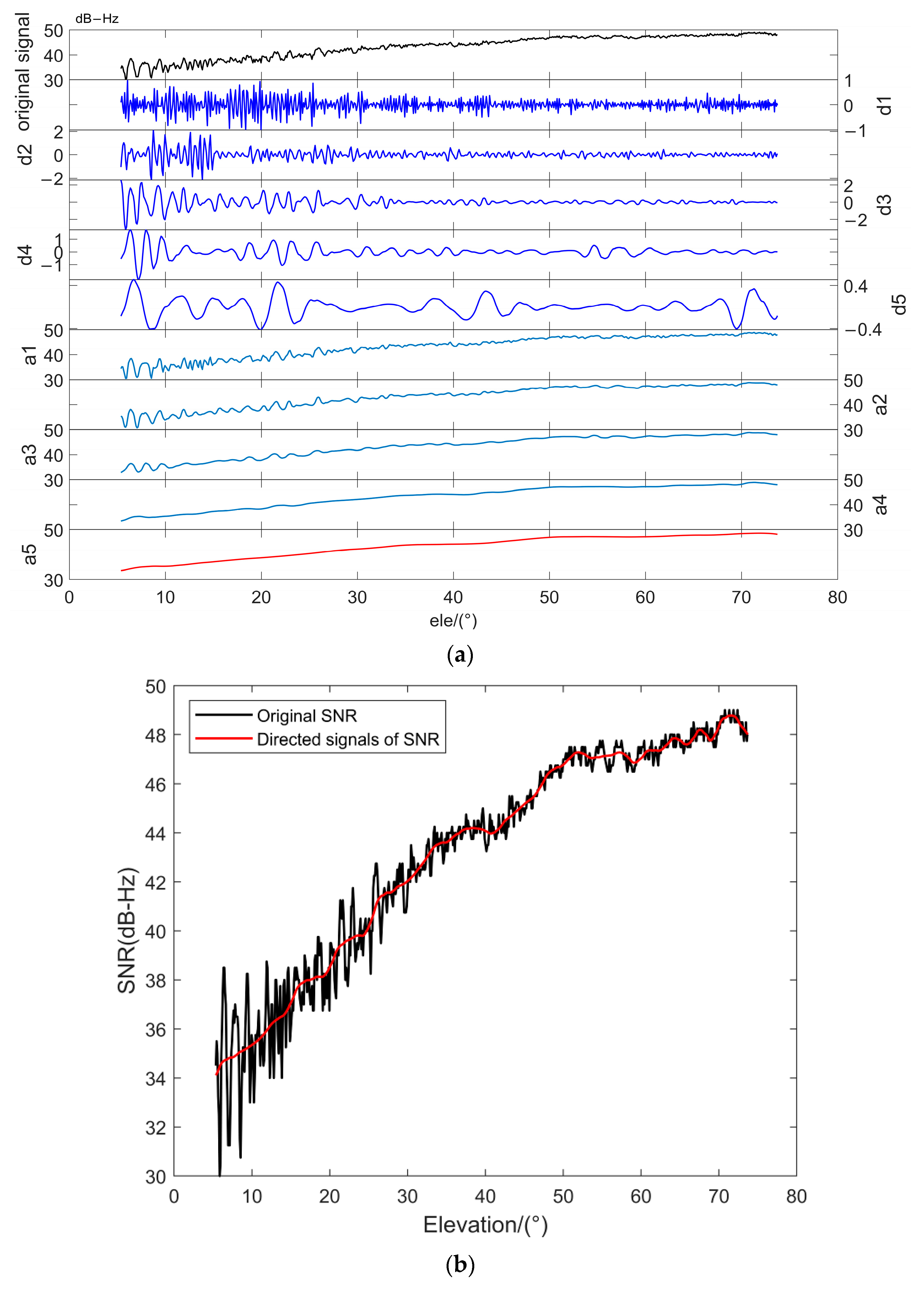
The Global Navigation Satellite System Interferometric Reflectometry (GNSS-IR) technique provides a new remote sensing method that shows great potential for soil moisture detection and vegetation growth, as well as for climate research, water cycle management, and ecological environment monitoring. Considering that the land surface is always covered by vegetation, it is essential to take into account the impacts of vegetation growth when detecting soil moisture (SM). In this paper, based on the GNSS-IR technique, the SM was retrieved from multi-GNSS and multi-frequency data using a machine learning model, accounting for the impact of the vegetation moisture content (VMC). Both the signal-to-noise ratio (SNR) data that was used to retrieve SM and the multipath data that was used to eliminate the vegetation influence were collected from a standard geodetic GNSS station located in Nanjing, China. The normalized microwave reflectance index (NMRI) calculated by multipath data was mapped to a normalized difference vegetation index (NDVI), which was derived from Sentinel-2 data on the Google Earth Engine platform to estimate and eliminate the influence of VMC. Based on the characteristic parameters of amplitude and phase extracted from detrended SNR signals and NDVI derived from multipath data, three machine learning methods, including random forest (RF), multiple linear regression (MLR), and multivariate adaptive regression spline (MARS), were employed for data fusion. The results show that the vegetation effect can be well eliminated using the NMRI method. Comparing MLR and MARS, RF is more suitable for GNSS-IR SM inversion. Furthermore, the SM reversed from amplitude and phase fusion is better than only those from either amplitude fusion or phase fusion. The results prove the feasibility of the proposed method based on a multipath approach to characterize the vegetation effect, as well as the RF model to fuse multi-GNSS and multi-frequency data to retrieve SM with vegetation error-correcting.
Keywords: GNSS-IR; signal-to-noise ratio; soil moisture; vegetation moisture content; normalized microwave reflectance index; random forest GNSS-IR; signal-to-noise ratio; soil moisture; vegetation moisture content; normalized microwave reflectance index; random forest
Graphical Abstract