Article

Forest Spectral Recovery and Regeneration Dynamics in Stand-Replacing Wildfires of Central Apennines Derived from Landsat Time Series


1
Department of Agricultural, Forest and Food Sciences, University of Torino, Grugliasco (TO), IT 10095, Italy
2
Department of Agricultural, Food and Environmental Sciences, Marche Polytechnic University, Ancona (AN), IT 60121, Italy
*
Author to whom correspondence should be addressed.
Remote Sens. 2019, 11(3), 308; https://doi.org/10.3390/rs11030308
Submission received: 23 December 2018 / Revised: 29 January 2019 / Accepted: 30 January 2019 / Published: 4 February 2019

Abstract

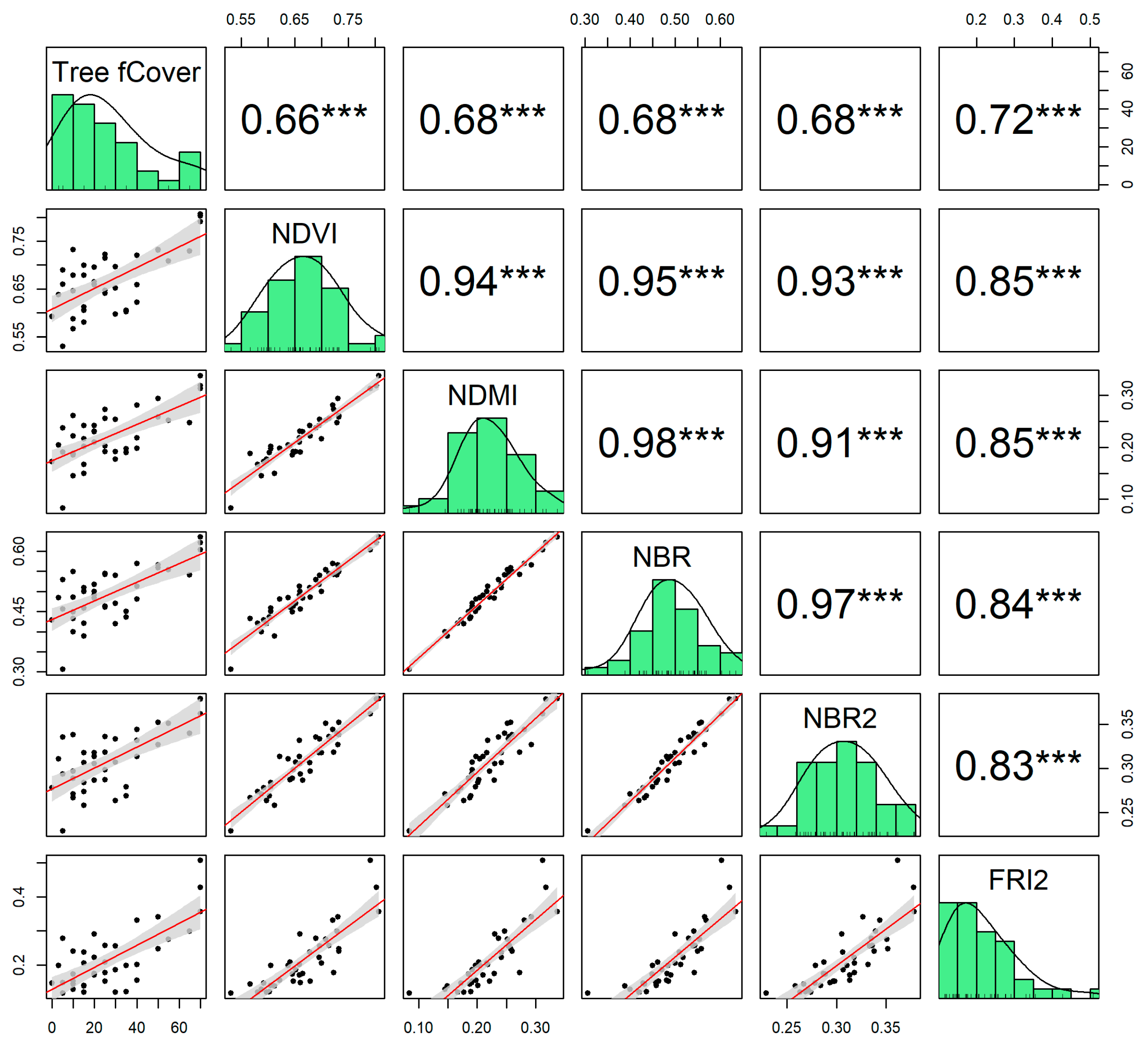
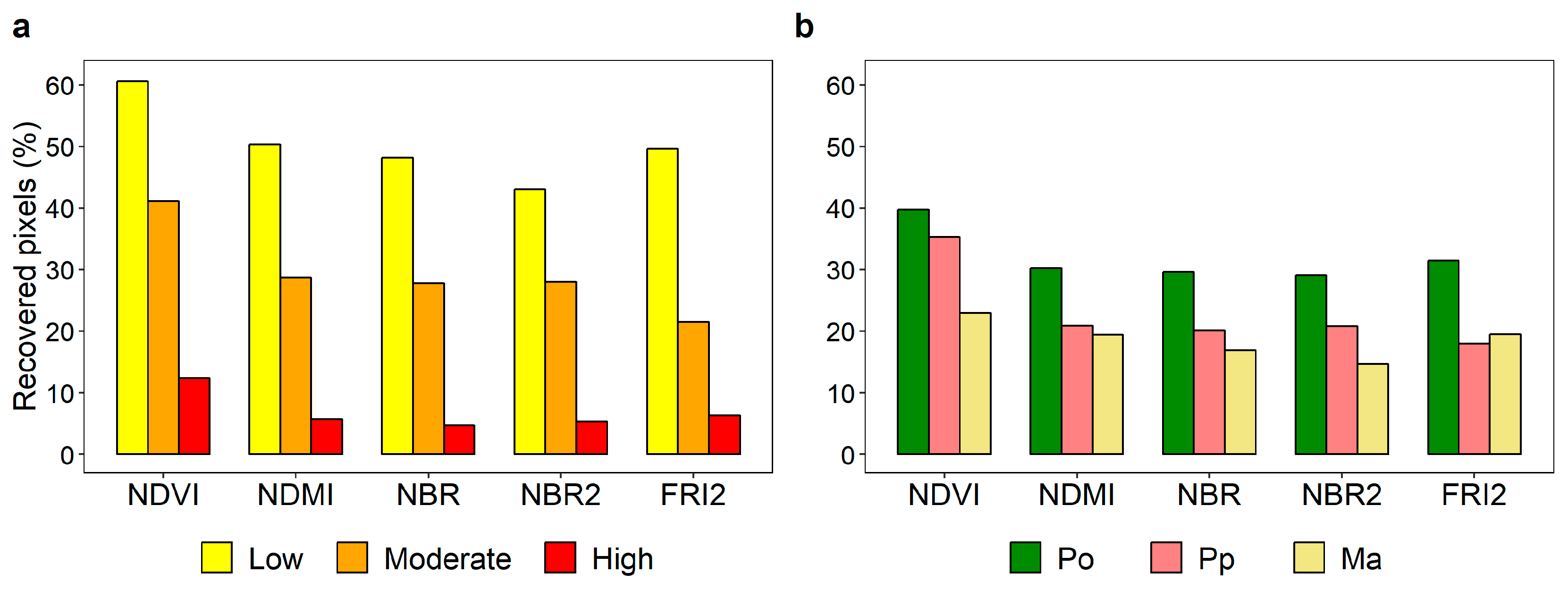
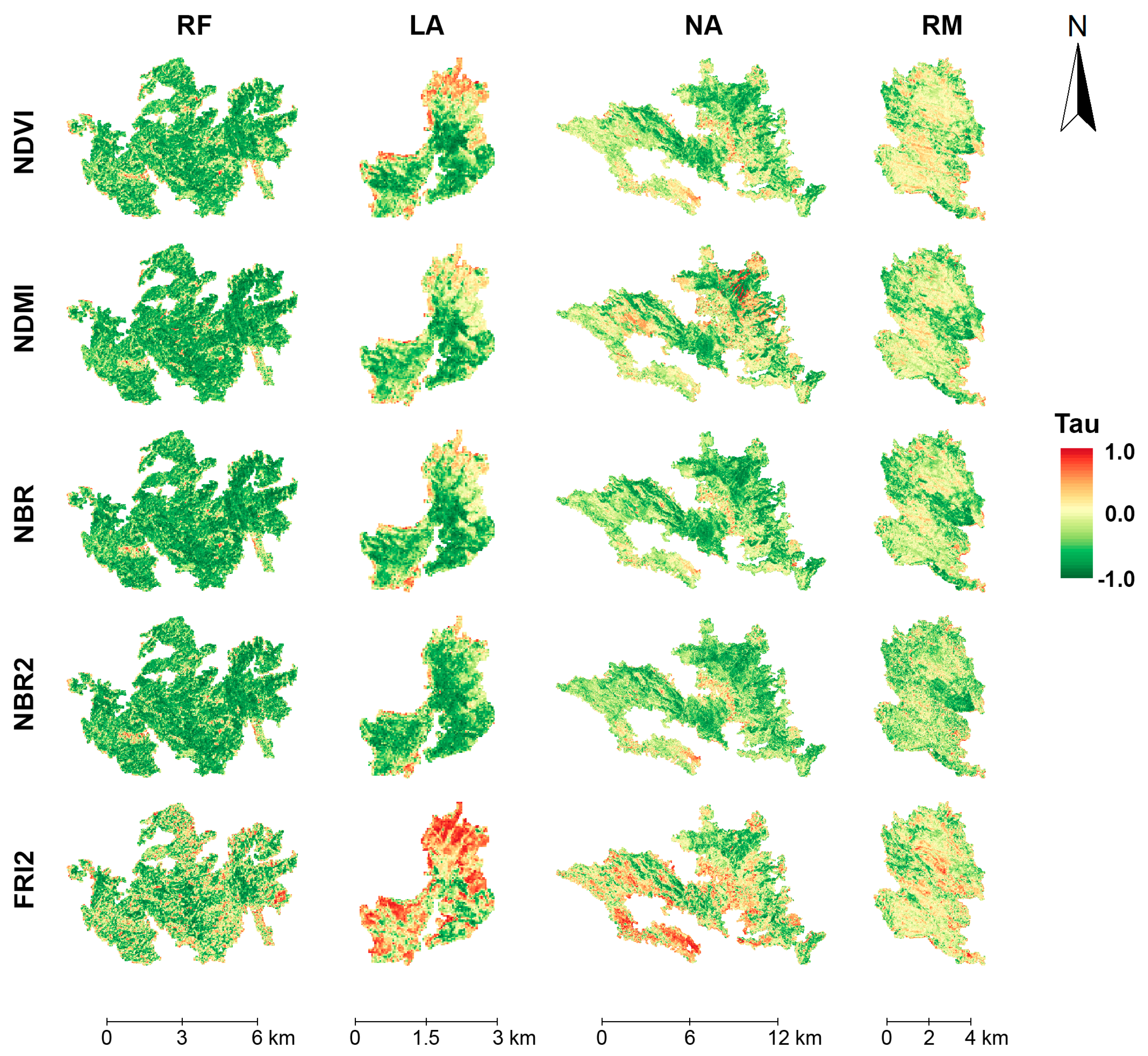
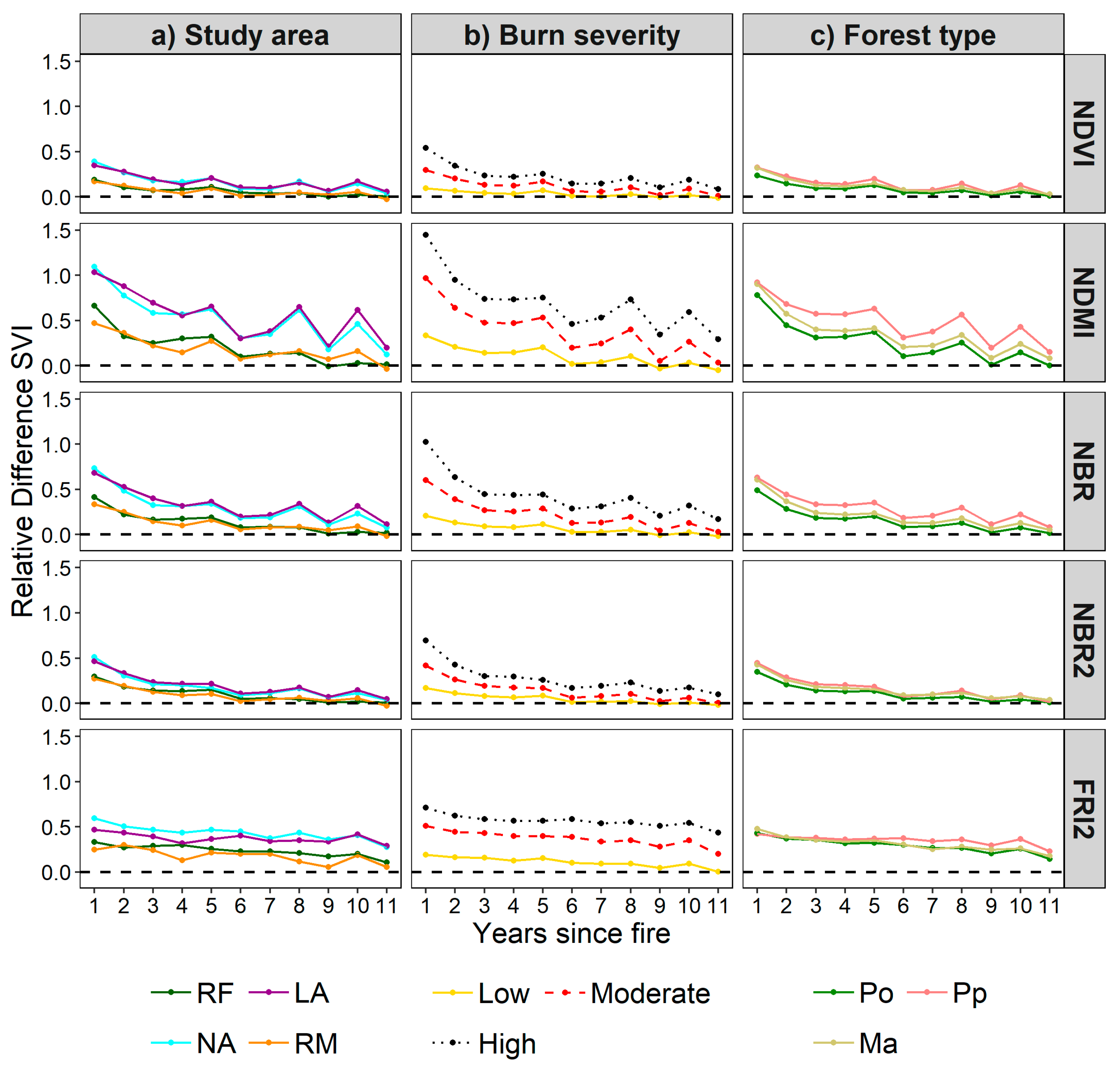
Understanding post-fire regeneration dynamics is an important task for assessing the resilience of forests and to adequately guide post-disturbance management. The main goal of this research was to compare the ability of different Landsat-derived spectral vegetation indices (SVIs) to track post-fire recovery occurring in burned forests of the central Apennines (Italy) at different development stages. Normalized Difference Vegetation Index (NDVI), Normalized Difference Moisture Index (NDMI), Normalized Burn Ratio (NBR), Normalized Burn Ratio 2 (NBR2) and a novel index called Forest Recovery Index 2 (FRI2) were used to compute post-fire recovery metrics throughout 11 years (2008–2018). FRI2 achieved the highest significant correlation (Pearson’s r = 0.72) with tree canopy cover estimated by field sampling (year 2017). The Theil–Sen slope estimator of linear regression was employed to assess the rate of change and the direction of SVIs recovery metrics over time (2010–2018) and the Mann–Kendall test was used to evaluate the significance of the spectral trends. NDVI displayed the highest amount of recovered pixels (38%) after 11 years since fire occurrence, whereas the mean value of NDMI, NBR, NBR2, and FRI2 was about 27%. NDVI was more suitable for tracking early stages of the secondary succession, suggesting greater sensitivity toward non-arboreal vegetation development. Predicted spectral recovery timespans based on pixels with a statistically significant monotonic trend did not highlight noticeable differences among normalized SVIs, suggesting similar suitability for monitoring early to mid-stages of post-fire forest succession. FRI2 achieved reliable results in mid- to long-term forest recovery as it produced up to 50% longer periods of spectral recovery compared to normalized SVIs. Further research is needed to understand this modeling approach at advanced stages of post-fire forest recovery.
Keywords: post-fire recovery; spectral vegetation index; NDVI; NDMI; NBR; NBR2; Integrated Forest z-score (IFZ); Forest Recovery Index 2 (FRI2); burn severity; recovery trend modeling post-fire recovery; spectral vegetation index; NDVI; NDMI; NBR; NBR2; Integrated Forest z-score (IFZ); Forest Recovery Index 2 (FRI2); burn severity; recovery trend modeling
Graphical Abstract