Abstract
Services based on Internet of Things (IoT) technologies have emerged in various business environments. To enhance service quality at conventions and maximize the experience of attendees, this study developed a customer-driven smart and sustainable service, applying a smart button as an IoT technology. An application of the IoT technology-based smart button was adopted by comparing advantages and disadvantages of technologies. We also identified the need for customer-driven smart and sustainable service by analyzing cases. Then, we designed, constructed and evaluated the service with the action research framework, which includes phases such as diagnosis, action planning, action taking, evaluation, and specify learning. In the first phase, various challenges and problems of the smart convention were diagnosed through interviews with organizers. In the action planning phase, service models were designed to solve the problems. In the action taking phase, which IoT technology would be the most appropriate was discussed and it was applied to the convention space. In the evaluation phase, we derived the role of IoT technology for smart conventions and summarized the results of the smart convention service. Finally, we presented implications for a business.
1. Introduction
The scope of sustainability has been expanded from an initial environmental point of view to a social and economic point of view. In this research, we explain why the customer-driven smart service is sustainable, according to the definition of sustainability. We designed and evaluated a customer-driven smart and sustainable service for a convention. The aims of this study are to develop customer-driven smart and sustainable services for conventions using an emerging technology, Internet of Things (IoT), and to present the insights and knowledge acquired through this development.
We seek to answer the following research questions: (1) What are the notions of smartness and sustainability in the field of tourism? (Section 2.1); (2) What is a customer-driven interaction? (Section 2.2); (3) What are the appropriate technologies to achieve smart and sustainable services, and what are the needs of conventions and how can the technology be applied? (Section 2.2 and Section 3); and (4) What do the stakeholders, such as companies and customers, gain from smart and sustainable services in smart conventions? (Section 4).
In order to achieve the objectives of this study, the action research steps were divided into five phases. In the diagnosing phase, through interviews, observations, and literature studies, the researchers identified the current issues and requirements for conventions. In the action planning phase, through discussions with the organizers of the convention, we selected and organized services to solve the problems. In the action taking phase, the IoT devices were installed in the international convention location and the data were collected during the convention period. In the evaluation phase, we presented the results and value of the service. Finally, in the specify learning phase, the researchers summarized the benefits for each stakeholder.
The contribution of this paper is fourfold. First, the notion of sustainability was extended by not only including socio-cultural, economic, and environmental thinking, but also the realms of customer-driven interaction. Second, this study proposed and constructed a new type of smart service with IoT technology for smart conventions. Third, this research verified the benefits of sustainable and smart services. Finally, this study can be used as an example of how conventions can seek opportunities using new technologies.
This paper is structured as follows. First, we present an overview of the existing research focusing on the notion of smartness and sustainability in smart tourism. Subsequently, we elaborate why conventions need customer-driven smart and sustainable services based on IoT and the means to implement this. Finally, we propose the value and results of the service.
2. Literature Review
2.1. Smartness and Sustainability for Smart Conventions
Through new technologies, such as IoT and big data analysis, real-time and customized information can be provided to tourists for better experiences [1,2]. The combination of tourism and new technologies also can improve the quality of life for residents by ensuring the continued development of tourist spots [3]. The concept of smartness refers to collecting, analyzing, and integrating real-time data to visualize, model, and optimize for better organizational decision-making [4]. Other researchers have developed the concept of smartness (Table 1). Smartness can enhance an organization’s competitiveness by meeting the needs of travelers in all the legs of their journey: before, during, and after the trip [5]. More recently, researchers have been paying attention to technologies such as RFID (Radio Frequency Identification), NFC (Near Field Communication), various sensors, etcetera [6], and these technologies provide fast, convenient, and inexpensive intelligent services to travelers [2]. It also helps companies to operate more efficiently, effectively, and productively. Recently, Koo, Park, and Lee (2017) emphasized seamless data and information exchange for enterprise and inter-enterprise processes [2].
Table 1.
Notion of smartness.
Li, Hu, Huang, and Duan (2017) suggest that “smartness” emphasizes an easy automation to help each user obtain appropriate services for their needs [7]. In this study, the smartness concept of the researchers presented in Table 1 is based on the concept of IoT, in order to ensure that travelers can easily, quickly, and conveniently use services by selecting the type of service they expect. On the other hand, companies can expect to design services that can improve efficiency, effectiveness, and productivity by sharing real-time information in-house or between companies.
One of the most popular research topics in tourism is “sustainable tourism development.” Although the concept of sustainability has been discussed only from the environmental point of view, the scope of sustainability has gradually expanded to the social and economic aspects [8]. The concept of sustainability is now accepted as a comprehensive concept that minimizes natural destruction, positively participates in local communities, and enables companies to reduce costs and continuously generate profits. Gössling emphasizes the importance of balancing stakeholders from a holistic perspective [9]. Please refer to Table 2 for details.
Table 2.
Notion of sustainability.
This study attempts to design a customer-driven smart and sustainable service based on the definition of Gössling [9]. In the next section, we explore the applicability to the convention by analyzing customer-driven interaction cases as a novel way of interacting.
2.2. Customer-Driven Interaction for Smart Convention
Retailers are becoming smart. December of 2016, Amazon Go of USA announced its vision to eliminate the queues of a check-out counter through video understanding technology. Simultaneously, convenience stores of Korea, China, and Japan unveiled their vision of an unmanned cash register system. They were initiated as a reaction to customers who want to pay and exit themselves rather than wait at the cashier. Retailers are applying so-called smart technologies (e.g., AI and IoT) to their retail environments.
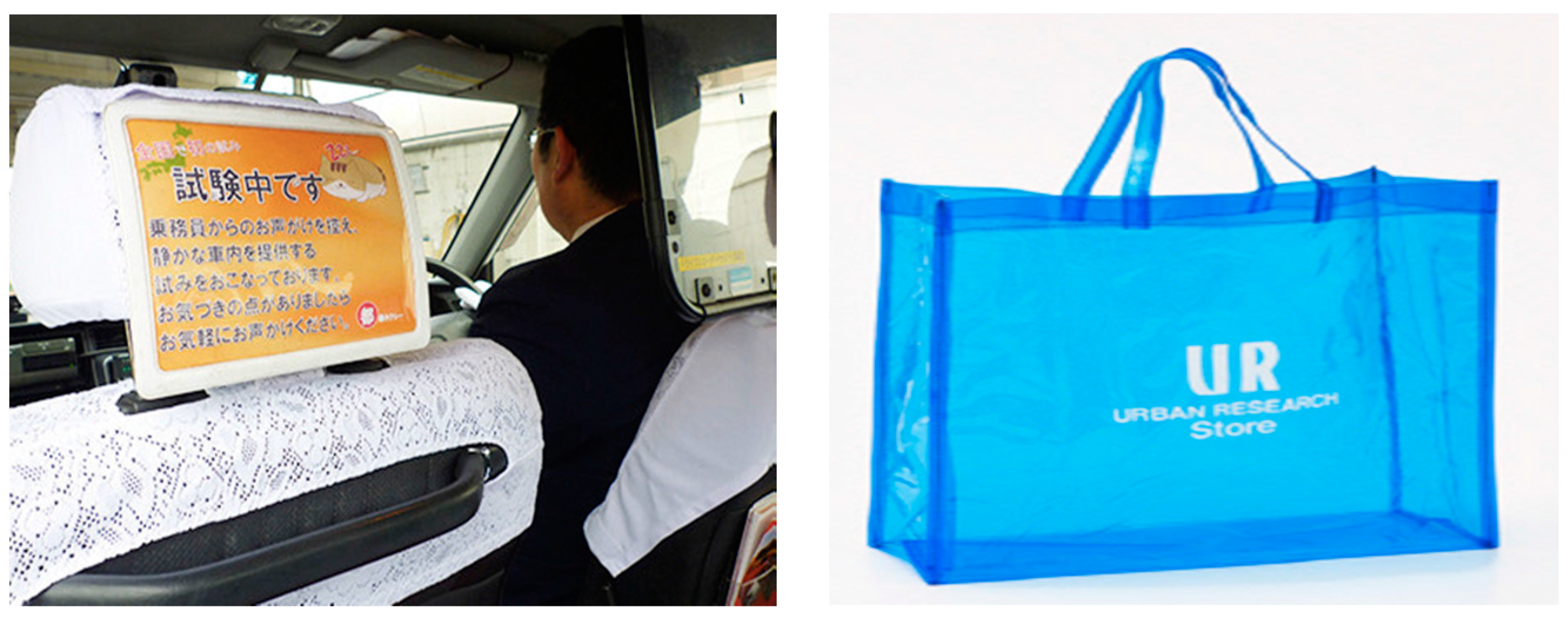
On the other hand, the initiatives of interaction between customer and company are given to customers rather than businesses. In other words, the business-customer interaction is becoming customer-driven. Japan’s Miyako Taxi showed the first nationwide pilot of “silent taxi service” in March 2017 [13]. Every taxi cab showed a message stating that “the driver refrains from talking and provides a quiet car” (Figure 1). The program prohibited chatting as a principle except when greeting guests, requesting destinations, counting, or answering customer questions. Customers said, “I sometimes want to talk based on my mood, and sometimes I do not.” NHK’s survey showed that the passengers responded favorably. A driver responded with, “I think it is one of ways to provide a pleasant space for the guests.” NHK reported that “silent hospitality” services are spreading silently in Japan. After surveying customers, an Urban Research store (a Japanese fashion store) started a program where store staff would not say anything, such as a greeting or a recommendation of a product, to customers who had a blue plastic bag in their hands (Figure 1). Customers were dissatisfied with the existing services, as shown by comments such as, “I want to shop at my pace,” “Staff make me nervous,” and “I have been searching through the Internet already.” One reason customers preferred internet shopping is that they would not need to be in contact with staff. Therefore, employees could also concentrate on customers seeking advice, resulting in increased work efficiency and revenue [14].
Figure 1.
Cases in Japan (Miyaki Taxi and Urban Research Store).
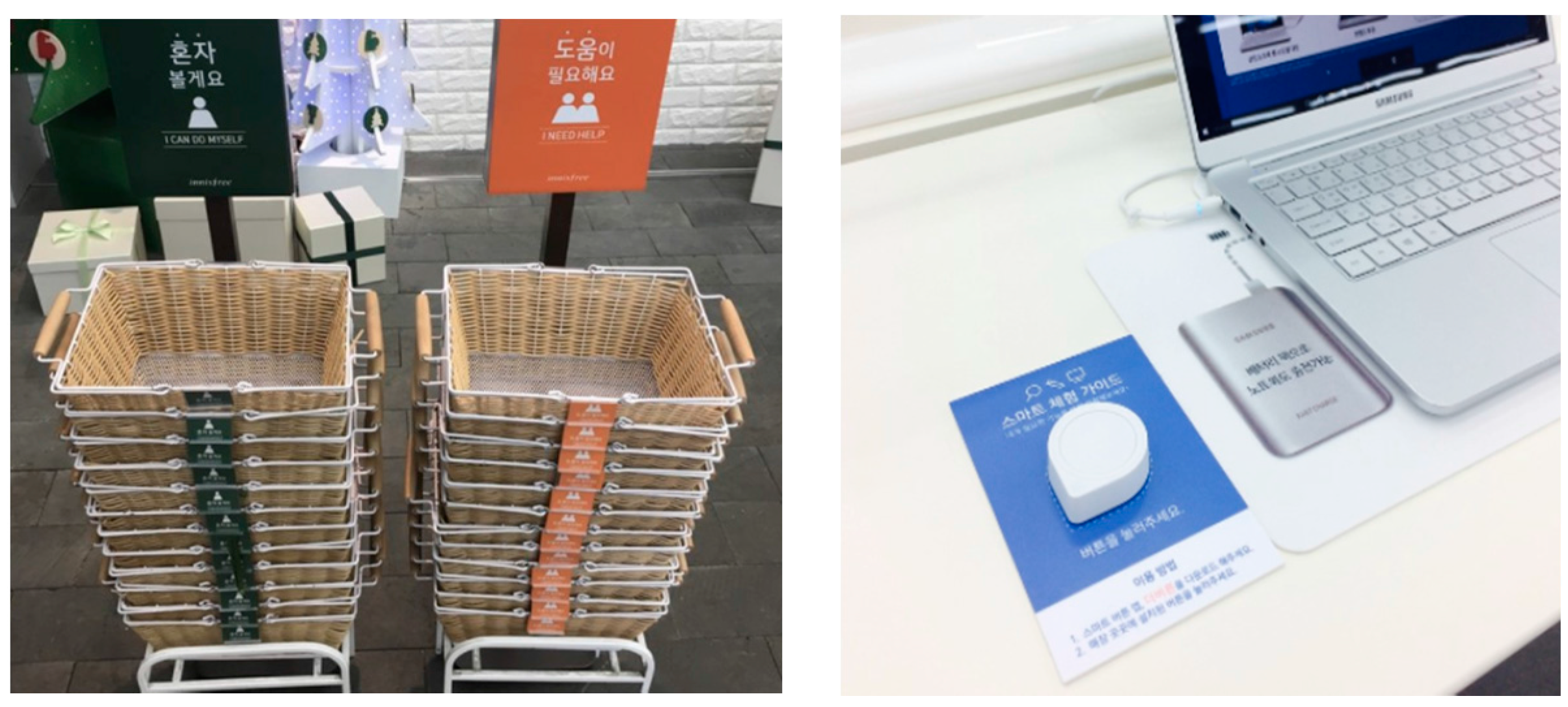
A similar customer-driven interaction case already existed in Korea (Figure 2). AmorePacific’s cosmetic store, Innisfree, provided separate baskets in green and orange colors. Customers with green baskets were considered “independent” customers. The “Help me” basket was orange, and staff approached the customers carrying these baskets, recommending good products and providing free skin diagnosis services [15].
Figure 2.
Cases in South Korea (AmorePacific’s Innisfree and Samsung Digital Plaza).
Samsung adopted smart technologies to support the customer-driven interaction. Samsung Electronics introduced a Button Internet service in its retail store, “Digital Plaza.” Buttons were placed next to refrigerators, televisions, washing machines, air conditioners, laptop PCs, and smart phones. When a customer pressed the button beside a product, the product description was sent to the customer’s smartphone, in addition to details such as the special light weight feature of the newly launched laptop PC and whether such new laptops could be charged with a smartphone battery pack, etcetera. Previously, it was a burden for customers to visit the store where a smiley employee would greet them with words such as, “What can I do for you?” Thus, both staff and customers were hesitant to face each other owing to the awkward circumstances in the store. If this were to continue, the customer would be reluctant to visit the offline store.
In the Digital Plaza, every customer interaction with the button can be reported to the head-office on a real-time basis. The trials were tested in three representative stores. When it was applied to the 500 Digital Plaza stores nationwide, each store would get information on the kinds of products customers were interested in. Promotions at the headquarters’ level could be delivered to all offline store’s visitors immediately, and the results could be easily gathered. As customers received services through their own smartphones from the press of a button, they were be able to communicate with the stores through their smartphones, even after they exited the store, and they could also receive various benefits, such as gifts from stores and information about other businesses in the vicinity [16].
From the above cases, we can observe that smart and customer-driven interaction is emerging in offline retail space. Now businesses should let customers choose their own ways of interacting. In this paper we call it, “customer-driven interaction,” which will result in more customer visits and higher efficiency. In this study, we describe customer-driven interaction as reflective of the needs of convention customers. The customer-driven interaction can be further strengthened by applying smart technology. Among the above retail cases (fashion, cosmetics, and electronics), cosmetic and fashion store cases are customer-driven but did not use so-called smart technologies. Both of them used only physical baskets. In such situations, customers could not get any help without staff interaction. However, in the case of Samsung, the customers could get help by using their smartphones without an interaction with a staff.
The customer-driven smart interaction leads to sustainability. The reasons are following. First, convention visitors can acquire and share an information quickly, conveniently, and easily, without any help during the trip related to the convention (before, during, and after the convention), in real-time. Additionally, customers still can get help from a staff. Second, the company can improve work efficiency, effectiveness, and productivity because staff do not have to serve all customers. Usually a convention has over 10,000 participants during an event, therefore, the attending companies need smart and customer-driven ways of interacting. The customer-driven smart interaction contributes to the “seamlessness” of service at a convention. Prior convention service has had difficulty in connecting the offline visitors’ activities to online channels. Customers had no systematic and easy way to share their experience online. Companies could not systematically capture the full potential of word of mouth among visitors. The customer-driven smart service helps the companies interact with customers throughout the entire trip related to the convention (before, during, and after). In conclusion, customer-driven smart service provides benefits to all stakeholders and the vitalization of conventions contributes to the wealth of local economies. Therefore, the service meets the economic and societal goal of sustainability which Gössling presents [9].
From a perspective of environmental sustainability, pamphlets for promotions in the convention are not environmentally sustainable, as most of them are disposed just after leaving the convention site. In addition, kiosks and pamphlets do not provide seamless service. IoT technology is a good candidate for enabling smart customer-driven interaction with sustainability. We compared IoT technology alternatives for smart and sustainable service (Table 3). We considered the QR (Quick Response) code, NFC (Near Field Communication) tag, and BLE (Bluetooth for Low Energy) beacon because they have been previously applied at conventions. The advantage of NFC is that users can acquire information whenever they want and it is reusable, however iPhone users (except those with an iPhone 8) cannot use it [17]. A BLE beacon-based convention service can provide real-time information to customers, while companies can implement effective promotions by using customer information in real-time. However, even if the convention is not in progress (at night), energy is being wasted by sending a signal once every second. In addition, it has a signal interference problem and spam issue, which means that promotional information are provided to customers who is not interested in products. On the other hand, using BLE buttons, a signal is sent to an individual at a certain location to provide various convention services only when a customer presses the button [18,19].
Table 3.
Comparison of IoT technologies for Conventions.
As Table 3 shows [20,21], each technology has advantages and disadvantages. NFC tag reading does not work on most of iPhones [22]. The purpose of companies participating in conventions is the promotion of their new products to many customers. Therefore, a beacon might be the best because one signal sends to all customers within 70 m. However, there is critical problem. A usual convention location has an average 12,725 people [23]. In such an environment, BLE beacons will not work very well because of interference by human bodies or metallic surfaces [24]. The BLE button is also based on BLE technology, but with the following differences. First, it only works when the customer pushes the “smart button.” This is much more energy-efficient because it sends a signal only when pushed, instead of sending a signal every second. Second, the signal range can be limited to one meter in order to prevent interference. By doing that, customers do not recognize the signal as spam because only those who are interested in the products (within one meter) can receive the signal. Additionally, from a user interface/user experience (UI/UX) perspective, smart buttons can naturally induce a visitor’s engagement. The behavior of “pushing the button” is natural and a commonly used UI/UX such as elevator button or remote control button pushing. Also, the engagement with the smart button reinforces bonding with company because the on-site activity log of visitors remains in their smart phone. Visitors can also share their activities online. Ultimately, a virtuous cycle to attract new online customers can be built.
In the next section, we develop and evaluate customer-driven smart and sustainable service by applying smart buttons.
3. Customer-Driven Smart and Sustainable Services Development and Evaluation for Conventions
An action research differs from a case study in that the action researcher is directly involved in planned organizational transformations. An action researcher intervenes by creating organizational transformations and simultaneously studies the impact of the transformations [25]. Baskerville and Wood-Harper (1996), and Venable, Pries-Heje, and Baskerville (2016) suggested that action research is ideal in systems development methodology for information system research [26,27]. Conducting organizational action research enables an organization to solve its problems in domains such as productivity, quality of its products and/or services, and working conditions, enabling it to become “better.” Furthermore, action research involves collecting and analyzing an organization’s data and also drawing conceptual and theoretical conclusions from it [28,29,30].
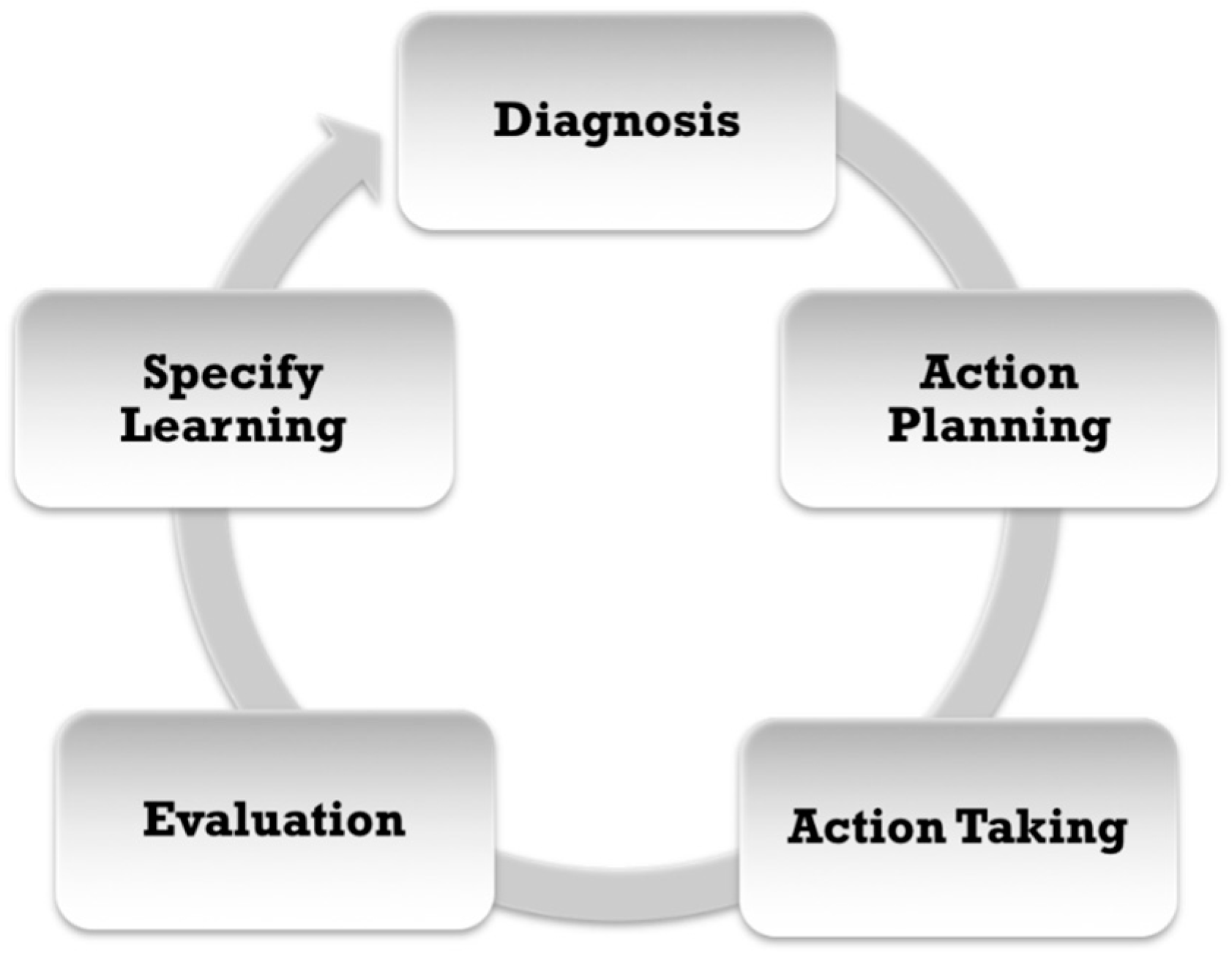
Action research consists of five phases and is a cyclical process. We adopted the same steps to develop customer-driven smart and sustainable services for conventions. (Figure 3) shows our research process. In the diagnosis phase, we identified the primary needs and problems of the stakeholders of the convention. In the action planning phase, we specified actions (=services) for relieving or solving the primary problems. In the action taking phase, we developed customer-driven smart and sustainable services. In the evaluation phase, we analyzed the service usage data of customers. In the specify learning phase, we specified the benefits to the stakeholders.
Figure 3.
Action Research Framework.
3.1. Diagnosis Phase
The 31st Baby Fair held at COEX, the Seoul Convention Center, lasted four days from 16 February 2017 to 19 February 2017. The “BeFe BABYFAIR” (BeFe), which has been held biannually at COEX, Seoul since 2000, is the ideal place for pregnant women and nursing mothers to get information on pregnancy, happy childbirth, and enjoyable childcare, and provides opportunities for companies to promote products and expand their market share. In particular, BeFe is recognized as a successful convention and is expanding its business to include a baby portal website, online shopping mall, and mobile, education and media businesses. The convention service applied smart buttons to Nestlé’s Gerber booth, delivered various forms of information to the visitors, and provided incentives to visitors who completed certain activities.
We identified the problems that the convention was struggling with, and the needs of visitors and companies participating in the convention through interviews, which are highlighted in Table 4.
Table 4.
Analysis of the current convention service.
3.2. Action Planning Phase
Our research team planned appropriate actions (=services) for ameliorating the problems. Service Models were proposed to improve visitors’ experience and the quality of convention services. By applying IoT technology to the convention’s offline space, visitors could easily access online channels (offline to online). By providing a mobile channel service (“the Button” app), visitors could re-access information about a product gained from offline spaces, regardless of the time or place, and share their experience online which could induce a potential customer’s visit (online to offline). In conclusion, visitors could experience seamless channel switching. The staff of the convention could easily upload and modify digital content related to the products. Also, companies could easily manage integrated online and offline channels through the website [19] as shown in Table 5.
Table 5.
Smart convention service.
3.3. Action Taking Phase
Smart buttons were installed in order to provide above the services in Nestlé’s booth at the convention, and visitors installed an application to use the services. A “service management system” for the easy management of hardware (smart button) and efficient service provision was developed, and the “service provision server and engine” were also set up. Table 6 shows the six service user interfaces of the smart convention service.
Table 6.
User interfaces for the button based service.
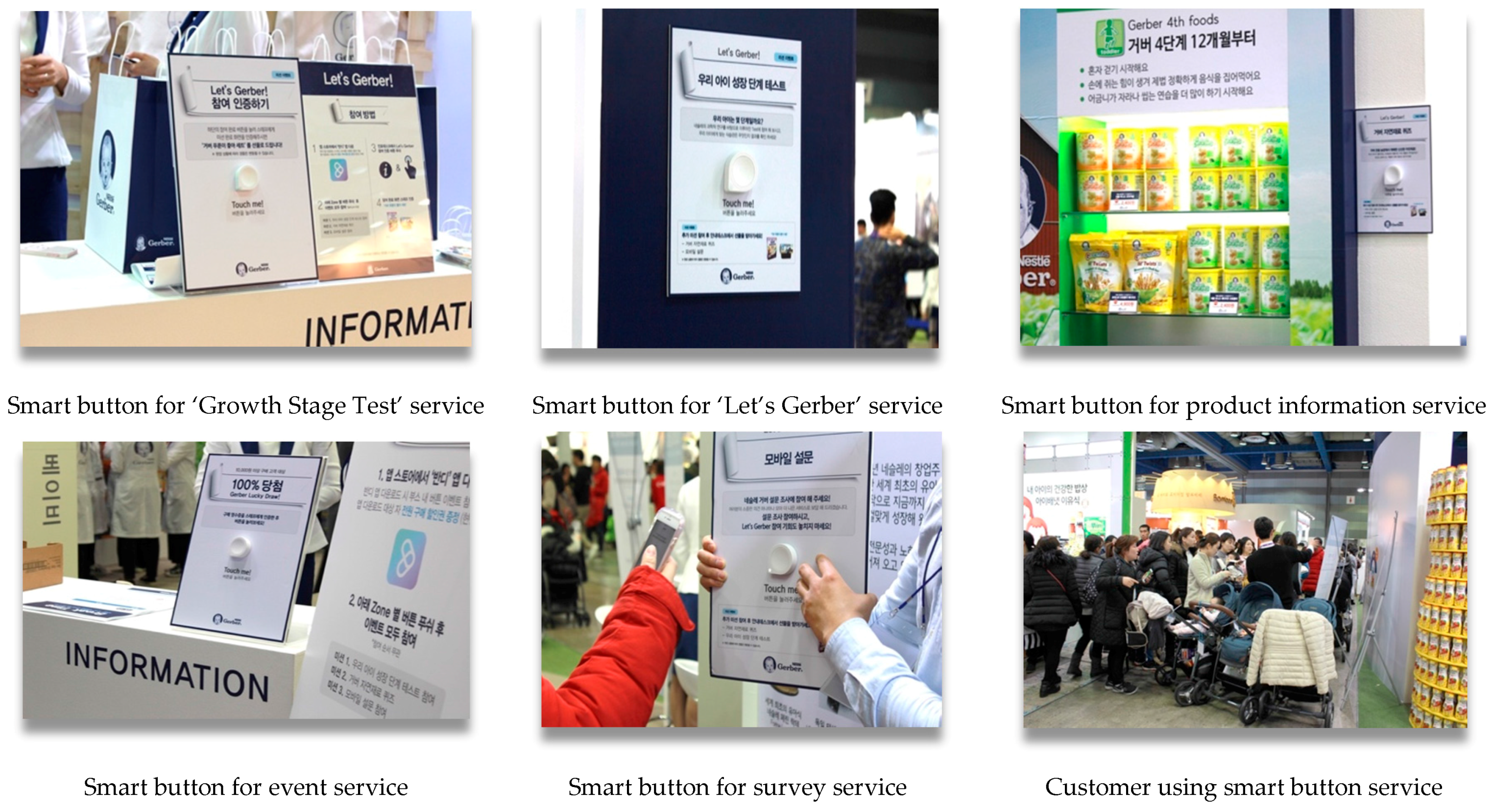
Figure 4 shows smart buttons installed for the six kinds of services.
Figure 4.
Smart button installation.
3.4. Evaluation Phase
There were six types of services: discount coupon downloads, the 1000-day zone, the Gerber DP zone, surveys, sweep events, and mobile web connectivity. 5134 visitors used the smart button service for a total of four days from 16 February 2017 to 19 February 2017. The services could be used through the app called “the Button.” Among the users, 63.68% downloaded the app on Google Play and 36.32% downloaded the app from Apple’s App Store.
There were a total of 19,955 smart button uses by visitors in the four days. This number is the number of services that were actually delivered to the visitors, rather than the number of button presses. The smart button service was used approximately 3.88 times per visitor.
Nestlé organized events to attract visitors’ attention and their participation, and gave a reward to 1563 visitors through the lucky draw service. Table 7 shows the event service results.
Table 7.
Smart button usage summary.
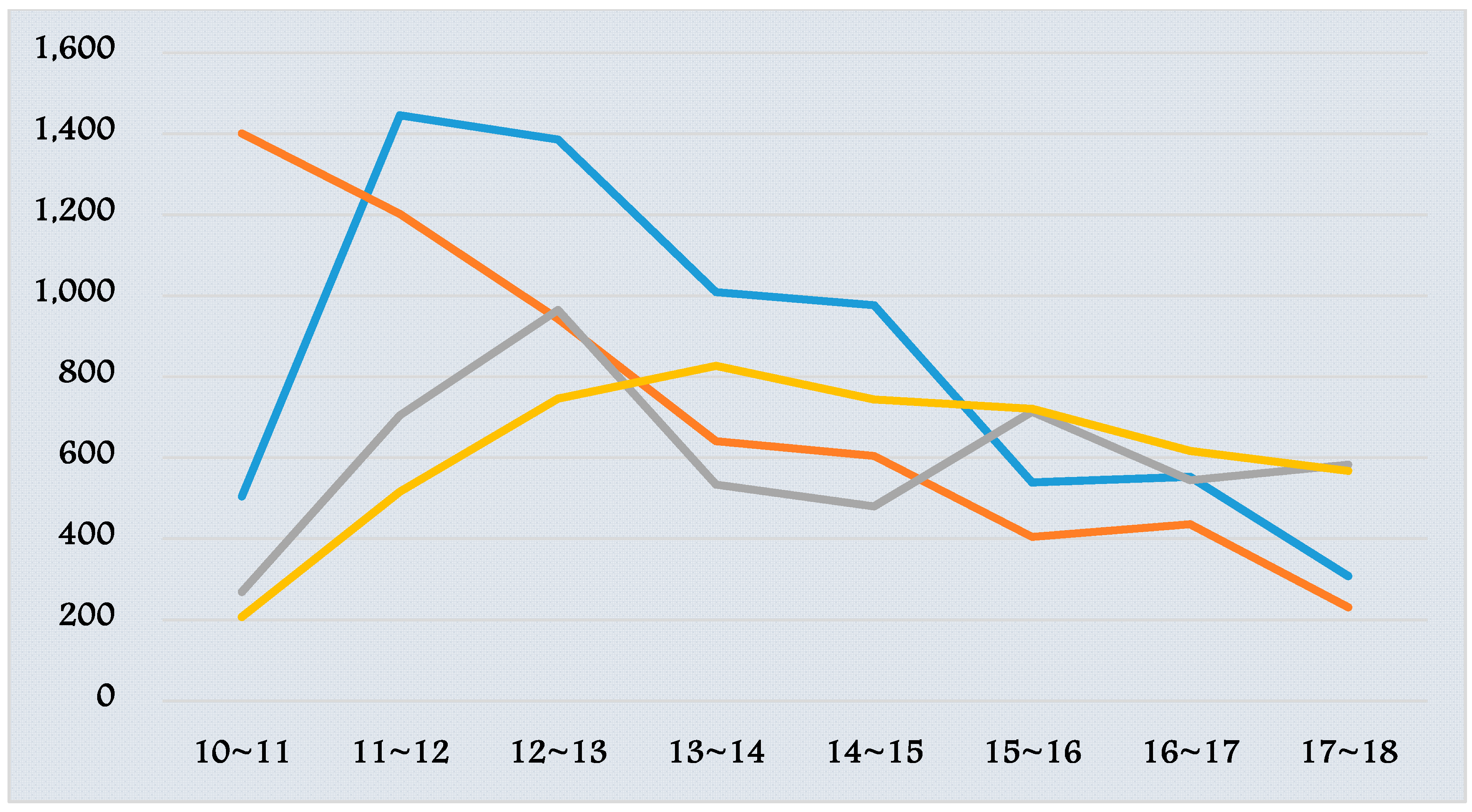
As a result of using the smart button service, we identified that visitors mainly visited during the opening hours (10 a.m. to 2 p.m.), as shown in Figure 5. These data are expected to be used for efficient staff operations by increasing the number of staff at the specific time.
Figure 5.
Usage per hour.
3.5. Specify Learning Phase
The authors defined customer-driven interaction and customer-driven smart and sustainable service. To implement the services, we compared IoT technologies in order to select the proper technology. We adopted BLE smart button technology as the most appropriate IoT technology. As a result, we were able to acquire key visitor-related data as outlined in the previous section. The customer-driven smart and sustainable services proved their usefulness in the following ways.
First, the company gained on-site service data, such as the total number of visitors, the number of visitors per event, and the number of per hour. In addition, we have identified the number of visitors based on the time of the day (congestion by time range). The company has the opportunity to operate the convention efficiently for future events by analyzing the data.
Second, Nestlé Korea performed successfully at the convention. The service was recognized as a new way of marketing, as Nestlé could communicate with customers seamlessly and enhance the image of Nestlé Global by utilizing the newest smart technology.
Third, we improved the efficiency and effectiveness of the workflow for the convention. Nestlé automatized part of their work processes by adopting the smart button. On the other hand, in the case of the existing paper-based questionnaires, there were possibilities of incurring costs and errors in digitizing the information.
Fourth, the company was able to save costs by running events serviced with minimum manpower. The staff was able to effectively respond (at low costs) to the 5143 visitors who were familiar with smartphone usage. The visitors who were familiar with smartphone use actively participated in the events.
4. Discussion and Conclusions
Participating researchers and practitioners designing IoT based services should consider the following implications.
From the point of view of IoT technology, the smart buttons applied in this study are suitable for customer-driven smart and sustainable service because of quick response times and no interference. Our researchers had the experience of offering an NFC-based convention service before. From the experience, we found that NFC tag-based services had the drawback of a very long waiting time because of the one-to-one, pull-type communication method [31,32,33,34]. However, smart buttons can provide service to many people without customers waiting. In addition, smart buttons can provide service without interference or spam issues by setting a signal distance limited to approximately one meter (i.e., average arm’s length). Using the smart button service, customers could get information throughout their entire trip relating to the convention (before, during, after).
From the environmental sustainability point of view, pamphlets are not a good choice because they generates garbage. The beacon is energy-consuming because it always consumes power. The smart button is the most eco-friendly because it can be reused (easy to attach and detach, or to modify associated information) and is energy-efficient (working only when button is pressed).
From the stakeholder point of view, smart button service provides benefits to all stakeholders. Customers can choose self-service as a customer-driven interaction or they can choose the help of staff. Hence, customers can use the service without the psychological burden. Also, staff can focus on the customers who need help so that service quality can be improved. Companies do not waste their resources in developing mobile applications for a specific convention. Instead, using the service platform, they can design the service and develop an application page for each convention. Customers do not have to download various mobile applications for different companies.
This research proved that benefits are the critical factor in order for customers to accept new technology. IoT based service is relatively new. Therefore, we performed a lucky draw throughout the convention period in order to attract customers and activate the IoT-based services. Despite the relatively new technology, many users accepted the new services. This proves that customers’ psychological barriers to new technologies can be significantly reduced by providing them with the benefits they expect [35].
Data from the IoT-based service is valuable because this new type of data from smart buttons could not be obtained in the past. Specifically, the company can obtain information on potential customers. It is important to acquire data on the potential customers, as visitors who are interested in the company’s products are more likely to convert to customers in the near future, even if they did not purchase the company’s products during convention.
In addition, quality of service is standardized. The service ability of field staff varies. In our experience of providing IoT-based services at the Seoul Auction, in order to provide information on Hong Kong’s art works for auction [36], many visitors using IoT-based services were able to efficiently obtain information without the help of the field staff. This service can be a way to serve all customers and guarantee a specific level of service quality.
Acknowledgments
This work was supported by the National Research Foundation of Korea Grant funded by the Korean Government (NRF-2014S1A5B8060940).
Author Contributions
Arum Park wrote the paper and researched customer-driven cases, and contributed to the study literature. Jungho Jun and Kyoung Jun Lee designed and implemented the IoT-based services.
Conflicts of Interest
The authors declare no conflict of interest.
References
- Koo, C.; Yoo, K.; Lee, J.; Zanker, M. Special section on generative smart tourism systems and management: Man–machine interaction. Int. J. Inf. Manag. 2016, 6, 1301–1305. [Google Scholar] [CrossRef]
- Koo, C.; Park, J.; Lee, J. Smart Tourism: Traveler, business, and organizational perspectives. Inf. Manag. 2017, 54, 683–686. [Google Scholar] [CrossRef]
- De Avila, D. Smart destination: XXI century tourism. In Proceedings of the ENTER Conference on Information and Communication Technologies in Tourism, Lugano, Switzerland, 4–6 February 2015. [Google Scholar]
- Harrison, C.; Eckman, B.; Hamilton, R.; Hartswick, P.; Kalagnanam, J.; Paraszczak, J.; Williams, P. Foundations for smarter cities. IBM J. Res. Dev. 2010, 54, 1–16. [Google Scholar] [CrossRef]
- Buhalis, D.; Amaranggana, A. Smart tourism destinations. Inf. Commun. Technol. Tour. 2014. [Google Scholar] [CrossRef]
- Gretzel, M.; Xiang, S.Z.; Koo, C. Smart tourism: Foundations and developments. Electron. Mark. 2015, 25, 179–188. [Google Scholar] [CrossRef]
- Li, Y.; Hu, C.; Huang, C.; Duan, L. The concept of smart tourism in the context of tourism information services. Tour. Manag. 2017, 58, 293–300. [Google Scholar] [CrossRef]
- Mowforth, M.; Munt, I. Tour. Sustain. Development, Globalisation and New Tourism in the Third World; Routledge: Abingdon-on-Thames, UK, 2015. [Google Scholar]
- Gössling, S. Tourism, information technologies and sustainability: An exploratory review. J. Sustain. Tour. 2017, 25, 1024–1041. [Google Scholar] [CrossRef]
- Scott, M.M.; Frew, A.J. Exploring the role of in-trip applications for sustainable tourism: Expert perspectives. Inf. Commun. Technol. Tour. 2013, 36–46. [Google Scholar] [CrossRef]
- Lu, J.; Nepal, S.K. Sustainable tourism research: An analysis of papers published in the Journal of Sustainable Tourism. J. Sustain. Tour. 2009, 17, 5–16. [Google Scholar] [CrossRef]
- Tosun, C. Expected nature of community participation in tourism development. Tour. Manag. 2006, 27, 493–504. [Google Scholar] [CrossRef]
- Japantoday. Available online: https://japantoday.com/category/features/lifestyle/kyoto-silence-taxi-service-prohibits-drivers-from-instigating-small-talk (accessed on 23 October 2017).
- Yonhapnews. Available online: http://www.yonhapnews.co.kr/bulletin/2017/06/07/0200000000AKR20170607133300009.HTML (accessed on 23 October 2017).
- Imgur. Available online: http://imgur.com/gallery/0qexjJG (accessed on 23 October 2017).
- Benple. Available online: http://benple.com/?p=6924 (accessed on 23 October 2017).
- Park, A.; Chang, H.; Lee, K.J. Action Research on Development and Application of Internet of Things Services in Hospital. Healthc. Inf. Res. 2017, 23, 25–34. [Google Scholar] [CrossRef] [PubMed]
- Park, A.; Han, J.; Lee, K.J. IoT-based Omni Channel Service for Smart Exhibition and Value of Data. In Proceedings of the International Conference on Electronic Commerce, Pangyo, Korea, 17–18 August 2017. [Google Scholar]
- Park, A.; Lee, K.J. Service design based on IoT and technology comparison for Fine Art Gallery. In Proceedings of the International Joint Conference on e-Business and Telecommunications, Madrid, Spain, 24–26 July 2017. [Google Scholar]
- Beaconstac. Available online: https://blog.beaconstac.com/2015/07/ibeacon-vs-nfc-vs-gps-which-indoor-location-technology-will-your-business-benefit-from/ (accessed on 23 October 2017).
- Yewonc. Available online: http://kto.visitkorea.or.kr/file/download/min/2649.kto (accessed on 23 October 2017).
- Haselsteiner, E.; Breitfuß, K. Security in near field communication (NFC). In Proceedings of the Workshop on RFID Security, Gratkorn, Austria, 22 July 2006; pp. 12–14. [Google Scholar]
- Icemkorea. Available online: http://www.icemkorea.com/gmi/gmi-contents/mice-statistics/?id=10801&link=%2Fgmi%2Fgmi-contents%2Fmice-statistics%2F (accessed on 23 October 2017).
- Newman, N. Apple iBeacon technology briefing. J. Direct Data Digit. Mark. Pract. 2014, 15, 222–225. [Google Scholar] [CrossRef]
- Babüroglu, O.N.; Ravn, I. Normative action research. Organ. Stud. 1992, 13, 19–34. [Google Scholar] [CrossRef]
- Baskerville, R.L.; Wood-Harper, A.T. A critical perspective on action research as a method for information systems research. J. Inf. Technol. 1996, 11, 235–246. [Google Scholar] [CrossRef]
- Venable, J.; Pries-Heje, J.; Baskerville, R. FEDS: A Framework for Evaluation in Design Science Research. Eur. J. Inf. Syst. 2016, 25, 77–89. [Google Scholar] [CrossRef]
- Checkland, P. From framework through experience to learning: The essential nature of action research. In Information Systems Research: Contemporary Approaches & Emergent Traditions; Nissen, H.-E., Klein, H.K., Hirschheim, R.A., Eds.; Elsevier North-Holland, Inc.: Amsterdam, The Netherlands, 1991; pp. 397–403. [Google Scholar]
- Sommer, B.; Sommer, R. A Practical Guide to Behavioral Research: Tools and Techniques; Oxford University Press: New York, NY, USA, 2001. [Google Scholar]
- Sommer, R. Serving Two Masters: Center for Consumer Research at the University of California, Davis, 1976–1992. J. Consum. Aff. 1994. [Google Scholar] [CrossRef]
- Choi, M.H.; Jungho, J.; Heegoo, K.; Kyoung Jun, L. An application case of utility tag-based convention service system: Cosmetics and Beauty Expo, Osong Korea 2013. Inf. Syst. Rev. 2013, 15, 111–128. [Google Scholar]
- Choi, M.H.; Jungo, J.; Kang, H.; Lee, K.J. A Case of NFC-based Exhibition Support System for Analyzing Visitor’s POB (Point of Behaviors). Inf. Syst. Rev. 2013, 15, 111–127. [Google Scholar]
- Jun, J.H.; Choi, M.H.; Lee, K.J. The Development and Operation of NFC-based Exhibition Support Service: A Motor Show Case. J. Korea Soc. IT Serv. 2014, 13, 83–97. [Google Scholar] [CrossRef]
- Han, H.; Park, A.; Chung, N.; Lee, K.J. A near field communication adoption and its impact on Expo visitors’ behavior. Int. J. Inf. Manag. 2016, 36, 1328–1339. [Google Scholar] [CrossRef]
- Lee, K.J.; Jun, J.H. SPB (Seamlessness-Privacy-Benefit) Paradigm for Construction of Highly-Connected Information Society. J. Korea Soc. IT Serv. 2012, 11, 131–146. [Google Scholar] [CrossRef]
- Benple. Available online: http://benple.com/?p=7318 (accessed on 23 October 2017).
© 2017 by the authors. Licensee MDPI, Basel, Switzerland. This article is an open access article distributed under the terms and conditions of the Creative Commons Attribution (CC BY) license (http://creativecommons.org/licenses/by/4.0/).