


Abstract
The objective of the study was to propose curricular guidelines for environmental literacy from a sustainability perspective for the Universidad de la Amazonia distance and virtual programs. The research adopted a mixed-methods approach, with a critical, analytical, and interpretive methodological design structured into three phases: a document review, an exploration of teachers’ and students’ perspectives, and a proposal phase. The results revealed significant weaknesses in the curricular integration of environmental education in virtual and distance learning programs, which limit their effective contribution to achieving the Sustainable Development Goals (SDGs). Likewise, the need to strengthen students’ critical thinking, territorial commitment, and transformative action was identified as a key competency for promoting educational practices oriented toward sustainability, socio-environmental responsibility, and decision-making aligned with national environmental policies and the 2030 Agenda. Based on these findings, guidelines were proposed that articulate pedagogical, didactic, and evaluative components, with recommendations for their practical application in design, implementation, and evaluation, to consolidate contextualized environmental literacy that is relevant and consistent with the socio-environmental challenges of the Amazon region.
1. Introduction
Current environmental crises demand profound transformations in educational processes, especially in territories with high ecological vulnerability, such as the Amazon. Human pressure on ecosystems increases risks and diminishes their capacity for recovery. In this context, environmental education and sustainability are fundamental for developing a critical, informed, and active individual awareness of the environment, its rights, and its human impact [1]. In other words, environmental education promotes the transformation of lifestyles and critically questions the dominant development model, which affects not only nature but also social relations, intensifying exclusion, poverty, violence, and inequality among communities, peoples, and nations [2,3,4].
The multidimensional nature of environmental education gives it an inherently complex character. From a complexity perspective, environmental knowledge seeks to overcome the fragmentation imposed by traditional disciplines by reintegrating knowledge and experience and recognizing the interrelationships between the natural and social dimensions [1,5]. This study aims to overcome this challenge through curricular transversality, which breaks down complexity through a structure that articulates and connects the diversity of knowledge, promoting cultural and social [6] competencies through inter- and multidisciplinary interaction [7,8], with the purpose of integral human formation.
Environmental education assumes sustainability as a cross-cutting theme, by integrating ecological, social, economic, cultural and ethical dimensions; in a broader sense, it assumes sustainability as the pillar that articulates pedagogical processes that promote a critical understanding of the relationships between society and nature [7]; therefore, promoting sustainability in curriculum design requires linking learning outcomes with objectives, activities and assessments, using frameworks that integrate these elements coherently in a systemic approach [8], which values knowledge, skills and attitudes intending to foster critical thinking and action in students, which undoubtedly requires the use of new pedagogical methods and techniques that promote innovative ways for them to understand their role in the productive structure [9,10].
In this way, the curriculum becomes the driving force behind the objectives of university education, complemented by social and cultural practice. Therefore, the construction of the curriculum must take into account the context, values, power relations, and historical processes that shape social, cultural, and environmental phenomena.
In higher education, curriculum guidelines support the university curriculum by establishing the subjects to be taught and how they should be taught [11,12]. Thus, curriculum guidelines provide general epistemological, pedagogical, and curricular guidance that supports the foundation and planning of educational processes through the curriculum, and educational institutions develop these with stakeholder support [13,14].
From the environmental component, the curricular guidelines promote the development of competencies that reflect the degree of responsibility and commitment of individuals in a society on environmental issues, understanding that environmental problems and their possible solutions cover multiple dimensions, making it necessary to address them from a systemic perspective, which also considers the current political and legal context [15,16].
This case constitutes a process of self-reflection and invites collaboration to promote contextualized training, which, based on environmental literacy, evolves into a concept nurtured over time, as a process that is not linear but instead presents milestones and interactions among the different dimensions that comprise it [17]. Hence, the importance of clear guidelines that allow curricula to be formulated in which the environmental component is not just another subject but a cross-cutting, multidisciplinary axis for each academic program.
1.1. Environmental Literacy in Distance and Virtual Higher Education
The integration of Information and Communication Technologies (ICT) in education has significantly changed the dynamics of training worldwide, especially in higher education, where their implementation is continually studied for its capacity to support diverse forms of learning [18,19]. In this sense, the use of ICT mediations and virtuality offers advantages that face-to-face education often does not directly contemplate, such as overcoming geographical barriers, time flexibility, and compatibility with other activities, thus making it an increasingly attractive option for those who wish to learn or develop specific skills [20,21], both formally and informally.
In addition, with the emergence of educational modalities that use technology as a mediating element, distance or virtual learning has become an opportunity to expand coverage and reach people who otherwise would not have been able to access the regular education system [19]. Distance and virtual education offer innovative learning environments that facilitate the transition from the traditional classroom to a more flexible and inclusive digital space [20].
These modalities are positioned as disruptive alternatives through the use of new technologies that reconfigure teaching and learning processes, expand access to knowledge, and promote new forms of interaction among teachers, students, and institutions [21]. The integration of environmental literacy into distance and virtual programs requires establishing clear guidelines to facilitate the adaptation of study plans, the implementation of specific didactic strategies, and the selection and design of digital resources in line with the environmental reality [22,23,24].
1.2. Related Research
The review was organized around four interconnected categories: environmental education, environmental literacy, higher education, virtual and distance education, and digital technologies, which together supported the theoretical and methodological approach of this study.
1.2.1. Context of Environmental Education in Distance and Virtual Higher Education
In recent years, the global environmental crisis has driven a profound transformation in educational processes. Research carried out by various institutions has revealed a shift towards the study of innovative teaching methodologies, the assessment of sustainability literacy in digital environments, and the recognition of the challenges of technology-mediated education [25,26,27].
Although initiatives to raise environmental literacy remain at an early stage, there is a clear emphasis on sustainability. This case suggests that environmental literacy and sustainability are closely intertwined and strongly linked to curriculum design and the transversal integration of sustainability principles across higher education disciplines [19,28,29].
Empirical studies show that virtual learning environments can effectively promote environmental literacy when they are designed in accordance with their core principles. Digital tools such as virtual laboratories, serious games, immersive platforms, social networks, and MOOCs [30,31], although often implemented in isolation, constitute key references for the curricular design of distance and virtual programs that integrate socio-environmental realities and adopt a sustainability-oriented approach [30].
Challenges and Opportunities for Environmental Literacy in Higher Education
Environmental education in distance learning modalities faces key challenges, including the need to strengthen teacher training in both environmental education and virtual learning environments, which is essential to promote pedagogical innovation and critical reflection on local ecological issues [27,28]. Furthermore, while active methodologies such as project-based learning, case studies, and gamification offer significant potential for meaningful learning, their implementation in virtual programs remains limited.
Virtual education offers essential opportunities to develop both global and local environmental competencies, enabling students to understand socio-ecological interdependence and respond responsibly to sustainability challenges. These competencies can be strengthened through the cross-cutting integration of sustainability topics into curricula [27,32] and through the pedagogical use of ICTs as active mediators that facilitate access to information, reflection, collaboration, and civic participation [27].
Despite progress in policies and programs, multiple challenges persist in consolidating effective environmental education in higher education. Among the most critical are curricular fragmentation, weak interdisciplinary articulation, and limited pedagogical training of faculty in environmental topics [18,33]. Likewise, the lack of technological resources in rural or low-connectivity contexts restricts access to digital materials and hinders the implementation of ICT-mediated instructional activities [34].
These conditions generate disparities between urban and rural programs, undermining educational equity and the appropriation of environmental knowledge. Another challenge is the tendency to reduce environmental education to an informative component or to isolated activities, without integrating it systematically into curricular design and evaluation processes [35,36]. Overcoming these limitations requires strengthening institutional commitment, enhancing teacher training, and integrating innovative didactic strategies that link theory, practice, and environmental research.
The Role of Digital Technologies in Environmental Literacy
Digital technologies are a fundamental pillar for implementing environmental literacy in online and distance education programs [25,30]. Their effective integration into the curriculum creates interactive, collaborative, and immersive learning environments that connect theoretical knowledge with environmental practice, improving understanding of environmental phenomena and promoting informed decision-making [34,36].
Despite the persistent digital divide in rural Amazonian contexts, the development of accessible ICT-based educational resources is essential to reduce inequalities (SDG 10) and strengthen resilient infrastructures (SDG 9) [24]. Furthermore, social networks and collaborative digital environments can foster collective awareness and local action, contributing to sustainable communities (SDG 11) and climate action (SDG 13) through context-sensitive and transformative educational practices [25].
Environmental Training in Distance Higher Education
Environmental literacy constitutes a core component of higher education curricula, as it enables students to develop critical competencies to understand the interrelationships between natural and social systems and to act ethically in response to climate change and sustainability challenges [35]. Within distance and virtual education programs, environmental training becomes particularly relevant, as technological mediation not only expands access to learning but also facilitates active student engagement with environmental issues in their immediate and broader contexts.
In this sense, curricula in distance higher education must explicitly articulate the multiple dimensions of sustainability to adequately prepare learners for complex and rapidly changing socio-environmental and labor contexts [37,38]. At the Universidad de la Amazonia, this curricular integration is oriented toward a contextualized educational approach that responds to the region’s high biodiversity and environmental vulnerability. In particular, the environmental training of future educators—such as those in early childhood education programs delivered through distance modalities—supports professional development by fostering critical reflection on pedagogical practices and their implications for shaping environmentally responsible and sustainability-oriented citizenship [39].
Theoretical Foundations of Environmental Literacy in Virtual Educational Scenarios
Environmental literacy enables reflection on sustainability and global challenges within the context of language learning, fostering critical thinking about how language education can contribute to addressing these issues [40]. This conception of literacy is a progressive construct in which learning transcends the mere transmission of ecological information and becomes a tool for social action and critical thinking oriented toward sustainability [36].
In distance higher education, environmental literacy is influenced by technological mediation and student autonomy as drivers of learning. An environmentally literate citizen exercises their environmental rights and responsibilities, understands the structural causes of environmental problems, and actively participates, both individually and collectively, in democratic processes, considering intergenerational and intragenerational justice [41].
In Colombia, environmental education has been a subject of analysis and development since the enactment of the National Environmental Education Policy, becoming a transversal axis of the educational system [42,43]. However, higher education has been slow to adapt its structures and mission to the demands of a more open and flexible system [6,35]. This evidence suggests that incorporating critical and contextually grounded curricular proposals enhances the quality of environmental education by promoting student reflection and transformative action [44,45].
Similarly, studies on virtual education emphasize that digital platforms and open educational resources offer opportunities to democratize access to environmental knowledge and strengthen educational sustainability in the country. In sum, environmental literacy in Colombian higher education—and particularly in distance and virtual programs—constitutes a field of pedagogical innovation [46] and ethical commitment aimed at fostering a critical, active, and engaged environmental citizenship capable of responding to both global and local sustainability challenges [25,30,45].
Based on the discussion, the following research question is posed: How can environmental literacy be integrated into the curriculum to strengthen sustainability and achieve the SDGs in the Universidad de la Amazonia’s distance and virtual programs? To answer this question, the objective was to propose curricular guidelines for environmental literacy from a sustainability perspective for the Universidad de la Amazonia distance and virtual programs. To achieve this objective, the article is organized into three complementary methodological phases. First, the theoretical section reviews the relevant literature and defines the key categories underpinning the study. Second, the empirical section presents the methodological approach and the procedures used for data collection and analysis. Third, the propositional section reports and discusses the findings in light of the reviewed literature, presents the conclusions, outlines the study’s limitations and directions for future work, and lists the references consulted.
2. Materials and Methods
This study adopted a mixed-methods research design, combining quantitative and qualitative approaches to achieve a comprehensive understanding of environmental literacy in virtual and distance education programs. Data collection and analysis were carried out using a purposive sampling strategy that included both documentary sources and the perceptions of the social actors involved in the study, gathered through a survey-based instrument [43,44].
The research had a critical-analytical and interpretive scope, consisting of the review of institutional documents and the analysis of participants’ perspectives to identify patterns, gaps, and underlying foundations that allowed the formulation of the Curricular Guidelines of Environmental Literacy for the distance and virtual education programs of the Universidad de la Amazonia.
2.1. Context and Participants
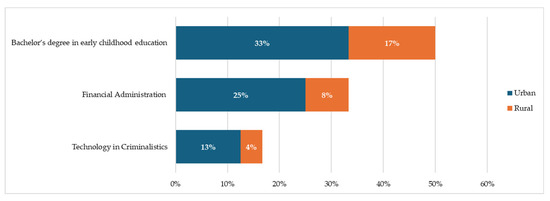
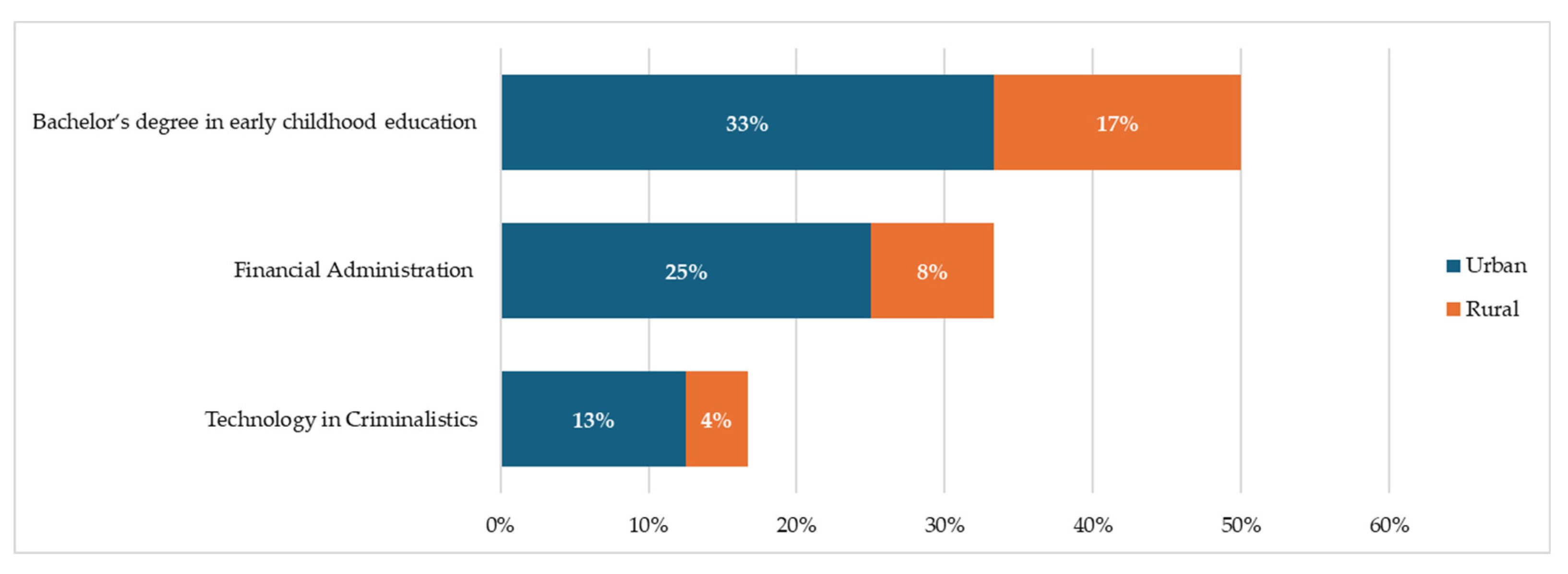
The sample was intentional, with the participation of 265 individuals, of whom 3% were teachers and 97% were students, highlighting the three programs offered remotely by the Universidad de la Amazonia (see Figure 1): Bachelor’s Degree in Early Childhood Education (U = 33%, R = 17%), Financial Administration (U = 25%, R = 8%) and Technology in Criminalistics (U = 13%, R = 4%).
Figure 1.
Percentage of sample by program and location.
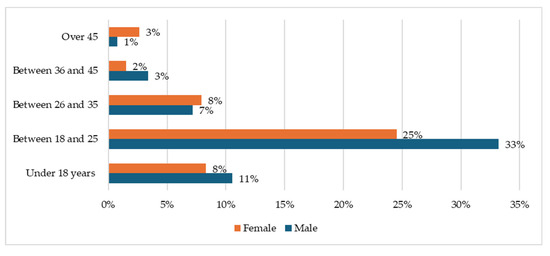
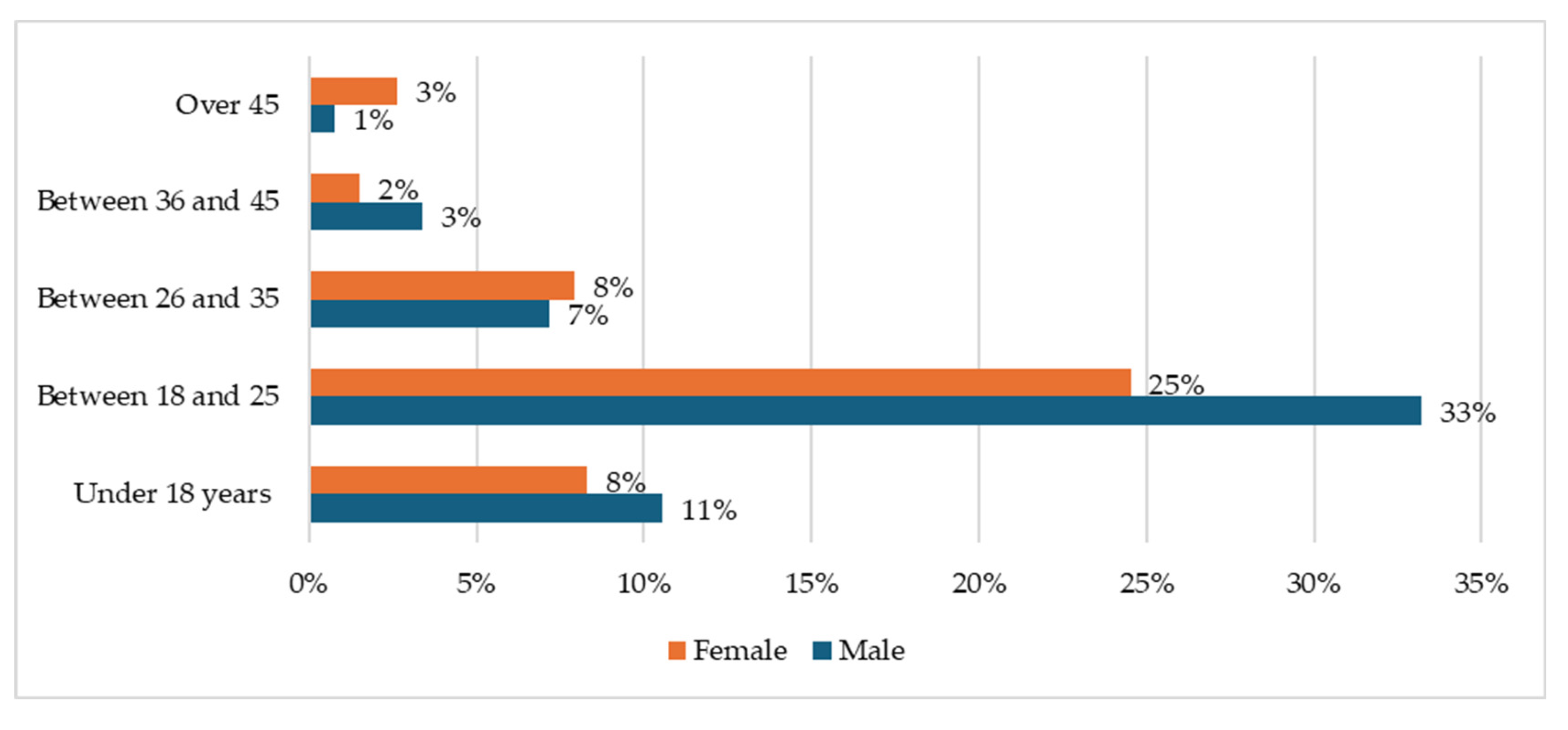
Figure 2 shows that the sample is predominantly young: the 18–25 age group comprises the largest proportion of undergraduate students at 58%. This study found that those under 18 were at 19% and the 26–35 age group at 15%. In contrast, the older age group has reduced participation: 5% between 36 and 45 years old and 4% over 45 years old. These latter participants are primarily teachers and adult students who, thanks to the flexibility of distance learning programs, are taking advantage of the opportunity to begin or continue their university studies.
Figure 2.
Percentage of sample by gender and age.
2.2. Techniques and Instruments
Two instruments were used in this study. The first was a document analysis matrix to systematize the review of scientific literature and policy documents related to environmental literacy. The matrix included analytical criteria, such as conceptual definitions, theoretical approaches, pedagogical orientations, and references to sustainability, which supported the study’s theoretical framework.
The second instrument was a Likert-type survey to capture students’ and teachers’ perceptions of distance and online education programs. The decision to apply the same survey instrument to both students and teachers was based on the study’s conceptual design and the nature of the constructs being assessed. This approach focuses not on the specific functions of each role, but rather on perceptions, understandings, and practices related to environmental literacy in distance and virtual education contexts. The questionnaire comprised six dimensions of environmental literacy: Environmental Knowledge (EK), Environmental Attitudes (EA), Environmental Behaviors (EB), Perception of Environmental Education (PE), and Influence of ICTs, evaluated in terms of frequency (ELTIC1) and pedagogical use (ELTIC2).
2.3. Ethical Considerations
This study was conducted in accordance with institutional regulations and national data protection laws. According to the official certification issued by the Vice-Rector for Research and Innovation of Universidad de la Amazonia (Colombia) on 27 February 2025, the research was exempt from formal ethical committee approval. The study involved voluntary participation, anonymous data collection, and the guarantee of confidentiality for all participants’ information. All participants were clearly informed about the study’s purpose and the use of their data. Data handling complied with Colombian Law 1581 of 2012 on personal data protection.
2.4. Procedure and Data Analysis
The methodological design was developed in three phases:
Phase 1. Review: In this phase, a literature review on environmental literacy was conducted, organized into two sources: research (peer-reviewed articles, theses, and conference proceedings) and policy (national and institutional documents). The search was conducted across specialized databases such as SCOPUS, Crossref, and institutional repositories, using keywords related to environmental literacy, environmental education, sustainability, and distance and online higher education.
The documents were systematized and organized by document type, scope, and relevance to higher education and the Amazonian context. The hermeneutic analysis was developed using an analytical matrix to ensure transparency and traceability of the interpretive approaches and meanings related to the environment, sustainability, and distance/online higher education.
Phase 2. The perspective of social actors (students and teachers) was examined to understand their views on environmental education in distance learning programs and the influence of ICTs on the process. This study used an instrument with six sections. In this phase, quantitative analyses predominated, beginning with the instrument, which was validated by expert judgment using Cronbach’s alpha coefficient to determine its reliability (construct). Furthermore, to determine the instrument’s internal consistency, tests such as McDonald’s Omega were used to assess item heterogeneity and thus verify the sample’s normality.
Phase 3. In the proposition phase, the results of the previous phases were analyzed to formulate curricular guidelines for environmental literacy from a critical and contextualized perspective, and to critically assess the traceability of the theoretical foundations to the empirical data obtained.
3. Results and Discussion
They comprise the findings derived from the three methodological phases proposed in the study, described below:
Phase 1. This phase involved reviewing scientific literature and policy documents related to environmental education, environmental literacy, higher education curricula, digital technologies, and sustainable development. A document analysis matrix was designed as the primary instrument to systematize this process.
A hermeneutic approach was used to analyze the information, understood as an interpretive process that seeks to reconstruct the meaning of texts, rather than describe them [34]. Through this analysis, the epistemological foundations described in Table 1 were not treated as isolated theories, but rather as complementary frameworks. These frameworks were interpreted in relation to the socio-environmental context, the characteristics of distance higher education, and the transformative objectives of environmental education.
Table 1.
Fundamentals of the curricular guidelines for environmental literacy.
Phase 2. Perspective of the social actors: It involved investigating students’ and teachers’ perceptions of the environmental training implemented in the Universidad de la Amazonia’s distance education programs. An instrument divided into six sections was used. This information was fundamental for recognizing gaps and opportunities for improvement across the different aspects consulted, and it provided methodological support for the design and implementation of the proposal for curricular guidelines for environmental literacy.
The instrument’s design considered the aspects described to measure environmental literacy, based on its components: Knowledge: understanding of basic environmental topics and the problems associated with human interaction with nature. Attitudes: acquisition of values, emotions, and feelings of concern for the environment and motivation to actively participate in its improvement and care. Behavior: reflects individual or collective participation through the development of intentional and habitual behaviors, aimed at solving current problems and preventing new ones [16].
3.1. Validity of the Instrument
Expert judgment: three PhD experts in environmental, pedagogical and technological issues participated, who were provided with a grid to validate the consistency of the instrument and be able to apply their observations to improve it [64]; the validation of the content was carried out by sections, according to the following criteria (Table 2): Coherence (C1): the section accounts for the measurement of variables relevant to the study; Clarity (C2): the statements are clear and do not give rise to confusion; Scale (C3): the scale is appropriate for the study; Relevance (C4): the items are relevant to the fulfillment of the study objectives. The rating scale ranged from 1 to 5, where 1 = Unacceptable, 2 = Deficient, 3 = Regular, 4 = Good, and 5 = Excellent.
Table 2.
Content validity and reliability.
Reliability validation: this was carried out using Cronbach’s Alpha coefficient, which was used to evaluate the scale’s internal consistency by analyzing item correlations, thereby verifying the construct’s measurement [56]. In general, Cronbach’s alpha indicates that the scale for measuring environmental literacy is reliable, with levels ranging from acceptable to excellent across the sections (see Table 2).
3.2. Results by Dimensions Explored in the Instrument
The questionnaire consisted of five sections related to the dimensions of environmental literacy: Environmental Knowledge (EK), Environmental Attitudes (EA), Environmental Behaviors (EB), perception of environmental education (EP), influence of ICT on environmental literacy (ELTIC1-frequency), and (ELTIC2-use). To determine the instrument’s reliability, Cronbach’s Alpha and McDonald’s Omega were applied. Table 3 presents the results obtained for each dimension.
Table 3.
Instrument reliability by dimension.
In line with Cronbach’s alpha results, the instrument could be considered to exhibit acceptable internal consistency. However, when the same data were analyzed using McDonald’s omega coefficient, the results indicated item heterogeneity, suggesting the need for non-parametric analyses. To substantiate this observation, a one-sample Kolmogorov-Smirnov (KS) test for normality was conducted (see Table 4).
Table 4.
Kolmogorov-Smirnov test results for instrument dimensions.
In this case, the results of the Kolmogorov-Smirnov test indicate relatively high values (K ranging from 1.17 to 2.19), suggesting that the data depart significantly from normality across all instrument dimensions. Consequently, to examine differences across the various dimensions of environmental literacy over the academic semester, the non-parametric Kruskal–Wallis test was applied (see Table 5).
Table 5.
Results of the non-parametric Kruskal–Wallis test.
The results of the non-parametric Kruskal–Wallis test show statistically significant differences across semesters in Environmental Knowledge (p = 0.021), Environmental Attitudes (p = 0.006), and Environmental Behaviors (p = 0.023), indicating that academic progress is associated with different levels of environmental literacy in these dimensions. However, no significant differences were found in the perception of the environmental training received (p = 0.054) or in the use and frequency of ICT use for environmental activities (p = 0.624 and p = 0.248, respectively), suggesting that the integration of ICT in environmental practices does not vary substantially between semesters.
3.3. Descriptive Statistics
Table 6 presents the descriptive statistics for the six dimensions assessed in the study. Overall, the findings indicate favorable levels of environmental literacy among students, with varying degrees of consistency across dimensions.
Table 6.
Descriptive statistics by dimensions.
The descriptive results reveal distinct patterns across the dimensions of environmental literacy and ICT-mediated practices. Students exhibit strong environmental knowledge (EK) and pro-environmental attitudes (EA), both characterized by high mean scores and low variability. This alignment suggests that the cognitive and affective components of environmental literacy are relatively well consolidated in the population, consistent with studies showing that knowledge and attitudes often develop in parallel in higher education contexts [25,32].
However, a notable discrepancy emerges when examining environmental behaviors (EB), where the mean score is moderately favorable but lower than those for EK and EA. This gap reinforces previous findings in ecological education research suggesting that positive attitudes do not automatically translate into sustained behavioral engagement. [65]. Behavioral adoption often depends on contextual, motivational, and structural factors that may not be fully addressed in the current academic environment.
The most heterogeneous results appear in the Environmental Perception (EP) dimension. Students differ considerably in their perceptions of the university’s environmental education (SD = 0.91), suggesting uneven curricular integration or variability in the quality and depth of environmental content across courses or semesters. Such variability may point to the need for a more consistent and explicit institutional approach to environmental education, particularly within distance-learning modalities [28].
Regarding ICT-related dimensions, both ELTIC1 (frequency) and ELTIC2 (use) show moderate averages and relatively high dispersion. This study indicates that the incorporation of ICT for environmental learning is not uniform among students. Although some students appear to use digital tools effectively for environmental literacy, others use them irregularly or only occasionally. These results suggest opportunities to strengthen instructional design, promote digital skills, and encourage a more structured integration of ICT into sustainability-oriented learning activities.
Overall, the results underscore the need to promote pedagogical strategies that bridge the gap between knowledge, attitudes, and behavior, and to improve the coherence of environmental education and the integration of ICT into virtual programs.
According to the information obtained from students and teachers of the distance education programs of the Universidad de la Amazonia, Table 7 summarizes, by dimension, the aspects and curricular implications of the findings analyzed in relation to environmental literacy and its justification from theoretical references, which support the methodological guidelines for the implementation of environmental literacy.
Table 7.
Synthesis of findings from the perspective of students and teachers for the formulation of environmental literacy curriculum guidelines.
Overall, the results of the student and teacher perception surveys show a relatively high level of knowledge/concern alongside weaker pro-environmental practices. This case aligns with the well-established “knowledge-action gap” described in the literature on environmental education and behavior change [1,30]. In this study, this pattern is not presented as a novel empirical finding, but rather as a diagnostic indicator for curricular decision-making in distance/virtual higher education. This study highlights the need to move beyond awareness-oriented content and toward the development of competencies, situated learning activities, and assessment approaches that better link environmental literacy with viable actions within the context and comprehensive training in higher education.
Phase 3. Proactive: The statistical results confirmed the presence of a behavioral gap, widely reported in the environmental education literature, and highlighted structural weaknesses in the pedagogical and curricular integration of environmental literacy in online and distance learning programs (see Table 8). The high dispersion observed in the environmental education and ICT dimensions underscores the need for coherent curriculum designs, pedagogical uses of technology, and assessment strategies geared toward behavior change. In response, the five proposed Curriculum Guidelines were formulated through a systematic interpretation of the empirical evidence, ensuring that each guideline addresses a specific weakness identified in the data and contributes to advancing the Sustainable Development Goals, particularly SDGs 4, 12, 13, and 15.
Table 8.
Empirical basis for the proposed Curricular Guidelines and alignment with the SDGs.
The practical application of curriculum guidelines (CG) can be described from three perspectives:
- (a)
- In design: providing a foundation for organizing courses, content, resources, and contextualized and relevant training activities.
- (b)
- In implementation: establishing the purposes of environmental education and the relevant pedagogical and technological mediations to promote student participation and achieve the expected socio-environmental competencies.
- (c)
- In evaluation: flexible, ethical, and appropriate strategies and instruments are proposed to comprehensively assess the individual and collective learning and transformations achieved through environmental education.
Based on these considerations, the curriculum guidelines formulated as the objective of this study are described below:
CG1. Curriculum design focused on critical thinking from a complex and comprehensive approach.
Design: Develop curricula that integrate relevant, contextually grounded environmental content in a cross-cutting, interdisciplinary manner, promoting the development of knowledge, skills, attitudes, and values oriented toward a critical understanding of environmental issues and their ethical transformation through a sustainable approach [3,16,54]. Academic programs must identify environmental themes that cut across curricula so that they can be addressed in different subjects, areas of training, and lines of research. Implementation: encourage critical, reflective, and ethical analysis of socio-environmental issues as a basis for proposing alternative solutions that involve individual and/or collective participation to resolve them through the development of academic, research, and social outreach activities carried out by teachers and students. Evaluation: assess the appropriation of environmental concepts and values as part of the environmental competencies that academic programs should develop in a cross-cutting manner.
CG2. Integration of active methodologies and strategies adapted to virtual environments.
Design: integrate active strategies such as Problem-Based Learning (PBL), case studies, and gamification, among others, that allow students to solve real environmental problems from their context, with autonomy, collaboration, ethical sense, and responsibility, promoting meaningful participation in non-face-to-face environments mediated by ICT. Implementation: guide the collaborative, autonomous, and contextualized learning process through the use of ICT. Assessment: evaluate environmental projects, solutions to contextual problems, or carry out environmental campaigns.
CG 3. Use of ICT as pedagogical mediators.
Design: design activities that link content and context using different digital resources (applications, videos, simulators, interactive maps, virtual reality, augmented reality, among others) that provide educational environments enriched by the diversity of information and interactivity; in addition, they should be relevant and appropriate to the different contexts and levels of access to technology that students have. Implementation: promote the use of virtual environments to facilitate student and teacher immersion, interaction, and participation, ensuring equitable participation through synchronous and asynchronous strategies. Assessment: evaluate evidence of the learning process using multimedia resources, digital logs, applications, and other technologies that promote learning and support the development of environmental activities adapted to the students’ context and realities.
CG 4. Assessment for learning is oriented towards change.
Design: design assessment processes with instruments consistent with the methodologies used and the environmental training objectives, prioritizing self-assessment, co-assessment, critical reflection, and the production of evidence that allows for the assessment of not only cognitive learning, but also attitudinal and transformative learning. Implementation: Develop the assessment process as a continuous feedback loop, based on clear criteria, that engages students both individually and collectively, to raise awareness of their own learning. Evaluation: Assess not only the result, but also ethical commitment and personal and collective transformation.
CG 5. Strengthening teaching skills and institutional support.
Design: promote continuous teacher training in methodologies and strategies for critical pedagogy, environmental education, and the use of ICT in virtual educational environments. Likewise, institutional policies must support environmental education as a strategic focus across the curriculum, research, and social outreach, ensuring its sustainability and alignment with the needs of the Amazonian context. Implementation: Establish pedagogical and curricular support mechanisms for the training processes designed by each program to ensure that environmental literacy is a cross-cutting, interdisciplinary focus in the curriculum, permeating all academic activities. Evaluation: evaluate the impact of institutional policies and teacher training plans through improvement plans, pedagogical practices, interaction with the environment, and the development of projects that contribute to the solution and mitigation of local environmental problems from various disciplines.
On the other hand, as part of the research exercise, in formulating the curriculum guidelines for environmental literacy, roles were identified as a fundamental factor for proper implementation. These roles shape teachers’ and students’ roles in ICT-mediated educational environments, as well as the cross-cutting environmental competencies necessary for a comprehensive educational process.
Teacher role: Active, facilitator, guide, and promoter of critical and self-reflective thinking, agent of change, designer of challenging and contextualized activities.
It should be added, in particular, and in accordance with Roa Mendoza [15], that teachers in ICT-mediated environments must have the following basic competencies:
- Pedagogical: ability to facilitate specialized knowledge, generate questions, and provide feedback on the educational process. Curriculum designer (planning activities, selecting content, and resources)
- Social: ability to foster collaboration and a learning community.
- Technical: knowledge of technological tools and resources in terms of their use and management, enabling them to use them effectively and provide assistance to students if necessary.
- Administrative: management of students and resources provided by the ICT-mediated learning environment.
Student role: Active, participatory, analytical regarding environmental issues in their context.
Environmental competencies: In line with the critical social pedagogical model established at the University of the Amazon and the complex approach to environmental, the following are suggested:
- Environmental knowledge: recognizes the forms of individual and social construction of knowledge that allow them to understand and solve problems related to the interaction between humans and nature [30,67].
- Systemic thinking: analyzes complex systems across different dimensions (social, environmental, economic, political, etc.) and spheres (local, global), and considers their multiple implications to generate solutions within the framework of sustainability.
- Critical thinking: takes a critical and reflective stance on power relations and the colonialism of knowledge that affects the balance between humans (society) and nature, to undertake individual and community actions that promote environmental sustainability.
4. Conclusions
Comprehensive higher education undoubtedly involves environmental education. Therefore, it is the responsibility of all members of the academic community to participate in the development of curricula that have the environment as a cross-cutting theme, under flexible guidelines that facilitate adaptation to different contexts, providing students with a worldview of their environment that promotes the development of environmental awareness through the complementarity of cognitive, affective, dispositional, and behavioral dimensions oriented toward transformative action [2,53].
The results of investigating the different aspects of environmental literacy and the perceptions of the different actors revealed certain areas that require attention, which opens up the possibility of designing specific actions from the curriculum to guide academic, research, and social outreach activities, intending to strengthen the environmental culture at the University of the Amazon.
The guidelines that shape environmental literacy in distance learning program curricula are aligned with the characteristics and curricular approach of this modality, which aims to consolidate the environmental component as a cross-cutting theme in education, to promote critical and ethical thinking among professionals in training, thus avoiding reducing environmental education to a means of promoting development based solely on globalization, consumerism, and production [7], and to integrate it into educational processes that make the most of environmental tools and knowledge as an alternative basis for the change that humanity and nature so desperately need.
The definition of curriculum guidelines for distance and virtual higher education [67] requires consideration of training environments free of geographic constraints that foster students’ critical awareness of environmental issues. This case implies the design of curricula that recognize the active role of individuals in an interconnected world, where local actions have a global impact [3,11,46], as well as integrating knowledge about the relationship between social and natural systems; and, in particular, recognizing the role of ICT as a factor in transforming the roles of teachers and students, methodologies, and assessment processes.
The results indicate high levels of environmental knowledge and attitudes, yet these strengths are not consistently reflected in students’ behaviors, confirming a knowledge–action gap. This study is compounded by fragmented perceptions of environmental education and an uneven integration of ICT, which is often used irregularly and mainly in instrumental ways rather than as a pedagogical mediator.
The findings support the proposed Curricular Guidelines: strengthening critical and complexity-oriented curriculum design (CG1), integrating active methodologies to promote behavioral change in virtual environments (CG2), positioning ICT as pedagogical mediators (CG3), adopting assessment for learning oriented toward transformation (CG4), and reinforcing teaching capacity and institutional support (CG5). This framework advances environmental literacy in online and distance higher education, aligned with SDGs 4, 12, 13, and 15.
4.1. Limitations of the Research
Despite its mixed-methods design, this study has limitations. The empirical component relied on a Likert-type survey measuring perceptions of environmental literacy, so the results do not fully reflect the implementation of concrete environmental practices or related academic, research, and outreach activities.
A gap exists between the critical and transformative stance and the empirical scope of the study. Since the design is non-interventionist and based on documentary evidence and self-reported perceptions, the results do not aim to substantiate causal claims or confirm socio-environmental transformations. Instead, they aim to highlight curricular implications and to identify criteria and priorities for environmental literacy in distance/virtual programs, based on both the scientific literature and the institutional policies and guidelines that underpin the epistemological, pedagogical, and implementation positions of the proposal.
The analysis was not broken down by role (students vs. teachers), which limited the identification of patterns and contributions specific to each role. Furthermore, the Amazonian context, while central to the study, may restrict the generalizability of the findings to other settings. Voluntary participation and digital recruitment may have introduced self-selection bias and reduced the sample’s representativeness.
4.2. Future Work
Future research could use longitudinal and interventional designs to examine how the proposed Curriculum Guidelines (CG1-CG5) influence the evolution of the knowledge-action gap across semesters and assess their effectiveness in promoting collective and community-based environmental behaviors that shape the development of environmental literacy and its alignment with the broader SDG agendas.
While the Amazon region defines the territorial relevance and pertinence of the proposed guidelines, the empirical design does not assess the mechanisms at the context level. These explanatory dimensions should be addressed in future work through multi-source triangulation to evaluate implementation and outcomes over time.
Author Contributions
Conceptualization, D.-L.A.-G., E.-E.M.-R. and P.A.-V.; methodology, D.-L.A.-G.; validation, D.-L.A.-G. and P.A.-V.; formal analysis, D.-L.A.-G., E.-E.M.-R. and P.A.-V.; investigation, D.-L.A.-G. and P.A.-V.; resources, P.A.-V.; writing—original draft preparation, D.-L.A.-G., E.-E.M.-R., M.C.-C., L.S.-U. and P.A.-V.; writing—review and editing, D.-L.A.-G., E.-E.M.-R., M.C.-C., L.S.-U. and P.A.-V.; supervision, M.C.-C., and P.A.-V.; project administration, P.A.-V.; funding acquisition, P.A.-V. All authors have read and agreed to the published version of the manuscript.
Funding
This research was funded by Universidad de Las Américas—Ecuador as part of the internal research project 518.A.XV.24.
Institutional Review Board Statement
The research was conducted using a non-invasive methodology and was exempt from formal ethical approval, in accordance with the institution’s internal regulations and national laws. Participants were fully informed about the study’s purpose, the voluntary nature of their participation, and the procedures for data management and storage. The project was approved by the Universidad de la Amazonia (NIT code 891.190.346-1, approval date: 27 February 2025). All actions were carried out in accordance with institutional regulations and the ethical principles established in the Declaration of Helsinki. The confidentiality and anonymity of the collected data were ensured in accordance with Law 1581 of 2012, which governs the protection of personal data in Colombia.
Informed Consent Statement
Informed consent for participation was obtained from all subjects involved in the study.
Data Availability Statement
The data presented in this study are available at [68].
Conflicts of Interest
The authors declare no conflicts of interest.
References
- Oliveira, A.P.; Bajanca, A.; Paramés, A. Unveiling urban biodiversity: An interdisciplinary hands-on project that catalyzes awareness. Environ. Sustain. Indic. 2025, 25, 100561. [Google Scholar] [CrossRef] [Scilit]
- Leff, E. Rationality and Environmental Justice: The Elusive Injustice of Life. Hist. Ambient. Latinoam. Caribena 2021, 11, 19–38. [Google Scholar] [CrossRef] [Scilit]
- Allel, A.; McCowan, T. Teachers’ and Students’ Perspectives on Integrating Education for Sustainable Development in the Chilean Curriculum. Sustainability 2025, 17, 8115. [Google Scholar] [CrossRef] [Scilit]
- UNESCO. UNESCO Science Report, Towards 2030: Executive Summary. UNESCO: Paris, France, 2015; Available online: https://unesdoc.unesco.org/ark:/48223/pf0000235407 (accessed on 2 September 2025).
- Gallego, L.E.S. Environmental education in Colombia since the General Education Law: A comparative analysis of regulatory and curricular frameworks. Rev. Luna Azul 2025, 60, 110–128. [Google Scholar] [CrossRef] [Scilit]
- Yusuf, R.; Fajri, I. Differences in behavior, engagement and environmental knowledge on waste management for science and social students through the campus program. Heliyon 2022, 8, e08912. [Google Scholar] [CrossRef] [Scilit]
- Morin, E. The Seven Necessary Skills for the Education of the Future; UNESCO: Paris, France, 1999; Volume 1. [Google Scholar]
- Leal, S.; Azeiteiro, U.M.; Aleixo, A.M. Sustainable development in Portuguese higher education institutions from the faculty perspective. J. Clean. Prod. 2024, 434, 139863. [Google Scholar] [CrossRef] [Scilit]
- Sauvé, L. Transversality, Diversity, Criticality, and Activism: Enhancing E(S)E in Teacher Education. In International Explorations in Outdoor and Environmental Education; Springer International Publishing: Cham, Switzerland, 2019; pp. 49–61. [Google Scholar] [CrossRef] [Scilit]
- Svanström, M.; Lozano-García, F.J.; Rowe, D. Learning outcomes for sustainable development in higher education. Int. J. Sustain. High. Educ. 2008, 9, 339–351. [Google Scholar] [CrossRef] [Scilit]
- Figueiró, P.S.; Neutzling, D.M.; Lessa, B. Education for sustainability in higher education institutions: A multi-perspective proposal with a focus on management education. J. Clean. Prod. 2022, 339, 130539. [Google Scholar] [CrossRef] [Scilit]
- Dias, A.; Figueiredo, M.; Chaves, H.; Neves, J.; Vicente, H. Assessment of Environmental Literacy. In Proceedings of the International Conference on Higher Education Advances, Valencia, Spain, 23–25 June 2021; Universidad Politecnica de Valencia: Valencia, Spain, 2021; pp. 799–807. [Google Scholar] [CrossRef] [Scilit]
- Murcia, N.V.M.; Silva, A.F.; Ortiz, N.L.; Guayara, D.L.Á. Critical Analysis of Environmental Education at the University of the Amazon; Documentary Review; Zenodo: Geneva, Switzerland, 2024; Volume 3. [Google Scholar] [CrossRef]
- MEN. “Curriculum Guidelines,” Terminos en la Letra Calidad. Available online: https://www.mineducacion.gov.co/portal/micrositios-preescolar-basica-y-media/Direccion-de-Calidad/Referentes-de-Calidad/339975:Lineamientos-curriculares (accessed on 31 January 2025).
- He, Y. A Mixed-Methods Study of Curriculum Design and Student Awareness in Chinese Universities. Int. J. Web-Based Learn. Teach. Technol. 2025, 20, 1–17. [Google Scholar] [CrossRef] [Scilit]
- Ahmad, N.; Toro-Troconis, M.; Ibahrine, M.; Armour, R.; Tait, V.; Reedy, K.; Malevicius, R.; Dale, V.; Tasler, N.; Inzolia, Y. CoDesignS Education for Sustainable Development: A Framework for Embedding Education for Sustainable Development in Curriculum Design. Sustainability 2023, 15, 16460. [Google Scholar] [CrossRef] [Scilit]
- Mendoza, P.C.R. Proposal for Curricular Guidelines in Higher Education from the Perspective of Critical Curriculum: An Alternative Based on the Challenges of Professional Training in Social Work. Ph.D. Thesis, Universidad de la Salle, Bogotá, Colombia, 2019. Available online: https://ciencia.lasalle.edu.co/items/f79124e8-8424-4278-b3e9-eecd13393692/full (accessed on 9 April 2025).
- Hollweg, K.S.; Taylor, J.R.; Bybee, R.W.; Marcinkowski, T.J.; Mcbeth, W.C.; Zoido, P. Developing a Framework for Assessing Environmental Literacy; NAAEE: Washington, DC, USA, 2011; Available online: https://www.scirp.org/reference/referencespapers?referenceid=2989570 (accessed on 31 January 2025).
- Cortés, A.A.; Soloaga, P.S. Active Methodologies in Higher Education in Ibero-America: A Systematic Mapping. Rev. Educ. Las. Américas 2025, 14. [Google Scholar] [CrossRef] [Scilit]
- Arenas, R.D.M.; Hurtado, D.M.B.; Briceño, C.A.O.; Cacho, L.P.; Salazar, E.J.A.; Guimaray, J.I.Z. Desafíos Interdisciplinarios para los Docentes de Aprendizaje Virtual, 1st ed.; Editorial Mar Caribe: Lima, Peru, 2023; Available online: http://editorialmarcaribe.es/?page_id=1292 (accessed on 31 January 2025).
- Santuber, C.P.; Molina, M.B.; Salgado, R.O.; Gallegos, D.J.; Nadim, T.F. Autorregulación del aprendizaje, motivación y competencias digitales en educación a distancia. Rev. Mex. Investig. Educ. 2023, 28, 965–986. Available online: https://classic.scielo.org.mx/pdf/rmie/v28n98/1405-6666-rmie-28-98-965.pdf (accessed on 31 January 2025).
- García, J.; Camac, M.; Piedra, J.; Durand, C.; Vilchéz, C.; Castellano, M. Distance and Virtual Education: Quality and Sustainability in Education; Editorial Mar Caribe de Josefrank Pernalete Lugo: Lima, Peru, 2023; Volume 135, Available online: http://editorialmarcaribe.es/?page_id=1477 (accessed on 31 January 2025).
- Asamoah, M.K.; Agyekum, B.; Adu-Marfo, A.O.; Eshun, S.N. Educational leadership flaws during the COVID-19 pandemic: Implications for online learning in the 21st century. Discov. Educ. 2025, 4, 350. [Google Scholar] [CrossRef] [Scilit]
- Cabero-Almenara, J.; Pacheco-Cortés, C.M.; Infante-Moro, A. The Intercultural Dimension of Comparative Higher Education and Blended Learning: A Literature Review. Rev. Electron. Educ. 2025, 29, 1–26. [Google Scholar] [CrossRef] [Scilit]
- Eloff, I.; Mathabathe, K.; Agostini, E.; Dittrich, A.-K. Teaching the Global Goals: Exploring the Experiences of Teacher Educators in an Online-Environment through Vignette Research. Environ. Sci. Proc. 2022, 15, 5. [Google Scholar] [CrossRef] [Scilit]
- Aguayo, C.; Eames, C. Promoting community socio-ecological sustainability through technology: A case study from Chile. Int. Rev. Educ. 2017, 63, 871–895. [Google Scholar] [CrossRef] [Scilit]
- Sanchez, S.J.; Guzman, Y.P.; Sosa-Molano, J.; Robertson, D.; Ahern, S.; Garza, T. Systematic literature review: A typology of Sustainability Literacy and Environmental Literacy. Front. Educ. 2025, 10, 1490791. [Google Scholar] [CrossRef] [Scilit]
- Sarabi, R.E.; Abdekhoda, M.; Dehnad, A.; Khajouei, G. Environmental literacy and accountability of undergraduate students of medical sciences. Webology 2020, 17, 191–201. [Google Scholar] [CrossRef] [Scilit]
- Angreani, A.; Saefudin, S.; Solihat, R. Virtual laboratory based online learning: Improving environmental literacy in high school students. J. Pendidik. Biol. Indones. 2022, 8, 10–21. [Google Scholar] [CrossRef] [Scilit]
- Tsai, S.K.; Chuang, T.Y.; Lin, Z.J. Enhancing Environmental Literacy Through Digital Game-Based Learning: A Technology-Integrated Attitude Change Approach. Sustainability 2025, 17, 7416. [Google Scholar] [CrossRef] [Scilit]
- Chinedu, C.C.; Saleem, A.; Muda, W.H.N.W. Teaching and Learning Approaches: Curriculum Framework for Sustainability Literacy for Technical and Vocational Teacher Training Programmes in Malaysia. Sustainability 2023, 15, 2543. [Google Scholar] [CrossRef] [Scilit]
- Lorente-Echeverría, S.; Murillo-Pardo, B.; Canales-Lacruz, I. A Systematic Review of Curriculum Sustainability at University: A Key Challenge for Improving the Professional Development of Teachers of the Future. Educ. Sci. 2022, 12, 753. [Google Scholar] [CrossRef] [Scilit]
- Vidal, S.; Kuckuck, M. Pre-Service Teacher Action Competence in Education for Sustainable Development: A Scoping Review. Sustainability 2025, 17, 3856. [Google Scholar] [CrossRef] [Scilit]
- Okur, Ö.; Huang, M.; Angeli, L.; van der Voort, H.; Huang, Y. Sustainable digital education technologies: An analysis of selection processes in European universities. Discov. Sustain. 2025, 6, 1–17. [Google Scholar] [CrossRef] [Scilit]
- Baena-Morales, S.; Fröberg, A.; García-Taibo, O.; Ponce-Gea, A.I. Physical Education Teacher Education Students’ Perceptions of Competencies for Sustainable Development in Their Degree Program. Aust. J. Environ. Educ. 2025, 41, 873–888. [Google Scholar] [CrossRef] [Scilit]
- Christou, O.; Manou, D.B.; Armenia, S.; Franco, E.; Blouchoutzi, A.; Papathanasiou, J. Fostering a Whole-Institution Approach to Sustainability through Systems Thinking: An Analysis of the State-of-the-Art in Sustainability Integration in Higher Education Institutions. Sustainability 2024, 16, 2508. [Google Scholar] [CrossRef] [Scilit]
- López-Alcarria, A.; Poza-Vilches, M.F.; Pozo-Llorente, M.T.; Gutiérrez-Pérez, J. Water, waste material, and energy as key dimensions of sustainable management of early childhood eco-schools: An environmental literacy model based on teachers action-competencies (ELTAC). Water 2021, 13, 145. [Google Scholar] [CrossRef] [Scilit]
- Del Socorro Pérez Vásquez, N. Environmental Education for Teachers in Training Based on an Alternative Curriculum Proposal Supported by Interdisciplinarity and Ethical Responsibility. Ph.D. Thesis, Universidad Surcolombiana, Neiva, Colombia, 2020. Available online: https://dialnet.unirioja.es/descarga/tesis/287717.pdf (accessed on 31 January 2025).
- Espinoza-Mina, M.A.; Colina-Vargas, A.M. Trends in Open Access to Environmental Information in the Amazonia, 1st ed.; Editorial Grupo AEA: Madrid, Spain, 2024. [Google Scholar] [CrossRef] [Scilit]
- Peña, R.S.; Barrera, M.C.M.; Reyes, H.M. Environmental Education for Sustainability and Sustainable Development at TecNM: Curriculum Review. Rev. Educ. Super. 2024, 53, 47–68. [Google Scholar] [CrossRef]
- Kazazoglu, S. Environmental Education Through Eco-Literacy: Integrating Sustainability into English Language Teaching. Sustainability 2025, 17, 2156. [Google Scholar] [CrossRef] [Scilit]
- Monte, T.; Reis, P. Design of a pedagogical model of education for environmental citizenship in primary education. Sustainability 2021, 13, 6000. [Google Scholar] [CrossRef] [Scilit]
- Liang, S.-W.; Fang, W.-T.; Yeh, S.-C.; Liu, S.-Y.; Tsai, H.-M.; Chou, J.-Y.; Ng, E. A nationwide survey evaluating the environmental literacy of undergraduate students in Taiwan. Sustainability 2018, 10, 1730. [Google Scholar] [CrossRef] [Scilit]
- Jannah, M.; Oviana, W.; Hayati, Z.; Hidayat, R.; Usman, J.; Noris, M. Enhancing Pre-Service Teachers’ Science Process Skills through Open-Ended and Guided Inquiry-Based Learning. J. Ilm. Peuradeun. 2025, 13, 1235–1262. [Google Scholar] [CrossRef] [Scilit]
- Creswell, J.W.; Creswell, J.D. Research Design. Qualitative, Quantitative, and Mixed Methods Approaches, 5th ed.; SAGE Publications, Inc.: Thousand Oaks, CA, USA, 2018; Volume 2017, Available online: https://www.ucg.ac.me/skladiste/blog_609332/objava_105202/fajlovi/Creswell.pdf (accessed on 10 February 2025).
- Schot, J.; Steinmueller, W.E. Three frames for innovation policy: R&D, systems of innovation and transformative change. Res. Policy 2018, 47, 1554–1567. [Google Scholar] [CrossRef] [Scilit]
- El Consejo Superior Universidad de la Amazonia. Proyecto Educativo Institucional (PEI); Universidad de la Amazonía: Florencia, Colombia, 2024; Available online: https://www.uniamazonia.edu.co/documentos/docs/Consejo%20Superior/Acuerdos/2024/Acuerdo%20032%20-%20Proyecto%20Educativo%20Institucionall%20.pdf (accessed on 10 February 2025).
- Izquierdo-Merlo, M.E. Knowledge management from a socio-formative approach towards sustainable social development. Ecocience Int. J. 2020, 2, 10–18. [Google Scholar] [CrossRef]
- Gadotti, M. Pedagogy of the Land, 1st ed.; Siglo XXI Editores S.A. de C.V: Mexico City, Mexico, 2002; Available online: https://books.google.com.co/books/about/Pedagog%C3%ADa_de_la_tierra.html?id=bUoVcJz3n1MC&redir_esc=y (accessed on 31 January 2025).
- King, J.A. Environmental Literacy in Environmentally Themed Higher Education Courses. Master’s Thesis, University of Wisconsin, Stevens Point, WI, USA, 2015. Available online: https://minds.wisconsin.edu/handle/1793/81828 (accessed on 31 January 2025).
- McBride, B.B.; Brewer, C.A.; Berkowitz, A.R.; Borrie, W.T. Environmental literacy, ecological literacy, ecoliteracy: What do we mean and how did we get here? Ecosphere 2013, 4, 67. [Google Scholar] [CrossRef] [Scilit]
- Sánchez, A.A.; Espinosa, E.L. The development of environmental awareness in Law students. Rev. Iusta 2019, 51, 61–89. [Google Scholar] [CrossRef] [Scilit]
- Tobón, S.T.; Dipp, A.J. Experiences in Applying Competencies in Education and the Organizational World, 1st ed.; ReDIE: Mexico city, Mexico, 2012; Available online: https://rediemexico.net/librosyrevistas/libros/aplicacion_competencias.pdf (accessed on 10 February 2025).
- Imara, K.; Altinay, F. Integrating education for sustainable development competencies in teacher education. Sustainability 2021, 13, 12555. [Google Scholar] [CrossRef] [Scilit]
- Heras, F. Environmental education and sustainable lifestyles. Ecosistemas 2023, 32, 2470. [Google Scholar] [CrossRef] [Scilit]
- Nay-Valero, M.; Cordero-Briceño, M.E. Environmental Education and Education for Sustainability: History, foundations and trends. Rev. Encuentros 2019, 17, 24–45. [Google Scholar] [CrossRef] [Scilit]
- López, L.M.R.; Londoño, J.E.; Ruiz, A.A.; Benitez, J.M.; Parodi, T.V.; Montaña, D.V. Education for sustainable development: Approaches from a Colombian perspective. Rev. Prod. Limpia 2018, 13, 133–149. [Google Scholar] [CrossRef] [Scilit]
- Carrasco, M.T.; Distrital, U.; Ministerio de Educación Nacional. National Environmental Education Policy; Fotolito América Ltd.: Bogota, Colombia, 2003; Volume 21. Available online: https://www.minambiente.gov.co/wp-content/uploads/2021/10/Politica-Nacional-Educacion-Ambiental.pdf (accessed on 31 January 2025).
- Filho, W.L.; Trevisan, L.V.; Sivapalan, S.; Mazhar, M.; Kounani, A.; Mbah, M.F.; Abubakar, I.R.; Matandirotya, N.R.; Dinis, M.A.P.; Borsari, B.; et al. Assessing the impacts of sustainability teaching at higher education institutions. Discov. Sustain. 2025, 6, 227. [Google Scholar] [CrossRef] [Scilit]
- Avella, E.Y.A.; Barreto, S.A.O.; Torres, B.Y.V. The school environmental projects and its articulation with ICT. Rev. Conrado 2019, 15, 168–174. Available online: http://conrado.ucf.edu.cu/index.php/ (accessed on 13 April 2025).
- Merino-Conforme, M.V.; Osejos-Merino, M.Á.; Triviño-Lino, R.L.; Merino-Jalca, N.A. Digital Tools and Platforms to promote Environmental Education Business Administration Career Blended–UNESUM. Polo Del. Conoc. 2024, 9, 1862–1880. [Google Scholar] [CrossRef]
- Velastegui-Montoya, A.; Montalván-Burbano, N.; Carrión-Mero, P.; Rivera-Torres, H.; Sadeck, L.; Adami, M. Google Earth Engine: A Global Analysis and Future Trends. Remote Sens. 2023, 15, 3675. [Google Scholar] [CrossRef] [Scilit]
- Brereton, P. Environmental Literacy. In Environmental Literacy and New Digital Audiences, 1st ed.; Routledge: London, UK, 2019; pp. 1–19. [Google Scholar] [CrossRef] [Scilit]
- Prado-Límaco, G. Virtualization of the validation process by expert judgment of research data collection instruments. Rev. Cienc. Artes. 2022, 1, 1–44. [Google Scholar] [CrossRef] [Scilit]
- Angelaki, M.E.; Bersimis, F.; Karvounidis, T.; Douligeris, C. Towards more sustainable higher education institutions: Implementing the sustainable development goals and embedding sustainability into the information and computer technology curricula. Educ. Inf. Technol. 2024, 29, 5079–5113. [Google Scholar] [CrossRef] [Scilit]
- Yuan, M.; Zeng, J.; Jiang, M. Environmental Risk Perception, Risk Culture, and Pro-Environmental Behavior. Int. J. Env. Res. Public. Health 2020, 17, 1750. [Google Scholar] [CrossRef] [Scilit]
- Hindley, A. Understanding the Gap between University Ambitions to Teach and Deliver Climate Change Education. Sustainability 2022, 14, 13823. [Google Scholar] [CrossRef] [Scilit]
- Acosta-Vargas, P.; Chacón-Castro, M. Environmental literacy dataset. Mendeley Data, V1. 2025. Available online: https://data.mendeley.com/datasets/fhnc388z5j/1 (accessed on 13 April 2025).

Disclaimer/Publisher’s Note: The statements, opinions and data contained in all publications are solely those of the individual author(s) and contributor(s) and not of MDPI and/or the editor(s). MDPI and/or the editor(s) disclaim responsibility for any injury to people or property resulting from any ideas, methods, instructions or products referred to in the content. |
© 2026 by the authors. Licensee MDPI, Basel, Switzerland. This article is an open access article distributed under the terms and conditions of the Creative Commons Attribution (CC BY) license.