

Article

Digital Transformation and New Quality Productivity in SMEs: Evidence of Corporate Managerial Ability in China

Business School, Nanjing University, Nanjing 211106, China
*
Author to whom correspondence should be addressed.
Sustainability 2026, 18(2), 883; https://doi.org/10.3390/su18020883
Submission received: 20 December 2025 / Revised: 8 January 2026 / Accepted: 13 January 2026 / Published: 15 January 2026

Abstract

This study utilizes data from Chinese listed small- and medium-sized enterprises (SMEs) from 2010 to 2023. Based on dynamic capability theory and behavioral theory, we examine how corporate digital transformation influences new quality productivity and analyze the mediating role of managerial ability. The results indicate that digital transformation significantly and positively impacts the development of new quality productivity in SMEs, with managerial ability exerting a mediating effect. Furthermore, industry technological turbulence, ESG ratings, and digital intellectual property protection amplify the promotional effect of digital transformation on new quality productivity. Additionally, digital transformation plays a crucial role in enhancing new quality productivity for enterprises operating in more competitive industries, high-tech enterprises, and specialized, refined, distinctive, and innovative (SRDI) enterprises. This study extends the digital transformation literature by integrating managerial ability as a key internal mechanism linking digitalization to new quality productivity within SMEs, offering evidence derived from a large-scale longitudinal dataset.

1. Introduction

New quality productivity is characterized by laborers, labor materials, and labor objects achieving leaps through optimized combinations, and is marked by a substantial increase in total factor productivity. New quality productivity emphasizes revolutionary technological breakthroughs, the innovative allocation of production factors, and deep industrial transformation and upgrading [1]. Although the concept is rooted in the Chinese context, it also applies to the global economy. Against the backdrop of profound transformations in the global economic landscape, advancing a new round of technological revolution and industrial upgrading has become a shared imperative for enterprises worldwide [2]. New quality productivity provides fresh theoretical foundations and practical references for Europe to achieve digital transformation. Small- and medium-sized enterprises (SMEs) play a pivotal role in driving economic growth and stimulating vitality in innovation, serving as a crucial force in China’s development of new quality productivity. Achieving structural transformation and upgrading while driving the integration of new technologies and emerging industries through digital transformation represents an inevitable trend in corporate development and a crucial foundation for cultivating new quality productivity. Digital transformation provides SMEs with essential support to enhance market competitiveness and navigate complex external environments, making it a key choice for shaping industrial competitive advantages and keeping pace with advancements in artificial intelligence. However, SMEs still face numerous issues and challenges through the process of digital transformation. Firstly, there is a lack of corporate strategy in the digital transformation of SMEs [3]. Although digital transformation requires systematic planning and long-term investments, SMEs tend to be more conservative in their strategic planning and goal setting for transformation due to uncertainty risks and complex external business environments, resulting in a “reluctance to proceed.” Additionally, digital transformation requires clear demand positioning and implementation pathways; however, SMEs often lack sufficient industry success cases as a basis for digital transformation. This results in insufficient achievements in business digitization, accelerating product and service innovation, and leveraging technology to create new business models and ecosystems, reflecting “a lack of capability.” Secondly, the data governance capabilities of enterprises are relatively weak [4]. Insufficient digital knowledge reserves and poor interdepartmental coordination among the management and employees in SMEs lead to poor understanding for digital decision-making by the management and shallow application of digital tools by employees. Information silos exist between departments, with digitalization confined solely to operational processes, preventing the sharing and collaborative management of data analytics.
This study examines the following questions: What are the underlying mechanisms through which the digital transformation of SMEs empowers new quality productivity? Can the lack of digital transformation strategies and weak data governance capabilities be explained by the managerial ability of enterprise leadership? How do varying external environmental conditions influence the digital transformation of SMEs? Does a digital divide exist in the digital transformation of SMEs?
Existing research has analyzed the impact mechanisms of corporate digital transformation on new quality productivity from the perspectives of technological innovation effects, alleviating financing constraints [5], enhancing investment efficiency [6], and optimizing resource allocation [7]. Moreover, existing studies tend to focus on the stakeholder perspective, arguing that digital transformation strengthens stakeholder managerial oversight, reduces short-termism arising from information asymmetry, and thereby boosts total factor productivity [5,8].
Despite growing evidence regarding the role of digital transformation in productivity enhancement, limited attention has been paid to the internal managerial mechanisms through which digitalization translates into new quality productivity, particularly in SMEs operating under heterogeneous competitive conditions. The literature overlooks the subjective roles played by managers—in reality, corporate managers are not solely constrained by principal–agent relationships but possess strategic decision-making capabilities and proactive innovation capacity. Strategic deficiencies and insufficient proactive innovation among the management can elevate total input costs and impede the formation of new quality productivity. Furthermore, at present, enterprises generally face the challenges of a complex external environment, insufficient market demand, and fluctuations in orders [9]. This study introduces three moderating variables—industry technological turbulence, ESG ratings, and digital intellectual property protection—to examine the relationships between external environments and the impacts of digital transformation. This research provides valuable references for addressing the internal technical challenges and external environmental pressures faced by SMEs. Lastly, existing research lacks analyses of the relationships between corporate digital transformation and digital inequality. In fact, disparities exist in digital resources and capabilities across enterprises; for example, SMEs led by technologically illiterate management may persistently lag in industry competition, exacerbating the “digital divide” among firms. Therefore, we categorize our sample into high-tech enterprises versus non-high-tech enterprises, and SRDI enterprises versus non-SRDI enterprises, in order to investigate the existence of a digital divide.
The contributions of this study are as follows: First, we construct a research framework based on dynamic capability theory and behavioral theory and analyze the role of managerial abilities in empowering new productivity through corporate digital transformation. As such, this study offers a novel perspective for research on pathways to cultivate new productivity. Second, by introducing moderating variables such as industry technological turbulence and ESG ratings, this study examines the relationship between external environments and the impact of digital transformation. By integrating firm-level internal management factors with external market environments, this study analyzes how digital transformation exerts technological and informational effects, thereby expanding the joint research framework of internal and external factors in digital transformation. Third, unlike most existing studies, which have focused on large enterprises, our study is based on the specific group of SMEs, filling a research gap on the impact mechanisms of digital transformation in SMEs. Fourth, the findings reveal that SMEs face a digital divide in their digital transformation, and that government policies protecting digital intellectual property rights promote the cultivation of new quality productivity. These conclusions provide crucial empirical evidence for government departments in formulating policies to support corporate digital transformation.

2. Literature Review and Research Hypothesis

2.1. Literature Review

Peter C. Verhoef divided digital transformation into three stages: digitization, digitalization, and digital transformation [10]. However, he defined digital transformation mainly from the perspective of digital technology change, ignoring other important dimensions in digital transformation. Gurbaxani and Dunkle proposed six dimensions of enterprise digital transformation to supplement this, which include strategic vision for a digital world, culture of innovation, know-how and intellectual property IP assets, digital capabilities talent, strategic alignment, and technology assets [11]. Gurbaxani and Dunkle’s framework increases consideration of internal factors within the enterprise, but still ignores the impact of external factors, such as industry competition and technological change. The model does not take into account the dynamic nature of enterprise digital transformation. Additionally, analysis of digital transformation pathways for the specific group of SMEs remains insufficient. SMEs exhibit relatively weak awareness of digital strategy, insufficient digital knowledge reserves among the management, and a critical lack of digital talent support. Consequently, their digital transformation empowerment pathways differ significantly from those of large enterprises [12]. This study innovatively proposes that SME digital transformation is a dynamic process integrating digital resources and abilities, encompassing four dimensions: Strategy, management, application, and achievements.
New quality productivity is an innovative development of Marxist productivity theory [13]. It not only integrates green productivity, innovation-driven productivity, and sustainable productivity, but also emphasizes the importance of digital technological transformation and industrial upgrading [14]. New quality productivity does not simply abandon traditional industries but aims to use new technologies to drive the transformation, upgrading, and integrated development of both traditional and emerging sectors. Moreover, new quality productivity is not limited to strategic emerging industries and future industries, as it also aims to infuse new vitality into and provide new options for the economy. This approach does not involve isolated, self-contained development to overcome technological bottlenecks but, rather, pursues a win–win market through openness. China’s development of new quality productivity can provide a valuable international reference. In the construction of the evaluation system for new quality productivity, Wang Jue et al. used the entropy method to divide the index of Chinese provinces’ new quality productivity into dimensions of new laborers, new labor objects, and new labor materials [15]. Han Wenlong et al. defined new laborers, new labor objects, and new labor materials as tangible elements and added permeable elements such as new technologies, production organizations, and data elements [13]. This article synthesizes various dimensions of new quality productivity indicators from the existing literature, selecting three dimensions: New laborers, new labor objects, and new labor materials. The construction of indicators takes into account the comprehensiveness, dynamism, and simplicity of indicator synthesis.
In the research on how enterprise digital transformation affects new quality productivity, the literature has analyzed the relationship from internal perspectives, such as improving technological innovation effects, erasing financing constraints [4], optimizing resource allocation [7], and strengthening dynamic capabilities [16]. Other research has explored this relationship from external environmental perspectives, including supply chain resilience [17] and digital policies [18]. Existing research lacks perspectives on the role of managerial ability of enterprise leadership; yet, the key to corporate digital transformation lies in the reconstruction of managerial ability. Furthermore, existing research lacks an integrated perspective that combines internal factors with external market environments, failing to provide practical guidance for businesses and government departments. Therefore, combining internal management factors with external market conditions to analyze how digital transformation leverages technological and informational effects to enhance new quality productivity holds significant practical relevance.

2.2. Digital Transformation and New Quality Productivity

Enterprise digital transformation provides a crucial foundation for developing new quality productivity by forming unique digital resources and capability. Digital resources constitute critical strategic assets for enterprises, encompassing digital infrastructure, data resources, and digital tools. Digital capability represents dynamic capacity within the enterprise’s management, representing management practices aligned with an organization’s development strategy to create sustainable competitive advantages. Digital transformation enables rapid integration and coordination of digital resources, reducing information asymmetry between departments and across enterprises. This enhances production and management efficiency, thereby boosting new quality productivity. Specifically, digital transformation integrates and establishes information-sharing platforms and reduces information costs, thereby improving interdepartmental business process efficiency [9]. It drives organizational structures from vertical to flat hierarchies and promotes the enterprise management efficiency, thus enhancing total factor productivity [19]. Digital transformation drives the large-scale adoption of industrial robots [20], increases demand for high-skilled positions, and further optimizes the human capital structure of enterprises, thereby achieving improvements in total factor productivity [21]. Additionally, digital transformation enhances enterprises’ risk management capabilities in identifying potential risks and responding to external uncertainties, optimizes intelligent supply chain management [22], and consequently promotes new quality productivity.
In addition, digital transformation enhances corporate innovation capabilities, achieves diversification of products and services, and drives business model innovation, thereby promoting new quality productivity. Digital transformation facilitates the integration of digital technology application with R&D innovation, boosts enterprises’ sustained innovation capacity [23] and innovation output [24], thus fostering new quality productivity. Simultaneously, digital transformation strengthens collaborative innovation capabilities among enterprises. To achieve economies of sales by enhancing data integration and reduce R&D costs through data openness and sharing, enterprises elevate the innovation capacity for digital products and services [25]. Furthermore, digital transformation enables enterprises to apply digital technology innovations to external decision-making, such as supply chain management and enhanced industrial chain interaction. Leveraging the spillover effects of digital technologies and network synergies, enterprises can restructure their business models, thereby enhancing their core competitiveness [26]. Therefore, we propose:
Hypotheses 1 (H1). 
The digital transformation of SMEs has a significant positive short-term and long-term impact on the development of new quality productivity.

2.3. The Role of Managerial Ability in the Relationship Between Digital Transformation and New Quality Productivity

According to dynamic capability theory, heterogeneous and inimitable resources and capabilities are the source of a company’s sustainable competitive advantages. Dynamic capabilities represent an enterprise’s ability to integrate and reconfigure internal and external resources to adapt to and create market changes. Managers possessing dynamic capabilities can promptly adjust strategic decisions, identify market risks, and integrate technological resources and restructure organizational frameworks to sustain the enterprise’s competitiveness. Managerial ability is modified during the process of digital transformation. Digital transformation leverages information effects to shorten decision-making cycles, enhance the dynamic capabilities of management decision-making efficiency, and increase new quality productivity. The decision support systems built through digital transformation enable intelligent processing of massive data. The management applies these results to analyze industry competitive trends and accurately predict market opportunities, thereby formulating forward-looking strategic decisions that boost the company’s market competitiveness [27]. In addition, digital transformation enhances the dynamic risk identification capabilities of the management by leveraging information effects, strengthens the enterprise’s dynamic adaptability in responding to market changes, and fosters new quality productivity. By deeply integrating complex data from diverse sources, digital transformation reduces information costs and further enhances managerial digital perception capabilities [16]. The management identifies potential risks and addresses external uncertainties by analyzing the correlation between industry risks and returns, thereby strengthening data-driven decision-making capabilities.
According to behavioral theory, the management does not merely react passively to external pressures when making decisions. Conversely, they actively and creatively formulate management decisions based on their own behavioral characteristics [28]. Digital transformation leverages technological effects to enhance the management’s technical learning capabilities and adaptability, thereby boosting their innovation-driven capacity and organizational coordination ability and promoting new quality productivity. Digital transformation enhances managers’ ability to rapidly learn and adapt to new technologies, enabling innovation-minded leadership to better coordinate resources, drive technological innovation, and expand market reach, thereby boosting new quality productivity [20]. Additionally, digital transformation enables managers to integrate their technical expertise with managerial functions, establishing innovation-supportive management models [29]. This breaks down technical barriers between departments, enhances organizational synergy and agility in responding to change, and thereby cultivates new quality productivity.
Drawing on dynamic capability theory, managerial ability functions as a reconfiguration mechanism that enables firms to transform digital resources into sustained productivity gains. According to behavioral theory, managerial ability serves as an active creation capability that enables firms to convert innovation-driven capabilities and organizational synergy capabilities into enhancements of new quality productivity. Therefore, we propose:
Hypotheses 2 (H2). 
The managerial ability of enterprise leadership mediates the short-term and long-term effects of corporate digital transformation on new quality productivity.

2.4. The Moderating Effect of Industry Technological Turbulence

In industrial environments with high technological turbulence, digital transformation has a better positive effect on new quality productivity. Technological turbulence refers to the rapid changes, uncertainty, and unpredictability of an industry’s technological environment. Drawing on dynamic capability theory, the higher the level of industry technological turbulence, the greater the external environmental uncertainty faced by firms. Managers require stronger dynamic capabilities to respond to technological transformations and market shifts. A turbulent industry technological environment prompts managers to enhance their sensitivity to digital technologies and improve their dynamic capabilities in decision-making efficiency to navigate market uncertainties. Simultaneously, a turbulent industry technological environment enhances managers’ dynamic capabilities in risk identification, increases their willingness to undertake risks associated with digital transformation, and thereby captures greater market opportunities [30].
According to behavioral theory, in industries with high technological turbulence, the management faces psychological pressures stemming from the obsolescence of technologies and the depreciation of resources, which leads to a pressing need for breakthroughs in digital technologies and the efficient utilization of resources [31]. In such contexts, a turbulent industrial technological environment intensifies managerial motivation to advance digital transformation. Through digital transformation, firms continuously enhance their innovative capabilities to maintain a competitive edge in digital technologies, and the sustained elevation of innovation thresholds contributes to improvements in new quality productivity [23]. Additionally, a turbulent industry technological environment accelerates managerial efforts to reform organizational structures [32], enhances cross-departmental collaboration within the organization, and expedites the recruitment of digitally skilled personnel. These factors collectively reinforce the positive impact of digital transformation on new quality productivity. Therefore, we propose:
Hypotheses 3a (H3a). 
Industry technological turbulence positively moderates the relationship between digital transformation and new quality productivity.

2.5. The Moderating Effect of ESG Ratings

ESG ratings not only reflect a company’s performance in sustainable development, but also influence external resource constraints of dynamic capabilities and external incentives of behavior to promote new quality productivity through digital transformation. Drawing on dynamic capability theory, a high ESG rating enhances corporate information transparency [33], increases stakeholders’ trust, and facilitates access to more external resources to support digital transformation. According to behavioral theory, ESG ratings, as reputation signals, act as external incentive mechanisms, motivating the management to achieve green innovation and sustainable development through digital transformation [29]. Simultaneously, digital transformation encourages the management to foster competitive advantages in digital talent and supply chain collaboration, creating favorable conditions to increase new quality productivity. Therefore, we propose:
Hypotheses 3b (H3b). 
ESG ratings positively moderate the relationship between digital transformation and new quality productivity.

2.6. The Moderating Effect of Digital Intellectual Property Protection

Digital intellectual property protection enhances the role of digital transformation in promoting new quality productivity by influencing corporate resource acquisition capabilities and innovation incentives. Digital intellectual property protection curbs infringement by strengthening administrative and judicial safeguards, purifying the market operating environment [34]. Digital IP protection helps to alleviate concerns among managers and investors about reduced technological innovation investments due to fears of technical leakage. It enhances enterprises’ external digital resource support, thereby boosting market competitiveness and fostering new quality productivity. Furthermore, high-level digital intellectual property protection creates incentive expectations for the management, mitigates technical risks in digital transformation, and reinforces the determination of the management to implement digital transformation strategies, driving enterprises toward high-quality innovation.
Therefore, we propose hypothesis H3c: Digital IP protection positively moderates the relationship between digital transformation and new quality productivity.

3. Research Design

3.1. Regression Models

To test the impact of digital transformation of SMEs on the level of new quality productivity, a benchmark model was constructed as follows:
N Q P i , t = α 0 + α 1 D i g i t i , t + α 2 C o n t r o l s i , t + μ t + ν i + e i , t
The dependent variable is new quality productivity (NQPi,t), and the independent variable is the digital transformation index in SMEs (Digiti,t). μt and νi represent the fixed effects of the year and industry, respectively. All regressions employ cluster-robust standard errors at the firm level.
To verify hypothesis H2, the following models were established based on the mediating effect model proposed by Wen Zhonglin and Ye Baojuan [35]:
N Q P i , t = α 0 1 + α 1 1 D i g i t i , t + α 2 1 C o n t r o l s i , t + μ t + ν i + e i , t
M A i , t = α 0 2 + α 1 2 D i g i t i , t + α 2 2 C o n t r o l s i , t + μ t + ν i + e i , t
N Q P i , t = α 0 3 + α 1 3 D i g i t i , t + α 3 M A i , t + α 2 3 C o n t r o l s i , t + μ t + ν i + e i , t
where MAi,t is the mediating variable, which refers to the managerial ability of the enterprise leadership of SMEs.
To verify hypotheses H3a to H3c, a moderating effect model was constructed as follows:
N Q P i , t = α 0 4 + α 1 4 D i g i t i , t + α 4 M E i , t + α 5 M E i , t × D i g i t i , t + α 2 4 C o n t r o l s i , t + μ t + ν i + e i , t
where MEi,t are moderating variables representing industry technology turbulence, ESG ratings, and digital intellectual property protection, respectively.

3.2. Definition of Variables

Dependent variable: To measure new quality productivity at the enterprise level, we selected the indicators used by Han Wenlong et al. [13] and used the entropy method by Wang Jue et al. [15]. The specific construction is shown in Table 1. New quality productivity (NQPi,t) consists of three parts: new laborers, new labor objects, and new labor materials.
New laborers are a group of laborers who possess innovative abilities and broad perspectives and adapt to the new technological environment. The proportion of R&D personnel, executives’ green cognition, and CEO functional experience diversity were used as the indicators of new laborers. Firstly, R&D personnel are crucial talents driving technological innovation in enterprises. Secondly, executives with strong green cognition possess strategic awareness of green technology development and sustainable development and are able to plan relevant technology and resource investments in advance. Green cognition reflects the broad vision of enterprise managers. Thirdly, CEOs have rich functional experience, which enables them to have the skills and experience to undertake more responsibilities and respond to various challenges. Therefore, CEO functional experience diversity reflects the ability of the enterprise to adapt to a new technological environment.
New labor objects are the material conditions that expand with the application of new technologies and economic and social development. We used new business and new industries as the indicators of this metric. New business reflects the new business and economic model formed by the application of Internet technology and the development of the digital economy. Regarding new industries, enterprises with new quality productivity are mainly concentrated in the equipment manufacturing industry in the field of high-precision technology. Strategic emerging industries represent advanced industries with significant technological breakthroughs.
New labor materials are the combined material and intangible production resources that promote the improvement of production efficiency through innovative and green technologies. This study uses innovative technology and green technology as the indicators of this metric.
Independent variable: The independent variable is the degree of digital transformation (Digiti,t), which consists of four parts: digital strategy, digital management, digital applications, and digital achievements. The digital strategy and digital management indicators measure the dynamic and agile characteristics of enterprise digital transformation, emphasizing that digital transformation is a process that requires long-term sustained investment and flexible adjustment of strategies according to market changes. The digital application and digital achievement indicators measure the preference of SMEs for cost-effectiveness and rapid technological implementation in digital transformation. The digital strategy refers to the word frequency of digital transformation keywords in enterprise annual reports adopted by Wu Fei et al. [24]. Digital management adopts the frequency of occurrence of digital transformation keywords in the management discussion and analysis section of the enterprise annual report. Digital applications are from the CSMAR database, which provides the digital application score in the enterprise digital transformation index. This score includes three main components: technological innovation, process innovation, and business innovation. Digital achievements adopt the number of enterprise digital invention patent authorizations identified and matched based on patent IPC. Finally, we standardize the data of the four parts and use the entropy method to synthesize enterprise digital transformation indicators.
Mediator variable: To construct managerial ability (MAi,t), we followed the methods of Demerjian et al. [36]. First, we employed data envelopment analysis (DEA) to measure firm productivity (θ). Sales revenue (Sales) was used as the output variable, and net fixed assets (NFA), goodwill (Goodwill), intangible assets (INTAN), net R&D expenditure (Net R&D), selling and administrative expenses (SE&AE), and cost of goods sold (CGS) were used as the input variables to establish the following optimization model:
m a x θ =   S a l e s V 1 N F A + V 2 N e t R & D + V 3 G o o d w i l l + V 4 I N T A N + V 5 C G S + V 6 S E & A E
Firm productivity is simultaneously influenced by corporate- and managerial-level factors. By isolating the corporate-level factors, we can obtain the managerial-level factors; namely, the impact of managerial ability. This study selected firm size (Size), listing duration (Age), free cash flow (FCF), market share (Marketshares), diversification (HHI), and presence of foreign subsidiaries (FC) to control the firm-level effects on productivity. The model (7) is as follows:
θ = α 0 + α 1 S i z e + α 2 M a r k e t s h a r e s + α 3 F C F + α 4 A g e + α 5 H H I + α 6 F C + I n d u s t r y + Y e a r + ε
The regression residual ε obtained in Model (7) serves as a measure of the management ability (MAi,t) of enterprise leadership.
Moderator variables: Industry technological turbulence (TBi,t), as defined by Dai et al. [37], is measured using the period from t-5 to t-1 as a time window. It is calculated as the standard deviation of the industry’s invention patent application volume divided by the industry’s average invention patent application quantity and represents the industry technological turbulence for the tth period. The larger the ratio, the faster the industry’s technological environment changes.
ESG ratings (ESGi,t) utilize Huazheng ESG rating data. Huazheng ESG data provides annual ESG scores and rankings for A-share listed companies across Environmental (E), Social (S), and Governance (G) dimensions. ESGi,t is aligned with international standards and China’s national context.
Digital intellectual property protection (IPi,t) utilizes the intellectual property protection system indices for each province published by the National Intellectual Property Administration, matching them to the provinces where listed companies are registered.
Control variables: We refer to the research of Yang Renfa et al. [23], including the control variables at the company and industry levels. The main variables are defined in Table 2.

3.3. Data Sources and Descriptive Statistics

This study selected data from SMEs listed on the SME board, ChiNext board, Science and Innovation Board, and New Third Board of Shanghai and Shenzhen A-shares from 2010 to 2023 and processed it as follows: (1) data from listed companies in the financial and real estate industries was excluded; (2) data from poorly managed ST and ST * listed companies was excluded; (3) data from listed companies with missing related variables was excluded; (4) to reduce the impact of extreme values, Winsor2 tail reduction processing was performed on continuous variables. Ultimately, 17,620 observations were obtained from 2199 listed companies. The annual report data of the companies came from the CSMAR database, and the financial information and industry characteristic data of the companies came from the Wind database. Table 3 presents descriptive statistics of the main variables.

4. Empirical Results

4.1. Correlation Analysis

The correlation coefficient between digital transformation and new quality productivity is statistically significant at the 1% level, which preliminarily explains the promoting effect of digital transformation on new quality productivity. Table 4 shows that the correlation coefficients of the remaining variables are generally less than 0.5, indicating that the empirical model and variable selection are reasonable and that there are basically no multicollinearity issues.

4.2. Regression Results

Table 5 represents the fixed effects regression results for the impact of digital transformation on new quality productivity. The coefficients of digital transformation are both statistically significant and positive at the 1% level, indicating that digital transformation of SMEs exerts a significant positive impact on short- and long-term new quality productivity, with a more pronounced effect in the short-term. Therefore, hypothesis H1 holds.
The research findings align with the hypotheses proposed in Section 2.2, particularly in the context of dynamic capability theory and behavioral theory. Digital transformation of SMEs fosters dynamic digital resources and digital management capabilities [19], strengthens the management’s ability to identify potential risks and respond to external uncertainties [22], increases managerial innovation incentives [23], and enhances new quality productivity.
The impact of digital transformation on short-term new quality productivity is more pronounced than on long-term productivity. Because SMEs generally possess higher flexibility, the management is able to rapidly integrate external digital resources and enhance their strategic decision-making capabilities. Timely responses from the management can quickly unlock the potential of digital transformation in the short-term, leading to significant improvements in productivity. However, SMEs often face limitations in terms of resources and capabilities. The long-term effects of digital transformation rely on the synchronized digital transformation of external environments, supply chains, and partners to achieve deeper impacts.

4.3. Robustness Tests

The following methods were used to ensure the robustness of the regression results: (1) the measurement method of the dependent variable was replaced; (2) the measurement method of the independent variables was replaced; (3) the clustering format was changed; (4) certain industries were excluded. The robustness test results are shown in Table 6.
(1) Replacing the measurement method of the dependent variable: The enterprise total factor productivity index (TFPi,t) was used instead of the new quality productivity index (NQPi,t). The significant increase in total factor productivity is the core indicator of new quality productivity. Following Lu Xiaodong and Lian Yujun, the FE method was used to construct the enterprise total factor productivity index [38]. As shown in columns (1) and (2) of Table 6, the digital transformation of SMEs has a positive promoting effect on new quality productivity, verifying hypothesis H1.
(2) Replacing the measurement method of the independent variables: The enterprise digital transformation index Digit_2 from the CSMAR database was used, calculated through a comprehensive weighting of strategic leadership, organizational empowerment, environmental support, digital achievements, and digital applications. As shown in columns (3) and (4) of Table 6, the digital transformation of SMEs has a positive impact on the improvement of new quality productivity, verifying hypothesis H1.
(3) Changing the clustering format: City-level and industry-level clustering were added, and the impact of the urban economic environment, industry policies, and markets was considered. The benchmark effect test uses enterprise-level clustering, assuming that there is no correlation between enterprises. However, in reality, there are correlations among enterprises in the same industry regarding investment decisions and business activities. Increased correlation between enterprises can lead to an increase in the variance of empirical results, which affects the accuracy of empirical results. The estimation results using city-level and industry-level clustering are shown in columns (5) to (8) of Table 6, respectively. After changing the clustering method, the model’s estimates remain unbiased, consistent with the fixed-effects model, and the estimated coefficients for the digital transformation variables remain unchanged. These results support hypothesis H1.
(4) Excluding certain industries: Data from the software and information technology services industry; the computer, communication, and other electronic equipment manufacturing industry; and the Internet and related services sector were eliminated from the sample to reduce the deviation in the benchmark test results caused by industries with a high digital transformation level. Columns (9) and (10) in Table 6 show the test results after excluding industries with high-level digital transformation. The results indicate that digital transformation has a positive and significant impact on new quality productivity, supporting hypothesis H1.

4.4. Endogeneity Test

In the basic regression, we reduced the endogeneity impact of omitted variables by incorporating control variables and industry and year fixed effects. Additionally, we addressed the endogeneity interference from reverse causality using lagged data of new quality productivity for the t + 1 and t + 3 periods. However, the research conclusions may still be influenced by other unknown omitted variables and random factors. Therefore, we used the Heckman two-stage model to resolve sample selection bias and the instrumental variable method and placebo test method to reduce false findings caused by unobservable omitted variables or random factors. The endogeneity test results are shown in Table 7.
This study utilized the digital transformation data of SMEs listed on the SME board, ChiNext board, Science and Innovation Board, and New Third Board of Shanghai and Shenzhen A-shares, but excluded sample data of non-listed SMEs, which may have resulted in selective bias in the sample. To resolve the endogeneity problem caused by sample selection bias, we used the Heckman two-stage method to verify the impact of enterprise digital transformation on new quality productivity. In the first stage, we set the dummy variable value to 1 if the level of digital transformation in the SME exceeded its mean, and to 0 otherwise. The average level of digital transformation of other firms in the same year (Mean_Digit) was regressed against this dummy variable using the Probit model, yielding the Inverse Mills Ratio (IMR). Afterwards, the IMR was input into the basic regression model (1). The results are shown in columns (1) and (2) in Table 7.
In column (1), the regression coefficient of Mean_Digit is statistically significant and positive at the 1% level. This indicates the presence of sample selection bias. In column (2), the coefficient of IMR is significantly positive at the 5% level, while the coefficient of digital transformation is significantly positive at the 1% level. These results suggest that, after controlling for sample selection bias, digital transformation significantly enhances new quality productivity, thereby validating hypothesis H1.
Using the instrumental variable method, the “Broadband China” pilot policy was employed as the instrumental variable [39]. In August 2013, the State Council issued the “Broadband China” strategy and implementation plan. To implement the strategy, the Ministry of Industry and Information Technology and the National Development and Reform Commission announced a total of 120 cities from 2014 to 2016 as demonstration cities for the “Broadband China” policy. If the city where the enterprise is located was selected as a policy demonstration city from 2014 to 2016, the Broadband value is 1. Otherwise, the value is 0. The applicability of the instrumental variable is justified as follows. The “Broadband China” pilot policy aims to improve urban broadband infrastructure and provide enterprises with the necessary network environment and technical support for digital transformation. The implementation of this policy significantly reduces barriers to digital transformation and promotes the digitalization process of enterprises. This correlation is reasonable, as the policy directly influences the digital transformation capabilities of firms. The selection of pilot cities under the “Broadband China” initiative is determined by government departments based on predetermined criteria, such as city size and economic development levels, and is unrelated to the digital transformation capabilities of firms or their new quality productivity. This exogeneity ensures that the policy shock is not influenced by the intrinsic characteristics of firms, thereby satisfying the exclusion restriction. While the policy may indirectly affect firms’ new quality productivity through other channels, these pathways are closely related to digital transformation, further reinforcing the validity of the instrumental variable. The regression results using the two-stage least squares (2SLS) method are shown in columns (3) and (4) of Table 7. The regression coefficient of the variable Broadband in the first stage is significantly positive at the 1% level, indicating that the instrumental variable meets the correlation requirements. To verify the effectiveness of instrumental variables, the KP-LM test value rejects the hypothesis of “insufficient identification of instrumental variables” at a 99% confidence level. The KP-F statistic rejects the hypothesis of “weak instrumental variables.” The regression coefficient of the second-stage variable Digit is significantly positive at the 1% level, indicating that digital transformation can significantly improve new quality productivity. After considering the endogeneity issue of omitted variables by introducing instrumental variables, the results support hypothesis H1.
The placebo test method was also used. By randomly disrupting the true correspondence between the digital transformation variables and the new quality productivity variables of the sample firms, a fictional treatment group was constructed. The benchmark regression model was then used to repeatedly perform the random sampling process 3000 times. Figure 1 shows the results of the placebo test. In the figure, it can be seen that the digital transformation estimation coefficients of the processing group are approximately normally distributed with a mean of 0, and the p-value distribution of the estimation coefficients shows that most of the p-values are greater than 5%. The regression results of the digital transformation of the processing group are basically not statistically significant. The actual estimated coefficient is 0.1119, which is beyond the right side of the kernel density distribution map. Therefore, the digital transformation of enterprises in the processing group sample has no impact on new quality productivity. Therefore, there are no omitted variables or random factors leading to false discoveries, confirming hypothesis H1.

4.5. Test for Mediating Effects of Managerial Ability

The detailed results are shown in Table 8. The regression coefficients of digital transformation are all statistically significantly positive at the 1% level. In addition, the regression coefficients of managerial abilities are both significantly positive at the 1% level. This fully demonstrates that enterprise digital transformation improves both short-term and long-term new quality productivity by enhancing managerial ability. Furthermore, after introducing managerial ability, the coefficient of digital transformation decreases. This indicates that digital technologies leverage informational effects and technological effects, improve managerial ability, and elevate new quality productivity. Therefore, managerial ability mediates the short-term and long-term effects of digital transformation on the new quality productivity of SMEs, validating hypothesis H2.
Managerial ability restructures firms’ dynamic capabilities, particularly in decision-making efficiency and risk identification, to facilitate the transformation of digital resources into sustained productivity. Furthermore, managerial ability serves as an active creative capability, enabling firms to leverage innovation-driven and organizational synergy capabilities to enhance new quality productivity.

4.6. Test for Moderating Effects of Industry Technological Turbulence, ESG Ratings, and Digital Intellectual Property Protection

Table 9 presents the test results of the moderating effects of industry technological turbulence, ESG ratings, and digital intellectual property protection. As shown in columns (3) and (4) of Table 9, the regression coefficients for the interaction term between digital transformation and industry technological turbulence (Digiti,t × TBi,t) are both positive and significant. Moreover, the coefficient values for the impact on short-term new quality productivity are greater than those for the long-term impact. This suggests that higher industry technological turbulence enhances the promotional effect of digital transformation on new quality productivity. Furthermore, industry technological turbulence exerts a more pronounced moderating effect on the impact of short-term new quality productivity, thereby validating hypothesis H3a.
A turbulent industry technological environment increases the uncertainty that firms face in their external environment. According to dynamic capability theory, to address the uncertainties in the market and seize market opportunities, the management needs to enhance decision-making efficiency and risk identification dynamic capabilities through digital transformation [30].
Drawing on behavioral theory, managers face psychological pressures stemming from the obsolescence of technologies and the depreciation of resources. This motivates them to enhance innovation capabilities and optimize organizational structures through digital transformation [23,32], maintain a competitive edge in digital technologies and enhance digital collaborative capabilities. These efforts contribute to improvement in new quality productivity.
Columns (5) and (6) of Table 9 indicate that the regression coefficients for interaction terms between digital transformation and ESG ratings (Digiti,t × ESGi,t) are both statistically significant and positive at the 1% level. Moreover, the coefficient values for the impact on short-term new quality productivity exceed those of the impact on long-term new quality productivity. This suggests that the higher a company’s ESG rating, the more pronounced the promotional effect of digital transformation on new quality productivity. Furthermore, the ESG rating exerts a more pronounced moderating effect on the impact of short-term new quality productivity, confirming the validity of hypothesis H3b.
ESG ratings influence external resource constraints of dynamic capabilities and external incentives of behavior to promote new quality productivity through digital transformation. Firms with higher ESG ratings exhibit greater information transparency, enabling the management to more easily access external resource support and gain the trust of stakeholders. This encourages the management to adopt more proactive behaviors in the short-term to drive digital transformation. Additionally, the reputation signals generated by firms with high ESG ratings act as external incentive mechanisms, motivate the management to achieve green innovation and sustainable development through digital transformation [29], and enhance new quality productivity.
Columns (7) and (8) of Table 9 show that the regression coefficients for the interaction term between digital transformation and digital intellectual property protection (Digiti,t × IPPi,t) are both significantly positive at the 1% level, and the coefficient values for the impact on short-term new quality productivity are greater than those for the long-term impact. This indicates that the stronger the digital intellectual property protection, the more pronounced the promoting effect of digital transformation on new quality productivity. Furthermore, digital intellectual property protection plays a more significant moderating role in the impact on short-term new quality productivity. These results validate hypothesis H3c.
Digital intellectual property protection influences a firm’s ability to acquire resources and the managerial innovation incentives, enhancing the promotion of new quality productivity through digital transformation. High levels of digital intellectual property protection provide technical security assurance for enterprises, boost the confidence of the management in implementing digital transformation strategies, and enhance new quality productivity.
All moderating variables exhibit a more pronounced moderating effect on the impact of short-term new quality productivity. Improvement in long-term new quality productivity requires more complex organizational cultural restructuring and cross-organizational coordination of digital capabilities, therefore requiring optimization of the external environment and the coordinated development of the digital industry. These findings are consistent with the conclusions in Section 4.2.

4.7. Heterogeneity Analysis

The competitive environment of an industry shapes the strategic decisions of the management in the market and plays a crucial role in digital transformation. A competitive environment significantly influences corporate digital transformation. In fiercely competitive markets, enterprises leverage digital transformation to establish technological barriers that prevent easy imitation by rivals. This technological edge not only bolsters market competitiveness but also elevates the level of new quality productivity. Additionally, within highly competitive industries, corporate management possesses strong incentives to enhance resource allocation efficiency and accelerate technological innovation. Digital transformation enables enterprises to swiftly adjust corporate strategies and operational tactics, optimize production and management processes, and enhance information transmission efficiency, thereby boosting overall productivity. It also encourages the management to continuously invest in technological R&D and innovative talent, granting enterprises competitive advantages and sustainable momentum in product and service upgrades, ultimately elevating new quality productivity levels.
We used the Herfindahl–Hirschman Index (HHI) to represent the market concentration of an industry. The lower the HHI, the lower the market concentration of the industry, indicating a more intense market competition environment for the enterprise. Using the median of the HHI to divide the groups, those below the HHI median have a higher level of industry competition, and those above have a lower level of industry competition. The results are shown in Table 10. In the highly competitive industry group, the promotion effect of digital transformation on new quality productivity is more obvious.
High-tech enterprises typically possess stronger technological foundations and innovation capabilities, enabling the management to spearhead digital transformation. Compared to non-high-tech enterprises, high-tech enterprises hold distinct advantages in digital transformation. First, high-tech enterprises possess a technological foundation that enables them to pioneer the application of cutting-edge technologies during digital transformation, thereby driving the development of new quality productivity. Non-high-tech enterprises always struggle to achieve comparable efficiency gains due to insufficient technical capabilities. Second, high-tech enterprises typically possess a larger pool of digital managers and talent reserves. This enables stronger execution capabilities for their digital transformation strategies, effectively enhancing new quality productivity. Non-high-tech enterprises, however, often lack sufficient digital managers and innovative talent, making comprehensive digital transformation difficult to achieve. Consequently, their contribution to boosting new quality productivity remains limited.
According to the “Classification of High-tech Industries (Manufacturing)” published by the National Bureau of Statistics, enterprises are divided into high-tech enterprises and non-high-tech enterprises. The results are shown in columns (1) to (4) of Table 11. The results indicate that the digital transformation of high-tech enterprises has a more significant promoting effect on the level of new quality productivity. Additionally, the short-term impact outweighs the long-term impact. A digital divide exists to some extent between high-tech enterprises and non-high-tech enterprises. The digital divide refers to the disparities that arise in the process of digital transformation due to differences in technological capabilities, resource reserves, and innovative capacities among enterprises. Non-high-tech enterprises are constrained by limitations in technological capabilities and digital talent reserves, and they struggle to achieve digital transformation outcomes comparable to those of high-tech enterprises, thereby contributing to the digital divide.
SRDI enterprises typically occupy a unique advantageous position in industrial and supply chains and significantly influence corporate digital transformation. Compared to non-SRDI enterprises, SRDI enterprises demonstrate relatively significant professional advantages in specific industries. Through digital transformation, SRDI enterprises can continuously enhance their resource integration capabilities, sustainably amplify their advantageous positions in the industrial chain and supply chain, refine production processes and management systems, and improve new quality productivity. Moreover, SRDI enterprises possess relatively robust technological foundations and talent reserves, coupled with a favorable external environment supported by policies. Digital transformation accelerates the development of their innovation and talent chains and enhances new quality productivity.
According to the “Interim Measures for the Gradient Cultivation and Management of High quality Small and Medium sized Enterprises” issued by the Ministry of Industry and Information Technology, enterprises are divided into specialized, refinement, differential and innovation (SRDI) enterprises and non-SRDI enterprises. The results are shown in columns (5) to (8) of Table 11. The results indicate that the digital transformation of SRDI enterprises has a more significant promoting effect on new quality productivity. Additionally, the short-term impact outweighs the long-term impact. A digital divide exists to some extent between SRDI enterprises and non-SRDI enterprises.

5. Discussions

This study reveals the critical role of managerial ability as an internal mechanism through which digital transformation translates into new quality productivity. New quality productivity is explicitly regarded as an extension of the productivity concept, which encompasses multidimensional factors—such as quality, innovation, and green sustainability—and emphasizes the importance of digital technological transformation and industrial upgrading. This theoretical framework provides new perspectives and tools for both academic research and practical applications, facilitating a more comprehensive understanding of the relationship between digital transformation and new quality productivity. It also offers new directions for policy-making and business management. The Chinese model of developing new quality productivity can provide valuable references for international communities.
Dynamic capabilities theory and behavioral theory are supported in validating the promotional effect of digital transformation on new quality productivity. Managerial ability plays a mediating role in the impact of digital transformation on new quality productivity. Consistent with prior evidence highlighting structural constraints in digital transformation processes [40], our findings suggest that managerial ability plays a critical role in mitigating internal asymmetries that otherwise limit the productivity returns of digitalization. Managerial ability restructures firms’ dynamic capabilities, particularly in decision-making efficiency and risk identification, to facilitate the transformation of digital resources into sustained productivity. In addition, managerial ability serves as an active creative capability, enabling firms to leverage innovation-driven and organizational synergy capabilities to enhance new quality productivity.
Industry technological turbulence, ESG ratings, and digital intellectual property protection exert moderating effects. The turbulent industry technological environment increases the uncertainty of the external environment for firms. Additionally, the management faces psychological pressures stemming from the obsolescence of technologies and the depreciation of resources. Managerial decision-making dynamic capabilities and innovation capabilities are thus enhanced to maintain market competitive edge [23,30] and increase new quality productivity. ESG ratings enhance information transparency and convey reputation signals. The management can easily access external resource support and gain the trust of stakeholders, which motivates them to adopt more proactive behaviors to drive digital transformation in the short-term, thereby enhancing new quality productivity. Digital intellectual property protection provides technical security assurance for enterprises, boosts managerial confidence in implementing digital transformation strategies, and enhances new quality productivity. All moderating variables exhibit a more pronounced moderating effect on the impact of short-term new quality productivity. The improvement of long-term new quality productivity requires more complex organizational cultural restructuring and cross-organizational coordination of digital capabilities. Therefore, it requires the optimization of the external environment and the coordinated development of the digital industry to achieve this. These findings are consistent with the conclusions discussed in Section 4.2.
Heterogeneity analysis provides theoretical refinement for managerial capabilities. The industry competitive environment determines strategic managerial decisions in the market. In highly competitive markets, the management leverages digital transformation to establish technological barriers, preventing easy imitation by competitors. They rapidly adjust strategies to increase investments in technology development and innovation talent, thereby enhancing new quality productivity. High-tech enterprises typically possess stronger technological foundations and innovation capabilities, which facilitate the execution of managerial digital transformation strategies. SRDI enterprises often occupy unique advantageous positions in industrial and supply chains, fostering external industrial synergy in digital transformation.
The limitations of this study are as follows: First, the construction of the new quality productivity index and the selection of key proxy variables requires further validation. Future research may explore the interactions among different variables or attempt to combine quantitative and qualitative methods to gain a more comprehensive understanding of the methodology for constructing new quality productivity indicators. Second, the applicability of the research findings has not been fully validated. While the study findings are reliable in the Chinese context, their applicability in other institutional environments remains underexplored. Therefore, a more comprehensive discussion of potential differences and mechanisms of these differences in developed economies or other emerging markets would enhance the value of this study. Third, although the study identifies the existence of a digital divide in the digital transformation of SMEs, it fails to explore the impact of factors beyond managerial capabilities. Further research is needed to address these gaps.

6. Conclusions and Implications

Digital transformation represents a deep revolution of business processes, management practices, and business models for enterprises, and is an important way for enterprises to develop new quality productivity. This study utilized data from Chinese listed SMEs from 2010 to 2023 and, based on dynamic capability theory and behavioral theory, we examined how corporate digital transformation influences new quality productivity and analyzed the mediating role of managerial ability. The results indicate that digital transformation has a significant positive impact on the new quality productivity of SMEs, with a more pronounced effect on the impact of short-term new quality productivity. Managerial ability plays a mediating role in this process. To validate robustness, we employed multiple approaches: we replaced the measurement method of the dependent variable and independent variables, changed the clustering format, and excluded specific industries. To alleviate endogeneity issues, we used t + 1 and t + 3 period data of new quality productivity to resolve the reverse causality interference, employed the Heckman two-stage model to resolve sample selection bias, and used an instrumental variable and placebo test to solve omitted variables issues. After a series of robustness and endogeneity tests, the results remained consistent with the basic regression results. Furthermore, industry technological turbulence, ESG ratings, and digital intellectual property protection amplify the promotional effect of digital transformation on new quality productivity, with these factors exhibiting stronger moderating effects on the short-term impact. Finally, digital transformation plays a more significant role in enhancing new quality productivity for enterprises operating in more competitive industries, high-tech enterprises, and SRDI enterprises.
Based on the research findings, the following policy implications can be drawn:
First, it is essential to prioritize the enhancement of managerial capabilities in SMEs. Managers should strengthen their strategic decision-making and data governance abilities, drive transformations in business models and decision-making processes, and foster collaboration across departments through digital transformation. To proactively advance business model innovation, the management should formulate digital transformation strategies to redefine value creation and establish a digital ecosystem among enterprises. Constructing a digital ecosystem can enhance the inflow of innovative elements into the firm, facilitating collaboration and complementary advantages between upstream and downstream supply chains, as well as among regional enterprises. This, in turn, promotes the coordinated development of digital industries.
Secondly, the government should leverage policy guidance in digital strategic planning and data management system construction, strengthen data equity, and build a policy support framework that facilitates corporate digital transformation. In terms of digital strategic planning, government departments should implement and continuously deepen policies related to digital transformation to ensure the long-term and coherent nature of digital transformation policy. The government should also provide a stable market environment and clear direction guidance for enterprise departments to formulate digital transformation strategies and investment plans. In terms of data management system construction, a national data management system mechanism should be established. It is necessary to establish and improve the data property rights system, propose construction standards and norms for enterprise digital transformation, and provide a guiding framework for enterprise digital transformation. Policy initiatives aimed at fostering SME digital transformation should incorporate managerial training programs focused on data-driven decision-making and strategic digital leadership. In terms of data equity, measures should be taken to bridge the digital divide across different industries, taking into account disparities in soft power capabilities among various regions and sectors to enhance data equity.

Author Contributions

J.S.: Investigation, Software, Visualization, Methodology, Writing—original draft preparation. D.Y.: Conceptualization, Supervision, Writing—review and editing. All authors have read and agreed to the published version of the manuscript.

Funding

This research was funded by the Major Research Project of the Key Research Base for Humanities and Social Sciences under the Ministry of Education, “Innovating Chinese Development Economics through Yangtze River Delta Practices: Development and Evolution of Chinese Modernization”; Project Number: CYD-2022013.

Institutional Review Board Statement

Not applicable.

Informed Consent Statement

Not applicable.

Data Availability Statement

The raw data supporting the conclusions of this article will be made available by the authors on request.

Conflicts of Interest

The authors declare no conflicts of interest.

References

  1. Xi, J. Accelerating the Development of New Productive Forces and Promoting High-Quality Development. People Dly. 2024, 2, 2. [Google Scholar]
  2. Liu, Z.; Li, L.; Jian, H.; Li, B. Does Digital Innovation Improve Carbon Productivity? A New Perspective Based on Industrial Upgrading. Appl. Econ. 2025, 57, 1–19. [Google Scholar] [CrossRef]
  3. Zhu, X.; Lin, X.; Wang, T. The Impact of Digital Transformation Strategy and Capability on Product-Service Systems: Evidence from Foreign Economic and Management. Foreign Econ. Manag. 2022, 44, 137–152. [Google Scholar] [CrossRef]
  4. Wu, C.; Zhang, K.; Zhou, X.; Zhou, Z. Digital Transformation, Competitive Strategy Selection, and High-Quality Development of Enterprises: Evidence from Machine Learning and Text Analysis. Econ. Manag. 2022, 44, 5–22. [Google Scholar] [CrossRef]
  5. Zhao, G.; Li, J. Does Enterprise Digital Transformation Enable New Quality Productivity Development? Micro Evidence from Chinese Listed Firms. Rev. Ind. Econ. 2024, 4, 23–34. [Google Scholar] [CrossRef]
  6. Li, D.; Wang, Y.; Wang, X.; Zhang, G. Digital Transformation and the Development of New Quality Productivity: Impact Mechanism and Empirical Testing. Econ. Probl. 2025, 7, 13–26. [Google Scholar] [CrossRef]
  7. Wang, Y.; An, H.; Yang, G. Digital Transformation and the Improvement of New Quality Productive Forces: An Empirical Study of Listed Chinese Enterprises. Sci. Technol. Prog. Policy 2025, 42, 14–24. [Google Scholar]
  8. Liu, Y. Digital Economy and High-Quality Development of Enterprises: Empirical Evidence Based on Total Factor Productivity. Reform 2022, 9, 35–53. [Google Scholar]
  9. Warner, K.S.R.; Wager, M. Building Dynamic Capabilities for Digital Transformation: An Ongoing Process of Strategic Renewal. Long Range Plan. 2019, 52, 326–349. [Google Scholar] [CrossRef]
  10. Verhoef, P.C.; Broekhuizen, T.; Bart, Y. Digital Transformation: A Multidisciplinary Reflection and Research Agenda. J. Bus. Res. 2019, 122, 889–901. [Google Scholar] [CrossRef]
  11. Gurbaxani, V.; Dunkle, D. Gearing Up for Successful Digital Transformation. MIS Q. Exec. 2019, 18, 6. [Google Scholar] [CrossRef]
  12. Wang, Y.; Xia, M.; Wang, Z. Enhancing the Core Competitiveness of Small and Medium-Sized Enterprises with Digital Power. Macroecon. Manag. 2024, 6, 59–66. [Google Scholar] [CrossRef]
  13. Han, W.; Zhan, R.; Zhao, F. The Measurement of New Quality Productivity and New Driving Force of the Chinese Economy. J. Quant. Tech. Econ. 2024, 41, 5–25. [Google Scholar] [CrossRef]
  14. Hong, Y. New Quality Productivity and Its Cultivation and Development. Econ. Dyn. 2024, 1, 3–11. [Google Scholar]
  15. Wang, J.; Wang, R. Index Construction and Spatiotemporal Evolution of New Quality Productivity. J. Univ. Financ. Econ. 2024, 37, 31–47. [Google Scholar] [CrossRef]
  16. Yang, Y.; Chen, F. Digital Transformation and New Quality Productive Forces: A Perspective Based on Dynamic Capabilities. Financ. Res. 2024, 4, 26–37. [Google Scholar] [CrossRef]
  17. Wang, Y.; Hu, H. Digital Transformation and New Quality Productivity in the Chinese Path to Modernization: A Supply Chain Resilience Perspective. J. Hohai Univ. Philos. Soc. Sci. 2024, 26, 139–150. [Google Scholar]
  18. Ren, Y.; He, Z. Urban Digital Intelligence Development and Corporate New Quality Productive Forces: A Quasi-Natural Experiment Based on National AI Innovative Development Pilot Zones. J. Shanghai Univ. Financ. Econ. 2025, 27, 34–48. [Google Scholar] [CrossRef]
  19. Banalieva Elizaveta, R.; Dhanaraj, C. Internalization Theory for the Digital Economy. J. Int. Bus. Stud. 2019, 50, 1372–1387. [Google Scholar] [CrossRef]
  20. Guo, H.; Ni, Z.; Qiu, R. The Impact of Digital Transformation Rate on Total Factor Productivity: A Study Based on New Quality Productivity. Sci. Res. Manag. 2024, 45, 49–58. [Google Scholar] [CrossRef]
  21. Acemoglu, D.; Lelarge, C.; Restrepo, P. Competing with Robots: Firm-Level Evidence from France. AEA Pap. Proc. 2020, 110, 26738. [Google Scholar] [CrossRef]
  22. Li, W.; Pan, W.; Yuan, K. Digital Transformation and the Development of China’s Real Economy. J. Quant. Tech. Econ. 2022, 39, 5–25. [Google Scholar]
  23. Yang, R.; Yang, M. Persistent Innovation Effect of Digital Transformation. J. Quant. Tech. Econ. 2025, 42, 109–129. [Google Scholar] [CrossRef]
  24. Wu, F.; Hu, H.; Lin, H.; Ren, X. Digital Transformation and Capital Market Performance: Empirical Evidence from Stock Liquidity. Manag. World 2021, 37, 130–144+10. [Google Scholar] [CrossRef]
  25. Goldfarb, A.; Tucker, C. Digital Economics. J. Econ. Lit. 2019, 57, 3–43. [Google Scholar] [CrossRef]
  26. Ji, G.; Yu, M.; Tan, K.H. Cooperative Innovation Behavior Based on Big Data. Math. Probl. Eng. 2020. [Google Scholar] [CrossRef]
  27. Li, N.; Yang, Z. From Digital Transformation to Green Innovation: A Study on the Causal Mediating Effects of the Environment. Sci. Sci. Manag. S.&T. 2026, 1–26. [Google Scholar] [CrossRef]
  28. Hitt, M.A.; Ireland, D.R.; Hoskisson, R.E. Strategic Management: Concepts and Cases: Competitiveness and Globalization; Cengage Learning: Boston, MA, USA, 2023. [Google Scholar]
  29. Wang, X.; Luo, J.; Jiang, X.; Geng, X. Top Management Teams’ IT Background and Digital Transformation Strategy: A Cognitive Framework of Digital Strategy. Sci. Sci. Manag. S.&T. 2024, 45, 153–167. [Google Scholar] [CrossRef]
  30. Feng, X.; Yu, R. How Does Digital Transformation Affect Corporate Risk-Taking? Evidence from China. Int. Rev. Econ. Financ. 2025, 97, 103614. [Google Scholar] [CrossRef]
  31. Li, Y.; Zhang, J.; Chu, Z. Digitization Technology and Servitization Transformation Performance of Manufacturing Firms under Technological Turbulence: A Chain Mediation Model. Sci. Sci. Manag. S.&T. 2022, 43, 162–182. [Google Scholar] [CrossRef]
  32. Mei, Y.; Xu, X. Knowledge Interdisciplinarity, Technological Turbulence, and Enterprise Core Technology Innovation. Sci. Technol. Prog. Policy 2025, 1–11. [Google Scholar]
  33. Song, J.; Zhang, J.; Pan, Y. The Impact of ESG Development on New Quality Productive Forces of Enterprises: Empirical Evidence from Chinese A-Share Listed Companies. Contemp. Econ. Manag. 2024, 46, 1–11. [Google Scholar]
  34. Zhen, H.; Wang, X.; Fang, H. Intellectual Property Administrative Protection and Enterprise Digital Transformation. Econ. Res. 2023, 58, 62–79. [Google Scholar]
  35. Wen, Z.; Ye, B. The Development of Methods and Models for Mediating Effects. Adv. Psychol. Sci. 2014, 22, 731–745. [Google Scholar] [CrossRef]
  36. Demerjian, P.R.; Lev, B.; Lewis, M.F.; McVay, S.E. Managerial Ability and Earnings Quality. Account. Rev. 2013, 88, 463–498. [Google Scholar] [CrossRef]
  37. Dai, H.; Zeng, D.; Qualls, W.J.; Li, J. Do social ties matter for the emergence of dominant design? The moderating roles of technological turbulence and IRP enforcement. J. Eng. Technol. Manag. 2018, 47, 96–109. [Google Scholar] [CrossRef]
  38. Lu, X.; Lian, Y. Estimation of Total Factor Productivity of Industrial Enterprises in China: 1999–2007. China Econ. Q. 2012, 11, 541–558. [Google Scholar] [CrossRef]
  39. Li, W.; Liu, H.; Long, Z.; Tang, X. Digital Transformation and the Geographic Distribution of Supply Chain. J. Quant. Tech. Econ. 2023, 40, 90–110. [Google Scholar] [CrossRef]
  40. Espina, E.M. Gaps in the Digital Transformation of Public Health in Latin America. Ceniiac 2025, 1, e0004. [Google Scholar] [CrossRef]
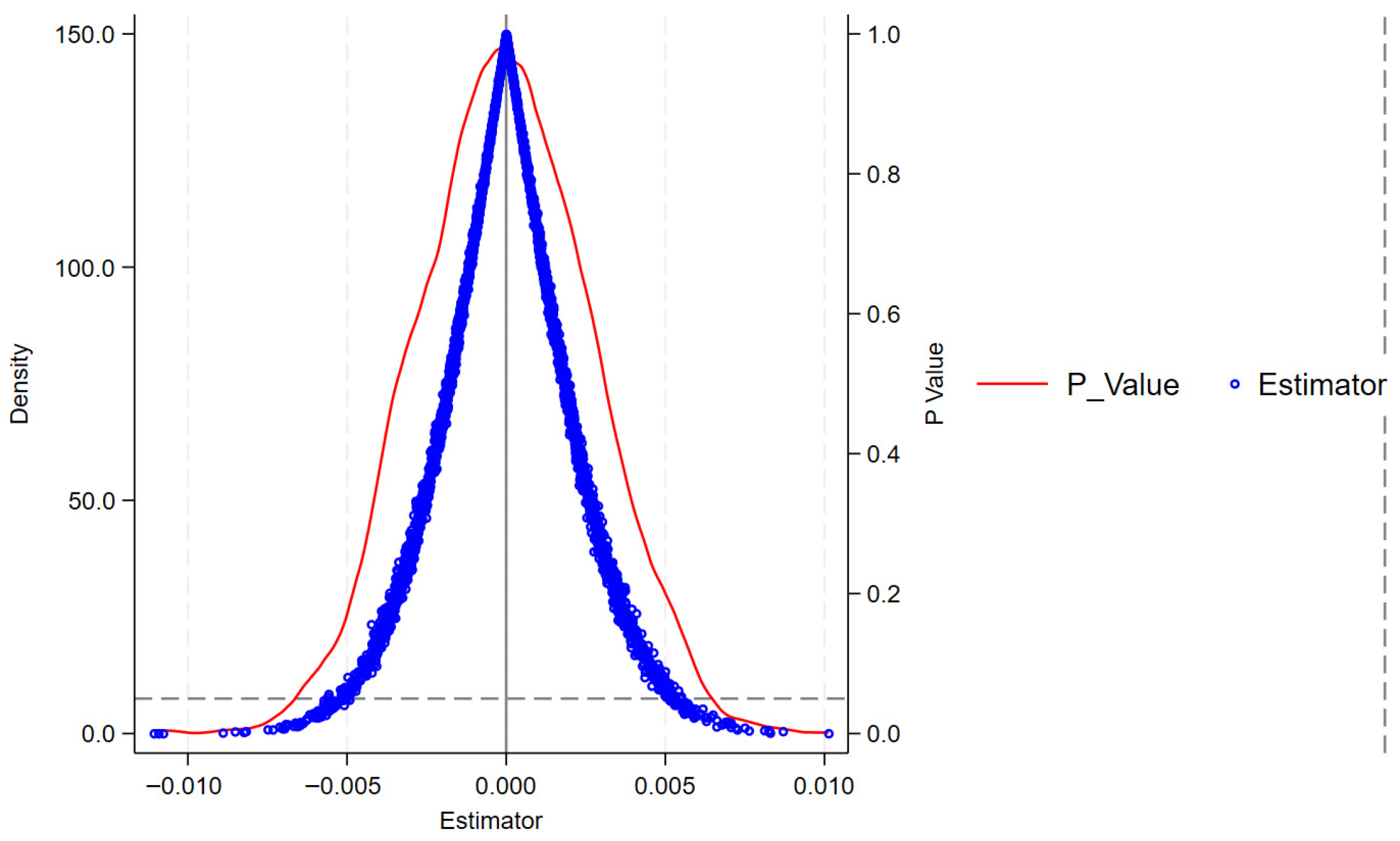
Figure 1. Placebo test results.
Sustainability 18 00883 g001
Table 1. Construction of the indicator system for new quality productivity.
First-Level IndicatorSecond-Level
Indicator
Third-Level IndicatorIndicator DescriptionAttributes
The elements of new quality productivityNew laborersStaff qualityR&D personnel salary ratioR&D personnel salary/operating revenue+
R&D personnel quantity ratioR&D personnel quantity/total number of employees+
Management
quality
Executives’ green cognitionln(the frequency of keywords related to green development in the company’s annual report + 1)+
CEO functional experience diversityThe count of CEO functional experience+
New labor objectsNew
business
R&D depreciation and amortization ratioR&D depreciation and amortization/operating revenue+
R&D lease fees ratioR&D lease fees/operating revenue+
New
industries
Manufacturing costs ratioCSMAR database+
Whether the company belongs to strategic emerging industriesIf the enterprise belongs to strategic emerging industries, the value is 1; otherwise it is 0+
New labor materialsInnovative technologies Utility model patent quantityln(annual number of utility model patents + 1)+
Green
technologies
Green invention patent quantityln(annual number of green invention patents + 1)+
Green utility model patent quantityln(annual number of green utility model patents + 1)+
Table 2. Definitions of key variables.
Variable TypeVariable NameSymbolsDefinition
Dependent
variable
New quality productivityNQPi,tConstructed indicators
Independent
variable
Digital transformationDigiti,tConstructed indicators
Mediator
variable
Managerial ability MAi,tConstructed indicators
Moderator
variables.
Industry technological turbulenceTBi,tRefer to Dai et al. [37]
ESG ratingsESGi,tHuazheng ESG rating data
Digital intellectual property protectionIPi,tData from National Intellectual Property Administration
Control
Variables
Total asset size of the enterpriseSizeln(the total assets of the enterprise)
Asset liability ratioLevLiability/asset
Return on equityROENet profit/average shareholder equity
Cash flowCashflowNet cash flow generated from operating activities/total assets
Growth capabilityGrowthGrowth rate of operating revenue
Property rights natureSOEState-owned enterprise’s value is 1; otherwise, it is 0
Ownership concentrationTOPThe top ten majority shareholding ratio
Integration of the roles of Chairman and General ManagerDualityThe value of combining two positions is 1; otherwise, it is 0
Proportion of independent directorsIndepProportion of independent directors
Corporate ageAgeln(number of years since the company went public)
Board sizeBsizeln(number of board members)
Table 3. Descriptive statistics for each major variable.
VariablesSample
Size
MeanStandard
Deviation
MinimumMedianMaximum
NQP17,6200.07000.040000.07000.340
Digit17,6200.09000.080000.06000.500
MA10,8780.02000.150−0.4700.05000.380
Size17,62021.840.98019.9721.7326.36
Lev17,6200.3700.1900.06000.3500.880
ROE17,6200.05000.140−0.7300.06000.310
Cashflow17,6200.05000.0700−0.1500.04000.240
Growth17,6200.1800.370−0.5400.1202.240
SOE17,6200.8200.380011
TOP17,62057.5214.1522.7158.3990.30
Duality17,6200.3800.490001
Indep17,62037.865.28033.3336.3657.14
Age17,6201.5700.80001.7903.220
Bsize17,6202.0800.1901.6102.2002.640
Table 4. Correlation analysis.
NQPDigitSizeLevROECashflowGrowthSOETOPDualityIndepAgeBsize
NQP1
Digit0.392 ***1
Size0.342 ***0.083 ***1
Lev0.131 ***−0.006000.438 ***1
ROE0.026 ***−0.072 ***0.095 ***−0.255 ***1
Cashflow0.019 **−0.059 ***0.075 ***−0.174 ***0.329 ***1
Growth0.026 ***−0.004000.091 ***0.053 ***0.290 ***0.031 ***1
SOE−0.046 ***0.017 **−0.130 ***−0.113 ***0.023 ***0.01100.033 ***1
TOP−0.138 ***−0.163 ***−0.057 ***−0.147 ***0.240 ***0.095 ***0.112 ***0.048 ***1
Duality0.01200.084 ***−0.086 ***−0.069 ***0.00400−0.015 **0.014 *0.191 ***0.025 ***1
Indep0.016 **0.083 ***−0.045 ***−0.028 ***−0.027 ***0.00800−0.017 **0.071 ***0.015 *0.132 ***1
Age0.212 ***0.109 ***0.402 ***0.271 ***−0.159 ***0.066 ***−0.119 ***−0.162 ***−0.473 ***−0.119 ***0.006001
Bsize−0.00900−0.074 ***0.142 ***0.067 ***0.059 ***0.014 *0.034 ***−0.181 ***0.00500−0.146 ***−0.639 ***0.028 ***1
Note: *, ** and *** represent significance levels of 10%, 5%, and 1%, respectively.
Table 5. Basic regression results.
(1)(2)(3)(4)
NQPi,t+1NQPi,t+1NQPi,t+3NQPi,t+3
Digiti,t0.1353 ***0.1119 ***0.1060 ***0.0836 ***
(12.6105)(12.3015)(8.3116)(7.6148)
Size 0.0116 *** 0.0114 ***
(13.4721) (11.2596)
Lev 0.0025 −0.0004
(0.8764) (−0.1182)
ROE 0.0173 *** 0.0251 ***
(6.5761) (7.7570)
Cashflow 0.0111 ** 0.0199 ***
(2.2109) (3.2483)
Growth −0.0003 0.0022 **
(−0.3418) (2.2522)
SOE −0.0051 *** −0.0064 ***
(−3.2678) (−3.2368)
TOP −0.0000 −0.0000
(−1.0781) (−0.6960)
Duality 0.0015 0.0022 *
(1.5091) (1.7974)
Indep −0.0001 −0.0001
(−0.8393) (−0.6471)
Age −0.0006 −0.0004
(−0.9448) (−0.4659)
Bsize 0.0023 0.0032
(0.7310) (0.7951)
_cons−0.0059 ***−0.2413 ***0.0449 ***−0.1930 ***
(−2.7181)(−11.6722)(6.0917)(−7.7131)
Industry FEYesYesYesYes
Year FEYesYesYesYes
N14,85514,85510,85410,854
adj. R20.39800.47900.32920.4122
Note: *, ** and *** represent significance levels of 10%, 5%, and 1%, respectively.
Table 6. Robustness test results.
(1)(2)(3)(4)(5)(6)(7)(8)(9)(10)
City-Level Clustering Industry-Level ClusteringExcluding Certain Industries
VariablesTFPi,t+1TFPi,t+3NQPi,t+1NQPi,t+3NQPi,t+1NQPi,t+3NQPi,t+1NQPi,t+3NQPi,t+1NQPi,t+3
Digiti,t0.5311 ***0.4286 *** 0.1119 ***0.0836 ***0.1119 ***0.0836 ***0.1150 ***0.0864 ***
(7.4256)(4.4621) (13.0521)(7.7910)(11.0587)(7.7942)(10.2013)(6.4082)
Digit_2i,t 0.0936 ***0.0765 ***
(26.1549)(17.7925)
_cons−2.9601 ***−2.5561 ***−0.2619 ***−0.2141 ***−0.2413 ***−0.1930 ***−0.2413 ***−0.1930 ***−0.2185 ***−0.1569 ***
(−19.3651)(−13.0970)(−28.2704)(−18.0857)(−13.3366)(−9.1087)(−9.1135)(−6.5627)(−8.8818)(−5.4639)
ControlsYesYesYesYesYesYesYesYesYesYes
Industry FEYesYesYesYesYesYesYesYesYesYes
Year FEYesYesYesYesYesYesYesYesYesYes
N14,70110,75314,53810,54714,85510,85414,85510,85411,1838233
adj. R20.60260.52840.47320.40560.47900.41220.47900.41220.47190.4023
Note: *, ** and *** represent significance levels of 10%, 5%, and 1%, respectively.
Table 7. Endogeneity test results.
(1)(2)(3)(4)
NQPi,t+1Digiti,tNQPi,t+1
Mean_Digit15.0446 ***
(16.50)
Digiti,t 0.1276 *** 0.6597 ***
(30.24) (3.73)
BroadBand 0.0041 ***
(4.00)
IMR −0.4960 **
(−2.74)
_cons−3.2965 ***−0.0901 *
(−10.16)(−1.66)
ControlsYesYesYesYes
Industry FEYesYesYesYes
Year FEYesYesYesYes
Kleibergen-Paap rk
LM
16.088
[0.0001]
Kleibergen-Paap rk
Wald F
16.009
{8.96}
N17,62017,31517,31517,315
adj. R20.06060.5013
Note: *, ** and *** represent significance levels of 10%, 5%, and 1%, respectively. The p-values for each statistic are within [], and the values within {} are the critical values for the Stock–Yogo test at the 10% level.
Table 8. The mediating effect of MAi,t.
(1)(2)(3)
MANQPi,t+1NQPi,t+3
Digit0.1242 ***0.1041 ***0.0794 ***
(3.5337)(9.4005)(7.2476)
MA 0.0422 ***0.0345 ***
(10.3671)(8.1317)
_cons−0.2039 **−0.2120 ***−0.1931 ***
(−2.4771)(−8.1349)(−7.6599)
ControlsYesYesYes
Industry FEYesYesYes
Year FEYesYesYes
N10,59610,30810,294
adj. R20.36440.48190.4007
Note: *, ** and *** represent significance levels of 10%, 5%, and 1%, respectively.
Table 9. Moderation effect test results.
(1)(2)(3)(4)(5)(6)(7)(8)
TBi,tESGi,tIPPi,t
NQPi,t+1NQPi,t+3NQPi,t+1NQPi,t+3NQPi,t+1NQPi,t+3NQPi,t+1NQPi,t+3
Digiti,t0.1119 ***0.0836 ***0.1090 ***0.0834 ***0.1108 ***0.0851 ***0.1420 ***0.0828 ***
(12.3015)(7.6148)(0.0061)(0.0059)(0.0045)(0.0056)(0.0042)(0.0050)
TBi,t 0.00510.0305 ***
(0.0097)(0.0096)
Digiti,t × TBi,t 0.2795 ***0.1950 **
(0.0820)(0.0817)
ESGi,t 0.0829 ***0.0670 ***
(0.0054)(0.0058)
Digiti,t×ESGi,t 0.4320 ***0.4221 ***
(0.0658)(0.0690)
IPPi,t 0.0227 ***0.0197 ***
(0.0024)(0.0031)
Digiti,t×IPPi,t 0.0958 ***0.0173 *
(0.0348)(0.0432)
_cons−0.2413 ***−0.1930 ***−0.2010 ***−0.1876 ***−0.2121 ***−0.1670 ***−0.1902 ***−0.1702 ***
(−11.6722)(−7.7131)(0.0127)(0.0126)(0.0091)(0.0117)(0.0086)(0.0102)
N14,85510,8549882986514,85510,85414,80110,810
adj. R20.47900.41220.45650.38530.48950.42110.39910.3317
Note: *, ** and *** represent significance levels of 10%, 5%, and 1%, respectively.
Table 10. Heterogeneity test results of HHI.
(1)(2)(3)(4)
VariablesNQPi,t+1NQPi,t+3
Lower Level of Industry
Competition
Higher Level of Industry CompetitionLower Level of Industry
Competition
Higher Level of Industry Competition
Digit0.1085 ***0.1159 ***0.0819 ***0.0865 ***
(0.0066)(0.0064)(0.0086)(0.0076)
_cons−0.2296 ***−0.1723 ***−0.2192 ***−0.1682 ***
(0.0125)(0.0131)(0.0168)(0.0161)
ControlsYesYesYesYes
Industry FEYesYesYesYes
Year FEYesYesYesYes
N6845764845526026
adj. R20.47180.48310.41160.4129
Note: *, ** and *** represent significance levels of 10%, 5%, and 1%, respectively.
Table 11. Heterogeneity test results of high-tech and SRDI enterprise.
(1)(2)(3)(4)(5)(6)(7)(8)
VariablesNQPi,t+1NQPi,t+3NQPi,t+1NQPi,t+3
Non-High-Tech EnterprisesHigh-Tech EnterprisesNon-High-Tech EnterprisesHigh-Tech EnterprisesNon-SRDI EnterpriseSRDI EnterpriseNon-SRDI EnterpriseSRDI Enterprise
Digit0.1092 ***0.1194 ***0.0825 ***0.0869 ***0.1058 ***0.1219 ***0.0790 ***0.0948 ***
(0.0051)(0.0094)(0.0063)(0.0120)(0.0059)(0.0073)(0.0071)(0.0092)
_cons−0.2490 ***−0.2317 ***−0.2008 ***−0.2283 ***−0.2311 ***−0.2134 ***−0.1848 ***−0.2075 ***
(0.0102)(0.0210)(0.0133)(0.0273)(0.0113)(0.0157)(0.0142)(0.0204)
ControlsYesYesYesYesYesYesYesYes
Industry FEYesYesYesYesYesYesYesYes
Year FEYesYesYesYesYesYesYesYes
N11,9072903869221288997581366594161
adj. R20.48400.49450.41840.42440.49070.45380.41910.3878
Note: *, ** and *** represent significance levels of 10%, 5%, and 1%, respectively.
Disclaimer/Publisher’s Note: The statements, opinions and data contained in all publications are solely those of the individual author(s) and contributor(s) and not of MDPI and/or the editor(s). MDPI and/or the editor(s) disclaim responsibility for any injury to people or property resulting from any ideas, methods, instructions or products referred to in the content.


