Human–Plant Encounters: How Do Visitors’ Therapeutic Landscape Experiences Evolve? A Case Study of Xixiang Rural Garden in Erlang Town, China


Abstract
1. Introduction
2. Literature Review and Theoretical Framework
2.1. Literature Review
2.1.1. Critical Plant Studies
2.1.2. Research on Therapeutic Landscapes Experience in Human–Plant Encounters
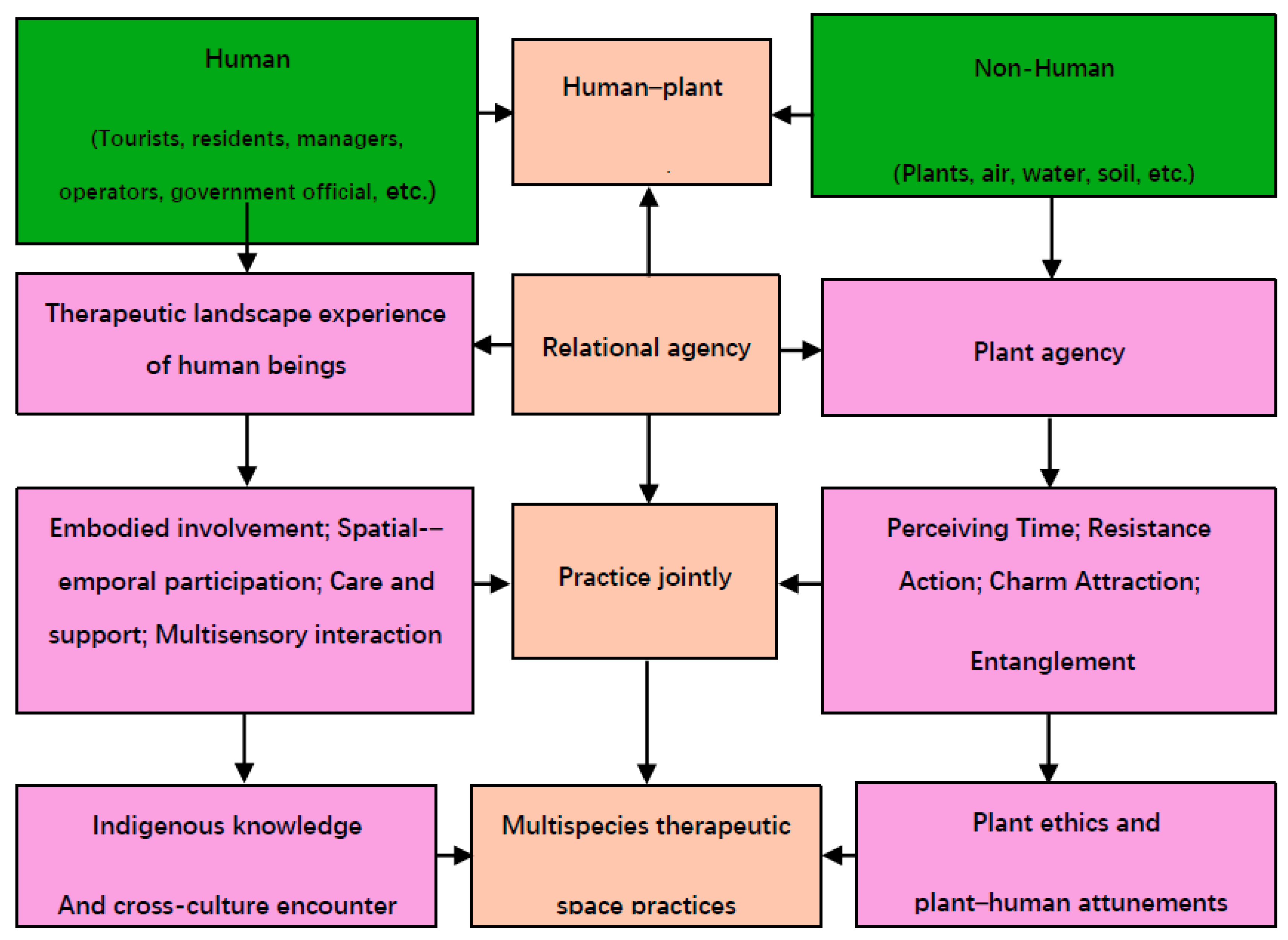
2.2. Theoretical Framework
- Human–Plant Encounters, reconceptualized through this critical lens, are the dynamic, multisensory, and materially entangled interactions where therapeutic potential is relationally generated. These encounters are the primary site of analysis.
- Therapeutic Landscape Experience is the emergent outcome of these agentic encounters. It is not a static property of a landscape or a unilateral human perception, but a process co-produced through the material–semiotic interactions between humans and plants within a specific space.
- Health Tourism constitutes the applied context and spatial practice where these theorized encounters and experiences are mobilized. Health tourism destinations (e.g., forest therapy bases, wellness resorts, and agri-tourism sites) are key settings where designed or facilitated human–plant encounters are promoted to generate therapeutic landscape experiences for visitors. Our framework critically examines how the logic and infrastructure of health tourism shape, and are shaped by, these multispecies relations.
3. Methodology
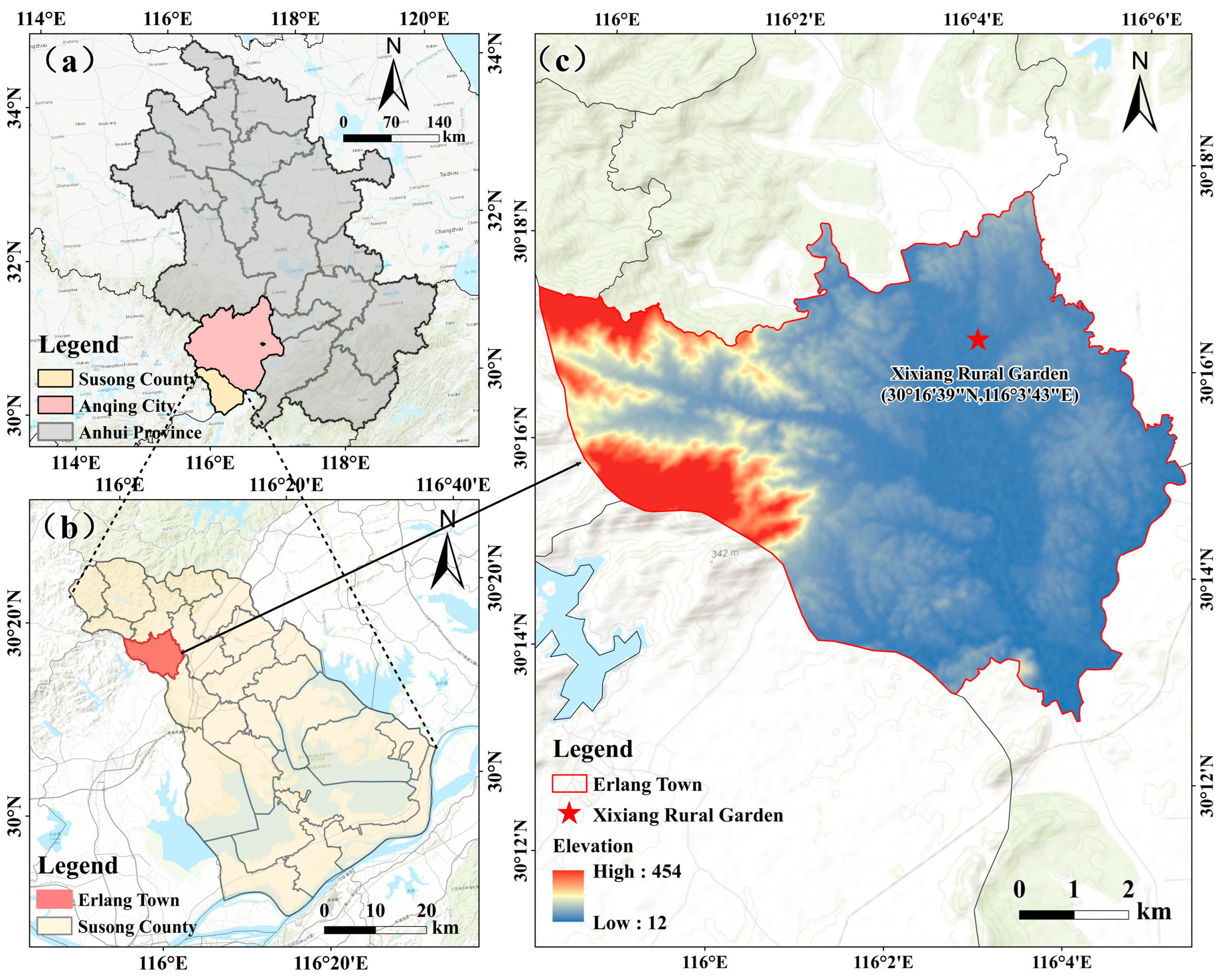
3.1. Case Study Area
3.2. Data Collection and Methods
- Participatory Observation: Researchers engaged in sustained observation within the Xixiang Rural Garden, documenting daily activities, human–environment interactions, and social dynamics. Detailed field notes were maintained to capture contextual nuances and non-verbal cues.
- Semi-Structured Interviews: In-depth interviews were conducted to gain detailed insights into participants’ perceptions, experiences, and narratives.
- Policy Document Analysis: Relevant local government documents, planning reports, and project proposals related to rural revitalization and the Xixiang Rural Garden were reviewed to contextualize the field data.
- Three officials from the township’s rural revitalization department;
- Three designers involved in the planning and design of Xixiang Rural Garden;
- Four village officials familiar with the project’s implementation;
- Twenty-four tourists and tour guides from urban areas;
- Fifteen long-term local residents and neighboring villagers.
- Officials must have been engaged in rural revitalization work locally and possess substantive knowledge of rural development and relevant policies.
- Village cadres must have led project implementation and had access to data on local participation and well-being indicators.
- Interviewees were required to demonstrate a clear understanding of the research objectives and a willingness to take part in interviews, observations, and potential follow-up studies.
3.3. Data Analysis
4. Findings
4.1. Human–Plant Encounters Generate Therapeutic Landscape Experiences
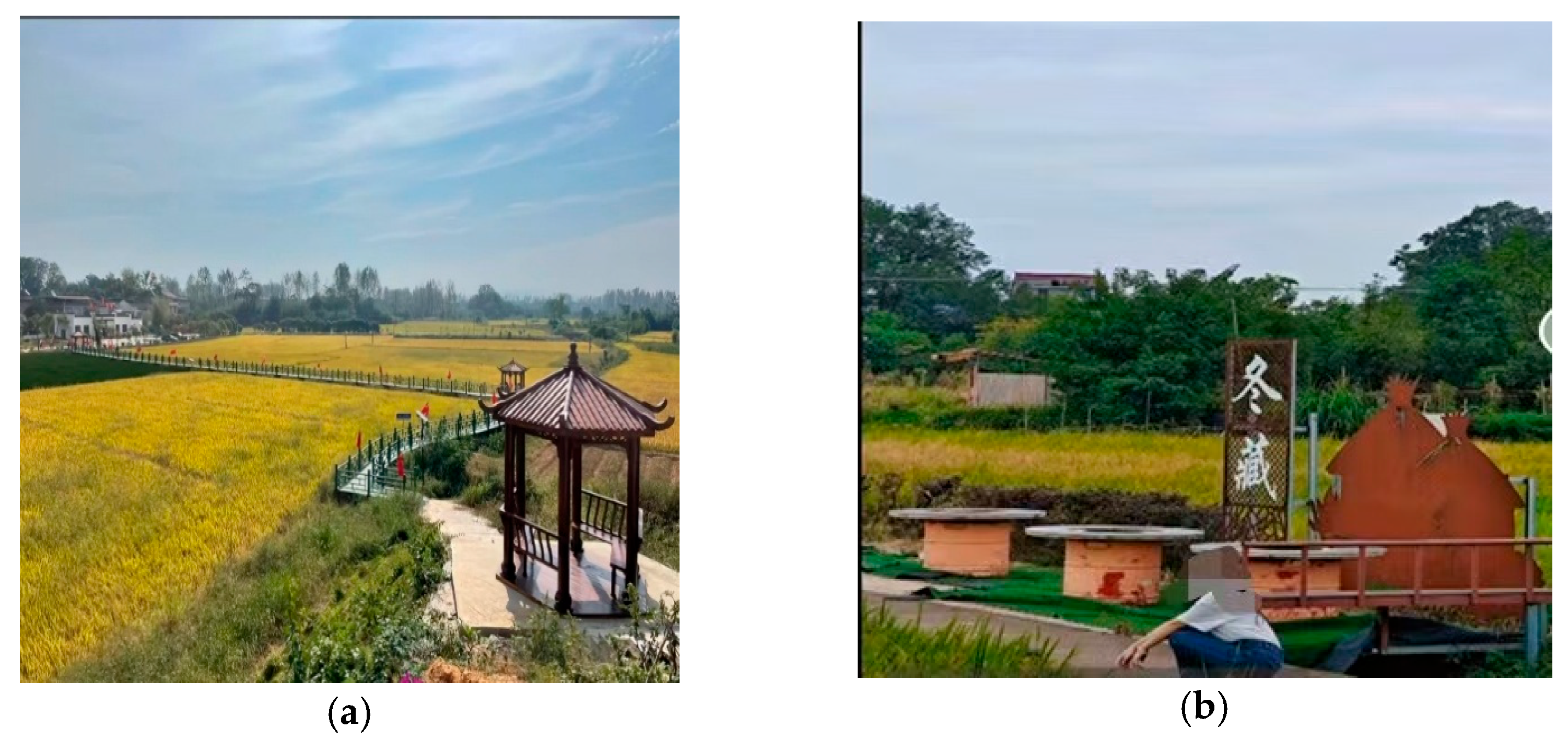
4.1.1. The Order of Life in the Xixiang Rural Garden
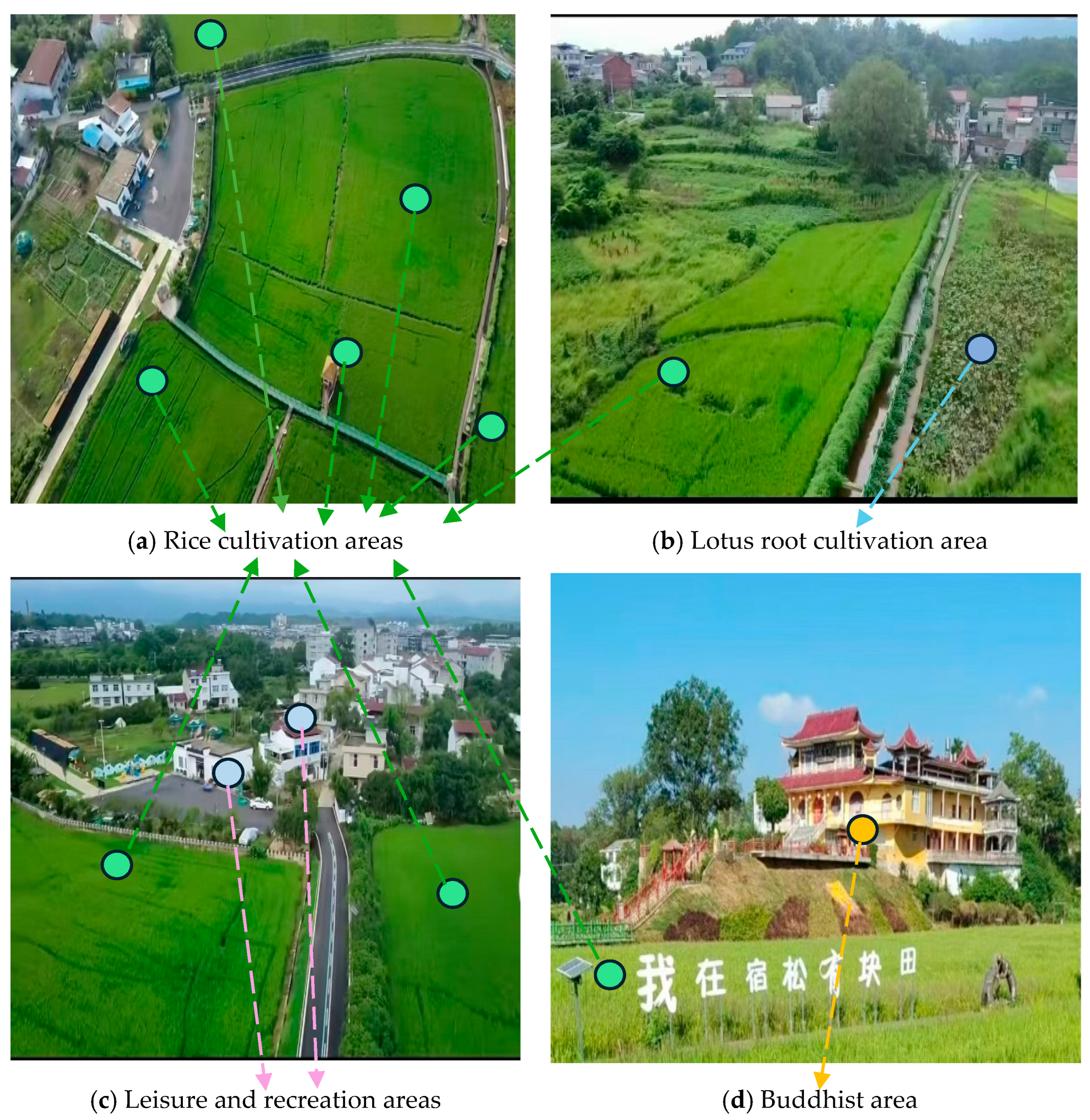
4.1.2. Ecological Zoning in the Xixiang Rural Garden
4.1.3. Multisensory Experience in the Xixiang Rural Garden
4.2. Therapeutic Spatial Practices and Reflections in Human–Plant Encounters
4.2.1. The Dilemma of Anthropocentric Practice: The Ecological Cost of Infrastructure
4.2.2. The Subjective Practice of Plants: The Resistance and Wisdom of Lotus Leaves
4.2.3. The Shift in Human Practice: Empathy, Reflection, and Behavioral Change
5. Discussion
5.1. Theoretical Expansion of the Therapeutic Landscape: An Interactive Perspective
5.2. Interactive Mechanisms Between the Therapeutic Landscape Experiences and Therapeutic Space Practices
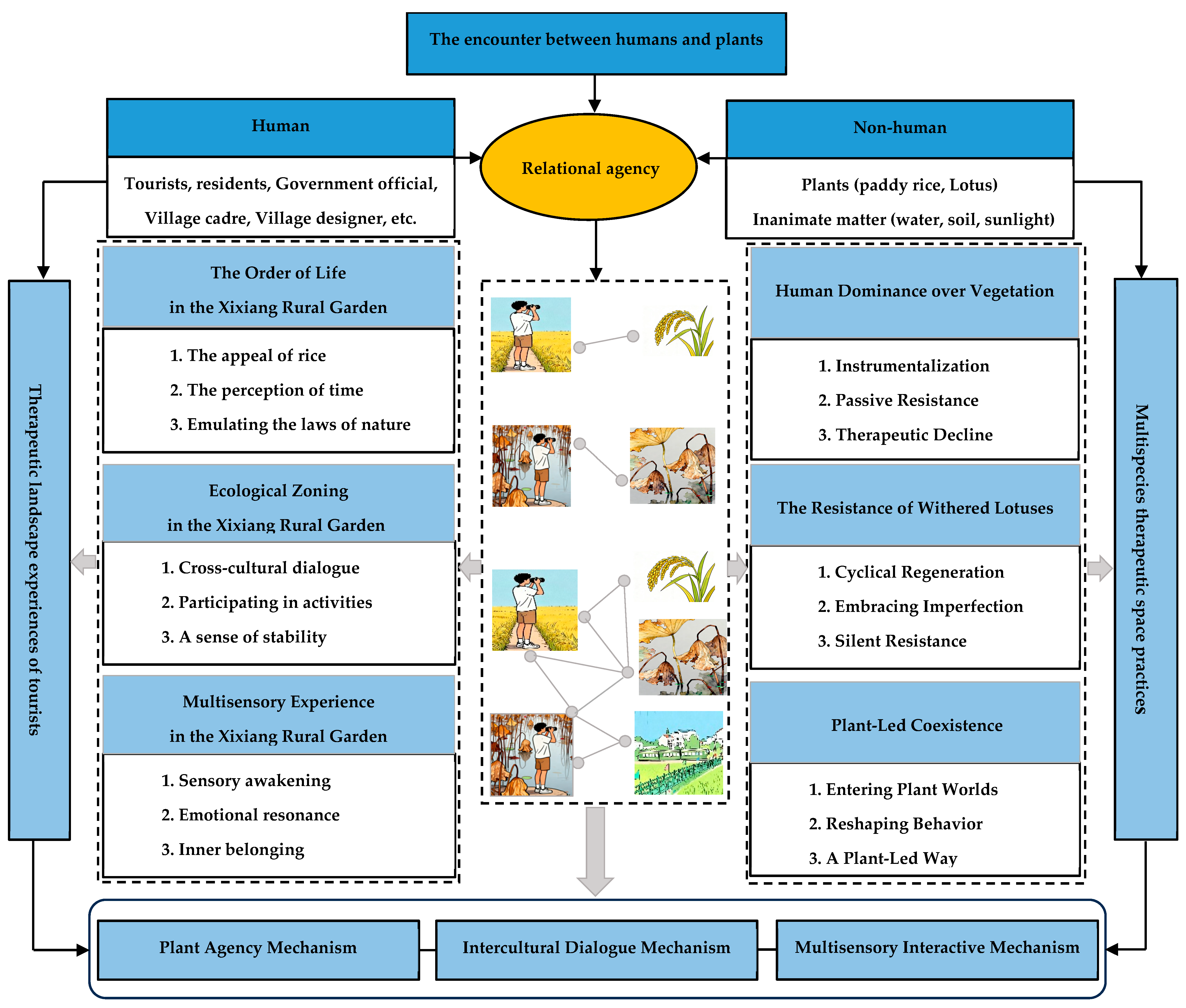
- Plant Agency Mechanism. Through seasonal rhythms and morphological changes, plants actively co-construct spatial experience. Observable phenomena, such as rice growth and lotus regeneration, demonstrate ecological resilience, guiding visitors and site managers away from anthropocentric dominance toward an appreciation of natural law and plant agency. This shift supports human–plant symbiosis and progressively enriches the therapeutic landscape experience.
- Cross-Cultural Dialogue Mechanism. Within frameworks of indigenous knowledge, people engage plants through cross-cultural communication. By employing anthropomorphic or objectifying forms of dialogue, they access the plant’s world and reflect upon its perspective. Traditional ecological wisdom helps temper the impacts of modernity, fostering inner equilibrium and stabilizing human–rural landscape relationships. Participatory practices further reinforce regional identity, intensifying the therapeutic effect of the landscape.
- Multisensory Interaction Mechanism. Landscapes composed of diverse species, including plants and microorganisms, stimulate human perception through visual, auditory, olfactory, and tactile channels. Within this multisensory system, individuals advance from sensory awakening to emotional resonance with plants, ultimately cultivating a tangible sense of belonging and well-being. This study proposes that through cyclical iterations of spatial practice and cognitive reflection, human–plant encounters collectively shape the emergence and evolution of therapeutic landscape experiences. Initial sensory impressions are thereby transformed into deeper ecological understanding and multispecies symbiotic relations. The therapeutic landscape thus functions as a dynamic field, continuously driven by interactions among human and non-human actors (especially plants).
5.3. Research Limitations and Future Work

6. Conclusions and Implications
- Plant agency serves as a key mediator in enhancing therapeutic experiences. Through their visual and material qualities, rice plants and withered lotus stems draw visitors into the “plant world,” while their life cycles and ecological adaptability inspire respect and self-reflection. The Xixiang Rural Garden’s ecological zoning creates spaces for cross-cultural dialogue, where visitors perceive resilience and harmony through personified plant interactions. Local knowledge further encounters agricultural landscapes that awaken reverence for natural order. This integrated approach fosters human–plant coexistence, stabilizes interactions, and sustains therapeutic experiences while mitigating tourism’s ecological impacts.
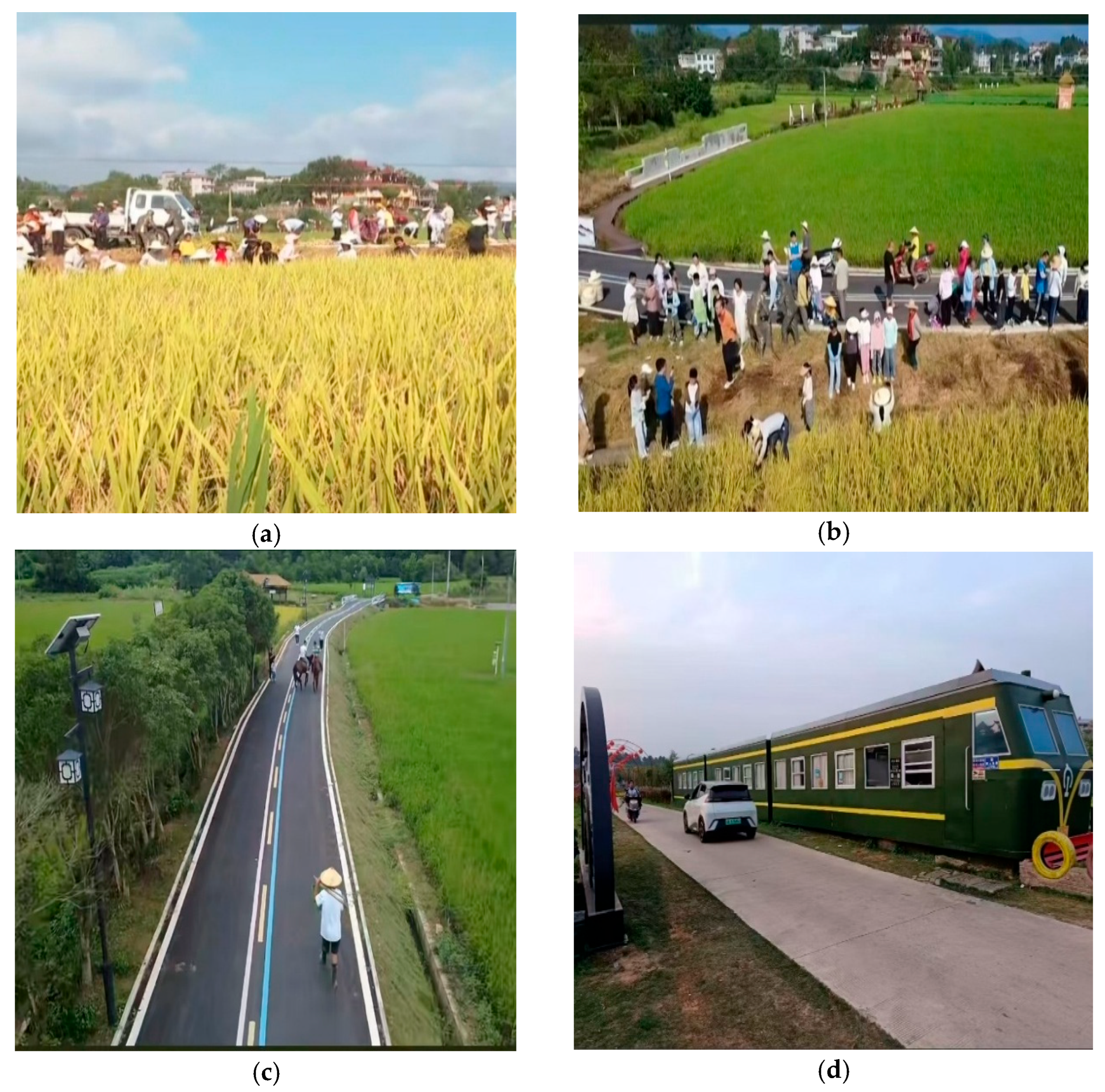
- Multisensory interactions in the Xixiang Rural Garden deepen emotional bonds between humans and plants. Activities such as rice transplanting, harvesting, horseback riding along paddies, and listening to plant narratives engage sight, touch, and smell, nurturing a sense of rural belonging. In addition, rice landscapes and harvest scenes evoke visitors’ childhood memories, merging agricultural practice with plant-based therapeutic settings. This prompts reflection on the essence of life and elevates the overall therapeutic experience.
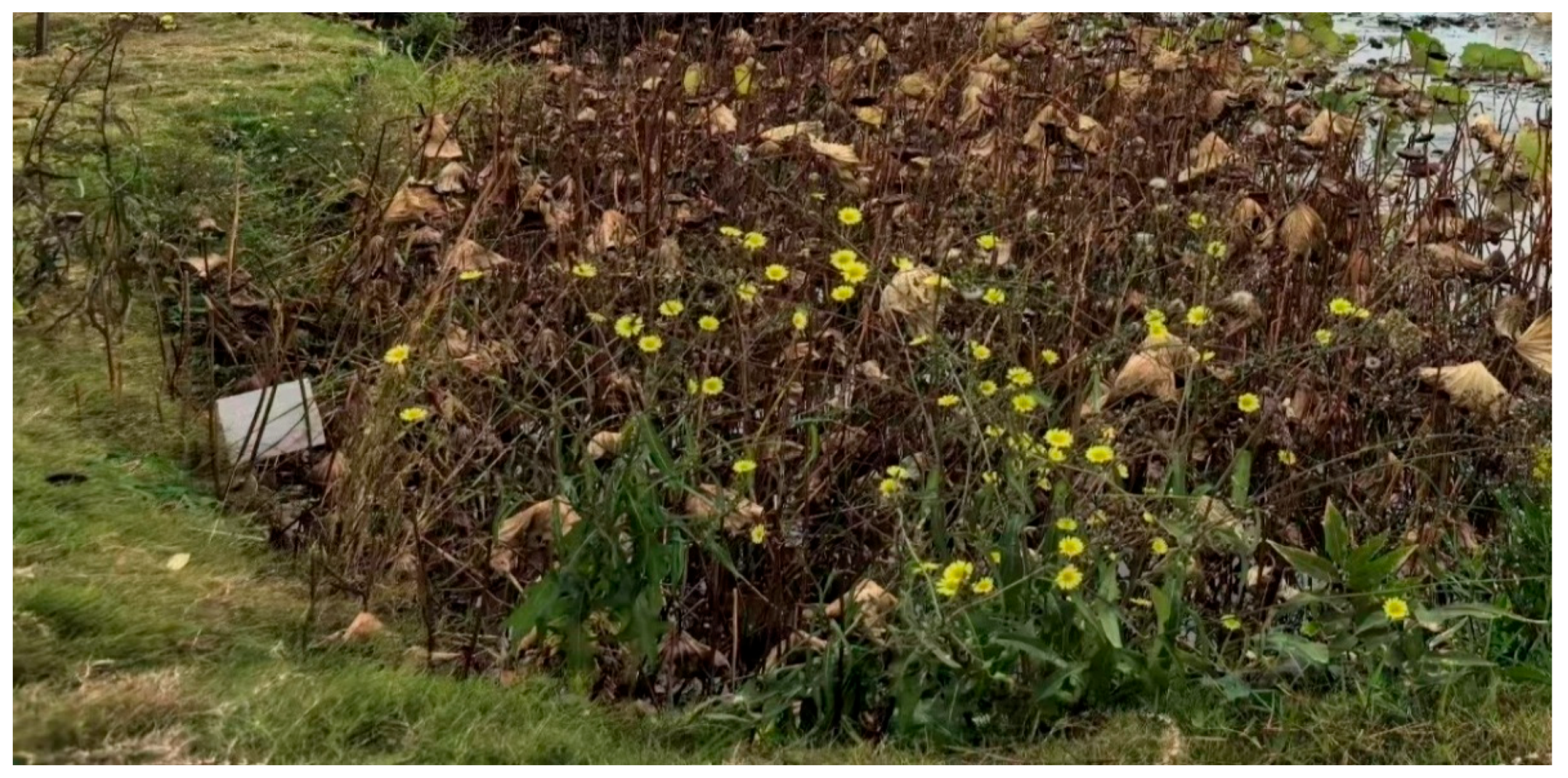
- A bidirectional mechanism—integrating plant agency, cross-cultural dialogue, and multisensory perception—underpins visitors’ therapeutic landscape experiences and spatial practices. For instance, visitors’ empathy toward the “pain” of rice plants and the “silent resistance” of withered lotus stems fosters greater humanistic concern for plants. Reducing human intervention and removing intrusive infrastructure helps reconstruct multispecies ecosystems, encouraging visitors and managers to re-evaluate human–plant relations and advancing the evolution of therapeutic experiences.
Author Contributions
Funding
Institutional Review Board Statement
Informed Consent Statement
Data Availability Statement
Acknowledgments
Conflicts of Interest
References
- Bell, S.L.; Foley, R.; Houghton, F.; Maddrell, A.; Williams, A.M. From Therapeutic Landscapes to Healthy Spaces, Places and Practices: A Scoping Review. Soc. Sci. Med. 2018, 196, 123–130. [Google Scholar] [CrossRef]
- Conradson, D. Landscape, Care and the Relational Self: Therapeutic Encounters in Rural England. Health Place 2005, 11, 337–348. [Google Scholar] [CrossRef]
- Yan, X.; He, S. The Co-Evolution of Therapeutic Landscape and Health Tourism in Bama Longevity Villages, China: An Actor-Network Perspective. Health Place 2020, 66, 102448. [Google Scholar] [CrossRef]
- Mueller, H.; Kaufmann, E.L. Wellness Tourism: Market Analysis of a Special Health Tourism Segment and Implications for the Hotel Industry. J. Vacat. Mark. 2001, 7, 5–17. [Google Scholar] [CrossRef]
- Hall, C.M. Health and Medical Tourism: A Kill or Cure for Global Public Health? Tour. Rev. 2011, 66, 4–15. [Google Scholar] [CrossRef]
- Huang, L.; Xu, H. Relational Encounters: The Therapeutic Experiences of Tourists with Cancer in Bama, China. Tour. Manag. Perspect. 2023, 47, 101131. [Google Scholar] [CrossRef]
- Majeed, S.; Ramkissoon, H. Health, Wellness, and Place Attachment During and Post Health Pandemics. Front. Psychol. 2020, 11, 573220. [Google Scholar] [CrossRef] [PubMed]
- Chen, J.; Wang, B. Mobilising Therapeutic Landscapes: Lifestyle Migration of the Houniao and the Spatio-Temporal Encounters with Nature. Geoforum 2022, 131, 206–214. [Google Scholar] [CrossRef]
- Zhong, L.; Sun, S.; Law, R.; Li, X.; Deng, B. Health Tourism in China: A 40-Year Bibliometric Analysis. Tour. Rev. 2023, 78, 203–217. [Google Scholar] [CrossRef]
- Si, Y.; Chen, M.; Zhang, M.; Xiao, H. Therapeutic Landscapes and Tourists’ Perceived Quality of Life. J. Destin. Mark. Manag. 2024, 33, 100918. [Google Scholar] [CrossRef]
- Huang, L.; Xu, H. Therapeutic Landscapes and Longevity: Wellness Tourism in Bama. Soc. Sci. Med. 2018, 197, 24–32. [Google Scholar] [CrossRef]
- Xu, Y.; Yang, Y.; Zhang, H.; Zhou, X. Therapeutic Landscapes in Rural Tourism: How Flow Experience, Nostalgia, and Restorative Experience Contribute to Spiritual Well-Being. Int. J. Tour. Res. 2025, 27, e70101. [Google Scholar] [CrossRef]
- Wang, K.; Cui, Q.; Xu, H. Desert as Therapeutic Space: Cultural Interpretation of Embodied Experience in Sand Therapy in Xinjiang, China. Health Place 2018, 53, 173–181. [Google Scholar] [CrossRef]
- Curtis, S.; Gesler, W.; Fabian, K.; Francis, S.; Priebe, S. Therapeutic Landscapes in Hospital Design: A Qualitative Assessment by Staff and Service Users of the Design of a New Mental Health Inpatient Unit. Environ. Plan. C Gov. Policy 2007, 25, 591–610. [Google Scholar] [CrossRef]
- Andrews, G.J. (Re)Thinking the Dynamics between Healthcare and Place: Therapeutic Geographies in Treatment and Care Practices. Area 2004, 36, 307–318. [Google Scholar] [CrossRef]
- Milligan, C.; Gatrell, A.; Bingley, A. ‘Cultivating Health’: Therapeutic Landscapes and Older People in Northern England. Soc. Sci. Med. 2004, 58, 1781–1793. [Google Scholar] [CrossRef] [PubMed]
- Plane, J.; Klodawsky, F. Neighbourhood Amenities and Health: Examining the Significance of a Local Park. Soc. Sci. Med. 2013, 99, 1–8. [Google Scholar] [CrossRef]
- Morita, E.; Fukuda, S.; Nagano, J.; Hamajima, N.; Yamamoto, H.; Iwai, Y.; Nakashima, T.; Ohira, H.; Shirakawa, T. Psychological Effects of Forest Environments on Healthy Adults: Shinrin-Yoku (Forest-Air Bathing, Walking) as a Possible Method of Stress Reduction. Public Health 2007, 121, 54–63. [Google Scholar] [CrossRef]
- Doughty, K. Walking Together: The Embodied and Mobile Production of a Therapeutic Landscape. Health Place 2013, 24, 140–146. [Google Scholar] [CrossRef] [PubMed]
- Abraham, A.; Sommerhalder, K.; Abel, T. Landscape and Well-Being: A Scoping Study on the Health-Promoting Impact of Outdoor Environments. Int. J. Public Health 2010, 55, 59–69. [Google Scholar] [CrossRef] [PubMed]
- Bignante, E. Therapeutic Landscapes of Traditional Healing: Building Spaces of Well-Being with the Traditional Healer in St. Louis, Senegal. Soc. Cult. Geogr. 2015, 16, 698–713. [Google Scholar] [CrossRef]
- Trnka, S. Multi-Sited Therapeutic Assemblages: Virtual and Real-Life Emplacement of Youth Mental Health Support. Soc. Sci. Med. 2021, 278, 113960. [Google Scholar] [CrossRef] [PubMed]
- Macpherson, H. Walking Methods in Landscape Research: Moving Bodies, Spaces of Disclosure and Rapport. Landsc. Res. 2016, 41, 425–432. [Google Scholar] [CrossRef]
- Gatrell, A.C. Therapeutic Mobilities: Walking and ‘Steps’ to Wellbeing and Health. Health Place 2013, 22, 98–106. [Google Scholar] [CrossRef]
- Kirksey, S.E.; Helmreich, S. The Emergence of Multispecies Ethnography. Cult. Anthropol. 2010, 25, 545–576. [Google Scholar] [CrossRef]
- Lawrence, A.M. Listening to Plants: Conversations between Critical Plant Studies and Vegetal Geography. Prog. Hum. Geogr. 2022, 46, 629–651. [Google Scholar] [CrossRef]
- Cooke, B.; Lane, R. Re-Thinking Rural-Amenity Ecologies for Environmental Management in the Anthropocene. Geoforum 2015, 65, 232–242. [Google Scholar] [CrossRef]
- Comollo, F. Ethics of Plants: Interconnections between Biosemiotics and Critical Plant Studies. Biosemiotics 2025, 18, 253–270. [Google Scholar] [CrossRef]
- Ivashkina, E.; Mikhaylova, O. Application of the Theory of Para-Social Relationships for the Analysis of People’s Perceptions of Indoor Plants. Front. Psychol. 2025, 16, 1533128. [Google Scholar] [CrossRef]
- Correia, J.E.; Piaguage Lucitante, J.; Weiss, L.; Narváez, N.; Lucitante, L.; Biaguaje, A.; Piaguaje, Y.; Suale, A.; Payaguaje, A.; Piaguage, E.; et al. Stimulating Reciprocity: How Human–Plant Relations Support Indigenous Cultural Revitalization and Stewardship in the Ecuadorian Amazon. People Nat. 2025, 7, 1151–1170. [Google Scholar] [CrossRef]
- Hall, M. Center for Environmental Philosophy, The University of North Texas Plant Autonomy and Human-Plant Ethics. Environ. Ethics 2009, 31, 169–181. [Google Scholar] [CrossRef]
- Penafiel, D.; Lachat, C.; Espinel, R.; Van Damme, P.; Kolsteren, P. A Systematic Review on the Contributions of Edible Plant and Animal Biodiversity to Human Diets. EcoHealth 2011, 8, 381–399. [Google Scholar] [CrossRef]
- Mastnak, T.; Elyachar, J.; Boellstorff, T. Botanical Decolonization: Rethinking Native Plants. Environ. Plan. Soc. Space 2014, 32, 363–380. [Google Scholar] [CrossRef]
- Yıldırım, D. Ottoman Plants, Nature Studies, and the Attentiveness of Translational Labor. Hist. Sci. 2023, 61, 497–521. [Google Scholar] [CrossRef] [PubMed]
- Whitaker, J.A.; Tamboli, V.; Daly, L.; Lewy, M. Plant Agency in the Guianas: Attraction, Assault, and Animacy. J. Ethnobiol. 2024, 44, 347–359. [Google Scholar] [CrossRef]
- Kunwar, R.M.; Fadiman, M.; Cameron, M.; Bussmann, R.W.; Thapa-Magar, K.B.; Rimal, B.; Sapkota, P. Cross-Cultural Comparison of Plant Use Knowledge in Baitadi and Darchula Districts, Nepal Himalaya. J. Ethnobiol. Ethnomed. 2018, 14, 40. [Google Scholar] [CrossRef]
- Smolander, W.; Pyyry, N. Attuning to Geostories: Learning Encounters with Urban Plants. Educ. Philos. Theory 2023, 55, 1237–1252. [Google Scholar] [CrossRef]
- Panelli, R. More-than-Human Social Geographies: Posthuman and Other Possibilities. Prog. Hum. Geogr. 2010, 34, 79–87. [Google Scholar] [CrossRef]
- Whatmore, S. Materialist Returns: Practising Cultural Geography in and for a More-than-Human World. Cult. Geogr. 2006, 13, 600–609. [Google Scholar] [CrossRef]
- Pitt, H. Questioning Care Cultivated through Connecting with More-than-Human Communities. Soc. Cult. Geogr. 2018, 19, 253–274. [Google Scholar] [CrossRef]
- Ryan, J.C. Passive Flora? Reconsidering Nature’s Agency through Human-Plant Studies (HPS). Societies 2012, 2, 101–121. [Google Scholar] [CrossRef]
- Novoplansky, A. What Plant Roots Know? Semin. Cell Dev. Biol. 2019, 92, 126–133. [Google Scholar] [CrossRef]
- Ojalehto, B.L.; Medin, D.L.; García, S.G. Conceptualizing Agency: Folkpsychological and Folkcommunicative Perspectives on Plants. Cognition 2017, 162, 103–123. [Google Scholar] [CrossRef] [PubMed]
- Bose, I.; Karmakar, R. Simple Models of Plant Learning and Memory. Phys. Scr. 2003, T106, 9. [Google Scholar] [CrossRef]
- Haga, K.; Sakai, T. Photosensory Adaptation Mechanisms in Hypocotyl Phototropism: How Plants Recognize the Direction of a Light Source. J. Exp. Bot. 2023, 74, 1758–1769. [Google Scholar] [CrossRef] [PubMed]
- Vandenbrink, J.P.; Kiss, J.Z. Plant Responses to Gravity. Semin. Cell Dev. Biol. 2019, 92, 122–125. [Google Scholar] [CrossRef]
- Nam, B.E.; Park, Y.-J.; Gil, K.-E.; Kim, J.-H.; Kim, J.G.; Park, C.-M. Auxin Mediates the Touch-Induced Mechanical Stimulation of Adventitious Root Formation under Windy Conditions in Brachypodium distachyon. BMC Plant Biol. 2020, 20, 335. [Google Scholar] [CrossRef]
- Paret, T.; Marici, C.; Cocroft, R.; Appel, H. Plant Response to Touch vs. Insect Feeding Vibrations. Arthropod Plant Interact. 2025, 19, 34. [Google Scholar] [CrossRef]
- Reed-Guy, S.; Gehris, C.; Shi, M.; Blumstein, D.T. Sensitive Plant (Mimosa pudica) Hiding Time Depends on Individual and State. PeerJ 2017, 5, e3598. [Google Scholar] [CrossRef]
- Gagliano, M.; Grimonprez, M.; Depczynski, M.; Renton, M. Tuned in: Plant Roots Use Sound to Locate Water. Oecologia 2017, 184, 151–160. [Google Scholar] [CrossRef]
- Xiao, L.; Carrillo, J.; Siemann, E.; Ding, J. Herbivore-Specific Induction of Indirect and Direct Defensive Responses in Leaves and Roots. AoB Plants 2019, 11, plz003. [Google Scholar] [CrossRef] [PubMed]
- Veglio, A. The Shade Avoidance Syndrome: A Non-Markovian Stochastic Growth Model. J. Theor. Biol. 2010, 264, 722–728. [Google Scholar] [CrossRef]
- Lubbe, F.C.; Castillo Alfonzo, K.G. Plantness, Animalness, and Humanness: Plant Placement within Animacy and Adjacent Scales. J. Theory Soc. Behav. 2024, 54, 136–166. [Google Scholar] [CrossRef]
- Galviz, Y.C.F.; Ribeiro, R.V.; Souza, G.M. Yes, Plants Do Have Memory. Theor. Exp. Plant Physiol. 2020, 32, 195–202. [Google Scholar] [CrossRef]
- Stevenson, T.J.; Visser, M.E.; Arnold, W.; Barrett, P.; Biello, S.; Dawson, A.; Denlinger, D.L.; Dominoni, D.; Ebling, F.J.; Elton, S.; et al. Disrupted Seasonal Biology Impacts Health, Food Security and Ecosystems. Proc. R. Soc. B Biol. Sci. 2015, 282, 20151453. [Google Scholar] [CrossRef] [PubMed]
- Beckwith, B.R.; Johansson, E.M.; Huff, V.J. Connecting People, Plants and Place: A Native Plant Society’s Journey towards a Community of Practice. People Nat. 2022, 4, 1414–1425. [Google Scholar] [CrossRef]
- Peng, J.H.; Sun, D.; Nevo, E. Domestication Evolution, Genetics and Genomics in Wheat. Mol. Breed. 2011, 28, 281–301. [Google Scholar] [CrossRef]
- Head, L.; Atchison, J.; Phillips, C. The Distinctive Capacities of Plants: Re-thinking Difference via Invasive Species. Trans. Inst. Br. Geogr. 2015, 40, 399–413. [Google Scholar] [CrossRef]
- Montoya Díaz, J.C. Entretejiendo Relaciones y Perspectivas En Arrozales Colombianos: Una Exploración de Las Interacciones Humanas y No-Humanas Promovidas Por Distintos Insecticidas. AIBR Rev. Antropol. Iberoam. 2024, 18, 477–505. [Google Scholar] [CrossRef]
- Anderson, B.; McFarlane, C. Assemblage and Geography: Assemblage and Geography. Area 2011, 43, 124–127. [Google Scholar] [CrossRef]
- Seshia Galvin, S. Interspecies Relations and Agrarian Worlds. Annu. Rev. Anthropol. 2018, 47, 233–249. [Google Scholar] [CrossRef]
- Helliwell, J.R.; Sturrock, C.J.; Miller, A.J.; Whalley, W.R.; Mooney, S.J. The Role of Plant Species and Soil Condition in the Structural Development of the Rhizosphere. Plant Cell Environ. 2019, 42, 1974–1986. [Google Scholar] [CrossRef]
- Bai, H.; Ji, Y.; Wang, X.; Liu, Z.; Zhou, Z.; Yue, M.; Guo, Y. Behavioral and Economic Traits Reflect Distinct Resource Acquisition Strategies in Tendril Vines and Stem Twining Vines. Ecol. Evol. 2024, 14, e70271. [Google Scholar] [CrossRef]
- Minor, E.; Lopez, B.; Smith, A.; Johnson, P. Plant Communities in Chicago Residential Neighborhoods Show Distinct Spatial Patterns. Landsc. Urban Plan. 2023, 232, 104663. [Google Scholar] [CrossRef]
- Xu, C.; Tian, Z.; Lu, Y.; Yin, Z.; Du, Z. Analysis of the Spatiotemporal Variation Characteristics and Driving Forces of Crops in the Yellow River Basin from 2000 to 2023. Remote Sens. 2025, 17, 2934. [Google Scholar] [CrossRef]
- Celermajer, D.; Schlosberg, D.; Rickards, L.; Stewart-Harawira, M.; Thaler, M.; Tschakert, P.; Verlie, B.; Winter, C. Multispecies Justice: Theories, Challenges, and a Research Agenda for Environmental Politics. Environ. Politics 2021, 30, 119–140. [Google Scholar] [CrossRef]
- Lengen, C. The Effects of Colours, Shapes and Boundaries of Landscapes on Perception, Emotion and Mentalising Processes Promoting Health and Well-Being. Health Place 2015, 35, 166–177. [Google Scholar] [CrossRef]
- Li, X.; Zhu, B.-W.; Xiong, L.; Li, X.-Y.; Tzeng, G.-H. Exploring Combinations of Landscape Features in Urban Green Spaces and Their Recovery Effects on Minor Depression. J. Urban Plan. Dev. 2025, 151, 04024064. [Google Scholar] [CrossRef]
- Edwards, A. ‘Therapeutic Landscape’ Experiences—Redefining Their Relationship with the Everyday. Health Place 2022, 75, 102796. [Google Scholar] [CrossRef] [PubMed]
- Zhang, Q.; Zhang, H.; Xu, H. Health Tourism Destinations as Therapeutic Landscapes: Understanding the Health Perceptions of Senior Seasonal Migrants. Soc. Sci. Med. 2021, 279, 113951. [Google Scholar] [CrossRef] [PubMed]
- Loh, S.; Foth, M.; Santo, Y. The More-than-Human Turn in Human-Plant Interaction Design: From Utilitarian Object to Living Co-Inhabitant. Int. J. Hum.-Comput. Stud. 2024, 181, 103128. [Google Scholar] [CrossRef]
- Zerbe, S.; Schmid, H.-L.; Hornberg, C.; Freymüller, J.; Mc Call, T. Nature′s Impact on Human Health and Wellbeing: The Scale Matters. Front. Public Health 2025, 13, 1563340. [Google Scholar] [CrossRef] [PubMed]
- Jia, R.; Xu, H. Identifying Therapeutic Landscape Experiences in Rural Tourism: An Embodied Perspective. Landsc. Res. 2025, 50, 991–1006. [Google Scholar] [CrossRef]
- Yamauchi, T.; Seo, J.H.; Sungkajun, A. Interactive Plants: Multisensory Visual-Tactile Interaction Enhances Emotional Experience. Mathematics 2018, 6, 225. [Google Scholar] [CrossRef]
- Guo, L.; Xu, W.; Shi, Y.; Gao, S.; Xiao, C.; Zhang, X.; Liu, X.; Zhang, Q.; Zhang, Y. Which Horticultural Activities Are More Effective for Children’s Recovery from Stress and Mental Fatigue? A Quasi-Experimental Study. Front. Psychol. 2024, 15, 1352186. [Google Scholar] [CrossRef]
- Gorman, R. Therapeutic Landscapes and Non-Human Animals: The Roles and Contested Positions of Animals within Care Farming Assemblages. Soc. Cult. Geogr. 2017, 18, 315–335. [Google Scholar] [CrossRef]
- Foley, R.; Kistemann, T. Blue Space Geographies: Enabling Health in Place. Health Place 2015, 35, 157–165. [Google Scholar] [CrossRef]
- Rimlinger, A.; Duminil, J.; Lemoine, T.; Avana, M.-L.; Chakocha, A.; Gakwavu, A.; Mboujda, F.; Tsogo, M.; Elias, M.; Carrière, S.M. Shifting Perceptions, Preferences and Practices in the African Fruit Trade: The Case of African Plum (Dacryodes edulis) in Different Cultural and Urbanization Contexts in Cameroon. J. Ethnobiol. Ethnomed. 2021, 17, 65. [Google Scholar] [CrossRef]
- Nohl, W. Sustainable Landscape Use and Aesthetic Perception–Preliminary Reflections on Future Landscape Aesthetics. Landsc. Urban Plan. 2001, 54, 223–237. [Google Scholar] [CrossRef]
- Li, Y.; Li, W.; Liu, Y. Remedies from Nature: Exploring the Moderating Mechanisms of Natural Landscape Features on Emotions and Perceived Restoration in Urban Parks. Front. Psychol. 2025, 15, 1502240. [Google Scholar] [CrossRef] [PubMed]
- Hu, Z.; Xu, J. How Does the Risk of Returning to Poverty Emerge Among Poverty-Alleviated Populations in the Post-Poverty Era? A Livelihood Space Perspective. Sustainability 2025, 17, 5079. [Google Scholar] [CrossRef]
- Hyett, N.; Kenny, A.; Dickson-Swift, V. Methodology or Method? A Critical Review of Qualitative Case Study Reports. Int. J. Qual. Stud. Health Well-Being 2014, 9, 23606. [Google Scholar] [CrossRef]
- Verdinelli, S.; Scagnoli, N.I. Data Display in Qualitative Research. Int. J. Qual. Methods 2013, 12, 359–381. [Google Scholar] [CrossRef]
- Staats, H.; Hartig, T. Alone or with a Friend: A Social Context for Psychological Restoration and Environmental Preferences. J. Environ. Psychol. 2004, 24, 199–211. [Google Scholar] [CrossRef]
- Andriotis, K. Genres of Heritage Authenticity. Ann. Tour. Res. 2011, 38, 1613–1633. [Google Scholar] [CrossRef]
- Zhai, L.; Wang, C.; Zhang, T.C.; Qiao, H.; Gao, Y.; Tao, Y.; Liu, J. Tourist Rural Destination Restorative Capacity: Scale Development and Validation. J. Travel Res. 2025, 64, 444–461. [Google Scholar] [CrossRef]
- Gesler, W.M. Therapeutic Landscapes: Medical Issues in Light of the New Cultural Geography. Soc. Sci. Med. 1992, 34, 735–746. [Google Scholar] [CrossRef] [PubMed]
- Menatti, L.; Casado da Rocha, A. Landscape and Health: Connecting Psychology, Aesthetics, and Philosophy through the Concept of Affordance. Front. Psychol. 2016, 7, 571. [Google Scholar] [CrossRef]
- Hale, J.; Knapp, C.; Bardwell, L.; Buchenau, M.; Marshall, J.; Sancar, F.; Litt, J.S. Connecting Food Environments and Health through the Relational Nature of Aesthetics: Gaining Insight through the Community Gardening Experience. Soc. Sci. Med. 2011, 72, 1853–1863. [Google Scholar] [CrossRef]
- Emmerson, P. More-than-therapeutic Landscapes. Area 2019, 51, 595–602. [Google Scholar] [CrossRef]
- Cai, X.; Huang, Y.; Zhang, B. Singing Together in the Park: Older Peoples’ Wellbeing and the Singingscape in Guangzhou, China. Emot. Space Soc. 2023, 47, 100947. [Google Scholar] [CrossRef]
- Hoyez, A.-C. The ‘World of Yoga’: The Production and Reproduction of Therapeutic Landscapes. Soc. Sci. Med. 2007, 65, 112–124. [Google Scholar] [CrossRef] [PubMed]



| No. | Gender | Age | Educational Attainment | Role | Occupation |
|---|---|---|---|---|---|
| N1 | Male | 30–35 | Bachelor’s Degree | policy implementation | Government official |
| N2 | Male | 35–40 | Bachelor’s Degree | Rural layout planning | Government official |
| N3 | Female | 40–55 | Bachelor’s Degree | Rural policy implementation | Government official |
| N4 | Male | 50–55 | Associate Degree | Rural landscapes design | Rural Designer |
| N5 | Male | 55–60 | Bachelor’s Degree | Rural landscapes design | Rural Designer |
| N6 | Female | 45–50 | Bachelor’s Degree | Rural landscapes design | Rural Designer |
| N7 | Male | 60–65 | Secondary Education | policy implementation | Village Secretary |
| N8 | Male | 30–35 | Secondary Education | policy implementation | Village official |
| N9 | Female | 40–45 | Secondary Education | policy implementation | Village official |
| N10 | Male | 40–45 | Secondary Education | policy implementation | Village official |
| N11 | Male | 75–80 | Primary Education | therapeutic activities | Tourist |
| N12 | Male | 65–70 | Primary Education | therapeutic activities | Tourist |
| N13 | Female | 70–75 | Secondary Education | therapeutic activities | Tourist |
| N14 | Female | 35–40 | Associate Degree | therapeutic activities | Tourist |
| N15 | Male | 20–25 | Associate Degree | Field research and study | Tourist |
| N16 | Male | 20–25 | No Formal Schooling | Field research and study | Tourist |
| N17 | Male | 35–40 | Not Reported | Work stress relief | Tourist |
| N18 | Female | 40–55 | Not Reported | Visiting relatives | Tourist |
| N19 | Male | 50–55 | Not Reported | Visiting relatives | Tourist |
| N20 | Male | 55–60 | Primary Education | Seeking rural memories | Tourist |
| N21 | Female | 40–45 | Primary Education | Seeking rural memories | Tourist |
| N22 | Female | 70–75 | Bachelor’s Degree | Seeking rural memories | Tourist |
| N23 | Male | 30–35 | No Formal Schooling | Tour guidance | Tour Guide |
| N24 | Female | 30–35 | No Formal Schooling | Tour guidance | Tour Guide |
| N25 | Female | 20–25 | Secondary Education | Tour guidance | Tour Guide |
| N26 | Male | 75–80 | Not Reported | Visiting relatives | Tourist |
| N27 | Male | 50–55 | Not Reported | therapeutic activities | Tourist |
| N28 | Female | 55–60 | Secondary Education | therapeutic activities | Tourist |
| N29 | Female | 25–30 | Secondary Education | therapeutic activities | Tourist |
| N30 | Male | 45–50 | Secondary Education | therapeutic activities | Tourist |
| N31 | Male | 30–35 | Secondary Education | Seeking rural memories | Tourist |
| N32 | Male | 35–40 | Secondary Education | Field research and study | Tourist |
| N33 | Female | 40–55 | No Formal Schooling | Seeking rural memories | Tourist |
| N34 | Male | 50–55 | No Formal Schooling | Seeking rural memories | Tourist |
| N35 | Female | 20–25 | Bachelor’s Degree | Sightseeing | Tourist |
| N36 | Female | 25–30 | Associate Degree | Sightseeing | Tourist |
| N37 | Female | 40–45 | Associate Degree | Sightseeing | Tourist |
| N38 | Male | 60–65 | No Formal Schooling | Sightseeing | Tourist |
| N39 | Male | 40–45 | Primary Education | Rice farmer | Villager |
| N40 | Male | 65–70 | No Formal Schooling | Rice farmer | Villager |
| N41 | Female | 55–60 | Primary Education | Rice farmer | Villager |
| N42 | Male | 50–55 | No Formal Schooling | lotus root farmer | Villager |
| N43 | Male | 60–65 | Primary Education | lotus root farmer | Villager |
| N44 | Female | 35–40 | Primary Education | Business operator | Villager |
| N45 | Male | 25–30 | Primary Education | Business operator | Villagers |
| N46 | Female | 25–30 | Bachelor’s Degree | Coffee Shop Owner | Villagers |
| N47 | Female | 70–75 | Not Reported | Ordinary Villager | Villagers |
| N48 | Female | 35–40 | Bachelor’s Degree | Ordinary Villager | Villagers |
| N49 | Male | 70–75 | Not Reported | Ordinary Villager | Villagers |
| Object | Indicator | Question Description |
|---|---|---|
| Government official | Effectiveness of Rural Revitalization Policy and Layout of the Xixiang Rural Garden’s Therapeutic Landscape | What local policies exist for protecting rural landscapes? |
| What local policies are there for protecting local plants? | ||
| Have you ever provided guidance on the planning of rural therapeutic landscapes? | ||
| What is the underlying concept of rural therapeutic landscape planning? | ||
| Village Secretary and Village official | The Xixiang Rural Garden’s Project Plan | How can an effective integration of “industry–village–scenery” be achieved? |
| What are the main features of Xixiang Rural Garden’s therapeutic landscape? | ||
| How can sustainable development of Xixiang Rural Garden’s therapeutic landscape be realized? | ||
| Rural Landscape Designer | The Xixiang Rural Garden’s Therapeutic Landscape Design | What is the design concept behind the Xixiang Rural Garden’s therapeutic landscape? |
| What local elements are incorporated into the therapeutic landscape? | ||
| How can harmonious coexistence between humans and multiple species be achieved? | ||
| Rice farmer | Rice Production Efficiency | How many acres of rice are planted? |
| Does the rice-based industrial landscape generate economic benefits? | ||
| What is the annual economic benefit generated by rice cultivation? | ||
| What negative impacts are associated with the rice industry landscape? | ||
| lotus root farmer | Efficiency of Lotus Root Cultivation | How many acres are dedicated to lotus root cultivation? |
| What is the annual economic benefit generated by lotus root cultivation? | ||
| What negative impacts are associated with the lotus root industry landscape? | ||
| Business operator | Restaurant Revenue Status | How many visitors can be accommodated daily during holiday periods? |
| How many visitors can be accommodated daily on non-holiday periods? | ||
| What is the annual income of the restaurant? | ||
| Business operator | Project Revenue Status | How many people participate in horseback riding daily during holidays? |
| How many people participate on non-holiday days? | ||
| What is the annual income generated by the program? | ||
| Villager | Perception of Rural Therapeutic Landscape | Has the village environment improved or deteriorated? |
| Do you feel happy living in this rural environment? | ||
| Would you prefer to live in the county town or remain in the village? | ||
| Tour Guide | Perception of Rural Therapeutic Landscape | How do you introduce the scenic features of this area to visitors? |
| What are the reasons tourists visit the place? | ||
| Tourist | Rural Landscape Attachment | What differences do you perceive between rural landscapes in the Xixiang Rural Garden and urban landscapes? |
| Are you satisfied with your visit? Would you return in the future? |
Disclaimer/Publisher’s Note: The statements, opinions and data contained in all publications are solely those of the individual author(s) and contributor(s) and not of MDPI and/or the editor(s). MDPI and/or the editor(s) disclaim responsibility for any injury to people or property resulting from any ideas, methods, instructions or products referred to in the content. |
© 2026 by the authors. Licensee MDPI, Basel, Switzerland. This article is an open access article distributed under the terms and conditions of the Creative Commons Attribution (CC BY) license.
Share and Cite
Wu, E.; Xu, J. Human–Plant Encounters: How Do Visitors’ Therapeutic Landscape Experiences Evolve? A Case Study of Xixiang Rural Garden in Erlang Town, China. Sustainability 2026, 18, 454. https://doi.org/10.3390/su18010454
Wu E, Xu J. Human–Plant Encounters: How Do Visitors’ Therapeutic Landscape Experiences Evolve? A Case Study of Xixiang Rural Garden in Erlang Town, China. Sustainability. 2026; 18(1):454. https://doi.org/10.3390/su18010454
Chicago/Turabian StyleWu, Er, and Jiajun Xu. 2026. "Human–Plant Encounters: How Do Visitors’ Therapeutic Landscape Experiences Evolve? A Case Study of Xixiang Rural Garden in Erlang Town, China" Sustainability 18, no. 1: 454. https://doi.org/10.3390/su18010454
APA StyleWu, E., & Xu, J. (2026). Human–Plant Encounters: How Do Visitors’ Therapeutic Landscape Experiences Evolve? A Case Study of Xixiang Rural Garden in Erlang Town, China. Sustainability, 18(1), 454. https://doi.org/10.3390/su18010454