Effect of Non-Antibiotic Pollution in Farmland Soil on the Risk of Antibiotic Resistance Gene Transfer


Abstract
1. Introduction
2. Materials and Methods
2.1. Acquisition of ARG Multi-Dimensional Transfer System Construction Elements
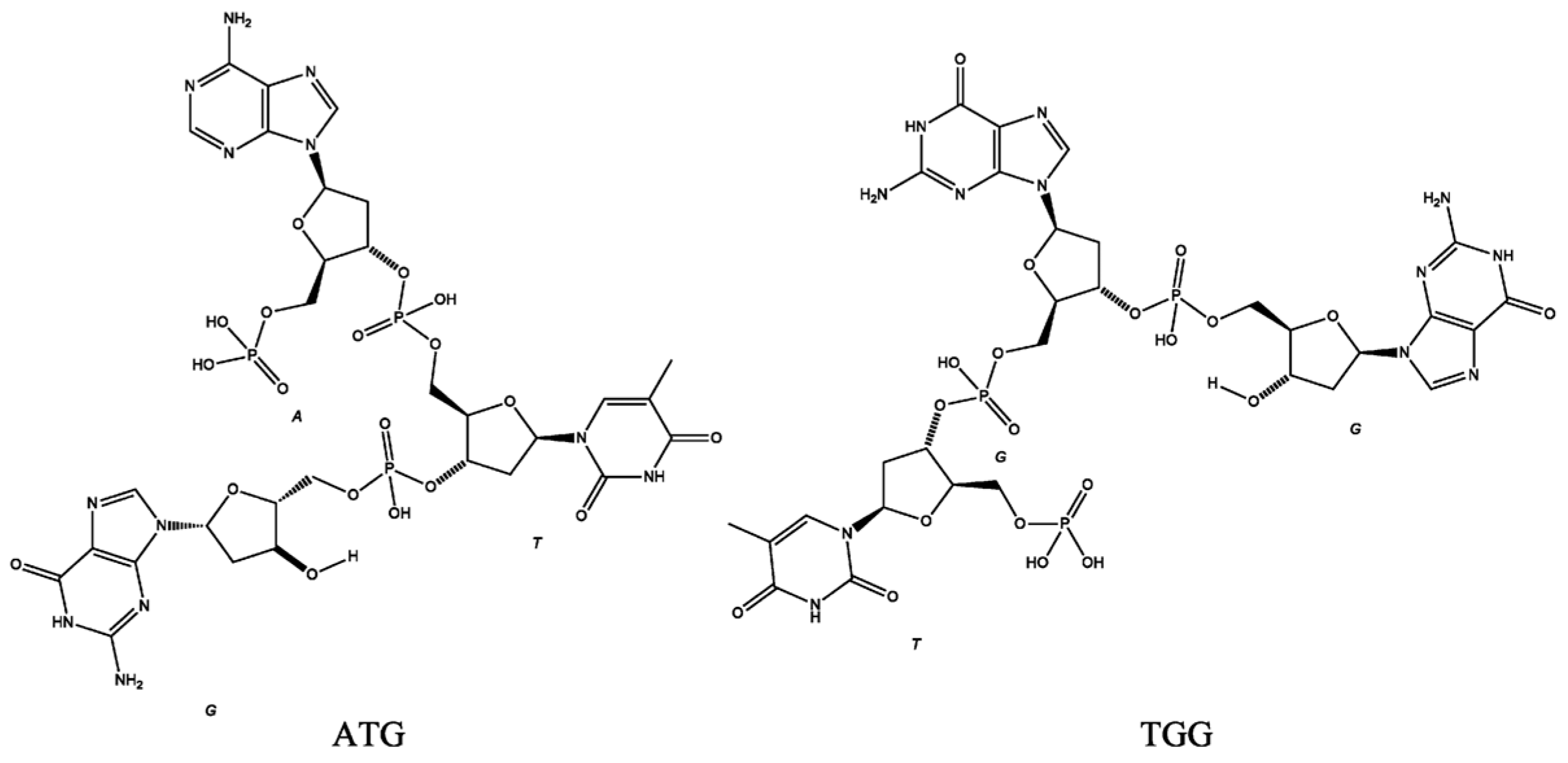
2.1.1. ARG Multi-Dimensional Transfer System Construction Ligand Acquisition Card Database
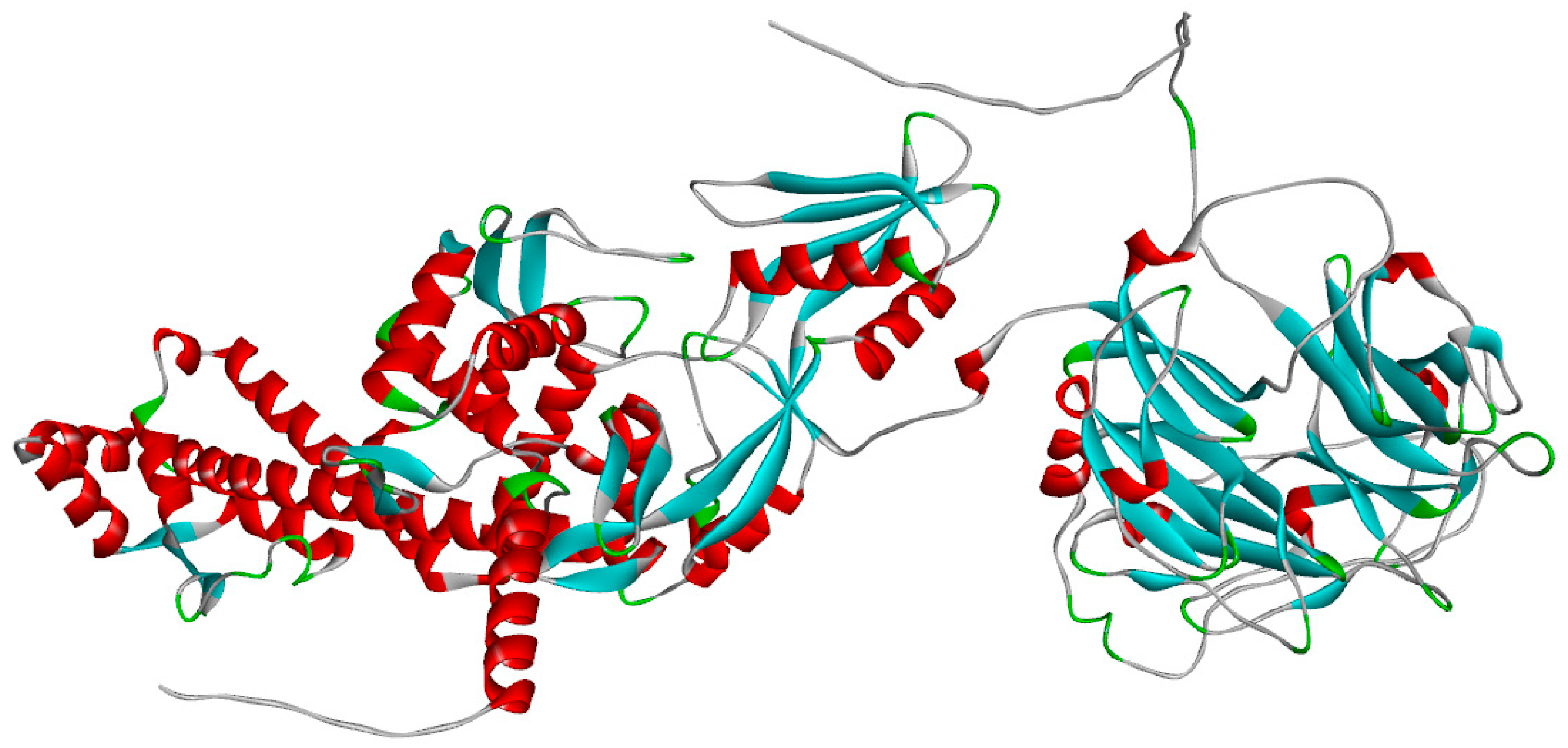
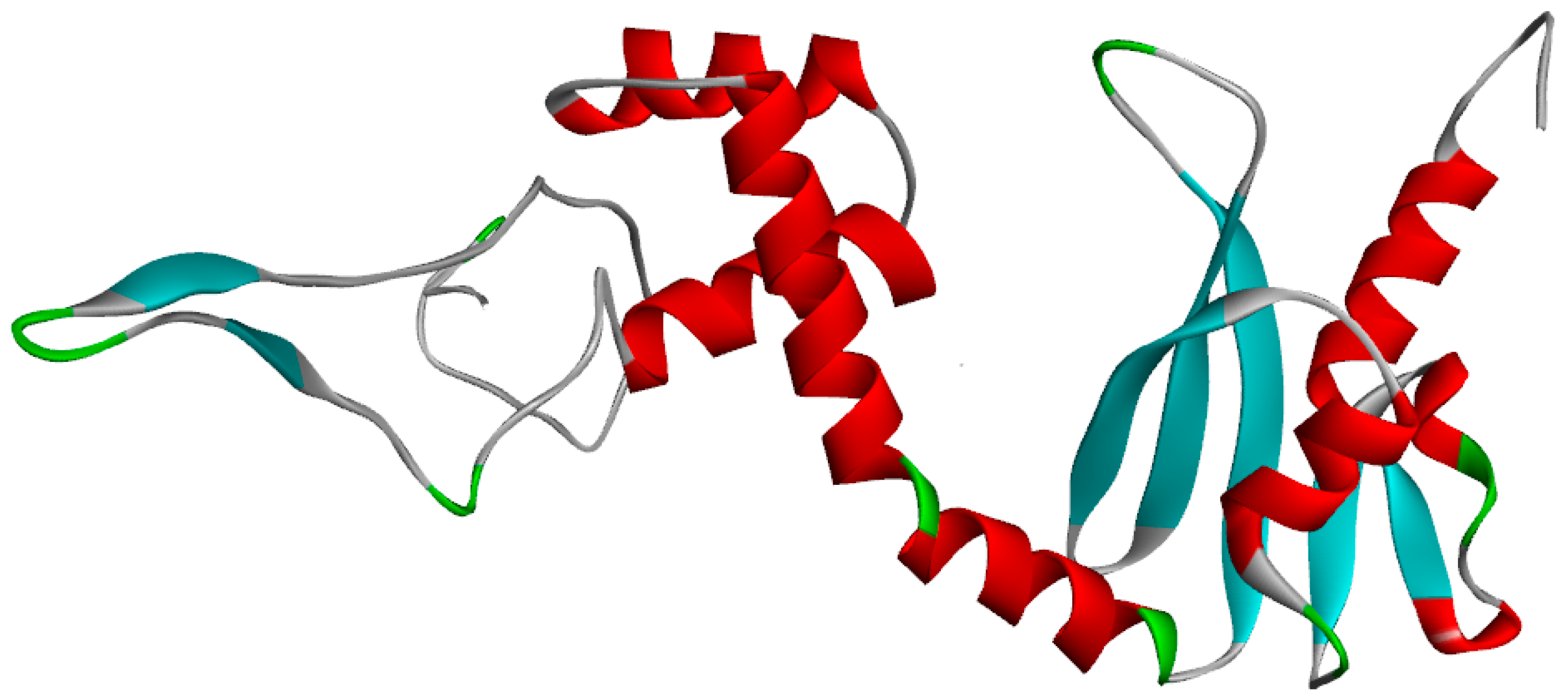
2.1.2. Construction of Receptor Acquisition Protein Database via ARG Multi-Dimensional Transfer System
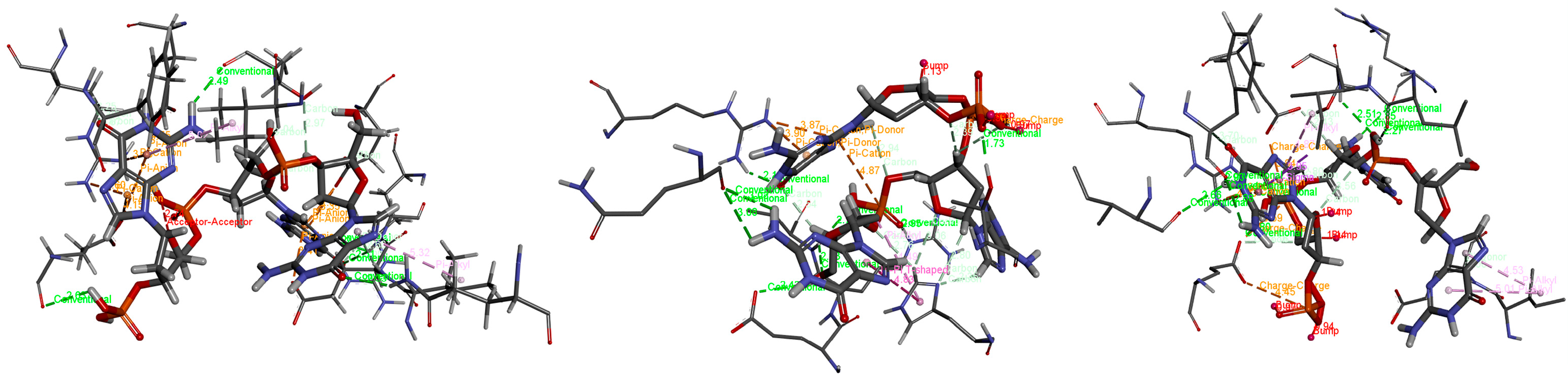
2.2. Simulation and Construction of ARG Multi-Dimensional Transfer Risk System: Molecular Docking Technology
2.3. Construction of Farmland Soil Environmental Background Simulation System: Molecular Dynamics Simulation Method
2.4. Verification Scheme of the Impact of Antibiotic Chemicals on ARG Transmission: Plackett–Burman Design
3. Results
3.1. Construction of Multi-Dimensional Transfer Risk System of ARGs in Soil Environment
3.1.1. Screening of Ligand Small Molecules in Multi-Dimensional Transfer Risk System of ARGs in Soil Environment
3.1.2. Multidimensional Transfer Risk Framework for ARGs in Soil Environments: Screening of Macromolecular Receptors
3.2. Construction of Multi-Dimensional Gene Transfer Simulation System of ARGs in Soil Environment
3.2.1. Construction of Soil Environment Background Simulation System
3.2.2. Construction of Soil Simulation System Based on Agricultural Soil Non-Antibiotic Pollution Scenario
3.3. Impact and Analysis of Farmland Typical Non-Antibiotic Pollution on Multi-Dimensional Transfer Risk of Soil ARGs
3.3.1. Impact of Typical Non-Antibiotic Pollution in Farmland on Multi-Dimensional Transfer Risk of ARGs in Soil Environment
3.3.2. Identification and Functional Classification of Key Binding Enhancement Factors
Vertical Gene Transfer
Horizontal Gene Transfer
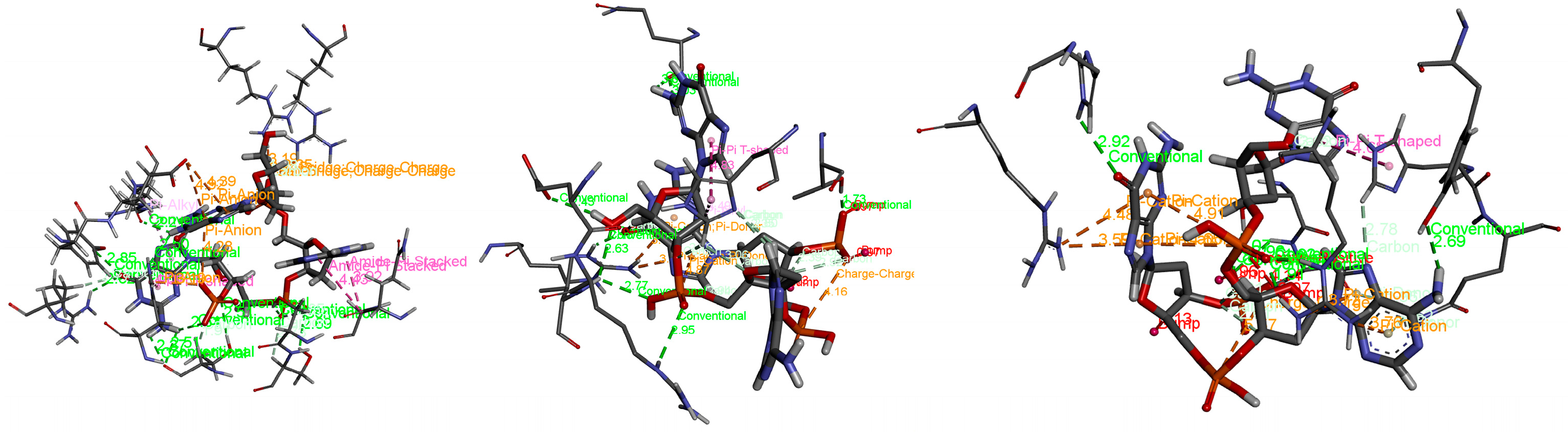
3.4. Molecular Dynamics Mechanism Analysis Based on Typical Analysis Results
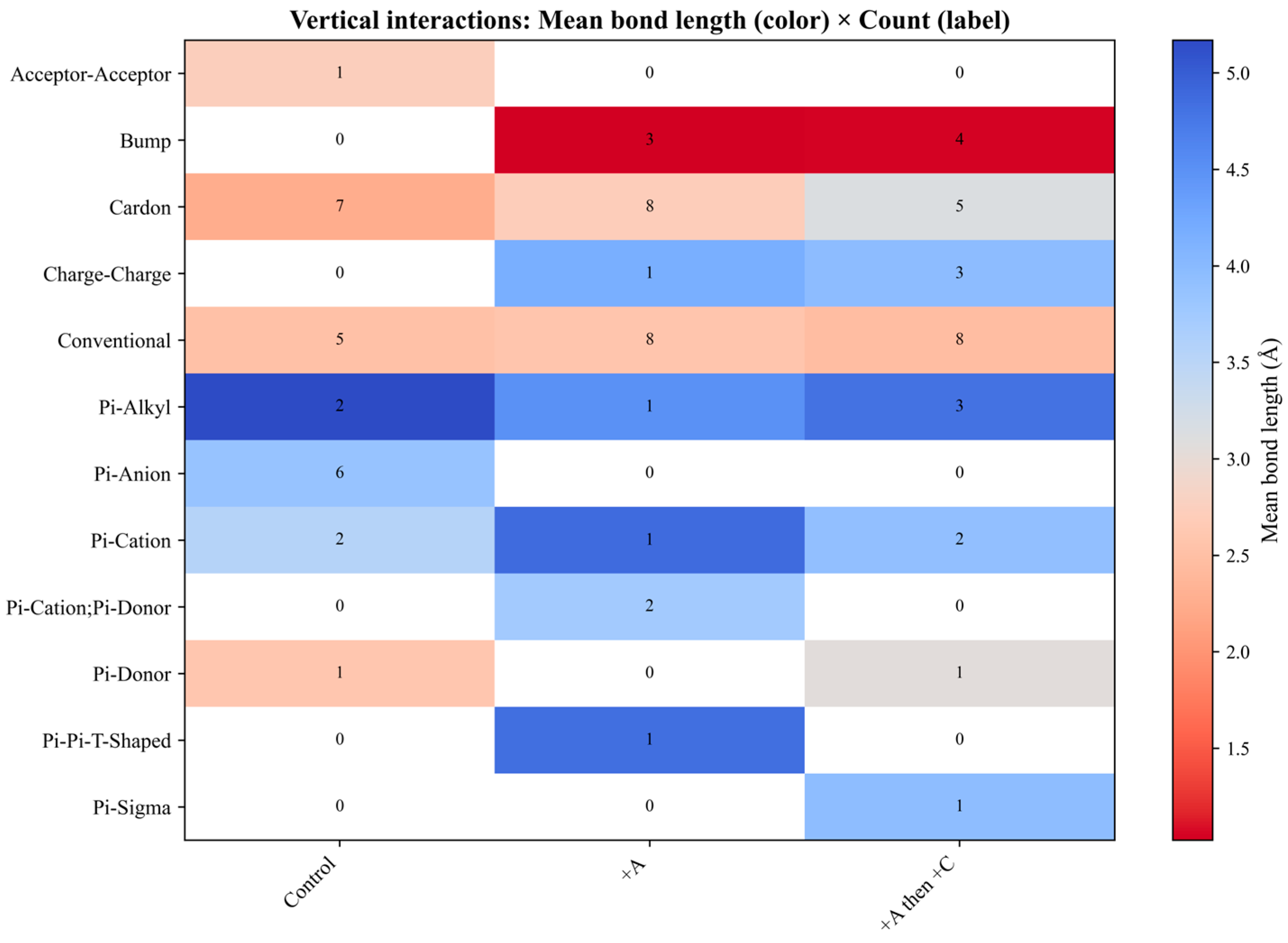
3.4.1. Vertical Gene Transfer
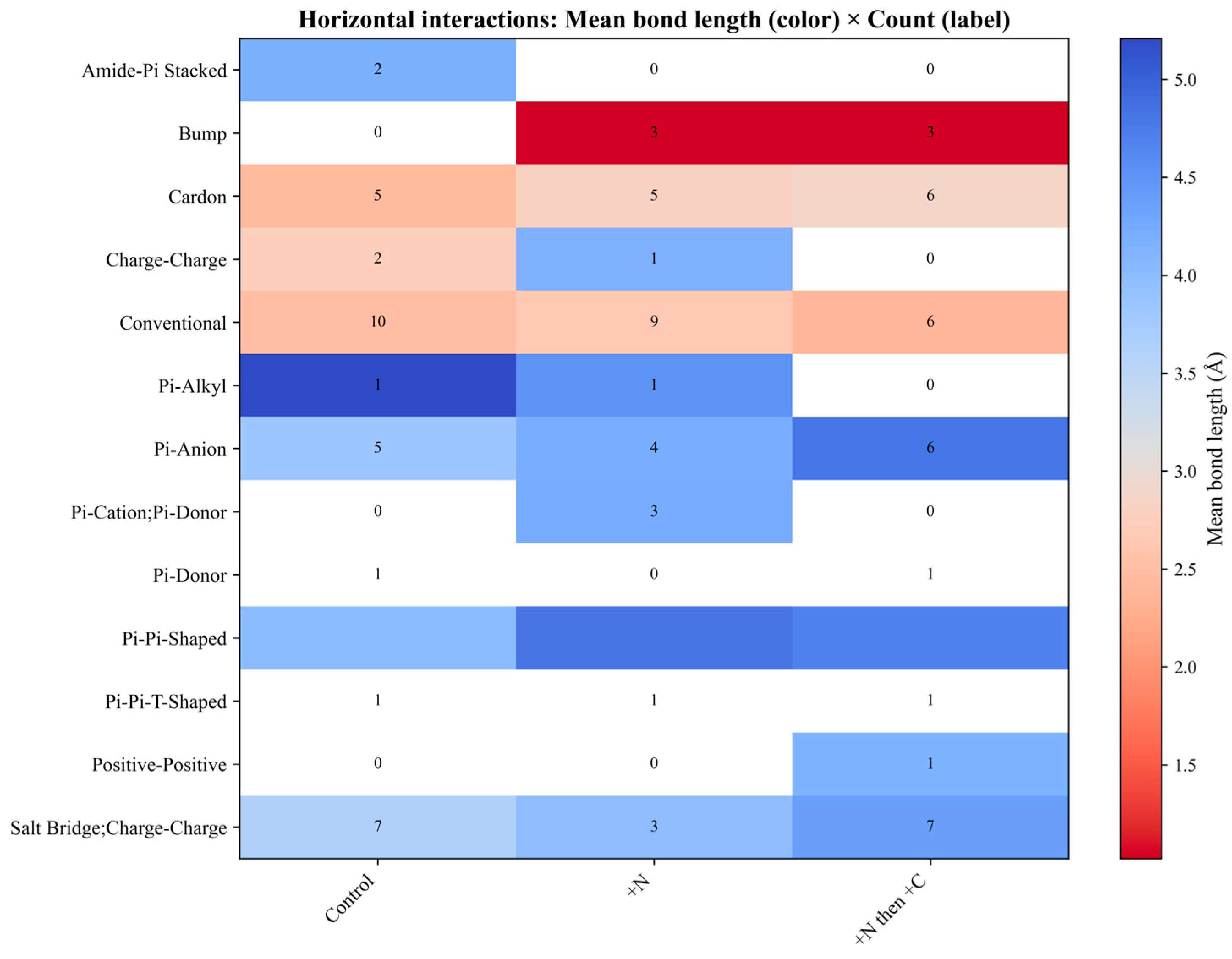
3.4.2. Horizontal Gene Transfer
4. Conclusions
Author Contributions
Funding
Institutional Review Board Statement
Informed Consent Statement
Data Availability Statement
Conflicts of Interest
References
- Jauregi, L.; Epelde, L.; Alkorta, I.; Garbisu, C. Antibiotic resistance in agricultural soil and crops associated to the application of cow manure-derived amendments from conventional and organic livestock farms. Front. Vet. Sci. 2021, 8, 633858. [Google Scholar] [CrossRef] [Scilit]
- Zhang, Y.X.; Wang, J.H.; Lu, J.; Wu, J. Antibiotic resistance genes might serve as new indicators for wastewater contamination of coastal waters: Spatial distribution and source apportionment of antibiotic resistance genes in a coastal bay. Ecol. Indic. 2020, 114, 106299. [Google Scholar] [CrossRef] [Scilit]
- Ren, Z.X.; Zhao, Y.Y.; Han, S.; Li, X. Regulatory strategies for inhibiting horizontal gene transfer of ARGs in paddy and dryland soil through computer-based methods. Sci. Total Environ. 2023, 856, 159096. [Google Scholar] [CrossRef] [Scilit]
- Berhe, A.A.; Barnes, R.T.; Six, J.; Marín-Spiotta, E. Role of soil erosion in biogeochemical cycling of essential elements: Carbon, nitrogen, and phosphorus. Annu. Rev. Earth Planet. Sci. 2018, 46, 521–548. [Google Scholar] [CrossRef] [Scilit]
- Yue, Y.; Ni, J.; Ciais, P.C.; Piao, S.; Wang, T.; Huang, M.; Borthwick, A.G.L.; Li, T.; Wang, Y.; Chappell, A.; et al. Lateral transport of soil carbon and land-atmosphere CO2 flux induced by water erosion in China. Proc. Natl. Acad. Sci. USA 2016, 113, 6617–6622. [Google Scholar] [CrossRef] [Scilit] [PubMed]
- Shi, H.Y.; Hu, X.Y.; Zhang, J.; Li, W.; Xu, J.; Hu, B.; Ma, L.; Lou, L. Soil minerals and organic matters affect ARGs transformation by changing the morphology of plasmid and bacterial responses. J. Hazard. Mater. 2023, 457, 131727. [Google Scholar] [CrossRef] [Scilit] [PubMed]
- Huang, Q.; Zhu, J.J.; Qu, C.C.; Wang, Y.; Hao, X.; Chen, W.; Cai, P.; Huang, Q. Dichotomous role of humic substances in modulating transformation of antibiotic resistance genes in mineral systems. Environ. Sci. Technol. 2023, 7, 790–800. [Google Scholar] [CrossRef] [Scilit]
- Zechmeister-Boltenstern, S.; Keiblinger, K.M.; Mooshammer, M.; Peñuelas, J.; Richter, A.; Sardans, J.; Wanek, W. The application of ecological stoichiometry to plant–microbial–soil organic matter transformations. Ecol. Monogr. 2015, 85, 133–155. [Google Scholar] [CrossRef] [Scilit]
- Huang, B.; Yuan, Z.J.; Li, D.Q.; Zheng, M.; Nie, X.; Liao, Y. Effects of soil particle size on the adsorption, distribution, and migration behaviors of heavy metal(loid)s in soil: A review. Environ. Sci. Process. Impacts 2020, 22, 1596–1615. [Google Scholar] [CrossRef] [Scilit]
- Cui, S.Y.; Qi, Y.W.; Zhu, Q.; Wang, C.; Sun, H. A review of the influence of soil minerals and organic matter on the migration and transformation of sulfonamides. Sci. Total Environ. 2023, 861, 160584. [Google Scholar] [CrossRef] [Scilit]
- He, M.F.; Li, Z.B.; Chen, C.; Mei, P. Impact of soil types and root exudates on cadmium and petroleum hydrocarbon phytoremediation by Sorghum sudanense, Festuca arundinace, and Lolium perenne. Front. Ecol. Evol. 2022, 10, 1036765. [Google Scholar] [CrossRef] [Scilit]
- Lipczynska-Kochany, E. Humic substances, their microbial interactions and effects on biological transformations of organic pollutants in water and soil: A review. Chemosphere 2018, 202, 420–437. [Google Scholar] [CrossRef] [Scilit]
- Sharma, A.; Chetani, R. A review on the effect of organic and chemical fertilizers on plants. Int. J. Res. Appl. Sci. Eng. Technol. 2017, 5, 677–680. [Google Scholar] [CrossRef] [Scilit]
- Morgado, R.G.; Loureiro, S.; González-Alcaraz, M.N. Changes in soil ecosystem structure and functions due to soil contamination. In Soil Pollution; Academic Press: Cambridge, MA, USA, 2018; pp. 59–87. [Google Scholar] [CrossRef] [Scilit]
- Bais, H.P.; Weir, T.L.; Perry, L.G.; Gilroy, S.; Vivanco, J.M. The role of root exudates in rhizosphere interactions with plants and other organisms. Annu. Rev. Plant Biol. 2006, 57, 233–266. [Google Scholar] [CrossRef] [Scilit]
- Badri, D.V.; Vivanco, J.M. Regulation and function of root exudates. Plant Cell Environ. 2009, 32, 666–681. [Google Scholar] [CrossRef] [Scilit]
- Kuzyakov, Y. Sources of CO2 efflux from soil and review of partitioning methods. Soil Biol. Biochem. 2006, 38, 425–448. [Google Scholar] [CrossRef] [Scilit]
- Pausch, J.; Kuzyakov, Y. Carbon input by roots into the soil: Quantification of rhizodeposition from root to ecosystem scale. Glob. Change Biol. 2018, 24, 1–12. [Google Scholar] [CrossRef] [Scilit] [PubMed]
- Jones, D.L. Organic acids in the rhizosphere—A critical review. Plant Soil 1998, 205, 25–44. [Google Scholar] [CrossRef] [Scilit]
- Oburger, E.; Jones, D.L. Sampling root exudates—Mission impossible? Rhizosphere 2018, 6, 116–133. [Google Scholar] [CrossRef] [Scilit]
- Patten, C.L.; Glick, B.R. Role of Pseudomonas putida indoleacetic acid in development of the host plant root system. Appl. Environ. Microbiol. 2002, 68, 3795–3801. [Google Scholar] [CrossRef] [Scilit]
- Zamioudis, C.; Pieterse, C.M.J. Modulation of host immunity by beneficial microbes. Mol. Plant-Microbe Interact. 2012, 25, 139–150. [Google Scholar] [CrossRef] [Scilit] [PubMed]
- Rillig, M.C.; Mummey, D.L. Mycorrhizas and soil structure. New Phytol. 2006, 171, 41–53. [Google Scholar] [CrossRef] [Scilit]
- Six, J.; Frey, S.D.; Thiet, R.K.; Batten, K.M. Bacterial and fungal contributions to carbon sequestration in agroecosystems. Soil Sci. Soc. Am. J. 2006, 70, 555. [Google Scholar] [CrossRef] [Scilit]
- Marschner, P. Marschner’s Mineral Nutrition of Higher Plants, 3rd ed.; Academic Press: Cambridge, MA, USA, 2012; ISBN 978-0-12-384905-2. [Google Scholar]
- El-Ramady, H.R.; Alshaal, T.A.; Amer, M.; Domokos-Szabolcsy, É.; Elhawat, N.; Prokisch, J.; Fári, M. Soil Quality and Plant Nutrition. In Sustainable Agriculture Reviews 14: Agroecology and Global Change; Springer International Publishing: Cham, Switzerland, 2014; pp. 345–447. [Google Scholar] [CrossRef] [Scilit]
- Essington, M.E. Soil and Water Chemistry: An Integrative Approach; CRC Press: Boca Raton, FL, USA, 2004; ISBN 978-0-8493-1256-0. [Google Scholar]
- Sparks, D.L. Environmental Soil Chemistry; Academic Press: Cambridge, MA, USA, 2003; ISBN 978-0-12-656446-4. [Google Scholar]
- Hinsinger, P.; Bengough, A.G.; Vetterlein, D.; Young, I.M. Rhizosphere: Biophysics, biogeochemistry and ecological relevance. Plant Soil 2009, 321, 117–152. [Google Scholar] [CrossRef] [Scilit]
- Yin, X.; Jiang, X.T.; Chai, B.; Li, L.; Yang, Y.; Cole, J.R.; Tiedje, J.M.; Zhang, T. ARGs-OAP v2. 0 with an expanded SARG database and Hidden Markov Models for enhancement characterization and quantification of antibiotic resistance genes in environmental metagenomes. Bioinformatics 2018, 34, 2263–2270. [Google Scholar] [CrossRef] [Scilit]
- Yang, Y.; Jiang, X.; Chai, B.; Ma, L.; Li, B.; Zhang, A.; Cole, J.R.; Tiedje, J.M.; Zhang, T. ARGs-OAP: Online analysis pipeline for antibiotic resistance genes detection from metagenomic data using an integrated structured ARG-database. Bioinformatics 2016, 32, 2346–2351. [Google Scholar] [CrossRef] [Scilit] [PubMed]
- Guo, C.; Chen, Q.; Fan, G.; Sun, Y.; Nie, J.; Shen, Z.; Meng, Z.; Zhou, Y.; Li, S.; Wang, S.; et al. gcPathogen: A comprehensive genomic resource of human pathogens for public health. Nucleic Acids Res. 2024, 52, D714–D723. [Google Scholar] [CrossRef] [Scilit] [PubMed]
- Fan, G.; Guo, C.; Zhang, Q.; Liu, D.; Sun, Q.; Cui, Z.; Zhou, H.; Zhou, Y.; Guo, Z.; Ma, J.; et al. A secure visualization platform for pathogenic genome analysis with an accurate reference database. Biosaf. Health 2024, 6, 235–243. [Google Scholar] [CrossRef] [Scilit]
- Wlodarski, M.A.; Lau, T.T.Y.; Alcock, B.P.; Raphenya, A.R.; Ta, T.E.; Maguire, F.; Beiko, R.G.; McArthur, A.G. CARD k-mers: Unmasking the pathogen hosts and genomic contexts of antimicrobial resistance genes in metagenomic sequences. bioRxiv 2025, 2025.09.15.676352. [Google Scholar] [CrossRef] [Scilit]
- Ren, Z.X.; Wang, S.; Liu, D.; Yu, J.; Zhang, X.; Zhao, P.; Sun, Y.; Han, S. Control strategies for the vertical gene transfer of quinolone ARGs in Escherichia coli through molecular modification and molecular dynamics. J. Hazard. Mater. 2021, 420, 126667. [Google Scholar] [CrossRef] [Scilit]
- Ren, Z.X.; Xu, H.H.; Wang, Y.W.; Li, Y.; Han, S.; Ren, J. Combined toxicity characteristics and regulation of residual quinolone antibiotics in water environment. Chemosphere 2021, 263, 128301. [Google Scholar] [CrossRef] [Scilit]
- Zhao, Y.Y.; Hou, Y.L.; Li, Y. Multi-directional selective toxicity effects on farmland ecosystems: A novel design of green substitutes for neonicotinoid insecticides. J. Clean. Prod. 2020, 272, 122715. [Google Scholar] [CrossRef] [Scilit]
- Li, Z.X.; Sun, A.Q.; Liu, X.F.; Chen, Q.L.; Bi, L.; Ren, P.X.; Shen, J.P.; Jin, S.; He, J.Z.; Hu, H.W.; et al. Climate warming increases the proportions of specific antibiotic resistance genes in natural soil ecosystems. J. Hazard. Mater. 2022, 430, 128442. [Google Scholar] [CrossRef] [Scilit]
- Zhao, J.L.; Wang, Z.G.; Dong, Y.F.; Yang, Z.; Govers, G. How soil erosion and runoff are related to land use, topography and annual precipitation: Insights from a meta-analysis of erosion plots in China. Sci. Total Environ. 2022, 802, 149665. [Google Scholar] [CrossRef] [Scilit]
- Ren, Z.X.; Zhao, Y.Y.; Huang, J.; Han, S.; Wang, Y. Validation and inhibition study for toxic expression of quinolone antibiotic resistance genes in agricultural soils of eastern China. Ecotoxicol. Environ. Saf. 2022, 241, 113806. [Google Scholar] [CrossRef] [Scilit]
- Chu, Z.H. Molecular Modification and Mechanism of PBDEs with Lower Estrogenic Activities and More Environmental Friendliness; North China Electric Power University: Beijing, China, 2019. [Google Scholar]
- Zhao, Y.Y. Assessment and Regulation of Biotoxicity and Human Health Risk for Neonicotinoid Insecticides; North China Electric Power University: Beijing, China, 2023. [Google Scholar]
- Deng, Z.Y.; Zhao, Y.Y.; Ren, Z.; Hao, N.; Sun, P.; Zhao, W. Ecological distribution, dissemination potential, and health risks of antibiotic resistance genes and mobile genetic elements in soils across diverse land-use types in China. Environ. Res. 2025, 285, 122459. [Google Scholar] [CrossRef] [Scilit]
- Stothard, P. The Sequence Manipulation Suite: JavaScript programs for analyzing and formatting protein and DNA sequences. Biotechniques 2000, 28, 1102–1104. [Google Scholar] [CrossRef] [Scilit]
- Drlica, K.; Zhao, X.L. DNA gyrase, topoisomerase IV, and the 4-quinolones. Microbiol. Mol. Biol. Rev. 1997, 61, 377–392. [Google Scholar] [CrossRef] [Scilit] [PubMed]
- Gellert, M.; Mizuuchi, K.; O’Dea, M.H.; A Nash, H. DNA gyrase: An enzyme that introduces superhelical turns into DNA. Proc. Natl. Acad. Sci. USA 1976, 73, 3872–3876. [Google Scholar] [CrossRef] [Scilit]
- Sakaguchi, K. Invertrons, a class of structurally and functionally related genetic elements that includes linear DNA plasmids, transposable elements, and genomes of adeno-type viruses. Microbiol. Rev. 1990, 54, 66–74. [Google Scholar] [CrossRef] [PubMed]
- Turner, P.E.; Williams, E.S.; Okeke, C.; Cooper, V.S.; Duffy, S.; Wertz, J.E. Antibiotic resistance correlates with transmission in plasmid evolution. Evolution 2014, 68, 3368–3380. [Google Scholar] [CrossRef] [Scilit]
- Riley, M.; Abe, T.; Arnaud, M.B.; Berlyn, M.K.B.; Blattner, F.R.; Chaudhuri, R.R.; Glasner, J.D.; Horiuchi, T.; Keseler, I.M.; Kosuge, T.; et al. Escherichia coli K-12, a cooperatively developed annotation snapshot—2005. Nucleic Acids Res. 2006, 34, 1–9. [Google Scholar] [CrossRef] [Scilit]
- Li, M.; Li, H.Y.; Gao, M.; Che, R.; Zhou, J.; Sui, Y. A dataset of hourly profile soil temperature at Hailun Ecological Station in Northeast black soil region during 2010–2020. Sci. Data Bank 2023, 8, 1–7. [Google Scholar] [CrossRef] [Scilit]
- Vendruscolo, E.C.G.; Mesa, D.; de Souza, E.M. Corn rhizosphere microbial community in different long-term soil management systems. Appl. Soil Ecol. 2022, 172, 104339. [Google Scholar] [CrossRef] [Scilit]
- Hu, G.P. Study on the Community Diversity of the Endophytic and Rhizosphere Microorganism of Rice (Oryza sativa L.); Fujian Agriculture and Forestry University: Fuzhou, China, 2010. [Google Scholar]
- Spence, C.; Alff, E.; Johnson, C.; Ramos, C.; Donofrio, N.; Sundaresan, V.; Bais, H. Natural rice rhizospheric microbes suppress rice blast infections. BMC Plant Biol. 2014, 14, 130. [Google Scholar] [CrossRef] [Scilit]
- Qaisrani, M.M.; Zaheer, A.; Mirza, M.S.; Naqqash, T.; Qaisrani, T.B.; Hanif, M.K.; Rasool, G.; Malik, K.A.; Ullah, S.; Jamal, M.S.; et al. A comparative study of bacterial diversity based on culturable and culture-independent techniques in the rhizosphere of maize (Zea mays L.). Saudi J. Biol. Sci. 2019, 26, 1344–1351. [Google Scholar] [CrossRef] [Scilit]
- Chen, L.; Hao, Z.; Li, K.; Sha, Y.; Wang, E.; Sui, X.; Mi, G.; Tian, C.; Chen, W. Effects of growth-promoting rhizobacteria on maize growth and rhizosphere microbial community under conservation tillage in Northeast China. Microb. Biotechnol. 2021, 14, 535–550. [Google Scholar] [CrossRef] [Scilit] [PubMed]
- Rosa, S.D.; Silva, C.A.; Carletti, P.; Sawaya, A.C.H.F. Maize growth and root organic acid exudation in response to water extract of compost application. J. Soil Sci. Plant Nutr. 2021, 21, 2770–2780. [Google Scholar] [CrossRef] [Scilit]
- Pereira, L.C.; Bertuzzi Pereira, C.; Correia, L.V.; Matera, T.C.; dos Santos, R.F.; de Carvalho, C.; Osipi, E.A.F.; Braccini, A.L. Corn responsiveness to Azospirillum: Accessing the effect of root exudates on the bacterial growth and its ability to fix nitrogen. Plants 2020, 9, 923. [Google Scholar] [CrossRef] [Scilit]
- Zhao, J.Y.; Ye, Z.H.; Zhong, H. Rice root exudates affect microbial methylmercury production in paddy soils. Environ. Pollut. 2018, 242, 1921–1929. [Google Scholar] [CrossRef] [Scilit] [PubMed]



| Representative crops | Corn | |
| Soil temperature | 25 °C | |
| Soil pH | 7.0 | |
| Root exudates | Glucose, flavonoids, benzoxazosin, ethylene, oxalic acid, gibberellin, and carbon dioxide | |
| Root microorganisms | Agrobacterium, Rhizobium, and proteus | |
| Root microbial exudates | Agrobacterium | Octopine, formic acid, and indole |
| Rhizobium | Flavonoids, ammonia, and ammonium | |
| Proteus | Indole, ammonia, and ammonium | |
| Cation and anion strengths | Cation | K+, Na+, Ca2+, Mg2+, Fe3+, Fe2+, NH4+, and Mn2+ |
| Anion | NO3−, SO42−, PO43−, CO32−, OH−, and Cl− | |
| Transfer Type | No. | A | B | C | D | E | F | G | H | I | J | K | L | M | N |
|---|---|---|---|---|---|---|---|---|---|---|---|---|---|---|---|
| Vertical gene transfer | 1 | 1 | 1 | 1 | 1 | 1 | 1 | 1 | 1 | 1 | 1 | 1 | 1 | 1 | 1 |
| 2 | 1 | 1 | 1 | 1 | 0 | 1 | 1 | 1 | 1 | 0 | 0 | 0 | 0 | 0 | |
| 3 | 1 | 1 | 1 | 0 | 1 | 1 | 0 | 0 | 0 | 1 | 1 | 1 | 0 | 0 | |
| 4 | 1 | 1 | 1 | 0 | 0 | 1 | 0 | 0 | 0 | 0 | 0 | 0 | 1 | 1 | |
| 5 | 1 | 1 | 0 | 1 | 1 | 0 | 1 | 0 | 0 | 1 | 0 | 0 | 1 | 1 | |
| 6 | 1 | 1 | 0 | 1 | 0 | 0 | 1 | 0 | 0 | 0 | 1 | 1 | 0 | 0 | |
| 7 | 1 | 1 | 0 | 0 | 1 | 0 | 0 | 1 | 1 | 1 | 0 | 0 | 0 | 0 | |
| 8 | 1 | 1 | 0 | 0 | 0 | 0 | 0 | 1 | 1 | 0 | 1 | 1 | 1 | 1 | |
| 9 | 1 | 0 | 1 | 1 | 1 | 0 | 0 | 1 | 0 | 0 | 1 | 0 | 1 | 0 | |
| 10 | 1 | 0 | 1 | 1 | 0 | 0 | 0 | 1 | 0 | 1 | 0 | 1 | 0 | 1 | |
| 11 | 1 | 0 | 1 | 0 | 1 | 0 | 1 | 0 | 1 | 0 | 1 | 0 | 0 | 1 | |
| 12 | 1 | 0 | 1 | 0 | 0 | 0 | 1 | 0 | 1 | 1 | 0 | 1 | 1 | 0 | |
| 13 | 1 | 0 | 0 | 1 | 1 | 1 | 0 | 0 | 1 | 0 | 0 | 1 | 1 | 0 | |
| 14 | 1 | 0 | 0 | 1 | 0 | 1 | 0 | 0 | 1 | 1 | 1 | 0 | 0 | 1 | |
| 15 | 1 | 0 | 0 | 0 | 1 | 1 | 1 | 1 | 0 | 0 | 0 | 1 | 0 | 1 | |
| 16 | 1 | 0 | 0 | 0 | 0 | 1 | 1 | 1 | 0 | 1 | 1 | 0 | 1 | 0 | |
| 17 | 0 | 1 | 1 | 1 | 1 | 0 | 0 | 0 | 1 | 0 | 0 | 1 | 0 | 1 | |
| 18 | 0 | 1 | 1 | 1 | 0 | 0 | 0 | 0 | 1 | 1 | 1 | 0 | 1 | 0 | |
| 19 | 0 | 1 | 1 | 0 | 1 | 0 | 1 | 1 | 0 | 0 | 0 | 1 | 1 | 0 | |
| 20 | 0 | 1 | 1 | 0 | 0 | 0 | 1 | 1 | 0 | 1 | 1 | 0 | 0 | 1 | |
| 21 | 0 | 1 | 0 | 1 | 1 | 1 | 0 | 1 | 0 | 0 | 1 | 0 | 0 | 1 | |
| 22 | 0 | 1 | 0 | 1 | 0 | 1 | 0 | 1 | 0 | 1 | 0 | 1 | 1 | 0 | |
| 23 | 0 | 1 | 0 | 0 | 1 | 1 | 1 | 0 | 1 | 0 | 1 | 0 | 1 | 0 | |
| 24 | 0 | 1 | 0 | 0 | 0 | 1 | 1 | 0 | 1 | 1 | 0 | 1 | 0 | 1 | |
| 25 | 0 | 0 | 1 | 1 | 1 | 1 | 1 | 0 | 0 | 1 | 0 | 0 | 0 | 0 | |
| 26 | 0 | 0 | 1 | 1 | 0 | 1 | 1 | 0 | 0 | 0 | 1 | 1 | 1 | 1 | |
| 27 | 0 | 0 | 1 | 0 | 1 | 1 | 0 | 1 | 1 | 1 | 0 | 0 | 1 | 1 | |
| 28 | 0 | 0 | 1 | 0 | 0 | 1 | 0 | 1 | 1 | 0 | 1 | 1 | 0 | 0 | |
| 29 | 0 | 0 | 0 | 1 | 1 | 0 | 1 | 1 | 1 | 1 | 1 | 1 | 0 | 0 | |
| 30 | 0 | 0 | 0 | 1 | 0 | 0 | 1 | 1 | 1 | 0 | 0 | 0 | 1 | 1 | |
| 31 | 0 | 0 | 0 | 0 | 1 | 0 | 0 | 0 | 0 | 1 | 1 | 1 | 1 | 1 | |
| 32 | 0 | 0 | 0 | 0 | 0 | 0 | 0 | 0 | 0 | 0 | 0 | 0 | 0 | 0 | |
| Horizontal gene transfer | 1 | 1 | 1 | 1 | 1 | 1 | 1 | 1 | 1 | 1 | 1 | 1 | 1 | 1 | 1 |
| 2 | 1 | 1 | 1 | 1 | 0 | 1 | 1 | 1 | 1 | 0 | 0 | 0 | 0 | 0 | |
| 3 | 1 | 1 | 1 | 0 | 1 | 1 | 0 | 0 | 0 | 1 | 1 | 1 | 0 | 0 | |
| 4 | 1 | 1 | 1 | 0 | 0 | 1 | 0 | 0 | 0 | 0 | 0 | 0 | 1 | 1 | |
| 5 | 1 | 1 | 0 | 1 | 1 | 0 | 1 | 0 | 0 | 1 | 0 | 0 | 1 | 1 | |
| 6 | 1 | 1 | 0 | 1 | 0 | 0 | 1 | 0 | 0 | 0 | 1 | 1 | 0 | 0 | |
| 7 | 1 | 1 | 0 | 0 | 1 | 0 | 0 | 1 | 1 | 1 | 0 | 0 | 0 | 0 | |
| 8 | 1 | 1 | 0 | 0 | 0 | 0 | 0 | 1 | 1 | 0 | 1 | 1 | 1 | 1 | |
| 9 | 1 | 0 | 1 | 1 | 1 | 0 | 0 | 1 | 0 | 0 | 1 | 0 | 1 | 0 | |
| 10 | 1 | 0 | 1 | 1 | 0 | 0 | 0 | 1 | 0 | 1 | 0 | 1 | 0 | 1 | |
| 11 | 1 | 0 | 1 | 0 | 1 | 0 | 1 | 0 | 1 | 0 | 1 | 0 | 0 | 1 | |
| 12 | 1 | 0 | 1 | 0 | 0 | 0 | 1 | 0 | 1 | 1 | 0 | 1 | 1 | 0 | |
| 13 | 1 | 0 | 0 | 1 | 1 | 1 | 0 | 0 | 1 | 0 | 0 | 1 | 1 | 0 | |
| 14 | 1 | 0 | 0 | 1 | 0 | 1 | 0 | 0 | 1 | 1 | 1 | 0 | 0 | 1 | |
| 15 | 1 | 0 | 0 | 0 | 1 | 1 | 1 | 1 | 0 | 0 | 0 | 1 | 0 | 1 | |
| 16 | 1 | 0 | 0 | 0 | 0 | 1 | 1 | 1 | 0 | 1 | 1 | 0 | 1 | 0 | |
| 17 | 0 | 1 | 1 | 1 | 1 | 0 | 0 | 0 | 1 | 0 | 0 | 1 | 0 | 1 | |
| 18 | 0 | 1 | 1 | 1 | 0 | 0 | 0 | 0 | 1 | 1 | 1 | 0 | 1 | 0 | |
| 19 | 0 | 1 | 1 | 0 | 1 | 0 | 1 | 1 | 0 | 0 | 0 | 1 | 1 | 0 | |
| 20 | 0 | 1 | 1 | 0 | 0 | 0 | 1 | 1 | 0 | 1 | 1 | 0 | 0 | 1 | |
| 21 | 0 | 1 | 0 | 1 | 1 | 1 | 0 | 1 | 0 | 0 | 1 | 0 | 0 | 1 | |
| 22 | 0 | 1 | 0 | 1 | 0 | 1 | 0 | 1 | 0 | 1 | 0 | 1 | 1 | 0 | |
| 23 | 0 | 1 | 0 | 0 | 1 | 1 | 1 | 0 | 1 | 0 | 1 | 0 | 1 | 0 | |
| 24 | 0 | 1 | 0 | 0 | 0 | 1 | 1 | 0 | 1 | 1 | 0 | 1 | 0 | 1 | |
| 25 | 0 | 0 | 1 | 1 | 1 | 1 | 1 | 0 | 0 | 1 | 0 | 0 | 0 | 0 | |
| 26 | 0 | 0 | 1 | 1 | 0 | 1 | 1 | 0 | 0 | 0 | 1 | 1 | 1 | 1 | |
| 27 | 0 | 0 | 1 | 0 | 1 | 1 | 0 | 1 | 1 | 1 | 0 | 0 | 1 | 1 | |
| 28 | 0 | 0 | 1 | 0 | 0 | 1 | 0 | 1 | 1 | 0 | 1 | 1 | 0 | 0 | |
| 29 | 0 | 0 | 0 | 1 | 1 | 0 | 1 | 1 | 1 | 1 | 1 | 1 | 0 | 0 | |
| 30 | 0 | 0 | 0 | 1 | 0 | 0 | 1 | 1 | 1 | 0 | 0 | 0 | 1 | 1 | |
| 31 | 0 | 0 | 0 | 0 | 1 | 0 | 0 | 0 | 0 | 1 | 1 | 1 | 1 | 1 | |
| 32 | 0 | 0 | 0 | 0 | 0 | 0 | 0 | 0 | 0 | 0 | 0 | 0 | 0 | 0 |
| No. | Vertical Gene Transfer | Horizontal Gene Transfer | ||||
|---|---|---|---|---|---|---|
| Blank Binding Energy (kJ/mol) | Binding Energy (kJ/mol) | Change | Blank Binding Energy (kJ/mol) | Binding Energy (kJ/mol) | Change | |
| 1 | −22.694 | −43.028 | 89.60% | −47.274 | −46.957 | 40.78% |
| 2 | −38.655 | 70.33% | −55.138 | 65.30% | ||
| 3 | −9.444 | −58.39% | −49.275 | 47.72% | ||
| 4 | −72.870 | 221.10% | −44.975 | 34.83% | ||
| 5 | −62.343 | 174.71% | −34.626 | 3.81% | ||
| 6 | −63.701 | 180.70% | −34.346 | 2.97% | ||
| 7 | −71.077 | 213.20% | −64.976 | 94.80% | ||
| 8 | −37.160 | 63.74% | −63.274 | 89.69% | ||
| 9 | −52.038 | 129.30% | −16.195 | −51.45% | ||
| 10 | −15.451 | −31.92% | −49.059 | 47.08% | ||
| 11 | −124.481 | 448.52% | −59.302 | 77.79% | ||
| 12 | −23.108 | 1.82% | −49.651 | 48.85% | ||
| 13 | −36.270 | 59.82% | −37.989 | 13.89% | ||
| 14 | −22.999 | 1.34% | −39.873 | 19.54% | ||
| 15 | −40.199 | 77.13% | −49.651 | 48.85% | ||
| 16 | −50.930 | 124.42% | −45.970 | 37.82% | ||
| 17 | −17.068 | −24.79% | −74.340 | 122.87% | ||
| 18 | −44.257 | 95.02% | −46.238 | 38.62% | ||
| 19 | −22.570 | −0.55% | −31.828 | −4.58% | ||
| 20 | −58.712 | 158.71% | −53.250 | 59.64% | ||
| 21 | −13.653 | −39.84% | −76.013 | 127.88% | ||
| 22 | −14.676 | −35.33% | −55.926 | 67.66% | ||
| 23 | −3.577 | −84.24% | −35.859 | 7.50% | ||
| 24 | −16.902 | −25.52% | −48.628 | 45.78% | ||
| 25 | −36.157 | 59.32% | −63.640 | 90.79% | ||
| 26 | −10.567 | −53.44% | −67.496 | 102.35% | ||
| 27 | −41.357 | 82.24% | −79.234 | 137.54% | ||
| 28 | −65.389 | 188.13% | −64.556 | 93.54% | ||
| 29 | −26.420 | 16.42% | −31.257 | −6.29% | ||
| 30 | −18.461 | −18.65% | −34.200 | 2.53% | ||
| 31 | −48.542 | 113.90% | −52.880 | 58.53% | ||
| 32 blank | −22.694 | - | −47.274 | - | ||
Disclaimer/Publisher’s Note: The statements, opinions and data contained in all publications are solely those of the individual author(s) and contributor(s) and not of MDPI and/or the editor(s). MDPI and/or the editor(s) disclaim responsibility for any injury to people or property resulting from any ideas, methods, instructions or products referred to in the content. |
© 2026 by the authors. Licensee MDPI, Basel, Switzerland. This article is an open access article distributed under the terms and conditions of the Creative Commons Attribution (CC BY) license.
Share and Cite
Huang, J.; Wang, X.; Deng, Z.; Ren, Z.; Li, Y. Effect of Non-Antibiotic Pollution in Farmland Soil on the Risk of Antibiotic Resistance Gene Transfer. Sustainability 2026, 18, 447. https://doi.org/10.3390/su18010447
Huang J, Wang X, Deng Z, Ren Z, Li Y. Effect of Non-Antibiotic Pollution in Farmland Soil on the Risk of Antibiotic Resistance Gene Transfer. Sustainability. 2026; 18(1):447. https://doi.org/10.3390/su18010447
Chicago/Turabian StyleHuang, Jin, Xiajiao Wang, Zhengyang Deng, Zhixing Ren, and Yu Li. 2026. "Effect of Non-Antibiotic Pollution in Farmland Soil on the Risk of Antibiotic Resistance Gene Transfer" Sustainability 18, no. 1: 447. https://doi.org/10.3390/su18010447
APA StyleHuang, J., Wang, X., Deng, Z., Ren, Z., & Li, Y. (2026). Effect of Non-Antibiotic Pollution in Farmland Soil on the Risk of Antibiotic Resistance Gene Transfer. Sustainability, 18(1), 447. https://doi.org/10.3390/su18010447