Development of PBAT-Modified Photopolymer Resin Micro-Composites for More Sustainable SLA Additive Manufacturing




Abstract
1. Introduction
2. Materials and Methods
2.1. Materials
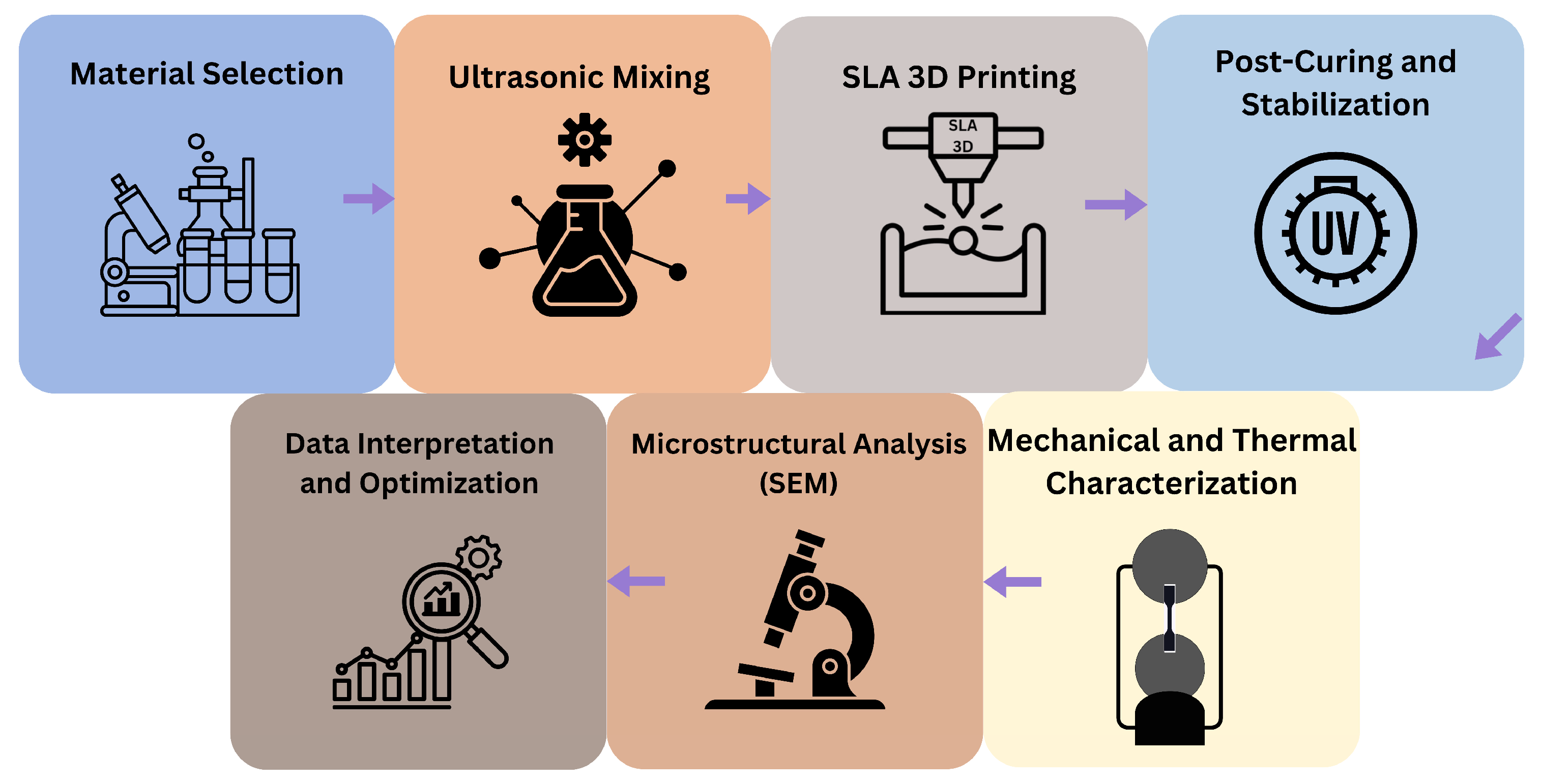
2.2. Preparation and Fabrication of Samples
2.3. Microstructural Analysis
2.4. Mechanical Testing
2.5. Thermal Conductivity Measurements
3. Results and Discussions
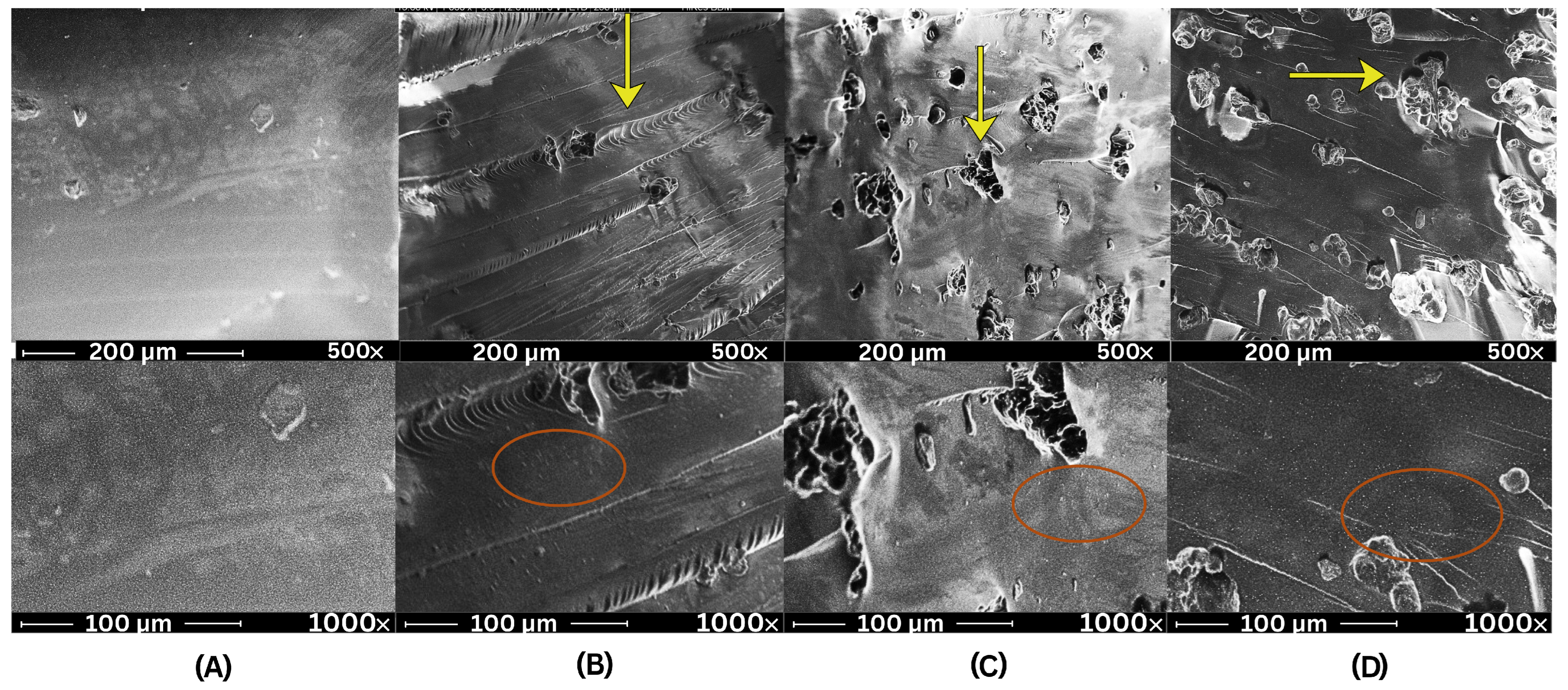
3.1. Microstructural Evaluation
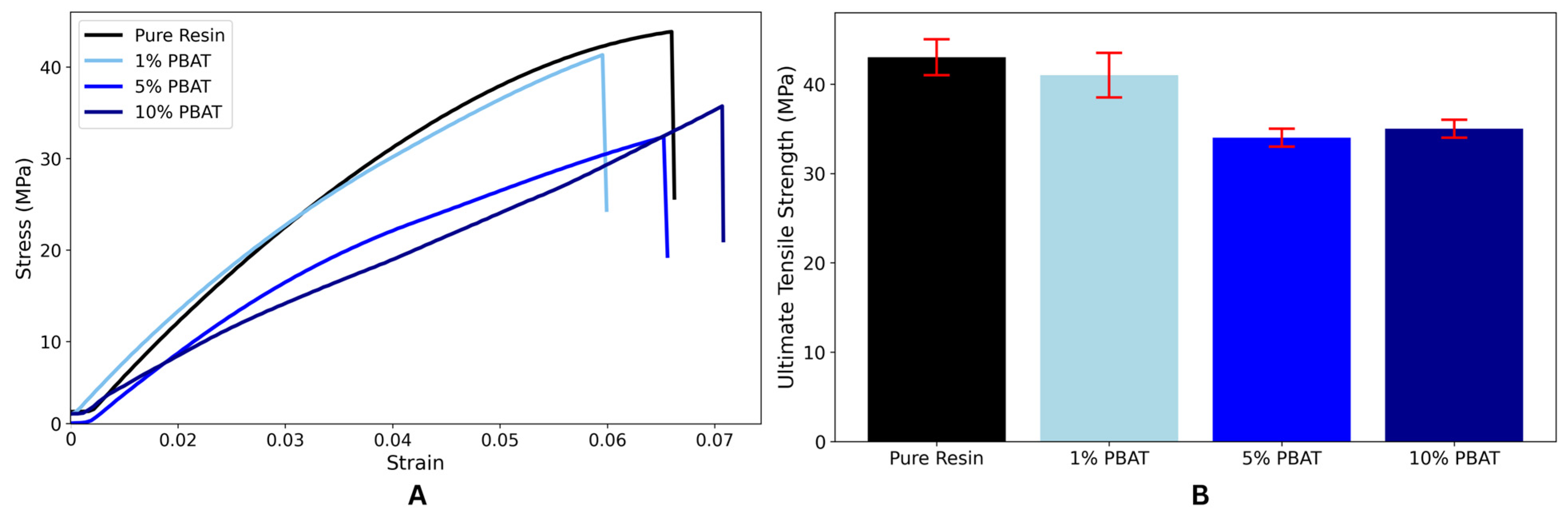
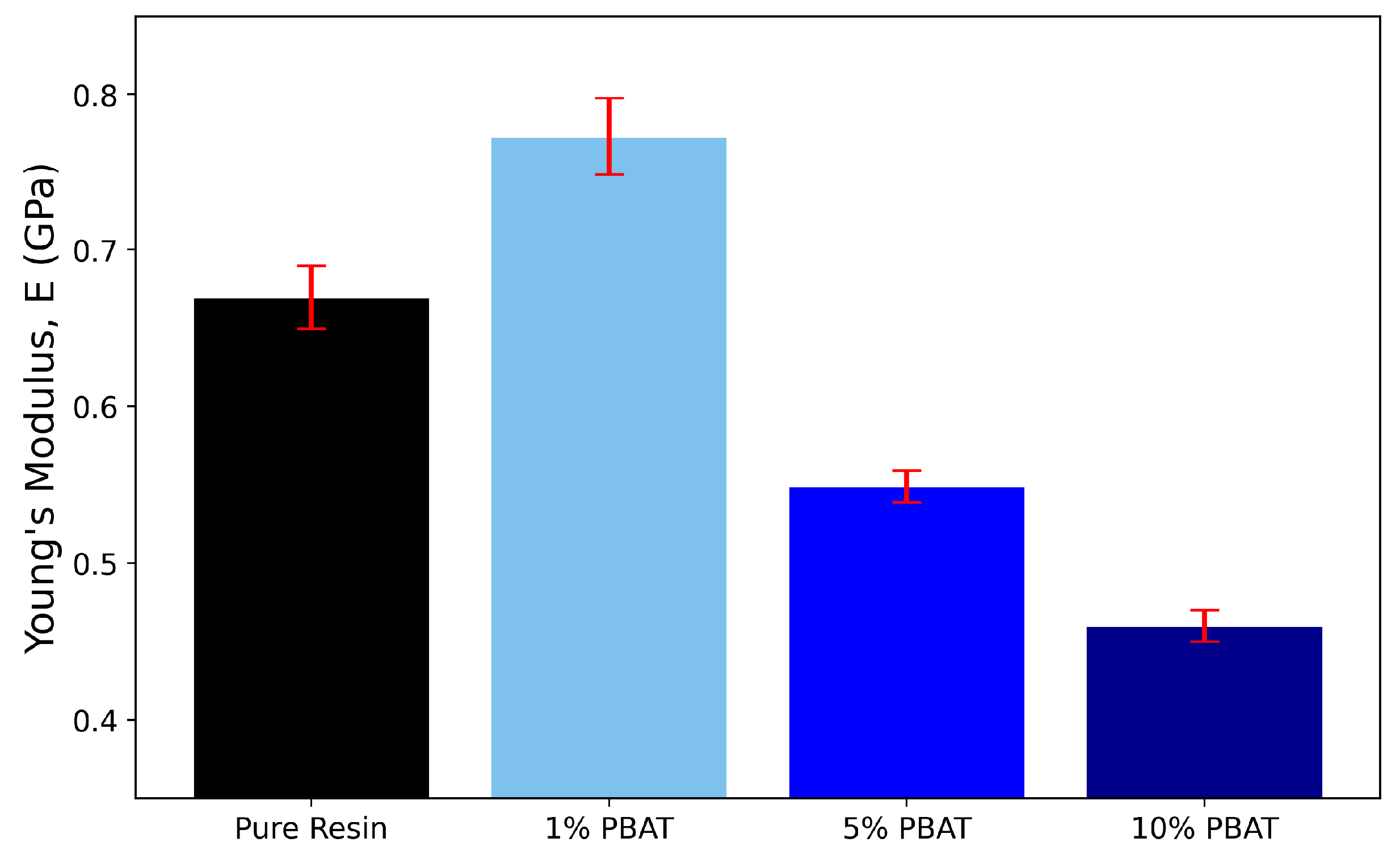
3.2. Analysis of Mechanical Properties
3.3. Thermal Conductivity
4. Conclusions
Author Contributions
Funding
Institutional Review Board Statement
Informed Consent Statement
Data Availability Statement
Conflicts of Interest
References
- Praveena, B.A.; Lokesh, N.; Santhosh, N.; Praveena, B.L.; Vignesh, R. A comprehensive review of emerging additive manufacturing (3D printing technology): Methods, materials, applications, challenges, trends and future potential. Mater. Today Proc. 2022, 52, 1309–1313. [Google Scholar] [CrossRef]
- de Leon, A.C.; Chen, Q.; Palaganas, N.B.; Palaganas, J.O.; Manapat, J.; Advincula, R.C. High performance polymer nanocomposites for additive manufacturing applications. React. Funct. Polym. 2016, 103, 141–155. [Google Scholar] [CrossRef]
- Martinez, P.R.; Basit, A.W.; Gaisford, S. The History, Developments and Opportunities of Stereolithography BT—3D Printing of Pharmaceuticals; Basit, A.W., Gaisford, S., Eds.; Springer International Publishing: Cham, Switzerland, 2018; pp. 55–79. [Google Scholar] [CrossRef]
- Izdebska-Podsiadły, J. Polymers for 3D Printing: Methods, Properties, and Characteristics; William Andrew Publishing: Norwich, NY, USA, 2022. [Google Scholar]
- Piedra-Cascón, W.; Krishnamurthy, V.R.; Att, W.; Revilla-León, M. 3D printing parameters, supporting structures, slicing, and post-processing procedures of vat-polymerization additive manufacturing technologies: A narrative review. J. Dent. 2021, 109, 103630. [Google Scholar] [CrossRef]
- Kumar, H.; Sakthivel, K.; Mohamed, M.G.A.; Boras, E.; Shin, S.R.; Kim, K. Designing gelatin methacryloyl (GelMA)-based bioinks for visible light stereolithographic 3D biofabrication. Macromol. Biosci. 2021, 21, 2000317. [Google Scholar] [CrossRef] [PubMed]
- Sampson, K.L.; Deore, B.; Go, A.; Nayak, M.A.; Orth, A.; Gallerneault, M.; Malenfant, P.R.L.; Paquet, C. Multimaterial vat polymerization additive manufacturing. ACS Appl. Polym. Mater. 2021, 3, 4304–4324. [Google Scholar] [CrossRef]
- Zhou, T.; Zhang, L.; Yao, Q.; Ma, Y.; Hou, C.; Sun, B.; Shao, C.; Gao, P.; Chen, H. SLA 3D printing of high quality spine shaped β-TCP bioceramics for the hard tissue repair applications. Ceram. Int. 2020, 46, 7609–7614. [Google Scholar] [CrossRef]
- Son, J.; Lee, H. Preliminary study on polishing SLA 3D-printed ABS-like resins for surface roughness and glossiness reduction. Micromachines 2020, 11, 843. [Google Scholar] [CrossRef]
- Al Rashid, A.; Khan, S.A.; Al-Ghamdi, S.G.; Koç, M. Additive manufacturing of polymer nanocomposites: Needs and challenges in materials, processes, and applications. J. Mater. Res. Technol. 2021, 14, 910–941. [Google Scholar] [CrossRef]
- Miedzińska, D.; Gieleta, R.; Małek, E. Experimental study of strength properties of SLA resins under low and high strain rates. Mech. Mater. 2020, 141, 103245. [Google Scholar] [CrossRef]
- Yang, Y.; Li, L.; Zhao, J. Mechanical property modeling of photosensitive liquid resin in stereolithography additive manufacturing: Bridging degree of cure with tensile strength and hardness. Mater. Des. 2019, 162, 418–428. [Google Scholar] [CrossRef]
- Borrello, J.; Nasser, P.; Iatridis, J.C.; Costa, K.D. 3D printing a mechanically-tunable acrylate resin on a commercial DLP-SLA printer. Addit. Manuf. 2018, 23, 374–380. [Google Scholar] [CrossRef] [PubMed]
- Verma, A.; Baurai, K.; Sanjay, M.R.; Siengchin, S. Mechanical, microstructural, and thermal characterization insights of pyrolyzed carbon black from waste tires reinforced epoxy nanocomposites for coating application. Polym. Compos. 2020, 41, 338–349. [Google Scholar] [CrossRef]
- Verma, A.; Negi, P.; Singh, V.K. Experimental analysis on carbon residuum transformed epoxy resin: Chicken feather fiber hybrid composite. Polym. Compos. 2019, 40, 2690–2699. [Google Scholar] [CrossRef]
- Dizon, J.R.C.; Gache, C.C.L.; Cascolan, H.M.S.; Cancino, L.T.; Advincula, R.C. Post-processing of 3D-printed polymers. Technologies 2021, 9, 61. [Google Scholar] [CrossRef]
- Khosravani, M.R.; Ayatollahi, M.R.; Reinicke, T. Effects of post-processing techniques on the mechanical characterization of additively manufactured parts. J. Manuf. Process. 2023, 107, 98–114. [Google Scholar] [CrossRef]
- Munprom, R.; Limtasiri, S. Optimization of stereolithographic 3D printing parameters using Taguchi method for improvement in mechanical properties. Mater. Today Proc. 2019, 17, 1768–1773. [Google Scholar] [CrossRef]
- Rouf, S.; Raina, A.; Haq, M.I.U.; Naveed, N.; Jeganmohan, S.; Kichloo, A.F. 3D printed parts and mechanical properties: Influencing parameters, sustainability aspects, global market scenario, challenges and applications. Adv. Ind. Eng. Polym. Res. 2022, 5, 143–158. [Google Scholar] [CrossRef]
- Young, J.C.; Brinckmann, S.A.; Iii, R.S.F.; Lynch, S.P.; Frick, C.P. Influence of layer thickness and exposure on mechanical properties of additively manufactured polymer-derived SiOC ceramics. Open Ceram. 2024, 19, 100652. [Google Scholar] [CrossRef]
- Cosmi, F.; Maso, A.D. A mechanical characterization of SLA 3D-printed specimens for low-budget applications. Mater. Today Proc. 2020, 32, 194–201. [Google Scholar] [CrossRef]
- Alshihabi, M.; Kayacan, M.Y. Effect of nanosized carbon nanotubes, Titanium Nitride and cubic Boron Nitride powders on mechanical and thermal properties of SLA 3D printed resin composites. Polym. Compos. 2024, 45, 15561–15573. [Google Scholar] [CrossRef]
- Tee, Z.Y.; Yeap, S.P.; Hassan, C.S.; Kiew, P.L. Nano and non-nano fillers in enhancing mechanical properties of epoxy resins: A brief review. Polym.-Plast. Technol. Mater. 2022, 61, 709–725. [Google Scholar] [CrossRef]
- Eker, Y.R.; Özcan, M.; Özkan, A.O.; Kırkıcı, H. The Influence of Al2O3 and TiO2 Additives on the Electrical Resistivity of Epoxy Resin-Based Composites at Low Temperature. Macromol. Mater. Eng. 2019, 304, 1800670. [Google Scholar] [CrossRef]
- Colucci, G.; Piano, M.; Lupone, F.; Badini, C.; Bondioli, F.; Messori, M. Preparation and 3D printability study of bio-based PBAT powder for selective laser sintering additive manufacturing. Mater. Today Chem. 2023, 33, 101687. [Google Scholar] [CrossRef]
- Colucci, G.; Lupone, F.; Bondioli, F.; Messori, M. 3D printing of PBAT-based composites filled with agro-wastes via selective laser sintering. Eur. Polym. J. 2024, 215, 113197. [Google Scholar] [CrossRef]
- Roy, S.; Ghosh, T.; Zhang, W.; Rhim, J.-W. Recent progress in PBAT-based films and food packaging applications: A mini-review. Food Chem. 2024, 437, 137822. [Google Scholar] [CrossRef] [PubMed]
- Peng, X.; Zhang, J.; Xiao, P. Photopolymerization Approach to Advanced Polymer Composites: Integration of Surface-Modified Nanofillers for Enhanced Properties. Adv. Mater. 2024, 36, e2400178. [Google Scholar] [CrossRef]
- Pagac, M.; Hajnys, J.; Ma, Q.-P.; Jancar, L.; Jansa, J.; Stefek, P.; Mesicek, J. A Review of vat photopolymerization technology: Materials, applications, challenges, and future trends of 3D printing. Polymers 2021, 13, 598. [Google Scholar] [CrossRef]
- Chang, C.-J.; Venkatesan, M.; Cho, C.-J.; Chung, P.-Y.; Chandrasekar, J.; Lee, C.-H.; Wang, H.-T.; Wong, C.-M.; Kuo, C.-C. Thermoplastic Starch with Poly(butylene adipate-co-terephthalate) Blends Foamed by Supercritical Carbon Dioxide. Polymers 2022, 14, 1952. [Google Scholar] [CrossRef]
- ASTM D638-14; Standard Test Method for Tensile Properties of Plastics. ASTM: West Conshohocken, PA, USA, 2022. [CrossRef]
- ASTM D5334; Standard Test Method for Determination of Thermal Conductivity of Soil and Rock by Thermal Needle Probe Procedure. ASTM: West Conshohocken, PA, USA, 2022.
- IEEE 442-2017; IEEE Guide for Thermal Resistivity Measurements of Soils and Backfill Materials. IEEE: Piscataway, NJ, USA, 2018.
- Letwaba, J.; Motloung, M.P.; Muniyasamy, S.; Mavhungu, L.; Mbaya, R.; Okpuwhara, R. Algae infused enhancement of PBAT stiffness: Investigating the influence of algae content on mechanical and thermal properties. J. Appl. Polym. Sci. 2024, 141, e55679. [Google Scholar] [CrossRef]
- Vatansever, E.; Arslan, D.; Sarul, D.S.; Kahraman, Y.; Gunes, G.; Durmus, A.; Nofar, M. Development of CNC-reinforced PBAT nanocomposites with reduced percolation threshold: A comparative study on the preparation method. J. Mater. Sci. 2020, 55, 15523–15537. [Google Scholar] [CrossRef]
- Shu, Y.; He, J.; Xu, D.; Hu, J.; Luo, Q.; Ouyang, Y.; Wan, C. Mechanical and thermal behavior of PBAT matrix composites filled with lignin. J. Polym. Res. 2025, 32, 56. [Google Scholar] [CrossRef]
- Schmitz, L.; Harada, J.; Ribeiro, W.B.; Rosa, D.S.; Brandalise, R.N. Toughening of poly(lactic acid) (PLA) with poly(butylene adipate-co-terephthalate) (PBAT): A morphological, thermal, mechanical, and degradation evaluation in a simulated marine environment. Colloid Polym. Sci. 2023, 301, 1405–1419. [Google Scholar] [CrossRef]
- Botta, L.; Titone, V.; Mistretta, M.C.; La Mantia, F.P.; Modica, A.; Bruno, M.; Sottile, F.; Lopresti, F. PBAT Based Composites Reinforced with Microcrystalline Cellulose Obtained from Softwood Almond Shells. Polymers 2021, 13, 2643. [Google Scholar] [CrossRef] [PubMed]




| Mechanical Properties | Standard Resin |
|---|---|
| Tensile Strength (MPa) | 38 |
| Elasticity Modulus (GPa) | 1.6 |
| Elongation at Break | 12% |
| Flexural Modulus (GPa) | 1.25 |
| UV curing wavelength (nm) | 365–405 |
| Viscosity (mPa·s) | 250–350 |
| Density (g/cm3) | 1.05–1.25 |
| Parameter | Value |
|---|---|
| Layer Thickness (mm) | 0.05 |
| Normal Exposure Time (s) | 2 |
| Off Time (s) | 0.5 |
| Bottom Exposure Time (s) | 23 |
| Bottom Layers | 6 |
| Z Lift Distance (mm) | 8 |
| Z Lift Speed (mm/s) | 2 |
| Z Retract Speed (mm/s) | 3 |
| UV Light Power | 70% |
| Post curing time (Hr) | 1 |
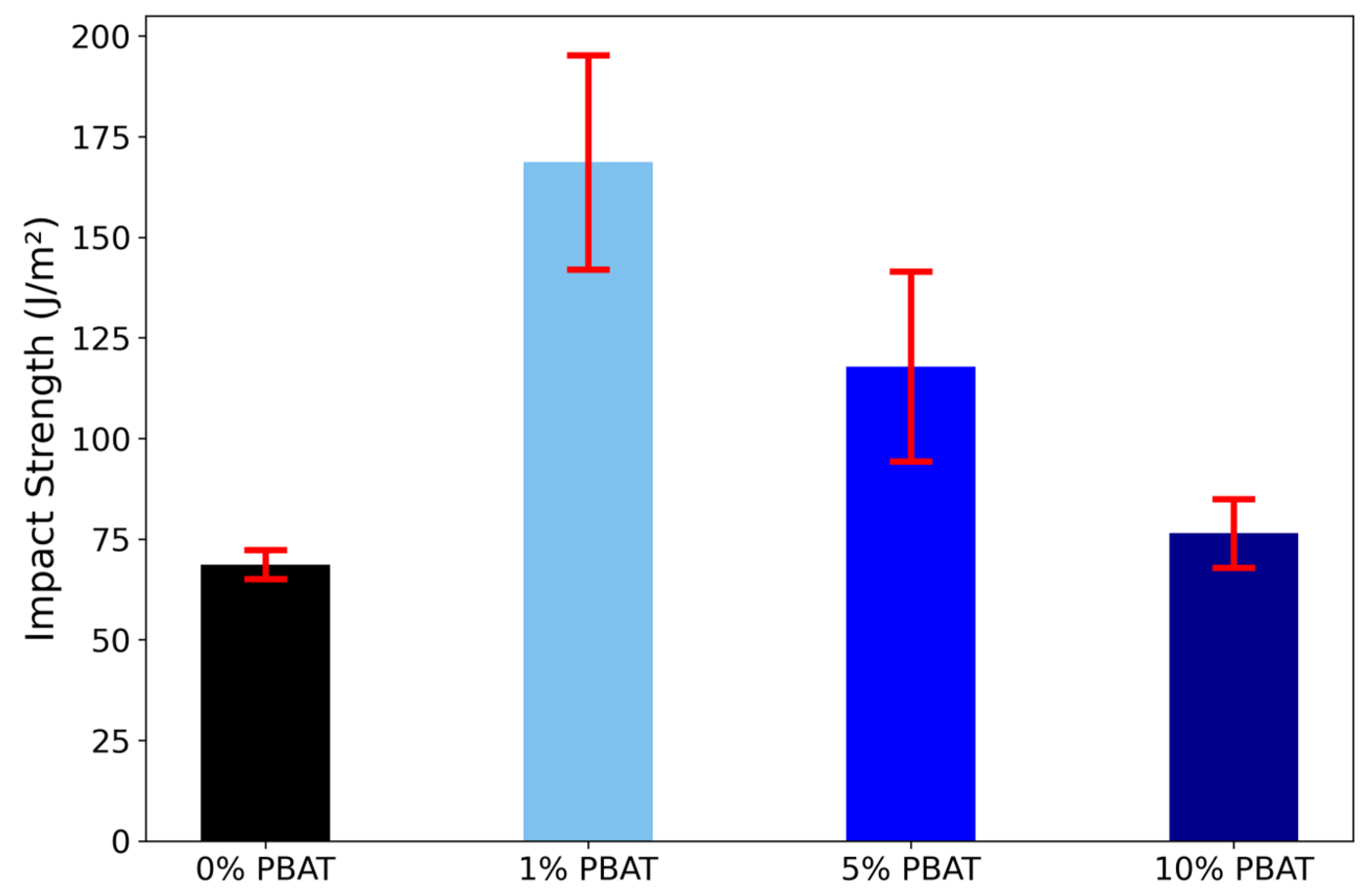
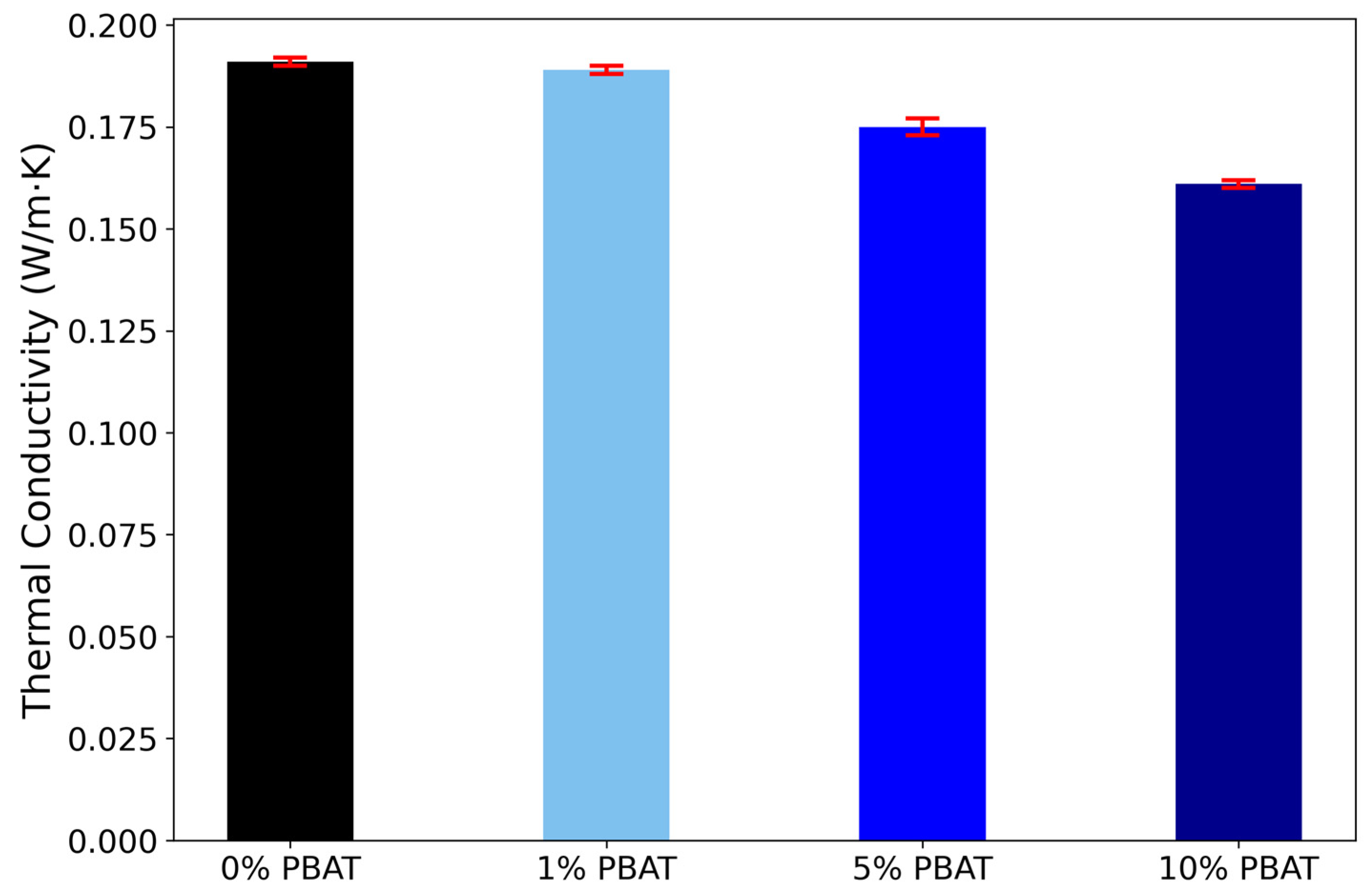
| PBAT wt% | Ultimate Tensile Strength (MPa) | ±SD | Strain-at-Break (εss) | ±SD | Young’s Modulus (GPa) | ±SD | Impact Strength (J/m2) | ±SD | Thermal Conductivity (W/m·K) | ±SD |
|---|---|---|---|---|---|---|---|---|---|---|
| 0 (Pure Resin) | 43 | 0.7 | 0.065 | 0.002 | 0.67 | 0.03 | 68.69 | 2.1 | 0.196 | 0.003 |
| 1% PBAT | 41 | 0.8 | 0.058 | 0.004 | 0.77 | 0.04 | 168.63 | 3.2 | 0.188 | 0.004 |
| 5% PBAT | 34 | 0.9 | 0.0635 | 0.003 | 0.55 | 0.02 | 117.89 | 2.8 | 0.176 | 0.003 |
| 10% PBAT | 35 | 0.6 | 0.07 | 0.0015 | 0.45 | 0.02 | 76.44 | 2.3 | 0.163 | 0.004 |
Disclaimer/Publisher’s Note: The statements, opinions and data contained in all publications are solely those of the individual author(s) and contributor(s) and not of MDPI and/or the editor(s). MDPI and/or the editor(s) disclaim responsibility for any injury to people or property resulting from any ideas, methods, instructions or products referred to in the content. |
© 2025 by the authors. Licensee MDPI, Basel, Switzerland. This article is an open access article distributed under the terms and conditions of the Creative Commons Attribution (CC BY) license.
Share and Cite
Alshihabi, M.; Ali, S.; Deiab, I. Development of PBAT-Modified Photopolymer Resin Micro-Composites for More Sustainable SLA Additive Manufacturing. Sustainability 2026, 18, 408. https://doi.org/10.3390/su18010408
Alshihabi M, Ali S, Deiab I. Development of PBAT-Modified Photopolymer Resin Micro-Composites for More Sustainable SLA Additive Manufacturing. Sustainability. 2026; 18(1):408. https://doi.org/10.3390/su18010408
Chicago/Turabian StyleAlshihabi, Mamoun, Shafahat Ali, and Ibrahim Deiab. 2026. "Development of PBAT-Modified Photopolymer Resin Micro-Composites for More Sustainable SLA Additive Manufacturing" Sustainability 18, no. 1: 408. https://doi.org/10.3390/su18010408
APA StyleAlshihabi, M., Ali, S., & Deiab, I. (2026). Development of PBAT-Modified Photopolymer Resin Micro-Composites for More Sustainable SLA Additive Manufacturing. Sustainability, 18(1), 408. https://doi.org/10.3390/su18010408