Abstract
This article presents the results of the Innovation Support Program (ISP), designed to enhance the market readiness of 12 bio-based innovators from six European rural regions: Northern Sweden, Mazovia (Poland), Upper Austria, Pays de la Loire (France), Strumica (Macedonia), and Andalusia (Spain). Over three years, the ISP applied a modular and flexible methodology, beginning with a cross-regional needs analysis to identify knowledge gaps, followed by a call for Expressions of Interest to select promising bio-based solutions, and concluding with tailored support delivered through regional Task Forces. These provided mentoring and capacity-building activities focusing on business modeling, market analysis, and funding opportunities. The program identified market access as a major barrier to scaling up and noted that many solutions followed Social and Solidarity Economy principles, prioritizing social and environmental impact over profit. Through targeted assistance and knowledge exchange, the ISP strengthened local innovation capacity and contributed measurable progress in companies’ Technology Readiness Levels (TRLs) and Key Performance Indicators (KPIs). Positioned within the framework of the EU Bioeconomy Strategy, the ISP demonstrates how combining regional insights with a structured support framework can effectively accelerate the scaling of bio-based solutions, highlighting the need for iterative, long-term support to sustain regional bioeconomy growth.
1. Introduction
1.1. The Strategic Role of the Bioeconomy in Europe’s Green Transition
Bioeconomy provides a strategic opportunity for sustainable development by transforming regional biological resources into high-value products and services [1]. Recent syntheses emphasize that the circular bioeconomy plays a pivotal role in enabling sustainability transitions by combining economic valorization with environmental and social objectives [2,3]. It is seen as a catalyst for systemic change, with the potential to boost economic growth, generate jobs, and support climate and environmental sustainability through the efficient and ecological use of natural resources [4]. The important role of the bioeconomy in EU industrial policy is highlighted in the conclusions of the EU Council on the future of industrial policy [5]. Transitioning toward a sustainable and circular bioeconomy is crucial for addressing pressing economic, environmental, and social challenges across Europe, including climate change, biodiversity loss, energy security, and food security [6]. Place-based perspectives further stress that bioeconomy transitions are strongly shaped by regional assets, governance arrangements, and innovation capacities, particularly in rural and peripheral territories [7]. This shift requires a fundamental overhaul across all economic sectors, impacting the production, processing, utilization, and end-of-life management of biomass, and promoting reuse, cascading use, and recycling of biomass and waste streams through technological and social innovations [8].
1.2. Startups, Scale-Ups, and Innovation Support in the Circular Bioeconomy
Startups and scale-ups are essential to innovation, consistently bringing new products and solutions to the market and catalyzing broader socioeconomic benefits [9]. At European level, these private companies have the potential to access new markets, where the EU can take a leading role globally, while also improving the continent’s competitiveness and closing the innovation gap with international rivals. The European Commission’s recent EU Startup and Scale-up Strategy aims to make Europe a premier destination for launching and growing technology-based companies by addressing the core needs of startups and scale-ups, fostering supportive frameworks throughout the innovation lifecycle, and bridging gaps between research, commercialization, and regional market adaptation [10]. From an innovation policy perspective, transformative approaches stress the need for coordinated, mission-oriented support instruments that go beyond linear R&D funding models [11]. Complementary analyses underline how strengthening these ecosystems is imperative for boosting Europe’s global competitiveness, attracting investment, enhancing productivity, and supporting sustainable high-quality job creation [12]. Nevertheless, small-scale bio-based solutions often face significant barriers in entering the market due to unmet financing needs and investment risks. Despite technological maturity at pilot scale, many innovations struggle to attract private capital because of high upfront costs, long payback periods, and uncertainty in market demand [13]. Recent empirical evidence confirms that bio-based innovators are disproportionately affected by financing gaps and regulatory uncertainty, reinforcing the so-called “valley of death” between demonstration and market uptake [14]. Limited access to tailored financing instruments further restricts their ability to scale, with investors frequently perceiving bio-based ventures as high-risk compared to conventional technologies [15].
Within this context, some support programs have appeared during the past years, with some research devoted to delving into their impact by the beginning of the 2000s [16,17,18] and setting the basis for future programs. While this research explores the regional dimension, it is not solely focused on the circular bioeconomy area, and it could be considered outdated. Some recent publications that address circular bioeconomy and companies’ innovation cover the role of entrepreneurial clusters in advancing regional circular bioeconomy and innovation [19] or gather best practices [20], pointing out that there is room to improve the support provided to regional innovators to maximize the impact of these programs.
1.3. Motivation and Research Question
There is still a gap when it comes to studying the shaping and impact of innovation support programs in the domain of circular bioeconomy small-scale innovators. While recent studies increasingly address business model experimentation and innovation readiness in the circular bioeconomy [21], empirical evidence on personalized, regionally embedded support programs remains limited. This gap is particularly evident regarding the assessment of how mentoring and expert-driven support influence market readiness and scale-up trajectories of small bio-based solutions [22]. This way, the following specific research questions (RQ) arise:
- RQ1: What are the needs and knowledge gaps of small bio-based innovators across diverse European regions?
- RQ2: Which are the small-scale bio-based innovations that have high potential in the selected regions?
- RQ3: How can a structured support program address the specific challenges faced by small bio-based innovators in scaling up?
- RQ4: What impact do personalized mentoring and regional expert support have on the market readiness and business development of small bio-based solutions?
The research conducted is structured as follows: Section 2 outlines the methodology applied for the needs identification, biosolutions selection, and support program provision. Section 3 presents the key findings, while Section 4 discusses the significance and implications of the results. Finally, Section 5 summarizes the main conclusions, highlights the study’s current limitations, and proposes directions for future research.
2. Methods
2.1. Regions Included in the Presented Research
Six European regions have been selected to carry out the presented research, where large parts of the population live in rural areas, and agriculture and/or forestry account for significant shares of the local economy. These regions have been selected as case studies because they offer a range of promising valorization options (bio-based solutions building on regional biomass streams) in the agriculture and forestry sectors, which can be replicated in the respective countries and macro-regions. Table 1 provides an overview of the regional biomass streams and associated valorization options that have been explored. All identified valorization options entail high potential for improved nutrient recycling across sectors and link agriculture and forestry to sectors such as manufacturing, construction, waste management, and energy production.
Table 1.
Relevant biomass streams and identified valorization options regions.
To promote a wider exchange of good practices and lessons learned with other European regions and actors, the six regions formed the foundation for a pan-European “Community of Practice” (CoP) where actors from other countries adhered, having 12 additional regions onboarded in the CoP (namely Mendoza-Argentina, Zeeland-Denmark, Bavaria-Germany, Stara Zaora-Bulgaria, North-West Croatia, Twente-Netherlands, Centro-Portugal, Vilnius-Lithuania, Pomurje-Slovenia, Central Ukraine, and Costa Rica).
2.2. Capacity-Building Needs Analysis and Support Program Design
The initial phase focused on identifying the needs and barriers that prevent small bio-based initiatives from growing, especially in rural areas. A regional platform was created in each region with local stakeholders, including entrepreneurs, farmers, researchers, and policymakers. Methodologically, the platforms acted as participatory instruments to validate and triangulate the findings from the initial needs assessment, ensuring that the identified gaps and opportunities reflected a shared, multi-stakeholder perspective.
2.2.1. Stakeholder Survey
Since the design of a training program was foreseen, a detailed online questionnaire was developed and distributed via LimeSurvey to stakeholders involved in the six regional platforms. These platforms comprised a broad range of actors from the regional bioeconomy, including entrepreneurs, primary producers, researchers, public authorities, and intermediary organizations, following a purposive sampling approach appropriate for participatory and implementation-oriented research. This allowed the evaluation of regional needs, interests, and knowledge gaps. Specifically, over 450 stakeholders were reached across the six pilot regions, resulting in 98 completed responses used for analysis.
The survey, conducted between December 2022 and March 2023, included rating questions on seven thematic Work Streams (WS1–WS7), which represent broad challenge areas in the regional bioeconomy: (WS1) nutrient recycling in the circular bioeconomy, (WS2) integration of primary producers into bio-based value chains, (WS3) digitalization in the bioeconomy, (WS4) regional infrastructure and biomass logistics, WS5) social innovation in rural bioeconomy, (WS6) governance of bio-based systems, and (WS7) strategies for social, ecological, and economic trade-offs. For each theme, respondents were asked to self-assess their current knowledge, indicate their interest in further training, and identify potential challenges. Given the exploratory nature of the study, survey results were analyzed using descriptive and comparative statistics across regions and Work Streams rather than inferential methods.
The collected information was subsequently shared with members of the Community of Practice to compare regional and cross-regional perspectives and to triangulate the identification of training priorities, thereby reducing regional bias and strengthening the robustness of the needs assessment.
2.2.2. Capacity-Building Training Program Design
Using the survey results, the team developed a Capacity-Building Training Program to address the identified gaps. The program included at least three virtual training sessions per thematic area, scheduled from September 2023 to December 2024. Each session was designed to combine experts’ presentations with interactive activities, such as Q&A sessions and case discussions, to ensure practical relevance. All sessions were provided in English, with AI-powered translations for local languages. Additionally, regional information packages, comprising best practices and relevant case studies, were prepared for distribution. On-site learning was also integrated through exchange visits and an international study tour in three of the selected regions, allowing participants to see firsthand the success stories of bio-based businesses in real-world settings. By aligning training topics with expressed needs and preferred learning styles, stakeholders favored practical, case-based learning and networking. This phase laid the groundwork for knowledge that would support subsequent innovation efforts. It ensured that entrepreneurs and stakeholders involved in later phases had access to targeted expertise and that the support services remained demand-driven.
2.3. Selection of Innovations
The second phase concentrated on identifying specific bio-based innovations (projects, startups, or new value chain ideas) with strong potential for scaling up, which would become the beneficiaries of the Innovation Support Program (ISP) developed. The selection process was carried out through an open, competitive call, with a carefully designed methodology to ensure transparency, regional relevance, and alignment with sustainability goals.
2.3.1. Call for Expressions of Interest (EoI)
In April 2023, a public call inviting small-scale bio-based solution providers to apply for support was launched. A standard call text in English was created to outline the program’s objectives, scope, and benefits. To maximize accessibility, the call was translated and customized to regional languages and contexts. Eligibility criteria were set to ensure relevance: applicants needed to be active in one of the six target regions, and their solution had to fit the bioeconomy context (utilizing biological resources or processes) while demonstrating innovative aspects and potential sustainability benefits. Notably, the call emphasized solutions that are relatively simple, low-cost, and regionally embedded.
Evaluation criteria were established, which included: the innovation’s potential to contribute to European bioeconomy key objectives (delivering economic, social, and environmental benefits, fostering collaboration and knowledge transfer, enhancing resource efficiency and competitiveness) [23]; its suitability for the regional bioeconomy context; the degree of innovation (novelty of the technology or approach); the expected improvement from the support program (how the program could enhance the initiative’s economic, environmental, and social impact); and the business potential (market approach, soundness of the business model, and team experience).
Six regional evaluation committees were established, with one in each participating region. This method utilized local expertise, enabling assessments in local languages. Each committee generally consisted of team experts and external stakeholders.
Twelve high-potential bio-based solutions (two for each project region) were selected to receive customized support services. These innovators were selected for their ability to foster value chain collaboration, enhance regional ecological resilience, improve resource efficiency, facilitate knowledge transfer, positively impact the food sector, and boost regional competitiveness.
Each chosen innovator entered the program under a collaboration agreement, including Non-Disclosure Agreements (NDAs) where necessary to protect sensitive business information.
2.3.2. Selected Innovators Survey
A survey was created to identify the specific needs of each selected solution in five areas: technical aspects, business development, regulatory compliance, financial needs, and skill and knowledge development. The survey was conducted online using the program “LimeSurvey.” The results were analyzed to co-design customized support pathways that align with the support program’s modular structure. In this co-design exercise, experts were also selected from regional platforms, based on their roles within the value chain and specialized knowledge. This approach ensured a variety of perspectives and input. The co-designed pathways guided the selection of intervention areas, including market assessment, business model refinement, funding strategy, and stakeholder engagement.
2.4. Innovation Support Program Shaping
2.4.1. Establishment of Regional Task Forces
For each innovator, a dedicated regional Task Force (TF) was established to provide hands-on support. These TFs comprised a diverse and small group of stakeholders, including industry experts, investors, and local knowledge holders, ensuring that market realities and community priorities were incorporated into the innovation support process.
Assistance was provided through various channels, including in-person and remote working sessions, events, and visits. The ISP drew inspiration and tools from the Horizon 2020 project BRIGAID Business Development Program [24]. Notably, it significantly expanded its reach by giving regional partners a more prominent leadership role in the TFs. This ensured that the implemented framework was common for all the regions and that it had a deep understanding of local market dynamics. The iterative support process allowed for ongoing refinement of business strategies and adaptation to changing needs. This comprehensive approach aimed to offer valuable empirical insights into the opportunities and barriers faced by emerging bio-based businesses in the project regions. The contributions of the Regional TFs ranged from scientific and practical expertise to market insights and access to strategic networks, playing a key role in shaping the strategic development of the selected innovations.
2.4.2. Modular Support and Tools
Each innovator’s journey through the ISP was unique: based on an initial needs assessment, a customized support plan was developed, selecting the relevant modules and scheduling activities.
The ISP was designed as a modular, flexible program, offering a menu of support activities tailored to the specific needs and priorities of selected innovators. It provided a toolbox of support “modules” that could be customized to each innovator’s particular needs and stage of development. Common modules included the following:
- Market Analysis and Validation: Helping innovators understand their target markets and customer segments.
- Business Model Canvas Development: Assisting innovators in refining their business ideas and value propositions.
- Financial Planning and Access to Capital: Linking innovators with potential investors and sharing information about funding opportunities.
- Networking and partnership building: Facilitating connections with regional associations, public authorities, potential partners, and supply chain members.
- Marketing and Sales Strategy: mentoring in branding, storytelling, and sales channels for bio-based products, which often require educating consumers about sustainability benefits. This included, for example, training in negotiation skills for securing supply contracts or retail agreements.
- Regulatory Navigation: identifying applicable regulations or standards (such as for novel foods, bio-based materials, or sustainable farming practices) and ensuring innovators understand compliance requirements or certification processes.
- Intellectual Property (IP) development and legal guidance: Assisting innovators in safeguarding their innovations and navigating regulations.
- Human resources and training: Focusing on skill development and staffing to promote innovation.
- Networking and Matchmaking: facilitating connections with regional associations, public authorities, potential partners, and supply chain stakeholders.
- Regional Knowledge Exchange: whenever possible, cross-regional interactions were encouraged. For example, international workshops and a CoP were organized to ensure that innovators and support teams from different regions could share experiences, success stories, and challenges encountered.
2.4.3. Implementation Process
The ISP’s implementation combined remote and in-person interactions. Initial kick-off meetings introduced the innovators to their TF members and refined support goals. Subsequent sessions included workshops and ongoing advisory support via email or calls. A standard online collaboration tool was provided, the Modular Assistance Framework Plus (MAF+) Platform, which was adapted from the BRIGAID project to help non-specialists conduct market research in a structured way [24]. Innovators used tools like MAF+ under guidance, provided data about their products, and received analytical outputs (e.g., SWOT analyses or market segment prioritization), which were then discussed with the TF. Throughout the program, progress was monitored, and insights were recorded in a consistent format, enabling cross-region comparison and collective learning.
Regular virtual cross-regional meetings allowed us to identify common patterns. To balance local adaptation with consistent support quality, the ISP adopted a hybrid governance model. Regional TF provided context-specific engagement, while cross-regional coordination was ensured by the three implementing entities from Spain, Austria, and Germany. In addition, an Advisory Board of international experts contributed to the design and was convened twice during the ISP provision (mid-term and final stages) to review progress and provide technical and business guidance. This combination of regional leadership and cross-regional expertise helped mitigate disparities across regions while maintaining a common baseline of support.
As a final remark, the ISP presented in this paper was designed within the framework of the SCALE-UP project (“Concepts, Tools and Applications for Community-Driven Bioeconomy Development in European Rural Areas”), a Horizon Europe initiative launched in 2022 to address the challenges described in Section 1 [25]. The primary aim of SCALE-UP was to support regional multi-actor partnerships in identifying and scaling up innovative and sustainable value chains that leverage regional resources. In practice, this involved enhancing the capacity of local stakeholders to develop community-driven bio-based innovations and providing them with tools to overcome obstacles in bringing their products and services to market.
Technology Readiness Levels were assessed using a triangulated approach combining innovators’ self-assessments with validation by regional Task Forces composed of technical, business, and sector experts. Reported TRL progress was supported, where applicable, by qualitative evidence such as pilot testing, market engagement, funding decisions, or contractual arrangements, allowing TRL values to be reported as expert-validated indicative ranges consistent with the applied scope of the Innovation Support Program.
2.5. Research Questions and Hypotheses Alignment
In line with the proposed research questions, the study is guided by the following hypotheses.
Hypothesis 1.
(RQ1): Small-scale bio-based innovators across European rural regions exhibit distinct but recurring knowledge and capacity gaps, particularly in governance, business development, financing, and market access.
Hypothesis 2.
(RQ2): Among the bio-based initiatives identified in the selected regions, those that are regionally embedded and aligned with local biomass streams demonstrate higher potential for scale-up and replication.
Hypothesis 3.
(RQ3): A structured, demand-driven innovation support program that combines capacity building with targeted business and technical assistance effectively addresses the main barriers faced by small bio-based innovators when scaling up.
Hypothesis 4.
(RQ4): Personalized mentoring and regionally embedded expert support significantly improve the market readiness, business model robustness, and strategic positioning of small-scale bio-based solutions compared to their initial baseline conditions.
3. Results
3.1. Needs Analysis Results: Stakeholders’ Knowledge Gaps and Interests
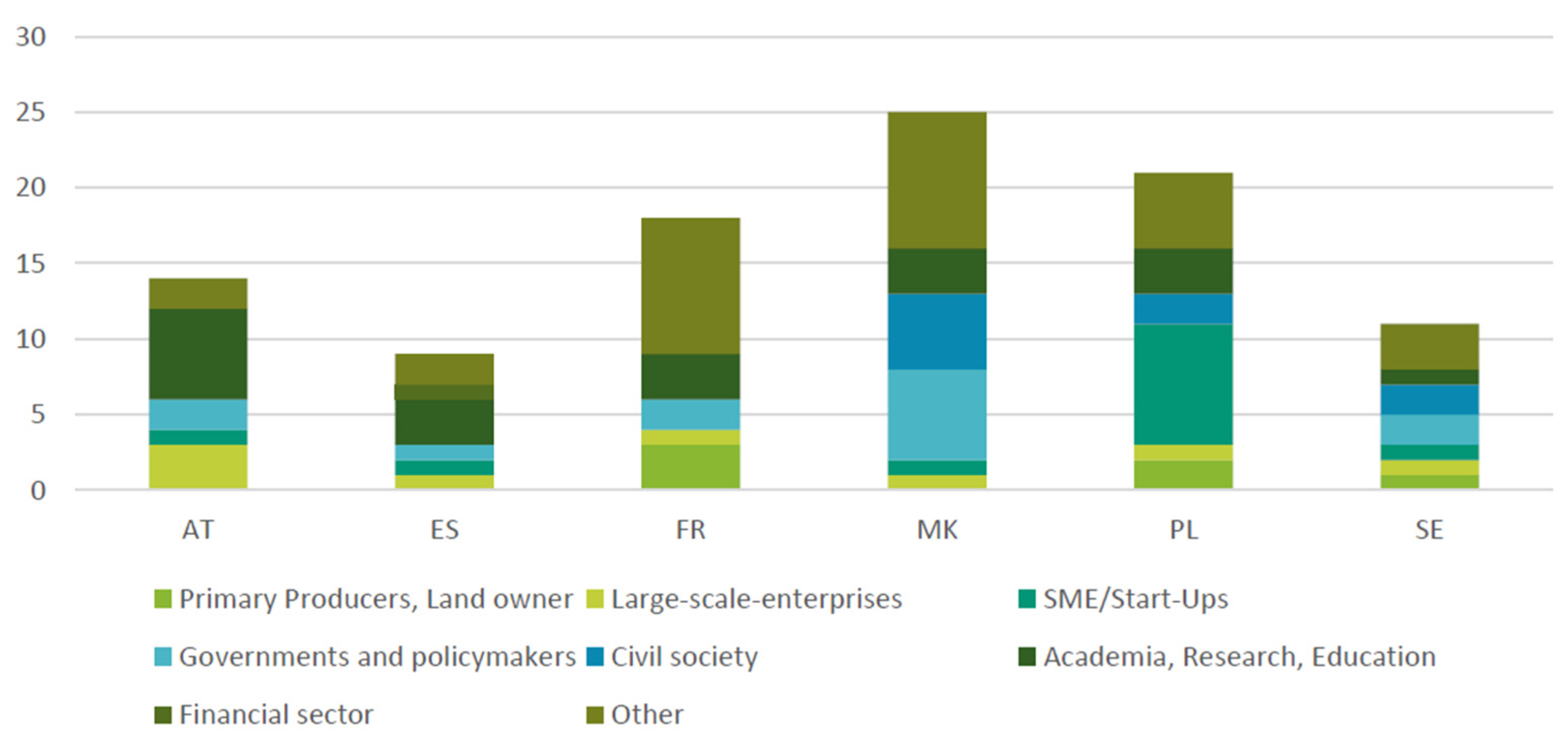
In total, 98 stakeholders from all six project regions filled in the questionnaire. All stakeholder groups were represented (Figure 1).
Figure 1.
Number of participants per stakeholder group in each region.
Additionally, six CoP members also rated their knowledge and interest in the training topics. These members are from countries not included in the six studied regions, which helps ensure that the research carried out captures structural or systemic challenges with reduced subjectivity.
Work Streams (WS) were assessed, and those of high interest were identified, showing ongoing needs that remain relevant. Table 2 presents the average number of participants who gave the WSs a rating of 5 (very high interest).
Table 2.
Average number of participants who rated their interest in the corresponding Work Stream as very high (very high = 5 out of 5).
Notably, “Efficient regional infrastructures and biomass logistics” was among the top-rated needs in most areas. Participants emphasized that enhancing the logistics of biomass collection, transportation, and processing is crucial for scaling bio-based operations, as current inefficiencies increase costs and complexity. Similarly, “Integrating primary producers into bio-based value chains” ranked very high in interest. They indicated a need for better models to involve farmers and forest owners in new bio-based businesses (e.g., ensuring they benefit from and actively participate in supplying feedstock or adopting new practices). Another widely shared priority was “Nutrient recycling in circular bioeconomies,” which pertains to technologies and practices for reusing agricultural and organic waste. Respondents also showed a strong desire to learn about innovations in nutrient recovery, such as composting and biofertilizer production.
Two cross-cutting topics were highlighted as especially important by many respondents: developing bio-based business models and understanding policy and regulatory frameworks. Stakeholders indicated they need a better understanding of how to create viable business models for bio-based innovations, for example, how to generate revenue from ecosystem services or how to scale up sustainably while remaining profitable. Additionally, dealing with legislation and regulation was noted as a challenge for which they seek training. Survey comments frequently mentioned that regulations in emerging bio-based sectors can be confusing or restrictive; therefore, understanding how to work with and influence policy frameworks is essential.
The analysis also identified significant barriers to implementing the bioeconomy in rural areas. At the transregional level, the most significant obstacle was the lack of knowledge on how to convert biomass side streams into other products or applications. This highlights the need for practical expertise in valorization technologies. Other key barriers included limited awareness of the bioeconomy among consumers and producers, as well as inadequate regional logistics for biomass. At the regional level, specific challenges included low connectivity among relevant stakeholders, limited financial resources, and difficulties in translating innovations into viable business models. Additional barriers included the absence of incentives, low profitability, a lack of transparent information, and complex procedures for accessing funding; a shortage of skilled workers; the absence of long-term political tools and forestry regulations; low profitability in primary production; competition from cheaper fossil fuels; and inefficiencies in regional biomass logistics.
A cross-regional comparison identified everyday high-priority needs, while individual regional analyses highlighted location-specific issues. The methodology ensured that both shared trends and unique regional contexts were captured.
The survey also asked how stakeholders prefer to learn (e.g., workshops, online courses, site visits). A majority favored practical, case-based learning, such as field visits to see successful projects and interactive workshops with experts, over purely academic lectures. This guided the development of the training program, which included site visits and an international study tour, ensuring that knowledge transfer was hands-on and practical. Additionally, many respondents indicated that networking with peers is a valuable outcome of training events, suggesting that the program should promote communities of practice rather than just hosting one-time seminars.
3.2. Solution Selection
The selection process was carried out through an open, competitive call, with a carefully designed method to ensure transparency, regional relevance, and alignment with sustainability goals. A total of 26 EoI applications were received from all regions, showing strong interest in expanding bio-based solutions.
The outcome of the EoI evaluation was the selection of twelve high-potential bio-based solutions, essentially two per region (supporting a total of 12 innovations). Table 3 provides a comprehensive overview of the 12 entities participating in the ISP, including brief descriptions of their innovations, country, and indicative Technology Readiness Levels (TRL) before and after the ISP.
Table 3.
Bio-based innovators participating in the Innovation Support Program.
The selected solutions spanned a wide range of bioeconomy sectors, reflecting the unique resources and value chain opportunities of each region. Despite their variety, all chosen solutions focused on sustainability and innovation, showing potential to provide economic, environmental, and social benefits to their communities. Many are also explicitly aligned with key policy frameworks, such as the EU Bioeconomy Strategy and the Green Deal objectives, by targeting resource efficiency, promoting circularity, and supporting rural employment.
Most selected solutions were at a prototype or early commercialization stage. This was intentional as the program aimed to support those with proven concepts that needed help reaching the market or expanding. A few were less than 3-year-old startups, while others were established SMEs pivoting to a new bio-based product line. All, however, were still “small-scale” (typically with fewer than 10 employees or in pilot production), which aligned with the call’s focus on small, locally embedded innovations.
The 12 chosen solutions, covering various valorization options from functional materials to food products, highlighted a range of needs, including business development, technical aspects, regulatory compliance, financial requirements, and skill and knowledge development. Those needs faced by innovators were supported with different approaches: regional platforms enabled dialogue and co-creation with local stakeholders, the training program strengthened skills and knowledge, and the ISP offered direct, hands-on support to individual cases.
Table 4 illustrates how the identified needs and priorities (spanning research, team development, technical challenges, strategic planning, and networking) were addressed through these mechanisms. By aligning each need with one or more intervention pathways, the table highlights the integrated and multi-level approach of the program, showing that support was not limited to a single instrument but distributed across complementary avenues.
Table 4.
Summary of initial needs and support framework interventions through regional platforms, the training program, and the Innovation Support Program (ISP).
Overall, the EoI phase provided not only the list of participants for the ISP but also an assessment of what these innovators needed to scale up.
3.3. Outcomes of the Provided Support
3.3.1. Regional Platforms and Training Program
The regional platforms constituted a central mechanism for knowledge exchange, operating as a structured forum for continuous dialogue among policymakers, industry representatives, researchers, and civil society actors. Convened on a biannual basis, they engaged more than 500 participants across the participating regions. Their primary contribution was to support collective sense-making processes in several critical areas: (i) the definition of megatrends and long-term development directions in the bioeconomy and circular transformation; (ii) the identification of systemic challenges and potential solutions along the value chains; (iii) the mapping and exchange of best practices with potential for replication; (iv) the early-stage development of innovation concepts; and (v) the consolidation of networking opportunities within and across regions. By functioning as integrative interfaces, the regional platforms systematically connected innovators’ needs with policy frameworks, stakeholder expectations, and emerging opportunities, thereby reinforcing the strategic alignment and systemic relevance of the overall support program.
In addition to the regional activities, a cross-regional training program was implemented. A total of 21 training sessions were conducted in seven different areas of work, leading to exchanges between different stakeholders (companies, scientists, and politicians) across the EU. Overall, 1300 participants from 32 countries took part in the training program. The training actions not only expanded the knowledge of the participants, as indicated in the feedback survey collected after each training session, but also catalyzed the exchange of innovative ideas. The discussions contributed significantly to strengthening the bioeconomy community in the regions and led to new collaborations and projects that made the bioeconomy ecosystem more dynamic and interconnected. The participants further had the opportunity to discuss the knowledge acquired from the plenary sessions and to apply it to the specific regional contexts in their local language. The opportunity to discuss the knowledge acquired in the plenary sessions in the respective national language and apply it to specific regional contexts promoted a deeper understanding and the development of local solutions.
3.3.2. Innovation Support Program
Each of the 12 supported solutions demonstrated tangible progress, although the degree of progress varied.
All innovators finished the program with a stronger business model than they started with since, through guided analysis and feedback, they identified new revenue streams and potential cost savings. Although fundamental market barriers remain, several innovators were able to secure initial market footholds.
The program positioned innovators for the signing of pilot sales agreements or letters of intent with early customers or distribution partners. By the end of the program, one of these agreements was signed.
Two of the supported bio-based solutions successfully secured new funding during the support period. One received an EU innovation grant to develop its technology further, and another attracted a private angel investor impressed by the refined business plan and initial market traction. Several others are now better prepared to seek funding: by the program’s end, about half of the innovators had a complete pitch deck and financial projections ready for investors. Even those who have not yet raised funds have improved their investor readiness.
Through workshops and ongoing mentoring, the entrepreneurs and their teams significantly enhanced their skills. Additionally, to address identified essential needs for more effective marketing and financial literacy, a marketing package and guidelines were developed and provided to innovators. One participant noted in a feedback survey that they “now understand how to articulate our value proposition better and identify customer segments,” showing growth in their marketing strategy abilities. Teams also expanded their professional networks; each innovator connected with new mentors or industry contacts (such as legal advisors, technical experts, and potential clients) through introductions by the TFs.
On the technical side, some innovations reached development milestones with the help of expert advice.
Table 5 presents a summary of the initial needs identified prior to the support program implementation and the main outcomes of the innovator’s participation in the ISP.
Table 5.
Summary of initial needs and achieved results post-Innovation Support Program (ISP).
An overview of the Key Performance Indicators (KPIs) extracted from the 12 innovator cases is presented in Table 6. This table summarizes measurable outcomes across the main support lines of the program, covering market outreach, partnerships, business model innovation, funding and investment, and employment and local impact. The complete version of the table, including detailed evidence and documentation for each case, is provided in the Supplementary Materials (Table S1).
Table 6.
Key Performance Indicators (KPIs) extracted from the 12 innovator cases.
4. Discussion
The carried-out research exercise offered valuable insights into the challenges and opportunities for expanding small bio-based solutions in rural areas of Europe, as well as into how to effectively design and implement an innovation support program.
4.1. Effectiveness of the Innovation Support Program in Bridging the Valley of Death
The presented innovation support approach is unique in its direct contribution to advancing the EU Bioeconomy Strategy’s goals at the grassroots level [23]. By focusing on rural regions and small actors, the program ensures that the bioeconomy transition is inclusive and regionally distributed, rather than solely driven by large industries or tech hubs [26]. The selected solutions, though small, collectively address a range of sustainability issues (waste valorization, renewable materials, sustainable food production, etc.), demonstrating that local innovations can align with high-level policy objectives (like the European Green Deal) when properly supported. This highlights a broader point: scaling sustainability is not just about a few high-tech companies but about empowering many community-level innovators. Structured programs like this are crucial for unlocking the potential for widespread innovation [27].
Furthermore, and in order to assess the program’s impact, it is worth pointing out that small-scale bio-based solutions often experience delays in both investment readiness and market outreach when operating without innovation support programs. On the investment side, lack of tailored financing instruments, perceived high risk, and long payback periods extend the pre-commercial phase and delay scale-up [28]. Equally critical are market outreach delays since companies that have no access to accelerators or support frameworks struggle to establish early market linkages, slowing customer validation, procurement opportunities, and regulatory alignment. Evidence shows that structured acceleration and cross-border networking programs shorten the time to reach buyers and policy stakeholders, while unsupported SMEs often face 6–18 months of additional lag in engaging markets and building distribution channels [29]. Briefly, the absence of innovation support mechanisms creates a dual disadvantage: delayed investment readiness and slower integration into markets, both of which significantly extend the pathway from TRL 5–6 pilots to commercial deployment.
Concerning how the ISP supports the innovators in bridging the ‘valley of death’, it has helped them in advancing both technological and market readiness. Among the supported cases, seven reported measurable technological progress, with an average increase of approximately 1.5–2 TRL. For example, COPANO (France) advanced from TRL 5–6 to 7–8 through pilot development and employee upskilling, while Bioliza (Spain) and RESELO (Sweden) reached near-market readiness (TRL 8–9 and 6–7, respectively) after receiving targeted support on funding, legal frameworks, and resource mapping. In parallel, the ISP also enhanced business and commercial maturity: five innovators developed comprehensive business plans (e.g., Velvety, COPANO, Bioliza, Gospodarstwo MB, Complolive), four secured partnerships or investor contacts enabling scale-up or market entry (e.g., Velvety’s market analysis in Spain, Bioliza’s investor network, RESELO’s forestry partnership), and three achieved strategic consolidation or expansion (e.g., HochBROTZentig’s national market strategy, L’Atelier du Biosourcé’s organizational merger, Apple Farm’s collaboration with local authorities). These outcomes demonstrate that the ISP fostered both technological validation and business viability, thereby helping innovators progress from pilot to pre-commercial or early commercial stages and mitigating key ‘valley of death’ barriers such as funding access, scale-up capacity, and network integration.
4.2. Novel Contributions of the ISP for Small-Scale Bio-Based Innovators
To contextualize ISP effectiveness, it has been benchmarked against EU-supported accelerators such as EIT Climate-KIC ClimAccelerator [30], EIT Food Accelerator Network (FAN) [31], and the Interreg Baltic Blue Biotechnology Alliance [32] (these being selected as incubation/acceleration reference programs in the circular bioeconomy context that include support different than just grants). ISP innovators built an average of 3.5 partnerships per innovator, slightly higher than Climate-KIC’s (3 partnerships) and FAN’s (1.5 partnerships). Roughly 8% of ISP ventures filed patents, aligning with the 10–15% range of FAN and ~10% of Baltic Blue SMEs. ISP innovators also created at least 10 jobs per company, in contrast with ca. 3 in Climate-KIC and ca. 7 in EIT FAN. Infrastructural achievements included pilots, workshops, and knowledge centers, paralleling TRL5–7 pilots in Climate-KIC, food-sector demos in FAN, and over 15 pilots in the Baltic Blue Alliance. Regional integration was also evident, with ISP companies embedded in local strategies, similar to Climate-KIC’s mission-oriented pilots, FAN’s agrifood connections, and Baltic Blue Alliance’s cross-border clustering. While ISP investment leverage data are still under consolidation due to the sector investment cycles and timing, EU accelerators report multipliers ranging from ~1:7 to ~1:17, providing a useful benchmark for scaling ISPs’ long-term impact. The complete results of the benchmarking can be found in Table 7. This comparative analysis suggests that the ISP is effective in delivering tangible market, financing, and innovation impacts consistent with established European incubation and acceleration initiatives, and improving some of their figures in some cases.
Table 7.
Comparison of the Innovation Support Program (ISP) vs. EU accelerators/incubators.
The multi-phase approach (Needs → Selection → Support) proved effective and provides a model for similar initiatives, which produces outcomes that are highly competitive relative to its scale. As shown in Table 7, although the ISP supported a small cohort (12 ventures compared to >5000 for Climate-KIC or 549 for EIT FAN), it achieved ≈42 new partnerships (an average of 3.5 per venture), a partnership density significantly higher than the annual ~1.5 partnerships per EIT FAN startup. This reflects a fundamentally different approach: rather than accelerating volume, the ISP focuses on place-based matching informed by a cross-regional needs analysis. The comparison highlights that while large accelerators operate standardized pipelines, the ISP starts with regional diagnostics to ensure that support directly responds to specific bio-based value-chain needs.
A second aspect of novelty emerges when comparing ecosystem integration indicators. Other programs report strong corporate engagement (e.g., >300 industry partners for EIT FAN, >50 agreements for the Baltic Alliance), yet they do not embed innovators into regional task forces aligned with Smart Specialization Strategies. The ISP, however, translates this governance mechanism into concrete outputs: multiple pilots in rural regions, higher regional embeddedness, and targeted support for TRL advancement. This demonstrates that the ISP’s governance structure is uniquely effective at enabling territorial deployment pathways, something mainstream accelerators rarely deliver. Finally, Table 7 also shows that the ISP achieves meaningful innovation and economic outcomes through its modular support model, tailored to maturity, TRL, and regional context. The ISP enabled: public funding proposals for at least four ventures (each with ≥2 submissions), early-stage private investment traction (17% of the cohort), and IP generation (8% filed patents). While these numbers are smaller than those of Climate-KIC (over €2 billion raised) or EIT FAN (over €209–223 M raised annually), the relative performance of the ISP is significant considering its rural focus and early-stage profile. Moreover, job creation, such as the example of Velvety creating ≥10 jobs, aligns proportionally with the outcomes observed in larger accelerators (e.g., Climate-KIC’s average of ~3 jobs per startup). Collectively, these data demonstrate that the ISP’s novelty is not any single instrument, but the unique combination of needs analysis + regional task forces + modular, bioeconomy-specific support, delivering high-impact, place-sensitive, and scalable outcomes that fill an important gap left by existing EU innovation programs.
4.3. Key Innovations from the ISP Approach
Conducting an upfront needs diagnosis ensured that the support offered was tailored to the specific context and addressed real gaps on the ground. The results from the needs analysis confirmed that the ISP should address both “technical” knowledge gaps and “soft” skills and abilities. The focus on logistics, business models, and policies highlights that small innovators require comprehensive support: not only technical expertise but also business acumen and the ability to navigate regulatory and market environments. Many incubators or accelerators may not dedicate sufficient time to assess ecosystem needs systematically; our experience shows that this step can guide content—such as emphasizing market linkage, which was identified as the top need—and increase relevance. The selection process, conducted via EoI, with clear and transparent criteria, ensures guaranteed alignment with project goals and fairness, serving as a best practice. Explicitly defining criteria and involving local juries enhanced the credibility of the process and the relevance of the winners. Lastly, combining regional autonomy with a shared framework for running the ISP strikes a balance between consistency and flexibility. Similar multi-region programs could adopt this hybrid model, where a central “playbook” is customized by local teams, as it appears effective in addressing both common and regional challenges.
The importance of supportive policies (such as incentives for bio-based products and simplified regulations for innovation) became more evident throughout the program. Many challenges, such as scalability and biomass supply, market entry, and financing, could be eased through policy measures beyond the project’s immediate control. While several innovators expressed optimism about scalability and gained traction (e.g., Gospodarstwo Sadownicze MB, Bioliza, Compolive, Wood Fuel Network), a consistent obstacle for others was access to a reliable and affordable supply of biomass in the necessary volumes, as well as meeting the required specifications. Challenges include resistance to change, lack of clear incentives for biomass holders, and competition between current and alternative uses of biomass. This highlights the need for integrated forest management strategies and policies that phase out fossil fuels to make bio-based products more competitive. This demonstrates that innovation support cannot operate in a policy vacuum; programs must collaborate with policymakers [33]. It may be helpful to tie policy advocacy more directly to PSI, for example, by sharing innovators’ experiences with policymakers in real time or by assigning a policy liaison to the Task Force to advise on policy navigation and raise systemic issues with policymakers. Bridging this gap would help address external barriers while also enhancing internal capacity development.
Several key lessons for practitioners and policymakers emerge from the ISP. Many challenges in market access could be reduced by involving end-users or customers early in the innovation process. The dependence of early-stage companies on distributors and retailers as intermediaries highlights the need for them to develop strong sales strategies and practical negotiation skills. This highlights the crucial need for policy tools that can make healthy, environmentally sustainable products more accessible, thereby increasing market demand. Our observations indicate that innovators who received early feedback from potential clients, or even co-created solutions with end-users, found it easier to make adjustments that enhanced uptake. The role of peer exchange proved to be very valuable. Creating a sense of community within the cohort increased motivation and fostered collaboration among its members. It is recommended that accelerators and support programs include structured peer learning sessions and community events, rather than focusing solely on expert mentoring. When supporting social or community-based enterprises, the support approach should consider their unique priorities and needs. The ISP emphasized the growing influence and potential of innovations from the Social and Solidarity Economy (SSE) sector within the context of the bioeconomy transition. Half of the innovators prioritized social and environmental goals over profit maximization or integrated SSE elements into their business models. These mission-driven enterprises, such as the Wood Fuel Network in Northern Sweden or L’Atelier du Biosourcé/Fabrik du BTP in France, demonstrate significant promise due to the passion and dedication of their leaders, who often serve as key nodes in regional networks. Supporting these initiatives requires tailored mechanisms, including better access to funding, legal guidance on ethical/cooperative business models, and targeted capacity-building efforts. Sustainability-oriented programs must recognize that not all innovators have the traditional startup mindset; some prioritize impact, and our experience shows that they can succeed with the right kind of patient guidance and support.
The strong regional partner organizations played a crucial role in the success of an ISP. These partners acted as local champions, leveraging their networks to spread the call, recruit experts for the Task Force, and contextualize the support. This suggests that any multi-region support initiative should invest in identifying and empowering local champions who are familiar with the ecosystem. Their presence lends credibility and ensures that the program is not seen as an external imposition, but rather as an integrated part of local development efforts.
The approach and results of the ISP presented align with broader trends in supporting innovation for sustainability [27]. Literature on sustainability transitions emphasizes the creation of “protected spaces” or niches where innovations can develop, along with niche networking and learning, which is exactly what this ISP provided (a temporary sheltered environment with resource access and learning opportunities) [34,35]. Compared to traditional tech incubators, this ISP’s approach focused more on regional context and policy alignment, reflecting the understanding that sustainable innovations often require supportive local conditions and enabling environments. Similar Horizon Europe projects (e.g., those in the Bioeconomy or Circular Economy sectors) are increasingly adopting multi-actor approaches and capacity-building elements [24,26,27,36,37,38]. However, ISPs’ intensive support for specific business cases can serve as an example of how to go beyond just networking and guide innovations to market. One unique aspect was combining a structured, common approach with regional customization; many programs either centralize everything or decentralize without coordination—the ISP demonstrated a middle path that leverages the benefits of both.
Lastly, regarding the replicability of the ISP, the experience of supported innovators could inspire the journey of other actors in the rest of Europe. Across the EU27, multiple regions offer biomass streams and valorization pathways comparable to those identified in the selected six focal regions, creating strong opportunities for replication and transferability. For instance, forest-rich territories such as North Karelia (Finland) and Kurzeme (Latvia) mirror the forestry-based value chains of Northern Sweden, while agri-food–oriented regions like Podravje (Slovenia), Lombardy (Italy), and Thessaly (Greece) share similarities with Mazovia and Andalusia in terms of agricultural residues, vineyard by-products, and livestock manure. Industrially oriented regions such as Brandenburg (Germany), Moravia-Silesia (Czechia), and North Brabant (Netherlands) have developed strong capacities in biogas, bioplastics, and industrial symbiosis, echoing opportunities identified in Upper Austria and Pays de la Loire. These parallels are reinforced by regional Smart Specialization Strategies (S3), many of which prioritize bioeconomy, agro-food, forest-based industries, circularity, and sustainable energy. These regions have been identified through an exercise where biomass streams available [39], valorization potential [40], and S3 priorities [41] have been studied. All the regions from EU27 that have been identified as amenable to ISP replication are presented in Table 8.
Table 8.
Comparable European regions and their bioeconomy potential.
4.4. Policy Implications, Lessons Learned, and Future Research: Lessons for Innovation Support Programs Shaping
Several key policy and practice recommendations emerge from the analysis of the ISP and its implementation across regions. Enhancing market access support is essential, as early-stage bio-based enterprises often face significant obstacles in marketing premium-priced products. Targeted interventions should therefore prioritize strengthening sales strategies, negotiation capacities, and client diversification [26,42,43,44]. At the same time, promoting sustainable consumption through policy incentives that make healthy and environmentally friendly bio-based products more affordable could help expand market demand and ensure long-term viability [45,46].
Recognizing the role of Social and Solidarity Economy (SSE) enterprises, future support measures should facilitate improved access to finance, legal guidance for alternative business models, and tailored capacity-building that aligns with their mission-driven focus [47]. It is equally important to foster flexible and adaptive support frameworks that emphasize continuous stakeholder engagement and can be adjusted as innovators’ needs evolve. Such frameworks may involve designing low-effort, high-impact activities and offering diverse incentives to encourage sustained participation [24].
Cross-regional collaboration also emerges as a key enabler for knowledge transfer and market expansion, offering innovators access to international market insights and networking opportunities. Leveraging EU-supported consortia can play a critical role in connecting rural entrepreneurs with new business prospects [48]. Additionally, addressing biomass supply challenges through targeted policies and incentives would help secure a stable and affordable resource base, while mitigating resistance to change and competition for feedstock. Strengthening cooperation within well-established regional platforms of companies, research institutions, and local governments can further support this goal [49]. By integrating these approaches, future initiatives can consolidate Europe’s progress towards a sustainable, circular, and inclusive bioeconomy, in which small-scale bio-based innovations contribute significantly to rural development [26,34,38].
Nevertheless, the discussion also recognizes several limitations of the research and of the ISP implementation. The absence of a control group and of a dedicated survey targeting unsuccessful applicants limits the ability to fully compare the outcomes of supported innovators with those progressing independently. To mitigate this, complementary evidence from the literature was used to contextualize performance benchmarks. Another limitation relates to the relatively short duration of the intensive support period—approximately one year—which, while effective in accelerating progress, may not fully capture the long-term scaling trajectory of some innovations.
Future research should therefore focus on longitudinal evaluation and mixed-methods approaches, combining qualitative tools such as interviews, surveys, and workshops with experimental or quasi-experimental designs. Comparing supported innovators with a control group of non-supported ones would enable stronger causal inferences about the program’s impact and provide further insights into how structured innovation support can contribute to resilient and sustainable bioeconomy ecosystems.
All this experience of establishing and managing the regional Task Forces (TFs) offered valuable lessons for future programs that could be summarized into the following:
- Preparation and adaptability are essential. Regional partners, initially inexperienced in innovation management, successfully became upskilled and took on new roles, highlighting the importance of building internal capacity for program facilitators.
- Stakeholder Engagement: Securing consistent pro bono support from TF members was difficult. Finding incentives, even in-kind contributions, and maintaining confidentiality (especially when TF members were near competitors) were essential. The varied stakeholder groups involved in the initial needs analysis (primary producers, SMEs, academia, etc.) illustrate the complexity of engaging all relevant parties for ongoing support. In future programs, policy engagement should be reinforced through more formalized and structured mechanisms. While the regional bioeconomy platforms successfully fostered continuous dialogue with policymakers, the establishment of dedicated policy liaisons within each task force and the organization of regular policy roundtables with innovators, regional authorities, and EU representatives could provide a more systematic channel for identifying, documenting, and addressing regulatory and market barriers. Embedding these mechanisms throughout the program, rather than only in final reporting, would enhance the capacity to translate innovation outcomes into enabling policy frameworks and ensure long-term alignment with regional, national, and EU priorities.
- Standardization vs. Customization: While initial standardization efforts (e.g., selection criteria for innovators) were seen as barriers, a distributed approach where regional partners used a common framework with flexibility for local norms and dynamics proved successful. This balance allows for consistent quality while addressing region-specific challenges.
- Funding and Resources: Innovators often face challenges with funding and human resources. Aligning business model design with clear objectives was essential for engagement, and providing access to new geographic markets or diversification opportunities was advantageous. The consistent identification of “Lack of finance for demo-projects” as a significant obstacle in the needs analysis further highlights this.
- Cross-Regional Collaboration: The geographical diversity of the SCALE-UP consortium was a significant strength, allowing innovators to access international market insights and networking opportunities. This affirms the project’s core goal of cross-regional knowledge exchange. The preferred training methods identified in the needs analysis, such as “Live presentations with experience/best practice examples” and “Online workshop with breakout sessions,” support this exchange.
- Program impact assessment. Including a control group of comparable initiatives not participating in the program and/or surveying unsuccessful applicants would allow benchmarking outcomes and strengthen claims about program effectiveness.
- Timeframe. The ISP was implemented within a three-year Horizon Europe project, with preparatory activities followed by an intensive one-year support phase, as it was designed as a catalyst intervention to accelerate market uptake and mitigate the ‘valley of death’ risk. To foster continuity beyond the formal program, innovators were embedded in Task Forces involving regional agencies, government, investors, businesses, and academia, ensuring ongoing support despite the absence of binding agreements. We acknowledge that structured follow-up stages and longitudinal evaluation would further strengthen the assessment of long-term viability and scalability in future iterations.
5. Conclusions
This paper describes the methodology and outcomes of an Innovation Support Program (ISP) designed to identify needs and provide innovative support for scaling up small-scale bio-based solutions within the European bioeconomy. The study systematically addressed four research questions regarding the expansion of these innovations in rural Europe.
First, the needs assessment revealed strong interest in topics such as biomass logistics, primary producer integration, and nutrient recycling. This collaborative effort highlighted cross-cutting gaps in business model development and regulatory understanding (RQ1). These insights directly shaped the design of the ISP, ensuring that support was targeted and relevant.
Second, the competitive selection of twelve high-potential innovations demonstrated the diversity and promise of regionally embedded solutions (RQ2), highlighting opportunities for sustainable development across varied contexts.
Third, the modular and flexible structure of the ISP proved effective in overcoming key challenges such as market access and funding (RQ3), with regional Task Forces enabling tailored interventions. These interactions demonstrated how local context influenced the development of each innovation, supporting the decision to adopt a flexible approach. Despite differences, all cases followed a similar general process of analyzing the market and refining the business model, resulting in comparable outcomes.
Fourth, personalized mentoring and expert support led to measurable improvements in technology readiness, business strategy, and market engagement (RQ4), as evidenced by increased TRLs, new partnerships, and successful funding applications. This implementation phase was versatile; the methodology employed a core set of support tools and objectives, ensuring that each business improved its viability and sustainability impact, while allowing for regional customization and varying implementation paces.
This study demonstrates that the ISP offers a replicable and adaptable framework for fostering inclusive and sustainable bioeconomy transitions at the regional level. Its effectiveness derives from its capacity to simultaneously address the immediate needs of innovators through tailored business, technical, and financial support and the strategic objectives of regional development, by bridging innovation practice with policy and investment frameworks.
Beyond strengthening the capacity of individual entrepreneurs, the ISP has enhanced regional innovation ecosystems, promoting collaboration among public, private, and research stakeholders and creating a foundation for more resilient, circular, and socially inclusive regional economies. These findings provide empirical and conceptual evidence that targeted innovation support mechanisms can play a pivotal role in operationalising the European Bioeconomy Strategy and related policy ambitions at the grassroots level.
While the study focuses on a small number of regionally specific cases and therefore does not claim statistical generalization, the patterns identified are analytically transferable. The principles underlying the ISP (such as staged support, cross-actor collaboration, and the integration of technical and market readiness) offer a flexible framework that can be adapted to different regional contexts and sectoral priorities. The approach provides actionable guidance for designing innovation support mechanisms elsewhere, while inviting further testing and refinement across diverse settings.
Future research should further explore the long-term impacts of such support programs through longitudinal and comparative analyses, assessing how different governance, policy, and financing environments influence scaling success. Expanding the evaluation to include control groups and multi-country comparisons would allow stronger causal inferences and contribute to refining evidence-based policy design. Additionally, examining how innovation support mechanisms interact with broader socio-technical transitions could provide valuable insights into how regional initiatives collectively accelerate Europe’s shift towards a sustainable, circular, and regenerative bioeconomy.
Supplementary Materials
The following supporting information can be downloaded at https://www.mdpi.com/article/10.3390/su18010401/s1. Table S1. Performance Indicators and Achievements of the Innovation Support Program.
Author Contributions
Conceptualization, M.B., R.C. and C.R.; methodology, C.R., M.M.A., R.C., F.F. and G.A.; validation, F.F., Z.K., H.G. and G.A.; formal analysis, M.M.A. and R.C.; investigation, R.C., M.B., A.C.R.S., C.R. and S.v.d.V.; resources, M.B., C.R., S.v.d.V. and G.A.; data curation, R.C. and M.M.A., writing—original draft preparation, M.B. and C.R.; writing—review and editing, C.R., R.C. and M.M.A.; visualization, M.M.A. and C.R.; supervision, R.C., Z.K. and H.G.; project administration, Z.K. and H.G. All authors have read and agreed to the published version of the manuscript.
Funding
This research was funded by the European Union’s Horizon Europe Research and Innovation program through Grant Agreement Nº. 101060264.
Institutional Review Board Statement
All organized events and surveys mentioned in the manuscript have been carried out in accordance with the Spanish Data Protection Law. The events mentioned in the paper are not the objective of experiments and are based on non-experimental methods of socioeconomic research, in this case, basically to collect the opinions and statements of the participants on the topic discussed in the field of bioeconomy. In fact, this is not medical research with clinical trials on humans. These are interviews with experts, technicians, and other “human subjects” individuals, as well as events in which they have voluntarily registered, with attendees expressing their consent and willingness to participate. Regarding anonymity, I would like to declare that the participants were informed before the start of the interview/events about anonymity in the analyses, as the data were analyzed in an aggregated way, and their personal data will never be reflected. Thus, the research carried out in this paper does not require reports from the Ethics Committee of our institution and therefore such research does not require IRB (Institutional Review Board) approval.
Informed Consent Statement
Informed consent was obtained from all subjects involved in the study.
Data Availability Statement
The raw data supporting the conclusions of this article will be made available by the authors on request.
Acknowledgments
This article has been developed based on the results and under the conceptual approach of the SCALE-UP project (Concepts, Tools and Applications for Community-Driven Bioeconomy Development in European Rural Areas) and particularly the direct and active engagement of the innovators and regional stakeholders making up the Task Forces have been substantially enabled by the six regional partners in SCALE-UP: Association of Chambers of Agriculture of the Atlantic Area—AC3A, France; Technological Corporation of Andalusia—CTA, Spain; Macedonian section of the SDEWES Center—SDEWES, North Macedonia; UNIMOS Alliance—UNIMOS, Poland; Business Upper Austria—TMG, Austria; and BioFuel Region—BFR, Sweden. We thank all the partners for their involvement and contributions, upon which this paper is built. The authors wish to extend their sincere appreciation to the TMG team, under the leadership of Gabriele Wolkerstorfer, for their valued collaboration, commitment, and contribution to the activities underpinning this research.
Conflicts of Interest
Authors Carmen Ronchel, Marina Barquero, Antonio Carlos Ruiz Soria, Marta Macias Aragonés and Rafael Castillo were employed by the company Technological Corporation of Andalusia. And author Frans Feil and Sterre van der Voort were employed by the company Biomass Technology Group. The remaining authors declare that the research was conducted in the absence of any commercial or financial relationships that could be construed as a potential conflict of interest.
Abbreviations
The following abbreviations are used in this manuscript:
| IP | Intellectual Property |
| ISP | Innovation Support Program |
| SSE | Social and Solidarity Economy |
| SWOT | Strengths, Weaknesses, Opportunities, and Threats |
| TF | Task Force |
| TRL | Technology Readiness Levels |
| WS | Workstreams |
References
- Bugge, M.M.; Hansen, T.; Klitkou, A. What Is the Bioeconomy? A Review of the Literature. Sustainability 2016, 8, 691. [Google Scholar] [CrossRef]
- D’Amato, D.; Droste, N.; Allen, B. The Circular Bioeconomy: Drivers, Barriers and Pathways. J. Clean. Prod. 2023, 385, 135569. [Google Scholar]
- Faulkner, J.P.; Murphy, E.; Scott, M. Downscaling EU Bioeconomy Policy for National Implementation. Clean. Circ. Bioecon. 2024, 9, 100121. [Google Scholar] [CrossRef]
- European Environment Agency. Opportunities for Innovation in the Bioeconomy; EEA Report No. 15/2025; European Environment Agency: Copenhagen, Denmark, 2025. [Google Scholar]
- Council of the European Union. Council Conclusions on “A Competitive European Industry Driving Our Green, Digital and Resilient Future”; Council of the European Union: Brussels, Belgium, 2024; Available online: https://data.consilium.europa.eu/doc/document/ST-10127-2024-INIT/en/pdf (accessed on 4 August 2025).
- European Commission. Bioeconomy Strategy Update; Publications Office of the European Union: Luxembourg, 2025. [Google Scholar]
- Horlings, L.G.; Marsden, T. Place-Based Innovation and Sustainability Transitions in Rural Regions. Sustain. Sci. 2023, 18, 889–903. [Google Scholar]
- Giurca, A.; Kitzing, W.; Herbes, C. The Systemic Challenge of the Bioeconomy. Biomass Bioenergy 2020, 136, 105553. [Google Scholar]
- Kuckertz, A. Bioeconomy Transformation Strategies Worldwide Require Stronger Focus on Entrepreneurship. Sustainability 2020, 12, 2911. [Google Scholar] [CrossRef]
- European Commission. EU Startup and Scaleup Strategy; Publications Office of the European Union: Luxembourg, 2025. [Google Scholar]
- Weber, K.M.; Rohracher, H. Legitimizing Innovation Policy for Transformative Change. Res. Policy 2022, 51, 104412. [Google Scholar]
- Ahmed, M. European Startup Ecosystem: Gaps, Improvement Trends, and Economic Impact. Polit. Econ. Ind. Compet. 2025, 12, 4994–5005. [Google Scholar] [CrossRef]
- Georgescu, L.P.; Fortea, C.; Antohi, V.M.; Balsalobre-Lorente, D.; Zlati, M.L.; Barbuta-Misu, N.; Matei, A. Economic, Technological and Environmental Drivers of the Circular Economy in the European Union: A Panel Data Analysis. Environ. Sci. Eur. 2025, 37, 76. [Google Scholar] [CrossRef]
- Ladu, L.; Blind, K.; Köhler, J. Innovation Barriers in the Bio-Based Economy. Technol. Forecast. Soc. Change 2022, 181, 121747. [Google Scholar]
- Schipfer, F.; Burli, P.; Fritsche, U.; Hennig, C.; Stricker, F.; Wirth, M.P.S. The Circular Bioeconomy: A Driver for System Integration. Energy Sustain. Soc. 2024, 14, 34. [Google Scholar] [CrossRef]
- Heydebreck, P.; Klofsten, M.; Maier, J. Innovation Support for New Technology-Based Firms: The Swedish Teknopol Approach. RD Manag. 2000, 30, 89–100. [Google Scholar] [CrossRef]
- Kaufmann, A.; Tödtling, F. How Effective Is Innovation Support for SMEs? An Analysis of the Region of Upper Austria. Technovation 2002, 22, 147–159. [Google Scholar] [CrossRef]
- Hassink, R. Regional Innovation Support Systems: Recent Trends in Germany and East Asia. Eur. Plan. Stud. 2002, 10, 153–164. [Google Scholar] [CrossRef]
- Vajda, B.; Drăgan, G.; Vajda, L.; Gáspár, M.M.; Bagoly, M.L. The Role of Entrepreneurial Clusters in Advancing Circular Bioeconomy and Innovation: A Case Study from Romania. Sustainability 2025, 17, 3787. [Google Scholar] [CrossRef]
- Pink, M.; Kielbasa, B.; Niewiadomski, M.; Piecuch, K. Barriers and Challenges Faced in the Deployment of Principles of the Circular Bioeconomy: Awareness, Knowledge and Practices Based on the Example of Polish Agriculture. Sustainability 2025, 17, 4729. [Google Scholar] [CrossRef]
- Bocken, N.; Weissbrod, I.; Antikainen, M. Business Model Experimentation for the Circular Economy: Definition and Approaches. Circ. Econ. Sustain. 2021, 1, 49–81. [Google Scholar] [CrossRef]
- Jiang, M.; Ma, J. Policy, Investment, and Growth: How Green Finance Drives Corporate Sustainable Development? Int. Rev. Econ. Financ. 2025, 102, 104326. [Google Scholar] [CrossRef]
- European Commission. A Sustainable Bioeconomy for Europe: Strengthening the Connection Between Economy, Society and the Environment—Updated Bioeconomy Strategy; Publications Office of the European Union: Luxembourg, 2018; Available online: https://data.europa.eu/doi/10.2777/792130 (accessed on 22 September 2025).
- BRIGAID Project. The Business Development Programme and Public–Private Investment and Financing Framework. BRIGAID Consortium. 2019. Available online: https://brigaid.eu/wp-content/uploads/2020/09/BRIGAID-D6.6-The-Business-Development-Programme-and-PPIF-framework-RESUBMISSION_FINAL.pdf (accessed on 22 September 2025).
- SCALE-UP Community-Driven Bioeconomy Development. Concepts, Tools and Applications for Community-Driven Bioeconomy Development in European Rural Areas. Available online: https://www.scaleup-bioeconomy.eu/en/home/ (accessed on 22 September 2025).
- MainstreamBIO Project. Mainstreaming Small-Scale Bio-Based Solutions Across Rural Europe. Available online: https://mainstreambio-project.eu/ (accessed on 23 September 2025).
- BE-Rural Project. Analysing Market Conditions and Designing Business Models Within BE-Rural’s Open Innovation Platforms; BE-Rural Consortium, 2020; Available online: https://cordis.europa.eu/project/id/818478/results (accessed on 20 September 2025).
- Mittenzwei, M.; Schiller, D. Bioeconomy innovation within traditional value chains: The example of the sugar industry in three European regions. Prog. Econ. Geogr. 2025, 3, 100035. [Google Scholar] [CrossRef]
- Seitz, N.; Ter Wal, A. A Meta-Analysis towards the Effectiveness of Startup Accelerators. J. Technol. Transf. 2025, in press. [Google Scholar] [CrossRef]
- Climate-KIC. Impact Report 2022; EIT Climate-KIC: Amsterdam, The Netherlands, 2022; Available online: https://www.climate-kic.org/wp-content/uploads/2023/01/210013_D11_EIT-Climate-KIC_Impact-Report_2022-1.pdf (accessed on 25 September 2025).
- EIT Food. Annual Reporting Data 2024; EIT Food: Leuven, Belgium, 2024; Available online: https://reporting.eitfood.eu/annual-reporting-data-2024 (accessed on 25 September 2025).
- Submariner Network. Baltic Blue Biotechnology Alliance—Project Results and Impact Report; Submariner Network for Blue Growth: Kiel, Germany, 2020; Available online: https://www.submariner-network.eu/alliance (accessed on 25 September 2025).
- European Commission; European Innovation Council and SMEs Executive Agency. Study on Innovative Practices in Legislation around Emerging Technologies—Final Report; Publications Office of the European Union: Luxembourg, 2025; Available online: https://data.europa.eu/doi/10.2826/7136426 (accessed on 18 September 2025).
- BioRural Project. Accelerating Circular Bio-Based Solutions Integration in European Rural Areas. Available online: https://biorural.eu/ (accessed on 23 September 2025).
- Eitan, A.; Fischhendler, I. Shaping Niche Innovations in Energy Transitions: The Role of Pitching to Regulators. Energy Res. Soc. Sci. 2025, 126, 104032. [Google Scholar] [CrossRef]
- Consulta Europa. The Power of Multi-Actor Projects in Horizon Europe; Consulta Europa: Las Palmas de Gran Canaria, Spain, 2024; Available online: https://consulta-europa.com/the-power-of-multi-actor-projects-in-horizon-europe/ (accessed on 24 September 2025).
- Roundtable on Sustainable Biomaterials (RSB). The RSB Academy Programme Is Launched to Build Capacity for a Sustainable Bioeconomy; RSB: Vernier, Switzerland, 2024; Available online: https://rsb.org/2024/12/12/the-rsb-academy-programme-is-launched-to-build-capacity-for-a-sustainable-bioeconomy/ (accessed on 24 September 2025).
- RuralBioUp Project. Empowering EU Rural Regions to Scale-Up and Adopt Small-Scale Bio-Based Solutions. Available online: https://www.ruralbioup.eu/ (accessed on 24 September 2025).
- European Environment Agency. Bioeconomy and Circular Economy in Europe; European Environment Agency: Copenhagen, Denmark, 2020. [Google Scholar]
- Ronzon, T.; Piotrowski, S.; Tamosiunas, S.; Dammer, L.; Carus, M.; M’Barek, R. Developments of Economic Growth and Employment in Bioeconomy Sectors across the EU. Sustainability 2020, 12, 4507. [Google Scholar] [CrossRef]
- European Commission; Joint Research Centre. Smart Specialisation Platform—S3 Priorities Database. Available online: https://s3platform.jrc.ec.europa.eu/ (accessed on 24 September 2025).
- European Network for Rural Development. European Rural Bioeconomy: Policy and Tools; Publications Office of the European Union: Luxembourg, 2019; Available online: https://ec.europa.eu/enrd/sites/default/files/enrd_publications/bioeconomy-briefing_1_policy-and-tools.pdf (accessed on 24 September 2025).
- SUSTRACK Project. Supporting the Identification of Policy Priorities and Recommendations for Designing a Sustainable Track Towards Circular Bio-Based Systems. Available online: https://sustrack.eu/ (accessed on 24 September 2025).
- ROBIN Project. Joint Policy Recommendations for the Transition to Circular Bioeconomy in EU Regions and Cities; ROBIN Consortium, 2025; Available online: https://robin-project.eu/wp-content/uploads/2025/06/Joint-Policy-Recommendations.pdf (accessed on 24 September 2025).
- OECD. Promoting Sustainable Consumption: Good Practices in OECD Countries; OECD Publishing: Paris, France, 2008. [Google Scholar]
- United Nations. Promoting Sustainable Consumption and Production Patterns for the Implementation of the 2030 Agenda for Sustainable Development; UN General Assembly Resolution A/RES/78/151: New York, NY, USA, 2023; Available online: https://docs.un.org/en/A/RES/78/151 (accessed on 24 September 2025).
- Nature Finance. Financing a Sustainable Global Bioeconomy; Nature Finance: London, UK, 2024; Available online: https://www.naturefinance.net/wp-content/uploads/2024/08/FinancingASustainableGlobalBioeconomy-.pdf (accessed on 24 September 2025).
- Altamore, S.; Gerdes, H.; Kiresiewa, Z.; Paris, B.; Balafoutis, T.; Borzęcka, M.; Rozakis, S.; Galatsopoulos, A.; Parodos, L.; Ma, C. From Strategy to Action for a Regional, Participatory, and Sustainable EU Bioeconomy: Evidence and Recommendations from RuralBioUp, SCALE-UP, BioRural, and MainstreamBIO. Sustainability 2025, 17. in press. [Google Scholar]
- BioINSouth Project. Supporting Regional Environmental Sustainability Assessment for the Bio-Based Sectors. Available online: https://www.bioinsouth.eu/ (accessed on 24 September 2025).
Disclaimer/Publisher’s Note: The statements, opinions and data contained in all publications are solely those of the individual author(s) and contributor(s) and not of MDPI and/or the editor(s). MDPI and/or the editor(s) disclaim responsibility for any injury to people or property resulting from any ideas, methods, instructions or products referred to in the content. |
© 2025 by the authors. Licensee MDPI, Basel, Switzerland. This article is an open access article distributed under the terms and conditions of the Creative Commons Attribution (CC BY) license.