Coupling Relationship Analysis of Water Resources, Society, Economy, and Ecosystems in the Shule River Basin

 , , and
Abstract
1. Introduction
2. Materials and Methods
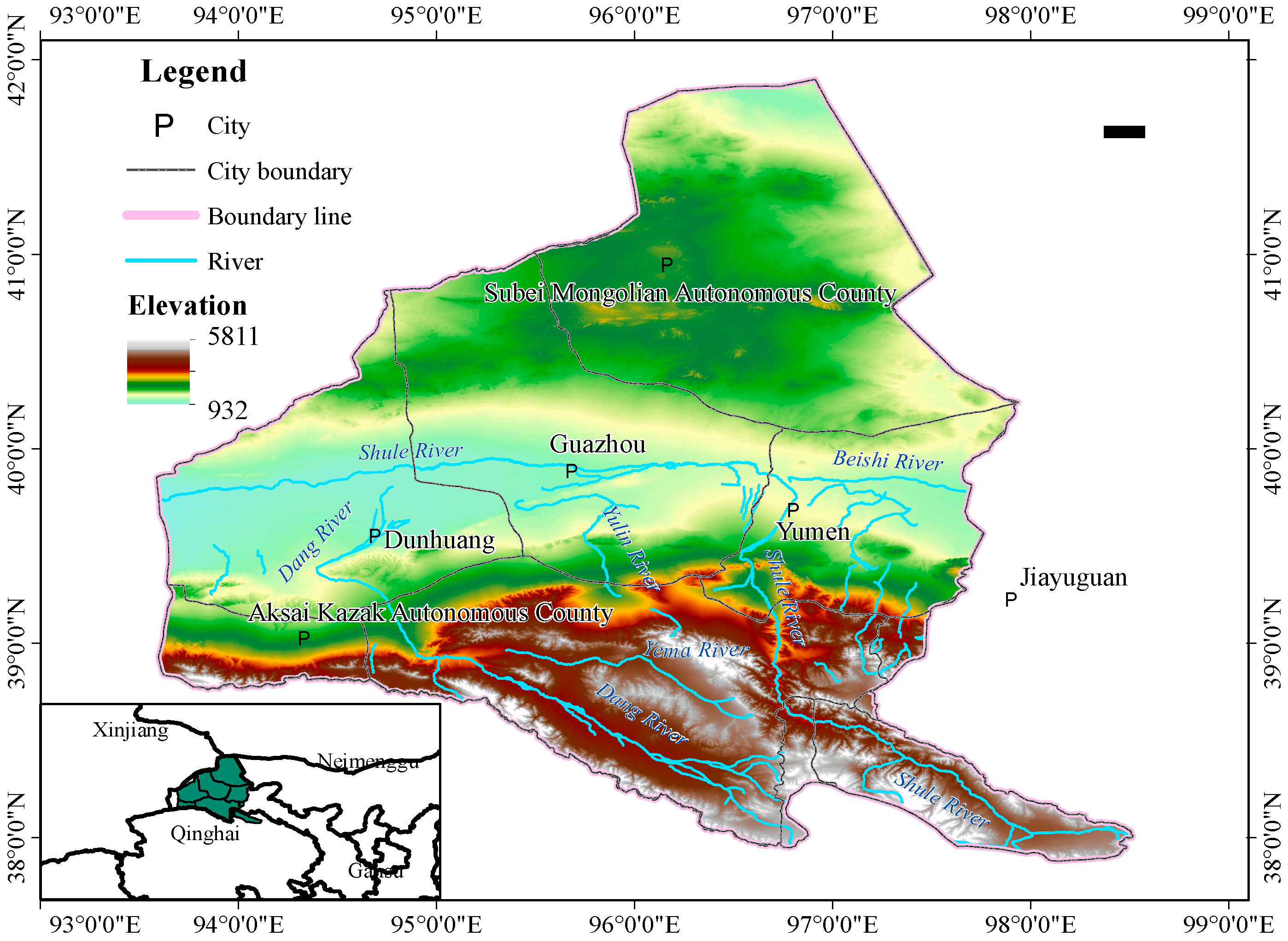
2.1. Study Area
2.2. Indicator Selection and Weighting Methods
2.3. System Coupling Coordination Degree Model
2.4. Indicator Network Analysis Model
2.5. Barrier Degree Model
3. Results
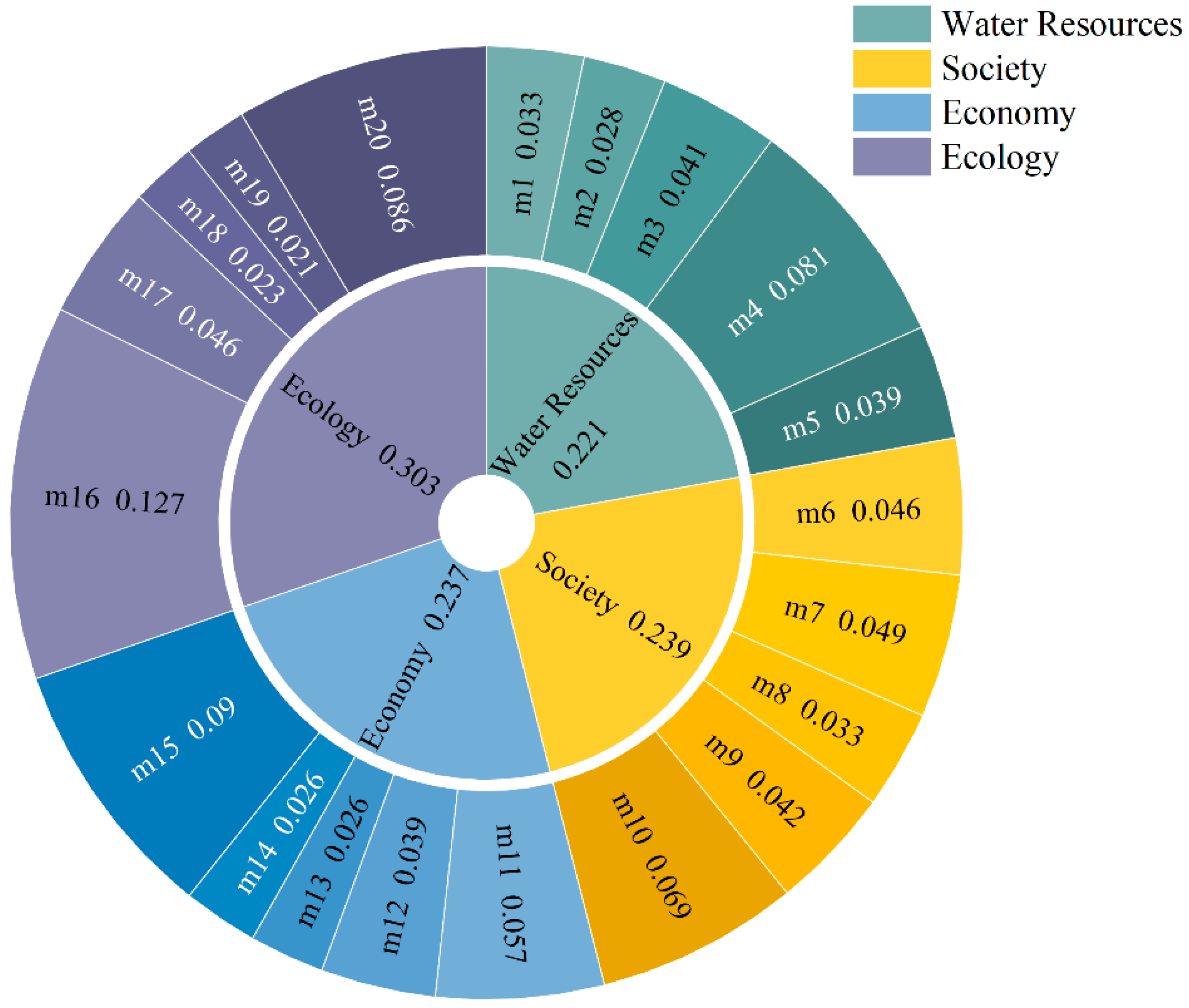
3.1. Indicator Weights
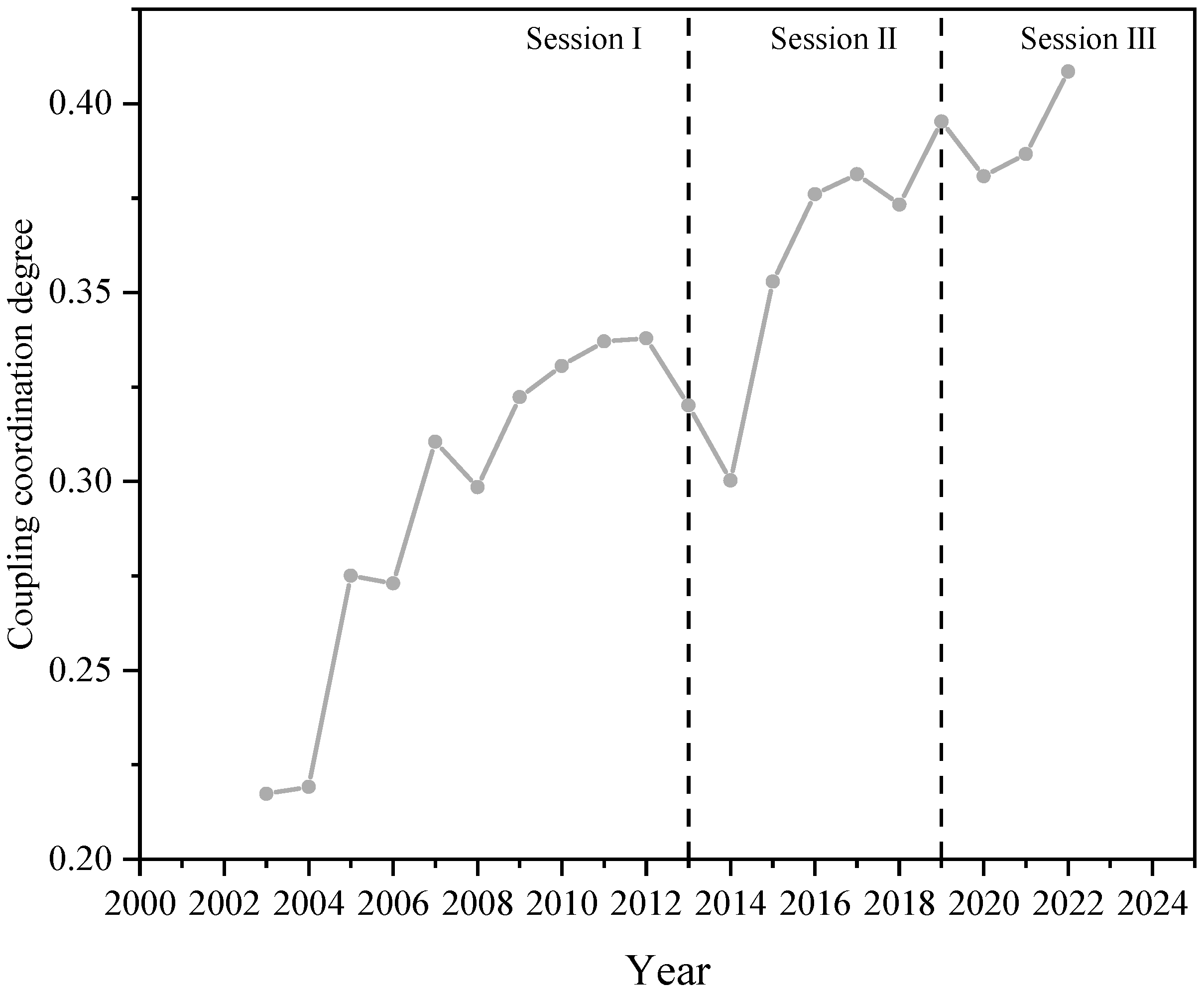
3.2. Coupling Coordination Degree of the System
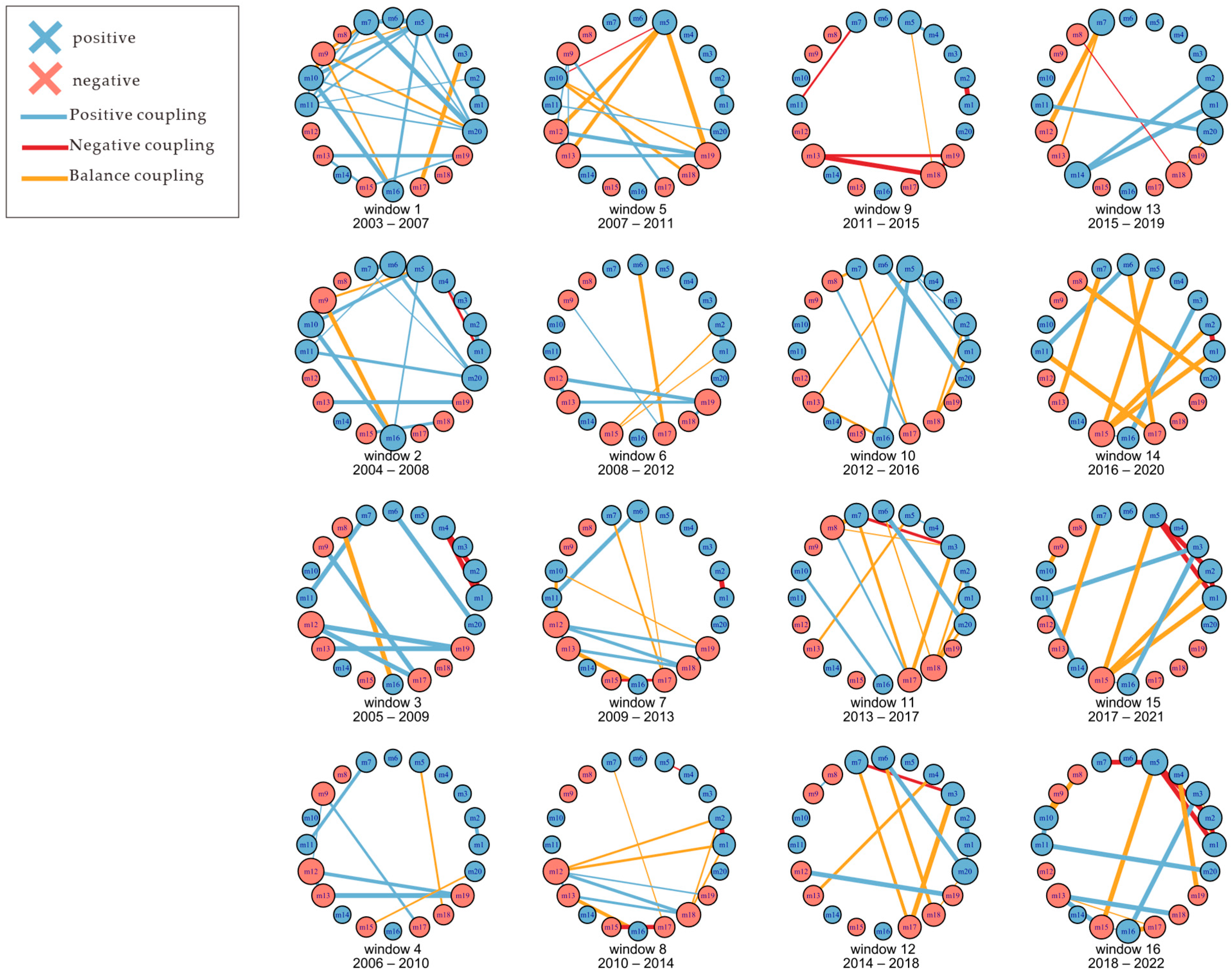
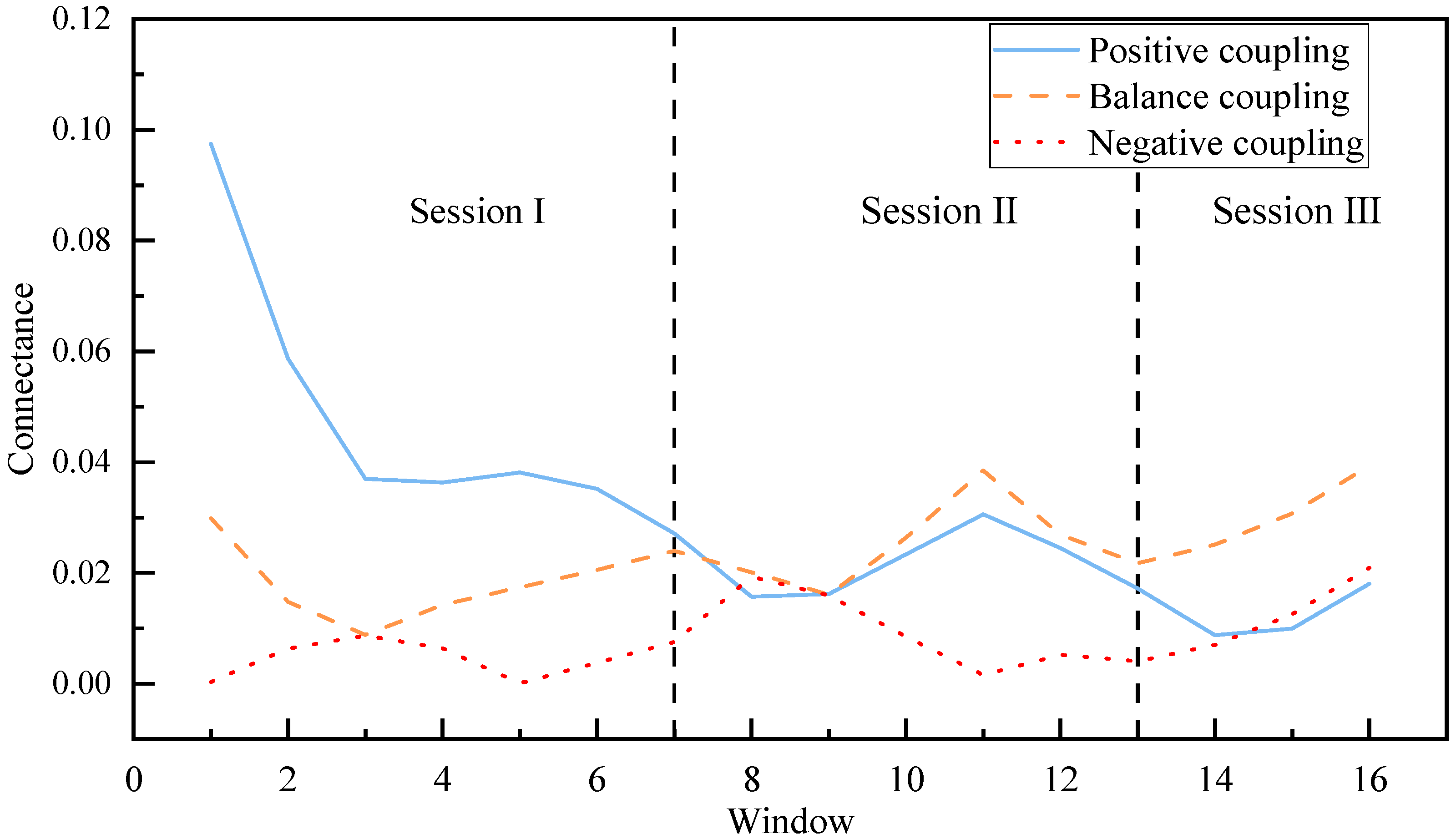
3.3. Coupling Relationships Between Indicators
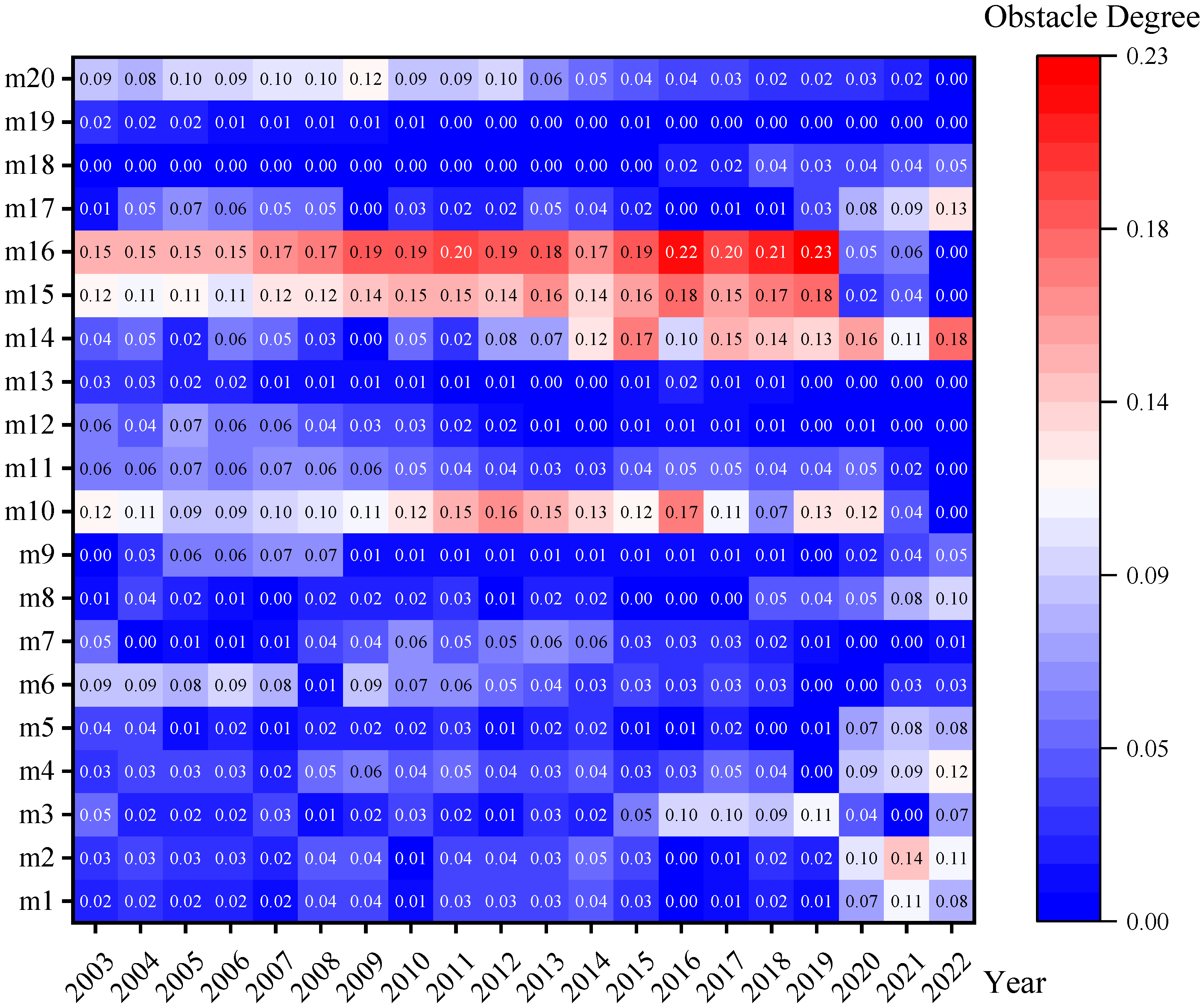
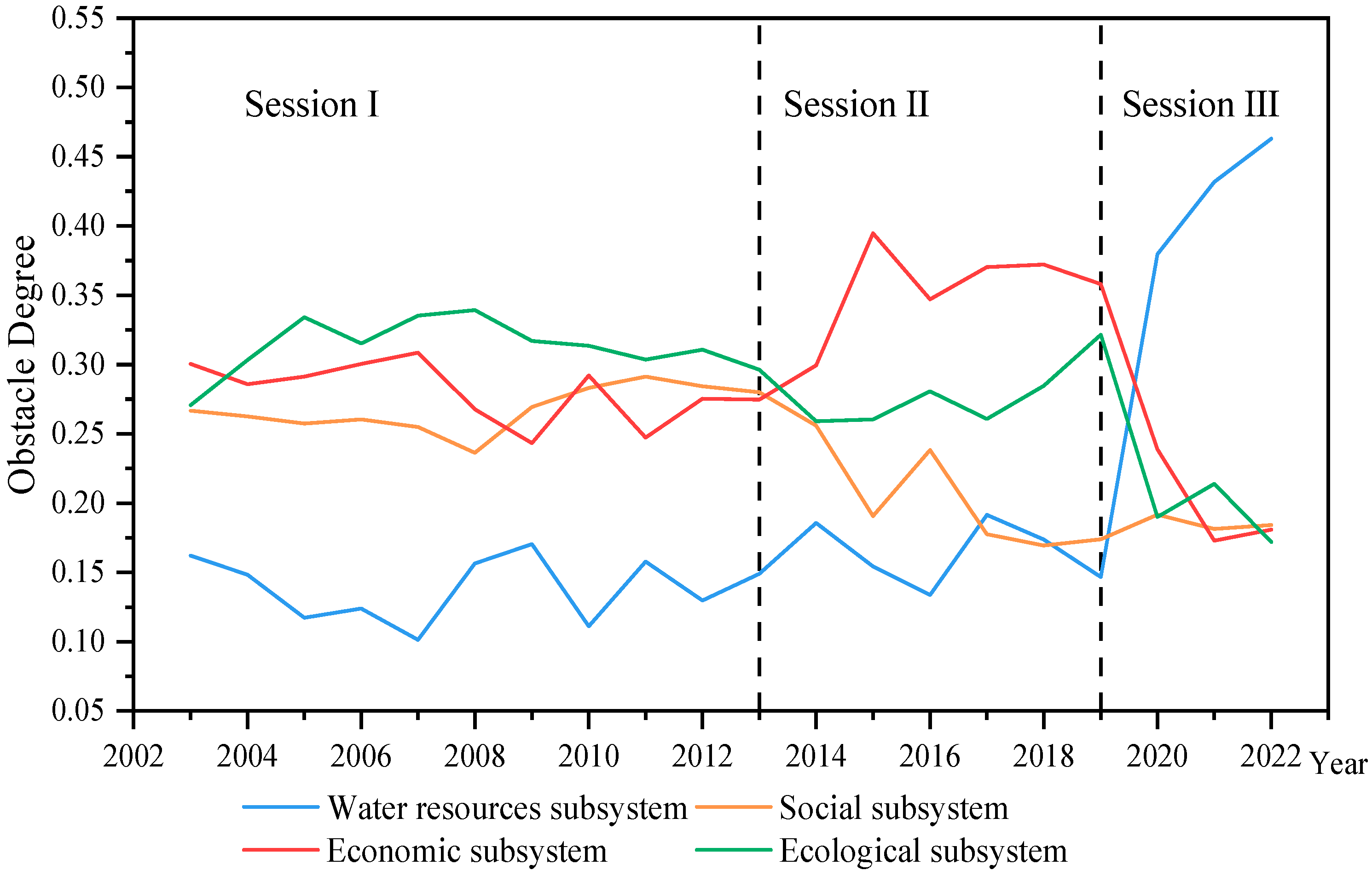
3.4. Barrier Factors
4. Discussion
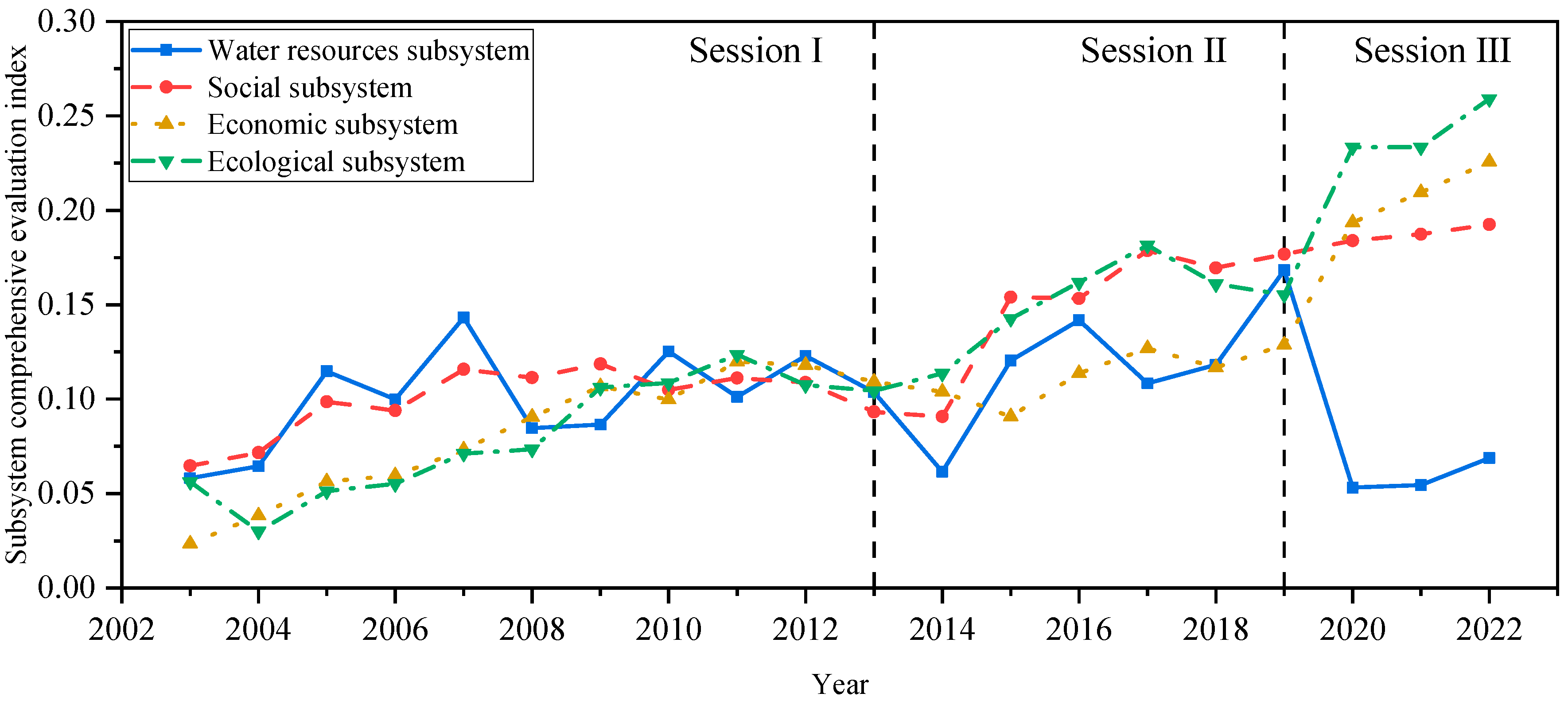
4.1. System Coupling Coordination Degree
4.2. Indicator Coupling Relationships
4.3. Dynamic Evolution
4.4. Limitations
5. Conclusions
Author Contributions
Funding
Institutional Review Board Statement
Informed Consent Statement
Data Availability Statement
Conflicts of Interest
References
- Liu, Y.; Zhang, J.; Zhou, D.; Ma, J.; Dang, R.; Ma, J.; Zhu, X. Temporal and spatial variation of carbon storage in the Shule River Basin based on InVEST model. Acta Ecol. Sin. 2021, 41, 4052–4065. [Google Scholar] [CrossRef]
- Azadi, Y.; Yaghoubi, J.; Gholizadeh, H.; Gholamrezai, S.; Rahimi-Feyzabad, F. Social barriers to water scarcity adaptation: A grounded theory exploration in arid and semi-arid regions. Agric. Water Manag. 2025, 309, 109338. [Google Scholar] [CrossRef]
- Wang, D.; Li, K.; Li, H.; Zhang, Y.; Fu, T.; Sun, L.; Wang, Y.; Zhang, J. Water resource utilization and future supply-demand scenarios in energy cities of semi-arid regions. Sci. Rep. 2025, 15, 5005. [Google Scholar] [CrossRef]
- Giller, O.; Ploegmakers, H.; Meijerink, S. Reconfiguring agricultural water management practices: Lessons from research on scaling of controlled drainage and subirrigation systems. Agric. Water Manag. 2025, 312, 109451. [Google Scholar] [CrossRef]
- Zhou, M.; Sun, D.; Wang, X.; Ma, Y.; Cui, Y.; Wu, L. Multi-objective optimal allocation of water resources in shule river basin of northwest China based on climate change scenarios. Agric. Water Manag. 2024, 302, 109015. [Google Scholar] [CrossRef]
- Wang, W.; Mo, Y.; Guan, L.; Gong, L. Prediction analysis and control strategies on coupling coordination between low-carbon transportation and high-quality economic development in the backward u-shaped bend metropolitan area of the yellow river basin. Ecol. Indic. 2025, 175, 113521. [Google Scholar] [CrossRef]
- Ariken, M.; Zhang, F.; Chan, N.W.; Kung, H. Corrigendum to “coupling coordination analysis and spatio-temporal heterogeneity between urbanization and eco-environment along the silk road economic belt in China” [Ecol. Indic. (2021) 107014]. Ecol. Indic. 2021, 121, 107191. [Google Scholar] [CrossRef]
- Di Baldassarre, G.; Sivapalan, M.; Rusca, M.; Cudennec, C.; Garcia, M.; Kreibich, H.; Konar, M.; Mondino, E.; Mård, J.; Pande, S.; et al. Sociohydrology: Scientific challenges in addressing the sustainable development goals. Water Resour. Res. 2019, 55, 6327–6355. [Google Scholar] [CrossRef]
- Voskamp, I.M.; Sutton, N.B.; Stremke, S.; Rijnaarts, H.H.M. A systematic review of factors influencing spatiotemporal variability in urban water and energy consumption. J. Clean. Prod. 2020, 256, 120310. [Google Scholar] [CrossRef]
- Khalid, K.; Hussain, B.; Ali, S. Evaluating eco-efficiency in consumption and production through sustainable utilization of resources: A panel analysis of apac by population. Renew. Energy 2021, 170, 1096–1106. [Google Scholar] [CrossRef]
- Qu, B.; Jiang, E.; Li, J.; Liu, Y.; Liu, C. Coupling coordination relationship of water resources, eco-environment and socio-economy in the water-receiving area of the lower yellow river. Ecol. Indic. 2024, 160, 111766. [Google Scholar] [CrossRef]
- Tu, Y.; Wang, N.; Cheng, L.; Liu, L. Sustainability assessment and multi-angle diagnosis of regional water resources-social economy-ecological environment system using a novel todimsort with ms clustering algorithm. Water Resour. Manag. 2024, 38, 5279–5303. [Google Scholar] [CrossRef]
- Cui, Y.; Zhou, Y.; Jin, J.; Zhang, L.; Wu, C.; Ning, S. Coordinated development evaluation and diagnosis of regional water resources-social economy-ecological environment system based on mechanical model and risk matrix. J. Hydrol. 2024, 633, 131013. [Google Scholar] [CrossRef]
- Li, J.; Qu, B.; Jiang, E.; Hao, L.; Liu, C.; Liu, Y.; Bian, Y. Coevolution and its influencing factors of the water resources–economy–society–environment composite system in the yellow river basin. Ecol. Indic. 2025, 172, 113304. [Google Scholar] [CrossRef]
- Cheng, J.; Zhang, X.; Gao, Q. Analysis of the spatio-temporal changes and driving factors of the marine economic–ecological–social coupling coordination: A case study of 11 coastal regions in China. Ecol. Indic. 2023, 153, 110392. [Google Scholar] [CrossRef]
- Lei, Y.; Jiang, W.; Yuan, L.; Wang, C. Coupling coordination and high-quality development pathways among tourism, economy, and ecology in the arid and semiarid regions of northwestern China. Discret. Dyn. Nat. Soc. 2024, 2024, 1786840. [Google Scholar] [CrossRef]
- Haq, M.Z.U.; He, M.; Kanwal, A.; Amir, S.; Akhtar, N.; Saqib, Z.; Jamil, A.; Alarifi, S.S.; Mubbin, M.; Bokhari, S.A. Remote sensing-based assessments of socioeconomic factors for urban ecological resilience in the semi-arid region. Rangel. Ecol. Manag. 2024, 96, 12–22. [Google Scholar] [CrossRef]
- Pan, J.; Liang, J.; Zhao, C. Identification and optimization of ecological security pattern in arid inland basin based on ordered weighted average and ant colony algorithm: A case study of Shule river basin, NW China. Ecol. Indic. 2023, 154, 110588. [Google Scholar] [CrossRef]
- He, Y.; Jiang, X.; Wang, N.; Zhang, S.; Ning, T.; Zhao, Y.; Hu, Y. Changes in mountainous runoff in three inland river basins in the arid Hexi corridor, China, and its influencing factors. Sustain. Cities Soc. 2019, 50, 101703. [Google Scholar] [CrossRef]
- Sun, D.; Wang, Y.; Wu, L.; Wang, X.; Cui, Y.; Shu, H.; Ma, Y. Runoff evolution characteristics and its response to climate change in the middle and lower reaches of Shule river basin, northwest China. J. Hydrol. Reg. Stud. 2025, 59, 102436. [Google Scholar] [CrossRef]
- Cong, X.; Zhao, L.; Eastoe, C.; Dong, X. An isotope study of the Shule river basin, northwest China: Sources and groundwater residence time, sulfate sources and climate change. J. Hydrol. 2022, 612, 128043. [Google Scholar] [CrossRef]
- Cheng, Z.; He, J.; Xu, S.; Yang, X. Coupling assessment for the water-economy-ecology nexus in western China. Ecol. Indic. 2023, 154, 110648. [Google Scholar] [CrossRef]
- Li, Y.; Li, Y.; Zhou, Y.; Shi, Y.; Zhu, X. Investigation of a coupling model of coordination between urbanization and the environment. J. Environ. Manag. 2012, 98, 127–133. [Google Scholar] [CrossRef]
- Jia, Y.; Li, X.; Chu, J.; Zhu, X.; Wu, H. Coupling relationship between indexes of water resources carrying capacity system based on complex network: A case study of Gansu Province. J. Lake Sci. 2025, 37, 600–611. [Google Scholar] [CrossRef]
- Felipe-Lucia, M.R.; Soliveres, S.; Penone, C.; Fischer, M.; Ammer, C.; Boch, S.; Boeddinghaus, R.S.; Bonkowski, M.; Buscot, F.; Fiore-Donno, A.M.; et al. Land-use intensity alters networks between biodiversity, ecosystem functions, and services. Proc. Natl. Acad. Sci. USA 2020, 117, 28140–28149. [Google Scholar] [CrossRef] [PubMed]
- Csardi, G.; Nepusz, T. The igraph software package for complex network research. Interjournal Complex Syst. 2006, 1695, 1–9. [Google Scholar]
- Liang, Q.; Yin, F. Spatiotemporal coupling relationship between higher education and economic development in china: Based on interprovincial panel data from 2012 to 2023. Sustainability 2024, 16, 7198. [Google Scholar] [CrossRef]



| Subsystem | Indicator | Unit | Nature |
|---|---|---|---|
| Water Resources | Per capita water resources (m1) | m3/person | Positive |
| Water production modulus (m2) | 104 m3/km2 | Positive | |
| Water resource utilization rate (m3) | \ | Positive | |
| Annual precipitation (m4) | mm | Positive | |
| Per capita water storage (m5) | m3/person | Positive | |
| Society | Urbanization rate (m6) | \ | Positive |
| Resident population (m7) | 10,000 people | Positive | |
| Cultivated land area (m8) | km2 | Negative | |
| Domestic water use per capita (m9) | m3/person | Negative | |
| Grain output per capita (m10) | kg/person | Positive | |
| Economy | Per capita GDP (m11) | 104 yuan/person | Positive |
| Water consumption per 10,000 yuan GDP (m12) | m3/104 yuan | Negative | |
| Water consumption per 10,000 yuan industrial value added (m13) | m3/104 yuan | Negative | |
| GDP growth rate (m14) | \ | Positive | |
| Proportion of agricultural water use (m15) | \ | Negative | |
| Ecosystems | Proportion of ecological water use (m16) | \ | Positive |
| Groundwater utilization rate (m17) | \ | Negative | |
| Per capita wastewater discharge (m18) | kg/person | Negative | |
| Wastewater discharge per 10,000 yuan industrial value added (m19) | kg/104 yuan | Negative | |
| Area of water-saving irrigation (m20) | km2 | Positive |
| Coupling Coordination Degree D | Type of Coordinated Development |
|---|---|
| [0, 0.2) | Highly uncoordinated |
| [0.2, 0.4) | Moderately uncoordinated |
| [0.4, 0.6) | Weakly coordinated |
| [0.6, 0.8) | Moderately coordinated |
| [0.8, 1.0] | Highly coordinated |
| Indicator Attributes | rij | β | Coupling Type |
|---|---|---|---|
| Positive, Positive | >0 | >0 | Positive coupling |
| >0 | <0 | Negative coupling | |
| <0 | / | Balance coupling | |
| Positive, Negative | <0 | >0 | Positive coupling |
| <0 | <0 | Negative coupling | |
| >0 | / | Balance coupling | |
| Negative, Negative | >0 | <0 | Positive coupling |
| >0 | >=0 | Negative coupling | |
| <0 | / | Balance coupling |
| Indicator | Barrier Degree | Rank | Indicator | Barrier Degree | Rank |
|---|---|---|---|---|---|
| m16 | 0.1595 | 1 | m17 | 0.0398 | 11 |
| m15 | 0.124 | 2 | m1 | 0.0324 | 12 |
| m10 | 0.1095 | 3 | m7 | 0.0281 | 13 |
| m14 | 0.0864 | 4 | m5 | 0.0274 | 14 |
| m20 | 0.0641 | 5 | m8 | 0.0263 | 15 |
| m6 | 0.0472 | 6 | m9 | 0.0244 | 16 |
| m4 | 0.0459 | 7 | m12 | 0.0241 | 17 |
| m11 | 0.0458 | 8 | m18 | 0.0138 | 18 |
| m3 | 0.0423 | 9 | m13 | 0.0107 | 19 |
| m2 | 0.0414 | 10 | m19 | 0.0068 | 20 |
Disclaimer/Publisher’s Note: The statements, opinions and data contained in all publications are solely those of the individual author(s) and contributor(s) and not of MDPI and/or the editor(s). MDPI and/or the editor(s) disclaim responsibility for any injury to people or property resulting from any ideas, methods, instructions or products referred to in the content. |
© 2025 by the authors. Licensee MDPI, Basel, Switzerland. This article is an open access article distributed under the terms and conditions of the Creative Commons Attribution (CC BY) license.
Share and Cite
Liu, Z.; Ma, B.; Zhu, P.; Cao, W.; Tian, Y.; Wu, L.; Yu, F.; Nie, J. Coupling Relationship Analysis of Water Resources, Society, Economy, and Ecosystems in the Shule River Basin. Sustainability 2026, 18, 248. https://doi.org/10.3390/su18010248
Liu Z, Ma B, Zhu P, Cao W, Tian Y, Wu L, Yu F, Nie J. Coupling Relationship Analysis of Water Resources, Society, Economy, and Ecosystems in the Shule River Basin. Sustainability. 2026; 18(1):248. https://doi.org/10.3390/su18010248
Chicago/Turabian StyleLiu, Zhongpei, Ben Ma, Pucheng Zhu, Wengeng Cao, Yanliang Tian, Lin Wu, Furong Yu, and Junkun Nie. 2026. "Coupling Relationship Analysis of Water Resources, Society, Economy, and Ecosystems in the Shule River Basin" Sustainability 18, no. 1: 248. https://doi.org/10.3390/su18010248
APA StyleLiu, Z., Ma, B., Zhu, P., Cao, W., Tian, Y., Wu, L., Yu, F., & Nie, J. (2026). Coupling Relationship Analysis of Water Resources, Society, Economy, and Ecosystems in the Shule River Basin. Sustainability, 18(1), 248. https://doi.org/10.3390/su18010248