Abstract
A knowledge advantage is critical for organizations achieving sustainable development in the era of the knowledge-driven economy. Hence, it is worthwhile to explore and synthesize the existing research on knowledge advantage and clarify its conceptual basis and theoretical research. This study aims to systematically review research related to knowledge advantages and identify research gaps as well as future directions. A total of 51 studies were systematically reviewed by using CiteSpace v.6.3.R1, Biobliometrix R 4.2.3, and excel software. With the help of a bibliometric analysis, this study identified the keywords, research trend evolution, and co-citations in the field of knowledge advantage. By conducting a content analysis, this study summarized the measurement, antecedents, and outcomes of knowledge advantages. This paper can provide insight into the work that has been performed and avenues for future research.
1. Introduction
In today’s knowledge-driven economy, knowledge has emerged as a kind of VRIN (valuable, rare, imperfectly imitable, and non-substitutable) resource for organizational success and competitive advantage [1,2]. Especially for consulting businesses, knowledge is gradually replacing capital and labor, becoming the most critical and important factor of production. The knowledge-based market attribute determines that enterprises need to establish a knowledge advantage, which is the competitive advantage formed by knowledge. By deeply understanding their own knowledge advantage, enterprises can determine how to maximize these resources to achieve sustainable development goals [3,4].
The discussion on knowledge advantages in academic circles originates from theories that deepen resource-based theory, core capabilities, competitive strategy, and comparative advantage [5,6,7]. Knowledge advantage refers to a competitive advantage based on knowledge and innovation [8], which is the advantage of one knowledge chain relative to another in the process of knowledge flow [9].
Knowledge advantages need to be acquired, accumulated, developed, utilized, created, and protected, all of which are linked to enterprise capabilities [10]. Ergazakis, Metaxiotis, and Psarras (2006) highlighted that knowledge and the processes to generate and manage it are considered to be the most valuable assets of an organization in the era of the knowledge economy [11]. While early studies in strategic management primarily focused on tangible resources and market positioning [12,13], the paradigm has since shifted towards recognizing knowledge as a critical determinant of competitive success [14]. This paradigmatic evolution emphasizes the necessity of understanding how organizations utilize knowledge to gain advantages in increasingly complex and dynamic business environments [15]. Therefore, it is worthwhile to explore and synthesize the existing research on the knowledge advantage and clarify its conceptual basis and theoretical research.
More importantly, while scholars have focused on the antecedents of competitive advantage and corresponding outcomes, there is a noticeable gap in the literature regarding the factors that contribute to the development of knowledge advantages. For instance, Satar et al. (2024) conducted a systematic literature review to investigate the development of research related to sustainability competitive advantages [16]. This study present what variables affect the sustainable competitive advantage and what variables are affected by the sustainable competitive advantage. Nayak, Bhattacharyya, and Krishnamoorthy (2022) explored the academic literature to track the theoretical and chronological evolution of the notion of competitive advantage [17]. Building on prior research, this paper conducts a systematic literature review to comprehensively analyze knowledge advantage research. To this end, this paper answers the following research question: what keywords, theories, and factors (i.e., antecedents and outcomes) constitute the emerging paradigm of the knowledge advantage?
In pursuit of this aim, this paper retrieved data from 51 articles indexed by Web of Science. This approach combines quantitative bibliometric techniques, including keywords analysis, research trend evolution analysis, country distribution analysis, and co-citation analysis, with a qualitative content analysis. This study synthesized the dispersed knowledge advantage literature into a coherent intellectual map, establishing an integrated framework that determines and links the antecedents and outcomes of knowledge advantages. This synthesis can contribute to the development of theoretical frameworks that could enhance research foundations. Additionally, by addressing the gaps identified in the literature, this study proposed a research agenda for the knowledge advantage.
The rest of this study is structured as follows. Section 2 presents the definition of knowledge advantage. Section 3 describes the methodology and research framework. Section 4 analyzes the results, including the descriptive analyses and thematic analyses. Section 5 provides future directions for this study. Section 6 summarizes this paper.
2. Definition
Competitive advantage was first proposed by Ansoff (1965), which refers to the superior competitive position derived from the isolated characteristics or unique attributes of a single product market [18]. Subsequently, Porter (1985) introduced three major competitive strategies (i.e., cost leadership, differentiation, and focus), arguing that the industrial structure and strategic positioning are the primary drivers of competitive advantages [19]. The resource-based theory posits that a competitive advantage stems from the “upstream” of product markets, relying on a firm’s unique and hard-to-imitate resources [20]. However, resource endowments exhibit a degree of stickiness, which may constrain corporate development. In dynamic environments, a firm’s ability to integrate, establish, and reallocate internal and external resources is key to sustaining a competitive advantage [21]. Meanwhile, as the research on knowledge management has deepened, an increasing number of scholars argue that tacit knowledge—resident in the minds of organizational members or within the organizational context—is the foundation for corporate competitive advantage [22]. In the era of the knowledge economy, firms should cultivate competitive advantages derived from knowledge creation and value added, i.e., knowledge-based advantages [23].
The concept of the knowledge advantage was proposed by Prusak (1996) and defined as a competitive advantage derived from knowledge [23]. Cheng et al. (2023) defined a knowledge advantage as the competitive advantage of firms obtained through integration and innovation based on their own knowledge resources [24]. The knowledge advantage has been a significant focus in the literature, particularly within the stream of the resource-based advantage view. This view emphasizes the importance of intangible firm assets, particularly knowledge-based resources, in providing sustained competitive advantages over rivals [25]. Knowledge-based resources are seen as valuable, rare, imperfectly imitable, and substitutable, making them valuable assets for firms seeking to maintain a competitive advantage [20]. The knowledge-based view adopts an “inside-out” approach to explaining the sources of a firm’s competitive advantage, with a focus on structural capital, tacit knowledge, and the imperfect imitability of knowledge as key factors contributing to competitive advantage [26].
Additionally, the knowledge-based advantage highlights knowledge as the principal productive resource of the firm, emphasizing the importance of knowledge use capability in adapting and expanding knowledge in day-to-day operations [27]. Khanmirzaee, Jafari, and Akhavan (2018) explored the role of science and technology parks in the development of knowledge-based economies, highlighting the importance of these institutions in fostering innovation and knowledge creation [28]. Furthermore, research has focused on identifying managerial competencies in knowledge-based organizations, emphasizing the importance of competency models and knowledge-based approaches in organizational management [29]. The shift towards knowledge-based competitiveness has been evident in various sectors, such as the electricity sector in Indonesia, where knowledge management practices through the knowledge-based view have been utilized to gain a competitive advantage [30].
Similarly, in the context of logistics and supply chain management, the generation of competitive advantages from analytics has been explored through the lens of the knowledge-based view, highlighting the role of knowledge in achieving a sustainable competitive advantage [31]. Overall, the literature on knowledge-based advantages emphasizes the importance of knowledge as a key resource for firms seeking to maintain a competitive advantage. By leveraging knowledge-based resources, firms can develop unique capabilities and competencies that are difficult for rivals to imitate, ultimately leading to a sustained competitive advantage in the marketplace.
With the development of the knowledge-based view, scholars conducted studies to explore the factors affecting knowledge advantages. For example, Zhang et al. (2021) summarized two types of factors based on the resource–capability performance paradigm, i.e., resource-related factors (technological resource and social resource) and capability-related factors (operation capability, marketing capability, and financing capability) [32]. Kaleka (2002) summarized that different combinations of export-related resources and capabilities are identified as drivers of costs, services, and product advantages [33]. Therefore, the elements that influence the knowledge advantage can be divided into two types: resources and capabilities. The first one represents assets controlled by the firm and used as input for organizational processes, and the other one concerns the ability of the firm to combine, develop, and use resources to create competitive advantages.
3. Methods and Data
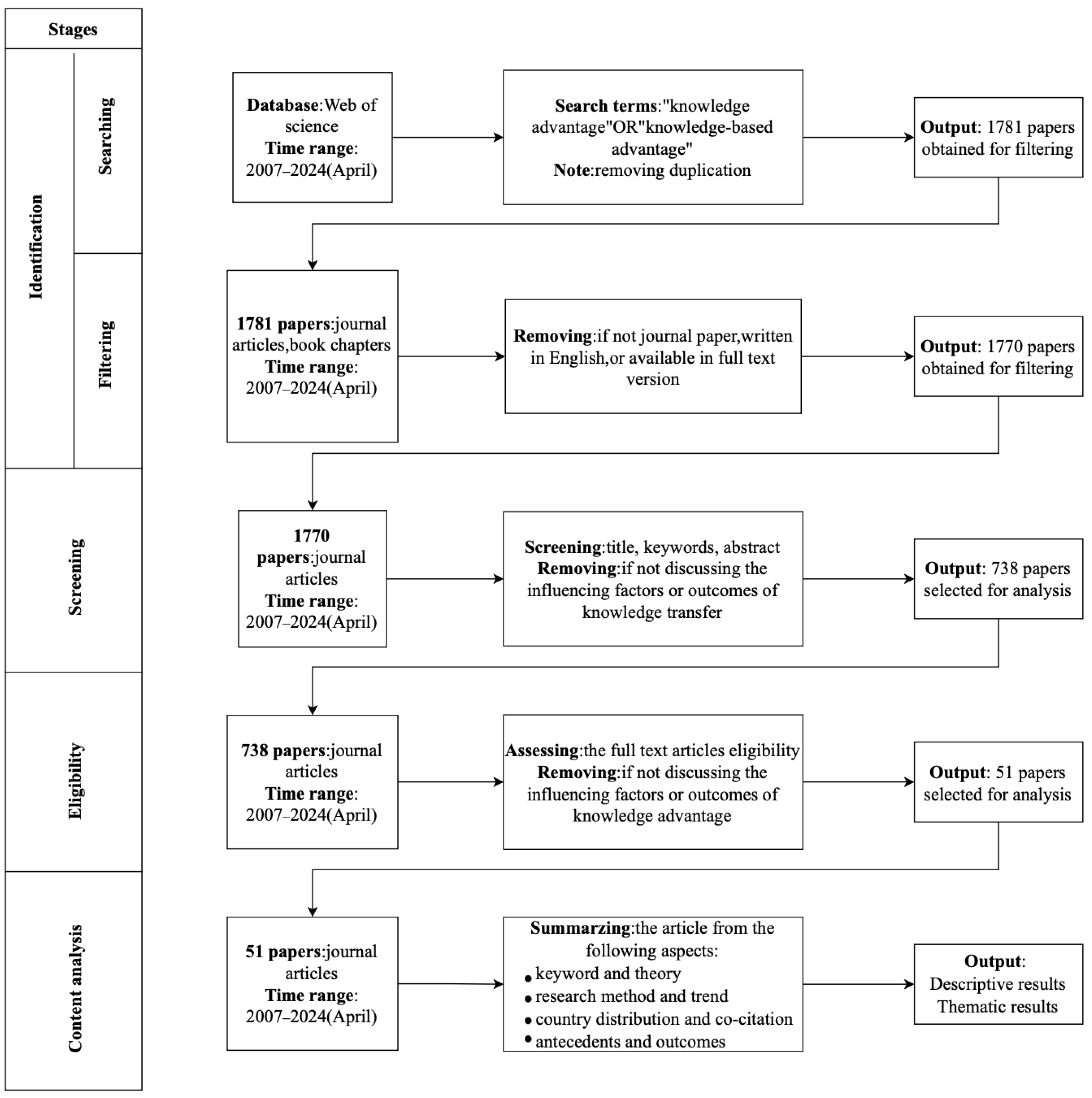
To systematically review the research related to knowledge advantages, a systematic review of studies concerning the knowledge advantage was conducted. This study incorporated key elements of the PRISMA guidelines and carried out four stages: identification, screening, eligibility, and content analysis (see Figure 1 and Supplementary Materials). This study integrated a bibliometric and content analysis to investigate and consolidate the findings. A bibliometric analysis is a quantitative analysis of the bibliographic features of a body of literature [34], which was used to analyze research hotspots and development trends in a particular field. In this study, articles were visualized and analyzed by using Biobliometrix R and Citespace. Following the bibliometric analysis, this study conducted a content analysis, aiming to uncover patterns in the measurement, antecedents, and outcomes of knowledge advantages.
Figure 1.
Research methodology.
To systematically retrieve and incorporate studies on knowledge advantage, the literature search approach is as follows. Firstly, this study searched for journal articles pertaining to knowledge advantage in Web of Science. A search rule was employed for the Topic/Title: (“knowledge-based advantage *” OR “knowledge advantage *”), yielding 1782 papers. After screening for duplicates, a total of 1781 articles were obtained. The title, abstract, and keywords of these 1781 articles were screened to evaluate whether the articles were related to knowledge advantage, and the articles that were not related to knowledge advantage were excluded. After this series of operations, 738 articles remained. After reading the full text, 51 articles including measurements or antecedents or outcomes of knowledge advantage were selected for the final descriptive and thematic analyses. Table 1 provides summative information regarding the sample.
Table 1.
Journals and number of articles included in our sample (n = 51).
4. Results and Discussion
4.1. Descriptive Analysis Results
4.1.1. Keyword Analysis Results
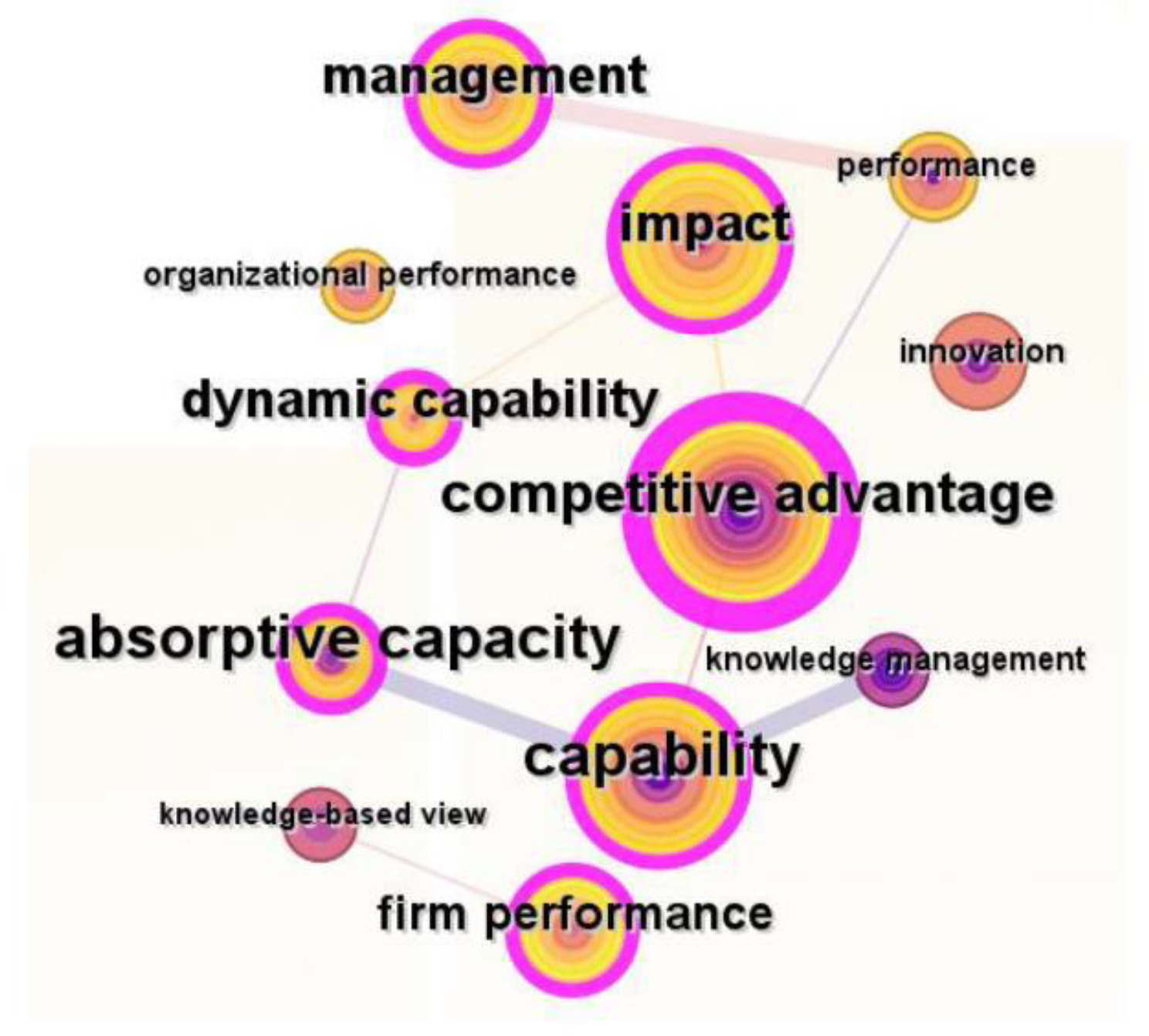
A co-occurrence analysis of keywords was conducted by using CiteSpace to demonstrate the connectivity between them. Keywords were initially selected by setting the minimum frequency of occurrence to six. Figure 2 shows the final visualization of the co-occurrence keywords. The size of a node provides a visual representation of the number of occurrences of a given keyword, with a larger node indicating more occurrences. With the exception of “competitive advantage”, the occurrence of the keyword “capability” is the highest; many scholars focus their research on organizational capabilities, particularly on how firms enhance their internal capacities to gain competitive advantages [35,36,37]. Additionally, much attention is afforded to “impact,” which reflects scholars’ attention to the factors influencing a competitive advantage and its effects. The relationships between knowledge advantages and “firm performance,” “management”, “absorptive capacity,” “innovation,” “knowledge management,” “knowledge-based view”, and “dynamic capability” also attract particular attention.
Figure 2.
Visualization of co-occurring keywords.
4.1.2. Use of Theory
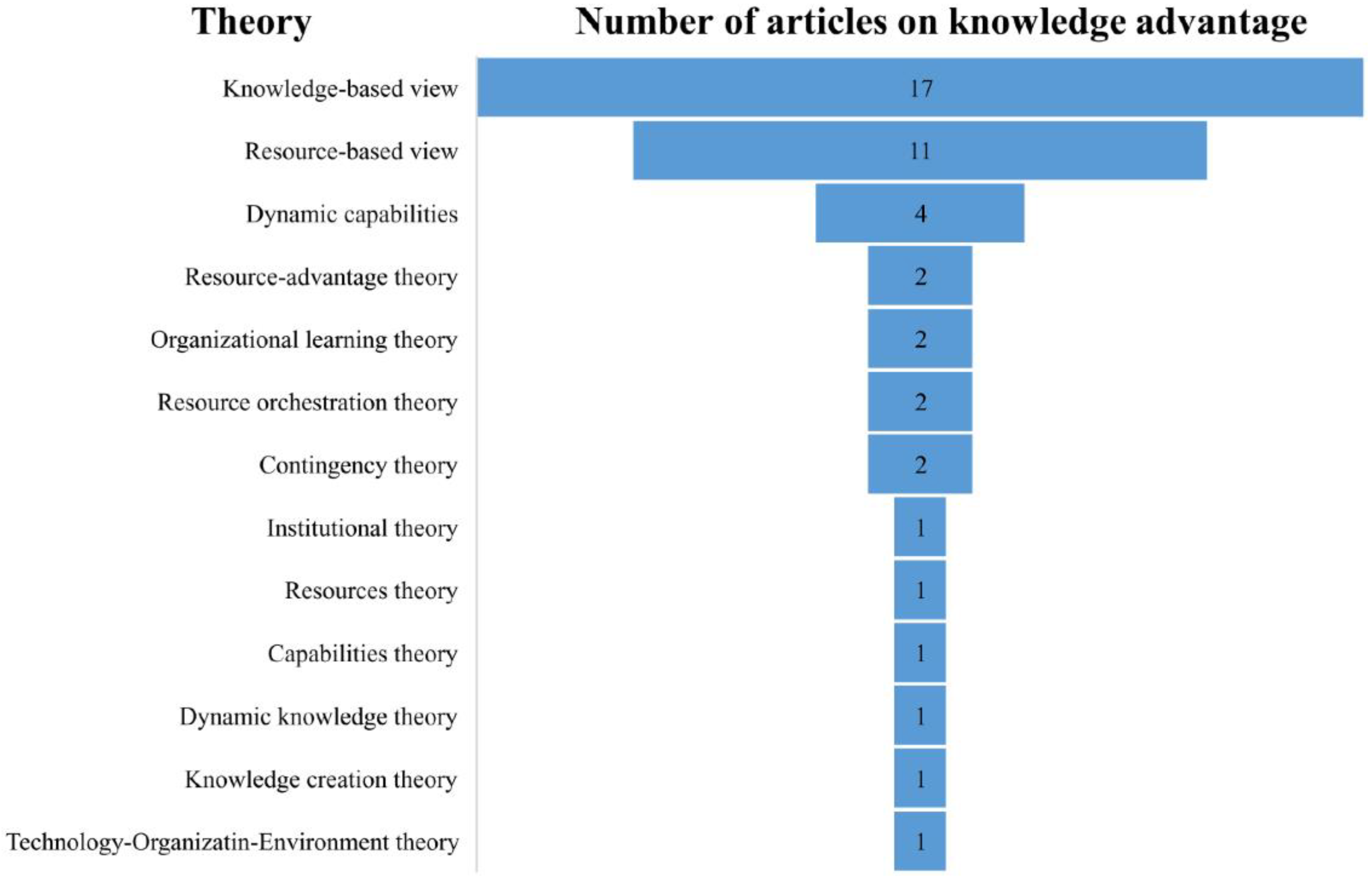
Among the 51 articles, 33 papers were supported by relevant theories, as shown in Figure 3. The resource-based view and knowledge-based view were the most frequently used theories in linking the relationships between the knowledge advantage and its antecedents [38,39]. Furthermore, dynamic capabilities, organizational learning theory, contingency theory, resource orchestration theory, stakeholder theory, the Technology–Organization–Environment (TOE) framework, knowledge creation theory, and institutional theory have also been used to explore the antecedents of knowledge advantage [40,41,42,43].
Figure 3.
Theories in the literature.
4.1.3. Research Trend Evolution
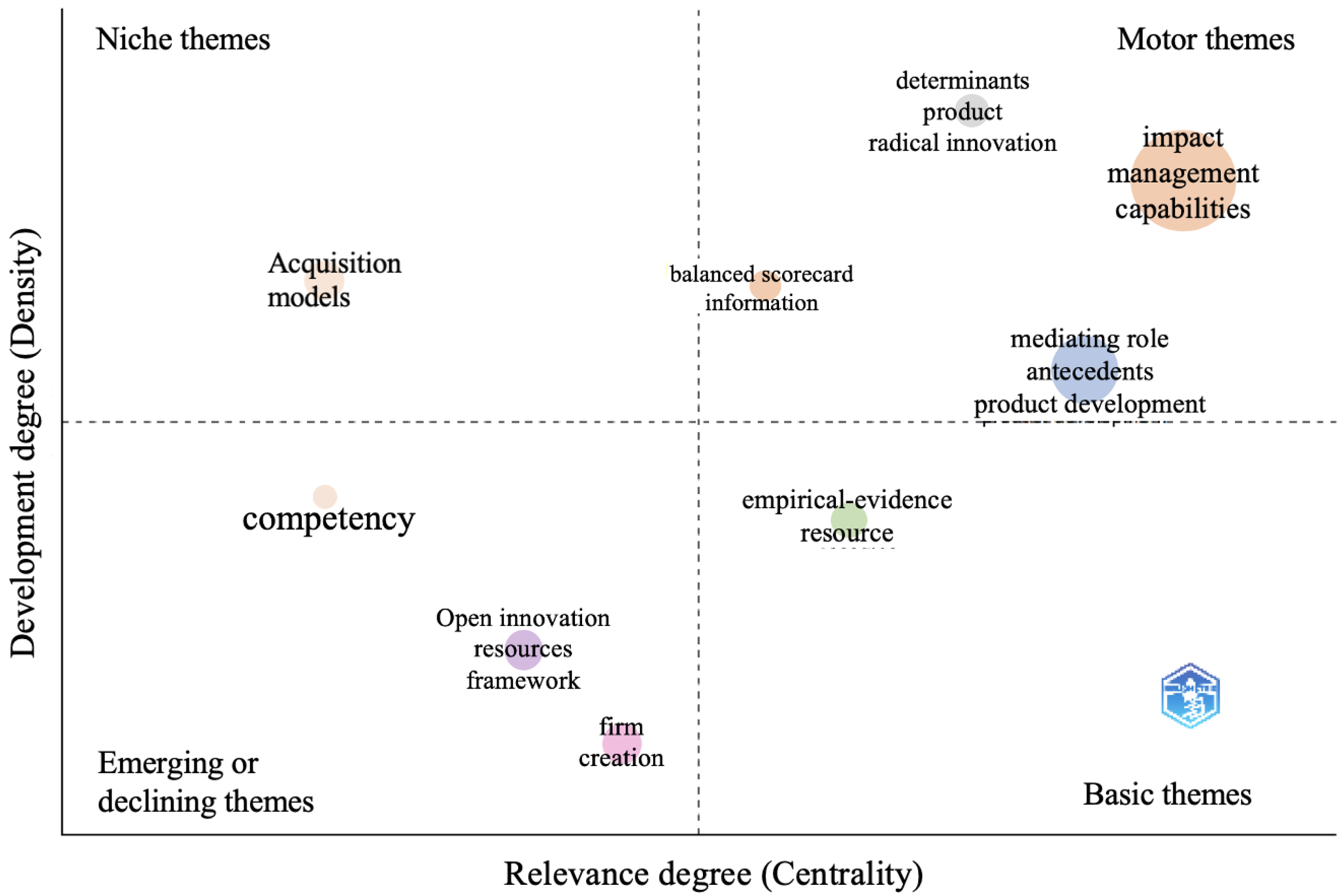
In order to understand the evolution of research trends of knowledge advantage, a strategic diagram was developed with Bibliometrix R 4.2.3 and is shown in Figure 4. From 2007 to 2015, various research themes were more fully developed, such as competitive advantages and capabilities. These clusters and their related topics become the initial research trend. For example, the study by Ávila (2022) explored the mediating role of innovation capability between absorptive capacity and competitive advantage [44]. Studies related to perspective began to receive attention in this period. For example, Mao et al. (2016) discussed how information technology resources affect knowledge management capability from the contingent resource perspective [45].
Figure 4.
Strategic diagrams for the total period (2007–2024) (generated by Bibliometrix R).
From 2016 to 2024, studies related to impact, performance, and determinants become the most remarkable research trend. Additionally, studies related to absorptive capacity become new emerging trends in this field. Scholars mainly focused on four stages of absorptive capacity: acquisition, assimilation, transformation, and exploitation of external information [42,46]. Studies related to business performance become the basic study concept in this field. In the entire period, studies related to impact and determinants become the most developed trend in the field. Studies related to business performance remain the basic concept in the area.
4.1.4. Country Distributions and Connections
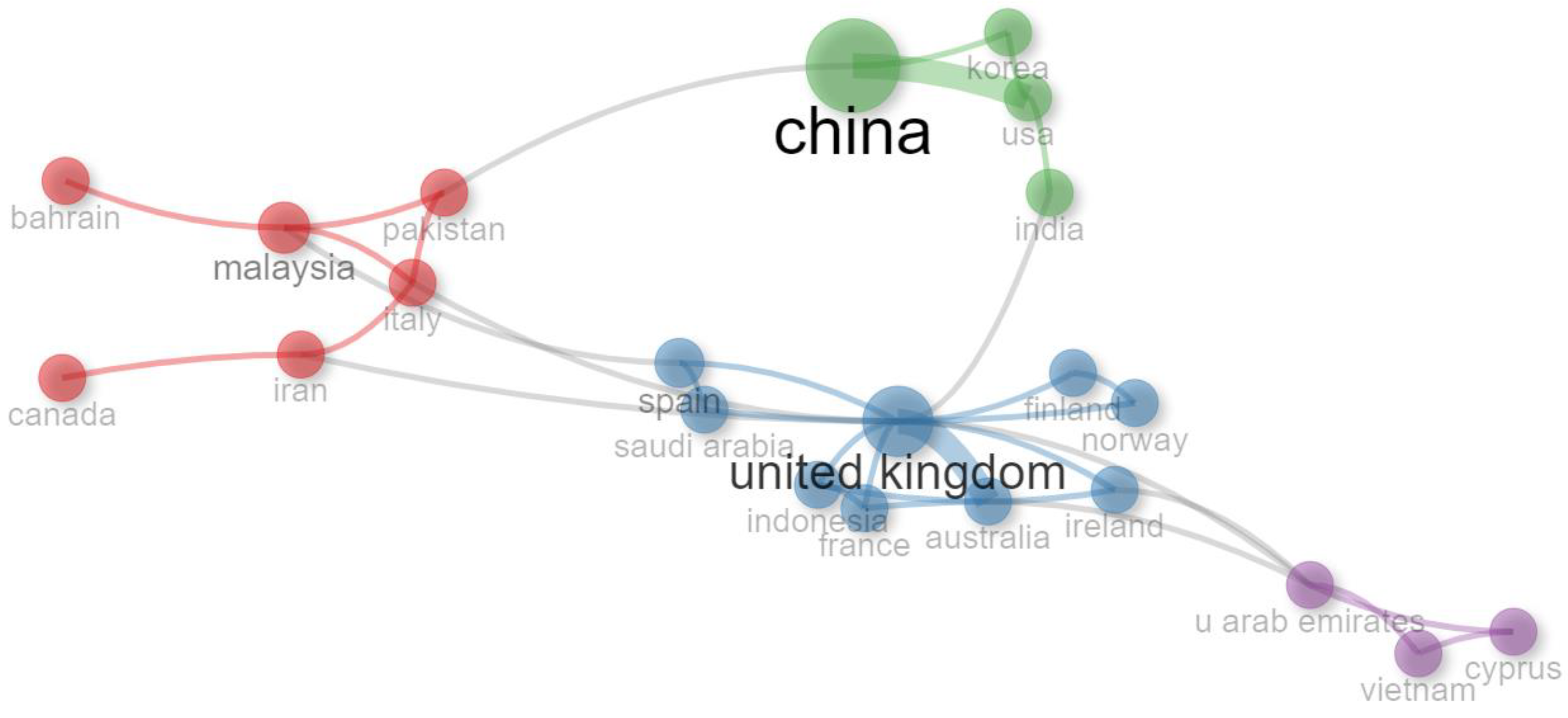
The number of articles published and the number of citations received by authors from different countries and institutions can reflect their influence and research progress. The international country collaboration network was developed, as shown in Figure 5. Each node in the figure represents a country/region. The closer the connection between two nodes, the greater the cooperation between the countries/regions [47]. The most frequent interactions were between China and the USA, with two collaborative articles, and the United Kingdom and Australia, with two collaborative articles.
Figure 5.
Country collaboration network from 2007 to 2024 (generated by Biliometrix R).
4.1.5. Co-Citation Analysis of the References
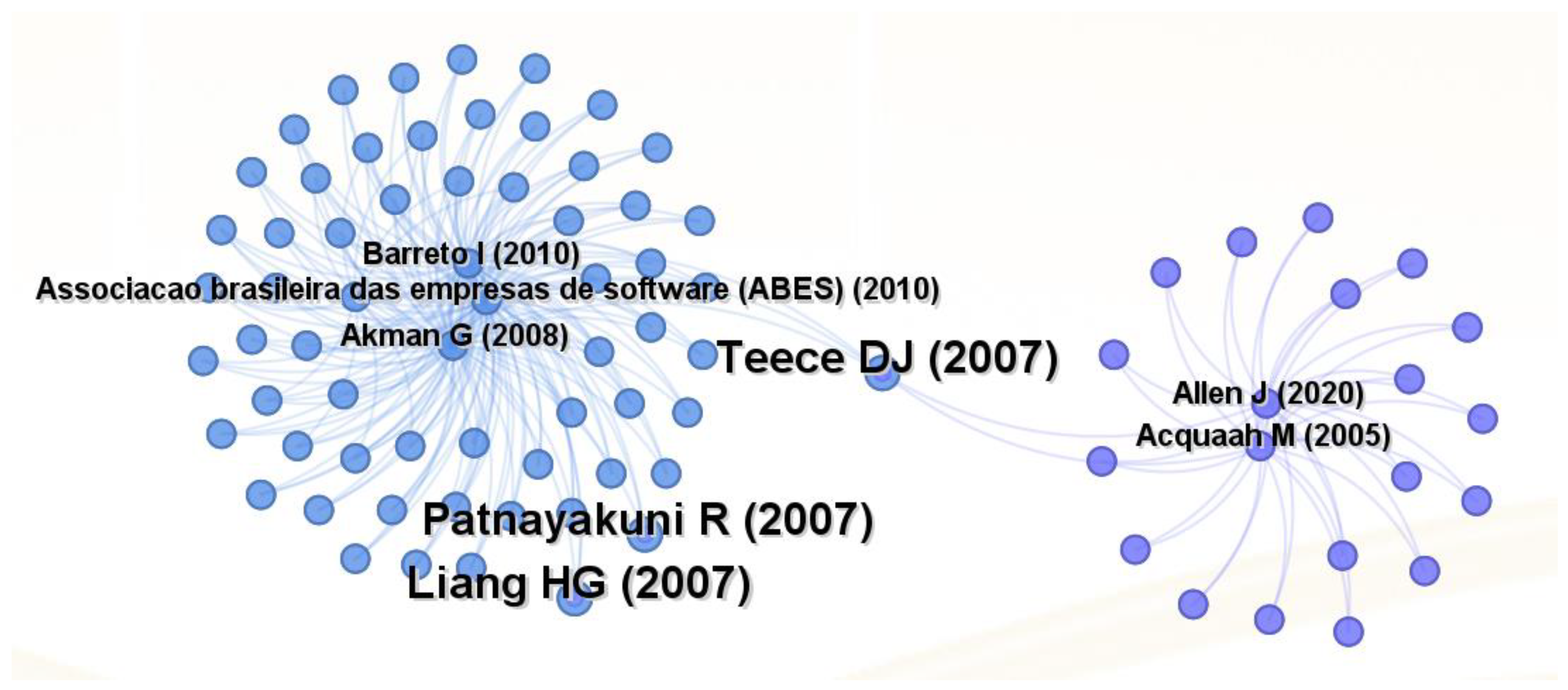
A literature co-citation analysis is a research methodology used to measure the extent of relationships between the literature and can help to model and monitor the intellectual structure of the scientific specialties [48]. Figure 6 shows the network of citations for knowledge advantage. The large nodes in the middle of the network represent the most cited articles. Teece (2007) synthesized the concepts and research findings in various fields to build a dynamic capability framework [49]. The two articles performed an empirical analysis by constructing a theoretical model [5,50]. The smaller center around the dense center represents the knowledge advantage articles in their center and the citations that have not been co-cited around them.
Figure 6.
Co-citation network of cited reference (generated by Citespace) [49,50,51,52,53,54,55,56].
4.2. Thematic Results
4.2.1. Measurement of Knowledge Advantage
The measurement of the knowledge advantage is a crucial aspect for organizations seeking to gain an advantage in today’s dynamic business environment. Among the 51 articles investigating knowledge advantage measurements, 47 articles measured them in a quantitative manner. It is worth noting that 11 articles adopted existing questionnaires directly, 28 articles revised an existing questionnaire to fit their own research contexts, and 8 articles explained the source by the data. Most articles measure knowledge advantages based on the three major competitive strategies, namely, the cost leadership strategy, the differentiation strategy, and centralization to measure competitive advantages [57]. Lee et al. (2016)’ study was based on improved efficiency, quality, productivity, and cost savings to measure knowledge advantages [58]. It is worth noting that Cheng et al. (2023) selected the knowledge advantage as the mediating variable, formed by knowledge integration and knowledge innovation; a knowledge advantage can create competitive advantages through integration and innovation capabilities [24].
It is worth to noting that knowledge advantages can be measured by knowledge stock advantages and knowledge flow advantages [59]. The knowledge stock advantage is a static representation of the knowledge advantage, reflecting the total utilization of knowledge resources by an organization, depending on the depth and breadth of the knowledge [60]. The knowledge flow advantage depends on the inflow and outflow of knowledge carriers and is influenced by factors such as the value of the knowledge stock, willingness to share knowledge, channels of knowledge dissemination, willingness to acquire knowledge, and the absorptive capacity [61].
4.2.2. Outcomes of Knowledge Advantage

Table 2 illustrates all outcomes of knowledge advantages based on the selected literature. When studying knowledge advantage, scholars typically focus on its relationship with competitive advantage, sustainable competitive advantage, firm performance, organizational performance and financial performance. In the research of Lee et al. (2016) and Azeem et al. (2021), both studies investigated the relationship between resources, capabilities, and competitive advantage at the firm level [58,62]. Competitive advantage is the key to success in strategic management because it is a strategy designed to achieve corporate value [20]. In the era of knowledge, firms should cultivate competitive advantages formed by knowledge creation and value addition, namely knowledge advantages [23]. A sustainable competitive advantage further emphasizes the ability of firms to maintain competitive advantages in the long term [63]. Through continuous knowledge creation, accumulation, and transformation, firms can continuously adjust their resources and capabilities to adapt to the changing market environment and maintain their competitive position [36,64].
Moreover, knowledge advantage can be measured by performance [65,66]. Studies demonstrated that by fully utilizing knowledge resources, firms can enhance their productivity, product quality, and market responsiveness, thereby enhancing their performance levels [67]. Jones and Borgman (2007) suggested that knowledge sharing and the effective use of IT resources are crucial drivers of innovation, quality, and firm performance [68]. They found a significant correlation between knowledge sharing, organizational cultures, and firm financial performance. Nuryanto et al. (2020) used the SEM-PLS method to measure the impact of organizational performance and competitive advantage on the financial sector of the chemical manufacturing industry [69]. These studies collectively contributed to understanding the complex interplay between organizational factors, knowledge advantage, and performance.
Table 2.
Outcomes of knowledge advantage.
Table 2.
Outcomes of knowledge advantage.
| Knowledge Advantage | Definition and How it Affects KA | Source References | Sum |
|---|---|---|---|
| Competitive advantage (CA) | The value created by an enterprise for its customers exceeds its cost. | [44,58,62] | 20 |
| Sustained competitive advantage (SCA) | To have superior position or condition over its competitor in a long-term period by adjusting to the endless changes around the world. | [36,42,64] | 10 |
| Firm performance (FP) | The enterprise’s operating efficiency and operator’s performance during a certain operating period. | [35,70,71] | 10 |
| Organizational performance (OP) | The quantity, quality, efficiency, and profitability of the organization’s tasks in a certain period. | [72] | 4 |
| Financial performance (FP) | Enterprise strategy, its implementation, and its contribution to the final operating performance. | [73] | 2 |
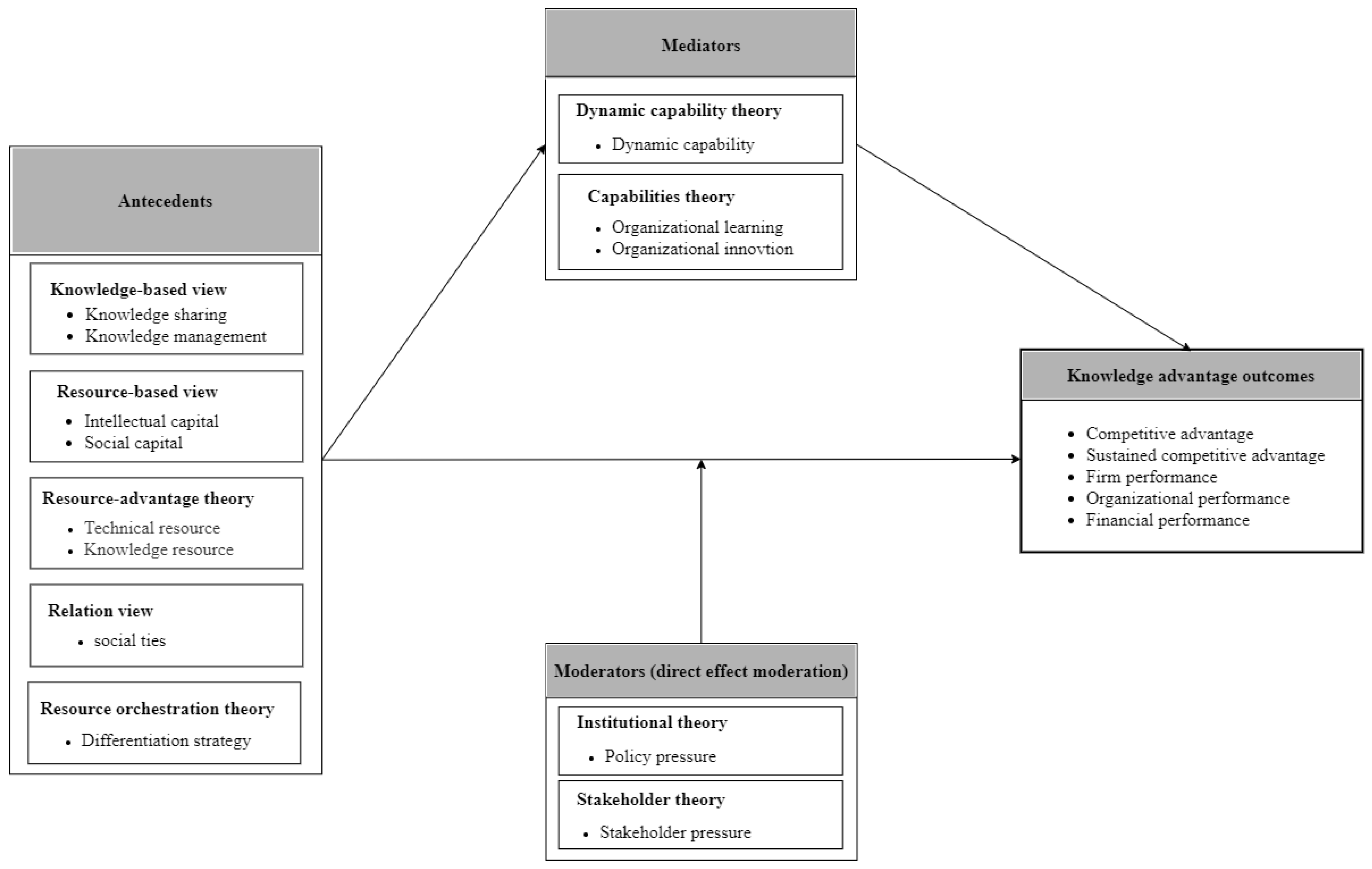
4.2.3. Antecedents of Knowledge Advantage
A total of 51 papers identified 13 factors that can influence the knowledge advantage. Figure 7 illustrates the antecedents of knowledge advantages and their influencing paths within each theory. The resource-based view has been widely used to explain how organizations achieve competitive advantages. Wright, McMahan, and McWilliams (1994) integrate micro-level organizational behavior and human resource management research with the macro-level RBV, presenting human resources as a potential source of sustained competitive advantage [74]. The knowledge-based view has emerged as a significant perspective in understanding competitive advantage for firms [75]. The knowledge-based view offers a valuable framework for understanding how firms can leverage their knowledge assets to achieve sustainable competitive advantages [76]. By focusing on the unique and valuable nature of knowledge-based resources, firms can differentiate themselves from competitors and enhance their performance in the marketplace.
Figure 7.
Antecedents, mediators, moderators, and outcomes of knowledge advantage.
The relational view of competitive advantage suggests that idiosyncratic inter-organizational relationships could be a source of competitive advantages [77,78]. Jie Wu and Chen (2012) linked leaders’ social ties and knowledge acquisition capability to the competitive advantage of a firm based on the relational and knowledge-based views of competitive advantage [79]. The resource advantage theory explains that firms can enhance their competitive advantage over other competitors through comparative advantages in resources, which, in turn, lead to superior financial performance [80]. Cacciolatti and Lee (2016) extend the insights of the R-A theory to analyze the moderators of the capability–performance relationship, such as the market orientation, marketing strategy, and organizational power [81]. This study contributes to the understanding of how a competitive advantage is generated through marketing capabilities and organizational factors. Resource orchestration theory is a strategic management framework that focuses on how firms leverage and combine their resources and capabilities to create value and achieve competitive advantages.
Resource orchestration theory has gained attention in the literature as a means to create a competitive advantage by effectively structuring, bundling, and leveraging firm resources [82]. Overall, the literature highlights the importance of resource orchestration theory and knowledge management in creating and sustaining competitive advantages. By effectively leveraging human assets, organizational knowledge, and strategic capabilities, firms can enhance their innovativeness and achieve competitive advantages in the market [83,84].
5. Future Research Avenues
Based on the above research, this study proposed possible future directions for research themes: definition, measurement, and antecedents.
5.1. Definition of Knowledge Advantage
While knowledge advantage has been defined and explained by scholars [23], the understanding of knowledge advantage will evolve as the field of knowledge management continues to grow and change. Future research could explore a more comprehensive understanding of knowledge advantage, including the further refinement and expansion of its concepts. This may involve a more in-depth analysis of the different types, sources, and forms of knowledge, as well as a more in-depth exploration of the role of knowledge in the process of flow and transformation within and outside organizations. Secondly, this study can also pay attention to the relationship between knowledge advantage and other related concepts, such as innovation, competitive advantage, and organizational learning. Through an in-depth study of the internal relationship and interaction between knowledge advantage and these concepts, this study can further expand our understanding of knowledge advantage and provide more effective guidance for practice.
5.2. Measurement of Knowledge Advantage
Knowledge advantage is a complex concept with multiple dimensions. Future research could explore the development of more multidimensional measures to capture aspects of knowledge advantage more comprehensively. This may involve a combination of quantitative and qualitative research methods, utilizing a variety of data sources and technological tools to measure knowledge advantage from different perspectives. Second, knowledge advantage is a dynamic process that is susceptible to changes over time and in the environment. McEvily and Chakravarthy (2002) measured the dynamics of knowledge-based advantages through direct measures of the individual performance improvements or innovations [85]. Future research could use data mining or knowledge graph-related methods to measure knowledge stocks and flow advantages.
5.3. Antecedents of Knowledge Advantage
Knowledge advantage is affected by both internal and external environmental factors [86,87], but how internal and external factors work together to form a knowledge advantage has not yet been explored. This study divided the influencing factors into resource factors and ability factors to explore the influence on knowledge advantage. Future research can be conducted through case studies and expert interviews, with the knowledge-based view, industry-based view, and institutional-based view as the theoretical basis and a strategic tripod as the analytical paradigm, focusing on the five major activity functions of the enterprise knowledge chain (i.e., knowledge acquisition, knowledge selection, knowledge generation, knowledge internalization, and knowledge externalization) and sorting out the knowledge of international engineering consulting enterprises from the three dimensions of resources and capabilities, industry environments, and institutional environments.
6. Conclusions
This study summarized the studies pertaining to knowledge advantage from a systematic review and bibliometric analysis. This study attempts tell a full story concerning the four themes of this construct: the definition, measurement, antecedents and outcomes. To achieve this goal, a systematic review of 51 articles was conducted, including descriptive and thematic results. Descriptive results identified “competitive advantage” and “capability” as the keywords most closely related to knowledge. Descriptive results of the theories indicated that there is a causal relationship between knowledge advantage and its antecedents. In the research trends of knowledge advantage, impact and determinants were the most developed trends in the field. Then, thematic results demonstrated 13 factors of knowledge advantage antecedents and 5 factors of knowledge advantage outcomes. The top-cited factors of knowledge advantage antecedents included knowledge management, intellectual capital, dynamic capability, innovation and social capital, and so on. The most common outcome factors were competitive advantage, sustainable competitive advantage, firm performance, organizational performance, and financial performance. Finally, this review proposed future research directions for the study of knowledge advantage and provides direction for the need to delve deeper into the field of knowledge management.
In addition, this review also makes the following contributions. First, this review clarifies the definition and measurement of knowledge advantage from previous studies, laying a conceptual basis for both theoretical development and empirical research in this area. Secondly, there has been no research on the antecedents of knowledge advantage, and this study fills this gap. This provides scholars with a full understanding of the process of what influences knowledge advantages and how. Thirdly, regarding the research on the outcomes of knowledge advantages, most of the existing research focuses on the study of competitive advantage and performance, and this study provides more ideas for scholars and practitioners to optimize the outcomes of knowledge advantage for different dimensional factors by integrating the relationships between the factors.
Despite the contributions to the research of knowledge advantage, several limitations of this study need to be acknowledged. This research restricts the review of articles to English journal articles in Web of science. There may be articles in other databases or in other languages that provide a broad understanding. It is recommended that the survey of the literature be expanded. More databases could be used to collect articles related to this topic as well as non-English papers to make the study more robust. A more comprehensive survey could help future researchers explore more research possibilities.
Supplementary Materials
The following supporting information can be downloaded at https://www.mdpi.com/article/10.3390/su18010234/s1: PRISMA (Preferred Reporting Items for Systematic Reviews and Meta-Analyses) Checklist. Reference [88] is cited in Supplementary Materials.
Author Contributions
Conceptualization, N.Z.; methodology, J.Y.; software, J.Y.; validation, Q.Z. and N.Z.; formal analysis, J.Y.; data curation, J.Y.; writing—original draft preparation, J.Y. and N.Z.; writing—review and editing, Q.Z. and N.Z.; supervision, N.Z.; project administration, N.Z.; funding acquisition, N.Z. All authors have read and agreed to the published version of the manuscript.
Funding
This research was funded by the National Natural Science Foundation of China, grant number NSFC-72201249, and the Science Foundation of Zhejiang Sci-Tech University, grant number No. 21052319-Y.
Institutional Review Board Statement
Not applicable.
Informed Consent Statement
Not applicable.
Data Availability Statement
The original contributions presented in this study are included in the article/Supplementary Materials. Further inquiries can be directed to the corresponding author.
Conflicts of Interest
The authors declare no conflicts of interest.
References
- Mahdi, O.R.; Almsafir, M.K.; Yao, L. The role of knowledge and knowledge management in sustaining competitive advantage within organizations: A review. Afr. J. Bus. Manag. 2011, 5, 9912. [Google Scholar] [CrossRef]
- Cooke, P.; Leydesdorff, L. Regional development in the knowledge-based economy: The construction of advantage. J. Technol. Transf. 2006, 31, 5–15. [Google Scholar] [CrossRef]
- Lehtonen, M. The environmental–social interface of sustainable development: Capabilities, social capital, institutions. Ecol. Econ. 2004, 49, 199–214. [Google Scholar] [CrossRef]
- Ansong, D.; Okumu, M.; Huang, J.; Johnson, L.; Sherraden, M.S. Financial Capability and Asset Building in Social and Economic Development: Advancing the Sustainable Development Goals; Washington University, Center for Social Development: St. Louis, MO, USA, 2020. [Google Scholar] [CrossRef]
- Assensoh-Kodua, A. The resource-based view: A tool of key competency for competitive advantage. Probl. Perspect. Manag. 2019, 17, 143. [Google Scholar] [CrossRef]
- Chuang, S.H. A resource-based perspective on knowledge management capability and competitive advantage: An empirical investigation. Expert Syst. Appl. 2004, 27, 459–465. [Google Scholar] [CrossRef]
- Gupta, S.D. Comparative advantage and competitive advantage: An economics perspective and a synthesis. Athens J. Bus. Econ. 2015, 1, 9–22. [Google Scholar] [CrossRef]
- Hana, U. Competitive advantage achievement through innovation and knowledge. J. Compet. 2013, 5, 82–96. [Google Scholar] [CrossRef]
- Holsapple, C.W.; Singh, M. The knowledge chain model: Activities for competitiveness. Expert Syst. Appl. 2001, 20, 77–98. [Google Scholar] [CrossRef]
- Nieves, J.; Haller, S. Building dynamic capabilities through knowledge resources. Tour. Manag. 2014, 40, 224–232. [Google Scholar] [CrossRef]
- Ergazakis, K.; Metaxiotis, K.; Psarras, J. Knowledge cities: The answer to the needs of knowledge-based development. Vine 2006, 36, 67–84. [Google Scholar] [CrossRef]
- Greco, M.; Cricelli, L.; Grimaldi, M. A strategic management framework of tangible and intangible assets. Eur. Manag. J. 2013, 31, 55–66. [Google Scholar] [CrossRef]
- Blankson, C.; Cowan, K.; Crawford, J.; Kalafatis, S.; Singh, J.; Coffie, S. A review of the relationships and impact of market orientation and market positioning on organisational performance. J. Strateg. Mark. 2013, 21, 499–512. [Google Scholar] [CrossRef]
- Rahimli, A. Knowledge management and competitive advantage. Inf. Knowl. Manag. 2012, 2, 37–43. [Google Scholar]
- Maqsood, T.; Walker, D.; Finegan, A. Extending the “knowledge advantage”: Creating learning chains. Learn. Organ. 2007, 14, 123–141. [Google Scholar] [CrossRef]
- Satar, A.; Musadiq, M.A.; Hutahayan, B.; Solimun. A systematic literature review: Determinants of sustainability competitive advantage. Bus. Strategy Environ. 2024, 33, 1675–1687. [Google Scholar] [CrossRef]
- Nayak, B.; Bhattacharyya, S.S.; Krishnamoorthy, B. Exploring the black box of competitive advantage–An integrated bibliometric and chronological literature review approach. J. Bus. Res. 2022, 139, 964–982. [Google Scholar] [CrossRef]
- Ansoff, H.L. Corporate Strategy; McGraw-Hill: New York, NY, USA, 1965. [Google Scholar] [CrossRef]
- Porter, M.E. Technology and competitive advantage. J. Bus. Strategy 1985, 5, 60–78. [Google Scholar] [CrossRef]
- Barney, J. Firm resources and sustained competitive advantage. J. Manag. 1991, 17, 99–120. [Google Scholar] [CrossRef]
- Teece, D.J.; Pisano, G.; Shuen, A. Dynamic capabilities and strategic management. Strateg. Manag. J. 1997, 18, 509–533. [Google Scholar] [CrossRef]
- Grant, R.M. Toward a knowledge-based theory of the firm. Strateg. Manag. J. 1996, 17, 109–122. [Google Scholar] [CrossRef]
- Prusak, L. The knowledge advantage. Plan. Rev. 1996, 24, 6–8. [Google Scholar] [CrossRef]
- Cheng, Q.; Liu, Y.; Peng, C.; He, X.; Qu, Z.; Dong, Q. Knowledge digitization: Characteristics, knowledge advantage and innovation performance. J. Bus. Res. 2023, 163, 113915. [Google Scholar] [CrossRef]
- Halawi, L.A.; Aronson, J.E.; McCarthy, R.V. Resource-based view of knowledge management for competitive advantage. Electron. J. Knowl. Manag. 2005, 3, 75. [Google Scholar]
- Čater, T. The sources of a firm’s competitive advantage according to the knowledge-based school: The case of Slovenian firms. In People, Knowledge and Technology: What Have We Learnt So Far? World Scientific: Singapore, 2004; pp. 259–269. [Google Scholar] [CrossRef]
- Pereira, V.; Bamel, U. Extending the resource and knowledge based view: A critical analysis into its theoretical evolution and future research directions. J. Bus. Res. 2021, 132, 557–570. [Google Scholar] [CrossRef]
- Khanmirzaee, S.; Jafari, M.; Akhavan, P. A study on the role of science and technology parks in development of knowledge-based economy. World J. Entrep. Manag. Sustain. Dev. 2018, 14, 74–85. [Google Scholar] [CrossRef]
- Königová, M.; Hron, J. Methodology for the identification of managerial competencies in knowledge-based organizations. Agric. Econ. 2012, 58, 347–353. [Google Scholar] [CrossRef]
- Novianti, K.R. Achieving competitive advantage through knowledge management practices: Knowledge-based view (KBV) strategy on Indonesia electricity sector. APMBA (Asia Pac. Manag. Bus. Appl.) 2019, 7, 163–176. [Google Scholar] [CrossRef]
- Herden, T.T. Explaining the competitive advantage generated from Analytics with the knowledge-based view: The example of Logistics and Supply Chain Management. Bus. Res. 2020, 13, 163–214. [Google Scholar] [CrossRef]
- Zhang, N.; Deng, X.; Hwang, B.; Zhao, X. Identifying driving variables and paths of competitive advantage for international high-speed rail rolling stock contractors. J. Infrastruct. Syst. 2021, 27, 04021032. [Google Scholar] [CrossRef]
- Kaleka, A. Resources and capabilities driving competitive advantage in export markets: Guidelines for industrial exporters. Ind. Mark. Manag. 2002, 31, 273–283. [Google Scholar] [CrossRef]
- Hawkins, D.T. Unconventional uses of on-line information retrieval systems: On-line bibliometric studies. J. Am. Soc. Inf. Sci. 1977, 28, 13–18. [Google Scholar] [CrossRef]
- Garousi Mokhtarzadedeh, N.; Jafarpanah, I.; Zamani Babgohari, A. Knowledge management capability, entrepreneurial creativity, entrepreneurial intensity and firm performance: The mediating role of ambidexterity. Br. Food J. 2022, 124, 2179–2208. [Google Scholar] [CrossRef]
- Liao, S.-H.; Chen, C.-C.; Hu, D.-C.; Chung, Y.-C.; Yang, M.-J. Developing a sustainable competitive advantage: Absorptive capacity, knowledge transfer and organizational learning. J. Technol. Transf. 2017, 42, 1431–1450. [Google Scholar] [CrossRef]
- Hu, Z.; Sarfraz, M.; Khawaja, K.F.; Shaheen, H.; Mariam, S. The influence of knowledge management capacities on pharmaceutical firms competitive advantage: The mediating role of supply chain agility and moderating role of inter functional integration. Front. Public Health 2022, 10, 953478. [Google Scholar] [CrossRef] [PubMed]
- Kamya, M.T.; Ntayi, J.M.; Ahiauzu, A. Knowledge management and competitive advantage: The interaction effect of market orientation. Afr. J. Bus. Manag. 2010, 4, 2971. [Google Scholar]
- Chai, K.-H.; Yap, C.-M.; Wang, X. Network closure’s impact on firms’ competitive advantage: The mediating roles of knowledge processes. J. Eng. Technol. Manag. 2011, 28, 2–22. [Google Scholar] [CrossRef]
- Cadden, T.; Weerawardena, J.; Cao, G.; Duan, Y.; McIvor, R. Examining the role of big data and marketing analytics in SMEs innovation and competitive advantage: A knowledge integration perspective. J. Bus. Res. 2023, 168, 114225. [Google Scholar] [CrossRef]
- Yu, C.; Zhang, Z.; Lin, C.; Wu, Y.J. Knowledge creation process and sustainable competitive advantage: The role of technological innovation capabilities. Sustainability 2017, 9, 2280. [Google Scholar] [CrossRef]
- Algarni, M.A.; Ali, M.; Leal-Rodríguez, A.L.; Albort-Morant, G. The differential effects of potential and realized absorptive capacity on imitation and innovation strategies, and its impact on sustained competitive advantage. J. Bus. Res. 2023, 158, 113674. [Google Scholar] [CrossRef]
- Soto-Acosta, P.; Popa, S.; Palacios-Marqués, D. E-business, organizational innovation and firm performance in manufacturing SMEs: An empirical study in Spain. Technol. Econ. Dev. Econ. 2016, 22, 885–904. [Google Scholar] [CrossRef]
- Ávila, M.M. Competitive advantage and knowledge absorptive capacity: The mediating role of innovative capability. J. Knowl. Econ. 2022, 13, 185–210. [Google Scholar] [CrossRef]
- Mao, H.; Liu, S.; Zhang, J.; Deng, Z. Information technology resource, knowledge management capability, and competitive advantage: The moderating role of resource commitment. Int. J. Inf. Manag. 2016, 36, 1062–1074. [Google Scholar] [CrossRef]
- Liu, F.; Dutta, D.K.; Park, K. From external knowledge to competitive advantage: Absorptive capacity, firm performance, and the mediating role of labour productivity. Technol. Anal. Strateg. Manag. 2021, 33, 18–30. [Google Scholar] [CrossRef]
- Van Eck, N.; Waltman, L. Software survey: VOSviewer, a computer program for bibliometric mapping. Scientometrics 2010, 84, 523–538. [Google Scholar] [CrossRef]
- Small, H. Co-citation in the scientific literature: A new measure of the relationship between two documents. J. Am. Soc. Inf. Sci. 1973, 24, 265–269. [Google Scholar] [CrossRef]
- Teece, D.J. Explicating dynamic capabilities: The nature and microfoundations of (sustainable) enterprise performance. Strateg. Manag. J. 2007, 28, 1319–1350. [Google Scholar] [CrossRef]
- Patnayakuni, R.; Rai, A.; Tiwana, A. Systems development process improvement: A knowledge integration perspective. IEEE Trans. Eng. Manag. 2007, 54, 286–300. [Google Scholar] [CrossRef]
- Barreto, I. Dynamic capabilities: A review of past research and an agenda for the future. J. Manag. 2010, 36, 256–280. [Google Scholar] [CrossRef]
- Akman, G.; Yilmaz, C. Innovative capability, innovation strategy and market orientation: An empirical analysis in Turkish software industry. Int. J. Innov. Manag. 2008, 12, 69–111. [Google Scholar] [CrossRef]
- Allen, J.; Rowan, L.; Singh, P. Teaching and teacher education in the time of COVID-19. Asia-Pac. J. Teach. Educ. 2020, 48, 233–236. [Google Scholar] [CrossRef]
- Acquaah, M. Enterprise ownership, market competition and manufacturing priorities in a sub-Saharan African emerging economy: Evidence from Ghana. J. Manag. Gov. 2005, 9, 205–235. [Google Scholar] [CrossRef]
- Liang, H.; Saraf, N.; Hu, Q.; Xue, Y. Assimilation of enterprise systems: The effect of institutional pressures and the mediating role of top management. MIS Q. 2007, 31, 59–87. [Google Scholar] [CrossRef]
- Associação Brasileira das Empresas de Software ABES. Mercado Brasileiro de Software: Panorama e Tendências; ABES: São Paulo, Brazil, 2010. [Google Scholar]
- Porter, M.E. Competitive strategy. Meas. Bus. Excell. 1997, 1, 12–17. [Google Scholar] [CrossRef]
- Lee, V.H.; Foo, A.T.L.; Leong, L.Y.; Oobi, K.-B. Can competitive advantage be achieved through knowledge management? A case study on SMEs. Expert Syst. Appl. 2016, 65, 136–151. [Google Scholar] [CrossRef]
- Tallman, S.; Jenkins, M.; Henry, N.; Pinch, S. Knowledge, clusters, and competitive advantage. Acad. Manag. Rev. 2004, 29, 258–271. [Google Scholar] [CrossRef]
- Wu, J.; Shanley, M.T. Knowledge stock, exploration, and innovation: Research on the United States electromedical device industry. J. Bus. Res. 2009, 62, 474–483. [Google Scholar] [CrossRef]
- Gupta, A.K.; Govindarajan, V. Knowledge flows within multinational corporations. Strateg. Manag. J. 2000, 21, 473–496. [Google Scholar] [CrossRef]
- Azeem, M.; Ahmed, M.; Haider, S.; Sajjad, M. Expanding competitive advantage through organizational culture, knowledge sharing and organizational innovation. Technol. Soc. 2021, 66, 101635. [Google Scholar] [CrossRef]
- Hall, R. A framework linking intangible resources and capabiliites to sustainable competitive advantage. Strateg. Manag. J. 1993, 14, 607–618. [Google Scholar] [CrossRef]
- Alfawaire, F.; Atan, T. The effect of strategic human resource and knowledge management on sustainable competitive advantages at Jordanian universities: The mediating role of organizational innovation. Sustainability 2021, 13, 8445. [Google Scholar] [CrossRef]
- Irwin, K.C.; Landay, K.M.; Aaron, J.R.; McDowell, W.C.; Marino, L.D.; Geho, P.R. Entrepreneurial orientation (EO) and human resources outsourcing (HRO): A “HERO” combination for SME performance. J. Bus. Res. 2018, 90, 134–140. [Google Scholar] [CrossRef]
- Wu, I.L.; Chen, J.L. Knowledge management driven firm performance: The roles of business process capabilities and organizational learning. J. Knowl. Manag. 2014, 18, 1141–1164. [Google Scholar] [CrossRef]
- Choi, S. Developing relationship-specific memory and absorptive capacity in interorganizational relationships. Inf. Technol. Manag. 2014, 15, 223–238. [Google Scholar] [CrossRef]
- Jones, N.B.; Borgman, R.H. An exploratory study on knowledge sharing, information technologies and firm performance. OR Insight 2007, 20, 10–21. [Google Scholar] [CrossRef]
- Nuryanto, U.W.; Masyhudzulhak Djamil, M.Z.; Sutawidjaya, A.H.; Saluy, A.B. The Effect of Organizational Performance, Competitive Advantage on the Financial Sector of Chemical Manufacturing Industry in Banten Province. Ilomata Int. J. Tax Account. 2020, 1, 225–242. [Google Scholar] [CrossRef]
- Truong, B.T.T.; Nguyen, P.V.; Vrontis, D. Enhancing firm performance through innovation: The roles of intellectual capital, government support, knowledge sharing and knowledge management success. J. Intellect. Cap. 2024, 25, 188–209. [Google Scholar] [CrossRef]
- Ma, F.; Khan, F.; Khan, K.U.; Si, X.Y. Investigating the impact of information technology, absorptive capacity, and dynamic capabilities on firm performance: An empirical study. Sage Open 2021, 11, 21582440211061388. [Google Scholar] [CrossRef]
- Mehralian, G.; Nazari, J.A.; Ghasemzadeh, P. The effects of knowledge creation process on organizational performance using the BSC approach: The mediating role of intellectual capital. J. Knowl. Manag. 2018, 22, 802–823. [Google Scholar] [CrossRef]
- Ho, K.L.P.; Nguyen, C.N.; Adhikari, R.; Miles, M.P.; Bonney, L. Leveraging innovation knowledge management to create positional advantage in agricultural value chains. J. Innov. Knowl. 2019, 4, 115–123. [Google Scholar] [CrossRef]
- Wright, P.M.; McMahan, G.C.; McWilliams, A. Human resources and sustained competitive advantage: A resource-based perspective. Int. J. Hum. Resour. Manag. 1994, 5, 301–326. [Google Scholar] [CrossRef]
- Coff, R.W. When competitive advantage doesn’t lead to performance: The resource-based view and stakeholder bargaining power. Organ. Sci. 1999, 10, 119–133. [Google Scholar] [CrossRef]
- Moustaghfir, K. How knowledge assets lead to a sustainable competitive advantage: Are organizational capabilities a missing link? Knowl. Manag. Res. Pract. 2009, 7, 339–355. [Google Scholar] [CrossRef]
- Dyer, J.H.; Singh, H. The relational view: Cooperative strategy and sources of interorganizational competitive advantage. Acad. Manag. Rev. 1998, 23, 660–679. [Google Scholar] [CrossRef]
- Juo, W.J.; Wang, C.H. Does green innovation mediate the relationship between green relational view and competitive advantage? Bus. Strategy Environ. 2022, 31, 2456–2468. [Google Scholar] [CrossRef]
- Wu, J.; Chen, X. Leaders’ social ties, knowledge acquisition capability and firm competitive advantage. Asia Pac. J. Manag. 2012, 29, 331–350. [Google Scholar] [CrossRef]
- Hunt, S.D.; Morgan, R.M. The resource-advantage theory of competition: Dynamics, path dependencies, and evolutionary dimensions. J. Mark. 1996, 60, 107–114. [Google Scholar] [CrossRef]
- Cacciolatti, L.; Lee, S.H. Revisiting the relationship between marketing capabilities and firm performance: The moderating role of market orientation, marketing strategy and organisational power. J. Bus. Res. 2016, 69, 5597–5610. [Google Scholar] [CrossRef]
- Sirmon, D.G.; Hitt, M.A.; Ireland, R.D.; Gilbert, B.A. Resource orchestration to create competitive advantage: Breadth, depth, and life cycle effects. J. Manag. 2011, 37, 1390–1412. [Google Scholar] [CrossRef]
- Mostafiz, M.I.; Hughes, M.; Sambasivan, M. Entrepreneurial orientation, competitive advantage and strategic knowledge management capability in Malaysian family firms. J. Knowl. Manag. 2022, 26, 423–458. [Google Scholar] [CrossRef]
- Rehman, S.U.; Bresciani, S.; Ashfaq, K.; Alam, G.M. Intellectual capital, knowledge management and competitive advantage: A resource orchestration perspective. J. Knowl. Manag. 2022, 26, 1705–1731. [Google Scholar] [CrossRef]
- McEvily, S.K.; Chakravarthy, B. The persistence of knowledge-based advantage: An empirical test for product performance and technological knowledge. Strateg. Manag. J. 2002, 23, 285–305. [Google Scholar] [CrossRef]
- Caputo, F.; Garcia-Perez, A.; Cillo, V.; Giacosa, E. A knowledge-based view of people and technology: Directions for a value co-creation-based learning organisation. J. Knowl. Manag. 2019, 23, 1314–1334. [Google Scholar] [CrossRef]
- Kraja, Y.B.; Osmani, E. Importance of external and internal environment in creation of competitive advantage to SMEs. (Case of SMEs, in the Northern Region of Albania). Eur. Sci. J. 2015, 11, 120–130. [Google Scholar]
- Moher, D.; Liberati, A.; Tetzlaff, J.; Altman, D.G.; The PRISMA Group. Preferred Reporting Items for Systematic Reviews and Meta-Analyses: The PRISMA Statement. PLoS Med. 2009, 6, e1000097. [Google Scholar] [CrossRef] [PubMed]
Disclaimer/Publisher’s Note: The statements, opinions and data contained in all publications are solely those of the individual author(s) and contributor(s) and not of MDPI and/or the editor(s). MDPI and/or the editor(s) disclaim responsibility for any injury to people or property resulting from any ideas, methods, instructions or products referred to in the content. |
© 2025 by the authors. Licensee MDPI, Basel, Switzerland. This article is an open access article distributed under the terms and conditions of the Creative Commons Attribution (CC BY) license.