


Abstract
The nitrogen and phosphorus pollution in water is highly related to the land use pattern in the watershed. The impacts of the land use patterns on total nitrogen (TN) and total phosphorus (TP) exports in an agricultural watershed of the Lijiang River Basin were studied using the Soil and Water Assessment Tool (SWAT). The SWAT model performed well in simulating runoff, TN, and TP exports, and the R2 values were all above 0.67. The model simulation results showed that the total nitrogen (TN) and total phosphorus (TP) outputs in the wet season were 13.97 tons and 1.37 tons, respectively, approximately three times those in the dry season, highlighting that outputs of TN and TP predominantly occurred in the wet season in the basin. The correlation analysis showed that the forest land and water in the sub-basin had negative impacts on TN and TP exports, while the orchard, cultivated land, and building land had a positive correlation with TN and TP exports. Then, scenario simulations were conducted using the calibrated and validated SWAT model. A total of 55 scenarios were set up, involving five land use types with five conversion ratios (10%, 20%, 30%, 40%, and 50%), to analyze the impacts of dynamic land use changes on TN and TP exports. The results showed that the TN and TP exports significantly increased under the conversion of the other land use types into building land, cultivated land, and orchards, and the increasing rate decreased in order, while the TN and TP exports declined with the rising forest and water body area. Generally, the changing rates of TN exports under land use conversion were higher than those of TP exports, except for the orchard conversion. This study revealed that the reasonable planning of land use could alleviate nitrogen and phosphorus pollution, which was helpful for aquatic ecosystem restoration. It provided scientific references for land use planning, aquatic ecosystem restoration, and the achievement of sustainable development goals related to water environment protection in similar karst basins.
1. Introduction
Non-point source pollution of nitrogen (N) and phosphorus (P) has been a main threat to water quality with its total contribution to water pollution exceeding 50% [1]. The non-point source pollution is closely related to land use patterns, which affect the property of the underlying surface, regulating the generation, transport, and migration of runoff and pollutants [2,3,4,5]. It is essential to investigate the impacts of land use patterns on runoff, N, and P export for pollution control.
Extensive research has examined land use–water quality relationships, often classifying agricultural and built-up areas as pollution “sources” due to fertilizer application and sewage discharge, while forests and grasslands serve as pollutant “sinks” [6,7,8,9]. For example, correlation and redundancy analyses have shown that cropland and construction land degrade water quality, with cropland having the strongest influence on total nitrogen [10,11,12]. However, the source–sink role of land uses varies with landscape spatial patterns [13]. The dynamic transition of “source–sink” functions serves as the core mechanism governing the impacts of land use changes on water quality. For typical pollution “sources” such as cultivated land, conversion to forest-grass ecological land via the Grain for Green program substantially mitigates chemical fertilizer loss, reducing total nitrogen (TN) and total phosphorus (TP) concentrations in receiving water bodies by 15–40% [14,15]. Forests and grasses, when used as buffer zones, are found to enhance the nitrogen and phosphorus reduction efficiency by 15% to 40%, with the water quality classification elevated by one to two grades [15]. Conversely, the conversion of traditional pollution “sinks” (i.e., forests and grasslands) to building land or cultivated land compromises their inherent pollutant interception and purification capacities [16]. Elevated surface imperviousness and inadequate vegetation coverage exacerbate runoff pollution, increasing turbidity and heightening eutrophication risk [17]; such land use transitions may additionally result in increasing TN and TP concentrations by 12% and 13% on the watershed scale, respectively [18].
Diverse analytical tools and methods have been developed to evaluate the influences of land use patterns on nitrogen and phosphorus exports in the watershed. GIS-based spatial statistical analyses, such as Partial Least Squares, quantify relationships between land use types and water quality parameters, revealing that the spatial heterogeneity of pollution is linked to landscape metrics [19]. Geographically Weighted Regression captures the spatial variations in agricultural land nitrogen load through localized parameter optimization [18,20]. However, these methods struggle to dynamically simulate pollutant transport processes or long-term cumulative effects. In contrast, the hydrological models demonstrate outstanding advantages in these aspects, among which the SWAT model demonstrates an excellent performance in long-term agricultural basin simulations [21,22]. Furthermore, the SWAT model can carry out scenario analysis of land use changes to detect how the land use conversions affect runoff and non-point pollution export [23]. Therefore, it is an effective tool to optimize land use structures and control water pollution [24]. Existing studies have used models to predict the impacts of future land use changes on non-point source pollution, but most only consider a limited number of scenarios (e.g., natural development and ecological protection). A limited number of existing scenario settings are flawed, as they constrain the scope of potential future trajectories. In the evaluation of land management strategies, such limitations may lead to biases in strategy selection and obscure the substantial risks of systemic abrupt changes. Therefore, this study investigates the changes in non-point source (NPS) pollution export loads induced by multiple land use percentage conversion scenarios at the entire watershed scale. The Lijiang River is world-famous for its unique landscape, and it is an important water source and ecological landscape of the Pearl River in China. The water quality level in the main stream of the Lijiang River is not below Class III according to environmental quality standards for surface water (GB3838-2002 [25]), while the water quality of the tributaries is unstable and often worse than Class IV, as related studies showed [13,26,27,28]. The Yanshan River is a secondary tributary of the Lijiang River, and the nitrogen and phosphorus pollution are serious, which threatens the water quality and landscape of the Lijiang River. Moreover, the land use of the Yanshan River Basin (YRB) is experiencing rapid changes driven by population growth and economic development, which may deteriorate water quality. It is necessary to figure out the driving mechanism of land use change on nitrogen and phosphorus to enable experts to protect the water quality and landscape of the Lijiang River. The study aims to: (1) reveal the distribution characteristics of runoff, total nitrogen (TN), and total phosphorus (TP) exports in the YRB using the SWAT model; (2) clarify the relationship between TN and TP exports and proportion of land use types in the YRB; (3) establish land use conversion scenarios to quantify the impact of land use changes on TN and TP exports in the Yanshan River Basin, providing scenario references for decision-makers.
2. Materials and Methods
2.1. The Study Area
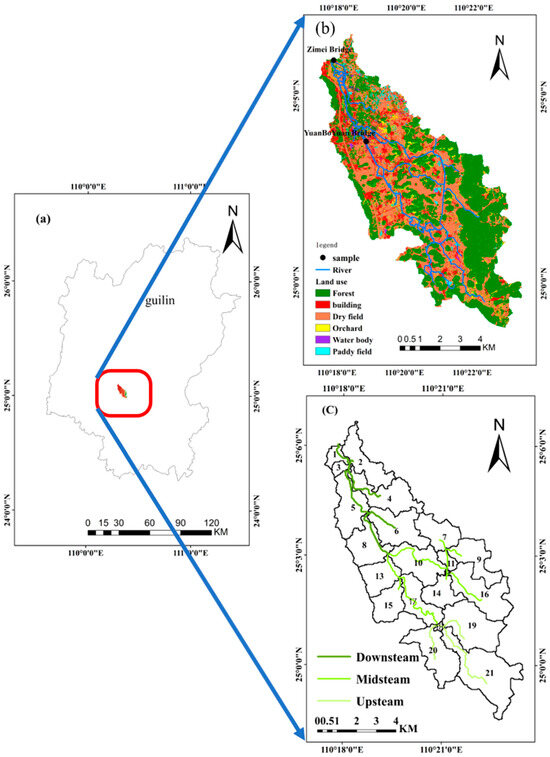
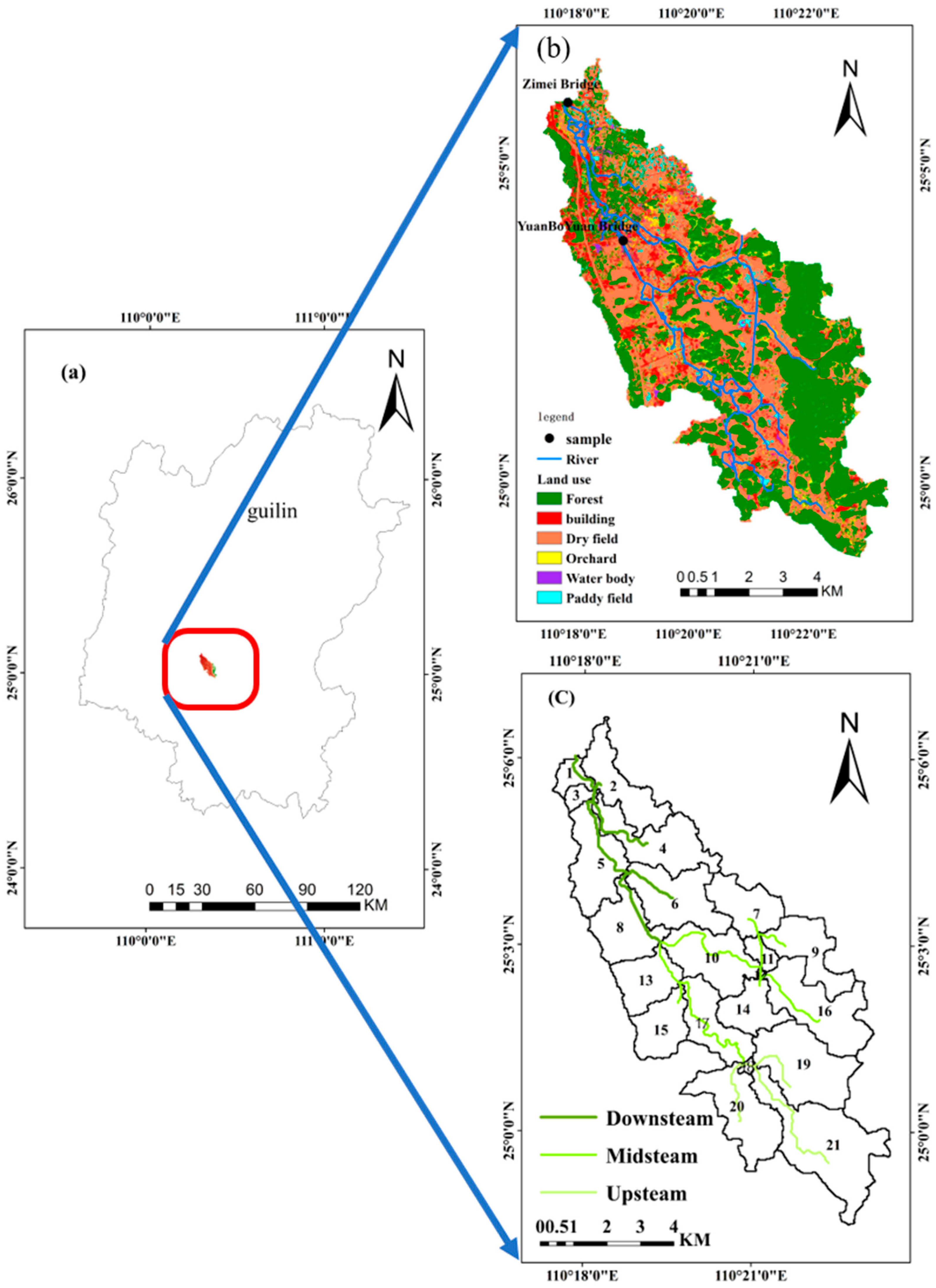
The Yanshan River starts from the Licanping Village Committee in Dabu Town in the south and empties into the Liangfeng River at Zimei Bridge in the north (Figure 1). The total area of the YRB is about 65.3 km2 and the main stream is about 13 km long. The YRB is in a low-latitude zone and has a subtropical monsoon climate, with an annual average sunshine duration of 1600 h. The annual average temperature is about 18.8 °C and the average annual rainfall is 1900 mm. Early and late rice is double-cropped annually in the YRB. The early rice is planted from April to July, and late rice is planted from July to October. In mid-March, the cultivated land is plowed, and nitrogen fertilizer (150 kg/ha) and compound fertilizer (225 kg/ha) are applied during this period. Early rice planting is carried out in early April. During the growing season of early rice, nitrogen fertilizer (300 kg/ha) and compound fertilizer (450 kg/ha) are applied. In early July, the land is plowed again, and nitrogen fertilizer (150 kg/ha) and compound fertilizer (225 kg/ha) are applied for the late rice planting. During the growing season of late rice, nitrogen fertilizer (300 kg/ha) and compound fertilizer (450 kg/ha) are applied, and it is harvested at the end of October. The basin boundary and the downstream outlet section of the basin at Zimei Bridge are shown in Figure 1.
Figure 1.
The location of the YRB (a); land use classification and monitoring points in the YRB (b); sub-basins of the YRB (c).
2.2. Monitoring in the YRB
From January 2022 to December 2023, the runoff and water quality were monitored at the outlet (Zimei Bridge) and the middle reach (Yuanboyuan Bridge) in the YRB. The water depth was automatically recorded by the water level gauge. The cross-sectional area and flow velocity were measured on-site to determine the stage–discharge curve. And then the discharge was calculated based on the stage–discharge curve.
Water sampling at the outlet and the middle reach in the YRB was conducted once per month in the dry seasons (from October to March) and every 10 days during the wet seasons (from April to September). The samples were sent to the laboratory for analysis in 24 h after being collected. The concentration of TN and TP were detected using the recommended methods in the Surface Water Environmental Quality Standard of China (GB3838-2002). Dissolved oxygen, pH, and actual conductivity were measured on-site during sampling.
2.3. Discretization of the Study Area
Based on training samples estimated by field surveys, land use types were classified using the support vector machine method with remote sensing images obtained by GF-2 (0.8 m × 0.8 m). Compared with the interpretation information, the accuracy rate was more than 85% with a Kappa coefficient of 0.98, and the land use types of the region were finally obtained. Land use was categorized into forest, cultivated land, building land, orchard, and water body (Figure 1b). In this study, ArcGIS 10.2 was employed to delineate the sub-basins of the YRB. The distribution of the river network in the YRB was obtained through field investigation and high-resolution images of Google Earth, and the vectorized river network was “burn in” the ArcSWAT (2012) tool for sub-basins generation. DEM data with a resolution of 12 m were imported, and then YRB was divided into 21 sub-basins (Figure 1c).
The input data for the SWAT model consists of DEM, land use, and soil distribution maps. The attribute database contains soil physical and chemical properties, meteorological data, hydrological data, and water quality data (Table 1).
Table 1.
Parameters for the SWAT model database.
2.4. Calibration and Validation of the Model
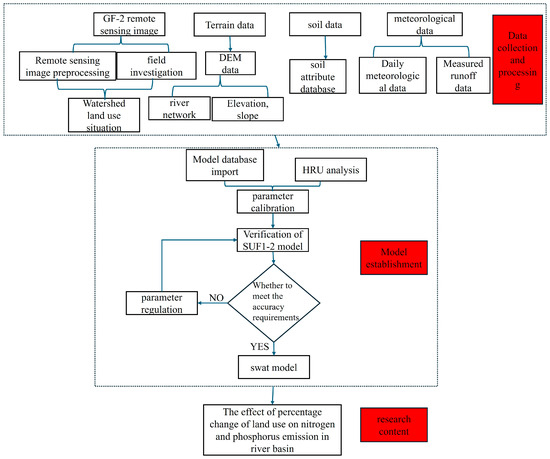
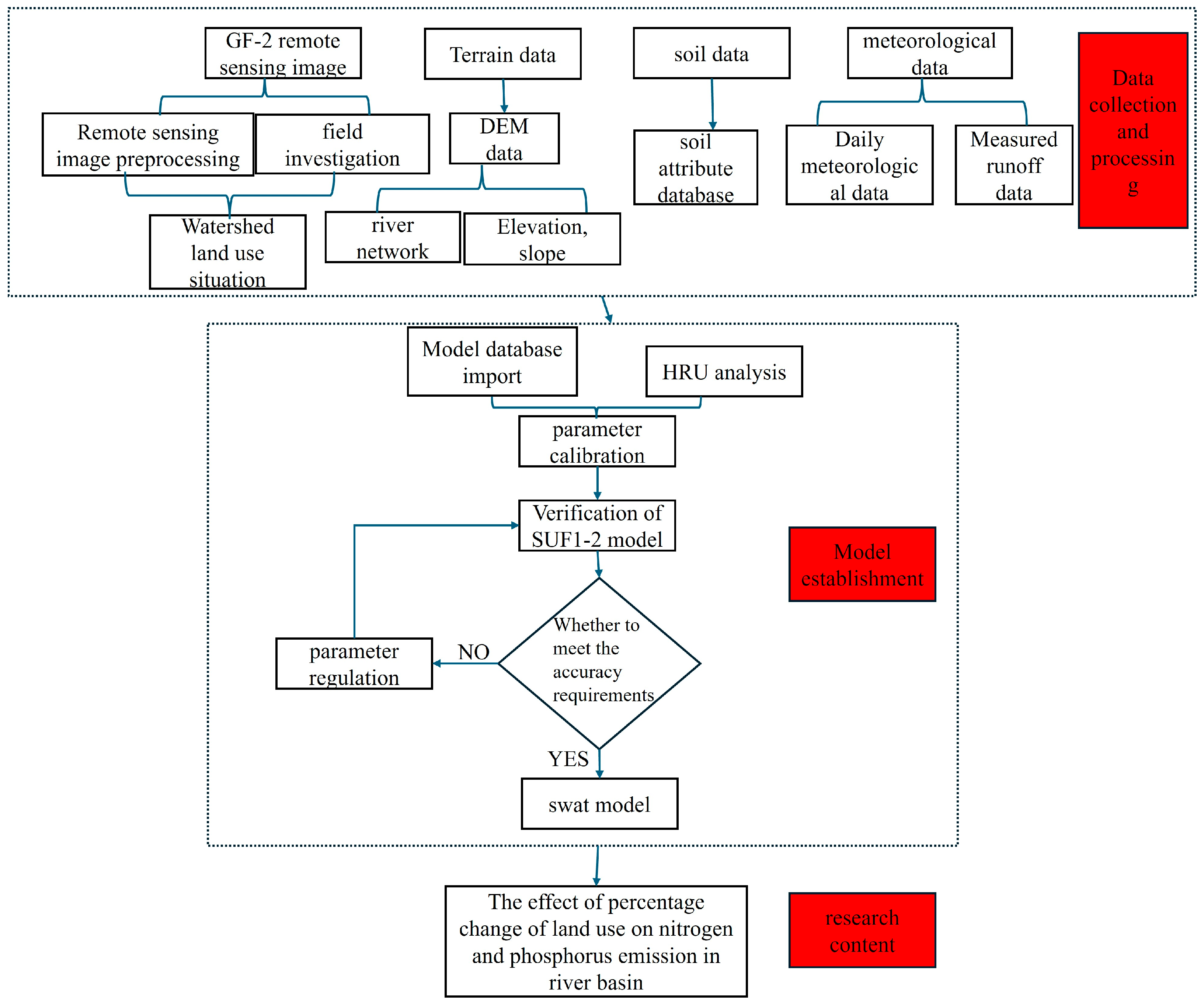
During the SWAT modeling process, the hydrological boundary was generated using the Digital Elevation Model (DEM) and river network vectors, with the outlet control section designated at Zimei Bridge (see Figure 1). Hydrologic Response Units (HRUs) were divided by overlaying three maps (“land use-soil-slope”) and setting an area threshold. The model dynamically simulates non-point source (NPS) pollution through daily HRU-scale calculations integrating hydrological–nutrient coupling equations, layered soil pools, and linear groundwater reservoirs, thereby fully characterizing the generation, lag, and river inflow processes of NPS pollution. The watershed was treated as a closed system, and daily meteorological data were used directly in the model. Monthly simulated data were used for model calibration and validation. The annual rainfall in 2021, 2022, and 2023 was 1923 mm, 2041 mm, and 1633 mm, respectively, corresponding to typical normal, wet, and dry hydrological years with high representativeness. A one-year warm-up period was implemented using the full 2021 meteorological sequence. The initial water content of the three soil layers was set to 50% of field capacity, and the initial nutrient contents were assigned based on measured values of Guilin red soil (TN: 1.2 g/kg, TP: 0.6 g/kg). The initial nutrient concentrations in river were set to measured values (TN: 12 mg/L, TP: 0.4 mg/L). The water storage and storage capacities of various N and P fractions on the last day of the warm-up period were directly adopted as the initial conditions for the 2022–2023 simulation period. After model estimation, the calibration and validation of parameters were conducted, with the results of sensitivity ranking and value ranges. For the Sequential Uncertainty Fitting Version 2 (SUFI-2) algorithm, all P-factor values exceeded 0.75 and all R-factor values were less than 1. The methodological workflow is illustrated in Figure 2.
Figure 2.
Flow chart of methodology.
The monitored runoff, TN, and TP export loads at the watershed outlet and middle reach were used to calibrate and validate the SWAT model. The monitored data in 2022 and 2023 were adopted for model calibration and validation, respectively, using SWAT-CUP. Parameter sensitivity analysis adopted the rule that a parameter’s sensitivity was more prominent when the absolute value of its t-statistic was larger and its p-statistic was closer to 0. Through 1000 iterations of the parameters via global and local analysis approaches, parameters with p < 0.5 and |t| > 0.5 were chosen from the sensitivity analysis, with specific values shown in Table 2. By repeatedly adjusting the parameters in the software and performing multiple iterations, the final parameter calibration results are shown in Table 3. The performances of model simulation were evaluated using the coefficient of determination (R2) and Nash–Sutcliffe efficiency (NSE).
where n is the number of observations, Oi is the observed values, Si is the simulated values, Om is the mean values of observed data, and Sm is the mean values of simulated data.
Table 2.
The values of calibrated parameters.
Table 3.
The simulated monthly mean runoff(m3/s).
2.5. Scenarios Setting
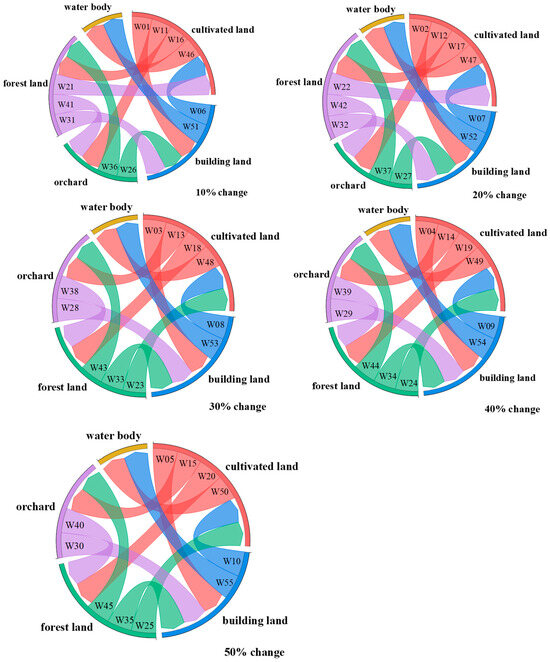
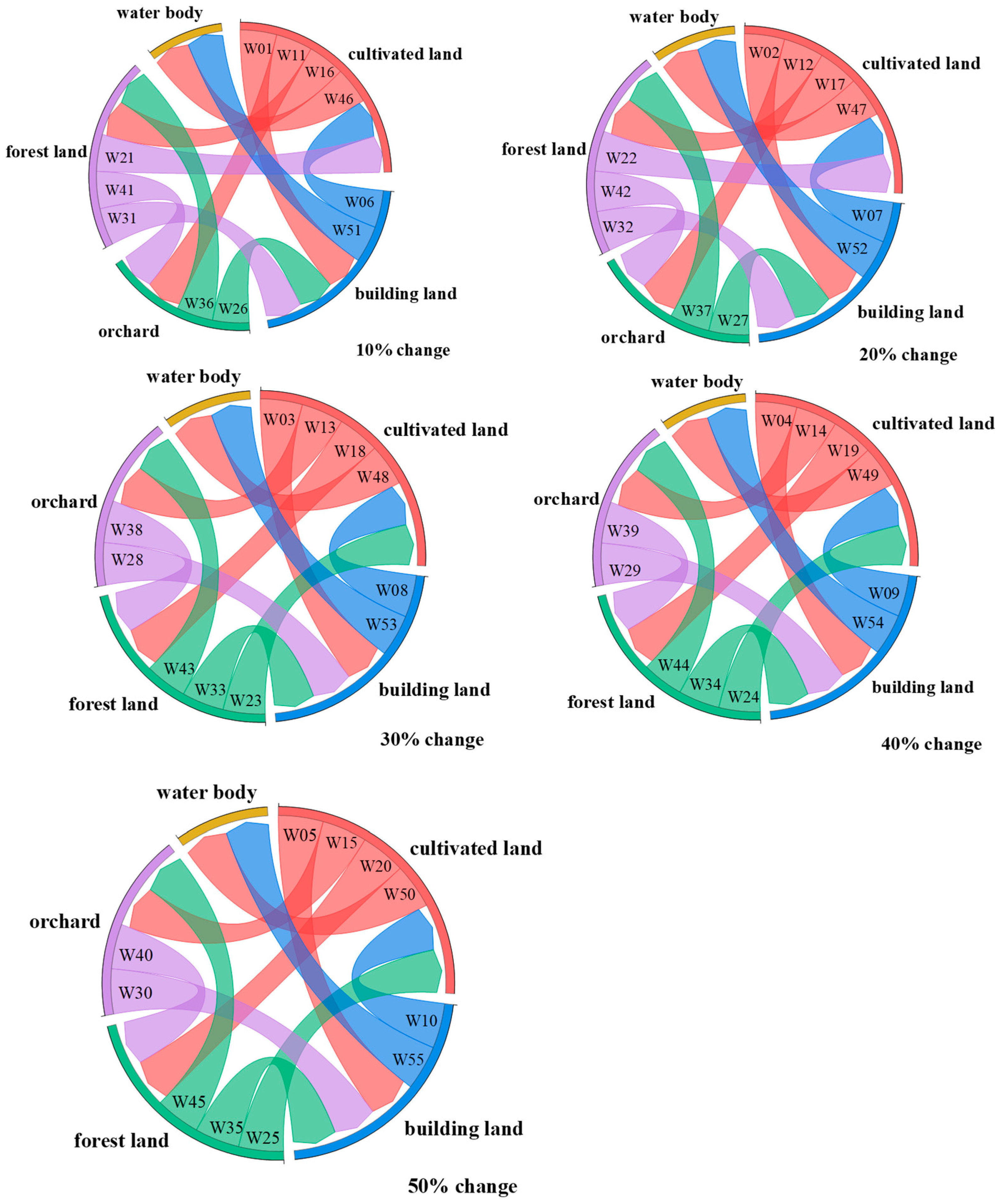
Based on the “Guilin City Territorial Space Planning (2021–2035)”, the areas of water bodies and building land in the study area will increase, while the areas of forest, cultivated land, and orchards may either increase or decrease. Land use conversion scenarios were determined based on the future land use development trends outlined in the “Guilin City Territorial Space Planning (2021–2035)” (Figure 3). To further investigate the impacts of land use changes on nitrogen and phosphorus export in the YRB, the established SWAT model was used to simulate the dynamic transformation of land use under the Land Use Update Edit in the Edit SWAT Input module. Scenario setting was accomplished solely through modifying the proportion between the two land uses, with the proportions of other land uses unchanged. Subsequently, within the Write Input Table module, re-executed the “Write SWAT Input Tables” function to implement parameter updates across all relevant entries. The scene settings are shown in Figure 3.
Figure 3.
Scenarios setting of land use conversion in the YRB. Notes: Land use types connected by arrows of the same color in the figure underwent proportional conversion. In the scenario settings, the values of 10%, 20%, 30%, 40%, and 50% refer to the proportions of the land use type at the tail of the arrow converted to the land use type indicated by the arrow’s direction.
3. Results and Analysis
3.1. Performance of the Model Simulation
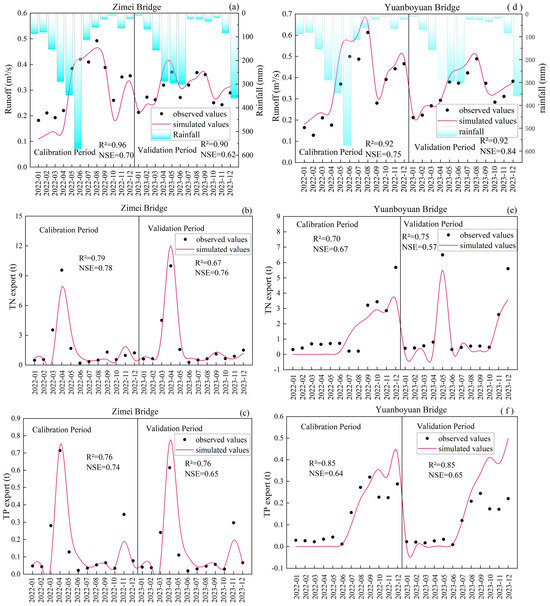
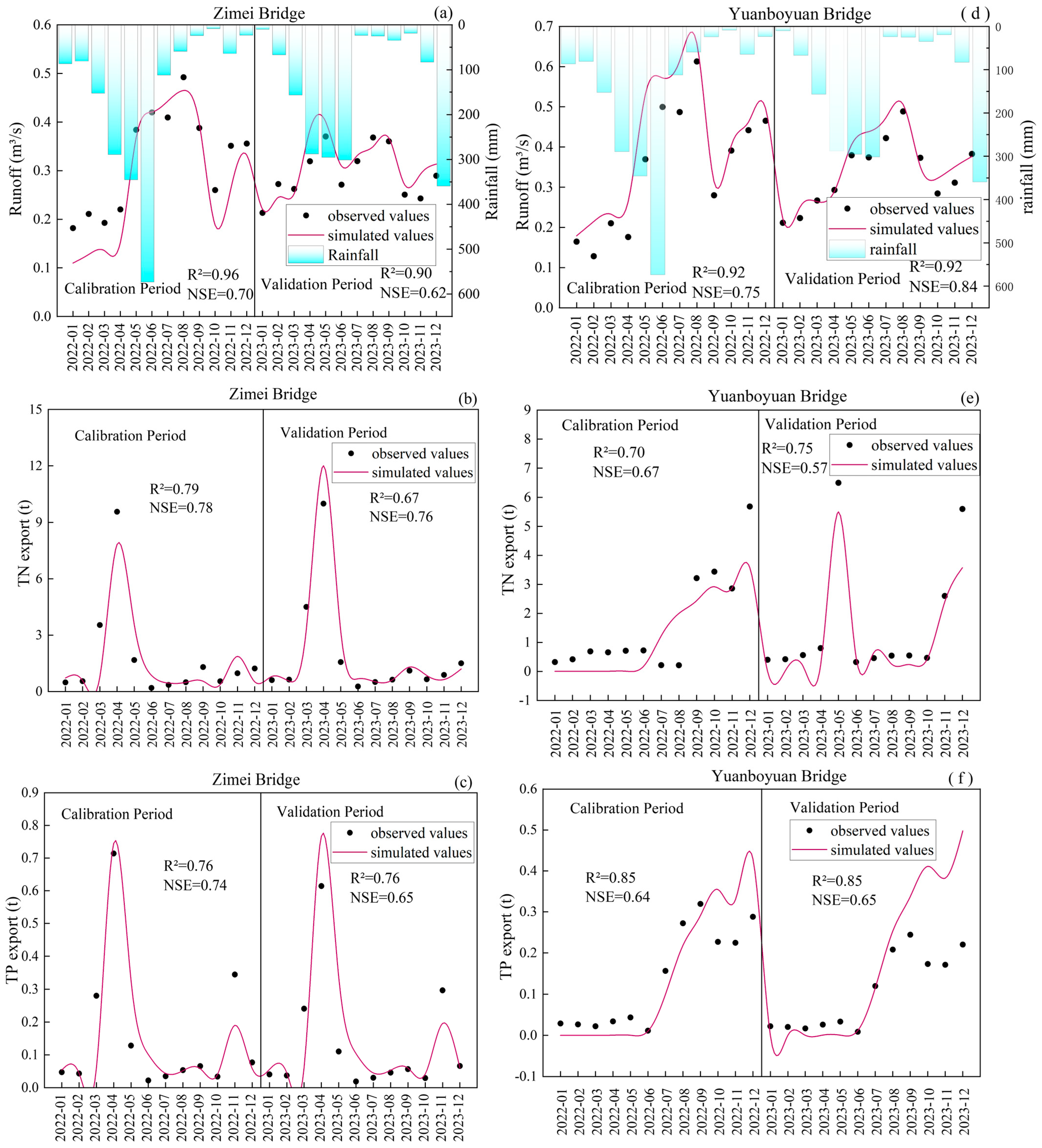
The model parameters were calibrated and verified by SWAT-CUP. The simulation results of runoff, TN, and TP exports in the YRB during the calibration and validation periods are shown in Figure 4. The model simulation results and the actual observations are basically consistent with the overall trend, but there are different degrees of deviation in each period (Figure 4a–f). The observed runoff at the outlet and middle reach showed two peaks in both 2022 and 2023. The simulated values captured the feature, although the simulated values slightly overestimated the runoff at the middle reach and were inconsistent with the observed runoff at the two ends of the simulated values at the outlet (Figure 4a,d). For TN simulation, the simulated values matched the trend changes and pulsed characteristics of observed values both in the calibration and validation periods (Figure 4b,e), indicating the reliability of the model in simulating the “source–sink” process of nitrogen pollution in the YRB. In TP simulation, the simulated curves also accurately reproduced the peak output and fluctuation rules of the observed TP (Figure 4c,f), reflecting the effective simulation of the coupled process of “runoff-sediment yield-phosphorus migration”. Furthermore, the simulated TN and TP exports at the outlet peaked in April 2022 and September 2023, which were close to the observed values. The simulated TN and TP exports at the middle reach were basically consistent with the measured values, but the simulated values were slightly lower than the observed values (Figure 4b,c,e,f). Overall, the model showed a high fitting degree in the simulation of runoff, TN, and TP at the outlet and in the middle reach, which proved that parameter estimation was reasonable.
Figure 4.
Calibration and validation of the monthly runoff, TN, and TP exports at the outlet (Zimei Bridge: a–c) and middle reach (Yuanboyuan Bridge: d–f) in the YRB.
The R2 and the NSE between the simulated and the observed values during the calibration and validation period were above 0.67 and 0.57, respectively (Figure 4). Therefore, the SWAT model had a good performance in simulating the runoff, TN, and TP exports in the YRB. The SWAT model exhibits basic simulation capabilities and can reproduce the main variation patterns of hydrology and water quality in the study area, thus being suitable for trend analysis and identification of key pollution processes.
3.2. Analysis of Runoff, TN and TP Exports
The mean runoff in dry and wet seasons is shown in Table 3. The runoff in wet seasons was higher than those in dry seasons. During the calibration period, the mean runoff at the outlet in the dry season and wet season were 0.193 m3/s and 0.389 m3/s, respectively, while the mean runoff at the middle reach in the dry and wet season were 0.331 m3/s and 0.492 m3/s, respectively (Table 3). During the validation period, the mean runoff at the outlet in the dry and wet season were 0.266 m3/s and 0.357 m3/s, respectively, and the mean runoff at the middle reach in the dry and wet season were 0.300 m3/s and 0.411 m3/s, respectively.
The mean runoff in 2022 and 2023 were 0.357 m3/s and 0.333 m3/s, respectively. The maximum runoff at the outlet and middle reach both occurred in August 2022, while the peak flow at the outlet in 2023 occurred in May. The average flow rate at the middle reach was higher than that at the outlet, which could be attributed to water consumption by the cultivated land in the lower stream (Figure 1b). And the amount of water input from downstream tributaries and drainage ditches was relatively small, causing the decrease in the runoff at the outlet.
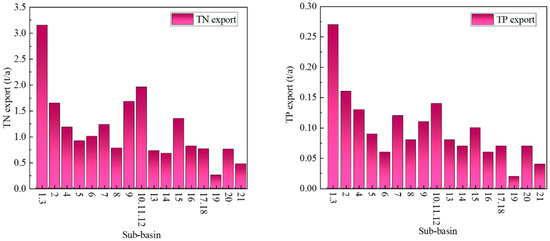
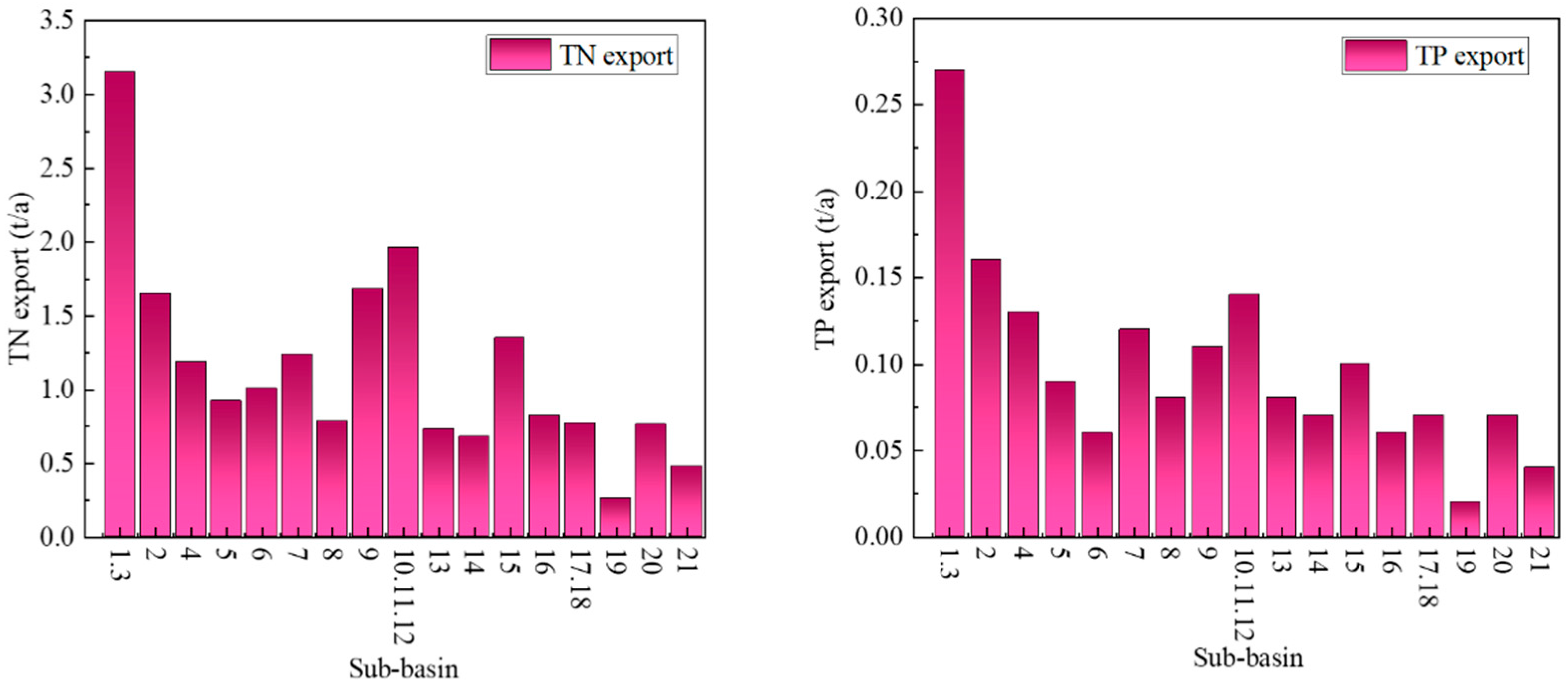
The simulated annual TN and TP exports in different sub-basins are shown in Figure 5. The TN and TP exports in the downstream sub-basins were higher than those in the upstream sub-basins. The TN and TP exports in sub-basin 1 were both the largest, although the area of the sub-basin 1 was small. The differences in TN and TP exports in the sub-basins might be attributed to land use type and configuration. In the downstream sub-basins, the building and cultivated land were the main land use types, while the forest was the main land use type in the upstream sub-basins (Figure 1b). Moreover, the landscape patch area was smaller and more fragmented in downstream sub-basins. In addition, the higher ratio of the building land might contribute to more domestic pollutant emissions.
Figure 5.
The simulated annual TN and TP exports in sub-basins of the YRB.
As shown in Table 4, the TN and TP exports showed seasonal variations, and the ratio of TN and TP pollution export in wet seasons exceeded 72% both in 2022 and 2023. In 2023, the TN pollution during the wet season decreased with a reduction by 0.78 t/a, while the TN export in the dry season and the TP exports increased. Heavy rainfall in the wet season generated high-intensity surface runoff (Figure 4a,d), which scoured dissolved nitrogen and eroded adsorbed phosphorus—acting as the dominant driver for the concentrated transport of watershed pollutants to water bodies and resulting in a much higher pollutant load than the dry season. March–July was the main agricultural cultivation season in the YRB, where prolonged temporal overlap between rainfall and farmland fertilization formed coupling effects that significantly increased the risk of farmland nitrogen and phosphorus loss.
Table 4.
The annual TN and TP exports in the YRB from 2022 to 2023.
3.3. The Relationship Between the TN and TP Exports and Landscape Patterns
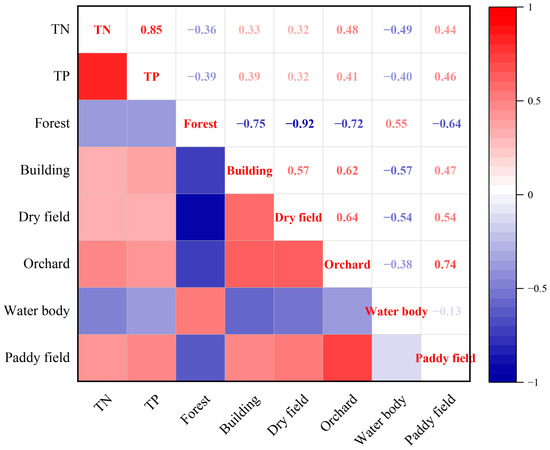
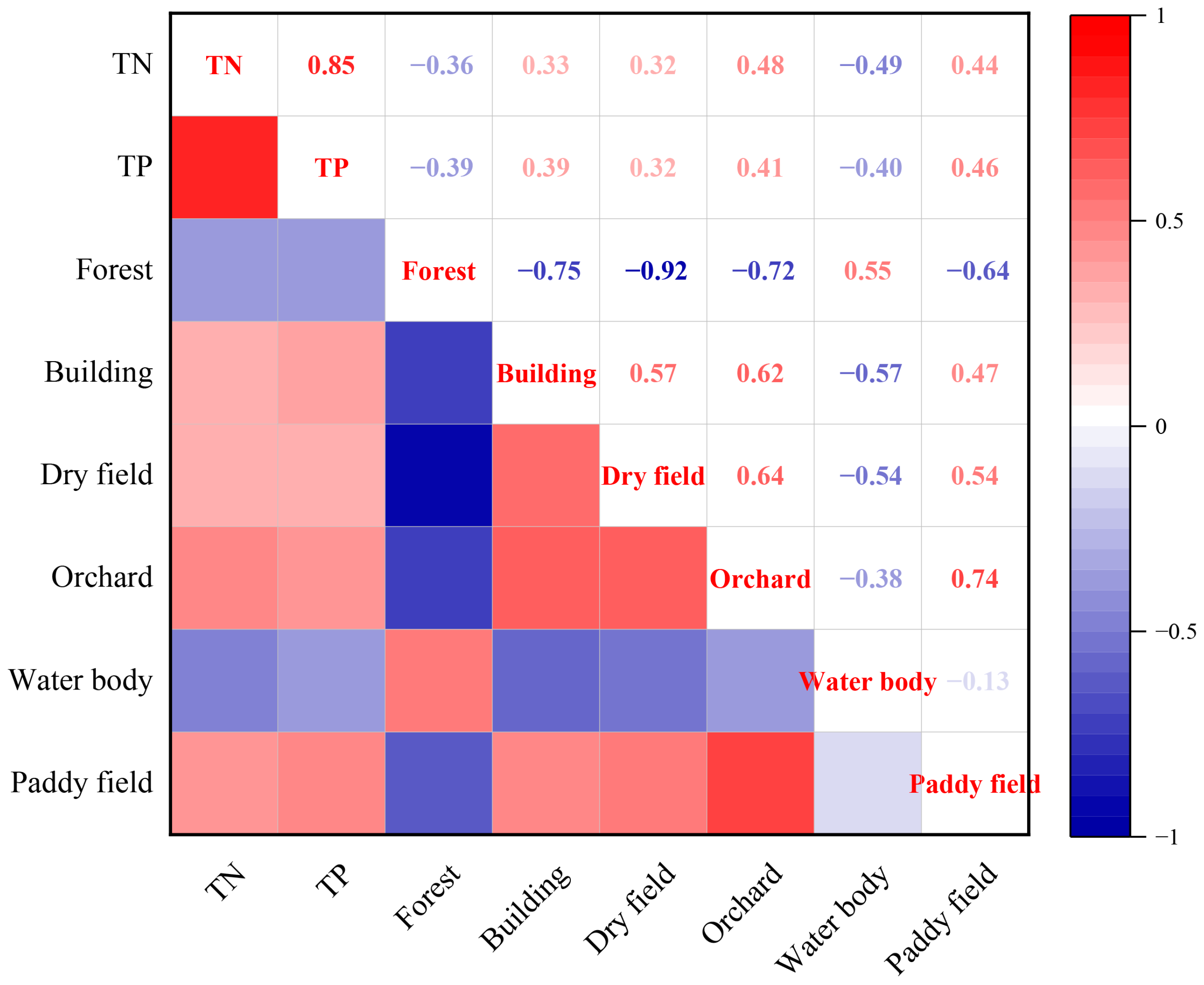
The type of land use in the YRB was mainly forest (46.38%) and cultivated land (35.46%), followed by building land (11.69%), orchards (5.30%), and water bodies (1.16%). Spearman’s correlation analysis was used to analyze the relationship between the land use area and TN and TP exports in each sub-basin (Figure 6). The study found that the exports of TN and TP were negatively correlated with the proportion of forest area, indicating that forests have a certain fixation and purification effect on nitrogen and phosphorus pollution. However, TN and TP exports were positively correlated with the proportion of other land use types, suggesting that human activities in building land and fertilization in cultivated land may promote the accumulation of nitrogen and phosphorus. The output of TN and TP is weakly negatively correlated with the proportion of water area, which may be due to the low proportion of water area in the sub-basin and the limited physical dilution of nutrients [29].
Figure 6.
Correlation analysis of the simulated nitrogen and phosphorus export load and the landscape composition in the YRB. Notes: Red color indicates a positive correlation, while blue color represents a negative correlation; the darker the color, the stronger the correlation. The numbers in the figure denote correlation coefficients.
3.4. The Impacts of Land Use Conversions on TN and TP Exports
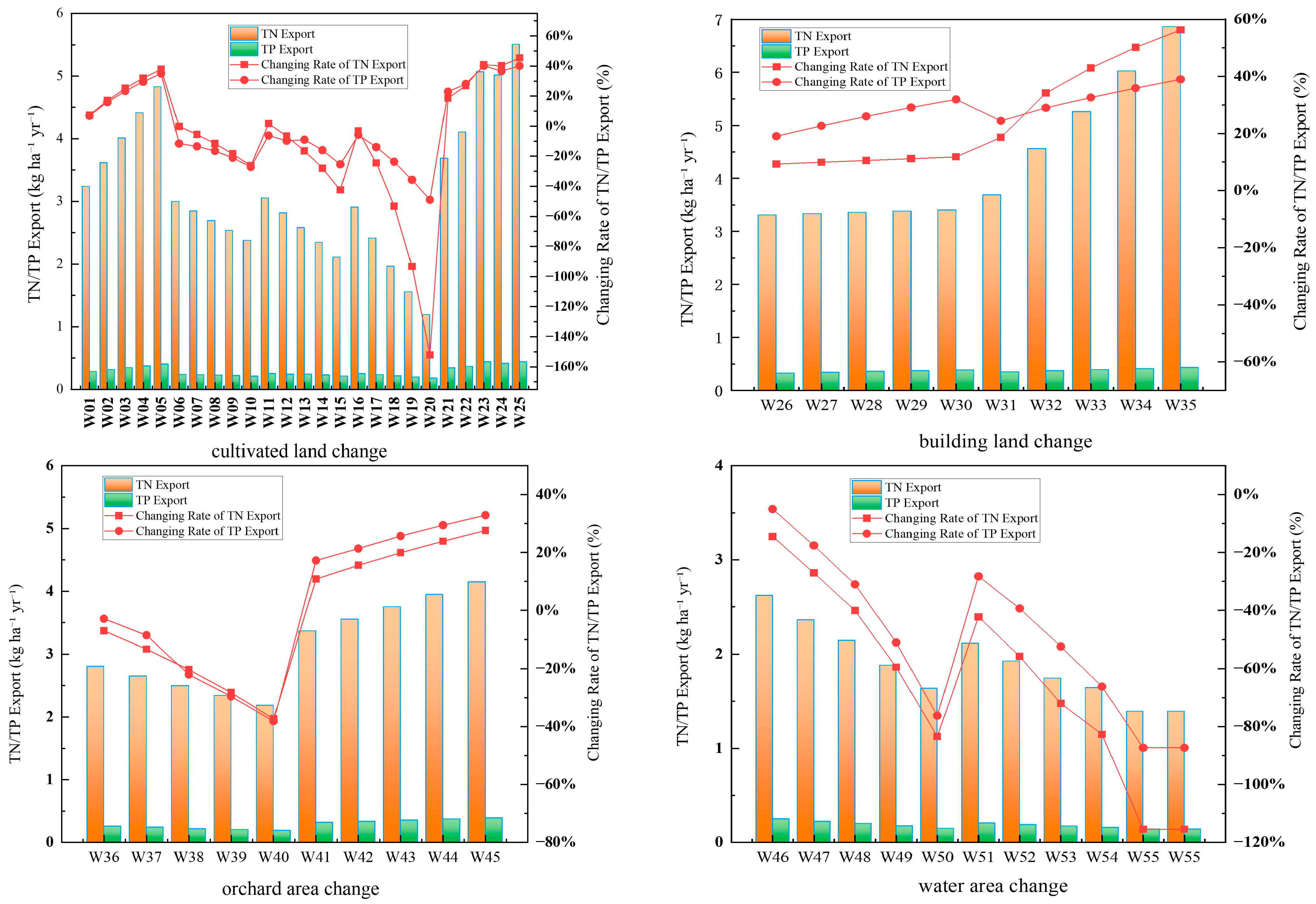
The annual TN and TP exports in the YRB under the scenarios of W01–W25 (the conversion between the cultivated land and the building land, forest, and orchard with the ratio of 10–50%) were simulated using the validated SWAT model. The changing rates of the annual TN and TP exports between the scenarios and the current land use pattern are shown in Figure 7. The results indicated that the changes in cultivated land area significantly affected the annual TN and TP exports, especially the conversion of the cultivated land into the building land increased the annual TN and TP exports. Although the increase rate declined with the rising conversion rare. For example, the TN and TP exports increased to 4.827 kg ha−1 yr−1 (+37.84%) and 0.4012 kg ha−1 yr−1 (+35.00%), respectively, under the W05 (the conversion of 50% of the cultivated land to the built-up land). The influences of the building land conversion into the cultivated land on the annual TN and TP exports showed the opposite pattern. However, the annual TN and TP exports decreased under the conversion of the cultivated land into the orchard (W11–W15) and forest (W16–W20), and the decrease rate increased with the rising conversion rate.
Figure 7.
The simulated annual TN and TP exports in the YRB and their changing rates under the scenarios of W01–W55.
Under the W26–W35 scenarios (10–50% conversion of orchards and forest to building land), the simulated annual TN and TP outputs of the YRB showed an upward trend, as shown in Figure 7. In the W26–W30 scenarios, the growth rate of annual TP output was significantly higher than that of TN; in the W31–W35 scenarios, the growth rates of TN and TP outputs were significantly higher than those in the W26–W30, and the growth trend of TN was more significant than that of TP.
The simulated annual TN and TP exports in the YRB increased under the scenarios of W36–W40, while they rose under the scenarios of W41–W45, as shown in Figure 7. And the increase rates of the annual TP exports were higher than those of the annual TN exports, further verifying the stronger positive effect of orchards on TP exports (Figure 7).
Numerous studies have found that water body area significantly influenced nitrogen and phosphorus pollution, particularly in lentic or slow-flowing aquatic ecosystems [29,30,31,32,33]. As key nodes for pollutant transport, temporary storage, and accumulation, water bodies altered the concentration and composition of nitrogen and phosphorus contaminants in watersheds [34]. Due to the minimal water body proportion in the YRB, the water quality showed no significant correlation with water body area. Therefore, 10 scenarios were established to investigate the impacts of an increasing water body area on the simulated annual TN and TP exports (Figure 7). As shown in Figure 7, with the increase in water surface area, the annual TN and TP exports significantly decreased, and the rate of decrease rapidly rose with the proportion of cultivated land and building land transferred that increased. The increase in water surface area provided a higher environmental capacity in the watershed, and was also conducive to the dilution and retention of pollutants, providing space and time for the physical, chemical, and biological processes of pollutant removal [31,35].
4. Discussion
In this study, Spearman’s correlation analysis was performed on the relationship between land use structure and nitrogen and phosphorus output flux at the sub-watershed scale in the Yanshan River Basin. The results showed that there was a significant negative correlation between the proportion of forest area and the output fluxes of total nitrogen (TN) and total phosphorus (TP). This finding strongly confirms that forest ecosystem, as an important ‘ecological sink‘, has significant interception, fixation, and purification functions for nitrogen and phosphorus pollutants in the basin [36,37]. In contrast, the proportion of building land and cultivated land (including dry land and orchard) was positively correlated with TN and TP output. This pattern clearly indicates that the landscape dominated by human activities is the main source of non-point source pollution in the basin. Specifically, the expansion of urban building land aggravates surface runoff because of increasing impervious surface area, and is accompanied by the discharge of domestic sewage, which together constitute a continuous pressure on the water environment [38,39]. For agricultural land, the positive correlation is mainly due to the application of chemical fertilizers. Among them, the moderate positive correlation between dry land and TN and TP directly reflects the risk of non-point source pollution caused by excessive use of nitrogen and phosphorus fertilizer. The close relationship between orchards and TP highlights that its current phosphorus management measures are a key link leading to an increase in the phosphorus load in the basin, which provides a clear intervention target for precision agriculture management [40].
In the scenario simulations, converting cultivated land to building land increased pollutant export loads. This surge is attributed to expanded impervious surfaces and untreated sewage discharge. In contrast, converting cultivated land to orchards or forest land reduced export loads. As citrus is the main orchard crop in the study area, the annual reduction in TN and TP exports under scenarios W12–W15 may result from combined effects of reduced fertilization and natural vegetation coverage. As shown in Figure 6, TN and TP export loads are negatively correlated with forest area. On the one hand, the increase in building land led to increasing domestic sewage discharge; on the other hand, the area of impervious surface expanded and enhanced the ability of runoff erosion, which made it easier for pollutants produced by human activities to enter downstream water bodies with runoff, thereby aggravating nitrogen and phosphorus pollution.
Different types of land use conversion exert differentiated impacts on nitrogen (N) and phosphorus (P) elements. This is primarily due to the significant differences in vegetation coverage, fertilization management, pollutant loads, and hydrological processes associated with various land use types (e.g., forest land, field, and building land). These differences further alter the sources, sinks, and migration pathways of nutrient elements. Studies on land use change have evolved from initial phenomenon description and driving factor analysis to integrated simulation and effect evaluation across multiple scales and methods. This study combined investigations into the eco-environmental impacts of land use change with analyses of its spatial patterns and planning. Guided by the coordinated development of economic growth and ecological protection, targeted restructuring of land use has been implemented in Guilin’s ecological landscape control zone. Water bodies, cultivated land, building land, and forest land have undergone functional transformation via ecological restoration. The restructuring of land use has achieved the integration of ecological and economic values, which provides the foundation for the scenario design of this study. Such transformations, involving the sacrifice of partial economic benefits for ecological improvements, encounter difficulties in reconciling the interests of relevant landowners. In order to effectively reduce the total nitrogen and total phosphorus export load in the Yanshan River Basin, the following core management recommendations are proposed based on the simulation results: the first is to restrict the expansion of building land, and to strengthen the corresponding sewage treatment, reducing non-point source pollution by small water bodies, such as ditches and ponds on farms; the second is to reasonably restore and expand the water wetland space as buffer and retention zones between pollution sources and rivers, making full use of its dilution, retention, and purification functions [41], and improving the overall environmental capacity of the basin.
Following the principle of balancing economic and ecological benefits, three types of ideal scenarios were selected: (1) the optimal balance scenario (scenario W11, converting 10% of cultivated land to orchard land) achieved TP emission reduction while maintaining TN basically stable, with positive overall environmental benefits that can mitigate agricultural non-point source pollution. Additionally, scenario W11 might exhibit high acceptance and strong adaptability among farmers because it not only aligns with the requirements for agricultural non-point source pollution control, but also increased landowners’ income. (2) The ecological core scenario (scenario W17, converting 20% of cultivated land to forest land) led to significant decreases in both TN and TP, and it was one of the scenarios with the most prominent environmental benefits among practical schemes. However, ecological compensation should be provided to landowners who transferred their cultivated land to make up for their losses, thereby improving the implementation of scenario W17. (3) The structural optimization scenario (scenario W38: 30% orchard land converted to forest land) achieved stable and significant pollutant emission reductions, with TP reduction superior to the same-proportion “cultivated land to forest land” scenarios. As an agricultural land “eco-optimization” adjustment, converting moderately profitable orchards to forest would cause economic losses to landowners, which need to be compensated.
This study also has some limitations. First of all, the simulation accuracy of the SWAT model in local areas (such as the middle reaches) and specific time periods still needs to be improved, indicating that the model needs to be optimized in spatial heterogeneity processing and local process simulation. Secondly, owing to the lack of runoff and water quality data in the Yanshan River Basin, this study used monitored runoff and nitrogen–phosphorus load data from two monitoring sites (in the middle and lower reaches) for model calibration and validation to enhance verification reliability. However, a longer-term data sequence would further improve the model’s accuracy and reliability. Thirdly, although the scenario setting covers a variety of land use conversion types, only the conversion of land use type proportions was considered, whereas the spatial locations and configurations of altered land use types were neglected. Research has demonstrated that the spatial distribution and combinations of land use types exert a substantial influence on the discharge of pollutants (e.g., nitrogen and phosphorus), particularly for small water bodies such as ditches and ponds at the watershed scale [28]. Furthermore, the lag effect of the ecological impacts of land use type conversion was not considered in the scenario simulations. For instance, when converting land to cultivated land, orchards, or forest land, the influence of the growth processes of crops, fruit trees, and trees on pollutant reduction efficiency was not taken into account. This may lead to an overestimation or underestimation of the short-term pollutant reduction effects of land use conversion scenarios. Fourthly, the study also does not consider the synergistic effects of climate change. In the future, climate scenarios can be coupled to enhance the comprehensiveness of prediction. Fifth, the study area features karst landforms with developed karstification, which are characterized by unclosed hydrological boundaries and intense interaction with groundwater. In future research, coupling a hydrological model with a groundwater model is expected to further improve simulation accuracy. In addition, the impact of landscape configuration on water quality has not been discussed in depth, and follow-up studies can further reveal its mechanism in combination with the landscape index of changed land use [42,43,44].
5. Conclusions
In this study, the SWAT model was used to simulate the output of total nitrogen (TN) and total phosphorus (TP), and the relationship between TN and TP exports and land use patterns was discussed in reference to the Yanshan River Basin in Guilin, China. And then, the impacts of land use conversion on the TN and TP exports were evaluated by scenario analysis with the calibrated and validated SWAT. The SWAT model performed well in simulating the runoff, TN, and TP exports in the YRB with R2 and NSE higher than 0.67 and 0.57, respectively. The TN and TP exports mainly occurred in the wet season with their ratios both exceeding 72%. Correlation analysis showed that in the simulated TN and TP output exports, forest land mainly played the role of a sink; while building and cultivated land mainly played the role of a source. Under the conversion of the other land use types into the building land, cultivated land, and orchards, the TN and TP exports increased to 56.28% and 40.15%, respectively, and the forest and water body area could reduce the TN and TP exports up to 152.09% and 87.34.15%, respectively. These findings provide valuable references for the rational planning of land use in the study area. This study not only provides suggestions for land use optimization and water quality improvement in agricultural basins, but also provides a scientific paradigm for sustainable river management in global karst areas under the dual pressures of climate change and human activities.
Author Contributions
B.X.: Writing—original draft, review, and editing, Methodology, Funding acquisition, Formal analysis, Conceptualization. S.Y.: Writing—original draft, Methodology, Investigation, Software. Z.F.: Writing—original draft, Software, Methodology, Formal analysis, Conceptualization. R.F.: Writing—original draft, Formal analysis. J.H.: Writing, Methodology, Investigation, Visualization. P.X.: Writing, Methodology, Investigation. Q.X.: Formal analysis, Conceptualization. J.D.: Formal analysis, Conceptualization. All authors have read and agreed to the published version of the manuscript.
Funding
This research was funded by the Natural Science Foundation of Guangxi Zhuang Autonomous Region grant number 2022GXNSFBA035614 and 2024GXNSFAA010519, the Scientific Research and Technology Development Program of Guangxi Zhuang Autonomous Region grant number Guike-AB25069138, GuikeAD25069074 and GuikeAB22035075, the Foundation of Key Laboratory of Guangxi grant number Guikeneng21201Z011 and the Guilin University of Technology Foundation grant number GUTQDJJ2019026.
Institutional Review Board Statement
Not applicable.
Informed Consent Statement
Not applicable.
Data Availability Statement
The raw data supporting the conclusions of this article will be made available by the authors on request.
Acknowledgments
We gratefully acknowledge the Guilin Agricultural Water and Soil Resources and Environment Observation and Research Station of Guangxi for technical support in data collection.
Conflicts of Interest
Author Pengwei Xue was employed by the company Shandong Xinhai Mining Technology and Equipment Company Limited. The other authors declare that they have no known competing financial interests or personal relationships that could have appeared to influence the work reported in this paper.
References
- Li, Y.; Qin, L.H.; Lei, Q.L.; Luo, J.; Du, X.; Yan, T.; Liu, H. Review on agricultural non-point source pollution monitoring sections layout and pollutant loading estimation in small watershed. J. Lake Sci. 2022, 34, 1413–1427, (In Chinese with English Abstract). [Google Scholar] [CrossRef] [Scilit]
- Li, Y.; Shi, L.; Wang, J.; Hu, Y.; Fan, J. Pluvial Flooding Risk Analysis and the Solutions to Risk Mitigation for Dangyang City in China. J. Risk Anal. Crisis Response 2015, 5, 107–119. [Google Scholar] [CrossRef] [Scilit]
- Fashae, A.O.; Ayorinde, A.H.; Olusola, O.A.; Obateru, R.O. Landuse and surface water quality in an emerging urban city. Appl. Water Sci. 2019, 9, 25. [Google Scholar] [CrossRef] [Scilit]
- He, S.; Chen, W.; Liang, D. Rapid estimation method of pollution load from each rainfall-runoff in urban area. J. Lake Sci. 2021, 33, 138–147, (In Chinese with English Abstract). [Google Scholar] [CrossRef] [Scilit]
- Zhu, A.P.; Yuan, S.Y.; Wen, S.S.; Huang, B.B.; Feng, X.L.; Xie, Z.L. Effects of landscape pattern on water quality at multi-spatial scales in the Liuxi River. Acta Ecol. Sin. 2023, 43, 1485–1495. [Google Scholar] [CrossRef] [Scilit]
- de Mello, K.; Valente, R.A.; Randhir, T.O.; Vettorazzi, C.A. Impacts of tropical forest cover on water quality in agricultural watersheds in southeastern Brazil. Ecol. Indic. 2018, 93, 1293–1301. [Google Scholar] [CrossRef] [Scilit]
- Česonienė, L.; Šileikienė, D.; Dapkienė, M. Relationship between the Water Quality Elements of Water Bodies and the Hydrometric Parameters: Case Study in Lithuania. Water 2020, 12, 500. [Google Scholar] [CrossRef] [Scilit]
- Luo, P.; Xin, C.; Zhu, Y.; Liu, Y.; Ling, J.; Wang, T.; Huang, J.; Khu, S.T. Effect of Rational Fertilizer for Eggplants on Nitrogen and Phosphorus Pollutants in Agricultural Water Bodies. Processes 2023, 11, 579. [Google Scholar] [CrossRef] [Scilit]
- Zhou, Z.; Zhao, W.; Lv, S.; Huang, D.; Zhao, Z.; Sun, Y. Spatiotemporal Transfer of Source-Sink Landscape Ecological Risk in a Karst Lake Watershed Based on Sub-Watersheds. Land 2023, 12, 1330. [Google Scholar] [CrossRef] [Scilit]
- Lee, S.W.; Hwang, S.J.; Lee, S.B.; Hwang, H.S.; Sung, H.C. Landscape ecological approach to the relationships of land use patterns in watersheds to water quality characteristics. Landsc. Urban Plan. 2009, 92, 80–89. [Google Scholar] [CrossRef] [Scilit]
- Bu, H.; Meng, W.; Zhang, Y.; Wan, J. Relationships between land use patterns and water quality in the Taizi River basin, China. Ecol. Indic. 2014, 41, 187–197. [Google Scholar] [CrossRef] [Scilit]
- Beckert, K.A.; Fisher, T.R.; O’Neil, J.M.; Jesien, R.V. Characterization and comparison of stream nutrients, land use, and loading patterns in Maryland coastal bay watersheds. Water Air Soil Pollut. 2011, 221, 255–273. [Google Scholar] [CrossRef] [Scilit]
- Wu, J.; Lu, J. Spatial scale effects of landscape metrics on stream water quality and their seasonal changes. Water Res. 2021, 191, 116811. [Google Scholar] [CrossRef] [Scilit] [PubMed]
- Li, Y.; Wang, L.; Zheng, H.; Jin, H.; Xu, T.; Yang, P.; Ouyang, Z. Evolution characteristics for water eco-environment of Baiyangdian lake with 3s technologies in the past 60 years. In International Conference on Computer and Computing Technologies in Agriculture; Springer: Berlin/Heidelberg, Germany, 2011. [Google Scholar]
- Bu, X.; Xue, J.; Zhao, C.; Wu, Y.; Han, F.; Zhu, L. Sediment and nutrient removal by integrated tree-grass riparian buffers in Taihu Lake watershed, eastern China. J. Soil Water Conserv. 2016, 71, 129–136. [Google Scholar] [CrossRef] [Scilit]
- Zhang, X.; Zheng, Q.; Zhou, L.; Wei, J. Nonpoint Pollution Source-Sink Landscape Pattern Change Analysis in a Coastal River Basin in Southeast China. Int. J. Environ. Res. Public Health 2018, 15, 2115. [Google Scholar] [CrossRef] [Scilit]
- Webber, D.F.; Mickelson, S.K.; Ahmed, S.I.; Russell, J.R.; Powers, W.J.; Schultz, R.C.; Kovar, J.L. Livestock grazing and vegetative filter strip buffer effects on runoff sediment, nitrate, and phosphorus losses. J. Soil Water Conserv. 2010, 65, 34–41. [Google Scholar] [CrossRef] [Scilit]
- Talib, A.; Randhir, T.O. Long-term effects of land-use change on water resources in urbanizing watersheds. PLoS Water 2023, 2, e0000083. [Google Scholar] [CrossRef] [Scilit]
- Liang, X.; Pan, Y.; Li, C.; Wu, W.; Huang, X. Evaluating the influence of land use and landscape pattern on the spatial pattern of water quality in the Pearl River Basin. Sustainability 2023, 15, 15146. [Google Scholar] [CrossRef] [Scilit]
- Chen, Q.; Zhu, H.; He, R.; Dahlgren, R.A.; Zhang, M.; Mei, K. Evaluating the impacts of land use on surface water quality using geographically weighted regression. Acta Sci. Circumstantiae 2015, 35, 1571–1580. [Google Scholar]
- Kliment, Z.; Kadlec, J.; Langhammer, J. Evaluation of suspended load changes using AnnAGNPS and SWAT semi-empirical erosion models. Catena 2008, 73, 286–299. [Google Scholar] [CrossRef] [Scilit]
- Parajuli, P.B.; Nelson, N.O.; Frees, L.D.; Mankin, K.R. Comparison of AnnAGNPS and SWAT model simulation results in USDA-CEAP agricultural watersheds in south-central Kansas. Hydrol. Process. 2009, 23, 748–763. [Google Scholar] [CrossRef] [Scilit]
- Tong, X.; Cui, Y.; Chen, M.; Hu, B.; Xu, W.S. Simulation on Change Law of Runoff, Sediment and Non-point Source Nitrogen and Phosphorus Discharge under Different Land uses Based on SWAT Model: A Case Study of Er hai Lake Small Watershed. IOP Conf. Ser. Earth Environ. Sci. 2018, 153, 062062. [Google Scholar] [CrossRef] [Scilit]
- Al Khoury, I.; Boithias, L.; Labat, D. A review of the application of the soil and water assessment tool (SWAT) in karst watersheds. Water 2023, 15, 954. [Google Scholar] [CrossRef] [Scilit]
- GB 3838-2002; Ministry of Ecology and Environment of the People’s Republic of China. Environmental Quality Standards for Surface Water. China Standards Press: Beijing, China, 2002; (In Chinese with English Abstract).
- Li, Z.; Dai, J.; Li, Z.; Liu, Y.; Xu, J.; Zhang, Z.; Xu, B. Simulation study on the effect of non-point source pollution on water quality in the upper reaches of the Lijiang River. Water 2022, 14, 3995. [Google Scholar] [CrossRef] [Scilit]
- Lu, Q.; Zou, J.; Ye, Y.; Wang, Z. Design and implementation of a Li River water quality monitoring and analysis system based on outlier data analysis. PLoS ONE 2024, 19, e0299435. [Google Scholar] [CrossRef] [Scilit]
- Fang, Z.; Fang, R.; Xu, B.; Xue, P.; Zou, C.; Huang, J.; Xu, Q.; Dai, J. Scale Effects of Landscape Patterns on Nitrogen and Phosphorus Pollution in Yanshan River Basin, Guilin, China. Water 2024, 16, 2472. [Google Scholar] [CrossRef] [Scilit]
- Zhong, X. Study on the Relationship Between Landscape Pattern and Water Quality Threshold in Dianchi Lake Basin Considering Spatial Scale Effect. Master’s Thesis, Yunnan Normal University, Yunnan, China, 2022. (In Chinese with English Abstract). [Google Scholar] [CrossRef]
- Cheng, F.Y.; Basu, N.B. Biogeochemical hotspots: Role of small water bodies in landscape nutrient processing. Water Resour. Res. 2017, 53, 5038–5056. [Google Scholar] [CrossRef] [Scilit]
- Shen, W.; Li, S.; Mi, M.; Zhuang, Y.; Zhang, L. What makes ditches and ponds more efficient in nitrogen control? Agric. Ecosyst. Environ. 2021, 314, 107409. [Google Scholar] [CrossRef] [Scilit]
- Shen, W.; Li, S.; Basu, N.B.; Ury, E.A.; Jing, Q.; Zhang, L. Size and temperature drive nutrient retention potential across water bodies in China. Water Res. 2023, 239, 120054. [Google Scholar] [CrossRef] [Scilit]
- Wang, F.; Li, S.; Yan, W.; Yu, Q.; Tian, S.; Yan, J.; Zhou, D.; Shao, Y. Dependence of riverine total phosphorus retention and fluxes on hydrology and river size at river network scale. J. Hydrol. 2025, 652, 132676. [Google Scholar] [CrossRef] [Scilit]
- Deng, X. Influence of water body area on water quality in the southern Jiangsu Plain, eastern China. J. Clean. Prod. 2020, 254, 120136. [Google Scholar] [CrossRef] [Scilit]
- Wang, L.; Shang, S.; Liu, W.; She, D.; Hu, W.; Liu, Y. Hydrodynamic controls on nitrogen distribution and removal in aquatic ecosystems. Water Res. 2023, 242, 120257. [Google Scholar] [CrossRef] [Scilit] [PubMed]
- Bernhardt, E.S.; Likens, G.E.; Buso, D.C.; Driscoll, C. In-stream uptake dampens effects of major forest disturbance on watershed nitrogen export. Proc. Natl. Acad. Sci. USA 2003, 100, 10304–10308. [Google Scholar] [CrossRef] [Scilit]
- Sheng, W.; Yu, G.; Fang, H.; Jiang, C.; Yan, J.; Zhou, M. Sinks for inorganic nitrogen deposition in forest ecosystems with low and high nitrogen deposition in China. PLoS ONE 2014, 9, e89322. [Google Scholar] [CrossRef] [Scilit]
- Andualem, T.G.; Peters, S.; Hewa, G.A.; Boland, J.; Myers, B.R. Spatiotemporal trends of urban-induced land use and land cover change and implications on catchment surface imperviousness. Appl. Water Sci. 2023, 13, 223. [Google Scholar] [CrossRef] [Scilit]
- Bonansea, M.; Bazán, R.; Germán, A.; Ferral, A.; Beltramone, G.; Cossavella, A.; Pinotti, L. Assessing land use and land cover change in Los Molinos reservoir watershed and the effect on the reservoir water quality. J. South Am. Earth Sci. 2021, 108, 103243. [Google Scholar] [CrossRef] [Scilit]
- Sharpley, A.N.; Weld, J.L.; Beegle, D.B.; Kleinman, P.J.; Gburek, W.J.; Moore, P.A., Jr.; Mullins, G. Development of phosphorus indices for nutrient management planning strategies in the United States. J. Soil Water Conserv. 2003, 58, 137–152. [Google Scholar] [CrossRef] [Scilit]
- Land, M.; Granéli, W.; Grimvall, A.; Hoffmann, C.C.; Mitsch, W.J.; Tonderski, K.S.; Verhoeven, J.T. How effective are created or restored freshwater wetlands for nitrogen and phosphorus removal? A systematic review. Environ. Evid. 2016, 5, 9. [Google Scholar] [CrossRef] [Scilit]
- Shu, X.; Wang, W.; Zhu, M.; Xu, J.; Tan, X.; Zhang, Q. Impacts of land use and landscape pattern on water quality at multiple spatial scales in a subtropical large river. Ecohydrology 2022, 15, e2398. [Google Scholar] [CrossRef] [Scilit]
- Casquin, A.; Dupas, R.; Gu, S.; Couic, E.; Gruau, G.; Durand, P. The influence of landscape spatial configuration on nitrogen and phosphorus exports in agricultural catchments. Landsc. Ecol. 2021, 36, 3383–3399. [Google Scholar] [CrossRef] [Scilit]
- Xu, Q.; Wang, P.; Shu, W.; Ding, M.; Zhang, H. Influence of landscape structures on river water quality at multiple spatial scales: A case study of the Yuan River watershed, China. Ecol. Indic. 2021, 121, 107226. [Google Scholar] [CrossRef] [Scilit]

Disclaimer/Publisher’s Note: The statements, opinions and data contained in all publications are solely those of the individual author(s) and contributor(s) and not of MDPI and/or the editor(s). MDPI and/or the editor(s) disclaim responsibility for any injury to people or property resulting from any ideas, methods, instructions or products referred to in the content. |
© 2025 by the authors. Licensee MDPI, Basel, Switzerland. This article is an open access article distributed under the terms and conditions of the Creative Commons Attribution (CC BY) license.