1. Introduction
Over the past five decades, economic globalization has accelerated supply chain expansion and supported global growth, but it has also caused significant ecological degradation [
1]. As a result, the global economy is increasingly shifting toward low-carbon development. Manufacturing is central to economic activity, and greening supply chains has become a key strategy for the manufacturing industry [
2,
3]. Promoting the green transformation of supply chains is not only an essential industrial upgrade but also a crucial pathway for achieving long-term environmental sustainability.
Some scholars have researched green supply chains from a competitive perspective. Li et al. [
4] used game theory to analyze how competition shapes equilibrium prices and profits, showing that green technology improves with higher R&D investment, while stronger green competition reduces members’ profits. Chang et al. [
5] modeled a two-tier supply chain and found that weak competition benefits leaders, whereas strong competition favors followers. Xia et al. [
6] examined financing decisions in competitive supply chains and found that intense competition weakens manufacturers’ incentives to invest in emission reduction. Li et al. [
7] analyzed information sharing in horizontal competition and showed that, although information sharing generally enhances profitability, its effectiveness may change under competitive pressure.
These studies assume that supply chain members are perfectly rational. However, growing evidence shows that decision-makers often hold behavioral preferences that diverge from rational predictions [
8]. When confronted with risk factors, many small and medium-sized enterprises tend to adopt conservative strategies and exhibit risk aversion [
9,
10,
11]. Intensifying market competition may further reinforce such risk-averse tendencies among supply chain participants. Risk-averse behavior may hinder investments in green technologies, and understanding its impact is essential for designing sustainable supply chain systems. Therefore, this study examines how risk aversion influences decision-making within a green supply chain characterized by retailer competition. We address the following questions:
RQ1: What is the optimal pricing approach when accounting for risk-averse behavior in a market with competing retailers?
RQ2: How does risk aversion impact retailer-competitive green supply chain decision-making?
RQ3: How do we coordinate risk-averse behavior under retailer competition?
Section 2 offers an overview of the pertinent literature.
Section 3 presents the model framework, including the underlying assumptions and model formulation.
Section 4 analyzes and compares the decision variables under different models.
Section 5 validates the findings via numerical simulations.
Section 6 concludes the paper and offers discussions.
2. Literature Review
This section reviews the research on retail competition and risk aversion coordination and specifies our contributions.
2.1. Supply Chain Pricing Considering Retailer Competition
The competitive behavior of retailers is a focal point in supply chain pricing decisions. Current literature primarily focuses on one manufacturer providing products to two competing retailers [
12,
13]. For example, Mondal and Giri [
14] investigated the competition and cooperation issues between one manufacturer and two retailers within the context of government intervention, carbon quota, and trade policies. They discovered that when retailers act as followers to manufacturers, they are profitable in Stackelberg games. Wang et al. [
15] studied collaborative behavior among competing retailers in closed-loop supply chains and found that retailer cooperation leads to increased profits. Zhang et al. [
16] examined enterprise decision-making considering supply disruption risk under retailer competition. Their results revealed that an increase in the intensity of retailer competition enhances supply reliability. Zhuo and Han [
17] considered the supply chain pricing decisions with government subsidies and retailer competition. The results showed that vertical cooperation in the supply chain can improve Pareto, but retailer cooperation may not necessarily provide additional benefits to the supply chain. Li [
18] examined the issue of demand uncertainty among competing retailers. The results indicated that as retailers’ demand uncertainty decreases, their individual profits increase.
Some scholars have also examined supply chain decisions under retailer competition from different perspectives. For example, Pal et al. [
19] investigated retailer competition and product recycling under a carbon trading policy and suggested that governments should impose stricter carbon emission caps to further reduce emissions. Tang et al. [
20] focused on trade-in strategies and found that such strategies can effectively enhance consumer brand loyalty in competitive retail environments. The study by Wu et al. [
21] analyzed how recycling channels are selected in a closed-loop supply chain with competing retailers, indicating that manufacturers tend to choose third-party recycling when competition is intense. Ma et al. [
22] analyzed the effects of retailer competition and warranty services on pricing and showed that extending warranty periods can increase retailer profits. Maruthasalam and Balasubramanian [
23] examined the impact of asymmetric retailer competition on supplier decisions and found that unequal competition not only encourages suppliers to expand into new markets but also boosts product sales. Mandal and Jain [
24] further studied procurement decisions under retailer competition and revealed that when direct procurement costs are high, both retailers prefer alternative indirect procurement strategies.
These studies have yielded rich insights into retailer competition. However, they fall short in examining how risk aversion affects decision-making in green supply chains characterized by retailer competition.
2.2. Coordination of Risk Aversion
Risk-averse behavior significantly impacts the strategic choices of supply chains [
25,
26]. Risk-averse behavior may adversely affect supply chain pricing [
27]. Moreover, appropriately designed contracts can mitigate the effects of risk aversion and enable the supply chain to achieve coordination [
28,
29]. Chen et al. [
30] investigated the coordination problem of two risk-averse manufacturers under quality competition, and their results indicate that when the degree of risk aversion is low, a combination of contracts can achieve coordination. Xue and Wang [
31] examined the coordination issues in a dual-channel supply chain considering both risk aversion and fairness concerns and demonstrated that a combination of revenue-sharing and buyback contracts can achieve Pareto optimal outcomes. Zhang and Xu [
32] explored how risk-averse behavior can be coordinated in platform-based supply chains, finding that incentive-based agency contracts can enhance overall supply chain performance. Cao and Tang [
33] studied how risk aversion influences supply chain efficiency in a newsvendor context and found that target-setting mechanisms help achieve supply chain coordination. Tao and Koo [
34] investigated coordination under risk aversion while accounting for learning effects, showing that contracts incorporating learning curves can generate additional profits for the supply chain. Hou et al. [
35] analyzed effects of risk aversion on marketing strategies for green products under manufacturer encroachment. They conclude that cost-sharing agreements can lead to Pareto-efficient outcomes.
Taleizadeh et al. [
36] used various coordination contracts to address risk-averse behavior and found that revenue-sharing and buyback contracts can maximize profits for both manufacturers and retailers. Similarly, Cai et al. [
37] examined coordination decisions under uncertain returns and risk-averse preferences, showing that revenue-sharing and subsidy contracts are particularly effective in achieving supply chain coordination. Yu and Tian [
38] further explored coordination under random yield and stochastic demand, demonstrating that credit guarantee contracts help mitigate the double marginalization effect. Using a mean-CVaR framework, Jammernegg et al. [
39] revealed that wholesale price contracts can effectively coordinate decisions between suppliers and buyers facing risk aversion. In addition, Wu et al. [
40] analyzed coordination strategies under carbon tax policies and found that cost-sharing for green investment is the most suitable mechanism when both marketing efforts and risk aversion are considered.
It is noteworthy that, although these studies employed various coordination mechanisms to manage risk-averse behavior, they did not thoroughly address coordination issues within competitive retail environments. We are the first to integrate risk aversion and retailer competition into a green supply chain pricing decision model.
Existing research has largely concentrated on addressing coordination issues related to risk aversion. However, the coordination of risk-averse behavior in retailer-competitive green supply chains has not been thoroughly investigated. Therefore, we examine how risk aversion and retailer competition influence a green supply chain and further explore contract coordination for risk-averse behavior.
Moreover, the major contributions are outlined below:
- (1)
Although prior studies have examined pricing decisions under retailer competition, they typically assume risk-neutral supply chain members and therefore overlook the critical role of risk aversion. This research explores the impact of risk aversion on optimal decision-making in the green supply chain under retailer competition.
- (2)
While existing research has independently investigated retailer competition and risk aversion, a unified decision-making framework that integrates competition intensity and risk-averse behavior has not yet been established. This study advances the literature by developing a Stackelberg game model that incorporates both retailer competition and risk aversion.
- (3)
Previous research has primarily focused on pricing decisions, leaving coordination mechanisms that simultaneously account for retailer competition and risk aversion largely unexplored. By introducing a cost-sharing contract to mitigate risk-averse behavior, this study fills this gap and demonstrates how green supply chains can be effectively coordinated under competitive conditions.
3. Modeling
This section consists of four parts.
Section 3.1 presents the fundamental assumptions and parameter definitions required to establish the pricing model.
Section 3.2 develops the baseline pricing model in which both members are rational decision-makers.
Section 3.3 further establishes the pricing model where the manufacturer is risk-averse while the retailer remains rational.
Section 3.4 introduces a cost-sharing coordination contract model, in which the manufacturer continues to exhibit risk-averse behavior and the retailer remains rational. Through this contract, the retailer assumes a share of the manufacturer’s R&D costs to enable coordinated supply chain operations.
In addition, this section presents several propositions and properties. The propositions describe the optimal equilibrium decisions and the comparative results across different models, while the properties characterize how the optimal decisions vary with the manufacturer’s degree of risk aversion.
3.1. Assumptions of the Model
This study adopts a Stackelberg game, which characterizes sequential decision-making between two players. One party moves first, and the other follows. In prior studies, Wang et al. [
41] employed evolutionary game theory to examine diffusion processes, while Chu et al. [
42] used a Nash equilibrium framework to analyze fixed-cost allocation. These approaches are suitable for different strategic settings. In contrast, this study focuses on a sequential pricing game between the manufacturer and the retailer. The manufacturer sets the price first, and the retailer responds accordingly. Therefore, the Stackelberg game is more appropriate for the decision structure examined in this paper.
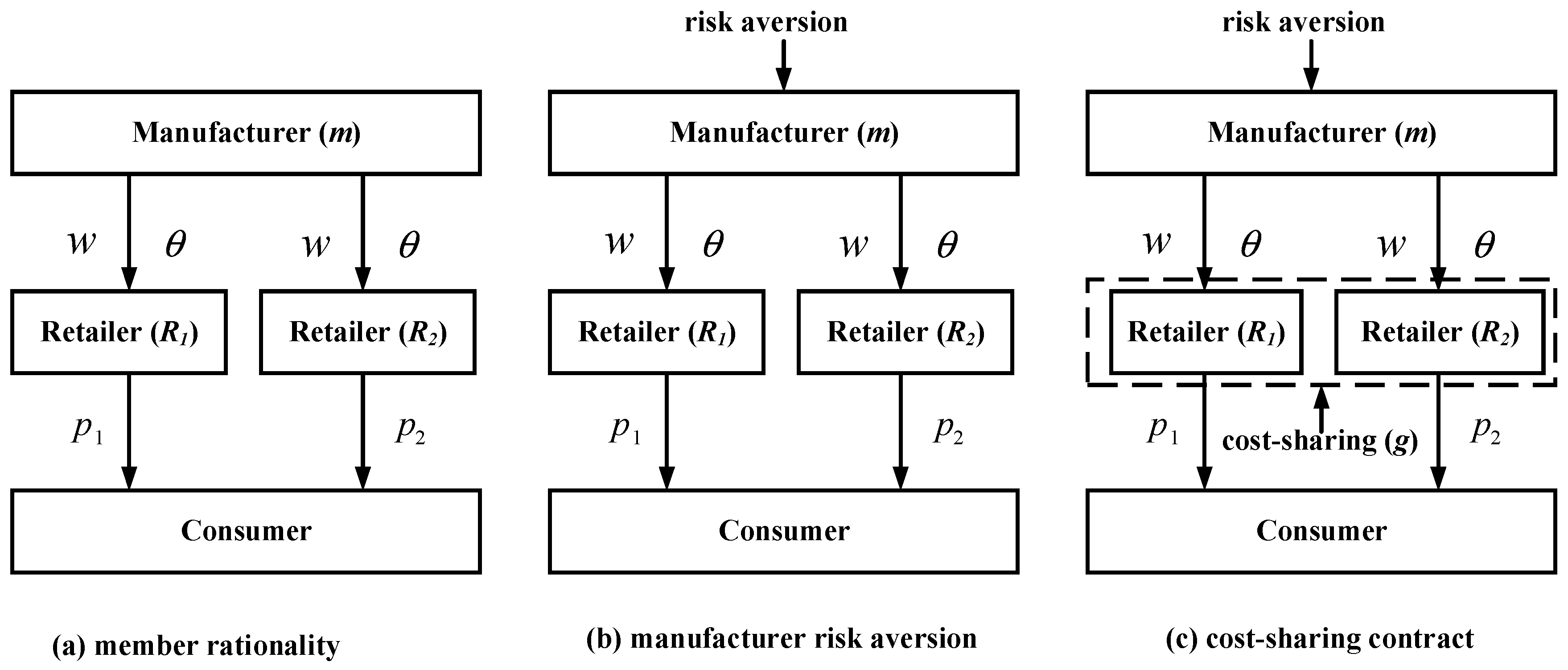
This study incorporates risk aversion into the decision model of the green supply chain under retailer competition, and a two-tier green supply chain consisting of a single manufacturer and two competing retailers is constructed. The supply chain framework under competing retailers is depicted in
Figure 1.
To construct the demand model, this study makes the assumptions outlined below.
Assumption 1. The demand in the green market is not only influenced by greenness and retail price but also by market competition [43,44]. The market demand is set as , , . Assumption 2. The relationship between green R&D investment and greenness follows a quadratic function, which can be set to [45]. Moreover, green R&D investment does not affect the production cost of products [46]. Using a quadratic function to characterize the relationship effectively captures the diminishing marginal effect, but this functional form is more suitable for static analysis. Once dynamic time factors are incorporated into the model, the applicability of a quadratic specification becomes limited. Assumption 3. Supply chain members in the green supply chain are considered to exhibit risk-averse behavior [47], and their behavior is represented through the mean-variance method. The utility function can be set to . Although this specification facilitates model derivation, its applicability may be constrained when the manufacturer and retailer exhibit significant heterogeneity in risk-bearing capacity, financing constraints, or market positions. Assumption 4. Within the Stackelberg framework, manufacturers and retailers seek to maximize their profits. When members are risk-averse, their risk attitudes are known to the other members. The two parties share identical information within the supply chain. For example, market demand, product greenness, and the degree of risk aversion are assumed to be observable to both parties.
It should be noted that this study considers only the manufacturer’s risk-averse behavior and does not examine the retailer’s risk attitude. In addition, information asymmetry and retailer-led decision structures are not incorporated into the analysis. These scenarios fall beyond the scope of the present work but offer promising avenues for future research. The Nomenclature section lists the symbols and variables used in this study.
In this research, additional symbols are explained: superscript represents member rationality model. Superscript represents manufacturer risk aversion model. Superscript represents cost-sharing contract model. Subscript denotes manufacturer, retailer, and supply chain. For example, represents the manufacturer’s utility under member rationality. represents the profit of the retailer under manufacturer risk aversion.
3.2. Member Rationality
In the member rationality model, manufacturers and retailers decide based on actual demand. Furthermore, manufacturers and retailers do not exhibit risk-averse behavior. Therefore, the profit functions are as follows:
Proposition 1. With decision-making guided by member rationality, the supply chain achieves a unique optimal solution. Wholesale price , greenness , retail price and are given by (4)–(6).
Substitute Equations (4)–(6) into Equations (1)–(3). We can get retailers’ profits
,
and manufacturer’s profit
.
3.3. Manufacturer Risk Aversion
Under the manufacturer’s risk aversion model, the utility functions of the manufacturer and the retailer are as follows:
Proposition 2. Under manufacturer risk aversion, when
, the supply chain attains a single optimal solution.
,
and
are given by (12)–(14).
where
.
Substitute Equations (12)–(14) into Equations (9)–(11). We get
Proposition 3. When the manufacturer is risk-averse, the decision variables meet the conditions in
, , .
Property 1. When the manufacturer is risk-averse, the connection between the optimal wholesale price, greenness, retail price, member profit and is
- (1)
, , , ;
- (2)
When , .
3.4. Cost-Sharing Contract
This section applies a contract to align the risk-averse behavior. The utility functions of the manufacturer and retailer are given by:
Proposition 4. Under cost-sharing contracts, the supply chain achieves a unique optimal solution. , and are given by (20)–(22).
where
.
Substitute Equations (20)–(22) into Equations (17)–(19). We obtain
Proposition 5. Under cost-sharing contracts, the decision variables satisfy
- (1)
;
- (2)
When , , .
Property 2. In the context of cost-sharing contracts, the connection between the optimal wholesale price, greenness, retail price, member profit and is
- (1)
, , , ;
- (2)
When , .
Propositions 1, 2, and 4 present the optimal equilibrium outcomes under retailer competition with risk-averse behavior, thereby directly addressing RQ1.
4. Comparative Analysis
Building on the equilibrium solutions derived above, this section provides an in-depth comparison of the results across different models.
Proposition 6. When
, the wholesale price satisfies:
.
Proof. According to Propositions 3 and 5, we have
,
. Subtracting
from
, we obtain
It can be found that when , . So, . □
According to Proposition 6, wholesale prices are related as follows: wholesale price in the member rationality model is higher than that in the cost-sharing contract model, and both are higher than that in the manufacturer risk aversion model. This suggests that manufacturer risk-averse behavior affects the wholesale price decisions. It is worth noting that wholesale prices under cost-sharing contracts are higher than in the manufacturer risk-aversion scenario. Cost-sharing contracts can increase the wholesale price.
Proposition 7. When
, greenness satisfies:
.
Proof. According to Propositions 3 and 5, we have
,
. Subtracting
from
, we obtain
It can be noticed that when , . Therefore . □
Proposition 7 indicates that the relationship of greenness is as follows: greenness in the member rationality model is higher than that in the cost-sharing contract model and ultimately higher than that in the risk aversion model. This implies that the association of greenness levels aligns with the relationship of manufacturer wholesale prices. The R&D investment made by manufacturer influences the degree of greenness, and as the level of greenness increases, the wholesale price also rises.
Proposition 8. When
, greenness satisfies
.
Proof. According to Propositions 3 and 5, we have
,
. Subtracting
from
, we obtain
where
. When
,
. We can get
. □
Proposition 8 shows that the relationship among retail prices is as follows: retail price in the model of member rationality is higher than that in the cost-sharing contract and ultimately higher than that in the manufacturer risk aversion. When the manufacturer is risk-averse, wholesale prices, greenness, and retail prices all decline, but introducing cost-sharing contracts mitigates its adverse impact on retail pricing.
5. Numerical Analysis
Based on the above propositions and properties, we analyze the effect of on green supply chain decisions under a competitive environment through numerical analysis, thereby responding to RQ2.
As a portable personal computing device, the laptop features a compact and lightweight design along with strong performance. Typically weighing between 1 and 3 kg, laptops are characterized by their small form factor and are equipped with hardware components such as an LED display, mouse, touch keyboard, CPU, and memory. Since their introduction in the 1980s, laptops have undergone a significant transformation—from early portable computing tools to today’s high-performance productivity devices. Laptops are now widely used in office work, education, design, and entertainment, becoming indispensable tools for both work and leisure. Global PC shipments reached 267 million units in 2019, increased to 303 million units in 2020, and further rose to 349 million units in 2021, representing a year-on-year growth of 15.18%. However, due to the global economic environment, market demand declined in 2022, and PC shipments fell by 16.3% year-on-year to 292 million units. Preliminary statistics from Gartner show that global PC shipments continued to drop to 242 million units in 2023. The market saw a slight rebound in 2024, with full-year shipments expected to reach 245 million units, a year-on-year increase of 1.4%. Using laptops as the research subject and following Sang and Zhang [
48], the relevant parameter values are set as follows:
,
,
,
,
,
,
. The parameter values satisfy the research assumptions.
5.1. Coordination of Cost-Sharing Compact
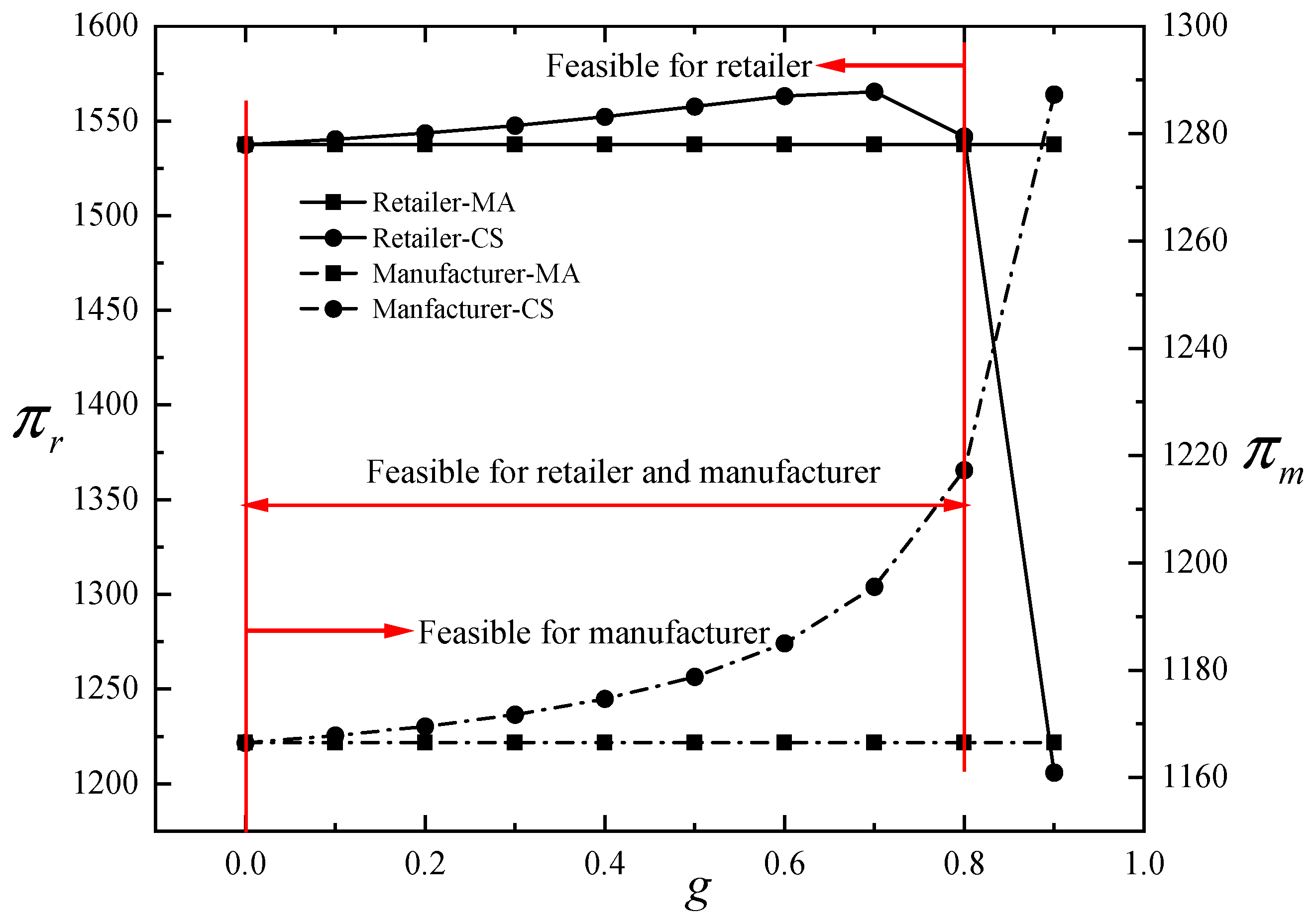
Regarding green supply chain operations, cost-sharing contracts are a common form of collaboration. However, the impact of cost-sharing agreements is determined by how well the manufacturer and retailer coordinate. Specifically, if the manufacturer and the retailer can agree on a cost-sharing ratio, that can be determined in a way that promotes the profit growth of both parties at the same time. Therefore, to evaluate the impact of cost-sharing contracts on coordination, our research focuses on how changes in the cost-sharing ratio affect the profits of manufacturers and retailers (
Figure 2).
Figure 2 illustrates that as the cost-sharing ratio rises, manufacturer profit continuously increases, while retailer profit first increases and then decreases. Under conditions of a relatively small cost-sharing ratio, manufacturer and retailer profits under the cost-sharing contract model are higher than the manufacturer risk aversion model. We will analyze the impact of
on pricing under
.
Cost-sharing contracts serve as an effective coordination mechanism by allowing retailers to bear part of the green R&D investment. Similarly, Song et al. [
49] adopted a cost-sharing contract, but the effectiveness of their coordination mechanism was constrained by the strategic conflict among supply chain members. By lowering the marginal cost of green investment, cost-sharing contracts encourage manufacturers to adopt more environmentally friendly technologies. As product greenness increases, retailers benefit from higher demand and enhanced competitiveness, which justifies their contribution to R&D costs.
In practice, cost-sharing contracts are widely applied in sectors such as electronics manufacturing and automotive production. However, their effectiveness depends on carefully designed sharing ratios. Information asymmetry, power imbalances, and uncertainty regarding investment returns may influence implementation outcomes. Therefore, it is essential to design cost-sharing contracts to specific supply chain contexts to ensure that they achieve the desired coordination effects.
5.2. Impacts on Pricing, Greenness and Profits
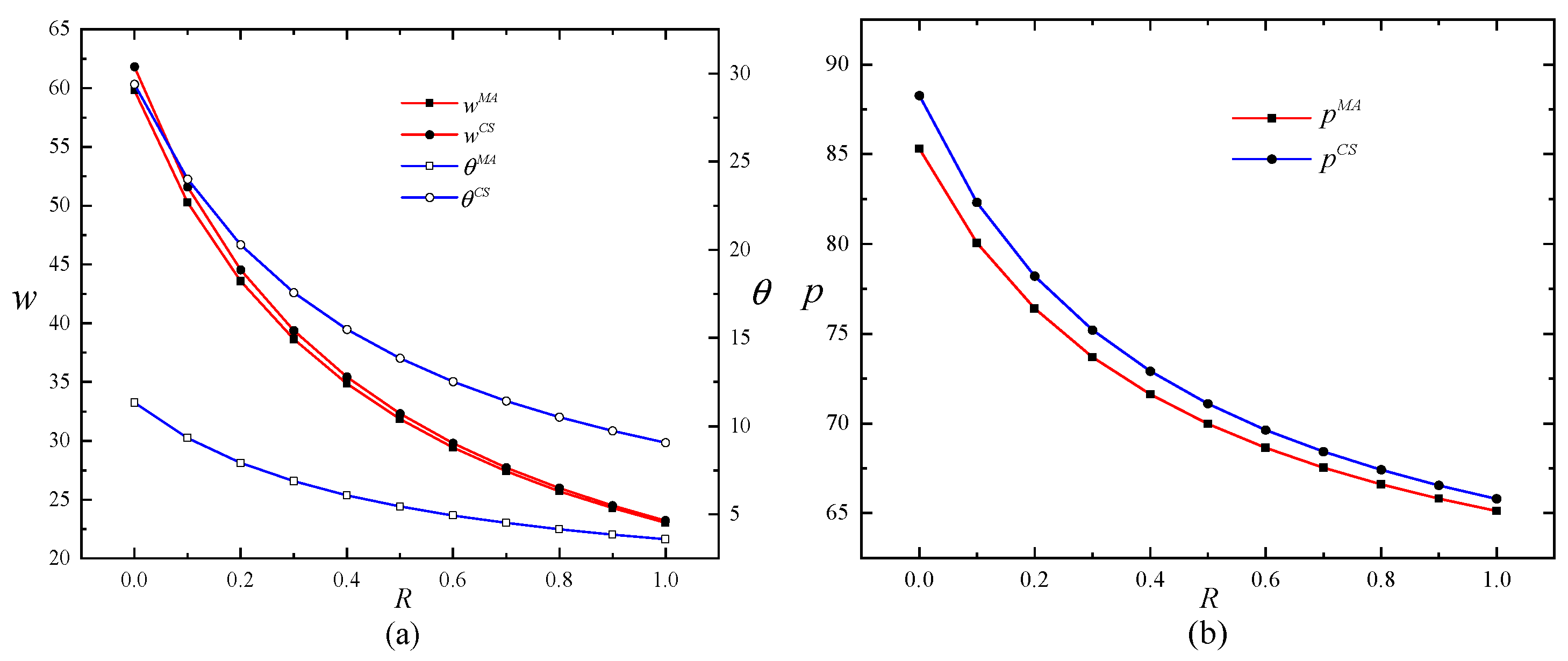
Figure 3 presents the effects of risk-aversion level (
) on wholesale price (
), product greenness (
), and retail price (
).
Figure 3 shows that when supply chain members make decisions under manufacturer risk aversion and cost-sharing contracts, the stronger the risk aversion level of supply chain members, the lower the price and greenness. However, the equilibrium decision under the cost-sharing contract is better than the manufacturer risk aversion model. The product’s greenness increases, and the wholesale and retail prices also increase accordingly. Zhang et al. [
50] also found that risk aversion reduces the wholesale price and product greenness. However, their results show that risk aversion leads to an increase in the retail price. It can be observed that the increase in greenness is much greater than the increase in wholesale and retail prices, which suggests that cost-sharing contracts are more conducive to manufacturers’ investment in the development of green products. This implies that cost-sharing contracts improve overall supply chain profitability while maintaining market competitiveness. They provide managers with a mechanism to coordinate decisions and incentivize green innovation. The cost-sharing contract encourages higher levels of green R&D investment, resulting in products with improved environmental performance and reduced ecological impact, which directly supports sustainable production practices.
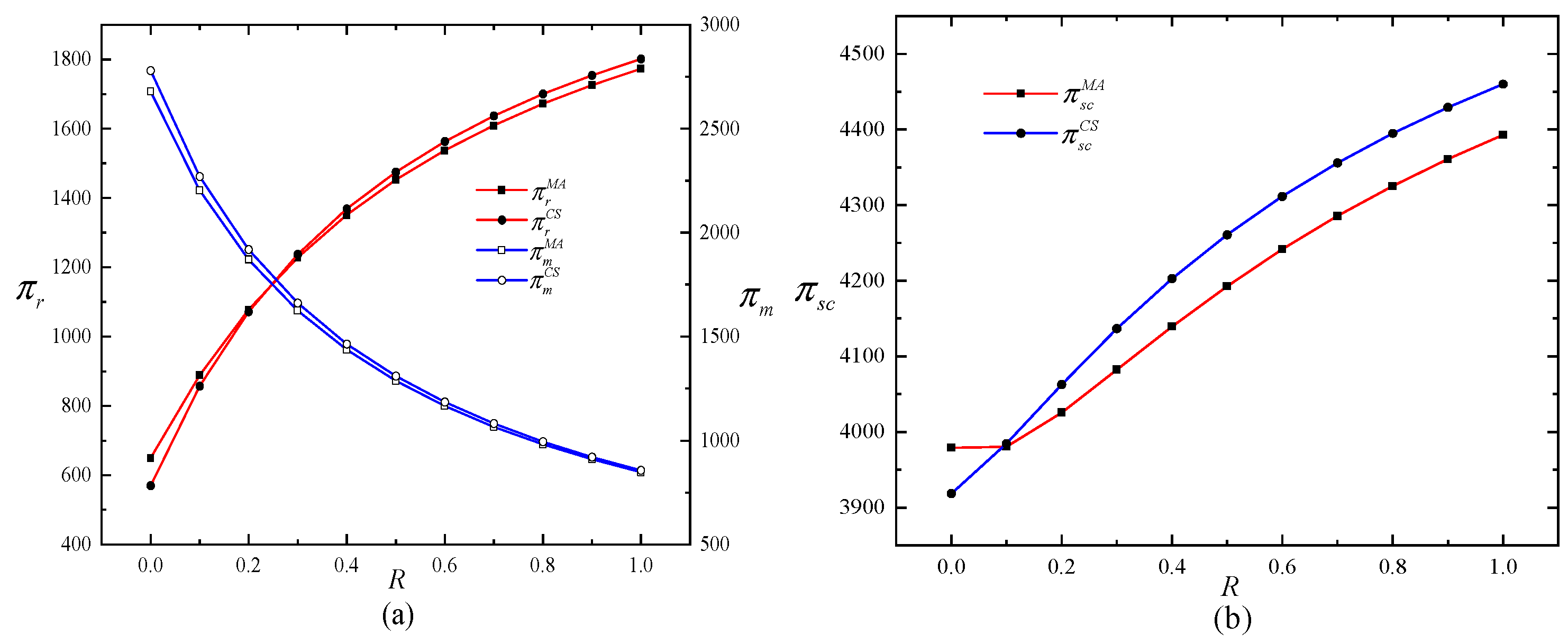
Figure 4 presents the effects of risk-aversion level (
) on profit of retailer (
), profit of manufacturer (
), and total profit (
).
From
Figure 4, it is evident that as the level of
increases, manufacturer profit shows a decreasing trend, while retailer profit and total profit show an increasing trend. Moreover, when the risk aversion level is high, profits of supply chain participants under the cost-sharing contract exceed those under the manufacturer risk-aversion model. Wang et al. [
26] also found that risk aversion has an adverse effect on the members’ profits. Although the retailer bears a portion of R&D costs, it is beneficial for the manufacturer, retailer, and supply chain. All three parties’ profits increase, which shows the effectiveness of the cost-sharing contract. This indicates that cost-sharing contracts enhance overall supply chain efficiency and profitability. They provide managers with a tool to coordinate decisions under risk-averse behavior and encourage investment in green innovation. By increasing profits across supply chain members while promoting greener products, cost-sharing contracts facilitate the adoption of environmentally responsible practices and enhance the supply chain’s long-term sustainability.
5.3. and Impact on Pricing, Greenness and Profits
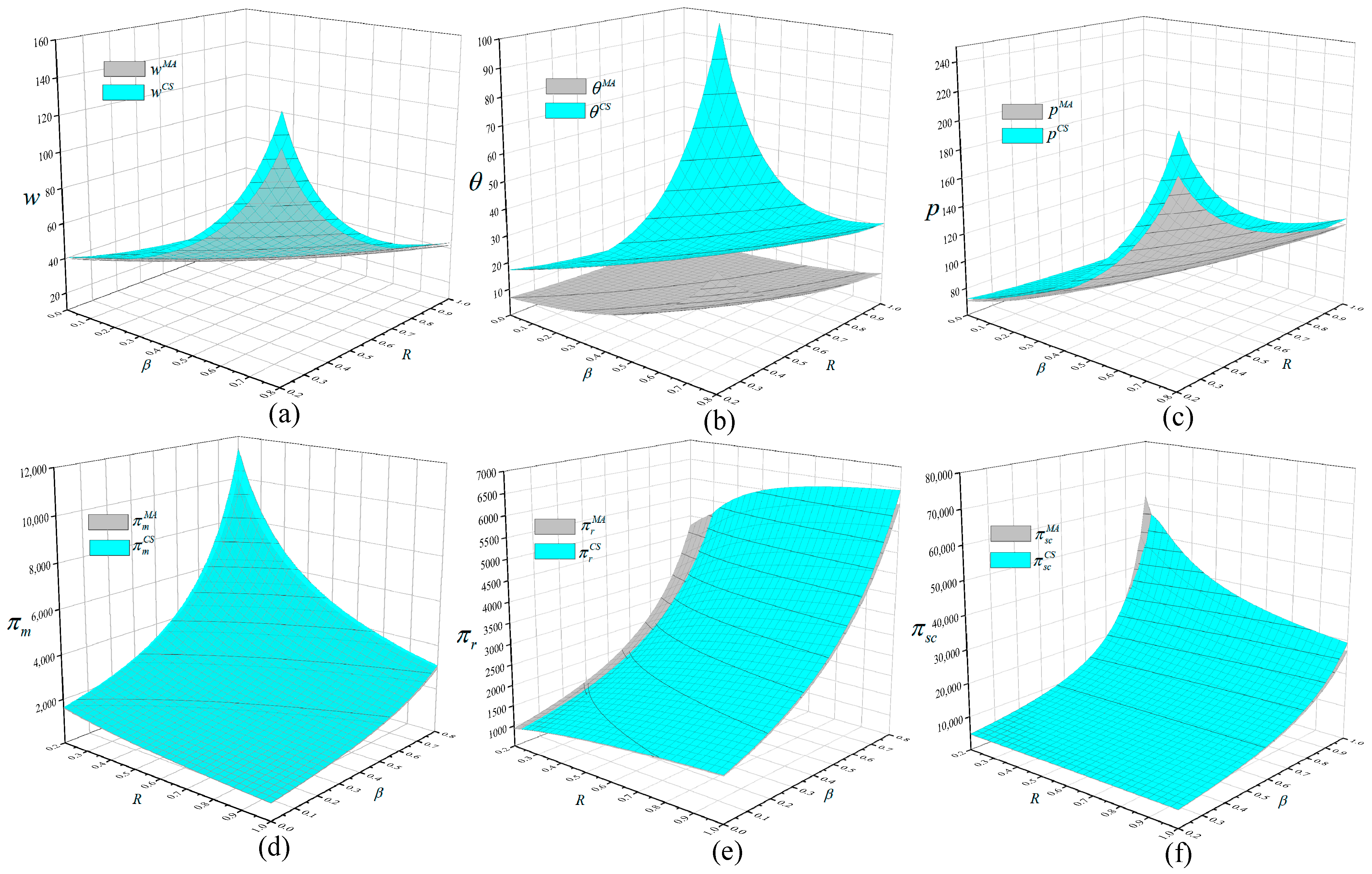
Figure 5 presents the effects of risk-aversion level (
) and the intensity of competition (
) on wholesale price (
), product greenness (
), retail price (
), retailer profit (
), manufacturer profit (
), and total profit (
).
According to
Figure 5, the wholesale price, greenness, retail price, manufacturer and total profits of the product show a positive correlation with competition intensity
and a negative correlation with risk aversion level
. With high risk aversion, the cost-sharing contract yields greater profits for supply chain members than the risk-aversion model. The cost-sharing contract improves greenness and increases profits, effectively coordinating risk-averse behaviors. This suggests that cost-sharing contracts enhance supply chain performance under competitive conditions and support more efficient pricing and investment decisions. Mandal et al. [
51] also demonstrated the coordinating role of cost-sharing contracts in supply chains. They offer managers a practical mechanism to align incentives and mitigate the negative impact of risk aversion. Under varying competition intensities, cost-sharing contracts drive supply chain members to maintain or improve product greenness, promoting eco-friendly innovation and supporting sustainable consumption in competitive markets.
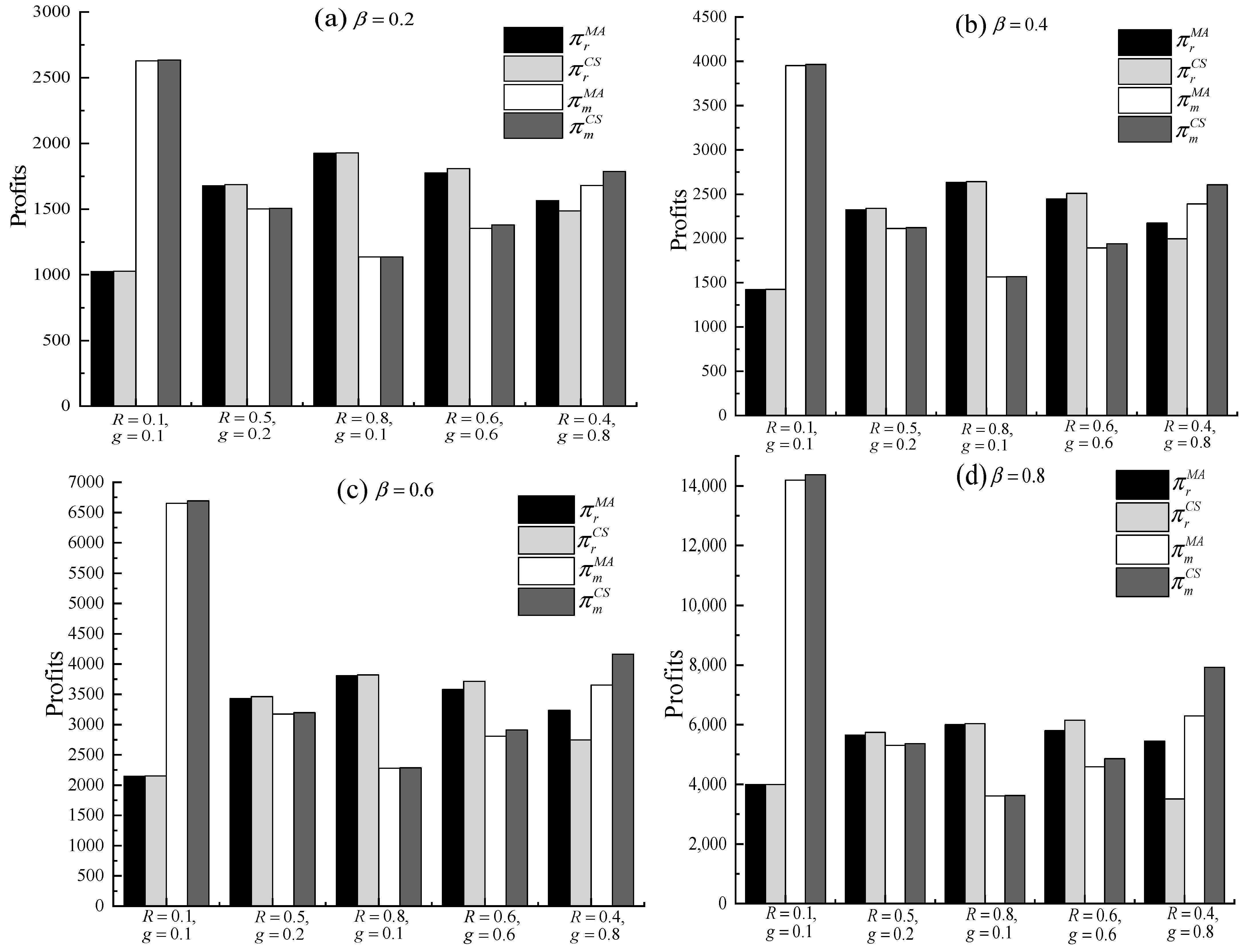
Figure 6 illustrates that the level of cooperation between manufacturers and retailers impacts profitability under varying competition intensities and risk aversion levels, thereby responding to RQ3. The results of the sensitivity analysis suggest that the coordination effect of the cost-sharing contract is affected by the intensity of competition and the level of risk aversion. How can manufacturers and retailers cooperate to achieve maximum profits?
Manufacturers expect retailers to bear more R&D costs to enhance risk resistance capabilities. Moreover, this expectation intensifies with increasing competition intensity and risk aversion levels. For retailers, increasing cooperation with manufacturers in a less competitive environment helps boost their profits and product greenness, thereby better attracting green-preferring consumers. However, as competition intensity increases, retailers should prioritize their profits and avoid excessively bearing costs to prevent harming their interests.
Overall, manufacturers and retailers should closely monitor competition intensity and risk aversion levels, strengthening cooperation to promote the sustainable development of the supply chain. Effective cost-sharing coordination allows both parties to achieve higher combined profits and optimize investment in green innovation. It provides managers with a tool to balance risk and competitive strategy. Strategic cooperation between manufacturers and retailers under cost-sharing agreements enables sustained investment in green technologies, fostering a culture of environmental responsibility and enhancing the supply chain’s resilience over time.
6. Conclusions and Discussion
6.1. Conclusions
Under a green supply chain, members face competition, and non-rational behavior can also influence their decision-making. To address this, our research introduces risk aversion behavior into green supply chain decision-making under retailer competition. We investigate how risk-averse behavior influences decision-making in the supply chain. We draw the following conclusions:
To respond to RQ1, we derive the optimal equilibrium decisions under demand model. The results indicate that in a retailer-competitive green supply chain, when manufacturers exhibit risk-averse behavior, the wholesale price, greenness, and retail price are negatively correlated with the level of risk aversion.
To respond to RQ2, our analysis demonstrates that risk-averse behavior adversely affects the greenness and the profits. Under risk aversion, supply chain profits are reduced relative to rational behavior.
To respond to RQ3, we show that a cost-sharing contract can effectively coordinate risk-averse behavior. Compared with the risk-aversion model, product greenness and member profits increase under the cost-sharing contract.
6.2. Management Implication
This study offers several meaningful insights for managing green supply chains. The managerial implications are summarized below.
Consistent with Proposition 3, supply chain profits and product greenness are highest when all members behave rationally. In contrast, as shown in Property 1, risk-averse behavior reduces both greenness and member profits, suggesting that firms need to consider risk-averse preferences when managing supply chain operations.
In addition, Proposition 5 demonstrates that cost-sharing contracts can effectively coordinate risk-averse behavior. As further supported by Proposition 7, such contracts enhance product greenness and increase member profits, thereby mitigating the negative effects of risk aversion. However, the effectiveness of cost-sharing contracts depends on the intensity of retailer competition, which warrants careful consideration in practical implementation.
Manufacturers should take measures to strengthen cooperation with retailers. Higher levels of cooperation are more beneficial for them. However, retailers should consider the limit of R&D costs they can bear. If retailers bear excessive R&D costs, it may adversely affect their profits.
6.3. Theoretical Implication
This research provides multiple theoretical insights to existing supply chain management research. Firstly, while there is considerable research on competition, there is relatively little research regarding risk aversion behavior from the perspective of retailer competition. Examining risk-averse behavior will contribute to a deeper analysis in future competition studies. Secondly, in terms of model construction, our study integrates relevant theories from game theory and behavioral economics. We construct a model of retailer competition in green supply chains, considering risk aversion behavior, making it more applicable to complex and practical situations. Lastly, limited by the complexity of models under competitive environments, most studies only explore the impact of member preferences on competitive supply chains. However, our research delves into how to coordinate adverse behaviors. Moreover, we use cost-sharing contracts to enhance product greenness and profits.
6.4. Limitation and Future Direction
Some limitations of this study could be addressed in future work. For instance, it only considers risk-averse behavior from manufacturers. In competitive environments, manufacturers and retailers may simultaneously engage in risk-averse behavior. Once multiple members become risk-averse, the modeling framework changes substantially. Future research could construct a multi-agent risk aversion model in which manufacturers and retailers each optimize an individual risk-adjusted objective function. This would allow scholars to examine how asymmetric or symmetric risk preferences influence equilibrium pricing, greenness decisions, and profit allocation under retailer competition.
Furthermore, we focus on manufacturer-dominated supply chains. In some supply chain practices, retailers may also hold a dominant position. When the retailer acts as the leader, the structure of the Stackelberg game changes fundamentally, leading to an entirely different set of optimal equilibrium decisions. Future research could therefore explore a retailer-led leadership mode, examining the impact of risk aversion on pricing decisions.
Finally, this study assumes symmetric information. In markets with asymmetric information, the bargaining power and profit allocation between manufacturers and retailers may change accordingly. Future research could therefore develop game-theoretic models under asymmetric information. In addition, this study is conducted in a static decision environment and does not account for the dynamic evolution of demand, cost, or risk preferences over multiple periods. Future work may extend the analysis to dynamic game settings to examine how temporal changes influence green supply chain decisions.
Author Contributions
Conceptualization, Z.C.; methodology, Z.C. and L.L.; software, L.L. and S.X.; validation, Z.C. and Q.Y.; visualization, Z.C. and Q.Y.; writing—review and editing, Z.C. and K.K.; writing—original draft preparation, Z.C. and S.X.; supervision, K.K. All authors have read and agreed to the published version of the manuscript.
Funding
This research was funded by Fuyang Municipal Social Science Planning Program, grant number FSK2025107.
Institutional Review Board Statement
Not applicable.
Informed Consent Statement
Not applicable.
Data Availability Statement
The data and contributions supporting this study are contained within the article.
Conflicts of Interest
The authors declare no conflicts of interest.
Nomenclature
| Meaning | Parameters |
| Wholesale price | |
| Greenness | |
| Retail price | |
| Potential market demand | |
| Intensity of retailer competition | |
| Greenness sensitivity coefficient | |
| Sensitivity coefficient for green product costs | |
| unit cost | |
| Level of risk aversion | |
| Risk aversion variance | |
| Members’ profit | |
| Members’ utility | |
Appendix A
Proof of Proposition 1. Equations (1)–(3) are solved using the inverse solution method. The retailer’s profits and are a first-order partial derivative of the retail prices and . Let , ; we get the optimal retail prices , . Further, substitute the optimal retail price into Equation (3). takes the second-order partial derivatives for and .
The second-order partial derivative of with respect to is . The second-order partial derivative of with respect to is . The mixed second-order partial derivative of with respect to and is .
Then we obtain the Hessian matrix . Since the first-order principal subequation and the second-order principal subequation , we get a negative definite matrix . And is a concave function concerning and . Under rational decision-making, the supply chain attains a unique optimal solution. □
Proof of Proposition 2. Equations (9)–(11) are solved using the inverse solution method. Let and to zero. We obtain and under the manufacturer’s risk aversion and insert it into Equation (11). Equation (11) takes the wholesale price’s second-order partial derivatives and greenness derivatives.
The second-order partial derivative of with respect to is . The second-order partial derivative of with respect to is . The mixed second-order partial derivative of with respect to and is .
Then we obtain the Hessian matrix . When , the first-order principal minor of is less than zero, and the second-order principal minor is greater than zero. Therefore, is a negative definite matrix. Equation (11) is a concave function. Proposition 2 also yields a unique optimal solution. □
Proof of Proposition 3. Comparing the optimal decisions under manufacturer risk aversion and member rationality shows that
Therefore, from the above equation, it follows that , , . □
Proof of Property 1. The first-order partial derivation of Equations (12)–(16) with respect to the level
of risk aversion gives
When
,
□
Proof of Proposition 4. Equations (17)–(19) are solved using the inverse solution method. Let and to zero. Then we can get . Substitute into Equation (19). Equation (19) takes the second-order partial derivatives of and .
The second-order partial derivative of with respect to is . The second-order partial derivative of with respect to is . The mixed second-order partial derivative of with respect to and is .
We obtain the Hessian matrix . From , it can be found that the first-order principal subequation is less than zero and the second-order principal subequation is greater than zero. is a negative definite matrix. Equation (19) is a concave function, and a single optimal solution exists for Proposition 4. □
Proof of Proposition 5. A comparison of the optimal decision between the cost-sharing contract and the manufacturer’s risk aversion yields
□
Proof of Property 2. Equations (20)–(24) take a first-order partial derivation of the degree of risk aversion to obtain
where
. □
References
- IPE. 2023 Green Supply Chain CITI Evaluation Report. 2023. Available online: https://www.ipe.org.cn/reports/report_22008.html (accessed on 15 September 2025).
- Zou, Q.; Xie, W.; Li, Y. Financing and pricing strategies in green supply chains with manufacturer overconfidence. Chin. J. Manag. Sci. 2024, 1–22. Available online: https://link.cnki.net/urlid/11.2835.G3.20240110.1633.002 (accessed on 15 September 2025).
- Yao, Q.; Shao, L.; Chen, Z. Should low-carbon subsidies be given to real estate developers or homebuyers? An evolutionary game theory analysis on small-world networks. Energy Build. 2023, 301, 113709. [Google Scholar] [CrossRef]
- Li, M.; Li, D.; Nan, J. Decision-making in green supply chains considering inter-chain competition and intra-chain R&D cost sharing: Based on non-cooperative-cooperative game method. Chin. J. Manag. Sci. 2025, 33, 339–349. [Google Scholar] [CrossRef]
- Chang, J.; Wang, J.; Wu, Y. Research on Competitive Supply Chain Product Decisions Considering Greenness. Manag. Rev. 2022, 34, 270–281. [Google Scholar] [CrossRef]
- Xia, T.; Wang, Y.; Lv, L.; Shen, L.; Cheng, T.C.E. Financing decisions of low-carbon supply chain under chain-to-chain competition. Int. J. Prod. Res. 2023, 61, 6153–6176. [Google Scholar] [CrossRef]
- Li, M.; Hong, Z.; Guo, X.; Yu, Y. Green design and information sharing in a horizontally competitive supply chain. Transp. Res. Part E Logist. Transp. Rev. 2025, 194, 103858. [Google Scholar] [CrossRef]
- Zou, Q.; Hu, L.; Zou, T. Research on pricing and coordination of supply chain considering fairness concerns under carbon quota and carbon trading mechanism. Chin. J. Manag. Sci. 2022, 30, 142–154. [Google Scholar] [CrossRef]
- Tao, Y.; Yang, R.; Lin, Q.; Wang, F. E-commerce supply chain financing and pricing decision model considering competition and risk-aversion behavior. Chin. J. Manag. Sci. 2024, 32, 190–200. [Google Scholar] [CrossRef]
- Giri, R.N.; Mondal, S.K.; Maiti, M. Government intervention on a competing supply chain with two green manufacturers and a retailer. Comput. Ind. Eng. 2019, 128, 104–121. [Google Scholar] [CrossRef]
- Zhang, Y.; Hezarkhani, B. Competition in dual-channel supply chains: The manufacturers’ channel selection. Eur. J. Oper. Res. 2021, 291, 244–262. [Google Scholar] [CrossRef]
- Ge, C.; Zhu, J. Effects of BOPS implementation under market competition and decision timing in omnichannel retailing. Comput. Ind. Eng. 2023, 179, 109227. [Google Scholar] [CrossRef]
- Ren, Z.; Tian, J.; Kang, S.; Tang, M.; Tian, J. Personalized pricing versus showrooming: Competition between online and offline retailers. Int. Trans. Oper. Res. 2024, 31, 3371–3442. [Google Scholar] [CrossRef]
- Mondal, C.; Giri, B.C. Retailers’ competition and cooperation in a closed-loop green supply chain under governmental intervention and cap-and-trade policy. Oper. Res. 2022, 22, 859–894. [Google Scholar] [CrossRef]
- Wang, Q.; Hong, X.; Chen, W.A. Collusion or Not: The optimal choice of competing retailers in a closed-loop supply chain. Int. J. Prod. Econ. 2020, 225, 107580. [Google Scholar] [CrossRef]
- Zhang, L.; Wang, Z.; Zhou, X. Procurement and pricing decision of competitive retailers under supply disruption risk. Comput. Integr. Manuf. Syst. 2024, 30, 2553–2565. [Google Scholar] [CrossRef]
- Zhuo, S.; Han, X. Differential game study on supply chain collaboration mode under carbon subsidies and retailer competition. J. Ind. Eng. Eng. Manag. 2023, 37, 80–89. [Google Scholar] [CrossRef]
- Li, M. Demand uncertainty reduction among competing retailers. Prod. Oper. Manag. 2023, 32, 1994–2001. [Google Scholar] [CrossRef]
- Pal, B.; Mandal, A.; Sana, S.S. A closed-loop green supply chain with retailers’ competition and product recycling in the green environment under the cap-and-trade policy. Green Financ. 2024, 6, 117. [Google Scholar] [CrossRef]
- Tang, F.; Dai, Y.; Ma, Z.J.; Choi, T.M. Trade-in operations under retail competition: Effects of brand loyalty. Eur. J. Oper. Res. 2023, 310, 397–414. [Google Scholar] [CrossRef]
- Wu, Z.; Qian, X.; Huang, M.; Ching, W.K.; Wang, X.; Gu, J. Recycling channel choice in closed-loop supply chains considering retailer competitive preference. Enterp. Inf. Syst. 2023, 17, 1923065. [Google Scholar] [CrossRef]
- Ma, J.; Si, F.; Zhang, Q.; Wang, Z. Impact of extended warranty service on product pricing in online direct retailers’ competitive market. Energy Econ. 2024, 129, 107217. [Google Scholar] [CrossRef]
- Maruthasalam, A.P.P.; Balasubramanian, G. Supplier encroachment in the presence of asymmetric retail competition. Int. J. Prod. Econ. 2023, 264, 108961. [Google Scholar] [CrossRef]
- Mandal, P.; Jain, T. When do competing retailers benefit from sourcing through an intermediary? Int. J. Prod. Econ. 2023, 266, 109045. [Google Scholar] [CrossRef]
- Liu, G.; Chen, J.; Li, Z. Green financing strategies under risk aversion and manufacturer competition. RAIRO-Oper. Res. 2024, 58, 1927–1954. [Google Scholar] [CrossRef]
- Wang, Y.; Sheng, X.; Xie, Y. The coordination mechanism of a risk-averse green supply chain. Chin. Manag. Stud. 2024, 18, 174–195. [Google Scholar] [CrossRef]
- Xiong, F.; Wei, Y.; Wang, Q.; Li, Z.; Shao, L. Research on pricing and green investment decision of dual-channel green supply chain considering member risk aversion. Chin. J. Manag. Sci. 2022, 30, 267–276. [Google Scholar] [CrossRef]
- Gómez, S.; Olmos, L. Coordination of generation and transmission expansion planning in a liberalized electricity context—Coordination schemes, risk management, and modelling strategies: A review. Sustain. Energy Technol. Assess. 2024, 64, 103731. [Google Scholar] [CrossRef]
- Song, J.; Zhang, J.; Cheng, T.E. Supply Chain Coordination Facing Boundedly Rational Strategic Customers. IEEE Trans. Eng. Manag. 2024, 71, 3688–3699. [Google Scholar] [CrossRef]
- Chen, B.; Xie, W.; Huang, F.; He, J. Quality competition and coordination in a VMI supply chain with two risk-averse manufacturers. J. Ind. Manag. Optim. 2021, 17, 2903. [Google Scholar] [CrossRef]
- Xue, L.; Wang, K. Dual-channel supply chain coordination under risk aversion and fairness concerns. Manag. Decis. Econ. 2023, 44, 3289–3307. [Google Scholar] [CrossRef]
- Zhang, Y.; Xu, Q. Agency contracts with incentive mechanisms considering supplier risk aversion in a dynamic platform supply chain. Ann. Oper. Res. 2024, 1–31. [Google Scholar] [CrossRef]
- Cao, E.; Tang, J. Managing regretful newsvendors and supply chain performance through target-setting. Transp. Res. Part E Logist. Transp. Rev. 2024, 183, 103444. [Google Scholar] [CrossRef]
- Tao, Z.J.; Koo, P.H. A Coordinated Supply Contract for a Two-Echelon Supply Chain Considering Learning Effects. Appl. Sci. 2024, 14, 1513. [Google Scholar] [CrossRef]
- Hou, P.; Wang, J.; Zhang, Q.; Zhang, S. Implications of risk aversion behavior on the green product promotion strategy under manufacturer encroachment. Appl. Math. Comput. 2023, 447, 127911. [Google Scholar] [CrossRef]
- Taleizadeh, A.A.; Amjadian, A.; Hashemi-Petroodi, S.E.; Moon, I. Supply chain coordination based on mean-variance risk optimisation: Pricing, warranty, and full-refund decisions. Int. J. Syst. Sci. Oper. Logist. 2023, 10, 2249808. [Google Scholar] [CrossRef]
- Cai, J.; Cao, Z.; Zhang, X.; Jia, L.; Xu, J. Coordination contract design for a two-echelon supply chain considering risk aversion and yield uncertainties. Int. Trans. Oper. Res. 2026, 33, 1207–1231. [Google Scholar] [CrossRef]
- Yu, L.; Tian, B. Supply chain strategic behavior and coordination with a risk-averse manufacturer under random yield and demand. Int. J. Prod. Econ. 2025, 281, 109492. [Google Scholar] [CrossRef]
- Jammernegg, W.; Kischka, P.; Silbermayr, L. Risk preferences, newsvendor orders and supply chain coordination using the Mean-CVaR model. Int. J. Prod. Econ. 2024, 270, 109171. [Google Scholar] [CrossRef]
- Wu, D.; Ding, H.; Wang, W.; Cheng, Y. Green technology investment and supply chain coordination strategies considering marketing efforts and risk aversion under carbon tax policy. J. Ind. Manag. Optim. 2025, 21, 418–453. [Google Scholar] [CrossRef]
- Wang, J.; Xu, H.; Wang, M. Technology diffusion considering technological progress and multiple policy combinations based on evolutionary game theory. Technol. Soc. 2025, 81, 102799. [Google Scholar] [CrossRef]
- Chu, J.; Dong, Y.; Wang, W.; Rui, Y.; Yuan, Z. Data envelopment analysis fixed cost allocation based on dynamic bargaining game and the Nash equilibrium. Eur. J. Oper. Res. 2025, 325, 317–328. [Google Scholar] [CrossRef]
- Li, X.; He, J. Mechanism of the green supply chain profit of building materials considering the duopoly competition model and consumer green preference. Int. J. Syst. Sci. Oper. Logist. 2024, 11, 2311283. [Google Scholar] [CrossRef]
- Yao, Q.; Shao, L. Selection of Low-Carbon Contractors in a Fuzzy Multi-Objective Environment. Eng. Manag. J. 2025, 1–19. [Google Scholar] [CrossRef]
- Li, B.; Zong, S.; Zhang, L. Optimal decisions and coordination mechanism in a green supply chain with loss-averse consumers in environmental quality. Manag. Decis. Econ. 2024, 45, 174–192. [Google Scholar] [CrossRef]
- Jiang, S.; Li, S. Game Model of Green Supply Chain Considering Product Greenness and Revenue Sharing Contract. Chin. J. Manag. Sci. 2015, 23, 169–176. [Google Scholar] [CrossRef]
- Wu, Q.; Xu, X.; Lin, R.; Tian, Y. Effect of risk aversion on the performance of supply chain and carbon reducing initiatives under asymmetric information. Manag. Decis. Econ. 2024, 45, 1835–1867. [Google Scholar] [CrossRef]
- Sang, S.; Zhang, Q. Coordination Mechanism of Green Supply Chain with Reference Price Effect. J. Syst. Manag. 2020, 29, 994–1002. Available online: https://xtglxb.sjtu.edu.cn/EN/10.3969/j.issn.1005-2542.2020.05.018 (accessed on 15 September 2025).
- Song, M.; Lai, Y.; Li, L. Research on incentive strategies and cost-sharing mechanisms for cross-regional pollution control. Comput. Ind. Eng. 2025, 200, 110791. [Google Scholar] [CrossRef]
- Zhang, M.; Li, J.; Liu, F.; Nan, J.; Jiang, J. Pricing and financing strategies of dual-channel green supply chain with risk aversion and consumer preferences. Sustainability 2024, 16, 5602. [Google Scholar] [CrossRef]
- Mandal, G.K.; De, M.; Das, P.; Maiti, M. Strategies for Retailers’ Sales Effort Competition under Random Demand and Manufacturer’s Cost-sharing Contract. Expert Syst. Appl. 2025, 296, 129080. [Google Scholar] [CrossRef]
| Disclaimer/Publisher’s Note: The statements, opinions and data contained in all publications are solely those of the individual author(s) and contributor(s) and not of MDPI and/or the editor(s). MDPI and/or the editor(s) disclaim responsibility for any injury to people or property resulting from any ideas, methods, instructions or products referred to in the content. |
© 2025 by the authors. Licensee MDPI, Basel, Switzerland. This article is an open access article distributed under the terms and conditions of the Creative Commons Attribution (CC BY) license (https://creativecommons.org/licenses/by/4.0/).