


Abstract
The pressing need for sustainable construction materials has identified alkali-activated materials (AAMs) as eco-friendly alternatives to conventional Portland cement. This study explores the synergistic performance of alkaline-activated natural pozzolan and limestone powder (AANL) blends against sulfate attack, evaluating mortar specimens immersed in sodium sulfate, magnesium sulfate, and a combined sulfate solution over 12 months. The samples were synthesized using natural pozzolan (NP) and limestone powder (LSP) in three distinct binder combinations to evaluate the influence of varying precursor ratios on the material’s performance, as follows: NP: LSP = 40:60 (AN40L60), 50:50 (AN50L50), and 60:40 (AN60L40). At the same time, the alkaline activators of 10 M NaOH(aq) and Na₂SiO3(aq) were combined in a ratio of 1:1 and cured at 75 °C. The research examines the weight variations of the samples, their residual compressive strength, and microstructural characteristics under exposure to magnesium sulfate, sodium sulfate, and a combined sulfate solution. In terms of weight change, samples exposed to Na2SO4 gained weight slightly, with AN40L60 recording the highest gain (3.2%) due to the ingress of sulfate ions and pore filling. Under MgSO4, AN60L40 had the lowest weight gain (29%), while AN40L60 reached 54%. In mixed sulfate, AN60L40 showed negligible weight gain (0.11%); whereas, AN50L50 and AN40L60 gained 2.43% and 1.81%, respectively. Compressive strength retention after one year indicated that mixes with higher NP content fared better. AN60L40 exhibited the highest residual strength across all solutions—16.12 MPa in Na2SO4, 12.5 MPa in MgSO4, and 19.45 MPa in the mixed solution. Conversely, AN40L60 showed the highest strength degradation, losing 47.22%, 58.11%, and 55.89%, respectively. SEM-EDS and FTIR analyses confirm that LSP’s vulnerability to sulfate attack diminishes with increased NP incorporation, highlighting a synergistic interaction that mitigates degradation and retains structural integrity. The combination of 60% NP and 40% LSP demonstrated superior resistance to all sulfate environments, as evidenced by visual durability, minimized weight gain, and retained compressive strength. This study highlights the potential of tailored NP-LSP combinations in developing durable and sustainable AAMs, paving the way for innovative solutions in sulfate-prone environments, while reducing environmental impact and promoting economic efficiency.
1. Introduction
The quest for sustainability within the construction industry has sparked substantial interest in alkali-activated materials (AAMs) due to their potential to serve as environmentally friendly alternatives to traditional ordinary Portland cement (OPC). AAMs have garnered significant attention for their potential to reduce the construction industry’s carbon footprint. Recent studies highlight that AAMs exhibit superior resistance to sulfate attacks compared to conventional OPC-based concrete [1]. This enhanced performance is attributed to several key factors, including the reduced calcium content and distinct chemical composition of alkali-activated systems, which significantly reduce the potential for forming expansive compounds, such as gypsum and ettringite [2]. The chemical structure of the calcium–aluminosilicate–hydrate (C-A-S-H) gel in these binders, with its tightly bound aluminum, further enhances resistance to dealumination. This process could otherwise lead to ettringite formation and material degradation. Additionally, the denser and less permeable microstructure of alkali-activated binders prevents sulfate ions from penetrating, thereby mitigating potential damage. This densification reinforces their resistance to various chemical attacks, including those involving sulfates. In some instances, particularly in environments with magnesium sulfate (MgSO4), alkali-activated systems can form protective layers, like brucite (Mg(OH)2), which further delays sulfate ingress and limits the decalcification of the C-A-S-H gel, thereby improving material durability. While the specific mechanisms and degree of sulfate resistance depend on factors, such as activator type, precursor composition, and curing conditions, alkali-activated binders demonstrate superior performance with higher strength retention, reduced cracking and spalling, and improved chemical resistance. This extended lifespan enhances sustainability and offers significant economic benefits [3,4,5,6,7].
Sulfate attack is one of the most critical durability issues for cementitious materials, because it occurs through a series of chemical and physical processes that form expansive compounds, such as ettringite and gypsum. The reactions and products formed after a sulfate attack depend upon many factors, which include the type of sulfate salt exposure—sodium sulfate, magnesium sulfate—the levels of calcium and aluminum in the binder, and the pore solution pH. These reactions control the severity and nature of the deterioration process, which ultimately affects the material’s structural integrity [8,9]. Sulfate attack leads to the decalcification and dealumination of the C-A-S-H gel, the principal binding phase in both Portland and alkali-activated systems. The net result is the formation of gypsum and ettringite, while magnesium sulfate attack may also form magnesium aluminosilicate hydrate. These chemical alterations result in a reduction in the strength of the material and of much-accelerated damage that culminates in structural failure [10,11]. Furthermore, the stress arising from the formation of expansive products, such as ettringite and gypsum, within the pore structure of the cement matrix has been estimated to induce a crystallization pressure that causes significant expansion and cracks within the concrete matrix. Such cracks further compromise the material’s integrity by allowing additional sulfate ions to penetrate the matrix, accelerating the degradation process [12,13]. Such effects are more pronounced in structures partially submerged in a sulfate-rich environment, where the degradation is due to chemical and physical sulfate attacks [13,14]. Salt crystallization, particularly involving sulfate salts, such as sodium sulfate and magnesium sulfate, is one of cementitious materials’ most damaging degradation mechanisms. The crystallization of expansive phases like gypsum and ettringite within the pore structure generates significant internal stresses, leading to microcracking, delamination, and long-term structural deterioration [8]. These effects are exacerbated in environments with fluctuating moisture and temperature conditions, which promote repeated dissolution and recrystallization cycles, intensifying mechanical damage [9]. Moreover, the formation of secondary products during sulfate exposure, such as magnesium silicate hydrates and brucite in MgSO4 environments, can further destabilize the binder matrix and accelerate porosity-driven failure [12].
Many studies have investigated the effect of mineral admixtures on sulfate resistance in alkali-activated mortars. The interaction of various mineral components like slag, fly ash, silica fume, or natural pozzolans is known to affect the durability of concrete against sulfate attack. These admixtures induce microstructural and chemical changes, which facilitate the formation of a dense, less permeable matrix, resulting in increased resistance to aggressive environments. The balance of strength development and sulfate resistance depends on optimizing these components [15]. Ground granulated blast-furnace slag (GGBFS) forms a protective brucite layer, which can help reduce concrete deterioration [2]. Fly ash, a low-calcium aluminosilicate, generally enhances sulfate resistance by reducing the formation of expansive compounds, such as gypsum and ettringite. The pozzolanic reaction with alkalis forms more C-A-S-H gel that will fill the pores in the matrix and prevent sulfate ion migration. Fly ash, for example, is used in sulfate-resistant formulations primarily due to its fineness and reactivity, as good reactions between SCM particles and cement will foster low permeability from the more porous structure around hydration products, but at higher concentrations, of course [16]. The possible advantages of silica fumes are its high reactivity and dense microstructure, even though it has received less attention in this respect. This densification slightly reduces some sulfate ion penetration into concrete. Nevertheless, more research is needed to define the role of silica fume on such systems and assess its potential benefit for long-term durability and sulfate resistance [17]. Natural pozzolans, such as natural pozzolan or calcined clays, can fulfil a similar role to fly ash due to their chemical composition and reactivity. Incorporating a high volume of natural pozzolan (NP) in alkali-activated mortars significantly enhances their resistance to sulfuric acid attacks. This is primarily due to the formation of stable C-A-S-H and N-A-S-H phases, which contribute to a denser microstructure and reduced permeability [18].
Recent advancements in alkali-activated materials (AAMs) have underscored their exceptional sulfate resistance compared to ordinary Portland cement (OPC), a distinction attributed to their inherently unique chemical structures and reduced calcium content [18,19]. Rigorous studies on slag- and metakaolin-based binders have demonstrated the formation of denser matrices, which effectively impede sulfate ingress, thereby enhancing durability [20]. Several studies have investigated the effect of sulfate on alkali-activated mortars. Kanaan et al. [21] critically analyzed the durability of zero-cement concrete under sulfate exposure. This exhaustive review revealed the degradation mechanisms across various alkali-activated systems, a variability attributable to their distinct elemental and microstructural makeup. Moreover, Wen et al. [22] investigated the performance of iron-rich AAMs in sodium sulfate solutions, focusing on the influence of the slag’s MgO/(MgO + CaO) ratio on sulfate resistance. Their findings elucidate the complex interrelation between slag chemistry and AAM durability, highlighting the pivotal role of material chemistry in the performance of AAMs in sulfate environments. Together, these studies represent a significant leap in our comprehension of the sulfate resistance of AAMs.
Recent studies concerning the sulfate resistance of AAM have shed light on numerous aspects of their performance and environmental benefits. Despite these advancements, several critical gaps remain, including the absence of exhaustive data on long-term durability, the necessity for binder composition optimization tailored to specific sulfate conditions, enhanced understanding of microstructural degradation processes, and the establishment of standard testing protocols. Furthermore, despite the advancements in alkali-activated materials, the potential of composite systems, specifically those incorporating volcanic pozzolans and limestone powder, remains inadequately explored, representing a critical gap in the field. Volcanic pozzolans, enriched with aluminosilicates, catalyze the formation of robust C-A-S-H gels that enhance sulfate resistance [21]. By refining microstructural density, limestone powder reduces permeability and augments matrix resilience [2]. Integrating these materials enhances AAMs’ sulfate resistance, addressing the durability and economic efficiency demanded by modern construction practices [23]. Employing a dual-material approach, this research aligns with cutting-edge findings highlighting synergistic precursors’ significant benefits in enhancing matrix densification and sulfate resistance [24]. Beyond its immediate focus, this work contributes meaningfully to the ongoing discourse on eco-friendly and durable construction materials, particularly those optimized for sulfate-laden environments [25].
The alkali-activated mortar developed using volcanic natural pozzolan (NP) and limestone powder (LSP) offers substantial sustainability advantages compared to ordinary Portland cement (OPC)-based systems. First, natural pozzolan is a naturally occurring aluminosilicate material that requires minimal processing, resulting in lower embodied energy and CO₂ emissions during production [26,27]. In contrast to OPC, which involves energy-intensive calcination at temperatures exceeding 1400 °C and emits ~0.9 t of CO2 per ton of cement produced, alkali-activated systems eliminate the need for clinker production, thereby substantially reducing the carbon footprint [21,25]. Limestone powder contributes to sustainability as well, not only by acting as a non-calcined filler that reduces clinker demand but also by improving the packing density and reducing porosity of the mortar, which enhances durability [19]. Moreover, NP and LSP are regionally abundant materials, especially in volcanic regions and carbonate-rich terrains, reducing transportation energy and promoting local resource utilization, aligning with circular economy goals [2]. These materials also support industrial ecology strategies, where waste or naturally available minerals are transformed into valuable construction inputs. Finally, several recent life cycle assessment (LCA) studies have confirmed that alkali-activated binders using pozzolans and fillers can reduce global warming potential by up to 70% compared to OPC-based systems [18,21]. These environmental benefits, combined with enhanced chemical durability and long-term performance in sulfate-rich environments, validate the classification of the studied NP-LSP mortar as a sustainable construction material.
This research on the sulfate resistance of alkali-activated volcanic natural pozzolan and limestone powder mortar aims to fill significant gaps in the existing field of sustainable construction materials. By delving into the optimization of AAM using these specific pozzolanic and limestone powders, we aim to enhance the formulation of AAMs for superior resistance against sulfate attacks, explicitly tailored to challenging environmental conditions. This research also expands the understanding of the microstructural changes and degradation processes that AAB experiences upon sulfate exposure. Through this focused approach, this study aspires to make a substantial contribution towards advancing sustainable construction practices, leveraging the unique characteristics of these materials for environmental and durability benefits. This study will bring about significant benefits, such as reduced CO2 emissions, improved durability, reduced cost of mortars, and possible local economic development.
2. Materials and Methods
2.1. Materials
Limestone powder (LSP) obtained from a local quarry in Saudi Arabia was used with natural pozzolan (NP) supplied by an Arabian firm. The LSP was oven-dried for 24 h at a temperature of 105 °C ± 5 °C before being sieved through No. 200 mesh (finer than 75 µm) as a precondition for the determination of particle size distributions (PSD) by a particle size analyzer (HELOS and QUIXEL, manufactured by Sympatec GmbH, Clausthal-Zellerfeld, Germany). The specific surface area (BET) was measured via nitrogen gas adsorption using a micromeritics analyzer, manufactured by Micromeritics Instrument Corporation, Norcross, GA, USA. Table 1 shows the chemical compositions of the two precursors (NP and LSP).

Table 1.
NP and LSP oxide composition.
The alkali activators used in this research endeavor were analytical-grade sodium hydroxide pellets (assay ≥ 96%) and distilled water to achieve the desired concentrations, as well as sodium silicate with a silica modulus of 3.3. The alkali (NaOH) was prepared 24 h before use due to its exothermic nature. Dune sand was sourced from the eastern desert region of Saudi Arabia, air-dried, and sieved to eliminate particles larger than 4.75 mm. The sand exhibited a fineness modulus of 1.82, classifying it as fine sand, and had a specific gravity of 2.63 as per ASTM C128. Its bulk density was measured at 1.56 g/cm3 following ASTM C29. Chemical analysis showed a sulfate content of less than 0.4% by weight, meeting ASTM C33 requirements. X-ray diffraction (XRD) revealed that the sand was predominantly composed of quartz (>90%), with minor quantities of feldspar and mica. The alkali metal (Na) and alkaline earth metal-based (Mg) sulfates were used to simulate aggressive sulfate environments. The morphology of the specimens was analyzed using a JSM-5800LV scanning electron microscope (SEM), manufactured by JEOL Ltd, Tokyo, Japan. Subsequent mineralogical and phase composition investigations were conducted using X-ray diffraction (XRD), with data processed through the COD database and evaluated using the MATCH XRD 2023 software.
2.2. Experimental Design
2.2.1. Mixture Design
NP and LSP were prepared in different ratios with a binary combination (NP: LSP = 40:60, 50:50, and 60:40) to form alkali-activated mortar with the sample designation as ANxLy, where “x” and “y” indicate the respective percentages of NP and LSP in the blend. This design is aimed at exploring the effects of low (AN40L60), medium (AN50L50), and high (AN60L40) NP/LSP ratios on the strength and durability performance of the mortar under sulfate attacks. A mass (sodium silicate/sodium hydroxide, SS/SH) ratio was maintained in all the samples with the constant FA/binder ratio (by mass) of 2.0 and activator/binder (mass) ratio of 0.5 in all the mixes. To produce a workable consistency, 10% of water by the mass of the binder was maintained. Table 2 displays the mix’s proportions.
Table 2.
Materials in kg/m3.
2.2.2. Mortar Preparation, Mixing, Placing, and Curing
The proportion of materials was batched according to Table 2 into the Hobart planetary bench mixer. The dry samples of NP and LSP were slowly dried for 2 min to facilitate uniform distribution. Subsequently, the fine aggregate was incorporated, and the mixing continued for three more minutes. The alkaline solution (10NaOH(aq) + Na₂SiO₃(aq)) and water were gradually added during the wet-mixing phase. This step was also carried out at low speed for two minutes and subsequently at high speed for approximately 4 min until a homogeneous, smooth mixture was achieved. A 50 × 50 × 50 mm, well-oiled steel mold was ready to hold the samples in two layers. Each layer was compressed for 30 s on a vibrating table to release trapped air. Before the mortar was coated with a plastic sheet to stop moisture loss, the surface was meticulously smoothed down with a trowel to create a level, even surface. The prepared samples were then stored in the laboratory at ambient temperature (20 ± 5 °C) for 24 h before being subjected to thermal curing conditions at 75 °C for 24 h.
Following the initial thermal curing, the specimens were conditioned at ambient indoor laboratory conditions (20 ± 5 °C and relative humidity of 60 ± 10%) throughout the 12-month sulfate immersion period. No controlled wetting–drying or temperature-cycling regimes were applied; however, the ambient laboratory environment permitted natural diurnal fluctuations. It is acknowledged that under these conditions, sodium sulfate may transition between mirabilite (Na2SO4·10H2O) and thenardite (Na2SO4) phases depending on local humidity and temperature variations. Although not explicitly cycled, this natural variability could have introduced subtle salt crystallization–dissolution phenomena within the pore network of the mortar. The post-curing treatment of storing the samples in the laboratory at 20 ± 5 °C for 28 days was maintained for all the samples before being weighed and immersed in renewable (every two months to maintain pH) aqueous sulfate solutions for 365 days. The two-month renewable aqueous solutions were prepared with 5% sodium sulfate (Solution A), 5% magnesium sulfate (Solution B), and a combined solution of 2.5% magnesium sulfate and 2.5% sodium sulfate (Solution C). The pH measurements were also conducted at these intervals using a calibrated benchtop pH meter to confirm that the sulfate concentration and alkalinity remained within the desired range. This approach was essential to prevent any unintended buffering effects from dissolved binder components and ensure consistent exposure conditions throughout the 12-month testing period. The characterization of bond properties, compound identification, and the thorough morphological examination of the alkaline-activated natural pozzolans-limestone powder paste of each specimen were also carried out.
2.3. Testing Methods
2.3.1. Weight Loss
The period weight loss of submerged cubic samples (50 × 50 × 50 mm3) of known initial weight in Solutions A, B, and C were measured for 3, 6, 9, and 12 months to examine their resistance to sulfate attack through residual weight by mopping the surface to achieve surface dry condition (SSD by using a sensitive weighing scale. The average weight change in triplicate was recorded for each mix using Equation (1).
M1 = average mass of the dried sample before immersion, and M2 = average air-dried mass of the specimen after immersion.
2.3.2. Compressive Strength Measurement
After 28 days of curing and subsequent immersion in a sulfate solution for 3, 6, 9, and 12 months, the compressive strength of the developed alkaline-activated natural pozzolan and limestone powder (AANL) mortar was evaluated using a Matest digital compression machine, maintaining a constant loading rate of 0.9 kN/s by ASTM C 150 [23]. The average of triplicate samples’ percentage strength loss (, with respect to pre-immersion strength , was recorded (Equation (2)).
where and represent the specimen’s average compressive strength loss before and after immersion, respectively.
2.3.3. Characterization of the Products
The pre- and post-immersion morphology of the binders (gold coated) in sulfate solution was determined using an SEM model JSM-5800LV with 20kV accelerating voltage value and acceptable level of magnification, while an XRD analyzer determined the elemental composition. The bond characteristics of the sample were studied using a Perkin-Elmer 880 KBr pellet-based technique and Fourier transform infrared (FTIR) spectroscopy.
3. Results and Discussion
3.1. Physical, Chemical, and Mineralogical Characterization
Figure 1 illustrates the particle size distribution (PSD) curves of volcanic natural pozzolan and limestone powder. Figure 2 demonstrates that LSP exhibits a rounded, polycrystalline morphology; whereas, NP displays an angular particle configuration characterized by elongated flakiness. The XRD results presented in Figure 3 indicate that NP is an amorphous compound, comprising plagioclase ((Ca, Na)Al2Si2O8), quartz (SiO2), and microcline (KAl2Si2O8). Conversely, LSP primarily comprises calcite (CaCO3) and quartz (SiO2) with elevated crystallinity. Table 3 shows that the NP has a reduced average particle diameter and a surface area roughly five times larger than that of LSPs.
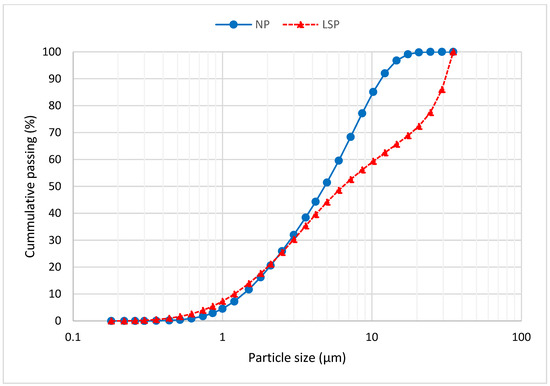
Figure 1.
NP and LSP PSD curves.
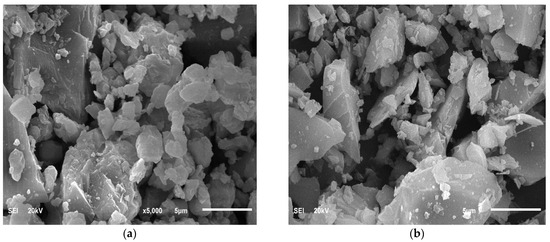
Figure 2.
SEM Images (a) LSP and (b) NP.
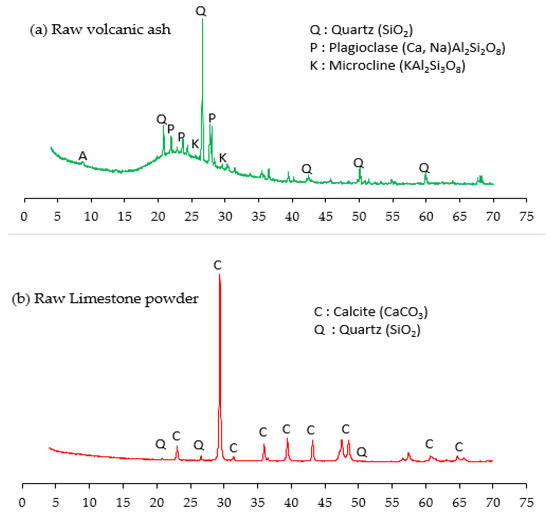
Figure 3.
X-ray diffractograms: (a) NP and (b) LSP.
Table 3.
Physical properties.
3.2. Sulfate Attack
3.2.1. Visual Characterization
The visual assessment of the AANL mortar mixtures subjected to various sulfate solutions (Solution A, Solution B, and Solution C) after one year of exposure is depicted in Figure 4. All samples subjected to sulfate attack were observed. None of the specimens displayed surface deterioration throughout the exposure period except for sample (Figure 4e) (50% NA: 50% LSP). It displayed significant surface cracking and slight multiple edge delamination following one year of immersion in Solution A. It should be noted that after the specimens were removed from the sulfate solution during the study periods, they were allowed to air-dry for a few hours before they were cloth-dried to remove any mortar particles that might erode from the surface due to the sulfate attack. However, regardless of the surface cleaning, all the specimens remained in their default state of no surface erosion except sample (e). This indicates no adverse effect on the AANL mortar mixtures through exposure to the sulfate solution.
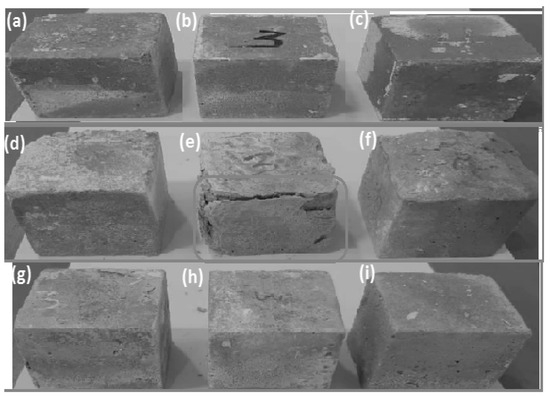
Figure 4.
Visual assessment of samples (a) AN60L40 (Solution A) (b) AN50L50 (Solution A) (c) AN40L60 (Solution A) (d) AN60L40 (Solution B) (e) AN50L50 (Solution B) (f) AN40L60 (Solution B) (g) AN60L40 (Solution C) (h) AN50L50 (Solution C) (i) AN40L60 (Solution C).
3.2.2. Impact of Binder Mixture on Weight Variation of Specimens Subjected to Sulfate
The weight change of mortar mixtures exposed to (5%—Solution A), (5%—Solution B), and (Solution C), for 3, 6, 9, and 12 months, is shown in Figure 5, Figure 6, and Figure 7, respectively. It was noted that for all samples subjected to Solution A (Figure 5), the weight was slightly increased throughout the exposure period. The specimen synthesized with 60% LSP and 40% VA exhibited the highest weight change (3.2%) after one year of exposure. However, the percentage change in weight was reduced by 52% and 48.75% in the samples produced with 50% and 60% NP, respectively. This showed that a high volume of LSP in the mix matrix caused more expansion of the samples compared with those of a lower LSP volume. This increase in weight was caused by the migration of sulfate ions into the mixed matrix, which then reacted with the product of the alkaline-activated binder. The precipitates formed remained within the pores of the product matrix, resulting in weight gain. It is also important to note that the observed mass gain in specimens exposed to Na2SO4 may partially arise from the formation and recrystallization of mirabilite and thenardite due to fluctuations in ambient temperature and humidity, as these can promote internal crystallization pressure. The relatively mild exposure conditions in this study (without thermal cycling) likely moderate the intensity of crystallization stress. Still, they may not have fully eliminated phase transformations that contribute to microstructural changes.
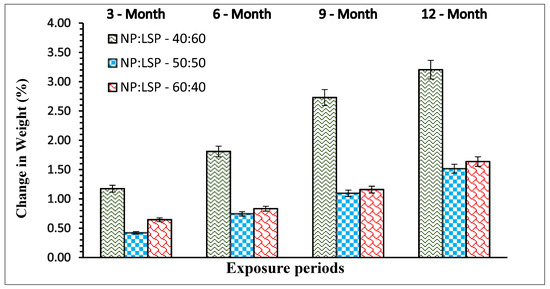
Figure 5.
Variation in the mass of exposed samples to Na2SO4 (Solution A).
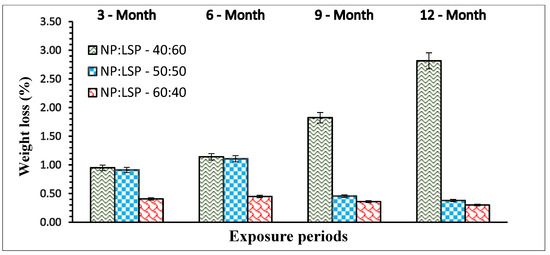
Figure 6.
Weight variation of samples exposed to MgSO4 (Solution B).
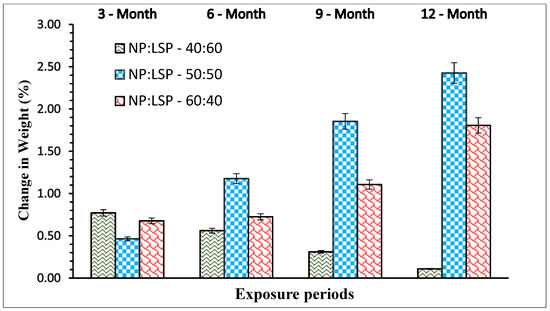
Figure 7.
Weight variation of samples exposed to Solution C.
The samples exposed to Solution B are shown in Figure 6. In a sulfate attack, after a 3-month exposure, the specimen synthesized with 60% LSP and 40% NP exhibited the highest increase in weight, followed by the sample with 40% LSP and 60% NP, while the sample produced with 50% LSP and 50% NP displayed the lowest change in weight. Following six months of exposure, the weight of the samples increased by 54%, 76%, and 29% in AN40L60, AN50L50, and AN60L40, respectively. On reaching the 9-month exposure, a reduction in percentage weight loss was experienced in AN50L50 and AN60L40, while AN40L60 showed an increase in percentage weight gain. This also demonstrated that a substantial quantity of NP with high silica content enhances the stability and sulfate resistance of the mortar.
The samples exposed to Solution C sulfate attack are shown in Figure 7. The specimen synthesized with 60% LSP and 40% NP exhibited progressive reduction in the weight loss after 3 months of exposure with a small value of 0.11% after 12 months of exposure. However, AN50L50 and AN60L40 experienced an increase in the weight gained throughout the exposure period. AN50L50 total weight gained after 12 months of exposure was 2.43%, while AN60L40 had a lower value of 1.81%.
3.2.3. Impact of Binder Mixture on Residual Compressive Strength After Sulfate Attack
Figure 8, Figure 9, and Figure 10depict the mortar mixtures’ residual compressive strengths after being subjected to Solution A, Solution B, and Solution C for 3, 6, 9, and 12 months, respectively. It was found that all samples subjected to sulfate attack had a decrease in compressive strength throughout the exposure period when comparing the 28-day strength values to the different exposure months (Figure 8). For the mortar mixtures exposed to Solution B, the specimen synthesized with 60% LSP and 40% NA (AN40L60) exhibited the most significant reduction in residual strength, 47.22%, as shown in Table 4 (3.2%), while AN60L40 had the least strength loss of 35.52% after one year of exposure. A similar trend was observed for the mortar mixtures exposed to Solutions A and C. Notably, as the percentage of natural pozzolan increased from 40% to 50% in the Solution A-exposed samples, the strength increased by 5.85% in AN50L50. Furthermore, upon an increment of VA to 60%, a strength gain of 24.67% was observed in AAN60L40 compared to AAN40L60. Similarly, for Solution C-exposed specimens, when the percentage of natural pozzolan increased from 40% to 50%, the strength gained increased by 13.08% in AN50L50. Furthermore, upon an increment of VA to 60%, a strength gain of 33.69% was observed in AN60L40 compared to AN40L60. In general, samples with a large volume of natural pozzolan showed greater stability against sulfate attack, while those with a high volume of limestone powder demonstrated less resilience. AN60L40 showed the highest resistance to Solution C, followed by Solution B, and lastly Solution A.
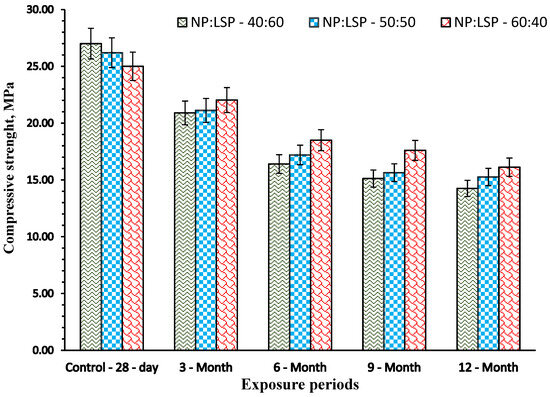
Figure 8.
Residual compressive strength of specimens subjected to Solution A.
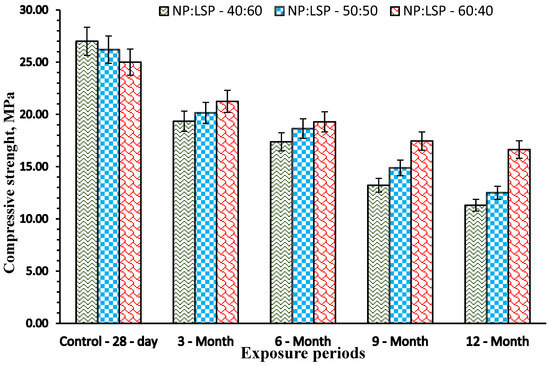
Figure 9.
Residual compressive strength of specimens subjected to Solution B.
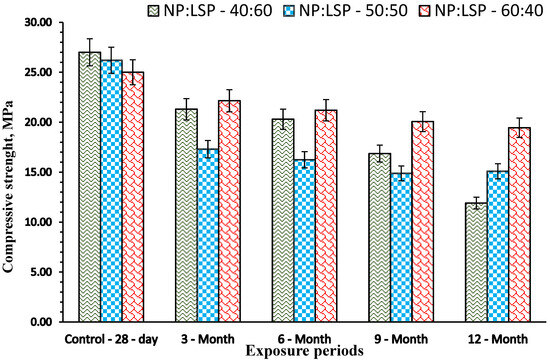
Figure 10.
Residual compressive strength of specimens subjected to Solution C.
Table 4.
Percentage reduction in compressive strength resulting from sulfate attack at various binder ratios.
3.2.4. FTIR Analysis
Impact of Binder Combination on the Binding Properties of Specimens Subjected to Sulfate Attack
Figure 11 shows the FTIR spectra of unexposed binder, while Figure 12 revealed the FTIR spectra of the material after sodium sulfate (Solution A) exposure. Similar trends were observed for AN60L40, AN50L50 and AN40L60 after sulfate attack. The FTIR broad bands at 3464 cm−1 and 2375 cm−1 signify the presence of O-H stretching and H-O-H bending; whereas, the bending vibration of H-O-H was detected at 1645 cm−1 in the unexposed material. The stretching vibration of C-O-O (CO32−) was found at a wavenumber of 1418 cm−1 in the unexposed sample. The O-H and H-O-H bonds were structured due to sodium sulfate attack, as revealed in Figure 12. However, the sodium sulfate attack did not affect the C-O-O (CO32−) bond. The peak at 1423 cm−1 was deeper, which could be because of the formation of CaCO3 and Na2CO3 after the sulfate attack, as reported by [24]. Moreover, the intensity band in the FTIR spectrum of the unexposed sample at 1018 cm−1 corresponds to the asymmetric vibration of Si-O-T (where T = Si or Al); this corresponds with binder gel. This peak remained unaffected after Na2SO4. It was noticed that there was a shift to a lower wavenumber of 1012 cm−1 after the sulfate attack. Also, the peak at this point is deep and broad. The asymmetric vibration of Si-O is also found in both the unexposed and the exposed samples. The exposed samples exhibited a weak gypsum band (S-O) with a wavenumber of 777 cm−1, but the unexposed samples did not exhibit this band. Furthermore, in the unexposed sample, the in-plane bending vibration of C-O was identified at a broad and weak absorption peak of 721 cm−1, which transitioned to a lower band at 711 cm−1.
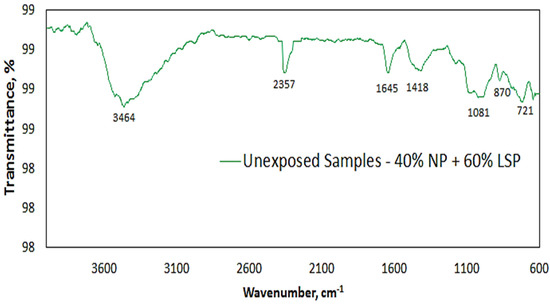
Figure 11.
FTIR spectra of the unexposed specimen.
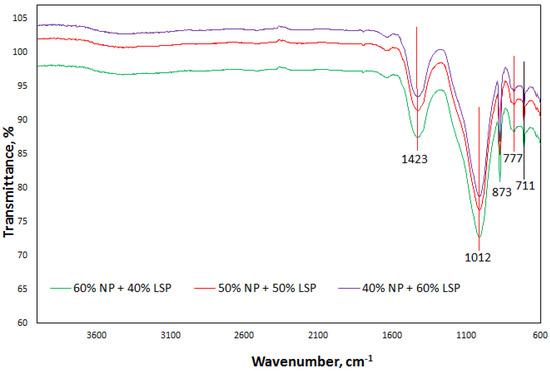
Figure 12.
FTIR spectra of the specimen subjected to Solution A.
The sample’s FTIR spectra following exposure to Solution B attack are shown in Figure 13. The existence of O-H stretching and H-O-H bending is indicated by the broad bands in the FTIR at 3464 cm−1 and 2375 cm−1. The bending vibration of H-O-H was seen in the unexposed sample at wavenumbers of 1645 cm−1. The unexposed sample exhibited a stretching vibration of C-O-O (CO32−) at a wavenumber of 1418 cm−1. Figure 13 shows how the magnesium sulfate assault shaped the O-H and H-O-H bonds. Nevertheless, the sodium sulfate assault did not affect the C-O-O (CO32−) bond. According to [24], the production of CaCO3 and Na2CO3 following the sulfate attack may be the reason for the deeper peak at 1427 cm−1. Furthermore, the existence of binder gel is implied by the Si-O-T (T = Si or Al) asymmetric vibration being associated with the intensity band in the unexposed sample’s FTIR spectrum at 1018 cm−1. This peak did not change following MgSO4. Following the sulfate attack, a change to a lower wavenumber of 1005 cm−1 was observed. Furthermore, this is a deep and brotherly peak. Both the exposed and unexposed samples demonstrated asymmetric Si-O vibrations. The exposed samples exhibited a faint gypsum (S-O) band at a wavenumber of 779 cm−1, contrasting with the unexposed samples. Furthermore, for the unexposed sample, the weak and broad absorption peak of 721 cm−1 was replaced by a lower band of 711 cm−1 due to the in-plane bending vibration of C-O.
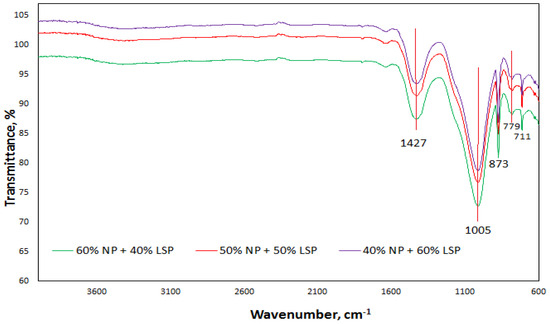
Figure 13.
FTIR spectra of samples subjected to Solution B.
The FTIR spectra of the sample following exposure to a combined sodium and magnesium sulfate attack are shown in Figure 14. Following sulfate attack, comparable patterns were noted for AN60L40, AN50L50, and AN40L60. The FTIR wide bands at 3464 cm−1 and 2375 cm−1 indicate the presence of O-H stretching and H-O-H bending. This indicates that the unexposed material exhibited H-O-H bending vibration between wave numbers of 1645 cm−1. Additionally, a stretching vibration of C-O-O (CO32−) was detected in the unexposed sample at a wavenumber of 1418 cm−1. However, the O-H and H-O-H bonds were structured due to the combined sodium and magnesium sulfate attack, as revealed in Figure 14. However, the C-O-O (CO32−) bond was still not affected by the sodium sulfate attack. The peak at 1429 cm−1 was deeper, which could be because of the formation of CaCO3, Na2CO3, and MgCO3 after the sulfate attack, as reported by [24]. Furthermore, the intensity band in the FTIR spectrum of the unexposed sample at 1018 cm−1 is connected with the Si-O-T (T = Si or Al) asymmetric vibration, which coincides with the binder gel. This peak remained unaffected after MgSO4. It was noticed that there was a shift to a lower wavenumber of 1006 cm−1 after the sulfate attack. Also, the peak at this point is deep and broader. The asymmetric vibration of Si-O is also found in both the unexposed and the exposed samples. The exposed samples exhibited a weak gypsum band (S-O) with a wavenumber of 777 cm−1, but the unexposed samples did not exhibit this band. Furthermore, the unexposed sample exhibited a faint and broad absorption peak of 721 cm−1 for the in-plane bending vibration of C-O, which subsequently altered to a lower frequency of 711 cm−1.
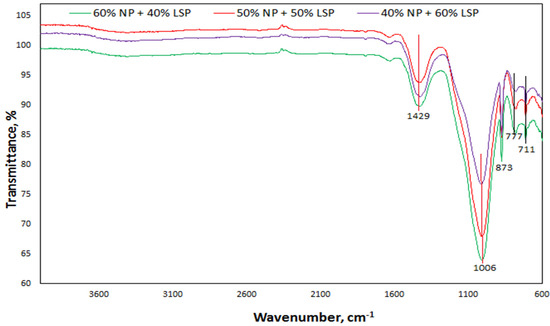
Figure 14.
FTIR spectra of the specimen exposed to C.
3.2.5. Characterization of Samples Using SEM and EDX After Sulfate Attack
Figure 15, Figure 16, and Figure 17 depict the SEM and EDS results of AN40L60, AN50L50, and AN60L40 paste exposed to Solution A, respectively. The morphology of AAN40L60 binder product exposed to Solution A for 1 year exhibited a non-uniform and non-compacted microstructure with micropores. The major product of the sodium sulfate attack on AN50L50 is gypsum, as shown in Equation (3). However, AN60L40 revealed well-compacted homogenous structures due to pore-filling effects on the micropores of the binder product with small particle size, as shown in Figure 15, Figure 16 and Figure 17.
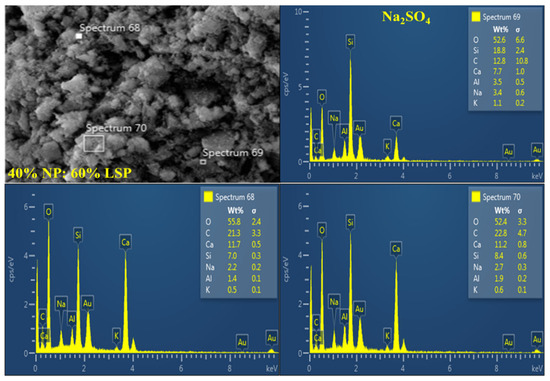
Figure 15.
SEM of AN40L60 subjected to Solution A.
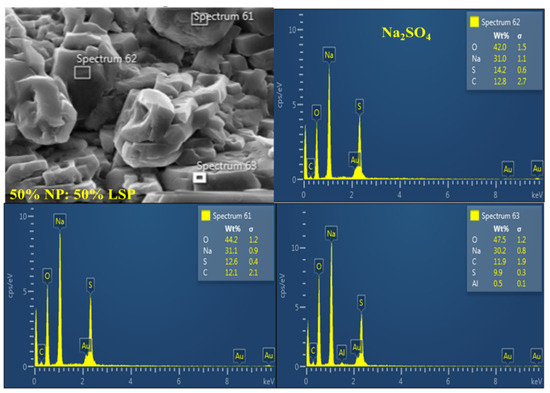
Figure 16.
SEM + EDS of AN50L50 exposed to Solution A.
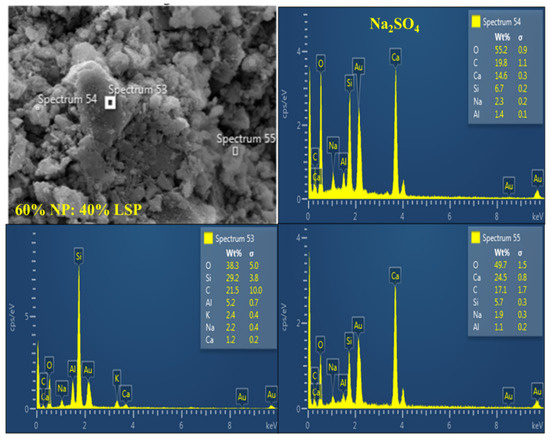
Figure 17.
SEM + EDS of AN60L40 exposed to Solution A.
AN60L40 (Figure 17) exhibited the best microstructures with formation of C-A-S-H and N-A-S-H products when compared with AN40L60 (Figure 15) and AN50L50 (Figure 16). All the spectra (61, 62, and 63) of AN50L50 exposed to Na2SO4 showed the presence of gypsum. Furthermore, the EDS results of AN40L60 revealed the highest value of Ca/Si = 4.3 (spectrum 55) and Si/Na = 13.3 (spectrum 55). It was observed in AN50L50 that all the alkaline-activated products, such as C-A-S-H and N-A-SH products, have been leached out, leaving only gypsum, as revealed in spectra 61, 62, and 63. It was also observed that AN40L60 exhibited lower Ca/Si = 1.67 (spectrum 68), and Si/Na = 3.18. AN60L40 had the highest resistance to Na2SO4 with a residual compressive strength of 16.12 MPa after 1 year of exposure to sulfate attack.
Figure 18, Figure 19, and Figure 20 show the SEM and EDS findings of AN40L60, AN50L50, and AN60L40 paste exposed to Solution A, respectively. The morphology of the AN40L60 binder product exposed to Solution A for 1 year exhibited a uniform and fragmented microstructure with a large particle size. AN50L50 revealed well-compacted homogenous structures in some parts of the structures with micropores in some portions. Furthermore, AN60L40 revealed well-connected and compacted homogenous structures on some parts of the structures with micropores in some portions.
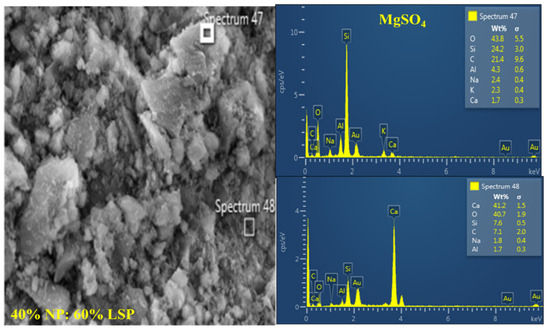
Figure 18.
SEM + EDS of AN40L60 exposed to Solution B.
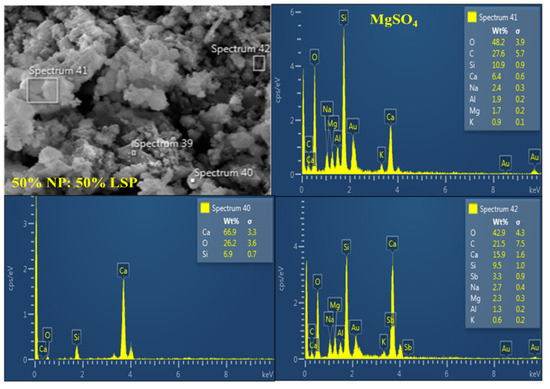
Figure 19.
SEM + EDS of AN50L50 exposed to Solution B.
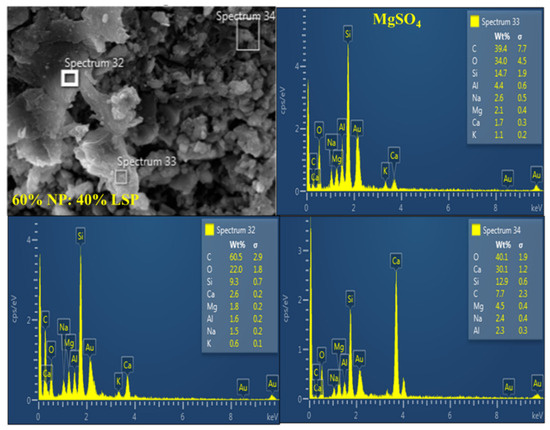
Figure 20.
SEM + EDS of AN60L40 exposed to Solution B.
The EDS results of AN40L60 revealed that the main binder product (spectrum 47) has very low Ca/Si = 0.07, which could be responsible for the low strength recorded for this binder. It was observed in AN50L50 that all the alkaline-activated products, such as C-A-S-H and N-A-SH products, have been conspicuously present in spectra 41 and 42, while spectrum 40 showed that the aluminum-containing compound has been leached out, leaving only Ca, O, and Si. The CaO could react with water to form portlandite Ca (OH)2, which could be responsible for the low strength recorded for this binder. It was also observed that AAN60L40 exhibited higher Ca/Si = 2.33 (spectrum 68) than the other mixes, and calcium, sodium, and magnesium silicate were present in the binder matrix. AAN60L40 had the highest resistance to MgSO4, with a residual compressive strength of 12.5 MPa after 1 year of exposure to sulfate attack.
Figure 21, Figure 22, and Figure 23 depict the SEM and EDS results of AN40L60, AN50L50, and AAN60L40 paste exposed to Solution C, respectively. The reduction in both concentrations of sulfate solution by half reduced the devastating effect on the compressive strength of AN50L50 and AN60L40. The morphology of the AN40L60 binder product exposed to Solution C for 1 year exhibited a non-uniform and non-dense microstructure with large particle size. AN50L50 revealed well-compacted homogenous structures on some parts of the structures with micropores in some portions. Furthermore, AN60L40 revealed a well-connected and compacted homogenous structure.
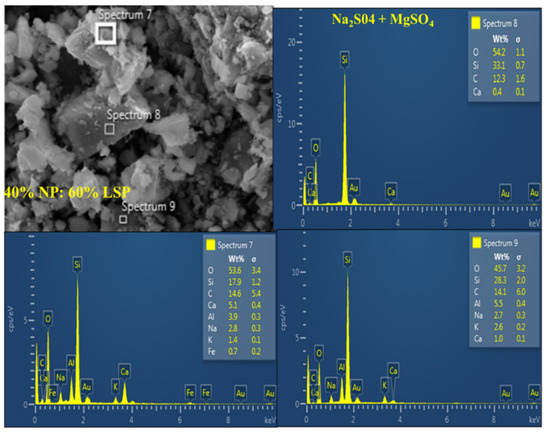
Figure 21.
SEM + EDS of AN40L60 exposed to Solution C.
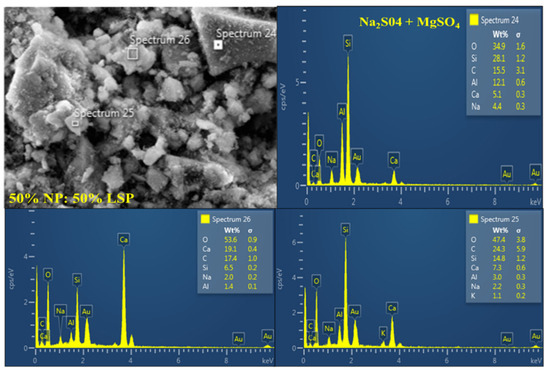
Figure 22.
SEM + EDS of AN50L50 exposed to Solution C.
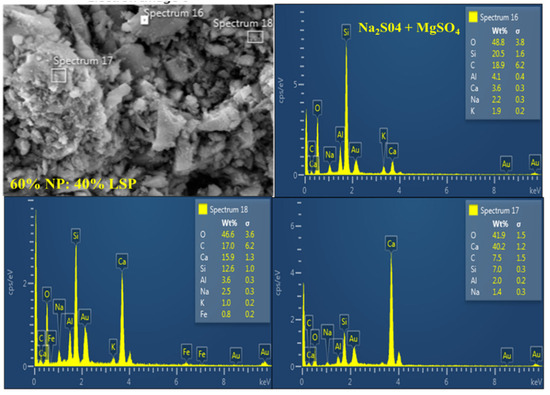
Figure 23.
SEM + EDS of AN60L40 exposed to Solution C.
The EDS results of AN40L60 revealed that the main binder product (spectrum 7) has very low Ca/Si = 0.28, which could be responsible for the low strength recorded for this binder. Furthermore, from the EDS results of AN60L40, it revealed that AN60L40 has the highest value of Ca/Si = 5.74 (spectrum 17) and Si/Na = 6.7 (spectrum 16) followed by AN40L60 with Ca/Si = 2.94 (spectrum 26) and Si/Na = 6.7. AN60L40 had the highest resistance to Solution C with residual compressive strength of 19.45 MPa after 1 year of exposure to sulfate attack.
4. Future Perspectives
While this study provides valuable insights into the sulfate resistance of alkali-activated mortar based on natural pozzolan (NP) and limestone powder (LSP), several future research directions emerge that will enable the evolution of alkali-activated NP-LSP binders from laboratory formulations to robust, field-ready, and environmentally sustainable construction materials capable of thriving in aggressive sulfate environments.
- Extended Long-Term Durability Assessment:
The current evaluation covers sulfate exposure over 12 months. However, to accurately predict service life and ensure reliability in real-world conditions, especially in aggressive environments, future studies should investigate the performance of AAMs over extended durations (e.g., 3–10 years), including field trials in marine or sulfate-rich soils.
- 2.
- Advanced Microstructural Characterization Techniques:
While FTIR, SEM-EDS, and XRD provided critical insights into degradation mechanisms, future studies should utilize advanced tools, such as nuclear magnetic resonance (NMR), nanoindentation, and transmission electron microscopy (TEM) to gain molecular- and nanoscale understandings of the evolution and degradation of binding phases under sulfate exposure.
- 3.
- Assessment Under Coupled Environmental Stresses:
In reality, sulfate attack often occurs alongside other deterioration mechanisms, including carbonation, chloride ingress, and freeze–thaw cycles. Future studies should assess the synergistic effects of combined stressors on the durability of AAMs to simulate service conditions more accurately.
- 4.
- Life Cycle Assessment (LCA) and Cost–Benefit Analysis:
Future research should integrate life cycle assessments and techno-economic analyses to promote the wider adoption of AAMs in construction. This would enable the quantification of environmental benefits (e.g., CO₂ savings) and comparative cost-effectiveness relative to OPC-based systems.
- 5.
- Scale-Up and Structural Performance Evaluation:
Finally, further research should transition from mortar-scale specimens to large-scale elements (e.g., beams, slabs, or precast blocks) to evaluate structural behavior, workability, and compatibility with conventional reinforcement in practical applications.
5. Conclusions
This study has evaluated the potential of alkali-activated materials (AAMs) incorporating volcanic natural pozzolan and limestone powder in advancing sustainable construction in sulfate-laden environments. The findings establish the superior sulfate resistance of mortars enriched with higher NP content, emphasizing the fundamental role of material composition in mitigating chemical degradation. The synergy between NP and LSP, particularly its influence on microstructural densification and phase stability, is a crucial determinant in engineering AAMs capable of enduring aggressive sulfate environments. Among the formulations tested, mortars with a 60:40 NP: LSP ratio demonstrated the highest resilience, maintaining superior residual compressive strength, while exhibiting minimal structural deterioration under sodium, magnesium, and mixed sulfate exposures. This performance is attributed to the dominance of C-A-S-H and N-A-S-H gel phases in NP-rich binders, which effectively strengthened the matrix against deleterious sulfate reactions. Conversely, mortars with a high LSP content displayed heightened vulnerability, reinforcing the necessity of achieving an optimal compositional balance to maximize durability. Increasing NP content of the mix matrix enhances bond formation, reduces micropores, and minimizes the leaching of critical binder phases. This microstructural refinement ensures long-term stability even in chemically aggressive conditions, offering a scientific foundation for the development of next-generation sulfate-resistant binders.
Author Contributions
Conceptualization, A.A.A., M.A.B.M.A., K.A.A.A.-S. and M.I.; Methodology, A.A.A., B.A.S., M.A.B.M.A., M.O.Y., K.A.A.A.-S. and M.I.; Software, M.A.B.M.A., M.O.Y. and K.A.A.A.-S.; Validation, M.A.B.M.A., M.O.Y. and M.I.; Formal analysis, A.A.A., B.A.S., M.A.B.M.A., M.O.Y., K.A.A.A.-S. and M.I.; Investigation, A.A.A., B.A.S., M.A.B.M.A., M.O.Y., K.A.A.A.-S. and M.I.; Resources, A.A.A.; Writing—original draft, A.A.A., B.A.S., M.O.Y., K.A.A.A.-S. and M.I.; Writing—review & editing, A.A.A. and M.I.; Visualization, A.A.A. and B.A.S.; Supervision, M.O.Y. All authors have read and agreed to the published version of the manuscript.
Funding
This research is funded by the Deanship of Research and Innovation at University of Hafr Al Batin through the project number 0172-1446-S.
Institutional Review Board Statement
Not applicable.
Informed Consent Statement
Not applicable.
Data Availability Statement
Data are contained within the article.
Acknowledgments
The authors would like to appreciate the continuous support of the University of Hafr Al Batin.
Conflicts of Interest
The authors declare no conflicts of interest.
Correction Statement
This article has been republished with a minor correction to the Funding statement. This change does not affect the scientific content of the article.
References
- Aydın, S.; Baradan, B. Sulfate resistance of alkali-activated slag and Portland cement based reactive powder concrete. J. Build. Eng. 2021, 43, 103205. [Google Scholar] [CrossRef]
- Dener, M.; Karatas, M.; Mohabbi, M. Sulfate resistance of alkali-activated slag/Portland cement mortar produced with lightweight pumice aggregate. Constr. Build. Mater. 2021, 304, 124671. [Google Scholar] [CrossRef]
- Li, X.; Li, O.X.; Rao, F.; Song, S.; Ortiz-Lara, N.; Aguilar-Reyes, E.A. Microstructural evolution in sulfate solutions of alkali-activated binders synthesized at various calcium contents. J. Mater. Res. Technol. 2020, 9, 10377–10385. [Google Scholar] [CrossRef]
- Ye, H.; Huang, L. Degradation mechanisms of alkali-activated binders in sulfuric acid: The role of calcium and aluminum availability. Constr. Build. Mater. 2020, 246, 118477. [Google Scholar] [CrossRef]
- Lee, J.; Lee, T.; Lee, S.; Choi, H. Performance Evaluation of Cementless Composites with Alkali-Sulfate Activator for Field Application. Materials 2020, 13, 5410. [Google Scholar] [CrossRef]
- Zhao, W.; Fan, Z.; Li, X.; Kong, L.; Zhang, L. Characterization and Comparison of Corrosion Layer Microstructure between Cement Mortar and Alkali-Activated Fly Ash/Slag Mortar Exposed to Sulfuric Acid and Acetic Acid. Materials 2022, 15, 1527. [Google Scholar] [CrossRef]
- Gevaudan, J.P.; Caicedo-Ramirez, A.; Hernandez, M.T.; Srubar, W.V. Copper and cobalt improve the acid resistance of alkali-activated cements. Cem. Concr. Res. 2019, 115, 327–338. [Google Scholar] [CrossRef]
- Pouya, J.; Neji, M.; De Windt, L.; Péralès, F.; Socié, A.; Corvisier, J. Mineralogical Evolution and Expansion of Cement Pastes in a Sulfate-Confined Environment. Minerals 2022, 13, 1. [Google Scholar] [CrossRef]
- Zhou, S.; Wang, C.; Ju, J.W. A numerical chemo-micromechanical damage model of sulfate attack in cementitious materials. Int. J. Damage Mech. 2022, 31, 1613–1638. [Google Scholar] [CrossRef]
- Ragoug, R.; Metalssi, O.O.; Barberon, F.; Torrenti, J.-M.; Roussel, N.; Divet, L.; de Lacaillerie, E. Durability of cement pastes exposed to external sulfate attack and leaching: Physical and chemical aspects. Cem. Concr. Res. 2019, 116, 134–145. [Google Scholar] [CrossRef]
- El Inaty, F.; Marchetti, M.; Quiertant, M.; Metalssi, O.O. Chemical Mechanisms Involved in the Coupled Attack of Sulfate and Chloride Ions on Low-Carbon Cementitious Materials: An In-Depth Study. Appl. Sci. 2023, 13, 11729. [Google Scholar] [CrossRef]
- Ma, X.; Çopuroğlu, O.; Schlangen, E.; Han, N.; Xing, F. Expansion and degradation of cement paste in sodium sulfate solutions. Constr. Build. Mater. 2018, 158, 410–422. [Google Scholar] [CrossRef]
- Chen, F.; Gao, J.; Qi, B.; Shen, D. Deterioration mechanism of plain and blended cement mortars partially exposed to sulfate attack. Constr. Build. Mater. 2017, 154, 849–856. [Google Scholar] [CrossRef]
- Jabbour, M.; Metalssi, O.O.; Quiertant, M.; Baroghel-Bouny, V. A Critical Review of Existing Test-Methods for External Sulfate Attack. Materials 2022, 15, 7554. [Google Scholar] [CrossRef]
- Sothornchaiwit, K.; Dokduea, W.; Tangchirapat, W.; Keawsawasvong, S.; Thongchom, C.; Jaturapitakkul, C. Influences of Silica Fume on Compressive Strength and Chemical Resistances of High Calcium Fly Ash-Based Alkali-Activated Mortar. Sustainability 2022, 14, 2652. [Google Scholar] [CrossRef]
- Mohamed, O.A.; Al Khattab, R. Fresh Properties and Sulfuric Acid Resistance of Sustainable Mortar Using Alkali-Activated GGBS/Fly Ash Binder. Polymers 2022, 14, 591. [Google Scholar] [CrossRef]
- Yang, Z.; Huang, Y.; Zhu, L.; Liu, T.; Xu, P.; Hou, Z. Research on the Sulfate-resistant Chemical Attack Mechanism of Concrete with Mineral Admixture. IOP Conf. Ser. Earth Environ. Sci. 2020, 558, 022055. [Google Scholar] [CrossRef]
- Al-Sodani, K.A.A.; Adewumi, A.A.; Mohd Ariffin, M.A.; Salami, B.A.; Yusuf, M.O.; Ibrahim, M.; AlAteah, A.H.; Al-Tholaia, M.M.H.; Shamsah, S.M.I.; Ismail, M. Acid Resistance of Alkali-Activated Natural Pozzolan and Limestone Powder Mortar. Sustainability 2022, 14, 14451. [Google Scholar] [CrossRef]
- Salami, B.A.; Johari, M.A.M.; Ahmad, Z.A.; Maslehuddin, M.; Adewumi, A.A. Impact of Al(OH)3 addition to POFA on the compressive strength of POFA alkali-activated mortar. Constr. Build. Mater. 2018, 190, 65–82. [Google Scholar] [CrossRef]
- Winnefeld, F.; Gluth, G.J.G.; Bernal, S.A.; Bignozzi, M.C.; Carabba, L.; Chithiraputhiran, S.; Dehghan, A.; Dolenec, S.; Dombrowski-Daube, K.; Dubey, A.; et al. RILEM TC 247-DTA round robin test: Sulfate resistance, alkali-silica reaction and freeze–thaw resistance of alkali-activated concretes. Mater. Struct. 2020, 53, 140. [Google Scholar] [CrossRef]
- Kanaan, D.; Soliman, A.M.; Suleiman, A.R. Zero-Cement Concrete Resistance to External Sulfate Attack: A Critical Review and Future Needs. Sustainability 2022, 14, 2078. [Google Scholar] [CrossRef]
- Wen, N.; Peys, A.; Hertel, T.; Pontikes, Y. Performance of Fe-Rich Alkali-Activated Materials in Na2SO4 Solution: Role of MgO/(MgO + CaO) in the Slag. Mater. Proc. 2021, 5, 125. [Google Scholar] [CrossRef]
- Zhu, H.; Liang, G.; Li, H.; Wu, Q.; Zhang, C.; Yin, Z.; Hua, S. Insights to the sulfate resistance and microstructures of alkali-activated metakaolin/slag pastes. Appl. Clay Sci. 2021, 202, 105968. [Google Scholar] [CrossRef]
- Allahverdi, A.; Akhondi, M.; Mahinroosta, M. Superior Sodium Sulfate Resistance of a Chemically Activated Phosphorus Slag–Based Composite Cement. J. Mater. Civ. Eng. 2017, 29, 30. [Google Scholar] [CrossRef]
- Zhao, Y.; Qiu, J.; Zhang, S.; Guo, Z.; Ma, Z.; Sun, X.; Xing, J. Effect of sodium sulfate on the hydration and mechanical properties of lime-slag based eco-friendly binders. Constr. Build. Mater. 2020, 250, 118603. [Google Scholar] [CrossRef]
- ASTM C10/C10M-19; Standard Specification for Portland Cement. ASTM International: West Conshohocken, PA, USA, 1999. [CrossRef]
- Nasir, M.; Johari, M.A.M.; Maslehuddin, M.; Yusuf, M.O. Magnesium sulfate resistance of alkali/slag activated silico-manganese fume-based composites. Constr. Build. Mater. 2020, 265, 120851. [Google Scholar] [CrossRef]
Disclaimer/Publisher’s Note: The statements, opinions and data contained in all publications are solely those of the individual author(s) and contributor(s) and not of MDPI and/or the editor(s). MDPI and/or the editor(s) disclaim responsibility for any injury to people or property resulting from any ideas, methods, instructions or products referred to in the content. |
© 2025 by the authors. Licensee MDPI, Basel, Switzerland. This article is an open access article distributed under the terms and conditions of the Creative Commons Attribution (CC BY) license (https://creativecommons.org/licenses/by/4.0/).