Abstract
Nature-based solutions (NBSs), defined as actions that work with and enhance nature, providing environmental, social, and economic benefits, play a pivotal role in accomplishing multiple objectives within the Water–Ecosystem–Food Nexus domain. They contribute to facilitating the transition to more resilient agrifood systems and providing an evidence base for a broader Nexus policy dialogue. This paper describes the stepwise methodology developed in the EU-funded LENSES project to carry out a comprehensive analysis of NBSs in six pilot areas in five Mediterranean countries and presents the results of NBS implementation in four pilot areas, highlighting obstacles and opportunities. The methodology includes the development of an analytical evaluation framework and a comprehensive catalogue of Nexus-related NBSs, whose suitability needs to be assessed at the local level to achieve better use of protected/natural ecosystems, increase the sustainability and multifunctionality of managed ecosystems, and design and manage novel ecosystems. Subsequently, in a collective learning process that supported the operationalisation of the WEF Nexus, NBSs were identified that address specific contextual vulnerabilities, improve water distribution, and enhance food security while preserving ecosystems and supporting adaptation to climate change. The added value of the proposed methodology lies in the multi-stakeholder participatory approach to gain in-depth knowledge of local agri-food systems, including their main WEF-related challenges, and to facilitate overcoming barriers to NBS implementation. Finally, a final survey was conducted among a small group of purposively selected stakeholders to gain some insight into their perceptions of the impact of NBS and to gather some opinions on the main barriers and opportunities.
1. Introduction
This study aims to understand the Water–Ecosystem–Food (WEF) Nexus approach and demonstrate its application in Mediterranean countries. Policymakers are paying more and more attention to the WEF Nexus because water, energy, food, and ecosystems are the cornerstones of long-term societal and economic stability, as they provide the foundation for public well-being, the welfare state, peace, and security [1,2]. Yet, as the global population and urbanization continue to surge, so does the demand for these essential resources. The world faces the unprecedented challenges of extreme weather events and shifting climatic conditions, which further threaten resource security and the integrity of ecosystems [3,4].
The Mediterranean area, in particular, is exposed to a multiplicity of stresses, from water scarcity to water pollution, degradation of natural resources, high levels of food loss and waste, and increasing demand for energy and food. In this context, integrated management strategies centred on the WEF Nexus approach offer a useful path to address resource issues. However, agricultural practices, urban development, water demand, and protection of ecosystems are areas of specific interest for the decision-makers, who are responsible for defining interventions aimed at enhancing the availability of water for various competitive water uses. Under this perspective, it becomes widely clear that addressing challenges related to water, food, and ecosystems in isolation is not appropriate [5]. Rather, a holistic, integrated, and cross-cutting approach is required, as embodied by the WEF Nexus. The WEF Nexus underscores the interdependence of water, food, and ecosystem security. This approach identifies mutually beneficial responses based on an understanding of the synergies between water, ecosystem, and agricultural policies while also highlighting potential conflicts and unintended consequences. It offers a transparent framework for assessing trade-offs and synergies that protect the sustainability of ecosystems while aligning with long-term economic, environmental, and social objectives. Therefore, adopting a WEF Nexus is not merely a choice but emerges as essential to pave the way for a green economy while striving to achieve the Sustainable Development Goals (SDGs) [6].
Nonetheless, the transition from theory to practical application using the WEF Nexus approach is not straightforward and entails multiple difficulties. Implementing this approach requires collaboration among diverse sectors and stakeholders, demanding a coordinated effort [7]. Stakeholders play an important role in assessing the WEF Nexus, as many policy choices affect their ability to make use of environmental goods and ecosystem services [8]. The challenge lies in persuading communities, decision-makers, and the private sector to embrace a holistic Nexus approach rather than pursue disjointed sectoral actions, which brings a wide range of collective benefits [9]. To overcome this barrier, researchers need to expand their toolkit to provide policymakers with compelling demonstrations of Nexus solutions. For the management of the WEF Nexus, increasing attention is being directed towards the employment of Nature-Based Solutions (NBSs), especially in regions dealing with challenges related to water scarcity and environmental degradation [3,10].
NBSs for climate change adaptation and disaster risk reduction can be defined as actions that work with and enhance nature to restore and protect ecosystems, to help society adapt to the impacts of climate change, and to slow further warming while providing multiple additional benefits (environmental, social, and economic) [11,12]. While not an entirely novel concept, the prominence of NBSs gained momentum in the early 2000s. Initially conceptualized as a nature-centric response to climate change challenges, it garnered support from influential entities like the International Union for Conservation of Nature [13]. Subsequently, the European Commission recognized the imperative of establishing a term that embraces the various existing approaches. NBSs operate as an overarching concept, encompassing a spectrum of terminologies, including ecosystem-based approaches, ecosystem-based adaptation, ecosystem-based disaster risk reduction, green infrastructure (both blue and green), and sustainable management (including ecosystem-based and sustainable forest management) [14,15].
NBSs, which protect and restore natural ecosystems and/or utilize diverse native species, can play a key role in ensuring climate change mitigation and adaptation services while also contributing to cultural ecosystem services such as inspiration and learning from nature [16].
NBSs play a crucial role in tackling the interconnected challenges within the WEF Nexus. These approaches utilize natural processes to achieve a balanced and sustainable management of water, ecosystems, and food resources. Over the past decade, the term NBSs has surged in popularity, mirroring the amplified acknowledgment of nature's pivotal role in providing a wide range of benefits to human communities across local, regional, and global scales through sustainable socio-ecological systems [17]. The essence of NBSs lies in their inherent multifunctionality, serving as solutions that yield manifold environmental, social, and economic advantages. They intricately interlink disaster risk reduction, climate change mitigation and adaptation, and the restoration and safeguarding of biodiversity and ecosystems within sectoral interventions and policies.
2. State of Art
It is widely recognized that the implementation of NBSs within the framework of the WEF Nexus requires a robust policy and governance framework that can effectively address the complex interactions between natural resources and social systems [1,13].
Several research studies have addressed the WEF Nexus theme, discussing how the approach can be effectively implemented on the ground [18,19,20]. On the other hand, there is still a significant lack of understanding of the principles for the design and implementation of NBSs, as well as of methodologies and evaluation frameworks for assessing the effect and impact conditions of NBSs [16,21]. Stakeholder engagement and the socio-environmental effectiveness of NBSs are also relatively under-researched, highlighting a major knowledge gap in the relationship between NBSs and society, especially in rural areas [16,21,22,23,24].
Currently, the majority of scientific research on NBSs has been conceptual, offering either principles and frameworks for implementation and/or assessment, or reviews of the origins and use of the concept, with little empirical research [22,25,26,27].
However, NBSs are being applied in different parts of the world and at different scales, with a predominance of top-down approaches and a need for more participatory approaches to the planning and implementation of NBSs to effectively deliver environmental and societal benefits [28,29]. This study presents the results of the comprehensive analysis carried out within the project “LENSES—LEarning and action alliances for NexuS EnvironmentS”, funded by the European Union under the “PRIMA Foundation” programme. In five Mediterranean countries—Greece, Italy, Jordan, Spain, and Turkey—a participatory approach [23], intended as the interaction and engagement strategies aimed at involving stakeholders, was applied to analyse the WEF Nexus challenges affecting six pilot areas and to identify appropriate NBSs, as well as to gather information on barriers and opportunities for their implementation. A catalogue of NBSs was built and refined through careful consideration of the manifold challenges faced in the different geographical areas. This comprehensive assessment facilitated the identification and subsequent selection of the most relevant NBSs, the ones that, better than others, could help in tackling the specific local challenges.
Our paper contributes to the existing literature by advancing the efforts both from (i) the methodological point of view and (ii) evaluating the implementation of NBSs in response to identified WEF challenges and their impact on selected pilot areas.
We developed a stepwise methodology for the comprehensive analysis of NBSs in Mediterranean countries and implemented the methodological framework for participatory approaches that we developed in Baratella et al. [23] to identify and deeply analyse the WEF Nexus challenges. As a fundamental added value, after developing the analytical evaluation framework and the comprehensive catalogue of WEF-related NBSs, we implemented the identified solutions in four pilot areas to assess at the local level the improvement of the sustainability and multifunctionality of managed agro-ecosystems.
3. Materials and Methods
3.1. Pilot Areas and Main Challenges
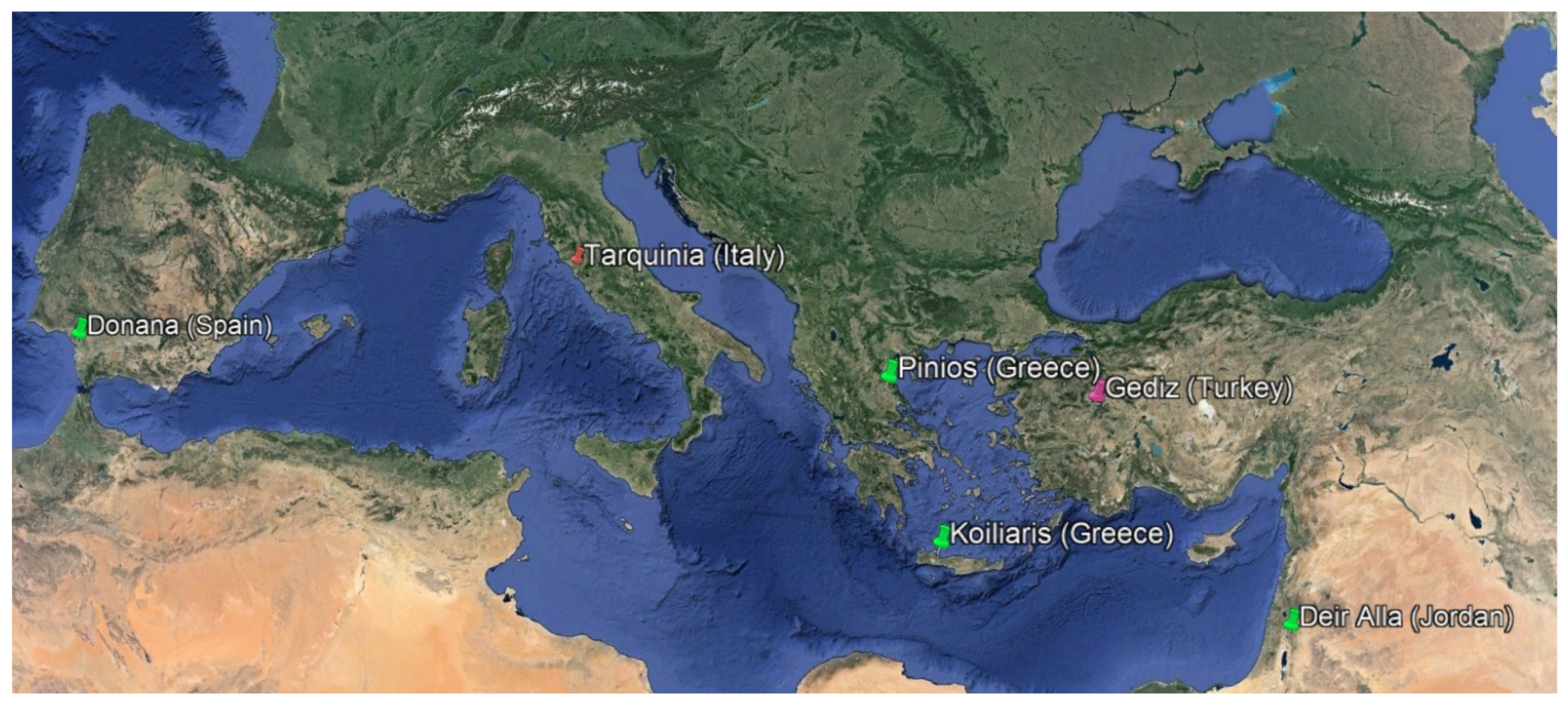
Six pilot areas were selected across five Mediterranean countries (i.e., Greece, Italy, Jordan, Spain, and Turkey). In general, the challenges affecting the selected pilot areas mainly relate to competitive water and land uses in agrifood systems aimed at food production, conservation of forests and natural ecosystems, recreational (e.g., tourism), and other activities (industrial production, etc.). All pilot areas represent typical Mediterranean conditions in terms of, e.g., climate conditions and climate change impacts, interaction between surface water and groundwater, competitive uses of the resources, relevance of agricultural activities, types of crops, social context, and stakeholders. Figure 1 shows the pilot locations, while their background and specific challenges are described in Table 1.
Figure 1.
Location of pilot areas across the Mediterranean basin.
Table 1.
Overview of pilot areas across the Mediterranean basin.
Following the methodological framework for a participatory process to explore Nexus-related challenges described by Baratella et al. [23], multistakeholder groups were established at the local level, ranging from policymakers to farmers and other end users: key actors were sampled across Nexus domains using an exploratory qualitative approach. Snowball sampling and semistructured interviews were then used to extend the coverage to a cross-section of stakeholders involved in natural resource use and management at different levels.
Identified stakeholders were involved in three main phases during the assessment of NBSs: at the beginning of the activities, the multistakeholder groups identified the WEF challenges of their pilot areas through tailored participatory activities, which included Participatory Mapping and System Dynamics Modelling [23,30]. Then, the actors defined the NBS adapted to be applied in their study area, and finally, a small group of actors, purposely selected according to previous interviews among those more interested and/or directly involved in the implementation of NBSs [22,23], responded to a questionnaire to give their opinion on the impact of NBSs and define the main barriers and opportunities of the NBS implementation. The final evaluation survey, although with a small number of respondents, suggests that NBSs can be seen as a tool to improve water distribution and enhance food security while preserving ecosystems and supporting adaptation to climate change. For more details on the participatory methodologies used, see Baratella et al. [23] and Yaseen et al. [31]. In 3 pilot areas (Greece, Jordan, and Turkey), some NBSs were implemented at the field level, and results were collected.
3.2. Catalogue on Nature-Based Solution
The participatory process of NBS selection and analysis to support Nexus optimization is based on a (public) NBS catalogue accessible online to a wide range of stakeholders, including decision-makers. The catalogue includes a list of 54 available NBS along with additional information (type, ecosystem services, challenges, and SDGs) explained in specific factsheets that users can explore.
The first step in this process was to critically review existing frameworks for assessing adaptation/resilient WEF Nexus options for rural areas (Step 1). The review aimed to identify commonalities and gaps in existing frameworks for addressing the WEF Nexus, as well as their applicability at different spatial scales. Following the review, a WEF Nexus framework was drafted to assess ecosystem services provided by NBS (Step 2). This framework was modified into a user-friendly module (nbscatalogue.lenses-prima.eu) to allow the selection of NBS and was built on available methodologies and information for selecting NBS [32,33]. This “WEF Nexus assessment framework” was used to develop the NBSs Tool (Step 3).
The conceptual design of the WEF Nexus-appropriate framework for the assessment of resilience enhancement options, presented in Figure 2, was built upon and adapted to the NBS classification scheme developed within the Thinknature project [32]. The NBS classification scheme was a result of a synthesis conducted from a literature review and stakeholder consultation/discussion on the ThinkNature platform.
Figure 2.
Design of NBS WEF NEXUS evaluation framework.
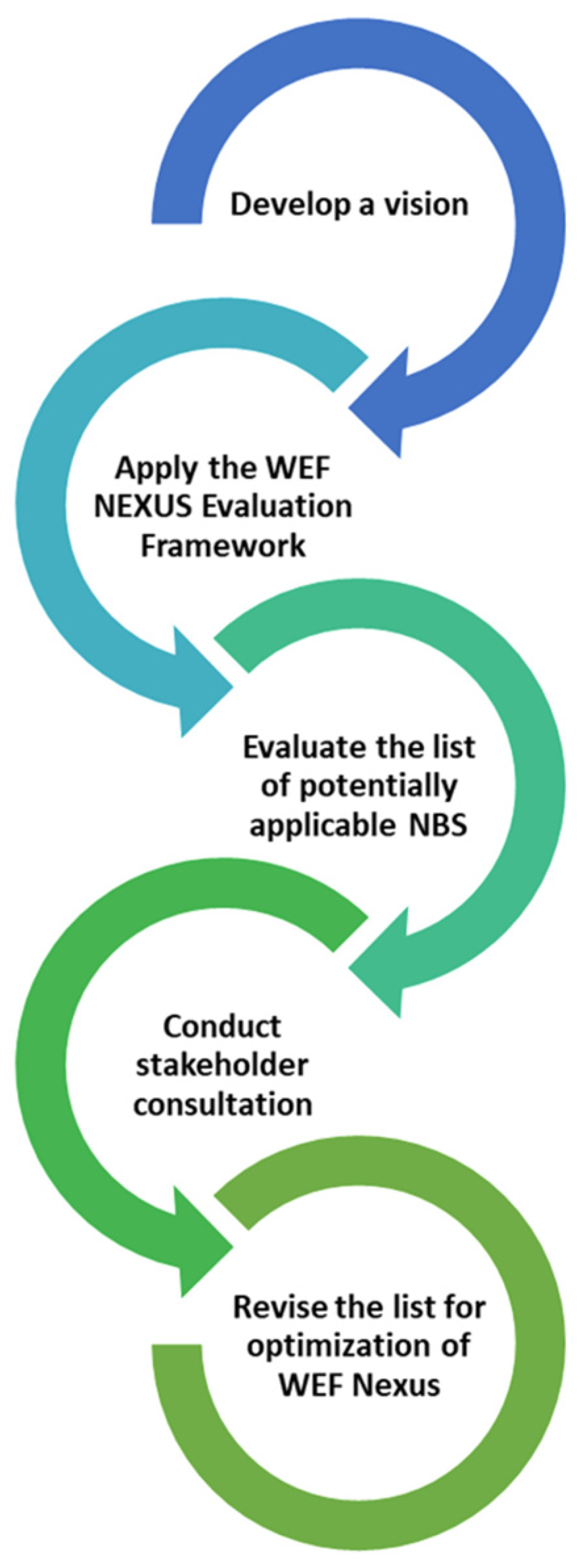
To help practitioners navigate the landscape of NBS selection and assessment, a roadmap has been developed, and the NBS practitioner must follow a step-by-step approach. The phases of this approach are described below and illustrated in Figure 3.
Figure 3.
Augmented roadmap to help the practitioners navigate the landscape of NBS selection and assessment.
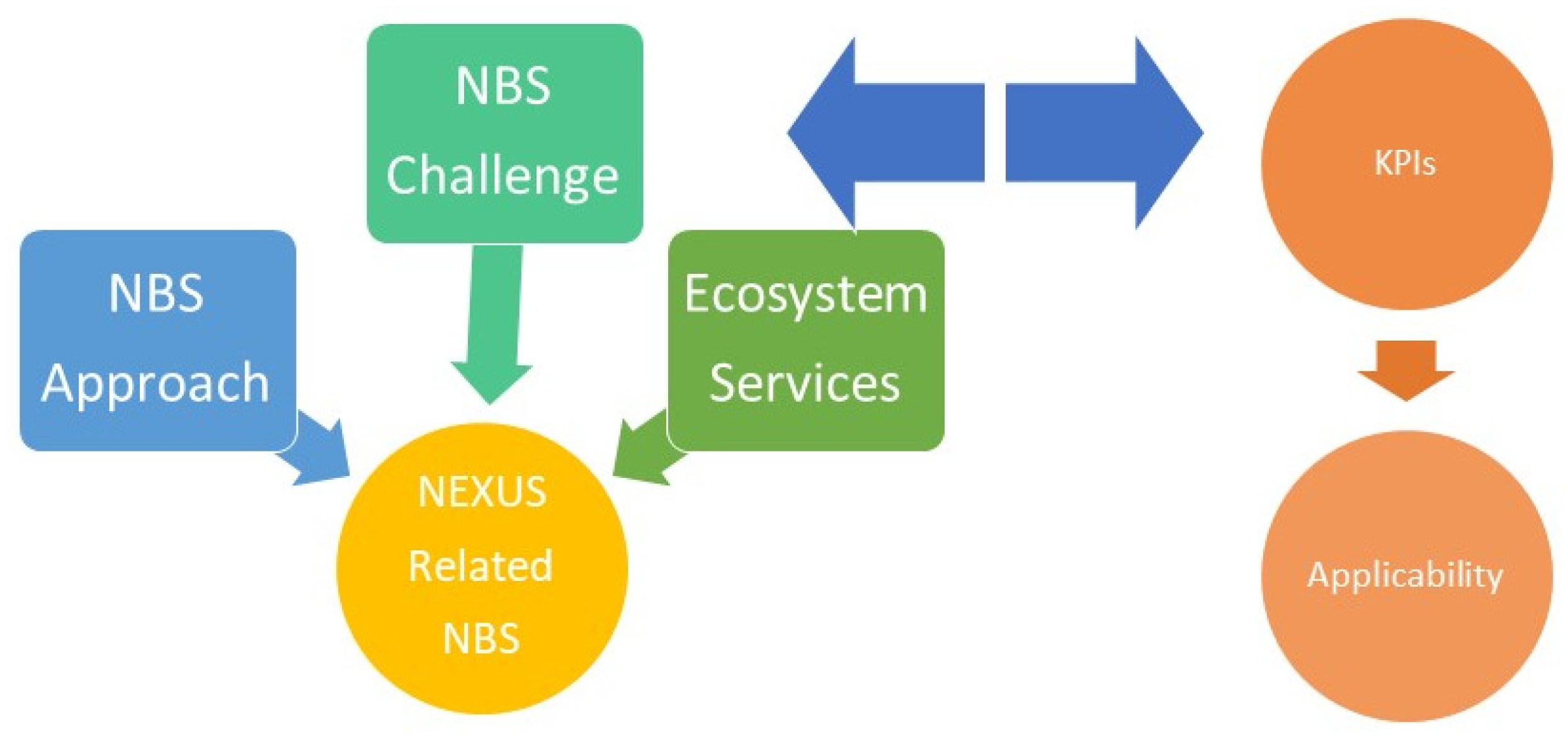
The first phase of the roadmap is the development of a vision for the landscape. This vision drives the project and enables potential local stakeholders to achieve consensus and overcome the many barriers that will arise from its implementation. To develop such a vision, it is critical to identify the environmental and ecological problems of the region and define a holistic solution that will add value to the region and enhance its resilience. This vision brings local stakeholders and decision-makers on board to materialize the project [34]. The identified challenges the area/basin under consideration is facing regarding the WEF Nexus can be viewed at this stage separately for each component of the Nexus. Once the challenges of the different pilot areas have been identified, a primary list of appropriate NBSs that address the vision for the landscape and the challenges were identified for each pilot area using the module (https://nbscatalogue.lenses-prima.eu/ (accessed on 12 March 2024)). Applying the WEF Nexus Evaluation Framework, it is possible to identify the desired ecosystem services to obtain from the landscape as well as the approaches needed to improve ecosystem services. Finally, for each of the selected NBSs, related Key Performance Indicators (KPIs) were identified in order to assess their technical effectiveness in improving service under specific conditions, the climate resilience of the solution, and their contribution to adaptation. The selections made should be consistent with the vision built in the first phase. A stakeholder consultation (focus groups) was conducted on the selected WEF-optimized NBSs to revise and finalize the NBS list in each pilot area.
Finally, a module for decision support on Nexus-related NBS selection, and the methodology that was followed for the implementation of the tool were developed. It is a catalogue holding a list of existing nature-based solutions, making them available to the wider public. Stakeholders should be able to access an evidence-based framework as well as guidance to select solutions that incorporate nature-based approaches to increase the resilience of the water–energy–food Nexus. The module for decision support on Nexus-related NBSs selection allows the selection of NBSs and is built on available methodologies and information for selecting an NBS. At the same time, it provides KPIs to assess their technical effectiveness, effectiveness in improving service under specific conditions, climate resilience of the solution, and contribution to adaptation. The KPIs used in the module were adapted from the EU Handbook for practitioners [33]. Furthermore, the user is able, through an easy-to-use and user-friendly interface, to explore a list of available NBSs, search by keyword to find a specific NBS, as well as use filters for the attributes of the NBSs to narrow down their results.
NBSs are categorized into 3 groups of type, sub-types, and NBS types. The type groups and sub-types selected by the different stakeholders in the pilot areas are shown in Table 2.
Table 2.
NBSs selected for different pilot areas, categorized by Group and Sub-type.
After the selection of different NBS types by the researcher and main stakeholders of the several pilot areas, in selected cases (Greece, Turkey, and Jordan), some NBSs were implemented. In Spain and Italy, NBSs were not implemented, but recognizing the importance of local knowledge and engagement, a participatory approach was emphasized to ensure that the chosen NBSs aligned with the needs and aspirations of the pilot community. By involving local stakeholders, such as farmers, landowners, and residents, in the decision-making process, a collaborative environment was fostered, promoting a sense of ownership and shared responsibility for the successful implementation of NBSs.
3.3. Stakeholder Survey on NBS Implementation
After NBS implementation and the analysis of the first results in the different areas, a survey was conducted of a limited number of stakeholders, selected as a subset of the larger groups involved in the previous phases of engagement, to gain some insight into stakeholders’ interest and perceptions of the performance of NBSs in the systems under study.
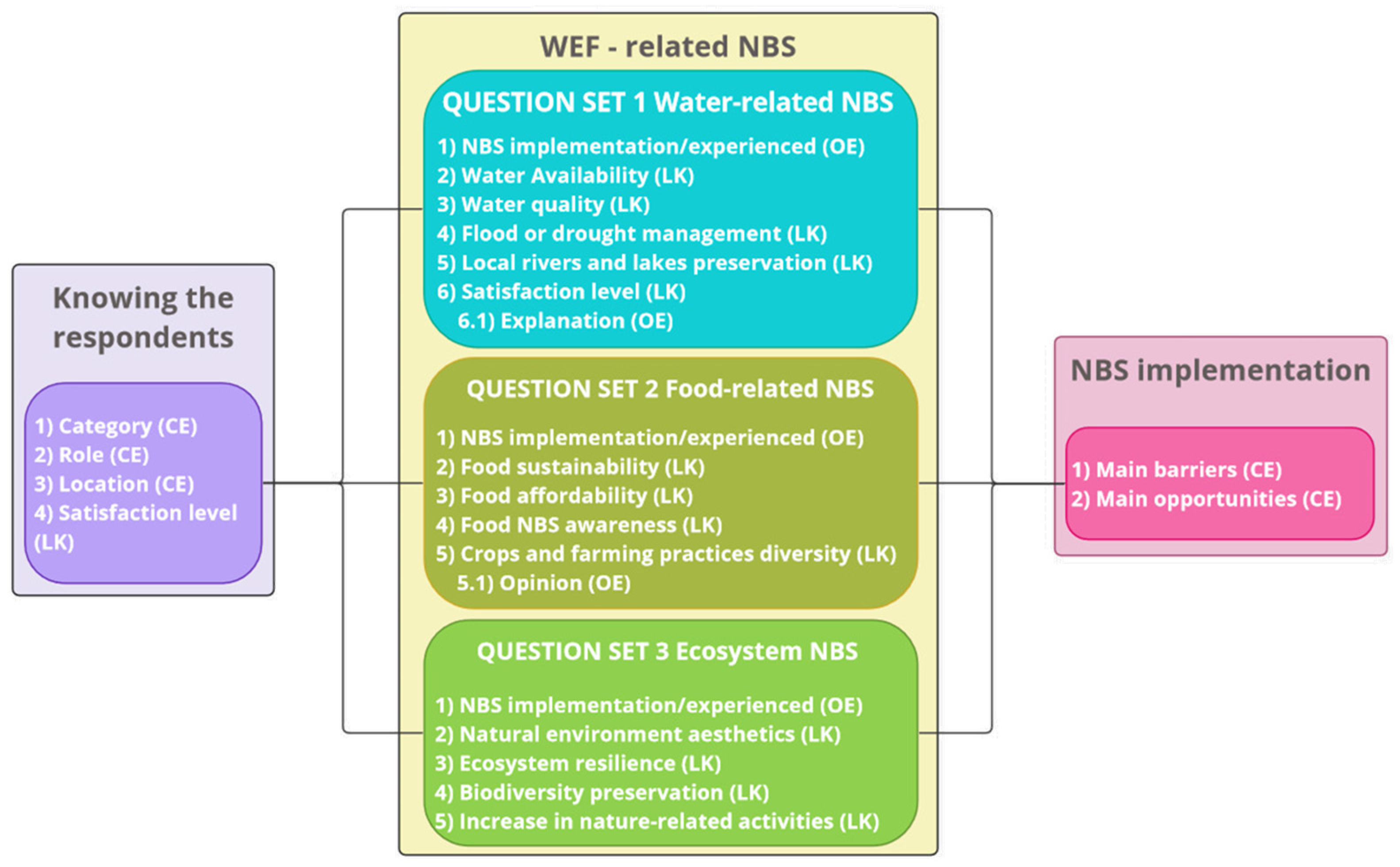
Data were collected through individual online or face-to-face surveys, virtual interviews, and web meetings. A questionnaire was developed to collect data about NBS implementation. This survey, designed as a tripartite framework, reflects a tailor-made approach that takes into account the different dimensions of the project. This structured questionnaire is distinctly separated into three sections (Figure 4). The initial and final segments remain uniform across all stakeholders, fostering coherence and inclusivity, while the pivotal middle section dynamically adapts to the selected challenge (water, food, or ecosystem). The first section begins with some information on the identification of the stakeholders and their roles within the scope of the project. It lays the groundwork for understanding their engagement with NBSs corresponding to the specific challenge they choose. The user then selected the next section, which was tailored to the chosen WEF challenge. For example, stakeholders choosing the water sector will encounter questions specific to the strategies, experiences, and outcomes of water-centred NBSs. Likewise, those engaging with the Food challenge are presented with inquiries probing the efficacy of NBSs in addressing food-related challenges, and similarly for the ecosystem challenge.
Figure 4.
Design of NBS assessment questionnaire, CE = close-ended question, OE = open-ended question, LK = Likert question.
The final section is common to all stakeholders, presenting a set of overarching questions, which also include the selection of which barriers and opportunities are related to the implementation of NBSs in their pilot rural areas. This universal section aims to amalgamate diverse perspectives and experiences, fostering an environment for stakeholders to share their proposals, suggestions, and insights that transcend the confines of specific challenges. This comprehensive tripartite structure not only facilitates domain-specific insights but also affords a panoramic view of stakeholders’ collective experiences, enriching the project with multifaceted viewpoints and recommendations.
The questionnaire is available as Supplementary Materials to this article.
3.4. Data Analysis
The Likert scale was selected because it offers several positive aspects: (i) greater sensitivity in measuring participants’ opinions or attitudes; (ii) greater flexibility for participants to provide responses that better reflect their opinions or perceptions; (iii) greater resolution in the data. In fact, using a 7-level scale can lead to richer and more detailed data, allowing for more in-depth and informative analyses.
4. Results
4.1. NBS Catalogue
In this study, the Module for decision support on Nexus-related NBS selection is presented. It is a catalogue holding the list of 54 existing nature-based solutions (NBSs), making them available to the wider public. Stakeholders should be able to access an evidence-based framework as well as guidance to select solutions that incorporate nature-based approaches to increase the resilience of the water–energy–food (WEF) Nexus. The module for decision support on Nexus-related NBS selection allows the selection of NBSs and is built on available methodologies and information for selecting an NBS. At the same time, it provides key performance indicators (KPIs) to assess their technical effectiveness, effectiveness in improving service under specific conditions, climate resilience of the solution, and contribution to adaptation. NBS selection is also envisaged with the United Nations’ Sustainable Development Goals (SDGs), which include specific targets and indicators that could be achieved by implementing specific NBSs, as well as real case examples.
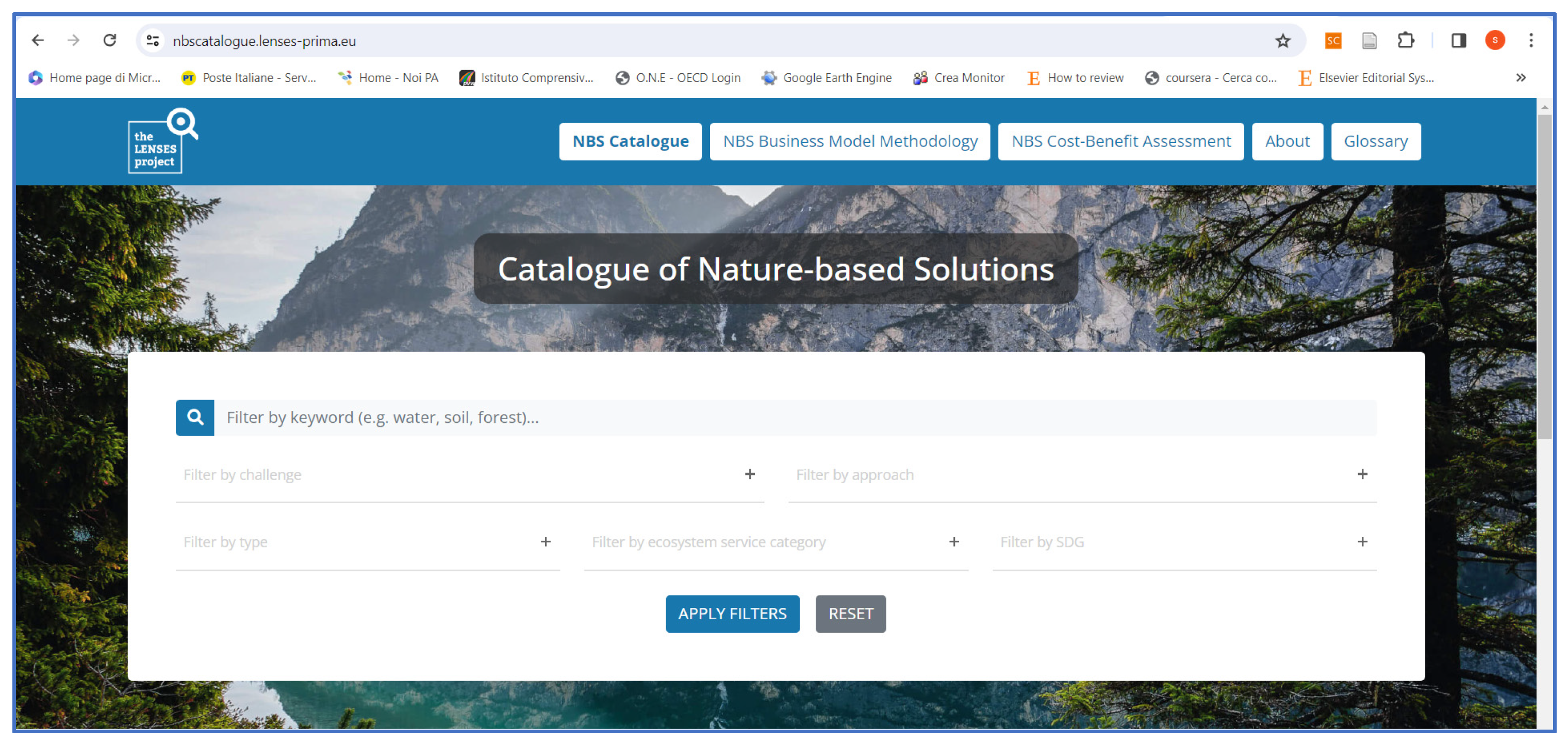
The NBS framework is based on research around innovation actions that highlight the multifunctional role of NBSs and their potential ability to fulfill multiple social, economic, and environmental goals. The tool is publicly available on the LENSES project website (https://www.lenses-prima.eu/ (accessed on 12 March 2024)) at this link: https://nbscatalogue.lenses-prima.eu/ (accessed on 12 March 2024) (Figure 5).
Figure 5.
Catalogue of nature-based solution interface on LENSES website (https://nbscatalogue.lenses-prima.eu/ (accessed on 12 March 2024)).
4.2. Water–Ecosystem–Food Challenges
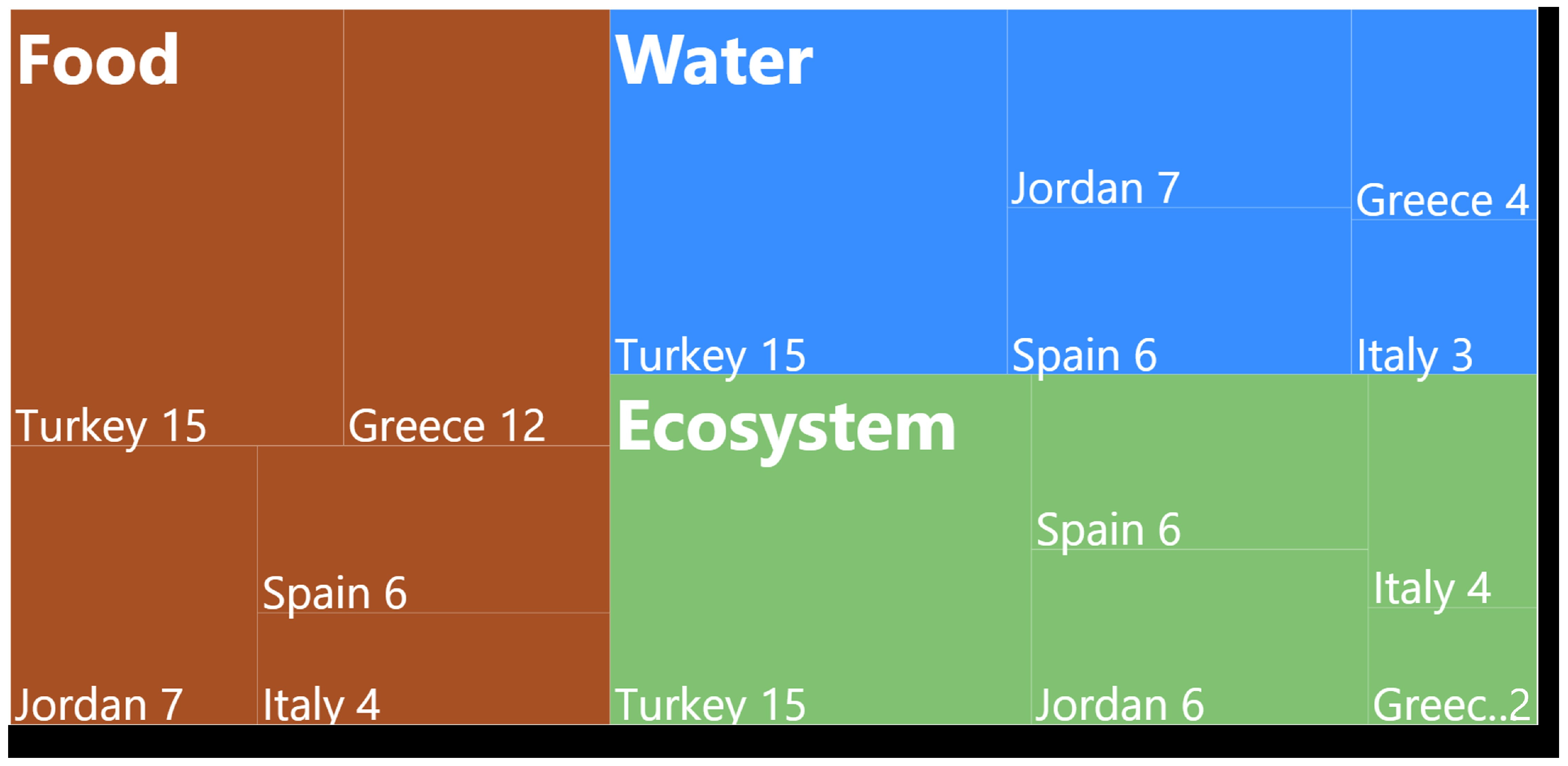
The stakeholders were selected to guarantee a good balance among the different sectors (i.e., water, food, and ecosystems), the role (e.g., policymakers, public and private decision-makers, citizen organizations, academia, etc.), and including all institutional and governance levels that might be relevant to the issues at stake (i.e., national, regional, and local) (Figure 6). The following Table 3 includes a summary of the stakeholders involved (per sector) and interviewed to define the main challenges of their areas and to select the most suitable NBSs.
Figure 6.
Initial group of stakeholders engaged for each Country grouped by Water–Ecosystem–Food sector. Labels indicate the number of stakeholders per country.
Table 3.
Main challenges selected by stakeholders in the pilot areas, count: number of pilots whose stakeholders selected the challenge.
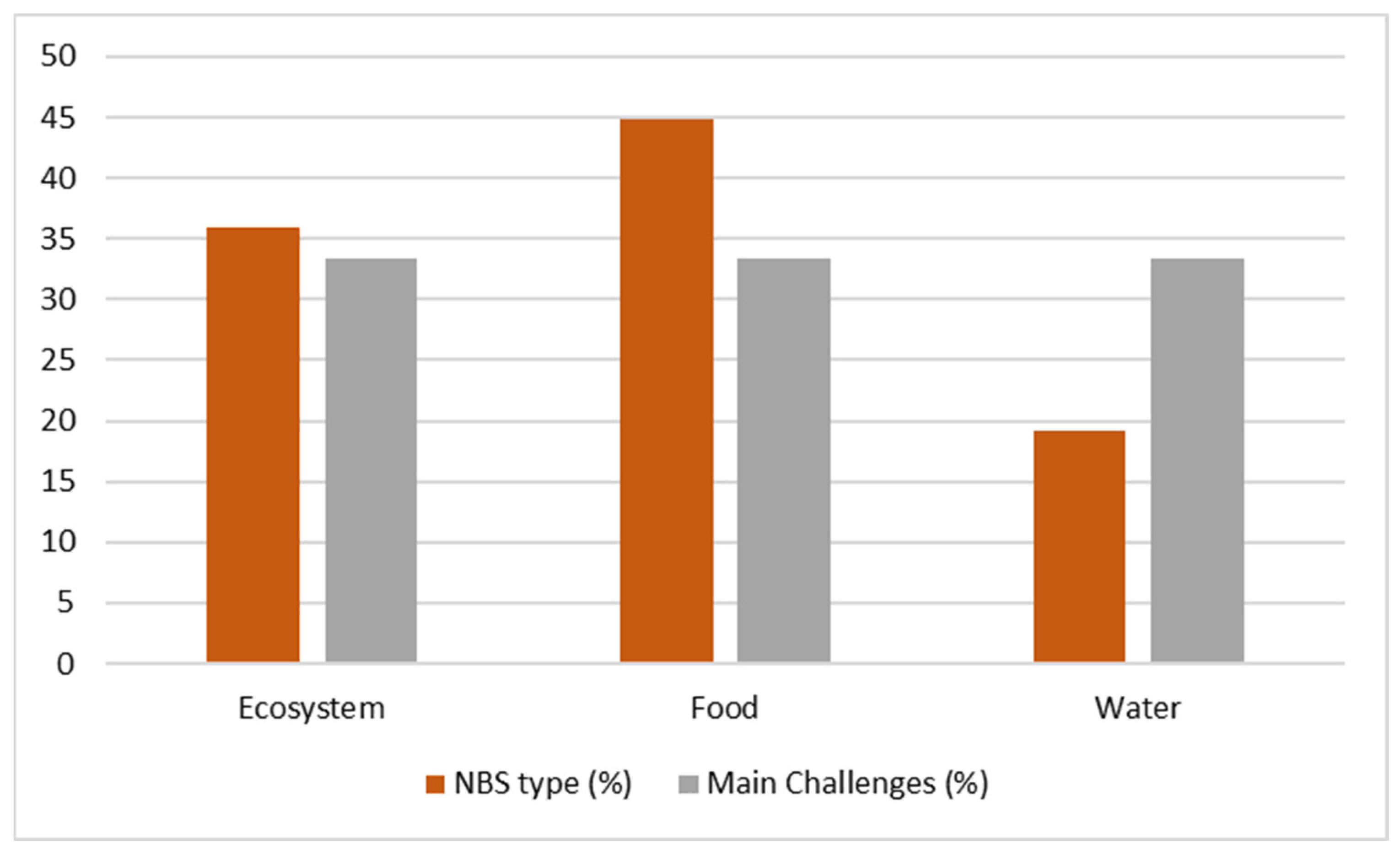
As shown in Table 3, 13 main challenges were selected by the different stakeholders of the pilot area. The main challenges identified are the need to “improve the water resources management”, “improve the ecosystems services”, and “promote sustainable agriculture development”, selected by 66.6%, 50%, and 50% of the pilots, respectively. The pilot issues are evenly distributed between the three different WEF sectors (water, ecosystem, and food), as shown in Figure 7.
Figure 7.
NBS types and main challenges defined by stakeholders in the pilot areas grouped by WEF aspects.
4.3. Nature-Based Solutions Selected by Stakeholders in Pilot Areas
In all the pilots, a list of 35 NBSs was selected, which were grouped into sub-types and Group types (Table 2). Sixty-two percent of identified NBSs are related to “Type 2—NBSs for sustainability and multifunctionality of managed ecosystems”, 23% to “Type 3—Design and management of new ecosystems”, and 15% to “Type 1—Better use of protected/natural ecosystems”. As shown in Table 4, all stakeholders of the several pilot selected NBSs belonging to the sub-type “Agricultural landscape management” (61% of NBSs). The main NBSs selected are as follows: (i) Incorporating manure, compost, biosolids, or crop residues to enhance carbon storage (selected by all the pilots), (ii) Agro-ecological practices (iii) Increasing soil water holding capacity and infiltration rates, (iv) Soil improvement and conservation measures, (v) Mulching, (vi) Using soil conservation measures: Cover crops; Deep-rooted plants and minimum or conservation tillage; Agroforestry; Windbreaks.
Table 4.
Numbers of NBSs selected by stakeholders grouped by sub-types per pilot area.
4.4. NBSs Implemented in the Pilots
In four pilot areas, some NBSs were selected and implemented to solve some specific issues in different territories. Table 5 shows the types of NBSs experimented with in the pilot areas, the challenges individuated, and the benefits of implementing.
Table 5.
NBSs implemented and their effect in summary.
4.5. Stakeholders' Evaluation of NBS Implementation
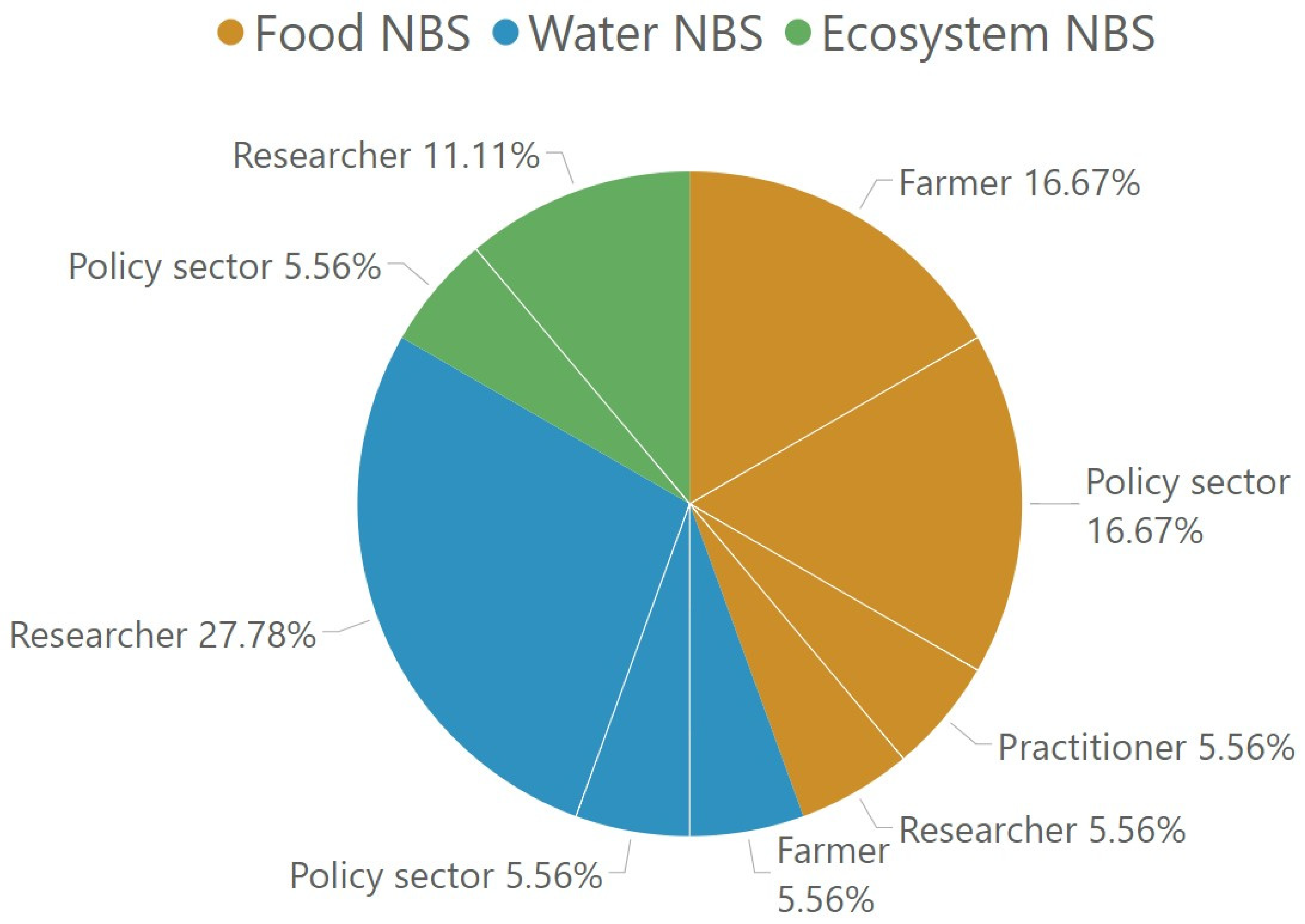
The sample involved in the final survey comprised 18 respondents, selected on purpose among those more interested and/or directly involved in the implementation of NBSs: they were mainly researchers (44%), policymakers (28%), and farmers (22%) from Greece (33%), Spain (28%), and Jordan (22%).
Figure 8 shows the different characteristics of stakeholders and their main sector of interest in NBSs.
Figure 8.
Stakeholder respondents grouped by WEF sectors.
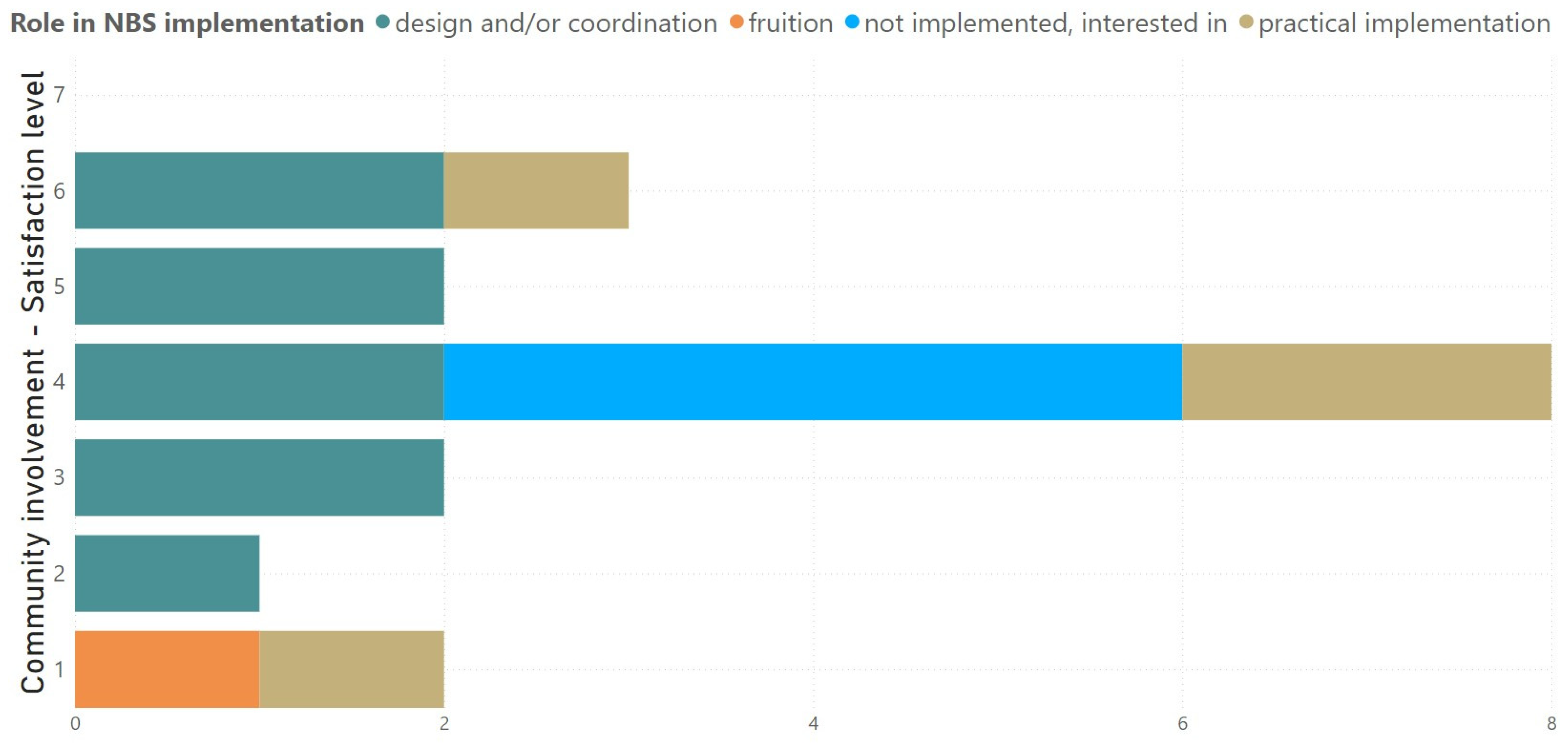
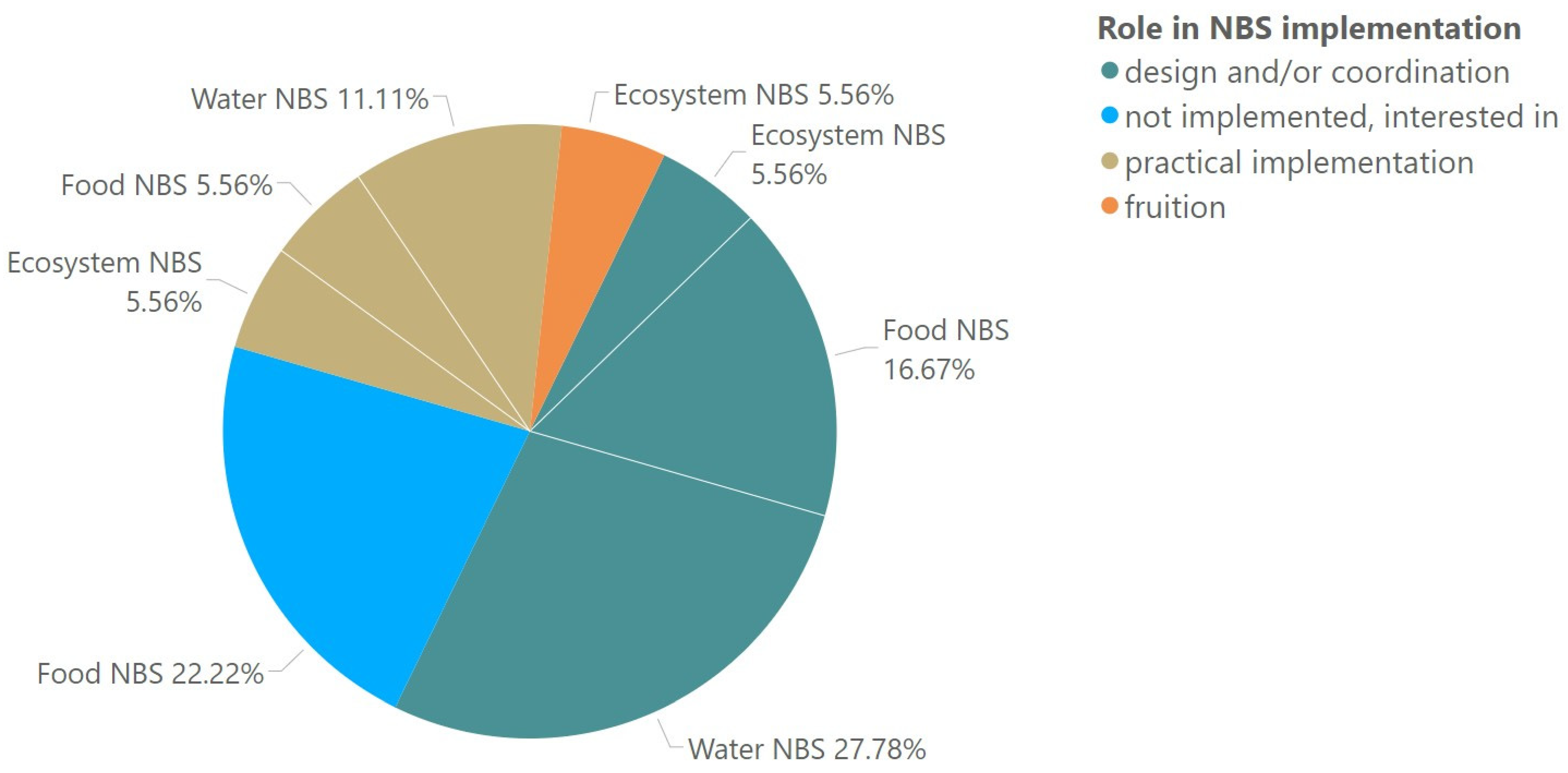
Their role in the NBS implementation is shown in Figure 9: 28% of stakeholders support NBS in conceptual development (design) and/or coordination in the water sector, and 16% in the food sector; 22% of stakeholders did not implement NBS but are interested in the food sector, while the 22% of actors that supported practical NBS implementation are equally distributed in all WEF sectors.
Figure 9.
Role of stakeholders in implementing NBSs.
Figure 10 shows the results of the first Likert scale question regarding the level of satisfaction, ranging from 1 (very dissatisfied) to 7 (extremely satisfied), regarding “the level of community involvement in the planning and implementation of NBSs projects”. Among the respondents, 44% (the majority) provided a response indicating neutrality (level 4), two respondents were extremely dissatisfied, and no respondents declared the highest level of satisfaction. The average score suggests that, in general, participants do not clearly identify NBS strategies as a valid and relevant approach to address specific environmental problems or issues but rather remain neutral. In addition, the lack of an extremely high score could indicate that some participants may have reservations or questions about NBS strategies.
Figure 10.
Responses about the level of community involvement in the planning and implementation of NBS projects in the different pilot areas (Ranging from 1—very dissatisfied to 7—extremely satisfied.
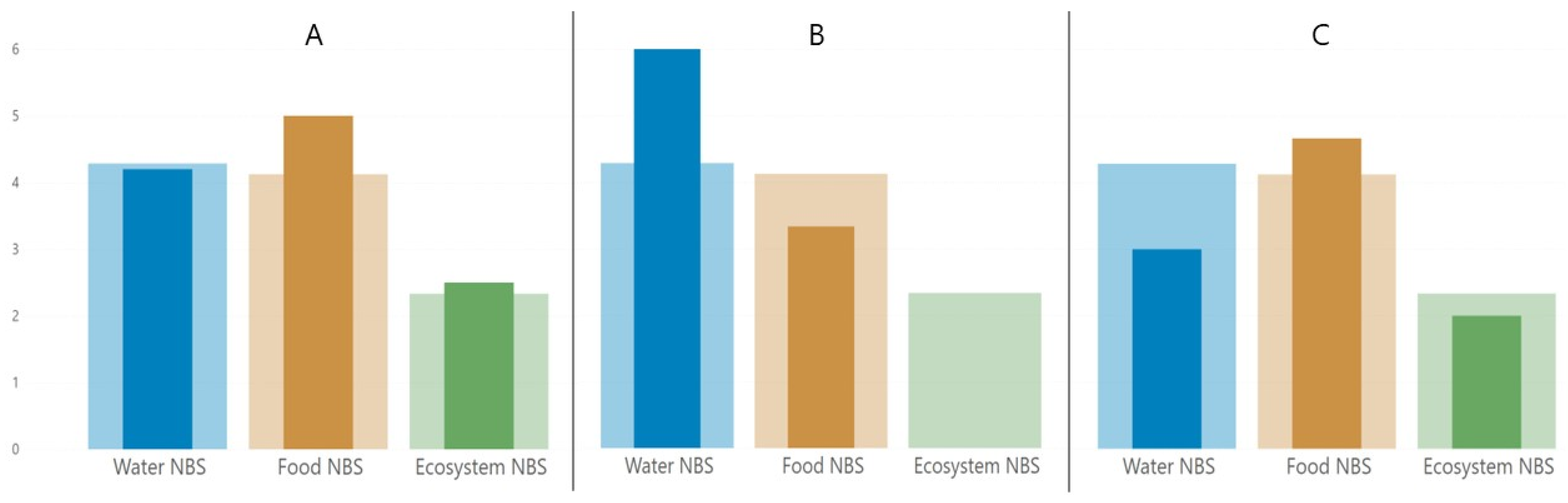
As shown in Figure 11, researchers are mainly satisfied with the NBS in the food sector, whereas farmers are satisfied with the NBS effect in the water sector.
Figure 11.
Community involvement—level of satisfaction (mean) per WEF sectors, highlighted in darker colours: researchers’ (A), farmers’ (B), and policymakers’ (C) satisfaction against the total.
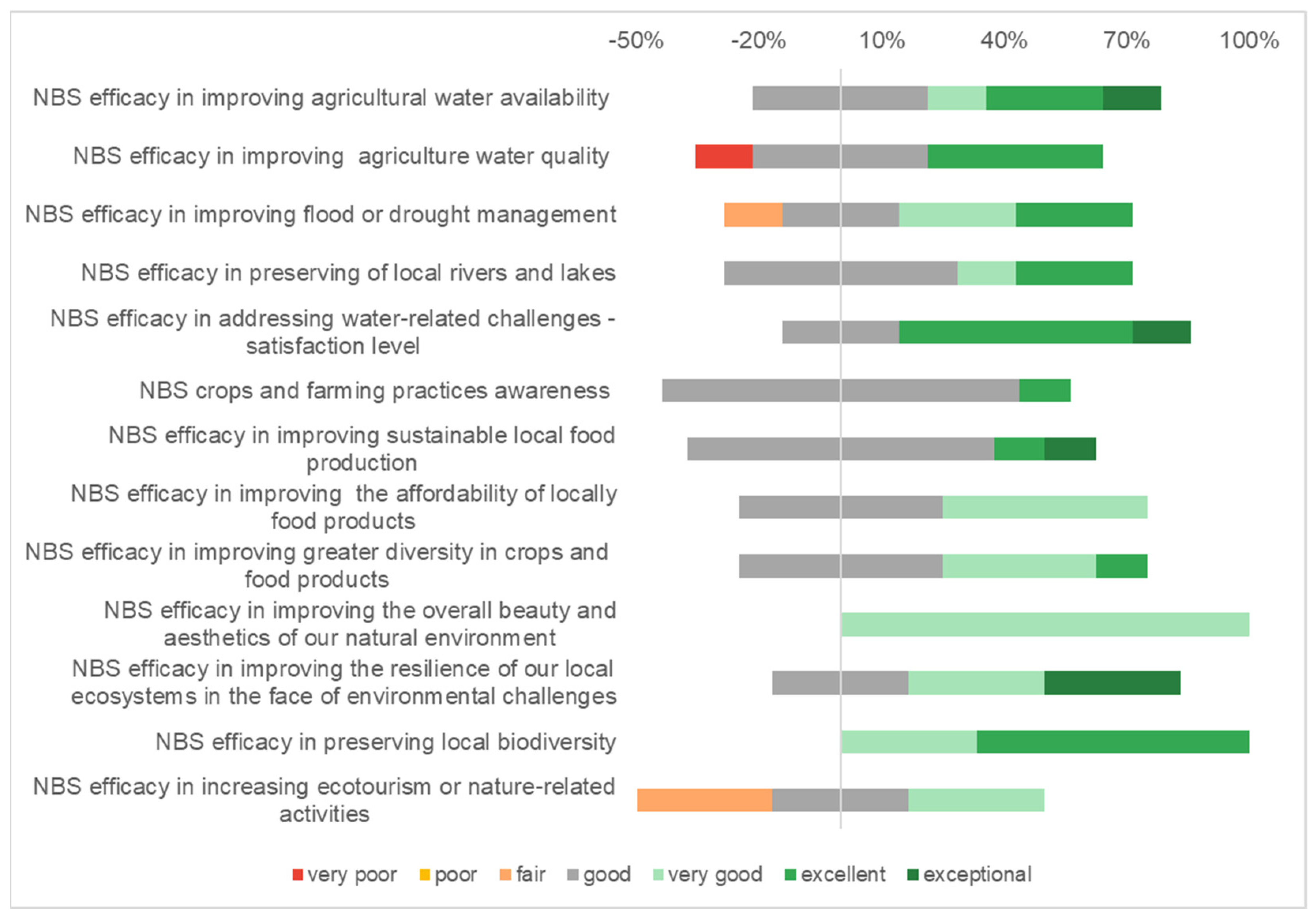
Figure 12 describes the agreement of each participant on the effects of NBS implementation: the different questions were tailored to the WEF-specific section of NBSs. All respondents who have implemented NBSs in the different WEF sectors provided responses indicating a high level of agreement, ranging from 4 to 7 on the Likert scale.
Figure 12.
Percentage of agreement related to NBS efficacy in providing different services for the water, food, and environment sectors, as identified by stakeholders in the 6 countries involved in the consultation campaign.
Some stakeholders did not perceive any positive effects from the use of NBSs in improving water quality in their community; 14% reported even a very negative effect, as well as in managing floods or droughts. With regard to the ecosystem sectors, the majority of stakeholders did not perceive a very positive effect on the increase in ecotourism or nature-related activities.
4.6. Barriers and Opportunities Affecting NBS Implementation
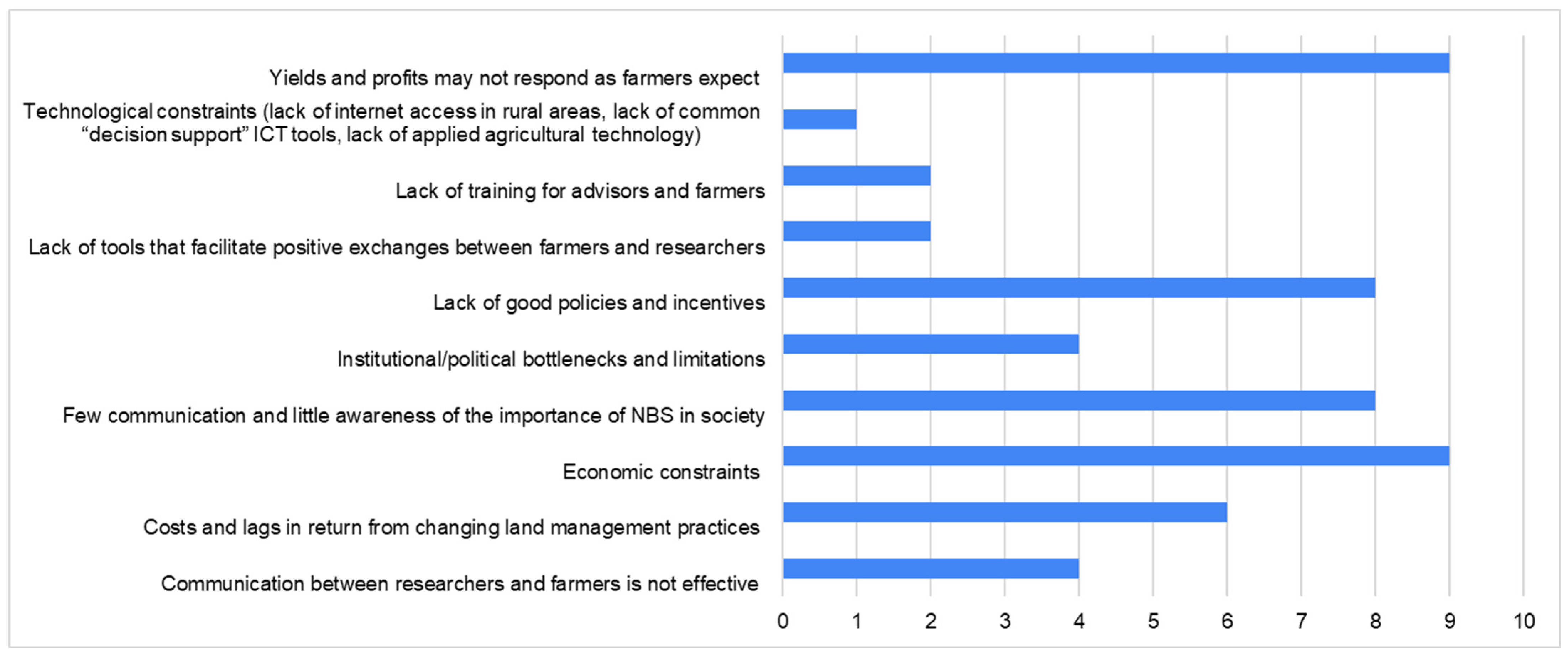
Stakeholders have the option to select multiple choices from a range of 10 barriers and 10 opportunities to overcome barriers. The first two barriers that hinder the successful implementation of the NBSs, as indicated by the respondents, are related to economic aspects: ‘Economic constraints’ and ‘Yield and profits may not respond as farmers’ expectations’ were the most voted, with 50% of preferences. The other two important barriers (44.4% of preferences) are ‘Few communications and limited awareness of the importance of NBSs in society’ and ‘Lack of good policies and incentives’ (Figure 13).
Figure 13.
Barriers related to NBSs identified by stakeholders in the 6 countries involved in the consultation campaign (numbers correspond to count of responses).
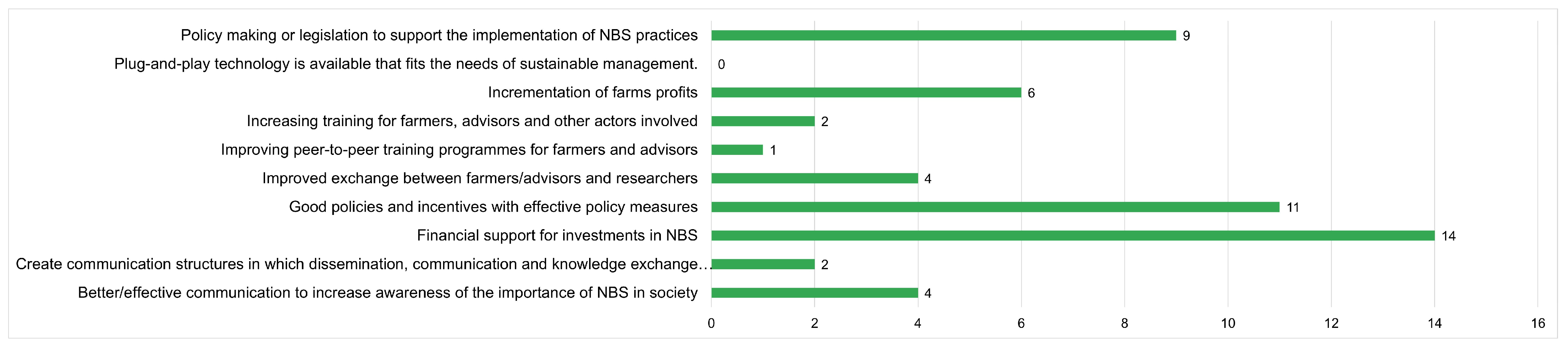
The three main opportunities to overcome the issues of implementing NBSs are ‘Financial support for investments in NBSs’, ‘Good policies and incentives with effective policy measures’, and ‘Policymaking and legislation to support the implementation of NBS practices’, with 78%, 61%, and 50% of preferences, respectively (Figure 14).
Figure 14.
Opportunities related to NBSs identified by stakeholders in the 6 countries involved in the consultation campaign (numbers correspond to the count of responses).
5. Discussion
This study aims to identify the potential role of NBSs in addressing the challenges and opportunities for a resilient Nexus in rural areas, building on the challenges identified within the pilots through a participatory approach and implementing selected NBS that can contribute to climate resilience by improving the adaptability of ecosystems to changing climatic conditions. This study shows the methodology that was followed for the implementation of the catalogue, holding a list of existing nature-based solutions (NBSs) specific to rural landscapes and making them available to the wider public. The NBS catalogue contains a total amount of 54 NBSs, along with additional information for each one of them. While there is growing evidence based on the effectiveness of NBS approaches [16] and increasing numbers of tools to support practitioners [39,40] and policymakers in planning and applying NBSs, some important gaps remain, including matching solutions to specific circumstances and stakeholder needs. This study will address this gap by providing the methodological and practical foundations for the selection of suites of solutions that use NBSs as an underlying principle to be implemented in Mediterranean pilot areas. The NBS Catalogue was developed to give decision-makers access to an evidence-based framework and guidance to support the selection of suites of solutions that incorporate nature-based approaches to address challenges in increasing the resilience of the WEF Nexus.
Summarizing the information resulting from the application of the WEF Nexus Evaluation framework, the vision of all pilots is common and threefold: (i) Increasing sustainability and re-naturalization of the landscape; (ii) Focusing on the sustainability of the agricultural sector; and (iii) Promoting the socio-economic development. The optimization of the WEF Nexus is a core issue for the sustainable management of natural resources and agricultural development. NBSs can play a key role in facilitating this optimization.
Agricultural landscape management NBS types are more selected by the several stakeholders of the Mediterranean pilot areas to overcome the main WEF challenges of their areas. Also, Morri and Santolini [41] highlighted that agricultural management practices are key to realizing the benefits associated with ESs and reducing disservices from agricultural activities in an Italian region.
The survey on the impact of NBS implementation had a limited response rate (18 respondents). However, it was targeted at stakeholders who had implemented NBSs in their area, making it an excellent proof of concept. According to the results, although similar to Seddon et al. [16], there was a generally positive perception of the effectiveness of NBSs in the WEF sectors, but stakeholders did not perceive a positive impact of the application of NBSs in improving water quality in the pilot areas. This is probably due to the very short-term implementation of NBSs: sustainable NBSs need time to show effects on the water quality. Several studies [42,43] highlighted that NBSs can positively impact surface water quality in the long term and will remain an effective strategy in the future, even under future climate conditions, while being a justified investment from an economic standpoint.
The stakeholders’ consensus regarding the effectiveness of the adopted strategies is a pivotal finding, indicating the success of the NBS initiatives within their respective communities. It suggests that the strategies have effectively addressed key challenges related to water availability, food security, and ecosystem resilience, contributing to sustainable agricultural practices and environmental conservation efforts.
In addition to defining an NBS list tailored to specific territorial issues, it is important to establish the barriers that arise in implementing practices to seek useful needed actions. In this context, our study defined the main barriers in Mediterranean regions in the phase of NBS implementation through a participatory approach. Economic and social barriers are highlighted by stakeholders as a priority. As described by Hallstein and Iseman [44], any practice that reduces returns or is perceived to reduce returns will face high resistance to adoption. In many cases, simply the lack of concrete and specific evidence on yields and subsequent returns will prevent the adoption of new practices. Several studies in the NBS application indicate that farmers do not adopt sustainable practices despite having witnessed ecosystem benefits because of increased initial costs, labour inputs, or customs and preferences [45,46,47]. To maximize NBS benefits while managing trade-offs, Seddon et al. [16] identified support for NBS in government policies, participatory delivery involving all stakeholders, strong and transparent governance, and provision of secure finance and land tenure, which are in line with international guidelines.
In the same perspective, our study moves in the same direction as the cited literature and provides evidence that financial support, sound policies, and incentives, particularly those aligned to the CAP, are crucial to pose the base for implementing NBSs at the territorial level.
As confirmed by several authors [48,49], legislative and financial support for NBSs cuts across several policy documents and sectors. While Member State and EU policy instruments acknowledge NBS-related concepts, they seldom contain quantitative and measurable targets relating to NBS placement and quality. NBSs, therefore, provide an important opportunity for innovation, research, business development, and trade [11].
Due to project time constraints, this paper shows only the first results of the implementation of NBSs, and future studies on the current topic are therefore recommended for the monitoring of NBS effects on WEF sectors.
6. Conclusions
Methodologies and evaluation frameworks for assessing the effectiveness and impact of NBSs are still insufficiently understood, as is the implementation of NBSs and the relationship between NBSs and society, especially in rural areas. The present research aimed to develop a stepwise methodology to find the most appropriate NBSs to implement in WEF sectors in rural areas. In order to legitimize new planning practices and concepts, participatory methodologies were used to establish collaborative networks and communities of practice across institutional boundaries. An NBS catalogue has been prepared and is publicly available on the LENSES project website. Stakeholders identified the main local WEF challenges and selected a list of NBSs to be evaluated in light of the local context. In four pilot areas, a few NBSs were implemented, and the first positive results were presented. A final survey was conducted as proof of concept to highlight the main barriers and opportunities of the NBS implementation. Although the final investigation is based on a small sample of participants, the findings suggest that NBSs have been recognized as a promising and sustainable approach to addressing various environmental challenges, including water and food-related issues, and that economic and social barriers are the main issues in implementing NBSs. The success of NBSs in Mediterranean areas would also depend on effective governance, policies, and the integration of traditional knowledge with modern approaches to improve the perception and attitude of stakeholders. This study, through a small set of implemented NBSs in some case studies, provides evidence that the knowledge gained through experiences in NBS implementation and information sharing between stakeholders can be an opportunity to facilitate NBS actions. Finally, it is crucial to continually assess and adapt these solutions based on monitoring and evaluation. Further research is also needed to determine the impact of implementing NBSs over the long term and for tailoring NBSs to specific contexts, including the geographical, climatic, and socio-economic conditions of a region.
Supplementary Materials
The following supporting information can be downloaded at: https://www.mdpi.com/article/10.3390/su16104064/s1, LENSES NBSs assessment Questionnaire.
Author Contributions
Conceptualization, Methodology, Data curation, and Writing—original draft preparation: S.V.; N.P.N., M.A.L., A.P. (Alessandro Pagano) and R.G.: Methodology, Data curation, and Writing—Review and Editing; Survey and Data curation, Writing—Review and Editing: V.B., and D.F.; Data Collection Writing—Review and Editing: I.P., A.P. (Andrea Panagopoulos), V.P., A.C., Z.A.D., T.T., E.L., L.A.-H., N.B.H., S.A., E.H., A.O., T.P., F.P. and A.D.F.; Data curation, Writing—Review and Editing: D.T., C.P. and E.C.; Project coordination and Writing—Review and Editing: S.F. All authors have read and agreed to the published version of the manuscript.
Funding
This research was developed in the framework of the project LENSES—“LEarning and action alliances for NexuS EnvironmentS in an uncertain future”, funded by the European Union’s PRIMA Programme, under grant agreement no 2041. The contents here reported are the sole responsibility of the authors and can under no circumstances be regarded as reflecting the position of the European Union.
Institutional Review Board Statement
Not applicable.
Informed Consent Statement
Informed consent was obtained from all subjects involved in the study.
Data Availability Statement
The data presented in this study are available on request from the corresponding author.
Acknowledgments
The Authors wish to thank Luigi Serafini, for supporting data collection in Italian pilot area, and Konstantinos Babakos and Dimitrios Malamataris (SWRI) for supporting data collection in Greece pilot areas.
Conflicts of Interest
Authors Christina Papadaskalopoulou, Dimitris Tassopoulos and Efstathia Chatzitheodorou were employed by the company DRAXIS Environmental S.A. Authors Esteban Henao and Anna Osann were employed by the company AgrisSat Iberia SL. The remaining authors declare that the research was conducted in the absence of any commercial or financial relationships that could be construed as a potential conflict of interest.
References
- European Commission; Joint Research Centre. Position Paper on Water, Energy, FOOD and ecosystems (WEFE) Nexus and Sustainable Development Goals (SDGs); Publications Office: Luxembourg, 2019. [Google Scholar]
- European Commission; Joint Research Centre; UNESCO; IWA Publishing. Implementing the Water-Energy-Food-Ecosystems Nexus and Achieving the Sustainable Development Goals; Publications Office: Luxembourg, 2021. [Google Scholar]
- European Environment Agency. Nature-Bsased Solutions in Europe Policy, Knowledge and Practice for Climate Change Adaptation and Disaster Risk Reduction; Publications Office: Luxembourg, 2021. [Google Scholar]
- Segovia-Hernández, J.G.; Contreras-Zarazúa, G.; Ramírez-Márquez, C. Sustainable design of water–energy–food nexus: A literature review. RSC Sustain. 2023, 1, 1332–1353. [Google Scholar] [CrossRef]
- Correa-Cano, M.E.; Salmoral, G.; Rey, D.; Knox, J.W.; Graves, A.; Melo, O.; Foster, W.; Naranjo, L.; Zegarra, E.; Johnson, C.; et al. A novel modelling toolkit for unpacking the Water-Energy-Food-Environment (WEFE) nexus of agricultural development. Renew. Sustain. Energy Rev. 2022, 159, 112182. [Google Scholar] [CrossRef]
- PRIMA Green Mediterranean PRIMA MAGAZINE. 2022. Available online: https://prima-med.org/magazine/ (accessed on 12 March 2024).
- Pahl-Wostl, C. Governance of the water-energy-food security nexus: A multi-level coordination challenge. Environ. Sci. Policy 2019, 92, 356–367. [Google Scholar] [CrossRef]
- FAO. The Water-Energy-Food Nexus: A New Approach in Support of Food Security and Sustainable Agriculture; FAO: Rome, Italy, 2014. [Google Scholar]
- Hoolohan, C.; Larkin, A.; McLachlan, C.; Falconer, R.; Soutar, I.; Suckling, J.; Varga, L.; Haltas, I.; Druckman, A.; Lumbroso, D.; et al. Engaging stakeholders in research to address water–energy–food (WEF) nexus challenges. Sustain. Sci. 2018, 13, 1415–1426. [Google Scholar] [CrossRef]
- Albert, C.; Schröter, B.; Haase, D.; Brillinger, M.; Henze, J.; Herrmann, S.; Gottwald, S.; Guerrero, P.; Nicolas, C.; Matzdorf, B. Addressing societal challenges through nature-based solutions: How can landscape planning and governance research contribute? Landsc. Urban Plan. 2019, 182, 12–21. [Google Scholar] [CrossRef]
- European Commission. Directorate General for Research and Innovation. Nature-Based Solutions: State of the Art in EU Funded Projects; Publications Office: Luxembourg, 2020. [Google Scholar]
- Cohen-Shacham, E.; Walters, G.; Janzen, C.; Maginnis, S. (Eds.) Nature-Based Solutions to Address Global Societal Challenges; IUCN International Union for Conservation of Nature: Gland, Switzerland, 2016; ISBN 978-2-8317-1812-5. [Google Scholar]
- IUCN, International Union for Conservation of Nature IUCN. Global Standard for Nature-based Solutions: A User-Friendly Framework for the Verification, Design and Scaling up of NbS, 1st ed.; IUCN (International Union for Conservation of Nature: Gland, Switzerland, 2020; ISBN 978-2-8317-2058-6. [Google Scholar]
- Eisenberg, B.; Polcher, V.; Chiesa, C. Nature Based Solutions Technical Handbook, Deliverable 5.1 for the UNaLab H2020 Project 2018. Available online: https://unalab.eu/system/files/2020-02/unalab-technical-handbook-nature-based-solutions2020-02-17.pdf (accessed on 12 March 2024).
- Ruangpan, L.; Vojinovic, Z.; Di Sabatino, S.; Leo, L.S.; Capobianco, V.; Oen, A.M.P.; McClain, M.E.; Lopez-Gunn, E. Nature-based solutions for hydro-meteorological risk reduction: A state-of-the-art review of the research area. Nat. Hazards Earth Syst. Sci. 2020, 20, 243–270. [Google Scholar] [CrossRef]
- Seddon, N.; Chausson, A.; Berry, P.; Girardin, C.A.J.; Smith, A.; Turner, B. Understanding the value and limits of nature-based solutions to climate change and other global challenges. Philos. Trans. R. Soc. B Biol. Sci. 2020, 375, 20190120. [Google Scholar] [CrossRef]
- Dick, J.; Miller, J.D.; Carruthers-Jones, J.; Dobel, A.J.; Carver, S.; Garbutt, A.; Hester, A.; Hails, R.; Magreehan, V.; Quinn, M. How are nature based solutions contributing to priority societal challenges surrounding human well-being in the United Kingdom: A systematic map protocol. Environ. Evid. 2019, 8, 37. [Google Scholar] [CrossRef]
- Albrecht, T.R.; Crootof, A.; Scott, C.A. The Water-Energy-Food Nexus: A systematic review of methods for nexus assessment. Environ. Res. Lett. 2018, 13, 043002. [Google Scholar] [CrossRef]
- Shannak, S.; Mabrey, D.; Vittorio, M. Moving from theory to practice in the water–energy–food nexus: An evaluation of existing models and frameworks. Water-Energy Nexus 2018, 1, 17–25. [Google Scholar] [CrossRef]
- Hoff, H.; Alrahaife, S.A.; El Hajj, R.; Lohr, K.; Mengoub, F.E.; Farajalla, N.; Fritzsche, K.; Jobbins, G.; Özerol, G.; Schultz, R.; et al. A Nexus Approach for the MENA Region—From Concept to Knowledge to Action. Front. Environ. Sci. 2019, 7, 48. [Google Scholar] [CrossRef]
- Kabisch, N.; Frantzeskaki, N.; Pauleit, S.; Naumann, S.; Davis, M.; Artmann, M.; Haase, D.; Knapp, S.; Korn, H.; Stadler, J.; et al. Nature-based solutions to climate change mitigation and adaptation in urban areas: Perspectives on indicators, knowledge gaps, barriers, and opportunities for action. Ecol. Soc. 2016, 21, art39. [Google Scholar] [CrossRef]
- Pagano, A.; Pluchinotta, I.; Pengal, P.; Cokan, B.; Giordano, R. Engaging stakeholders in the assessment of NBS effectiveness in flood risk reduction: A participatory System Dynamics Model for benefits and co-benefits evaluation. Sci. Total Environ. 2019, 690, 543–555. [Google Scholar] [CrossRef]
- Baratella, V.; Pirelli, T.; Giordano, R.; Pagano, A.; Portoghese, I.; Bea, M.; López-Moya, E.; Di Fonzo, A.; Fabiani, S.; Vanino, S. Stakeholders analysis and engagement to address water-ecosystems-food Nexus challenges in Mediterranean environments: A case study in Italy: Special Issue "Co-designing sustainable cropping systems’ with stakeholders". Ital. J. Agron. 2023, 18. [Google Scholar] [CrossRef]
- Vicuña, S.; Scott, C.A.; Borgias, S.; Bonelli, S.; Bustos, E. Assessing barriers and enablers in the institutionalization of river-basin adaptive management: Evidence from the Maipo Basin, Chile. Curr. Opin. Environ. Sustain. 2020, 44, 93–103. [Google Scholar] [CrossRef]
- Melanidis, M.S.; Hagerman, S. Competing narratives of nature-based solutions: Leveraging the power of nature or dangerous distraction? Environ. Sci. Policy 2022, 132, 273–281. [Google Scholar] [CrossRef]
- Coletta, V.R.; Pagano, A.; Pluchinotta, I.; Fratino, U.; Scrieciu, A.; Nanu, F.; Giordano, R. Causal Loop Diagrams for supporting Nature Based Solutions participatory design and performance assessment. J. Environ. Manag. 2021, 280, 111668. [Google Scholar] [CrossRef]
- Alves, A.; Gersonius, B.; Sanchez, A.; Vojinovic, Z.; Kapelan, Z. Multi-criteria Approach for Selection of Green and Grey Infrastructure to Reduce Flood Risk and Increase CO-benefits. Water Resour. Manag. 2018, 32, 2505–2522. [Google Scholar] [CrossRef]
- Puskás, N.; Abunnasr, Y.; Naalbandian, S. Assessing deeper levels of participation in nature-based solutions in urban landscapes—A literature review of real-world cases. Landsc. Urban Plan. 2021, 210, 104065. [Google Scholar] [CrossRef]
- Frantzeskaki, N. Seven lessons for planning nature-based solutions in cities. Environ. Sci. Policy 2019, 93, 101–111. [Google Scholar] [CrossRef]
- Videira, N.; Antunes, P.; Santos, R. Engaging stakeholders in environmental and sustainability decisions with participatory system dynamics modeling. In Environmental Modeling with Stakeholders; Springer: Cham, Switzerland, 2017; pp. 241–265. [Google Scholar]
- Yaseen, M.; Portoghese, I.; Giordano, R.; Pagano, A.; Iacobellis, V.; Vanino, S.; Pirelli, T.; Fabiani, S.; Baratella, V. Integrating SWAT and Participatory System Dynamics Modelling for analyzing the WEF Nexus: The Tarquinia Plain Case Study. In Proceedings of the EGU23, the 25th EGU General Assembly, Vienna, Austria & Online, 23–28 April 2023. [Google Scholar]
- Somarakis, G.; Stagakis, S.; Chrysoulakis, N. ThinkNature/Nature-Based Solutions Handbook; European Union: Brussels, Belgium, 2019. [Google Scholar] [CrossRef]
- Dumitru, A.; Wendling, L. Evaluating the Impact of Nature-Based Solutions: A Handbook for Practitioners; European Commission: Brussels, Belgium, 2021. [Google Scholar]
- Lilli, M.A.; Nerantzaki, S.D.; Riziotis, C.; Kotronakis, M.; Efstathiou, D.; Kontakos, D.; Lymberakis, P.; Avramakis, M.; Tsakirakis, A.; Protopapadakis, K.; et al. Vision-Based Decision-Making Methodology for Riparian Forest Restoration and Flood Protection Using Nature-Based Solutions. Sustainability 2020, 12, 3305. [Google Scholar] [CrossRef]
- Malamataris, D.; Pisinaras, V.; Babakos, K.; Chatzi, A.; Hatzigiannakis, E.; Kinigopoulou, V.; Hatzispiroglou, I.; Panagopoulos, A. Effects of Weed Removal Practices on Soil Organic Carbon in Apple Orchards Fields. Environ. Sci. Proc. 2023, 25, 25. [Google Scholar] [CrossRef]
- Tsakmakis, I.; Babakos, K.; Chatzi, A.; Pisinaras, V.; Brogi, C.; Bogena, H.; Dombrowski, O.; Panagopoulos, A. Precision Irrigation Scheduling through High Frequency Data Monitoring. Implementation in Apple Orchard Cultivations-Central Greece. In Proceedings of the EGU23, the 25th EGU General Assembly, Vienna, Austria & Online, 23–28 April 2023. [Google Scholar]
- Maragkaki, A.; Koukianaki, E.; Lilli, M.A.; Efstathiou, D.; Nikolaidis, N.P. Optimizing the Water-Ecosystem-Food Nexus using Nature-Based Solutions at the basin scale. Front. Water Rev. 2024, preprint. [Google Scholar]
- Vanino, S.; Ferrari, D. Application of NBS Selection Framework in Pilots. 2023. Available online: https://doi.org/10.5281/ZENODO.10705854 (accessed on 12 March 2024).
- European Commission. Directorate General for Research and Innovation. Evaluating the Impact of Nature-Based Solutions: A Handbook for Practitioners; Publications Office: Luxembourg, 2021. [Google Scholar]
- Donatti, C.I.; Andrade, A.; Cohen-Shacham, E.; Fedele, G.; Hou-Jones, X.; Robyn, B. Ensuring that nature-based solutions for climate mitigation address multiple global challenges. One Earth 2022, 5, 493–504. [Google Scholar] [CrossRef]
- Morri, E.; Santolini, R. Ecosystem Services Valuation for the Sustainable Land Use Management by Nature-Based Solution (NbS) in the Common Agricultural Policy Actions: A Case Study on the Foglia River Basin (Marche Region, Italy). Land 2021, 11, 57. [Google Scholar] [CrossRef]
- Matos, F.A.; Roebeling, P. Modelling Impacts of Nature-Based Solutions on Surface Water Quality: A Rapid Review. Sustainability 2022, 14, 7381. [Google Scholar] [CrossRef]
- Nature-Based Solutions in Agriculture: Sustainable Management and Conservation of Land, Water and Biodiversity; FAO: Rome, Italy; TNC: Arlington, FL, USA, 2021; ISBN 978-92-5-133907-7.
- Hallstein, E.; Iseman, T. Nature-Based Solutions in Agriculture—Project Design for Securing Investment; FAO: Rome, Italy, 2021. [Google Scholar] [CrossRef]
- Chapman, A.; Darby, S. Evaluating sustainable adaptation strategies for vulnerable mega-deltas using system dynamics modelling: Rice agriculture in the Mekong Delta’s An Giang Province, Vietnam. Sci. Total Environ. 2016, 559, 326–338. [Google Scholar] [CrossRef]
- McWilliam, W.; Balzarova, M. The role of dairy company policies in support of farm green infrastructure in the absence of government stewardship payments. Land Use Policy 2017, 68, 671–680. [Google Scholar] [CrossRef]
- Cerdà, A.; Rodrigo-Comino, J.; Giménez-Morera, A.; Novara, A.; Pulido, M.; Kapović-Solomun, M.; Keesstra, S.D. Policies can help to apply successful strategies to control soil and water losses. The case of chipped pruned branches (CPB) in Mediterranean citrus plantations. Land Use Policy 2018, 75, 734–745. [Google Scholar] [CrossRef]
- Calliari, E.; Castellari, S.; Davis, M.; Linnerooth-Bayer, J.; Martin, J.; Mysiak, J.; Pastor, T.; Ramieri, E.; Scolobig, A.; Sterk, M.; et al. Building climate resilience through nature-based solutions in Europe: A review of enabling knowledge, finance and governance frameworks. Clim. Risk Manag. 2022, 37, 100450. [Google Scholar] [CrossRef]
- Davis, M.; Abhold, K.; Mederake, L.; Knoblauch, D. Nature-Based Solutions in European and National Policy Frameworks. Deliverable 1.5, NATURVATION. 2018. Available online: https://networknature.eu/product/22758 (accessed on 12 March 2024).
Disclaimer/Publisher’s Note: The statements, opinions and data contained in all publications are solely those of the individual author(s) and contributor(s) and not of MDPI and/or the editor(s). MDPI and/or the editor(s) disclaim responsibility for any injury to people or property resulting from any ideas, methods, instructions or products referred to in the content. |
© 2024 by the authors. Licensee MDPI, Basel, Switzerland. This article is an open access article distributed under the terms and conditions of the Creative Commons Attribution (CC BY) license (https://creativecommons.org/licenses/by/4.0/).