You are currently viewing a new version of our website. To view the old version click .
Sustainability
  • Article
  • Open Access

28 June 2023

Social Metabolism in Buruan SAE: Individual Rift Perspective on Urban Farming Model for Food Independence in Bandung, Indonesia

,
,
and
1
Department of Agro Industrial Technology, Padjadjaran University, Jatinangor 45363, Indonesia
2
Indonesia Tangkas Bergegas, Bandung 40114, Indonesia
3
Development Planning Agency of Bandung City, Bandung 40117, Indonesia
*
Author to whom correspondence should be addressed.
This article belongs to the Special Issue Advances in Urban Green Development and Resilient Cities

Abstract

This study focused on one of the formulas for assessing social metabolism, specifically derived from individual variables. The formula was utilized as a framework for analyzing agricultural activities and combatting food vulnerability in urban communities. Bandung, the capital city of West Java in Indonesia, has implemented an urban agricultural program called Buruan SAE, using a policy formulation oriented towards food self-sufficiency for low-income citizens. This program utilized a policy formulation that involved using empty residential land owned by low-income citizens, distributing food to surrounding residents indiscriminately, and working towards anticipating nutritional vulnerability (stunting). However, the implementation had the opposite effect and pushed urban agriculture into becoming stagnant and undeveloped. This study aims to use individual rift theory as the analytic axiom to discuss the stagnation in the implementation of policy. The analysis was performed using a social monitoring method to form policy instruments that analyze Buruan SAE’s stagnation in Bandung City.

1. Introduction

The availability of land for agriculture in big cities worldwide has always posed a significant challenge. However, unproductive lands, such as unused terraces and rooftops, can be used for agricultural purposes in anticipation of the scarcity of biological staples, which are increasingly difficult to obtain on the market due to economic reasons. This concept known as urban agriculture, has increasingly become a global issue that requires collaboration from various actors, including governments, the private sector, and community groups.
West Java is the second most populated province in Indonesia, with a population of 48,220,094 people, and Bandung City, which is the provincial capital, has a population of 2,530,000 and served as the focus of this case study. This is because its population is inversely proportional to the total agricultural land area for food production, which was only approximately 640 Ha in 2020. The decrease in agricultural land occurred due to the conversion into housing areas, shopping centers, offices, trading areas, and other facilities. This poses a threat to the productivity of agricultural output in terms of meeting regional food needs. Additionally, Bandung imports up to 96% of commodities required to complete the city’s food needs from other regions.
To address this problem, a comprehensive implementation strategy is crucial, consisting of community-based solutions to fulfill food needs in urban areas. This is because the government’s efforts are insufficient to make improvements or prevent the effects of increasing land conversion. These solutions are carried out by issuing regulations that ensure urban communities utilize the land or space in every house to grow various crop commodities (horticulture). By using land-saving agricultural designs with modern technology, these solutions can mitigate the consequences of unequal access to food and anticipate dependency on external sources. This approach also aligns with Sustainable Development Goals, particularly the goal of “Zero Hunger”, which strives to ensure food security. The Provincial Government of Bandung has continued to actively promote the Buruan SAE program as a commitment to include food security in its economic development program. This pilot program focuses on an urban agriculture approach that utilizes unused land, such as terraces and rooftops, as suitable agriculture areas. The plants used are mostly vegetables, fruits, and medicinal plants, such as cherry tomatoes, kangkong, pak choi, chilies, and red ginger. This program is intended to overcome dependency on food imports and maintain community-based food stability and security in Bandung.
This study was conducted to address the question of how the Buruan SAE Program, over the past few years, has affected the problem of food insecurity. Through an evaluation conducted, this article also proposes an appropriate food distribution model to tackle the challenge faced by the program. To accomplish this, the target was first outlined based on the pillars of food security, namely, Availability, Affordability, and Utilization. Buruan SAE program is also closely related to the achievement of Bandung City Sustainable Development Goal number 2, called “Eliminate Hunger, Realize Food Security and Good Nutrition, as well as Improve Sustainable Agriculture”. This was revealed in Mission Number 3 of Bandung City Regional Medium-Term Development Plan 2018–2023. It is also called “Realizing Advanced, Sustainable, and Equitable Economic Growth” with one of the strategies being “Realizing Food Security and Sustainable Urban Agriculture”.
This article is based on the findings from the “Buruan SAE” or Urban Agriculture Evaluation Study, which analyzed the program’s effectiveness in influencing people’s behavior, and building awareness of urban agriculture as a step toward achieving food security and sustainability. The evaluation also considered the implications of changes in individual, social, and ecological aspects resulting from urban agricultural policy, which are important factors in the renewal of social and environmental conditions in the city. Significant attention was also given to the size of “separation/fractures” as a fundamental explanation of urban area development. These separations/fractures are based on the concept of exploitation encompassing land, water, space, and the potential of residents to carry out urban agriculture at their homes. This is important for the realization of urban agriculture to achieve the initiation, participation, and conservation renewal of natural and human resources in urban areas.
This measure of separation was used to examine the social implications of implementing urban agricultural policy, specifically adjusted to the lower-income community. Based on a previous study, the typology of urban agriculture found in Bandung City emphasizes subsistence agriculture for additional food supply to address scarcity during the pandemic era [1]. This adjustment was used to observe the improvement in the form of urban agriculture, which initially started as a public policy initiative and evolved into a culture implemented by the community. The implementation was achieved through social assessment methods and individual rifts in social metabolism to address issues of food availability, affordability, and utilization.
The measure of separation, derived from social assessment, served as a reference in examining the social implications of implementing urban agricultural policy. This is because subsistence farmers are predominantly supported by government assistance on a hobbyist basis only [1]. The discussion highlights the fact that personal pleasure is the major motivation for engaging in subsistence agriculture in urban areas. This perspective ultimately contributes to the stagnation of urban agriculture, making it challenging to foster new initiatives and improve governance. Therefore, there is a need to shift the focus toward increasing urban agriculture in Bandung City.
This study also considered various observations from previous practical studies on the phenomenon of urban agriculture. One of the strategies implemented was through a youth entrepreneurial approach to popularize, certify, and increase the number of urban agricultural activists [2]. However, there are certain obstacles to implementing the Buruan SAE program. For example, the national policy meant to support urban agricultural production has instead led to urban farmers returning to conventional agricultural processes, including the use of petrochemicals. This phenomenon diminished the contribution of urban agriculture and resulted in food scarcity [3].
Furthermore, a more in-depth discussion was provided regarding this topic drawing from previous studies. The discussion focused on how urban policy, particularly zoning and community empowerment policy in the form of MSMEs, significantly influence the development of settlement-based urban agriculture in Bandung. The fixation on vacant lands in the middle community settlements, especially in the pre-urban area, was explored. This paper also discussed the impact of dependency on residential vacant land and its implication for the sustainability of urban agricultural programs to involve more members of the community.

2. Theoretical Background

2.1. Urban Agriculture

The basic concept of urban agriculture revolves around producing, processing, and distributing food and other agricultural commodities through planting and animal husbandry in cities or metropolitan areas [4,5]. These three key aspects not only address food production problems but also encompass related economic, social, and environmental linkages [6].
Urban development, when not carried out comprehensively, can have detrimental effects on human health and the environment. To create optimal urban agriculture adjusted to promote food security and equitable distribution in low-income communities, it is essential to develop a model that addresses the destructive impact of urbanization [7]. The level of relative poverty can be identified from how a society fulfills its nutritional needs through the daily consumption of healthy products [8]. Prioritizing food production is crucial in improving the health conditions of low-income urban populations and reducing exposure to pollution [9]. In this regard, water clarity performs a significant role as a vital factor in the sustainable development of urban agriculture, especially in slum areas [10].
Furthermore, it is important to assess the presence of pathogens in agricultural inputs and consider other factors that affect livestock agribusiness along with external elements of production [11]. Substantial efforts are also needed to increase agricultural development for low-income societies in urban areas to reduce the cost of food consumption [12]. These efforts should focus on creating new production models that enable the establishment of independent businesses and facilitate the participation from low-income society who tend to experience social exclusion directed at community development [13]. This approach is beneficial not only for urban producers from low-income backgrounds but also for improving the quality of their products [5]. Additionally, ecological problems and environmental sustainability impacts are interconnected with the utilization of residential waste and the protection of natural ecosystems in urban areas.
The most tangible manifestation of urban agriculture is the utilization of unused lands for agricultural activities. From a structuration perspective, social practices, such as cultivating home gardens or buying food and seeds, are considered middle-level social structure practices within the broader framework, which includes the availability of household food and food production in urban areas and settlements. These practices, in turn, shape how individual actions in urban areas can be influenced and the association with the social structure of food availability [14]. The interaction between individuals and structures in urban plantations results in mediation processes formed between agencies (individual growers) and social practices (acts of gardening) [15]. It also involves conductors (actors) who deliver structural forms of food production (practices), contributing to household food supply in urban settlements [16]. Therefore, in conjunction with the concept of social structuring, urban agriculture brings about changes in the food production structure of urban settlements, which can be calculated based on a combination of (1) material (food), technology and infrastructure, physical entities (soil, topsoil, air, and water), (2) image (a symbol of urban agriculture), and (3) skills (competence, capability, technicality) [17].

2.2. Social Metabolism

Social metabolism is based on the concept that society needs to adapt to both natural changes and new conditions caused by the influence of economic structures (consumption-production) and social practice activities. These social activities can create artificial ecosystems that differ from natural ecosystems but are still interconnected. This concept of social metabolism highlights the distinction between artificial (social) and natural ecosystems [18].
Society performance, which is the basis for adjusting survival needs, can be utilized by the community in the concept of production and consumption [18]. It is affected by (a) the human economic situation, which is strongly influenced by population and economic growth, (b) the struggle for natural resources between various groups of people, and (c) differences in historical values by various groups, especially when there is an affirmation of their rights to the utilization of natural resources, both in the form of materials and utilization [19]. These factors serve as a framework for bringing about systemic change through critical analysis of society and the environment in industrial development [20], leading to the struggle for natural and human resources.
The discussion on urban agriculture also considered the concept of anticipating rural commodities, such as food, raw materials, and labor, which are processed into industrial waste [21], as a consequence of ongoing agricultural structures influenced by the green revolution [22]. This was closely associated with the patterns of land ownership [23] and led to continued dispossession through horizontal and vertical monopoly processes, and the use of chemicals in agricultural systems [24]. Therefore, urban agriculture provides an alternative to the green revolution, which aims to increase the impact of food commodities for all stakeholders within the production-consumption framework [25].
The metabolic rift provides a dynamic perspective that combines crisis and development theory, emphasizing capital accumulation, power struggles, and ecological changes in each phase of industrial development [26]. Perspective aiming to transform agricultural systems consider environmental and social sustainability by positioning material exchanges between society and nature through capitalist schemes and human alienation [20]. They also address the effects of industrialization schemes that lead to natural changes [27]. In the context of urban agriculture, the understanding of metabolic rift can be applied through the following perspective: (a) Ecological rift that leads to the reduction in chemicals in agricultural activities [28] through practical utilization of urban waste to support agriculture and overcome environmental crises [29]; and (b) Social rift that focuses on the changing patterns of agricultural production from social aspect including the transformation of agricultural work structures [30]. It acknowledges the reduction in agricultural cultivators in rural areas [29] and highlights alternative urban agriculture as a form of achieving non-formal food self-sufficiency in lower-class societies. Urban agriculture can enable independent food production and reduce the dependency [5] on the mainstream food market system in urban areas [31,32]; and (c) Individual rift, which explores the knowledge of food self-sufficiency based on the awareness of urban lower-class society on ecological issues and their food needs. These communities often experience alienation as a consequence of capitalism [33]. Urban agriculture serves as an effort by the lower-class society to create a variety of agricultural products, particularly organic ones, based on their preferences and the condition of the biophysical environment [34].

3. Materials and Methods

The evaluative approach was used in this study on Buruan SAE’s public policy by taking a sample of middle- and lower-class society in 30 sub-districts in the Municipality of Bandung. In general, data collection was carried out using the mixed method approach, wherein quantitative data were collected from 18 community members per sub-district through discursive questions regarding the food needs of urban lower-class society. Sampling was based on several question segments, which included a discursive portrayal of the correlation between food and the ecology of the lower-class society in Bandung City (based on ecological faults), the relationship between food and the domestic economy (based on social rift), and linkages between social motivation and local food structure (based on individual rift).
The input data consisted of respondents’ perceptions reflected in their responses when questioned about residential agriculture (domestic garden), the form of residential agriculture to be made in their respective homes, and the social functions of the yard [34]. This was achieved using a social assessment method aimed at gathering specific perceptual information related to the main ideas of urban agriculture, namely, (a) food commodities that are safe for a community’s healthy diets, (b) systematic production of natural food crops free from the domination of chemical elements, and (c) the cost of affordable food for the community.
These three main ideas would be aligned with various points of individual rift related to (a) human (individual) alienation from the results of their work in the context of food access issues. This knowledge was used to read the perceptions of respondents to understand the essential food commodities needed in the household. The main argument of the Buruan SAE program highlights Bandung City’s dependence on food produced through the green revolution agriculture production system, which accounts for 96% of its food supply. The preferences of the respondents, particularly those living in the slum areas, can be used as data sources regarding the utilization of food commodities from the market to meet their household and community needs. These preferences also shed more light on their inclination to produce food, and the awareness about local food availability. Data collected from the respondents was used to explain the perceptions of the lower-class society in Bandung City regarding the connection between metabolic rift and Buruan SAE policy, which was formed as an initiation of urban agriculture. The urban agricultural aspect, segmented into three dimensions, social, economic, and ecological, was analyzed through the perspective of a metabolic rift. This was achieved by examining the relationship of individual, social, and ecological rift with the potential of achieving food self-sufficiency through the Buruan SAE. Another point related to individual rift was (b) the alienation of humans from their land or domestic garden. An in-depth analysis was used to explore the connection between the respondents and their respective domestic gardens. Based on the results, slum area domestic gardens in Bandung were less than 10 m2. Therefore, gathering the perceptions of the slum area residents is crucial to ascertain their preferences regarding the ideal form of domestic agriculture. This includes determining what is considered adequate by the respondents, the communal usage of their yards, and the anticipated benefits for both the respondents and the community when domestic agriculture is implemented.
The elaborations of individual rift points were segmented into several questions contextualized on the conditions of the people in slum areas. These questions were aligned with the main dimensions of the Buruan SAE program.
Table 1 presents the three main ideas of urban agriculture developed through individual dimensions. The questions were adjusted based on the closeness between each point that corresponded to the aims of the three main ideas of Buruan SAE. The grouping of the input data aimed to classify discourse structures used as descriptions of how people living in the slum areas interpret and assess the necessity of urban agriculture. This data cluster was also used to analyze the suitability of implementing policy instruments in improving food availability. The color of each question column corresponds to the variable in Table 2 and the input data in Table 3.
Table 1. Segmentation of questionnaire question points based on the access of individual and urban low-income communities to food (options are the words in parentheses).
Table 2. The context variable is the perceived resilience of low-income urban communities to food self-sufficiency through food accessibility.
Table 3. Social monitoring about the discourse of food independence in the low-income society of Bandung based on the review of Buruan SAE Individual Rift using the two largest options or >45%. Read vertically per column.
Among the total 540 respondents that participated in this study, 56% had a low income of IDR 100,000—IDR 1,500,000 per month (max. 99.58$ USD), 27% had middle to lower-income of Rp. 1,600,000.00—Rp. 3,000,000.00 per month (max. 199.16$ USD), and 17% had a middle income of more than Rp. 3,100,000. Furthermore, 62% of the respondents did not have a side job, 12% and 11% were engaged in shop businesses and online sales, respectively, and another 15% had non-permanent jobs, such as procurement, project, and freelance. Approximately 71% and 10% spent Rp. 100,000—Rp. 1,500,000 and more than Rp. 2,500,000 per month on food needs. This data proved that the respondents were predominantly from low- and middle-income societies, spending 83% of their accumulated income and 84% of their monthly expenditure on food. This explained why urban lower-income society continued to gain access to food despite facing weak economic capabilities.
The relationship between the dimensions of Buruan SAE and the metabolic rift was equated with a policy design based on a contextual review [35] through certain stages. These stages include (a) understanding legal documents, (b) gaining knowledge of policy through documents such as the BIUF (Bandung Integrated Urban Agriculture) booklet, (c) documenting DKPP apparatus discourse through FGD actions, (d) administration of program evaluation questionnaires to Buruan SAE Gardens Group agency, (e) carrying out short interviews with 30 sub-district economic and development officers in Bandung City, (f) semi-qualitative data collection of urban low-income society through discursive questionnaires, and (g) collecting semi-qualitative data from representatives of 12 SKPD (Regional Work Units).
These steps were used to link the dimensions of Buruan SAE policy with metabolic rift based on the context of citizen safety (community resilience) [30]. This approach demonstrated the public’s perception of the policy as an urban food security program oriented towards food self-sufficiency. By adopting the Natural Based Solutions Instruments approach, with social monitoring as an output to examine the community perceptions in discourse [36], food security was interpreted by the low-income society based on their actual daily lives [36,37]. Consequently, data were obtained for the implementation of the “Buruan SAE” urban agriculture policy.
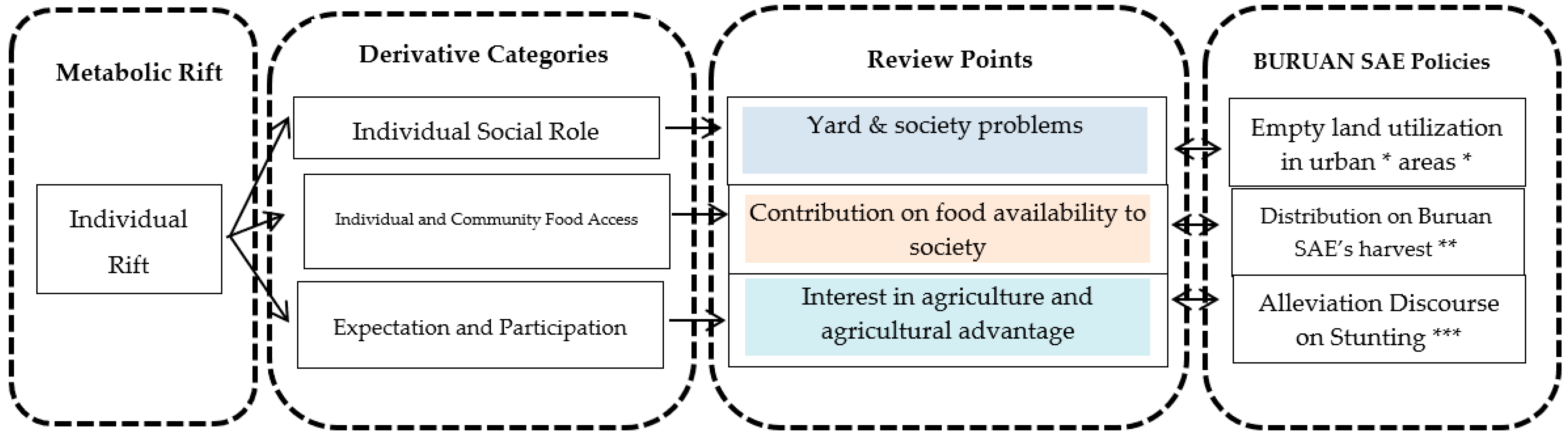
The data segmentation points in this table were derived from the grouping of information through the acquisition of qualitative data (public discourse) regarding the metabolic rift in the local food system in Bandung City. These segmentation points were obtained by the Enumerator of the 2022 Buruan SAE Policy Evaluation Research. This study involved 18 underprivileged respondents in 30 districts and aimed to examine the relationship between urban low-income society and their access to food [38] and food perceptions [34] through social monitoring methods [8]. Furthermore, the segmentation points for this table column obtained from the three policy dimensions in the Buruan SAE program were adjusted to the provisions of the Mayor of Bandung in Circular Letter Number 520/S.E.086 concerning the Implementation of Integrated Urban Agriculture Activities (Buruan SAE, Healthy Natural Economics) and the normative concept of urban agriculture [39]. Other segments incorporated in data processing were discussed through concept mapping of the description based on the indicators in Table 1. These indicators were used as one of the data matriculation materials for the implementation of Buruan SAE as a policy entity to be reviewed (Figure 1).
Figure 1. Framework-based thinking metabolic social rift of “Buruan SAE”. * = Buruan SAE social dimension, ** = Buruan SAE economical dimension *** = Buruan SAE ecological dimension. Each point in Buruan SAE Policies is a derivative of Derivative Categories taken from Individual Dimensions in Table 1.
The discussion of results will focus on presenting the analysis and segmentation of data, specifically related to the implementation of Buruan SAE policy from 2018 to 2022. The aim is to explain how Bandung City’s urban agricultural policy can be adapted to address individual rift in urban social metabolism of the public. These two data will demonstrate the role of urban agriculture in improving access to food and facilitating self-sufficiency.

4. Results

The results present the most relevant data on the metabolism of urban communities in the context of food self-sufficiency as an outcome of implementing local food systems and also in line with urban ecology [7,40] of Bandung City. The explanations presented through tables will guide critical analysis, enabling the contextualization of Buruan SAE policy instruments within alternative policy forms that analyze specific rifts in social metabolism [41].
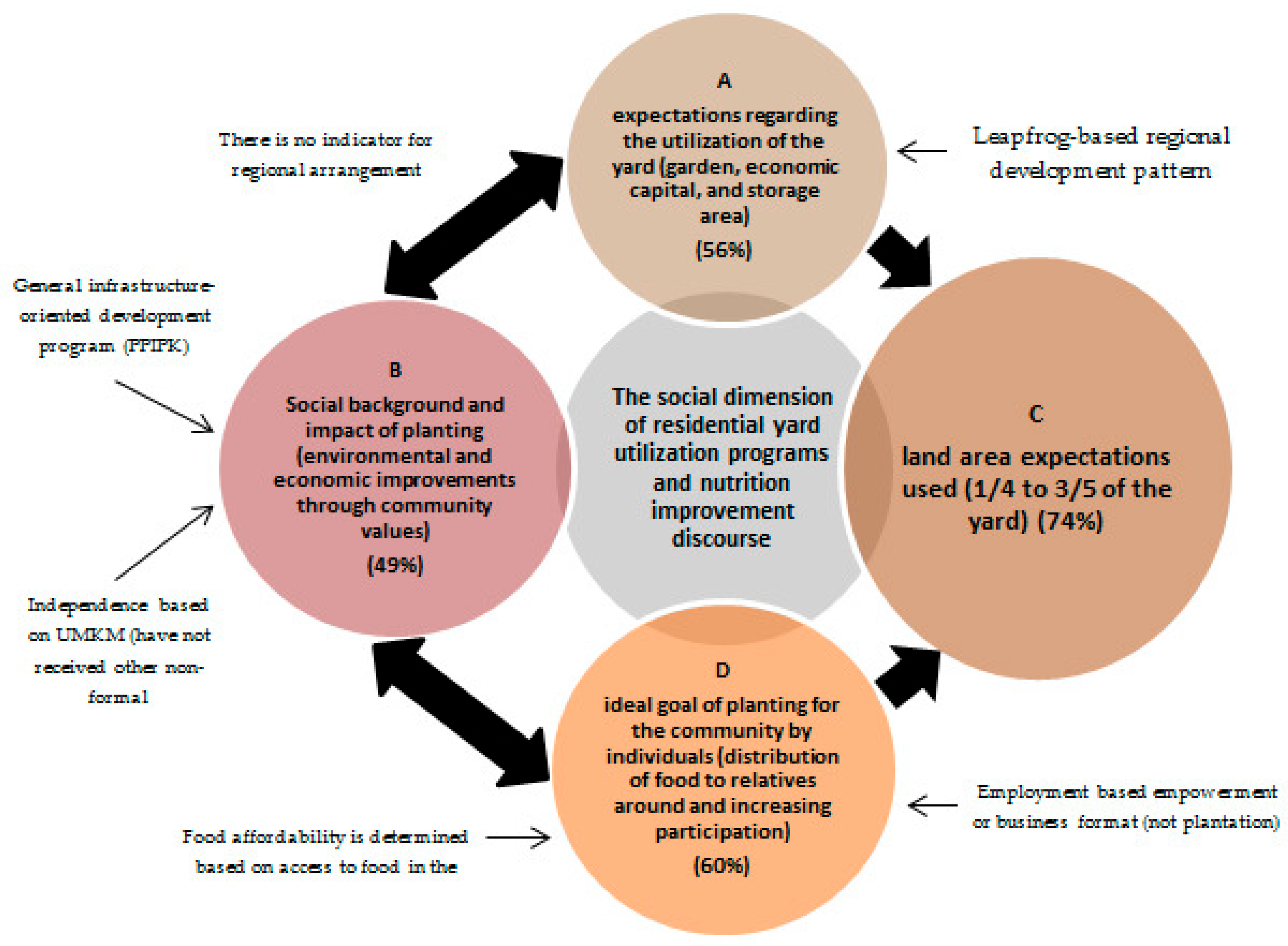
Individual rifts of urban agriculture that appear in the social dimension can be understood through the perceptions of the lower-class society. This segment of society still follows the idea of using home terraces, which has emerged as the prevailing discourse on alternative spatial planning in Bandung City. It aims to address issues, such as urban density, the impact of expansion on residential areas, and the growth of industry and service sectors [42]. For the urban lower-class, the growth of industry and service areas is still closely associated with social relationships within settlements. These settlements often adhere to slum area spatial policies, such as road repairs, irrigation improvements, provision of waste sites, and evictions aimed at relocating lower-income society [43]. Policy, which prioritizes the existing facilities in slum settlements and building structures, including security, safety, health, and overall comfort of building structures. Furthermore, the densely populated settlements in Bandung, characterized by high building coefficients between 80% to 90%, and the presence of valuable land, especially in core areas designated for service administration buildings [44], further complicate efforts to create residential areas equipped with adequate yard gardens. The existence of slum areas with leapfrog development cases resulting from linearly following the highway line drawn from the city center [45] also adds to the challenge of establishing residential areas with sufficient yard space. This situation is further exacerbated by the dominant preference of the lower-income society to utilize vacant areas not only for gardens but also for warehouses to store goods in a narrow area, according to the Basic Building Coefficient.
Personal aspirations and initiatives towards socially oriented stimulation, which have almost passed the average point (56% and 49%), are gaining popularity among urban lower-class individuals who face below-average environmental conditions, low-incomes, and low economic development (45% and 49%). This indicates social structure influenced by the prevailing development discourse focused on public infrastructure and driven by the PPIPK+’s program. However, this popularity has not yet translated into a widespread orientation in urban planning and design that prioritizes food self-sufficiency and the use of yards. It is also confronted with the discourse on improving public infrastructure based on the ‘orientation without slums’ approach. The lack of integration between the applied concepts of urban agriculture along with the addition of infrastructure through PPIPK+, which primarily focuses on the agricultural training for garden groups, creates a disconnect. This separation affects the essence of urban agriculture as a means to achieve self-sufficiency in food availability by procuring infrastructure facilities as part of the city’s spatial planning efforts. Bandung City government has prioritized subsistence farmers within the plantation group for development [16], but this approach has not yielded significant achievements in reducing household expenses, particularly on food [46]. The contextualization of market schemes based on agricultural costs and certification [47] also presents obstacles for DKPP to conduct further studies on implementing urban agriculture in densely populated residential areas. The establishment of successful urban agriculture initiatives is more feasible through the involvement of investors, who can utilize the ample vacant land in peri-urban areas for productive agricultural purposes [16] (Figure 2).
Figure 2. The suitability of implementing the Buruan SAE program and fostering an interest in planting in the social dimension is influenced by the individual rift. The slice of each circle is influenced by the percent number at the main point.
This condition has an impact on the status of food self-sufficiency and the inclination towards independent food cultivation, which no longer focuses on urban agriculture for vulnerable members of society, including the lower- and lower-middle-class. There is instead a discourse based on aspects of affordability, namely, the ability to buy food in the market rather than produce it themselves [48]. Although urban agriculture is a non-formal approach to reducing food dependency through exchange transactions and less reliance on agro-industrial producers [26], it should also prioritize empowering vulnerable societies to independently determine the flow of food production and consumption [14]. When implementing policy, it is also necessary to consider social networking factors, which are closely intertwined with the discourse on prioritizing the economic development of vulnerable societies. This emphasis is more focused on accelerating economic growth either through wage-based employment or enhancing independent capital for MSMEs, and improving the quality of settlements.
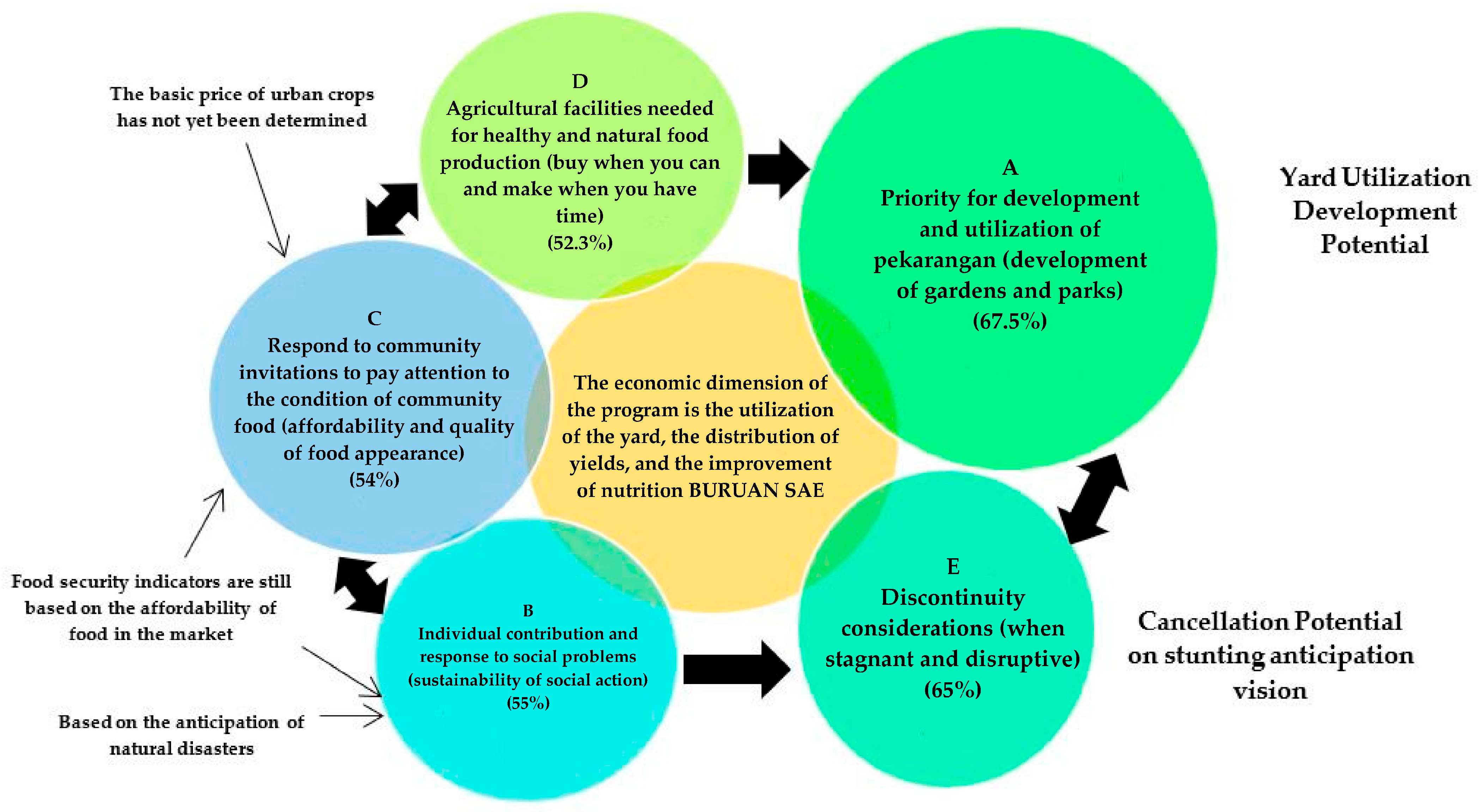
Based on an individual rift in the economic dimension of Buruan SAE policy, the interest in developing residential aesthetics along with cooperation among urban lower-class society is influenced by the city’s expansion. Approximately 20% of the sub-districts are considered extreme slums in urban basin-based settlements. Moreover, the increase in land prices, driven by variations in land use, adds to the challenge [49]. This creates a perception that yard engineering in the form of a useful garden takes precedence over the urban plantation. The discourse on using gardens and parks to address residential environmental problems in Bandung City with a focus on risks, such as air pollution, floods, greenhouse emissions, and water scarcity, is considered a priority, accounting for 75% and 60% of the efforts, respectively. In contrast, other disasters, such as limited access to food due to drainage difficulties, complicated management of clean water access facilities from underground springs, household waste management, the number of vehicles, and greenhouse and industrial pollution, are given less priority.
Urban settlement systems, particularly in slum areas, aim to improve the environment through various patterns [49]. These patterns are focused on enhancing the exchange of value from raw to processed materials, primarily within the food processing industry and production schemes. Urban society’s waste generation resulting from the material production chain is considered a consequence of this system [8].
Buruan SAE’s economic policy aims to reduce dependency on commercial food from conventional markets by promoting the use of home terraces as green open spaces. This policy was adopted because backyard plantation schemes have not been able to address the phenomenon of urban food industrialization. Therefore, agriculture activities have remained primarily private initiatives for those who can manage the land [40]. Even the Urban Farmer Group, while contributing to massive food alleviation efforts, cannot be viewed as a comprehensive solution unless there is a local food system model that focuses on establishing a household-based food production chain. This approach should be adjusted to local-scaled economic goals, taking into account the population density of each city area, and be linked to addressing regional food vulnerability [25].
Although the previous literature mentioned that urban land agriculture initiatives were carried out by the community, it is necessary to highlight the key societal elements serving as the main pillars of the continuity regarding Buruan SAE program in respective regions. After many people, especially homemakers, felt the unsustainable impact of urban agriculture in 2021–2022 (Post-COVID-19), the function of garden planting and maintenance activities has been given to an all-in-one government agency named GOBER (Golongan Bebersih/City Cleaning Officer). This agency, which is responsible for maintaining the cleanliness of cities in their respective areas, has been assigned to continue the task of caring for urban agriculture under the direct instructions of sub-district officers.
This finding contradicts the manifestation of agricultural activities in urban settlements, which are often based on hobbies, especially among women. For instance, the Sa’uyunan Gardens Group, which initially engaged in the processing of garden produce, faced stagnation due to the absence of certification and a lack of efforts to sustain the initial agricultural activities led by homemakers. Consequently, more land was taken over by GOBER [16]. The focus on urban agriculture has shifted towards processed products which are not fully supported.
The implementation of urban agriculture lacks a local food system design that bridges the gaps between urban agricultural policy [11,50]. These policies fail to consider the calculation of commodity production per settlement, leading to public perceptions that prioritize food availability from nearby markets. The emphasis is placed more on the appearance of food as a measure of success for economically vulnerable urban individuals. A more valid solution would involve calculating measured needs and strengthening food consumption through the closest access point. This approach provides a means to anticipate limitations in nutrition rather than relying on unpredictable sources and lacking knowledge about food production through alternative systems. The benefits of the Buruan SAE harvest should be distributed to the surrounding society, taking into account the urgency of receiving the harvested products.
This value also influences the perception of low-income urban individuals, motivating them to engage in agricultural activities using organic methods. The motivation stems from considering the costs associated with implementing food agriculture in their settlements, which has an average value of 52.3%. Therefore, the availability of water in urban areas and the presence of fertilizing components (fertilizers) are important factors to be taken into account. These factors complement the absence of fixed prices for residential plantation crops in each commodity, which is due to the lack of advanced agricultural technology compared to the food industry scheme typically seen in rural agriculture [51,52]. Furthermore, the absence of a budget allocation for procuring facilities, even with a budget of IDR 100,000,000 from PPIPK+, and the lack of agricultural stimulus per household from DKPP for urban agricultural activities in densely populated areas, contribute to higher production costs. This consideration makes the potential income from urban agriculture uncertain. Therefore, doubts arise among urban raw food producers regarding the consistency of their agricultural actions. They are concerned that their activities may be discontinued without providing nutritional and economic benefits during the agricultural process [36], as experienced by 65% of the respondents (Figure 3).
Figure 3. Components of the individual rift that affect the suitability of implementing the yard utilization program, harvest distribution, and stunting alleviation in the economic dimension of Buruan SAE. The slices of each circle are influenced by the percentage at the main point.
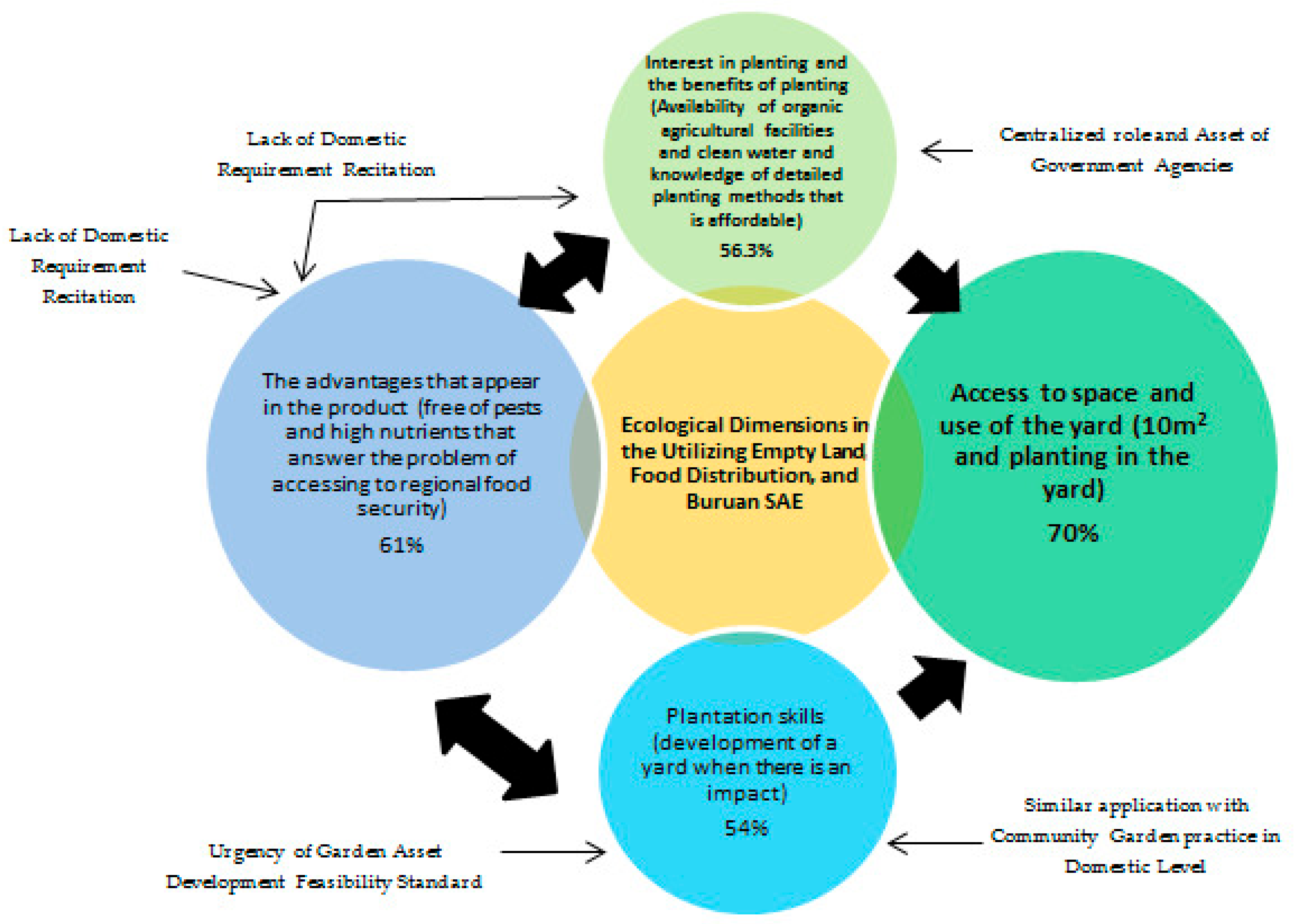
Based on individual rift in the ecological dimension, the use of yards less than 10 m2 in area, is the last resort in activating residential plantations in densely populated areas. According to the data from DPKP3, the percentage of building coefficient utilization in densely populated residential areas has increased from 42.45% in 2018 to 46.33% in 2020. Considering the minimal empty spaces mandated for each building unit in the Basic Building Coefficient, plantations with minimal land are seen as the potential solution for urban agriculture. Respondents from urban lower-class society preferred planting in their yards rather than implementing alternative land-efficient agriculture. This choice was influenced by factors, such as costs and the perceived risks associated with land-efficient agriculture systems, which might be difficult to manage, as stated by 69% of the respondents.
However, despite the importance of utilizing empty spaces, there has been a lack of planning for the development of land-efficient plantations in line with the Basic Coefficient of Buildings. This oversight disregards the RPKD DPKP3 document (Household and Settlement Area, Land and Landscaping Office of the City of Bandung), which serves as an indicator of service for settlement arrangement and empowerment in slum areas. The absence of objective adjustments to address the challenges faced by urban lower-class citizens, who experience a serious metabolic rift, restricts them to utilize only their housing space [7]. This limitation arises from the weak utilization of low-value buildings due to the increasing exchange rates and declining soil fertility in urban areas [20].
In line with the absence of a well-defined approach for growing healthy, cost-effective, and natural crops, various perceptions and objectives have emerged regarding the implementation of urban agriculture. These perceptions are based on respondents’ understanding of ecological aspects and predominantly revolve around the cultivation of healthy produce. This can be achieved using quality organic fertilizers and pesticides that are environmentally friendly, as stated by 59% of the respondents. Furthermore, there is a focus on plant fertilizers that increase nutrients without synthetic components and the availability of clean water for natural crop yields (54%). There is also a demand for affordable fertilization procedures, along with an accessible and cost-effective water supply system (56%).
The overall perception with an average of 56.3% in the category of actualizing individual plantings contributions to a local food system highlights the need for a planned planting method comprising: (1) The Availability System for Organic Agriculture Components, which are provided for the low-income society. This can be actualized through policy instruments focused on the mechanism for providing organic facilities and ensuring the availability of clean water [10]. The systematic nature of this approach aligns with the conditions faced by an urban lower-class society, which may struggle to provide organic agriculture facilities and infrastructure due to the difficulty in manufacturing processes [25] and the requirement of various complicated components [21].
DKPP needs to consider a decentralized constant supply action driven by the specific agricultural requirement per region. These requirements differ based on the settlement density and the average context of the difference in basic coefficient among buildings per sub-district, and the availability of empty yards; (2) The use of varied oriented planting systems, driven by different diversity of plant units per region, and supplement needs and doses depending on the resistance levels [26]. The plant resistance is highly influenced by factors, such as the temperature and height of the region, which are determined by the geographical structure of Bandung, characterized by its concave shape; (3) The need for policy implementation in slum areas on the use of urban residential water and its connection to agriculture [53]. This requires a specific design for governing access to urban agricultural water sources along with the provision of supervision and engineering support for affordable soil fertility through routine disbursement, such as mulching. The implementation of routine disbursement should be agreed upon through the collaboration between DKPP and DPKP3, particularly in terms of clean water facilities for urban agriculture. Additionally, vacant land areas can be used for the organized regeneration of the biological components in the soil. This approach is useful for various forms of urban agriculture ranging from using media pots and yards to hydroponics with the aim of minimizing the expenditure cost of planting among urban low-income societies.
However, this perception requires the support of more comprehensive policy instruments, namely, Buruan SAE, to address the conditions of slums and ensure access to natural and human resources needed in supporting urban agricultural actors [29]. This action can help the residents to organize more measurable food distribution programs and face the challenges of agroindustrial production through urban agricultural standardization [54]. The previous efforts carried out by the DKPP to transport agricultural produce from the headquarters led to the perception of centralized governance over empty urban spaces.
Modeling has been conducted in Bandung City since 2019, leading to centralized urban agricultural actions and the utilization of land based on the Statement Letter from the Mayor. This approach has resulted in limited outcomes, primarily focused on the sharing of yields, without clear objectives regarding the implications of its implementation. Consequently, conflicts over land usage often occur due to the absence of a legal process in the use of plantation land during community settlements. This uncertainty has caused many urban agricultural practices to relocate from their initial location or even cease altogether due to the unavailability of certain areas. Based on the survey conducted among low-income citizens, the agricultural cost is influenced by several factors. These include the availability of free organic pest control (49%), the production of nutritious and undamaged products (71%), and affordable prices of products for low-income citizens (63%). These findings highlight the main expectation of urban agricultural actors. With an average rate of 61%, the survey demonstrated that the respondents prioritized meeting their metabolic needs rather than focusing solely on the quantity of harvest. This emphasis on meeting nutritional needs is important, as low-income citizens are often confronted with the risk of malnutrition and limited access to proper food [7], and little knowledge of nutrition due to poverty [55].
According to 54% of the respondents, the expansion of urban agriculture in each residential yard serves as one of the indicators of low-income citizens’ capability to control the flow of food production. The impact is not the final implication of realizing urban agriculture, but it can be used as an indicator to eliminate food scarcity because home-grown products are considered independent production (asset) for each citizen. Therefore, as the number of home-grown agriculture activities increases, the citizens become more aware and knowledgeable about various and complex processes. This can improve the capacity of each citizen to become more independent, efficient, and effective in fulfilling their nutritional needs [54] (Figure 4).
Figure 4. Components of the individual rift that affect the suitability of implementing the yard utilization program, harvest distribution, and stunting alleviation in the ecological dimension of Buruan SAE. The slices of each circle are influenced by the percentage at the main point.
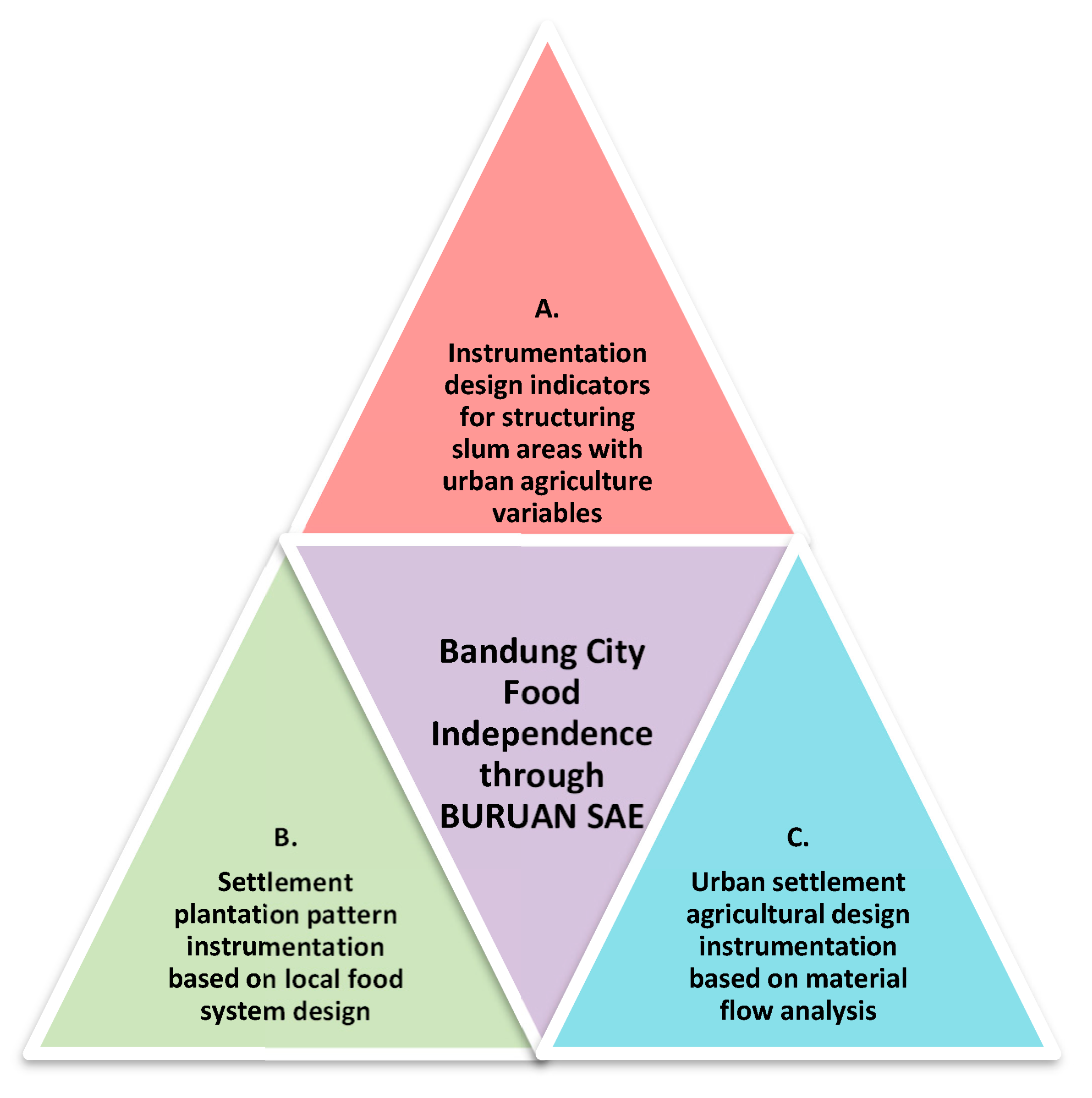
Based on the findings from social, economic, and ecological aspects, the composition of the analysis proved that the result can be analyzed from the perspective of individual rift regarding food access conditions in Bandung City. This analysis was predicated on the implementation of the Buruan SAE program as the main policy for urban food availability (Figure 5).
Figure 5. Results of social monitoring analysis on Buruan SAE policy instruments based on the individual rift within the framework of social metabolism.
Based on the individual rift’ perspective, there are three dimensions of urban agricultural structure policy: (A) To formulate a policy that reorganizes slum area design, policy itself must be based on the indicator of development, such as food independence. This new indicator is related to the performance provided by Bappelitbangda, DPKP3, and DKPP to low-income citizens from slum areas. The performance can be evaluated based on the indicator of achievement and success in the Food Availability Program as one of the objectives in the Sustainable Development Goals of Bandung City; (B) The indicators to detect threats to city development, such as the risks of natural disasters and economic vulnerability, are not sufficient. There is also a need to include indicators that reflect the limited access to food availability and ensure the sustainability of food proportion, production, and consumption among low-income citizens per district. This will lead to the creation of alternative economic activities with more concrete objective measures to fulfill the needs of nutrition for each district; (C) Without understanding the specific requirements for agricultural activities, such as the quantity of available land area, tools, types, and quantity of crops, and agriculture design of each district, including Building Covered Ratio, land alleviation, soil structure, and information about the total size of available space provided in each settlement from slum areas, urban agriculture cannot be implemented and will only fulfill report requirements for the government without any real impact to citizens. This will also lead to more disorganized agriculture activities that waste government funds without achieving the goal of ensuring food availability in Bandung.

5. Conclusions

The concept of the metabolic rift was used in this study to analyze the separation of urban low-income citizens from their food resources. It was also used to assess their social metabolism, especially in terms of relationships between the two variables. The consequences resulting from the growth of the business industry and services have a significant impact on low-income citizens in Bandung City, affecting their ability to access affordable food resources. The results indicated that the increasing popularity of Buruan SAE, due to various initiatives, such as citizens’ hobbies and the impact of the COVID-19 pandemic, is insufficient to support the implementation of urban agriculture. This calls for the improvement of urban agriculture as a consistent and impactful food availability policy program. The lack of synergy in formulating a food availability policy, combined with the focus on procurement-oriented infrastructure in urban area development, hinders the effective implementation of urban agriculture. Consequently, individuals face reduced opportunities to engage in home agriculture.
Certain aspects related to the condition of residential settlements are not deemed urgent for the formulation of Buruan SAE policy due to their categorization as subsistence agriculture [2]. This classification eliminates the opportunity to analyze the production potential of each agriculture area to upgrade disorganized urban agriculture into a home-based agribusiness industry. Furthermore, policy should aim to increase participation from low-income citizens regarding agriculture activities, as their focus currently lies in acquiring agricultural techniques and meeting economic requirements to pursue an alternative livelihood. This orientation is expected to facilitate the formulation of a potentially exclusive and difficult-to-develop policy based on the concept of food availability.
In the practice of implementing Buruan SAE policy, it is crucial to incorporate a social monitoring-based design and identify the necessary material assets. Without these considerations, the policy may become centralized, focusing solely on implementing food distribution to the surrounding residents and relying heavily on government agencies, such as Urban Farmers Group. Social metabolism, as an aspect, shows that the perspective of urban society exploitation has not been significantly affected by the efforts of urbanization’s renewal. These efforts are not considered a priority as they have no impact on the ability of urban agricultural farmers (low-income citizens) to understand the mechanism of the food market. This can be attributed to the lack of regional infrastructure development customized to the needs of urban agriculture.
This implies the need to view food availability as a superstructural achievement in overcoming the stagnation of urban agriculture caused by the lack of systemic policy support [47]. It aligns with the main objective of the local government to reconfigure the model of urban agriculture in response to the correlation between home agriculture and its implications for agricultural actors in households [46]. One of the inferences from this study is that the Buruan SAE program must align with the interest of farmers (low income citizens), who currently rely on the role of the GOBER agency. This emphasis will enable the local government to form a policy framework that implements new indicators for urban areas. Therefore, the local government should form a robust local food resilience system.
The analysis of the individual rift framework provided various insights that can support policy instruments in strengthening organized urban agricultural efforts for Bandung City Government. This is required to form a concrete implementation for agricultural activities practiced by low-income citizens in their respective homes, enabling a transition to a more centralized, top-down approach in the Buruan SAE program, which currently lacks specified impacts. Individual rift based on the concept of social metabolism can help both policymakers and various studies in analyzing the urban policy-making process by the government, which has limited information regarding various material requirements to implement urban agricultural programs. This limited knowledge serves as an obstacle to the active participation of low income citizens in the program.
Additionally, due to the priorities stemming from the impact of the COVID-19 pandemic and citizens’ specific hobbies, the extent of participation in this agricultural program remains unclear since it can also be considered only as a thematic phenomenon that is temporal and unsustainable.

Supplementary Materials

The following supporting information can be downloaded at: https://www.mdpi.com/article/10.3390/su151310273/s1, Supplementary File S1.

Author Contributions

Conceptualization, G.L.S.; methodology, G.L.S.; writing—original draft, G.L.S.; writing—review & editing, D.P.; project administration, Y.R.N. and M.B.P.R. All authors have read and agreed to the published version of the manuscript.

Funding

This study received no external funding, and the APC was funded by Padjadjaran University.

Institutional Review Board Statement

Not applicable.

Data Availability Statement

The data presented in this study are available in Supplementary Materials.

Conflicts of Interest

The authors declare that there is no conflict of interest.

References

  1. Safitri, K.I.; Abdoellah, O.S.; Suparman, Y.; Mubarak, A.Z.; Margareth. The Existence of Subsistence, Semi-Commercial and Commercial Urban Agriculture in Bandung Metropolitan, Indonesia. Int. J. Sustain. Dev. Plan. 2021, 16, 1425–1436. [Google Scholar] [CrossRef]
  2. Mubarak, A.Z.; Abdoellah, O.S.; Withaningsih, S.; Indah, K. Management of Urban Farming Activities In A Community Case Study 1000kebun In Bandung City. E3S Web Conf. 2021, 249, 1010. [Google Scholar] [CrossRef]
  3. Safitri, K.I.; Abdoellah, O.S.; Gunawan, B.; Suparman, Y.; Parikesit. Market Pressure Based on International Food Standards in Export-Scale Urban Farming: Political Ecology Perspective. Qual. Rep. 2022, 1311–1333. [Google Scholar]
  4. Mougeot, L.J. Growing Better Cities; Urban Agriculture for Sustainable Development; International Development Research Centre: Ottawa, ON, Canada, 2006. [Google Scholar]
  5. Van Veenhuizen, R. Cities Farming for the Future; Urban Agriculture for Green and Productive Cities; IDRC/RUAF: Ottawa, ON, Canada, 2006. [Google Scholar]
  6. Howe, J.; Wheeler, P. Urban Food Growing: The Experience of Two UK cities. Sustain. Dev. 1999, 13–24. [Google Scholar] [CrossRef]
  7. Maxwell, D.; Levin, C.; Csete, J. Does urban agriculture help prevent malnutrition? Evidence from Kampala. Food Policy 1998, 23, 411–424. [Google Scholar] [CrossRef]
  8. Gockowski, J.; Mbazoo, J.; Mbabh, G.; Moulende, T.F. African Traditional Leafy Vegetable and The Urban and Peri-urban Poor. Food Policy 2003, 8, 221–235. [Google Scholar] [CrossRef]
  9. Danso, G.; Drechsel, P.; Akinbolu, S.S.; Gyiele, L.A. Review of Studies and Literature on the Profitability and Sustainability of Urban and Peri-Urban Agriculture; FAO, IWMI: Accra, Ghana, 2003. [Google Scholar]
  10. Karanja, N.; Njenga, M.; Prain, G.; Kangethe, E.; Kironchi, G.; Githuku, C. Assessment of environmental and public health hazards in wastewater used for urban agriculture in Nairobi Kenya. Trop. Subtrop. Agroecosyst 2010, 12, 85–97. [Google Scholar]
  11. Klinkenberg, E.; McCall, P.J.; Wilson, M.D.; Amerasinghe, F.P.; Donnelly, M.J. Impact of urban agriculture on malaria vectors in Accra, Ghana. Malar. J. 2008, 1–9. [Google Scholar] [CrossRef]
  12. Moustier, P.; Danso, G. Local Economic Development and Marketing of Urban Produced Food. In Cities Farming for the Future; van Veenhuizen, R., Ed.; ETC—Urban Agriculture: Leusden The Netherland, 2006; pp. 171–206. [Google Scholar]
  13. Novo, M.G.; Murphy, C. Urban agriculture in the city of Havana: A popular response to crisis. In Growing Cities, Growing Food, Urban Agriculture on the Policy Agenda; Bakker, N., Dubbeling, M., Guendel, S., Sabel Koschella, U., de Zeeuw, H., Eds.; DSE: Feldafing, Germany, 2000; pp. 329–348. [Google Scholar]
  14. Touliatos, D. Growing Urban Agriculture; Using Social Practice Theory to Assess How Transition Norwich Can Upscale Household Food Gardening in the City of Norwich; School of Environmental Sciences: Norwich, UK, 2011. [Google Scholar]
  15. Kaspersen, L.B. Anthony Giddens: An Introduction to a Social Theorist; Blackwell: Oxford, UK, 2000. [Google Scholar]
  16. Røpke, I. Theories of practice—New inspiration for ecological economic studies on consumption. Ecol. Econ. 2009, 68, 2490–2497. [Google Scholar] [CrossRef]
  17. Shove, E.; Pantzar, M. Fossilisation. Eur. J. Eur. Ethnol. 2006, 35, 59–63. [Google Scholar]
  18. Padovan, D. The concept of social metabolism in classical sociology. Revista Theomai 2000, 1–12. [Google Scholar]
  19. Martinez-Alier, J. Social Metabolism, Ecological Distribution Conflicts, and Languages of Valuation. Capital. Nat. Social. 2009, 20, 58–87. [Google Scholar] [CrossRef]
  20. Foster, J.B. Marx and the Rift in the Universal Metabolism of Nature. Mon. Rev. 2013, 65, 1–19. [Google Scholar] [CrossRef] [PubMed]
  21. Clausen, R.; Clark, B.; Longo, S.B. Metabolic Rifts And Restoration: Agricultural Crises and The Potential of Cuba’s Organic, Socialist Approach to Food Production. Pluto J. 2015, 4–32. [Google Scholar] [CrossRef]
  22. Weis, T. The Global Food Economy; Zed Books: New York, NY, USA, 2007. [Google Scholar] [CrossRef]
  23. McMichael, P. A Food Regime Genealogy. J. Peasant. Stud. 2009, 36, 139–169. [Google Scholar] [CrossRef]
  24. Lewontin, R. The Maturing of Capitalist Agriculture: Farmer as Proletarian. In Hungry for Profit; Magdoff, F., Foster, J.B., Buttel, F.H., Eds.; Monthly Review Press: New York, NY, USA, 2000; pp. 93–106. [Google Scholar]
  25. Viljoen, A. Continuous Productive Urban Landscapes; Designing Urban Agriculture for Sustainable Cities; Elsevier: Oxford, UK, 2005. [Google Scholar]
  26. Moore, J.W. Transcending the metabolic rift: A theory of crises in the capitalist world-ecology. J. Peasant. Stud. 2011, 38, 1–46. [Google Scholar] [CrossRef]
  27. Schneider, M.; McMichael, P. Deepening, and repairing, the metabolic rift. J. Peasant. Stud. 2010, 37, 461–484. [Google Scholar] [CrossRef]
  28. Foster, J.B.; Magdoff, F. Liebig, Marx, and the Depletion of Soil Fertility: Relevance for Today’s Agriculture. In Hungry for Profit: The Agribusiness Threat to Farmers, Food and the Environment; Magdoff, F., Foster, J.B., Buttel, F.H., Eds.; Monthly Review Press: New York, NY, USA, 2000. [Google Scholar]
  29. Davis, M. Planet of Slums; Verso: London, UK, 2006. [Google Scholar]
  30. Harvey, D. A Brief History of Neoliberalism; Oxford University Press: New York, NY, USA, 2005. [Google Scholar]
  31. Hovorka, A.; de Zeeuw, H.; Njenga, M. Women Feeding Cities: Mainstreaming Gender in Urban Agriculture and Food Security; Practical Action Publishing: Dunsmore, UK, 2009. [Google Scholar]
  32. McClintock, N. Why farm the city? Theorizing urban agriculture through a lens of metabolic rift. Camb. J. Reg. Econ. Soc. 2010, 3, 191–207. [Google Scholar] [CrossRef]
  33. Braverman, H. Labor and Monopoly Capital: The Degradation of Work in the Twentieth Century; Monthly Review Press: New York, NY, USA, 1974; ISBN 0-85345-940-1. [Google Scholar]
  34. Pothukuchi, K. Hortaliza: A Youth “Nutrition Garden” in Southwest Detroit. Child. Youth Environ. 2004, 124–155. [Google Scholar] [CrossRef]
  35. Howlett, M. What is a policy instrument? Tools, mixes, and implementation styles. Des. Gov. Instrum. Gov. 2005, 31–50. [Google Scholar]
  36. Haase, D.; Kabisch, S.; Haase, A.; Andersson, E.; Banzhaf, E.; Baró, E. Greening cities—To be socially inclusive? About the alleged paradox of society and ecology in cities. Habitat Int. 2017, 41–48. [Google Scholar] [CrossRef]
  37. Raymond, C.M.; Frantzeskaki, N.; Kabisch, N.; Berry, P.; Breil, M.; Nita, M.R. A framework for assessing and implementing the co-benefits of nature-based solutions in urban areas. Environ. Sci. Policy 2017, 77, 15–24. [Google Scholar] [CrossRef]
  38. Dickens, P. Reconstructing Nature: Alienation, Emancipation and the Division of Labor; Routledge: London, UK, 1996. [Google Scholar]
  39. Rigby, D.; Cáceres, D. Organic farming and the sustainability of agricultural systems. Agric. Syst. 2001, 68, 21–40. [Google Scholar] [CrossRef]
  40. Corlett, J.L.; Dean, E.A.; Grivetti, L.E. Hmong gardens: Botanical diversity in an urban setting. Econ. Botany 2003, 57, 365–379. [Google Scholar] [CrossRef]
  41. Mougeot, L.A. Agropolis: The Social, Political and Environmental Dimensions of Urban Agriculture; IDRC: Ottawa, ON, Canada, 2005. [Google Scholar]
  42. Fischer-Kowalski, M.; Haberl, H. Social metabolism: A metrics forbiophysical growth and degrowth. In Handbook of Ecological Economics Cheltenham; Martinez-Alier, J., Muradian, R., Eds.; Edward Elgar Publishing: Cheltenham, UK, 2015; pp. 100–138. [Google Scholar]
  43. Maryati, S.; Nisaa, A.; Humaira, S. Increasing the Infrastructure Access of Low-Income People in Peri-Urban of Bandung Metropolitan Area. Int. J. Built Environ. Sustain. 2015, 219–226. [Google Scholar] [CrossRef]
  44. Yasmira, A. Analisis Morfologi Ruang Kota Bandung Studi Kasus: Kawasan Perumahan Cipaganti-Bandung Utara. J. Arsitekno 2014, 11–19. [Google Scholar] [CrossRef]
  45. Pascawijaya, R.; Susilo, B.; Widayani, P. Development Pattern of Urban Morphology in Bandung basin period 2009–2018. J. Tek. 2020, 19–34. [Google Scholar]
  46. Abdoellah, O.S.; Suparman, Y.; Safitri, K.I.; Mubarak, A.Z.; Milagi, M.A.; Margareth. Between food fulfillment and income: Can urban agriculture contribute to both? Geogr. Sustain. 2023, 1–34. [Google Scholar] [CrossRef]
  47. Safitri, K.I.; Abdoellah, O.S.; Gunawan, B. Urban Farming as Women Empowerment: Case Study Sa’uyunan Sarijadi Women’s Farmer Group in Bandung City. E3S Web Conf. 2021, 249, 1007. [Google Scholar] [CrossRef]
  48. Supriyanto, S. Pemberdayaan Usaha Mikro, Kecil, Dan Menengah (Umkm) Sebagai Salah Satu Upaya Penanggulangan Kemiskinan. J. Ekon. Pendidik. 2006, 1–16. [Google Scholar] [CrossRef]
  49. Wihadanto, A.; Barus, B.; Achsani, N.A.; Bratakusumah, D.S. Analisis Karakteristik dan Penilaian Tingkat Kekumuhan Kawasan Permukiman ‘Kampung Braga’—Kota Bandung. J. Reg. Rural. Dev. Plan. 2017, 1, 132–144. [Google Scholar] [CrossRef]
  50. Hagos, G.; Gebreslassie, A.; Teklay, A.; Tesfay, M. Urban Agriculture Commercialization; an Alternative to Food Security (Case of Mekelle City). Agric. Socio-Econ. J. 2020, 213–224. [Google Scholar] [CrossRef]
  51. Hashim, N.H.; Thani, S.S.; Jamaludin, M.A.; Yatim, N.M. A Perceptual Study on the Influence of Vegetation Design towards Women’s Safety in Public Park. Procedia-Soc. Behav. Sci. 2016, 234, 280–288. [Google Scholar] [CrossRef]
  52. Heffernan, W.D. Agriculture and Monopoly Capital. In Hungry for Profit; Magdoff, F., Bellamy, J., Buttel, F.H., Eds.; Monthly Review Press: New York, NY, USA, 2000; pp. 61–75. [Google Scholar]
  53. Tham, C.A.; Zwe, H.Y.; Li, D. Microbial study of lettuce and agriculture water used for lettuce production at Singapore urban farms. Food Control 2021, 1–7. [Google Scholar] [CrossRef]
  54. Nandwani, D.; Akaeze, O. Urban agriculture in Asia to meet the food production challenges of urbanization: A review. Urban Agric. Reg. Food Syst. 2019, 1–7. [Google Scholar]
  55. Sohn-Rethel, A. Intellectual and Manual Labor: A Critique of Epistemology; Humanities Press: Atlantic Highlands, NJ, USA, 1978. [Google Scholar]
Disclaimer/Publisher’s Note: The statements, opinions and data contained in all publications are solely those of the individual author(s) and contributor(s) and not of MDPI and/or the editor(s). MDPI and/or the editor(s) disclaim responsibility for any injury to people or property resulting from any ideas, methods, instructions or products referred to in the content.

Article Metrics

Citations

Article Access Statistics

Multiple requests from the same IP address are counted as one view.