You are currently viewing a new version of our website. To view the old version click .
Sustainability
  • Article
  • Open Access

7 May 2021

Design of a Database of Case Studies and Technologies to Increase the Diffusion of Low-Temperature Waste Heat Recovery in the Industrial Sector

,
,
,
,
and
1
Italian National Agency for New Technologies, Energy and Sustainable Economic Development (ENEA), 00123 Rome, Italy
2
Department of Enterprise Engineering, University of Rome Tor Vergata, 00133 Rome, Italy
3
Department of Mechanical and Aerospace Engineering, University of Rome “La Sapienza”, 00184 Rome, Italy
4
DEIM School of Engineering, University of Tuscia, 01100 Viterbo, Italy
This article belongs to the Special Issue Industrial Energy Management and Sustainability

Abstract

The recovery of waste heat is a fundamental means of achieving the ambitious medium- and long-term targets set by European and international directives. Despite the large availability of waste heat, especially at low temperatures (<250 °C), the implementation rate of heat recovery interventions is still low, mainly due to non-technical barriers. To overcome this limitation, this work aims to develop two distinct databases containing waste heat recovery case studies and technologies as a novel tool to enhance knowledge transfer in the industrial sector. Through an in-depth analysis of the scientific literature, the two databases’ structures were developed, defining fields and information to collect, and then a preliminary population was performed. Both databases were validated by interacting with companies which operate in the heat recovery technology market and which are possible users of the tools. Those proposed are the first example in the literature of databases completely focused on low-temperature waste heat recovery in the industrial sector and able to provide detailed information on heat exchange and the technologies used. The tools proposed are two key elements in supporting companies in all the phases of a heat recovery intervention: from identifying waste heat to choosing the best technology to be adopted.

1. Introduction and Background

The European Union (EU) is fighting climate change through ambitious policies. Reductions in greenhouse gas emissions have reached the 2020 target. The new European Commission proposal to cut greenhouse gas emissions by at least 55% by 2030 sets Europe on a responsible path to becoming climate neutral by 2050.
One of the most significant contributions towards meeting the EU 2050 target is to expand the use of renewable energy solutions: an increased optimization and development in hydropower [1,2], wind power [3,4,5], solar energy [6,7], energy storage [8,9,10,11], and an increased share of these technologies in the energy mix are essential for a sustainable energy transition.
An equally important contribution is the improvement in energy efficiency, especially in those sectors with high energy consumption.
Waste heat recovery (WHR) is a key element of this endeavour. It consists of recovering heat from waste energy flows and reusing it directly or converting it into other forms of energy. Many sectors are involved, in particular the industrial sector, the transport sector, the power generation sector, and the urban sector (urban WHR), which are all characterized by a large availability of waste heat and still unexploited potential [12].
EU policies have highlighted the evidence of this opportunity, thanks to which several European projects such as Einstein and Einstein II [13,14], Greenfoods [15], and sEEnergies [16] have been developed. In addition to the development of useful support tools, all these projects have had the great merit of emphasizing the unexpressed potential of waste heat recovery.
From the need to reduce the gap between the availability of waste heat and its recovery rate, several important recent studies have focused on different aspects of heat recovery: quantification and estimation of available waste heat [12,17], perspectives of matching supply demand [18], analysis and development of technologies for heat recovery [19], and the opportunities for reusing the heat recovered. Concerning this final aspect, two main ways have been identified to reuse the recovered heat: internal uses, when the recovered heat is reused inside the system in which the heat is recovered, or external uses, where the recovered heat is used externally, such as industrial symbiosis [20] and district heating networks [21,22], for example from urban waste heat. An important contribution to achieving the 2050 climate goal can derive from both internal and external improvements, considering the availability of several options to utilize these unused heat resources [21].
One of the most important factors in evaluating the feasibility of a waste heat recovery intervention depends on the temperature at which the heat is available. The temperature determines the quality of waste heat and strongly influences both the applicable technologies and the economic practicability of its recovery.
There are no particular barriers to heat recovery at high temperatures: this process is more feasible, mainly due to the availability of more mature technologies and the greater energetic efficiencies involved, which results in a more immediate economic return.
As regards WHR at low temperatures, commonly defined as the waste heat available at a temperature lower than 200–250 °C [23], the situation is different; due to its low exergy, low-grade waste heat is more difficult to use [24].
The industrial sector boasts one of the greatest availabilities of waste heat at low temperatures. According to [24], 66% of the total waste heat in the industry is available at a temperature below 200 °C.
To make the most of this important resource, in the last decade, many low-grade heat recovery technologies have been developed. Nowadays, the market offers various consolidated technologies such as organic Rankine Cycles (ORC), heat pumps (HP), various heat exchangers, and many other technologies under development.
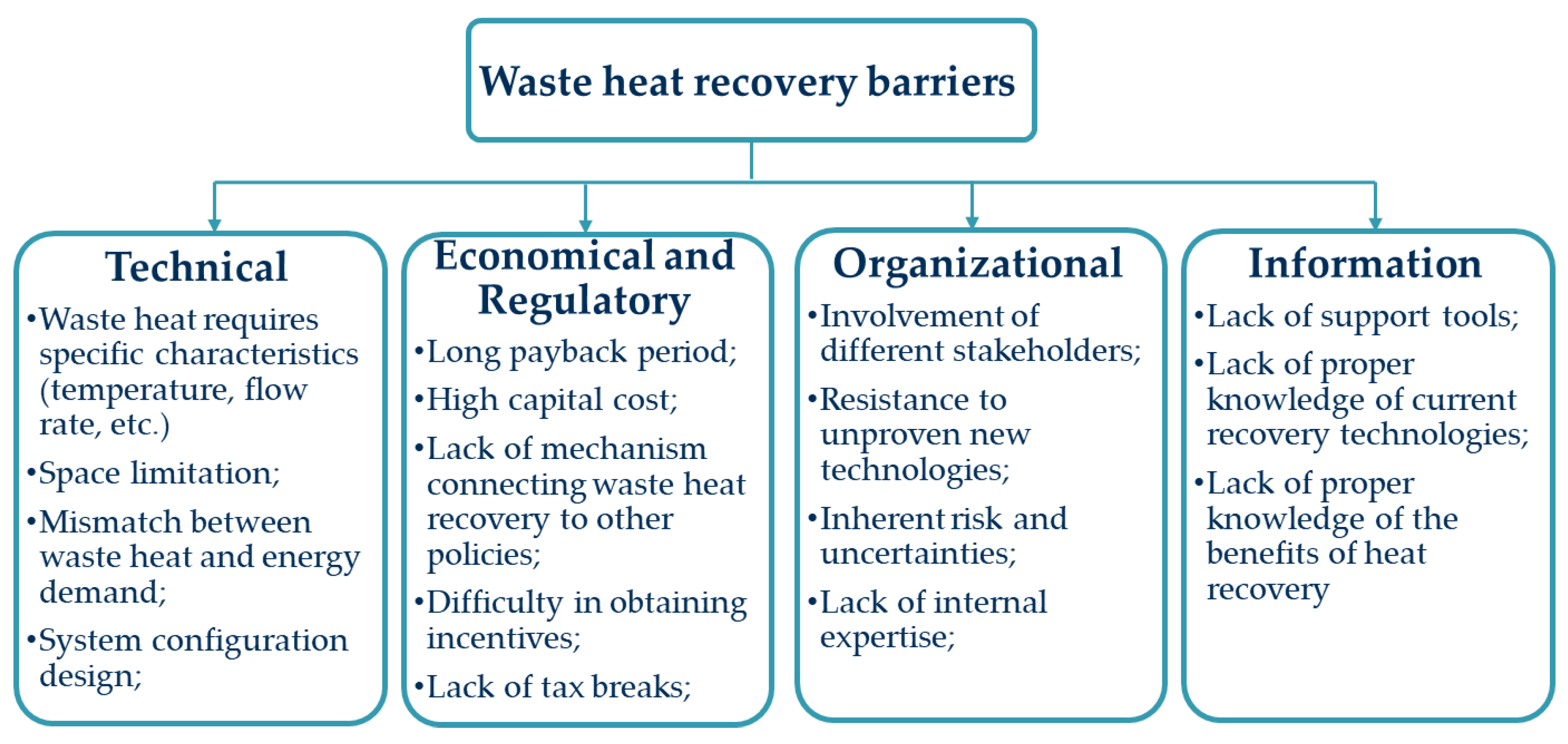
Nevertheless, the number of WHR applications in the industrial sector is still limited, even though industrial waste heat at low temperatures is abundantly available and the technologies for its use are mature. This misalignment between supply and demand is primarily due to technical, informative, economic, and organizational barriers [18,25,26]. In this regard, Figure 1 shows a schematic representation of the most frequent barriers found in the literature to low-grade waste heat recovery.
Figure 1. Technical, economic, regulatory and information barriers to low-grade waste heat recovery and utilization [18,25,26].
Among the various barriers identified, the lack of knowledge and the absence of support tools significantly influence WHR technologies’ diffusion [27,28,29].
The work presented in this article aims to create support tools focused on heat recovery at low temperatures in the industrial sector. It is part of a three-year project aiming to increase the spread of WHR applications in the industrial scenario by preventing non-technological barriers. This article focuses on the design and construction of two databases regarding technologies and case studies for low-temperature WHR. These tools represent two key elements of an information system developed within the scope of a broader research project, whose final aim is to develop a software tool supporting the industrial companies in all phases involved in the planning of WHR projects, from the identification of waste heat flows to the selection of the best technological solution for its reuse.
In recent years, other projects have developed databases aimed at overcoming non-technical barriers to the diffusion of energy efficiency measures. EU-MERCI [30] is a Horizon 2020 European project aimed at spreading the existing knowledge about energy efficiency in the industry. One of the most significant outputs of the EU-MERCI project is developing a platform that makes available a database containing energy efficiency projects. The database contains almost three thousand projects put in place in different EU countries [31].
Another tool which has been proposed by the Industrial Assessment Centers (IAC) is an available online database containing a collection of all the publicly available industrial energy assessment and recommendation data. The database includes information on the type of facility assessed (size, industry, energy usage, etc.) and details of resulting recommendations (type, energy and economic savings, etc.) [32]. In March 2021, the IAC database contains 19,444 assessments (from United States manufacturer) and 146,405 recommendations.
The MAESTRI project [33] intends to develop an innovative and integrated platform combining holistic efficiency assessment tools, a novel management system, and an innovative approach for industrial symbioses implementation. One of its most significant outputs is the creation of a waste database to support the identification of the potential (re)use of waste energy flows.
The Solar Heat for Industrial Processes (SHIP) database [34] has been created in the IEA Task 49/IV framework. This online database contains a worldwide overview of existing solar thermal plants, which provide thermal energy for production processes for different industrial sectors. Each record contains information about the collector field’s size, collector technology, or integration point in the production process.
The “Matrix of Industrial Process Indicators” is an online database constantly being developed in various projects by the AEE—Institute for Sustainable Technologies (AEE INTEC) advisors [35]. The database is designed as a decision support tool to help the industry concerning energy efficiency and to aid the identification of suitable solar applications.
Although the illustrated tools are dense with information, they will not completely overcome all the gaps identified above for WHR technologies’ diffusion. IAC, EU-MERCI, and “Matrix of Industrial Process Indicators” databases contain numerous applications but do not provide detailed information on the technologies used. Furthermore, IAC and EU-MERCI databases are based only on a subset of projects and refer to a single specific geographical area: the United States and Europe, respectively. The MAESTRI and the SHIP databases are focused only on specific applications such as external uses of waste heat and solar thermal plant recovery applications. All these databases are not exclusively focused on WHR.
Our objective was to create innovative, complete, and easy-to-use tools able to overcome the gaps still not completely resolved by those previously developed. The integrated tools proposed in this article are the first example in the literature of databases completely focused on low-temperature WHR in the industrial sector. They are built to provide companies with the basis for a comprehensive assessment of their possibilities in heat recovery. They include detailed information on heat exchange and the technologies used. They have been designed to be populated with data from different sources, including inspections, interviews, energy audits, catalogs, and scientific articles. Compared to the other tools present in the literature, they are not specific to a single geographical area.
The paper discusses the design and the implementation of two different databases supporting the decision-making process for implementing WHR systems in industrial facilities: the Technology database and the Case study database. The former provides an insight into both well-established and emerging technologies for low-temperature WHR, while the latter analyzes some of the best practice examples of WHR in industrial processes. Although the two databases are conceived as separate tools, they can also interact with each other due to a common structure.
The following sections describe all the phases that led to the development of the two different tools. Moreover, an analysis of the preliminary population results and a practical example of their possible use are reported.

2. Database Design Methodology

The first step in developing the databases was the definition of the state-of-the-art of low-temperature waste heat recovery technologies and applications in industrial processes.
On a preliminary basis, we focused our attention on the classification of waste heat depending on temperature levels, in order to set the quantitative boundaries of the study and to define the scope of the databases.
Different classifications of waste heat according to temperature ranges can be found in technical literature [36,37]. In this work, reference was made to a classification based on five temperature ranges proposed by the U.S. Department of Energy (DOE) by [23] and summarized in Table 1.
Table 1. Classification of waste heat according to temperature level [23].
As previously stated, in line with the research project’s objectives, attention was focused on ultra-low and low-temperature waste heat.
The next step concerned the design and development of the databases: the Technology database and the Case study database. As already highlighted, they have been designed as two distinct tools, but in order to facilitate the data exchange and, thus, the integrated use of the databases, a standard procedure was set up for their implementation.
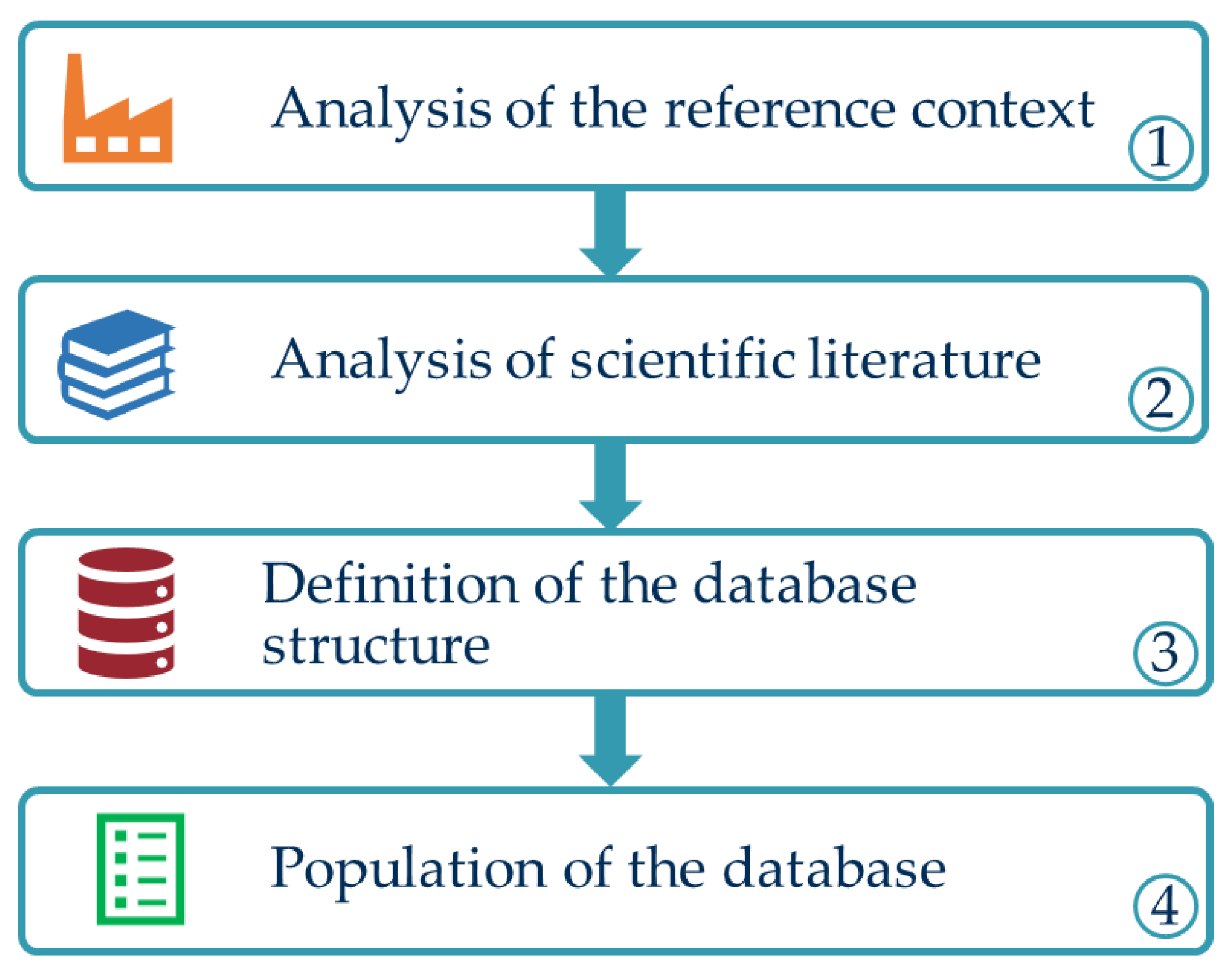
The procedure is divided into four macro-phases:
  • Analysis of the reference context: preliminary analysis of the reference scenario and formulation of the research keywords.
  • Analysis of the scientific literature: search and preliminary analysis of the literature sources, to select the most representative studies to be used as input for the definition of the database structure.
  • Definition of the database structure: in this phase, thanks to the results of the literature analysis, the database fields and the information to be collected are defined.
  • Population of the database: the last phase involves further analysis of the sources found and their use for the database’s preliminary population.
Figure 2 schematically shows the main phases involved in the database development process.
Figure 2. Graphical representation of the main phases for the creation of the two databases.
For both databases, the analysis of the context and the bibliographic research carried out provided the fundamental inputs for implementing the subsequent phases.
In order to define the preliminary structure, the articles revealed during the bibliographic research conducted were analyzed. Among the available sources, those containing the most significant amount of information on WHR technologies at low and ultra-low temperatures and their application in heat recovery from industrial processes were selected. The detailed analysis of these references made it possible to understand what information must be collected to adequately characterize WHR technologies and applications. In addition, similar existing databases from the literature were taken as a reference, in particular, the MAESTRI database [33] concerning industrial symbiosis (a WHR process is similar in terms of information to an exchange of materials, energy, or products between different industrial plants), and the EUMERCI database [30] containing energy efficiency case studies (including WHR interventions). Although focused on different topics, these tools have common traits in terms of type of information contained.
After defining the structure of the databases, all the sources detected were further analyzed to be used for the preliminary population of the two tools. A first evaluation was carried out, matching the document’s content with the project’s boundaries:
  • WHR case studies and technologies at ultra-low and low temperatures (temperature lower than 230 °C);
  • Relevance and applicability to the industrial sector (for example, applications in the residential sector were not considered).
Then, a further screening was carried out to identify the studies in which most of the information required by the database fields was available (at least information relating to the waste heat characterization, applicability of the technologies, and reuse of the heat recovered); finally, data were collected and used for database population.
After performing the four steps, both databases were subjected to a validation procedure, thanks to the interaction with important stakeholders, such as WHR technology producers and companies operating in the industrial sector as possible users of the tools. The validation procedure mainly concerned three aspects:
  • Test the effectiveness of the two databases in containing all the information necessary to adequately characterize the various technologies (Technology database) and applications (Case study database);
  • Verify the correctness of the data contained in the databases and evaluate the correspondence of the information collected, in terms of technologies available and effective applications in the industrial scenario;
  • Test the usability of the tools in their role of supporting the identification of heat recovery opportunities.
The databases’ development, which is presented in the following section, results from several interactions. In fact, the numerous feedbacks received through the interaction with the main stakeholders were then used to make the appropriate changes to the structure of the two databases.

3. The Technology Database

3.1. Analysis of the Reference Context

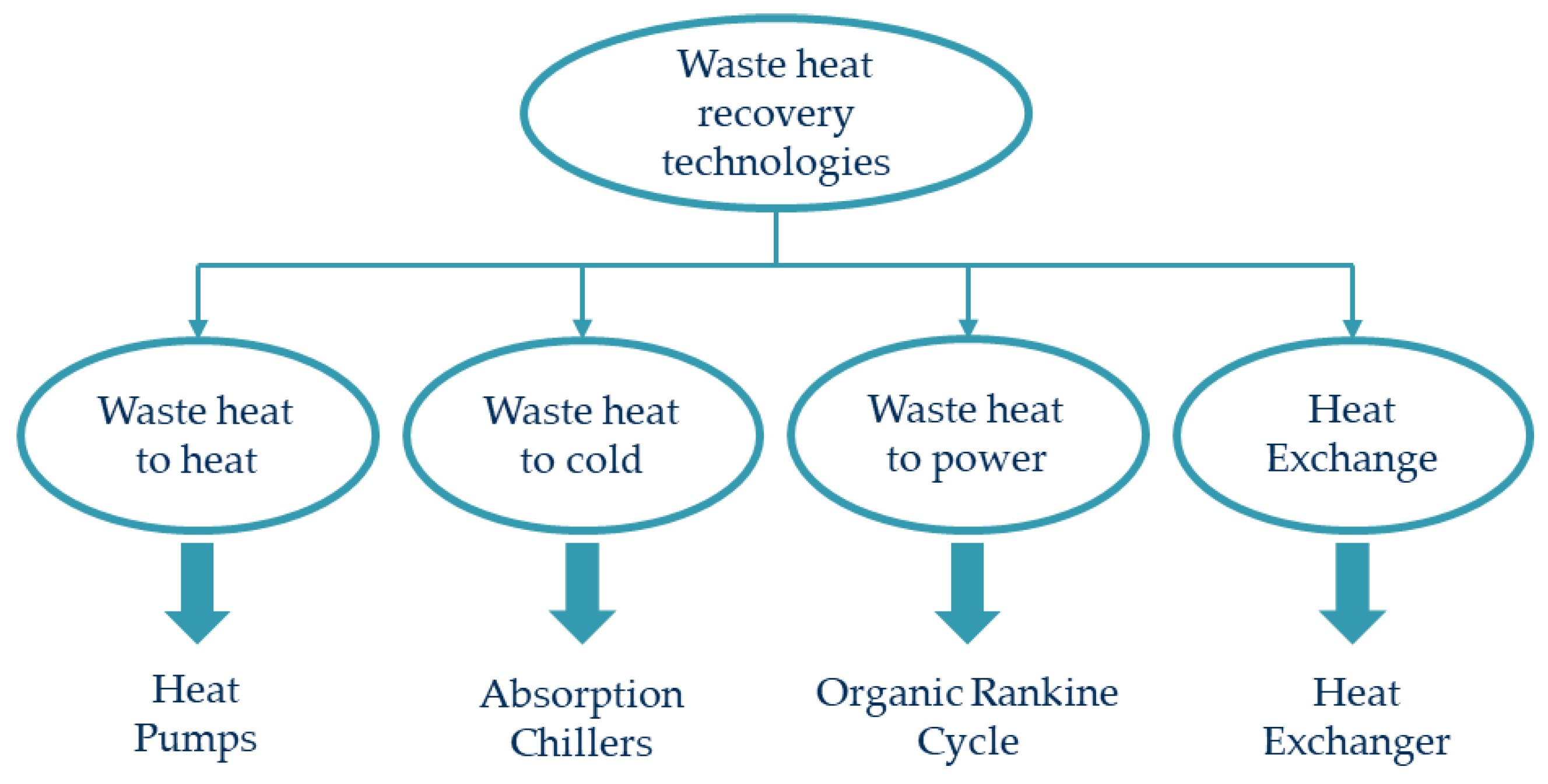
As suggested by [36], technologies used to recover waste heat from industry can be categorized depending on how the waste heat is reused: it can be used directly (at the same or at a lower temperature level), or it can be transformed to another form of energy or to a higher temperature.
We can identify four macro-categories:
  • Waste Heat to Heat: technologies through which the waste heat recovered is used to produce thermal energy at a higher temperature level (heat pumps, mechanical vapor compression, absorption heat pumps, etc.).
  • Waste Heat to Cold: technologies that utilize the waste heat recovered to produce cooling energy (absorption and adsorption chiller, etc.).
  • Waste Heat to Power: technologies that convert the waste heat recovered to electricity (organic Rankine cycles, Kalina cycles, etc.).
  • Heat Exchange: technologies through which the waste heat recovered is used directly at the same or a lower temperature. Heat exchangers and thermal energy storage are the two dominant technologies of this category.
To define an appropriate structure of the Technology database, it was first necessary to delineate a detailed state-of-the-art regarding the technologies for low-grade WHR currently available. Thanks to the analysis of some important scientific literature contributions [18,19,23,26,36], it was possible to define a general framework of both consolidated (typically adopted in the industry) and emerging (developed and tested at the laboratory or pilot scale) technologies.
Table 2 shows some of the main technologies divided by type of recovery and temperature level within the research project’s boundaries.
Table 2. Consolidated and emerging WHR technologies by temperature range [18,19,23,26,36].
Among these technologies, organic Rankine cycles, heat pumps, absorption chillers, and the various types of heat exchangers are the most widespread and consolidated WHR technologies in the industrial scenario. Figure 3 shows the subdivision into categories of the WHR technologies and, for each of them, the most representative technology.
Figure 3. Categorization of waste heat recovery technologies. Elaborated from [36].

3.2. Analysis of the Scientific Literature

A more specific analysis of the literature was conducted to provide input to the definition of the database structure. The literature review, described in detail in [38], was carried out consulting the Scopus online database using the combination of keywords “heat recovery”, “low temperature”, and “industrial” (in article title, abstract, and keywords). The search produced more than 500 results. A first evaluation was done matching the document’s content with the project’s boundaries (ultra-low and low temperatures applications) and analyzing the relevance to the industrial sector. This activity identified about 300 articles that were deeply analyzed.

3.3. Definition of the Database Structure

The literature analysis allowed for the identification of the most appropriate database structure to develop a comprehensive, but easy-to-use, tool.
The database is organized as follows: each row of the database corresponds to a low-temperature heat recovery technology. There can be multiple records for each source (for example, a supplier may have several technologies in its catalog).
The information collected is organized into five categories:
  • Identification: includes fields to locate the technology within the database. Different technologies can be associated with each technology provider.
  • Source: contains information relating to the source from which the technology was identified to guarantee its retrieval.
  • Technology provider: contains the information necessary to identify the manufacturer of the technology under investigation.
  • Technology information: identifies the technology, its state of maturity, and the type of recovery it allows to obtain. It also contains the main technical characteristics and ranges of application of this technology.
  • Other information: includes other technical or economic information not recorded in the previous fields that may help the user evaluate and understand the technology.
Table 3 shows all the database fields and their description.
Table 3. Technology database’s fields and description.
The final structure proposed is the result of several iterations. Initially, only closed fields were foreseen, but it was preferred to maintain a more flexible structure, thanks to the inputs obtained from the interaction with the technology suppliers. The database is designed to contain both single models or model series and product range as, in many cases, the manufacturers offer application-specific designs.
For this reason, it was preferred for some fields to provide a range of value or free completion.

3.4. Population of the Database

The Technology database’s preliminary population was carried out using the sources of literature collected during the bibliographic research that was previously carried out. Other information was collected by directly consulting the catalogs of suppliers available online and carrying out interviews with some of the main waste heat technology providers operating in the Italian market.
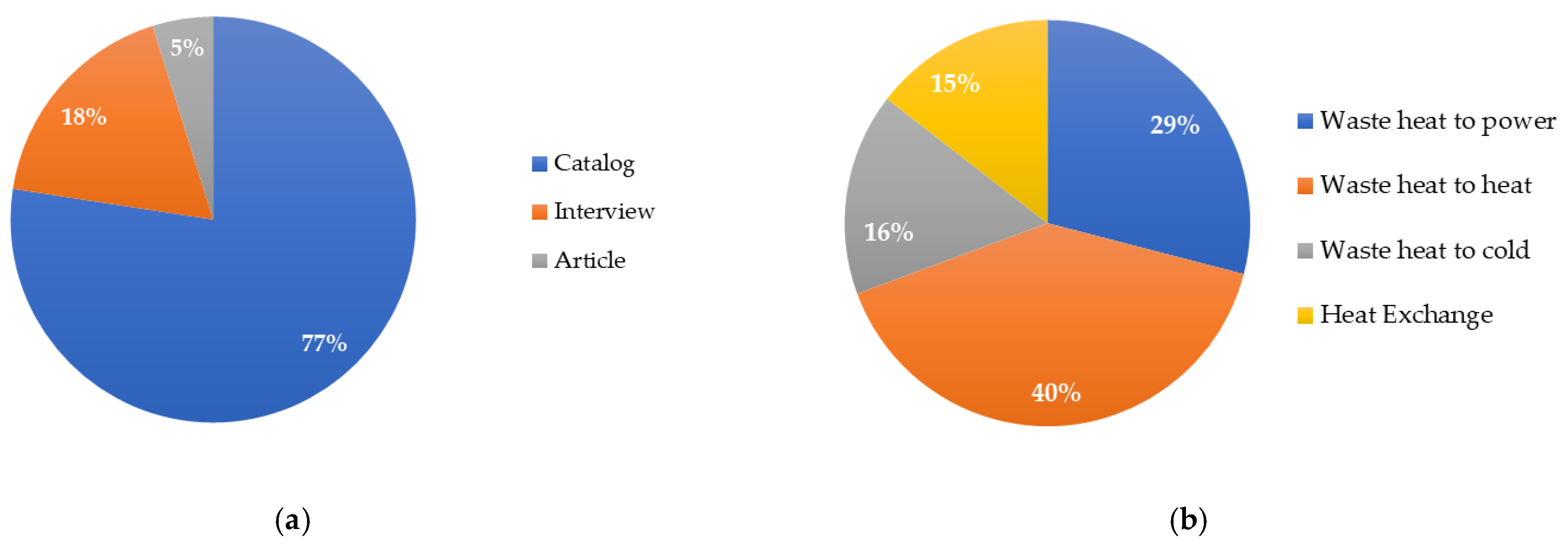
There are 21 sources used for the Technology database population, for a total of 62 technologies. Figure 4a shows that the identified technologies primarily derive from supplier catalogs (77%) and from the interviews conducted (18%). Figure 4b shows the division into categories of the technologies identified.
Figure 4. Results of the Technology database’s preliminary population: (a) Type of source analyzed; (b) Waste heat recovery type.
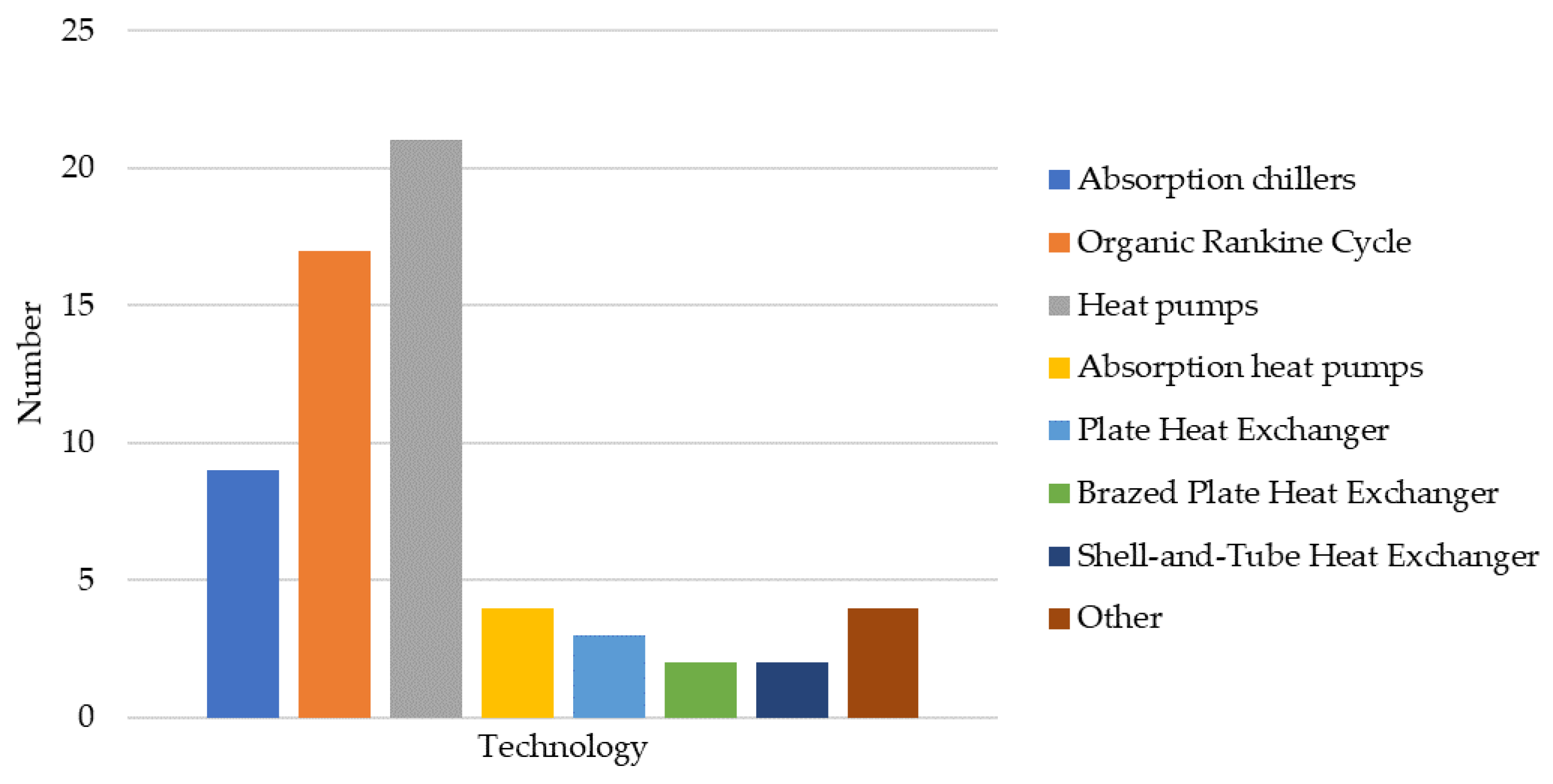
As shown in Figure 5, organic Rankine cycles (34%), heat pumps (27%), and absorption chillers (15%) are the most numerous technologies identified.
Figure 5. The technologies identified during the Technology database’s preliminary population.

4. The Case Study Database

4.1. Analysis of the Reference Context

A preliminary analysis of a limited number of documents [23,26,39] was carried out to identify the industrial sectors with high potential for waste heat recovery at medium–low temperature levels. In this regard, Table 4 provides an overview of the most common waste heat sources and the corresponding temperature levels according to the type of industrial sector [26,39].
Table 4. Industrial processes with low-temperature waste heat production [26,39].
Furthermore, the analysis of these sources allowed for the identification of “keywords” (see Table 5) to be used for bibliographic research on main scientific and non-scientific databases and search engines (Scopus, ScienceDirect, Google Scholar, Google). Documents identified by such research included scientific articles, project reports, and studies related to recovery projects already implemented or in the implementation phase.
Table 5. Keywords used in bibliographic research for the Case study database development.

4.2. Analysis of the Scientific Literature

A preliminary selection was carried out to identify studies focusing on waste heat recovery at temperatures compatible with the project’s objectives. At the end of this first selection, the total number of documents to be considered for further analysis was 130.
Among these studies, a few articles (reporting the greatest amount of information on the application of waste heat recovery solutions in industrial processes) were selected to define the preliminary structure of the Case study database. In addition, similar existing databases from the literature were taken as a reference, such as those regarding case studies on industrial symbiosis (i.e., MAESTRI [33]). Indeed, in terms of structure and type of information to be collected, a process of waste heat recovery (internal or external to the industrial site) is quite similar to an exchange of materials, energy, or by-products among different industrial facilities.

4.3. Definition of the Database Structure

The database is organized as follows: each row of the database corresponds to a low-temperature heat recovery case study (for each bibliographic source there can be multiple case studies).
The information collected is organized into seven categories:
  • Identification: identification of each single case study within the database. For each source, there can be multiple WHR case collected.
  • Source: reference to the document in which the case study is described.
  • Company: this category geographically locates the heat recovery project and includes the industrial sectors and subsectors involved.
  • Waste heat: includes all the information necessary to characterize the available waste heat source.
  • Recovery process: includes information about the type of recovery intervention performed and the technology used, following the structure defined by the Technology database.
  • Waste heat utilization: contains information describing how the recovered waste heat is used.
  • Other information: refers to other technical, economic, and general information not recorded in the previous fields that may help the user to evaluate and understand the WHR application.
Table 6 shows all the database fields and their detailed description.
Table 6. Case study database’s fields and description.
Finally, all the information collected from each source was implemented into the database.

4.4. Population of the Database

Documents selected during the analysis of scientific literature (130 documents) were further screened to identify studies reporting most of the information required by the database fields previously described (Table 6).
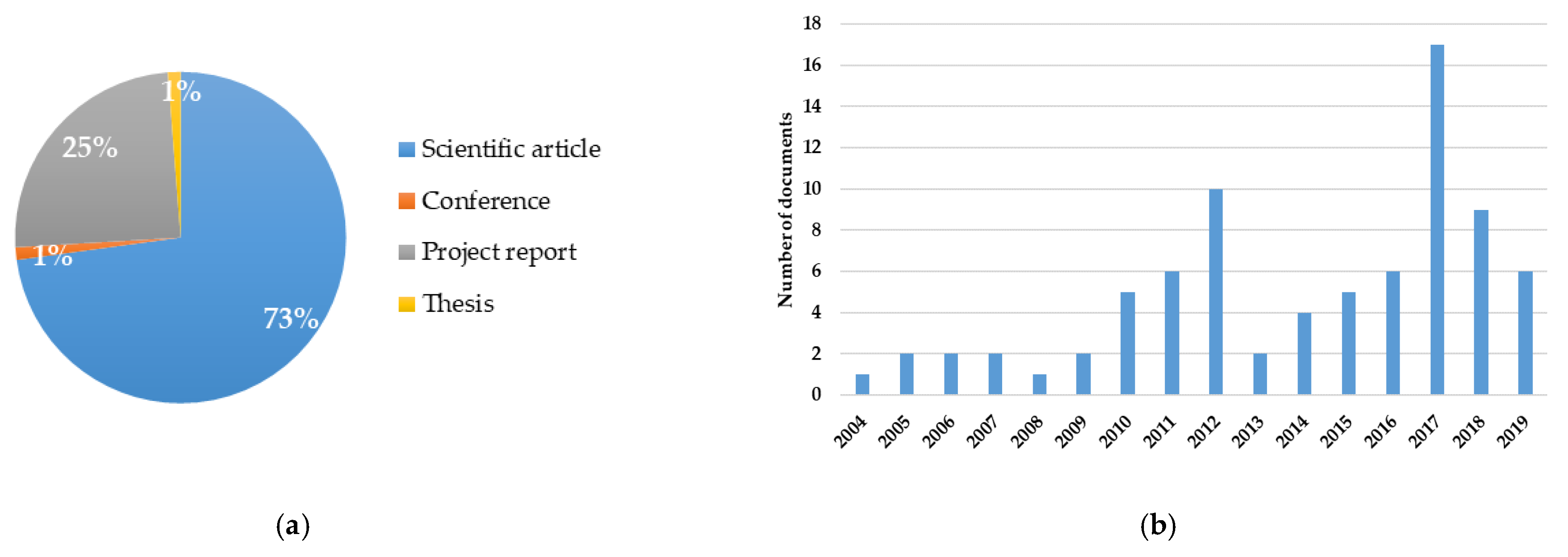
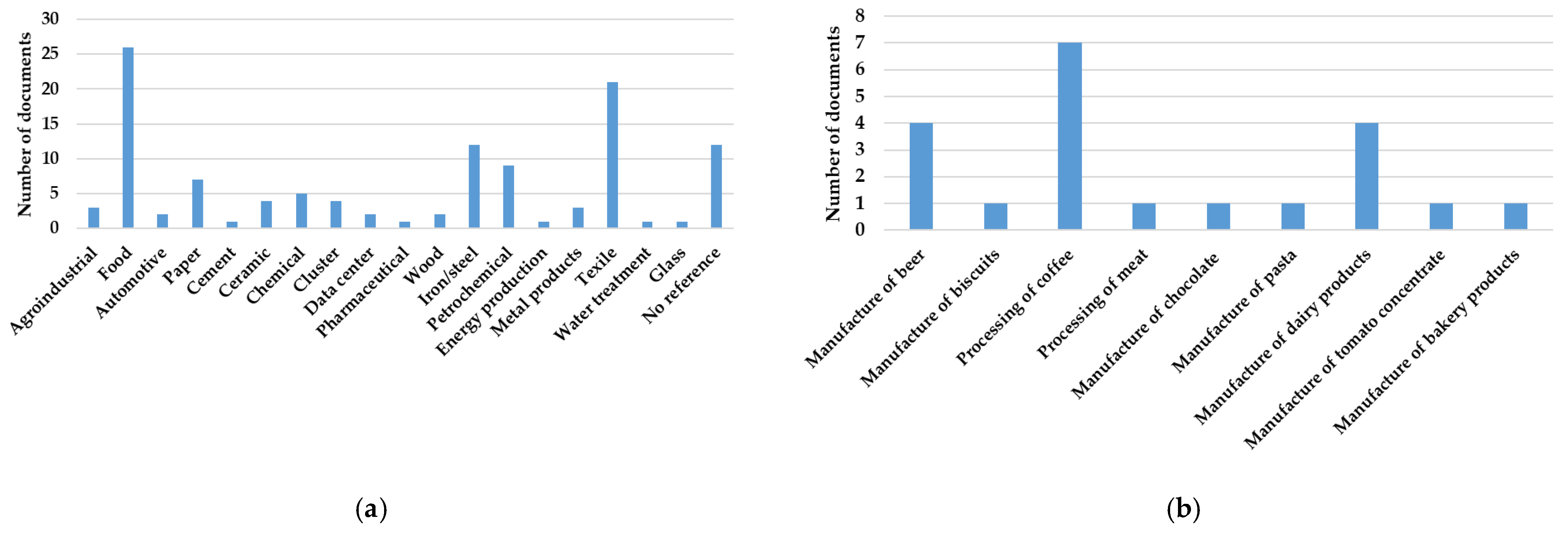
There were 81 sources used for the Case study database population, corresponding to 108 case studies of waste heat recovery. Figure 6a shows that the sources were primarily scientific articles, mainly published from 2017 to 2019 (Figure 6b). Regarding the individual WHR cases, Figure 7a shows the industrial sector breakdown. It is noted that most of the studies concerned the food and the textile sectors.
Figure 6. Results of the Case study database’s preliminary population: (a) Type of source analyzed; (b) Publication year of different sources.
Figure 7. Results of the Case study database’s preliminary population: (a) Industrial sectors involved in recovery cases; (b) Food subsectors involved in recovery cases.
Concerning the food sector, which was the most numerous and detailed sector, Figure 7b also shows the relative sub-sectors, including coffee, dairy, and beer production.
It is interesting to note that the majority of case studies within the database are related to internal process heat recovery. However, this aspect may have been emphasized by the type of research carried out, as most of the articles focusing on external heat recovery (e.g., industrial symbiosis) do not report detailed information about the waste heat flows and were therefore excluded during the database population.

5. Use of the Databases

The two databases described represent two key elements of a simulation tool supporting the identification and evaluation of suitable waste heat recovery opportunities in industrial facilities.
The choice of creating two distinct databases is confirmed to be positive for enhancing the modularity of the final decision support tool, allowing us to obtain two related but unconstrained tools to be used in distinct phases of the decision-making process.
Furthermore, this distinction has certainly made it possible to obtain advantages from the two databases’ population, focusing on different aspects and collecting more information maintaining a simple structure.
Although the two tools are distinct, they can be jointly used, as it is possible to integrate the information found from one of the two databases by consulting the other.
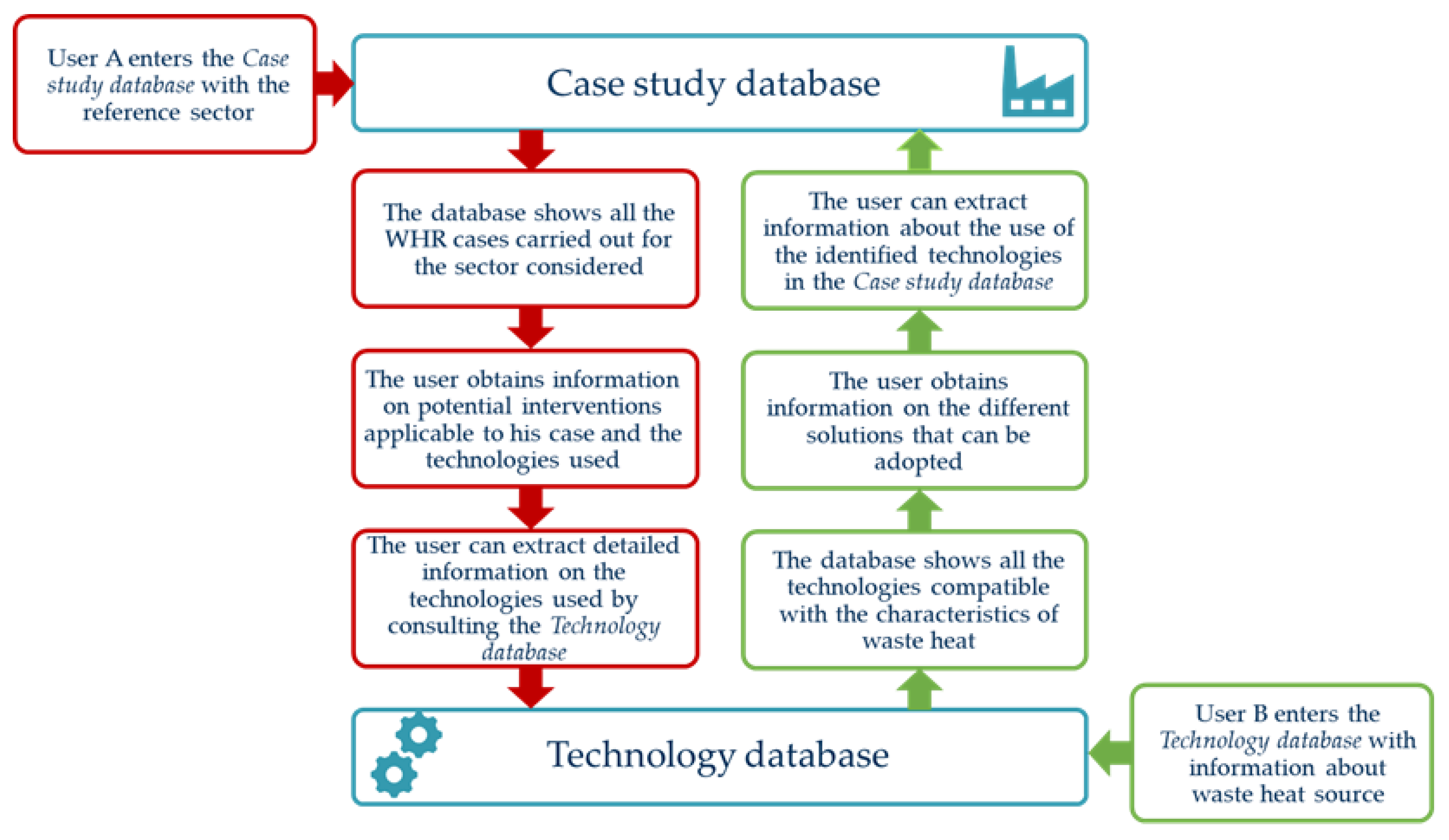
In order to provide a practical example of the integration of the two databases, two possible processes for the joint use of the two tools have been identified:
(a)
User A consults the Case study database searching for heat recovery applications in a specific sector or sub-sector;
(b)
User B consults the Technology database looking for a technology suitable for the available waste heat characteristics.
Figure 8 shows a graphical representation and description of the proposed example.
Figure 8. Two different integrated uses of the databases.
User A’s query represents the common example of a user looking for opportunities to improve efficiency through waste heat recovery as a company with significant thermal consumption. He wants to get an idea of the recovery interventions already applied in his sector (sub-sector or process), and analyze whether there are also margins for implementation in his company. However, User B’s query represents the example of a user who has already identified a waste heat to use and who therefore wants to obtain more information about the technologies that can be implemented to recover it. Furthermore, User B may already be aware of the technologies that can be implemented (for example, downstream of a preliminary assessment), but is looking for more detailed information.
It is essential to highlight that those proposed are only two of the databases’ possible uses. For both tools, the piece of information used to access the database could be different, even if the process of retrieving additional information can follow a similar logic to the ones proposed in Figure 8.
To give a more practical example, we imagine an Energy Manager [40] from a dairy company searching for WHR projects implemented in this sub-sector. Entering “Manufacture of dairy products” in the sub-sectors field of the Case study database, he would find four case studies. Two of these refer to waste heat recovery through the application of heat pumps. To obtain more information about this technology, the user could consult the Technology database entering “Heat pump” in the technology field. The search would show 21 results, from which the user would have more detailed information about heat pumps and he could then select those compatible with the characteristics of the waste heat flow available from the dairy company.
Table 7 provides some extracts of the results obtained using the search criteria described. Due to confidentiality issues, the table’s data do not provide any information about the companies and the technology provider involved.
Table 7. Extract of the results obtained using the search criteria specified in the example of the use of databases.
To maintain search effectiveness, in addition to those mentioned, the user can consult the database using more specific fields, such as the type of fluid, the power range, the state of maturity of the technology, the process, the receiving process, etc. By inserting more detailed search criteria, the problems of using the database in terms of an excessive number of results can be limited, even in the case of an extensive database.
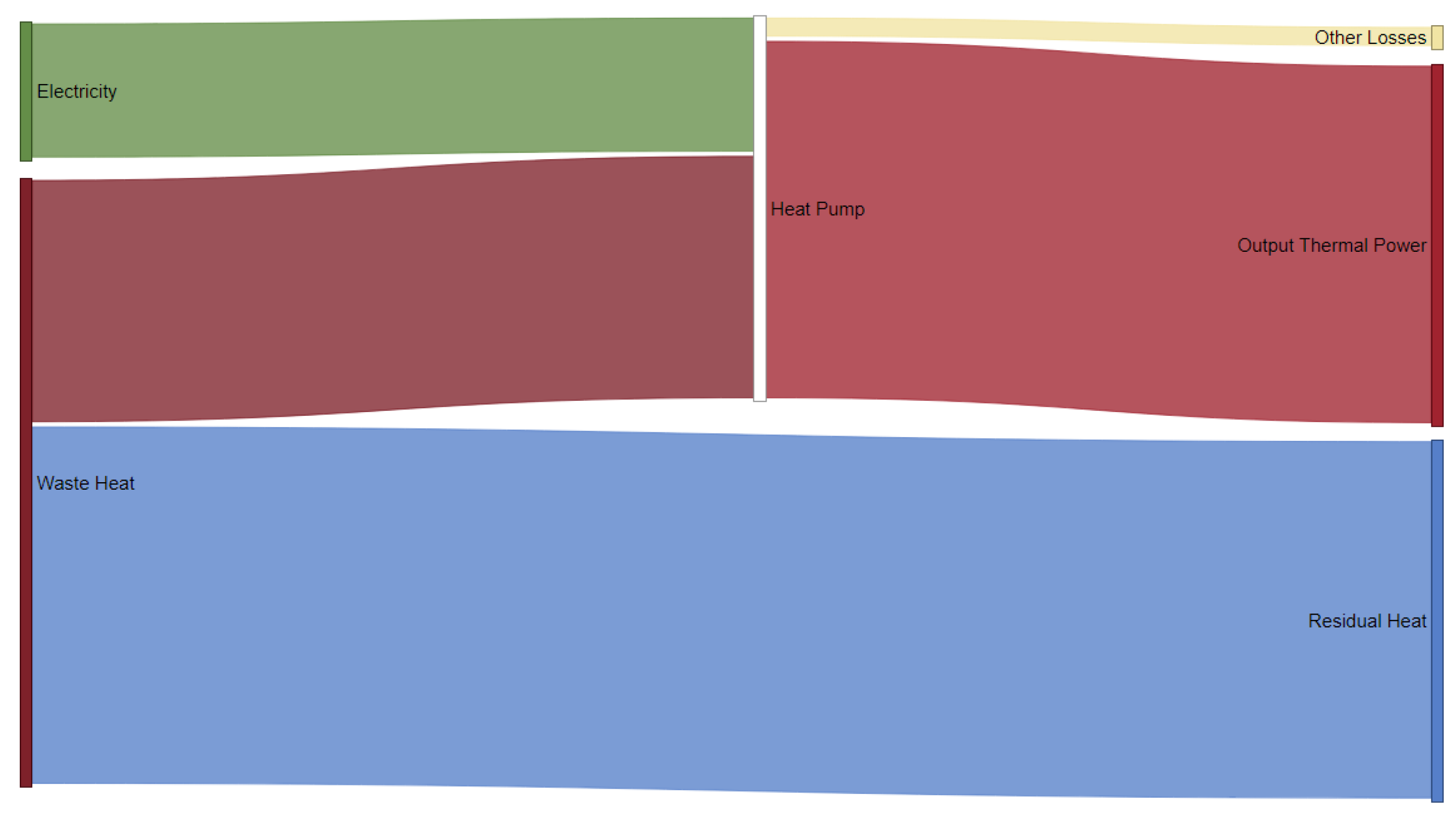
The information contained in the two databases allows the energy attributes for any WHR system to be demonstrated. Referring to the technology found in Table 7, Figure 9 reports an example made by a Sankey diagram of a heat pump. In the diagram, the electricity is shown in green, while the thermal flows are shown in a color scale, from bright red for high temperatures to blue for lower temperatures.
Figure 9. Example of a Sankey Diagram for a heat pump.

6. Discussion and Conclusions

This article presents the main phases that led to the development of two databases aimed at supporting companies in increasing the diffusion of low-temperature heat recovery interventions in the industrial sector, which, despite the high potential, are not sufficiently applied.
The first database is focused on available state-of-the-art and advanced technologies, while the second database reports several WHR case studies that have already been implemented.
Compared to the other tools related to energy efficiency, the two databases proposed in this article are the only ones entirely focused on low-temperature waste heat recovery. Although the literature about heat recovery is extensive and presents numerous remarkable contributions, these previous attempts do not result in tools that are effectively usable by companies. Therefore, they do not represent a valid aid in overcoming those gaps in the diffusion of recovery interventions, which we have found to be mainly due to non-technological barriers.
Compared to the existing tools and databases, one of the main advantages of the proposed databases is that they contain all the information necessary to analyze the heat recovery process both from a qualitative and a quantitative perspective. For these reasons, the databases represent two fundamental elements of a complete information system that will be developed into a broader research project, aimed at supporting companies in identifying and conducting the first evaluation of heat recovery opportunities and overcoming non-technical barriers to the diffusion of energy efficiency measures.
In order to favor the modularity of the final tool, two distinct databases were created to be applied in different phases of the implementation of a heat recovery project. A common procedure was followed to develop both tools, starting from an in-depth analysis of the literature, which provided the basis for identifying an appropriate database structure and for providing the inputs for its preliminary population.
The Case study database contains 31 fields divided into seven categories. It allows for the collection of information relating to the industrial sector and subsector in which the case study is implemented, the characteristics of waste heat, the technology used, and information about the reuse of the heat recovered. The Technology database contains 28 fields divided into five categories. It permits collecting information relating to the technology provider, technology description and state of maturity, and information about the technical characteristics and range of usability for the technologies collected.
The databases’ structure was preliminarily validated thanks to the interaction with important stakeholders and possible users of the tools, such as companies operating in the industrial sector and some WHR technology suppliers operating in the Italian and European markets. This interaction provided important feedback about the two proposed tools’ usability and helped to define a more appropriate database structure. Therefore, this allowed for the consolidation of the data within the Technology database, regarding several aspects of both well-established and emerging technologies, such as the typical operating temperature and the power range, the energy performance, and the economic parameters (i.e., specific costs, operating and maintenance costs, lifetime, etc.), and the main barriers to the technology implementation. The interaction with technology manufacturers also allowed us to increase the size of the Case study database, by providing data regarding real case studies on WHR from industrial wastes.
Meetings with industries which use different types of processes were also organized to verify and consolidate data within the Case study database, particularly regarding types and characteristics of waste heat sources generated by the production processes and the types of WHR solutions usually implemented, depending on the industrial sector under consideration.
Furthermore, possible integrated use of databases and a practical example of their utilization were proposed. This application showed how much information on heat recovery interventions and implementable technologies could be obtained in a typical situation with little input information (such as industrial sector or waste heat characteristics).
It should be noted that the two databases were only preliminary populated, and their content will be substantially increased, thanks to the analysis of energy audits and visits to different companies involved, during the following years of the project.
Advanced data analysis techniques, such as machine learning approaches, could be used when the databases are sufficiently populated. Possible applications are, for example, database schema matching [41,42], in order to improve the integration of the two databases, or using the available data to model the relationships between the various parameters such as output power, waste heat temperature, and type of fluid for the different technologies [43].
The following steps will involve the IT platform development in which the two databases will represent key tools. Together with other modules, such as the pinch analysis, the evaluation of external uses, and the development of specific models of the single technologies, this will guide the user in all the different phases of implementing a WHR intervention.

Author Contributions

All authors contributed to the idea and the design of the proposed tools; D.D. was responsible for the Technology database development; M.B., L.G. and P.E.L. were responsible for the Case study database development; M.B., D.D. and L.G. prepared the original draft; V.I. and A.S. were responsible for the activities carried out by University of Rome Tor Vergata and contributed to the review and editing. Project manager: M.B. All authors have read and agreed to the published version of the manuscript.

Funding

The research activity has been funded by the Project “Energy efficiency of industrial products and processes”, Research programme “Piano Triennale della Ricerca del Sistema Elettrico Nazionale 2019–2021” funded by the Italian Ministry of Economic Development.

Institutional Review Board Statement

Not applicable.

Data Availability Statement

Not applicable.

Conflicts of Interest

The authors declare no conflict of interest. The funders had no role in the design of the study; in the collection, analyses, or interpretation of data; in the writing of the manuscript, or in the decision to publish the results.

References

  1. Moran, E.F.; Lopez, M.C.; Moore, N.; Müller, N.; Hyndman, D.W. Sustainable Hydropower in the 21st Century. Proc. Natl. Acad. Sci. USA 2018, 115, 11891–11898. [Google Scholar] [CrossRef]
  2. Okot, D.K. Review of Small Hydropower Technology. Renew. Sustain. Energy Rev. 2013, 26, 515–520. [Google Scholar] [CrossRef]
  3. Kumar, Y.; Ringenberg, J.; Depuru, S.S.; Devabhaktuni, V.K.; Lee, J.W.; Nikolaidis, E.; Andersen, B.; Afjeh, A. Wind Energy: Trends and Enabling Technologies. Renew. Sustain. Energy Rev. 2016, 53, 209–224. [Google Scholar] [CrossRef]
  4. Tiwari, R.; Babu, N.R. Recent Developments of Control Strategies for Wind Energy Conversion System. Renew. Sustain. Energy Rev. 2016, 66, 268–285. [Google Scholar] [CrossRef]
  5. Santolamazza, A.; Dadi, D.; Introna, V. A Data-Mining Approach for Wind Turbine Fault Detection Based on SCADA Data Analysis Using Artificial Neural Networks. Energies 2021, 14, 1845. [Google Scholar] [CrossRef]
  6. Kabir, E.; Kumar, P.; Kumar, S.; Adelodun, A.A.; Kim, K.-H. Solar Energy: Potential and Future Prospects. Renew. Sustain. Energy Rev. 2018, 82, 894–900. [Google Scholar] [CrossRef]
  7. Gong, J.; Li, C.; Wasielewski, M.R. Advances in Solar Energy Conversion. Chem. Soc. Rev. 2019, 48, 1862–1864. [Google Scholar] [CrossRef] [PubMed]
  8. Sundaram, M.M.; Appadoo, D. Traditional Salt-in-Water Electrolyte vs. Water-in-Salt Electrolyte with Binary Metal Oxide for Symmetric Supercapacitors: Capacitive vs. Faradaic. Dalton Trans. 2020, 49, 11743–11755. [Google Scholar] [CrossRef] [PubMed]
  9. Minakshi, M.; Mitchell, D.R.G.; Jones, R.T.; Pramanik, N.C.; Jean-Fulcrand, A.; Garnweitner, G. A Hybrid Electrochemical Energy Storage Device Using Sustainable Electrode Materials. ChemistrySelect 2020, 5, 1597–1606. [Google Scholar] [CrossRef]
  10. Sharma, P.; Minakshi, M.; Whale, J.; Jean-Fulcrand, A.; Garnweitner, G. Effect of the Anionic Counterpart: Molybdate vs. Tungstate in Energy Storage for Pseudo-Capacitor Applications. Nanomaterials 2021, 11, 580. [Google Scholar] [CrossRef] [PubMed]
  11. Braff, W.A.; Mueller, J.M.; Trancik, J.E. Value of Storage Technologies for Wind and Solar Energy. Nat. Clim. Chang. 2016, 6, 964–969. [Google Scholar] [CrossRef]
  12. Firth, A.; Zhang, B.; Yang, A. Quantification of Global Waste Heat and Its Environmental Effects. Appl. Energy 2019, 235, 1314–1334. [Google Scholar] [CrossRef]
  13. Brunner, C.; Muster, B.; Heig, E.; Schweiger, H.; Vannoni, C. Einstein—Expert System for an Intelligent Supply of Thermal Energy in Industry—Audit Methodology and Software Tool. Chem. Eng. Trans. 2010, 21, 685–690. [Google Scholar] [CrossRef]
  14. EINSTEIN II. Available online: https://www.einstein-energy.net/index.php/about-einstein/fundedprojects/einstein-ii (accessed on 23 March 2021).
  15. Glatzl, W.; Brunner, C.; Fluch, J. GREENFOODS—Energy Efficiency in the Food and Beverage Industry. In Proceedings of the Eceee Summer Study on Energy Efficiency, Toulon/Hyères, France, 1–6 June 2015. [Google Scholar]
  16. SEEnergies Project. Available online: https://www.seenergies.eu (accessed on 23 March 2021).
  17. Forman, C.; Muritala, I.K.; Pardemann, R.; Meyer, B. Estimating the Global Waste Heat Potential. Renew. Sustain. Energy Rev. 2016, 57, 1568–1579. [Google Scholar] [CrossRef]
  18. Xu, Z.Y.; Wang, R.Z.; Yang, C. Perspectives for Low-Temperature Waste Heat Recovery. Energy 2019, 176, 1037–1043. [Google Scholar] [CrossRef]
  19. Jouhara, H.; Khordehgah, N.; Almahmoud, S.; Delpech, B.; Chauhan, A.; Tassou, S.A. Waste Heat Recovery Technologies and Applications. Therm. Sci. Eng. Prog. 2018, 6, 268–289. [Google Scholar] [CrossRef]
  20. Martin, M.; Harris, S. Prospecting the Sustainability Implications of an Emerging Industrial Symbiosis Network. Resour. Conserv. Recycl. 2018, 138, 246–256. [Google Scholar] [CrossRef]
  21. Dénarié, A.; Fattori, F.; Spirito, G.; Macchi, S.; Cirillo, V.F.; Motta, M.; Persson, U. Assessment of Waste and Renewable Heat Recovery in DH through GIS Mapping: The National Potential in Italy. Smart Energy 2021, 1, 100008. [Google Scholar] [CrossRef]
  22. Wheatcroft, E.; Wynn, H.; Lygnerud, K.; Bonvicini, G.; Leonte, D. The Role of Low Temperature Waste Heat Recovery in Achieving 2050 Goals: A Policy Positioning Paper. Energies 2020, 13, 2107. [Google Scholar] [CrossRef]
  23. Department of Energy (DOE). Waste Heat Recovery Systems. Chapter 6: Innovating Clean Energy Technologies in Advanced Manufacturing-Technology Assessments. In Quadrennial Technology Review 2015-An Assessment of Energy Technologies and Research Opportunities; DOE: Washington, DC, USA, 2015. [Google Scholar]
  24. Haddad, C.; Périlhon, C.; Danlos, A.; François, M.-X.; Descombes, G. Some Efficient Solutions to Recover Low and Medium Waste Heat: Competitiveness of the Thermoacoustic Technology. Energy Procedia 2014, 50, 1056–1069. [Google Scholar] [CrossRef]
  25. Simeone, A. A Decision Support System for Waste Heat Recovery in Manufacturing. CIRP Ann. 2016, 65, 21–24. [Google Scholar] [CrossRef]
  26. Ling-Chin, J.; Bao, H.; Ma, Z.; Taylor, W.; Paul Roskilly, A. State-of-the-Art Technologies on Low-Grade Heat Recovery and Utilization in Industry. In Energy Conversion—Current Technologies and Future Trends; Al-Bahadly, I.H., Ed.; IntechOpen: Londone, UK, 2019; ISBN 978-1-78984-904-2. [Google Scholar]
  27. Kovala, T.; Wallin, F.; Hallin, A. Factors Influencing Industrial Excess Heat Collaborations. Energy Procedia 2016, 88, 595–599. [Google Scholar] [CrossRef][Green Version]
  28. Grönkvist, S.; Sandberg, P. Driving Forces and Obstacles with Regard to Co-Operation between Municipal Energy Companies and Process Industries in Sweden. Energy Policy 2006, 34, 1508–1519. [Google Scholar] [CrossRef]
  29. Broberg Viklund, S.; Karlsson, M. Industrial Excess Heat Use: Systems Analysis and CO2 Emissions Reduction. Appl. Energy 2015, 152, 189–197. [Google Scholar] [CrossRef]
  30. The EU-MERCI Project. Available online: http://www.eumerci.eu (accessed on 23 March 2021).
  31. Maggiore, S.; Realini, A.; Zagano, C. ’Good Practices’ to Improve Energy Efficiency in the Industrial Sector. Int. J. Energy Prod. Manag. 2020, 5, 259–271. [Google Scholar] [CrossRef]
  32. IAC: Industrial Assessment Centers. Available online: https://iac.university (accessed on 23 March 2021).
  33. MAESTRI Project. Available online: http://maestri-spire.eu/ (accessed on 23 March 2021).
  34. SHIP Plants. Available online: http://ship-plants.info (accessed on 23 March 2021).
  35. AEE—Institut Für Nachhaltige Technologien—“Matrix of Industrial Process Indicators”. Available online: http://wiki.zero-emissions.at/index.php?title=Main_Page (accessed on 23 March 2021).
  36. Brückner, S.; Liu, S.; Miró, L.; Radspieler, M.; Cabeza, L.F.; Lävemann, E. Industrial Waste Heat Recovery Technologies: An Economic Analysis of Heat Transformation Technologies. Appl. Energy 2015, 151, 157–167. [Google Scholar] [CrossRef]
  37. Papapetrou, M.; Kosmadakis, G.; Cipollina, A.; La Commare, U.; Micale, G. Industrial Waste Heat: Estimation of the Technically Available Resource in the EU per Industrial Sector, Temperature Level and Country. Appl. Therm. Eng. 2018, 138, 207–216. [Google Scholar] [CrossRef]
  38. Dadi, D.; Introna, V.; Cesarotti, V.; Benedetti, M. Design and Development of a Database to Identify and Evaluate Waste Heat Recovery Opportunities. In Proceedings of the Summer School Francesco Turco, Bergamo, Italy, 9–11 September 2020. [Google Scholar]
  39. Johnson, I.; Choate, W.T.; Davidson, A. Waste Heat Recovery: Technology and Opportunities in U.S. Industry; BCS, Inc.: Laurel, MD, USA; Washington, DC, USA, 2008; p. 112. [Google Scholar]
  40. L. 10/1991 Norme per L’attuazione del Piano Energetico Nazionale in Materia di uso Razionale Dell’energia, di Risparmio Energetico e di Sviluppo Delle Fonti Rinnovabili di Energia. 1991. Available online: https://www.gazzettaufficiale.it/eli/id/1991/01/16/091G0015/sg (accessed on 23 March 2021).
  41. Berlin, J.; Motro, A. Database Schema Matching Using Machine Learning with Feature Selection. Semin. Contrib. Inf. Syst. Eng. 2013, 15, 315–329. [Google Scholar]
  42. Rahm, E.; Bernstein, P.A. A Survey of Approaches to Automatic Schema Matching. VLDB J. 2001, 10, 334–350. [Google Scholar] [CrossRef]
  43. Benedetti, M.; Dadi, D.; Introna, V.; Santolamazza, A. Proposal of a Methodology for the Preliminary Assessment of Low Temperature Heat Recovery Opportunities for Industrial Applications. In Proceedings of the International Conference on Applied Energy 2020 (ICAE 2020), Bangkok/Virtual, Thailand, 1–10 December 2020. [Google Scholar]
Publisher’s Note: MDPI stays neutral with regard to jurisdictional claims in published maps and institutional affiliations.

Article Metrics

Citations

Article Access Statistics

Multiple requests from the same IP address are counted as one view.