


Abstract
Social conflicts around large carnivores are increasing in Europe, often associated to the species expansion into human-modified and agricultural landscapes. Large carnivores can be seen as an added value by some but as a source of difficulties by others, depending on different values, attitudes, livelihoods, and everyday activities. Therefore, the effective involvement of the different interest groups is important to identify and shape tailored solutions that can potentially be implemented, complementing top-down approaches that might, on their own, result in lack of implementation and buy-in. To improve dialogue in conflictual situations, as part of a European project promoted by the European Parliament, we assessed the practical implementation of participatory processes in three sample areas in Europe where wolves and bears have recently been increasingly impacting human activities. Our results demonstrate that collaboration among different and generally contrasting groups is possible. Even in situations where large-carnivore impacts were seen as unsatisfactorily managed for many years, people were still willing and eager to be involved in alternative discussion processes hoping this would lead to concrete solutions. An important and common highlight among the three study areas was that all the management interventions agreed upon shared the general scope of improving the conditions of the groups most impacted by large carnivores. The process showed the importance of building trust and supporting dialogue for knowledge co-production and mitigation of conflicts between stakeholders and that controversial environmental issues have the potential to trigger a meaningful dialogue about broader societal issues. The direct involvement and support of competent authorities, as well as the upscaling of this process at larger administrative and social scales, remain important challenges.
1. Introduction
The populations of large-carnivore species such as wolves (Canis lupus), brown bears (Ursus arctos), and Eurasian lynx (Lynx lynx) are overall increasing in Europe [1] both in size and distribution range, with their presence being reported in areas where they had been absent for decades [2].
Although this increase can be considered a conservation success, it is associated with complex management challenges posed by large-carnivore presence in landscapes heavily shaped by human activities [3]. Coexistence between people and large carnivores can be problematic when a clash of opinions over their presence and management generates social conflicts. On the one hand, large carnivores are considered by some to be charismatic animals and powerful symbols of wilderness [4,5,6,7]. Views regarding the importance of conserving large carnivores are complemented by scientific evidence that shows that they can play a key role in maintaining ecosystem health and resilience [8,9]. On the other hand, the presence of large carnivores can be perceived as a potential threat to human safety or health, to livestock or other property that may constitute livelihood income, or to hunting activities where people compete with carnivores over wild prey [4,10,11]. Furthermore, the recovery of large-carnivore populations is often entangled with issues of rural abandonment and serves to exacerbate perceptions of political and cultural marginality among rural communities [12,13,14].
The most common approach to addressing conflicts between people and large carnivores in the past decades has focused on mitigating the economic damages they cause to farmers. Damage compensation programs are aimed at redistributing the income losses to farmers across society, but they tend to ignore the underlying causes of conflict [15,16,17,18], thereby impacting their long-term efficacy and sustainability. While such programs are designed to tackle one important aspect of the complex interaction between human activities and large carnivores, they should be part of integrated strategies to manage large-carnivore presence in human-dominated landscapes but often end up being the only intervention adopted [16,18]. This leads to high expectations on such programs that are intrinsically inadequate to tackle the complexity of the humans–large-carnivores system.
More recently, approaches aimed at understanding the different perceptions, values, and cultural representations of wildlife across different individuals and stakeholder groups have involved a paradigm shift in conflict management, moving the emphasis beyond conflicts between people and wildlife toward conflicts between people [10,19,20,21,22]. Within such approaches, conflict over large-carnivore presence and management is seen as being driven by underlying tensions between different cultures, values, and knowledge systems and by the power relationships that structure these tensions [23]. Opportunities to discuss and confront diverging views can allow for different stakeholder groups to negotiate and interact [24,25,26], without losing sight of their political positioning, particularly when representing well-defined groups. Indeed, although studies on human attitudes and ecological processes might serve to inform decision making in large-carnivore management, the final decisions remain inherently political [27]. With this in mind, the challenge of tackling carnivore conflicts lies in developing an adequate understanding of the underlying issues [19,28] and in elaborating methods and processes to integrate such an understanding into policy [29]. The social acceptability of carnivore policy hinges on their ability to address the existing plurality of cultures, values, and knowledge systems. In situations where opinions are polarized, trust is low, carnivore conservation or local livelihoods are negatively affected, and where traditional top-down approaches are not sufficient, there is a need to create a space for dialogue between stakeholders, where the underlying sources of conflict can be discussed and unpacked [20]. Nevertheless, in highly polarized contexts, there may be a challenge involving all interested parties, seeing as mistrust between stakeholders and toward management authorities and participatory processes in general may be the result of a long history of negative interactions and experiences [30,31,32].
Despite these challenges, participatory processes are being increasingly used in wildlife management, as they are expected to increase the level of compliance with management decisions by fostering a sense of ownership among the parties involved in the decision process [20,33,34]. Participation is also expected to improve the design of conservation interventions, making them better adapted to local needs, priorities, and conditions [35,36]. Furthermore, from a social justice perspective, participation in environmental decisions is considered to increase the legitimacy and equity of conservation decisions [33,34], whilst from a social learning perspective, it has the potential to empower, build new knowledge, and increase trust among stakeholder groups and toward government officials [20,37,38].
Participatory processes, though, require a long-term commitment by the stakeholders involved as well as a considerable financial commitment by their organizers. Moreover, they can yield outcomes that are uncertain and highly dependent on representation, mediation ability, and leadership [39,40]. Even when the outcome of participatory processes is accepted by all the stakeholders involved, the biggest challenge may still be ensuring its uptake into policy. The impact of participation on conservation outcomes has yet to be fully assessed [36,37]. If poorly executed, participatory processes actually risk exacerbating conflicts [41] and are likely to engender a sense of “engagement fatigue” that may hinder future deliberative processes [36].
Engagement of stakeholders in participatory processes must be carefully designed [27,38,42], and it often depends on previous relationships among each other and previous participatory experiences [36]. Despite the efforts needed and the risks faced when engaging in participatory processes, the outcomes often make them worthwhile, as the enhanced social trust they develop can lead to improved conservation outcomes [38]. Participatory processes aimed at improving conservation decision may also generate positive outcomes that extend beyond the conservation conflicts at hand by influencing the broader socio-political context in which they take place [43]. Large-carnivore conflicts may in fact represent an opportunity for wider social learning and for improved stakeholder relationships [44,45], becoming a means through which deeper cultural divides are channeled and expressed [30], and leading to an improved mutual understanding and collaboration among stakeholders for a range of other issues and contexts.
Despite the numerous attempts to apply participation processes to conservation conflicts around large carnivores, there remains little comparative empirical work on the evaluation of such participatory processes.
In this paper, we take a participatory action research approach (a method that fosters reflection and collective social learning, inclusion of different stakeholders, and community-based action [46]) to report on participatory processes carried out to engage stakeholders in decision-making processes in three areas in Europe where large-carnivore populations (of wolves and bears) have been increasing over the past decade. We selected the three areas as the dynamics and extent of the social conflict due to large carnivores which are known to be particularly challenging from a management perspective, with claims reported to the EU by the local administrators asking for higher levels of freedom from strict protection (CEE/92 Habitats Directive) and petitions made to the European Parliament [3]. Under a service contract with the European Commission, we established local stakeholder platforms as part of a participatory action research approach to facilitate dialogue among different stakeholder groups with an aim to test the theory of participatory approaches to natural resources management (details can be found at https://ec.europa.eu/environment/nature/conservation/species/carnivores/regional_platforms.htm (accessed on 15 April 2021)). The platforms aimed to support the co-production of solutions to mitigate conflicts in each site, which were acceptable to all participants and within the boundaries of current local legislation. Herein, we compare the proposed solutions that were generated in the platforms and assess the applicability of the participatory frameworks in areas with different degrees of experience in public involvement and deliberation. Finally, we highlight the ways in which large-carnivore conflicts can serve as an opportunity to tackle wider issues related to social justice, economic equity, and rural development, which go well beyond the technical aspects of large-carnivore management.
2. Project Areas
The project areas (Figure 1), were selected from countries where a recent increase in large-carnivore populations [1] has resulted in the complex management challenge of enabling both carnivores and of local activities to flourish. Additional criteria for selecting the project areas were based on the fact that the study contexts had been previously researched and explored, local authorities were available and in principle willing to participate, and that the areas presented several features that made the knowledge and learning accumulated in this study potentially transferable to other regions [28]. The project areas are described below, together with the reported conservation status of their large-carnivore populations as from the third assessment under Article 17 of Habitats Directive [47].
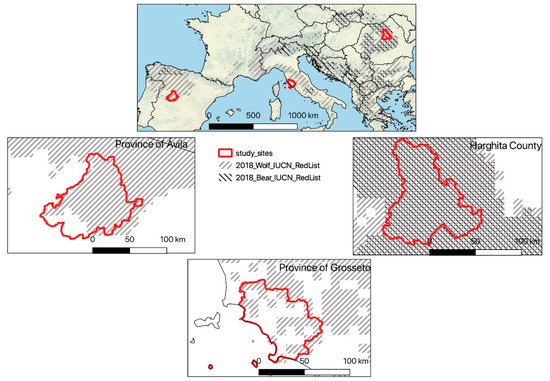
Figure 1.
Map of project areas. The distribution of brown bears (Ursus arctos) and wolf (Canis lupus) as estimated by International Union for Conservation of Nature (IUCN) in 2018 are reported in background.
2.1. Province of Ávila (Spain)
The province of Ávila (8050 km2) is found in the southern part of Castile and Léon Autonomous Region. It is composed of pastures and grasslands (41% of the provincial territory) and small remnant patches of evergreen oak (Quercus ilex, Q. faginea) and coniferous (Pinus pinaster, P. pinea) forests. Ávila is characterized by extensive cattle breeding (mainly of the local Ávila breed) for meat production. Over 50% of the Spanish wolf population is distributed in Castile and Léon, mainly north of the river Duero [48]. Wolves reproduced for the first time in Ávila in 2001, and in 2017, official figures reported 10 packs in the province, with 944 reported attacks [49,50]. Despite damage-prevention methods being evaluated as effective in reducing local losses and with the exception of a one-time project that took place in 2005–2008 [51], ongoing government support to incentivize their use is not available. Wolves are strictly protected in Castile and León south of the river Duero, where the province of Ávila is located (Annex II and IV of the Habitats Directive), and they were managed as game species north of the river at the time of our study (Annex V of Habitat Directive). The Regional Administration has used derogations to the strict protection of wolves to allow for the removal of a limited number of individual wolves in Ávila [50], but environmental organizations have argued that the necessary conditions for derogation have not been fulfilled. Wolves in Ávila and other regions south of the river Duero are reported as currently having an unfavorable conservation status.
2.2. Province of Grosseto (Italy)
The Province of Grosseto extends over 4479 km2 in central Italy. It is characterized by an agricultural landscape (53.7% of the area), featuring a mosaic of extensive agriculture, shrubs, fallows, and pastures interspersed with broad-leaved forest patches (43.3% of the area) of holm oak (Quercus ilex), cork oak (Quercus suber), beech (Fagus sylvatica), and chestnut (Castanea sativa) in the higher elevation areas [52]. The landscape is mainly hilly, raising up to 1738 mt in the northern part of the territory. The climate is Mediterranean, with hot summers and wet winters resulting in frequent droughts and floods. The Province of Grosseto features one of the lowest human population densities among Italian provinces (< 50 inhabitants/km2 [53]) and has been historically shaped by agriculture and farming, which still play an important role in the local economy. Together with livestock production, tourism associated with the area’s historical, culinary, and agricultural tradition is among the most important economic activities.
A stable wolf presence in the area has been recorded since the early 1980s [54]. In 2012–14 a minimum of 13 packs were estimated in the area [55], while in 2017 the population was estimated at ca. 100 wolves and 22–24 packs [56], with an average of 330 depredation events/year reported in 2014–2017 [57]. The regional government and two EU-funded projects have provided damage compensation and damage-prevention measures. Although these interventions have contributed to alleviate the impact of damages, they have not been deemed satisfactory by the local farmers [16], and over the past decade, conflicts between the different interest groups have escalated. Wolves in Italy are reported to be at favorable conservation status and are strictly protected.
2.3. County of Harghita (Romania)
Harghita is situated in the central part of Romania in the Eastern Carpathians of Transylvania, extending over 6635 km2. It is one of 41 Romanian counties each administered by a county council. Elevation ranges from 490 to 1785 m above sea level and the terrain is characterized by narrow valleys and steep slopes. Up to one third of the area is covered by agricultural land, of which 80% is semi-natural grasslands largely used for extensive livestock and honey production [58], whilst forest habitats (dominated by F. sylvatica and A. alba) cover about 40% of the area. Harghita hosts three species of large carnivores: bears, Eurasian lynx, and wolves. Of the three, the bear is the most abundant and the most challenging from a management perspective. Previously listed as a game species, its hunting was restricted when Romania joined the EU in 2007 [59]. Since then, derogations have been used to control the bear population, and in 2016, bear hunting was banned under pressure from environmental associations that questioned the reliability of the population estimates used to set yearly quotas [60]. Bears in Harghita often approach human settlements to feed on domestic animals, crops, and food waste, resulting in accidents with humans. Overarching management decisions on large-carnivore conservation, derogations, hunting, and compensation are taken by the Romanian Ministry of Environment, Water, and Forests, whilst the Ministry of Agriculture and Rural Development is responsible for decisions on agricultural financing. Damage-prevention measures are not funded or supported by the government, but the Ministry of Environment compensates damages to domestic animals and crops, following a lengthy evaluation procedure. Between 2016–2020, Harghita reported 1327 cases of severe damages to agriculture worth over 560,000 €. Between 2019–2020, 12 road and railway accidents resulted in the death of 14 bears, and between 2016–2018, a total of 48 road accidents resulted in human injury [61]. Bears in Romania, including Harghita county, are reported to be at favorable conservation status.
3. Methods
3.1. Selection and Convening of Participants
Key stakeholders were interviewed in a preliminary knowledge-gathering phase to explore the main issues surrounding large-carnivore management in each project area and to identity potential participants for the decision workshops. Stakeholders were selected using a purposive, snowball sampling approach [62], as described in Salvatori et al. [28]. A contact person was identified in each project area based on their knowledge of the area and their experience in carnivore conservation; their ability to represent a neutral position regarding large-carnivore management; and their willingness to engage in the process. They were involved in the preliminary knowledge-gathering phase in order to gain confidence with the interviewees. Once the main issues were identified, we shared the results of our preliminary survey with all interviewees and the relevant local authorities. The latter were also asked to support the eventual participatory process, and all interviewees that expressed willingness to be involved were invited to attend through direct personal contact by email or telephone. Additional participants were contacted after the first meeting, based on suggestions of the other participants.
Following Salvatori et al. [28], we grouped participants into six categories: farmers (F), including individual farmers and/or representatives of farming associations; hunters (H), including individual hunters and/or representatives of hunting associations, foresters, and private hunting-ground land owners; institutions (I), including representatives of local, provincial, regional, or national administrations, as well as the police corps; scientists (S), including members of scientific institutions or independent consultants; environmentalists (E), mainly representing local or national environmental organizations; animal welfare organizations (W), limited to the Italian study area, representing animal protection groups. We aimed at having a representative of each category in all project areas. When local residents were not available, we contacted representatives from outside (“external”) who possibly had some previous working experience in the project area and were able to represent the point of view and interest of the category they belonged to with an insight on the local situation. Different interest groups were represented by variable numbers of people, and participants did not necessarily represent a legal entity. The final aim of the process was to support the elaboration of proposals for concrete actions to be put in place; thus, we selected all the interest groups that were eventually able to take part in the implementation of possible actions (taking in full consideration the aspects highlighted during a prospecting phase [28]). This led us to the decision not to take into consideration the general public in this particular initiative, where the latter would not have an active role in the implementation of on the ground actions to minimize the conflicts around large carnivores.
3.2. Process for Designing Workshops
We designed the participatory action research process through a consensus building approach [63,64] aimed at uncovering shared values and identifying management solutions acceptable to all stakeholders. Our approach was also inspired by Dryzek and Niemeyer’s [65] “meta-consensus” deliberative theory, which allows for differences of opinions among participants and is focused on developing the following: an agreement over the legitimacy of different values, which nonetheless allows for differing priorities; an acceptance of the credibility of different belief systems; and an agreement over the nature and process behind disputed choices.
A professional facilitator was selected for each project area, based on his/her experience in conflict mitigation and non-violent communication. A minimum of five workshops were planned within a 6 month period, thus requiring a significant time commitment from participants. The main aim of the process, as agreed by the stakeholders involved in the process [28], was to produce a set of concrete proposals in order to improve conditions for coexistence between large-carnivore and human activities, so as to satisfy a need explicitly expressed by most stakeholders in all project areas [28].
The co-production of management proposals was structured through a participatory and iterative process aimed at increasing trust among participants [66]. It envisaged a series of steps that gradually allowed participants to overcome barriers to communication, share knowledge (both scientific and local knowledge) and experience, and uncover and value common ground and shared interests (Figure 2).
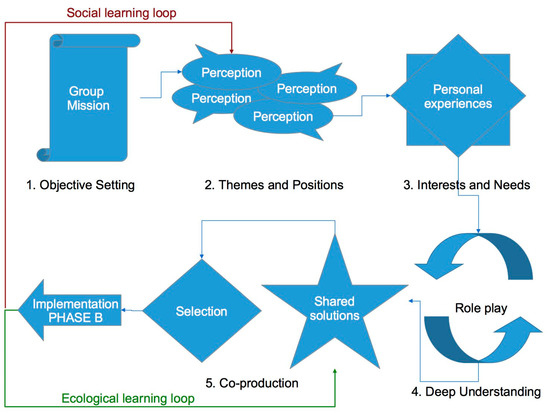
Figure 2.
Diagram representing the various steps planned for the participatory process in the three project areas. We adapted the framework to local contexts by omitting one or more steps or by modifying the technical implementation of one or more steps.
Each step had a clear objective (Table 1), and an adaptive approach was adopted to assess their appropriateness in an iterative manner, considering the characteristics of each group. The process beyond the initial co-production of solutions is also seen as adaptive in terms of the implementation of proposed action, to take into account the dynamic nature of the socio-ecological system. For example, changes in the ecological system may require a need for the actions to be learned from and revisited, requiring an adaptive loop to rethink shared solutions and for the selection of management actions. Equally, changes in the social system (with, for example, the arrival of a new stakeholder group), may result in an adaptive loop to add a new set of perceptions, knowledge, and deepen understanding, leading to an adapted co-production process.

Table 1.
Steps of the process, objectives, and activities undertaken with the aim of supporting the co-production of interventions for improving current situations with regards wolf/bear management in the project areas.
Each step was developed in a separate workshop. The facilitator and contact person would debrief prior to each workshop, to clarify the workshop’s objectives, develop a detailed agenda for the workshop, and confirm the attendance of participants. The project staff were presented as implementing a project promoted by the European Commission but not representing the Commission itself, although representing a communication channel to report specific situations to the Commission. The staff were also asked to adhere to some key principles of neutrality (with regard to the issues under discussion and only making suggestions on the process to be followed, which would also be adaptable depending on requests by the participants); equality (in supporting every stakeholder equally in terms of understanding what is important to her/him, considering all viewpoints as being equal, and taking proper account of knowledge shared from different sources); transparency (with regard to the decisions the project staff made on the process and the reasons for making them); and confidentiality (with regard to who provided information).
A debriefing meeting was held at the end of each workshop in order to assess the progress made, the capacity of the group to proceed in the process as planned, and eventually design activities for the following workshop. At the end of each workshop an evaluation sheet was handed to participants, asking them to anonymously evaluate the workshop and provide suggestions for improvement. Specifically, we asked them the following: to state any positive aspects of the way the meeting was managed; to provide a general assessment of each workshop’s outcomes and what they would take home from them; and to provide suggestions for the following meeting.
Each workshop began with a short summary of the previous results and the agenda of the day and ended with a summary and evaluation of the event, as well as the plan for the next workshop. Proactive talking rounds, warm-up, and ice-breaker activities followed the introductory (and sometimes the concluding) sections of the workshops, in order to facilitate the expression of personal feelings, ideas, and expectations, to exchange experiences related to large-carnivore management, and to promote mutual understanding. Participants were encouraged to speak and interact with each other by discussing issues in smaller and larger circles, forming both homogenous and heterogeneous groups, and by ensuring each contribution was heard and valued. The aim of these stakeholder platforms was to develop a temporary community and to allow a joint decision-making process based on consensus for implementation of solutions and allocation of resources.
3.3. Selection of Proposed Actions to Be Implemented
Through stakeholder engagement, we generated a list of interventions that could potentially improve the current conditions in each project area. The proposals needed to comply with current legislation in order to be included in the long list to be ranked. Participants agreed on the objectives of each intervention and the stakeholders that should be involved in their implementation. Given that the lists of interventions were quite exhaustive, we adopted a multi-criteria decision analysis (MCDA) to prioritize them. The MCDA method involves (1) setting and weighting criteria, (2) scoring the management interventions against the criteria, and (3) discussing the results of the scoring exercise [67]. MCDA has been used before in other wildlife management settings [68,69] and was previously tested to develop shared carnivore management solutions in one of the project areas, where it was evaluated positively by the workshop participants [70]. Some improvements were suggested, including reducing the complexity of the high number of criteria used [71]. The jointly selected criteria [72] were weighed on a scale from 0 to 1, based on the total scores given by each participant on a 1–10 scale (Table 2).
Table 2.
Criteria used in the different project areas to score proposed interventions in order to rank them. Each criterion was weighed on a scale from 1 to 10 and then converted to a proportion of the total scores so that the weights associated are expressed as proportions of 1. The total number of platform members who contributed to scoring the criteria is reported in brackets.
3.4. Grouping of Proposed Interventions and Comparison across Project Areas
In each project area, the proposed interventions were first generated by the participants in small heterogeneous subgroups, then discussed and consolidated in plenary, and finally grouped into overarching themes (sometimes multiple interventions were merged together). In order to compare the proposed interventions across project areas, we have grouped them into three broad themes related to the presence of large carnivores and their interactions with the local communities: (1) impact on human property/activities; (2) information/research; and (3) communication.
4. Results
4.1. Number of Meetings and Participants
All people interviewed during the scoping phase were invited to attend the first meeting, where participants were also asked whether they thought someone important was missing. A total of six meetings were held in all project sites (even though the last two for Harghita were considered as part of the same process; thus, participants in both meetings were counted as one). The number of participants at each meeting averaged 18.5 (min = 13, max = 24), 22.5 (min = 19, max = 30), and 13.5 (min = 10, max = 17), in Ávila, Grosseto, and Harghita, respectively. Considering the long list of attendants to all meetings (who took part to at least one meeting), farmers represented the majority of participants in all project sites (66.7%, 34.2%, and 42.8%, respectively) (Table 3). Representatives of institutions appeared for local administrations, governmental control agencies (e.g., Forestry Corps in Grosseto), or other public entities. Harghita had the highest number of participants in this group as the county presidency strongly supported the whole process.
Table 3.
Percentages of representatives of the different interest groups in the meetings held in Harghita, Ávila, and Grosseto. We aimed at having at least one representative of all key interest groups at each meeting, but in some cases, it was not possible because no representatives were available for all interest groups considered (e.g., no animal welfare activists were available in Avila or Harghita, and no scientists were available in Harghita).
4.2. Adjustments to the Planned Process Steps
Whilst we made every effort to adopt a coherent approach across areas, some adaptive management was allowed to take into full consideration the characteristics of each group we were working with. This was achieved by adjusting the planned processes in order to fit the working capacities and trust building among participants. In particular, steps 3 and 4 (see Table 1) were only partially implemented in Harghita, where a more traditional tree approach to problem solving was developed for the identification of shared solutions (step 5). The platform was less comfortable with expressing emotions and feelings than in the other study sites; thus, the proposed exercises were adapted and focused on an approach based on problem and solution analysis that ensured the active participation of all participants. Nevertheless, across the project areas, a mission statement was developed after the second meeting in all locations, and a clear commitment from participants was requested to attend all meetings and respect the agreed upon rule of working.
In Grosseto and Ávila, further meetings were held in order to approve the shortlist of selected actions to implement (see below).
4.3. Evaluation of the Meetings
An average of 19 (± SD 5.95) evaluations per meeting (N = 14) were collected. In answering the first question (i.e., “positive aspects of the meeting’s outcomes”), 10% of participants expressed appreciation of the approach in terms of feeling listened to and understood by each other and another 10% highlighted satisfaction related to the facilitation, coordination, and management of the events. Participants from Grosseto underlined the constructive discussions as the most positive result of the platform during the meetings, while stakeholders from Harghita appreciated that concrete actions were planned and implemented While no significant differences emerged among the three platforms, the type of positive comments changed as participant interaction progressed from one meeting to the next, as well as according to the various steps experienced (as detailed in Table 1) (N = 263; Chi = 113.187; p < 0.001). The most frequent positive aspect was “constructive dialogue and debate” in the first three meetings (19%, 22%, and 24%, respectively), while after the fourth meeting appreciation for “concrete results” emerged, and finally “efficiency of the work done by the group” was frequently reported at the last meeting (20%).
Regarding the general comments (i.e., “overall evaluation of meeting management”), 25% of the participants evaluated the meetings positively (reporting them as having been “good”, “great”, and “excellent”). A difference was detected when comparing frequency of comments through time (N = 225; Chi = 65.016; p < 0.005). Up to 40% and 30% of the participants appreciated the first and second events for facilitating joint thinking (e.g., “It facilitates thinking together”, “engaging”, “motivating”). In addition, the second meeting was positively commented by 18% of participants for its dynamic, interesting, and constructive nature, while the last three meetings received a more general positive evaluation (e.g., “sincerity”, “common interests”, “concrete tasks”, “great”, and “excellent”) by 30–38% of the participants. After the fourth meeting 10–12% of participants expressed that “the event was useful but slow”. The skepticism of participants regarding the possibility of achieving the goal of the platform appeared in 10% of the respondents after the last meeting.
Suggestions for the next meeting represented the last component of feedback. Time management was a controversial aspect of the evaluation. While 20% of the participants suggested dedicating more time for tasks and suggested more concrete outcomes and conclusions, another 10% perceived the meetings as being too long and suggested a stricter and more dynamic timeframe. Around 13% suggested stricter adherence to the original methodology, expecting an operative process, with clear rules, objectives, and conclusions. An important remark appeared related to the lack of certain groups at the workshops, namely from public authorities (ministry, majors, and administrations), and the press were mentioned as missing stakeholders, especially after the third meeting.
4.4. List of Actions
A preliminary long list of actions was elaborated in each project area, with a total of 30, 23, and 28, actions proposed in Ávila, Grosseto, and Harghita, respectively (Appendix A). They were discussed in plenary, refined, and scored against the set selected criteria (see Table 2). A final ranking score was computed for each action (Appendix A). The highest-ranking ones (rank > 0.5) were selected to be included in a long-term plan (Table 4) and presented to the relevant authorities in ad hoc meetings, while among them only few were selected for immediate implementation, according to the capacities of the platform members and the resources available.
Table 4.
Short list of actions to implement in the medium term, grouped into thematic areas, as selected from the highest-ranking ones produced in the stakeholder platforms of Ávila, Grosseto, and Harghita.
For each platform, all participants jointly agreed on which action to develop and who among the platform members would be involved in which action (Table 5).
Table 5.
List of actions selected for direct implementation by the platform members in Ávila, Grosseto, and Harghita, with platform members involved in each platform and expected results. Interest groups involved are reported in Table 2: F = farmers, H = hunters, I = institutions, E = environmental associations, S = scientists, W = animal welfare associations.
For each thematic area, a list of interested platform participants who could contribute to its potential development was indicated and ranged from 2–8 participants.
4.5. Actions Selected for Implementation
Some of the high-ranking proposed actions could not be implemented without a significant contribution from authorities or political willingness higher than the provincial/county levels. The economic resources for implementing the actions were provided through the project budget and were limited to amounts ranging from 42,000 to 55,000 €, depending on the costs of other elements needed for running the platforms (e.g., renting of meeting place, coffee breaks, travel costs for participants, facilitators fees, etc.). Due to this budgetary limitation, some interventions could only be planned as pilot interventions, currently underway.
5. Discussion
Participatory processes are increasingly being used to facilitate discussions and decision making over large-carnivore management (e.g., [21,25]), in part because these species are particularly prone to interaction with people and human activities but also because large-carnivore conservation is known to generate polarized opinions among stakeholders. In such conflicts, stakeholders often focus on their perceived differences in values rather than valuing their complementary knowledge bases. This can result in large-carnivore management becoming an issue that amplifies social differences, where stakeholders’ resistance to positively validate each other’s views represents a key obstacle to dialogue. A number of dimensions around participatory processes and their implementation have received attention, including issues of representation, the scale at which they should be developed, and the potential influence of such processes on policy [6,42,73,74]. What is less well developed in the literature is the evaluation of participatory processes in terms of their capacity to promote cooperative stakeholder relations not solely in relation to carnivore management but as part of broader issues of rural development and social cohesion. The approach described in this paper aimed at improving personal relations by increasing awareness and recognition of the legitimacy of stakeholder positions. Given the strongly polarized opinions of animal welfare associations, hunters, and livestock owners, we consider the fact that they were able to openly share views and experiences with each other through the participatory processes to be a significant step in conflict mitigation. The challenge of engaging them in dialogue was exemplified by one of the animal welfare representatives, who reported that even just “telling friends that they were sat around a table with hunters and breeders would be enough to upset them”. Along similar lines, one participant claimed that the process “facilitate(d) thinking together, and (increased) knowledge of other points of view and experiences”, while another felt the space was safe enough to “freely express views” and that it enabled participants “to deal with people with different interests and objectives”. The process was designed with the aim of building trust as a basis for future cooperation, through the identification of shared interests. A key challenge, however, was the short time frame within which to shift historically antagonistic groups toward a common goal. Whilst our focus on improving social learning and increasing trust was valued by the participants, they considered reaching and implementing tangible management solutions as the most urgent step. Our approach uncovered several areas of overlap between the interests of traditionally opposed stakeholders, so that even when a certain degree of mistrust amongst them remained, the recognition of shared interest allowed for cooperation and strategic alliances [65].
Our experience provides some lessons regarding the application of multi-criteria decision analysis (MCDA) in participatory contexts. MCDA has proven successful in wildlife management settings because it allows for an integration of the multiple socio-ecological facets that characterize coexistence challenges [68,69,72]. The criteria we used were pragmatic, reflecting the urgent need to find concrete solutions to improve coexistence between people and carnivores in the three project areas. Previous experience with the method highlighted the importance of choosing a succinct number of criteria [71]. This allowed us to apply a relatively simple framework, whilst still allowing stakeholder values and priorities to guide the selection of management activities. In Ávila, the participants were first asked to evaluate the proposed interventions by expressing their level of agreement with each one in turn [75]. The results were questioned by some participants, who were upset that their preferred actions had come out with a low ranking. We then decided to apply the MCDA methodology, and the results received higher levels of acceptance by the entire group. Our experience therefore suggests that MCDA may serve as a more robust consensus building methodology than other less structured approaches.
In Ávila, we had limited working experience with the most vocal livestock-raising group and had to carefully develop its trust toward the process and toward the coordinating team. Although no previous experience of such a process existed in Ávila at the local level, some workshop participants had previously taken part in the Regional Wolf Committee, a group that is regularly informed by the Junta de Castilla and Leon on wolf issues (https://medioambiente.jcyl.es/web/es/medio-natural/mesa-lobo-comite-cientifico.html (accessed on 15 April 2021), and some had taken part in a participatory process at the national level aimed at proposing collaborative solutions for improving wolf management in Spain [76]. The Regional Wolf Committee is a consultative entity with no real power to influence policy, and during the interviews we carried out before the workshops, most members of that group expressed willingness to be involved in a new process only if it led to concrete policy outcomes [28].
Even though we found ourselves working in relatively uncharted territory and our personal relations with local stakeholders were recently developed, from the outset, we recorded a significant interest in the process from all participants. Some of the more skeptical participants showed ambiguity toward the objectives of the process in a public demonstration organized soon after the first workshop, by announcing the establishment of an alternative platform against wolf conservation in Ávila. However, they still attended all of the workshops and actively proposed management interventions to improve the coexistence with wolves in the area.
In Grosseto, our work built on a 5 year project (MEDWOLF, LIFE 11NAT/IT/069) that previously involved the collaboration of many of the workshop participants. This past experience had been evaluated positively by the participants, having produced evidence-based results and having created a climate of open dialogue between the project team and the different stakeholders present in the area. The same project team was involved in developing a series of exploratory MCDA workshops [70,71] and in coordinating the participatory process presented in this study. The challenge here was that some of the people involved had been previously exposed to the participatory method, whilst others had not, meaning the group was heterogeneous in terms of its knowledge, trust, and experience with participation. Those who had been involved in the exploratory MCDA workshops were given the opportunity to share their experience but had to wait for the others to understand and develop trust toward the process. Although all the stakeholders contacted during the preliminary interviews said they were willing to participate, those affiliated with a radical anti-wolf group left during the second meeting, expressing their discomfort with sitting at a table with animal welfare activists.
The process was perceived as a novelty in Harghita, and the feedback from participants shows they reacted very positively to the initiative. The enthusiasm and ease exhibited by the participants throughout the process may be partially explained by the fact that, from the outset, participants already knew each other well and shared similar views and interests. Some stakeholder groups were also engaged in similar activities on the ground, as both the local NGOs and the environmental associations involved in the workshops had developed projects related to rural development, community building, and tourism. Animal welfare associations concerned with wildlife conservation—whose views on the large-carnivore management often lie on the more extreme side of protection—were not present in the region and so were not represented in the workshops. Therefore, the greater homogeneity in views, the greater awareness of each other’s work and interests, and the overall greater level of social cohesion among the stakeholders involved in Harghita are likely to have facilitated the workshops’ dialogue and consensus-building exercises.
Wolf conservation in Ávila and Grosseto is an intensely contentious topic, and authorities have struggled to find management solutions that satisfactorily ensure the conservation of wolves and the maintenance of traditional livestock-raising practices in the areas [16,28]. Wolf depredations on livestock have increased over the past decades, and damage-prevention measures have not been widely adopted by livestock owners, with the exception of few cases supported by specific initiatives aimed at promoting their use [51,57]. Despite their general mistrust toward management authorities and any kind of wolf conservation initiative, livestock owners took on the role of committed participants in the participatory processes we developed. Although some had taken part in similar initiatives in the past, they did not manifest signs of consultation fatigue, which often occurs when participation is limited to information sharing or consultation activities and does not lead to concrete policy outcomes [34], possibly due to the trust they had in the independent team that was supporting the process. In Harghita, the debate on bear management has intensified since 2016, and the central government has not been able to implement sustainable solutions. Although the participants were aware of the limited capacity of the process to influence policy at the national level, they contributed actively to the creation and implementation of pilot actions at the local level.
These results could be used to leverage the expansion of the process at a national scale, as it shows that stakeholders holding different positions are capable of co-producing tangible management interventions where centralized decision-making approaches have failed. Such a scaling-up, however, may need an iterative process linking the national and the local to prevent local stakeholders, who may not feel adequately represented at the national level and who bear the costs of large carnivores, from feeling disenfranchised by the process, potentially leading to new conflicts. Future research–action processes could explore further this iterative process of scaling up the participatory approach presented in this paper, including actions to link the national and local scale to prevent disenfranchisement of local actors.
The implementation of the proposed actions depended on the level of political commitment of the relevant authorities, and some of the proposed actions are likely to have a significant impact on livelihoods, pertaining to issues that go well beyond the impact of large carnivores. As an example, both in Ávila and Grosseto, many of the proposed actions concerned agricultural policy, grazing regulations, rural development, and the promotion and commercialization of local products. In Harghita, the proposed solutions were more narrowly focused on bear presence, but they were also tied to issues of land-use change and broader wildlife management, such as recognition of the role of hunters in wildlife management and regulations for eco-tourism activities. Romania has undergone a series of radical land-management policy changes since its accession to the European Union, and local communities are still in the process of adapting to them, with more traditional agricultural practices still coexisting alongside increasingly modern ones. Shifts in land-management policies, funding opportunities, and the involvement of different land-management sectors affect the livelihood of local people, and carnivore management must be understood as taking place within the context of these wider changes [13]. In this respect, large carnivores have become a catalyst for discussing wider issues of rural development and landscape change that often exceeded the immediate scope of the workshops but that nevertheless had significant effects on the lives and livelihoods of the participants. The workshops thus became an opportunity to explore the wider socio-economic context in which coexistence is experienced and provided the opportunity for many stakeholders to address latent tensions that often underlie conflicts over carnivore management and undermine their resolution [30]. Whilst not directly pertinent to large-carnivore management, interventions related to the promotion of rural tourism and of ecosystem services resulting from small-scale extensive grazing were considered as equally important by the workshop participants. Beyond their effects on rural livelihoods, policies that recognize the value of existing socio-ecological relations and that highlight the benefits of local practices directed toward nature and landscape stewardship may play a positive role in conflict mitigation [77]. As evident from the narratives collected in both the interviews and the workshops, farmers and hunters wanted above anything else to be respected as legitimate managers and stewards of their land and to be valued for their everyday labor.
The stakeholders involved in the process were offered shared responsibility in the implementation phase of some of the proposed interventions, using limited funds made available by the European Commission. This provided a further opportunity for collaboration outside of the workshop setting, as stakeholders found themselves working alongside each other on the ground, e.g., through small collaborative activities among different groups. This form of increased social cohesion, social learning, and trust, based on improved knowledge and recognition of each other’s work, can be seen as positive indirect outputs and an objective of these processes in and of themselves [70], even if they do not contribute directly to improved large-carnivore management [78]. The intervention implementation work is currently ongoing, and a more extensive evaluation of the project’s procedural and management outcomes is necessary to assess its impact on conflict levels among the wider social groups that were represented in the workshops [25,37,70]. Finally, the capacity of participatory processes to create an improved management setting depends on the governance context in which they are developed and the extent to which the responsible administrations are open to and receptive of bottom-up deliberative processes [27]. Beyond efforts to engage management authorities in stakeholder participatory processes, these governance contexts remain largely beyond the reach of those who organize and participate in such processes. Nonetheless, small-scale examples such as ours highlight that facilitated stakeholder dialogue and engagement can lead to improved levels of social learning and improved stakeholder relations and can effectively generate concrete and agreed upon management interventions.
Author Contributions
Conceptualization: V.S., J.C.Y. and P.C.; Data curation: V.S. and A.S.; Funding acquisition and project administration: V.S.; methodology: J.C.Y., V.S., Y.v.K., E.B. and P.C.; investigation: J.C.B., X.C., L.D., A.P. and A.S.; validation: J.C.Y. and A.M.; visualization: V.S. and J.C.Y. All authors have read and agreed to the published version of the manuscript.
Funding
This project was funded by the European Parliament and managed by the European Commission under contract No. 07.027739/2017/771819/SER/ENV.D.3.
Institutional Review Board Statement
Not applicable.
Informed Consent Statement
Informed consent was obtained from all subjects involved in the study.
Data Availability Statement
The data presented in this study are available on request from the corresponding author. The data are not publicly available due to privacy restrictions.
Acknowledgments
We thank all participants to the platforms in Ávila, Grosseto, and Harghita for their availability and willingness to share knowledge and constructively contribute to the work developed. We are grateful to the administrations that facilitated our work during data acquisition: Regione Toscana, Junta de Castilla y Leon, and Harghita County Council. We are also grateful to Guillaume Péron, Anastasios Hovardas, and another anonymous reviewer for their constructive comments that improved earlier versions of the manuscript.
Conflicts of Interest
The authors declare no conflict of interests. The funders had no role in the design of the study; in the collection, analyses, or interpretation of data; in the writing of the manuscript, or in the decision to publish the results.
Appendix A
Long list of actions proposed and total average scoring for each stakeholder platform.
Table A1.
Long list of proposed interventions in Ávila and their relative scores.
Table A1.
Long list of proposed interventions in Ávila and their relative scores.
| Proposed Intervention | Ranking Score |
|---|---|
| Assess all damages caused by the attack. | 0.628 |
| Payment for damages to transhumant livestock farmers | 0.621 |
| Real knowledge of the damages. | 0.618 |
| Monitoring board at provincial level. | 0.611 |
| Media campaign promoting another vision of extensive livestock husbandry | 0.603 |
| Be aware of the real wolf census and population dynamics | 0.581 |
| Define the valid criteria for the wolf’s management and control | 0.578 |
| Differentiate more clearly the extensive livestock from other livestock production systems. | 0.578 |
| Specific bonuses or grants for being in the wolf zone | 0.571 |
| Personalized counseling to farms that coexist with the wolf. | 0.558 |
| Selective clearing to produce pastures. | 0.555 |
| Grants for the acquisition and management of preventive measures. | 0.550 |
| Provide a specific payment for belonging to the wolf zone | 0.544 |
| Specific grants to farmers in wolf zones. | 0.541 |
| Training and information exchange. | 0.516 |
| Detailed inquiry into predation on livestock. | 0.506 |
| Coordination of the different administrations’ funds | 0.496 |
| Dissemination of examples that have worked. | 0.492 |
| Procedures allowing the wolf populations’ control and reduction. | 0.477 |
| Promote changes in current legislation | 0.474 |
| Promotion of a brand associated with production in coexistence areas with the wolf. | 0.476 |
| Allow population control and sustainable wolf hunting | 0.474 |
| Promote any association according to the model of the Aravalle region. | 0.474 |
| Give rise to any system in order to reduce the communal pastures’ lease. | 0.438 |
| Educational actions in the rural environment related to the use of natural resources. | 0.437 |
| Enclosures provided by the municipalities. | 0.434 |
| Monitoring Program, relying on new technologies. | 0.432 |
| Offer prevention measures for the farmer | 0.427 |
| Promote preventive measures against forest fires. | 0.421 |
| Find a way out of communal pasture management. | 0.405 |
| Manage pastures against wild fires. | 0.320 |
Table A2.
Long list of proposed interventions in Grosseto and their relative scores.
Table A2.
Long list of proposed interventions in Grosseto and their relative scores.
| Proposed Intervention | Ranking Score |
|---|---|
| Provide reward/recognition for breeders who use prevention measures (funds from Region/RDP and EU) | 0.708 |
| Provide incentives for sustainable grazing flocks: assisted pasture | 0.691 |
| Adequate resources for prevention, promotion, and protection should come from both Ministries of Environment and Health as well as Agriculture | 0.688 |
| Higher economic resources to value O.D.P. And traditional products | 0.688 |
| clear, distinctive labelling for products in relation to the origin and the traceability. Traceability of meat outside existing I.G.P | 0.66 |
| Plan systematic and continuous capture of free ranging dogs | 0.638 |
| Establish a continuous monitoring system (at least every 2 years) focused on areas where conflict with livestock is higher. Monitor the real cost of wolf presence (for example % of predation) | 0.629 |
| Create a task force for the certification of the prevention measures used, specific to each farm | 0.615 |
| Start education programs for promoting conscious food consumption: recognition of the local supply chain and 0 km | 0.604 |
| Compulsory training (with license) for owners of large guarding dog; increase control and improve their management | 0.602 |
| Share interests and needs with other categories and with the wider public society | 0.59 |
| Promote cross-sectoral studies on economy, education/training, livestock breeding, impact of predation, etc. Provide for scholarships for graduation thesis on the wolf topic and on quality farms | 0.584 |
| Identify new hiking routes (guides association) near to farms and cheese factory and provide that these are open to the public. Stronger integration with agri-tourist farms | 0.581 |
| Standardize data to be communicated to the outside world/public | 0.571 |
| Monitoring of predators in collaboration with associations and hunters with training courses | 0.565 |
| Collaboration between the agricultural associations and the local restaurants for the use of the typical products: incentives from public administrations; festivals only with local products | 0.564 |
| Promotion of the territory (outside the province) at all levels: organize seminars and workshops, education programs, etc. | 0.554 |
| More synergy/dialogue between biologists and farms | 0.554 |
| Forbid wolf x dog hybrids breeding or provide for more control | 0.54 |
| Protective collars for sheep and dogs | 0.483 |
| Adequate funds for promotion, prevention and compensation from both Ministries of Agriculture and Environment | 0.482 |
| Program for wolf–dog hybrids capture | 0.460 |
| Wolf and sheep logo in local products | 0.428 |
| A sheep for the wolf: the livestock breeder can choose whether to receive money or a sheep for each sheep lost to wolf (e.g., Majella National Park) | 0.384 |
| Wolf translocation to other wilder contexts | 0.325 |
Table A3.
Long list of proposed interventions in Harghita and their relative scores.
Table A3.
Long list of proposed interventions in Harghita and their relative scores.
| Proposed Intervention | Ranking Score |
|---|---|
| Applying intervention and population regulation quotas through regulated hunting | 0.854 |
| Research on bear populations and ecology through the implication of hunter associations | 0.844 |
| Spreading scientifically correct information through adequate channels | 0.829 |
| Development of rules for bear tourism | 0.821 |
| Assistance to farmers related to damage compensation paperwork | 0.813 |
| Informing ministry regarding incomes and spending of hunting associations, filling income losses through lack of hunting | 0.811 |
| Damage-prevention electric fence and bear-proof bins | 0.796 |
| Training of local intervention teams | 0.795 |
| Significant decrease of recreational motorsports | 0.792 |
| Direct connections to and regular information of the local population | 0.791 |
| Establishing local action groups for damage management | 0.790 |
| Creation of internet platform for spreading scientifically correct information and working with professional online marketing experts for increasing reach of target audience | 0.775 |
| Better regulation of artificial feeding of bears | 0.759 |
| Protection of natural bear habitats, limiting access of tourists and hikers | 0.757 |
| Establishment of a fund for bear management, tourism, conservation and sustainable use | 0.745 |
| Designation of silence zones and wildlife plots | 0.740 |
| Training of rural development experts and agricultural advisors on damage-prevention practices | 0.737 |
| Informing visitors/tourists about rules and adequate behavior through guesthouse owners, tourism agents | 0.725 |
| Developing bear-based tourism brand | 0.719 |
| Developing rules for wild berry and mushroom collection to reduce disturbance and maintain food offer for bears and wildlife | 0.716 |
| Conference on bear management, coexistence, conservation, and game management | 0.700 |
| Marking wildlife crosses on main roads | 0.698 |
| Evaluation of bear tourism | 0.697 |
| Study of the impact of feeding on bear ecology | 0.671 |
| Study of the impact of poaching on bear population ecology | 0.617 |
| Quality control of studies on sustainable forest fruit and mushroom collection | 0.567 |
References
- Chapron, G.; Kaczensky, P.; Linnell, J.D.; Von Arx, M.; Huber, D.; Andrén, H.; López-Bao, J.V.; Adamec, M.; Álvares, F.; Anders, O.; et al. Recovery of large carnivores in Europe’s modern human-dominated landscapes. Science 2014, 346, 1517–1519. [Google Scholar] [CrossRef] [PubMed]
- Boitani, L.; Phillips, M.; Jhala, Y. Canis lupus (errata version published in 2020). IUCN Red List Threat. Species 2018, e.T3746A163508960. [Google Scholar] [CrossRef]
- Linnell, J.D.C.; Cretois, B. Research for AGRI Committee—The Revival of Wolves and Other Large Predators and Its Impact on Farmers and Their Livelihood in Rural Regions of Europe; European Parliament, Policy Department for Structural and Cohesion Policies: Brussels, Belgium, 2018. [Google Scholar]
- Figari, H.; Skogen, K. Social representations of the wolf. Acta Sociol. 2011, 54, 317–332. [Google Scholar] [CrossRef]
- Marvin, G. Wolf; Reaction Books LTD: London, UK, 2012. [Google Scholar]
- Linnell, J.D.C. Defining scales for managing biodiversity and natural resources in the face of conflicts. In Conflicts in Conservation: Navigating towards Solutions; Redpath, S.M., Gutiérrez, R.J., Wood, K.A., Young, J.C., Eds.; Cambridge University Press: Cambridge, UK, 2015; pp. 212–225. [Google Scholar] [CrossRef]
- Bombieri, G.; Naves, J.; Penteriani, V.; Selva, N.; Fernández-Gil, A.; López-Bao, J.V.; Ambarli, H.; Ambarli, C.; Bespalova, T.; Bobrov, V.; et al. Brown bear attacks on humans: A worldwide perspective. Sci. Rep. 2019, 9, 8573. [Google Scholar] [CrossRef]
- Estes, J.A.; Terborgh, J.; Brashares, J.S.; Power, M.E.; Berger, J.; Bond, W.J.; Carpenter, S.R.; Essington, T.E.; Holt, R.D.; Jackson, J.B.C.; et al. Trophic downgrading of Planet Earth. Science 2011, 333, 301–306. [Google Scholar] [CrossRef]
- Ripple, W.J.; Chapron, G.; López-Bao, J.V.; Durant, S.M.; Macdonald, D.W.; Lindsey, P.A.; Bennett, E.L.; Beschta, R.L.; Bruskotter, J.T.; Campos-Arceiz, A.; et al. Saving the world’s terrestrial megafauna. BioScience 2016, 66, 807–812. [Google Scholar] [CrossRef]
- Redpath, S.M.; Bhatia, S.; Young, J.C. Tilting at Wildlife—Reconsidering Human-Wildlife Conflict. Oryx 2015, 49, 222–225. [Google Scholar] [CrossRef]
- Mishra, C. The Partners Principles for Community-Based Conservation; Snow Leopard Trust: Seattle, WA, USA, 2016. [Google Scholar]
- Skogen, K.; Krange, O. A wolf at the gate: The anti-carnivore alliance and the symbolic construction of community. Sociol. Rural. 2003, 43, 309–325. [Google Scholar] [CrossRef]
- Ghosal, S.; Skogen, K.; Krishnan, S. Locating human-wildlife interactions: Landscape constructions and responses to large carnivore conservation in India and Norway. Conserv. Soc. 2015, 13, 265. [Google Scholar] [CrossRef]
- Cimatti, M.; Ranc, N.; Benítez-López, A.; Maiorano, L.; Boitani, L.; Cagnacci, F.; Čengić, M.; Ciucci, P.; Huijbregts, M.A.J.; Krofel, M.; et al. Large carnivore expansion in Europe is associated with human population density and land cover changes. Divers. Distrib. 2021, 27, 602–617. [Google Scholar] [CrossRef]
- Boitani, L.; Ciucci, P.; Raganella-Pelliccioni, E. Ex-post compensation payments for wolf predation on livestock in Italy: A tool for conservation? Wildl. Res. 2010, 37, 722–730. [Google Scholar] [CrossRef]
- Marino, A.; Braschi, C.; Ricci, S.; Salvatori, V.; Ciucci, P. Ex post and insurance-based compensation fail to increase tolerance for wolves in semi-agricultural landscapes of central Italy. Eur. J. Wildl. Res. 2016, 62, 227–240. [Google Scholar] [CrossRef]
- Bautista, C.; Revilla, E.; Naves, J.; Albrecht, J.; Fernández, N.; Olszańska, A.; Adamec, M.; Berezowska-Cnota, T.; Ciucci, P.; Groff, C.; et al. Large carnivore damage in Europe: Analysis of compensation and prevention programs. Biol. Conserv. 2019, 235, 308–316. [Google Scholar] [CrossRef]
- Gervasi, V.; Salvatori, V.; Catullo, G.; Ciucci, P. Comparing wolf depredation on livestock in areas of historical vs. recent occurrence in Italy. Eur. J. Wildl. Res. submitted.
- Redpath, S.M.; Young, J.; Evely, A.; Adams, W.M.; Sutherland, W.J.; Whitehouse, A.; Amar, A.; Lambert, R.A.; Linnell, J.D.C.; Watt, A.; et al. Understanding and managing conservation conflicts. Trends Ecol. Evol. 2013, 28, 100–109. [Google Scholar] [CrossRef] [PubMed]
- Redpath, S.M.; Linnell, J.; Festa-Bianchet, M.; Boitani, L.; Bunnefeld, N.; Dickman, A.; Gutiérrez, R.; Irvine, J.; Johansson, M.; Majić, A.; et al. Don’t forget to look down—Collaborative approaches to predator conservation. Biol. Rev. 2017, 92, 2157–2163. [Google Scholar] [CrossRef]
- Mishra, C.; Young, J.C.; Fiechter, M.; Rutherford, B.; Redpath, S.M. Building partnerships with communities for biodiversity conservation: Lessons from Asian mountains. J. Appl. Ecol. 2017, 54, 1583–1591. [Google Scholar] [CrossRef]
- Young, J.C.; Marzano, M.; White, R.M.; McCracken, D.I.; Redpath, S.M.; Carss, D.N.; Quine, C.P.; Watt, A.D. The emergence of biodiversity conflicts from biodiversity impacts: Characteristics and management strategies. Biodivers. Conserv. 2010, 19, 3973–3990. [Google Scholar] [CrossRef]
- Madden, F.M. The Growing Conflict Between Humans and Wildlife: Law and Policy as Contributing and Mitigating Factors. J. Int. Wildl. Law Policy 2008, 11, 189–206. [Google Scholar] [CrossRef]
- Sandström, C. Institutional dimensions of comanagement: Participation, power, and process. Soc. Nat. Res. 2009, 22, 230–244. [Google Scholar] [CrossRef]
- Lundmark, C.; Matti, S.; Sandström, A. Adaptive co-management: How social networks, deliberation and learning affect legitimacy in carnivore management. Eur. J. Wildl. Res. 2014, 60, 637–644. [Google Scholar] [CrossRef]
- Adams, W.M. The political ecology of conservation conflicts. In Conflicts in Conservation: Navigating towards Solutions; Redpath, S.M., Gutiérrez, R.J., Wood, K.A., Young, J.C., Eds.; Cambridge University Press: Cambridge, UK, 2015. [Google Scholar] [CrossRef]
- Young, J.C.; McCluskey, A.; Kelly, S.B.A.; O’Donoghue, B.; Donaghy, A.M.; Colhoun, K.; McMahon, B.J. A transdisciplinary approach to a conservation crisis: A case study of Eurasian curlew (Numenius arquata) in Ireland. Conserv. Sci. Pract. 2020, 2, e2016. [Google Scholar] [CrossRef]
- Salvatori, V.; Balian, E.; Blanco, J.C.; Ciucci, P.; Demeter, L.; Hartel, T.; Marsden, K.; Redpath, S.M.; Von Korff, Y.; Young, J.C. Applying Participatory Processes to Address Conflicts Over the Conservation of Large Carnivores: Understanding Conditions for Successful Management. Front. Ecol. Evol. 2020, 8, 1–14. [Google Scholar] [CrossRef]
- Bennett, N.J.; Roth, R.; Klain, S.C.; Chan, K.M.A.; Clark, D.A.; Cullman, G.; Epstein, G.; Nelson, M.P.; Stedman, R.; Teel, T.L.; et al. Mainstreaming the social sciences in conservation. Conserv. Biol. 2017, 31, 56–66. [Google Scholar] [CrossRef] [PubMed]
- Madden, F.; McQuinn, B. Conservation’s blind spot: The case for conflict transformation in wildlife conservation. Biol. Conserv. 2014, 178, 97–106. [Google Scholar] [CrossRef]
- Young, J.C.; Searle, K.R.; Butler, A.; Simmons, P.; Watt, A.D.; Jordan, A. The role of trust in the resolution of conservation conflicts. Biol. Conserv. 2016, 195, 196–202. [Google Scholar] [CrossRef]
- Coz, D.; Young, J.C. Conflicts over rewilding: Learning from the reintroduction of beavers to Scotland. People Nat. 2020, 2, 406–419. [Google Scholar] [CrossRef]
- Agrawal, A. Environmentality community, intimate government, and the making of environmental subjects in Kumaon, India. Curr. Anthropol. 2005, 46, 161–190. [Google Scholar] [CrossRef]
- Reed, M.S. Stakeholder participation for environmental management: A literature review. Biol. Conserv. 2008, 141, 2417–2431. [Google Scholar] [CrossRef]
- Hutton, J.; Adams, W.M.; Murombedzi, J.C. Back to the barriers? Changing narratives in biodiversity conservation. Forum Dev. Stud. 2005, 32, 341–370. [Google Scholar] [CrossRef]
- Sterling, E.J.; Betley, E.; Sigouin, A.; Gomez, A.; Toomey, A.; Cullman, G.; Malone, C.; Pekor, A.; Arengo, F.; Blair, M.; et al. Assessing the evidence for stakeholder engagement in biodiversity conservation. Biol. Conserv. 2017, 209, 159–171. [Google Scholar] [CrossRef]
- Young, J.; Jordan, A.; Searle, K.R.; Butler, A.; Chapman, D.; Simmons, P.; Watt, A.D. Does stakeholder involvement really benefit biodiversity conservation? Biol. Conserv. 2013, 158, 359–370. [Google Scholar] [CrossRef]
- Ainsworth, G.B.; Redpath, S.M.; Wernham, C.V.; Wilson, M.W.; Young, J.C. Integrating scientific and local ecological knowledge to address conservation conflicts: Towards a practical framework based on lessons learned from a Scottish case study. Environ. Sci. Policy 2020, 107, 46–55. [Google Scholar] [CrossRef]
- Lundmark, C.; Matti, S. Exploring the prospects for deliberative practices as a conflict-reducing and legitimacy-enhancing tool: The case of Swedish carnivore management. Wildl. Biol. 2015, 21, 147–156. [Google Scholar] [CrossRef]
- Sjölander-Lindqvist, A.; Johansson, M.; Sandström, C. Individual and collective responses to large carnivore management: The roles of trust, representation, knowledge spheres, communication and leadership. Wildl. Biol. 2015, 21, 175–185. [Google Scholar] [CrossRef]
- Mbaiwa, J.E.; Stronza, A.L. Changes in resident attitudes towards tourism development and conservation in the Okavango Delta, Botswana. J. Environ. Manag. 2011, 92, 1950–1959. [Google Scholar] [CrossRef]
- López-Bao, J.V.; Chapron, G.; Treves, A. The Achilles heel of participatory conservation. Biol. Conserv. 2017, 212, 139–143. [Google Scholar] [CrossRef]
- Brooks, J.S.; Waylen, K.A.; Borgerhoff Mulder, M. Assessing community-based conservation projects: A systematic review of multilevel analysis of attitudinal, behavioural, ecological, and economic outcomes. Environ. Evid. 2013, 2, 1–340. [Google Scholar] [CrossRef]
- Hovardas, T. A social learning approach for stakeholder engagement in large carnivore conservation and management. Front. Ecol. Evol. 2020, 8, 525278. [Google Scholar] [CrossRef]
- Plummer, R.; FitzGibbon, J.E. Connecting adaptive co-management, social learning and social capital through theory and practice. In Adaptive Co-Management: Learning. Collaboration and Multi-Level Governance; Armitage, D., Berkes, F., Doubleday, N., Eds.; University of British Columbia Press: Vancouver, BC, Canada, 2007; pp. 38–61. [Google Scholar]
- Eelderink, M.; Vervoort, J.M.; van Laerhoven, F. Using participatory action research to operationalize critical systems thinking in social-ecological systems. Ecol. Soc. 2020, 25, 16. [Google Scholar] [CrossRef]
- European Commission. Article 17 Webtool on Biogeographical Assessment of Conservation Status of Species and Habitats under Article 17 of the Habitats Directive. 2020. Available online: https://nature-art17.eionet.europa.eu/article17/ (accessed on 28 January 2021).
- Blanco, J.C.; Cortés, Y. Ecología, Censos, Percepción y Evolución del lobo en España. Análisis de un Conflicto; Sociedad Española para el Estudio y Conservación de los Mamíferos (SECEM): Málaga, Spain, 2002; p. 176. [Google Scholar]
- de Buruaga, M.S. Lobos. Población en Castilla y León. Situación en España; Rimpego, L., Ed.; Rimpego Eds: Léon, Spain, 2018; p. 208. [Google Scholar]
- Junta de Castilla y Leon. Plan de Conservación y Gestión del lobo en Castilla y León: Memoria Anual. 2017. Available online: https://medioambiente.jcyl.es/web/es/medio-natural/plan-conservacion-gestion-lobo.html (accessed on 22 January 2021).
- Cortés, Y.; Ribeiro, S.; Petrucci-Fonseca, F.; Blanco, J.C. A decade of use of damage prevention measures in Spain and Portugal. Carniv. Damage Prev. News 2020, 20, 32–47. [Google Scholar]
- Selvi, F. A critical checklist of the vascular flora of Tuscan Maremma (Grosseto province, Italy). Flora Mediterr. 2010, 20, 47–139. [Google Scholar]
- ISTAT. Bilancio Demografico Della Popolazione Residente per Provincia e anno-dal 2011 al 2013. Available online: http://www.istat.it/it/toscana/dati?q=gettableterr&dataset=DCIS_POPORESBIL1&dim=63,2,3,0&lang=2&tr=0&te=1 (accessed on 28 February 2016). (In Italian)
- Boitani, L.; Ciucci, P. Wolves in Italy: Critical issues for their conservation. In Wolves in Europe. Status and Perspectives; Promberger, C., Schröder, W., Eds.; Munich Wildlife Society: Monaco, Germany, 1993; pp. 75–90. [Google Scholar]
- Salvatori, V.; Godinho, R.; Braschi, C.; Boitani, L.; Ciucci, P. High levels of recent wolf x dog introgressive hybridization in agricultural landscapes of central Italy. Eur. J.Wildl. Res. 2019, 65, 73–87. [Google Scholar] [CrossRef]
- Ricci, S.; Salvatori, V.; Ciucci, P. Ex post survey on wolf presence in Province of Grosseto. In LIFE MEDWOLF Technical Report for Action D4; Istituto di Ecologia Applicata: Rome, Italy, 2018. [Google Scholar]
- Ricci, S.; Salvatori, V.; Ciucci, P. Assessment of the efficacy of damage prevention structures and livestock guarding dogs in Province of Grosseto. In Life Medwolf Technical Report for Action D2; Istituto di Ecologia Applicata: Rome, Italy, 2018. [Google Scholar]
- Scarlat, N.; Blujdea, V.; Dallemand, J.F. Assessment of the availability of agricultural and forest residues for bioenergy production in Romania. Biomass Bioenergy 2011, 35, 1995–2005. [Google Scholar] [CrossRef]
- Enescu, C.M.; Hălălişan, A.F. The economic contribution of hunting products to the turnover of the forestry units in Romania. Agric. For. 2017, 63, 147–153. [Google Scholar]
- Popescu, V.; Pop, M.; Chiriac, S.; Rozylowicz, L. Romanian Carnivores at a crossroads. Science 2019, 364, 1041. [Google Scholar] [PubMed]
- Harghita County Council. The Status of Bears and Damages Linked to Wildlife in Harghita County [Situația Urșilor și Daunelor Provocate de Animale Sălbatice în Județul Harghita—in Romanian]. 2019. Available online: http://elemzo.hargitamegye.ro/wp-content/uploads/2019/11/situatia-ursilor-si-a-daunelor-provocate-de-animale-salbatice-in-judetul-harghita-2019.pdf (accessed on 18 February 2021).
- Bryman, A. Social Research Methods; Oxford University Press: Oxford, UK, 2014. [Google Scholar]
- Elster, J. Deliberation and constitution making. In Deliberative Democracy; Cambridge University Press: Cambridge, UK, 1998; pp. 97–122. [Google Scholar] [CrossRef]
- Pound, D. Designing and facilitating consensus-building—Keys to success. In Conflicts in Conservation: Navigating towards Solutions; Redpath, S.M., Gutierrez, R.J., Wood, K.A., Young, J.C., Eds.; Cambridge University Press: Cambridge, UK, 2015; pp. 240–256. [Google Scholar] [CrossRef]
- Dryzek, J.S.; Niemeyer, S. Reconciling pluralism and consensus as political ideals. Am. J. Pol. Sci. 2006, 50, 634–649. [Google Scholar] [CrossRef]
- Fiutak, T. Le médiateur dans l’arène. Réflexion sur l’art de la médiation, avec Planès Gabrielle, Colin Yvette. In ERES, «Trajets»; Erès Eds: Toulouse, France, 2011; 224p. [Google Scholar]
- Steele, K.; Carmel, Y.; Cross, J.; Wilcox, C. Uses and misuses of Multicriteria Decision Analysis (MCDA) in Environmental Decision Making. Risk Anal. 2009, 29, 26–33. [Google Scholar] [CrossRef] [PubMed]
- Davies, A.L.; Bryce, R.; Redpath, S.M. Use of Multicriteria Decision Analysis to address conservation conflicts. Conserv. Biol. 2013, 27, 936–944. [Google Scholar] [CrossRef]
- Redpath, S.M.; Arroyo, B.; Leckie, F.M.; Bacon, P.; Bayfield, N.; Gutiérrez, R.J.; Thirgood, S.J. Using decision modeling with stakeholders to reduce human–wildlife conflict: A raptor–grouse case study. Conserv. Biol. 2004, 18, 350–359. [Google Scholar] [CrossRef]
- Young, J.C.; Redpath, S.M.; Ciucci, P.; Marino, A.; Ricci, S.; Salvatori, V. “I no longer feel alone”: Introducing a decision modelling approach to addressing wolf conflicts in Italy. Carniv. Damage Prev. News 2017, 17, 28–33. [Google Scholar]
- Marino, A.; Ciucci, P.; Redpath, S.M.; Ricci, S.; Young, J.C.; Salvatori, V. Broadening the toolset for stakeholder engagement: A participatory Multi-Criteria Decision Analysis to explore consensus over wolf management. J. Environ. Manag. in press.
- Esmail, B.A.; Geneletti, D. Multi-criteria decision analysis for nature conservation: A review of 20 years of applications. Methods Ecol. Evol. 2017, 9, 42–53. [Google Scholar] [CrossRef]
- Peterson, M.N.; Peterson, M.J.; Peterson, T.R.A.I. Conservation and the myth of consensus. Conserv. Biol. 2005, 19, 762–767. [Google Scholar] [CrossRef]
- Cash, D.W.; Adger, W.N.; Berkes, F.; Garden, P.; Lebel, L.; Olsson, P.; Pritchard, L.; Young, O. Scale and Cross-Scale Dynamics: Governance and Information in a Multilevel World. Ecol. Soc. 2006, 11. [Google Scholar] [CrossRef]
- von Korff, Y.; d’Aquino, P.; Daniell, K.A.; Bijlsma, R. Designing participation processes for water management and beyond. Ecol. Soc. 2010, 15, 1. [Google Scholar] [CrossRef]
- Grupo Campo Grande. Declaration of the Campo Grande Group toward the Coexistence fo the Iberian Wolf and Extensive Stock-Raising. 2016. Available online: http://www.grupocampogrande.org/wp-content/uploads/2018/10/DeclaracionGCG_v3_eng.pdf (accessed on 15 April 2021).
- Martin, A.; Coolsaet, B.; Cobrera, E.; Dawson, N.M.; Fraser, J.A.; Lehmann, I.; Rodriguez, I. Justice and conservation: The need to incorporate recognition. Biol. Conserv. 2016, 197, 254–261. [Google Scholar] [CrossRef]
- Falconi, S.M.; Palmer, R.N. An interdisciplinary framework for participatory modeling design and evaluation—What makes models effective participatory decision tools? Water Resour. Res. 2017, 53, 1625–1645. [Google Scholar] [CrossRef]
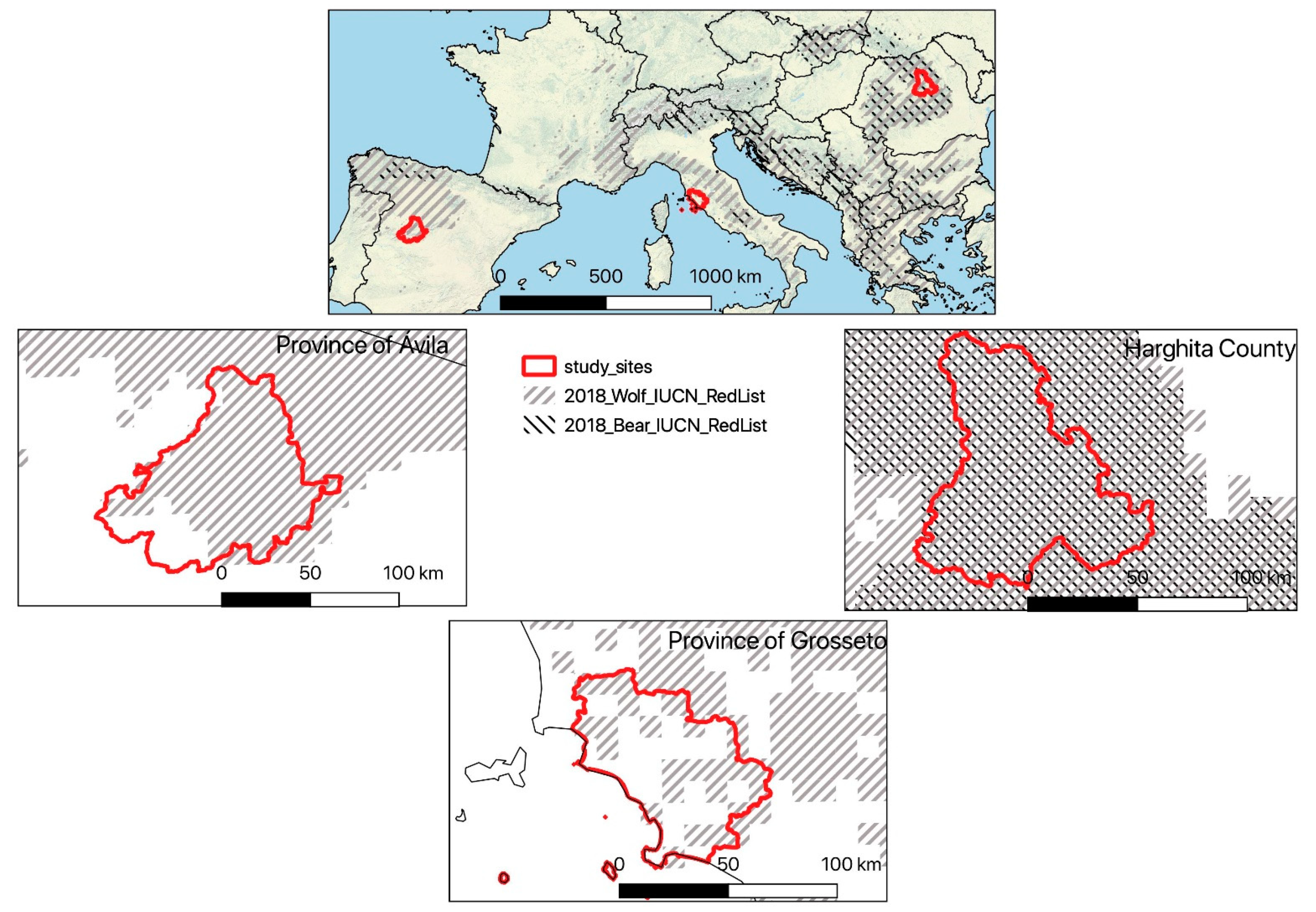
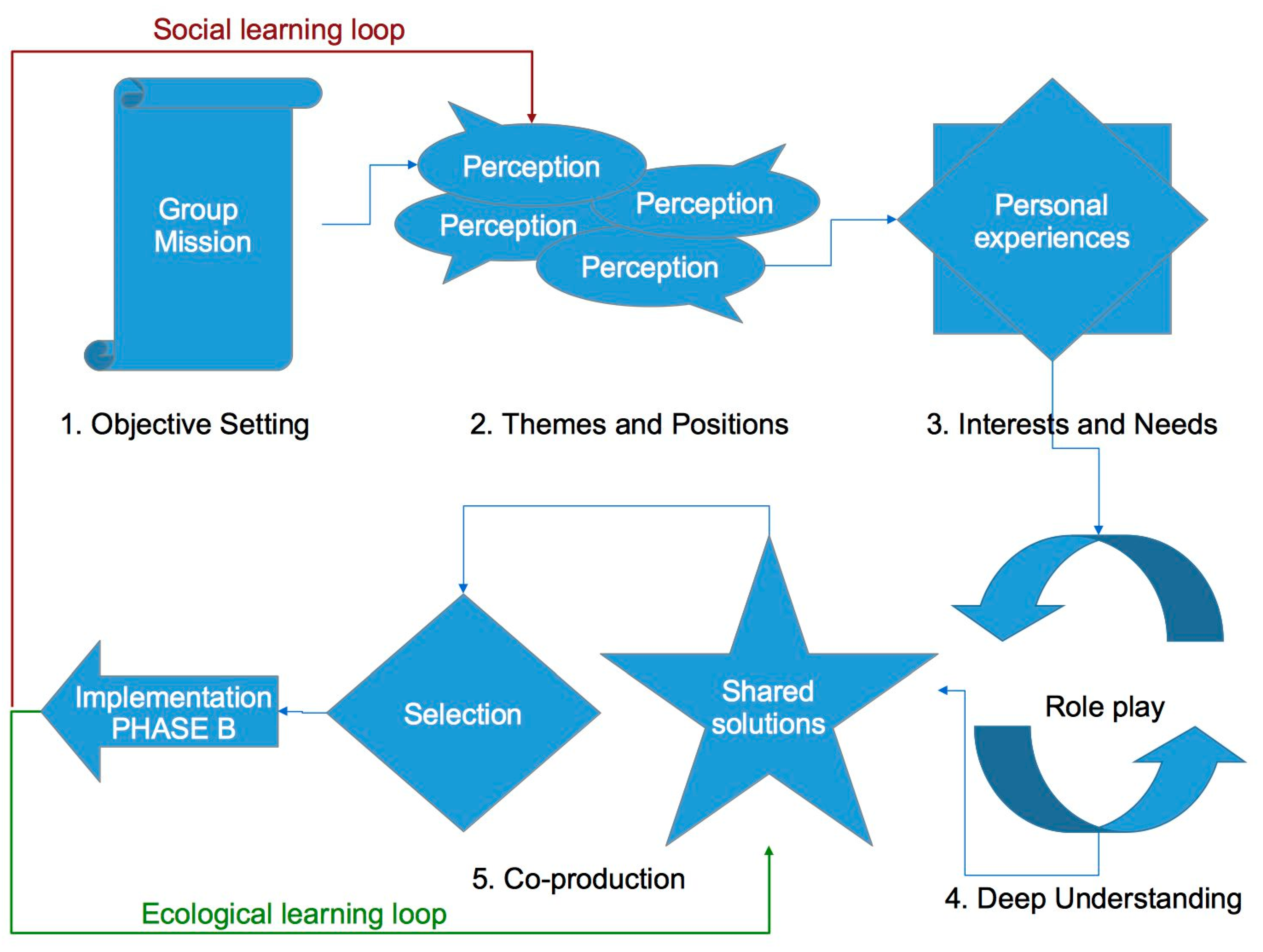
Publisher’s Note: MDPI stays neutral with regard to jurisdictional claims in published maps and institutional affiliations. |
© 2021 by the authors. Licensee MDPI, Basel, Switzerland. This article is an open access article distributed under the terms and conditions of the Creative Commons Attribution (CC BY) license (https://creativecommons.org/licenses/by/4.0/).