You are currently viewing a new version of our website. To view the old version click .
Sustainability
  • Article
  • Open Access

30 September 2020

From Seafarers to E-farers: Maritime Cadets’ Perceptions Towards Seafaring Jobs in the Industry 4.0

,
and
1
Division of Maritime Transportation Science, Korea Maritime and Ocean University, 727 Taejong-ro, Yeongdo-gu, Busan 49112, Korea
2
Department of International Logistics, Tongmyong University, Busan 48520, Korea
3
Division of Marine Engineering, Korea Maritime and Ocean University, 727 Taejong-ro, Yeongdo-gu, Busan 49112, Korea
*
Authors to whom correspondence should be addressed.
This article belongs to the Collection Science Education Promoting Sustainability

Abstract

Efforts to implement the concept of autonomous transport in the shipping industry are currently underway with the introduction of Maritime Autonomous Surface Ship (MASS), which is expected to usher in a new paradigm in maritime trade. However, this requires a stable supply of highly qualified seafarers. Predicting the changes necessary for seafarer education and training in the MASS era is pivotal for the safe and efficient development and operation of autonomous ships. The present study conducted a survey using Q methodology on fourth year students of the Korea Maritime and Ocean University (KMOU), to examine their perceptions towards changes in ship organizations, and the competency of seafarers required in the MASS era. From the analysis, we extracted three unique clusters of cadets’ perceptions towards new competencies with the introduction of MASS: “the traditional seafarers’ centric role retainer”, the “ship organizational structure domain achiever”, and the “new technical competences builder”. The emerging findings can predict the educational needs and new competences of seafarers in the MASS era, as well as support managerial implications. These results are expected to serve in establishing the future direction of seafarer education and training in both private and public organisations.

1. Introduction

Industry 4.0, a German strategic initiative, is the ongoing transformation of manufacturing and industrial practices, combined with the dynamic development of technology [1]. The term Industry 4.0 is often referred to as the Fourth Industrial Revolution [2,3,4]. Ever since the introduction of the Fourth Industrial Revolution concept at the 2016 Davos Forum, efforts are being made across industries to implement the concept in practice. Industry 4.0 is being implemented simultaneously across several maritime industries, including shipping (Shipping 4.0), port (Port 4.0), shipbuilding (Smart ship 4.0), and marine (Marine 4.0) [5,6,7,8,9]. Among these, the Maritime Autonomous Surface Ship (MASS) is gaining attention for posing a new challenge to innovative growth technology [7,9]. At the same time, it is expected to be the growth engine of the next-generation marine industry.
The Maritime Safety Committee (MSC) of the International Maritime Organization (IMO) defines MASS as “a ship that operates at various levels independent of human interference” [10] and identifies the following four levels: (Level 1) decision-making support by seafarers; (Level 2) boarding of seafarers, remote control; (Level 3) minimum number of members on board, remote control, and engineering automation, such as failure prediction and diagnosis; and (Level 4) fully unmanned autonomous operation. In a low-level automation state, the system merely collects information, while the seafaring members analyse and determine the nature of the collected information, and act accordingly. As the level of autonomy increases, the role of the humans decreases, and the system performs almost all functions, except those needed in an emergency. Major countries in the world are currently developing the MASS system at each level, and accordingly, the role of workers in the shipping industry is changing significantly.
Frey and Osborne [11] ranked 702 jobs across industries that are likely to be automated and quantified the potential and impact of technological innovation on unemployment. According to this study, specifically to the maritime industry, officers who directly operate a ship fall into the low-risk category as the risk of automation is relatively low, at 0.01, where 1 represents a job that is at risk of automation and 0 represents a job at low risk of automation. In fact, according to the manpower report of BIMCO/ICS [12], from 2010 to 2015, the global demand for seafarers has seen an overall increase, with higher demand for officers than for ratings. This implies that manpower with advanced knowledge is required to handle increasingly automated ships. Further, demand for highly qualified officers are predicted to continuously increase, as the demand for large high-end ships continue, and until a fully unmanned MASS is developed and commercialized. With the advancement in unmanned ship technology, not only will members who form a part of a ship’s crew change, but also the whole organizational structure will see a marked change with a corresponding shift in the work division. Therefore, competency of officers is expected to change significantly.
In this study, a survey was conducted on the perception of prospective officers towards such changes. Trainee navigational deck officers and engineering officers holding the Officer of the Watch (OOW) certificate, and currently enrolled as students at the Korea Maritime and Ocean University (KMOU), were selected as the participants of this study. We analysed students’ perceptions about new seafarers’ requirements in the era of MASS in terms of a ship’s organization, tasks, seafarers’ competencies and ethical responsibilities. By applying a Q methodology, we were able to extract potential new abilities required for future officers, thus predicting the competencies that will be demanded and the development of new curricula in the field of education and training.
Such predictions are important to guarantee a stable supply of high-quality officers suitable for the era of MASS operations to the whole shipping industry and, indirectly, to avoid disruption across supply chains in international trade. This study can help maritime educational institutions that are currently training cadets in establishing a direction for future maritime education by clarifying the requirements for seafarers’ job for the MASS era. Further, based on the study’s findings, maritime educational institutions can re-think and adapt existing curriculum for future maritime education. The study can thus significantly contribute to stabilizing the future seafarers’ supply for the shipping industry.
The Future of Jobs’ report released at the Davos Forum predicted that the Fourth Industrial Revolution will eliminate 7.1 million jobs and create 2.1 million new jobs by 2020, eventually eliminating 5 million jobs [13]. Further, it predicted that autonomy technology (via machines) will perform more work than humans in 2025 [14]. In the shipping industry, if MASS is commercialized, jobs in the marine industry as well as seafarers’ jobs are expected to change quantitatively and qualitatively [9,10,11,12,13,14,15].
The Korean Ministry of Trade, Industry and Energy conducted a survey on the status of industrial technical manpower in four promising new industries as of 2018: digital healthcare, smart and eco-friendly ships, aerial drones and intelligent robots. The survey revealed that 168,000 workers will be needed by 2028 in these four industries. Especially in the case of smart and eco-friendly ships in the shipping industry, the number of technical personnel required was 35,549 as of 2018. The shortage rate was 2.6%; and 49,000 people are required by 2028 owing to domestic and foreign environmental regulations and the demand for autonomous ship development personnel. Thus, the demand for new manpower in the shipping industry is expected to increase manifold with the technological advancements [16].
As new technologies implemented on ships become increasingly important in the maritime industry, there may be a decrease in the number of seafarers required in the future. Based on a prior study by Jatau [17] and Kim et al. [18], it was suggested that if MASS is implemented, seafarers would face the threat of losing their jobs or a further shrinking in a manpower structure where unskilled workers are not required; instead, only able seamen or officers are likely to be in demand. In a similar study, Kevin Tester [19] argued that the introduction of MASS tends to change the job profile rather than eliminate jobs, thus creating new types of jobs, bringing greater prosperity to the industry. Thus, there will be a gradual decrease in jobs in the seafarer-related industry with the technological development and expansion of MASS; however, other types of jobs, different from the present ones, will be created [9,20]. MASS is expected to create a demand for new highly advanced skills among seafarers boarding a ship equipped with advanced technology, which will mark the future of the shipping industry [15]. Jo and D’agostini [21] argued that a full-scale implementation of MASS, under four different scenarios, will result in a loss of seafarers’ jobs, but a larger positive effect will create new shore-based employment within the maritime industry.
Rodseth and Burmeister [22] claimed that the development of an unmanned ship can provide new job opportunities to competent seafarers. Baldauf et al. [23] conducted a simulation analysis to determine whether a seafarer with experience at sea or a skilled information-technology worker is more suited to navigation control and monitoring of the MASS; the study also presented the necessary abilities and knowledge that future seafarers should possess. Specific suggestions regarding this can be found in the study by Cicek et al. [24]. Based on studies by Hecklau et al. [25] and Cicek et al. [24] a new category of future competence required for seafarers with the advent of the Fourth Industrial Revolution technology was reconstructed. Functional and behavioural competencies were identified as important for seafarers, where functional competency was related to technical skills required for ensuring the safe navigation of the ship, and individual competency related to communication skills, teamwork, leadership and language skills required for maintaining ship safety. Cicek et al. research analysis was the basis for the present study in identifying abilities required for future seafarers and were included in the selected Q-statements.
Shenoi et al. [15] claimed that the introduction of MASS is inevitable, and that the shipping industry should brace itself to develop a new business model for shipbuilding, manufacturing, repair and maintenance and operations. According to their study, this change is expected to affect the education and training for technical engineers, seafarers, shipping companies, ship management companies and shipbuilding. The study explains that for a ship’s operation to become fully unmanned, that is, without human intervention partially controlling the system, the Shore Control Center Operator (SCCO) should possess a high level of skills. The emergence of a SCCO who intervenes in decision-making and provides operational information is essential for the ship’s operation beyond the existing ship control level will significantly change the quality of seafarer-related jobs [8,11,15,26]. Further, Shenoi et al. [15] emphasize the importance of education and training in accordance with the change in the new technologic implemented ship.
Ship technology development and the emergence of MASS are expected to change the operational characteristics and tasks on existing ships. Human resources highly skilled in technology will be required when high-level mechanization and automation become commercialized in ships with the advancement of science and technology [24]. Thus, understanding the future human resources in the maritime industry is important, especially for maritime educational institutions, to develop a new perspective to reform maritime training and educational activities to meet the need for highly qualified officers [9]. With the expected increase in demand for highly skilled workforce for unmanned ships, an officer will no longer be termed a seafarer, but an “e-farer”, controlling the operations of a ship through technology [27]. Lee et al. [28] defined a seafarer in Industry 4.0 as seafarer 4.0. Seafarers who operated a ship in the traditional manner were called 1.0, those who operated a ship with power were termed 2.0, those who controlled a ship equipped with automation equipment (when the role of seafarers began to increase), such as automatic navigation and automatic identification detection device, were termed 3.0., and those who controlled an unmanned ship were termed 4.0.
With the advancement in technology, the shipping industry may require skilled workforce to undertake new kinds of tasks with the elimination of old tasks to operate a state-of-the-art ship. Although the number of jobs may decrease, the tasks on MASS are not limited to existing maritime knowledge and technology. They also include analysing or monitoring big data and using information and communication technology (ICT) of the digitized ship. Seafarers who can use computer technologies [29] and demonstrate adequate teamwork and leadership skills will be in demand for future ships. Therefore, the changes that are expected to impact the whole industry are likely to be very significant in terms of degree and magnitude and will most certainly indirectly involve the sustainability of maritime education and training organizations.
The present study classified the subjectivity types of the prospective officers by applying the Q method, considering their suitability and ability to adapt in the era of MASS, and investigated the characteristics of each type, thereby deriving the concept of a future navigational and engineering officer. It presents an in-depth study on the educational direction that maritime educational institutions should take to foster shipping workforce that can stably operate MASS, and it provides basic data related to policymaking in the shipping industry. The results obtained can thus serve as basic data for institutions in establishing a direction for education and research and implementing specific training courses so that the shipping industry operations can remain competitive in the future.

2. Materials and Methods

2.1. Research Overview and Process

This study explores the perceptions of cadets majoring in navigation, and engineering about the changes in seafarer jobs with the impending introduction of MASS. The Q research method was used instead of the R research method because the former helps in gaining a holistic understanding of the students’ perceptions by objectifying their subjectivity [30,31]. The Q method is also useful because it has a heuristic characteristic, providing a theoretical alternative view through exploration [32].
Q methodology is a research technique developed by William Stephenson [33], and it is a theoretical and methodological concept [31]. Stephenson first described the method in 1935 on a letter to Nature in which he believed he could analyse the correlation between people instead of the traditional variables under a factor analysis and extract scientifically their subjectivity on a specific topic. It is an approach which has been commonly used in psychology and social sciences but it is increasingly being used in several disciplines to derive policy recommendations or to better understand decision-making and participatory processes [34].
Q, as research and analysis method, identifies correlations among people across subjective attributes [34]. The method does not involve analysing large set of data, unlike the R methodology, and it focuses on individual subjectivity and characteristics for an objective analysis. Therefore, it emphasizes on the need to include a diverse population rather than a very large or representative one [35]. Watt and Stenner [31] indicated that Q studies should include between 40 and 60 participants to be effective, but this is more a guideline than a rule as other studies were finalized with fewer respondents and were equally effective. The peculiarity of the Q method lies in the fact that it tests perspectives, beliefs and viewpoints of participants and transforms them into operant factors. Therefore, the participants’ viewpoints are representative of their own beliefs and not intuitive, and the subjectivity is structured in a systematic way. The method also concentrates on the range of ideas on the topic that are derived in the analysis and how differences across respondents relate to each other [31,32].
Furthermore, Q method combines a mix of qualitative and quantitative research techniques used in systematic research on subjectivity. It is associated with quantitative analysis due to its involvement in correlation and factor analysis whilst the qualitative side is mainly represented by the interpretation of the results.
There are several strengths in applying a Q method for research subjectivity’ opinions on a group of respondents. Under Q, the subjectivity of participants is emphasized allowing a researcher to analyse extensively their thoughts, views and opinions. This is deemed a major strength rather than a limitation in the application of the method. In addition, it limits the researcher’s bias because the participants’ views emerge de facto, preventing any pre-set assumptions and definitions, and providing a holistic view of the analysed topic by identifying the key elements extracted from the respondents’ beliefs and viewpoints. However, the method also has its own weaknesses, of which the biggest is the generalization of research results due to smaller number of samples and its practical dimension [31]. In this study, however, these shortcomings of Q can be significantly remedied as the number of training institutions for maritime officers is numerically limited. Similarly, the number of officers trained in Maritime Education and Training (MET) both in the Republic of Korea and worldwide is also limited. In other words, the application of Q method on officers’ perception allows the samples to become rather close to the population figures and, therefore, the research results can be generalized.
The Q method is applicable when a researcher intends characterise the different viewpoints of individuals in a systematic and holistic way. In our study, Q method appears to be a suitable tool to explore and categorize the perceptions of the trainee navigational officer and engineering officers regarding the possible changes that would occur in the shipping industry in terms of seafaring jobs. Specifically, we classify the types of changes in maritime jobs perceived by respondents and analyse the difference in perception by each type through Q factor analysis.
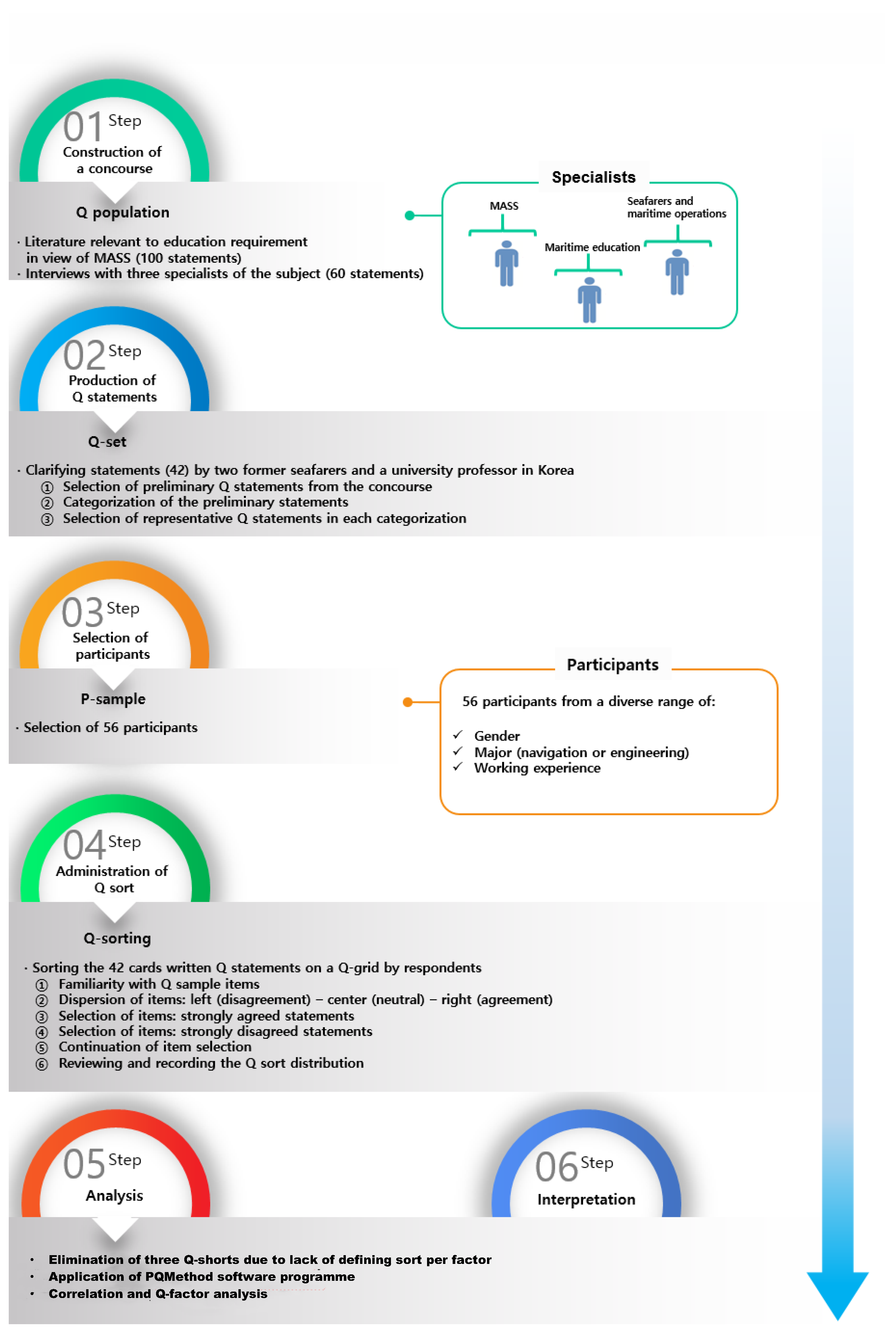
There are six major steps which need to be followed to correctly apply a Q-method as depicted in Figure 1. The first step is known as “concourse” and requires the collection of statements about the research topic. We conducted a literature review of papers that investigated MASS in connection to education and training requirements. We collected a total of 100 statements which were reviewed by three experts whose area of specialism are respectively MASS, seafarers and maritime operations and maritime education and training. The three experts reduced the statements to 60 by removing statements that were overlapping or trivial.
Figure 1. Stage sequencing in a Q methodology study.
In the second step, called the Q-set, the statements were further reduced to 42 statements by the recommendations of two former seafarers working respectively in a shipping line and a major shipyard in Korea and a professor working in a maritime University. In the process of reduction of statements, it was ensured that the same were well balanced and encompassed a holistic and comprehensive view of the subject.
The third step involves the selection of the participant, or the construction of the P sample. Generally, research using the R methodology is designed with a limited number of variables and a relatively large number of participants, wherein the aim is to generalize the research results by targeting a large population; accordingly, the more participants, the better. However, Q methodology, unlike the R methodology, does not require many research participants [36]. Stainton Rogers [37] suggested that 40–60 study participants may be considered sufficient in order to analysis of the factor. In the study by Kim [35], the Q methodology considers the significance of intra-individual differences rather than inter-individual difference, and thus, is not limited by the number of P samples. Many studies using the Q methodology consider a lesser number of P samples compared to Q samples for statistical reasons, and thus limit the number of participants to 30–60. This study therefore selected 56 male and female fourth year students of the Korea Maritime and Ocean University. They were all majoring in navigation and engineering and were officers with more than a year’s experience of being on a ship and possess a maritime certificate.
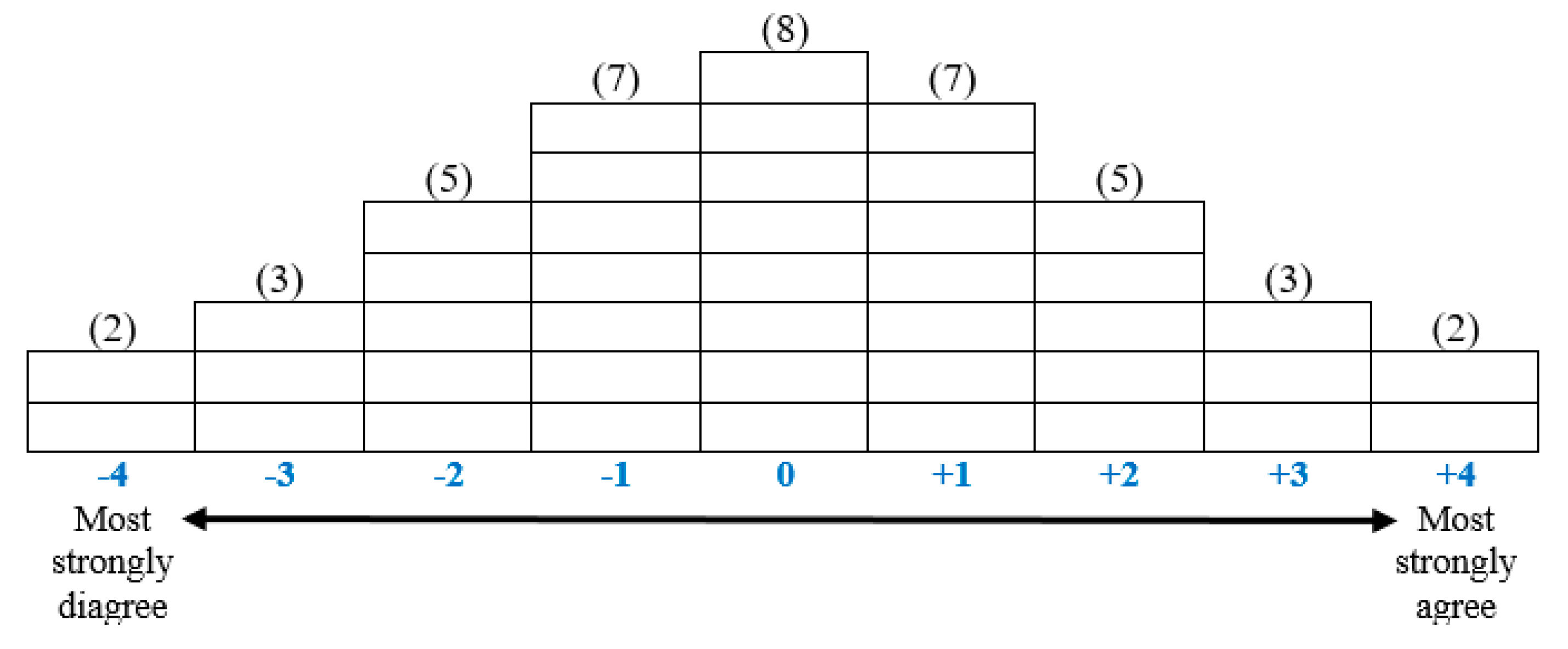
The fourth step of the process is represented by the Q sorting. It is so called because respondents are asked to sort the items provided according to a specific type of ranking [34]. It is a process of deriving a series of relative evaluations related to the research topic from the subjects [31]. Each of the 42 statements was printed on small card paper, and the subjects selected for the P sample were asked to select a 9 point distribution with a range of rank values from −4 to +4 for the statements.
The collected survey data were coded using the PQ method software. Q factor analysis was used to analyse the collected data. A positive (+) standard score indicates a positive opinion about the statement and a negative (−) standard score indicates a negative trend. To determine the ideal number of factors, Eigen values of 1.0 or higher were used as the basis. The number of factors determined as the best was estimated by inputting several factors, from 2 to 6, into the program.
Next, the Q statement for sorting the perceptions of the prospective officers towards the changes in seafarer jobs in the future shipping industry was prepared as shown in Table 1.
Table 1. Q sample.

2.2. Preparation of the Q Card

A typical Q sorting begins with the researcher giving the respondents a set of Q samples (statements) like dealing a pack of playing cards [33,34]. Small cards (cards with written statements) were prepared for the respondents, and Q samples were prepared as shown in Figure 2.
Figure 2. Q sample distribution.
A Q card is intended to help respondents understand the statements and the process of the questionnaire and place the statements with their own well-defined opinions or thoughts on a score scale of agree (+), neutral (0) and disagree (−). Each card is created by entering an individual statement into a single card, the size of a business card. Among the statements that were positive, the items that were most agreed on (+) were selected one by one and brought to the neutral (0) part, and among the statements that were negative, the items that were most disagreed on (−4) were also brought to the neutral (0) part, thereby completing the Q sample sorting. William Stephenson [33] suggested placing a relatively large number of items at the centre of the distribution and fewer items at the periphery in the arrangement of choices for collecting data according to the Q methodology [31].

3. Results

3.1. Results of the Survey

Q factor analysis about the perception towards the changes in seafarers’ jobs on introducing the MASS resulted in a classification of four types. Since each of these types groups subjects with similar opinions, thoughts and attitudes towards the changes in seafarers’ jobs, each type can be said to describe a characteristic. Eigen value by factor ranged from 14.89 to 2.54, and thereby there was no problem in constructing the factor. The total variance explained was 38%. Eigen values, explanatory variable, and the cumulative variable representing the explanatory power of the three types are as shown in Table 2.
Table 2. Eigen values and variance by factor.
In addition, the correlations between each type and the other is as shown in Table 3. The correlation between types ranged from 0.4624 to 0.5824, which can be considered as generally independent.
Table 3. Correlations between factor scores.
The factor weight of the respondents regarding the changes in seafarers’ position classified as per type is as shown in Table 4. In the PQ method software, flagging is performed according to the factor loading after the judgemental rotation. Moreover, in the result sheet, flagging is indicated by X after the factor weight value. This means that the individual is an ideal person to represent the type (Stephenson, 1994; Kim, 2008). From the results of the Q factor analysis by the Varimax rotation method, as shown in Table 4, among 55 respondents, 8 respondents were sorted into the first type, 16 into the second type and 25 respondents into the third type. Q sorting of candidates 22, 24, 30, 41, 43 and 55 showed no significant loading anywhere among factor Ⅰ, Ⅱ or Ⅲ, and hence were treated as null cases. All the Q sorting was identical since the mean value was 0.00, and the standard deviation (standard deviation) was 2.048.
Table 4. Variable assignments with factor weight by factor.

3.2. Characteristics of Each Type

The subjectivity structure regarding changes in seafarers’ job in accordance with the development of science and technology was classified into types and the characteristics of each type were examined. Each type was grouped into those with high factor weight, and the characteristics were analysed based on the most agreed on items (Z score < +1.000) and the most disagreed with items (Z score < −1.000) among the 42 statements for each type.
  • Factor I: Traditional seafarers’ centric role retainer (N = 8)
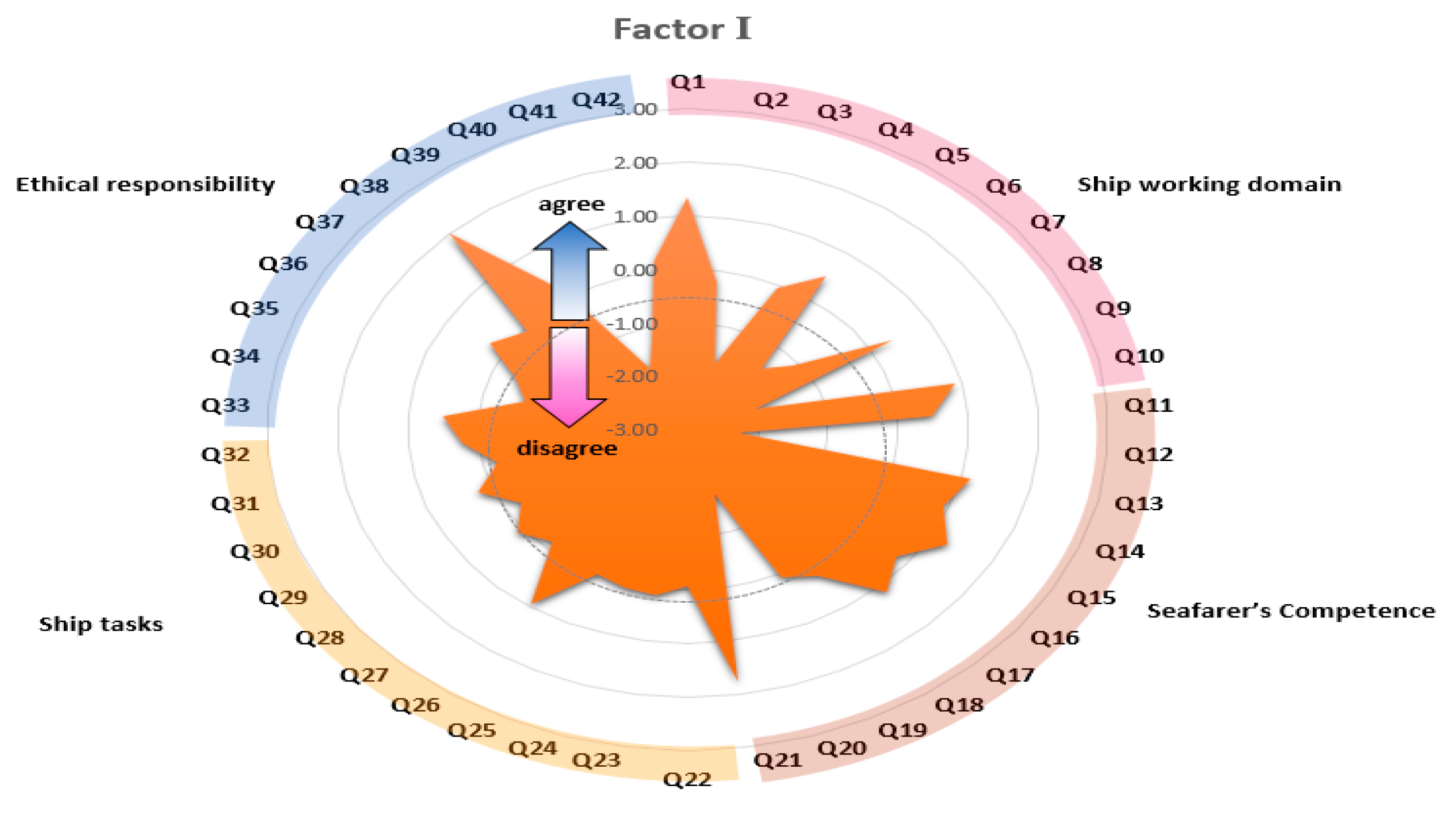
Eight respondents belonged to this first type (Factor). The most agreed on or disagreed with statements (=−1.000 or higher) of this type are as shown in Table 5 and Figure 3. Among the statements of this type, the most disagreed statement was that seafarers do not need experience at sea (Q12, Z score = −2.286), and the most agreed on statement was that seafarers would become complacent or negligent towards technology and automation (Q38, Z score = 2.01).
Table 5. Most agreed and disagreed statements of Factor I.
Figure 3. Statements for Factor I.
The details of the Z-values of respondents belonging to Factor Ⅰ are as outlined in Table 5. Factor I was renamed “traditional seafarers; centric role retainer”. These respondents expected that the introduction of autonomous ships will reduce the number of seafarer jobs and affect employment and recruitment. However, they perceived that the organization of ships and organization of the traditional deck department and engine department will remain unchanged (Q6), and that the unique tasks of the departments will also be maintained (Q3). Seafarers were still perceived to require experience at sea and maritime knowledge and skills. However, seafarers’ complacency, owing to automation and mechanization, was considered to increase (Q38). Further, given the characteristics of autonomous ships operated by a small number of seafarers, the skills of emergency response capabilities (Q21), self-management and stress (Q13), teamwork and leadership (Q15) and device repair and management capabilities (Q17) were perceived as those required for seafarers in the future. Although this group perceived that automation and mechanization would reduce the number of seafarers, they considered the role of seafarers important and irreplaceable.
  • Factor II: The ship organizational structure domain achiever (N = 16)
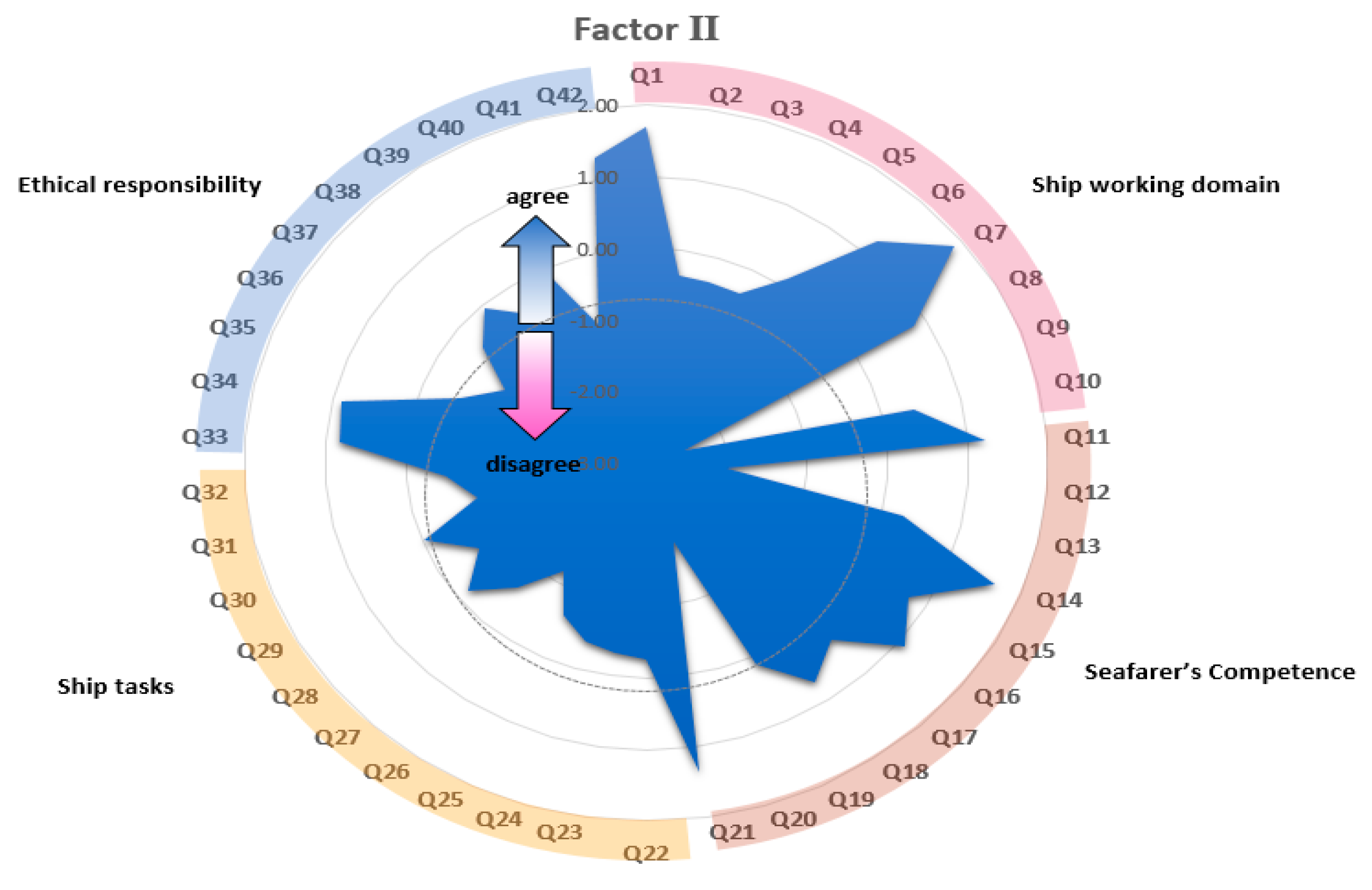
Sixteen respondents clustered in Factor Ⅱ. The most agreed and disagreed statements (=−1.000 or higher) are as shown in Table 6 and Figure 4. The most disagreed statement was that autonomous ships will not affect the recruitment and employment of seafarers (Q9, Z score = −2.493) in any way and that seafarers on autonomous vessels will not require previous seafaring experience (Q12, Z score = −2.003). The most agreed on statement was that the ranking terminology on board autonomous ships is likely to change (Q7, Z score = 1.881). This type therefore has a different perception than factor I.
Table 6. Most agreed and disagreed statements of Factor Ⅱ.
Figure 4. Statements for Factor II.
This factor was labelled as “the ship organizational structure domain achiever” As the result, it perceived that, although the introduction of autonomous ships will affect the seafarer jobs, it would ultimately change the organization within a ship, the unique tasks among the departments and seafarers’ task assignment. It regarded that seafarers would require an ability to cope with this and to process information due to the work environment driven by automation.
  • Factor III: The new technical competences builder (N = 25)
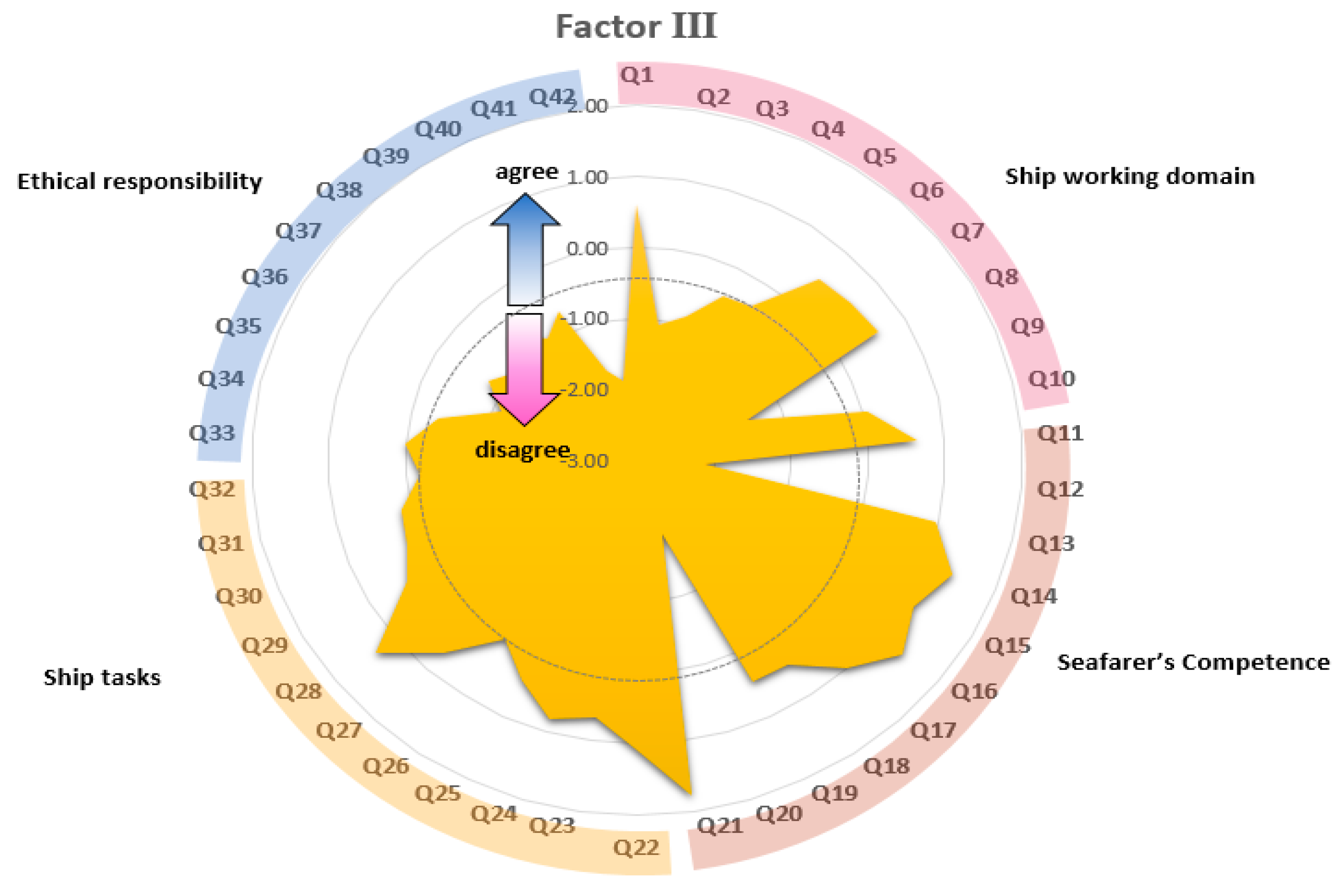
Twenty-five respondents belong to Factor Ⅲ, the group with the most respondents. The most agreed and disagreed statements (=−1.000 or higher) are shown in Table 7 and Figure 5. The most disagreed statement of this type was that seafarers on autonomous vessels will not require previous seafaring experience (Q12, Z score = −2.128) and traditional nautical and engineering knowledge (Q20, Z score = −1.922). The most agreed on statement was that seafarers’ ability to respond in a wide array of emergency situations will still be deemed vital (Q21, Z score = 1.771).
Table 7. Most agreed and disagreed statements of Factor III.
Figure 5. Statements for Factor III.
This factor was renamed “the new technical competences builder”, and it predicted that, among tasks traditionally performed on ships, core tasks will continue to be maintained, while new tasks for seafarers will occur. Factor 3 with the largest number of respondents assessed that competency according to new technological changes (Q14, 15, 16, 17 and 21) will be needed, while seafarers’ seafaring experience at sea and traditional nautical and engineering knowledge will still be required. In addition to traditional nautical and engineering knowledge, this group perceived emergency response capability, ability to process and analyse information from automation equipment, understanding of automation limitations and problems and teamwork and leadership as the capabilities required for seafarers on the autonomous ship. That is, it viewed that the role of the seafarers who can handle technology is important for the emergence of ships to which new technology is applied, and new skills are required for seafarers.

3.3. Consensus Statements

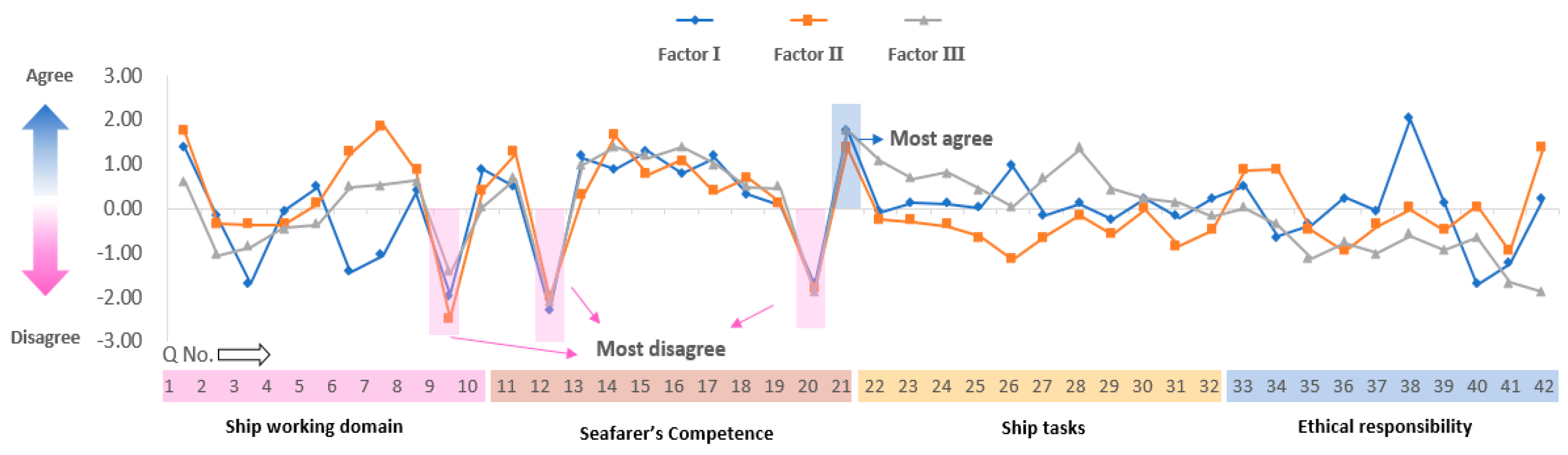
Statements that were commonly agreed on and disagreed with among respondents of Factors Ⅰ, Ⅱ and Ⅲ are as illustrated in Figure 6 and in Table 8.
Figure 6. Consensus statements for Factors I, II, and III.
Table 8. Consensus statements.
All respondents predicted that the introduction and spread of MASS will affect the employment and recruitment of seafarers on existing manned vessels (Q9). Seafaring experience (Q12) and traditional nautical and engineering knowledge and competence (Q20) were considered still required for seafarers even if autonomous ships are commercialized. The respondents agreed that the ability to respond in a wide array of emergency situations on board autonomous ships (Q21) is required. Commonly, in Factors I, II and III competence of a different type was considered important, but overall, the respondents perceived the seafaring capabilities of seafarers important as technological advancements are applied to ships.

4. Demographics and Factors

To further expand the interpretation of the results from the three extracted factors, the demographic elements of each participant of the study are analysed. In particular, gender and educational major are elements that strongly aligned with the three factors. The “Traditional seafarers’ centric role retainer” (Factor I) was entirely loaded by male respondents (100%) with a strong dominance of respondents enrolled in an engineering major (62.5%), whilst the remaining respondents were studying navigation as major (37.5%). The ship organizational structure domain achiever (factor II) was in direct opposition to factor I in terms of demographics. Although predominantly loaded by male respondents (93.75%), 62.5% of participants of this group were represented by students of navigation. Therefore, we can clearly state that engineering students and navigation students, respectively, loading significantly in factor I and II, have opposite views about the magnitude of change seafarers will be subject to with the development of MASS. Finally, the new technical competences builder (factor III) was the most balanced among the factors, as the participants’ demographics indicate. Although the large majority of respondents, as in the two other factors, was male (88%), the students almost equally loaded into engineering major (48%) and navigation major (52%). Demographics information therefore show that, overall, the different factors yield distinctive characteristics. Factor I, where the majority of respondents were pursuing an engineering major, believe that seafarers will have a centric role even with the implementation of new technologies. This is in clear contrast with factor II, mainly loaded with navigation cadets, which perceive the changes for seafarers will be significant and likely to occur. Therefore, there seem to be divergent opinions between the engine and navigation students regarding the degree and scale of automation on board. Factor III showed mix demographics and the participants strongly indicated it is likely for seafarers to need higher competencies to retain a key role on board automated ships.

5. Conclusions

This study focused on investigating the perception of maritime cadets toward the changing job requirements for seafarers with the introduction of MASS. This research is the first attempt to qualitatively analyse the standpoints on the subject from students’ perspectives. As the development of autonomous ships is expected to gradually decrease the number of seafarers on board, this study can contribute towards understanding the attitude and impressions of maritime cadets on the issue and help drawing educational policies. In this study, we utilized the Q methodology to extract and cluster the opinions of the respondents and there are three main findings.
First, we extracted three specific factorial types out of the analysis, each one with peculiar statistical patterns. Factor I (traditional seafarers’ centric role retainer) perceived that seafaring will continue to be a necessary occupation and central to the operation of a ship even with automation and mechanization. On the other hand, factor II (the ship organizational structure domain achiever) predicted that a change in seafarers’ jobs and employment in the ship’s internal organization and working domain are all likely to occur. Factor III (the new technical competences builder) perceived that although seafarers’ jobs and employment would undergo a change, the level of competence required in the job would be higher. Although the three factors suggest mixed and heterogeneous findings, it is safe to argue that a radical change in seafarers’ competences is the main element extracted out of the analysis. A major implication of this new paradigm shift in seafarers’ competencies will most likely involve maritime education and training centres. Maritime-related universities and institutes will need to act proactively in adapting their curriculum to new requirements, for seafarers to remain competitive regionally and globally. For future seafarers or e-farers, high-tech jobs such as maintenance and repair in an unmanned environment, cargo security equipment, automatic handling of transshipment between vessels, cyber security service, and remote operation of automated equipment including port cargo handling, are expected to be created. With the operational characteristics of the new type of ship, the competency requirements for a specific task will also vary accordingly. Consequently, MET will need to structurally re-think the educational framework prioritizing the training of specific skills and tasks in a new curriculum.
Second, all the three factors shared common views on some of the proposed statements. In particular, all groups agreed on the fact that new technologies will change the seafaring market in terms of employment (Q9), traditional competences (Q12, Q20) and ability to respond to emergencies (Q21). Therefore, we can safely assume that seafaring will most likely still be central to the operation of a ship even in the MASS era, but seafarers would require new capabilities both in the form of hard skills and soft skills. Within hard skills, it appears that there will likely be a shift from purely technical skills to information and communication technologies such as big data and analytics. Although STCW Convention (International Convention on Standards of Training, Certification and Watchkeeping for Seafarers) has been amended and included a set of soft skills needed in the education and training of seafarers as leadership, teamwork and languages, the introduction of MASS will require new competencies such as emergency response, self-management and stress management.
Third, demographics, such as gender and, to a greater extent, the major of the participants, loaded significantly across the three factors. Interestingly, factor I was dominated by male respondents enrolled in engineering major. They perceived that seafaring will continue to be a necessary occupation and central to the operation of a ship even with automation and mechanization. In contrast with it, factor II was mainly loaded with respondents majoring in navigation. They predicted that a change in seafarers’ jobs and employment, in the ship’s internal organization and working domain, are all likely to occur. Factor III was overall more balanced between respondents as they perceived that, although seafarers’ jobs and employment would undergo a change, the level of competence required in the job would be higher. In other words, the quality of a seafarer’s competency is expected to change. Thus, these findings suggest that the perceptions of respondents toward new seafarers’ competencies in the MASS era differ and gender and educational major are key elements in clustering their beliefs.
Ultimately, the introduction of MASS is not simply an advancement in science and technology, but a systemic change across the shipping industry. Thus, qualitative changes in the seafarer workforce market require a workforce development strategy. The results of this study can provide sufficient direction for such manpower development and training officers.


6. Limitation and Future Directions

The limitations of the study are mainly linked to the weaknesses in applying a Q method. Although this method is suitable for small number of respondents, such in the case of maritime cadets, it does not allow the finding to be generalized on a larger national or regional scale which, in this case, could be important to standardize educational curricula in maritime-related organizations. Another issue is related to the sampling, as a very small percentage of participants came from a different stage of the university studies. This could have impacted on their views on the topic due to the fact that specific courses were not yet covered.
Future studies on cadets’ perspective in relation to the future requirements of seafarers in the era of automation, can take several directions. First, the results of this study could be compared with results from other major maritime universities to draw conclusion on a global level about students’ perceptions and whether there are similarities or differences based on existing curricula. An extension of the study may take into account a wider number of participants and include cadets from different years of study with a specialist group to explore differences in perspective and identify potential gaps among groups. Another avenue could be to include more variables in the study (e.g., ship size, ships type, trade routes) and identify specific area in which perceptions on seafarers’ job requirements are mostly converged in.

Author Contributions

S.J.: Conceptualization, Methodology, Investigation, Writing—Original Draft; E.D.: Methodology, Validation, Writing—Review and Editing, Visualization; J.K.: Conceptualization, Investigation, Validation, Review. All authors have read and agreed to the published version of the manuscript.

Funding

This research did not receive any specific grant from funding agencies in the public, commercial, or not-for-profit sectors.

Conflicts of Interest

The authors declare no conflict of interest.

References

  1. Zhong, R.Y.; Xu, X.; Klotz, E.; Newman, S.T. Intelligent manufacturing in the context of industry 4.0: A review. Engineering 2017, 3, 616–630. [Google Scholar] [CrossRef]
  2. Grzybowska, K.; Łupicka, A. Key competencies for industry 4.0. Int. Conf. of Econ. Manag. Innov. (ICEMI) 2017, 1, 250–253. [Google Scholar] [CrossRef]
  3. Kagermann, H.; Wahlster, W.; Helbig, J.; Hellinger, A.; Stumpf, V.; Kobsda, C. Umsetzungsempfehlungen für das zukunftsprojekt industrie 4.0—Abschlussbericht des arbeitskreises industrie 4.0. In Implementation Recommendations for the Future Project Industry 4.0—Final Report of the Industry 4.0 Working Group; Forschungsunion: Berlin, Germany, 2013. [Google Scholar]
  4. Schuh, G.; Potente, T.; Varandani, R.; Schmitz, T. Global footprint design based on genetic algorithms: An “Industry 4.0” perspective. CIRP Ann. 2014, 63, 433–436. [Google Scholar] [CrossRef]
  5. Sanchez-Gonzalez, P.L.; Díaz-Gutiérrez, D.; Leo, T.J.; Núñez-Rivas, L.R. Toward digitalization of maritime transport? Sensors 2019, 19, 926. [Google Scholar] [CrossRef] [PubMed]
  6. Stanić, V.; Hadjina, M.; Fafandjel, N.; Matulja, T. Toward shipbuilding 4.0: An industry 4.0 changing the face of the shipbuilding industry. Brodogradnja 2018, 69, 111–128. [Google Scholar] [CrossRef]
  7. Ahvenjärvi, S. The human element and autonomous ships. TransNav Int. J. Mar. Navig. Saf. Sea Transp. 2016, 10, 517–521. [Google Scholar] [CrossRef]
  8. Park, H.S. Korea’s policy direction for MASS. Telecom. Technol. Assoc. 2018, 178, 60–65. [Google Scholar]
  9. Oksavik, A.; Hildre, H.P.; Pan, Y.; Jenkinson, I.; Kelly, B.; Paraskevadakis, D.; Pyne, R. Future Skill and Competence Needs; Skillsea: Rotterdam, The Netherlands, 2020. [Google Scholar]
  10. IMO. Takes First Steps to Address Autonomous Ships. Available online: http://www.imo.org/en/MediaCentre/PressBriefings/Pages/08-MSC-99-MASS-scoping.aspx (accessed on 17 April 2020).
  11. Frey, C.B.; Osborne, M.A. The future of employment: How susceptible are jobs to computerisation? Technol. Forecast. Soc. Chang. 2017, 114, 254–280. [Google Scholar] [CrossRef]
  12. BIMCO, ICS. Manpower report: The global supply and demand for seafarers in 2015. In Maritime International Secretarial Services Limited; BIMCO/ICS: London, UK, 2016. [Google Scholar]
  13. WEF. The future of jobs. In Employment, Skills and Workforce Strategy for the Fourth Industrial Revolution; World Economic Forum: Geneva, Switzerland, 2016. [Google Scholar]
  14. WEF. The Future of Jobs Report 2018.World Economic Forum; World Economic Forum: Geneva, Switzerland, 2018. [Google Scholar]
  15. Shenoi, R.A.; Bowker, J.A.; Dzielendziak, A.S.; Lidtke, A.K.; Zhu, G.; Cheng, F.; Ross, K. Global Marine Technology Trends 2030; University of Southampton: Southampton, UK, 2015. [Google Scholar]
  16. Ministry of Trade, Industry and Energy. Available online: https://www.motie.go.kr/motie/ne/presse/press2/bbs/bbsView.do?bbs_seq_n=162859&bbs_cd_n=81 (accessed on 17 April 2020).
  17. Jatau, S.U. Ship manning and safety: Problems in the recruitment, selection and retention of seafarers: A global view. In Dissertation, Master of Science; World Maritime University: Malmo, Sweden, 2002. [Google Scholar]
  18. Kim, J.K.; Ahn, Y.J.; Lee, C.H. A study on the improvement of the system of seafarer education suitable for the 4th industrial revolution. Stud. Educ. Fish. Mar. Sci. 2017, 29, 1072–1082. [Google Scholar]
  19. Tester, K. Technology in Shipping: The Impact of Technological Change on the Shipping Industry; Clyde & Co.: London, UK, 2017. [Google Scholar]
  20. Johns, M. Seafarers and Digital Disruption; Hamburg School of Business Administration: Hamburg/London, UK, 2018. [Google Scholar]
  21. Jo, S.; D’agostini, E. Disrupting technologies in the shipping industry: How will MASS development affect the maritime workforce in Korea. Mar. Policy 2020, 120, 104139. [Google Scholar] [CrossRef]
  22. Rodseth, O.J.; Burmeister, H.C. Developments toward the unmanned ship. In Proceedings of the International Symposium Information on Ships (ISIS) 2012, Hamburg, Germany, 30–31 August 2012. [Google Scholar]
  23. Baldauf, M.; Kintada, R.; Mehdi, D.; Dalaklis, E. Navigation, digitalization and unmanned ship: Challenges for future maritime education and training. In Proceedings of the 12th International Technology, Education and Development Conference (INTED), Valencia, Spain, 5–7 March 2018. [Google Scholar]
  24. Cicek, K.; Akyuz, E.; Celik, M. Future skills requirements analysis in maritime industry. Proc. Comp Sci. 2019, 158, 270–274. [Google Scholar] [CrossRef]
  25. Hecklau, F.; Galeitzke, M.; Flachs, S.; Kohl, H. Holistic approach for human resource management in industry 4.0. Procedia CIRP 2016, 54, 1–6. [Google Scholar] [CrossRef]
  26. KIMST. Result of evaluation of the technology impact of autonomous ship. In Korea Institute of Marine Science and Technology Promotion; KIMST: Seoul, Korea, 2018. [Google Scholar]
  27. Seafarer to E-Farer. Presentation at “Maritime Cyprus 2019” Conference. Available online: https://maritimecyprus.dms.mcw.gov.cy/FileStream.aspx?ClassID=Document&ID=1308 (accessed on 18 August 2020).
  28. Lee, C.H.; Yun, G.; Hong, J.-H. A study on the new education and training scheme for developing seafarers in seafarer 4.0: Focusing on the MASS. J. Korean Soc. Mar. Environ. Saf. 2019, 25, 726–734. [Google Scholar] [CrossRef]
  29. Belev, B.C.; Daskalov, S.I. Computer technologies in shipping and a new tendency in ship’s officers’ education and training. IOP Conf. Ser. Mat. Sci. Eng. 2019, 618, 012034. [Google Scholar] [CrossRef]
  30. Watts, S.; Stenner, P. The subjective experience of partnership love: A Q methodological study. Br. J. Soc. Psychol. 2005, 44, 85–107. [Google Scholar] [CrossRef]
  31. Watts, S.; Stenner, P. Doing Q Methodological Research: Theory, Method and Interpretation; SAGE: London, UK, 2012. [Google Scholar]
  32. Kerlinger, F.N. A Q validation of the structure of social attitudes. Educ. Psychol. Meas. 1972, 32, 987–995. [Google Scholar] [CrossRef]
  33. Stephenson, W. Quantum Theory of Advertising; Stephenson Research Center, School of Journalism, University of Missouri: Columbia, MO, USA, 1994. [Google Scholar]
  34. Kim, H.K. Q Methodology: Philosophy, Theories, Analysis, and Application; Communication Books Inc.: Seoul, Korea, 2008. [Google Scholar]
  35. Kim, H.K. Parents’ delight about childcare service: Q-methodological approach. J. Korean Soc. Sci. Study Subj. 2018, 43, 47–72. [Google Scholar]
  36. Jung, S.K. Subjectivity on Compassion Fatigue among Emergency Nurses: A Q-Methodology Study; KonKok University: Seoul, Korea, 2016. [Google Scholar]
  37. Stainton Rogers, R. Q methodology. In Rethinking Methods in Psychology; Smith, J.A., Harre, R., Van Langenhove, L., Eds.; SAGE: London, UK, 1995; pp. 178–192. [Google Scholar]

Article Metrics

Citations

Article Access Statistics

Multiple requests from the same IP address are counted as one view.