

Cognitive and Affective Antecedents of Consumers’ Satisfaction: A Systematic Review of Two Research Approaches



Abstract
1. Introduction
2. Method
2.1. Literature Search
2.2. Coding of the Variables
2.3. Sample of Studies
3. Results
3.1. Synthesis of Both Approaches on Consumers’ Satisfaction
3.2. Potential Moderators: Type of Transaction and Type of Purchase
4. Conclusions
Author Contributions
Funding
Conflicts of Interest
References
- Figueroa-García, E.C.; García-Machado, J.J.; Pérez-Bustamante Yábar, D.C. Modeling the Social Factors That Determine Sustainable Consumption Behavior in the Community of Madrid. Sustainability 2018, 10, 2811. [Google Scholar] [CrossRef] [Scilit]
- Bell, C.R.; Patterson, J.R. Wired and Dangerous: How Your Customers Have Changed and What to Do About It; Berrett-Koehler Publishers: Oakland, CA, USA, 2011. [Google Scholar]
- Rychalski, A.; Palmer, A. Customer Satisfaction and Emotion in the Call Centre Context. In The Customer Is NOT Always Right? Marketing Orientations in a Dynamic Business World; Springer: Cham, Switzerland, 2017; pp. 67–70. [Google Scholar]
- Yu, T.-Y.; Yu, T.-K. The Moderating Effects of Students’ Personality Traits on Pro-Environmental Behavioral Intentions in Response to Climate Change. Int. J. Environ. Res. Public Health 2017, 14, 1472. [Google Scholar] [CrossRef] [Scilit] [PubMed]
- Morgeson, F.V., III; Sharma, P.N.; Hult, G.T.M. Cross-National Differences in Consumer Satisfaction: Mobile Services in Emerging and Developed Markets. J. Int. Mark. 2015, 23, 1–24. [Google Scholar] [CrossRef] [Scilit]
- Hill, N.; Alexander, J. The Handbook of Customer Satisfaction and Loyalty Measurement; Routledge: London, UK, 2017. [Google Scholar]
- Ramanathan, U.; Subramanian, N.; Parrott, G. Role of social media in retail network operations and marketing to enhance customer satisfaction. Int. J. Oper. Prod. Manag. 2017, 37, 105–123. [Google Scholar] [CrossRef] [Scilit]
- Chu, S.C.; Lien, C.H.; Cao, Y. Electronic word-of-mouth (eWOM) on WeChat: Examining the influence of sense of belonging, need for self-enhancement, and consumer engagement on Chinese travellers’ eWOM. Int. J. Advert. 2018. [Google Scholar] [CrossRef] [Scilit]
- Kaur, D.; Mustika, M.D.; Sjabadhyni, B. Affect or cognition: Which is more influencing older adult consumers’ loyalty? Heliyon 2018, 4, e00610. [Google Scholar] [CrossRef] [Scilit] [PubMed]
- Hegner-Kakar, A.K.; Richter, N.F.; Ringle, C.M. The customer loyalty cascade and its impact on profitability in financial services. In Partial Least Squares Structural Equation Modeling; Avkiran, N.K., Ringle, C.M., Eds.; Recent Advances in Banking and Finance; Springer: Cham, Switzerland, 2018; pp. 53–75. [Google Scholar]
- Ali, M.; Raza, S.A. Service quality perception and customer satisfaction in Islamic banks of Pakistan: The modified SERVQUAL model. Total Qual. Manag. Bus. Excell. 2017, 28, 559–577. [Google Scholar] [CrossRef] [Scilit]
- Gong, T.; Yi, Y. The effect of service quality on customer satisfaction, loyalty, and happiness in five Asian countries. Psychol. Mark. 2018, 35, 427–442. [Google Scholar] [CrossRef] [Scilit]
- Shankar, V.; Smith, A.K.; Rangaswamy, A. Customer Satisfaction and Loyalty in Online and Offline Environments. Int. J. Res. Mark. 2003, 20, 153–175. [Google Scholar] [CrossRef] [Scilit]
- Riquelme, I.P.; Román, S.; Iacobucci, D. Consumers’ Perceptions of Online and Offline Retailer Deception: A Moderated Mediation Analysis. J. Interact. Mark. 2016, 35, 16–26. [Google Scholar] [CrossRef] [Scilit]
- Rigdon, E.E.; Ringle, C.; Sarstedt, M.; Gudergan, S.P. Assessing Heterogeneity in Customer Satisfaction Studies: Across Industry Similarities and Within Industry Differences. Adv. Int. Mark. 2011, 22, 169–194. [Google Scholar]
- Tessler, R.; Mechanic, D. Consumer satisfaction with prepaid group practice: A comparative study. J. Health Soc. Behav. 1975, 16, 95–113. [Google Scholar] [CrossRef] [Scilit] [PubMed]
- Westbrook, R.A. A rating scale for measuring product/service satisfaction. J. Mark. 1980, 44, 68–72. [Google Scholar]
- Vásquez, A.; Sahagún, M.; Escobedo, P. Customer Sore Loyalty: Process, Explanation Chain and Moderating Factors. In Handbook of research on Retailer-Consumer Relationship Development; Musso, F., Druica, E., Eds.; IGI Global: Hershey, PA, USA, 2014; pp. 70–85. [Google Scholar]
- Drewery, D.; McCarville, R. Service, Emotional Satisfaction and Behavior patterns. In The Routledge Handbook of Consumer Behaviour in Hospitality and Tourism; Dixit, S., Ed.; Routledge: New York, NY, USA, 2017; pp. 177–184. [Google Scholar]
- Vojvodic, K.; Terzic-Supic, Z.; Santric-Milicevic, M.; Wolf, G.W. Socio-Economic Inequalities, Out-of-Pocket Payment and Consumers’ Satisfaction with Primary Health Care: Data from the National Adult Consumers’ Satisfaction Survey in Serbia 2009–2015. Front. Pharmacol. 2017, 8, 147. [Google Scholar] [CrossRef] [Scilit] [PubMed]
- Medrano, N.; Olarte-Pascual, C.; Pelegrín-Borondo, J.; Sierra-Murillo, Y. Consumer behavior in shopping streets: The importance of the salesperson’s professional personal attention. Front. Psychol. 2016, 7, 125. [Google Scholar] [CrossRef] [Scilit] [PubMed]
- Gutiérrez-Broncano, S.; Jiménez-Estévez, P.; Zabala-Baños, M. Behavior of Internal Customer in Family Business: Strategies and Actions for Improving Their Satisfaction. Front. Psychol. 2017, 8, 1266. [Google Scholar] [CrossRef] [Scilit] [PubMed]
- Nisar, T.M.; Prabhakar, G. What factors determine e-satisfaction and consumer spending in e-commerce retailing? J. Retail. Consum. Serv. 2017, 39, 135–144. [Google Scholar] [CrossRef] [Scilit]
- Martínez-Tur, V.; Estreder, Y.; Moliner, C.; García-Buades, E.; Ramos, J.; Peiró, J.M. Linking Employees’ Extra-Role Efforts to Customer Satisfaction. Soc. Psychol. 2017, 48, 104–112. [Google Scholar] [CrossRef] [Scilit]
- Boeve-de Pauw, J.; Van Petegem, P. Because My Friends Insist or Because It Makes Sense? Adolescents’ Motivation towards the Environment. Sustainability 2017, 9, 750. [Google Scholar] [CrossRef] [Scilit]
- Rajapaksa, D.; Islam, M.; Managi, S. Pro-Environmental Behavior: The Role of Public Perception in Infrastructure and the Social Factors for Sustainable Development. Sustainability 2018, 10, 937. [Google Scholar] [CrossRef] [Scilit]
- Oliver, R.L. Cognitive, affective and attributive bases of the satisfaction response. J. Consum. Res. 1993, 20, 418–430. [Google Scholar] [CrossRef] [Scilit]
- Taylor, S.A. Waiting for service: The relationship between delays and evaluation of service. J. Mark. 1994, 58, 56–69. [Google Scholar] [CrossRef] [Scilit]
- Hsu, M.; Yen, C.; Chiu, C.; Chang, C. A longitudinal investigation of continued online shopping behavior: An extension of the theory of planned behavior. Int. J. Hum.-Comput. Stud. 2006, 64, 889–904. [Google Scholar] [CrossRef] [Scilit]
- Oliver, R.L.; Swan, J.E. Equity and disconfirmation perceptions as influences on merchant and product satisfaction. J. Consum. Res. 1989, 16, 372–383. [Google Scholar] [CrossRef] [Scilit]
- Bitner, M.J. Evaluating service encounters: The effects of physical surroundings and employee responses. J. Mark. 1990, 54, 69–82. [Google Scholar] [CrossRef] [Scilit]
- Jiang, P.; Rosenbloom, B. Customer Intention to Return Online: Price Perception, Attribute-Level Performance, and Satisfaction Unfolding Over Time. Eur. J. Mark. 2005, 39, 150–174. [Google Scholar] [CrossRef] [Scilit]
- Churchill, G.A.; Surprenant, C. An investigation into the determinants of consumer satisfaction. J. Mark. Res. 1982, 19, 491–504. [Google Scholar] [CrossRef] [Scilit]
- Patterson, P.G.; Johnson, L.W.; Spreng, R.A. Modelling the determinants of customer satisfaction for bussiness—To business professional services. J. Acad. Mark. Sci. 1997, 25, 4–17. [Google Scholar] [CrossRef] [Scilit]
- Swan, J.E. Consumer satisfaction related to disconfirmation of expectations and product performance. J. Consum. Satisf. Dissatisfaction Complain. Behav. 1988, 1, 40–47. [Google Scholar]
- Lynch, J.G., Jr.; Ariely, D. Wine Online: Search Costs Affect Competition on Price, Quality, and Distribution. Mark. Sci. 2000, 19, 83–103. [Google Scholar] [CrossRef] [Scilit]
- Szymanski, D.M.; Henard, D.H. Customer satisfaction. A meta-analysis of the empirical evidence. J. Acad. Mark. Sci. 2001, 29, 16–35. [Google Scholar] [CrossRef] [Scilit]
- Dai, B.; Forsythe, S.; Kwon, W.-S. The Impact of Online Shopping Experience on Risk Perceptions and Online Purchase Intentions: Does Product Category Matter? J. Electron. Commerce Res. 2014, 15, 13–24. [Google Scholar]
- Hunt, H. Consumer satisfaction, dissatisfaction and complaining behavior. J. Soc. Issues 1991, 4, 107–117. [Google Scholar] [CrossRef] [Scilit]
- Price, L.L.; Arnould, E.J.; Tierney, P. Going to extremes: Managing service encounters and assessing provider performance. J. Mark. 1995, 59, 83–97. [Google Scholar] [CrossRef] [Scilit]
- Watson, D.; Tallegen, A. Toward a consensual structure of mood. Psychological Bulletin 1985, 98, 219–235. [Google Scholar] [CrossRef] [PubMed]
- Russell, J.A. A circumplex model of affect. J. Pers. Soc. Psychol. 1980, 39, 1161–1178. [Google Scholar] [CrossRef] [Scilit]
- Winkielman, P.; Gogolushko, Y. Influence of suboptimally and optimally presented affective pictures and words on consumption-related behavior. Front. Psychol. 2018, 8, 2261. [Google Scholar] [CrossRef] [Scilit]
- Kranzbühler, A.M.; Kleijnen, M.H.; Morgan, R.E.; Teerling, M. The multilevel nature of customer experience research: An integrative review and research agenda. Int. J. Manag. Rev. 2018, 20, 433–456. [Google Scholar] [CrossRef] [Scilit]
- Bell, D.; Gallino, S.; Moreno, A. How to Win in an Omnichannel World. MIT Sloan Manag. Rev. 2014, 56, 45–50. [Google Scholar]
- Rajamma, R.K.; Paswan, A.K.; Ganesh, G. Services Purchased at Brick and Mortar versus Online Stores, and Shopping Motivation. J. Serv. Mark. 2007, 21, 200–212. [Google Scholar] [CrossRef] [Scilit]
- Kozlenkova, I.; Hult, G.T.M.; Lund, D.; Mena, J.A.; Kekec, P. The Role of Marketing Channels in Supply Chain Management: A Review of the Literature and Takeaways for Future Research. J. Retail. 2015, 91, 586–609. [Google Scholar] [CrossRef] [Scilit]
- Skvarciany, V.; Jurevičienė, D. Factors Influencing Individual Customers Trust in Internet Banking: Case of Baltic States. Sustainability 2018, 10, 4809. [Google Scholar] [CrossRef] [Scilit]
- Campo, K.; Breugelmans, E. Buying Groceries in Brick and Click Stores: Category Allocation Decisions and the Moderating Effect of Online Buying Experience. J. Interact. Mark. 2015, 31, 63–78. [Google Scholar] [CrossRef] [Scilit]
- Chintagunta, P.K.; Chu, J.; Cebollada, J. Quantifying Transaction Costs in Online/Off-Line Grocery Channel Choice. Mark. Sci. 2012, 31, 96–114. [Google Scholar] [CrossRef] [Scilit]
- Brynjolfsson, E.; Hu, Y.J.; Rahman, M.S. Competing in the Age of Omnichannel Retailing. MIT Sloan Manag. Rev. 2013, 54, 23–29. [Google Scholar]
- Berkley, B.J.; Gupta, A. Identifying the information requirements to deliver quality service. Int. J. Serv. Ind. Manag. 1995, 6, 16–35. [Google Scholar] [CrossRef] [Scilit]
- Zeithaml, V.; Parasuraman, A.; Berry, L. Problems and strategies in service marketing. J. Mark. 1985, 49, 33–46. [Google Scholar] [CrossRef] [Scilit]
- Laroche, M.; Yang, Z.; McDougall, G.H.G.; Bergeron, J. Internet versus Bricks-and-Mortar Retailers: An Investigation into Intangibility and Its Consequences. J. Retail. 2005, 81, 251–267. [Google Scholar] [CrossRef] [Scilit]
- Lee, D.; Moon, J.; Kim, Y.J.; Yi, M. Antecedents and Consequences of Mobile Phone Usability: Linking Simplicity and Interactivity to Satisfaction, Trust, and Brand Loyalty. Inf. Manag. 2015, 52, 295–304. [Google Scholar] [CrossRef] [Scilit]
- Jones, M.A.; Mothersbaugh, D.L.; Beatty, S.E. Switching Barriers and Repurchase Intentions in Services. J. Retail. 2000, 76, 259–274. [Google Scholar] [CrossRef] [Scilit]
- Heitz-Spahn, S. Cross-Channel Free-Riding Consumer Behavior in a Multichannel Environment: An Investigation of Shopping Motives, Sociodemographics and Product Categories. J. Retail. Consumer Serv. 2013, 20, 570–578. [Google Scholar] [CrossRef] [Scilit]
- Chiu, C.-M.; Wang, E.T.G.; Fang, Y.-H.; Huang, H.-Y. Understanding Customers’ Repeat Purchase Intentions in B2C E- Commerce: The Roles of Utilitarian Value, Hedonic Value and Perceived risk. Inf. Syst. J. 2014, 24, 85–114. [Google Scholar] [CrossRef] [Scilit]
- Hult, G.T.M.; Mena, J.A.; Gonzalez-Perez, M.A.; Lagerström, K.; Hult, D.T. A Ten Country-Company Study of Sustainability and Product-Market Performance: Influences of Doing Good, Warm Glow, and Price Fairness. J. Macromark. 2018, 38, 242–261. [Google Scholar] [CrossRef] [Scilit]
- Ijaz, M.F.; Rhee, J. Constituents and Consequences of Online-Shopping in Sustainable E-Business: An Experimental Study of Online-Shopping Malls. Sustainability 2018, 10, 3756. [Google Scholar] [CrossRef] [Scilit]
- Fornell, C.; Morgeson, F.V., III; Hult, G.T. Stock Returns on Customer Satisfaction Do Beat the Market: Gauging the Effect of a Marketing Intangible. J. Mark. 2016, 80, 92–107. [Google Scholar] [CrossRef] [Scilit]
- Nepomuceno, M.; Laroche, M.; Richard, M. How to Reduce Perceived Risk When Buying Online: The Interactions between Intangibility, Product Knowledge, Brand Familiarity, Privacy and Security Concerns. J. Retail. Consumer Serv. 2014, 21, 619–629. [Google Scholar] [CrossRef] [Scilit]
- Zhang, K.Z.K.; Cheung, C.M.K.; Lee, M.K.O. Online Service Switching Behavior: The Case of Blog Service Providers. J. Electron. Commerce Res. 2012, 13, 184–197. [Google Scholar]
- Palfrey, J.; Gasser, U.; Simun, M.; Barnes, R.F. Youth, Creativity, and Copyright in the Digital Age. Int. J. Learn. Media 2009, 1, 79–97. [Google Scholar] [CrossRef] [Scilit]
- Okazaki, S.; Mendez, F. Exploring Convenience in Mobile Commerce: Moderating Effects of Gender. Comput. Hum. Behav. 2013, 29, 1234–1242. [Google Scholar] [CrossRef] [Scilit]
- Tung, T.T.-Y.; Koenig, H.F.; Chen, H.-L. Effects of Green Self-Identity and Cognitive and Affective Involvement on Patronage Intention in Eco-Friendly Apparel Consumption: A Gender Comparison. Sustainability 2017, 9, 1977. [Google Scholar] [CrossRef] [Scilit]
- Schirmer, N.; Ringle, C.M.; Gudergan, S.P.; Feistel, M.S. The link between customer satisfaction and loyalty: The moderating role of customer characteristics. J. Strat. Mark. 2018, 26, 298–317. [Google Scholar] [CrossRef] [Scilit]
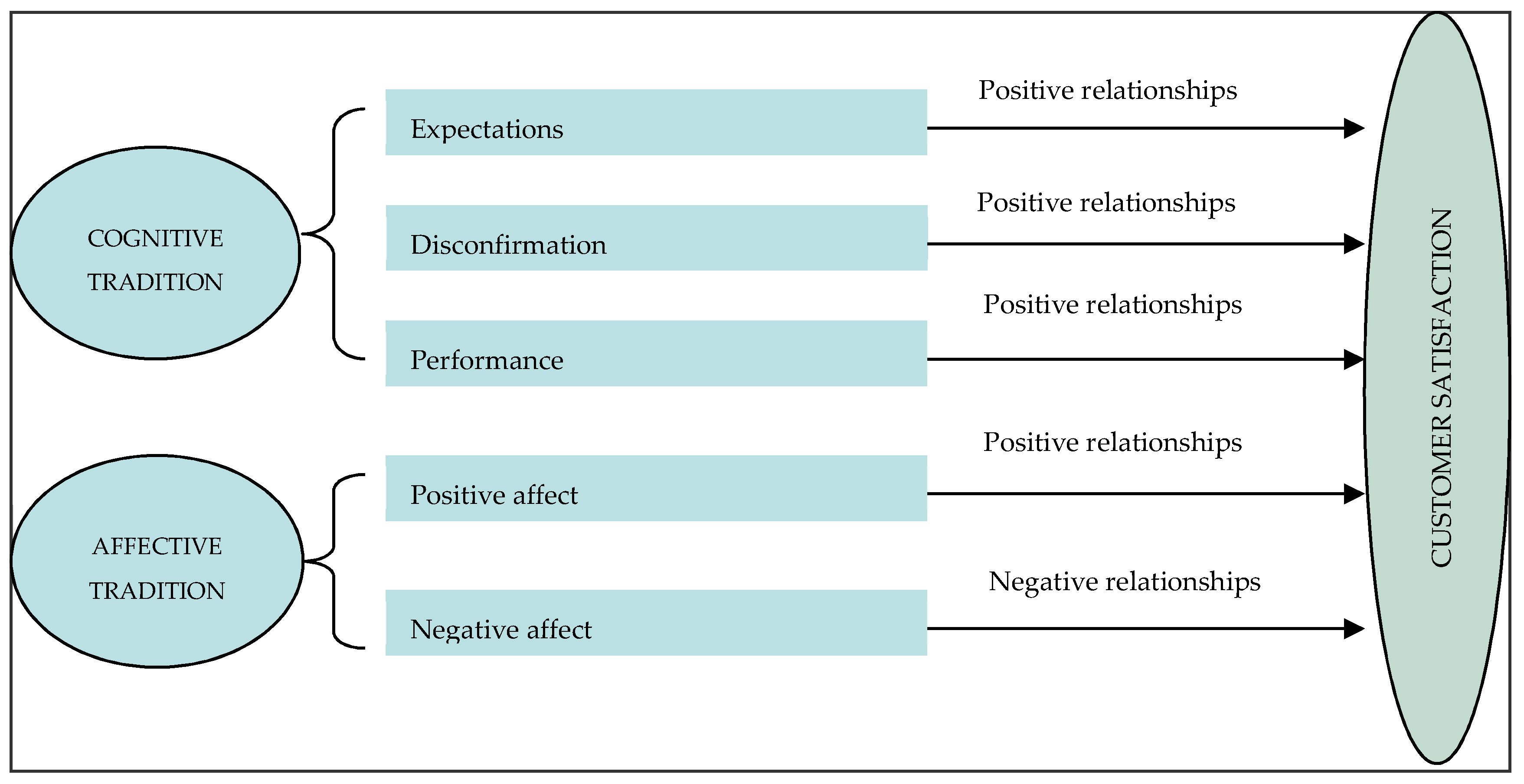
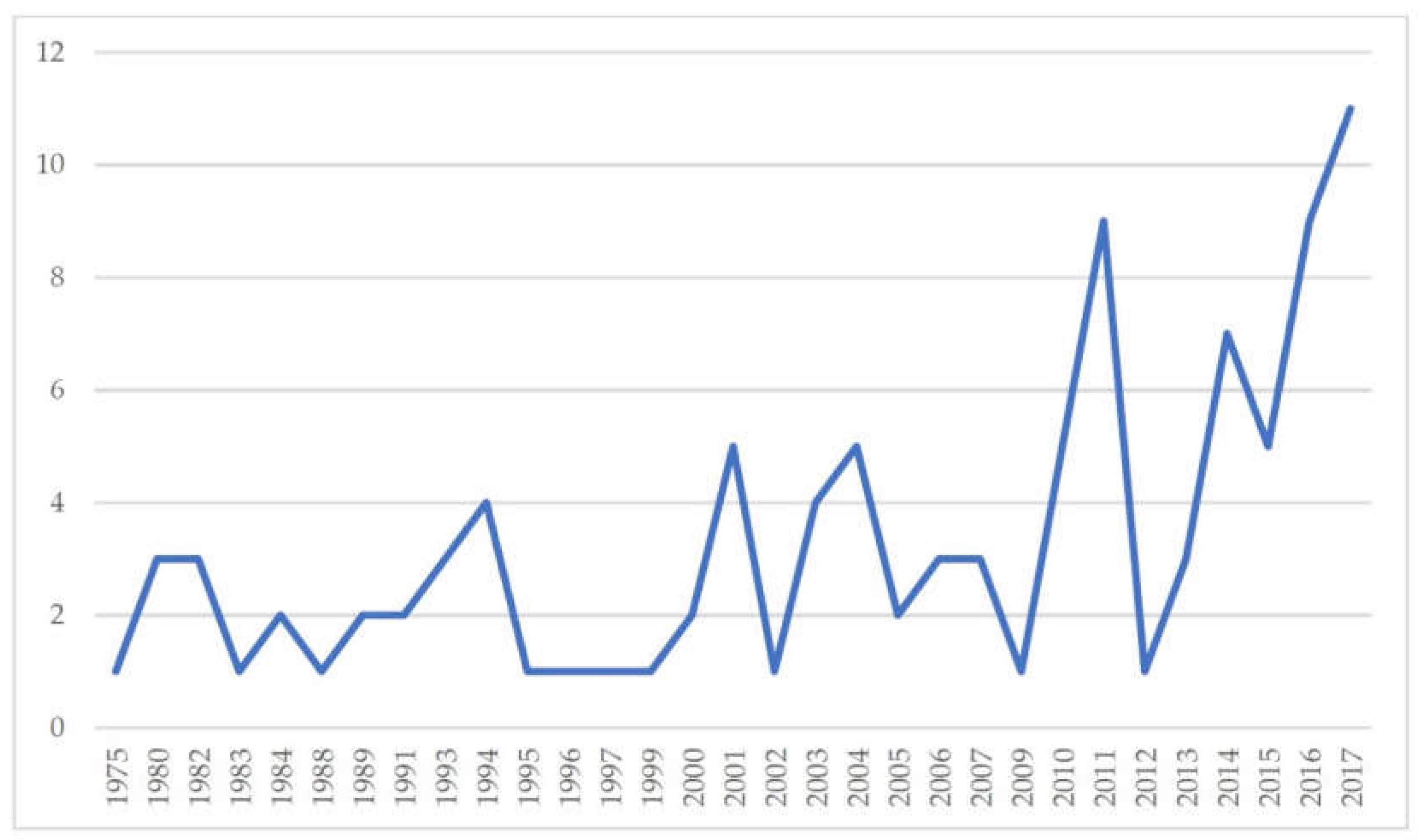

| No. | Year | Contribution | Variables Included | Country | Commerce Area | Instrument for Measuring Consumers’ Satisfaction |
|---|---|---|---|---|---|---|
| 1 | 1975 | Tessler, R., & Mechanic, D. (1975). Consumer satisfaction with prepaid group practice: a comparative study. Journal of Health and Social Behavior, 95–113. | Age, skepticism, readiness to seek care, social desirability bias, worries, time to get to doctor in minutes, reporting that it is inconvenient to get to a doctor, number of days wait to get an appointment, difficulty in getting appointments, waiting time at doctor´s office, waiting time at doctor´s office is too long | USA | Child care and own health care | Not available |
| 2 | 1980 | Westbrook, R. A. (1980). A rating scale for measuring product/service satisfaction. The Journal of Marketing, 68–72. | Expectations realizations for favorable outcomes, realization of expectations for unfavorable outcomes, frequency of repairs, possession of desired features, evoked set composition, insert set composition, complaint activity | USA | Automobiles, banks, watches, washing machines, refrigerators, TV, others | D-T scale: how do you feel about…? 7 point scale from delighted (7) to terrible (1) |
| 3 | 1980 | Westbrook, R. A. (1980). Consumer satisfaction as a function of personal competence/efficacy. Journal of the Academy of Marketing Science, 8(4), 427–437. | Personal competence/efficacy, sex, age, education, washer, dryer, refrigerator, freezer, dishwasher, range/oven. | USA | Major households appliances | Five interval-scale ranging from “very satisfied” to “very dissatisfied” with a middle response category of neither satisfied or dissatisfied |
| 4 | 1980 | Westbrook, R. A. (1980). Intrapersonal affective influences on consumer satisfaction with products. Journal of consumer research, 7(1), 49–54. | Realization of expectations, optimism, pessimism, life satisfaction, consumer discontent, mood, social desirability | USA | Automobiles and footwear | How satisfied are you with this product? 100% completely satisfied/0% not at all satisfied |
| 5 | 1982 | Churchill Jr, G. A., & Surprenant, C. (1982). An investigation into the determinants of customer satisfaction. Journal of marketing research, 491–504. | Expectations, performance, disconfirmation, purchase probability | USA | Hybrid plant; video disk player | Using both belief and affect multi item measures of satisfaction |
| 6 | 1982 | Crosby, L. A., & Taylor, J. R. (1982). Consumer satisfaction with Michigan’s container deposit law: An ecological perspective. The Journal of Marketing, 47–60. | Effectiveness, task convenience, price effect, availability, customer service | USA | Deposit law | Not available |
| 7 | 1982 | Gilly, M. C., & Gelb, B. D. (1982). Post-purchase consumer processes and the complaining consumer. Journal of Consumer Research, 9(3), 323–328. | Percent received; days until complaint resolution | USA | Consumers who complained to the oil company | Not available |
| 8 | 1983 | Bearden, W. O., & Teel, J. E. (1983). Selected determinants of consumer satisfaction and complaint reports. Journal of marketing Research, 21–28. | Expectations, attitudes, intention, complaint reports, disconfirmations | USA | Automobile repair services | Satisfaction defined via for “agree-disagree” statements like those used by Oliver |
| 9 | 1984 | Prakash, V., & Lounsbury, J. W. (1984). The role of expectations in the determination of consumer satisfaction. Journal of the Academy of Marketing Science, 12(3), 1–17. | Predictive expectations, normative expectations, comparative expectations, confirmation of predictive, normative and comparative expectative, post purchase evaluation, intention to repurchase | USA | Fast food, beer | Seven-point semantic differential scale ranging from extremely dissatisfied (1) to extremely satisfied (7) |
| 10 | 1984 | Prakash, V. (1984). Validity and reliability of the confirmation of expectations paradigm as a determinant of consumer satisfaction. Journal of the Academy of Marketing Science, 12(4), 63–76. | Confirmation of predictive, normative, and comparative expectative, post purchase evaluation, predictive expectations, normative expectations, pre-purchase expectations, repurchase | USA | Beer | Not available |
| 11 | 1988 | Tse, D. K., & Wilton, P. C. (1988). Models of consumer satisfaction formation: An extension. Journal of marketing research, 204–212. | Comparison standard, expectation, ideal, equity, disconfirmation, subjective disconfirmation, perceived minus expected, perceived minus equitable, perceived minus ideal, perceived performance | USA | Miniature record player | “… Considering everything, how satisfied are you?” on a five-point bipolar scale ranging from very satisfied to very dissatisfied |
| 12 | 1989 | Oliver, R. L., & Swan, J. E. (1989). Consumer perceptions of interpersonal equity and satisfaction in transactions: a field survey approach. The Journal of Marketing, 21–35. | Buyer’s and seller’s perceptions of fairness, preferences, disconfirmation of expectations, satisfaction and intention of repurchasing. | USA | Automobile buying | Not available |
| 13 | 1989 | Oliver, R. L., & Swan, J. E. (1989). Equity and disconfirmation perceptions as influences on merchant and product satisfaction. Journal of consumer research, 16(3), 372–383. | Salesperson equity advantage, salesperson fairness, salesperson preference, salesperson disconfirmation | USA | Automobile buying | Not available |
| 14 | 1991 | Swan, J. E., & Oliver, R. L. (1991). An applied analysis of buyer equity perceptions and satisfaction with automobile salespeople. Journal of Personal Selling & Sales Management, 11(2), 15–26. | Buyer inputs, amount of attention, large number of visits, amount of bargaining, amount of frustration, amount of time, little energy, overall satisfaction | USA | Automobile buying | Six-item bipolar adjective scale tested in Westbrook and Oliver (1982) |
| 15 | 1991 | Westbrook, R. A., & Oliver, R. L. (1991). The dimensionality of consumption emotion patterns and consumer satisfaction. Journal of consumer research, 18(1), 84–91. | Hostility, pleasant surprise, interest | USA | Automobile buying | 12 Item Likert type scale; seven interval bipolar scale from very satisfied to very satisfied and single item circles scale (Andrews and Witthey |
| 16 | 1993 | Mano, H., & Oliver, R. L. (1993). Assessing the dimensionality and structure of the consumption experience: evaluation, feeling, and satisfaction. Journal of Consumer research, 20(3), 451–466. | Arousal, elation, pleasantness, calmness, quietness, boredom, unpleasantness, distress, positive affectivity, negative affectivity, need, value, interest, positivity appeal | USA | Soap, cereal, toothpaste, personal computer, expensive suit | Oliver´s 12 item Likert type scales |
| 17 | 1993 | Oliver, R. L. (1993). Cognitive, affective, and attribute bases of the satisfaction response. Journal of consumer research, 20(3), 418–430. | Attribute satisfaction, attribute dissatisfaction, Positive affect, Negative affect, disconfirmation | USA | Cars | 12 Item Likert type scale |
| 18 | 1993 | Lai, M., & Widdows, R. (1993). Determinants of consumers’ satisfaction with service: a preliminary study. Journal of Consumer Satisfaction, Dissatisfaction and Complaining Behavior, 6, 166–174. | Reliance, assurance, responsiveness, tangible, empathy, billing process, service outcome (repaired at the 1st time) | USA | Electronic products that need repairs until warranty | Satisfaction index is the sum of three five-point Likert scales |
| 19 | 1994 | Taylor, S. A., & Baker, T. L. (1994). An assessment of the relationship between service quality and customer satisfaction. Journal of retailing, 70(2), 163–178. | Purchase intentions, service quality | USA | Malls | If I needed X services, I believe that I would be satisfied with XYZ´s services seven-point scale from strongly disagree to strongly agree |
| 20 | 1994 | Djupvik, H., & Eilertsen, D. (1994). Customer satisfaction monitoring to understand the market-Norwegian Telecom. Marketing and Research Today, 22(1), 4–18. | Cognitive part of corporative image, emotional part of cognitive image, loyalty | Norway | Telephone service | Not available |
| 21 | 1994 | Liljander, V. (1994). Modeling perceived service quality using different comparison standards. Journal of Consumer Satisfaction, Dissatisfaction and Complaining Behavior, 7, 126–142. | Acceptable service, average of predictive expectations, average of product norm, average of brand norm, average of best brand norm, average of excellent service, average of performance this time, average of performance over time, deserved service, equity in relation to restaurant, equity in relation to friends, performance this time on attributes, performance over time on attributes, intention to revisit the local, satisfaction over time | Finland | Restaurants | A seven-point scale ranging from very unsatisfied to very satisfied |
| 22 | 1994 | Bloemer, J. M., & Kasper, H. D. (1994). The impact of satisfaction on brand loyalty: urging on classifying satisfaction and brand loyalty. Journal of Consumer Satisfaction, Dissatisfaction and Complaining Behavior, 7, 152–160. | Involvement, deliberation, commitment, repeat buying behavior, loyalty | Denmark | Local newspaper | How much are you (dis)satisfied in terms of a percentage varying from 0% to 100% |
| 23 | 1995 | Spreng, R. A., Harrell, G. D., & Mackoy, R. D. (1995). Service recovery: impact on satisfaction and intentions. Journal of Services marketing, 9(1), 15–23. | Satisfaction with proper packing, with driver, with pick up time, with damage, with claims personnel, repurchase intentions, word of mouth | USA | Service recovery | five-points scales anchored by “extremely dissatisfied (1) and “extremely satisfied” (5) |
| 24 | 1996 | Spreng, R. A., MacKenzie, S. B., & Olshavsky, R. W. (1996). A reexamination of the determinants of consumer satisfaction. The Journal of Marketing, 60, 15–32. | Desires versatility, desires picture, perceived performance versatility, perceived performance picture, expectations versatility, expectations picture, desires congruency versatility, desires congruency picture, expectations congruency versatility, expectations congruency picture, attribute satisfaction versatility, attribute satisfaction picture, information satisfaction versatility, information satisfaction picture | USA | Camcorder | Four seven-point scales + M14 anchored as very satisfied/very dissatisfied, very pleased/very displeased, contented/frustrated and delighted/terrible |
| 25 | 1997 | Oliver, R. L., Rust, R. T., & Varki, S. (1997). Customer delight: foundations, findings, and managerial insight. Journal of retailing, 73(3), 311–336. | Surprising, disconfirmation, arousal, positive affect, delight, intention | USA | Recreational wildlife theme park and music concert program | A 10-point Likert type satisfaction scale (Oliver 1997) |
| 26 | 1999 | Jamal, A., & Naser, K. (2003). Factors influencing customer satisfaction in the retail banking sector in Pakistan. International Journal of Commerce and Management, 13(2), 29–53. | Core part of service quality, relational part of service quality, tangible part of service quality, gender | Pakistan | Bank | Not available |
| 27 | 2000 | Tractinsky, N., Katz, A. S., & Ikar, D. (2000). What is beautiful is usable. Interacting with computers, 13(2), 127–145. | Aesthetic, usability, aesthetic expectations, usability expectations | Israel | Pc application | Not available |
| 28 | 2000 | Athanassopoulos, A. D. (2000). Customer satisfaction cues to support market segmentation and explain switching behavior. Journal of business research, 47(3), 191–207. | Service speed, convenient location, staff competence bank friendliness | Not available | Services, bricks mortgages | Customer satisfaction associated with value and value with price. Service speed, convenient location. |
| 29 | 2001 | Bei, L. T., & Chiao, Y. C. (2001). An integrated model for the effects of perceived product, perceived service quality, and perceived price fairness on consumer satisfaction and loyalty. Journal of consumer satisfaction, dissatisfaction and complaining behavior, 14, 125. | Service quality, product quality, price fairness, loyalty | Taiwan | Automobile repair services | A single item asking respondents how satisfied you are with the maintenance center, where 1 is very dissatisfied and 5 very satisfied |
| 30 | 2001 | Malm, U., Lewander, T., OTP Research Group at the University of Gothenburg. Consumer satisfaction in schizophrenia: A 2-year randomized controlled study of two community-based treatment programs. Nordic journal of psychiatry, 55 (44), 91–96. | Symptoms, side effects, social function, distress, career distress | Sweden | Clinical care programs | Not available |
| 31 | 2001 | Martínez-Tur, V., Ramos, J., Peiró, J. M., & García-Buades, E. (2001). Relationships among perceived justice, customers’ satisfaction, and behavioral intentions: The moderating role of gender. Psychological Reports, 88(3), 805–811. | Distributive justice, procedural justice, interactional justice, intentions | Spain | Hotels | Three seven-point scales ranging from 1: strongly disagree to 7: strongly agree |
| 32 | 2001 | Jun, S., Hyun, Y. J., Gentry, J. W., & Song, C. S. (2001). The relative influence of affective experience on consumer satisfaction under positive versus negative discrepancies. Journal of Consumer Satisfaction, Dissatisfaction and Complaining Behavior, 14, 141–153. | Performance, discrepancy, positive affect, negative affect dejection related, negative affect agitation related | South Korea | Not available | Unipolar scale modified from Oliver´s with five points |
| 33 | 2001 | Mittal, V., & Kamakura, W. A. (2001). Satisfaction, repurchase intent, and repurchase behavior: Investigating the moderating effect of customer characteristics. Journal of marketing research, 38(1), 131–142. | Consumer satisfaction, repurchase intention and repurchase behavior. | USA | Vehicles | Satisfaction was measured on a five-point scale (5 = “very satisfied,” 4 = “somewhat satisfied,” 3 = “neither satisfied nor dissatisfied,” 2 = “somewhat dissatisfied,” and 1 = “very dis-satisfied”) to answer the question, “Based on your ownership experience, how would you rate your satisfaction with this vehicle’s manufacturer?” |
| 34 | 2002 | Caughey, C. C., Francis, S. K., Grobe, D., & Hyunchang, E. (2002). Application of satisfaction theory to a predicted event: The Y2K computer problem. Journal of Consumer Satisfaction, Dissatisfaction and Complaining Behavior, 15, 99. | Knowledge, expectations, involvement, view of technology, gender, age, education, religion, income | USA | Case of the Y2K computer bug | A seven-point scale ranging from very unsatisfied to very satisfied |
| 35 | 2003 | Taylor, S. A., & Hunter, G. (2014). An exploratory investigation into the antecedents of satisfaction, brand attitude and loyalty within the B2B ECRM industry. Journal of Consumer Satisfaction, Dissatisfaction & Complaining Behavior, 27. | Loyalty, Trust, attitude, affect, value | USA | Electronic customer relationship management | Five nine-point Likert type scales |
| 36 | 2003 | Soderlund, M., & Ohman, N. (2003). Behavioral intentions in satisfaction research revisited. Journal of Consumer Satisfaction, Dissatisfaction and Complaining Behavior, 16, 53. | Intentions as expectations, intentions as plans, intentions as wants | Sweden | Restaurant | Not available |
| 37 | 2003 | Davidow, M. (2003). Have you heard the word? The effect of word of mouth on perceived justice, satisfaction and repurchase intentions following complaint handling. Journal of Consumer Satisfaction, Dissatisfaction and Complaining Behavior, 16, 67. | Word of mouth balance, repurchase, word of mouth dissemination, procedural justice, distributive justice, interactional justice | Israel | Post complaint | Three items based on a seven-point Likert scale anchored by strongly disagree to strongly agree |
| 38 | 2003 | Wangenheim, F. (2003). Situational characteristics as moderators of the satisfaction-loyalty link: an investigation in a business-to-business context. Journal of Consumer Satisfaction, Dissatisfaction and Complaining Behavior, 16, 145. | Active loyalty, passive loyalty, purchase uncertainty, product importance, switching costs | Germany | Energy provider | A six-item instrument |
| 39 | 2003 | Jones, M. A., Taylor, V. A., Becherer, R. C., & Halstead, D. (2003). The impact of instruction understanding on satisfaction and switching intentions. Journal of consumer satisfaction, dissatisfaction and complaining behavior, 16, 10. | Positive word of mouth, switching intentions, instruction understanding | USA | Health care Insurance | A seven-point scale |
| 40 | 2004 | Shih, H. P. (2006). Assessing the effects of self-efficacy and competence on individual satisfaction with computer use: An IT student perspective. Computers in Human Behavior, 22(6), 1012–1026. | Self-efficacy, competence, near term consequences, long term consequences | Taiwan | Computer users | Three items based on a seven-point Likert scale: I was satisfied with computer use, after using it I’m pleased with it, after using it I feel it meets my needs |
| 41 | 2004 | Lee, E. J.; Overby, J. W. (2004). Creating value for online shoppers: Implications for satisfaction and loyalty. Creating value for Online Shoppers. Implications for Satisfaction and Loyalty, 54–67. | Price savings, service time savings, selection entertainment, visual escape interaction, loyalty, utilitarian, hedonic, loyalty | USA | Internet commerce | Three item scales: (a) I like doing business with this internet retailer (b) I’ve a favorable attitude to continuing to do business (c) this internet retailer has desirable features |
| 42 | 2004 | Moshavi, D. (2004). He Said, She Said: Gender Bias and Customer Satisfaction with Phone-Based Service Encounters. Journal of Applied Social Psychology, 34(1), 162–176. | Employee gender, gender dyad match | USA | Call center environment | Five-point scale ranging from 1 (poor) to 5 (excellent) |
| 43 | 2004 | Alcañiz, J. E. B., & Simó, L. A. (2004). Modelo cognitivo-afectivo de la satisfacción en servicios de ocio y turismo. Cuadernos de Economía y Dirección de la Empresa, (21), 89–120. | Disconfirmation, arousal, loyalty, intention to repurchase | Spain | Recreational park and interactive museum clients | Five items based on a five-point Likert scale |
| 44 | 2004 | Ribbink, D., Van Riel, A. C., Liljander, V., & Streukens, S. (2004). Comfort your online customer: quality, trust and loyalty on the internet. Managing Service Quality: An International Journal, 14(6), 446–456. | Ease of use, website design, customized approach | Not available | Online service | Impact functionality, accessibility of information, ease of ordering and navigation impact satisfaction |
| 45 | 2005 | Martínez-Tur, V., Peiró, J. M., & Ramos, J. (2005). Linking situational constraints to customer satisfaction in a service environment. Applied Psychology, 54(1), 25–36. | Social elements, technical elements | Spain | Gym | Asking the subject about 10 attributes of the gym using a seven-point Likert scale where 1: very dissatisfied and 7: very satisfied |
| 46 | 2005 | Homburg, C., Koschate, N., & Hoyer, W. D. (2005). Do satisfied customers really pay more? A study of the relationship between customer satisfaction and willingness to pay. Journal of Marketing, 69(2), 84–96. | Price the consumers would be willing to pay for | Not available | New restaurant | Multiple items: All in all, I would be satisfied with this restaurant. The restaurant would meet my expectations Overall, how satisfied would you be with the restaurant visit just described? Strongly disagree to Strongly agree or Very dissatisfied to Very satisfied (nine-point scale) |
| 47 | 2006 | Yu, Chang-Hsi;Chang, Hsiu-Chen;Huang, Gow-Liang. A study of service quality, customer satisfaction and loyalty in Taiwanese leisure industry. The Journal of American Academy of Business, 2006, vol. 9, no 1. | Tangibles, reliability, responsiveness, assurance, empathy, loyalty | Taiwan | Sugar industry | Modified version of the Service Quality (SERVQUAL) |
| 48 | 2006 | Hsu, H. (2006). An empirical study of web site quality, customer value, and customer satisfaction based on e-shop. The Business Review, 5(1), 190–193. | Website quality, web information quality, product quality, customer value, performance outcomes | USA | Internet shoppers | Four items using a five-point Likert scale ranging from strongly agree (5) to strongly disagree (2) I was very satisfied after shopping online I had a pleasurable experience in my online shopping I’m satisfied with the function I like shopping on line |
| 49 | 2006 | Suh, J. C., & Youjae, Y. (2006). When brand attitudes affect the customer satisfaction-loyalty relation: the moderating role of product involvement. Journal of Consumer Psychology, 16(2), 145–155. | Satisfaction with proper packing, with driver, with pick up time, with damage, with claims personnel, repurchase intentions, word of mouth | Korea | Goods and Cosmetics company | Satisfaction as an evaluative summary of the consumption experience, based on the differences between expectation and the actual performance perceived |
| 50 | 2007 | Heitmann, M., Lehmann, D. R., & Herrmann, A. (2007). Choice goal attainment and decision and consumption satisfaction. Journal of marketing research, 44(2), 234–250. | Five goals (justifiability, confidence, anticipated regret, evaluation costs, and final negative affect), decision and consumption satisfaction, loyalty, product recommendations, and the amount and valence of word | Germany | Consumer electronics market | Consumption satisfaction adapted from Oliver (1997) and decision satisfaction, based on Fitzsimons (2000); Fitzsimons, Greenleaf, and Lehmann (1997); Zhang and Fitzsimons (1999) |
| 51 | 2007 | Herrmann, A., Xia, L., Monroe, K. B., & Huber, F. (2007). The influence of price fairness on customer satisfaction: an empirical test in the context of automobile purchases. Journal of Product & Brand Management, 16(1), 49–58. | Price perceptions, satisfaction, perceptions of price fairness, consumers’ vulnerability, and the urgency of need from the consumers’ side | Germany | Automobile purchases | Two measures of satisfaction: with the dealer’s service, and overall. The first includes items related to friendliness of the staff, the impression obtained when purchasing accessories, satisfaction with the information provided by the dealer, and satisfaction with the dealer’s general commitment (Burmann, 1991; Ostrom and Spreng et al., 1996). The second assessment includes items related to overall satisfaction with the purchase and intention to complain. |
| 52 | 2007 | Cristobal, E., Flavian, C., & Guinaliu, M. (2007). Perceived e-service quality (PeSQ) Measurement validation and effects on consumer satisfaction and web site loyalty. Managing service quality: An international journal, 17(3), 317–340. | Service quality | Not available | Online service | Dimensions of web design, customer service assurance, and order management are found. |
| 53 | 2009 | Kim, J., Jin, B., & Swinney, J. L. (2009). The role of etail quality, e-satisfaction and e-trust in online loyalty development process. Journal of retailing and Consumer services, 16(4), 239–247. | Purchase experience by focusing on four dimensions of etail quality that go beyond website functionality or system quality aspects: fulfillment/reliability, website design, security/privacy and responsiveness, e-loyalty, e-satisfaction, and e-trust | USA | Online purchase experience | E-satisfaction items were developed by the researcher based on Fornell et al. (1996). The final set of items included a total of 11 items for etail quality and 14 items for e-trust, e-loyalty, and e-satisfaction. E-satisfaction was measured with: I am satisfied with the product of this online retailer; I am overall satisfied with this online retailer; I am satisfied with the purchase experience at this online retailer. |
| 54 | 2010 | Gounaris, S., Dimitriadis, S., & Stathakopoulos, V. (2010). An examination of the effects of service quality and satisfaction on customers’ behavioral intentions in e-shopping. Journal of services marketing, 24(2), 142–156. | Service quality and satisfaction, three consumer behavioral intentions, namely word-of-mouth, site revisit, and purchase intentions | Greece | Internet shopping | Two aspects of satisfaction: satisfaction with the e-encounter and satisfaction with the process. Satisfaction with the encounter: four items with a 10-point answer scale. Satisfaction from the process with the e-store experience: four items and a 10-point measurement. |
| 55 | 2010 | Tung, F. (2010). Exploring customer satisfaction, perceived quality and image: An empirical study in the mobile services industry. The Business Review, 14(2), 63–69. | Perceived quality, perceived value, image, ease of use | Not available | Mobile phone services | Expectations of service quality, perceived quality, perceived value, image, ease of use lead to satisfaction |
| 56 | 2010 | Chung, K. H., & Shin, J. I. (2010). The antecedents and consequents of relationship quality in internet shopping. Asia Pacific Journal of Marketing and Logistics, 22(4), 473–491. | Site characteristics (communication of site characteristics, shopping convenience, site design, informativeness, and security), e-commitment, e-trust, customer satisfaction, trust, positive word of mouth (WOM), and commitment in offline | South Korea | Online retailing | Customer satisfaction was measured using three items developed by Sahadev and Purani (2008) and Ha and Fanda (2008). |
| 57 | 2010 | Carlson, J., & O’Cass, A. (2010). Exploring the relationships between e-service quality, satisfaction, attitudes and behaviours in content-driven e-service web sites. Journal of services marketing, 24(2), 112–127. | Website factors influencing attitude entertainment, informativeness, and organization | Australia | Online service | Website factors influencing attitude are entertainment, informativeness, and organization |
| 58 | 2010 | Ha, H. Y., Muthaly, S. K., & Akamavi, R. K. (2010). Alternative explanations of online repurchasing behavioral intentions: A comparison study of Korean and UK young customers. European Journal of Marketing, 44(6), 874–904. | Customized information and perceived interactivity | Korea and the UK | Online products | Consumers rely more on peer recommendations than experience with vendor in making purchases |
| 59 | 2011 | Dong, S., Ding, M., Grewal, R., & Zhao, P. (2011). Functional forms of the satisfaction–loyalty relationship. International Journal of Research in Marketing, 28(1), 38–50. | Expectancy disconfirmation performance versus other product or service in the category, performance versus the customer’s ideal product or service in the category, repurchase intention | China | Air conditioner, computer, mobile, phone, refrigerator | Single item: overall satisfaction |
| 60 | 2011 | Anderson, R. E., & Swaminathan, S. (2011). Customer satisfaction and loyalty in e-markets: A PLS path modeling approach. Journal of Marketing Theory and Practice, 19(2), 221–234. | Customer satisfaction and Loyalty. Inertia and trust | Not available | Not available | New instruments with multiple scaled items for customer satisfaction, loyalty, inertia and trust. Likert-type response scale with seven items. |
| 61 | 2011 | Yao, C., & Liao, S. (2011). Measuring the Antecedent Effects of Service Cognition and Internet Shopping Anxiety on Consumer Satisfaction with E-Tailing Service. Management & Marketing, 6(1), 59–78. | Reliability, attentiveness, ease of use, access, security, credibility | Not available | E-goods and services shopping | Internet shopping as inherently riskier for shoppers |
| 62 | 2011 | Al-Maghrabi, T., Dennis, C., & Vaux Halliday, S. (2011). Antecedents of continuance intentions towards e-shopping: the case of Saudi Arabia. Journal of Enterprise Information Management, 24(1), 85–111. | Site-quality, trust, gender, age, educations, amount of internet spending | Not available | E-shopping; goods and services unspecified | Perceived usefulness, enjoyment, and subjective norms, and online shopping continuance. |
| 63 | 2011 | Vila, N., & Kuster, I. (2011). Consumer feelings and behaviours towards well designed websites. Information & Management, 48(4–5), 166–177. | Purchase intention, positive attitudes, trust, satisfaction and perceived risk | Spain | Spanish textile industry | PS.1. I think I made the correct decision in using this website. PS.2. Experience of this website has been satisfactory, PS.3. I am satisfied with this website, PS.4. I am satisfied with the service provided by this website |
| 64 | 2011 | Cho, Y., Park, J., Han, S. H., & Kang, S. (2011). Development of a web-based survey system for evaluating affective satisfaction. International Journal of Industrial Ergonomics, 41(3), 247–254. | Affective satisfaction and design features of the mobile phones | South Korea | Mobile phones | The six dimensions of affective satisfaction proposed by Hong (2005) were used in this study (Delicacy, Simplicity, Color, Attractiveness, Luxuriousness, Overall satisfaction). |
| 65 | 2011 | Thirumalai, S., & Sinha, K. K. (2011). Customization of the online purchase process in electronic retailing and customer satisfaction: An online field study. Journal of Operations Management, 29(5), 477–487. | Decision customization, transaction customization, customer satisfaction with different aspects of the online decision-making and transaction sub-processes website (customer sup- port, order tracking, ease of ordering, shipping & handling, and on-time performance). | Not available | Electronic retailing | Customer satisfaction with the decision-making sub-process is reflective of the decision-making sub-process, we identified variables (product information and ease of ordering) that were directly affected by decision customization features, such as personalized product recommendation, and capture customer satisfaction with the pre-purchase decision making at a retailer’s website. |
| 66 | 2011 | Anderson, R. E., & Swaminathan, S. (2011). Customer satisfaction and loyalty in e-markets: A PLS path modeling approach. Journal of Marketing Theory and Practice, 19(2), 221–234. | Adaptation, commitment, network, assortment, transaction ease, engagement, Satisfaction, loyalty, customer trust, and inertia | Not available | Online shopping | Scale items for satisfaction were adapted from Oliver (1980) |
| 67 | 2011 | Lin, C. C., Wu, H. Y., & Chang, Y. F. (2011). The critical factors impact on online customer satisfaction. Procedia Computer Science, 3, 276–281. | Information quality, system quality, service quality, product quality, delivery quality and perceived price, and customers’ satisfaction | Taiwan | Online purchase experience | User satisfaction items were adapted from Anderson and Srinivasan, 2003 |
| 68 | 2012 | Myers, C. A., & Mintu-Wimsatt, A. (2012). Exploring antecedents influencing internet shopping satisfaction: the case of the apparel industry. International Journal of Business and Social Science, 3(8). | Attitudes towards using the web for retailing, interest, convenience, prior experience, shopping innovativeness, perceived usefulness and tactile importance, and e-satisfaction | USA | Online apparel | E-satisfaction: a seven-point highly likely/unlikely bipolar scale was developed by the researchers to capture Internet satisfaction. This was adopted from Yoh et al. (2003). |
| 69 | 2013 | Ariff, M. S. M., Yun, L. O., Zakuan, N., & Ismail, K. (2013). The impacts of service quality and customer satisfaction on customer loyalty in internet banking. Procedia-Social and Behavioral Sciences, 81, 469–473. | Assurance-fulfillment, efficiency-system availability, privacy, contact-responsiveness and website aesthetics and guide constitute, e-Service quality, e-satisfaction, e-loyalty | Malaysia | Internet banking | E-satisfaction of internet banking, adapted based on the construct of e-satisfaction proposed by Schaupp & Bélanger (2005). |
| 70 | 2013 | Liu, W. Y., Lin, C. C., Lee, Y. S., & Deng, D. J. (2013). On gender differences in consumer behavior for online financial transaction of cosmetics. Mathematical and Computer Modelling, 58(1–2), 238–253. | Consumers’ perception, importance, satisfaction for online shopping, and the same variables for purchasing cosmetics on line | Taiwan | Internet marketing and online financial transactions on cosmetic products | Level of satisfaction with the most recent online purchase of cosmetics. A Likert five-point scale was used, with 1 meaning ‘‘strongly disagree, very unimportant, very dissatisfied’’, 2 meaning ‘‘disagree, unimportant, dissatisfied’’, 3 meaning ‘‘average’’, 4 meaning ‘‘agree, important, satisfied’’ and 5 meaning ‘‘strongly agree, very important, very satisfied’’ |
| 71 | 2013 | Al-Manasra, E., Khair, M., Zaid, S. A., & Taher Qutaishat, F. (2013). Investigating the impact of website quality on consumers’ satisfaction in Jordanian telecommunication sector. Arab Economic and Business Journal, 8(1–2), 31–37. | Websites quality (usability, information quality and service interaction) and consumer’s satisfaction. | Jordan | Telecommunication organizations | Nine items (seven-point Likert scales (1 = strongly disagree; 7 = strongly agree). (‘‘I am satisfied with my decision to purchase from this website”). Adapted from Billy, Rob & Ivan, 2008; Flavian, Guinaliu & Gurrea, 2006; Chang & Cheng, 2008). |
| 72 | 2014 | Polychronidou, P., Valsamidis, S., Kazanidis, I., Theodosiou, T., & Karasavvoglou, A. (2014). E-consumers’ Perception–An Empirical Research. Procedia Economics and Finance, 9, 433–438. | Relation of e-consumers with the applications of e-commerce (reasons for not shopping online, perception of security for e-commerce, their attitude when buying and their consuming satisfaction | Greece | E-commerce | Customer’s satisfaction was measured by five questions about e-commerce (use of e-commerce is good, smart, useful, and pleasant). |
| 73 | 2014 | Bressolles, G., Durrieu, F., & Senecal, S. (2014). A consumer typology based on e-service quality and e-satisfaction. Journal of Retailing and Consumer Services, 21(6), 889–896. | E-service quality five dimensions: Information, Ease-of-use, aesthetics, reliability, and security/privacy. Additionally: cognitive, affective, and conative e-consumers’ satisfaction | France | Online travel, cultural goods (books, CDs, DVDs, etc.), and electronics goods, e-commerce | E-satisfaction was assessed with a measurement scale adapted from Oliver’s (1997) scale. This scale measures the cognitive, affective, and conative dimensions of satisfaction on a commercial website. All items were assessed with five-point Likert-type scales. |
| 74 | 2014 | Hsiao, W. H., & Chang, T. S. (2014). Understanding consumers’ continuance intention towards mobile advertising: a theoretical framework and empirical study. Behaviour & Information Technology, 33(7), 730–742. | Perceived value, perceived usefulness, trust, continuance intention, consumer satisfaction, and confirmation of expectations | Not available | Mobile advertising | Satisfaction: How do you feel about your overall experience of mobile ads use: SAT 1: Very dissatisfied/Very satisfied. SAT 2: Very displeased/Very pleased. SAT 3: Very frustrated/Very contented. SAT 4: Terrible/Absolutely delighted. With a seven-point Likert scale, in which 1 indicates ‘strongly disagree’ and 7 ‘strongly agree’. |
| 75 | 2014 | Tsai, M. H., Liao, C., & Hsieh, R. G. (2014). Customer dissemination of negative word-of-mouth: Influence of expected or unexpected events. Social Behavior and Personality: an international journal, 42(10), 1675–1687. | Expected or unexpected costs affect restaurant customers’ attitudes toward the dissemination of negative word-of-mouth (WOM) when service failure occurs | Not available | Restaurant’s services | Seven-point Likert-type scale, with response alternatives ranging from 1 = strongly disagree to 7 = strongly agree, to measure how strong the customer’s intention was to spread negative WOM as each event occurred, and used items developed by Wetzer, Zeelenberg, and Pieters (2007) |
| 76 | 2014 | Eisenbeiss, M., Cornelißen, M., Backhaus, K., & Hoyer, W. D. (2014). Nonlinear and asymmetric returns on customer satisfaction: do they vary across situations and consumers?. Journal of the Academy of Marketing Science, 42(3), 242–263. | Share of wallet and willingness to pay | Not available | Rail freight transport | Single item and multiple items seven-point scale. Customer Satisfaction was predicted as a second-order formative construct of expectations, performance, and disconfirmation of expectations |
| 77 | 2014 | Hsu, J. S., Lin, T. C., & Tsai, J. (2014). Does confirmation always matter? Extending confirmation-based theories. Behaviour & Information Technology, 33(11), 1219–1230. | Perceived utilitarian Benefit, perceived hedonic benefit, satisfaction, continuance intention | Taiwan | Online services Facebook users | Satisfaction four items adopted from Spreng et al. (1996) were used to capture the extent to which respondents feel satisfied, pleased, contented, and delighted through the use of Facebook. |
| 78 | 2014 | Yang, Y., Liu, X., Jing, F., & Li, J. (2014). How does perceived value affect travelers’ satisfaction and loyalty?. Social Behavior and Personality: an international journal, 42(10), 1733–1744. | Quality value, Emotional value, Price value, Experiential value, Satisfaction, Loyalty | China | Tourism | Customer satisfaction from the measure by Gallarza and Gil Saura (2006) and Konecnik and Gartner (2007). Seven-point Likert scale rated from 1 = strongly disagree to 7 = strongly agree. |
| 79 | 2014 | Yu, H. S., Zhang, J. J., Kim, D. H., Chen, K. K., Henderson, C., Min, S. D., & Huang, H. (2014). Service quality, perceived value, customer satisfaction, and behavioral intention among fitness center members aged 60 years and over. Social Behavior and Personality: an international journal, 42(5), 757–767. | Service quality, perceived value, customer satisfaction, and behavioral intention | Seoul, South Korea | Sport and fitness centers | Four customer satisfaction items were adapted from Oliver (1980) Participants rated each item on a seven-point Likert-type scale, ranging from 1 (strongly disagree) to 7 (strongly agree). |
| 80 | 2015 | Wu, I. L., & Huang, C. Y. (2015). Analyzing complaint intentions in online shopping: the antecedents of justice and technology use and the mediator of customer satisfaction. Behavior & Information Technology, 34(1), 69–80. | Distributive justice, procedural justice, interactional justice, confirmation, perceived usefulness, satisfaction, complaint intention | Taiwan | Online Shopping | Satisfaction five items Satisfaction: My experience of using online stores is very satisfactory. My experience of using online stores is very pleasing. My experience of using online stores is very encouraging. Purchasing products from online stores is a good idea. I like to purchase products from online stores. |
| 81 | 2015 | Kim, J. W., & Jeong, S. H. (2015). The role of causal attributions in sport consumers’ emotions and satisfaction judgment. Social Behavior and Personality: an international journal, 43(5), 803–814. | Internal control and stability causal attribution dimensions and consumer satisfaction | USA | Focal university football team | Consumer Satisfaction Scale developed by Madrigal and Chen (2008). It is composed of four items rated on a 10-point Likert type scale from 1 = strongly disagree to 10 = strongly agree, for example, “I am satisfied with the way my favorite team performed in this week’s game” and “If I had to do it over again, I would feel differently about selecting this team as my favorite this week” (reverse scored). |
| 82 | 2015 | Möhlmann, M. (2015). Collaborative consumption: determinants of satisfaction and the likelihood of using a sharing economy option again. Journal of Consumer Behaviour, 14(3), 193–207. | Community belonging, cost savings, environmental impact, familiarity, Internet capability, service quality, smartphone capability, trend affinity, trust, utility, satisfaction, likelihood of choosing | Germany | Collaborative consumption services (CCS) | Satisfaction with sharing option: (Fornell et al., 1996). Overall, I am satisfied with [CCS]. The last use of [CCS] fulfilled my expectations. [CCS] represents the ideal version of a car/accommodation sharing option. Scale answer options anchored 1 = “strongly disagree” and 7 = “strongly agree” and included the additional option = “I cannot tell”. |
| 83 | 2015 | Li, Y. (2015). Impact of impulsive buying behavior on post impulsive buying satisfaction. Social Behavior and Personality: an international journal, 43(2), 339–351. | Impulsive buying behavior, mixed emotion response, and consumers’ post impulsive buying satisfaction | China | Shopping in general | Self-developed scale to measure post impulsive buying satisfaction according to the definition of post impulsive buying satisfaction and with reference to Lin et al. (2005). Responses were rated on a seven-point Likert scale, ranging from 1 (strongly disagree) to 7 (strongly agree). The scale contains three items, such as “This purchase meets my expectations.” |
| 84 | 2016 | Moriuchi, E., & Takahashi, I. (2016). Satisfaction trust and loyalty of repeat online consumer within the Japanese online supermarket trade. Australasian Marketing Journal (AMJ), 24(2), 146–156. | Marketing mix (product, place, promotion, and price), experience, loyalty, e-satisfaction, e-trust | Japan | Online supermarket | E-satisfaction was measured by a three-item scale, which included items on product choices, overall satisfaction with purchases and overall satisfying online shopping experiences. |
| 85 | 2015 | Gao, L., Waechter, K. A., & Bai, X. (2015). Understanding consumers’ continuance intention towards mobile purchase: A theoretical framework and empirical study–A case of China. Computers in Human Behavior, 53, 249–262. | System information quality, privacy and security concerns, trust, service quality, flow, and satisfaction | China | Mobile purchase | Items measuring satisfaction towards mobile purchase adapted from Bhattacherjee (2001). Items of satisfaction reflect respondents’ satisfaction, contentment and pleasure. All items were measured using a seven-point Likert-type scale with anchors from 1 = strongly disagree to 7 = strongly agree |
| 86 | 2016 | Rivera, J. J., Bigne, E., & Curras-Perez, R. (2016). Effects of corporate social responsibility perception on consumer satisfaction with the brand. Spanish Journal of Marketing-ESIC, 20(2), 104–114. | Corporate Social Responsibility (CSR, brand attitudes) and consumer satisfaction | Spain | Sportswear sector | Customer satisfaction, sat1: The brand meets my expectations, sat2: The brand has the expected quality, sat3: I am satisfied to buy this brand; sat4: I have done the right thing by buying this brand |
| 87 | 2016 | Keng, C. J., Chang, W. H., Chen, C. H., & Chang, Y. Y. (2016). Mere virtual presence with product experience affects brand attitude and purchase intention. Social Behavior and Personality: an international journal, 44(3), 431–444. | Mere virtual presence and mere virtual presence with product experience) led to different brand attitude and purchase intention | Taipei, Taiwan | Apparel brands consume | Not available |
| 88 | 2016 | Yu, Y., Jing, F., Su, C. T., Zhou, N., & Nguyen, B. (2016). Impact of material versus experiential purchase types on happiness: The moderating role of self-discrepancy. Journal of Consumer Behaviour, 15(6), 571–579. | Self-discrepancy, purchase happiness, type of purchase (experiential versus material) | China | Material purchases | Not available |
| 89 | 2016 | Hopp, T., & Barker, V. (2016). Investigating the influence of age, social capital affinity, and flow on positive outcomes reported by e-commerce site users. Behaviour & Information Technology, 35(5), 380–393. | Age, social capital affinity (the sense of community and likeness felt for people online), experience of flow (concentrated engagement in/enjoyment of an activity), e-commerce sites’ satisfaction, affirmation, incidental knowledge gain, and focused knowledge gain. | USA | E-commerce sites | E-commerce site satisfaction; three items were adapted from Hennig-Thurau, Gwinner, and Gremler’s (2002) customer satisfaction scale, Casaló, Flavián, and Guinaliu’s (2008), and O’Cass and Carlson’s (2010) website satisfaction scales. The measures were as follows: choosing to visit this site was a wise one; this site does a good job of satisfying my needs; and I did the right thing in visiting this site |
| 90 | 2016 | Zboja, J. J., Laird, M. D., & Bouchet, A. (2016). The moderating role of consumer entitlement on the relationship of value with customer satisfaction. Journal of Consumer Behaviour, 15(3), 216–224. | Consumer entitlement, satisfaction, service quality, and value | USA | Season ticket holders of the National Hockey League franchise | Satisfaction was measured via a five-item subscale of Oliver’s (1997) consumption satisfaction scale. Five-point Likert- type format with endpoints of strongly disagree (1) and strongly agree (5). |
| 91 | 2016 | Chung, B. D., Park, J. H., Koh, Y. J., & Lee, S. (2016). User satisfaction and retention of mobile telecommunications services in Korea. International Journal of Human-Computer Interaction, 32(7), 532–543. | Mobile telecommunications features and services (usability, connection stability and speed, apps directly provided and managed by mobile telecommunications companies, packet loss) and customers satisfaction | South Korea | Mobile telecommunications services and features | Questionnaire for user satisfaction (translated into English). Overall Satisfaction (I am satisfied with my mobile telecommunications services), and 13 items for detailed satisfaction: |
| 92 | 2016 | Savoy, A., & Salvendy, G. (2016). Factors for Customer Information Satisfaction: User Approved and Empirically Evaluated. International Journal of Human–Computer Interaction, 32(9), 695–707. | Content preparation: general product description, member trans- action, product appearance, customer service, product quality, company reputation, policies., and customer satisfaction. | USA | Online customers | Customer information satisfaction |
| 93 | 2016 | Doucé, L., Janssens, W., Leroi-Werelds, S., & Streukens, S. (2016). What to diffuse in a gender-specific store? The effect of male and female perfumes on customer value and behaviour. Journal of Consumer Behaviour, 15(3), 271–280. | The pleasantness and stimulating nature of the perfumes, product excellence, and social dimension of customer value (aesthetic value and altruistic value), play and efficiency, customer satisfaction, and repurchase intention | Belgium | Perfume consume | Customer satisfaction, Wirtz and Lee’s (2003) 11-point scale was used, answered on seven-point Likert scales |
| 94 | 2017 | Tudoran, A. A., & Olsen, S. O. (2017). Analyzing the returns of the first transaction satisfaction on intention to purchase and willingness to pay: Evidence for new food products. Journal of Consumer Behaviour, 16(4), 372–386. | First transaction consumer satisfaction, purchase intention, willingness to pay for new food products | Spain (A Coruna, Valencia, and Madrid) | Three product-testing field experiments with consumers in different natural settings | A multi-item seven-point semantic differential scale from −3 to 3 was used to measure consumers’ degree of satisfaction with the new product |
| 95 | 2017 | Park, E., Kim, K. J., & Kwon, S. J. (2017). Corporate social responsibility as a determinant of consumer loyalty: An examination of ethical standard, satisfaction, and trust. Journal of Business Research, 76, 8–13. | Value relevance, ethical standard, commitment to Corporate Social Responsibility, satisfaction, trust, and loyalty | South Korea | Retail consumers | ST1: My experience with the company has been satisfactory.ST2: The company provides excellent services or products. ST3: My choice to contact the company was a wise one. Chen, Lai, and Ho (2015), Loureiro, Sardinha, and Reijnders (2012) |
| 96 | 2017 | Nisar, T. M., & Prabhakar, G. (2017). What factors determine e-satisfaction and consumer spending in e-commerce retailing? Journal of Retailing and Consumer Services, 39, 135–144. | E- satisfaction on consumer spending in e-commerce retailers | USA | E-commerce retailers | Customer satisfaction (the America’s customer satisfaction index (ACSI) score is calculated as a weighted average of three survey questions that measure different facets of satisfaction with a product or service). First, please consider all your experiences to date with (Company/Brand). Using a ten-point scale on which “1” means “very dissatisfied” and “10” means “very satisfied, how satisfied are you with (Company/Brand)? |
| 97 | 2017 | Shi, X., & Liao, Z. (2017). Online consumer review and group-buying participation: The mediating effects of consumer beliefs. Telematics and Informatics, 34(5), 605–617. | Online consumer review, consumer perceptions of effectiveness, structure assurance, and familiarity with intermediary, consumer satisfaction and trust in intermediary, consumer continuance use of online group-buying | Hong Kong | Individual consumers of Groupon | SAT1: I make effective decisions of group-buying. SAT2: I am satisfied with online group-buying services. SAT3: My expectation is met from online group-buying. SAT4: I am happy with the online group-buying process |
| 98 | 2017 | Qazi, A., Tamjidyamcholo, A., Raj, R. G., Hardaker, G., & Standing, C. (2017). Assessing consumers’ satisfaction and expectations through online opinions: Expectation and disconfirmation approach. Computers in Human Behavior, 75, 450–460. | Online opinions, expectations, perceived performance, disconfirmation, and satisfaction | Not available | Users of the groups online information systems, such as digital marketing, tourism, business intelligence, and the hotel industry. | Satisfaction 1. Using the online review makes me feel very satisfied, 2. Using the online reviews makes me feel very connected with others, 3. Using the online reviews makes me feel pleased with others |
| 99 | 2017 | Garaus, M. (2017). Atmospheric harmony in the retail environment: Its influence on store satisfaction and re-patronage intention. Journal of Consumer Behaviour, 16(3), 265–278. | Atmospheric harmony, environmental pleasure, satisfaction, re-patronage intention, atmospheric responsiveness | Not available | Shopping experience local wine retail store during a wine tasting event | A single item assessed store satisfaction (Bloemer and de Ruyter, 1998). Example: I am satisfied with this store. |
| 100 | 2017 | Qazi, A., Tamjidyamcholo, A., Raj, R. G., Hardaker, G., & Standing, C. (2017). Assessing consumers’ satisfaction and expectations through online opinions: Expectation and disconfirmation approach. Computers in Human Behavior, 75, 450–460. | Positive, negative and neutral sentiment words, online opinions, expectations, perceived performance, disconfirmation, and satisfaction | Malaysia | Tourism, business intelligence, and the hotel industry | Satisfaction level of users associated with online reviews is calculated by three items (SA1–3). 1. Using the online review makes me feel very satisfied (strongly disagree … strongly agree), 2. Using the online reviews makes me feel very connected with others (strongly disagree/strongly agree); 3. Using the online reviews makes me feel pleased with others |
| 101 | 2017 | Ruiz-Mafe, C., Chatzipanagiotou, K., & Curras-Perez, R. (2018). The role of emotions and conflicting online reviews on consumers’ purchase intentions. Journal of Business Research, 89, 336–344. | Informativeness, persuasiveness, helpfulness, credibility, empathy, pleasure, arousal, intention to visit | Spain | Spanish users of the TripAdvisor website | Multiple items scale from Cheung et al. (2012); Zhang et al. (2014), Yin et al. (2014) |
| 102 | 2017 | Zhao, Y., Xu, X., & Wang, M. (2019). Predicting overall customer satisfaction: Big data evidence from hotel online textual reviews. International Journal of Hospitality Management, 76, 111–121. | Subjectivity, diversity, readability, polarity, length, involvement | Not available | Reviews from tripadvisor.com | Customer Ratings, overall customer evaluation of the hotel from one to five ratings |
| 103 | 2017 | Han, H., Kim, W., Lee, S., & Kim, H. R. (2018). How image congruity and satisfaction impact customer retention at luxury restaurants: A moderated mediation framework. Social Behavior and Personality, 46(6), 891–904. | Image congruity and customer satisfaction, and customer retention | South Korea | Luxury restaurants | Three items were used to measure customer satisfaction (e.g., “Overall, I am satisfied with my experience at this restaurant.”). five-point Likert type scale ranging from 1 (totally disagree) to 5 (totally agree) |
| 104 | 2017 | Martínez-Tur, V., Estreder, Y., Moliner, C., García-Buades, E., Ramos, J., & Peiró, J. M. (2017). Linking Employees’ Extra-Role Efforts to Customer Satisfaction. Social Psychology, 48 (2), 104–112. | Customer complaints (“presence” versus “absence”), extra-role customer service, and customer satisfaction | Spain | Hotel’s customers and service centers | Three-item reduced version (Gotlieb, Grewal, & Brown, 1994) of the measure of customer satisfaction developed by Oliver (1980): “I feel happy about my decision concerning the choice of this hotel”; “I believe I did the right thing when I used this hotel”; and “In the future, I will be happy to come to this hotel.” Likert type scale”: 1 (=strongly disagree); 7 (=strongly agree). |
| Quantity | Country |
|---|---|
| 1 | Belgium |
| 1 | Denmark |
| 1 | Finland |
| 1 | France |
| 1 | Hong Kong |
| 1 | Japan |
| 1 | Jordanian |
| 1 | Norway |
| 1 | Pakistan |
| 2 | Greece |
| 2 | Israel |
| 2 | Malaysia |
| 2 | Sweden |
| 20 | Unidentified |
| 36 | USA |
| 4 | China |
| 4 | Germany |
| 7 | South Korea |
| 8 | Spain |
| 8 | Taipei, Taiwan |
© 2019 by the authors. Licensee MDPI, Basel, Switzerland. This article is an open access article distributed under the terms and conditions of the Creative Commons Attribution (CC BY) license (http://creativecommons.org/licenses/by/4.0/).
Share and Cite
Palací, F.; Salcedo, A.; Topa, G. Cognitive and Affective Antecedents of Consumers’ Satisfaction: A Systematic Review of Two Research Approaches. Sustainability 2019, 11, 431. https://doi.org/10.3390/su11020431
Palací F, Salcedo A, Topa G. Cognitive and Affective Antecedents of Consumers’ Satisfaction: A Systematic Review of Two Research Approaches. Sustainability. 2019; 11(2):431. https://doi.org/10.3390/su11020431
Chicago/Turabian StylePalací, Francisco, Alejandro Salcedo, and Gabriela Topa. 2019. "Cognitive and Affective Antecedents of Consumers’ Satisfaction: A Systematic Review of Two Research Approaches" Sustainability 11, no. 2: 431. https://doi.org/10.3390/su11020431
APA StylePalací, F., Salcedo, A., & Topa, G. (2019). Cognitive and Affective Antecedents of Consumers’ Satisfaction: A Systematic Review of Two Research Approaches. Sustainability, 11(2), 431. https://doi.org/10.3390/su11020431

