



Skip Content
You are currently on the new version of our website. Access the old version .

Nursing Reports

Nursing Reports is an international, peer-reviewed, open access journal on nursing sciences published monthly online by MDPI (since Volume 10, Issue 1 - 2020).

Indexed in PubMed | Quartile Ranking JCR - Q2 (Nursing)

All Articles (1,205)

Background/Objectives: Challenging behaviour post-stroke can complicate care and disrupt rehabilitation, yet its presentation and management are underreported. This study explored how such behaviours were documented in clinical records and managed in stroke settings, and how care delivery and discharge outcomes were documented in this context. Methods: A retrospective chart review was conducted across two NHS stroke units, covering all admissions between March and April 2022. Patient records were reviewed to capture demographic, clinical, and behavioural information, together with details relating to management and discharge. Challenging behaviour was identified retrospectively from clinical documentation during routine care. Descriptive statistics were used to summarise the data. Results: Forty-eight stroke admissions were examined, with challenging behaviour documented in thirteen patients (27%). Eleven had ischaemic stroke, with moderate severity common (n = 6), while inattention/neglect (n = 5) and infection (n = 4) were also documented. Behaviours were commonly recorded as confusion or agitation, and predominantly by nursing staff. Challenges to care delivery were documented in six of these patients, and additional professional input was provided for seven. Discharge delays were documented in patients with challenging behaviour, and the median length of stay was notably longer for this group (19 days compared with 7). Documentation of cognitive or delirium screening was uncommon. Conclusions: Challenging behaviour was documented in over a quarter of acute stroke admissions and was documented alongside greater care complexity and longer hospital stays. These preliminary descriptive findings from a small sample indicate a need for further exploration to better characterise challenging behaviour following stroke and its implications for care.

3 February 2026

Article thumbnail image

Background: Health literacy and eHealth literacy are core competencies for nursing students, yet their distribution across training pathways remains insufficiently explored. Objective: This study aimed to examine HL and eHL levels among nursing students across different years of the educational programme and identify distinct subgroups of students. Methods: A cross-sectional study was conducted among undergraduate nursing students enrolled in all years of a single Italian university programme. Literacy profiles were assessed using validated questionnaires. A Two-Step Cluster Analysis was applied to identify homogeneous literacy profiles. Group differences were examined using appropriate statistical tests. Results: Four distinct clusters were identified, showing heterogeneous patterns of literacy profiles across the training course. Significant differences emerged in demographic and educational variables across clusters. Conclusions: The findings highlight the coexistence of diverse literacy profiles among nursing students and suggest the need for tailored educational strategies. Due to the cross-sectional design, causal inferences cannot be drawn.

2 February 2026

Sociodemographic Drivers of Delays in Seeking Medical Care in the All of Us Cohort

  • Tadesse M. Abegaz,
  • Efrata Ashuro Shegena and
  • Muktar Ahmed
  • + 1 author

Background/Objectives: This study examined the reasons and sociodemographic drivers behind delays in seeking medical care among participants in the All of Us Research Program. Methods: A cross-sectional study was conducted using data collected between 2018 and 2024. The primary outcome was the prevalence of reasons for delayed medical care (DMC). Descriptive statistics were used to calculate the prevalence of the various reported reasons for delayed medical care. Binary logistic regression was applied to examine the association between sociodemographic characteristics and each reported reason for delayed medical care. Results: Out of a total of 633,000 All of Us participants, 300,820 participants had complete data on the healthcare utilization and access survey and were eligible for final analysis. The most common reported reasons for DMC were out-of-pocket expenses (16.68%), nervousness about seeing a provider (14.18%), and inability to get time off work (11.04%). Females had significantly higher odds of DMC due to out-of-pocket costs (OR = 1.31, 95% CI: 1.28–1.33). Black (OR = 0.81, 95% CI: 0.78–0.84) and Asian (OR = 0.94, 95% CI: 0.89–0.99) individuals had lower odds of DMC due to out-of-pocket costs. Married individuals had more than twice the odds of DMC due to childcare responsibilities (OR = 2.45, 95% CI: 2.33–2.56). Conclusions: A significant proportion of participants reported DMC due to various reasons, with financial, medical visit anxiety, and work-related reasons being the most common. These findings highlight actionable intervention targets, including nurse-led cost navigation and financial counseling, flexible scheduling/telehealth to reduce work-related delays, and patient-centered communication and outreach strategies to reduce visit-related anxiety and support caregiving and transportation needs.

2 February 2026

Stigma Among Nurses Toward Individuals with Mental Health Conditions: A Integrative Review of Qualitative and Quantitative Studies

  • Ruth-Auxiliadora Díaz-Melián,
  • Jesús-Manuel Quintero-Febles and
  • Alfonso-Miguel García-Hernández

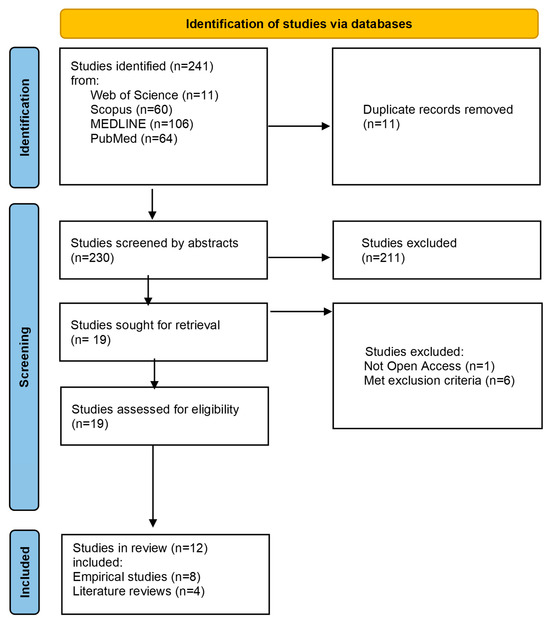
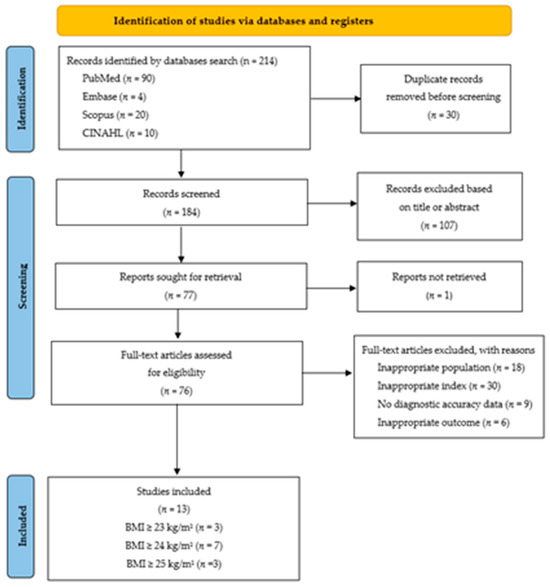
Background: Individuals with mental health conditions frequently experience stigmatization and discrimination. Among the primary objectives in the fight against stigma is to examine groups that play a crucial role in addressing it, such as healthcare professionals. Although research has examined stigma among healthcare professionals, few studies have specifically addressed how nurses perceive and contribute to the stigmatization of individuals with mental health conditions. Objective: The aim of this review was to compile and compare the scientific literature addressing nurses’ stigma toward individuals with mental health conditions. Methods: Following the methodological guidelines of the Joanna Briggs Institute and in accordance with the PRISMA 2020 guidelines, an integrative review was conducted of MEDLINE (PubMed), EMBASE, APA PsycInfo (EBSCO), and CINAHL Complete (EBSCO). Database-specific indexing terms were combined with the Boolean operators AND/OR. Studies with quantitative or qualitative methodologies, published in Spanish or English and without restrictions by year of publication, were included. Two independent reviewers selected the studies and performed the critical appraisal. Results: The search retrieved 4256 records, of which 32 articles were finally included. A content analysis of the selected studies was conducted. Most studies used validated questionnaires to assess stigma and its associations with various variables, while only a limited number employed qualitative designs. Across the 32 studies (n = 6283 nurses from 29 countries), stigma was observed across settings but tended to be lower among mental health specialists. Insufficient training and limited contact were consistently associated with higher levels of stigma, whereas specialization and positive contact were linked to lower levels. Associative stigma emerged as a recurrent theme with implications for psychiatric nursing identity. Conclusions: Nurses working in mental health settings generally demonstrate more positive attitudes toward individuals with mental health conditions compared with those in other clinical areas; however, stigma persists across all settings. Associative stigma may be influencing the development and advancement of psychiatric nursing. Specific academic training, capacity building, and specialization in mental health are essential to counteract stigma. Further qualitative research is required to achieve a deeper understanding of this phenomenon.

31 January 2026

News & Conferences

Issues

Open for Submission

Editor's Choice

Reprints of Collections

Current Trends, Innovations and Issues in Nursing Practice and Education
Reprint

Current Trends, Innovations and Issues in Nursing Practice and Education

Editors: Antonio Martinez-Sabater, Elena Chover-Sierra, Carles Saus-Ortega
Nursing and COVID-19 Ⅰ
Reprint

Nursing and COVID-19 Ⅰ

Editors: Richard Gray, Sonia Udod

Get Alerted

Add your email address to receive forthcoming issues of this journal.

XFacebookLinkedIn
Nurs. Rep. - ISSN 2039-4403