Article

Analysis of Charging Infrastructure for Private, Battery Electric Passenger Cars: Optimizing Spatial Distribution Using a Genetic Algorithm


Chair of Methods for Product Development and Mechatronics, Technische Universität Berlin, Straße des 17. Juni 135, 10623 Berlin, Germany
*
Author to whom correspondence should be addressed.
World Electr. Veh. J. 2023, 14(2), 26; https://doi.org/10.3390/wevj14020026
Submission received: 10 November 2022 / Revised: 9 December 2022 / Accepted: 11 January 2023 / Published: 18 January 2023

Abstract

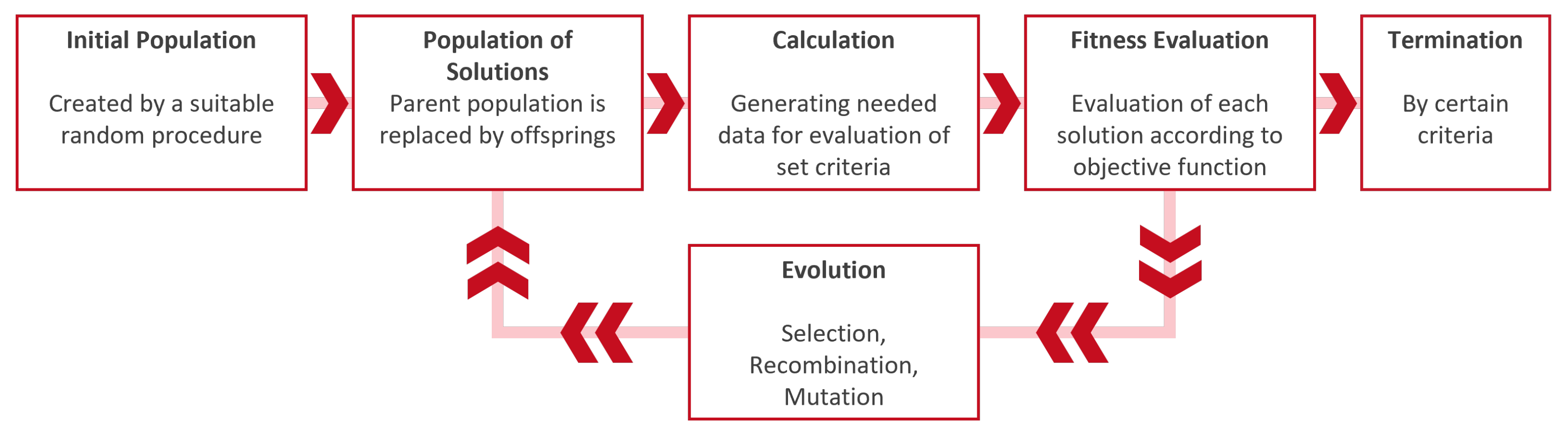
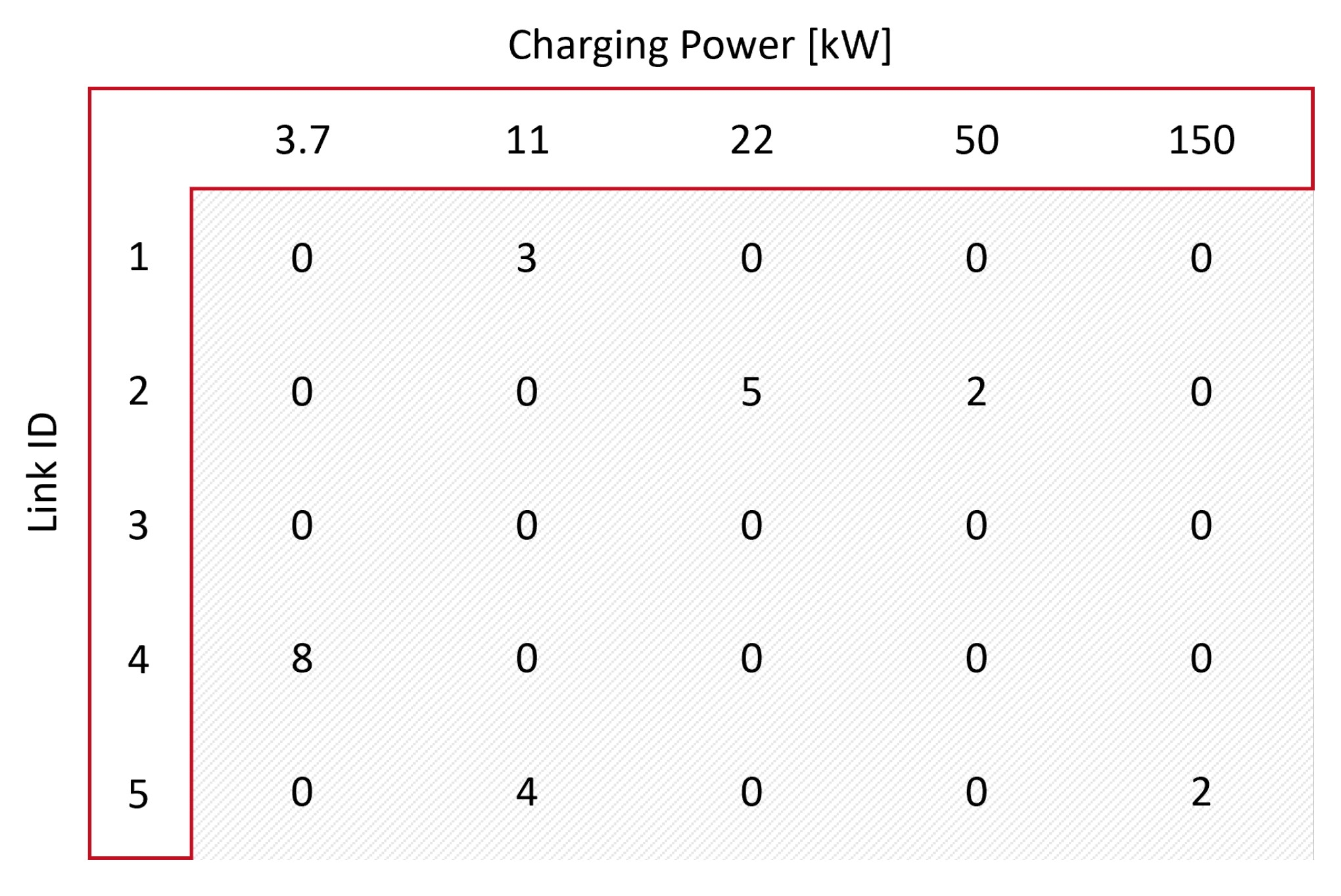
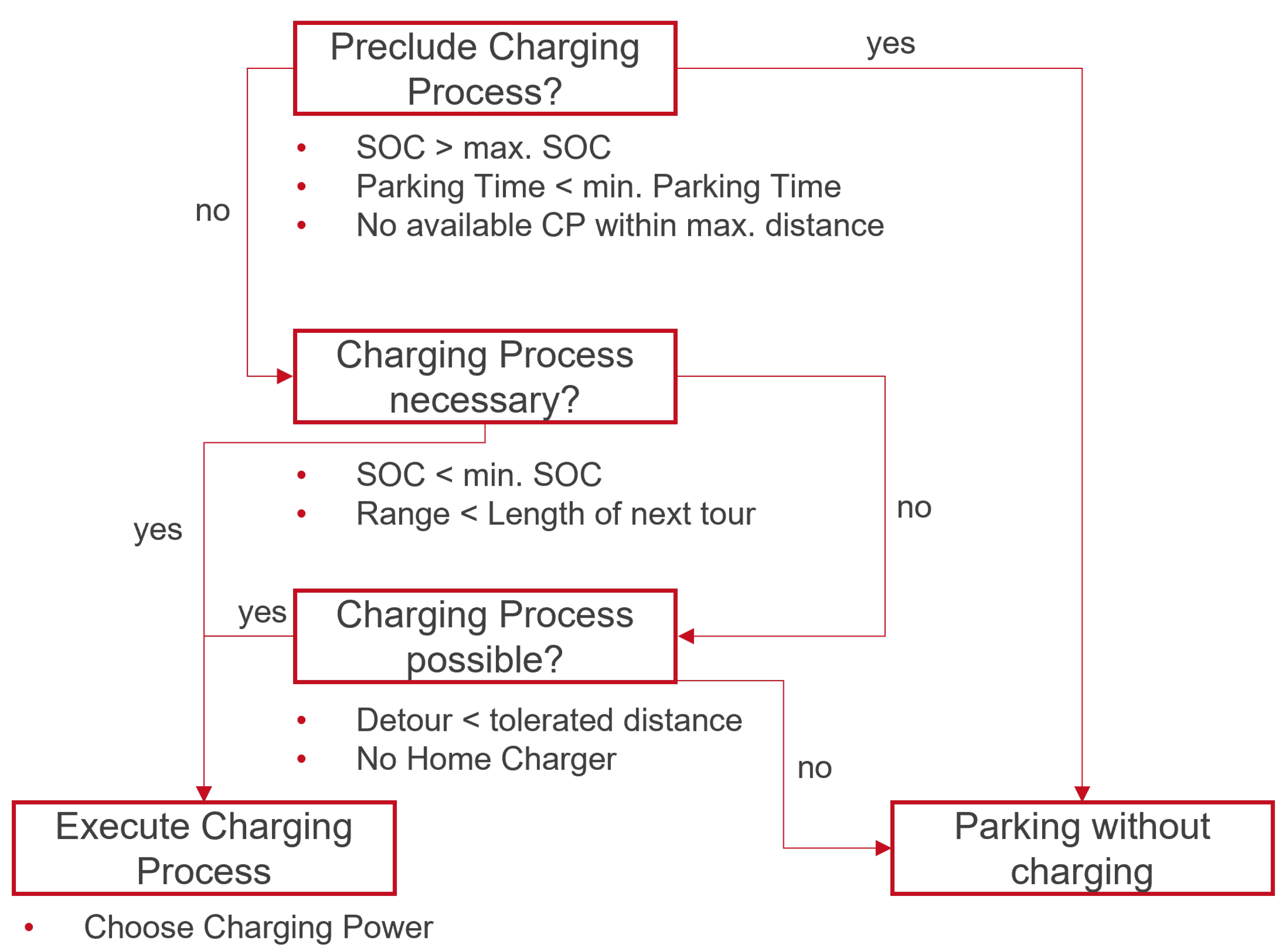
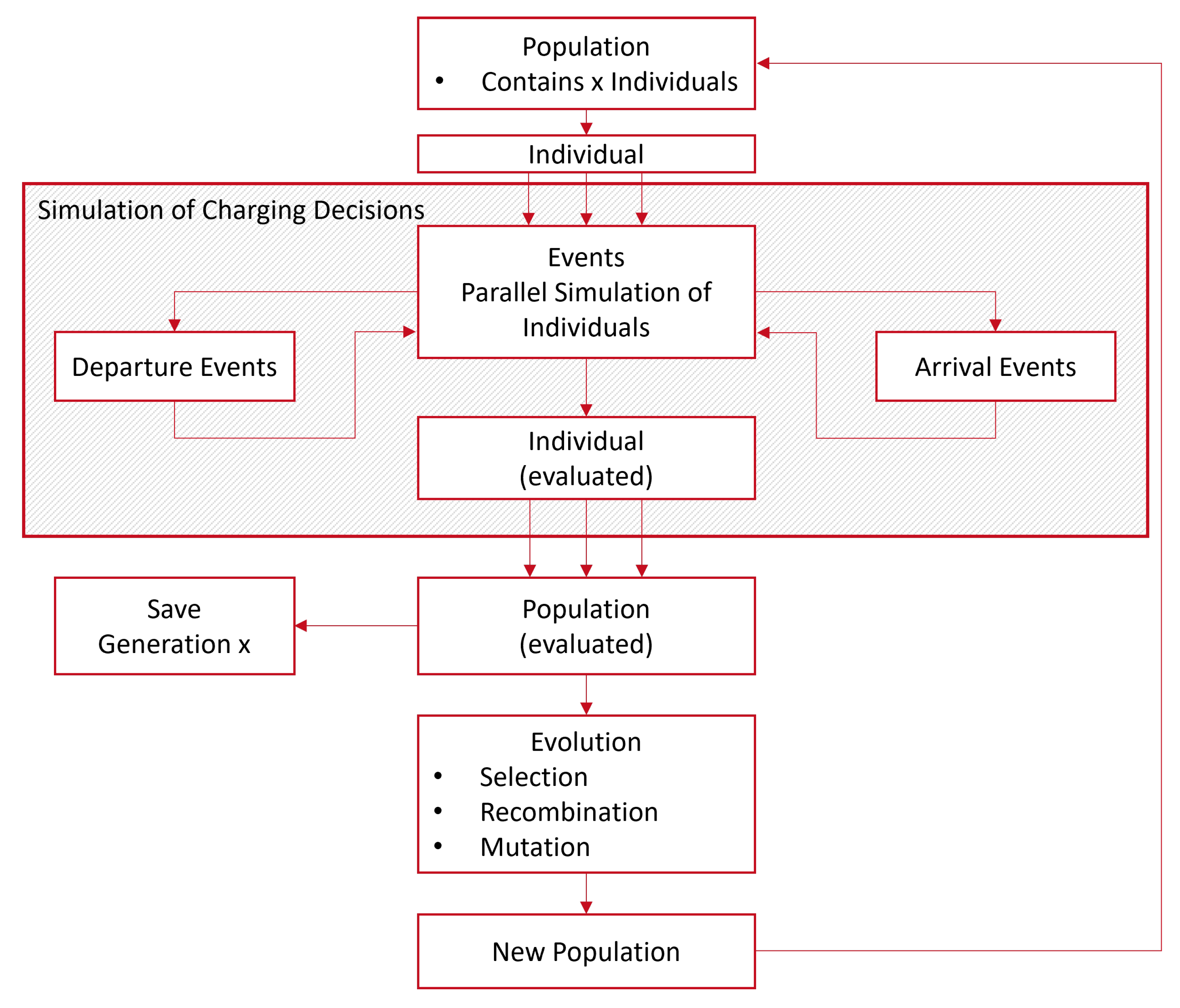
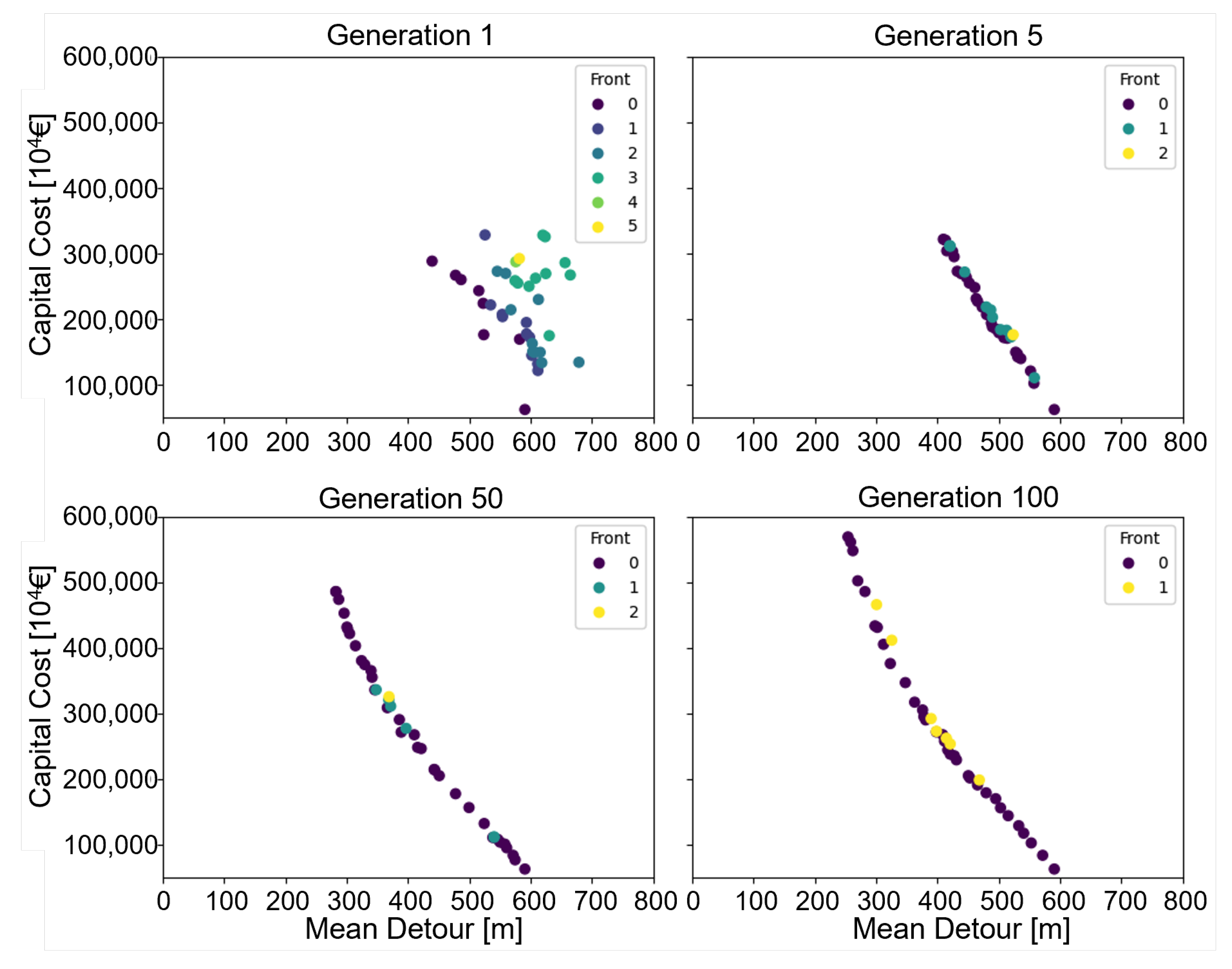
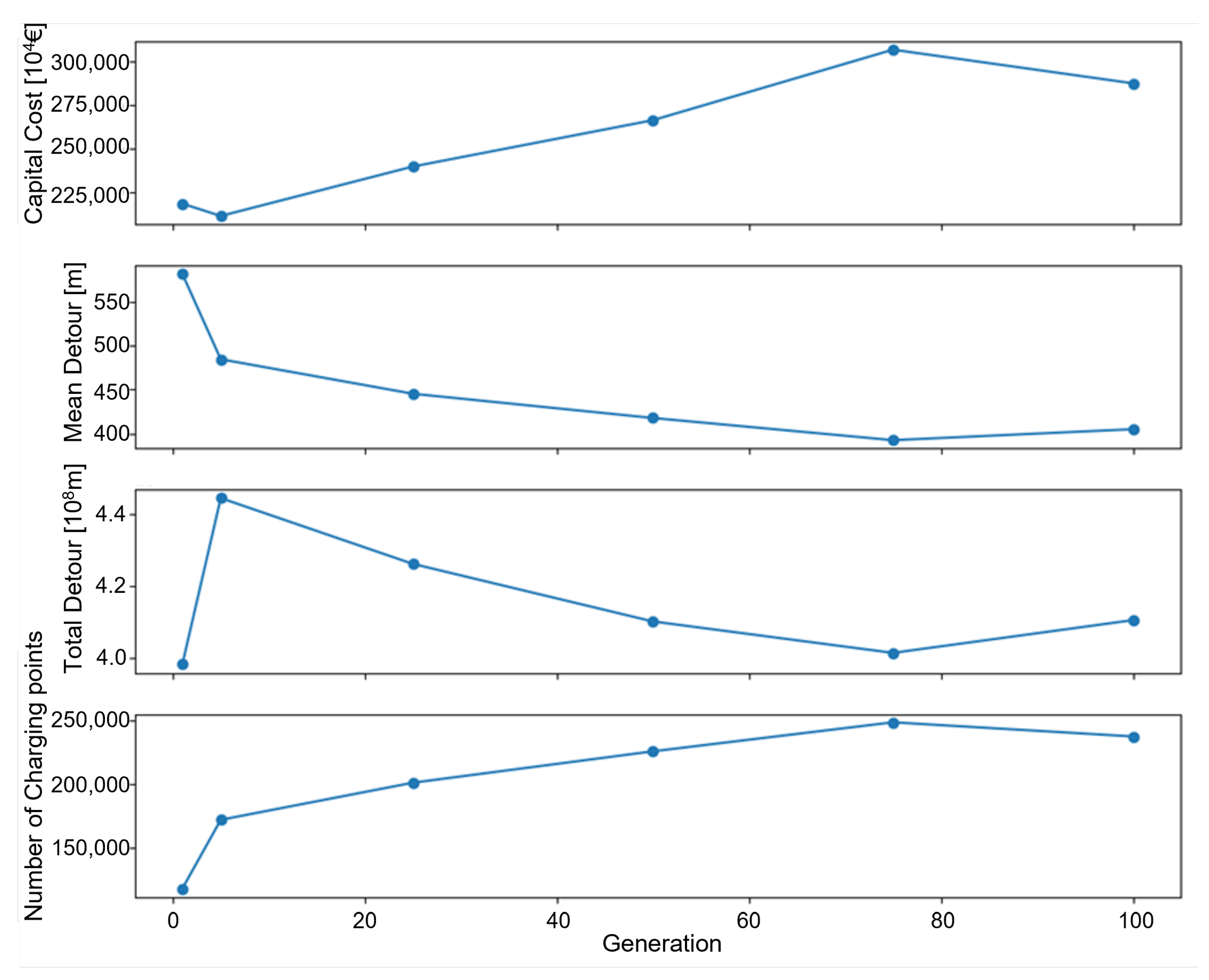
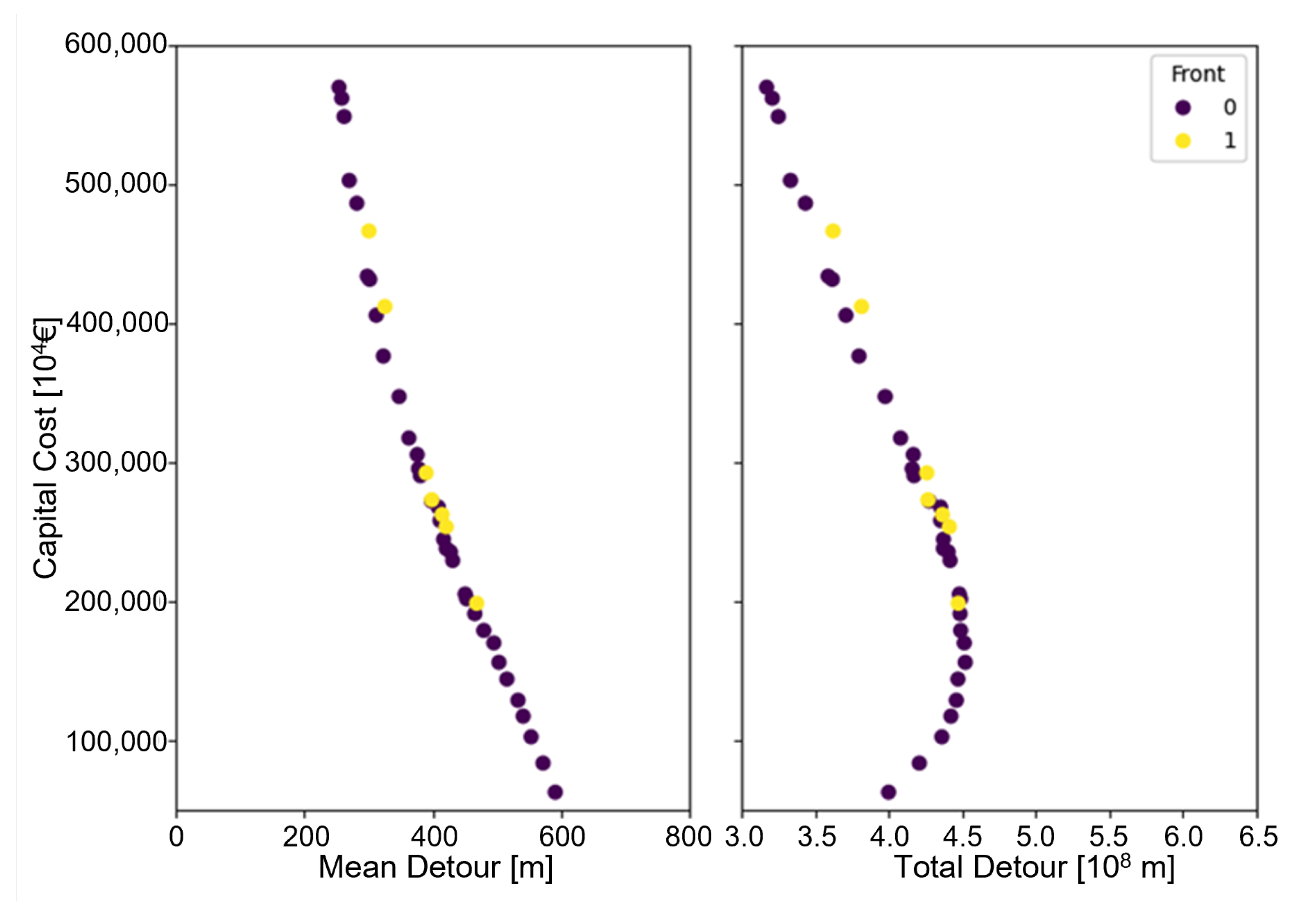
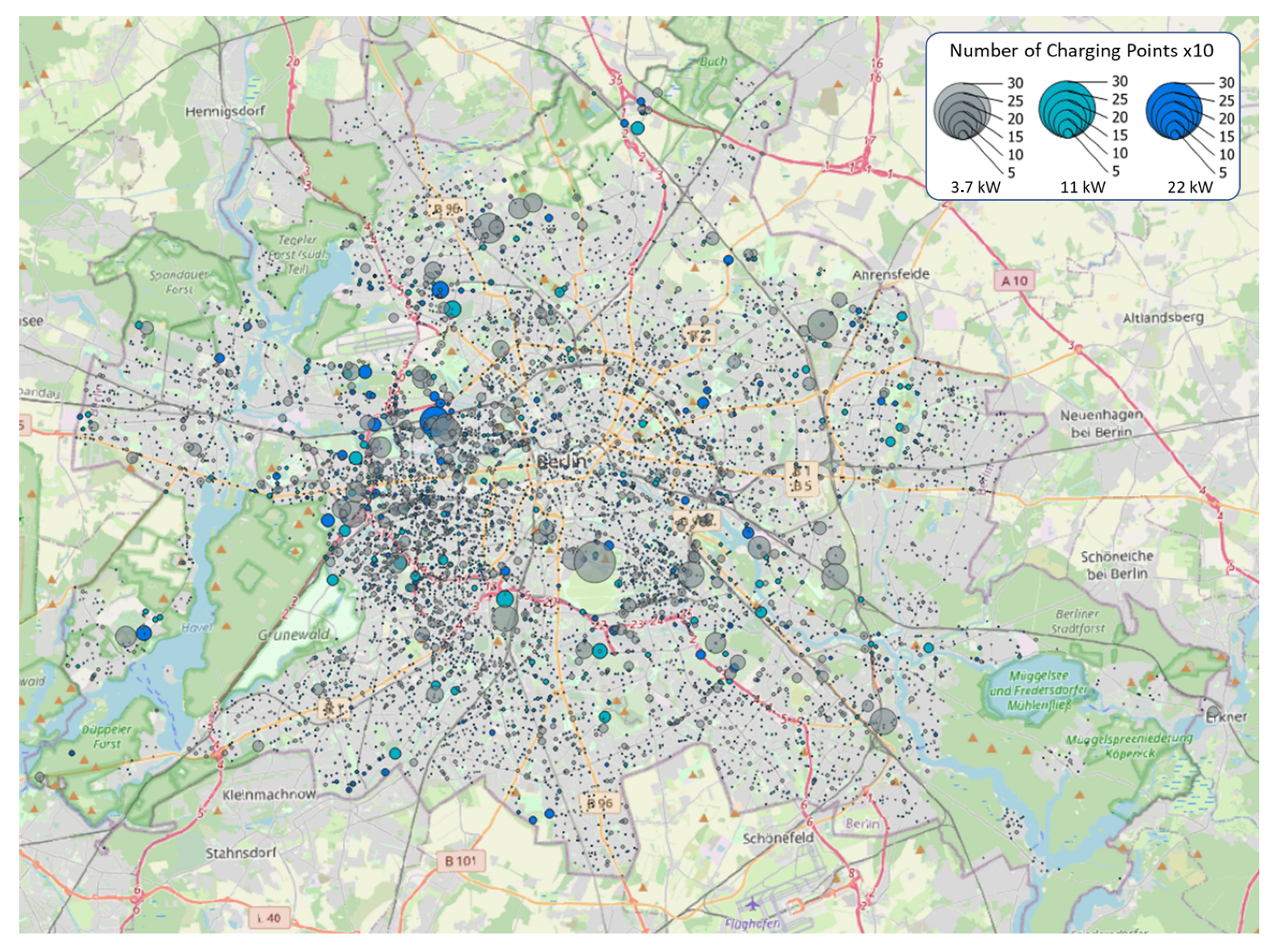
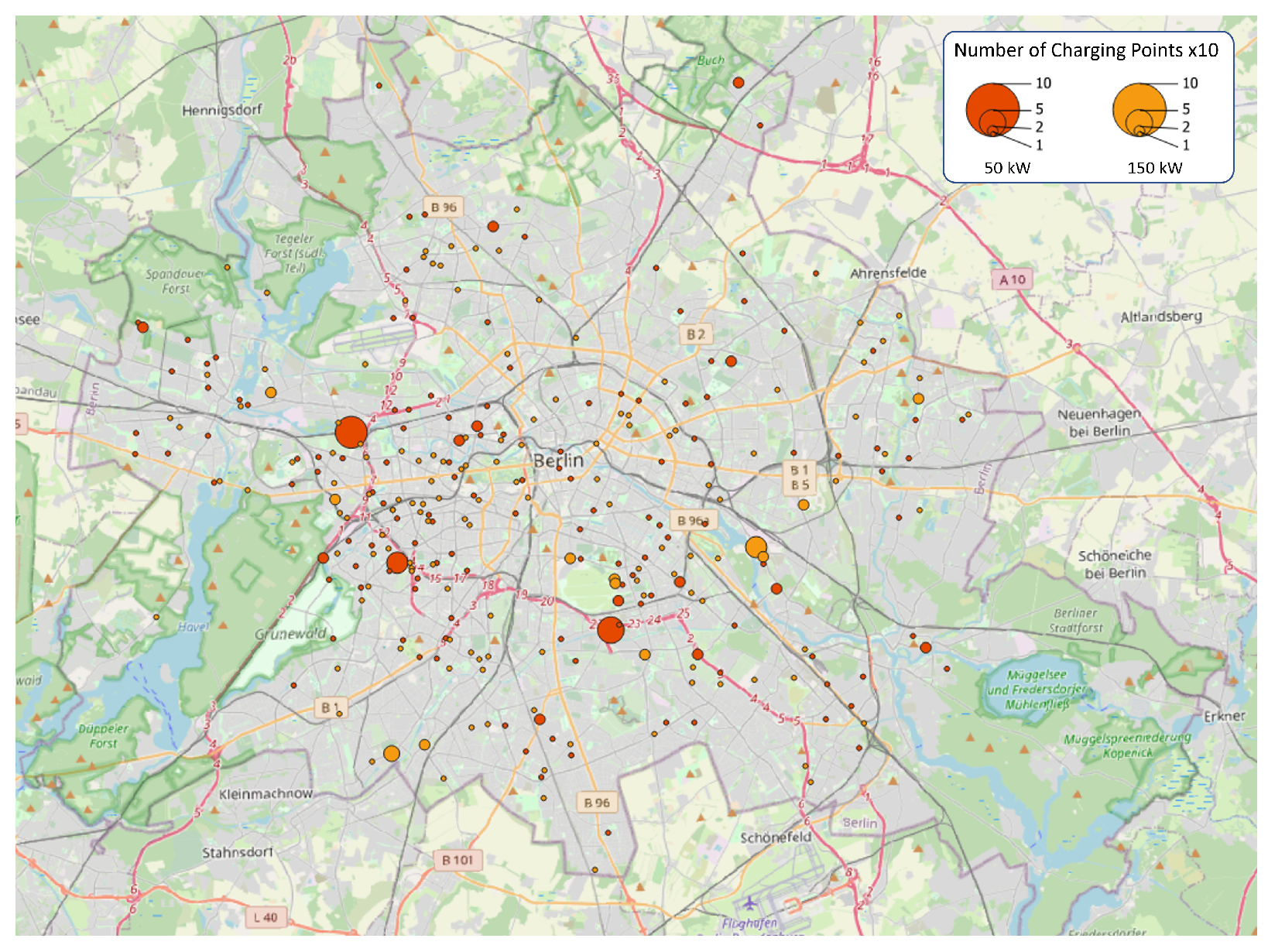
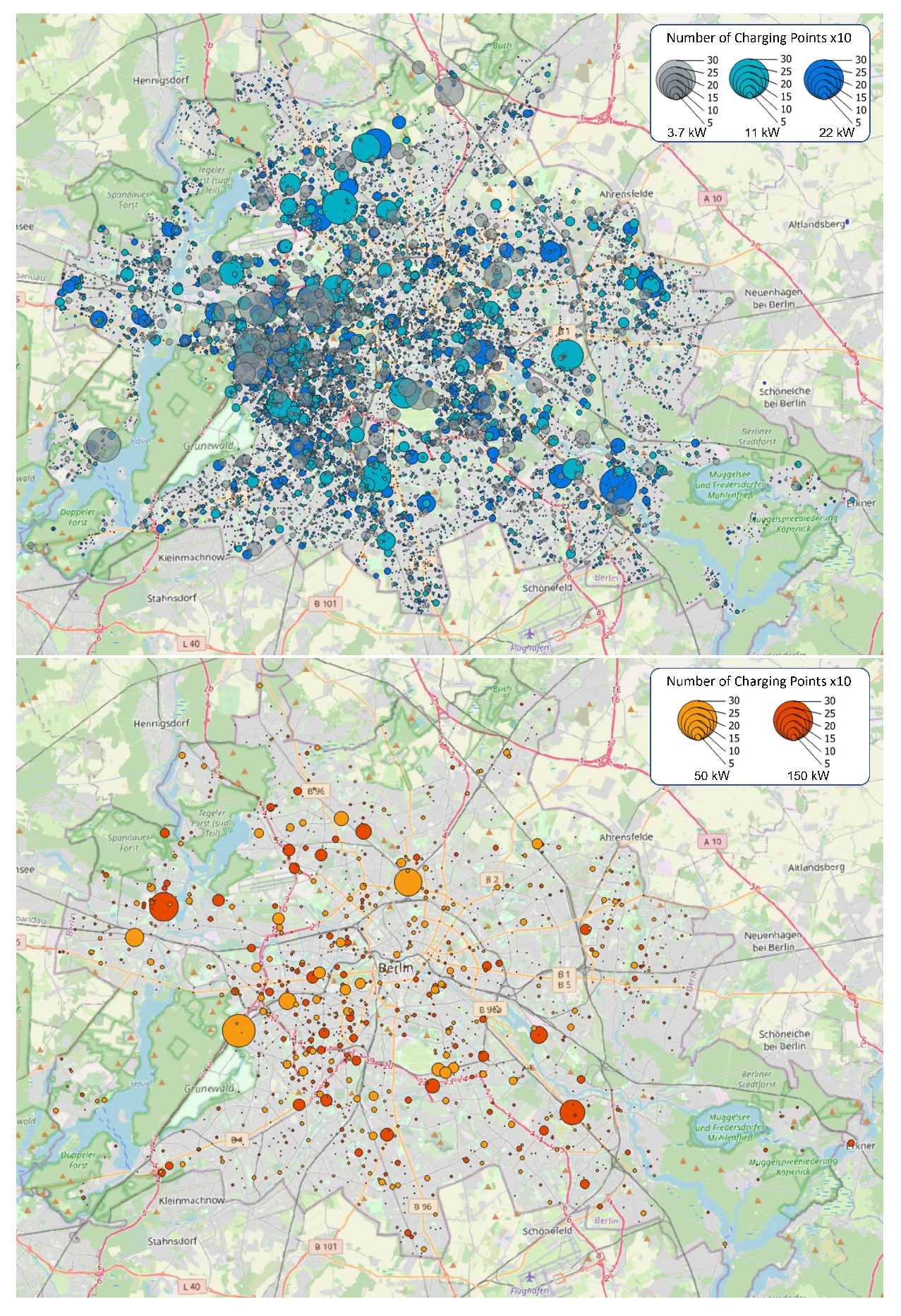
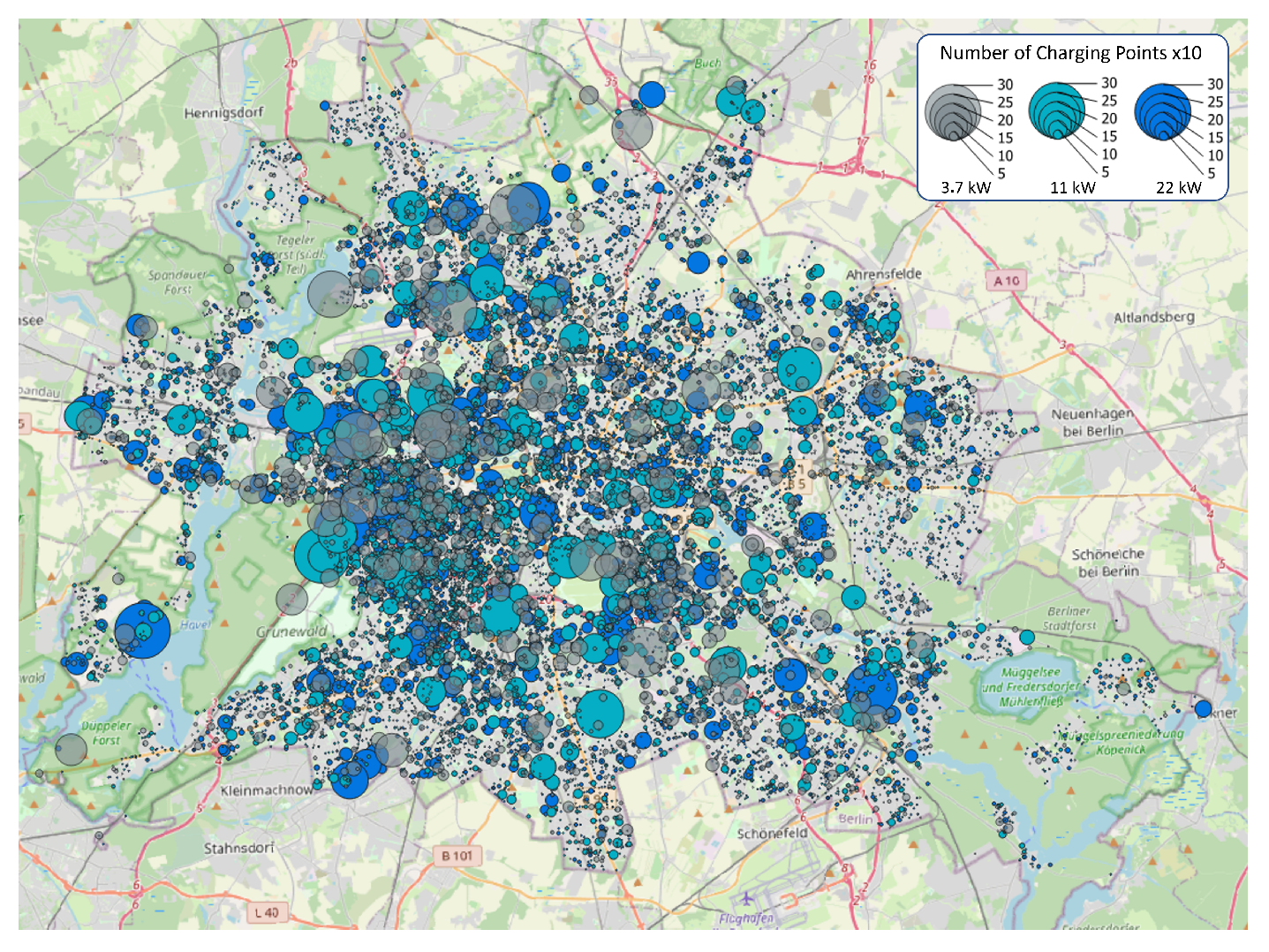
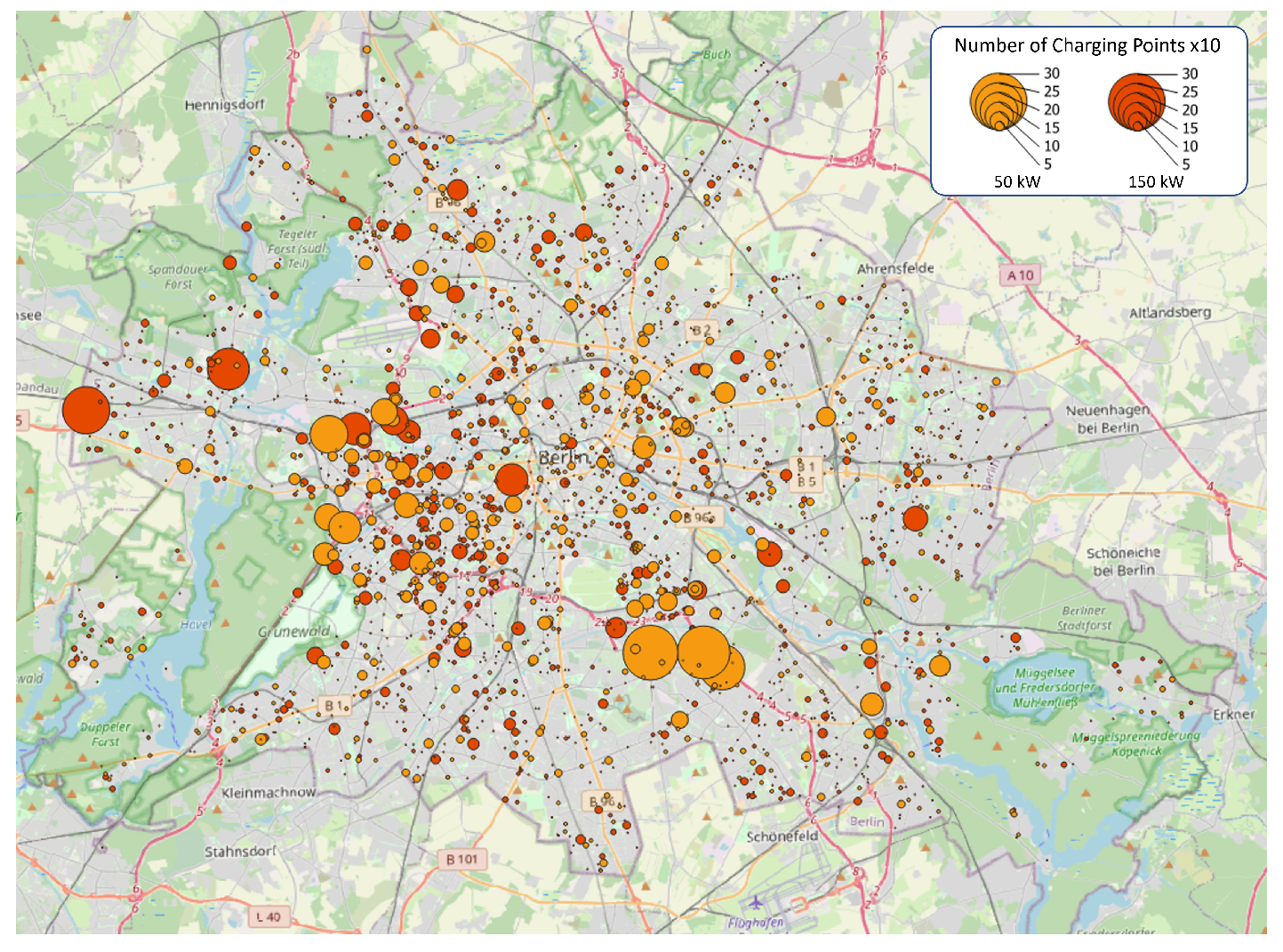
To enable the deployment of battery electric vehicles (BEVs) as passenger cars in the private transport sector, suitable charging infrastructure is crucial. In this paper, a methodology for the efficient spatial distribution of charging infrastructure is evaluated by investigating a scenario with a 100% market penetration of BEVs of (around 1.3 million vehicles) in Berlin, Germany. The goal of the evaluated methodology is the development of various charging infrastructure scenarios—including public and private charging—which are suitable to cover the entire charging demand. Therefore, these scenarios are investigated in detail with a focus on the number of public charging points, their spatial distributions, the available charging power, and the necessary capital costs. For the creation of these charging infrastructure scenarios, a placement model is developed. As input, it uses the data of a multi-agent transport simulation (MATSim) scenario of the metropolitan area of Berlin to evaluate and optimize different distributions of charging infrastructure. The model uses a genetic algorithm and the principle of multi-objective optimization. The capital costs of the charging points and the mean detour car drivers must undertake are used as the optimization criteria. Using these criteria, we expect to generate cost-efficient infrastructure solutions that provide high usability at the same time. The main advantage of the method selected is that multiple optimal solutions with different characteristics can be found, and suitable solutions can be selected by subsequently using other criteria. Besides the generated charging scenarios for Berlin, the main goal of this paper is to provide a valid methodology, which is able to use the output data of an agent-based, microscopic transport simulation of an arbitrary city or area (or even real driving data) and calculate different suitable charging infrastructure scenarios regarding the different optimization criteria. This paper shows a possible application of this method and provides suggestions to improve the significance of the results in future works. The optimized charging infrastructure solutions for the Berlin scenario show capital costs of between EUR 624 and 2950 million. Users must cover an additional mean detour of 254 m to 590 m per charging process to reach an available charging point. According to the results, a suitable ratio between the charging points and vehicles is between 11:1 and 5:1. A share of fast charging infrastructure (>50 kW) of less than ten percent seems to be sufficient if it is situated at the main traffic routes and highly frequented places.
Keywords: charging infrastructure; e-mobility; electric vehicle; optimization; private electric car; transport simulation; distribution of charging infrastructure; battery electric; genetic optimization; high-power charging charging infrastructure; e-mobility; electric vehicle; optimization; private electric car; transport simulation; distribution of charging infrastructure; battery electric; genetic optimization; high-power charging