Abstract
The concept of a metaverse, a virtual world that offers immersive experiences, has gained widespread interest in recent years. Despite the hype, there is still a gap in its practical application, especially in the realm of education. This study presents the design and implementation of a metaverse tailored to the needs of education. The goal of this paper is to demonstrate the feasibility of such a system and evaluate its effectiveness. It is crucial to understand the architecture and implementation of a metaverse to effectively customise it for educational purposes. To assess user experience, a field study was conducted, collecting data through questionnaires and qualitative feedback. The results show that users were pleased with the features, player experience, and ease of use.
1. Introduction
The COVID-19 pandemic has dramatically impacted the way society operates, with a shift towards digital technologies and online platforms [1,2]. This has led to increased interest in the potential of virtual worlds, also known as the metaverse, as a platform for education and communication. The metaverse is an online social application with multiple innovative technologies, which vows to provide immersive experiences [3,4]. It is not a new concept [5,6]. The readiness of people, social media, and technologies is pushing our society towards the metaverse era. The key metaverse features are interactive, embodied, persistent, realistic, ubiquitous, interoperable, scalable, immersive, accessible, synthesised, multi-layered, and collaborative [4,6,7,8,9]. A description of each feature is summarised in Table 1. Nonetheless, one of the most important features of the virtual world, providing a sense of individual personality, is an avatar, which is a personalised representation of the user in the virtual environment [10,11].
Table 1.
A table of key metaverse features based on the literature review, along with a brief description. Reprinted/adapted with permission from Ref. [7]. 2022, Julián de la Fuente Prieto, Pilar Lacasa, Rut Martínez-Borda.
Major tech companies have invested a substantial amount of resources and efforts into metaverses in reference to the economy [12,13]. It is estimated that 2% of consumers will spend at least one hour in the metaverse engaging in various activities, such as work, shopping, socialising, and entertainment [14]. However, the European Parliament Research Service (EPRS) has highlighted both the potential opportunities and risks that need to be addressed [15]. For instance, transactions in the metaverse are expected to be conducted using cryptocurrencies and non-fungible tokens (NFTs), which raises concerns about data protection and cybersecurity. If left unchecked, some vulnerable individuals who require special protection may experience serious negative consequences in the immersive digital world [16].
Metaverses are expected to be utilised in a variety of fields, such as education, medicine, sports, social, and entertainment. The education sector holds a lot of potential for the use of metaverses [5], particularly for academic purposes such as virtual learning environments [17,18], virtual sandboxes for digital creation [19,20,21], information helpdesks, collaborative learning environments [22], and socialisation [23,24]. However, a wider understanding of metaverses is crucial; otherwise, the platform may go unused [25]. To overcome this challenge, a hybrid solution has been proposed where traditional classrooms and metaverses are used together. The traditional classroom would serve as the main platform, while the metaverse would be an optional system for social gathering, assignment submissions, and self-paced learning. Wang et al. suggest a blend of virtual and physical solutions for post-COVID-19 education, utilising the metaverse features for learning and teaching [24]. Likewise, it has been found that the use of metaverses can improve educational opportunities, providing access to learning environments that were previously restricted by cost, time, and space constraints [22,26,27].
Considering the mentioned restrictions, virtual reality (VR) and augmented reality (AR) can be potential technologies for these circumstances. Both were previously known as extended reality (XR) until the ‘xReality’ framework was proposed [28]. The ‘x’ in this term is not the abbreviation for ‘extended’, but an x variable in algebra, which allows for new reality terms to be substituted into the ‘x’ variable. It should be noted that not all technologies extend reality; for example, VR replaces reality, while AR augments or assists the physical world. The technology that falls between AR and VR on the continuum is called mixed reality (MR) in a classical definition [29], although there is no one-size-fits-all definition for MR, as explained in [30]. Nonetheless, these technologies have been applied in numerous studies to provide innovative learning methods in academic settings [31,32,33].
There have been several studies in respect of VR and AR that aimed to improve learning in education. For instance, Microsoft Hololens [34] was effectively used in design learning [35]. Students in civil engineering were taught earthquake-resistant construction using VR-based learning media, which provided several benefits compared to on-site practice [36]. Some cultural heritages are either hard to access or too large to explore physically. The study in [37] used digitalisation with VR and AR technologies to develop a digital version of the archaeological site, which can be used for education or leisure purposes. A study on user immersive experience using a box full of sand was conducted in [38], creatively using VR. Similarly, AR has been applied in several education-related studies, such as anatomy learning [39], implemented in secondary schools to enhance learning activities [40], and used to increase visitor engagement and achieve learning outcomes [41].
The functionality of metaverses is based on games, as they are virtual worlds that allow for players to control their avatars and interact with the environment. Thus, the disciplines of game design and development are applied in the development of metaverses. For example, serious game development is closely linked to the use of metaverses for education. In the literature, the components of serious games can be derived from the games’ activities [42]. The activities that motivate players to interact with objects in a game are referred to as game mechanics, while learning mechanics refer to the learning elements that help players achieve the learning goals embedded in the game [43,44]. If we delve into the low-level design, these mechanics can be seen as a collection of elements. For instance, the core mechanic in a platform game is to jump over obstacles, which requires players to jump and press a button at the right time [45]. By examining the core mechanics in more detail, game elements such as jump, collide, and move can be identified. To integrate learning content into games, developers must find game mechanics that engage players and deliver learning content. For instance, a puzzle game such as DragonBox Algebra 12+ may be suitable for practising mathematics [46], while role-playing games may be appropriate for practising communication skills and second languages [47]. The incorporation of gamification concepts using game elements in a non-gaming context to improve user experience (UX) and engagement is also applicable to metaverse development [48]. Similarly, the mandatory components of massively multiplayer online role-playing games (MMORPGs) can be applied to the metaverse world, following the concept presented by Ulrich, who suggests that the mechanics in commercial-off-the-shelf (COTS) games can offer educational benefits to players [49].
This research paper focuses on the design and development of a metaverse platform with a set of features that are essential for an online virtual world, as described in the OnTwins Metaverse [2]. The goal is to use the platform for educational activities in an online virtual setting. Multi-discipline perspectives on the metaverse that suggest features that a complete metaverse should have are emphasised in [50]. However, at this preliminary development stage, the platform is developed with a set of mandatory features and tested at a college open-house event to assess its effectiveness in delivering the intended information. The main research questions addressed in the paper pertain to the effectiveness of the metaverse’s features in conveying the intended information to users for educational purposes (RQ1), and the effectiveness of the metaverse’s characteristics in engaging users (RQ2). These questions are crucial to understand the potential of virtual worlds as innovative platforms for education and communication.
The paper is structured as follows. In Section 2, the design and development of the proposed metaverse are outlined, starting with a description of the requirements and continuing with the architecture and implementation details. Section 3 details the methods used to test the platform and the acquisition of measurement data. The results of these tests, along with a discussion of their significance in relation to other research, are presented in Section 4. Finally, the conclusions of the metaverse development and the results are summarised in Section 5. This section also highlights the limitations of the platform and suggests areas for future improvement.
2. The Design and Development
2.1. The Requirements
The goal of this study was to develop a metaverse platform for educational purposes that provides a virtual world filled with educational information, services, and activities for university students and staff. The platform was designed based on the needs and requirements gathered from potential users, such as students, lecturers, and university officers. These requirements were grouped into several sections to highlight the key features that the metaverse platform should possess.
Regarding user credentials and identity, a secure and efficient system for managing user information is crucial. This includes the ability for users to obtain a unique avatar and display name. User information and metaverse data will be stored online in the cloud for easy access when users log in.
The platform will serve as a gathering space for staff, students, teachers, administrators, and event organisers, so communication features such as text messaging and voice chat must be available. The platform is designed to provide educational services, so it must have basic content such as static information, interactive non-playable characters, and informational videos that can be easily modified by administrators using a content management tool.
A key aspect of the metaverse is real-time interaction between users, so the real-time synchronisation of various data such as avatar position, display name, avatar status, and text messaging is necessary. The choice of the right real-time synchronisation technology was made by considering factors such as the maximum number of concurrent users, latency, lag, and scalability.
In addition, the platform must have communication methods such as text messaging and voice chat to effectively function as an online multi-use application. To increase user engagement, gamification elements may be incorporated to encourage active participation in the tasks and events held within the virtual world.
2.2. Architecture and Implementation
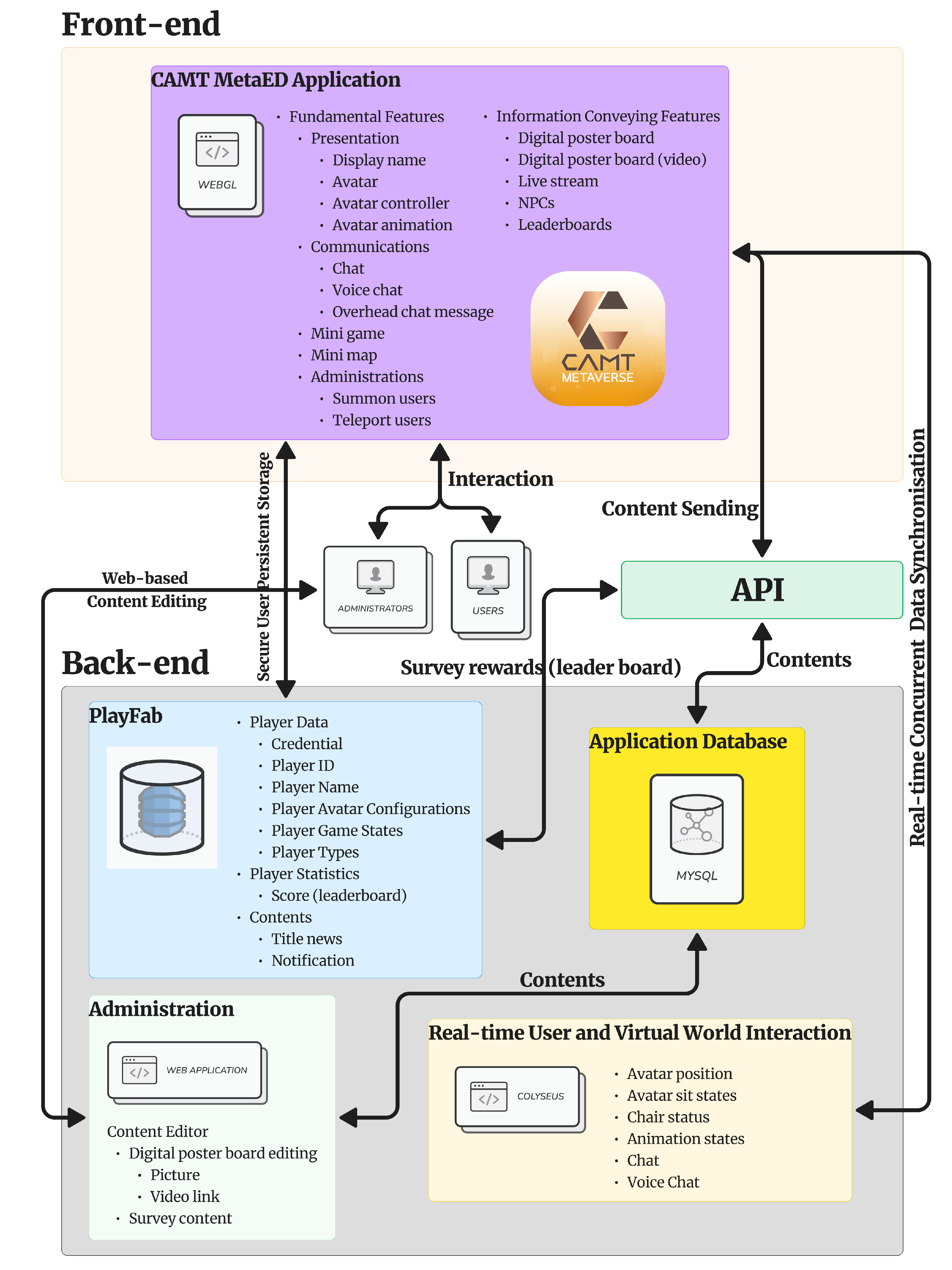
The platform’s architecture design, shown in Figure 1, was based on the gathered requirements and features a front-end named CAMT MetaEd, which is accessible by both end-users and administrators. The front-end application was developed using Unity for deployment on a WebGL platform for easy accessibility by any web browser [2]. The Unity game engine was adopted because it has a good reputation in cross-platform development. In other words, the developed application can be easily imported to other platform devices, such as VR, AR, mobile, and standalone applications. The front-end was connected to the Playfab as the back-end service [51], where the user credentials, user personalisation data such as avatar configurations, and user statistics are stored. The Playfab back-end service was chosen for several reasons. It has a well-documented use as a standard form of data storage, i.e., Java Script Object Notation (JSON) [52]. It is rich in features for this particular type of back-end service. For example, it has a secure server-side cloud function for virtual money transactions. It is scalable. Figure 2 shows an example screenshot of the use of the Playfab back-end to store user data. At the lower right of Figure 1, the state-of-the-art Colyseus real-time online multiplayer distributed engine can be seen [53]. This is used for real-time data synchronisation by concurrent online users. The engine is scalable to support thousands of concurrent users, which is essential for the metaverse. The application database serves as the metaverse content server on which the virtual world information is stored and can be retrieved via the provided application programming interface (API). It can be managed by an administrator through a web-based application, shown in the lower left of Figure 1. From a list of key metaverse features in Table 1, Table 2 shows the corresponding features implemented in this study.
Figure 1.
The architecture of the proposed metaverse. The front-end is a Unity WebGL application connected to the back-end services.
Figure 2.
The platform uses Playfab as the back-end service to keep all of the user’s personal information, such as avatar configurations, usage statistics, and scores.
Table 2.
A table of metaverse key features and the corresponding features in the proposed platform.
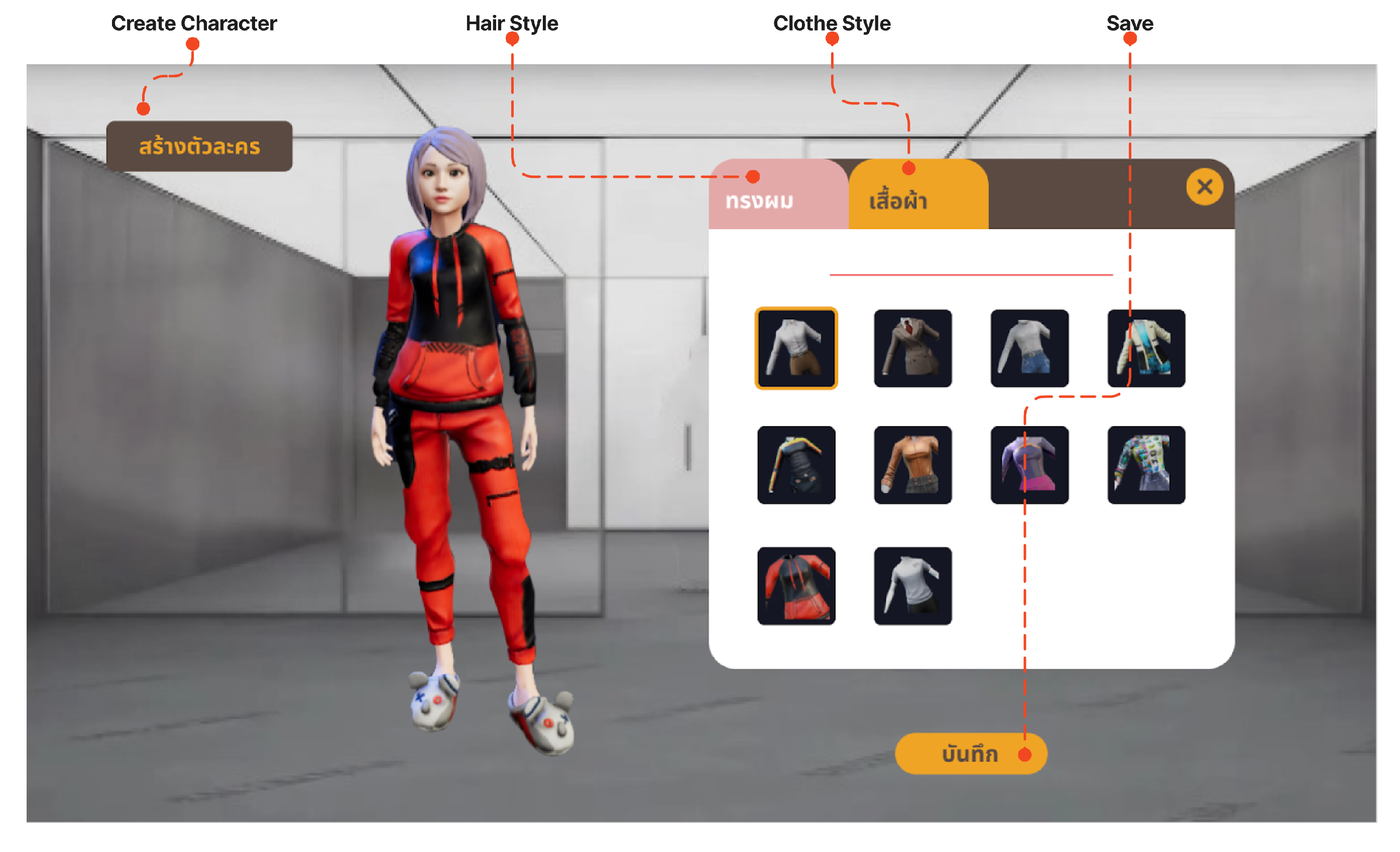
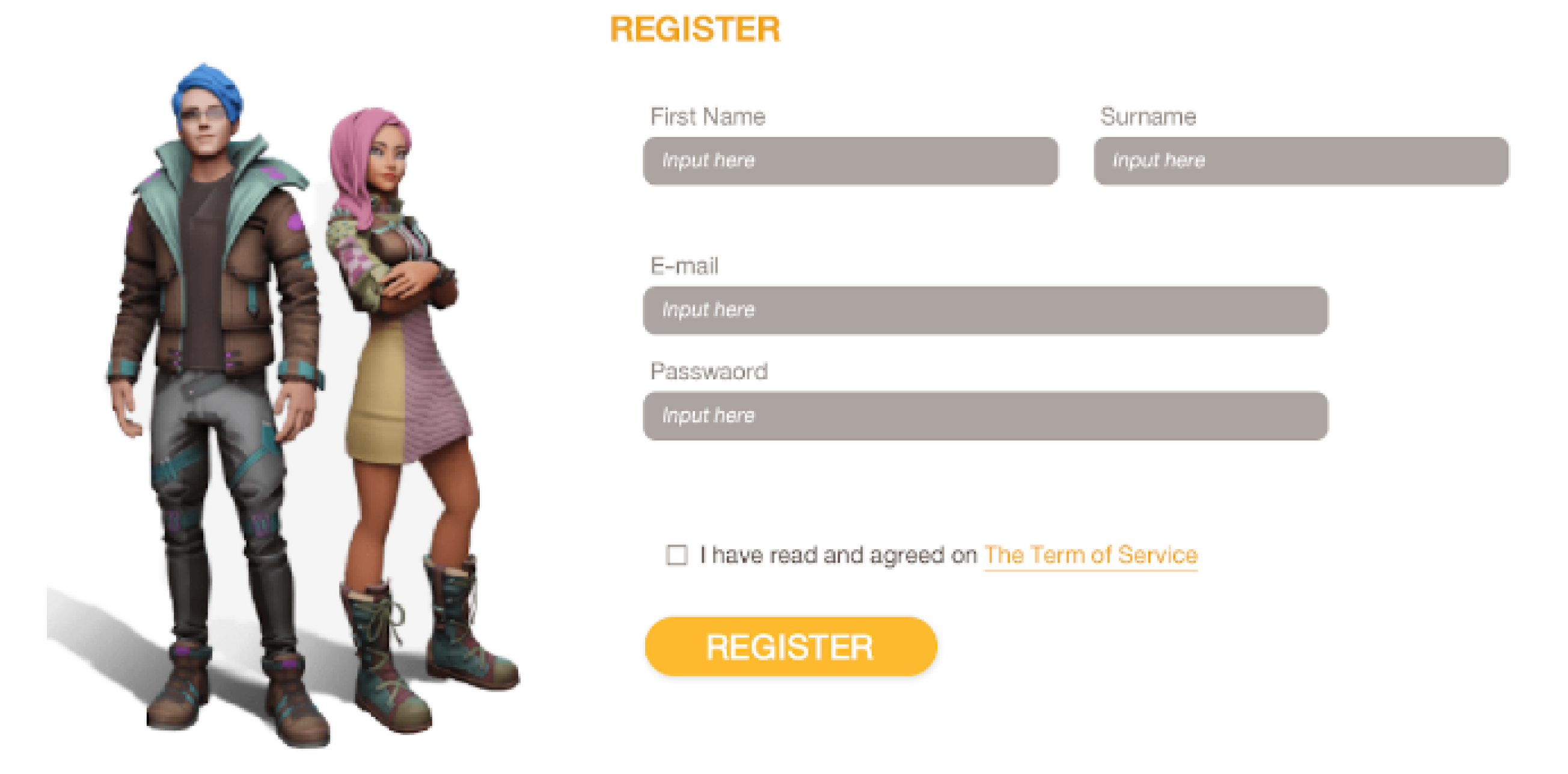
As a result of this implementation, a screenshot of the registration page is shown in Figure 3. The registration follows a common form of procedure: a user fills in the form and agrees with the term of service. Then, a confirmation email is sent to the provided email address for the user confirmation. Figure 4 shows a screenshot of an avatar’s hair style and clothing, obtained using the customisation feature. Ready Player Me [54] was utilised as the system for avatar personalisation.
Figure 3.
The platform utilises a common form of registration procedure by having a user fill in the form with necessary information and agree to the terms of service. Then, an email is sent to the provided e-mail address for the user to confirm the registration.
Figure 4.
The platform offers customisable avatar configurations, which are implemented using a set of Ready Player Me avatars and outfits. The ’Create Character’ label is displayed on the top left. The user can customise their character with ’Hair Style’ and ’Clothe Style’. The customised character can be saved using the ’Save’ button on the lower right.
2.3. The Contents of the Open-House Event and the Information Conveying Features
The purpose of the open-house event was to provide information to outside visitors who visit the College of Arts, Media and Technology (CAMT), Chiang Mai University, Thailand. The focus was to showcase the college’s curricula to prospective students. There are five programs at the college: Animation and Visual Effects (ANI), Digital Games (DG), Software Engineering (SE), Modern Management Information Technology (MMIT), and Digital Industry Integration (DII). The content of the metaverse was created based on these curricula by gathering information from the lecturers who manage each program.
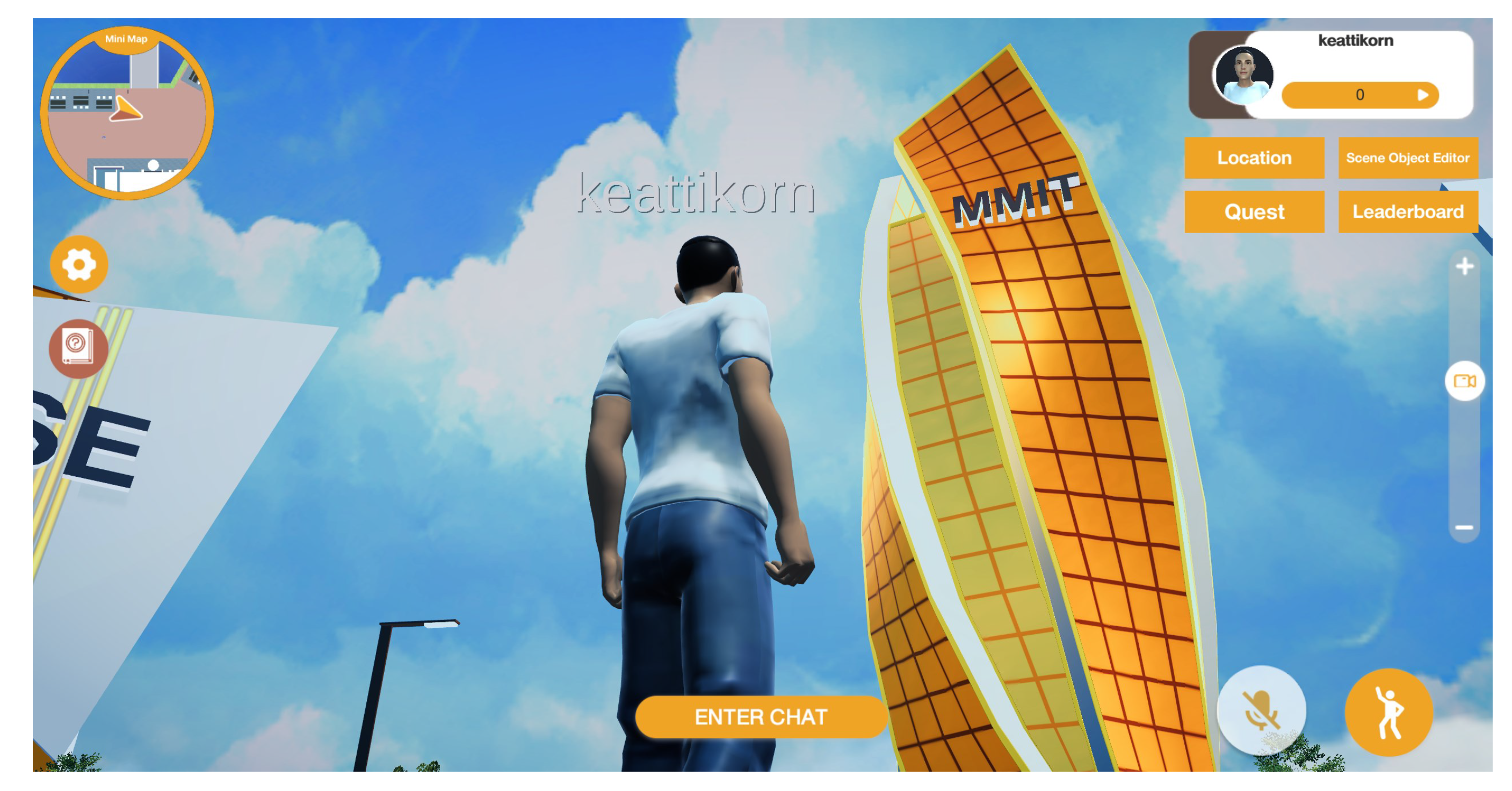
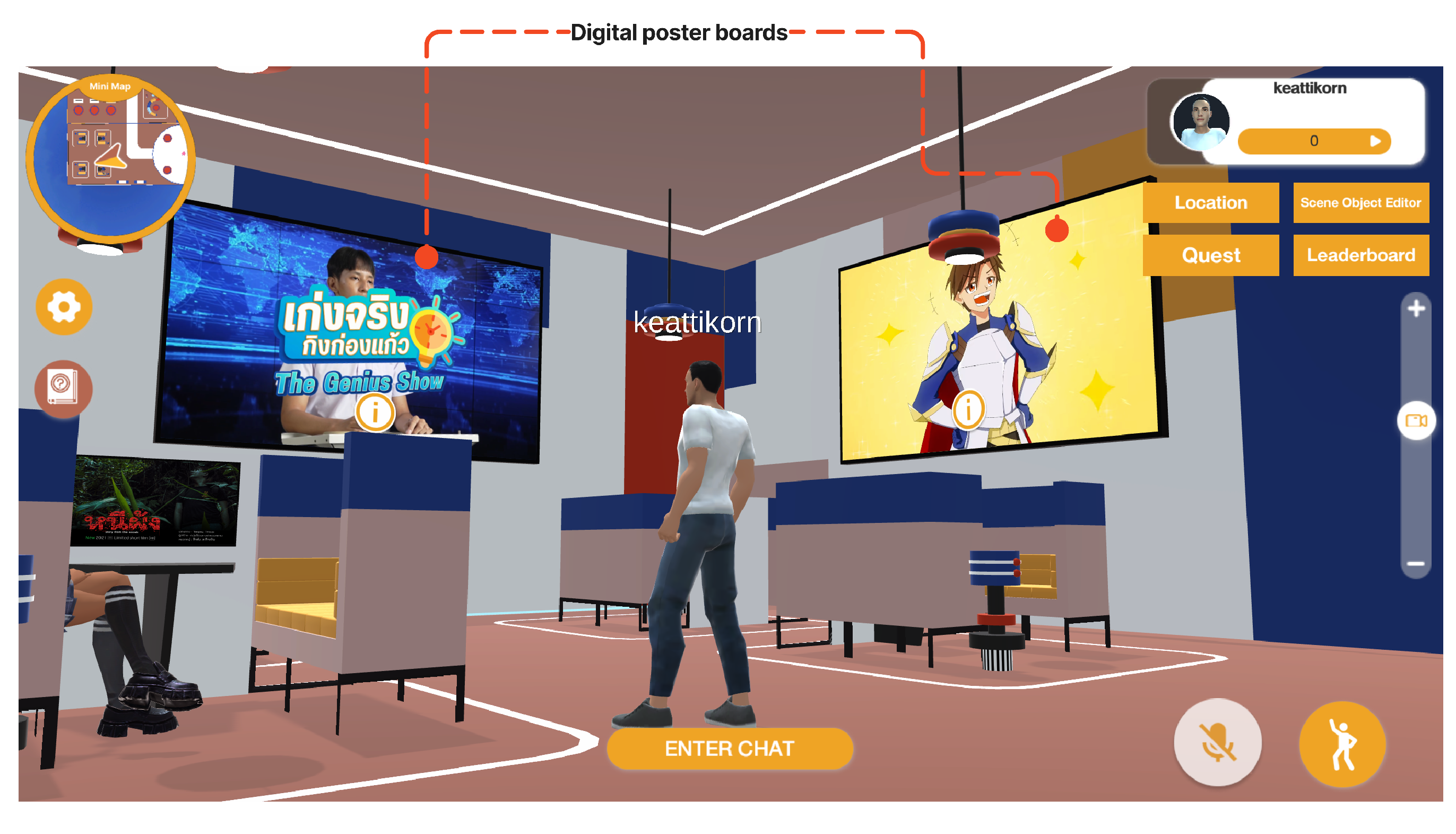
This virtual world in the metaverse was designed to reflect the five different curricula, each with its own distinct building design, as shown in Figure 5. For example, Figure 6 shows the unique design of an MMIT building. Visitors can enter each building to experience its interior design, which was themed to align with the look and feel of each respective program. Figure 7 shows a themed interior of an SE department. The other interior designs of the ANI, DG, and DII curriculums are shown in Figure 8, Figure 9 and Figure 10, respectively.
Figure 5.
The design of the virtual world as a floating island surrounded by clouds. The island consists of five curriculum buildings and common areas with some atmospheric environment.
Figure 6.
Modern management information technology (MMIT) building design.
Figure 7.
Software engineering department (SE) interior that matches the theme of the curriculum. The user can sit down on the couch by following the suggestion displayed on the user interface on the top centre as “Press F to sit down”.
Figure 8.
Animation and visual effects (ANI) department interior and the examples of two digital poster boards. The digital poster board on the left shows Thai text in correspondence to the English text displayed below as “The Genius Show”.
Figure 9.
Digital game department (DG) interior with an example of a digital poster board with video on the left, close to the NPC. The overhead text displayed on the NPCs are Dino and Kwang, on the left and the right, respectively.
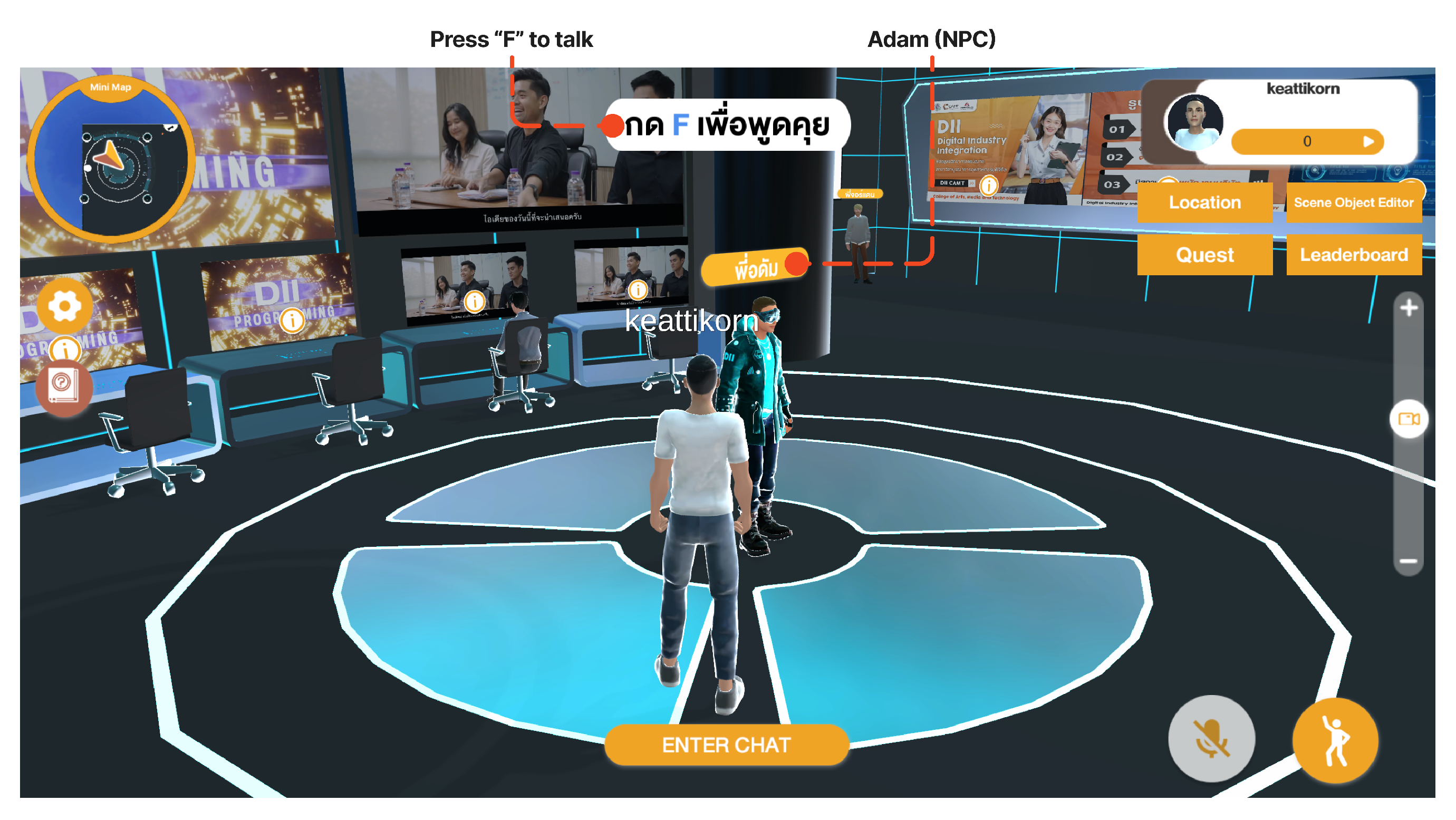
Figure 10.
Digital industry integration (DII) interior with an example of an interactable NPC, named Adam. The user interface displayed on the top centre is “Press F to talk”.
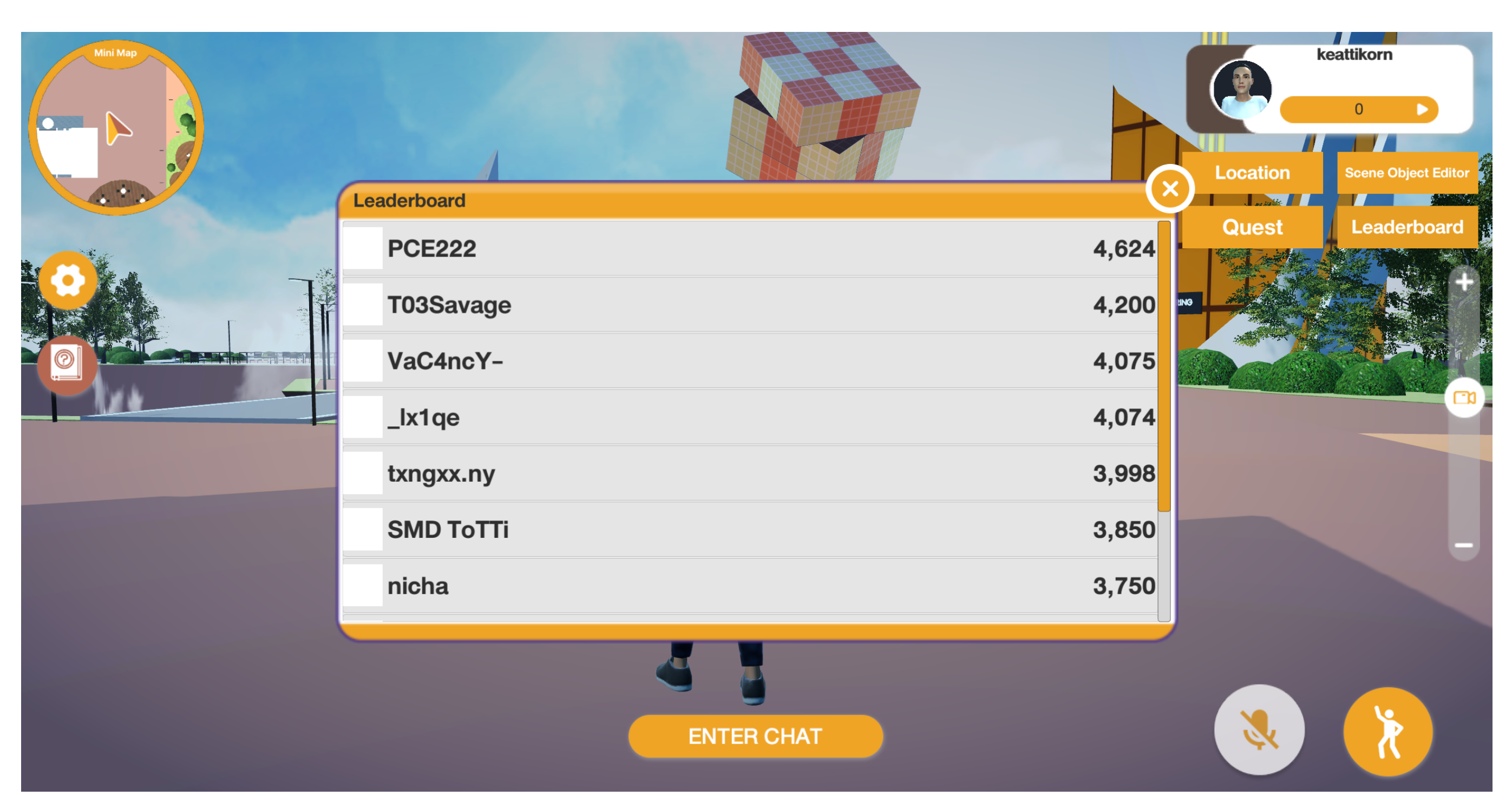
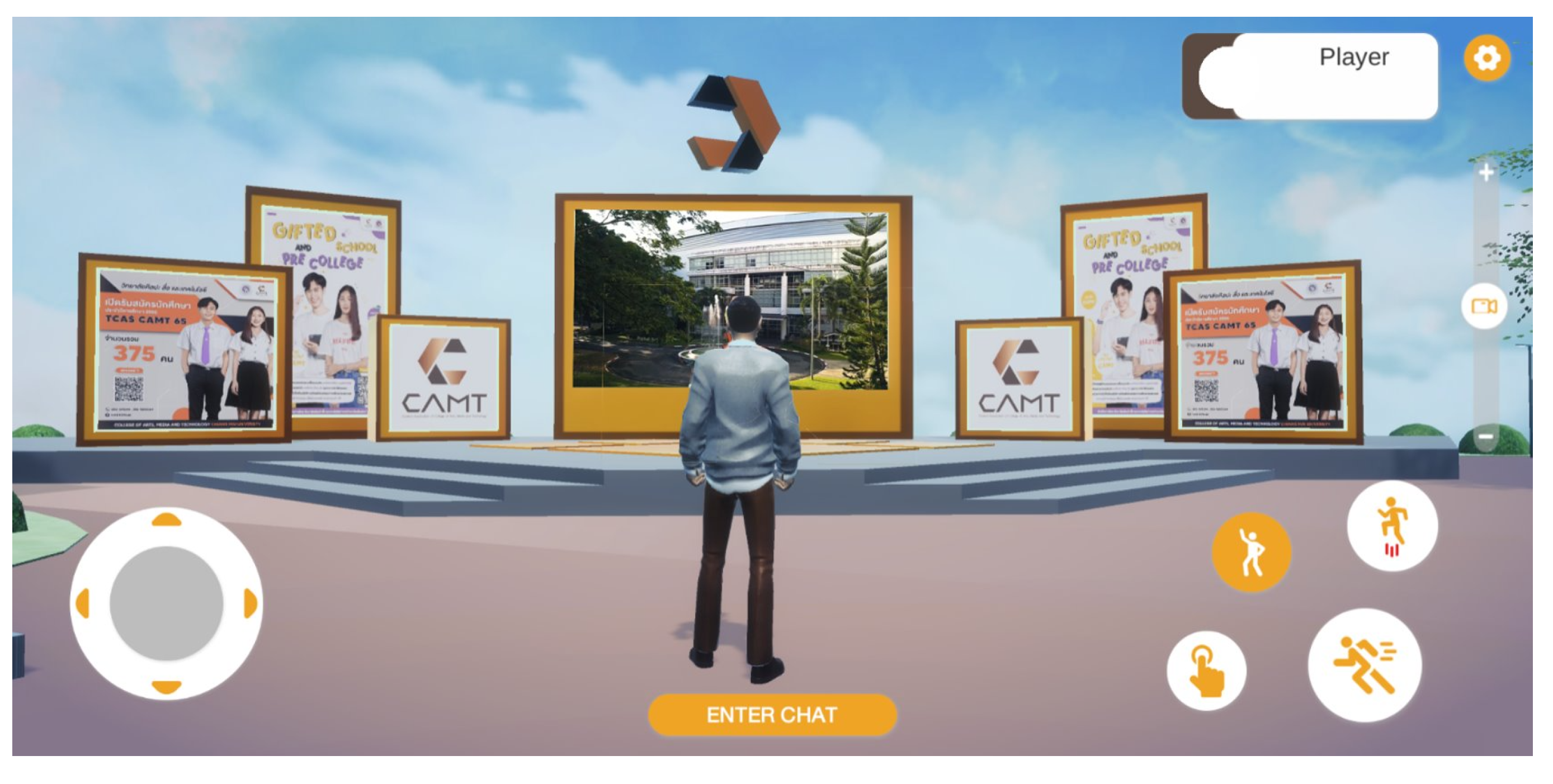
The platform provides various methods and features for conveying information to its users, as summarised in Table 3. A digital poster board is a simple tool that users can interact with to access more detailed information, as shown in Figure 8. Additionally, digital posters can be used to display either a static video or a live video for a more immersive experience (Figure 9). Throughout the metaverse, there are non-player characters (NPCs) that users can interact with, initiating a conversation (Figure 10). Some NPCs provide general information, while others offer tasks or quests for users to complete within the metaverse. This incentivises exploration and promotes the platform’s goal of conveying informational content. Upon completion of a quest, users are rewarded with scores based on their performance, which can be stored in a cloud service and displayed on a leaderboard [51] (Figure 11). This can be seen from the main stage when there is a live event (Figure 12). This can enhance engagement and encourage competition among users.
Table 3.
Summary of various features of the metaverse platform for conveying information.
Figure 11.
User scores are ranked in the form of a leaderboard, which can be accessed via the Leaderboard function of the metaverse. This feature can encourage users to participate in on-going events.
Figure 12.
The main stage and live event feature. The screen is used to stream live video during events. The Thai words on the left and right boards over the orange colour bar is “Open for Admission”.
3. Methods
This section outlines the methodology employed in this paper to assess the effectiveness of the developed metaverse in three areas: conveying intended information through the developed features set (CII for short), player experience of need satisfaction (PENS), and system usability scale (SUS). The section begins by detailing the setup of the investigation environment, procedure, and user task, followed by a description of the number and characteristics of the participants. Finally, the evaluation metrics used for the investigation are explained.
3.1. Setup
The deployment of the metaverse on a WebGL platform made the preparation process relatively simple. Compatible web browsers were pre-installed in computer laboratory rooms at the university, and a short URL link was created for easy access (https://cmu.to/meta accessed on 14 February 2023).
3.2. Investigation Procedure and User Task
The investigation procedure is explained as follows. The open-house event was held on a Sunday, specifically for students to attend. It was an on-site event where students visited the university college to explore the five study programs and get a feel for its academic activities. While they were exploring the physical event, they were also invited to register and use our newly developed platform.
During the platform usage session, visitors were encouraged to participate in the activities announced at the main stage of the metaverse. A notification message (see Figure 1 for the notification functionality) was also provided to inform users of upcoming activities. Additionally, a large screen at the main stage in the metaverse broadcast a livestream of the on-site event.
Participants were free to explore the metaverse platform, which contained information about the curriculum inside each building. For our investigation, participants were informed and encouraged by our staff members to complete a questionnaire provided by designated NPCs located in the metaverse platform. Participants who completed the questionnaire were rewarded with a certain amount of points. Each participant’s score was ranked and displayed on the leaderboard at the main stage, and the avatars of the top three participants were displayed on billboards around the main stage. At the end of the event session, physical giveaways were awarded to the top three participants on the leaderboard.
User tasks are summarised in the following items:
- Participants were able to explore the platform and discover their interest in each study program as if it were a physical open-house event.
- Participants could visit each of the curriculum-themed buildings to get a feel for the academic activities provided by each study program.
- Visitors were able to interact with information-conveying methods designed for each study program inside the buildings. Some of these methods provided additional points to users, such as answering short questions presented by NPCs about the curriculum and viewing informational digital poster boards for a certain amount of time.
3.3. Participants
As explained in the previous section, there were three designated NPCs responsible for giving questionnaires to the participants. The participants were free to explore the metaverse and could talk to the NPCs to answer the questions independently. Therefore, the number of participants who answered the questions in each set of questionnaires, i.e., CII, PENS, and SUS, was not necessarily equal. However, there was an intersection between user identification number (ID) for the three tests, which indicates the participants who answered all three sets of questions.
Students visiting the open-house events were the participants who provided answers to the questionnaires. The age of students who answered the CII questionnaire ranged from below 18 years old (N = 96), to between 18 and 22 years old (N = 27), and from 23 to 28 years old (N = 1). A total of 124 participants answered the CII questionnaire, denoted as CII-N124. The participants’ demographics data, such as age and education, were only collected for the CII questionnaire. Seventy-nine (N = 79) and seventy-four (N = 74) of the students provided answers to the PENS and SUS questions, respectively. These were denoted as PENS-N79 and SUS-N74, respectively. The number of students who answered all questionnaires was 43 (N = 43), calculated by the intersection between user identification numbers for each questionnaire. To clarify, the terms CII-N43, PENS-N43, and SUS-N43 are used to refer to these groups of participants.
3.4. Measurements
In this study, one qualitative and three quantitative surveys were used to gauge the success of the metaverse platform. First, the CII was used to collect attendees’ specific feedback through a custom set of questions. The CII set of questionnaires has two parts: quantitative and qualitative questions. A list of 15 quantitative questions is shown in Table 4. A list of five qualitative questions is shown in Table 5. Second, the player experience of need satisfaction [55] (PENS) was employed to assess player experience and intrinsic motivation. PENS evaluates motivation across five dimensions: competence, autonomy, relatedness (from the Self-Determination Theory [56]), presence (a measure of how immersed players are in the game), and immersion (the degree of intuitive control [55]). The PENS is a quantitative metric. Third, the system usability scale [57] (SUS), which is also a quantitative measure, was employed to evaluate the ease of use of the platform. All three questionnaires were assessed on a seven-point Likert scale: 1 (strongly disagree) to 7 (strongly agree). All questionnaires were written in the Thai language with English in parentheses to maintain the originality of the standard questions.

Table 4.
A list of the 15 CII quantitative questions. This questionnaire set was used to collect feedback specifically on the platform features’ ability to convey the intended information (CII).
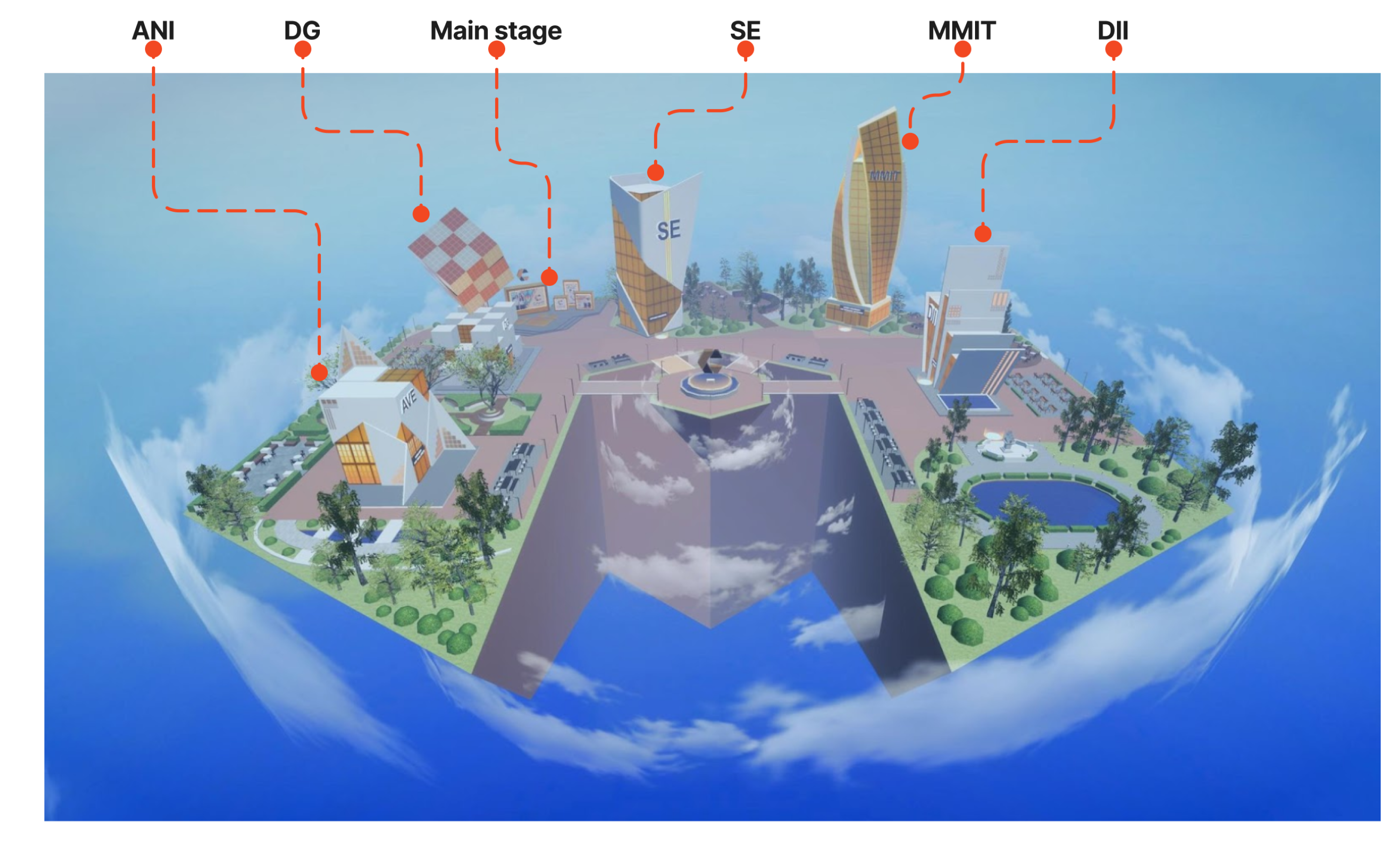
Table 5.
A list of five qualitative CII questions. This set of open-ended questions was used to gather additional information about the users’ experiences with the platform, general gaming preferences, and other metaverses.
4. Results and Discussion
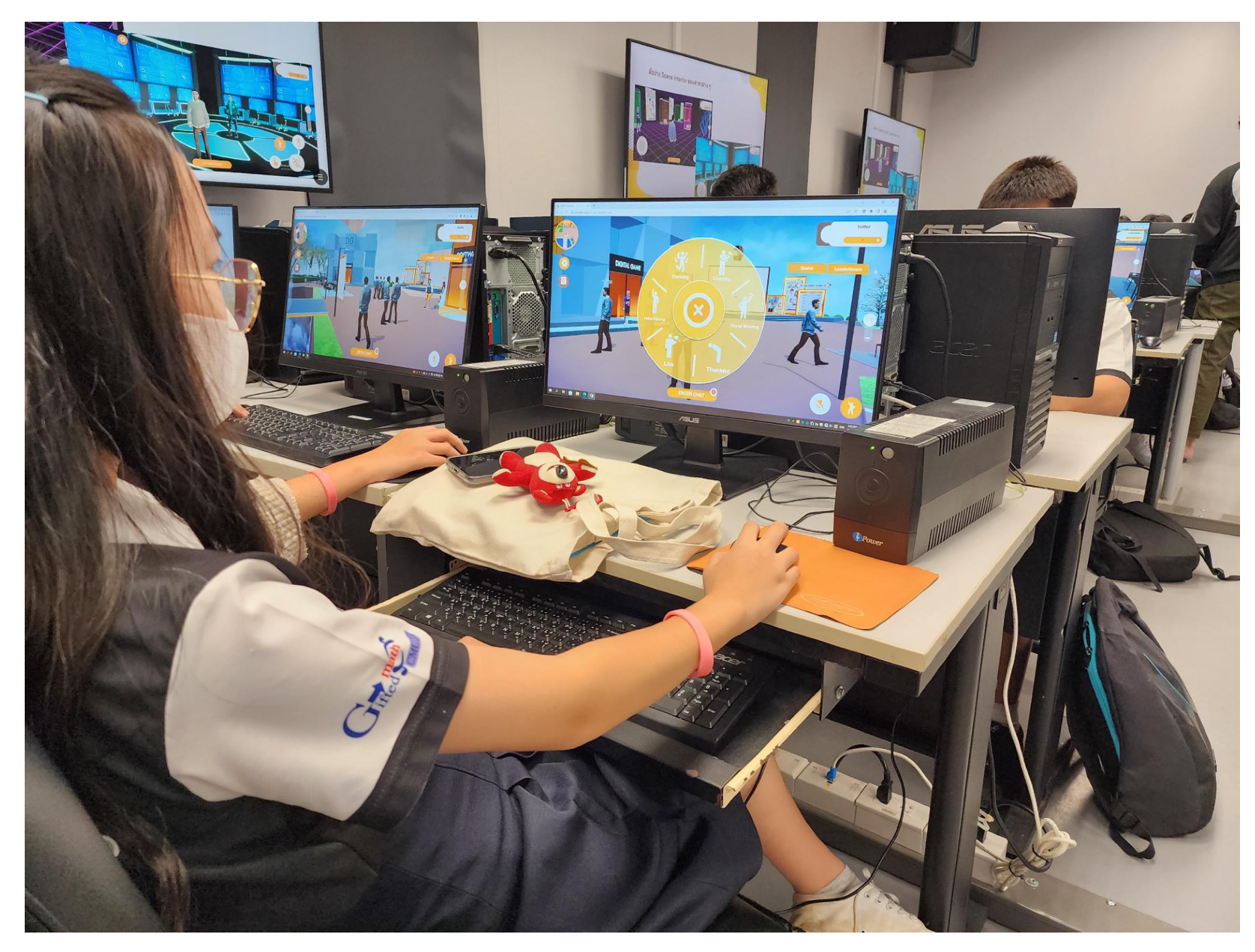
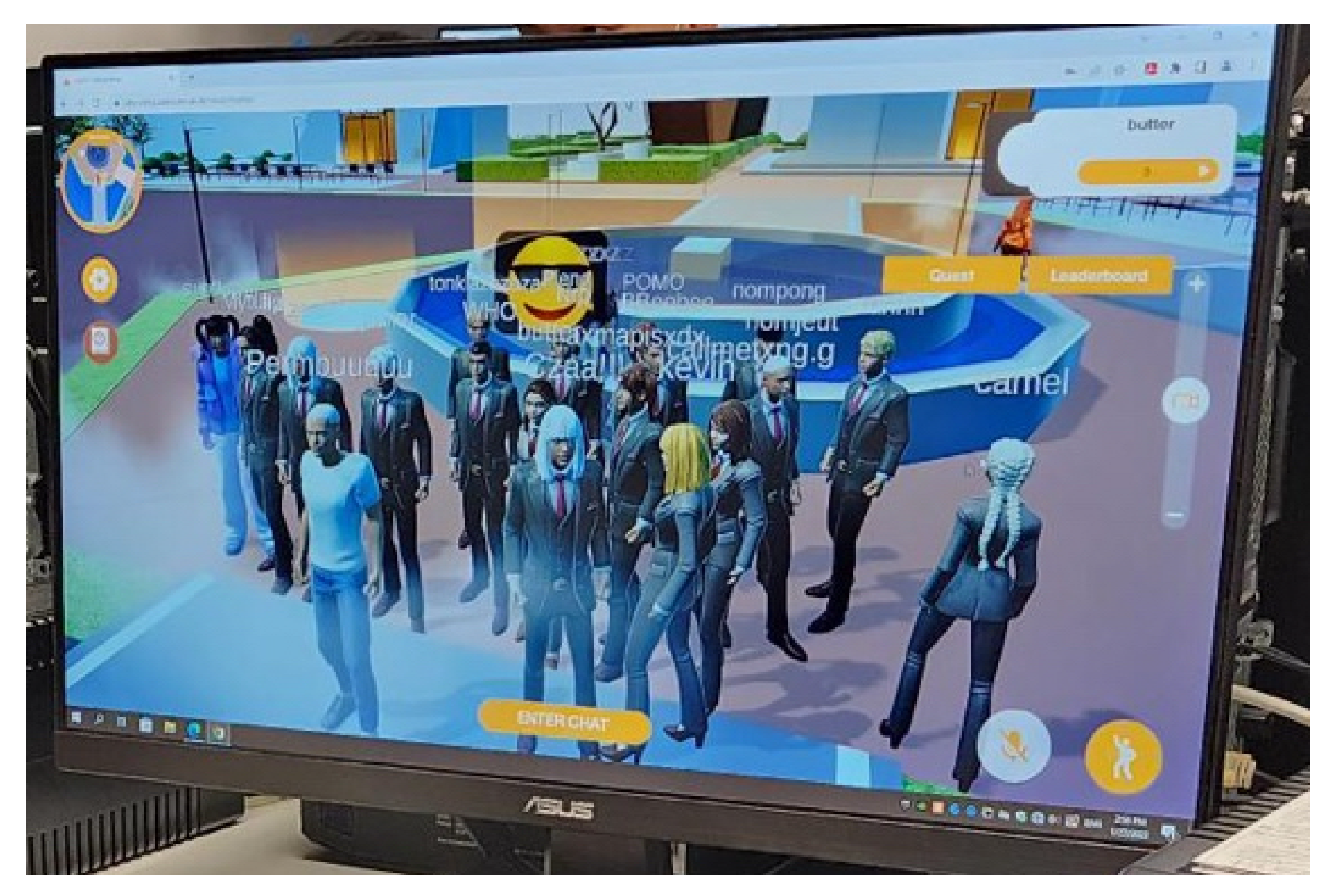
The metaverse’s ability to handle large numbers of users is demonstrated in Figure 13 and Figure 14, which depicts the crowded participants during the open-house virtual event. The figure illustrates that the platform is capable of accommodating a significant number of users simultaneously.
Figure 13.
The participants used the metaverse platform in the computer laboratory during the open-house event.
Figure 14.
This is a screenshot from one of the participant’s displays that shows the crowded avatars around the fountain during the event.
After collecting and analysing survey data, key findings were identified and presented. Results were organised by CII quantitative measures, CII qualitative measures, PENS, and SUS, with accompanying discussions provided for each results section.
4.1. CII Quantitative Measures
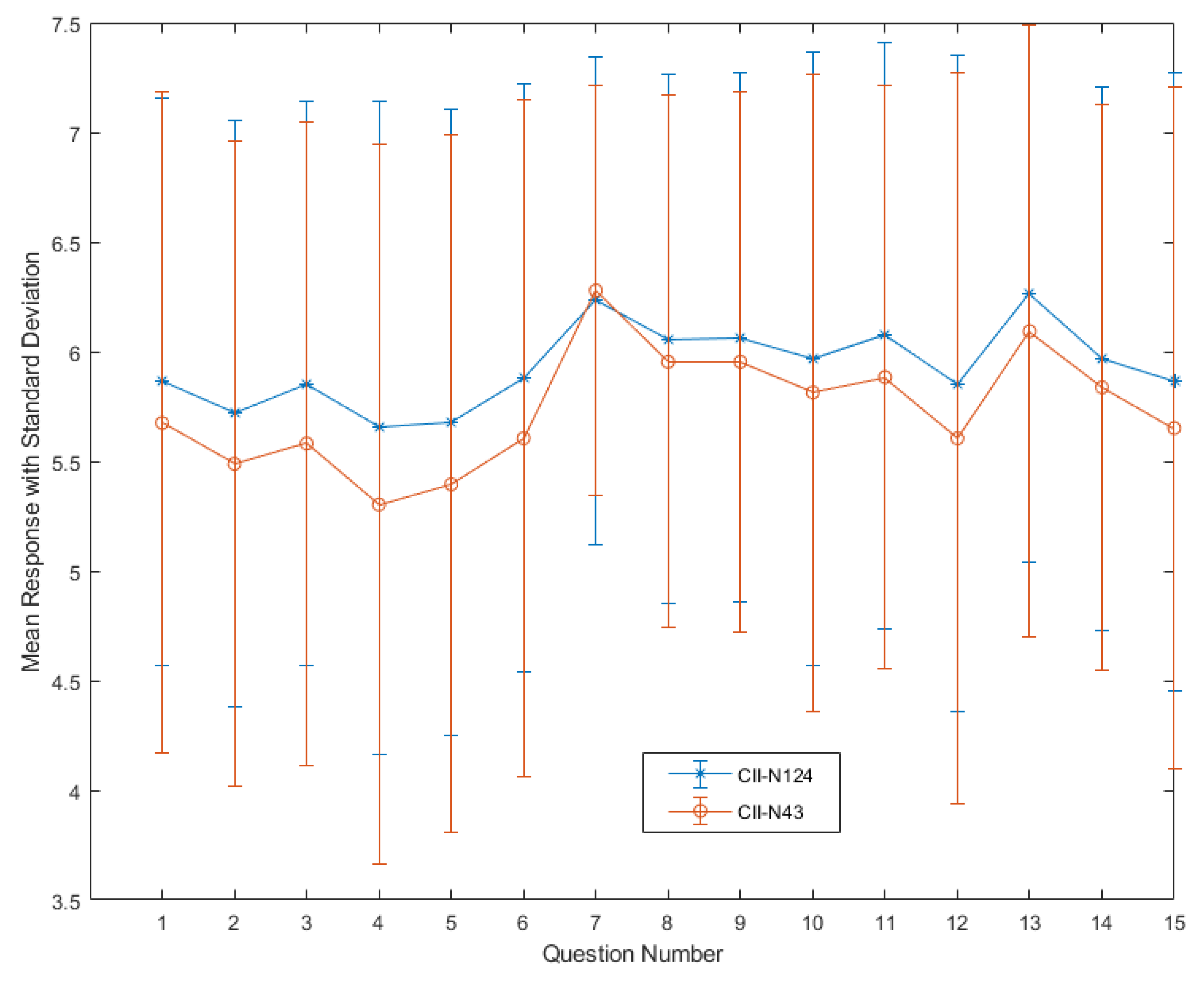
A total of 124 participants provided answers to the CII questionnaire (CII-N124). Overall, the results from the CII questionnaire are generally positive, with a mean score ranging from 5.65 to 6.27 on the 7-point Likert scale. The statistical analysis of the CII quantitative questionnaire is shown in Table 6 and the mean values are illustrated in Figure 15. The information about the curricula, career paths, and selected student works was received well by the respondents, as shown by the means of 5.86, 5.72, and 5.85, respectively, for receiving information from digital poster boards with videos in the metaverse (CII-1 to CII-3). The mean scores for receiving the same information from a digital poster board were slightly lower, with the means ranging from 5.65 to 5.88 (CII-4 to CII-6). The mean scores for receiving the same information from NPCs were the highest group among the three types of information-conveying methods, with means of 6.23, 6.06, and 6.06 for CII-7, CII-8, and CII-9, respectively. The respondents also reported having fun with the interaction with NPCs and minigame events in the metaverse, with mean scores of 5.97 and 6.07 (CII-10 and CII-11), respectively. The existence of live events and voice chat in the metaverse also made the respondents feel attracted to the activities and led them to chat with others, with mean scores of 5.97 and 5.86 (CII-14 and CII-15), respectively. The highest mean score of 6.27 in this category was for the activity that encouraged users to collect a high score for the giveaway rewards (CII-13). This is in contrast with the mean of 5.85 from CII-12, which is also a score-related question regarding the metaverse.
Table 6.
The statistical analysis of the CII quantitative questions.
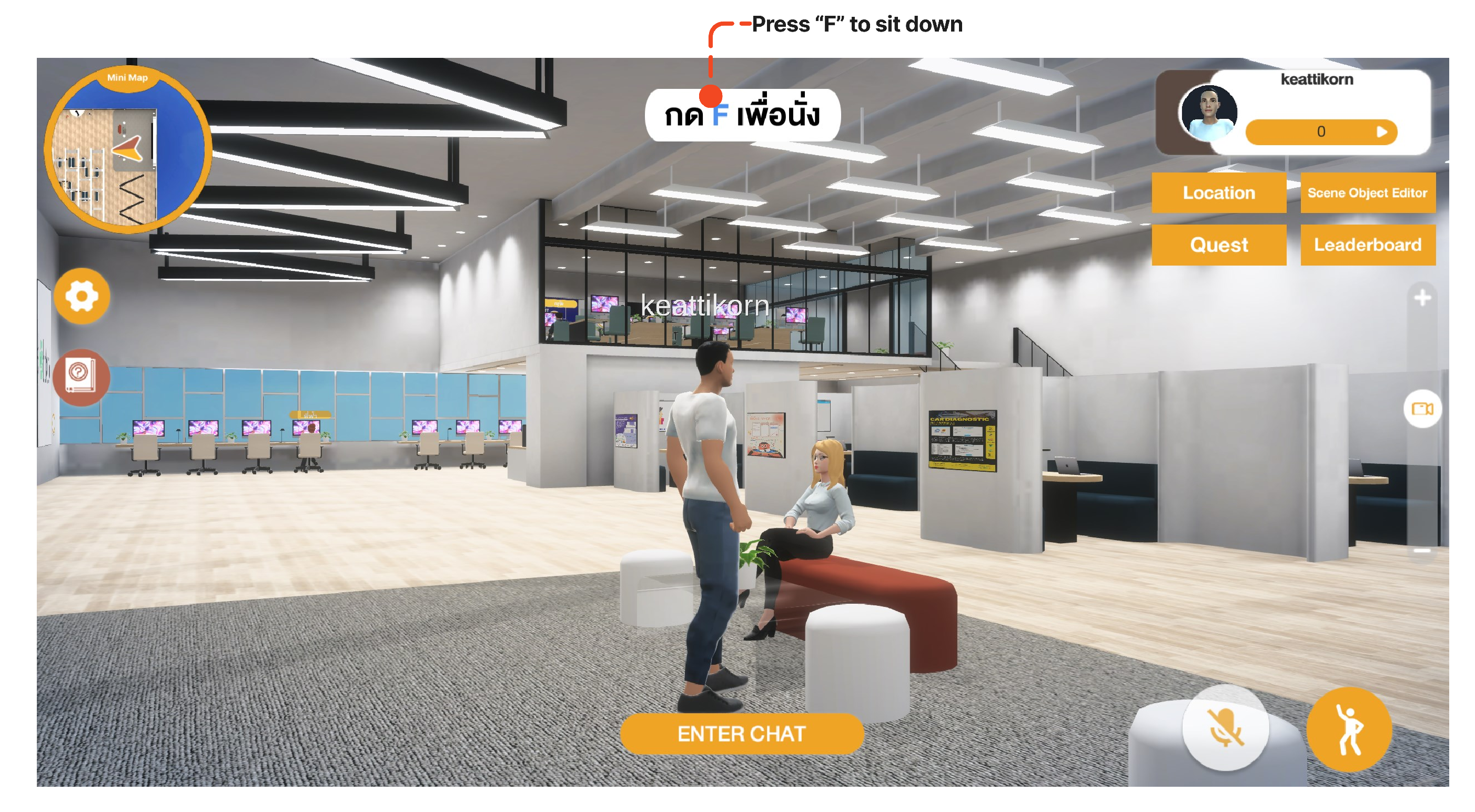
Figure 15.
Mean response with standard deviation for the CII-N124 and CII-N43 results.
The results from the CII questionnaire from respondents who answered all three questionnaires (CII-N43) followed the same trend, with slightly lower means, except for CII-7 (receiving the curriculum information from an NPC), as shown in Figure 15, indicated by the lower line with the orange colour. The highest mean of 6.28 from CII-7 was the indicator that the participants who stayed longer in the metaverse enjoyed the information retrieved from an NPC rather than other methods of conveying information. This statement was confirmed with the t-test analysis of CII-7 against other questions, as shown in Table 7. The mean of CII-7 was significantly different from other questions except CII-8 and CII-13. The statement aligns with the findings of Mohd and Nooralisa in their study “Exploring the Integration between Game Narrative and NPCs” [58], which suggests that integrating game narrative and non-player characters can increase players’ sense of connectedness.
Table 7.
The statistical t-test of CII-7 (CII-N43) against other questions.
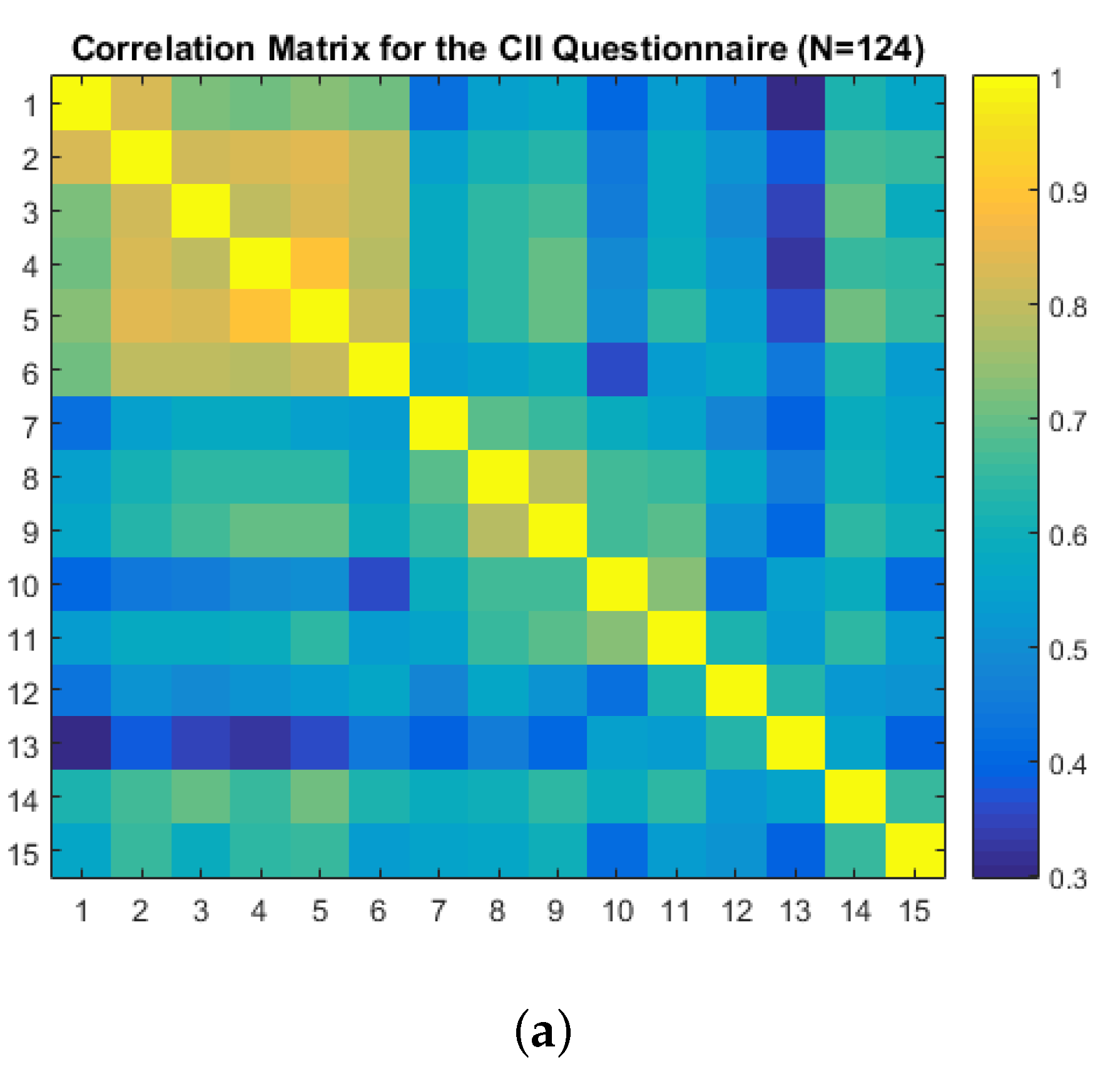
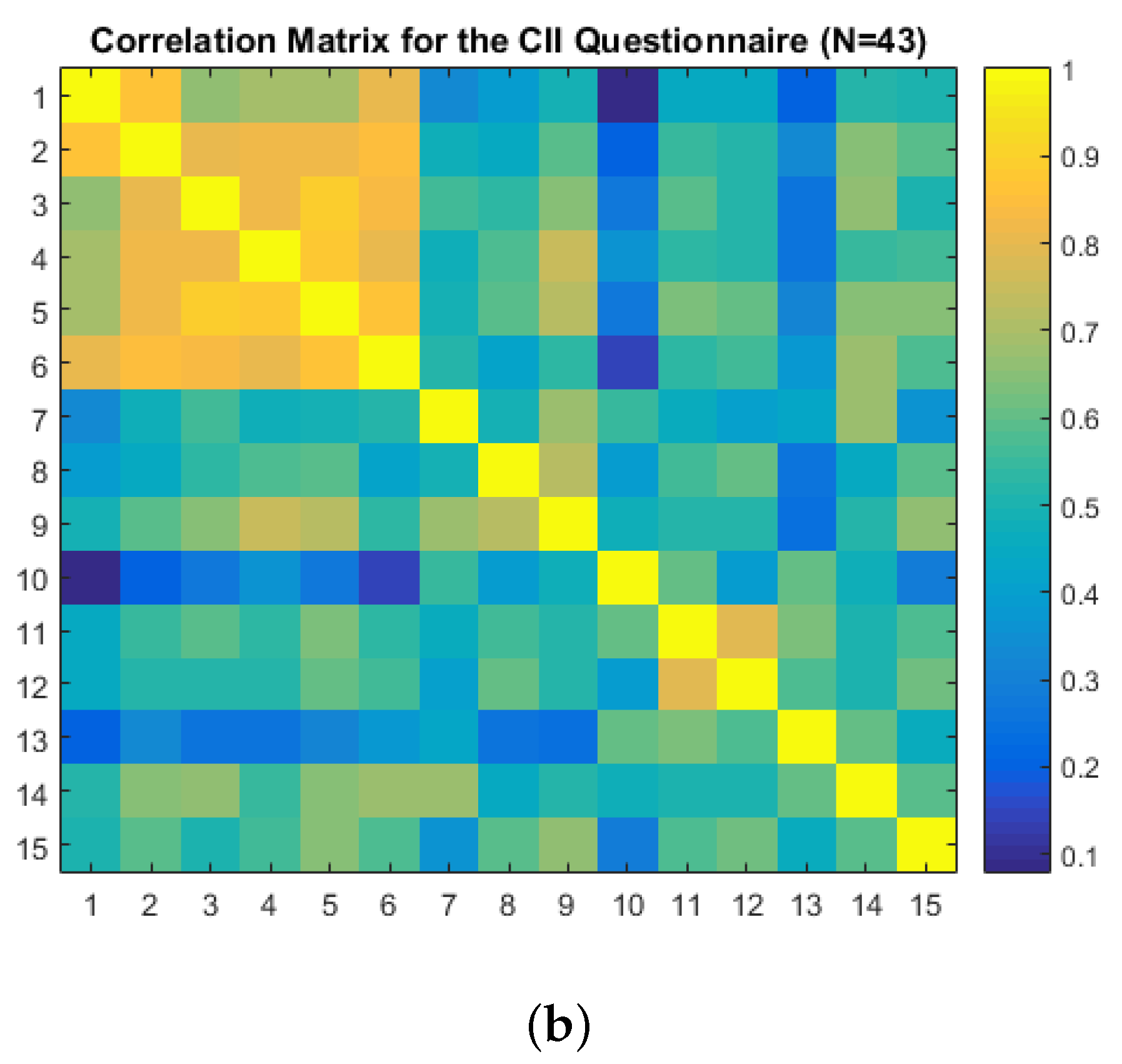
A correlation matrix of the CII-N124 questionnaire is represented by a heat-map plot, as shown in Figure 16a. An area with a highly positive correlation is the area between the 1st and the 6th questions, as indicated by the yellow colour on the map. A heat-map plot of the CII-N43 questionnaire is shown in Figure 16b. The first six questions still followed the same trends, i.e., a positive correlation was found. However, the 10th question item (CII-10) is low in comparison with the first 6 questions, while the 13th question shows a moderately low correlation compared to the 1st–9th questions.
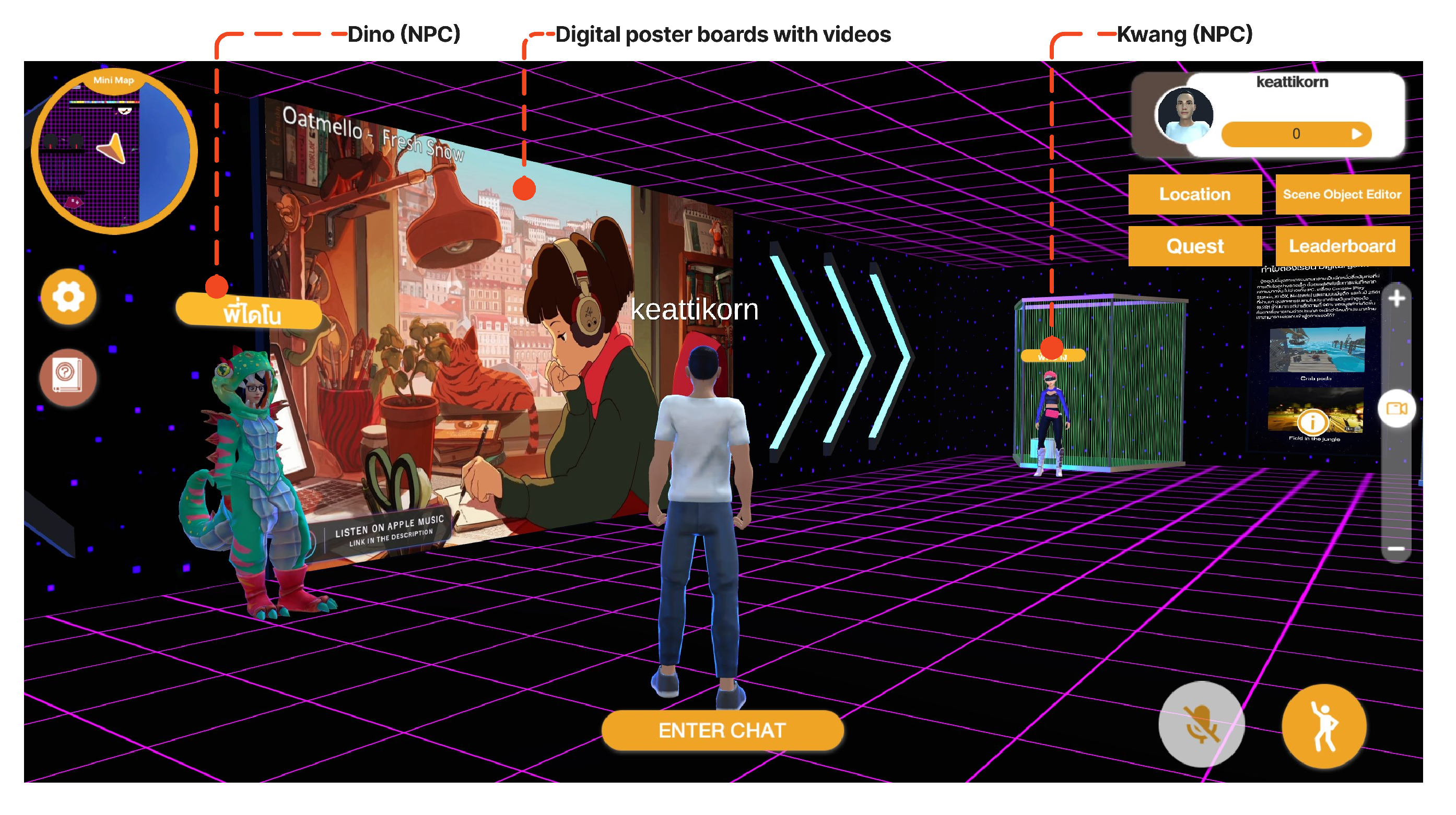
Figure 16.
Heat-map plots of the correlation matrix from the independent (CII-N124) and the intersection (CII-N43) results. (a) A heat-map plot of the correlation matrix for the CII questionnaire with N = 124. (b) A heat-map plot of the correlation matrix for the CII questionnaire with N = 43.
It is noted that question 13 (CII-13) shows a low correlation with the other questions but does not reach the negative side of the heat-map. Likewise, question 10 (CII-10) shows a moderately low correlation with the others, especially the first 6 questions.
4.2. CII Qualitative Measures
The participants provided general positive comments to CII-16 and CII-17. Many of them wanted the platform to have several mini-games, virtual reality (VR) headset compatibility, and other sorts of entertainment within the metaverse. According to CII-18, most of the attendees play games every day, with very few exceptions that play occasionally, ranging from once a week to once a month. The summary of CII-19 shows that students are familiar with game genres such as action, shooting, simulation, role-playing, and puzzle games. Some of the participants answered CII-20 by saying they have never used any other metaverses before. However, Roblox, Sandbox, and Gather Town, in that order, were the most commonly experienced metaverses by attendees. The comments indicated in the results are consistent with the recommendations of Viktor, who suggests including more interactions in the game world to improve gameplay [59]. This is directly proportional to the content that developers would like to give to players.
4.3. PENS and SUS Measures
PENS and SUS are well-defined questionnaires, with a formula to interpret the result. PENS offers five aspects from the dataset, i.e., competency, autonomy, relatedness, presence/immersion, and intuitive controls. Each of the aspect values is calculated by averaging the selected items among the 21 PENS items. Some items must be inverted before computation. As a result, the five aspects of PENS (competency, autonomy, relatedness, presence/immersion, and intuitive controls) are 5.98, 5.89, 5.10, 5.19, and 5.94, respectively, based on 79 participants (PENS-N79), as summarised in Table 8.
Table 8.
The results of player experience of need satisfaction (PENS).
The participants’ competency score, according to PENS-N79, is 5.98, indicating their confidence using the platform. This corresponds to the qualitative measures of CII-18 and CII-20 reported in Section 4.2. The autonomy score is 5.89, which ranks third and is an indicator of the platform’s overall attractiveness and freedom. The qualitative measures for autonomy are separated into two perspectives: the platform’s elements and activities. The feedback suggests that the platform’s graphics rendering is great and the avatar customisation is good, but could be improved by more options. In terms of activities, users want more minigames and more opportunities for social interaction. This relates to the relatedness score of 5.10, which is the lowest of the five and reflects the platform’s limited opportunities for inter-participant interaction. The presence/immersion score is 5.19, the second lowest, as confirmed by the platform’s limited active activities. The intuitive control score of 5.94 shows the participants’ confidence in using the platform naturally, as most are familiar with the standard controls. Based on these results and Loewen’s research [60], fantasy/role-playing participants have greater actual–ought disparity than those with idealised or realistic avatars. The development team plans to improve player engagement by expanding avatar customisation options and creating NPCs that are relevant to the platform’s content in the next iteration.
The system usability scale, SUS, was calculated as 62.47 from 74 participants (SUS-N74), as shown in Table 9. A score of 62.47 can be interpreted as a moderate level of perceived usability. This score suggests that users have a positive overall impression of the system’s ease of use and usefulness, but there may be room for improvement in certain areas. This is confirmed by the previous results from PENS-N79 competency and intuitive control scores.
Table 9.
The results of system usability scale (SUS).
The results of the player experience of need satisfaction (PENS) assessment for participants who completed all three measures (PENS-N43) are shown in Table 8. On average, the scores are consistent, with minimal differences. The system usability scale (SUS) score for this group of participants is 59.27, as shown in Table 9 (SUS-N43), which is also within a similar range of perceived usability.
It is possible that the lower SUS score for the SUS-N43 group compared to the SUS-N74 group may be due to the fact that these participants had more time to explore the platform in depth and found some flaws in the platform. In conclusion, these results suggest that the platform’s usability is consistent for all participants, regardless of the amount of time they spend using it.
4.4. Implications
Table 10 presents evidence or comments related to the key metaverse features [4,6,7,8,9]. The table summarises the results in correspondence with the key metaverse features presented in Table 1. Interactivity, realism, immersion, and multilayering were evidenced by the participants, while embodiment and collaboration received comments for further improvements. However, there was no mentioned evidence or comment regarding persistence, ubiquity, interoperability, scalability, accessibility, and synthesis. These features operate inherently to serve the platform functionality, as described in Table 2, and may not be visible to the participants.
Table 10.
Evidence or comments from the results related to the key metaverse features.
The comments from users were aimed at the embodiment, which serves as a digital representation of individuals within the metaverse. This suggests that the developed platform may offer a limited degree of ’being there’ or telepresence [28,61]. Telepresence is an important aspect of the metaverse, as it allows users to feel fully immersed in the virtual world and experience a sense of presence as if they were physically present in that space [61]. The feedback regarding embodiment indicates that there may be room for improvement in this area to enhance the overall telepresence and sense of immersion for users. In addition, a VR version of the platform could also potentially enhance the sense of telepresence and immersion for users. Virtual reality is well known for its ability to create a highly immersive experience for users, allowing them to feel as though they are truly a part of the virtual environment.
The users’ comments on the collaborative features of the platform suggest that they desire more opportunities for social interaction and engagement with other users in the metaverse. This indicates that the platform might benefit from incorporating mechanics that allow users to play, build, and compete with one another. User-generated content (UGC) [3,62,63] and its persistence are two potential ways to achieve this. By allowing users to create and share their own content, such as games, experiences, or custom rooms, the platform can foster a more collaborative and engaging environment. Moreover, these UGCs can be used with AR technology. For instance, users can place their generated content in the physical world, which is known as local presence on the continuum of AR [28].
5. Conclusions
Based on research question RQ1, the results of the CII’s quantitative and qualitative studies suggest that the developed information-conveying features effectively convey information to users. The non-playable character (NPC) feature was found to be the most effective in conveying curriculum information.
Regarding RQ2, in terms of user engagement, the results from the player experience of need satisfaction (PENS) show that participants were confident in using the platform (competency score of 5.98), but there was room for improvement in terms of providing more opportunities for social interaction (relatedness score of 5.10). The system usability scale (SUS) score of 62.47 suggests that the platform has a moderate level of perceived usability, with some room for improvement.
Limitations and Future Works
The current investigation has some limitations, which need to be addressed in future works and are listed below.
- This is the first iteration development, meaning that there is room for improvement.
- The platform does not currently have blockchain connectivity, which is considered one of the essential elements in the metaverse.
- The features that have been implemented are limited and only include the basic functionalities of the metaverse.
- The investigation was conducted in a special situation where participants were invited to use the platform at the university computer lab during a site visit to the on-site open-house event.
To enhance the platform and provide a more comprehensive solution, future work should focus on integrating additional game elements into the metaverse, such as minigames, and competitive and cooperative mechanics. Furthermore, incorporating XR technologies (VR and AR) [28], blockchain connectivity [64], and virtual currency would be beneficial. Finally, features specifically designed for education, including a meeting room, virtual classroom, presentation mechanism, and student evaluation mechanism, should be developed to improve the platform’s functionality and usability in an academic setting.
Author Contributions
Conceptualisation, K.S. and S.G.; methodology, K.S. and S.G.; software, K.S., N.W., and K.K.; validation, K.S. and S.G.; formal analysis, K.S. and S.G.; investigation, K.S.; resources, K.S. and N.W.; data curation, K.S.; writing—original draft preparation, K.S.; writing—review and editing, K.S. and S.G.; visualisation, K.S.; project administration, K.S., S.G., N.W., and K.K. All authors have read and agreed to the published version of the manuscript.
Funding
This research received no external funding.
Informed Consent Statement
Consents were obtained from all participants during the questionnaire acquisition, and their personal identities will remain anonymous.
Data Availability Statement
The data in this study are available upon request from the corresponding author. The data are not publicly available due to privacy.
Acknowledgments
We would like to thank the College of Arts, Media and Technology, Chiang Mai University, for its facilities and financial support. We are also grateful to the participants who joined our study.
Conflicts of Interest
The authors declare no conflict of interest.
Abbreviations
The following abbreviations are used in this manuscript:
| ANI | Animation and visual effects |
| AR | Augmented reality |
| CAMT | College of Arts, Media and Technology |
| CII | Conveying intended information |
| CII-N43 | Denotes a group of participants who gave answers to CII (also PENS and SUS) |
| CII-N124 | Denotes a group of participants who gave answers to CII |
| COTS | Commercial-off-the-shelf |
| DG | Digital games |
| DII | Digital industry integration |
| HMDs | Head-mounted displays |
| JSON | Java Script Object Notation |
| MMIT | Modern management information technology |
| MMORPGs | Massively multiplayer online role-playing games |
| MR | Mixed reality |
| NPCs | Non-playable characters |
| PENS | Player experience of need satisfaction |
| PENS-N43 | Denotes a group of participants who gave answers to PENS (also CII and SUS) |
| PENS-N79 | Denotes a group of participants who gave answers to PENS |
| SE | Software engineering |
| SUS | System usability scale |
| SUS-N43 | Denotes a group of participants who gave answers to SUS (also CII and PENS) |
| SUS-N74 | Denotes a group of participants who gave answers to SUS |
| UX | User experience |
| VR | Virtual reality |
| XR | Extended reality or xReality |
References
- Bilińska, K.; Pabian, B.; Pabian, A.; Reformat, B. Development Trends and Potential in the Field of Virtual Tourism after the COVID-19 Pandemic: Generation Z Example. Sustainability 2023, 15, 1889. [Google Scholar] [CrossRef]
- Choi, S.; Yoon, K.; Kim, M.; Yoo, J.; Lee, B.; Song, I.; Woo, J. Building Korean DMZ Metaverse Using a Web-Based Metaverse Platform. Appl. Sci. 2022, 12, 7908. [Google Scholar] [CrossRef]
- Weinberger, M. What Is Metaverse?—A Definition Based on Qualitative Meta-Synthesis. Future Internet 2022, 14, 310. [Google Scholar] [CrossRef]
- Ning, H.; Wang, H.; Lin, Y.; Wang, W.; Dhelim, S.; Farha, F.; Ding, J.; Daneshmand, M. A Survey on Metaverse: The State-of-the-art, Technologies, Applications, and Challenges. arXiv 2021, arXiv:2111.09673. [Google Scholar]
- Mystakidis, S. Metaverse. Encyclopedia 2022, 2, 486–497. [Google Scholar] [CrossRef]
- Castronova, E. Synthetic Worlds: The Business and Culture of Online Games; University of Chicago Press: Chicago, IL, USA, 2008. [Google Scholar]
- Prieto, J.F.; Lacasa, P.; Martínez-Borda, R. Approaching metaverses: Mixed reality interfaces in youth media platforms. New Techno. Humanit. 2022, 2, 136–145. [Google Scholar] [CrossRef]
- John, D.N.D.; William, G.B., III; Richard, G. 3D Virtual worlds and the metaverse. ACM Comput. Surv. 2013, 45, 1–38. [Google Scholar] [CrossRef]
- De Decker, P.; Peterson, S. Beyond Virtual or Physical Environments: Building a Research Metaverse a White Paper for NDRIO’s Canadian Digital Research Needs Assessment; NDRIO: Canada, 2020; Available online: https://alliancecan.ca/sites/default/files/2022-03/ndrio-white-paper-digital-metaverse-dedeckerpeterson.pdf (accessed on 14 February 2023).
- Birk, M.V.; Atkins, C.; Bowey, J.T.; Mandryk, R.L. Fostering intrinsic motivation through avatar identification in digital games. In Proceedings of the 2016 CHI Conference on Human Factors in Computing Systems, San Jose, CA, USA, 7–12 May 2016; pp. 2982–2995. [Google Scholar]
- Lycett, M.; Reppel, A. Humans in (Digital) Space: Representing Humans in Virtual Environments. In Proceedings of the 2022 International Conference on Advanced Visual Interfaces, Frascati, Italy, 6–10 June 2022; Association for Computing Machinery: New York, NY, USA, 2022. [Google Scholar] [CrossRef]
- Culliford, E.; Balu, N. Facebook Invests Billions in Metaverse Efforts as Ad Business Slows. Reuters. 26 October 2021. Available online: https://www.reuters.com/technology/facebook-invest-billions-metaverse-efforts-ad-business-slows-2021-10-26/ (accessed on 2 February 2023).
- Rosenberg, L.B. Regulating the Metaverse, a Blueprint for the Future. In Proceedings of the Extended Reality; De Paolis, L.T., Arpaia, P., Sacco, M., Eds.; Springer International Publishing: Cham, Switzerland, 2022; pp. 263–272. [Google Scholar]
- Rosenberg, L. Regulation of the Metaverse: A Roadmap: The Risks and Regulatory Solutions for Largescale Consumer Platforms. In Proceedings of the 6th International Conference on Virtual and Augmented Reality Simulations, Brisbane, Australia, 25–27 March 2022; Association for Computing Machinery: New York, NY, USA, 2022; pp. 21–26. [Google Scholar] [CrossRef]
- Polona, C.; André, M.T.; Maria, N. Metaverse: Opportunities, Risks and Policy Implications. European Parliamentary Research Service. 24 June 2022. Available online: https://www.europarl.europa.eu/thinktank/en/document/EPRS_BRI(2022)733557 (accessed on 2 February 2023).
- Vondráček, M.; Baggili, I.; Casey, P.; Mekni, M. Rise of the Metaverse’s Immersive Virtual Reality Malware and the Man-in-the-Room Attack & Defenses. Comput. Secur. 2023, 127, 102923. [Google Scholar] [CrossRef]
- AbuKhousa, E.; El-Tahawy, M.S.; Atif, Y. Envisioning Architecture of Metaverse Intensive Learning Experience (MiLEx): Career Readiness in the 21st Century and Collective Intelligence Development Scenario. Future Internet 2023, 15, 53. [Google Scholar] [CrossRef]
- Ricci, M.; Scarcelli, A.; Fiorentino, M. Designing for the Metaverse: A Multidisciplinary Laboratory in the Industrial Design Program. Future Internet 2023, 15, 69. [Google Scholar] [CrossRef]
- Huggett, J. Virtually Real or Really Virtual: Towards a Heritage Metaverse. Stud. Digit. Herit. 2020, 4, 1–15. [Google Scholar] [CrossRef]
- Ayiter, E. Spatial poetics, place, non-place and storyworlds: Intimate spaces for metaverse avatars. Technoetic Arts 2019, 17, 155–169. [Google Scholar] [CrossRef]
- Choi, H.S.; Kim, S.H. A content service deployment plan for metaverse museum exhibitions—Centering on the combination of beacons and HMDs. Int. J. Inf. Manag. 2017, 37, 1519–1527. [Google Scholar] [CrossRef]
- Sá, M.J.; Serpa, S. Metaverse as a Learning Environment: Some Considerations. Sustainability 2023, 15, 2186. [Google Scholar] [CrossRef]
- Suzuki, S.N.; Kanematsu, H.; Barry, D.M.; Ogawa, N.; Yajima, K.; Nakahira, K.T.; Shirai, T.; Kawaguchi, M.; Kobayashi, T.; Yoshitake, M. Virtual Experiments in Metaverse and their Applications to Collaborative Projects: The framework and its significance. Procedia Comput. Sci. 2020, 176, 2125–2132. [Google Scholar] [CrossRef]
- Wang, Y.; Lee, L.H.; Braud, T.; Hui, P. Re-shaping Post-COVID-19 Teaching and Learning: A Blueprint of Virtual-Physical Blended Classrooms in the Metaverse Era. arXiv 2022, arXiv:2203.09228. [Google Scholar]
- Yue, K. Breaking down the Barrier between Teachers and Students by Using Metaverse Technology in Education. In Proceedings of the 2022 13th International Conference on E-Education, E-Business, E-Management, and E-Learning (IC4E), Tokyo, Japan, 14–17 January 2022; ACM: New York, NY, USA, 2022; pp. 40–44. [Google Scholar] [CrossRef]
- Tlili, A.; Huang, R.; Shehata, B.; Liu, D.; Zhao, J.; Metwally, A.H.S.; Wang, H.; Denden, M.; Bozkurt, A.; Lee, L.H.; et al. Is Metaverse in education a blessing or a curse: A combined content and bibliometric analysis. Smart Learn. Environ. 2022, 9, 24. [Google Scholar] [CrossRef]
- Duan, H.; Li, J.; Fan, S.; Lin, Z.; Wu, X.; Cai, W. Metaverse for Social Good: A University Campus Prototype. In Proceedings of the 29th ACM International Conference on Multimedia, Virtual, 20–24 October 2021; Association for Computing Machinery: New York, NY, USA, 2021; pp. 153–161. [Google Scholar] [CrossRef]
- Rauschnabel, P.A.; Felix, R.; Hinsch, C.; Shahab, H.; Alt, F. What is XR? Towards a Framework for Augmented and Virtual Reality. Comput. Hum. Behav. 2022, 133, 107289. [Google Scholar] [CrossRef]
- Milgram, P.; Kishino, F. A taxonomy of mixed reality visual displays. IEICE Trans. Inf. Syst. 1994, 77, 1321–1329. [Google Scholar]
- Speicher, M.; Hall, B.D.; Nebeling, M. What is Mixed Reality? In Proceedings of the 2019 CHI Conference on Human Factors in Computing Systems, Glasgow, UK, 4–9 May 2019; Association for Computing Machinery: New York, NY, USA, 2019; pp. 1–15. [Google Scholar] [CrossRef]
- Jagatheesaperumal, S.K.; Ahmad, K.; Al-Fuqaha, A.; Qadir, J. Advancing Education Through Extended Reality and Internet of Everything Enabled Metaverses: Applications, Challenges, and Open Issues. arXiv 2022, arXiv:2207.01512. [Google Scholar]
- Talan, T.; Kalınkara, Y. Students’ opinions about the educational use of the metaverse. Int. J. Technol. Educ. Sci. 2022, 6, 333–346. [Google Scholar] [CrossRef]
- Mistretta, S. The metaverse—An alternative education space. AI Comput. Sci. Robot. Technol. 2022. [Google Scholar] [CrossRef]
- Park, S.; Bokijonov, S.; Choi, Y. Review of microsoft hololens applications over the past five years. Appl. Sci. 2021, 11, 7259. [Google Scholar] [CrossRef]
- Tang, Y.M.; Au, K.M.; Lau, H.C.W.; Ho, G.T.S.; Wu, C.H. Evaluating the effectiveness of learning design with mixed reality (MR) in higher education. Virtual Real. 2020, 24, 797–807. [Google Scholar] [CrossRef]
- Kuncoro, T.; Ichwanto, M.A.; Muhammad, D.F. VR-Based Learning Media of Earthquake-Resistant Construction for Civil Engineering Students. Sustainability 2023, 15, 4282. [Google Scholar] [CrossRef]
- Pervolarakis, Z.; Zidianakis, E.; Katzourakis, A.; Evdaimon, T.; Partarakis, N.; Zabulis, X.; Stephanidis, C. Visiting Heritage Sites in AR and VR. Heritage 2023, 6, 2489–2502. [Google Scholar] [CrossRef]
- Fröhlich, T.; Alexandrovsky, D.; Stabbert, T.; Döring, T.; Malaka, R. VRBox: A Virtual Reality Augmented Sandbox for Immersive Playfulness, Creativity and Exploration. In Proceedings of the 2018 Annual Symposium on Computer-Human Interaction in Play, Melbourne, Australia, 28–31 October 2018; Association for Computing Machinery: New York, NY, USA, 2018; pp. 153–162. [Google Scholar] [CrossRef]
- Uribe, J.; Harmon, D.; Laguna, B.; Courtier, J. Augmented-Reality Enhanced Anatomy Learning (A-REAL): Assessing the utility of 3D holographic models for anatomy education. Ann. 3D Print. Med. 2023, 9, 100090. [Google Scholar] [CrossRef]
- Özeren, S.; Top, E. The effects of Augmented Reality applications on the academic achievement and motivation of secondary school students. Malays. Online J. Educ. Technol. 2023, 11, 25–40. [Google Scholar] [CrossRef]
- Wang, Q.Q. Designing an Interactive Science Exhibit: Using Augmented Reality to Increase Visitor Engagement and Achieve Learning Outcomes. In Immersive Education: Designing for Learning; 2022; MacDowell, P., Lock, J., Eds.; Springer International Publishing: Cham, Switzerland, 2022; pp. 15–30. [Google Scholar] [CrossRef]
- Carvalho, M.B.; Bellotti, F.; Berta, R.; De Gloria, A.; Sedano, C.I.; Hauge, J.B.; Hu, J.; Rauterberg, M. An activity theory-based model for serious games analysis and conceptual design. Comput. Educ. 2015, 87, 166–181. [Google Scholar] [CrossRef]
- Lim, T.; Carvalho, M.B.; Bellotti, F.; Arnab, S.; De Freitas, S.; Louchart, S.; Suttie, N.; Berta, R.; De Gloria, A. The LM-GM Framework for Serious Games Analysis; University of Pittsburgh: Pittsburgh, PA, USA, 2015. [Google Scholar]
- Proulx, J.N.; Romero, M.; Arnab, S. Learning mechanics and game mechanics under the perspective of self-determination theory to foster motivation in digital game based learning. Simul. Gaming 2017, 48, 81–97. [Google Scholar] [CrossRef]
- Zhu, T.; Wang, B.; Zyda, M. Exploring the similarity between game events for game level analysis and generation. In Proceedings of the 13th International Conference on the Foundations of Digital Games, Malmö, Sweden, 7–10 August 2018; pp. 1–7. [Google Scholar]
- Siew, N.M.; Geofrey, J.; Lee, B.N. Students’ algebraic thinking and attitudes towards algebra: The effects of game-based learning using Dragonbox 12+ App. Res. J. Math. Technol. 2016, 5, 66–79. [Google Scholar]
- Rankin, Y.A.; McNeal, M.; Shute, M.W.; Gooch, B. User centered game design: Evaluating massive multiplayer online role playing games for second language acquisition. In Proceedings of the 2008 ACM SIGGRAPH Symposium on Video Games, Los Angeles, CA, USA, 9–10 August 2008; pp. 43–49. [Google Scholar]
- Deterding, S. Gamification: Designing for motivation. Interactions 2012, 19, 14–17. [Google Scholar] [CrossRef]
- Ulrich, F.; Helms, N.H. Creating evaluation profiles for games designed to be fun: An interpretive framework for serious game mechanics. Simul. Gaming 2017, 48, 695–714. [Google Scholar] [CrossRef]
- Bhattacharya, P.; Saraswat, D.; Savaliya, D.; Sanghavi, S.; Verma, A.; Sakariya, V.; Tanwar, S.; Sharma, R.; Raboaca, M.S.; Manea, D.L. Towards Future Internet: The Metaverse Perspective for Diverse Industrial Applications. Mathematics 2023, 11, 941. [Google Scholar] [CrossRef]
- Bors, B. Leaderboards. In Game Backend Development: With Microsoft Azure and PlayFab; Apress: Berkeley, CA, USA, 2023; pp. 199–232. [Google Scholar] [CrossRef]
- Crockford, D. JavaScript Object Notation (JSON). 2001. Available online: https://www.json.org/json-en.html (accessed on 15 February 2023).
- Bharambe, A.R.; Pang, J.; Seshan, S. Colyseus: A Distributed Architecture for Online Multiplayer Games. In Proceedings of the NSDI, San Jose, CA, USA, 8–10 May 2006; Volume 6, p. 12. [Google Scholar]
- Karaarslan, E.; Altundas, S. Cross-Platform and Personalized Avatars in the Metaverse: Ready Player Me Case. 2022. Available online: https://papers.ssrn.com/sol3/papers.cfm?abstract_id=4249064 (accessed on 2 February 2023).
- Rigby, S.; Ryan, R. The Player Experience of Need Satisfaction (PENS): An Applied Model and Methodology for Understanding Key Components of the Player Experience. 2007. Available online: https://natronbaxter.com/wp-content/uploads/2010/05/PENS_Sept07.pdf (accessed on 2 February 2023).
- Ryan, R.M.; Rigby, C.S.; Przybylski, A. The motivational pull of video games: A self-determination theory approach. Motiv. Emot. 2006, 30, 344–360. [Google Scholar] [CrossRef]
- Brooke, J. SUS-A quick and dirty usability scale. Usability Eval. Ind. 1996, 189, 4–7. [Google Scholar]
- Mohd Tuah, N.; Wanick, V.; Ranchhod, A.; Wills, G.B. Exploring avatar roles for motivational effects in gameful environments. EAI Endorsed Trans. Creat. Technol. 2017, 17, e3. [Google Scholar] [CrossRef]
- Wendel, V.; Gutjahr, M.; Göbel, S.; Steinmetz, R. Designing collaborative multiplayer serious games: Escape from Wilson Island—A multiplayer 3D serious game for collaborative learning in teams. Educ. Inf. Technol. 2013, 18, 287–308. [Google Scholar] [CrossRef]
- Loewen, M.G.; Burris, C.T.; Nacke, L.E. Me, Myself, and Not-I: Self-discrepancy type predicts avatar creation style. Front. Psychol. 2021, 11, 1902. [Google Scholar] [CrossRef]
- Sheridan, T. Telepresence: Actual and Virtual: Promises and Perils of Converging New Realities; CRC Press: Boca Raton, FL, USA, 2022. [Google Scholar]
- Lastowka, G. User-generated content and virtual worlds. Vand. J. Ent. Tech. Law 2007, 10, 893. [Google Scholar]
- Duan, H.; Huang, Y.; Zhao, Y.; Huang, Z.; Cai, W. User-Generated Content and Editors in Video Games: Survey and Vision. In Proceedings of the 2022 IEEE Conference on Games (CoG), Beijing, China, 21–24 August 2022; pp. 536–543. [Google Scholar] [CrossRef]
- Huynh-The, T.; Gadekallu, T.R.; Wang, W.; Yenduri, G.; Ranaweera, P.; Pham, Q.V.; da Costa, D.B.; Liyanage, M. Blockchain for the metaverse: A Review. Future Gener. Comput. Syst. 2023, 143, 401–419. [Google Scholar] [CrossRef]
Disclaimer/Publisher’s Note: The statements, opinions and data contained in all publications are solely those of the individual author(s) and contributor(s) and not of MDPI and/or the editor(s). MDPI and/or the editor(s) disclaim responsibility for any injury to people or property resulting from any ideas, methods, instructions or products referred to in the content. |
© 2023 by the authors. Licensee MDPI, Basel, Switzerland. This article is an open access article distributed under the terms and conditions of the Creative Commons Attribution (CC BY) license (https://creativecommons.org/licenses/by/4.0/).