Evaluation of the Effect of a Cranberry Formulation in Reducing the Inflammatory State and Improving the Management of Symptoms in Patients with Symptomatic Uncomplicated Diverticular Disease: A Prospective, Open-Label, Single-Arm, Multi-Center, Pilot Study

 ,
,
Abstract
1. Introduction
2. Materials and Methods
2.1. Patients Population
2.2. Inclusion Criteria
- ➢
- Age ≥ 18 years;
- ➢
- Diverticulosis diagnosed by colonoscopy and scored according to the DICA classification [26] (only DICA 1 patients were enrolled);
- ➢
- SUDD diagnosis, according to the well-defined criteria [1];
- ➢
- Positivity for fecal calprotectin (FC). We used a kit provided by SOFAR S.p.A. (Trezzano Rosa, Italy), and the cut-off level for FC positivity was ≥50 µg/g;
- ➢
- Ability to provide written informed consent.
2.3. Exclusion Criteria
- ➢
- Diagnosis of Irritable Bowel Syndrome (IBS) according to the Rome IV criteria [27];
- ➢
- Patients with a current or past medical history of being positive for acute diverticulitis (defined as the acute inflammation of diverticula with thickening of the colonic wall, fat stranding, and with or without complications such as abscesses and/or stenosis and/or fistulas) [1];
- ➢
- Patients with moderate-to-severe DD detected at endoscopy (namely, DICA 2 and DICA 3 patients) [26];
- ➢
- Intake of antibiotics, mesalamine, probiotics, and Vitamin K antagonists (e.g., Warfarin) in the 30 days prior to screening;
- ➢
- Presence of any relevant organic, systemic, or metabolic disease (particularly a significant history of cardiac, renal, neurological, psychiatric, oncology, endocrinology, metabolic, or hepatic disease), or abnormal laboratory values that were deemed clinically significant in the investigator’s opinion on the basis of the normal predefined ranges;
- ➢
- Ascertained intestinal organic diseases different from DD, including celiac disease, food allergies, or inflammatory bowel diseases (Crohn’s disease, ulcerative colitis, infectious colitis, ischemic colitis, and microscopic colitis);
- ➢
- Active malignant neoplasm of any type, or a history of malignancy (patients with a history of other malignancies that have been surgically removed and who have no evidence of recurrence for at least five years before study enrollment are also acceptable);
- ➢
- Pregnant females or females of childbearing potential without effective contraceptive methods;
- ➢
- Inability to conform to the protocol;
- ➢
- Treatment with any investigational drug within the previous 30 days;
- ➢
- Recent history or suspicion of alcohol abuse or drug addiction;
- ➢
- Inability to sign the informed consent.
2.4. Study Treatment
2.5. Primary Endpoint
2.6. Secondary Endpoints
- ➢
- The reduction in typical symptoms of SUDD (abdominal pain, bloating, diarrhea, and constipation), evaluated through the VAS;
- ➢
- Daily stool consistency and frequency, evaluated from the baseline by the Bristol Stool Chart [28] through patient diaries for the entire duration of the study (treatment period and follow-up);
- ➢
- Reduction in the serum inflammatory state, evaluated by measuring serum C-reactive protein levels at the end of treatment and at the follow-up visits versus the baseline value;
- ➢
- Overall patient satisfaction with the treatment, assessed by the VAS, collected at the end of the study (week 12).
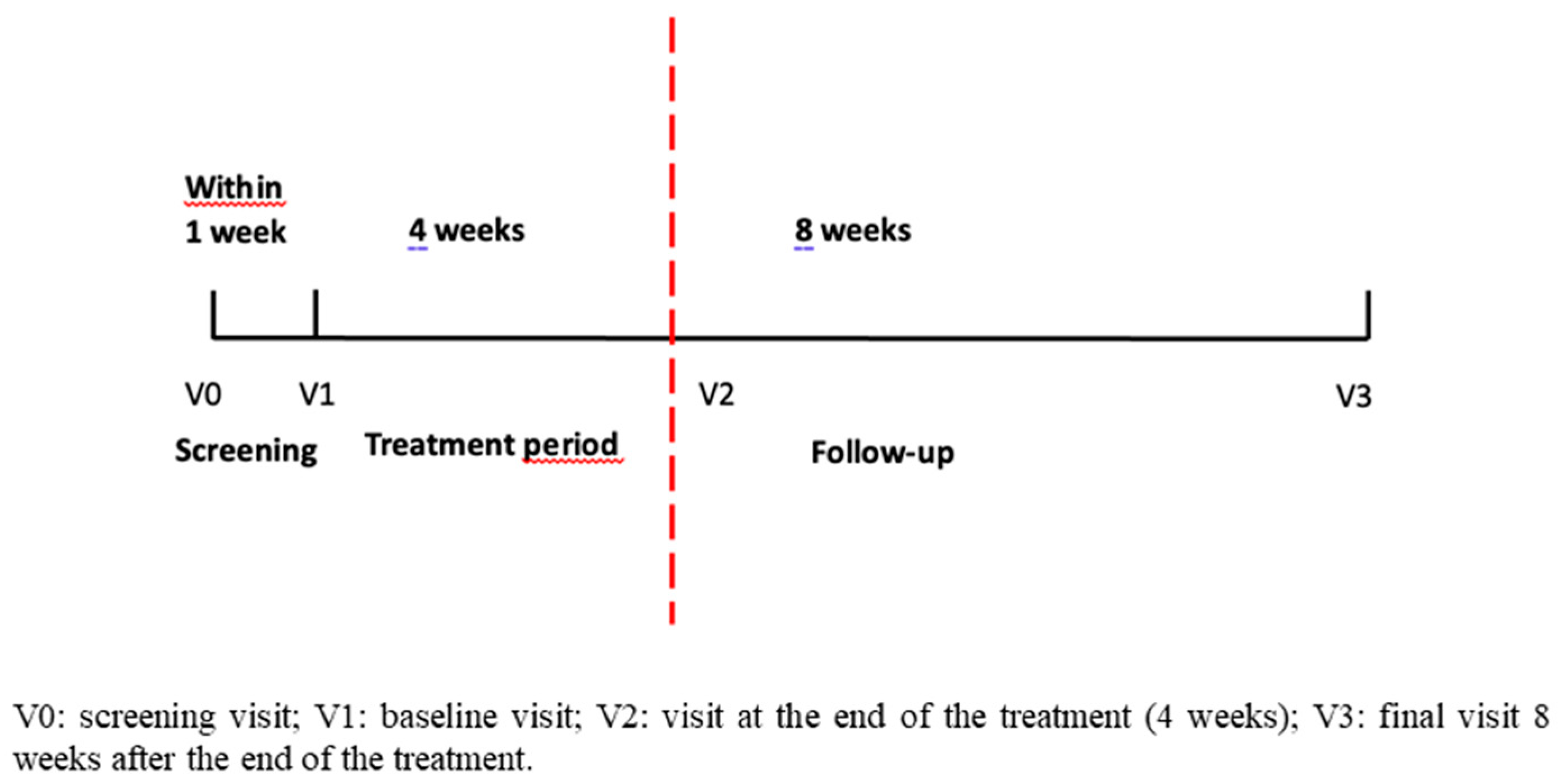
2.7. Experimental Design
2.8. Safety Evaluation
2.9. Lifestyle and Eating Habits to Adopt During the Study
2.9.1. General Recommendations
- Take plenty of liquids (water, at least 1.5–2 L per day, but also consuming broth or herb teas);
- Exercise regularly (at least 20–30 min a day);
- Avoid cigarette smoking;
- Avoid swallowing food quickly and try to chew slowly.
2.9.2. Food to Eat in Moderation
- Alcoholic beverages;
- Spicy spices (such as pepper and chili);
- Chocolate, snacks, or sweets;
- Sausages.
2.10. Treatment Compliance
2.11. Statistical Analysis
- -
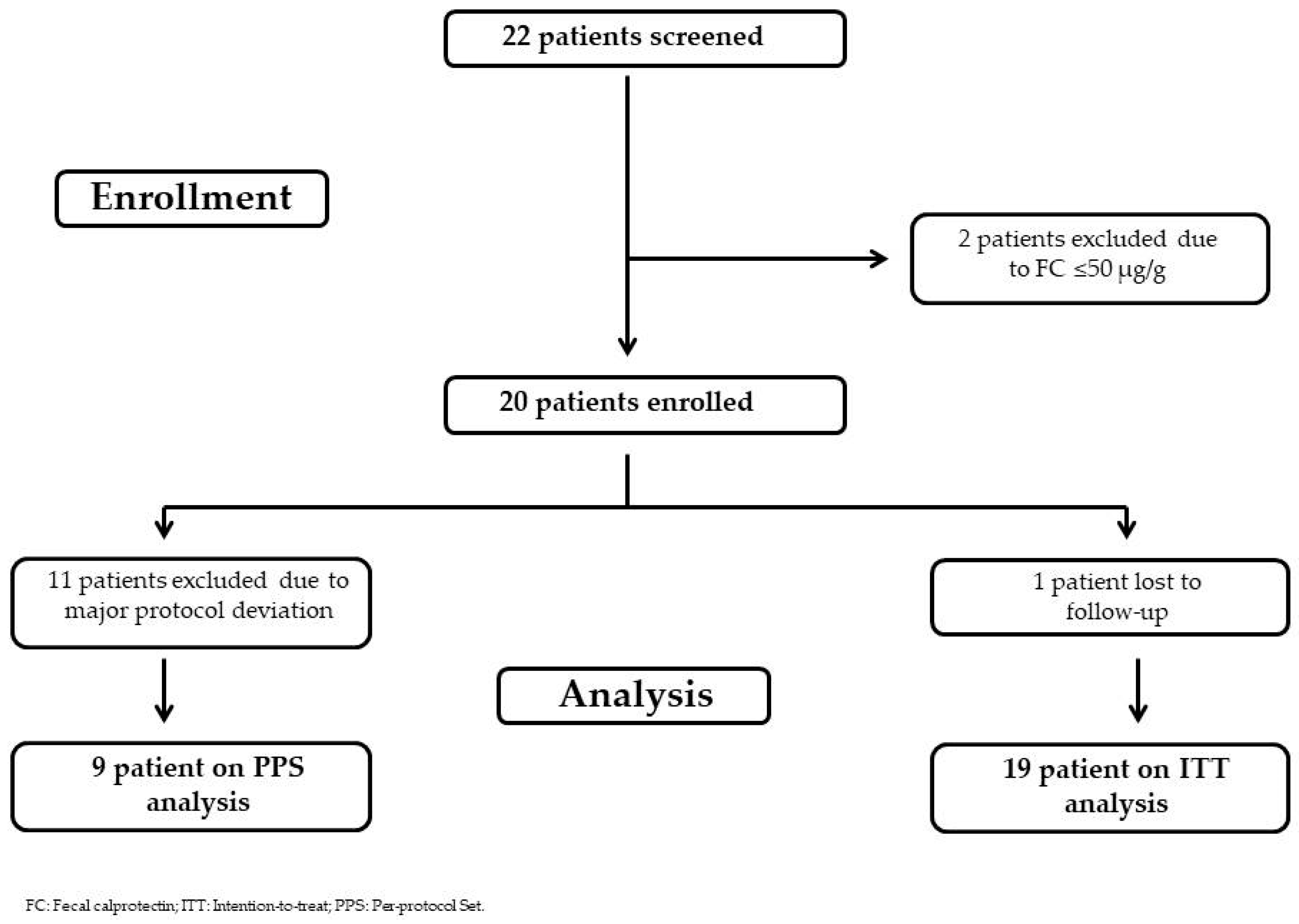
- Full Analysis Set (FAS): this set consists of all patients;
- -
- Safety Set: this set consists of all patients who receive at least one dose of study treatment;
- -
- Per Protocol Set (PPS): this set consists of all patients who complete the study without any significant protocol violation;
- -
- Intention-to-Treat Set (ITT): this set consists of all patients who receive at least one dose of study treatments and have at least one post-baseline efficacy assessment.
3. Results
3.1. Baseline Characteristics
3.2. Demographic and Other Baseline Characteristics
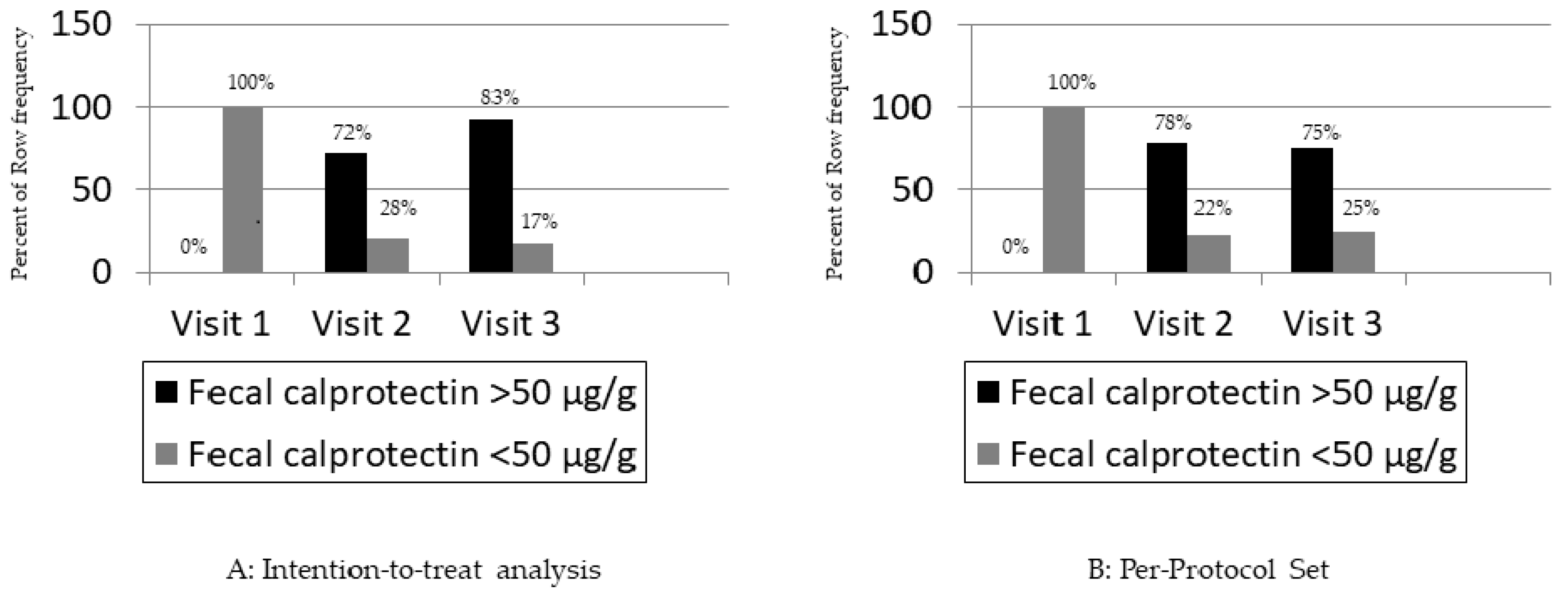
3.3. Primary Endpoint
3.4. Secondary Endpoints
3.4.1. Reduction in Typical Symptoms of SUDD
- Abdominal pain: 7.2 ± 2.7;
- Diarrhea: 3.6 ± 3.6;
- Constipation: 5.9 ± 2.9;
- Bloating: 8.0 ± 2.0.
- Abdominal pain: 1.4 ± 3.3 (p-value = 0.0005);
- Diarrhea: 0.1 ± 0.3 (p-value from paired t test = 0.0075);
- Constipation: 0.9 ± 2.0 (p-value < 0.0001);
- Bloating: 1.8 ± 3.0 (p-value = 0.0001);
- Abdominal pain: 3.6 ± 4.0 (p-value = 0.036);
- Diarrhea: 1.5 ± 2.7 (p-value = 0.29);
- Constipation: 2.2 ± 3.2 (p-value = 0.0016);
- Bloating: 3.5 ± 3.9 (p-value = 0.0034).
3.4.2. Daily Stool Consistency and Frequency
- During the first week, the most frequent Bristol type was type 4 (37.6%); during week 2, week 3, and week 4, the most frequent stool type was type 4 (29.3% during week 2, 34.6% during week 3, and 27.8% during week 4);
- Type 4 was also the most frequent Bristol type during week 5 (26.1%), during week 6 (31.4%), during week 7 (30.3%), and during week 8 (23.9%).
3.4.3. Reduction in Serum Inflammatory State
3.4.4. Overall Patient Satisfaction with Treatment
3.5. Safety
4. Discussion
5. Conclusions
Author Contributions
Funding
Institutional Review Board Statement
Informed Consent Statement
Data Availability Statement
Conflicts of Interest
Abbreviations
| SUDD | Symptomatic Uncomplicated Diverticular Disease |
| ITT | Intention-to-Treat |
| PP | Per-Protocol |
| VAS | Visual Analogic Scale |
References
- Tursi, A.; Scarpignato, C.; Strate, L.L.; Lanas, A.; Kruis, W.; Lahat, A.; Danese, S. Colonic diverticular disease. Nat. Rev. Dis. Primers 2020, 6, 20. [Google Scholar] [CrossRef]
- Tursi, A.; Picchio, M.; Elisei, W.; Di Mario, F.; Scarpignato, C.; Brandimarte, G. Management of Patients with Diverticulosis and Diverticular Disease Consensus Statements from the 2nd International Symposium on Diverticular Disease. J. Clin. Gastroenterol. 2016, 50, S101–S107. [Google Scholar] [CrossRef]
- Daniels, L.; Budding, A.E.; de Korte, N.; Eck, A.; Bogaards, J.A.; Stockmann, H.B.; Consten, E.C.; Savelkoul, P.H.; Boermeester, M.A. Fecal microbiome analysis as a diagnostic test for diverticulitis. Eur. J. Clin. Microbiol. Infect. Dis. 2014, 16, 1927–1936. [Google Scholar] [CrossRef] [PubMed]
- Tursi, A.; Elisei, W.; Brandimarte, G.; Giorgetti, G.M.; Inchingolo, C.D.; Nenna, R.; Picchio, M.; Giorgio, F.; Ierardi, E. Musosal tumor necrosis factor alpha in diverticular disease of the colon is overexpressed with disease severity. Color. Dis. 2012, 14, e258–e263. [Google Scholar] [CrossRef]
- Scarpignato, C.; Bertelè, A.; Tursi, A. Probiotics for the Treatment of Symptomatic Uncomplicated Diverticular Disease Rationale and Current Evidence. J. Clin. Gastroenterol. 2016, 50, S70–S73. [Google Scholar] [CrossRef]
- Picchio, M.; Elisei, W.; Brandimarte, G.; Di Mario, F.; Malfertheiner, P.; Scarpignato, C.; Tursi, A. Mesalazine for the Treatment of Symptomatic Uncomplicated Diverticular Disease of the Colon and for Primary Prevention of Diverticulitis A Systematic Review of Randomized Clinical Trials. J. Clin. Gastroenterol. 2016, 50, S64–S69. [Google Scholar] [CrossRef]
- Tursi, A.; Papa, A.; Danese, S. Review article: The pathophysiology and medical management of diverticulosis and diverticular disease of the colon. Aliment. Pharmacol. Ther. 2015, 42, 664–684. [Google Scholar] [CrossRef] [PubMed]
- Stace, C. New Flora of the British Isles, 3rd ed.; Cambridge University Press: Cambridge, UK, 2010; p. 512. ISBN 978-0-521-70772-5. [Google Scholar]
- USDA, NRCS. “Vaccinium macrocarpon”. The PLANTS Database (plants.usda.gov). Greensboro, North Carolina: National Plant Data Team; 2015. Available online: http://plants.usda.gov/ (accessed on 15 August 2022).
- Blumberg, J.B.; Camesano, T.A.; Cassidy, A.; Kris-Etherton, P.; Howell, A.; Manach, C.; Ostertag, L.M.; Sies, H.; Skulas-Ray, A.; Vita, J.A. Cranberries and their bioactive constituents in human health. Adv. Nutr. 2013, 4, 618–632. [Google Scholar] [CrossRef] [PubMed]
- Kaspar, K.L.; Howell, A.B.; Khoo, C. A randomized, double-blind, placebo-controlled trial to assess the bacterial anti-adhesion effects of cranberry extract beverages. Food Funct. 2015, 6, 1212–1217. [Google Scholar] [CrossRef]
- Shmuely, H.; Yahav, J.; Samra, Z.; Chodick, G.; Koren, R.; Niv, Y.; Ofek, I. Effect of cranberry juice on eradication of Helicobacter pylori in patients treated with antibiotics and a proton pump inhibitor. Mol. Nutr. Food Res. 2007, 51, 746–751. [Google Scholar] [CrossRef]
- Zhang, L.; Ma, J.; Pan, K.; Go, V.L.W.; Chen, J.; You, W. Efficacy of cranberry juice on Helicobacter pylori infection: A double-blind, randomized placebo-controlled trial. Helicobacter 2005, 10, 139–145. [Google Scholar] [CrossRef] [PubMed]
- Shmuely, H.; Ofek, I.; Weiss, E.I.; Rones, Z.; Houri-Haddad, Y. Cranberry components for the therapy of infectious disease. Curr. Opin. Biotechnol. 2012, 23, 148–152. [Google Scholar] [CrossRef]
- Bodet, C.; Grenier, D.; Chandad, F.; Ofek, I.; Steinberg, D.; Weiss, E.I. Potential oral health benefits of cranberry. Crit. Rev. Food Sci. Nutr. 2008, 48, 672–680. [Google Scholar] [CrossRef]
- Feldman, M.; Grenier, D. Cranberry proanthocyanidins act in synergy with licochalcone A to reduce Porphyromonas gingivalis growth and virulence properties, and to suppress cytokine secretion by macrophages: Synergy between proanthocyanidins and licochalcone A. J. Appl. Microbiol. 2012, 113, 438–447. [Google Scholar] [CrossRef]
- LaPlante, K.L.; Sarkisian, S.A.; Woodmansee, S.; Rowley, D.C.; Seeram, N.P. Effects of cranberry extracts on growth and biofilm production of Escherichia coli and Staphylococcus species. Phytother. Res. 2012, 26, 1371–1374. [Google Scholar] [CrossRef]
- Ulrey, R.K.; Barksdale, S.M.; Zhou, W.; van Hoek, M.L. Cranberry proanthocyanidins have anti-biofilm properties against Pseudomonas aeruginosa. BMC Complement. Altern. Med. 2014, 14, 499–510. [Google Scholar] [CrossRef] [PubMed]
- Weiss, E.I.; Houri-Haddad, Y.; Greenbaum, E.; Hochman, N.; Ofek, I.; ZakayRones, Z. Cranberry juice constituents affect influenza virus adhesion and infectivity. Antivir. Res. 2005, 66, 9–12. [Google Scholar] [CrossRef]
- Patel, K.D.; Scarano, F.J.; Kondo, M.; Hurta, R.A.R.; Neto, C.C. Proanthocyanidin-rich extracts from cranberry fruit (Vaccinium macrocarpon Ait.) Selectively inhibit the growth of human pathogenic fungi Candida spp. and Cryptococcus neoformans. J. Agric. Food Chem. 2011, 59, 12864–12873. [Google Scholar] [CrossRef]
- Rane, H.S.; Bernardo, S.M.; Howell, A.B.; Lee, S.A. Cranberry-derived proanthocyanidins prevent formation of Candida albicans biofilms in artificial urine through biofilm- and adherence-specific mechanisms. J. Antimicrob. Chemother. 2014, 69, 428–436. [Google Scholar] [CrossRef] [PubMed]
- Feliciano, R.P.; Krueger, C.G.; Reed, J.D. Methods to determine effects of cranberry proanthocyanidins on extraintestinal infections: Relevance for urinary tract health. Mol. Nutr. Food Res. 2015, 59, 1292–1306. [Google Scholar] [CrossRef]
- Blumberg, J.B.; Basu, A.; Krueger, C.G.; Lila, M.A.; Neto, C.C.; Novotny, J.A.; Reed, J.D.; Rodriguez-Mateos, A.; Toner, C.D. Impact of Cranberries on Gut Microbiota and Cardiometabolic Health: Proceedings of the Cranberry Health Research Conference 2015. Adv. Nutr. 2016, 7, 759S–770S. [Google Scholar] [CrossRef] [PubMed]
- Tursi, A.; Turroni, S.; De Bastiani, R.; Procaccianti, G.; D’Amico, F.; Allegretta, L.; Antonino, N.; Baldi, E.; Casamassima, C.; Casella, G.; et al. Gut microbiota in symptomatic uncomplicated diverticular disease stratifies by severity of abdominal pain. Eur. J. Gastroenterol. Hepatol. 2025, 37, 147–153. [Google Scholar] [CrossRef]
- Tursi, A.; Procaccianti, G.; Turroni, S.; De Bastiani, R.; D’Amico, F.; Allegretta, L.; Antonino, N.; Baldi, E.; Casamassima, C.; Casella, G.; et al. Gut Microbiota Perturbation Are Linked to Endoscopic Severity of Diverticular Disease. J. Gastroi. Liver Dis. 2025, 34, 317–322. [Google Scholar] [CrossRef]
- Tursi, A.; Brandimarte, G.; Di Mario, F.; Elisei, W.; Picchio, M.; Allegretta, L.; Annunziata, M.L.; Bafutto, M.; Bassotti, G.; Bianco, M.A.; et al. Prognostic performance of the ‘DICA’ endoscopic classification and the ‘CODA’ score in predicting clinical outcomes of diverticular disease: An international, multicentre, prospective cohort study. Gut 2022, 71, 1350–1358. [Google Scholar] [CrossRef]
- Drossman, D.A.; Hasler, W.L. Rome IV-Functional GI Disorders: Disorders of Gut-Brain Interaction. Gastroenterology 2016, 150, 1257–1261. [Google Scholar] [CrossRef]
- Lewis, S.J.; Heaton, K.W. Stool form scale as a useful guide to intestinal transit time. Scand. J. Gastroenterol. 1997, 32, 920–924. [Google Scholar] [CrossRef] [PubMed]
- Tursi, A. Diverticulosis today: Unfashionable and still under-researched. Ther. Adv. Gastroenterol. 2016, 9, 213–228. [Google Scholar] [CrossRef] [PubMed]
- Tursi, A.; Franceschi, M.; Elisei, W.; Picchio, M.; Di Mario, F.; Brandimarte, G. The natural history of symptomatic uncomplicated diverticular disease: A long-term follow-up study. Ann. Gastroenterol. 2021, 34, 208–213. [Google Scholar] [CrossRef]
- Jono, T.; Kasai, Y.; Kessoku, T.; Ogata, T.; Tanaka, K.; Yoshihara, T.; Misawa, N.; Kato, S.; Higurashi, T.; Hosono, K.; et al. The Prevalence and Characteristics of Symptomatic Uncomplicated Diverticular Disease Among Asian Patients With Unexplained Abdominal Symptoms. J. Neurogastroenterol. Motil. 2024, 30, 87–96. [Google Scholar] [CrossRef]
- Cameron, R.; Walker, M.M.; Thuresson, M.; Roelstraete, B.; Sköldberg, F.; Olén, O.; Talley, N.J.; Ludvigsson, J.F. Mortality risk increased in colonic diverticular disease: A nationwide cohort study. Ann. Epidemiol. 2022, 76, 39–49. [Google Scholar] [CrossRef] [PubMed]
- Pallotta, L.; Pisano, A.; Vona, R.; Cappelletti, M.; Pignataro, M.G.; Tattoli, I.; Maselli, M.A.; Tarallo, M.; Casella, G.; Caronna, R.; et al. From diverticulosis to complicated diverticular disease: Progression of myogenic alterations and oxidative imbalance. Neurogastroenterol. Motil. 2024, 36, e14850. [Google Scholar] [CrossRef]
- Tursi, A.; Brandimarte, G.; Di Mario, F.; Ma, W.; Kupcinskas, J.; Regula, J.; Maconi, G.; Malfertheiner, P.; Barbara, G.; Stollman, N.; et al. Global Guidelines on Diverticular Disease of the colon—The Fiesole Consensus report. Gut 2025. Dec 24:gutjnl-2025-336902. [Google Scholar] [CrossRef]
- Chandra, S.; Saklani, S.; Kumar, P.; Kim, B.; Coutinho, H.D.M. Nutraceuticals: Pharmacologically Active Potent Dietary Supplements. Biomed. Res. Int. 2022, 2022, 2051017. [Google Scholar] [CrossRef]
- D’Amico, F.; Fiorini, G.; Tursi, A.; Saracino, I.M.; Pavoni, M.; Danese, S.; Vaira, D. Efficacy of a New Nutraceutical Formulation in Patients with Symptomatic Uncomplicated Diverticular Disease (SUDD): A Prospective Observational Study. J. Gastrointestin Liver Dis. 2019, 28, 49–55. [Google Scholar] [CrossRef]
- Giacosa, A.; Riva, A.; Petrangolini, G.; Allegrini, P.; Fazia, T.; Bernardinelli, L.; Gasparri, C.; Faliva, M.A.; Peroni, G.; Perna, S.; et al. Symptomatic uncomplicated diverticular disease management: An innovative food-grade formulation of Curcuma longa and Boswellia serrata extracts. Drugs Context 2020. [Google Scholar] [CrossRef]
- Brandimarte, G.; Frajese, G.V.; Bargiggia, S.; Castellani, D.; Cocco, A.; Colucci, R.; Evangelista, E.; Gravina, A.G.; Napoletano, D.; Nardi, E.; et al. Performance of a multicompounds nutraceutical formulation in patients with symptomatic uncomplicated diverticular disease. Minerva Gastroenterol. 2022, 68, 216–222. [Google Scholar] [CrossRef] [PubMed]
- Xu, J.; Li, C.; Wu, W.; Kong, L.; Xiao, L.; Ma, W.; Zhang, L. Cranberry Research Progress: A Systematic Review of Chemical Composition, Pharmacological Mechanisms, Clinical Applications, and Nutritional Significance. Int. J. Mol. Sci. 2025, 26, 9707. [Google Scholar] [CrossRef] [PubMed]
- Gbinigie, O.A.; Spencer, E.A.; Heneghan, C.J.; Lee, J.J.; Butler, C.C. Cranberry Extract for Symptoms of Acute, Uncomplicated Urinary Tract Infection: A Systematic Review. Antibiotics 2020, 10, 12. [Google Scholar] [CrossRef] [PubMed]
- Tursi, A.; Elisei, W. Role of Inflammation in the Pathogenesis of Diverticular Disease. Mediato. Inflamm. 2019, 2019, 8328490. [Google Scholar] [CrossRef]
- Song, G.; Koro, M.; Leung, V.; Loh, G. Literature Review of Ascorbic Acid, Cranberry, and D-mannose for Urinary Tract Infection Prophylaxis in Older People. Sr. Care Pharm. 2023, 38, 315–332. [Google Scholar] [CrossRef]
- Tursi, A.; Violi, A.; Cambie’, G.; Franceschi, M.; Baldassarre, G.; Rodriguez, K.I.; Miraglia, C.; Brandimarte, G.; Elisei, W.; Picchio, M.; et al. Risk factors for endoscopic severity of diverticular disease of the colon and its outcome: A real-life case-control study. Eur. J. Gastroenterol. Hepatol. 2020, 32, 1123–1129. [Google Scholar] [CrossRef] [PubMed]



| Overall | (N = 19) |
| Age (years) | |
| Mean ± SD | 58 ± 9 |
| Median | 58 |
| IQR | 50–63 |
| Min.–max | 44–74 |
| Gender | |
| Female n. (%) | 5 (26.3) |
| Male n. (%) | 14 (73.7) |
| Ethnic group | |
| Caucasian n. (%) | 19 (100.0) |
| Any medical history recorded? | |
| Yes n. (%) | 9 (47.4) |
| No n. (%) | 10 (52.6) |
| Medical records | (N = 19) |
| Appendectomy n. (%) | 1 (5.6) |
| Arterial hypertension n. (%) | 1 (5.6) |
| Benign prostatic hyperplasia n. (%) | 2 (11.1) |
| Blood hypertension n. (%) | 5 (27.8) |
| Cesarian section n. (%) | 1 (5.6) |
| Cholecistectomy n. (%) | 3 (16.7) |
| Essential tremor n. (%) | 1 (5.6) |
| Gastro-esophageal reflux disease n. (%) | 1 (5.6) |
| Hashimoto thyroiditis n. (%) | 1 (5.6) |
| OSAS n. (%) | 1 (5.6) |
| Depressive syndrome n. (%) | 1 (5.6) |
Disclaimer/Publisher’s Note: The statements, opinions and data contained in all publications are solely those of the individual author(s) and contributor(s) and not of MDPI and/or the editor(s). MDPI and/or the editor(s) disclaim responsibility for any injury to people or property resulting from any ideas, methods, instructions or products referred to in the content. |
© 2025 by the authors. Licensee MDPI, Basel, Switzerland. This article is an open access article distributed under the terms and conditions of the Creative Commons Attribution (CC BY) license.
Share and Cite
Tursi, A.; Rodinò, S.; Sebkova, L.; Furfaro, F.; Danese, S. Evaluation of the Effect of a Cranberry Formulation in Reducing the Inflammatory State and Improving the Management of Symptoms in Patients with Symptomatic Uncomplicated Diverticular Disease: A Prospective, Open-Label, Single-Arm, Multi-Center, Pilot Study. Pharmaceutics 2026, 18, 42. https://doi.org/10.3390/pharmaceutics18010042
Tursi A, Rodinò S, Sebkova L, Furfaro F, Danese S. Evaluation of the Effect of a Cranberry Formulation in Reducing the Inflammatory State and Improving the Management of Symptoms in Patients with Symptomatic Uncomplicated Diverticular Disease: A Prospective, Open-Label, Single-Arm, Multi-Center, Pilot Study. Pharmaceutics. 2026; 18(1):42. https://doi.org/10.3390/pharmaceutics18010042
Chicago/Turabian StyleTursi, Antonio, Stefano Rodinò, Ladislava Sebkova, Federica Furfaro, and Silvio Danese. 2026. "Evaluation of the Effect of a Cranberry Formulation in Reducing the Inflammatory State and Improving the Management of Symptoms in Patients with Symptomatic Uncomplicated Diverticular Disease: A Prospective, Open-Label, Single-Arm, Multi-Center, Pilot Study" Pharmaceutics 18, no. 1: 42. https://doi.org/10.3390/pharmaceutics18010042
APA StyleTursi, A., Rodinò, S., Sebkova, L., Furfaro, F., & Danese, S. (2026). Evaluation of the Effect of a Cranberry Formulation in Reducing the Inflammatory State and Improving the Management of Symptoms in Patients with Symptomatic Uncomplicated Diverticular Disease: A Prospective, Open-Label, Single-Arm, Multi-Center, Pilot Study. Pharmaceutics, 18(1), 42. https://doi.org/10.3390/pharmaceutics18010042