Effects of Turmeric and Turmeric Plus Piperine Supplementation on Lipid Profiles in Adults with Cardiometabolic Risk Conditions: A Systematic Review and Meta-Analysis of Randomized Controlled Trials Following PRISMA Guidelines


Abstract
1. Introduction
- Quantify the effects of turmeric and turmeric + piperine supplementation on TG, TC, LDL-C, and HDL-C in adults with metabolic disorders;
- Evaluate differences between turmeric alone and turmeric combined with piperine;
- Assess methodological quality, risk of bias, and certainty of evidence;
- Integrate non-meta-analyzable but relevant RCTs into a structured narrative synthesis;
- Provide an evidence-based perspective to guide clinicians, researchers, and policy-makers on the role of turmeric supplementation in lipid management.
2. Materials and Methods
2.1. Protocol and Reporting
2.2. Eligibility Criteria
- Observational or non-randomized studies
- Pediatric populations
- Duration < 8 weeks
- Multi-component nutraceuticals in which turmeric/curcumin was combined with other bioactive botanicals or nutraceutical ingredients (e.g., polyherbal formulas), with the exception of predefined curcumin + piperine combinations, which were eligible as a mechanistically justified enhancer of curcumin bioavailability.
- Trials lacking extractable dispersion measures
- Lipoprotein(a) [Lp(a)] was considered an outcome of interest; however, none of the eligible RCTs reported Lp(a) values suitable for quantitative synthesis.
2.3. Information Sources and Search Strategy
2.4. Study Selection
2.5. Data Collection Process
- Study details (author, year, country, sample size, condition)
- Intervention characteristics (formulation, dose, duration, co-supplementation with piperine)
- Comparator details
- Lipid outcomes (mean change ± SD/SEM, 95% CI, or calculated differences)
- Funding source and conflicts of interest
2.6. Risk of Bias in Individual Studies
2.7. Effect Measures and Synthesis
- Turmeric alone (standard extract, nano-curcumin, phytosome)
- Turmeric + piperine
2.8. Certainty of Evidence
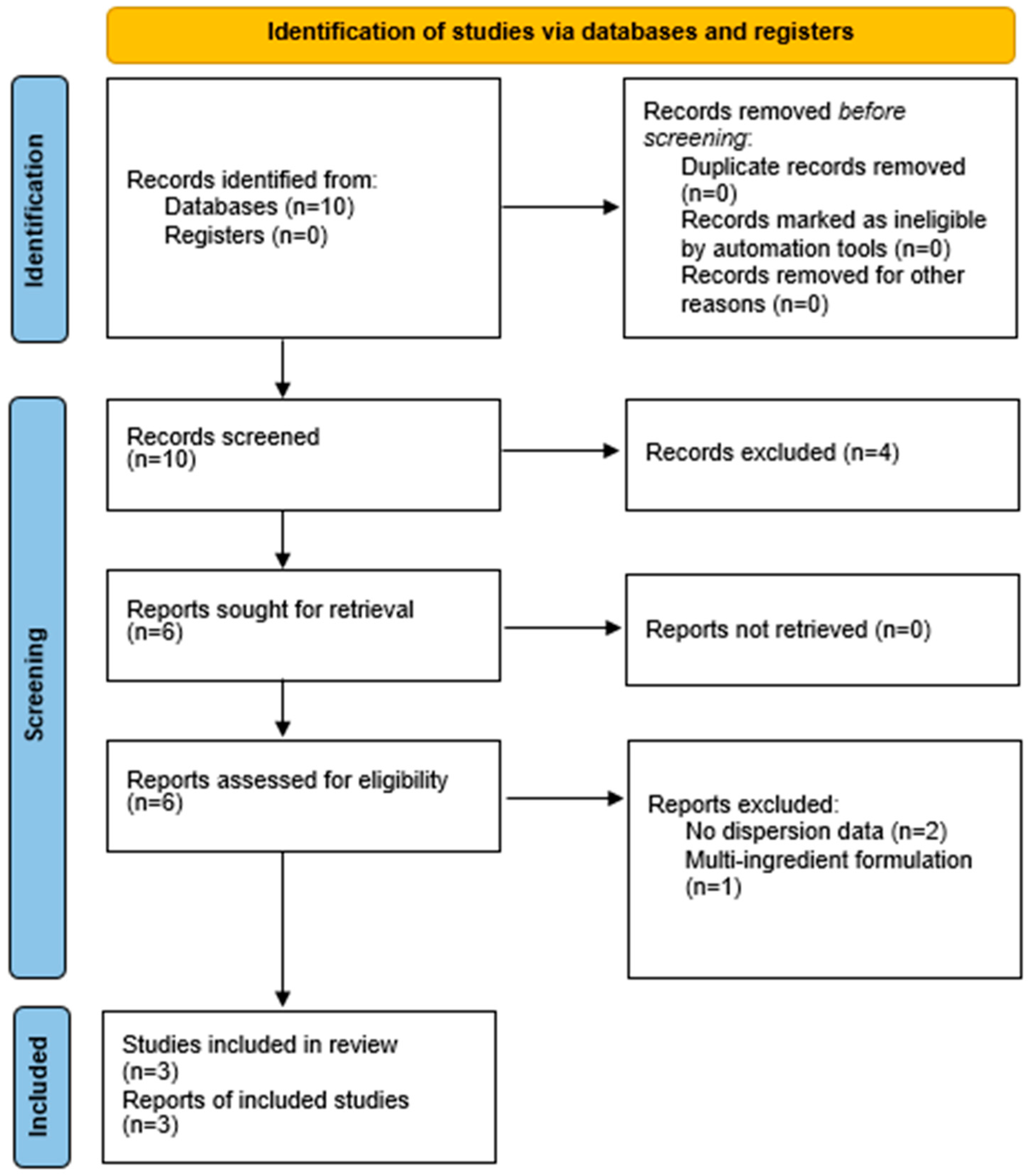
- Records identified: 10
- Full texts assessed: 6
- Included in qualitative synthesis: 3 + 3 narratively summarized
- Included in quantitative synthesis (meta-analysis): 3
3. Results
3.1. Study Results
3.2. Study Characteristics
3.3. Risk of Bias
3.4. Pooled Effects on Lipid Profile
3.5. Subgroup Analysis
3.6. Non-Meta-Analyzable Evidence
- Na LX 2013 (T2DM): modest non-significant lipid changes with curcuminoids [34].
- Sahebkar 2014 (MetS): curcumin + piperine improved TG and HDL-C; incomplete reporting [33].
- Panahi 2014 (NAFLD): curcuminoids improved TC, LDL-C, HDL-C, but without dispersion values [31].
- Yadav, S.S 2023 (NAFLD): piperine alone improved TG and TC [20].
3.7. Certainty of Evidence (Grade)
3.8. Safety and Adverse Events
4. Discussion
4.1. Interpretation of Findings in the Context of Nutraceuticals
4.2. Comparison with Previous Reviews and Meta-Analyses
- We adhered to PRISMA 2020 and Cochrane standards, ensuring methodological transparency.
- We distinguished turmeric alone vs. turmeric + piperine, an essential step given the bioavailability challenges of curcumin.
- We integrated newer RCTs (2014–2025), capturing trials of nanoformulations and enhanced preparations.
- We formally assessed certainty using GRADE, which has not been systematically applied in prior reviews.
4.3. Mechanistic Insights
- Cholesterol biosynthesis: Curcumin directly inhibits HMG-CoA reductase, the same enzyme targeted by statins, albeit with weaker potency [37].
- Lipoprotein clearance: Animal and in vitro models show upregulation of LDL receptors, accelerating hepatic LDL clearance [38].
- Triglyceride metabolism: Curcumin suppresses diacylglycerol acyltransferase and VLDL assembly, reducing hepatic TG secretion [39].
- Reverse cholesterol transport: Curcumin enhances expression of ABCA1/ABCG1 transporters, promoting HDL-mediated efflux of cholesterol from macrophages [40].
- Inflammation and oxidative stress: Through NF-κB inhibition and Nrf2 activation, curcumin reduces vascular inflammation and oxidative modification of LDL, both central to atherosclerosis progression [41].
- Insulin sensitivity: By improving insulin resistance, curcumin indirectly lowers VLDL production, which is frequently elevated in metabolic syndrome and NAFLD [42].
4.4. Clinical Significance
4.5. Strengths of This Review
- First, to apply PRISMA 2020 flow diagram, RoB 2, and GRADE in this topic.
- Clear differentiation between turmeric alone and turmeric + piperine.
- Inclusion of both quantitative and narrative evidence, avoiding exclusion of informative but imperfect trials.
- Consistency of findings across all included RCTs, despite differences in geography (China, Iran) and populations (metabolic syndrome, NAFLD).
- Use of random-effects modeling, ensuring conservative estimates.
4.6. Limitations
- 5.
- Sample size: Only three RCTs contributed quantitative data (n ≈ 250), limiting precision.
- 6.
- Duration: Interventions lasted ≤12 weeks; long-term efficacy and safety remain unknown.
- 7.
- Formulation variability: Dosages ranged from 80 mg/day nano-curcumin to 1890 mg/day extract, complicating dose–response interpretation. Because of heterogeneous formulations (standardized extracts, nano-curcumin, and curcuminoids with piperine) and incomplete pharmacokinetic reporting, we did not mathematically standardize interventions to a single ‘curcumin-equivalent’ dose. Instead, we restricted inclusion to trials with clearly defined turmeric/curcumin-based regimens and prespecified subgroup analyses by formulation (turmeric alone vs. turmeric + piperine).
- 8.
- Piperine evidence: Only one RCT tested turmeric + piperine, preventing robust subgroup comparisons.
- 9.
- Selective reporting: Some outcomes (e.g., HDL-C) were incompletely reported in Panahi et al., 2014 [31], leading to reliance on imputation.
- 10.
- Publication bias: With few trials, funnel plot analysis was not feasible, raising the possibility that only positive studies were published.
- 11.
- Some narratively synthesized trials reported neutral or modest effects; these were generally underpowered, of shorter duration, or affected by incomplete outcome reporting, which likely contributed to the observed variability.
4.7. Integration with Broader Literature
4.8. Future Research Directions
- Conduct large-scale, multicenter RCTs (>500 participants) with standardized formulations.
- Extend intervention durations to ≥6–12 months to assess long-term sustainability.
- Evaluate hard endpoints (cardiovascular events, liver histology in NAFLD) rather than only surrogate markers.
- Explore synergies with established therapies, e.g., turmeric + statin, turmeric + fibrates.
- Systematically compare different formulations (standard extract vs. nano-curcumin vs. phytosomal curcumin) in head-to-head trials.
- Include diverse populations beyond Middle Eastern and Asian cohorts, where cultural use of turmeric may influence background diet and adherence.
4.9. Summary of Evidence
Supplementary Materials
Funding
Institutional Review Board Statement
Informed Consent Statement
Data Availability Statement
Conflicts of Interest
References
- Bashir, B.; Schofield, J.; Downie, P.; France, M.; Ashcroft, D.M.; Wright, A.K.; Romeo, S.; Gouni-Berthold, I.; Maan, A.; Durrington, P.N.; et al. Beyond LDL-C: Unravelling the residual atherosclerotic cardiovascular disease risk landscape—Focus on hypertriglyceridaemia. Front. Cardiovasc. Med. 2024, 11, 1389106. [Google Scholar] [CrossRef] [PubMed]
- Cicero, A.F.G.; Fogacci, F.; Stoian, A.P.; Vrablik, M.; Al Rasadi, K.; Banach, M.; Toth, P.P.; Rizzo, M. Nutraceuticals in the management of dyslipidemia: Which, when, and for whom? Could nutraceuticals help low-risk individuals with non-optimal lipid levels? Curr. Atheroscler. Rep. 2021, 23, 57. [Google Scholar] [CrossRef]
- Kumric, M.; Urlic, H.; Bozic, J.; Vilovic, M.; Ticinovic Kurir, T.; Glavas, D.; Miric, D.; Zanchi, J.; Bradaric-Slujo, A.; Lozo, M.; et al. Emerging therapies for the treatment of atherosclerotic cardiovascular disease: From bench to bedside. Int. J. Mol. Sci. 2023, 24, 8062. [Google Scholar] [CrossRef]
- Johnston, T.P.; Korolenko, T.A.; Pirro, M.; Sahebkar, A. Preventing cardiovascular heart disease: Promising nutraceutical and non-nutraceutical treatments for cholesterol management. Pharmacol. Res. 2017, 120, 219–225. [Google Scholar] [CrossRef] [PubMed]
- Penson, P.E.; Banach, M. The role of nutraceuticals in the optimization of lipid-lowering therapy in high-risk patients with dyslipidaemia. Curr. Atheroscler. Rep. 2020, 22, 67. [Google Scholar] [CrossRef]
- Poznyak, A.V.; Khotina, V.A.; Vakili-Ghartavol, R.; Golovyuk, A.L.; Serdyukov, D.Y.; Glanz, V.Y.; Sukhorukov, V.N.; Orekhov, A.N. The role of natural compounds for atherosclerosis treatment: Lessons learned from the use of curcumin. J. Angiother. 2024, 8, 1–9. [Google Scholar] [CrossRef]
- Roșian, Ș.H.; Boarescu, I.; Boarescu, P.M. Antioxidant and anti-inflammatory effects of bioactive compounds in atherosclerosis. Int. J. Mol. Sci. 2025, 26, 1379. [Google Scholar] [CrossRef]
- Singh, L.; Sharma, S.; Xu, S.; Tewari, D.; Fang, J. Curcumin as a natural remedy for atherosclerosis: A pharmacological review. Molecules 2021, 26, 4036. [Google Scholar] [CrossRef]
- Cheng, M.; Ding, F.; Li, L.; Dai, C.; Sun, X.; Xu, J.; Chen, F.; Li, M.; Li, X. Exploring the role of curcumin in mitigating oxidative stress to alleviate lipid metabolism disorders. Front. Pharmacol. 2025, 16, 1517174. [Google Scholar] [CrossRef]
- Yang, C.; Zhu, Q.; Chen, Y.; Ji, K.; Li, S.; Wu, Q.; Pan, Q.; Li, J. Review of the protective mechanism of curcumin on cardiovascular disease. Drug Des. Dev. Ther. 2024, 18, 165–192. [Google Scholar] [CrossRef] [PubMed]
- Pokushalov, E.; Ponomarenko, A.; Shrainer, E.; Kudlay, D.; Miller, R. Biomarker-guided dietary supplementation: A narrative review of precision in personalized nutrition. Nutrients 2024, 16, 4033. [Google Scholar] [CrossRef]
- Boretti, A. Curcumin-based fixed dose combination products for cholesterol management: A narrative review. ACS Pharmacol. Transl. Sci. 2024, 7, 300–308. [Google Scholar] [CrossRef]
- Wimalawansa, S.J. Reforming food, drug, and nutraceutical regulations to improve public health and reduce healthcare costs. Foods 2025, 14, 2328. [Google Scholar] [CrossRef]
- Gamil, N.M.; Elsayed, H.A.; Hamed, R.M.; Salah, E.T.; Ahmed, A.M.; Mostafa, H.A.; El-Shiekh, R.A.; Abou-Hussein, D. Insights from herb interactions studies: A foundational report for integrative medicine. Future J. Pharm. Sci. 2025, 11, 46. [Google Scholar] [CrossRef]
- Bhattacharjee, B.; Sandhanam, K.; Ghose, S.; Barman, D.; Sahu, R.K. Market overview of herbal medicines for lifestyle diseases. In Role of Herbal Medicines: Management of Lifestyle Diseases; Dhara, A.K., Mandal, S.C., Eds.; Springer: Singapore, 2024; pp. 597–614. [Google Scholar] [CrossRef]
- Zhang, W.; Zheng, Q.; Song, M.; Xiao, J.; Cao, Y.; Huang, Q.; Ho, C.-T.; Lu, M. A review on the bioavailability, bio-efficacies and novel delivery systems for piperine. Food Funct. 2021, 12, 8867–8881. [Google Scholar] [CrossRef]
- Servida, S.; Piontini, A.; Gori, F.; Tomaino, L.; Moroncini, G.; De Gennaro Colonna, V.; La Vecchia, C.; Vigna, L. Curcumin and gut microbiota: A narrative overview with focus on glycemic control. Int. J. Mol. Sci. 2024, 25, 7710. [Google Scholar] [CrossRef] [PubMed]
- Nurcahyanti, A.D.R.; Cokro, F.; Wulanjati, M.P.; Mahmoud, M.F.; Wink, M.; Sobeh, M. Curcuminoids for metabolic syndrome: Meta-analysis evidences toward personalized prevention and treatment management. Front. Nutr. 2022, 9, 891339. [Google Scholar] [CrossRef] [PubMed]
- Hegde, M.; Girisa, S.; BharathwajChetty, B.; Vishwa, R.; Kunnumakkara, A.B. Curcumin formulations for better bioavailability: What we learned from clinical trials thus far? ACS Omega 2023, 8, 10713–10746. [Google Scholar] [CrossRef] [PubMed]
- Yadav, S.S.; Singh, M.K.; Hussain, S.; Dwivedi, P.; Khattri, S.; Singh, K. Therapeutic spectrum of piperine for clinical practice: A scoping review. Crit. Rev. Food Sci. Nutr. 2023, 63, 5813–5840. [Google Scholar] [CrossRef]
- Zeng, Y.; Luo, Y.; Wang, L.; Zhang, K.; Peng, J.; Fan, G. Therapeutic effect of curcumin on metabolic diseases: Evidence from clinical studies. Int. J. Mol. Sci. 2023, 24, 3323. [Google Scholar] [CrossRef]
- Rezaei, L.; Ebrahimi, M.; Shafaghi, A.; Hojati, A. Benefits of Pilates training and nano-curcumin supplementation for overweight and obese females with NAFLD: A pilot study. Nutrire 2023, 48, 49. [Google Scholar] [CrossRef]
- Jafari, A.; Abbastabar, M.; Alaghi, A.; Heshmati, J.; Crowe, F.L.; Sepidarkish, M. Curcumin on human health: A comprehensive systematic review and meta-analysis of 103 randomized controlled trials. Phytother. Res. 2024, 38, 6048–6061. [Google Scholar] [CrossRef] [PubMed]
- Bertoncini-Silva, C.; Vlad, A.; Ricciarelli, R.; Fassini, P.G.; Suen, V.M.M.; Zingg, J.-M. Enhancing the bioavailability and bioactivity of curcumin for disease prevention and treatment. Antioxidants 2024, 13, 331. [Google Scholar] [CrossRef] [PubMed]
- Fogacci, F.; Avagimyan, A.; Cesaro, A.; Bernardi, M.; Perone, F.; Giovannini, M.; Cicero, A.F.G. The effect of highly bioavailable forms of curcumin on lipoprotein(a) plasma levels: A systematic review and meta-analysis of randomized clinical studies. Prostaglandins Other Lipid Mediat. 2025, 178, 106994. [Google Scholar] [CrossRef]
- Unhapipatpong, C.; Julanon, N.; Shantavasinkul, P.C.; Polruang, N.; Numthavaj, P.; Thakkinstian, A. An umbrella review of systematic reviews and meta-analyses of randomized controlled trials investigating the effect of curcumin supplementation on lipid profiles. Nutr. Rev. 2025, 83, 1520–1536. [Google Scholar] [CrossRef] [PubMed]
- Lukkunaprasit, T.; Tansawet, A.; Boonmanunt, S.; Sobhonslidsuk, A.; McKay, G.J.; Attia, J.; Thakkinstian, A. An updated meta-analysis of effects of curcumin on metabolic dysfunction-associated fatty liver disease based on available evidence from Iran and Thailand. Sci. Rep. 2023, 13, 5824. [Google Scholar] [CrossRef]
- Karimi, M.; Javadi, M.; Sharifi, M.; Valizadeh, F.; Karimi, M.A.; Asbaghi, O. Effects of curcuminoids plus piperine co-supplementation on liver enzymes and inflammation in adults: A GRADE-assessed systematic review and meta-analysis. Food Sci. Nutr. 2025, 13, e70588. [Google Scholar] [CrossRef]
- Malik, A.; Malik, M. Effects of curcumin in patients with non-alcoholic fatty liver disease: A systematic review and meta-analysis. Can. Liver J. 2024, 7, 299–315. [Google Scholar] [CrossRef]
- Yang, Y.S.; Su, Y.F.; Yang, H.W.; Lee, Y.H.; Chou, J.I.; Ueng, K.C. Lipid-lowering effects of curcumin in patients with metabolic syndrome: A randomized, double-blind, placebo-controlled trial. Phytother. Res. 2014, 28, 1770–1777. [Google Scholar] [CrossRef] [PubMed]
- Panahi, Y.; Khalili, N.; Hosseini, M.S.; Abbasinazari, M.; Sahebkar, A. Lipid-modifying effects of adjunctive therapy with curcuminoids–piperine combination in patients with metabolic syndrome: Results of a randomized controlled trial. Complement. Ther. Med. 2014, 22, 851–857. [Google Scholar] [CrossRef] [PubMed]
- Jazayeri-Tehrani, S.A.; Rezayat, S.M.; Mansouri, S.; Qorbani, M.; Alavian, S.M.; Daneshi-Maskooni, M.; Hosseinzadeh-Attar, M.J. Nano-curcumin improves glucose indices, lipids, inflammation, and adiponectin in patients with non-alcoholic fatty liver disease: A double-blind randomized placebo-controlled clinical trial. Nutr. Metab. 2019, 16, 8. [Google Scholar] [CrossRef] [PubMed]
- Sahebkar, A. A systematic review and meta-analysis of randomized controlled trials investigating the effects of curcumin on blood lipid levels. Clin. Nutr. 2014, 33, 406–414. [Google Scholar] [CrossRef] [PubMed]
- Na, L.X.; Li, Y.; Pan, H.Z.; Zhou, X.L.; Sun, D.J.; Meng, M.; Li, X.; Sun, C. Curcuminoids exert glucose-lowering effect in type 2 diabetes by decreasing serum free fatty acids: A double-blind, placebo-controlled trial. Mol. Nutr. Food Res. 2013, 57, 1569–1577. [Google Scholar] [CrossRef] [PubMed]
- White, C.M.; Pasupuleti, V.; Roman, Y.M.; Li, Y.; Hernandez, A.V. Oral turmeric/curcumin effects on inflammatory markers in chronic inflammatory diseases: A systematic review and meta-analysis of randomized controlled trials. Pharmacol. Res. 2019, 146, 104280. [Google Scholar] [CrossRef]
- Panahi, Y.; Valizadegan, G.; Ahamdi, N.; Ganjali, S.; Majeed, M.; Sahebkar, A. Curcuminoids plus piperine improve nonalcoholic fatty liver disease: A clinical trial. J. Cell Biochem. 2019, 120, 15989–15996. [Google Scholar] [CrossRef] [PubMed]
- Rafieian-Kopaei, M.; Setorki, M.; Doudi, M.; Baradaran, A.; Nasri, H. Atherosclerosis: Process, indicators, risk factors and new hopes. Int. J. Prev. Med. 2014, 5, 927–946. [Google Scholar] [PubMed] [PubMed Central]
- Pivari, F.; Mingione, A.; Brasacchio, C.; Soldati, L. Curcumin and type 2 diabetes mellitus: Prevention and treatment. Nutrients 2019, 11, 1837. [Google Scholar] [CrossRef] [PubMed]
- Zheng, J.; Zhou, Y.; Zhang, K.; Qi, Y.; An, S.; Wang, S.; Zhao, X.; Tang, Y.D. Association between nonalcoholic fatty liver disease and subclinical atherosclerosis: A cross-sectional study on population over 40 years old. BMC Cardiovasc. Disord. 2018, 18, 147. [Google Scholar] [CrossRef] [PubMed] [PubMed Central]
- Simental-Mendía, L.E.; Pirro, M.; Gotto, A.M., Jr.; Banach, M.; Atkin, S.L.; Majeed, M.; Sahebkar, A. Lipid-modifying activity of curcuminoids: A systematic review and meta-analysis of randomized controlled trials. Crit. Rev. Food Sci. Nutr. 2019, 59, 1178–1187. [Google Scholar] [CrossRef] [PubMed]
- Shin, S.K.; Ha, T.Y.; McGregor, R.A.; Choi, M.S. Long-term curcumin administration protects against atherosclerosis via hepatic regulation of lipoprotein cholesterol metabolism. Mol. Nutr. Food Res. 2011, 55, 1829–1840. [Google Scholar] [CrossRef] [PubMed]
- Peschel, D.; Koerting, R.; Nass, N. Curcumin induces changes in expression of genes involved in cholesterol homeostasis. J. Nutr. Biochem. 2007, 18, 113–119. [Google Scholar] [CrossRef] [PubMed]
- Asai, A.; Miyazawa, T. Dietary curcuminoids prevent high-fat diet-induced lipid accumulation in rat liver and epididymal adipose tissue. J. Nutr. 2001, 131, 2932–2935. [Google Scholar] [CrossRef] [PubMed]
- Zhao, J.; Sun, X.B.; Ye, F.; Tian, W.X. Suppression of fatty acid synthase, differentiation and lipid accumulation in adipocytes by curcumin. Mol. Cell Biochem. 2011, 351, 19–28. [Google Scholar] [CrossRef] [PubMed]
- Aggarwal, B.B.; Harikumar, K.B. Potential therapeutic effects of curcumin, the anti-inflammatory agent, against neurodegenerative, cardiovascular, pulmonary, metabolic, autoimmune and neoplastic diseases. Int. J. Biochem. Cell Biol. 2009, 41, 40–59. [Google Scholar] [CrossRef]
- Farhood, B.; Mortezaee, K.; Goradel, N.H.; Khanlarkhani, N.; Salehi, E.; Nashtaei, M.S.; Najafi, M.; Sahebkar, A. Curcumin as an anti-inflammatory agent: Implications to radiotherapy and chemotherapy. J. Cell Physiol. 2019, 234, 5728–5740. [Google Scholar] [CrossRef]
- Shoba, G.; Joy, D.; Joseph, T.; Majeed, M.; Rajendran, R.; Srinivas, P.S. Influence of piperine on the pharmacokinetics of curcumin in animals and human volunteers. Planta Med. 1998, 64, 353–356. [Google Scholar] [CrossRef]
- Bang, J.S.; Oh, D.H.; Choi, H.M.; Sur, B.J.; Lim, S.J.; Kim, J.Y.; Yang, H.I.; Yoo, M.C.; Hahm, D.H.; Kim, K.S. Anti-inflammatory and antiarthritic effects of piperine in human interleukin 1β-stimulated fibroblast-like synoviocytes and in rat arthritis models. Arthritis Res. Ther. 2009, 11, R49. [Google Scholar] [CrossRef]
- Panahi, Y.; Hosseini, M.S.; Khalili, N.; Naimi, E.; Majeed, M.; Sahebkar, A. Antioxidant and anti-inflammatory effects of curcuminoid-piperine combination in subjects with metabolic syndrome: A randomized controlled trial and an updated meta-analysis. Clin. Nutr. 2015, 34, 1101–1108. [Google Scholar] [CrossRef] [PubMed]
- Rahmani, S.; Asgary, S.; Askari, G.; Keshvari, M.; Hatamipour, M.; Feizi, A.; Sahebkar, A. Treatment of Non-alcoholic Fatty Liver Disease with Curcumin: A randomized placebo-controlled trial. Phytother. Res. 2016, 30, 1540–1548. [Google Scholar] [CrossRef]
- Na, L.X.; Yan, B.L.; Jiang, S.; Cui, H.L.; Li, Y.; Sun, C.H. Curcuminoids Target Decreasing Serum Adipocyte-fatty Acid Binding Protein Levels in Their Glucose-lowering Effect in Patients with Type 2 Diabetes. Biomed. Environ. Sci. 2014, 27, 902–906. [Google Scholar] [CrossRef] [PubMed]
- Sahebkar, A.; Serban, M.C.; Ursoniu, S.; Banach, M. Effect of curcuminoids on oxidative stress: A systematic review and meta-analysis of randomized controlled trials. J. Funct. Foods 2015, 18, 898–909. [Google Scholar] [CrossRef]
- Balk, E.M.; Lichtenstein, A.H.; Chung, M.; Kupelnick, B.; Chew, P.; Lau, J. Effects of omega-3 fatty acids on serum markers of cardiovascular disease risk: A systematic review. Atherosclerosis 2006, 189, 19–30. [Google Scholar] [CrossRef] [PubMed]
- Li, Y.; Jiang, L.; Jia, Z.; Xin, W.; Yang, S.; Yang, Q.; Wang, L. A meta-analysis of red yeast rice: An effective and relatively safe alternative approach for dyslipidemia. PLoS ONE 2014, 9, e98611. [Google Scholar] [CrossRef] [PubMed]
- Page, M.J.; McKenzie, J.E.; Bossuyt, P.M.; Boutron, I.; Hoffmann, T.C.; Mulrow, C.D.; Shamseer, L.; Tetzlaff, J.M.; Akl, E.A.; Brennan, S.E.; et al. The PRISMA 2020 statement: An updated guideline for reporting systematic reviews. BMJ 2021, 372, n71. [Google Scholar] [CrossRef]



| Author (Year) | Country | Population | Intervention | Comparator | Duration | N (I/C) | Notes |
|---|---|---|---|---|---|---|---|
| Yang (2014) [30] | China | Metabolic syndrome | Curcumin extract 1890 mg/day | Placebo | 12 w | 30/29 | Reported as mean ± SEM |
| Panahi (2014) [31] | Iran | Metabolic syndrome | Curcuminoids 1000 mg/day + piperine 10 mg/day | Placebo | 8 w | 50/50 | Adjunct to standard care |
| Jazayeri-Tehrani (2019) [32] | Iran | NAFLD (overweight adults) | Nano-curcumin 80 mg/day | Placebo | 12 w | 40/40 | Between-group derived from within-group CI |
| Domain | Yang 2014 [30] | Panahi 2014 [31] | Jazayeri-Tehrani 2019 [32] |
|---|---|---|---|
| Randomization process | Low risk | Low risk | Low risk |
| Deviations from interventions | Low risk | Low risk | Low risk |
| Missing outcome data | Low risk | Low risk | Low risk |
| Outcome measurement | Low risk | Low risk | Low risk |
| Selective reporting | Some concerns | Some concerns | Low risk |
| Overall | Low/Some concerns | Some concerns | Low |
| Endpoint | k | WMD (mg/dL) | 95% CI | I2 (%) |
|---|---|---|---|---|
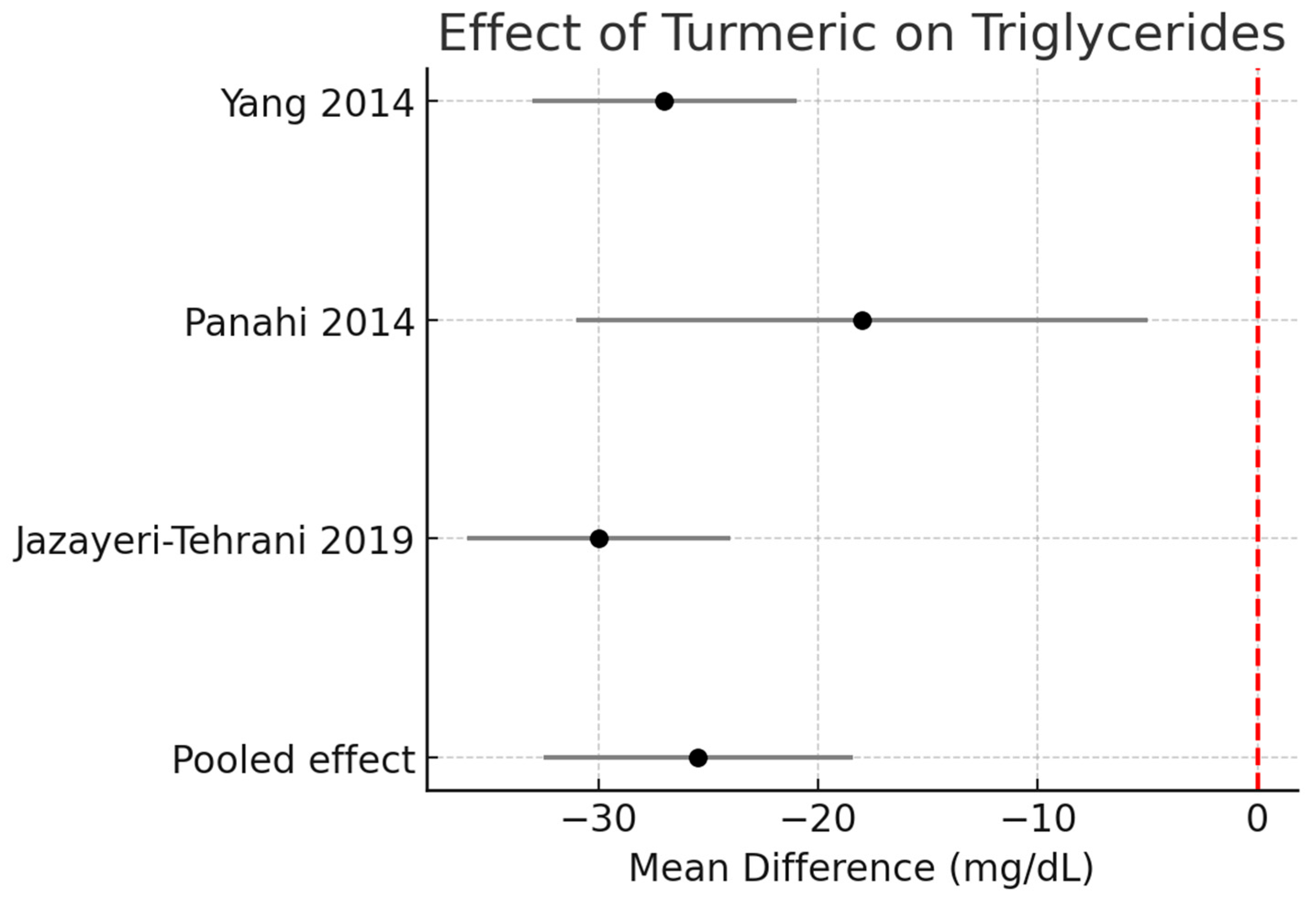
| Triglycerides | 3 | −25.5 | −32.5 to −18.4 | 0 |
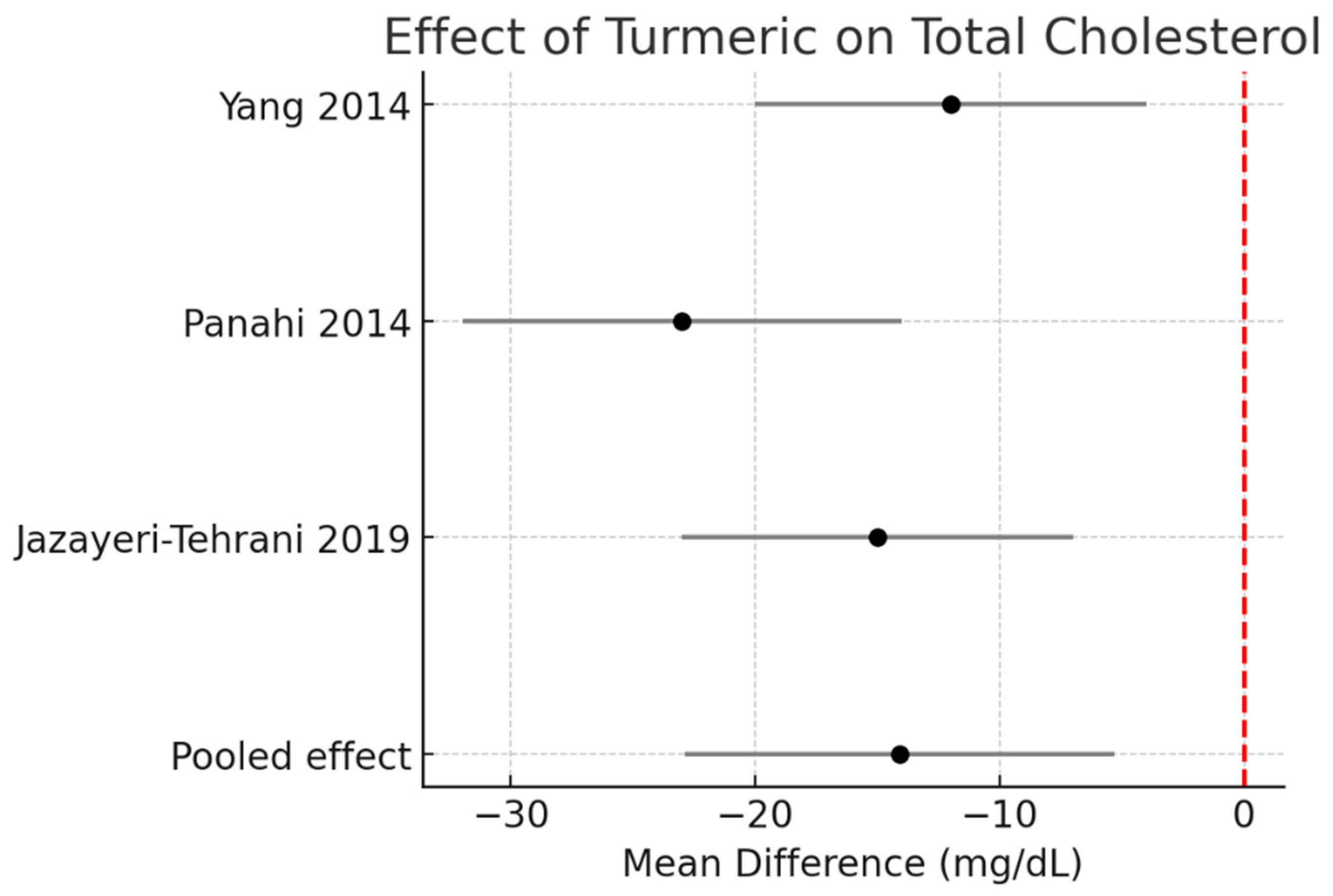
| Total Cholesterol | 3 | −14.1 | −22.9 to −5.3 | 0 |
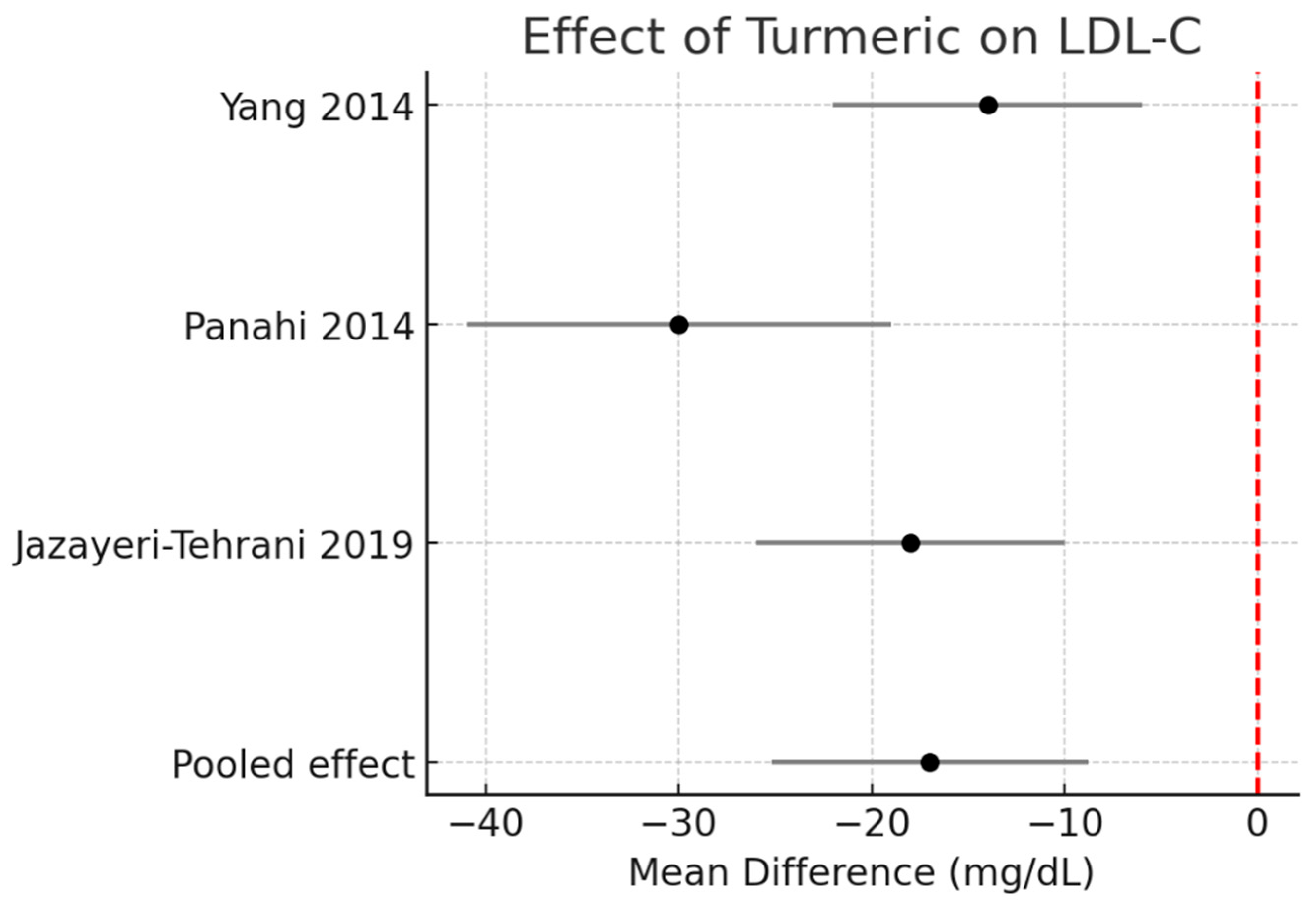
| LDL-C | 3 | −17.0 | −25.2 to −8.8 | 0 |
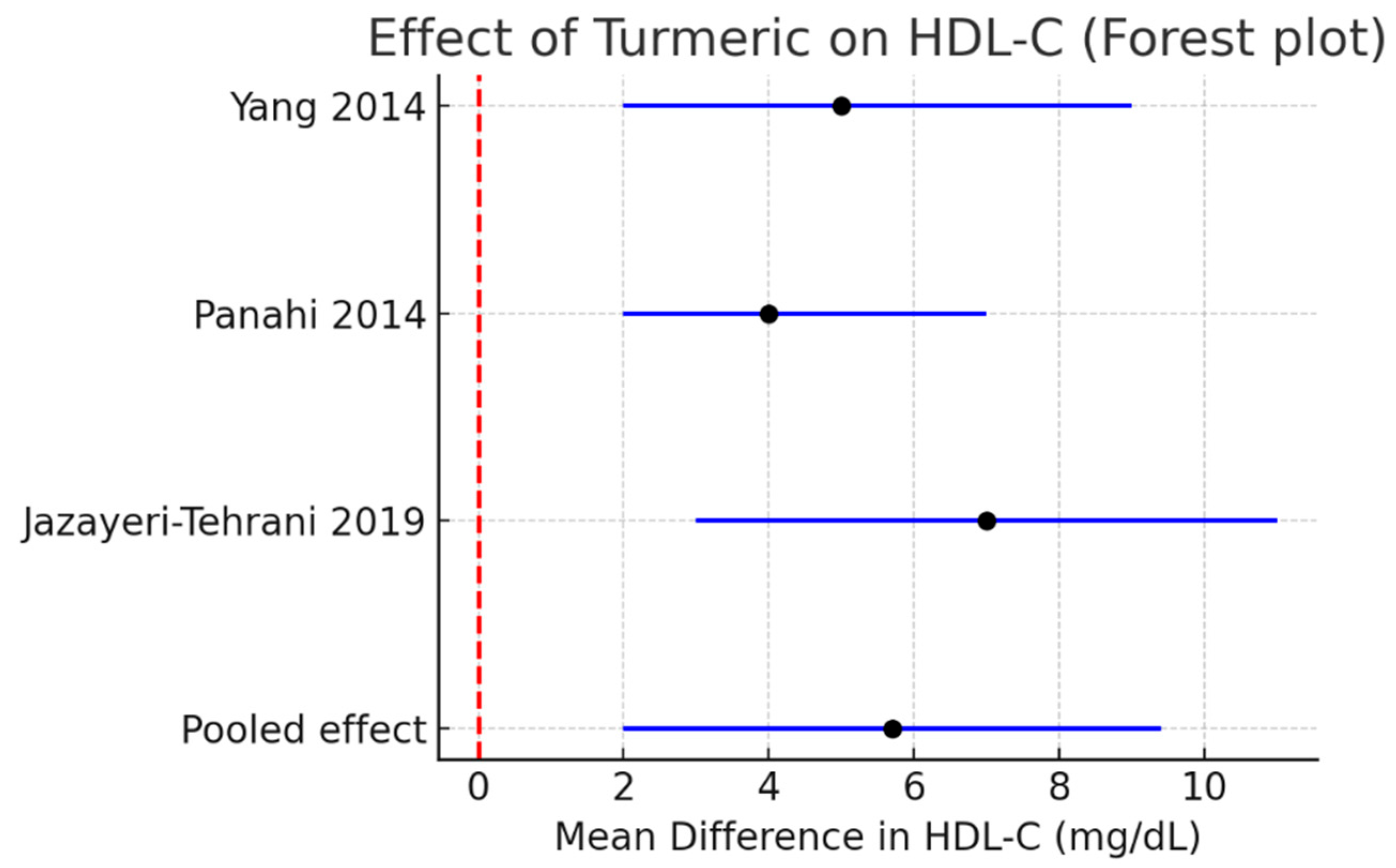
| HDL-C | 3 | +5.7 | +2.0 to +9.4 | 0 |
| Endpoint | Subgroup | k | WMD (mg/dL) | 95% CI | I2 (%) |
|---|---|---|---|---|---|
| TG | Turmeric alone | 2 | −26.2 | −34.0 to −18.4 | 0 |
| TG | Turmeric + piperine | 1 | −18.1 | −31.0 to −5.3 | – |
| TC | Turmeric alone | 2 | −13.7 | −23.9 to −3.5 | 0 |
| TC | Turmeric + piperine | 1 | −22.8 | −31.8 to −13.9 | – |
| LDL-C | Turmeric alone | 2 | −16.2 | −25.0 to −7.4 | 0 |
| LDL-C | Turmeric + piperine | 1 | −29.6 | −40.8 to −18.3 | – |
| HDL-C | Turmeric alone | 2 | +5.2 | +1.8 to +8.6 | 0 |
| HDL-C | Turmeric + piperine | 1 | +4.3 | +1.5 to +7.0 | – |
| Outcome | Relative Effect (WMD mg/dL) | Certainty of Evidence | Comments |
|---|---|---|---|
| TG | −25.5 (−32.5 to −18.4) | Moderate | Consistent across trials, precise effect |
| TC | −14.1 (−22.9 to −5.3) | Moderate | Moderate effect, some selective reporting |
| LDL-C | −17.0 (−25.2 to −8.8) | Moderate | Consistent benefit, but only one piperine trial |
| HDL-C | +5.7 (+2.0 to +9.4) | Low | Downgraded for imprecision (small sample size) and inconsistency/indirectness (heterogeneous formulations), despite directionally favorable effects. |
Disclaimer/Publisher’s Note: The statements, opinions and data contained in all publications are solely those of the individual author(s) and contributor(s) and not of MDPI and/or the editor(s). MDPI and/or the editor(s) disclaim responsibility for any injury to people or property resulting from any ideas, methods, instructions or products referred to in the content. |
© 2025 by the author. Licensee MDPI, Basel, Switzerland. This article is an open access article distributed under the terms and conditions of the Creative Commons Attribution (CC BY) license (https://creativecommons.org/licenses/by/4.0/).
Share and Cite
Epelde, F. Effects of Turmeric and Turmeric Plus Piperine Supplementation on Lipid Profiles in Adults with Cardiometabolic Risk Conditions: A Systematic Review and Meta-Analysis of Randomized Controlled Trials Following PRISMA Guidelines. Pharmaceutics 2025, 17, 1609. https://doi.org/10.3390/pharmaceutics17121609
Epelde F. Effects of Turmeric and Turmeric Plus Piperine Supplementation on Lipid Profiles in Adults with Cardiometabolic Risk Conditions: A Systematic Review and Meta-Analysis of Randomized Controlled Trials Following PRISMA Guidelines. Pharmaceutics. 2025; 17(12):1609. https://doi.org/10.3390/pharmaceutics17121609
Chicago/Turabian StyleEpelde, Francisco. 2025. "Effects of Turmeric and Turmeric Plus Piperine Supplementation on Lipid Profiles in Adults with Cardiometabolic Risk Conditions: A Systematic Review and Meta-Analysis of Randomized Controlled Trials Following PRISMA Guidelines" Pharmaceutics 17, no. 12: 1609. https://doi.org/10.3390/pharmaceutics17121609
APA StyleEpelde, F. (2025). Effects of Turmeric and Turmeric Plus Piperine Supplementation on Lipid Profiles in Adults with Cardiometabolic Risk Conditions: A Systematic Review and Meta-Analysis of Randomized Controlled Trials Following PRISMA Guidelines. Pharmaceutics, 17(12), 1609. https://doi.org/10.3390/pharmaceutics17121609