Abstract
Recently, certain European standards have allowed for the classification of the biological durability of chemically modified wood and preservative-treated wood, including treated products, but necessary methods for representative sampling and testing are lacking. Instead of sampling from products that can contain areas of varying durability, this study aimed at testing full-size products. Sections of untreated and preservative-treated terrace decking and palisades were incubated with pure cultures of brown and white rot fungi. Instead of mass loss, the decayed cross-sectional area was determined. The spatial distribution of decay and wood moisture content was investigated. After 16 weeks of incubation, all untreated product specimens showed signs of decay independent of the test fungus. The treated specimens were less affected. The mean and the maximum decayed cross-sectional areas were well correlated, for both the total and the sapwood cross-sections. The wood moisture content after incubation was always favorable for fungal decay, but highest where the specimens were in direct contact with the malt agar. Different infestation pathways became evident: (1) from the sapwood mantle, (2) via radial checks, and (3) from the end-grain. The latter should be prevented in order to better mimic real outdoor exposure conditions.
1. Introduction
Durability classes (DCs) are commonly assigned to wood species [1,2,3,4,5] and sometimes also to treated timbers, such as thermally or otherwise modified timbers [6,7,8]. The basis for such a durability assessment is the result of different field and laboratory tests. The latter can include incubation with basidiomycete monocultures (e.g., EN 113-2 [9]) or exposure to unsterile soil (CEN/TS 15083-2 [10]).
Since its latest revision in 2016, the European standard EN 350 [5] also allows the durability classification of preservative-treated wood and wood products, which consequently include preservative-treated products, such as decking boards, posts, and poles. The basic idea of treating all wood-based materials and products equally appears fair and promising and could provide a transparent assessment scheme. However, the standards lack detailed guidance on the sampling, testing, and classification of wood products [11]. At second glance, there are numerous unanswered questions and pitfalls associated with the durability classification of preservative-treated wood products.
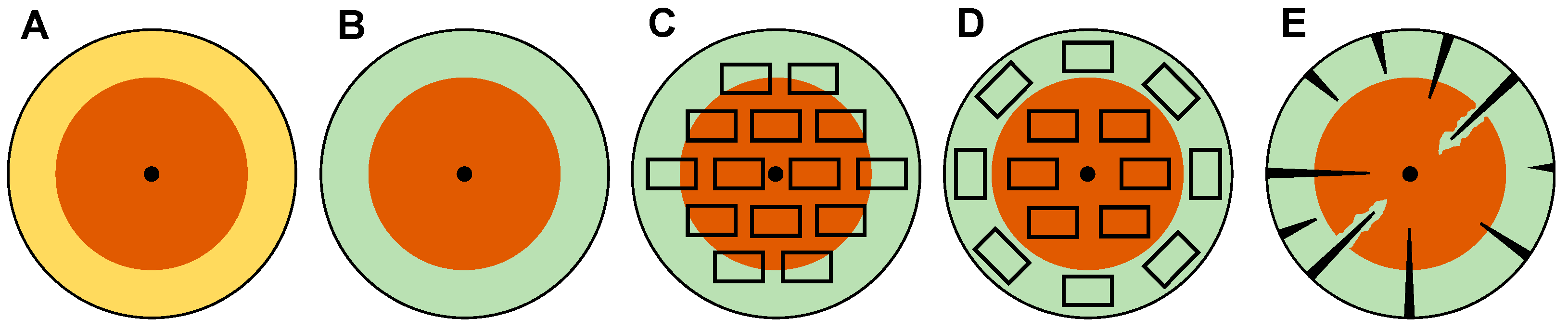
Material testing requires a homogenous matrix [5], while the presence of zones and gradients are typical characteristics of wood products. Therefore, such products need to be sampled in a representative manner, which can hardly be achieved without knowledge about the outdoor performance of the entire product. Furthermore, the latter is affected by the environmental conditions; the risk of weathering and leaching; and the type, retention, and distribution of the preservative itself [12,13,14,15,16,17]. The challenge of taking representative samples from wood products can be described using the example of preservative-treated utility poles made from pine wood (Pinus spp.). Pine roundwood can be divided into at least two zones, the outer non-durable sapwood and the inner heartwood (Figure 1A), which ranges from less durable to durable [18]. The distribution of biological durability within the pole is reversed after a pressure treatment with a wood preservative (Figure 1B). While the outer sapwood is supposed to be very durable, the durability of the heartwood is not changed by the impregnation due to its low permeability and preservative uptake. In principle, there are only two options for taking samples from a treated pole, i.e., (1) random sampling (Figure 1C) or (2) zone-wise sampling (Figure 1D). However, both options cannot reflect the actual exposure of the pole in contact with soil (Figure 1E), where the most critical hazards can be expected from the outer mantle of the pole, which is in direct contact with the soil and the micro-organisms in it. Furthermore, the pole is subject to various abiotic agents before and during exposure. Drying checks can occur before and after the treatment and can serve as entry port for moisture and decay organisms [19,20]. On the other hand, the outer, more durable zone of the pole forms a shell that is supposed to provide protection to the inner core as long as it is intact. The complexity of the latter makes any sampling guaranteed to fail. Keeping the basic configuration of a wood product during the test seems to allow a realistic assessment of its durability.
Figure 1.
Sampling from zones of different durability in untreated and treated poles made from pine roundwood (Pinus spp.). (A) untreated pine pole; (B) treated pine pole; (C) random sampling; (D) zone-wise sampling; (E) formation of drying checks before and after the preservative treatment.
The aim of this study was therefore to investigate the feasibility and suitability of product testing for a durability classification of treated wood products. Sections of terrace decking and palisades should be incubated with pure cultures of basidiomycetes and ways of determining the durability of the tested products should be explored. The experimental set-up followed as closely as possible the standard procedure for testing the durability of wood against wood-destroying basidiomycetes, according to EN 113-2 [9]. Therefore, malt agar was used as a nutritious medium and all specimens were incubated for 16 weeks, although the volumes of the product specimens under test were larger than the standard specimens’ volume.
2. Materials and Methods
2.1. Wood Products and Preservative Treatment
Terrace decking boards (27 × 140 × 3000 mm3) and palisades (Ø 160 mm, 3000 mm long), both made from Scots pine (Pinus sylvestris), were investigated, as summarized in Table 1. Therefore, the different products were partly impregnated in full size with a commercial water-borne copper-based wood preservative. Before impregnation, the decking boards and half of the palisades had a wood moisture content (MC) below cell wall saturation (approx. 30%, e.g., [14]) and were thus ‘ready to impregnate’. The other half of the palisades had been submerged in a basin for two weeks to increase the MC well above cell wall saturation in order to create a test material of lower treatment quality. The impregnation treatment was conducted in an industrial treatment plant at Fürstenberg-THP GmbH, Hüfingen, Germany. The process consisted of a pre-vacuum (≥150 min pre-vacuum at <25 mbar) and a pressure phase (min. 480 min at >9 bar). The solution uptake and the preservative retention were based on the preservative manufacturer’s recommendations and determined by weighing the palisades and decking boards to the nearest 100 g and 10 g, respectively, before and after impregnation. Data for both measures are summarized in Table 1.
Table 1.
Treated wood products under test. Data for the entire sample set and data for the sample subset used in biological durability tests (in parentheses) are shown.
2.2. Specimen Preparation and Incubation
Palisade and board sections of 200 mm length were cut from the products after those were stored for several weeks under roof. The end-grain of the palisade sections as well as those of 50% of the board sections were sealed with polyurethane (Sikaflex 221i, Sika GmbH, Tüffenwies, Switzerland). The palisade specimens were inoculated with the following fungi.
Brown rot:
- Coniophora puteana (Schumach.) P. Karst. (Eberswalde 15), C.p.
- Rhodonia placenta (Fr.) Niemelä, K.H. Larsson & Schigel (FPRL 280), R.p.
- Gloeophyllum trabeum (Pers.:Fr.) Murrill (Eberswalde 109), G.t.
White rot:
- Trametes versicolor (L.) Lloyd. F. (CTB 863a), T.v.
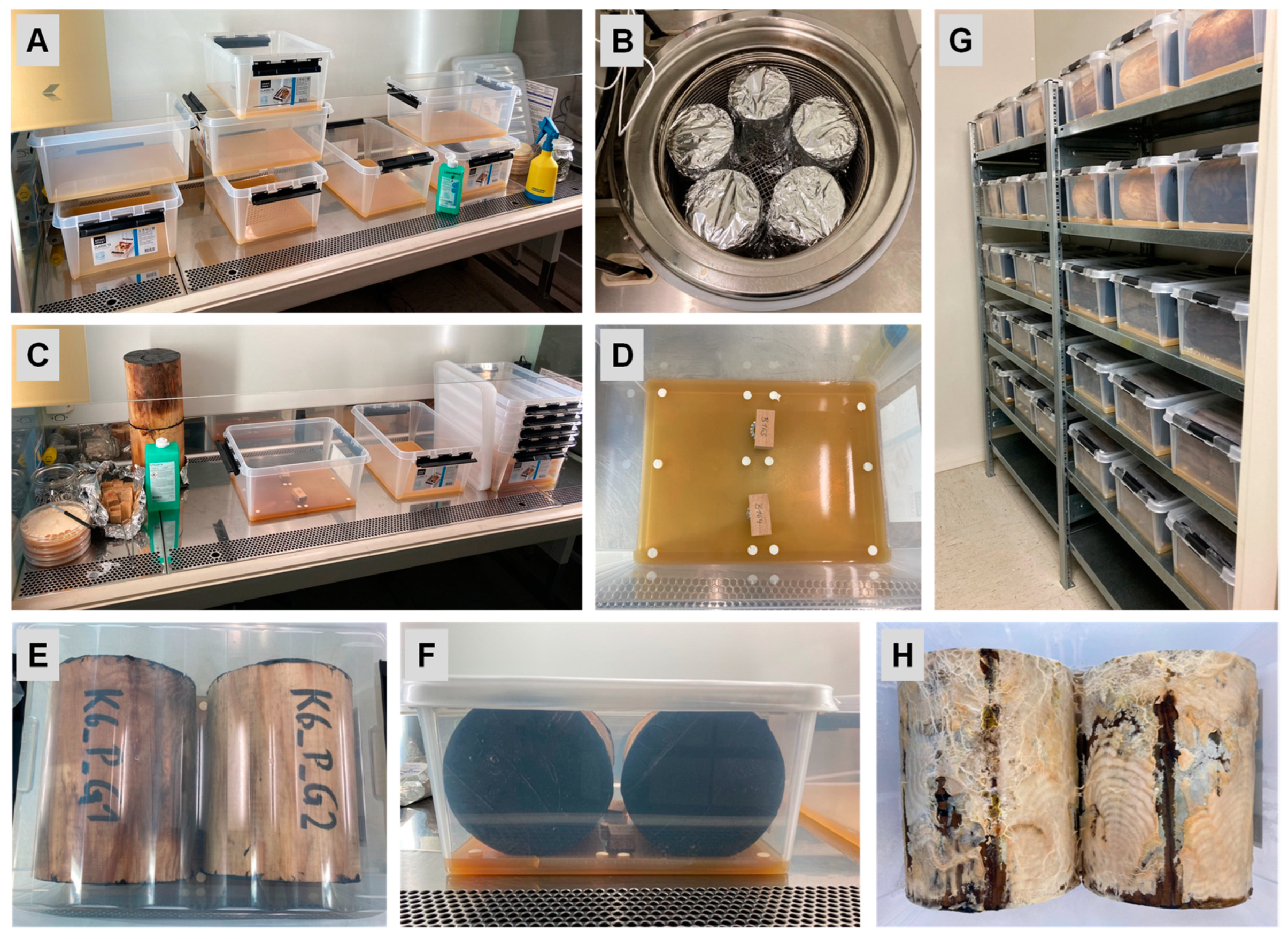
The specimens were incubated in plastic containers (170 × 270 × 235 mm3, H × W × D) filled with 850 mL malt agar (4%) and closed with a lid (Figure 2A–G). The incubation time was 16 weeks. Each container comprised two test specimens and two virulence control specimens (15 × 25 × 50 mm3) either made from untreated Scots pine sapwood or beech (Fagus sylvatica) for brown rot and white rot fungi, respectively (Figure 2F). Twelve inocula were placed on the malt agar, as shown in Figure 2D. During incubation, the containers’ lids were additionally sealed with a stretchable closure tape (Parafilm M, Pechiney Plastic Packaging, Chicago, IL, USA).
Figure 2.
Preparation and incubation of palisade specimens. (A) Handling of incubation containers filled with malt agar. (B) Sterilization of palisade sections in an autoclave. (C,D) Inoculation and placement of virulence control specimens. (E) Top view of palisade specimens. (F) Sideview of palisade specimens. (G) Incubation containers in a conditioned room. (H) Mycelial growth on palisade specimens.
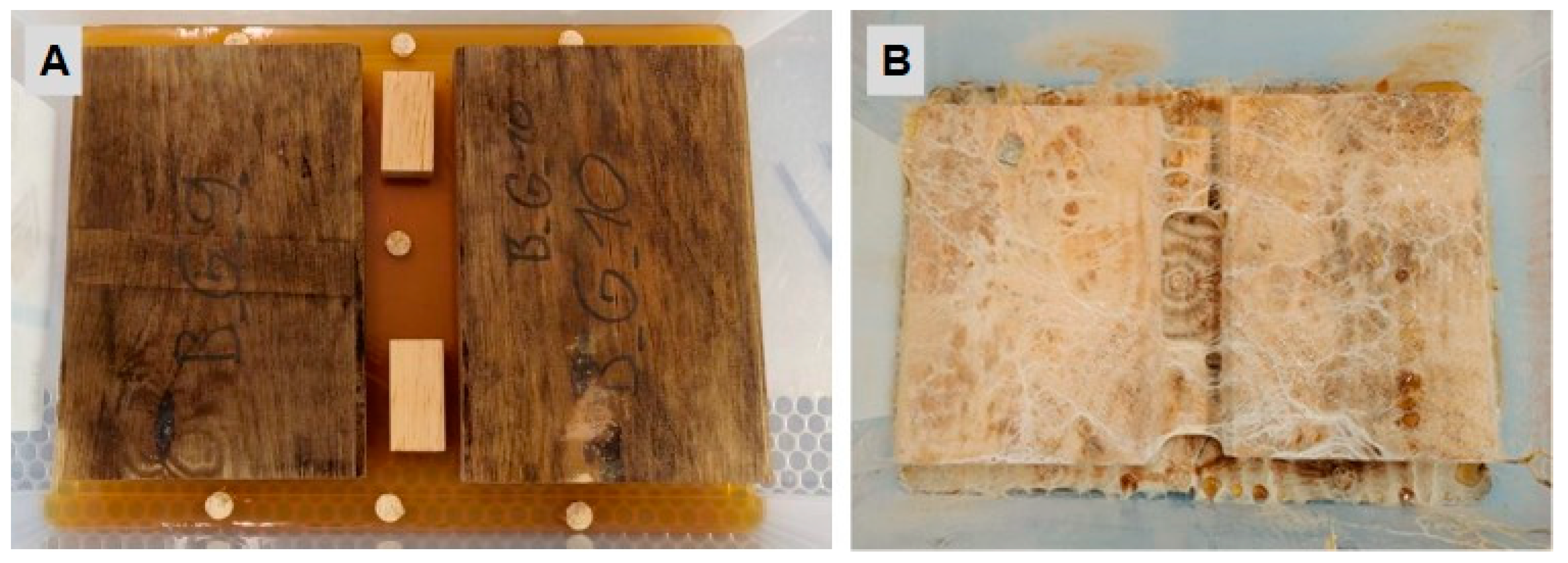
In analogy to the palisade specimens, board sections of 200 mm length were prepared and incubated with C. puteana (Figure 3). In total, n = 80 specimens were tested. The end grain of half of the specimens was sealed with polyurethane, and half of the specimens were oven-dried at 103 ± 2 °C after the treatment in order to examine to what extent drying checks affected the fungal decay of the specimens. All specimens were gamma sterilized at a dosage of 29.7 kGy at BBF Sterilisationsservice GmbH (Kernen, Germany) before incubation.
Figure 3.
Terrace board specimens. (A) Inoculation and placement of virulence control specimens. (B) Top view of board specimens after 16 weeks of incubation with C. puteana.
2.3. Decay Assessment
After 16 weeks of incubation, the specimens (Figure 2H) were removed from the containers, cleaned of the adhering mycelium, and cut into seven transverse sections each with a width of approx. 25 mm. The sections were consecutively numbered from one end to the other (#1–7), scanned in a wet state, air-dried, sanded, and scanned again using a flatbed scanner (Epson Expression 11000XL, 300 dpi, Suwa, Japan). The scan images of the dry specimens were saved in jpeg format and used to quantify the decayed cross-sectional area of the specimens with the help of GIMP (2022, The GIMP Team). The number of pixels in a marked area was displayed using a histogram. In order to determine the number of pixels corresponding to the cross-sectional area, the entire cross-section of randomly selected scans was repeatedly marked and the number of pixels corresponding to the area was noted in the histogram. The arithmetic mean was calculated from these and taken as the number of pixels corresponding to the cross-sectional area.
Both the percentage of decayed area related to the total cross-section (Equation (1)) and the absolute decayed area (Equations (2) and (3)) were calculated based on the number of pixels of the total cross-sectional area and the cross-sectional sapwood area. The proportion of heartwood in the cross-sectional area was also determined using this method.
where:
- Pdecay is the percentage decayed area (%);
- Pdecay,sap is the percentage decayed sapwood area (%);
- Pixtotal is the number of pixels, total cross-sectional area;
- Pixdecay is the number of pixels, decayed cross-sectional area;
- Adecay is the decayed cross-sectional area (cm2);
- Adecay,sap is the decayed cross-sectional sapwood area (cm2);
- Atotal is the total cross-sectional area (cm2);
- Atotal,sap is the sapwood cross-sectional area (cm2).
The mass loss (ML) of the virulence control specimens was determined by oven-drying the specimens at 103 °C until the mass was constant and weighing the specimens to the nearest 0.001 g before and after incubation.
2.4. Determining Wood Moisture Content and Its Spatial Distribution
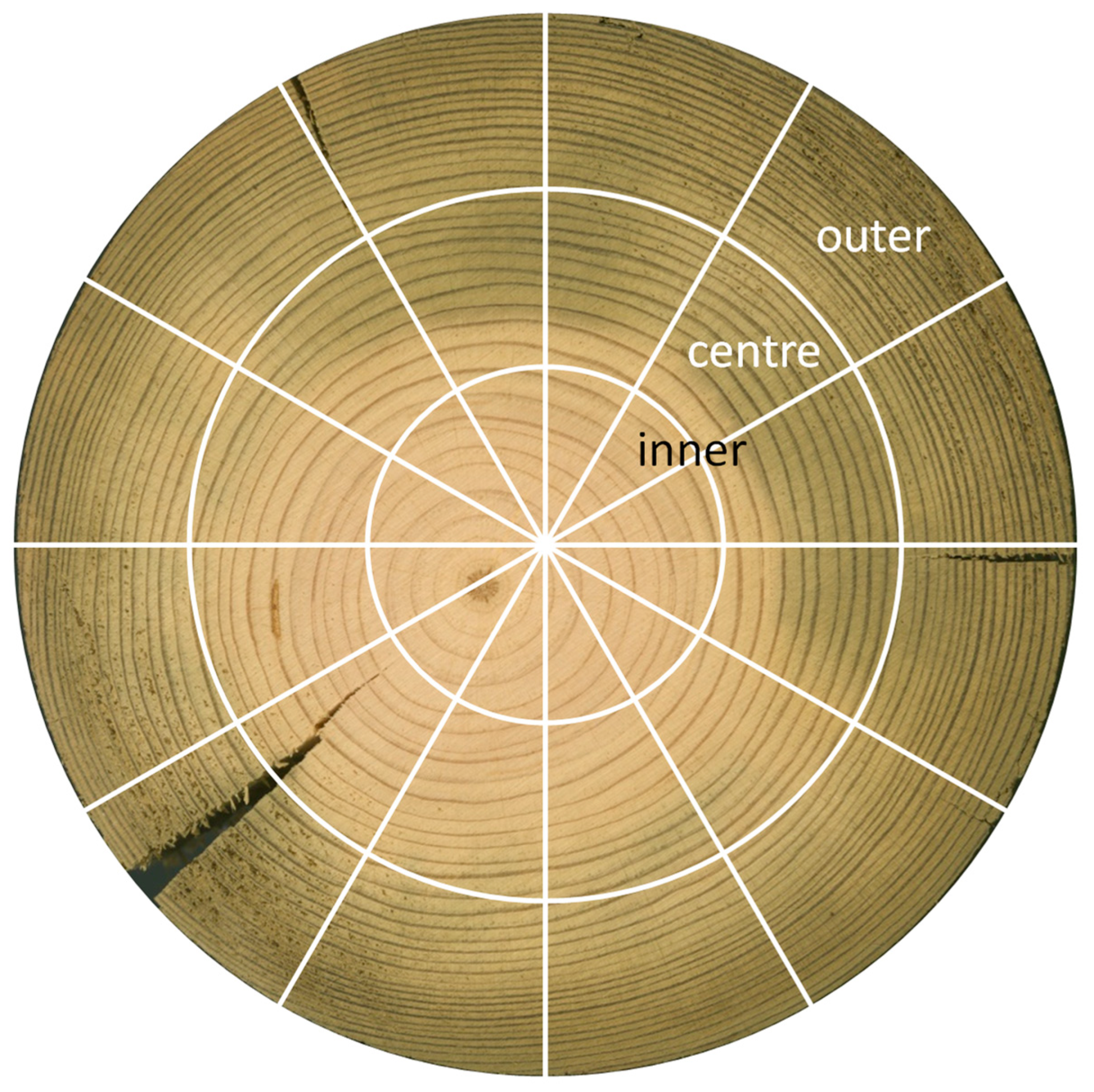
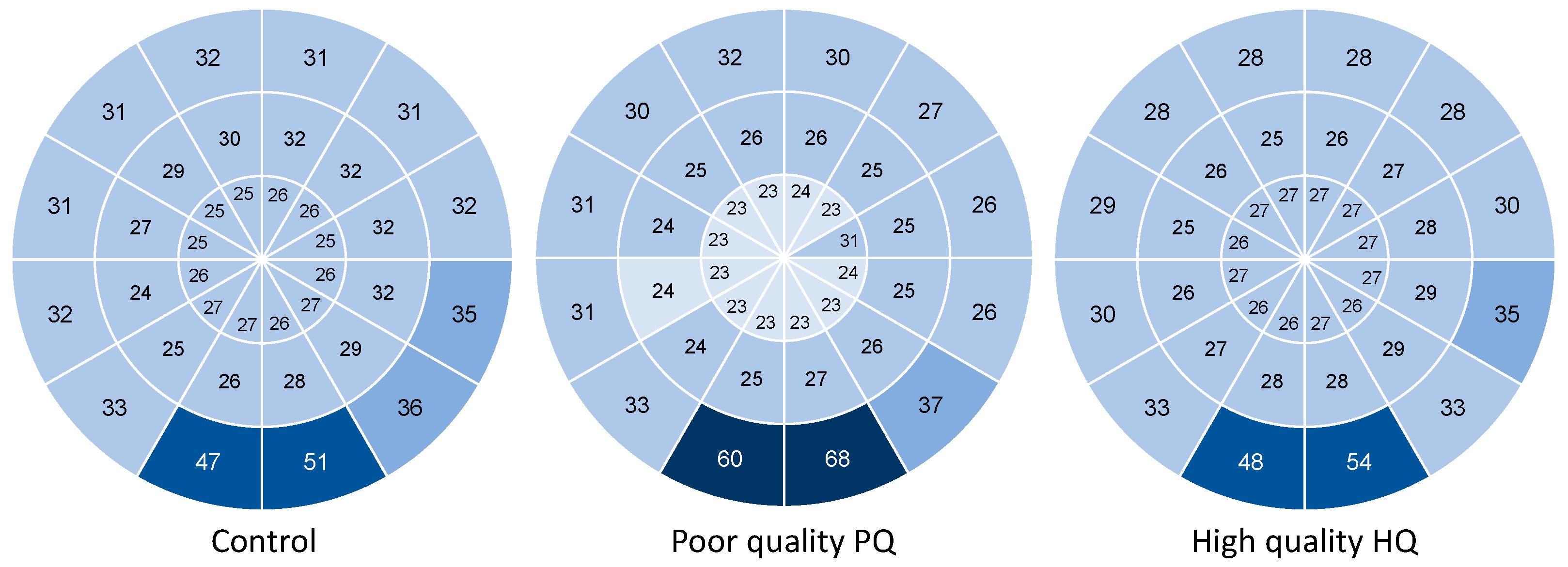
The wood MC of the palisade sections after incubation as well as its distribution over the cross-section and the length of the specimen was determined on selected specimens. The cut slices #2, #4, and #6 of one specimen per combination of test fungus/material were cut and split into 36 segments, where the outer, central, and inner zones were distinguished, as illustrated in Figure 4. The wood MC of a total of 1.296 specimen segments was determined gravimetrically to the nearest 0.001 g before and after oven-drying at 103 ± 2 °C.
Figure 4.
Cutting scheme for gravimetrical determination of the wood moisture content in palisade sections after incubation.
3. Results and Discussion
3.1. Fungal Growth
After two weeks of incubation, the agar plates were fully covered by mycelium of all four test fungi. Control specimens were also partly overgrown. C. puteana and partly G. trabeum grew on treated specimens as well. The PU sealed end-grain faces were also overgrown. T. versicolor and R. placenta did not grow on the preservative-treated specimens until the end of incubation.
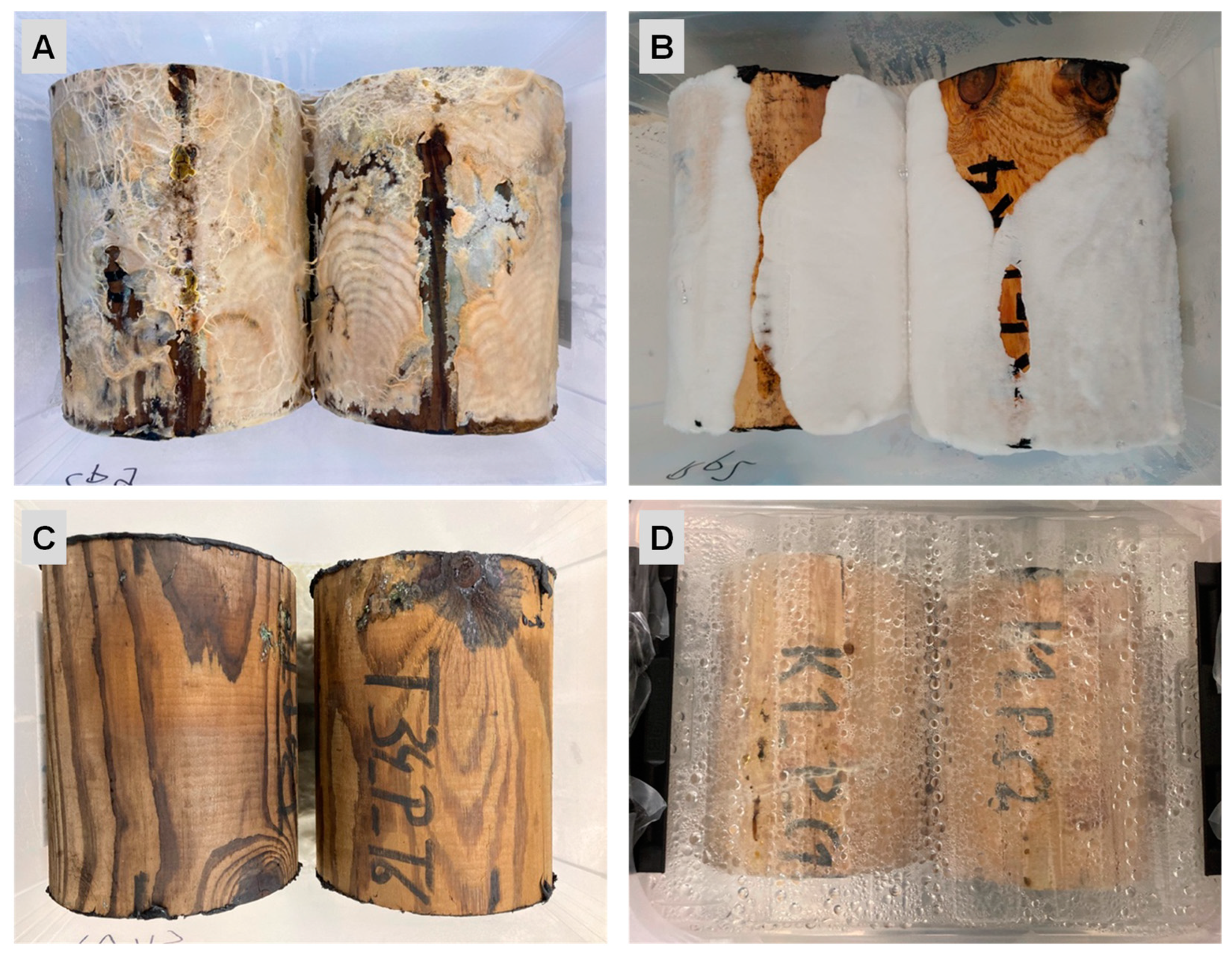
After eight weeks of incubation, condensation took place in containers with untreated control specimens as well as with treated specimens inoculated with C. puteana. On the latter specimens, mycelium still spread after ten weeks of incubation. Differences in mycelial growth as well as the condensation of water beneath the containers’ lids are exemplarily shown in Figure 5.
Figure 5.
Top view of specimens. (A) PQ specimens after 16 weeks of incubation with C. puteana. (B) Control specimens after 16 weeks of incubation with T. versicolor. (C). HQ specimens after 16 weeks of incubation with T. versicolor. (D) Condensation above control specimens after eight weeks of incubation with C. puteana.
3.2. Fungal Decay
The ML of the virulence control specimens exceeded the validity thresholds according to EN 113-2 [9], while C. puteana and T. versicolor caused mass loss (ML) even above 45 and 60%, respectively (Table 2).
Table 2.
Mass loss of virulence control specimens (validity threshold according to EN 113-2, 2021: minimum mass loss: 20%).
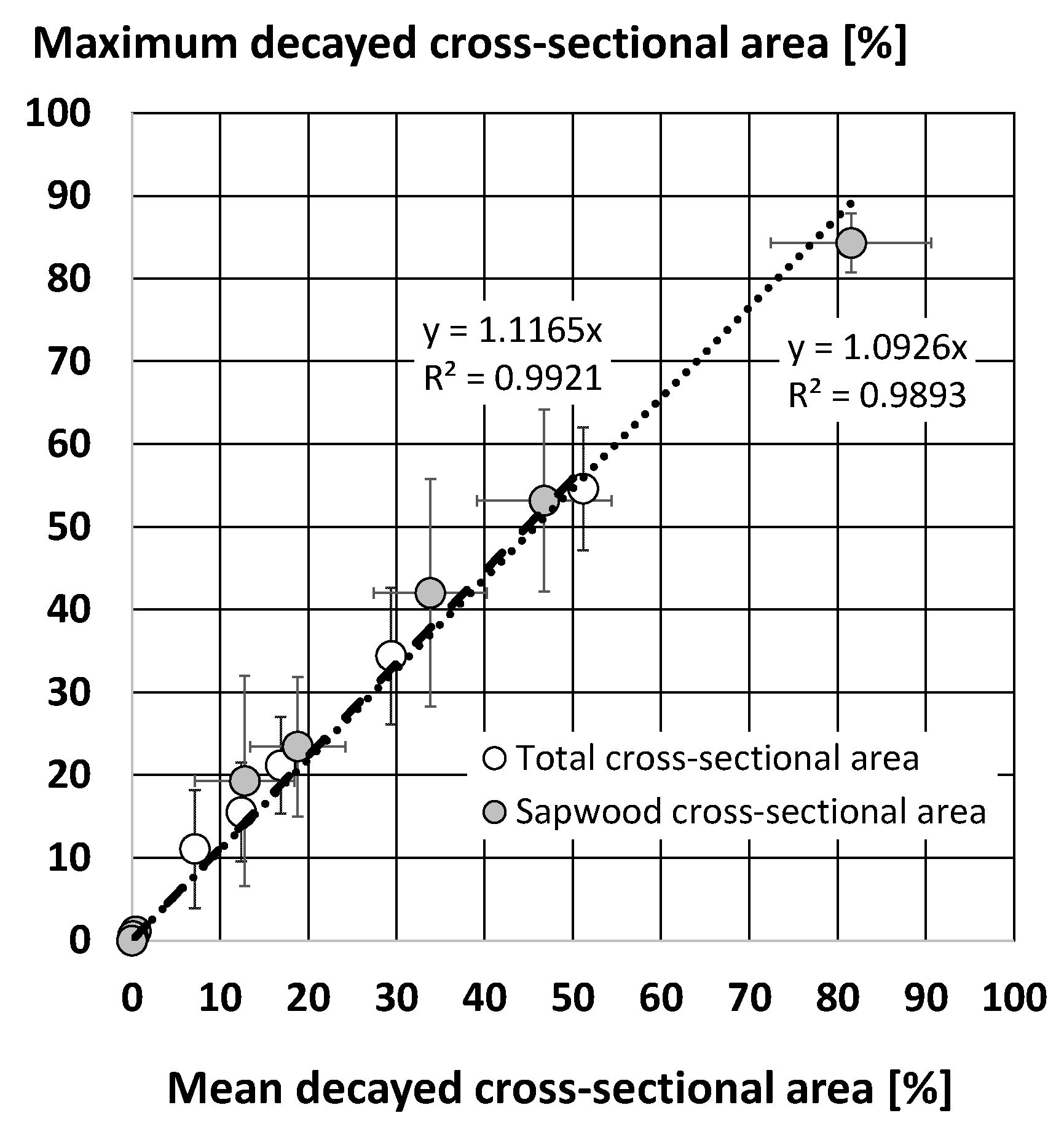
The untreated control palisades were invariably infested by all four test fungi, which coincided with the low durability of Scots pine sapwood against both brown and white rot [5,18]. In Table 3, the number of infested specimens, as well as the mean and maximum decayed cross-sectional areas (Pdecay%), are summarized. The latter two measures differed by factor 1.1 and 1.3 for the untreated controls and between 1.6 and 2.3 for the treated sets showing decay (Figure 5). For the sake of better comparability, the mean maximum Pdecay% might be the measure of choice, since it closely refers to the maximum depth of decay, which is the decisive measure in field experiments, such as graveyard and lap joint tests [21,22,23]. In addition, the Pdecay% was calculated on the basis of the sapwood area (Table 3), which was higher compared to that based on the total cross section by factor 1.3 to 2.0. With regard to both practical applications and the failure criterion, preference should be given to the total cross-sectional area for the calculations. On the contrary, using the sapwood cross-sectional area can help to increase reproducibility and make the test results more independent regarding variations in sapwood percentage and preservative uptake of this more permeable stem zone.
Table 3.
Decayed cross-sectional areas (Adecay%) of palisade section specimens (n = 10) after 16 weeks of incubation.
As expected, the decayed cross-sectional area Pdecay% varied significantly (i.e., coefficients of variation between 15 and >500%, Table 3). However, the variation of the mean Pdecay% was generally more prominent compared to its maximum (by a factor of 1.1 to 2.4, see Table 3 and Figure 6), which again speaks in favor of using the latter. In addition, the mean and the maximum decayed cross-sectional areas were well correlated (Figure 6) for both the total and the sapwood cross-sections. To provide agreement with existing field test standards, such as EN 252 [21] and EN 12037 [22], the maximum value has been given preference.
Figure 6.
Relationship between mean and maximum decayed cross-sectional areas (Adecay%) of palisade sections after 16 weeks of incubation with different decay fungi.
The preservative-treated palisade sections showed no or very little decay except for the PQ palisades incubated with C. puteana; i.e., up to 11% of the cross-section was decayed. In two other sets, the Adecay% was well below 1%, but in both cases, six out of ten replicates showed slight signs of decay. Nevertheless, the basic result was that the outer preservative-impregnated shell protected the overall product and thus gave it better performance.
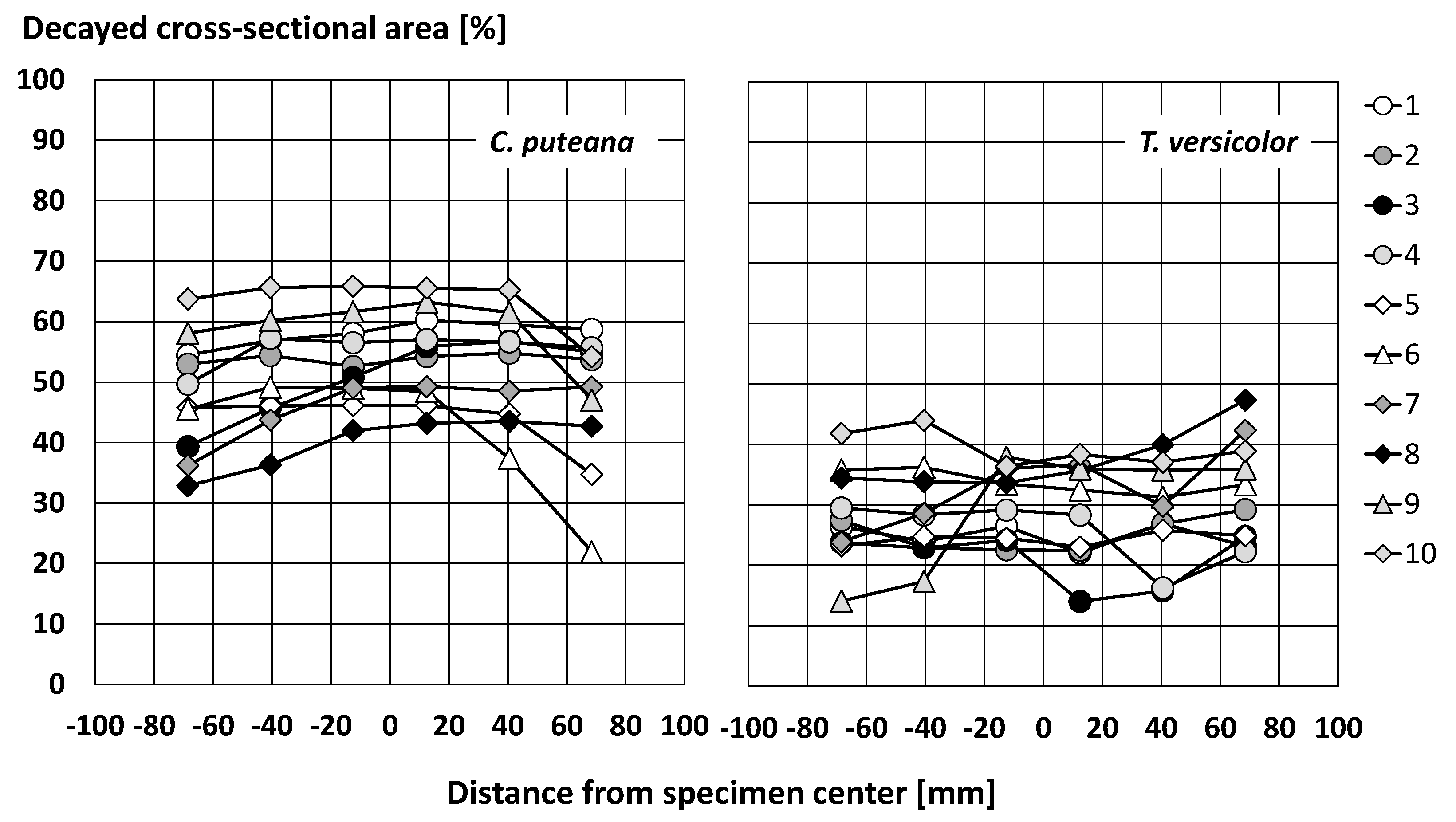
Apparently, the decayed cross-sectional area varied partly in terms of the specimens’ length, but such variations did not follow a clear rule, as seen in C. puteana and T. versicolor in Figure 7. For assessing both the mean and the maximum decayed cross-sectional areas, sampling should be carried out along the entire specimen length. In general, the number of studies using different decay assessment methods in comparison is scarce [24]. However, some comparative studies included a visual evaluation of cross sectional specimen areas [24,25,26] and concluded that weak points could be detected more easily compared to mass loss, mechanical loss, or schematized indentation measurements. Similar observations were made when examining decay in standing trees [27,28].
Figure 7.
Decay distribution along the specimens’ length.
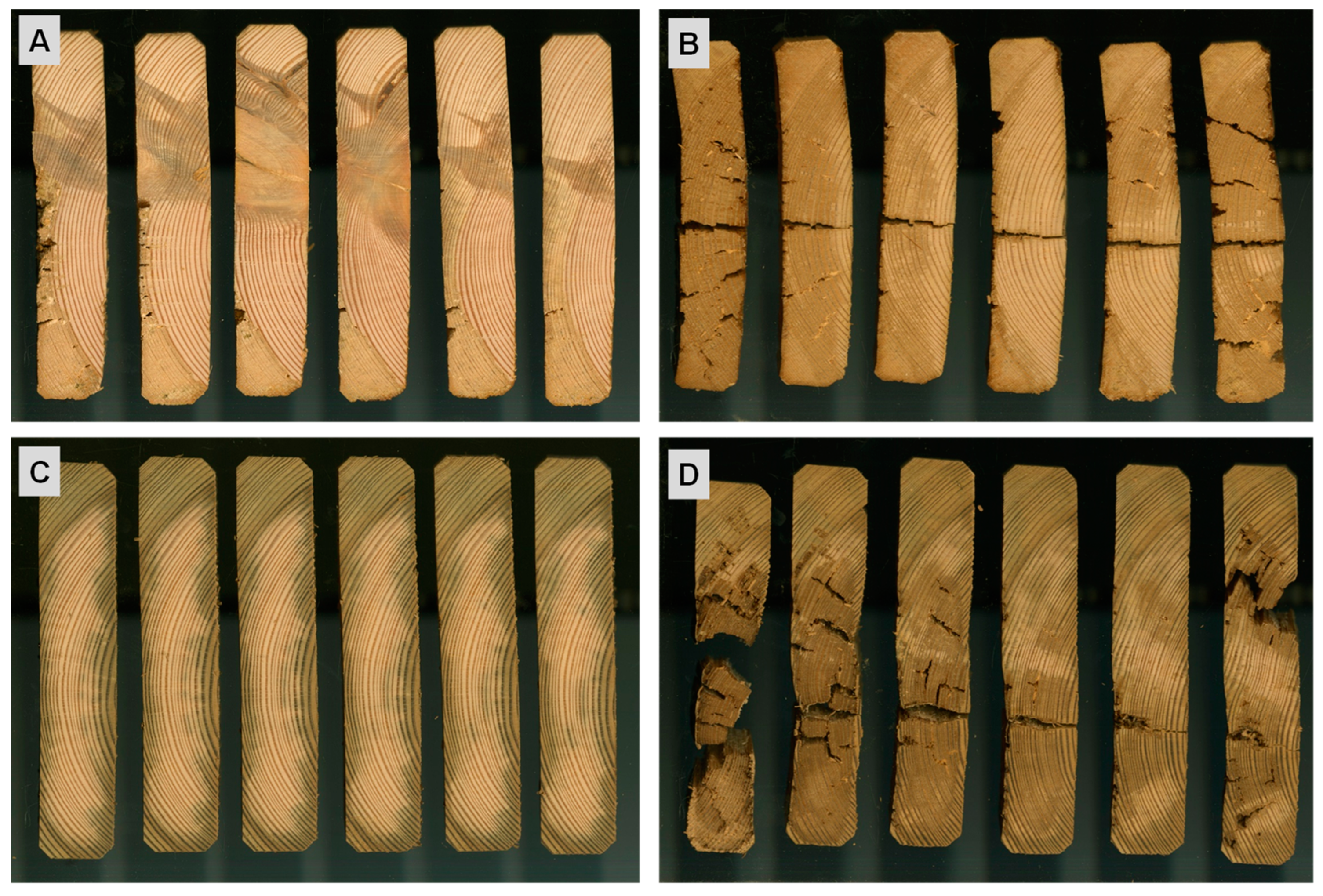
Similar to the palisade specimens, the majority of decking board specimens showed clear signs of decay after 16 weeks of incubation with C. puteana, but different infestation pathways did not become evident, since all specimens contained both sapwood and heartwood sections (Figure 8A,B,D). Only the treated, non-dried, and end-grain-sealed specimens were free from decay (Table 4, Figure 8C). All untreated specimens were infested, and 90%–100% of the treated and subsequently oven-dried specimens showed signs of decay as well. It became evident that oven-drying had a positive effect on the progress of fungal decay, which might be the consequence of the occurrence of drying checks, but the latter could not be clearly identified at the end of the incubation experiments. In contrast, end-grain sealing had a negative effect on the progress of fungal decay, which is most likely the effect of blocking the axial pathways in wood, which are preferred not only by liquid water, but also by decay organisms such as fungi [29,30]). As previously shown for the palisades, the maximum Adecay was scattered less than the mean Adecay (Table 4).
Figure 8.
Sections of decayed decking board specimens after 16 weeks of incubation with C. puteana. (A) Untreated control, not oven-dried, end-grain sealed. (B) Untreated control, oven-dried, not end-grain sealed. (C) HQ treated, not oven-dried, end-grain sealed. (D) HQ-treated, oven-dried, not end-grain sealed.
Table 4.
Decayed cross-sectional areas (Adecay) of decking board section specimens (n = 10) after 16 weeks of incubation.
3.3. Moisture Conditions
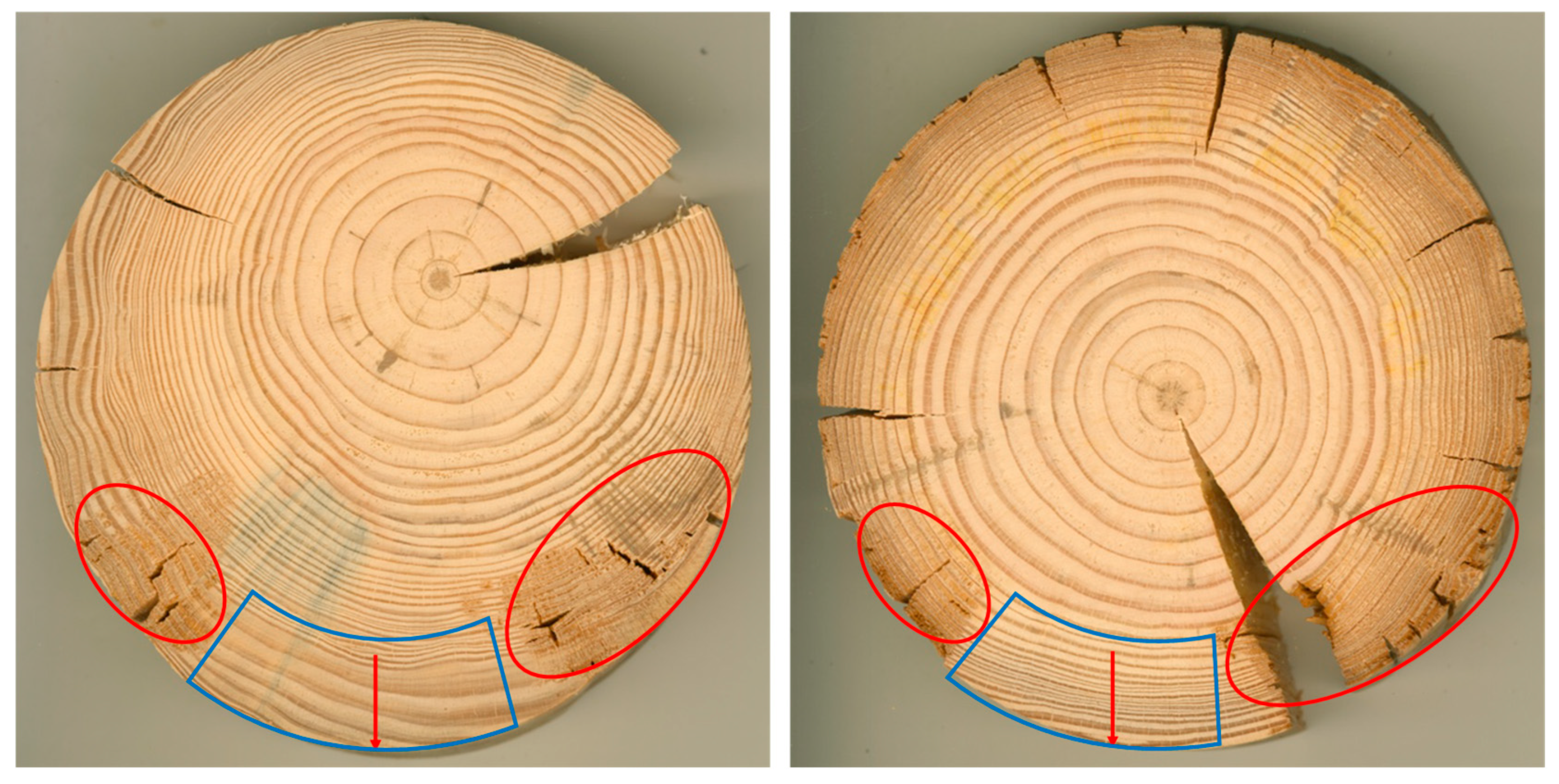
The wood MC within the palisade specimens varied throughout their cross-sections after 16 weeks of incubation, as illustrated exemplarily for C. puteana and both treatment qualities in Figure 9. The highest MC (i.e., 35%–68%) was observed at the bottom part of the specimens, which had been in direct contact with the malt agar. This part of the specimens was not decayed, not even within the untreated control specimens, which might be attributed to unfavorably high moisture content or the presence of malt agar. However, the MC range found in this specimen region did not exceed the physiological cardinal points of C. puteana [30,31,32]. In contrast, the adjacent area above the ‘malt–agar line’ showed the most severe decay (Figure 10). The remaining parts of the specimens had MCs of between approx. 22 and 45%, but all specimens contained sections where the moisture conditions were favorable for fungal decay [32,33].
Figure 9.
Mean wood moisture content (%) distribution in palisade specimens after 16 weeks of incubation with C. puteana.
Figure 10.
Sections of decayed control specimens after incubation with R. placenta (left) and C. puteana (right). Red arrows: points of support; blue areas: decay-free zones; red ovals: areas with severe decay.
3.4. Infestation Pathways and Decay Patterns
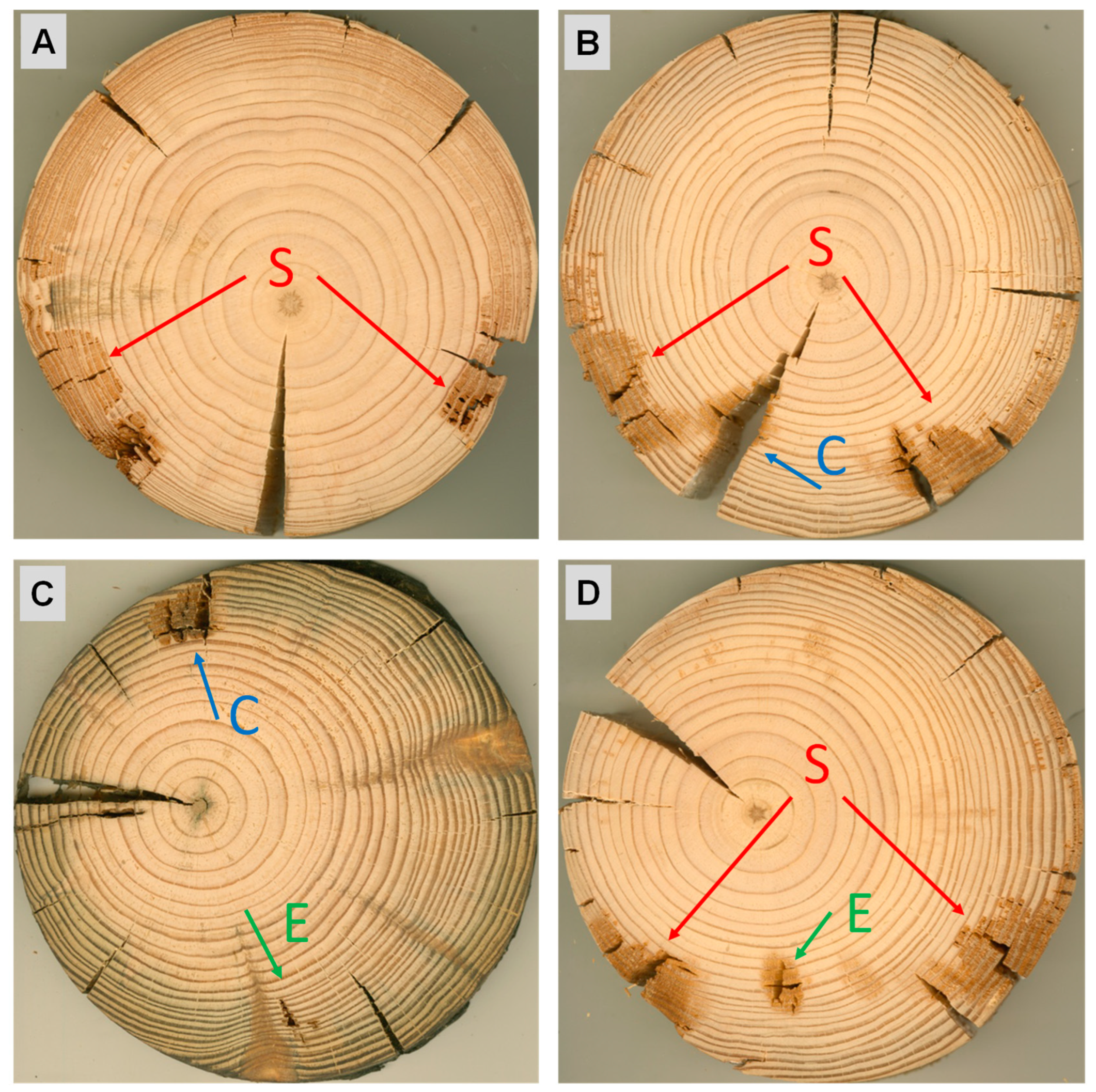
In summary, 63 of 120 specimens showed fungal decay. Three different infestation pathways became evident: (1) from the sapwood mantle (61% of the cases), (2) via radial checks (60%), and (3) from the end-grain (34%). The latter should have been prevented through the end-grain sealant but occurred in a few cases. However, a defect sealant led to infestation via end-grain in less than 7% of the specimens. Further potential reasons for ‘internal decay pockets’ are fungal growth from remote cracks moving into the specimen’s core or the deficient adhesion of the sealant, which might allow the fungus to penetrate the contact face and infest the specimen via the end grain. However, the latter could not be confirmed.
Many specimens were infested via more than one pathway (Figure 11). Similar infestation pathways had been reported from poles and other commodities in service [24,25,34,35,36]. Detailed knowledge about the spatial distribution of wood moisture and fungal decay in complex wood-based products could be gained from laboratory product tests (‘commodity testing’). This might be of interest for understanding infestation pathways and decay development in products containing glued or otherwise connected wooden elements [37,38].
Figure 11.
Sections of decayed test specimens. (A). Control specimen, decay by G. trabeum, starting from the sapwood (S). (B) Control specimen, decay by R. placenta, starting from sapwood and a large crack (C). (C) LQ-treated specimens, decay by C. puteana, starting from a crack and the end-grain (E). (D) Control specimen, decay by R. placenta, starting from sapwood and end-grain.
4. Conclusions
After the standard incubation period of 16 weeks, all untreated product specimens showed signs of decay independent from the test fungus. The treated specimens were less affected. The mean and the maximum decayed cross-sectional areas were well correlated for both the total and the sapwood cross-sections. To provide agreement with existing field test standards, the maximum value was given preference. The palisade incubation experiments showed that the wood moisture content after incubation was always favorable for decay fungi, although both the absolute specimen volume and the wood–agar volume ratio were significantly higher compared to standard durability tests. Different infestation pathways became evident: (1) from the sapwood mantle, (2) via radial checks, and (3) from the end-grain. The latter should be prevented to better mimic real outdoor exposure conditions.
The decay testing of products provides information about their performance but cannot be used effectively for durability classification. In contrast to the durability testing of materials, it is essential to retain the composition of a product during the test, e.g., the treated outer protecting sapwood shell and the less durable inner heartwood core. The latter was largely achievable, but the insufficient adherence of sealants and the occurrence of cracks during drying lead to reduced reproducibility; however, this may mimic outdoor exposure scenarios of products in service. The main shortcoming of the approach is the lack of a non-durable reference product. While it might be feasible to produce terrace board sections containing 100% pine sapwood, full-size poles can hardly be made from such reference wood species. Generally, the time and effort for preparing reference products are significantly higher compared to small clear reference specimens. In addition, the effort for determining the decayed cross-sectional areas is significantly higher compared to traditional mass loss measurements, and it is associated with a higher degree of uncertainty, because the evaluation of fungal-induced discoloration of the cross section is subject to interpretation.
Although the results of this study are only preliminary, they suggest that the durability classification of wood should be limited to wood-based materials and should not include wood-based products. The latter could nevertheless be subjected to performance tests in order to gain valuable insights into their outdoor behavior.
Author Contributions
Conceptualization, C.B. and S.B.; methodology, C.B., M.S. (Marten Sievert) and M.S. (Max Schilling); validation, C.B., M.S. (Marten Sievert) and M.S. (Max Schilling); formal analysis, M.S. (Marten Sievert) and M.S. (Max Schilling); investigation, M.S. (Marten Sievert) and M.S. (Max Schilling); resources, C.B. and S.B.; data curation, M.S. (Marten Sievert) and M.S. (Max Schilling); writing—original draft preparation, C.B.; writing—review and editing, C.B. and S.B.; visualization, C.B., M.S. (Marten Sievert) and M.S. (Max Schilling); supervision, C.B. and S.B.; project administration, C.B. and S.B.; funding acquisition, C.B. and S.B. All authors have read and agreed to the published version of the manuscript.
Funding
This research was funded by the ongoing research project DURATEST and supported by the German Ministry of Food and Agriculture (BMEL) via the Agency of Renewable Resources (FNR), grant number 2219NR372. The APC was funded by the Open Access Publications Funds of the University of Goettingen.
Data Availability Statement
The entire set of raw data presented in this study is available on request from the corresponding author.
Acknowledgments
The authors gratefully acknowledge Petra Heinze for her patience and support during the incubation experiments.
Conflicts of Interest
The authors declare no conflict of interest.
References
- Findlay, W.P.K. The nature and durability of wood. In Natural Durability of Timber in the Tropics; Findlay, W.P.K., Ed.; Springer: Dordrecht, The Netherlands, 1985; p. 273. [Google Scholar]
- Scheffer, T.C.; Morrell, J.J. Natural durability of wood: A worldwide checklist of species. For. Res. Lab. 1998, 22, 58. [Google Scholar]
- Van Acker, J.; Stevens, M.; Carey, J.; Sierra-Alvarez, R.; Militz, H.; Le Bayon, I.; Kleist, G.; Peek, R.D. Biological durability of wood in relation to end-use. Eur. J. Wood Wood Prod. 2003, 61, 35–45. [Google Scholar] [CrossRef]
- Kutnik, M.; Suttie, E.; Brischke, C. European standards on durability and performance of wood and wood-based products–Trends and challenges. Wood Mat. Sci. Eng. 2014, 9, 122–133. [Google Scholar] [CrossRef]
- EN 350; Durability of Wood and Wood-Based Products. Testing and Classification of the Durability to Biological Agents of Wood and Wood-Based Materials. European Committee for Standardization: Brussels, Belgium, 2016.
- Alfredsen, G.; Westin, M. Durability of modified wood-laboratory vs. field performance. In Proceedings of the 4th European Conference on Wood Modification (ECWM4), Stockholm, Sweden, 27–29 April 2009; pp. 515–522. [Google Scholar]
- Alfredsen, G.; Brischke, C.; Meyer-Veltrup, L.; Humar, M.; Flæte, P.O. The effect of different test methods on durability classification of modified wood. Pro Ligno 2017, 13, 290–297. [Google Scholar]
- Emmerich, L.; Brischke, C.; Militz, H. Wood modification with N-methylol and N-methyl compounds: A case study on how non-fixated chemicals in modified wood may affect the classification of their durability. Holzforschung 2021, 75, 1061–1065. [Google Scholar] [CrossRef]
- EN 113-2; Durability of Wood and Wood-Based Products—Test Method against Wood Destroying Basidiomycetes—Part 2: Assessment of Inherent or Enhanced Durability. European Committee for Standardization: Brussels, Belgium, 2021.
- CEN/TS 15083-2; Durability of Wood and Wood-Based Products—Determination of the Natural Durability of Solid Wood against Wood-Destroying Fungi, Test Methods—Part 2: Soft Rotting Micro-Fungi. European Committee for Standardization: Brussels, Belgium, 2005.
- Scheiding, W.; Jacobs, K.; Bollmus, S.; Brischke, C. Durability classification of treated and modified wood—Approaching a guideline for sampling, testing, and statistical analysis. In Proceedings of the IRG Annual Meeting, IRG/WP 20-20676, Online-Conference, 10–11 June 2020. [Google Scholar]
- Cookson, L.J.; Page, D.; Singh, T. Accelerated above-ground decay testing in Australia and New Zealand. Int. Biodeter. Biodegr. 2014, 86, 210–217. [Google Scholar] [CrossRef]
- Evans, P.D.; Wingate-Hill, R.; Cunningham, R.B. Wax and oil emulsion additives: How effective are they at improving the performance of preservative-treated wood? For. Prod. J. 2009, 59, 66. [Google Scholar]
- Singh, T.; Page, D. Evaluation of Selected Accelerated Above-Ground Durability Testing Methods for Wood after Ten Years Exposure. Forests 2020, 11, 559. [Google Scholar] [CrossRef]
- Goodell, B.; Jellison, J.; Loferski, J.; Quarles, S.L. Brown-rot decay of ACQ and CA-B treated lumber. For. Prod. J. 2007, 57, 31. [Google Scholar]
- Ra, J.B. Ten-year performance of shell-treated wooden deck. J. Korean Wood Sci. Technol. 2019, 47, 667–673. [Google Scholar] [CrossRef]
- Nguyen, T.T.H.; Tran, N.Q.; Nguyen, T.M.N.; Trinh, H.M.; Le, X.P.; Nguyen, T.K. Evaluation of Weathering Performance of Rosin-Copper Based Treated Wood. J. Renew. Mat. 2022, 10, 2765–2780. [Google Scholar] [CrossRef]
- Brischke, C.; Alfredsen, G. Biological durability of pine wood. Wood Mat. Sci. Eng. 2022. [Google Scholar] [CrossRef]
- Foliente, G.C.; Leicester, R.H.; Wang, C.H.; Mackenzie, C.; Cole, I. Durability design for wood construction. For. Prod. J. 2002, 52, 10–19. [Google Scholar]
- Brischke, C.; Alfredsen, G. Wood-water relationships and their role for wood susceptibility to fungal decay. Appl. Microbiol. Biotechnol. 2020, 104, 3781–3795. [Google Scholar] [CrossRef]
- EN 252; Field Test Method for Determining the Relative Protective Effectiveness of a Wood Preservative in Ground Contact. European Committee for Standardization: Brussels, Belgium, 2015.
- EN 12037; Wood Preservatives-Field Test Method for Determining the Relative Protective Effectiveness of a Wood Preservative Exposed Out of Ground Contact-Horizontal Lap-Joint Method. European Committee for Standardization: Brussels, Belgium, 2023.
- Råberg, U.; Edlund, M.L.; Terziev, N.; Land, C.J. Testing and evaluation of natural durability of wood in above ground conditions in Europe—An overview. J. Wood Sci. 2005, 51, 429–440. [Google Scholar] [CrossRef]
- Augusta, U. Untersuchung der Natürlichen Dauerhaftigkeit Wirtschaftlich Bedeutender Holzarten bei Verschiedener Beanspruchung im Außenbereich. Ph.D. Thesis, University of Hamburg, Hamburg, Germany, 2007. [Google Scholar]
- Brischke, C.; Rolf-Kiel, H. Durability of European oak (Quercus spp.) in ground contact—A case study on fence posts in service. Eur. J. Wood Wood Prod. 2010, 68, 129–137. [Google Scholar] [CrossRef]
- Sharapov, E.; Brischke, C.; Militz, H. Assessment of preservative-treated wooden poles using drilling-resistance measurements. Forests 2019, 11, 20. [Google Scholar] [CrossRef]
- Johnstone, D.; Moore, G.; Tausz, M.; Nicolas, M. The measurement of wood decay in landscape trees. Arboricult. Urban For. 2010, 36, 121–127. [Google Scholar] [CrossRef]
- Goh, C.L.; Rahim, R.A.; Rahiman, M.H.F.; Talib, M.T.M.; Tee, Z.C. Sensing wood decay in standing trees: A review. Sens. Actuat. A Phys. 2018, 269, 276–282. [Google Scholar] [CrossRef]
- Pohleven, F.; Petric, M.; Zupin, J. Effect of mini-block test conditions on activity of Coniophora puteana. In Proceedings of the IRG Annual Meeting, IRG/WP/00-20184, Kona, HI, USA, 14–19 May 2000. [Google Scholar]
- Brischke, C.; Grünwald, L.K.; Bollmus, S. Effect of size and shape of specimens on the mass loss caused by Coniophora puteana in wood durability tests. Eur. J. Wood Wood Prod. 2020, 78, 811–819. [Google Scholar] [CrossRef]
- Schmidt, O. Wood and Tree Fungi. Biology, Damage, Protection, and Use; Springer: Berlin/Heidelberg, Germany, 2006; p. 334. [Google Scholar]
- Meyer, L.; Brischke, C. Fungal decay at different moisture levels of selected European-grown wood species. Int. Biodeter. Biodegr. 2015, 103, 23–29. [Google Scholar] [CrossRef]
- Stienen, T.; Schmidt, O.; Huckfeldt, T. Wood decay by indoor basidiomycetes at different moisture and temperature. Holzforschung 2014, 68, 9–15. [Google Scholar] [CrossRef]
- Morrell, J.J. Effect of kerfing on performance of Douglas-fir utility poles in the Pacific Northwest. In Proceedings of the IRG Annual Meeting, IRG/WP 3604, Rotorua, New Zealand, 13–19 May 1990. [Google Scholar]
- Ross, R.J.; Wang, X.; Brashaw, B.K. Detecting decay in wood components. In Inspection and Monitoring Techniques for Bridges and Civil Structures; Woodhead Publishing Limited: Sawston, UK, 2005; pp. 100–114. [Google Scholar]
- Bornemann, T.; Brischke, C.; Alfredsen, G. Decay of wooden commodities–moisture risk analysis, service life prediction and performance assessment in the field. Wood Mat. Sci. Eng. 2014, 9, 144–155. [Google Scholar] [CrossRef]
- Van den Bulcke, J.; De Windt, I.; Defoirdt, N.; De Smet, J.; Van Acker, J. Moisture dynamics and fungal susceptibility of plywood. Int. Biodeter. Biodegr. 2011, 65, 708–716. [Google Scholar] [CrossRef]
- Udele, K.E.; Morrell, J.J.; Sinha, A. Biological durability of cross-laminated timber—The state of things. For. Prod. J. 2021, 71, 124–132. [Google Scholar] [CrossRef]
Disclaimer/Publisher’s Note: The statements, opinions and data contained in all publications are solely those of the individual author(s) and contributor(s) and not of MDPI and/or the editor(s). MDPI and/or the editor(s) disclaim responsibility for any injury to people or property resulting from any ideas, methods, instructions or products referred to in the content. |
© 2023 by the authors. Licensee MDPI, Basel, Switzerland. This article is an open access article distributed under the terms and conditions of the Creative Commons Attribution (CC BY) license (https://creativecommons.org/licenses/by/4.0/).