


Abstract
Two decades after the pan-European set of indicators for sustainable forest management was adopted, the European Commission published the New EU Forest Strategy for 2030. We compared the documents on the basis of a content analysis to determine whether they share the same understanding of sustainable forest management. We looked at whether, and to what extent, the existing indicator set is fit for purpose to monitor progress towards the Strategy’s objectives, and the delivery of policy commitments. About two thirds of the identified objectives and commitments in the Strategy can be monitored at least partially by the pan-European set of indicators, whereas new indicators or approaches need to be developed for the remaining third. Several of the indicators are not linked to the Strategy, and some of them are only weakly linked to the policy issues addressed in the Strategy. Our comparison shows a few significant differences between the comprehensive vision of sustainable forest management formulated in the indicator set and the scope of the objectives and commitments in the Strategy. In particular, the forest policy concerns reflected in the Strategy address several issues which are not fully covered in the pan-European indicator set.
1. Introduction
The European Commission has adopted the New EU Forest Strategy for 2030 [1] as a flagship initiative of the European Green Deal [2]. The objective of the New EU Forest Strategy for 2030 is to “set a vision and concrete actions to improve the quantity and quality of EU forests and strengthen their protection, restoration and resilience”. The Strategy places forest demands in the context of changing environmental conditions due to climate change and meeting socio-economic needs.
Demands on forests have evolved recurrently over time, which has been reflected in changing concepts of sustainability. Hans Carl von Carlowitz formulated the concept of sustainable forest management in 1713 with regard to the backdrop of deforestation and forest degradation and the accompanying uncertain timber supply [3]. The principle of sustainable forest management was further developed in the 18th and 19th centuries and was fundamental to restoring destroyed and overexploited forests in Central Europe and to eliminating the timber shortage [4,5,6]. The special significance of the sustainability of the multiple functions of forests, i.e., the sustainability of all functions of forests and not only of the economic function of forests serving the timber market, was formulated by Dieterich [7]. In this context, the increasing demand for continuous forest cover and close-to-nature forest management to maintain the multiple functions of forests also deserve mentioning [8,9]. In Germany, between 1933 and 1945, wood was seen as a universally applicable raw material that ensured independence from imports of raw materials and energy sources. Forest management was therefore exclusively focused on wood production [10]. Only several decades later, at the second Ministerial Conference on the Protection of Forests in Europe (MCPFE), held in Helsinki in June 1993, general guidelines for sustainable forest management in Europe were adopted by the Ministers responsible for forests and forestry in Europe that “recognize the need to reconcile the legitimate and sustainable use of wood and other forest products with all other functions of forests in the ecological and social conditions prevailing in Europe, and that the conservation and appropriate enhancement of biological diversity in all types of forests is an essential element in their sustainable management” [11]. Based on these guidelines, criteria and indicators for sustainable forest management (later referred as pan-European indicators) were developed in 1998, applied for monitoring and reporting, amended and last revised in 2015 [12,13,14,15,16]. The pan-European criteria and indicators address sustainable forest management in the context of forest policy and governance, forest resources and carbon cycles, forest health and vitality, productive functions, biological diversity, and protective functions, as well as with regard to socio-economic functions.
In the following, we analyse the New EU Forest Strategy for 2030 and identify the objectives and commitments contained in the text in terms of the elements of forest management and policy that are addressed. It should be borne in mind that there is still no consensus about the future of sustainable forest management in Europe. In particular, the Strategy itself was criticised by the European Council for insufficient consultation of stakeholders [17]. However, it is a formal, high level international statement of policy objectives and commitments, even though it does not represent a consensus view, nor does it claim to address all aspects of sustainable forest management. We then compare the objectives and commitments of the Strategy with the pan-European indicators of sustainable forest management, which represent the consensus of the 45 signatory countries of the Forest Europe process and the European Union as regards sustainable forest management as a whole [14]. This set divides the sustainable forest management concept into six criteria and includes 11 qualitative indicators and 34 quantitative indicators. Qualitative indicators are non-numerical factors for determining the level of progress towards a specific objective or commitment and are used to measure phenomena that have no numerical value. Quantitative indicators indicate a quantity that can be a pure number, an index, ratio, or percentage. They give an objective measure of phenomena and are numerically comparable. The indicators can be used to report on the various dimensions of sustainable forest management [18].
The two documents emerge from very different processes. The pan-European set of Criteria and indicators was developed in the context of Forest Europe, an informal process of the pan-European Ministers responsible for forests and the EC. Forest Europe outputs are not legally binding and are based on consensus. Although Forest Europe has made several commitments to sustainable forest management, the indicator set itself does not contain targets or even qualitative objectives or commitments for sustainable forest management, but systematically defines the indicators which should be monitored to assess progress towards sustainable forest management, all in the context of the agreed definition of sustainable forest management (Helsinki Resolution H1) [19]. The indicator set has been used notably as a framework for data collection and for the successive studies on the state of Europe’s forests, presented to the Ministerial Conferences of the Forest Europe process [13,20,21,22].
The New EU Forest Strategy for 2030 is a policy instrument in the supranational EU framework, which sets objectives, very few of which are quantified targets, and makes policy commitments. It “aims to overcome these challenges [i.e., those facing EU forests] and unlock the potential of forests for our future, in full respect for the principle of subsidiarity, best available scientific evidence and Better Regulation requirements. It is anchored in the European Green Deal and the EU 2030 Biodiversity Strategy and it recognises the central and multi-functional role of forests” [1]. The Strategy is part of an ongoing process which is intended to produce EU policy instruments, some of which may be legally binding [17], although the Strategy itself is not.
The Strategy mentions sustainability many times, and the phrase sustainable forest management” occurs ten times, in a variety of contexts (“sustainable forest management practices”, “sustainable forest management framework”, “sustainable forest management concept”), and there are references to a “sustainable forest bioeconomy”, seen as the value chain based on the sustainable supply of wood and other goods and services from the forest. However, the Strategy does not explicitly state that its main objective is to achieve sustainable forest management in the EU, nor that it addresses all aspects of sustainable forest management. In this respect, the perspective of the Strategy differs from the indicator set, which does explicitly aim to be comprehensive and structured in its conceptual basis. In fact, the titles of the two documents accurately reflect this difference: “New EU Forest Strategy for 2030” v. “pan-European indicators for sustainable forest management”.
It must be borne in mind that New EU Forest Strategy for 2030 is a policy document, focusing on the directions of future action in the EU context, whereas the pan-European indicators are intended to be a conceptual framework for monitoring and analysis, with no “direction” of progress expressed in any of the indicators.
Even though the pan-European set has been revised twice, the majority of pan-European indicators has been relatively stable over the past quarter century. However, circumstances have changed over that period, politically and socially, such as the increased areas of competence of the EU, the success of “green” parties, and the acceptance of their policies by other parties [23,24,25,26] and as regards climate change and energy. The objective of this paper is to compare the New EU Forest Strategy 2030, with the set of pan-European indicators for sustainable forest management. On that basis, we discuss whether, and to what extent, the conceptual framework necessary for monitoring progress towards policy objectives, such as those formulated by the Strategy, and the delivery of policy commitments, should be adjusted to the changing reality. By carrying out this comparison we provide a comparative analysis to inform future discussions on the development of indicators and monitoring systems.
In our paper we determine how well the pan-European indicators might serve as a measuring and monitoring tool for the New EU Strategy 2030. We focus on the following four research questions:
- Which elements of forest management and forest policy are addressed by the New EU Forest Strategy for 2030, particularly in its objectives and commitments?
- Which elements of the pan-European indicators are relevant to the New EU Forest Strategy for 2030?
- Which objectives and commitments of the New EU Forest Strategy for 2030 could be monitored by the pan-European indicators for sustainable forest management as a basis for monitoring, assessment, and reporting?
- Which of the pan-European indicators for sustainable forest management have no corresponding elements in the New EU Forest Strategy for 2030?
2. Material and Methods
The two documents consulted for our analysis are the New EU Forest Strategy for 2030 [1] and the pan-European criteria and indicators for sustainable forest management as published in the Madrid Ministerial Declaration of the Forest Europe process [14] (see also Supplementary Materials, Table S1). Following Bauer [27] and Perakyla and Ruusuvuori [28], we conducted first a desk survey of the full text of the New EU Forest Strategy for 2030 to identify the elements of forest management and forest policy addressed by the stated objectives and commitments.
Then, we conducted a quantitative content analysis [29,30] by screening the text of the strategy for selected keywords, which were identified from the titles of the pan-European indicators and the accompanying descriptions found in the latest update of the indicators [14]. The keywords, which are presented in Supplementary Materials (Table S1), were then queried by a text search for match in the text document of the New EU Forest Strategy for 2030 without considering the relevant context (www.atlas.ti, last accessed on 1 December 2021). This approach makes it possible to discover and systematically analyse complex phenomena hidden in primary text material.
Since this straightforward way of screening only counts hits for keywords in the source text without looking at the context, this analysis can result in misleading findings [31]. Therefore, following the quantitative content analysis, we performed a qualitative content analysis. The content analysis identified those pan-European indicators which might be suitable tools for future monitoring, reporting and assessment of the progress towards the objectives and commitments, and thus contribute to presenting the implementation efforts of the New EU Forest Strategy for 2030. We also identified indicators which are only partially or not suitable for progress monitoring and may need adaptation to serve those purposes. Our approach is also suitable for gap analysis on those objectives and commitments which cannot be assessed by any of the pan-European indicators. Thus, we identified those pan-European indicators whose elements are not addressed in the New EU Forest Strategy for 2030.
3. Results
3.1. Which Elements of Forest Management and Forest Policy Are Addressed by the New EU Forest Strategy for 2030 Particularly in Objectives and Commitments?
The New EU Forest Strategy for 2030 [1] is divided into eight main sections. However, objectives and commitments are formulated only in Sections 2–5. Table 1 presents the main sections and subsections as well as more detail on the main ideas underlying the Strategy, but does not address the objectives and commitments themselves, which are presented in also Supplementary Materials, Table S2 and summarised in Table S2.

Table 1.
Structure and main elements of the New EU Forest Strategy for 2030. The underlined text highlights the key concepts in the main ideas formulated.
The Helsinki definition of sustainable forest management is quoted in the Strategy, which makes many references to sustainability, including “sustainable use”, “within limits of sustainability”, etc., without, however, defining these terms.
The New EU Forest Strategy for 2030, as a policy document, formulates objectives and commitments without specifying how progress towards each objective should be monitored.
In the Strategy, there are clear statements that indicators additional to the pan-European indicators are needed, especially related to ecosystem health, biodiversity, and climate change. The Strategy calls for identifying “additional indicators as well as thresholds or ranges for sustainable forest management concerning forest ecosystem conditions, such as health, biodiversity and climate objectives” [1]. This is in line with the ambition to introduce comprehensive monitoring of the condition of forests in Europe.
Some of the objectives and commitments in the New EU Forest Strategy for 2030 are closely linked (often direct quotations or cross references) with other EU policy instruments, notably the EU Biodiversity Strategy and the two Renewable Energy Directives. Examples are commitments to, “plant at least 3 billion additional trees by 2030 in full respect of ecological principles” [1], or “strictly protecting all remaining EU primary and old-growth forests” [1], both included in the EU Biodiversity Strategy for 2030 [32]. All the objectives and commitments in Section 2.2 of the New EU Forest Strategy for 2030 have already been included in other EU instruments, namely the two renewable Energy Directives.
3.2. Which Elements of the Pan-European Indicators Are Relevant to the New EU Forest Strategy for 2030?
Using a quantitative content analysis, the text of the New EU Forest Strategy for 2030 [1] was screened for keywords derived from the indicator titles and a short description of the revised 34 pan-European indicators for sustainable forest management [14] (see also Supplementary Materials, Table S1). Figure 1 presents the number of matches for each indicator. For 21 indicators at least one match could be found. More than 10 matches can be assigned to the following pan-European indicators:
- ∘
- Indicator 1.4 Forest carbon
- ∘
- Indicator 2.2 Soil condition
- ∘
- Indicator 3.4 Services
- ∘
- Indicator 4.9 Protected forests
- ∘
- Indicator 5.1 Protective forests
- ∘
- Indicator 6.9 Wood energy
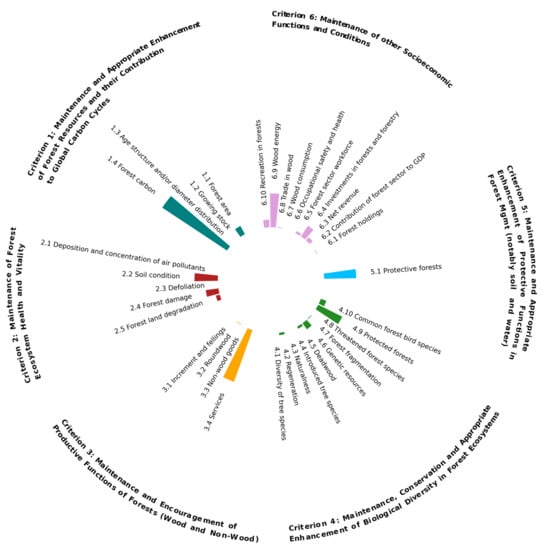
Figure 1.
Number of matches of keywords identified in the New EU Forest Strategy for 2030 related to the 34 pan-European indicators for sustainable forest management (see also Supplementary Materials, Table S1).
Figure 1.
Number of matches of keywords identified in the New EU Forest Strategy for 2030 related to the 34 pan-European indicators for sustainable forest management (see also Supplementary Materials, Table S1).
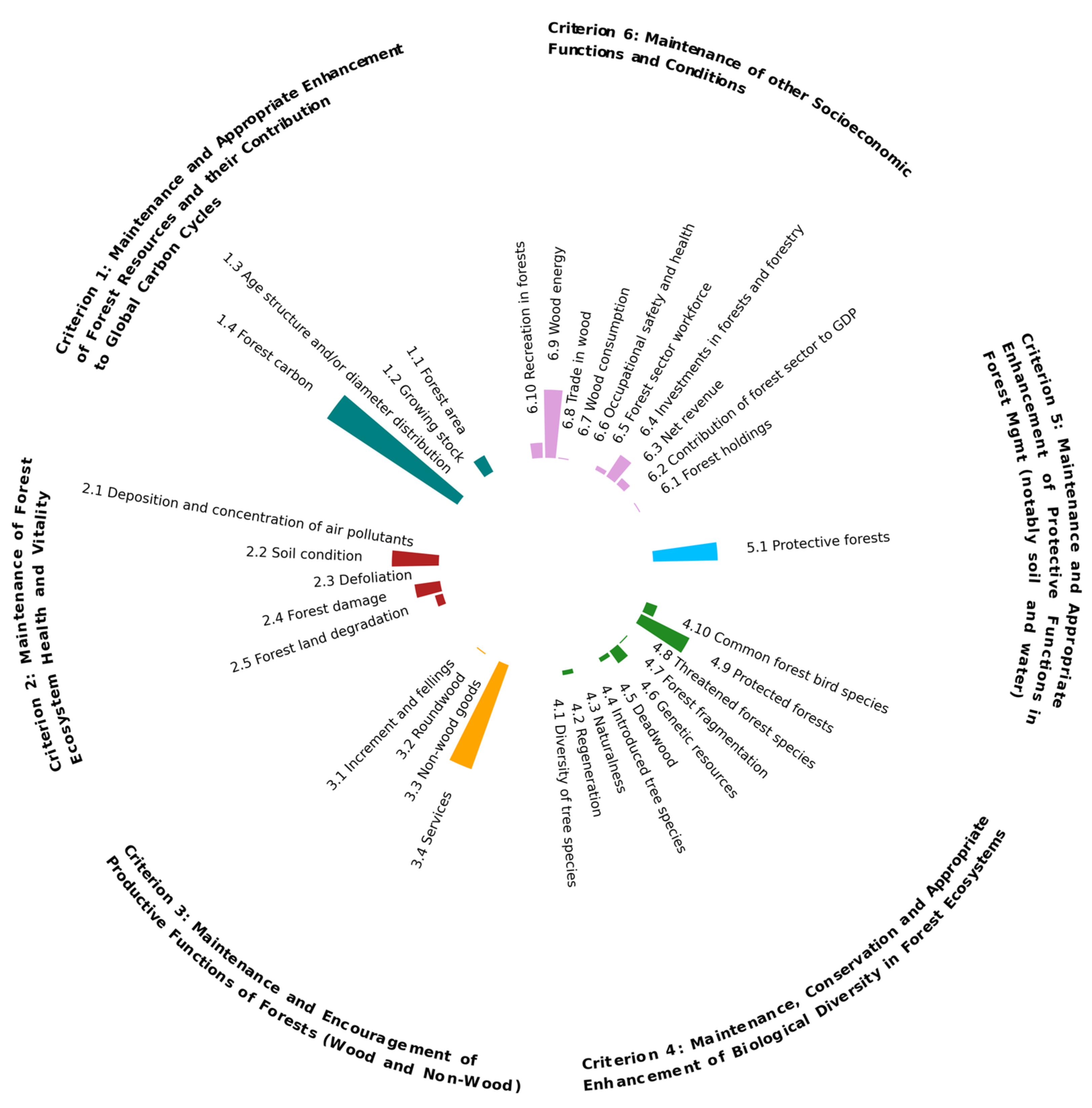
Not mentioned in the Strategy are the keywords associated with indicators 1.2. Growing stock, 1.3 Age structure and/or diameter distribution, 2.1 Deposition and concentration of air pollutants, 2.3 Defoliation, 3.1 Increment and fellings, 3.3 Non-wood goods, 4.1 Diversity of tree species, 4.3 Naturalness, 4.4 Introduced tree species, 4.8 Threatened forest species, 6.2 Contribution of the forest sector to GDP, 6.6 Occupational safety and health, and 6.7 Wood consumption.
However, this simple, quasi-automatic matching of keywords with indicators may be misleading, because of ambiguities arising notably from multiple meanings of certain terms. For example, the keyword “trade”, which is referenced in Indicator 6.8 as “trade in wood” and refers to “imports and exports of wood and products derived from wood”, is also used in the New EU Forest Strategy for 2030 [1], but here in the context of trading carbon certificates [1], and as a text component of “trade-offs” [1], and the Forest Law Enforcement for Governance and Trade (FLEGT) regulation [1]. Similarly, the keyword fragmentation, which refers to forest fragmentation in indicator 4.7, is mentioned by the Strategy in the context of “fragmentation of public research efforts in the EU” [1]. The list of pan-European indicators, which are not mentioned in the New EU Forest Strategy for 2030, should therefore perhaps be extended.
Therefore, only rough patterns can be uncovered using quantitative content analysis. The results shown here should therefore be interpreted with caution. Because of this problem, the quantitative content analysis is supplemented by a qualitative content analysis.
3.3. Which of the Objectives and Commitments of the New EU Forest Strategy for 2030 Could Be Monitored by the Pan-European Indicators for Sustainable Forest Management as a Basis for Monitoring, Assessment and Reporting?
Under Sections 2 to 5 of the New EU Forest Strategy for 2030 using qualitative analysis presented in detail in the Supplementary Materials, we identified not only the objectives and commitments, but also the parameter(s) which would have to be measured or monitored to evaluate progress and the compatibility of these parameters with the existing pan-European indicators. We investigated which indicators would be useful for monitoring progress towards these objectives (Table 2, and Supplementary Materials, Table S2) and commitments (Table 3, and Supplementary Materials, Table S3). Whereas Figure 1 presents only matches between keywords for the Strategy and the indicators—with no analysis of the nature of the link—Figure 2 presents linkages where we consider, after analysing the linkage in question, that the pan-European indicators could contribute to monitoring progress towards the objectives and commitments, either in full or in part. The links have been sorted into three adjustment groups:
- Yes: the indicator(s) mentioned is/are fully appropriate to monitoring progress of the Strategy;
- Partial: the indicator(s) mentioned is/are partially appropriate to monitoring progress of the Strategy; and
- No: none of the indicators are appropriate to monitoring progress towards the Strategy.
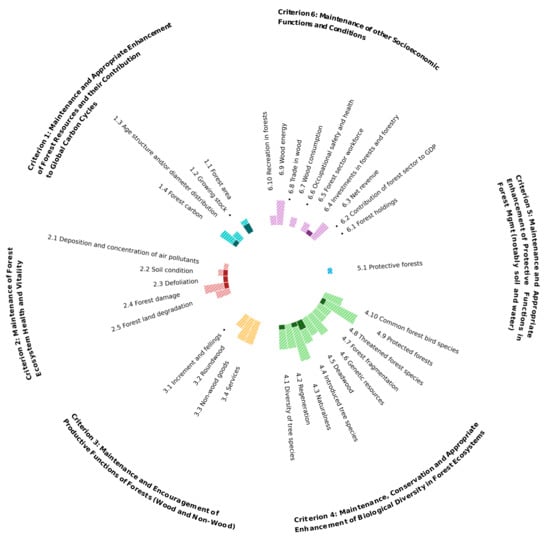
Figure 2.
Number of objectives and commitments identified in the New EU Forest Strategy for 2030 for which each pan-European quantitative indicator could be useful. Solid bars represent indicators that were identified as fully appropriate to monitor progress (“Yes” in the list above). Hatched bars represent the cases in which indicators were identified as partially appropriate to monitor the progress of objectives and commitments (“Partial”). The cases where the whole pan-European indicator set is linked to an objective or commitment have been excluded from the figure for clarity. Indicators for which no links to objectives and commitments were identified are marked by “•”.
Figure 2.
Number of objectives and commitments identified in the New EU Forest Strategy for 2030 for which each pan-European quantitative indicator could be useful. Solid bars represent indicators that were identified as fully appropriate to monitor progress (“Yes” in the list above). Hatched bars represent the cases in which indicators were identified as partially appropriate to monitor the progress of objectives and commitments (“Partial”). The cases where the whole pan-European indicator set is linked to an objective or commitment have been excluded from the figure for clarity. Indicators for which no links to objectives and commitments were identified are marked by “•”.
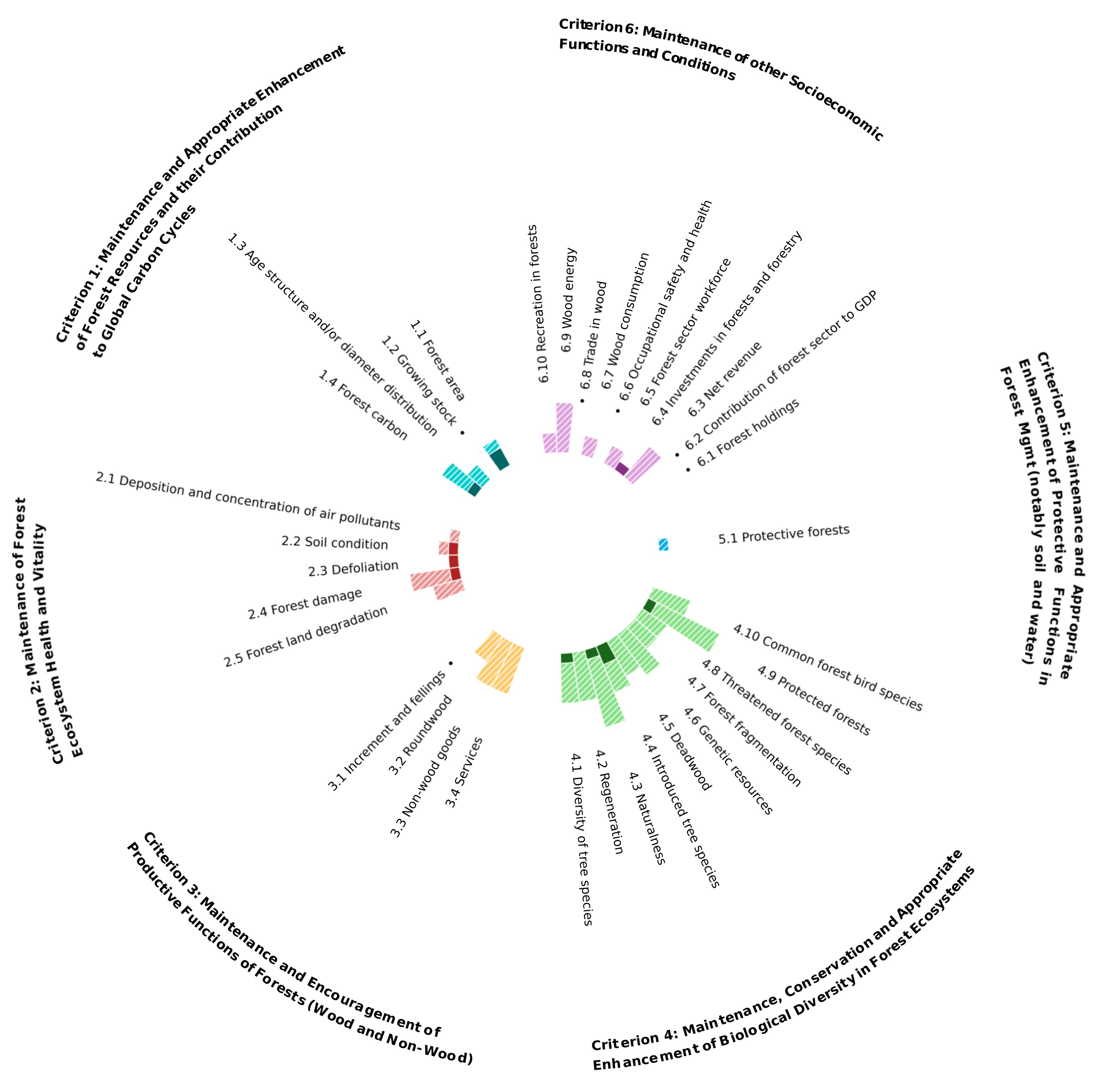
Figure 2 presents those links which we have assigned to the categories “Yes” and “Partial”. The links themselves are listed in Table 2 (objectives, summarised), Supplementary Materials, Table S2 (objectives, detail), Table 3 (commitments, summarised) and Supplementary Materials, Table S3 (commitments, detail).
Table 2.
Objectives of the New EU Forest Strategy for 2030 and corresponding pan-European indicators.
Table 2.
Objectives of the New EU Forest Strategy for 2030 and corresponding pan-European indicators.
| Headings of Substantive Sections and Sub-Section Objectives Referred to in the New EU Forest Strategy for 2030 (Formulations Abbreviated for Easier Understanding. Table S2 in the Supplementary Materials Provides the Full Texts.) | Relevant Pan-European Indicators | Are pan-European Indicators Appropriate to Monitor Progress? |
|---|---|---|
| 2.1. Promoting sustainable forest bioeconomy for long-lived wood products | ||
| Stimulating demand in industries | 6.7 Wood consumption | Partial |
| Practices better adapted to different forest resources | None | No |
| Investments throughout wood processing chain | 6.4 Investments in forests and forestry | Yes |
| Support for industries adaptation to changing forests | Qualitative indicator C6 Policies, institutions and instruments to maintain other socioeconomic functions and conditions Qualitative indicator 4: Financial and economic instruments | Partial |
| Combating misconceptions about wood behaviour in fire | None | No |
| Incentives for wood construction | None | No |
| Full benefits of wood construction in risk premiums and business models | None | No |
| Research and innovation for green design and construction | Qualitative indicator C6 Policies, institutions and instruments to maintain other socioeconomic functions and conditions | Partial |
| Regulations for long lasting wood products: energy/environmental performance, ecolabels, crucial phases in construction | None | No |
| Long-lived wood products in carbon farming and certificates | 6.7 Wood consumption | Partial |
| Roadmap for reducing carbon emissions in buildings | None | No |
| 2.2. Ensuring sustainable use of wood-based resources for bioenergy | ||
| Sustainability criteria for biomass energy | 6.9 Wood energy | Partial |
| Minimise use of whole trees for energy | 6.9 Wood energy | Partial |
| Prohibit sourcing of forest biomass from primary forests and limit it in highly biodiverse forests | 6.9 Wood energy | Partial |
| GHG emission saving criteria for energy installations | None | No |
| Strengthen sustainability safeguards of forest-based bioenergy | 6.9 Wood energy | Partial |
| Ensure forest biomass energy remains within limits of sustainability | 6.9/whole set (for sustainability) | Partial |
| Fair access to raw material for high value-added biobased solutions and sustainable circular economy | None | No |
| No support for energy from sawlogs and veneer logs | 6.9 Wood energy | Partial |
| Limit state aid for electricity-only plants | None | No |
| 2.3. Promoting non-wood forest-based bioeconomy, including ecotourism | ||
| Coordinated programmes on sustainable production of non-wood forest products | 3.3 Non-wood goods Qualitative indicator C3 Policies, institutions and instruments to maintain and encourage the productive functions of forests | Partial |
| Promote collaboration on ecotourism | None | No |
| Sustainable tourism products, especially in protected areas | 4.9 Protected forest areas 6.10 Recreation in forests | Partial |
| 2.4. Developing skills and empowering people for sustainable forest-based bioeconomy | ||
| Develop curricula, knowledge and skills | None | No |
| Promote education on the role of forests | None | No |
| 3.1. Protecting EU’s last remaining primary and old-growth forests | ||
| Protect 30% of EU land area of which 10% strictly | 4.9 Protected forest areas | Yes |
| All primary and old-growth forests strictly protected | 4.3 Naturalness 4.9 Protected forest areas | Partial |
| Common definition for primary and old growth forests and for the strict protection regime | 4.3 Naturalness | Partial |
| Keep natural processes in primary forests, limiting extractive human activities | 4.3 Naturalness 6.10 Recreation in forests | Partial |
| 3.2. Ensuring forest restoration and reinforced sustainable forest management for climate adaptation and forest resilience | ||
| Ensure all forests sufficiently biodiverse | All Forest biological diversity indicators 4.1–4.10 | Partial |
| Essential management practices to support biodiversity and resilience | 4.1 Diversity of tree species 4.2 Regeneration 4.6 Genetic resources | Partial |
| Management practices to ensure long-term environmental and socio-economic viability of forests | 1.1 Forest area 1.3 Age structure and/or diameter distribution 4.5 Deadwood 4.9 Protected forests | Partial |
| Risk management practices to increase forest resilience | 2.4 Forest damage | Partial |
| Caution on management practices which affect biodiversity and cause carbon loss | 1.4 Forest carbon All Forest biological diversity indicators 4.1–4.10 | Partial |
| No removal of stumps and roots | None | No |
| No logging during bird-nesting period | 4.10 Common forest bird species | Partial |
| Protect soil properties and ecosystem services | 2.1 Soil condition 5.1 Protective forests | Partial |
| Prevent climate related damage and increase resilience | 2.4 Forest damage | Partial |
| Restore and reforest better | None | No |
| Secure genetic resources | 4.6 Genetic diversity | Partial |
| Promote forest reproductive material suitable for future climatic conditions | None | No |
| Monitor tree health and encourage preventive action | 2.2 Soil condition 2.3 Defoliation 4.4 Introduced tree species | Yes |
| Pest management strategies | None | No |
| Enhance sustainable forest management framework, notably as regards ecosystem health, biodiversity and climate change. Identify additional indicators as well as thresholds or ranges concerning forest ecosystem conditions | Whole set of indicators | Partial |
| Guidelines on closer-to-nature forestry | None | No |
| 3.3. Re- and afforestation of biodiverse forests | ||
| Increase forest area | 1.1 Forest area | Yes |
| Plant 3 billion additional trees | 4.2 Regeneration | Partial |
| Thereby increase forest cover and, with that, the carbon sink and stock | 1.1 Forest area 1.4 Forest carbon | Yes |
| 3.4. Financial incentives for forest owners and managers for improving the quantity and quality of EU forests | ||
| In public forests strengthen forest protection and restoration efforts | 4.9 Protected forests 2.5 Forest land degradation | Partial |
| Incentives to provide ecosystem services and increase resilience | 3.2 Roundwood, 3.3 Non-wood forest products 3.4 Services 6.3 Net revenue of forest enterprises | Partial |
| Payment schemes for ecosystem services | 3.2 Roundwood, 3.3 Non-wood forest products, 3.4 Services 6.3 Net revenue of forest enterprise | Partial |
| Accelerate roll-out of carbon farming practices | None | No |
| 4. Strategic forest monitoring, reporting and data collection | ||
| Forest management plans (FMPs) for all public forests and more private forests | Qualitative indicator C3 (Forest management plans are not a specified indicator but they are reported on in the context of the global Forest Resource Assessment, through Forest Europe and its partners.) | Partial |
| FMPs to include risk assessment and management and better integrate biodiversity-related data | None | No |
| Possibly set further criteria to ensure FMPs meet climate, biodiversity, bioeconomy and social and rural development objectives of the Strategy | None | No |
| 5. A strong research and innovation agenda to improve our knowledge on forests | ||
| Promote a science-based contribution of EU forests to the European Green Deal ambitions | None | No |
| Reinforce knowledge on climate change impacts, to provide guidance for climate change mitigation and adaptation in line with biodiversity objectives | None | No |
| Holistic approach on new and emerging pests and diseases | 2.4 Forest damage | Partial |
| Research and innovation mission on soil health and food | 2.2 Soil condition | Partial |
| Improved understanding of primary and old-growth forests and of their biodiversity and climate functions | None | No |
| More value on sustainable and multifunctional forests and to maximise their benefits for society | Qualitative indicator C6 Policies, institutions and instruments to maintain other socioeconomic functions and conditions (Qualitative indicator C6.) Qualitative indicator 4 Financial and economic instruments | Partial |
| Research and innovation on agroforestry systems | None | No |
| Diversify income of forest owners and managers, and increase sustainability and circularity | 3.2 Roundwood 3.3 Non-wood forest products 6.3 Net revenue of forest enterprises | Partial |
Table 3.
Main commitments by the European Commission in the New EU Forest Strategy for 2030 and corresponding indicators from the pan-European indicator set.
Table 3.
Main commitments by the European Commission in the New EU Forest Strategy for 2030 and corresponding indicators from the pan-European indicator set.
| Headings of Substantive Sections and Sub- Sections and Related Commitments by the European Commission (Those, Which Are Included in the Text Boxes in the Strategy, Abbreviated for Easier Comprehension.) | Relevant Pan-European Indicators | Are the Pan-European Indicators Appropriate to Monitor Progress? |
|---|---|---|
| 2. Supporting the socio-economic functions of forests for thriving rural areas and boosting forest-based bio-economy within sustainability boundaries | ||
| Establish a methodology to quantify the climate benefits of wood construction products and other building materials | 1.4 Forest carbon | Partial |
| Provide new means to share information on good practices on best design and implementation of forest-relevant interventions. | None | No |
| Promote the use of the Natura 2000 logo for non-wood forest-based products and services. | 3.3 Non-wood goods 3.4 Services 4.9 Protected forests | Partial |
| Taxonomy Climate Delegate Act technical screening criteria for forestry and bioenergy to take better into account biodiversity friendly practices that are under development such as close to nature forestry. | None | No |
| New alliance between the professionals of tourism and foresters | 6.10 Recreation in forests | Partial |
| Toolkit to establish programs and advice to foresters and adapt education and training to the challenges and needs of today’s forest needs and realities, and develop employment opportunities | 6.5 Forest sector workforce | Partial |
| Skills partnership to work together to increase the number of upskilling and reskilling opportunities in forestry. | 6.5 Forest sector workforce | Partial |
| 3. Protecting, restoring, and enlarging EU’s forests to combat climate change, reverse biodiversity loss and ensure resilient and multifunctional forest ecosystems | ||
| Legally binding instrument for ecosystem restoration, including forest ecosystems. | 2.5 Forest degradation | Partial |
| Guidelines on the definition of primary and old-growth forests, including their definition, mapping, monitoring and strict protection, | 4.3 Naturalness | Partial |
| Identify the additional indicators as well as thresholds or ranges for sustainable forest management, and assess how these could best be used | Whole set | Yes |
| Guidelines on biodiversity friendly afforestation and reforestation | 4.1 Diversity of tree species 4.3 Naturalness 4.4 Introduced tree species | Yes |
| Definition and guidelines for closer-to-nature-forestry practices, and voluntary closer-to-nature forest management certification scheme, | Whole set | Partial |
| Guidance and knowledge exchanges on good practices on climate adaptation and resilience | 1.4 Forest carbon 2.4 Forest damage | Partial |
| Revise legislation on forest reproductive material with measures to promote the production and marketing of forest reproductive material suitable for future climatic conditions | None | No |
| Forest-related interventions in the future CAP, in particular the set-up of ecosystem services payment schemes and roll-out of carbon farming practices | 3.4 Services | Partial |
| Advice and technical guidance on the development of ecosystem service payment scheme | 3.4 Services6.3 Net revenue | Partial |
| Forest-related remuneration schemes in an action plan for both carbon farming and carbon removal certification | 1.4 Forest carbon | Partial |
| Study regarding the uptake of public funds by foresters | None | No |
| Identify and address possible hurdles posed by current EU legislation and the State Aid Guidelines to grant adequate public support to services beneficial for the public interest | None | No |
| 4. Strategic forest monitoring, reporting and data collection | ||
| Proposal on EU Forest Observation, Reporting and Data Collection to ensure a coordinated EU forest monitoring, data collection and reporting system… | Whole set | Partial |
| Strategic Plans for forests and the forest-based sector, in Member States | National Forest programmes or equivalent (Qualitative indicator 1) | Partial |
| Strengthen the existing monitoring of climate effects and other natural or human-induced disturbances on forests | 2.4 Forest damage | Yes |
| Prepare and publish regular reports and lay summaries on the forests in the EU. | Whole set | Yes (Forest Europe already does this, notably by its studies on the state of Europe’s forests) |
| European forest science partnership, with a view to support the development of new indicators based on remote sensing and the latest research results | Whole set | Yes (New indicators » should be integrated in existing frameworks, notably that of Forest Europe) |
| 5. A strong research and innovation agenda to improve our knowledge on forests | ||
| “Planning our Future Forests” research and innovation agenda to identifying research gaps and future priorities | None | No |
| Evidence-based design and implementation of forest restoration strategies | 2.5 Forest land degradation | Partial |
| Research and Innovation partnership on forestry, including flagships for testing and demonstrating solutions on selected key strategic domains | None | No |
| Complementary actions in support of Disaster Risk Reduction policies (including forest fires) | None | No |
| Citizens’ science Programme for forest biodiversity | All indicators under Criterion 4 | Partial |
3.3.1. Pan-European Indicators Which Can Contribute to Monitoring Progress of Identified Objectives
We identified 63 different objectives (for commitments, see the next section and Table 3) in Sections 2 to 5 of the New EU Forest Strategy for 2030 (Table 2). For five different objectives, we identified links to four different indicators (1.1 Forest area, 2.2 Soil condition, 4.9 Protected forest areas, and 6.4 Investment in forest and forestry) that are appropriate to monitoring progress of the objective. For 34 different objectives we identified links to 19 different quantitative indicators (1.1 Forest area, 1.4 Forest carbon, 2.1 Deposition and concentration of air pollutants, 2.2 Soil condition, 2.4 Forest damage, 3.2 Roundwood, 3.3 Non-wood goods, all forest biological diversity indicators 4.1–4.10, 6.7 Wood construction, and 6.9 Wood energy) and qualitative indicators under C.3 and C.6 that are appropriate in part for monitoring the progress of the objective. Of the linked indicators that are suitable in part to monitor the progress, 6.9 Wood energy, 4.3 Naturalness, 2.4 Forest damage, 3.2 Roundwood, and 4.9 Protected forest were the most identified. For 24 objectives, no relevant links to indicators could be identified. For Section 6 and Section 7 of the New EU Forest Strategy for 2030, no relevant objectives were identified, and therefore no links to indicators could be identified.
3.3.2. Relevant Pan-European Indicators Which Can Contribute to Monitoring Progress of Identified Commitments
We identified 29 different commitments in Sections 2 to 5 of the New EU Forest Strategy for 2030. These are additional to the “objectives” identified above, and overlap with them to a certain extent. However, in the Strategy, they are clearly identified as commitments by the European Commission to specific actions and presented in separate text boxes (Table 3). For two different commitments, we identified two different linked indicators (2.4 Forest damage and 4.1 Diversity of tree species) that are appropriate for monitoring progress. In addition, we identified three commitments to which the whole pan-European indicator set could be linked. For 16 different commitments we linked 16 different quantitative indicators (1.4 Forest carbon, 2.5 Forest degradation, 3.3 Non-wood goods, 3.4 Services, all forest biological diversity indicators 4.1–4.10, 6.5 Forest sector workforce and 6.10 Recreation in forests) and the qualitative indicator C1 National Forest programmes or equivalent that are partial appropriate to monitoring progress of the objective. Of the linked indicators that are suitable in part to monitor the progress, 1.4 Forest carbon was the most identified. For eight commitments, no relevant indicators could be linked.
3.4. Which of the Pan-European Indicators for Sustainable Forest Management Have no Corresponding Elements in the New EU Forest Strategy for 2030?
Our analyses revealed that several indicators are not linked to the New EU Forest Strategy for 2030, (see Table 2 and Table 3, Figure 1). However, these indicators may still be of interest, even though it has not been possible to establish direct links between them and the objectives and commitments in the Strategy. The elements identified could be addressed indirectly; for instance, growing stock as a measure of carbon storage.
Alternatively, cases where no link was found for the indicators might arise for two reasons: (1) they are no longer a source of concern, or, more likely, (2) they are outside the scope of the EU Forest Strategy, which, as mentioned before, is not a comprehensive policy for sustainable forest management. This concerns especially indicators 2.1 Deposition and concentration of air pollutants and 2.3 Defoliation, and some indicators under Criterion 6, such as 6.6 Occupational safety and health, which is addressed under a different (i.e., non-forest) part of the EU regulatory system.
4. Discussion
We carried out a detailed line-by-line comparison of the pan European set of indicators for sustainable forest management, first formulated in the 1990s, but revised twice since then [12], with the New EU Forest Strategy for 2030, presented by the European Commission in 2021 [1]. The former represents the consensus view of what constitutes sustainable forest management [14,15,33]. The Strategy is a formal, high-level international statement of policy objectives and commitments, even though it does not represent a consensus view, and does not claim to address all dimensions of sustainable forest management. In particular, the European Council, in its response to the Strategy, “regretted” that the Strategy “was not developed together with the Member States and stakeholders” [17]. Thus, the Strategy represents a recent high-level contribution to an ongoing discussion of sustainable forest management, which has not yet reached a consensus position. We considered, however, in view of the significance of the discussion, that it would not be appropriate to await the emergence of a consensus view, and then carry out a post factum analysis. The incomplete nature of the ongoing policy discussion of what constitutes sustainable forest management should be borne in mind when evaluating the results of our analysis.
Despite the differences between the two documents, we consider that the comparison we have carried out does make it possible to identify a few significant differences between the comprehensive vision of sustainable forest management formulated in the indicator set and latest high level EU policy statement on forests, and to draw conclusions about future needs as regards the concept of sustainable forest management, and how to monitor it.
Four issues receive much more attention in the Strategy than in the indicator set. These are:
- Climate change mitigation (carbon sequestration and storage in forest and harvested wood products, substitution of fossil-intensive materials) and adaptation, including resilience to extreme events related to climate change. Of the 63 objectives and commitments identified (Table 2), 44 are justified, directly or indirectly, as a contribution to climate change mitigation or adaptation, notably in Subsections 2.1, 2.2, 3.2–3.4 of the New EU Forest Strategy for 2030. In the indicator set only one indicator out of 34 addresses carbon stocks and flows (1.4 Forest carbon). This development is not surprising as understanding of the issues, especially of the physical science basis of climate change [34] was much weaker in the 1990s than it is now.
- The downstream uses of wood, especially long-lived wood products, under the heading of “Bioeconomy”, mostly seen in the Strategy as a contribution to climate change mitigation, but also as a source of green jobs and revenue. Twelve objectives and commitments, notably all of Section 2.1 of the New EU Forest Strategy for 2030, address this issue, while the pan-European set only contains references to “wood consumption” (6.7) and “net revenue” (6.3), seen only as forestry enterprises, not including downstream processing. The policy interest in long-lived wood products is due essentially to the growing realisation of the potential contribution to climate change mitigation of substituting wood products for carbon-intensive materials, especially in construction.
- Biodiversity concerns were already prominent in the 1990s, which is shown by the fact that 10 indicators were formulated for Criterion 4 on forest biological diversity. However, ambitions have risen, also as a consequence of the Aichi Targets [35], with regard to the share of protected land and to biodiversity on all types of forest (i.e., not only those which are protected for biodiversity conservation) and the focus on protecting “all Europe’s remaining primary and old growth forests”.
- Energy from wood, whose importance was beginning to be recognised in the 1990s (6.9 Wood energy). At present, the focus of the New EU Forest Strategy for 2030, notably in Section 2.2, is on ensuring that the wood used for energy comes only from sustainable sources
The increased attention paid to climate change, the bioeconomy, biodiversity, and bioenergy reflects the intense policy debates which have taken place in recent years, and the realisation of the potential both for positive and negative developments in these areas [36,37,38].
As regards monitoring of progress towards the Strategy’s objectives, in the context of sustainable forest management, 5 (8%) of the 63 objectives and commitments could be fully monitored by the existing pan-European indicators, and 34 (54%) partially (see Table 2 and Table 3). It should be said, however, that some of the “partial” linkages are quite weak, and considerable effort would be required before they could make a significant “fit for purpose” contribution to monitoring progress towards the objectives and commitments. Thus, about two thirds of the objectives and commitments could be monitored at least in part by existing indicators, whereas new indicators or approaches would have to be developed for the remaining third.
Conversely, it is of interest to examine which of the topics considered, in the Forest Europe context, essential for monitoring sustainable forest management do not appear among the objectives and commitments of the New EU Forest Strategy for 2030. The content analysis presented in Figure 2 identifies six pan-European indicators for which we did not identify links between the indicators and the Strategy: Growing stock (1.2), Increment and fellings (3.1), Forest holdings (6.1), Contribution of forest sector to GDP (6.2), Occupational safety and health (6.6) and Trade in wood (6.8). These indicators may be still of interest, even though it has not been possible to establish direct links between them and the objectives and commitments in the Strategy. The elements identified could be addressed indirectly; for instance, “increment and fellings” can be used to monitor carbon stock changes. Alternatively, the issues might be considered no longer a source of concern, and therefore not deserving high level policy interest, or they may simply be outside the scope of the EU Strategy.
The Strategy draws attention to a supposed shortcoming in the indicator set when it states that “the sustainable forest management framework will have to be enhanced, notably as regards criteria relating to ecosystem health, biodiversity and climate change” [1]. This raises the question of whether, in the light of changing circumstances and priorities, as demonstrated above, the “sustainable forest management framework”, which has so far been provided, for Europe, by the pan-European indicator set, needs adjustment to meet the needs of policy makers, forest owners and managers, researchers and other stakeholders in the 2020s. In addition, if this is the case, should the pan-European set of indicators be modified, or should another approach be developed?
The Strategy also raises, but does not answer, questions about the nature of a desirable “framework” for sustainable forest management, when it refers to “enhancing” the framework “so that it can become a more detailed screening tool to determine and compare different management approaches, their impact and the overall state of EU forests”. “Therefore, building on the Forest Europe sustainable forest management criteria, the Commission, together with the Member States and in close cooperation with different forest stakeholders, will identify additional indicators as well as thresholds or ranges for sustainable forest management concerning forest ecosystem conditions, such as health, biodiversity and climate objectives” [1].
This proposal appears to combine several different approaches to the sustainable forest management framework, which might be summarised as:
- Identifying and monitoring trends for the main elements of sustainable forest management, without any assessment of sustainability;
- Using “thresholds and ranges” to determine whether forest management practice, at national or local level, is in fact sustainable;
- “Screening” forest management practices to identify which are sustainable and which not, in the varying circumstances of European forests.
In this context, it is worth noting that the approach adopted by Forest Europe has been confined to monitoring trends. The pan-European set identifies indicators which can be used—as a set—to monitor sustainable forest management (bullet 1), but contains no process whereby it can be determined whether any country’s forest management is sustainable or not (bullet 2). Successive studies of the State of Europe’s forests [20,21,22,39], as well as the SEMAFOR pilot project [40], have attempted to address this challenge, with the active participation of national correspondents, but, in the absence of agreed thresholds and methodologies, results so far have been limited [41,42]. In the past, Forest Europe has addressed, to a limited extent, and separately from the pan-European indicator set, the concerns of bullet 3: the Pan-European Operational Level Guidelines, issued in 1998 [43], do provide some very broad guidance, without, however, listing specific management practices. Since then, Forest Europe has also prepared guidelines on a few topics (afforestation and reforestation, green jobs, assessment of protected and protective forest), but, in general, recommending or forbidding specific practices has been considered, in the Forest Europe context, as a matter either for national regulation or for voluntary market led certification. Forest Europe, in its work programme, also foresees a report on revisiting the role of sustainable forest management and its tools in the context of current challenges and other forest-related concepts [44].
In contrast, the Strategy does not systematically monitor trends in the elements of sustainable forest management (bullet 1)—a function carried out by the State of Europe’s Forests 2020 [39], published at about the same time as the Strategy. The Strategy does, however, set in motion a process to address bullets 2 and 3. As regards bullet 2, it proposes a process to agree on “thresholds or ranges for sustainable forest management concerning forest ecosystem conditions”. A major difference between the Strategy and the pan-European indicator set concerns bullet 3: the Strategy, especially in Section 3.2, identifies several “forest management practices” which it considers “essential” to “support biodiversity and resilience” and others which are “to be approached with caution”. The former group includes, among other things, maintenance of mixed species forests, uneven-aged and continuous cover forestry, deadwood, regulation of wildlife densities, integrated fire management practices etc. The latter group includes clear-cutting (which should be used “only in well-justified cases”), removing stumps and roots (which is “to be avoided”), and logging during the bird-nesting period (in conformity with the Birds Directive [45]). This represents a fundamentally different approach to achieving sustainable forest management from the pan-European indicator set, which is natural in view of the fundamental differences in the nature of the two documents. The latter aims to monitor the outcomes, rather than the methods by which these outcomes are achieved, especially in view of the huge diversity of forest management situations and ownerships in Europe.
A further difference in the approach of the pan-European indicator set and the Strategy concerns the relative priority of the different dimensions of sustainable forest management. In the pan-European set, all criteria and indicators are considered equal—or at least no priority is assigned within the set, either between criteria or between indicators. Local circumstances, whether biophysical, social, or economic, as well as national political and societal preferences will of course affect the relative importance of certain aspects: for instance, Criterion 5 on the protective functions of forests will have more importance in a mountainous country than in a flat country. This recognises the fact that some trade-offs between the components of sustainable forest management are inevitable, and circumstances and challenges change, so that no permanent or universal priority is assigned to any one dimension of sustainable forest management at the expense of another. The Strategy, as a policy instrument, itself neither comprehensive, nor a “framework”, does not explicitly address this question. However, it does include some phrases which seem to imply a hierarchy between the dimensions of sustainable forest management: “all forests should be increasingly managed so that they are sufficiently biodiverse”, “certain management practices that support biodiversity and resilience, are essential in this context”, “thresholds or ranges for sustainable forest management concerning forest ecosystem conditions, such as health, biodiversity and climate objectives” [1]. All these statements seem to imply that a minimum level of biodiversity is considered necessary for all forests, without taking trade-offs into account.
However, our analysis does not allow a statement as to whether or to what extent the differences between the two documents are due to a societal change in attitudes to forests, or to the different context and nature of the two documents.
5. Conclusions
The concept of sustainable management of trees and forests has been developing since at least the first century AD, when Columella, in De arboribus [46], offered advice on cultivating vines, olives and fruit trees. These concepts have been systematised and codified since the eighteenth century, generally developing in accordance with societal needs and changing economic, political, and social circumstances. We compared two key documents, the pan-European set of criteria and indicators of sustainable forest management [14], and the New EU Forest Strategy for 2030 [1], in order to determine how well the pan-European indicators might serve as a measuring and monitoring tool for the New EU Strategy 2030.
The underlying concept of sustainable forest management may have changed over time, notably by changing the scope to include major emerging issues, and giving lower priority to others.
In the 1990s, the impact of air pollution on forests was of particular concern, but meanwhile, climate change and the loss of biodiversity have come to dominate discussions. The threat to forests from changing temperature and climate regimes and the accumulation of extreme events increasingly play a role, alongside adaptation and mitigation with respect to future climate change. Furthermore, forests’ important role as a nature-based solution for achieving climate neutrality is recognised. It is now acknowledged that through their sink function for atmospheric CO2 and the substitution effects of harvested wood products, forests can make a significant contribution to climate neutrality. They are therefore an indispensable part of the bioeconomy and the circular economy in the scope of climate change mitigation. Moreover, as a near-natural landscape element, they are increasingly at the centre of biodiversity conservation. These developments are reflected in the concerns of the Strategy, which does not however propose a structured concept of sustainable forest management as a whole.
Our research has demonstrated that the forest policy concerns reflected in the Strategy, which are not by any means at present the subject of a general consensus, address several issues which are not fully covered in the pan-European indicator set, which was intended to monitor changes in sustainable forest management. Some of the pan-European indicators are only weakly linked to the policy issues addressed in the Strategy. Furthermore, the measures in the Strategy intended to improve sustainable forest management seem to be more directive than the pan-European set of indicators. The former identifies certain forest management practices as desirable or to be avoided, while the latter aims for comprehensive monitoring of all aspects of sustainable forest management. The Strategy is also strongly determined by developments and legally binding EU policy instruments for other sectors, notably biodiversity, climate change, renewable energy, bioeconomy, and rural development. Therefore, to be fully informative to the new EU Forest Strategy, the pan-European indicators and their ongoing implementation would have to undergo fundamental changes.
The New EU Forest Strategy for 2030 is not itself a conceptual framework for sustainable forest management but it puts into motion a process to develop a revised, more ambitious framework than the pan-European set of indicators for sustainable forest management, including “thresholds and ranges” to determine the limits of sustainability. To secure a generally accepted understanding of sustainable forest management, a participatory process involving all stakeholders concerned seems indispensable.
Supplementary Materials
The tables of our detailed analysis are all available in the Supplementary Material which are available online at https://www.mdpi.com/article/10.3390/f13020245/s1. Table S1: Updated pan-European Indicators for Sustainable Forest Management as proposed by the FOREST EUROPE Advisory Group on the updating of the pan-European Indicators for Sustainable Forest Management [14]. In this list we underlined the key words applied in the Atlas.ti search. Table S2: Identified objectives and commitments of the New EU Forest Strategy for 2030 and the relevant pan-European indicators which can contribute to monitoring progress. Table S3: Commitments of the New EU Forest Strategy 2030 compared to the pan-European indicator framework.
Author Contributions
Conceptualisation: M.L., M.K., K.T.K., S.L., K.P. and A.T.; Methodology: M.L.; Data collection: M.L.; Data analysis; M.L.; Writing—original draft: M.L., M.K., K.T.K., S.L., K.P. and A.T.; Writing—review & editing; M.L., M.K., K.T.K., S.L., K.P. and A.T. All authors have read and agreed to the published version of the manuscript.
Funding
This research received no external funding.
Data Availability Statement
Not applicable.
Acknowledgments
We thank the two anonymous reviewers for their valuable comments, which helped to significantly improve the quality of our paper.
Conflicts of Interest
The authors declare that they have no known competing financial interests or personal relationships that could have appeared to influence the work reported in this paper. This research did not receive any specific grant from funding agencies in the public, commercial, or not-for-profit sectors. The Open Access and Article Processing Charge (APC) was kindly paid by the Natural Resources Institute Finland (Luke).
Abbreviations
| EU | European Union |
| EC | European Commission |
| FAO | Food and Agriculture Organization of the United Nations |
| FE | Forest Europe |
| FLEGT | Forest Law Enforcement, Governance and Trade (action plan) |
| GDP | Gross Domestic Product |
| JWEE | Joint Wood Energy Enquiry |
| MCPFE | Ministerial Conference on the Protection of Forests in Europe |
| SEMAFOR | System for the Evaluation of the Management of Forests |
| SFM | Sustainable Forest Management |
| SoEF | State of Europe’s Forests (report) |
| UNECE | United Nations Economic Commission for Europe |
References
- European Commission. New EU Forest Strategy for 2030. Communication from the Commission to the European Parliament, the Council, the European Economic and Social Committee and the Committee of the Regions, COM(2021) 572 Final; European Commission: Brussels, Belgium, 2021. [Google Scholar]
- European Commission. The European Green Deal. COM(2019) 640 Final; European Commission: Brussels, Belgium, 2019. [Google Scholar]
- Carlowitz, H.C.V. Sylvicultura Oeconomica oder Haußwirthliche Nachricht und naturgemäße Anweisung zur Wilden Baum-Zucht; J.F. Braun: Leipzig, Germany, 1713. [Google Scholar]
- Beckmann, J.G. Anweisung zu einer Pfleglichen Forstwirtschaft—Zum Allgemeinen Besten und Als Ein Zweyter Theil Seiner Versuche von der Holzsaat; Stäßelische Buchhandlung: Chemnitz, Germany, 1759. [Google Scholar]
- Hartig, G.L. Anweisung zur Taxation der Forste oder zur Bestimmung des Holzertrags der Wälder; Heyer: Gießen, Germany, 1795. [Google Scholar]
- Heyer, C. Die Waldertrags-Regelung; B.C. Ferber: Gießen, Germany, 1841. [Google Scholar]
- Dieterich, V. Forstliche Betriebswirschaftslehre, Bd. 3, Erfolgsrechnung—Zielsetzung; Paul Parey: Berlin/Hamburg, Germany, 1941. [Google Scholar]
- Möller, A. Der Dauerwaldgedanke, sein Sinn und seine Bedeutung; Springer: Berlin, Germany, 1922. [Google Scholar]
- Krutzsch, A.K.H.; Weck, J. Bärenthoren 1934. Der naturgemäße Wirtschaftswald; J. Neumann: Bremen, Germany, 1935. [Google Scholar]
- Glesinger, E. Nazis in the Woodpile: Hitler’s plot for Essential Raw Materials; Wordbound Media: Greenfield, MA, USA, 1947. [Google Scholar]
- MCPFE. Proceedings of the Ministerial Conference on the Protection of Forests in Europe, Helsinki, Finland, 16–17 June 1993; Documents; MCPFE Liaison Unit Helsinki: Helsinki, Finland, 1993. [Google Scholar]
- MCPFE. Pan-European Criteria and Indicators for Sustainable Forest Management, Annex 1 of the Resolution L2; MCPFE Liaison Unit: Lisbon, Portugal, 1998. [Google Scholar]
- MCPFE. State of Europe’s Forests 2003. The MCPFE Report on Sustainable Forest Management in Europe; MCPFE Liaison Unit Vienna: Vienna, Austria, 2003; ISBN 3-902073-09-8. [Google Scholar]
- Forest Europe. Updated Pan-European Indicators for Sustainable Forest Management. Annex 1 to Madrid Ministerial Declaration; Forest Europe Liaison Unit: Madrid, Spain, 2015. [Google Scholar]
- Linser, S.; Wolfslehner, B.; Puelzl, H. The genesis of the pan-European criteria and indicators and their further development towards emerging policy needs. In Proceedings of the FAO XIV World Forestry Congress, Durban, South Africa, 7–11 September 2015. [Google Scholar]
- Linser, S.; Wolfslehner, B.; Asmar, F.; Bridge, S.R.J.; Gritten, D.; Guadalupe, V.; Jafari, M.; Johnson, S.; Laclau, P.; Robertson, G. 25 Years of Criteria and Indicators for Sustainable Forest Management: Why Some Intergovernmental C&I Processes Flourished While Others Faded. Forests 2018, 9, 515. [Google Scholar] [CrossRef] [Green Version]
- Council of the European Union. Council Conclusions on the New EU Forest Strategy for 2030; ST-13537-2021-INIT; General Secretariat of the Council: Brussels, Belgium, 2021; Available online: https://data.consilium.europa.eu/doc/document/ST-13537-2021-INIT/en/pdf (accessed on 6 December 2021).
- Linser, S.; O’Hara, P. Guidelines for the Development of a Criteria and Indicator Set for Sustainable Forest Management; ECE/TIM/DP/73; United Nations: Geneva, Switzerland, 2019; ISBN 978-92-1-117190-7. [Google Scholar] [CrossRef]
- MCPFE. Resolution H1: General Guidelines for the sustainable management of forests in Europe. In Proceedings of the Second Ministerial Conference on the Protection of Forests in Europe, Helsinki, Finland, 16–17 June 1339; MCPFE Liaison Unit Helsinki: Helsinki, Finland. [Google Scholar]
- Forest Europe. State of Europe’s Forests 2007. In The MCPFE Report on Sustainable Forest Management in Europe; Forest Europe Liaison Unit: Warsaw, Poland, 2007; ISBN 978-83-922396-8-0. [Google Scholar]
- Forest Europe. In State of Europe’s Forests 2015; Forest Europe Liaison Unit: Madrid, Spain.
- Forest Europe; UNECE; FAO. State of Europe’s Forests 2011; Status and Trends in Sustainable Forest Management in Europe. Forest; Europe Liaison Unit: Oslo, Norway, 2011; ISBN 978-82-92980-05-7. [Google Scholar]
- Aggestam, F.; Giurca, A. The art of the “green” deal: Policy pathways for the EU Forest Strategy. For. Policy Econ. 2021, 128, 102456. [Google Scholar] [CrossRef]
- Wolfslehner, B.; Pülzl, H.; Kleinschmit, D.; Aggestam, F.; Winkel, G.; Candel, J.; Eckerberg, K.; Feindt, P.; McDermott, C.; Secco, L.; et al. European Forest Governance Post-2020. In From Science to Policy 10; European Forest Institute: Joensuu, Finland, 2020. [Google Scholar] [CrossRef]
- Hetemäki, L. The Green Deal and the EU Forest Sector. In Proceedings of the Background Document for the Dinner Discussion on the EU forest Related Polices at the Embassy of Sweden, Helsinki, Finland, 12 February 2020; European Forest Institute: Helsinki, Finland, 2020. [Google Scholar]
- Puelzl, H.; Wydra, D.; Hogl, K. Piecemeal Integration: Explaining and Understanding 60 Years of European Union Forest Policy-Making. Forests 2018, 9, 719. [Google Scholar] [CrossRef] [Green Version]
- Bauer, M.W. Classical Content Analysis. In Qualitative Researching with Text, Image and Sound. A practical Handbook for Social Research, 1st ed.; Bauer, M.W., Gaskell, G., Eds.; SAGE Publications: London, UK, 2020; ISBN 9780761964803. [Google Scholar]
- Perakyla, A.; Ruusuvuori, J. Analyzing Talk and Text. In The SAGE Handbook of Qualitative Research—Fifth Edition; Denzin, N.K., Lincoln, Y.S., Eds.; SAGE Publications: London, UK, 2017; ISBN 9781483349800. [Google Scholar]
- Weber, R.P. Basic Content Analysis, 2nd ed.; SAGE Publications: Newbury Park, CA, USA, 1990; ISBN 9780803938632. [Google Scholar]
- Krippendorff, K. Content Analysis: An Introduction to Its Methodology, 2nd ed.; Sage: Thousand Oaks, CA, USA, 2004; ISBN 0761915451. [Google Scholar]
- Grimmer, J.; Stewart, B.M. Text as data: The promise and pitfalls of automatic content analysis methods for political texts. Political Anal. 2013, 21, 267–297. [Google Scholar] [CrossRef]
- European Commission. EU Biodiversity Strategy for 2030. Bringing Nature Back into Our Lives. Communication from the Commission to the European Parliament, the Council, the European Economic and Social Committee and the Committee of the Regions, COM(2020) 380 Final; European Commission: Brussels, Belgium, 2020. [Google Scholar]
- MCPFE. Improved Pan-European Indicators for Sustainable Forest Management as Adopted by the MCPFE Expert Level Meeting 7–8 October 2002; Liaison Unit Vienna: Vienna, Austria, 2003. [Google Scholar]
- IPCC. Climate Change 2021: The Physical Science Basis. Contribution of Working Group I to the Sixth Assessment Report of the Intergovernmental Panel on Climate Change; Masson-Delmotte, V., Zhai, P., Pirani, A., Connors, S.L., Peéan, C., Berger, S., Caud, N., Chen, Y., Goldfarb, L., Gomis, M.I., et al., Eds.; Cambridge University Press: Cambridge, UK, 2021. [Google Scholar]
- Convention on Biological Diversity. Strategic Plan for Biodiversity 2011–2020, Including Aichi Biodiversity Targets. Available online: https://www.cbd.int/sp (accessed on 7 December 2021).
- Aggestam, F.; Pülzl, H. Coordinating the Uncoordinated: The EU Forest Strategy. Forests 2018, 9, 125. [Google Scholar] [CrossRef] [Green Version]
- Elomina, J.; Puelzl, H. How are forests framed? An analysis of EU forest policy. For. Policy Econ. 2021, 127, 102448. [Google Scholar] [CrossRef]
- Köhl, M.; Linser, S.; Prins, K.; Talarczyk, A. The EU climate package “Fit for 55”—A double-edged sword for Europeans and their forests and timber industry. For. Policy Econ. 2021, 132, 102596. [Google Scholar] [CrossRef]
- Forest Europe. State of Europe’s Forests 2020; Forest Europe Liaison Unit: Bratislava, Slovakia, 2020. [Google Scholar]
- UNECE. Pilot Project on the System for the Evaluation of the Management of Forest (SEMAFOR). Geneva Timber and Forest Discussion Paper 66; United Nation: Geneva, Switzerland, 2017. [Google Scholar]
- Lier, M.; Köhl, M.; Korhonen, K.; Linser, S.; Prins, K. Forest relevant targets in EU policy instruments—Can progress be measured by the pan-European criteria and indicators for sustainable forest management? For. Policy Econ. 2021, 128, 102481. [Google Scholar] [CrossRef]
- Linser, S.; Wolfslehner, B.; Gritten, D.; Rasi, R.; Johnson, S.; Bridge, S.R.J.; Payn, T.; Prins, K.; Robertson, G. 25 Years of Criteria and Indicators for Sustainable Forest Management—Have they made a difference? Forests 2018, 9, 578. [Google Scholar] [CrossRef] [Green Version]
- MCPFE. Pan-European Operational Level Guidelines for Sustainable Forest Management. Annex 2 of the Resolution L2; MCPFE Liaison Unit: Lisbon, Portugal, 1998. [Google Scholar]
- Forest Europe. Work Programme 2021–2024; Forest Europe Liaison Unit: Bonn, Germany, 2021; Available online: https://foresteurope.org/wp-content/uploads/2021/10/FOREST-EUROPE-Work-program-2021-24.pdf (accessed on 1 December 2021).
- European Commission. Directive 2009/147/EC of the European Parliament and of the Council of 30 November 2009 on the Conservation of Wild Birds; European Commission: Brussels, Belgium, 2009. [Google Scholar]
- Richter, W. Der Liber de Arboribus und Columella; Verlag der Bayerischen Akademie der Wissenschaften: Munich, Germany, 1972; ISBN 3-7696-1443-7. [Google Scholar]
Publisher’s Note: MDPI stays neutral with regard to jurisdictional claims in published maps and institutional affiliations. |
© 2022 by the authors. Licensee MDPI, Basel, Switzerland. This article is an open access article distributed under the terms and conditions of the Creative Commons Attribution (CC BY) license (https://creativecommons.org/licenses/by/4.0/).