

You are currently viewing a new version of our website. To view the old version click .
Algorithms
  • Article
  • Open Access

18 September 2021

Intelligent Search of Values for a Controller Using the Artificial Bee Colony Algorithm to Control the Velocity of Displacement of a Robot

,
,
,
,
,
and
1
Facultad de Ciencias de la Ingeniería y Tecnología, Universidad Autónoma de Baja California, Blvd. Universitario #1000, Unidad Valle de las Palmas, Tijuana 21500, Mexico
2
National Institute for Astrophysics, Optics and Electronics, Puebla 72840, Mexico
*
Author to whom correspondence should be addressed.
This article belongs to the Section Combinatorial Optimization, Graph, and Network Algorithms

Abstract

The optimization is essential in the engineering area and, in conjunction with use of meta-heuristics, has had a great impact in recent years; this is because of its great precision in search of optimal parameters for the solution of problems. In this work, the use of the Artificial Bee Colony Algorithm (ABC) is presented to optimize the values for the variables of a proportional integral controller (PI) to observe the behavior of the controller with the optimized Ti and Kp values. It is proposed using a robot built using the MINDSTORMS version EV3 kit. The objective of this work is to demonstrate the improvement and efficiency of the controllers in conjunction with optimization meta-heuristics. In the results section, we observe that the results improve considerably compared to traditional methods. In this work, the main contribution is the implementation of an optimization algorithm (ABC) applied to a controller (PI), and the results are tested to control the movement of a robot. There are many papers where the kit is used in various domains such as education as well as research for science and technology tasks and some real-world problems by engineering scholars, showing the acceptable result.

1. Introduction

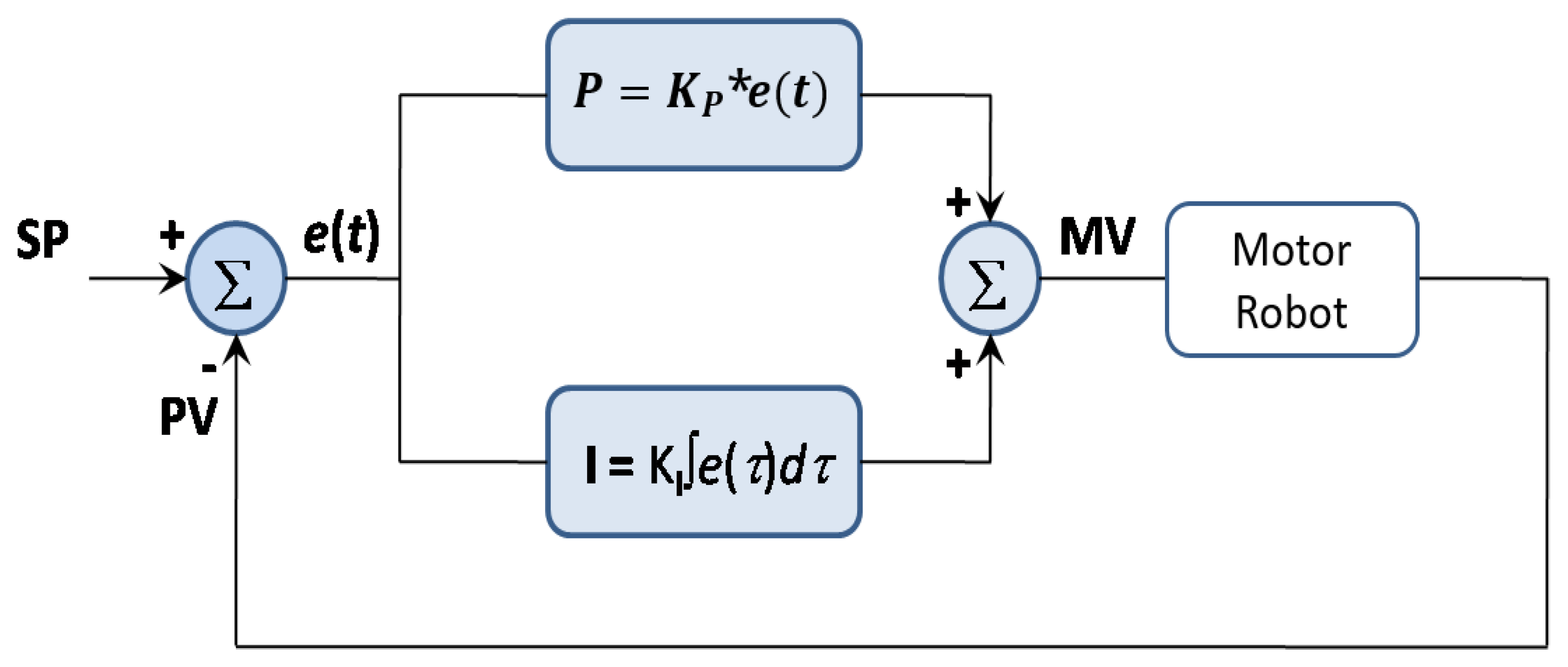
Today is the digitalization era, with robotics, artificial intelligence, IoT (Internet of Things) and automation. Since ancient times, the human being has sought to automate all its activities, avoiding the effort and intervention of the human hand. In recent years, the combination of different intelligent techniques helps different areas of science to improve and optimize time, performance, accuracy, and computational cost when solving any problems [1]. In this paper, an innovative proposal is presented where a combination of meta-heuristics and control are used for the intelligent search of values of the variables Kp and Ti and applied in a LEGO EV3 robot. Kp represents the proportional gain and refers to the constant of proportionality in the action to proportional control. If the value of Kp is small, the proportional action is small, but if Kp is high, the proportional action is high. The variable Ti refers to the time required for the integral action to contribute to the controller output. If Ti is small, the integral action is high, but if Ti is high, the integral action is small.
Today actually is the era of robotics, where, in conjunction with artificial intelligence, humanity has managed to achieve significant advances in some areas, for example: home robots, academics, medicine, agriculture, combat robots, scout robots in other planets (example: Mars exploration rover), and intelligence implemented in other entities such as autonomous land and aerial vehicles and virtual assistants [2], for mention of some areas. It is important to mention the new term that emerged recently: machine learning (ML). ML is the science of getting machines to learn and act like humans, and improve their learning over time autonomously, by feeding them data and information in the form of observations and real-world interactions [3].
Each of the entities mentioned above integrate some of the following: neural networks for learning in conjunction with other sciences for the collection and processing of information, audio and image, and some type of controller to coordinate and activate some actuators of the robot such as: arms, legs, engines, and others. There are several types of controllers that are used for the control of some system such as: proportional integral derivative control (PID) [4], fuzzy logic control (FLC) [5], and its extension, type 2 fuzzy logic control [6].
In this case, a proportional integral controller (PI) is used, where the values for the constants are adjusted in execution time using a bio-inspired algorithm in the behavior of bees in nature in the process of searching and collecting the nectar.
The objective of this work is to demonstrate that bio-inspired algorithms can significantly improve the results in solving optimization problems. It is important to mention that, in the literature, there are many published works with implementations of the ABC algorithm in control problems, for example: PID, type 1 and type 2 fuzzy logical control, and approximation of mathematical functions. However, a few studies have found that this algorithm can be used to optimize the parameters of a PI and observe the behavior. There are many bio-inspired algorithms in the literature, each with different characteristics. The selection of the algorithm for this proposal was determined after analyzing its characteristics and based on [7,8,9].

3. Proposed Approach

In this work, we present a dynamic adaptation of variables for a proportional integral controller using the algorithm of artificial bee colony modeling in a EV3 LEGO MINDSTORM robot. As mentioned above, the LEGO kit is used in multiple domains such as: research and education for science and technology tasks and some real-world problems by engineering scholars.
The main contribution is the use of a meta-heuristic to adjust the variables of a (PI) control in a runtime and, at the same time, to model it in a LEGO robot. This process is carried out in wireless mode using the language of MATLAB programming in conjunction with Simulink.
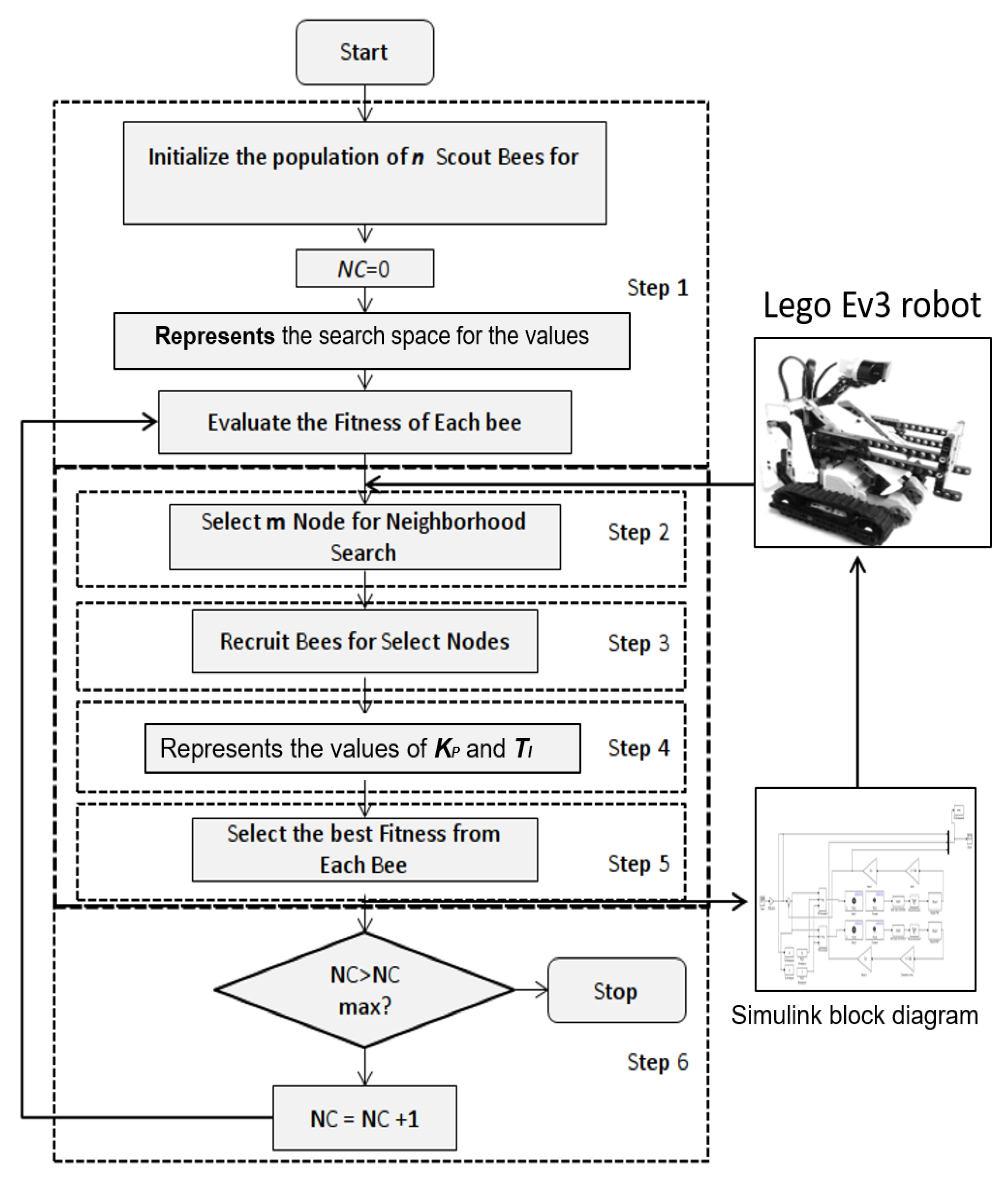
In Figure 2, a flow diagram is shown that represents the sequence of steps to follow to achieve an optimal communication between the algorithm, Simulink block diagram, and LEGO EV3 robot.
Figure 2. Flowchart of ABC algorithm applied to the Lego Ev3 robot.
The algorithm consists of the following phases:
Step 1: the population of bees is initialized. Considering the search universe, this universe is defined by the problem to be solved; in this case, [−1, 9] is proposed, and the solutions generated so far are evaluated.
Step 2, 3, 4, 5: in these steps, each new solution is evaluated, and the best one found so far goes to the next iteration to be optimized.
The best solution is determined after simulating the path given by ABC in the robot, and its fitness value is calculated using the mean square error Equation (5).

Methodology

In Figure 2, we can see a general illustration of our proposal. For the development of the proposal, as mentioned above, the role of the meta-heuristic bee colony algorithm is to explore the search space in order to find the optimal values for the constants ( K p , T i ) of the PI controller.
Each value found by the meta-heuristic is assigned to the variables of the controller and is modeled in the LEGO robot, and the fitness value is obtained for that model. The connection with the brick LEGO is performed by wireless mode using a block model in Simulink and a Wi-Fi router to obtain the values and calculate the error of the motors (see Figure 2).
Before starting with the dynamic adaptation of variables of the (PI controller), we decided to use a reference method to use it as a guide in this work, there are many open loop tuning methods for self-regulating process (reaches a steady-state value after a step change in the manipulated variable) that use a first-order plus dead time model of the process (FODT) [29,30,31]. The transfer function of a general first-order plus dead time model is
G F O D T ( s ) = K e s θ D τ s + 1
where
  • K = Gain Process
  • θ D = Dead time
  • τ = Time constant
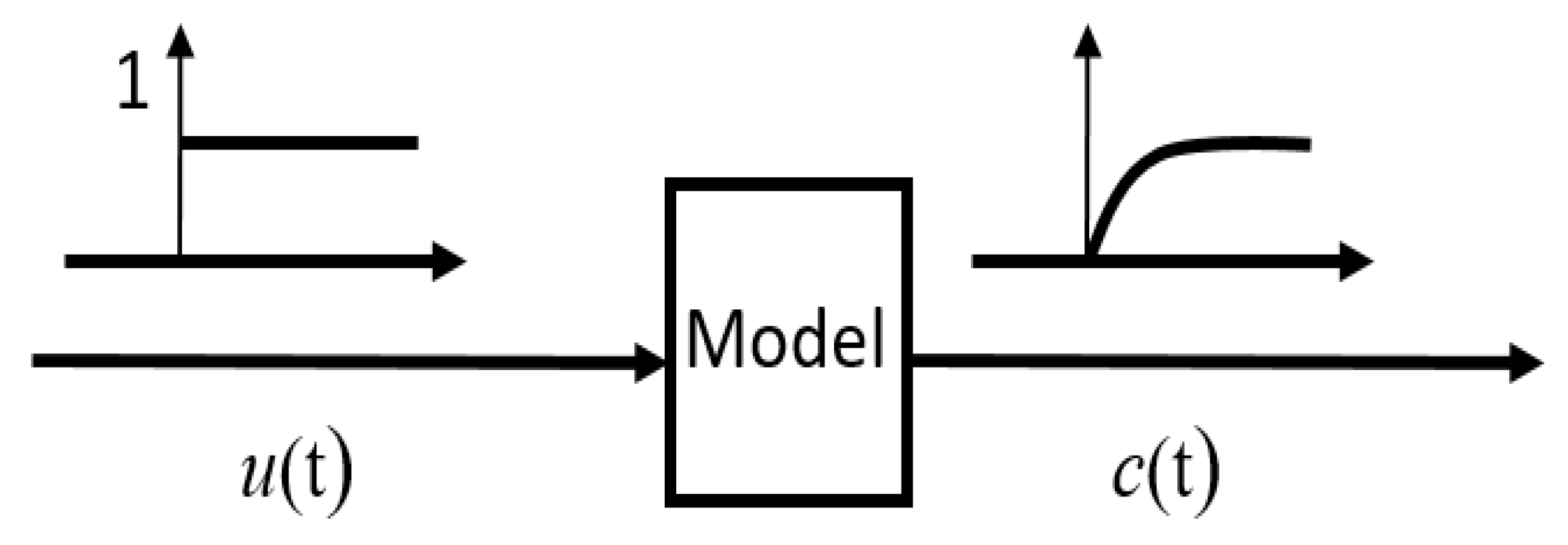
The graphical procedure for determining the model is based on Ziegler–Nichols, according to Kelvin T. Erickson in his book Programmable Logic Controllers [31]. The method consists of obtaining the features of the response in a step input of magnitude such as demonstrated by Figure 3. The response to this input is obtained experimentally.
Figure 3. Unit step input and response.
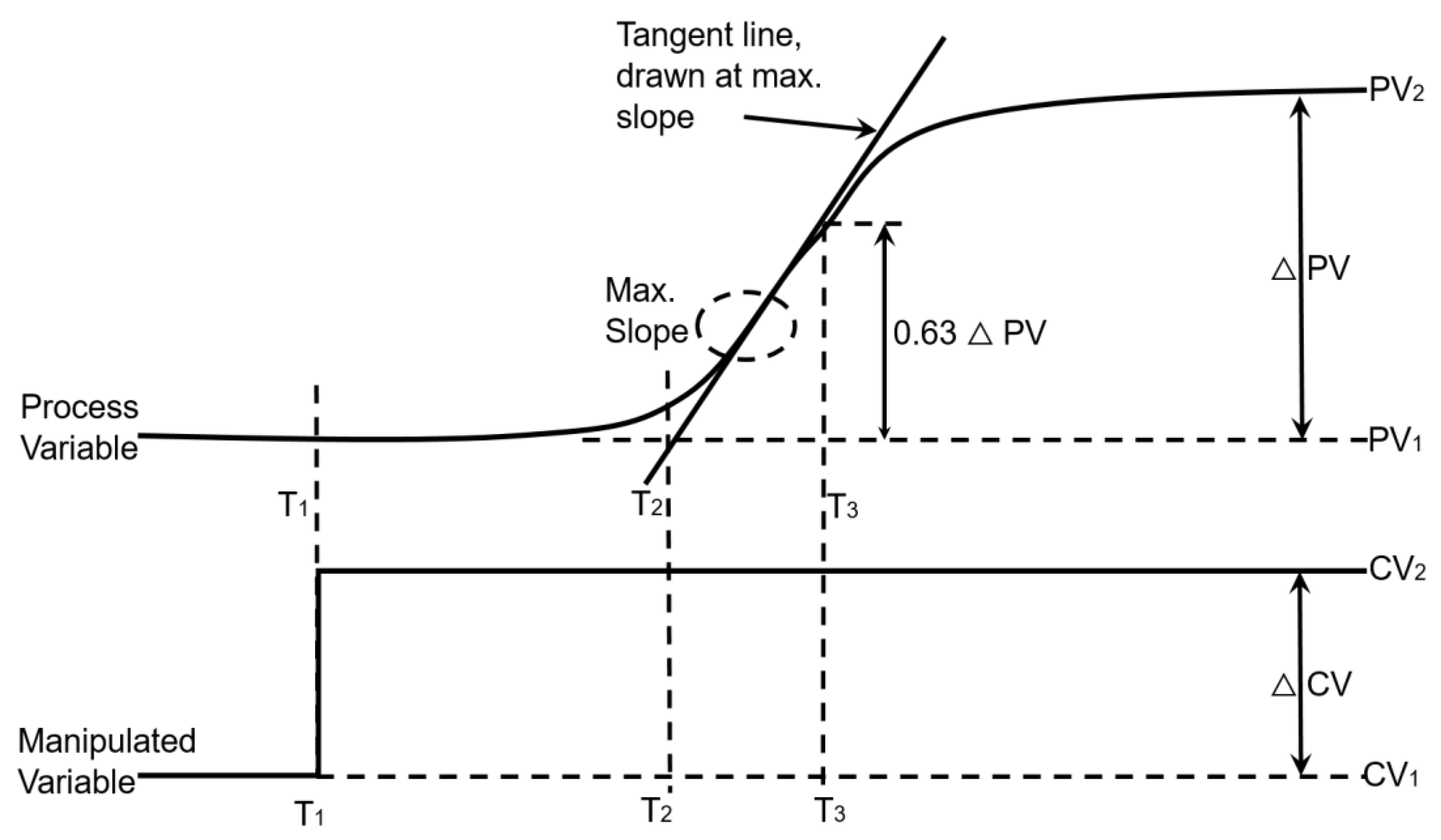
It is important to analyze the response obtained, since it must have an S shape; this type of response has two parameters: the dead time θ D and the time constant τ . After the process reaches the steady state, the parameters could be determined by drawing a straight-line tangent to the inflection point of the response obtained, as shown in Figure 4.
Figure 4. Response to step input.
The term T 1 is the time at which the step change in the manipulated variable was imposed. T 2 is the time at which the tangent drawn in the previous step intersects the time axis. To obtain the dead time, θ D = T 2 T 1 .
The term T 3 is the time at which the process variable response has made 63% of its total change. To obtain the time constant, τ = T 3 T 2 .
The process gain is the change in the process variable divided by the change in the control variable; see Equation (6).
K = Δ P V Δ C V = P V 2 P V 1 C V 2 C V 1
The values obtained are shown below:
θ D = T 2 T 1 = 0.15298 ( 1 ) τ = T 3 T 2 = 1.02462 ( 2 ) K = Δ P V Δ C V = P V 2 P V 1 C V 2 C V 1 = 1
The first-order plus dead time model of the process (FODT) is presented in Equation (7).
G F O D T ( s ) = e s 0.15298 1.02462 s + 1
According to the Ziegler and Nichols open loop tuning method, values of K p , T i , and T d are established and calculated from the parameters θ D , τ , and K . In Table 1, we can see the tuning rule.
Table 1. Ziegler and Nichols’ tuning rules.
The proposed controller for this test was PI, and the values obtained are shown below:
K p = 0.9 τ K θ D = 0.9 × 1.02462 0.15298 = 6.02796 ( 3 ) T i = θ D 0.3 = 0.15298 0.3 = 0.50993
The values for the variables of the PI were implemented in the Simulink model.
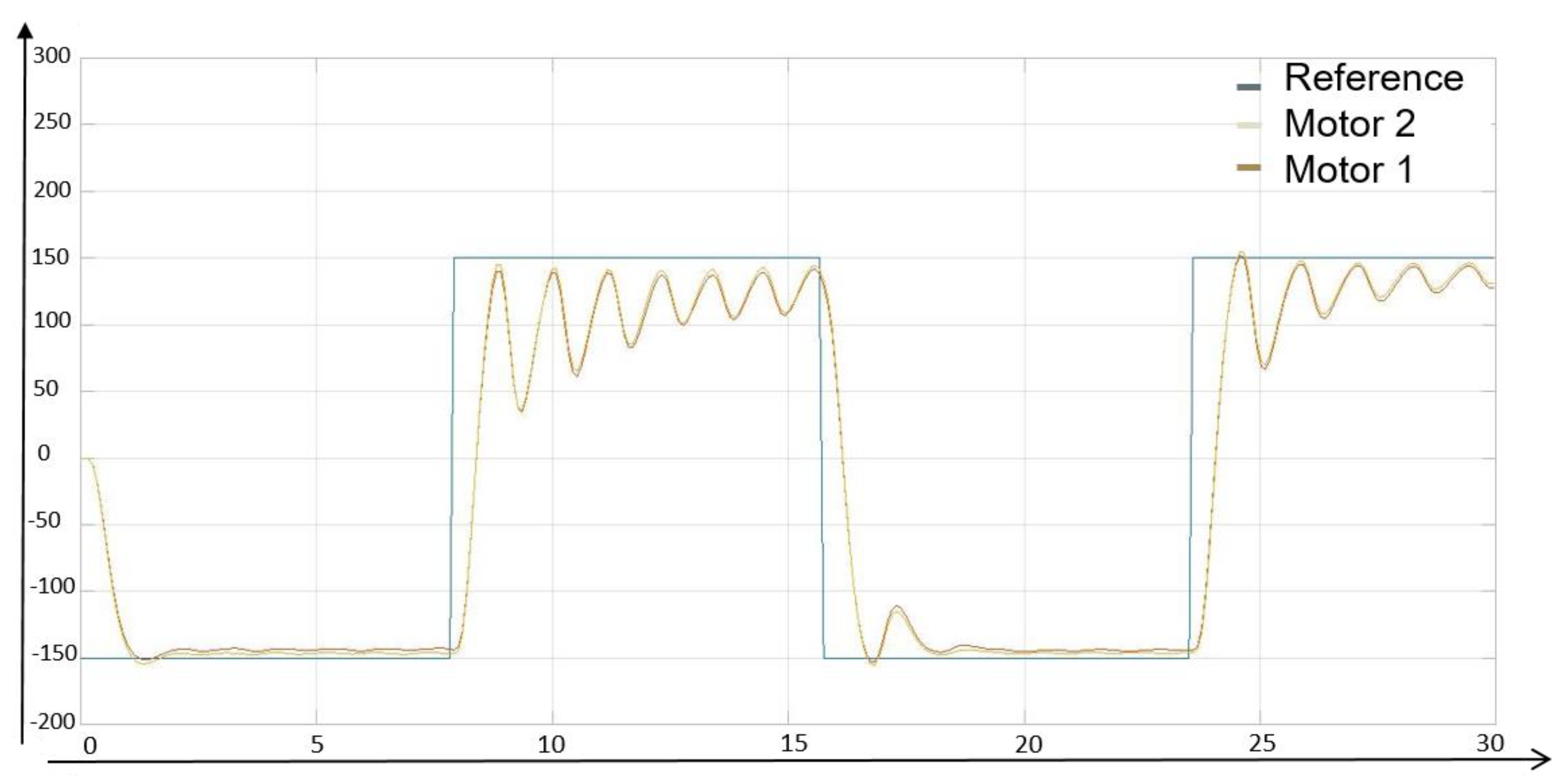
In Figure 5, the three signals are shown: Yellow signal is the pulse input to the system (reference). The magenta and cyan signals are the responses of motor one and two. The type of input to the system was a pulse signal with an amplitude of 150 square.
Figure 5. Behavior using PI traditional control.
The objective of this work is the implementation of a meta-heuristic to the automatic adjustment of the value of the variables of the PI. The method of Ziegler and Nichols is used to analyze the behavior of the block model and response of the LEGO robot EV3. Using Equation (5), an error of 16.6874 was obtained for this test.

4. Results Obtained from The Tests Performed

In this section the performance, stability and behavior of the robot is presented using the PI control with intelligent adjustment in the variables ( K p , T i ). Each experiment has 15 tests performed with the following configuration of parameters in the meta-heuristic ABC: population size = 20, iterations = 50, and search range [−1 9], using as a reference the results obtained with the Ziegler and Nichols method. The results obtained are shown in the Table 2.
Table 2. Results of control PI using ABC optimization.
In Table 2, we can observe the results obtained from the tests performed on the robot. We consider it important to show the values found for the variables ( K p , T i ) and the error obtained. The error was calculated using the equation of the root of the mean square error (RMSE); see Equation (8):
R M S E = i = 1 n ( y r e f y d a t a ) 2 N
where y r e f represents the reference to follow, y d a t a represents the data obtained from the motors of the robot, and N is the number of data.
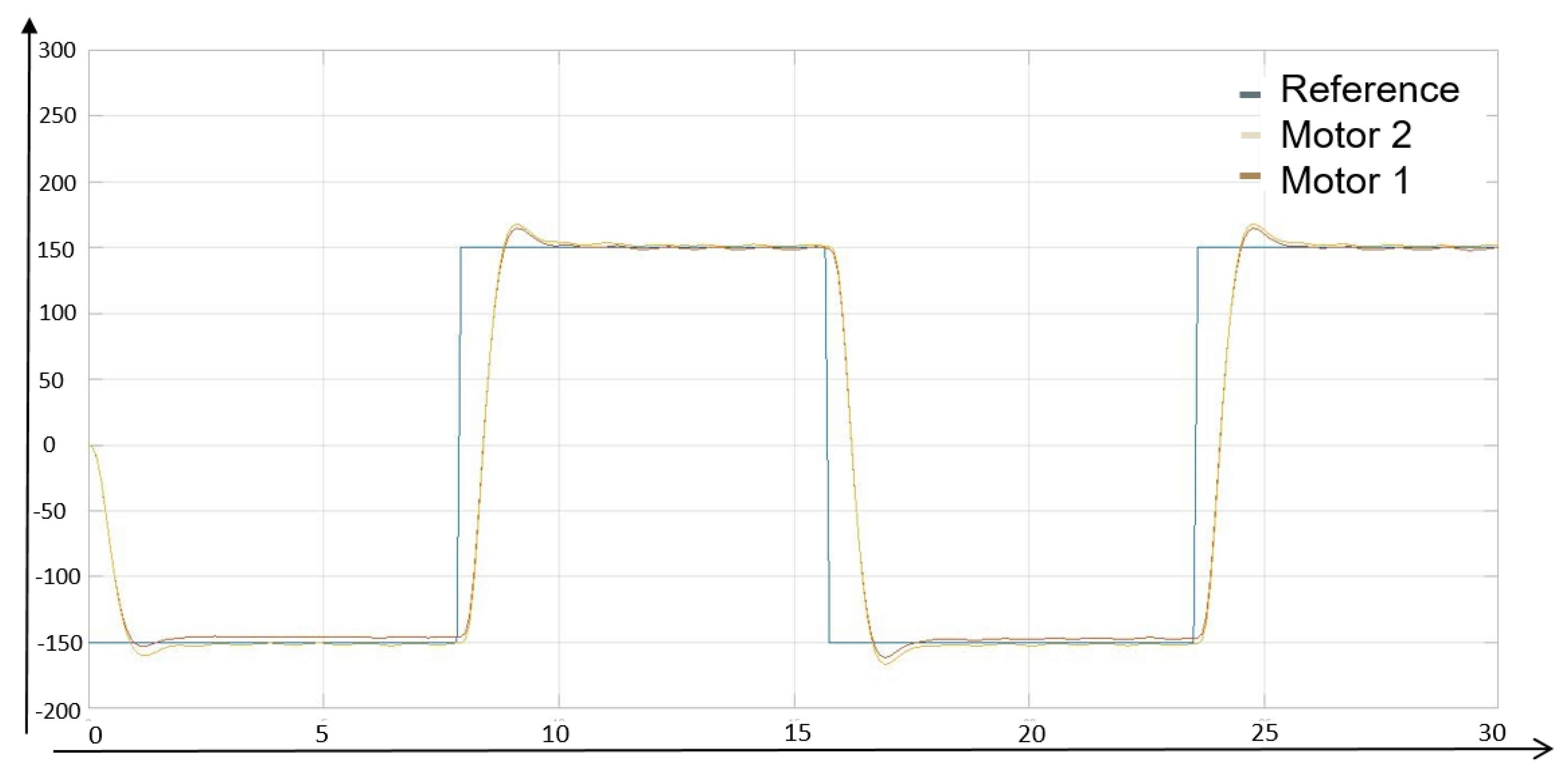
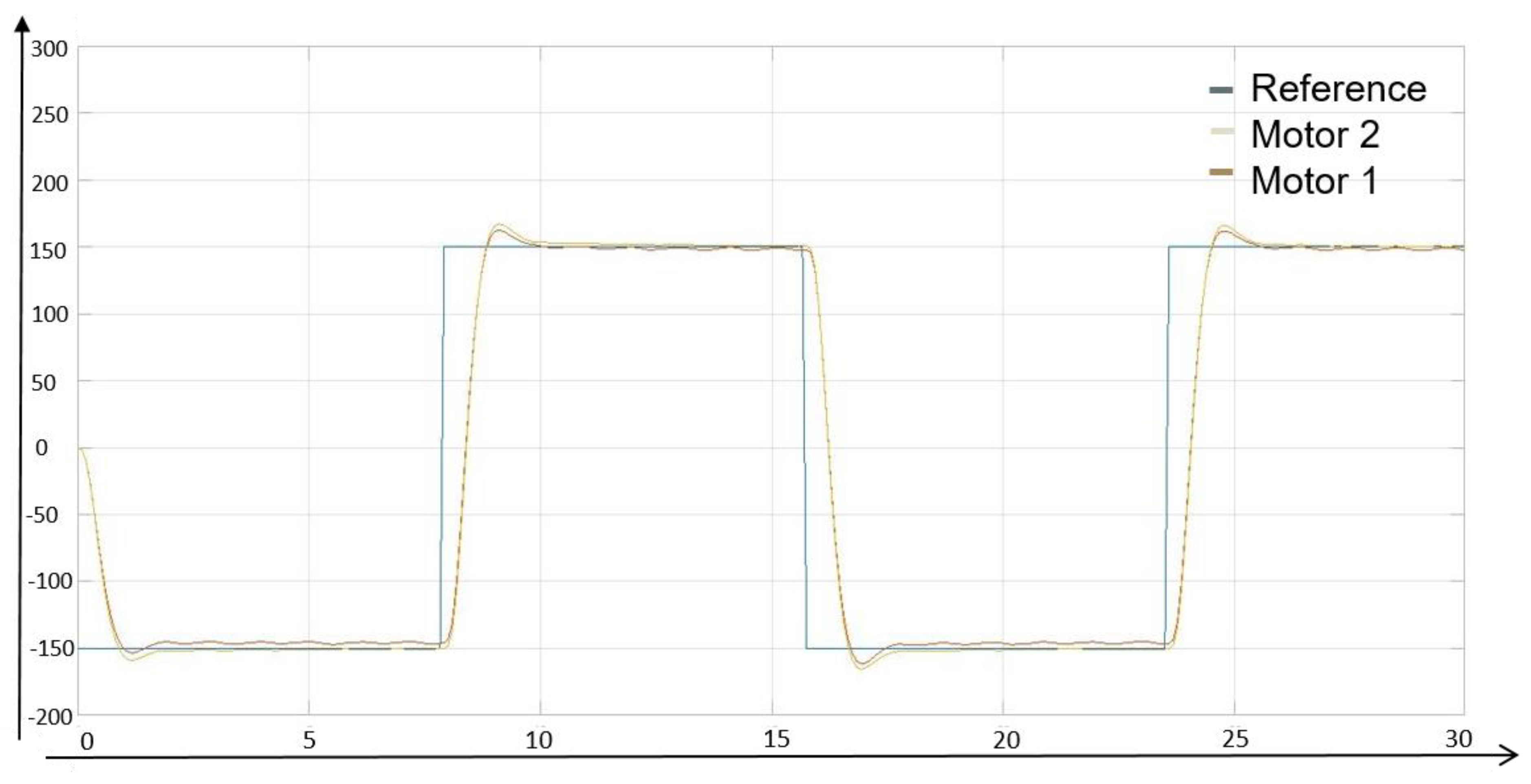
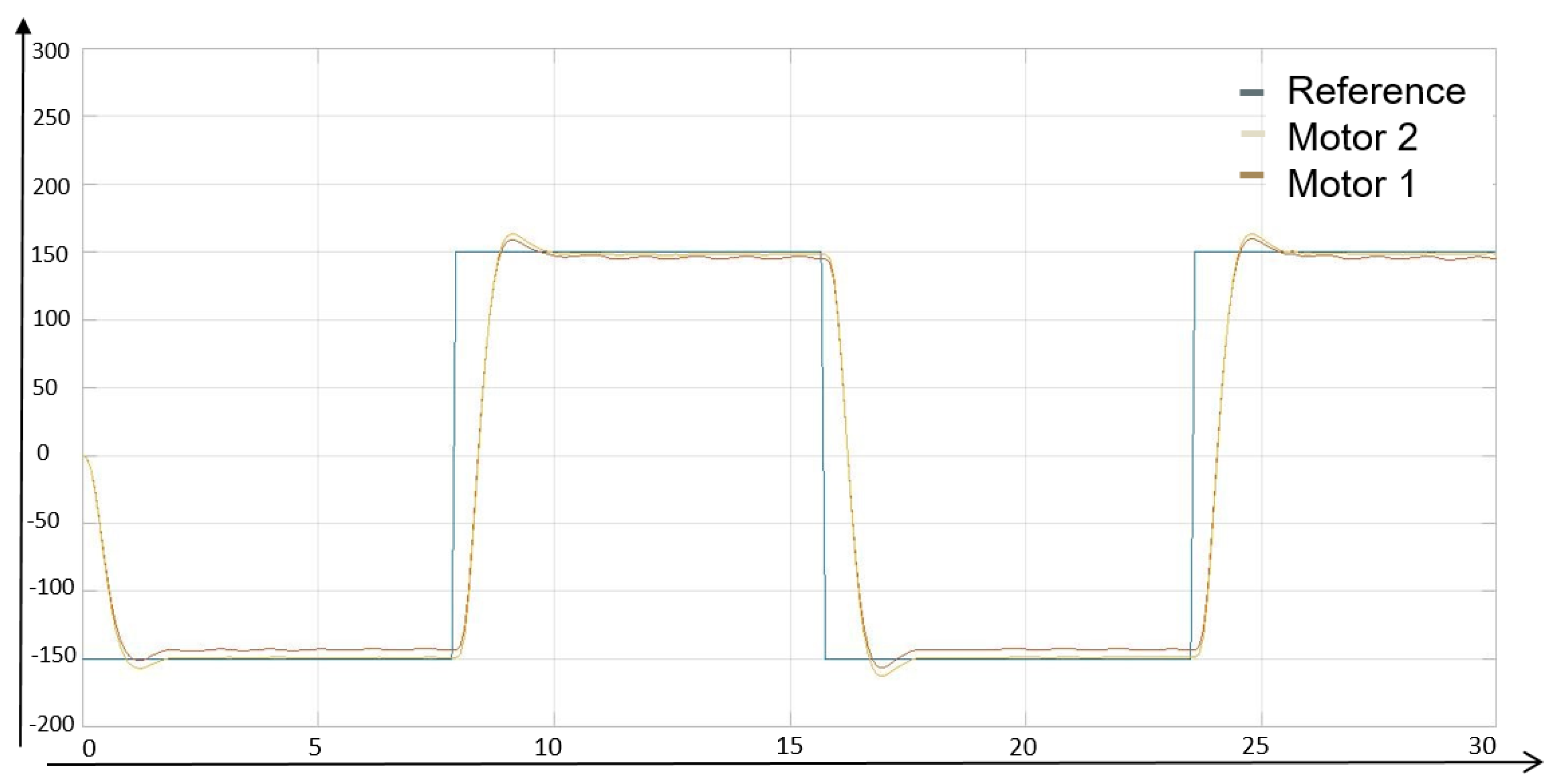
The behavior of the robot motors when following the reference for tests 19, 1, and 3 is shown in Figure 6, Figure 7 and Figure 8. Observing the fitness value obtained, we determined that they are the best results obtained from the tests carried out with the robot and the meta-heuristics; moreover, the values for the constants of the controller (PI) are shown.
Figure 6. Behavior using PI with optimization values, test 19.
Figure 7. Behavior using PI with optimization values, test 1.
Figure 8. Behavior using PI with optimization values, test 3.
The yellow signal is the pulse of input to the system (reference); the magenta and cyan signals are the responses of motor one and two. The type of input to the system was a pulse signal with an amplitude of 150 square.
For greater ease for the readers of this work, in Table 3, we can observe a comparison of the results obtained with the different approaches. It is important to mention that the error obtained with “Integral proportional control (PI), traditional” used the values defined by [29,30,31], and the error was 16.6874, which is high. When the optimization is used with values 7.5682 in Kp and 0.2836 in Ti, the error decreases considerably.
Table 3. Comparison using PI traditional and intelligent PI control.
The values shown for Kp and Ti with “Intelligent integral proportional control” were found in a dynamic and intelligent way by the proposed algorithm (ABC), as we can see in the comparison: the error difference is very significant compared with that obtained using the traditional PI control. As mentioned in the introductory section, bio-inspired algorithms provide a great variety of solutions to different problems in engineering and other areas with a low computational cost.

5. Discussion

Throughout this work, we have presented a proof of concept of bio-inspired meta-heuristics in the behavior of bees in nature applied to the dynamic adaptation of values to control the speed of movement of a robot. In this work, the Artificial Bees Colony (ABC) algorithm is proposed for the intelligent search of values Kp and Ti for Equation (5).
Based on the results obtained, we can conclude the feasibility of implementing bio-inspired optimization algorithms for the intelligent search of values for complex search and optimization problems. In this case, the ABC is used to control the speed of movement of a mobile robot. As we can see in Table 2, the results obtained were better achieved using the values proposed by Ziegler and Nichols [29]; see the results with values proposed by Ziegler and Nichols in Figure 6.
This work can be used as a basis to show readers the implementation of a bio-inspired algorithm to optimize the trajectory in an EV3 MINDSTORMS LEGO robot. It is important to mention that there are many application areas of algorithms such as: electronics, finance, construction, and telecommunications, to mention some. The applications are numerous and very varied due to their great adaptability and generate acceptable results with a low computational cost. As future work on the proposal, machine learning techniques can be implemented, which allows us to improve the models (ABC).

6. Conclusions

In this paper, a dynamic optimization of the parameters in the PI was performed. In the optimization, the search space was based on Ziegler and Nichols (see Table 1). As we mentioned, values were between −1 and 9. One of the objectives is to reduce the error of 16.6874 found with the Ziegler and Nichols method. After the experiments with the implementation in the robot, results show that bee colony optimization can obtain good parameters to the PI and improve it.
In many applications, a simple conventional PI is used to control the application, but we can use the best parameters for the PI, improving the controller even more, and obtain better results than using static values. In Table 2, important results were obtained and were better than Ziegler and Nichols. We were confident in a statistical comparison using Ziegler and Nichols, as the results obtained in this paper show. That is because the values of the Kp and Ti can change. The main objective was obtained, because the results were less than the reference.

Author Contributions

Conceptualization, J.M.V. and C.C.; methodology, J.M.V., C.C. and D.A.M.; software, J.M.V., C.C. and J.L.R.; validation, J.M.V., C.C. and J.L.R.; formal analysis, J.M.V., C.C., D.A.M. and L.C.; investigation, J.M.V. and C.C.; resources, J.M.V., C.C., D.A.M., J.L.R., Y.V., L.C. and A.M.-S.; data curation, J.M.V., C.C., J.L.R. and A.M.-S.; writing—original draft preparation, J.M.V., C.C. and L.C.; writing—review and editing, J.M.V., C.C. and Y.V.; visualization, J.M.V., C.C. and Y.V.; supervision, J.M.V.; project administration, C.C. All authors have read and agreed to the published version of the manuscript.

Funding

This research received no external funding.

Institutional Review Board Statement

Not applicable.

Data Availability Statement

Not applicable.

Acknowledgments

Not applicable.

Conflicts of Interest

The authors declare no conflict of interest.

References

  1. Nair, S.; Coronado, E.; Frye, M.; Goldaracena, T.; Arguello, C. Particle Swarm Optimization for the control of a swarm of biological robots. In Proceedings of the 2015 Annual IEEE India Conference (INDICON), New Delhi, India, 17–20 December 2015; pp. 1–4. [Google Scholar]
  2. Ayawli, B.B.K.; Chellali, R.; Appiah, A.Y.; Kyeremeh, F. An Overview of Nature-Inspired, Conventional, and Hybrid Methods of Autonomous Vehicle Path Planning. J. Adv. Transp. 2018, 2018, 8269698. [Google Scholar] [CrossRef]
  3. Robert, C. Machine Learning, a Probabilistic Perspective. Chance 2014, 27, 62–63. [Google Scholar] [CrossRef]
  4. Misir, D.; Malki, H.A.; Chen, G. Design and analysis of a fuzzy proportional-integral-derivative controller. Fuzzy Sets Syst. 1996, 79, 297–314. [Google Scholar] [CrossRef]
  5. Zadeh, L.A. Toward a theory of fuzzy information granulation and its centrality in human reasoning and fuzzy logic. Fuzzy Sets Syst. 1997, 90, 111–127. [Google Scholar] [CrossRef]
  6. Martínez, R.; Castillo, O.; Aguilar, L.T. Optimization of interval type-2 fuzzy logic controllers for a perturbed autonomous wheeled mobile robot using genetic algorithms. Inf. Sci. 2009, 179, 2158–2174. [Google Scholar] [CrossRef]
  7. Amador, L.; Castillo, O. Bee Colony Optimization Algorithm. In Optimization of Type-2 Fuzzy Controllers Using the Bee Colony Algorithm; Amador, L., Castillo, O., Eds.; Springer International Publishing: Berlin/Heidelberg, Germany, 2017; pp. 23–32. [Google Scholar]
  8. Cuéllar, M.P.; Pegalajar, M.C. Design and implementation of intelligent systems with LEGO Mindstorms for undergraduate computer engineers. Comput. Appl. Eng. Educ. 2014, 22, 153–166. [Google Scholar] [CrossRef]
  9. Perez, S.R.; Gold-Veerkamp, C.; Abke, J.; Borgeest, K. A new didactic method for programming in C for freshmen students using LEGO mindstorms EV3. In Proceedings of the 2015 International Conference on Interactive Collaborative Learning (ICL), Florence, Italy, 20–24 September 2015; pp. 911–914. [Google Scholar]
  10. Karaboga, D.; Basturk, B. A powerful and efficient algorithm for numerical function optimization: Artificial bee colony (ABC) algorithm. J. Glob. Optim. 2007, 39, 459–471. [Google Scholar] [CrossRef]
  11. Karaboga, D.; Akay, B.B. A modified Artificial Bee Colony (ABC) algorithm for constrained optimization problems. Appl. Soft Comput. 2011, 11, 3021–3031. [Google Scholar] [CrossRef]
  12. Niknam, T.; Taheri, S.I.; Aghaei, J.; Tabatabaei, S.; Nayeripour, M. A modified honey bee mating optimization algorithm for multiobjective placement of renewable energy resources. Appl. Energy 2011, 88, 4817–4830. [Google Scholar] [CrossRef]
  13. Chong, C.S.; Sivakumar, A.I.; Low, M.Y.H.; Gay, K.L. A Bee Colony Optimization Algorithm to Job Shop Scheduling. In Proceedings of the 38th Conference on Winter Simulation, Monterey, CA, USA, 3–6 December 2006; pp. 1954–1961. [Google Scholar]
  14. Teodorović, D.; Dell’Orco, M. Bee colony optimization—A cooperative learning approach to complex transportation problems. In Advanced OR and AI Methods in Transportation; Publishing House of Poznan Uniwersity of Technology: Poznań, Poland, 2005; pp. 51–60. [Google Scholar]
  15. Teodorović, D.; Lucic, P.; Markovic, G.; Orco, M.D. Bee Colony Optimization: Principles and Applications. In Proceedings of the 2006 8th Seminar on Neural Network Applications in Electrical Engineering, Belgrade, Serbia, 25–27 September 2006; pp. 151–156. [Google Scholar]
  16. Luyben, W.L. Tuning Proportional−Integral−Derivative Controllers for Integrator/Deadtime Processes. Ind. Eng. Chem. Res. 1996, 35, 3480–3483. [Google Scholar] [CrossRef]
  17. Saleh, A.L.; Hussain, M.A.; Klim, S.M. Optimal Trajectory Tracking Control for a Wheeled Mobile Robot Using Fractional Order PID Controller. J. Univ. Babylon Eng. Sci. 2018, 26, 292–306. [Google Scholar] [CrossRef]
  18. Onieva, E.; Milanés, V.; Pérez, J.; De Pedro, T. Genetic Fuzzy-based Steering Wheel Controller using a Mass-Produced Car. Int. J. Innov. Comput. Inf. Control. 2012, 8, 3477–3494. [Google Scholar]
  19. Nandam, P.K.; Sen, P.C. A comparative study of proportional-integral (P-I) and integral-proportional (I-P) controllers for dc motor drives. Int. J. Control. 1986, 44, 283–297. [Google Scholar] [CrossRef]
  20. Hao, M.R.; Ghani, N.M.A.; Wahid, M.S.A. Real-Time PID Control of Wireless Two-Wheeled Balancing Lego EV3 Robot. J. Telecommun. Electron. Comput. Eng. 2018, 10, 6. [Google Scholar]
  21. Bell, M.; Kelly, J.F. Robot Commander Remote Control App. In LEGO® MINDSTORMS® EV3; Bell, M., Kelly, J.F., Eds.; Apress: Berkeley, CA, USA, 2017; pp. 319–321. [Google Scholar]
  22. Ding, J.; Li, Z.; Pan, T. Control System Teaching and Experiment Using LEGO MINDSTORMS NXT Robot. Int. J. Inf. Educ. Technol. 2017, 7, 309–313. [Google Scholar] [CrossRef][Green Version]
  23. Akmal, M.A.; Jamin, N.F.; Ghani, N.M.A. Fuzzy logic controller for two wheeled EV3 LEGO robot. In Proceedings of the 2017 IEEE Conference on Systems, Process and Control (ICSPC), Malacca, Malaysia, 15–17 December 2017; pp. 134–139. [Google Scholar]
  24. Maharuddin, M.F.; Ghani, N.M.A.; Jamin, N.F. Two-Wheeled LEGO EV3 Robot Stabilisation Control Using Fuzzy Logic Based PSO Algorithm. J. Telecommun. Electron. Comput. Eng. 2018, 10, 149–153. [Google Scholar]
  25. Bibi, R.; Chowdhry, B.S.; Shah, R.A. PSO based localization of multiple mobile robots employing LEGO EV3. In Proceedings of the 2018 International Conference on Computing, Mathematics and Engineering Technologies (iCoMET), Sukkur, Pakistan, 3–4 March 2018; pp. 1–5. [Google Scholar]
  26. Kast, C.; Rosenauer, B.; Meissner, H.; Aramphianlert, W.; Krenn, M.; Hofer, C.; Mayr, W. Development of a Modular Bionic Prototype Arm Prosthesis Integrating a Closed-Loop Control System. In Proceedings of the World Congress on Medical Physics and Biomedical Engineering 2018, Prague, Czech Republic, 3–8 June 2018; Lhotska, L., Sukupova, L., Lacković, I., Ibbott, G.S., Eds.; Springer: Singapore, 2018; pp. 751–753. [Google Scholar]
  27. Jadon, S.S.; Sharma, H.; Tiwari, R.; Bansal, J.C. Self-adaptive position update in artificial bee colony. Int. J. Syst. Assur. Eng. Manag. 2017, 9, 802–810. [Google Scholar] [CrossRef]
  28. Goldberg, D.E.; Holland, J.H. Genetic Algorithms and Machine Learning. Mach. Learn. 1988, 3, 95–99. [Google Scholar] [CrossRef]
  29. Ogata, K. Ingeniería de Control Moderna; Pearson Educación: London, UK, 2003. [Google Scholar]
  30. Meshram, P.M.; Kanojiya, R.G. Tuning of PID controller using Ziegler-Nichols method for speed control of DC motor. In Proceedings of the IEEE—International Conference on Advances in Engineering, Science and Management (ICAESM-2012), Nagapattinam, Tamil Nadu, India, 30–31 March 2012; pp. 117–122. [Google Scholar]
  31. Kelvin, T. Erickson. In Programmable Logic Controllers; Dogwood Valley Press: Rolla, MO, USA, 2005. [Google Scholar]
Publisher’s Note: MDPI stays neutral with regard to jurisdictional claims in published maps and institutional affiliations.

Article Metrics

Citations

Article Access Statistics

Multiple requests from the same IP address are counted as one view.