Performance Analysis of Boosting-Based Machine Learning Models for Predicting the Compressive Strength of Biochar-Cementitious Composites


Highlights
- Biochar content and properties significantly affect compressive strength of cementitious composites.
- Optimal biochar dosages improve mechanical performance while supporting carbon reduction.
- Machine learning models accurately capture strength trends of biochar-modified composites.
- Biochar can be effectively used to design more sustainable cementitious materials.
- Data-driven models reduce experimental effort in strength prediction and mix optimization.
- Findings support low-carbon construction practices and performance-based material design.
Abstract
1. Introduction
2. Experimental Program
2.1. Experimental Process
2.2. Datasets
3. Research Method
3.1. Correlation Analysis
3.2. Machine Learning Approaches
3.3. Model Evaluation Metrics
4. Result and Discussion
4.1. Comparison of Machine Learning Models and Optimal Model Selection
4.2. Performance Analysis of Boosting Models
5. Conclusions
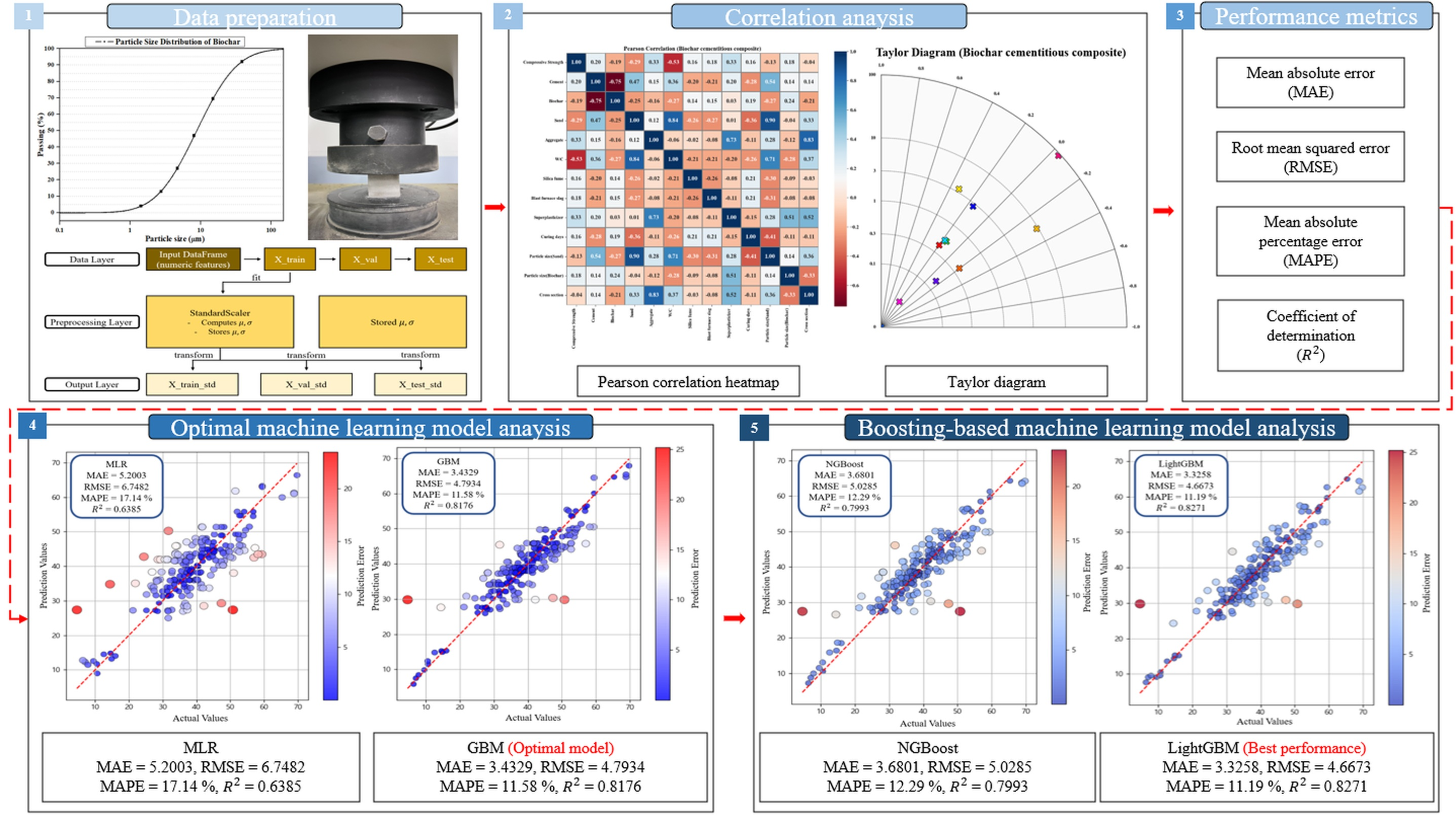
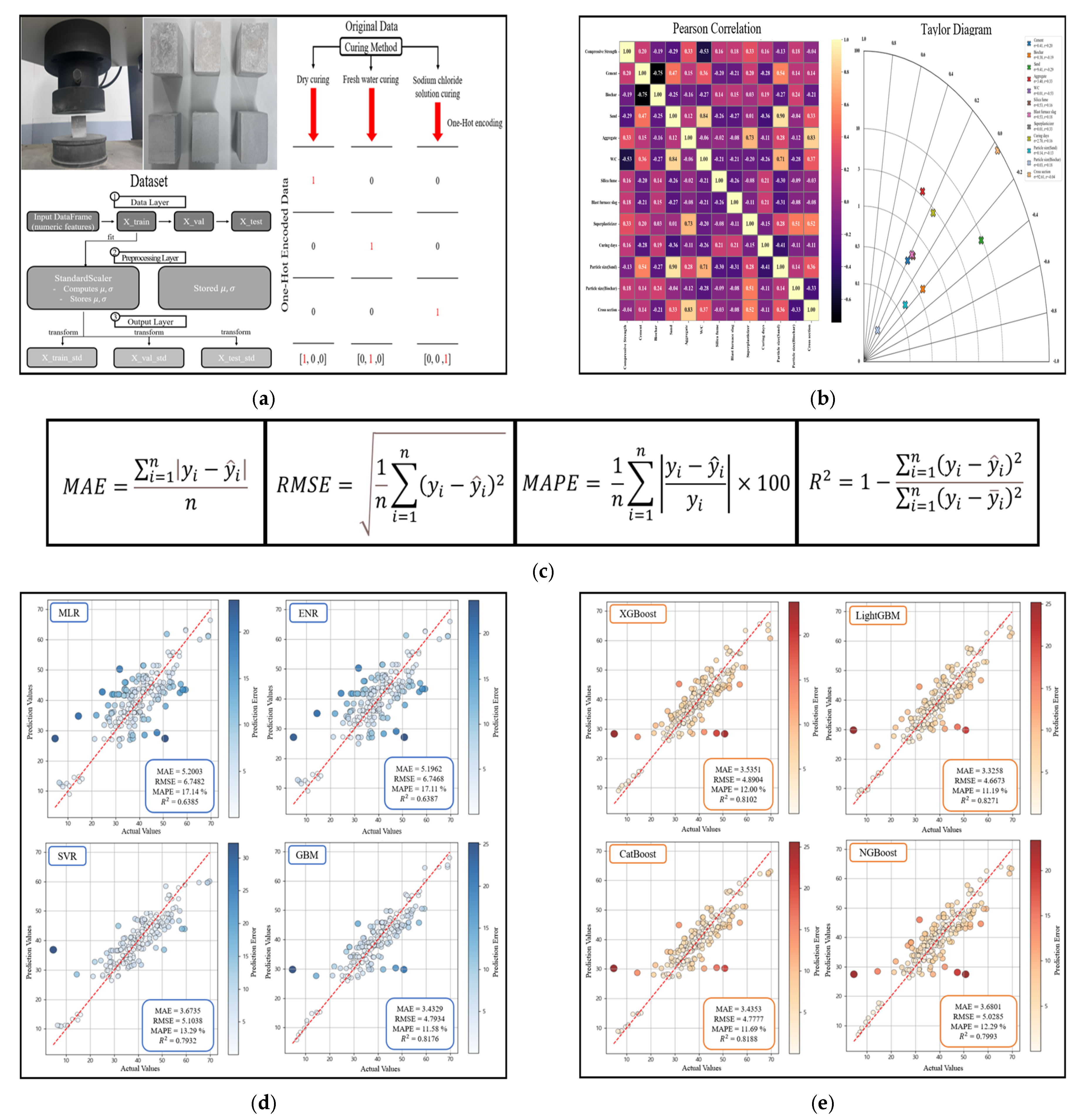
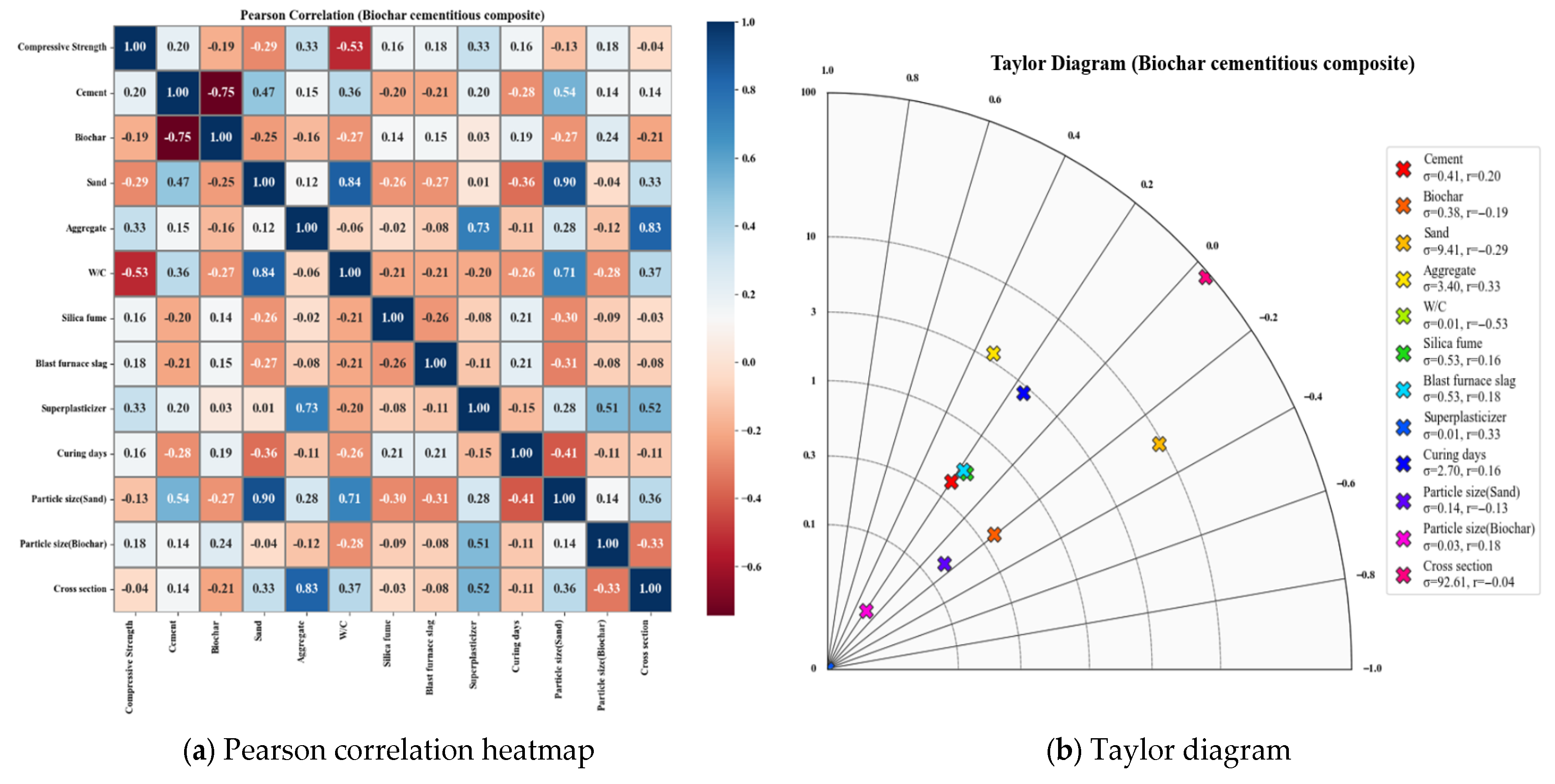
- Pearson correlation analysis showed that biochar (0.38) and cement (0.41) exhibited positive correlations with compressive strength, and similar trends were observed for sand (0.47) and aggregate (0.41). By contrast, the W/C (−0.62) revealed a strong negative correlation, indicating the dominant role of the W/C in strength decrease. Superplasticizer (0.18) showed a weak positive correlation, and silica fume (−0.16) and blast furnace slag (0.05) exhibited low correlation values. These tendencies were consistent with the Taylor diagram results, where biochar and curing days (0.27) presented moderate correlations and stable variance, indicating a consistent influence on compressive strength.
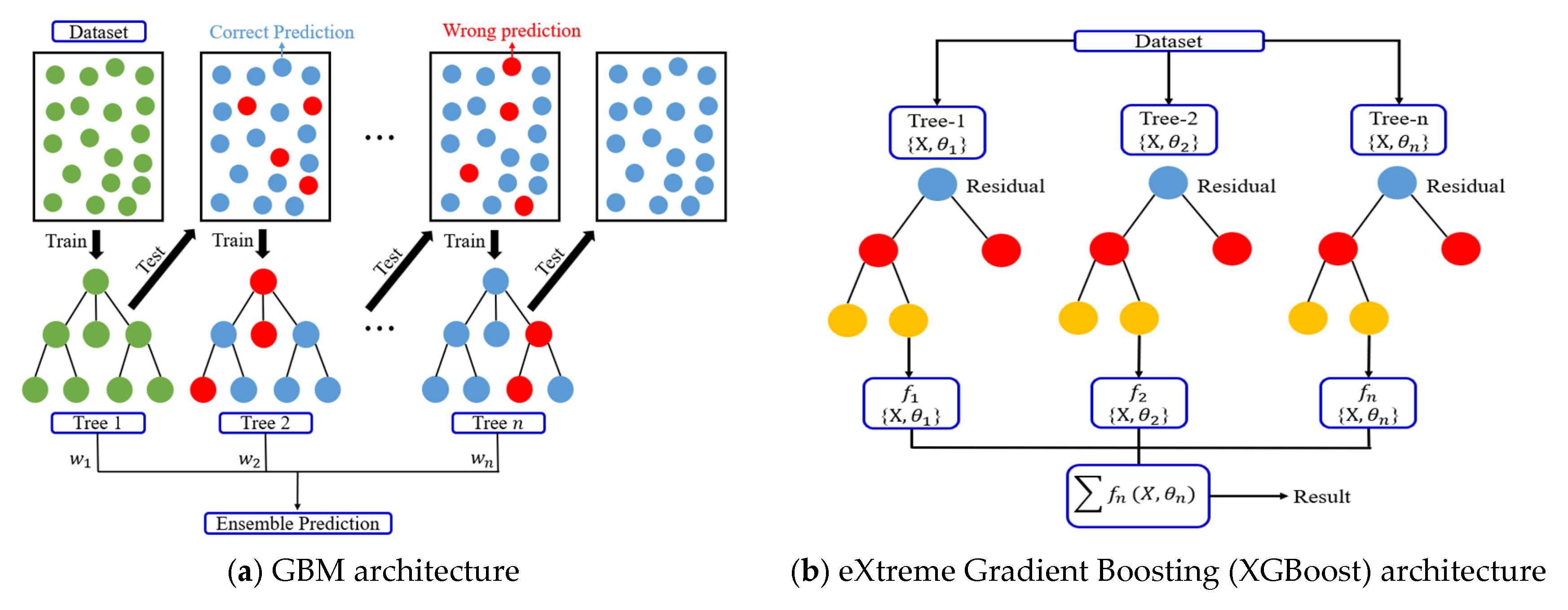
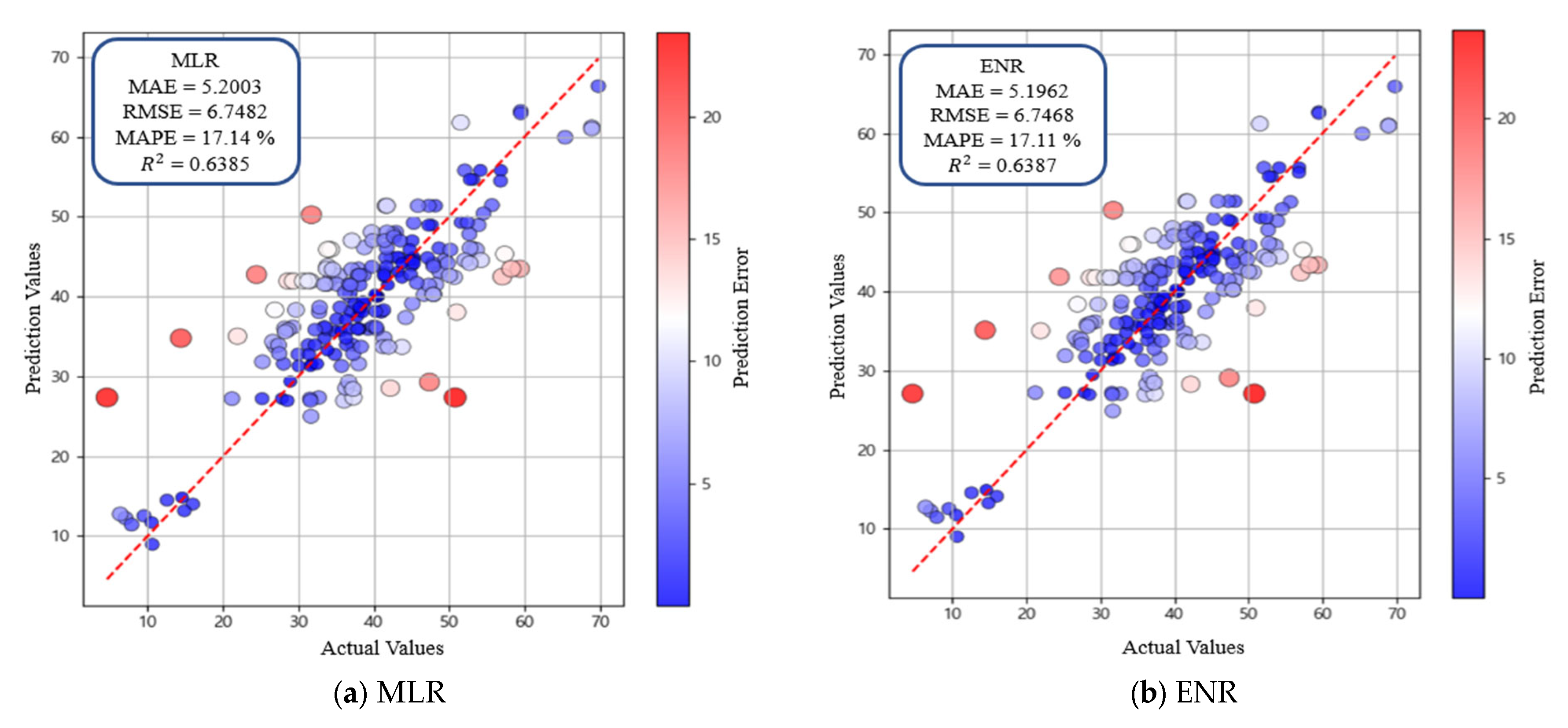
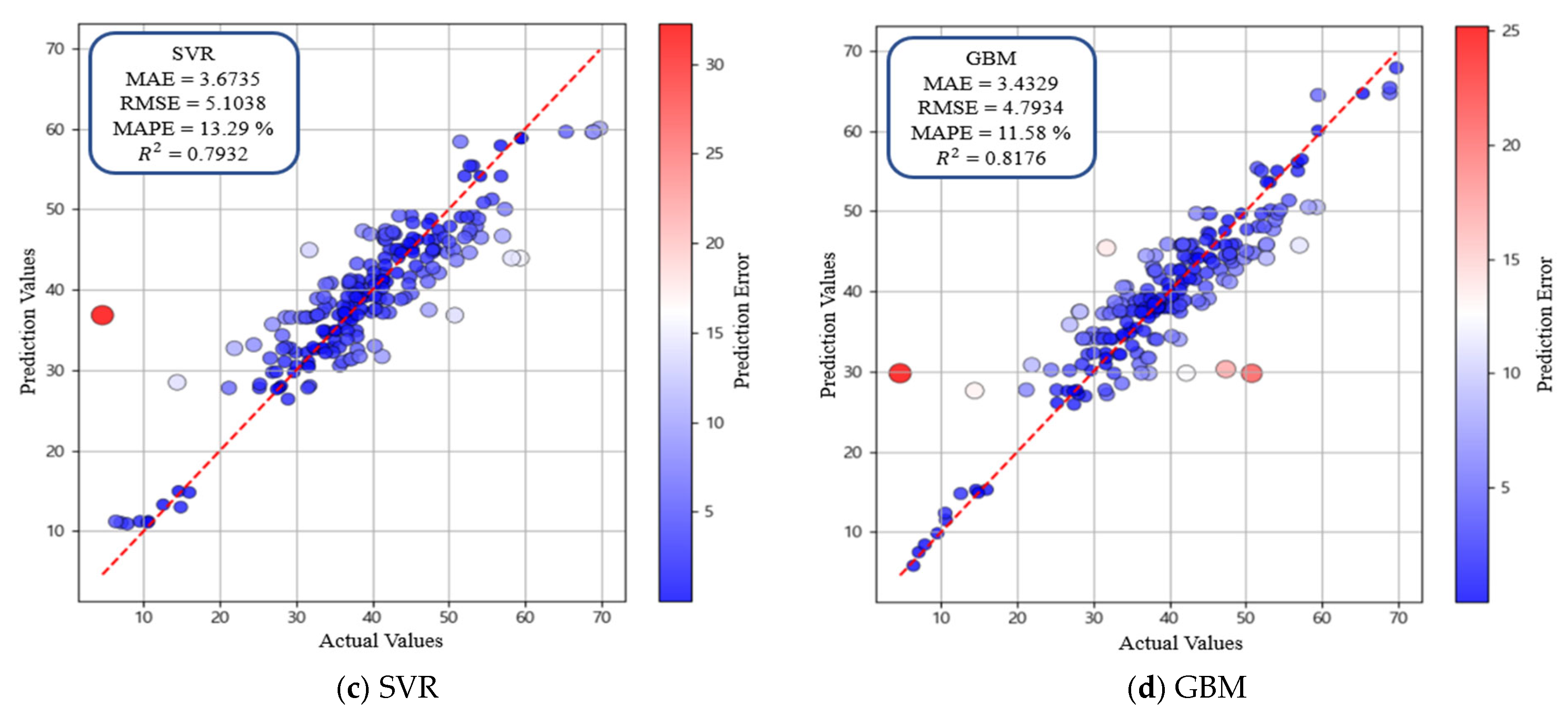
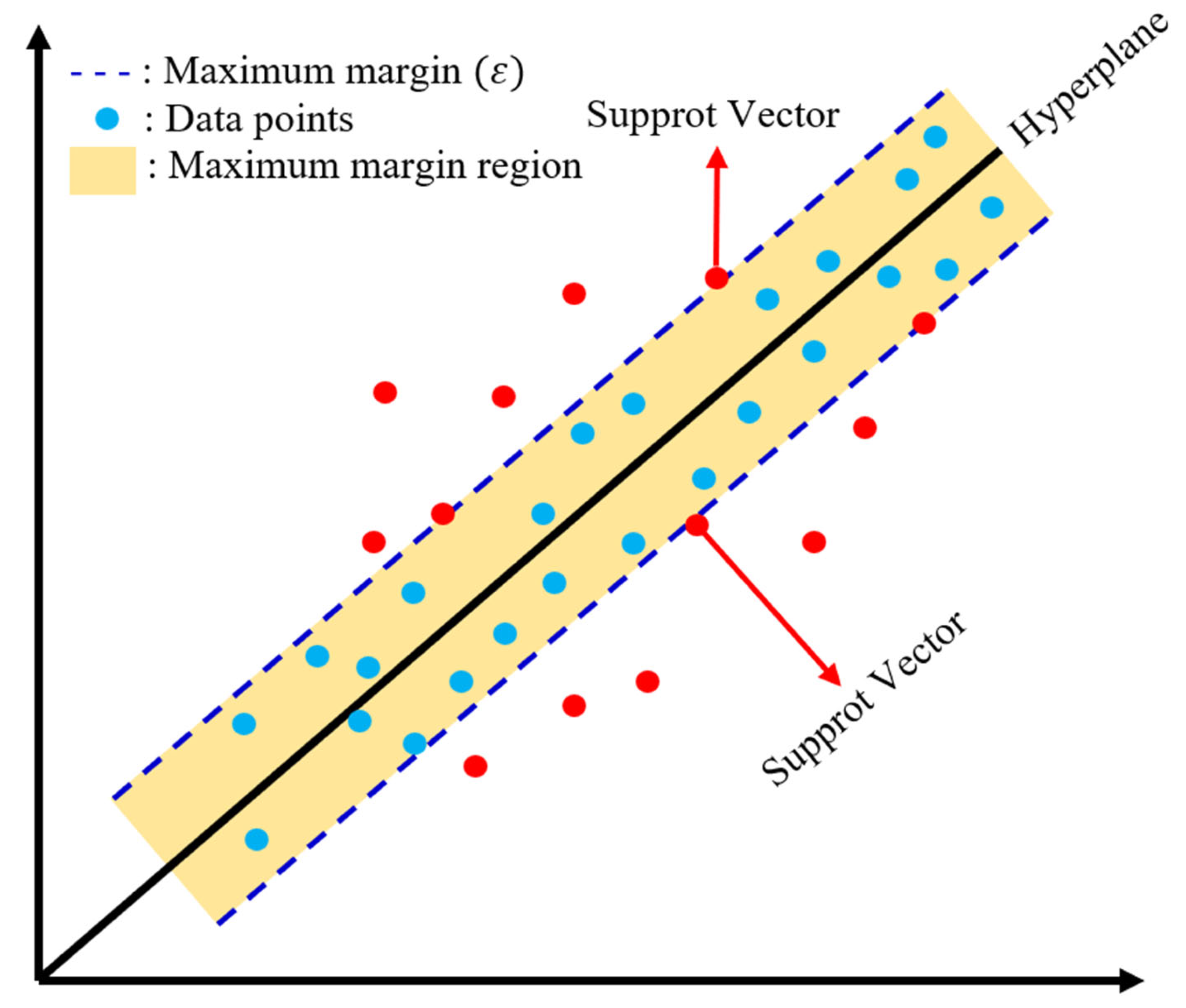
- The comparison of linear, nonlinear, and boosting-based models revealed that MLR had the lowest predictive performance (with = 0.6385), and ENR exhibited comparable accuracy. SVR partially reflected nonlinear relationships and achieved improved performance ( = 0.7932). GBM provided the highest accuracy ( = 0.8176) by effectively modeling nonlinearities and variable interactions through a residual-based boosting structure. These results indicate that GBM is more stable and better suited for predicting the compressive strength of biochar-cementitious composites than the other evaluated models.
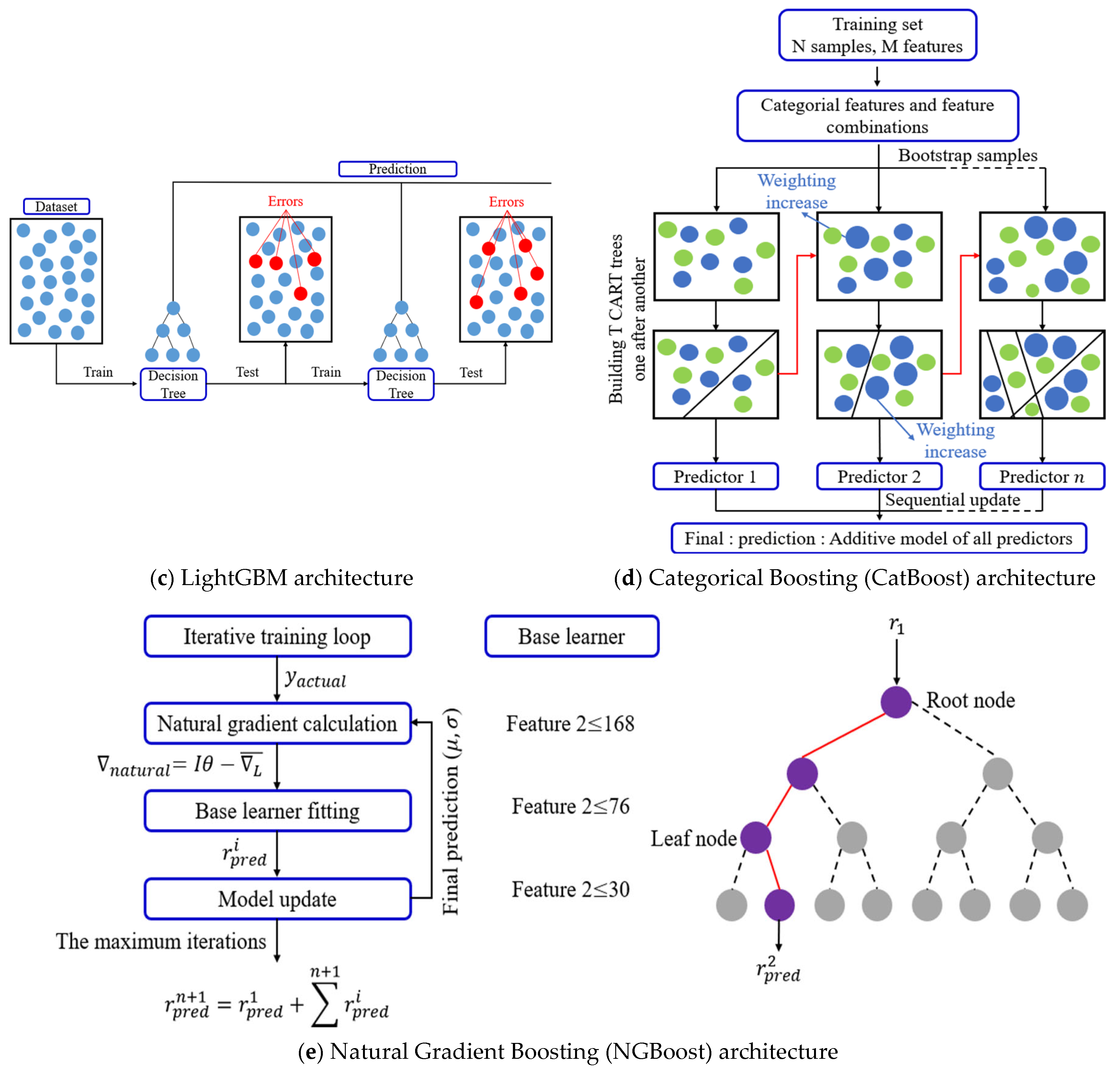
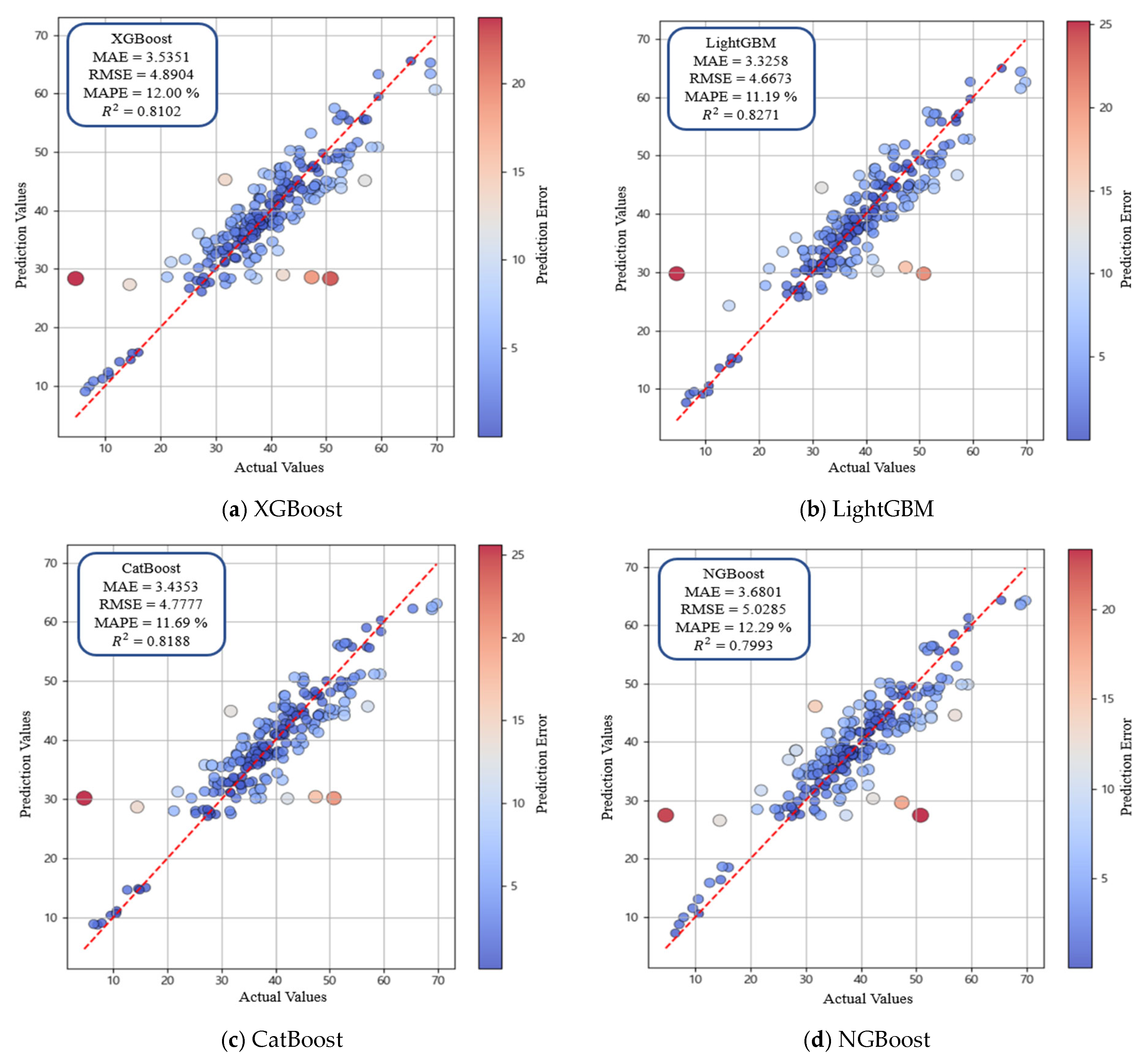
- Additional comparisons were conducted among boosting-based models, including XGBoost, LightGBM, CatBoost, and NGBoost. Hyperparameter tuning using GridSearchCV and Optuna improved predictive performance. LightGBM achieved the highest accuracy among all models and was identified as the optimal detailed model for compressive strength prediction (MAE = 3.3258, RMSE = 4.6673, MAPE = 11.19%, and = 0.8271). XGBoost and CatBoost showed lower accuracy than LightGBM, while maintaining stable prediction performance. NGBoost ( = 0.7993) estimated predictive uncertainty through its probabilistic boosting framework and exhibited accuracy comparable to that of SVR ( = 0.7932). Overall, LightGBM most effectively learned nonlinear data patterns and was selected as the optimal boosting-based model for predicting the compressive strength of biochar-cementitious composites.
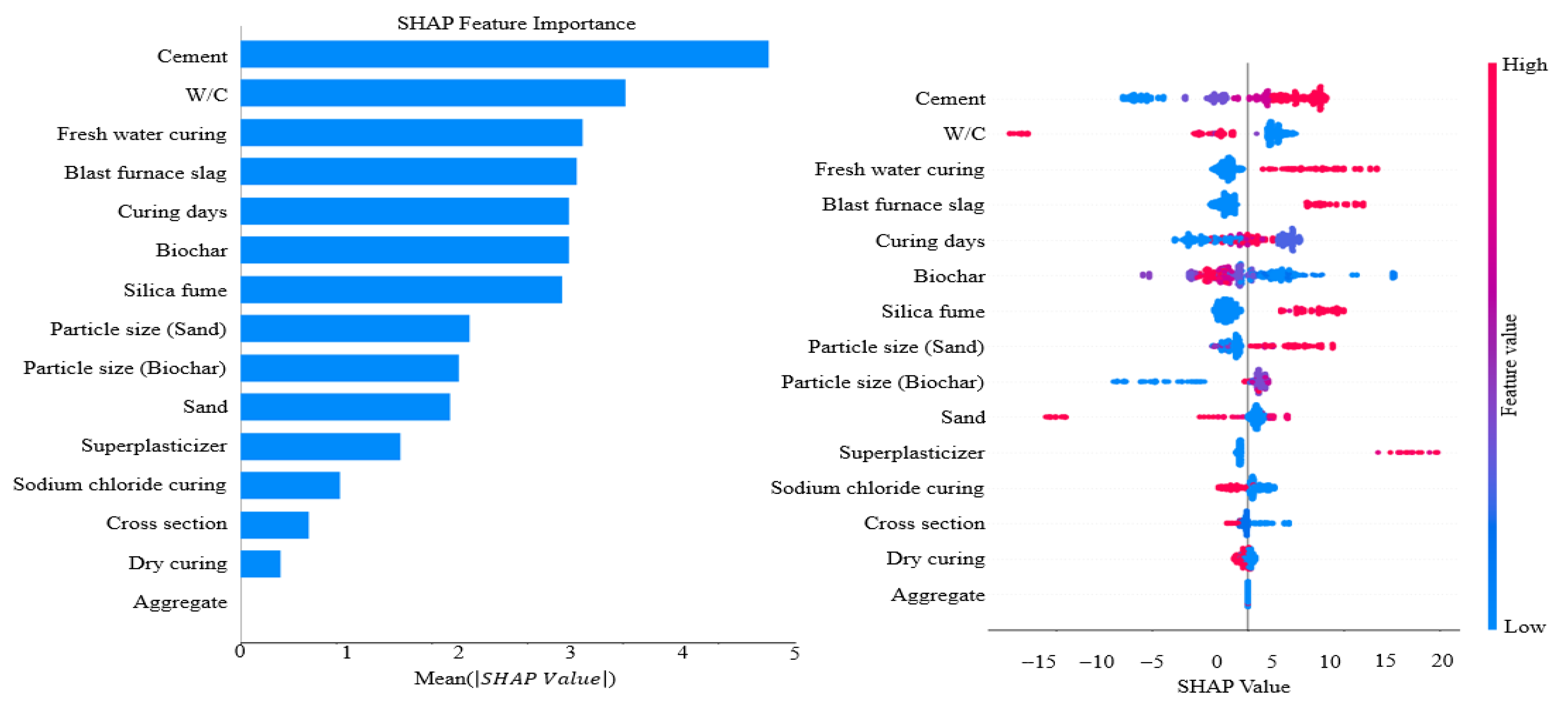
- SHAP analysis indicated that cement and the W/C had the highest SHAP values, showing the dominant influence of cement and the W/C on compressive strength prediction. Fresh water curing and blast furnace slag also exhibited high SHAP values, achieved significant contributions to model output. Curing days and biochar formed a second group of influential variables. Silica fume and both particle size variables (biochar and sand) showed moderate SHAP values, whereas superplasticizer and sodium chloride curing exhibited low influence. Cross-sectional area, dry curing and aggregate had the smallest SHAP values. The SHAP distribution plots confirmed the strong impact of cement and the W/C, and the consistent distributions of fresh water curing and blast furnace slag further indicated the importance of fresh water curing and blast furnace slag in the prediction process. These results indicate that biochar has potential as a low-carbon construction material when used as a partial cement replacement.
- Compared with conventional compressive strength tests that require specimen preparation and curing time, the machine learning approach enables efficient evaluation of compressive strength after model training. This approach reduces the time and effort associated with experimental testing and facilitates performance assessment of biochar-cementitious composites.
- This study predicted the compressive strength of biochar-cementitious composites using machine learning to evaluate the potential of biochar as a low-carbon construction material. Future research will focus on predicting long-term strength, flexural strength, freeze–thaw durability, fire resistance, and other performance characteristics of biochar-cementitious composites under diverse service conditions.
Supplementary Materials
Author Contributions
Funding
Institutional Review Board Statement
Informed Consent Statement
Data Availability Statement
Conflicts of Interest
Abbreviations
| W/C | water-to-cement ratio |
| SF | Silica fume |
| BFS | Blast furnace slag |
| MLR | Multiple linear regression |
| ENR | Elastic net regression |
| SVR | Support vector regression |
| GBM | Gradient boosting machine |
| XGBoost | eXtreme Gradient Boosting |
| LightGBM | Light Gradient Boosting Machine |
| Catboost | Categorical boosting |
| NGBoost | Natural gradient boosting |
| MAE | Mean absolute error |
| RMSE | Root mean squared error |
| MAPE | Mean absolute percentage error |
References
- Barbhuiya, S.; Kanavaris, F.; Das, B.B.; Idrees, M. Decarbonising cement and concrete production: Strategies, challenges and pathways for sustainable development. J. Build. Eng. 2024, 86, 108861. [Google Scholar] [CrossRef] [Scilit]
- Proaño, L.; Sarmiento, A.T.; Figueredo, M.; Cobo, M. Techno-economic evaluation of indirect carbonation for CO2 emissions capture in cement industry: A system dynamics approach. J. Clean. Prod. 2020, 263, 121457. [Google Scholar] [CrossRef] [Scilit]
- Andrew, R.M. Global CO2 emissions from cement production. Earth Syst. Sci. Data 2018, 10, 195–217. [Google Scholar] [CrossRef] [Scilit]
- UNFCCC. Fourth Biennial Update Report of the Republic of Korea Under the United Nations Framework Convention on Climate Change. 2021. Available online: https://unfccc.int/sites/default/files/resource/1092386_Republic%20of%20Korea-BUR4-3-Fourth%20Biennial%20Update%20Report%20of%20the%20Republic%20of%20Korea_rev.pdf (accessed on 29 January 2025).
- UNFCCC. 2050 Carbon Neutrality Strategy of the Republic of Korea. 2020. Available online: https://unfccc.int/sites/default/files/resource/LTS1_RKorea.pdf (accessed on 29 January 2025).
- Government of Korea. The Third National Climate Change Adaptation Plan (2021–2025). 2020. Available online: https://www.climate.go.kr/home/cc_data/policy/3_nation_climate_change_adaptation_step_summary.pdf (accessed on 29 January 2025).
- Afshar, M.; Mofatteh, S. Biochar for a sustainable future: Environmentally friendly production and diverse applications. Results Eng. 2024, 23, 102433. [Google Scholar] [CrossRef] [Scilit]
- Matarru, A.A.; Shin, D. Biochar production technology as a negative emission strategy: A review. Energies 2025, 18, 4898. [Google Scholar] [CrossRef] [Scilit]
- Osman, A.I.; Farghali, M.; Dong, Y.; Kong, J.; Yousry, M.; Rashwan, A.K.; Yap, P.S. Reducing the carbon footprint of buildings using biochar-based bricks and insulating materials: A review. Environ. Chem. Lett. 2024, 22, 71–104. [Google Scholar] [CrossRef] [Scilit]
- Khan, H.; Zahid, Z.B.; Hussain, F.; Ahmad, J.; Khushnood, R.A. Sustainable multifunctional biochar-based cementitious composites for carbon sequestration, energy storage and smart infrastructure applications: A review. Case Stud. Constr. Mater. 2025, 23, e05117. [Google Scholar] [CrossRef] [Scilit]
- Patel, R.; Stobbs, J.; Acharya, B. Study of biochar in cementitious materials for developing green concrete composites. Sci. Rep. 2025, 15, 22192. [Google Scholar] [CrossRef] [Scilit]
- Suarez-Riera, D.; Falliano, D.; Carvajal, J.F.; Celi, A.C.B.; Ferro, G.A.; Tulliani, J.M.; Restuccia, L. The effect of different biochar on the mechanical properties of cement pastes and mortars. Buildings 2023, 13, 2900. [Google Scholar] [CrossRef] [Scilit]
- Zhou, Y.; Wang, S.; Chen, L. Progress and prospects of biochar as concrete filler: A review. Alex. Eng. J. 2025, 128, 306–323. [Google Scholar] [CrossRef] [Scilit]
- Kiran, G.U.; Nakkeeran, G.; Roy, D.; Alaneme, G.U. Impact of biochar on strength, durability and carbon sequestration in cement-based materials. Discov. Sustain. 2025, 6, 579. [Google Scholar] [CrossRef] [Scilit]
- Senadheera, S.S.; Gupta, S.; Kua, H.W.; Hou, D.; Kim, S.; Tsang, D.C.; Ok, Y.S. Application of biochar in concrete: A review. Cem. Concr. Compos. 2023, 143, 105204. [Google Scholar] [CrossRef] [Scilit]
- Zhao, Z.; El-Naggar, A.; Kau, J.; Olson, C.; Tomlinson, D.; Chang, S.X. Biochar affects compressive strength of Portland cement composites: A meta-analysis. Biochar 2024, 6, 21. [Google Scholar] [CrossRef] [Scilit]
- Qing, L.; Zhang, H.; Zhang, Z. Effect of biochar on compressive strength and fracture performance of concrete. J. Build. Eng. 2023, 78, 107587. [Google Scholar] [CrossRef] [Scilit]
- Liu, W.; Li, K.; Xu, S. Utilizing bamboo biochar in cement mortar as a bio-modifier to improve compressive strength and crack-resistance fracture ability. Constr. Build. Mater. 2022, 327, 126917. [Google Scholar] [CrossRef] [Scilit]
- Hylton, J.; Hugen, A.; Rowland, S.M.; Griffin, M.; Tunstall, L.E. Relevant biochar characteristics influencing compressive strength of biochar-cement mortars. Biochar 2024, 6, 87. [Google Scholar] [CrossRef] [Scilit]
- Akhtar, A.; Sarmah, A.K. Novel biochar–concrete composites: Manufacturing, characterization and evaluation of mechanical properties. Sci. Total Environ. 2018, 616, 408–416. [Google Scholar] [CrossRef] [Scilit] [PubMed]
- Mo, L.; Fang, J.; Huang, B.; Wang, A.; Deng, M. Combined effects of biochar and MgO expansive additive on autogenous shrinkage, internal relative humidity and compressive strength of cement pastes. Constr. Build. Mater. 2019, 229, 116877. [Google Scholar] [CrossRef] [Scilit]
- Gupta, S.; Kua, H.W. Combination of biochar and silica fume as partial cement replacement in mortar: Performance evaluation under normal and elevated temperature. Waste Biomass Valorization 2020, 11, 2807–2824. [Google Scholar] [CrossRef] [Scilit]
- Fathy, I.N.; Dahish, H.A.; Alkharisi, M.K.; Mahmoud, A.A.; Fouad, H.E.E. Predicting the compressive strength of concrete incorporating waste powders exposed to elevated temperatures utilizing machine learning. Sci. Rep. 2025, 15, 25275. [Google Scholar] [CrossRef] [Scilit]
- Poudel, S.; Gautam, B.; Bhetuwal, U.; Kharel, P.; Khatiwada, S.; Dhital, S.; Kim, Y.J. Prediction of compressive strength of sustainable concrete incorporating waste glass powder using machine learning algorithms. Sustainability 2025, 17, 4624. [Google Scholar] [CrossRef] [Scilit]
- El-Mir, A.; El-Zahab, S.; Sbartaï, Z.M.; Homsi, F.; Saliba, J.; El-Hassan, H. Machine learning prediction of concrete compressive strength using rebound hammer test. J. Build. Eng. 2023, 64, 105538. [Google Scholar] [CrossRef] [Scilit]
- Kim, J.; Jang, W.; Kang, S.; Kim, D.; Lee, H. Comparative study of machine learning for predicting compressive strength in oyster shell cementitious composites. Materials 2025, 18, 5314. [Google Scholar] [CrossRef] [Scilit] [PubMed]
- Zhang, Y.; Ye, Y.; Wang, J.; Tang, B.; Fu, F. Strength prediction of self-compacting concrete using improved RVM machine learning method. Int. J. Concr. Struct. Mater. 2025, 19, 101. [Google Scholar] [CrossRef] [Scilit]
- Khodadadi, N.; Golafshani, E.; Roghani, H.; Behnood, A.; El-Kenawy, E.S.M.; Ngo, T.; Nanni, A. Predicting the compressive strength of glass fiber-reinforced polymer confined concrete elements using metaheuristics-guided machine learning. Int. J. Concr. Struct. Mater. 2025, 19, 105. [Google Scholar] [CrossRef] [Scilit]
- Vihas, C.; Rao, P.R.; Kumar, D.S.; Reddy, V.V.S.; Abhilash, N. Machine learning-based prediction of concrete compressive strength incorporating GGBS. Procedia Struct. Integr. 2025, 70, 461–468. [Google Scholar] [CrossRef] [Scilit]
- Mahmood, M.S.; Elahi, A.; Zaid, O.; Alashker, Y.; Șerbănoiu, A.A.; Grădinaru, C.M.; Ali, T. Enhancing compressive strength prediction in self-compacting concrete using machine learning and deep learning techniques with incorporation of rice husk ash and marble powder. Case Stud. Constr. Mater. 2023, 19, e02557. [Google Scholar] [CrossRef] [Scilit]
- Shaaban, M.; Amin, M.; Selim, S.; Riad, I.M. Machine learning approaches for forecasting compressive strength of high-strength concrete. Sci. Rep. 2025, 15, 25567. [Google Scholar] [CrossRef] [Scilit]
- Huang, J.; Zhou, M.; Yuan, H.; Sabri, M.M.S.; Li, X. Prediction of compressive strength for cement-based materials with metakaolin based on hybrid machine learning method. Materials 2022, 15, 3500. [Google Scholar] [CrossRef] [Scilit]
- Silva, V.P.; Carvalho, R.D.A.; Rêgo, J.H.D.S.; Evangelista, F., Jr. Machine learning-based prediction of compressive strength of Brazilian concretes: A dual-dataset study. Materials 2023, 16, 4977. [Google Scholar] [CrossRef] [Scilit]
- Wang, W.; Zhong, Y.; Liao, G.; Ding, Q.; Zhang, T.; Li, X. Prediction of compressive strength of concrete specimens based on interpretable machine learning. Materials 2024, 17, 3661. [Google Scholar] [CrossRef] [Scilit]
- Feng, D.C.; Liu, Z.T.; Wang, X.D.; Chen, Y.; Chang, J.Q.; Wei, D.F.; Jiang, Z.M. Machine learning-based compressive strength prediction for concrete: An adaptive boosting approach. Constr. Build. Mater. 2020, 230, 117000. [Google Scholar] [CrossRef] [Scilit]
- Nguyen, H.; Vu, T.; Vo, T.P.; Thai, H.T. Efficient machine learning models for prediction of concrete strengths. Constr. Build. Mater. 2021, 266, 120950. [Google Scholar] [CrossRef] [Scilit]
- Paixão, R.C.F.D.; Penido, R.E.K.; Cury, A.A.; Mendes, J.C. Comparison of machine learning techniques to predict the compressive strength of concrete and considerations on model generalization. Rev. IBRACON Estrut. Mater. 2022, 15, e15503. [Google Scholar] [CrossRef] [Scilit]
- Elhishi, S.; Elashry, A.M.; El-Metwally, S. Unboxing machine learning models for concrete strength prediction using XAI. Sci. Rep. 2023, 13, 19892. [Google Scholar] [CrossRef] [Scilit]
- Li, D.; Tang, Z.; Kang, Q.; Zhang, X.; Li, Y. Machine learning-based method for predicting compressive strength of concrete. Processes 2023, 11, 390. [Google Scholar] [CrossRef] [Scilit]
- Le, Q.H.; Nguyen, D.H.; Sang-To, T.; Khatir, S.; Le-Minh, H.; Gandomi, A.H.; Cuong-Le, T. Machine learning-based models for predicting compressive strength of geopolymer concrete. Front. Struct. Civ. Eng. 2024, 18, 1028–1049. [Google Scholar] [CrossRef] [Scilit]
- Zalhaf, N.M. Application of artificial neural network for prediction of concrete–high-performance concrete interfacial bond strength after exposure to elevated temperature. Int. J. Concr. Struct. Mater. 2025, 19, 31. [Google Scholar] [CrossRef] [Scilit]
- Park, W.Y.; Moon, J. Machine learning-based reactivity prediction of fly ash type F produced from South Korea. Int. J. Concr. Struct. Mater. 2023, 17, 58. [Google Scholar] [CrossRef] [Scilit]
- Sanyal, P. Machine learning-based prediction of compressive strength of blended concrete using categorical encoding of cementitious materials. Iran J. Sci. Technol. Trans. Civ. Eng. 2025, 1–28. [Google Scholar] [CrossRef] [Scilit]
- Jeon, S.B.; Kang, S.; Jeong, M.H.; Lee, H. Predicting the compressive strength of carbon-enhanced cementitious composites using two-dimensional convolutional neural networks. Case Stud. Constr. Mater. 2024, 20, e03331. [Google Scholar] [CrossRef] [Scilit]
- Chen, X.; Zhang, X.; Chen, W.Z. Advanced predictive modeling of concrete compressive strength and slump characteristics: A comparative evaluation of BPNN, SVM and RF models optimized via PSO. Materials 2024, 17, 4791. [Google Scholar] [CrossRef] [Scilit] [PubMed]
- Behazin, E.; Ogunsona, E.; Rodriguez-Uribe, A.; Mohanty, A.K.; Misra, M.; Anyia, A.O. Mechanical, chemical and physical properties of wood and perennial grass biochars for possible composite application. BioResources 2016, 11, 1334–1348. [Google Scholar] [CrossRef] [Scilit]
- ASTM C136/C136M-19; ASTM. Standard Test Method for Sieve Analysis of Fine and Coarse Aggregates. Annual Book of ASTM Standards. ASTM International: West Conshohocken, PA, USA, 2019.
- ASTM C1240-20; ASTM. Standard Specification for Silica Fume Used in Cementitious Mixtures. Annual Book of ASTM Standards. ASTM International: West Conshohocken, PA, USA, 2020.
- ASTM C989-19; ASTM. Standard Specification for Slag Cement for Use in Concrete and Mortars. Annual Book of ASTM Standards. ASTM International: West Conshohocken, PA, USA, 2019.
- Kang, S.; Pyo, S.; Lee, H. Thermal, electrical and mechanical performances of ultrahigh-performance cementitious composites with multiwalled carbon nanotubes. Case Stud. Constr. Mater. 2024, 21, e03691. [Google Scholar] [CrossRef] [Scilit]
- Kim, J.; Cha, I.; Jo, B.; Lee, H. Evaluation of compressive strength of eco-friendly cementitious composites incorporating waste oyster shells under sodium chloride solution exposure. Case Stud. Constr. Mater. 2025, 23, e04944. [Google Scholar] [CrossRef] [Scilit]
- Cha, I.; Kim, J.; Lee, H. Enhancing compressive strength in cementitious composites through effective use of wasted oyster shells and admixtures. Buildings 2023, 13, 2787. [Google Scholar] [CrossRef] [Scilit]
- Manda, M.S.; Mat Rejab, M.R.; Hassan, S.A.; Wahit, M.U.; Nurhadiyanto, D. Experimental study on tin slag polymer concrete strengthening under compression with metallic material confinement. Polymers 2023, 15, 817. [Google Scholar] [CrossRef] [Scilit]
- ASTM C109/C109M-20b; ASTM. Standard Test Method for Compressive Strength of Hydraulic Cement Mortars (Using 2-in. or 50-mm Cube Specimens). Annual Book of ASTM Standards. ASTM International: West Conshohocken, PA, USA, 2020.
- Hidayaturrohman, Q.A.; Hanada, E. Impact of data pre-processing techniques on XGBoost model performance for predicting all-cause readmission and mortality among patients with heart failure. BioMedInformatics 2024, 4, 2201–2212. [Google Scholar] [CrossRef] [Scilit]
- Hancock, J.T.; Khoshgoftaar, T.M. Survey on categorical data for neural networks. J. Big Data 2020, 7, 28. [Google Scholar] [CrossRef] [Scilit]
- Omoseebi, A.; Ola, G.; Tyler, J. Data Preparation and Feature Engineering. 2024. Available online: https://www.researchgate.net/profile/Adetoyese-Omoseebi/publication/389860294_Data_Preparation_and_Feature_Engineeing/links/67d54567e62c604a0dd9c138/Data-Preparation-and-Feature-Engineering.pdf (accessed on 9 December 2025).
- Chen, S.; Zhang, J.; Yang, H. Effects of water-to-cement and sand-to-binder ratio on mechanical and drying shrinkage properties of low-carbon mortar containing biochar aggregate. Materials 2025, 18, 2750. [Google Scholar] [CrossRef] [Scilit]
- Selvanathan, P.; Gunasekaran, P.K.; Lai, Y.F.; Anand, N.; Chin, S.C. Curing effect on the strength of cement mortar with bamboo biochar. Int. J. Nanoelectron. Mater. 2024, 17, 465–471. [Google Scholar] [CrossRef] [Scilit]
- Gupta, S.; Kua, H.W.; Pang, S.D. Biochar–concrete composite: Manufacturing, characterization and performance evaluation at elevated temperature. Acad. J. Civ. Eng. 2019, 37, 73. [Google Scholar] [CrossRef]
- Yang, X.; Lin, R.S.; Han, Y.; Wang, X.Y. Behavior of biochar-modified cementitious composites exposed to high temperatures. Materials 2021, 14, 5414. [Google Scholar] [CrossRef] [Scilit] [PubMed]
- Kang, S.B.; Yun, H.D.; Choi, W. Feasibility of diverse biochars as supplementary cementitious materials. Sci. Rep. 2025, 15, 40732. [Google Scholar] [CrossRef] [Scilit]
- Zhou, Z.; Wang, J.; Tan, K.; Chen, Y. Enhancing biochar impact on the mechanical properties of cement-based mortar: An optimization study using response surface methodology for particle size and content. Sustainability 2023, 15, 14787. [Google Scholar] [CrossRef] [Scilit]
- Gupta, S.; Kua, H.W.; Pang, S.D. Effect of biochar on mechanical and permeability properties of concrete exposed to elevated temperature. Constr. Build. Mater. 2020, 234, 117338. [Google Scholar] [CrossRef] [Scilit]
- Boumaaza, M.; Belaadi, A.; Alshahrani, H.; Bourchak, M.; Jawaid, M. Response surface methodology optimization of palm rachis biochar content and temperature effects on predicting bio-mortar compressive strength, porosity and thermal conductivity. J. Nat. Fibers 2023, 20, 2162184. [Google Scholar] [CrossRef] [Scilit]
- Yehia, S.A.; Fayed, S.; Zakaria, M.H.; Shahin, R.I. Prediction of RC T-beams shear strength based on machine learning. Int. J. Concr. Struct. Mater. 2024, 18, 52. [Google Scholar] [CrossRef] [Scilit]
- Kim, M.S.; Son, J.J.; Chung, C.W.; Lee, C.J. Factors influencing measurement of dynamic elastic modulus from disk-shaped concrete specimen. Int. J. Concr. Struct. Mater. 2024, 18, 68. [Google Scholar] [CrossRef] [Scilit]
- Haruna, S.I.; Zhu, H.; Ibrahim, Y.E.; Yang, J.; Farouk, A.I.B.; Shao, J.; Ahmed, O.S. Sustainable polyurethane-based polymer concrete: Mechanical and non-destructive properties with machine learning technique. Int. J. Concr. Struct. Mater. 2025, 19, 62. [Google Scholar] [CrossRef] [Scilit]
- Nishat, M.H.; Khan, M.H.R.B.; Ahmed, T.; Hossain, S.N.; Ahsan, A.; El-Sergany, M.M.; Alresheedi, M.T. Comparative analysis of machine learning models for predicting water quality index in Dhaka’s rivers of Bangladesh. Environ. Sci. Eur. 2025, 37, 31. [Google Scholar] [CrossRef] [Scilit]
- Rodríguez-Pérez, R.; Bajorath, J. Evolution of support vector machine and regression modeling in chemoinformatics and drug discovery. J. Comput.-Aided Mol. Des. 2022, 36, 355–362. [Google Scholar] [CrossRef] [Scilit] [PubMed]
- Zhang, Y.; Liu, J.; Shen, W. A review of ensemble learning algorithms used in remote sensing applications. Appl. Sci. 2022, 12, 8654. [Google Scholar] [CrossRef] [Scilit]
- Mustapha, I.B.; Abdulkareem, M.; Jassam, T.M.; AlAteah, A.H.; Al-Sodani, K.A.A.; Al-Tholaia, M.M.; Ganiyu, A. Comparative analysis of gradient-boosting ensembles for estimation of compressive strength of quaternary blend concrete. Int. J. Concr. Struct. Mater. 2024, 18, 20. [Google Scholar] [CrossRef] [Scilit]
- Beskopylny, A.N.; Stel’makh, S.A.; Shcherban’, E.M.; Mailyan, L.R.; Meskhi, B.; Razveeva, I.; Beskopylny, N. Concrete strength prediction using machine learning methods CatBoost, k-nearest neighbors and support vector regression. Appl. Sci. 2022, 12, 10864. [Google Scholar] [CrossRef] [Scilit]
- Díaz, E.; Spagnoli, G. Natural gradient boosting for probabilistic prediction of soaked CBR values using an explainable artificial intelligence approach. Buildings 2024, 14, 352. [Google Scholar] [CrossRef] [Scilit]
- Yoon, J.; Yonis, A.; Park, S.; Rajabipour, F.; Pyo, S. Prediction of the R 3 test-based reactivity of supplementary cementitious materials: A machine learning approach utilizing physical and chemical properties. Int. J. Concr. Struct. Mater. 2024, 18, 75. [Google Scholar] [CrossRef] [Scilit]
- Jeong, H.; Han, S.J.; Ju, H.; Kim, K.S. Formulation of shear strength for concrete members using SHAP and iterated local search with semantic cluster operator. Int. J. Concr. Struct. Mater. 2025, 19, 112. [Google Scholar] [CrossRef] [Scilit]
- Mustapha, I.B.; Abdulkareem, Z.; Abdulkareem, M.; Ganiyu, A. Predictive modeling of physical and mechanical properties of pervious concrete using XGBoost. Neural Comput. Appl. 2024, 36, 9245–9261. [Google Scholar] [CrossRef] [Scilit]
- Kang, Q.; Bao, J.; Li, R.; Zuo, Y.; Ye, Y.; Huang, H. Analysis of the strength of different minerals-modified MPC based on mathematical models. Int. J. Concr. Struct. Mater. 2024, 18, 16. [Google Scholar] [CrossRef] [Scilit]
- Khalifa, A.; Said, F.B.; Kacem, Y.H. Optuna-optimized meta-learner and ensemble learning models for student performance prediction. Procedia Comput. Sci. 2025, 270, 1826–1835. [Google Scholar] [CrossRef] [Scilit]
- Han, S.; Heo, T.; Yeum, C.M.; Kim, K.; Choi, J.; Tia, M. Machine learning approach to rapidly evaluate curling of concrete pavement. Int. J. Concr. Struct. Mater. 2024, 18, 71. [Google Scholar] [CrossRef] [Scilit]





| Component | Weight Ratio (%) |
|---|---|
| Carbon (C) | 82.12 |
| Oxygen (O) | 16.02 |
| Calcium (Ca) | 0.97 |
| Potassium (K) | 0.89 |
| Variables | Unit | Range of Data |
|---|---|---|
| Cement | % | 88–100 |
| Biochar | 0–15 | |
| Sand | 0–465 | |
| Aggregate | 0–254 | |
| Silica fume | 0–20 | |
| Blast furnace slag | 0–15 | |
| Superplasticizer | 0.0–2.5 | |
| Water-to-cement (W/C) | - | 0.28–0.45 |
| Curing day | day | 1–91 |
| Particle size | 0.15–5 | |
| Cross section | 1600–7854 | |
| Curing condition | - | Dry curing |
| Fresh water curing | ||
| Sodium chloride curing |
| Index | Data Count | Reference |
|---|---|---|
| 482–497 | 16 | [58] |
| 498–512 | 15 | [59] |
| 513–522 | 10 | [60] |
| 523–534 | 12 | [61] |
| 535–542 | 8 | [62] |
| 543–576 | 34 | [63] |
| 577–611 | 35 | [18] |
| 612–621 | 10 | [64] |
| 622–717 | 96 | [65] |
| Model | Mathematical Formulation |
|---|---|
| MLR | |
| ENR | |
| SVR | |
| GBM | |
| XGBoost | |
| LightGBM | |
| CatBoost | |
| NGBoost |
| Machine Learning Model | MAE | RMSE | MAPE (%) | |
|---|---|---|---|---|
| MLR | 5.2003 | 6.7482 | 17.14 | 0.6385 |
| ENR | 5.1962 | 6.7468 | 17.11 | 0.6387 |
| SVR | 3.6735 | 5.1038 | 13.29 | 0.7932 |
| GBM | 3.4329 | 4.7934 | 11.58 | 0.8176 |
| XGBoost | colsample_bytree | 0.75 |
| learning_rate | 0.03 | |
| max_depth | 4 | |
| min_child_weight | 5 | |
| n_estimators | 200 | |
| reg_alpha | 0.0 | |
| reg_lambda | 1.0 | |
| subsample | 0.6 | |
| LightGBM | colsample_bytree | 0.6 |
| learning_rate | 0.05 | |
| max_depth | 5 | |
| n_estimators | 200 | |
| num_leaves | 15 | |
| reg_lambda | 0.0 | |
| subsample | 0.6 | |
| CatBoost | depth | 5 |
| l2_leaf_reg | 5 | |
| learning_rate | 0.03 | |
| min_data_in_leaf | 3 | |
| n_estimators | 350 | |
| subsample | 0.6 | |
| NGBoost | n_estimators | 300 |
| learning_rate | 0.02916 | |
| minibatch_frac | 0.3223 | |
| col_sample | 0.5986 |
| Machine Learning Model | MAE | RMSE | MAPE (%) | |
|---|---|---|---|---|
| XGBoost | 3.5351 | 4.8904 | 12.00 | 0.8102 |
| LightGBM | 3.3258 | 4.6673 | 11.19 | 0.8271 |
| CatBoost | 3.4353 | 4.7777 | 11.69 | 0.8188 |
| NGBoost | 3.6801 | 5.0285 | 12.29 | 0.7993 |
Disclaimer/Publisher’s Note: The statements, opinions and data contained in all publications are solely those of the individual author(s) and contributor(s) and not of MDPI and/or the editor(s). MDPI and/or the editor(s) disclaim responsibility for any injury to people or property resulting from any ideas, methods, instructions or products referred to in the content. |
© 2026 by the authors. Licensee MDPI, Basel, Switzerland. This article is an open access article distributed under the terms and conditions of the Creative Commons Attribution (CC BY) license.
Share and Cite
Kim, J.; Ryu, D.; Hwan, H.; Lee, H. Performance Analysis of Boosting-Based Machine Learning Models for Predicting the Compressive Strength of Biochar-Cementitious Composites. Materials 2026, 19, 338. https://doi.org/10.3390/ma19020338
Kim J, Ryu D, Hwan H, Lee H. Performance Analysis of Boosting-Based Machine Learning Models for Predicting the Compressive Strength of Biochar-Cementitious Composites. Materials. 2026; 19(2):338. https://doi.org/10.3390/ma19020338
Chicago/Turabian StyleKim, Jinwoong, Daehee Ryu, Heojeong Hwan, and Heeyoung Lee. 2026. "Performance Analysis of Boosting-Based Machine Learning Models for Predicting the Compressive Strength of Biochar-Cementitious Composites" Materials 19, no. 2: 338. https://doi.org/10.3390/ma19020338
APA StyleKim, J., Ryu, D., Hwan, H., & Lee, H. (2026). Performance Analysis of Boosting-Based Machine Learning Models for Predicting the Compressive Strength of Biochar-Cementitious Composites. Materials, 19(2), 338. https://doi.org/10.3390/ma19020338