1. Introduction
Extrusion of difficult-to-deform AlZnMg(Cu) aluminium alloys is extremely difficult in industrial practice because of the high yield strength of the material under extrusion conditions and its high friction resistance, which leads to high extrusion forces and high stresses acting on the die (strong elastic deflection of the die) and high unevenness of metal flow. As a result, high geometric instability of the extruded product is observed, with dimensional deviations exceeding the permissible limits, and in extreme cases, loss of material cohesion and numerous surface cracks in the product.
The available scientific literature contains many articles on issues related to force in the aluminium alloy extrusion process and product quality associated with the uniformity of flow and the temperature of the extruded metal. Most often, optimisation concerns the design of the die in terms of minimising the extrusion force or controlling the speed of aluminium flow through the die. The vast majority of these works concern easily deformable aluminium alloys, aluminium composite materials, or magnesium alloys.
The results of research on the analysis of force in the extrusion process of aluminium alloys can be found in [
1,
2]. In order to ensure the feasibility of the process and the quality of the finished product, it is expected that the extrusion force must be as low as possible [
1]. The authors of that paper performed calculations to determine the extrusion force of 6xxx series aluminium alloys with a view to minimising it for conical flat dies. In the actual extrusion process, it often happens that the force is too high, which poses a serious threat to production. It increases the unstable factors in metal forming and the extrusion difficulties, and moreover, it can easily cause premature damage to tools, in particular the die, and failure of the extrusion equipment system [
2]. The authors of that paper attempted to reduce the extrusion force of AlMgSi alloys using an original porthole die design. Their research focused mainly on materials and techniques. The die construction, which can reduce the extrusion force, was analysed in detail and can be used as a reference point in die design.
In work [
3], numerical modelling was used to determine, among other things, the maximum force during the extrusion of thin rods from a biocompatible magnesium alloy containing a calcium additive. In turn, in [
4], the authors performed an analytical and numerical analysis of, among other things, the extrusion force and stresses in the extrusion process of Al6063-SiC composite. Article [
5] presents the detailed results of a numerical analysis of the hot extrusion process of twist drills, with careful consideration of thermal phenomena. As a result of that research, it was possible to determine the force parameters, the distributions of effective deformation, reduced stress, and temperature. As a result, it was proven that it is possible to produce twist drills by using extrusion. In [
6], a detailed numerical analysis of stresses, forces, and temperatures arising during the axisymmetric cold extrusion of perforated aluminium alloy samples was carried out. In addition, the influence of the friction coefficient on effective stresses in samples with holes of various sizes located on the axis of symmetry was analysed. A comparative analysis of the extrusion forces acting on the punch at different friction coefficients was performed. The temperatures obtained during the extrusion of perforated samples without friction and in the presence of friction were compared. For a thorough analysis of the issue, the results of the extrusion of perforated samples were compared with the results obtained in samples without holes.
Article [
7] presents the results of a numerical analysis of deformation force calculations performed on backward extrusion with the use of active friction force action. It was shown that the numerical methods of the analysis based on the finite element method gave accurate results. This allows us to recommend numerical methods for the calculation of the force values acting on a working tool in backward extrusion. In addition, numerical research enables the prediction of shape change in workpieces at any stage of the backward extrusion process. The force changes, calculated analytically and numerically, agree well with the experimental data. Then, in work [
8], a new method of backward extrusion using small diameter billet is proposed. The die setup consists of three main parts: the fix-punch, the movable punch, and the die. The backward extrusion process was analysed using experimental and finite element (FE) methods. Based on the results, it was found that the load was reduced to less than a quarter of that seen in the conventional backward extrusion process. This is a result of reducing the cross-section of the initial billet. It was shown that the applied plastic strain in this new process is about two times higher than that in the conventional backward extrusion process.
In work [
9], using the example of extrusion of a round bar, the results of a comparative analysis of the effect of the extrusion ratio on, among other things, the extrusion force are presented. The tests were carried out over a wide range of extrusion ratios with a constant external diameter of the die. Based on the results obtained, it was found, among other things, that as the extrusion ratio increases, the extrusion force increases; however, the increase in this force is not proportional to the increase in the extrusion ratio (extrusion force can be described by a logarithmic equation). The most intense increase in force was observed in the range of small extrusion ratios (max. 3).
An equally important technological parameter that directly affects the extrusion force is the temperature of the extruded material. Accurate determination and verification of temperature values in extrusion processes using numerical modelling methods is a complex issue. This is due, among other things, to the changing friction conditions during the extrusion process. The temperature value and distribution during extrusion are influenced by many factors, such as the cross-sectional area and length of the billet, degree of reduction and cross-sectional shape of the extruded product, extrusion speed, and extrusion method (technique). The temperature of the extruded material (and cooling conditions) also directly affects the microstructure and properties of the finished product.
The analysis of temperature in extrusion processes was addressed, among others, by the authors of works [
10,
11,
12,
13,
14]. In work [
10], the influence of temperature and extrusion ratio on the microstructure and mechanical properties of a new Al-4Cu-1Li-0.4Mg-0.4Ag-0.11Zr alloy was investigated. It was concluded that the softening mechanism during extrusion was dominated mainly by dynamic recovery (DRV). However, the microstructure showed significant dynamic recrystallisation (DRX) properties when the extrusion temperature increased to 480 °C. The texture orientation of the extruded rods was concentrated in the <111> and <001> directions, with the <111> texture showing greater intensity. It was stated that changes in the extrusion ratio and temperature have little effect on the type of texture but significantly alter its intensity. After the T6 ageing treatment, the density of the T1 phase increased with increasing extrusion ratios, accompanied by a finer size and more uniform distribution. High temperatures led to visible recrystallisation and grain coarsening, reducing deformability and plasticity. By optimising the temperature and extrusion ratio, a good combination of strength and ductility was ultimately achieved for the alloy under investigation. In turn, paper [
11] presents results on the influence of temperature and die angle on the tensile strength, hardness, extrusion load, and yield stress of aluminium 6063 processed by the Equal Channel Angular Extrusion Method (ECAE). Based on the results obtained, it was found, among other things, that for all analysed temperatures and angles, temperature has a greater influence on the ECAE process parameters than die angle. High temperatures can also reduce the force required for extrusion. A high temperature of the extruded material also allows for a more uniform distribution of yield stresses in aluminium processed by the ECAE.
As emphasised by the authors of the study [
12], extrusion temperature and speed are important factors influencing microstructure development. In turn, microstructure development plays a key role in maintaining the mechanical properties of materials. In direct extrusion, the homogeneous evolution of the microstructure along the length of the extruded bar may be disrupted due to the non-isothermal evolution of the initial temperature. Therefore, a new solution with real-time control of extrusion temperature and speed was proposed to characterise the effect of temperature on the microstructure and to obtain its uniform development for magnesium alloy. During extrusion, the temperature of the bar was monitored using a thermal imaging camera. The extrusion speed was controlled in real time, depending on the temperature difference between the set reference temperature and the temperature obtained from the thermal imaging camera. Based on the results obtained, it was found that real-time extrusion speed control effectively influenced the development of the microstructure at a stable temperature.
In work [
13], the influence of temperature and pressure changes on deformation prediction using the finite element method (FEM) in the extrusion process was investigated. Based on the results obtained, it was found, among other things, that FEM can be successfully applied to model the deformation patterns in the load/displacement traces and temperature evolution during the extrusion cycle.
The authors of paper [
14] also dealt with modelling the temperature distribution during the extrusion process using FEM. Experimental verification confirmed the high accuracy obtained by the computer simulations. The research and computer simulations carried out showed that the accurate selection of the rheological model and the determination of its parameters affect the accuracy of the results obtained.
In the case of plastic working processes, the key characteristic determining the plastic forming ability of a given material is the yield stress σ
p and the limit strain ε
l [
15]. The yield stress under uniaxial stress conditions is a function of strain (ε), strain rate (
), temperature (T), and strain history. Determining the rheological properties of materials is particularly difficult under hot plastic working conditions, as the material structure undergoes simultaneous strengthening processes resulting from the plastic deformation mechanism, the presence of foreign phase particles in solution and in the form of precipitates, as well as thermally activated softening processes that lead to material weakening [
15,
16]. For the correct determination of the rheological properties of the analysed material, it is important to take into account the influence of material temperature, strain values, and strain rate, which increase the accuracy of calculations [
17,
18].
The accuracy of mathematical models describing changes in yield stress depending on deformation parameters is important in processes characterised by high deformation values, such as extrusion or twisting. This is confirmed by the results of published studies, including, among others [
19,
20]. These studies demonstrate the significant impact of the accuracy of the mathematical model of rheological properties on the distribution and values of the deformation parameters and on the stress of the tested material. The research clearly shows that the correct calculation of deformation parameters (deformation value, deformation rate) and stress requires the use of an accurate mathematical model of the tested material. In turn, accurate calculation of the yield stress value is necessary for the correct determination of the energy and force parameters of various plastic working processes, e.g., extrusion force, metal pressure force on the roll during rolling, force in the drawing process, etc. Furthermore, according to the authors of [
19,
20], the correct determination of deformation and stress parameters in a material, which depends to a large extent on the accuracy of the corresponding mathematical model, is particularly important during the numerical analysis of complex deformation states and in the case of tests whose parameters exceed the research capabilities of the equipment used.
Numerous results of plastometric tests aimed at determining rheological properties and developing material models for the numerical modelling of extrusion processes have been published, including, among others [
21,
22,
23,
24].
There are few works in the available technical literature that deal with predicting the extrusion force of difficult-to-deform 7075 aluminium alloys through porthole dies and, at the same time, the uniformity of metal flow and its impact on the quality of extruded profiles. One of the few is the work by Thanh-Cong Nguyen [
25], which analysed the impact of porthole dies designed using FEM on the uniformity of metal flow from the die opening and the geometric stability of an extruded profile made of 7075 aluminium alloy with a rather complex cross-sectional shape. The stress conditions of the tools and the force in the extrusion process were also predicted.
Paper [
26] presents a geometrically non-linear theory of shells, dedicated to the analysis of thin-walled tubular shells with both open and closed cross-sections, which are susceptible to significant geometric non-linearities. The aim is to accurately model their structural response under conditions of large displacements and rotations, assuming small deformations. The proposed formulation is geometrically rigorous, meaning that there are no approximations in terms of the magnitude of kinematic variables. A 3D model using internal geometry and a moving reference frame approach was used. A key advantage is that the theory transcends the traditional distinction between beam and shell models by incorporating cross-sectional deformations. This includes both in-plane and out-of-plane warping. To ensure practicality and physical clarity, the paper deliberately avoids index notation and complex Riemann curvature tensors. The model was validated on two case studies through numerical simulations and comparison with the Finite Element Method (FEM). The analysis included ovalization by bending a circular tube and a U-shaped tube experiencing severe in-plane warping. The results showed strong convergence with FEM, confirming the theory’s ability to accurately capture large cross-sectional deformations in both configurations.
The research conducted in paper [
27] constitutes a formal formulation and verification of the extended Generalised Beam Theory (GBT) for the analysis of thin-walled bars with open, curved cross-sections. The kinematics were defined by decomposing the displacement field into the product of axial amplitudes and cross-section-dependent trial functions. Plane (distortion) modes describing the deformation of the cross-section were selected as dynamic modes of an auxiliary curved beam mapping the cross-section’s contour. Out-of-plane (buckling) modes were then derived from the imposition of an internal constraint, i.e., the non-deformability of the central surface of the walls under shear. The differential equations of equilibrium were formalised using Hamilton’s principle and the variational method. This allowed for the effective consideration of the coupled phenomena of warping and distortion. The model was applied and verified on the example of a beam with a semi-annular cross-section with constant curvature. A comparison of the analytical results of GBT with those obtained using the finite element method (FEM) showed high consistency, confirming the accuracy of the proposed formulation. The research provides an advanced theoretical model for the precise analysis of the stability and dynamics of this type of complex structure.
However, there is a lack of technical literature analysing the impact of the accuracy of mathematical material models on the accuracy of numerical modelling of technological processes. Therefore, in the authors’ opinion, the research topic addressed in this paper is relevant. One of the novelties of this work in relation to previously published works is the use of three material models of the tested 7075 aluminium alloy, developed with varying degrees of accuracy, to determine the most important parameters of the extrusion process and the quality of the product. The research confirmed the significant impact of the accuracy of the material model used on the results of numerical calculations. Ultimately, a high degree of consistency was achieved between the theoretical and experimental extrusion forces, as well as the uniformity of metal flow, with impacts on the dimensional accuracy of the extrudates.
4. Discussion
In
Table 8, the individual process/product parameters that were compared in various tests are shown, including those for the plastometric tests on Gleeble, the numerical FEM calculations, and the experimental verification in the industrial tube extrusion process.
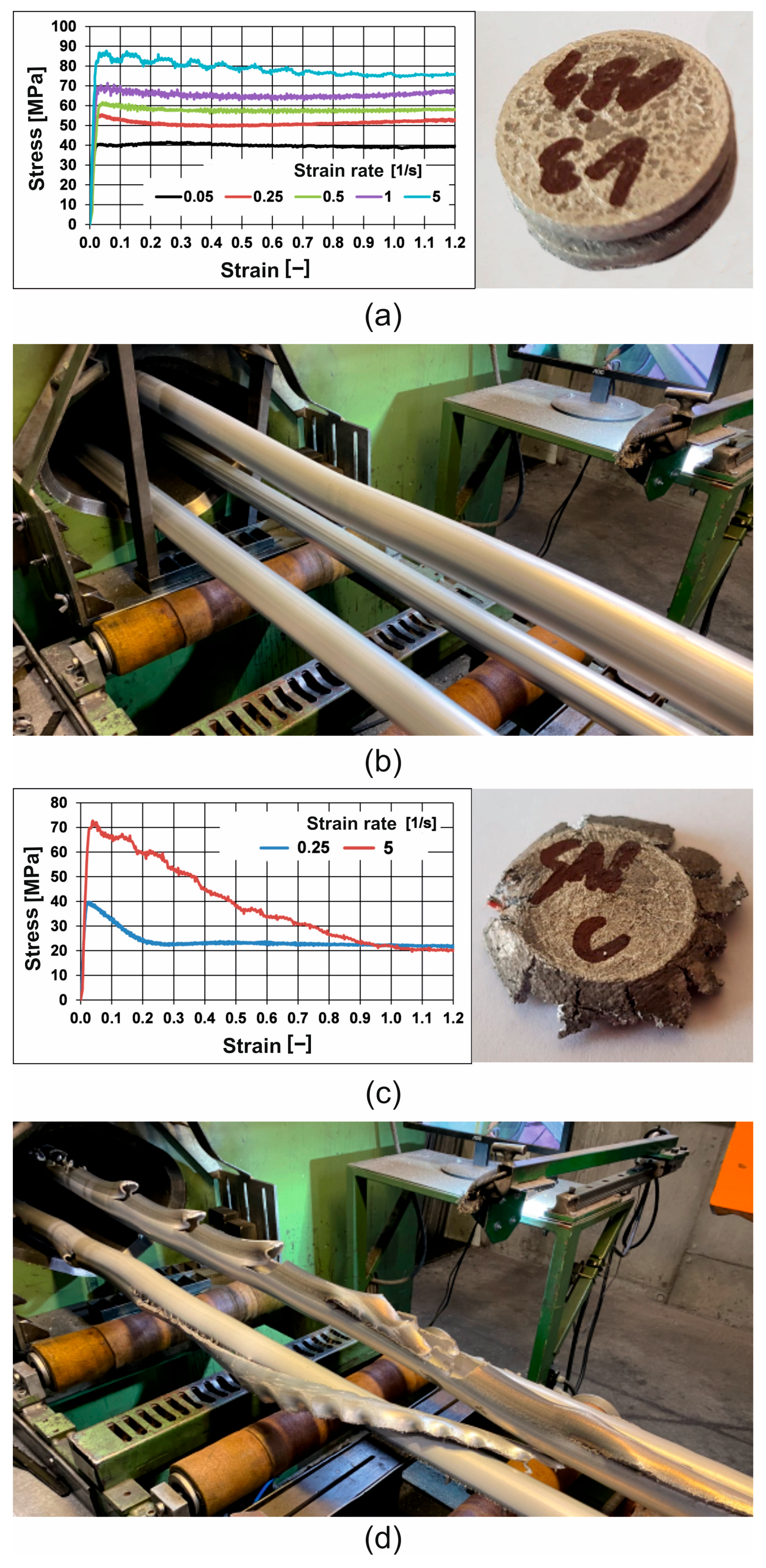
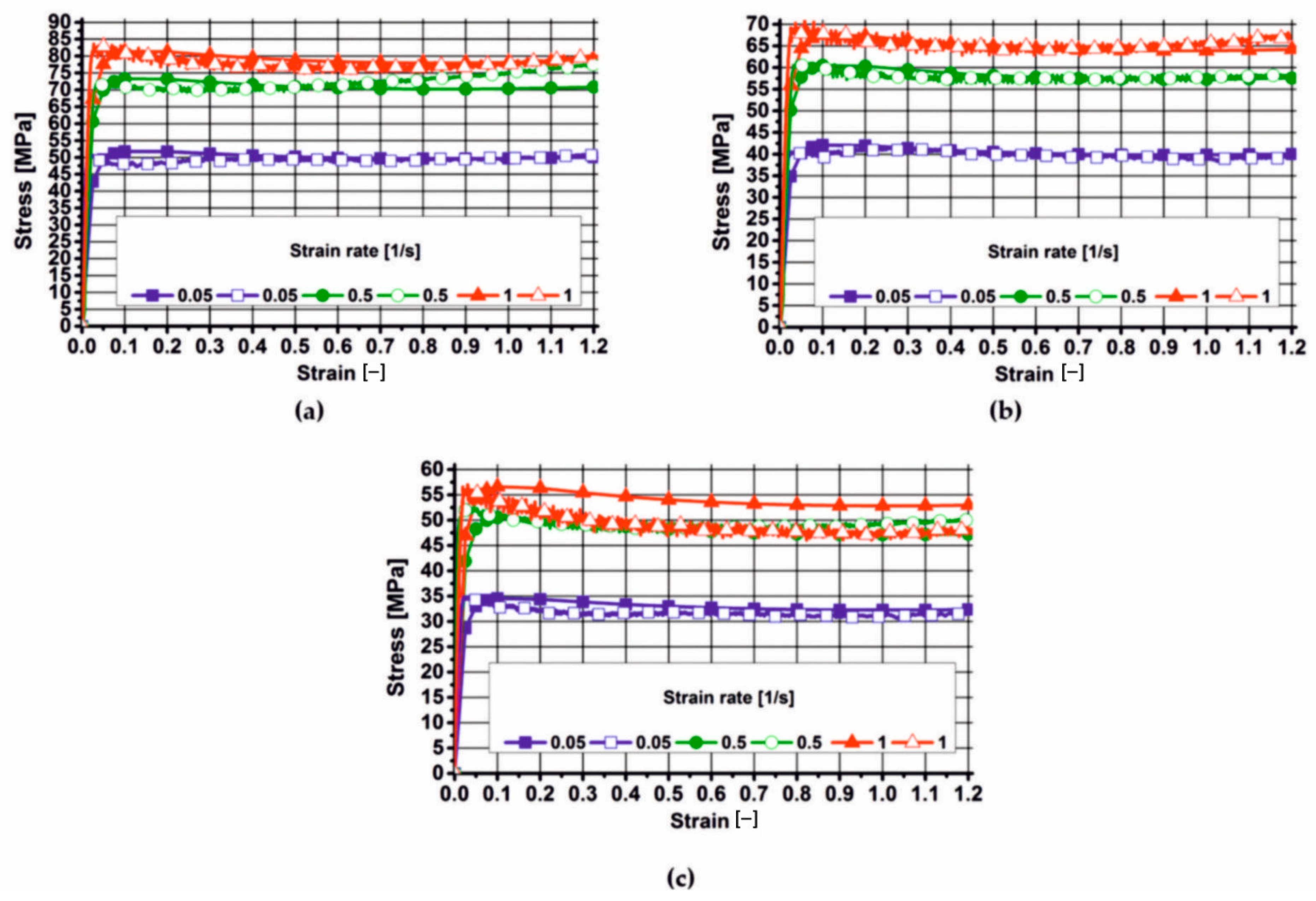
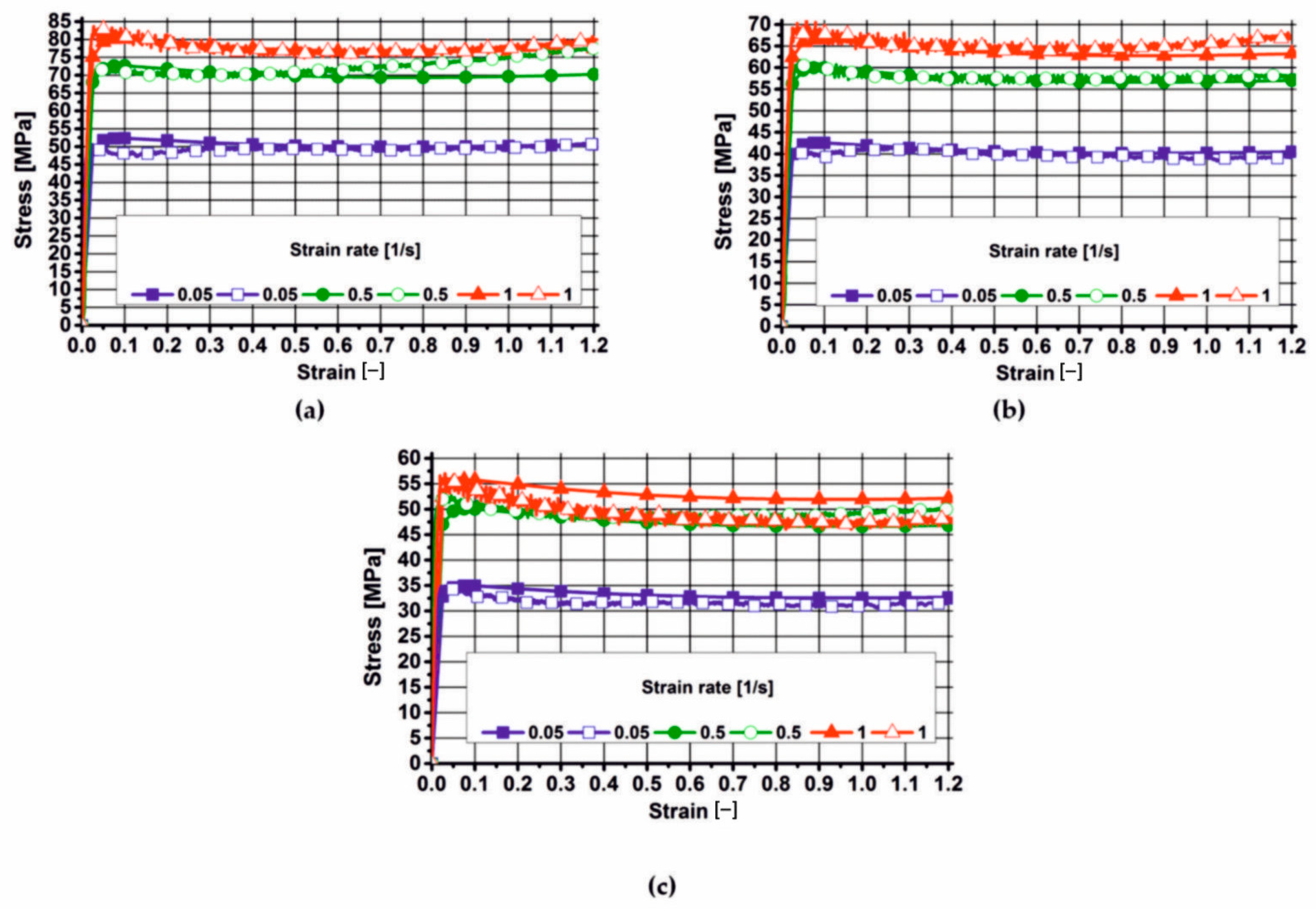
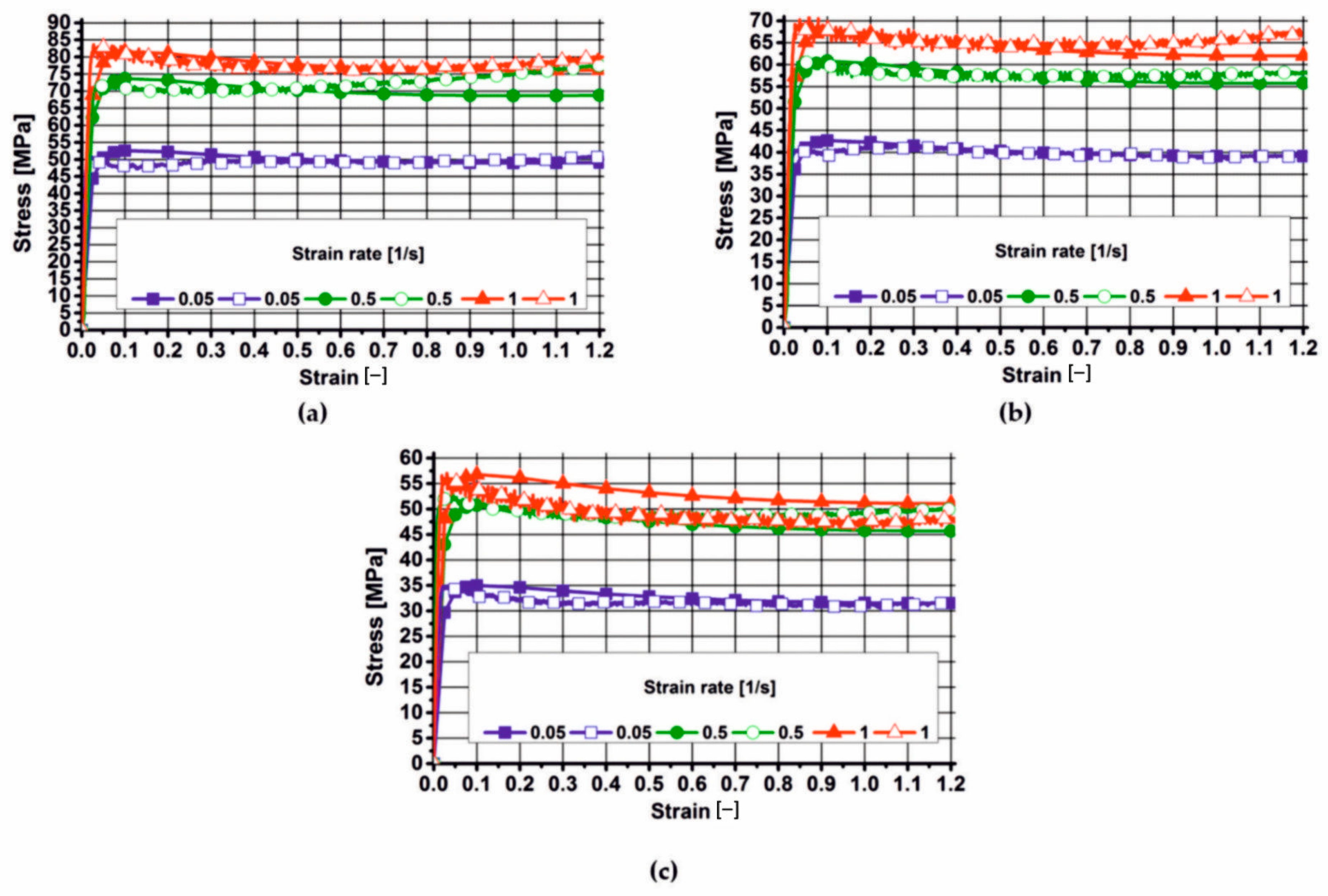
Preliminary tests showed that the tested 7075 aluminium alloy lost its plastic deformation capacity at 540 °C. The loss of material cohesion manifested itself in a sharp drop in yield stress starting in the initial stage of the deformation process. As can be seen from the data presented in
Figure 21c, during deformation at a temperature of 510 °C, the material showed some instability, i.e., it retained its cohesion during deformation at low deformation rates of 0.05 s
−1, but during deformation at a high deformation rate of 5 s
−1, it lost its cohesion at the beginning of the deformation process. It should be noted here that industrial extrusion processes of 7075 aluminium alloys take place at high deformation rates in the range of 100–101 s
−1, so at such deformation speeds, at an extrusion temperature of 510 °C, a loss of material cohesion and a sharp drop in plastic flow stress can be expected. This is confirmed by the image of the extruded tubes in question for a billet heating temperature of 510 °C, where numerous surface cracks and transverse and longitudinal tears in the tubes can be observed, resulting precisely from the loss of material cohesion after exceeding the limit temperature (
Figure 21d). At the same time, the extruded tubes in question for a billet heating temperature of 480 °C retain material cohesion and good surface quality even at high deformation speeds (
Figure 21b). This comparison of plastometric test results from the Gleeble simulator for different temperatures and deformation speeds (
Figure 21a,c) and test results from the industrial extrusion process of the Ø50 × 3 mm tubes in question on porthole dies for different billet heating temperatures of 480 °C and 510 °C (
Figure 21b,d) indicate that the Gleeble simulator tests correctly predict the behaviour of the material in the actual technological process (material deformability) with the determination of the plastic forming limit temperature. This is of great practical importance, as it enables the correct selection of technological parameters for the industrial plastic-forming process and avoids time-consuming and costly implementation trials.
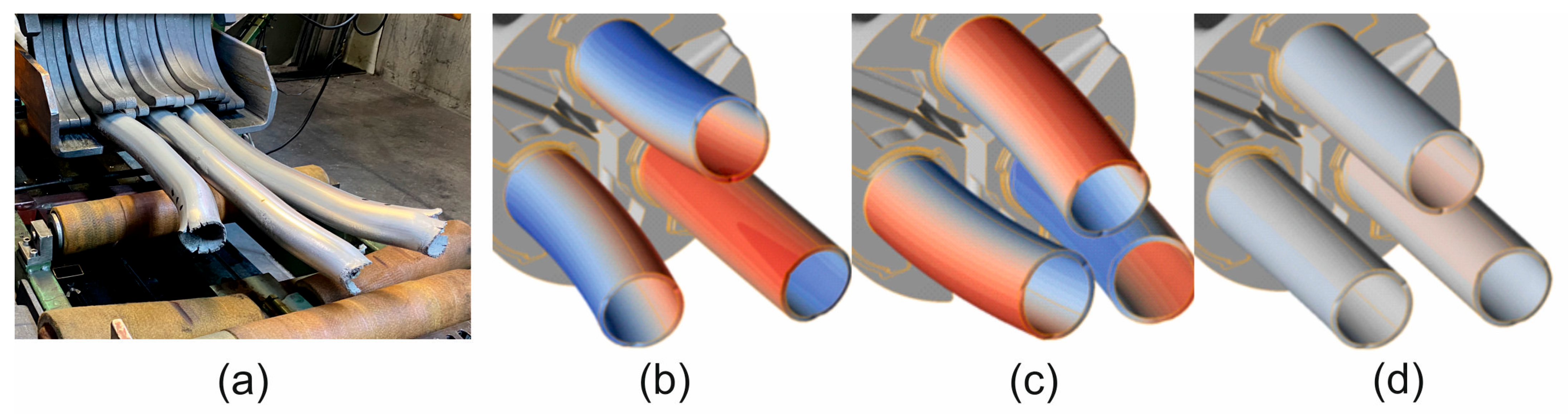
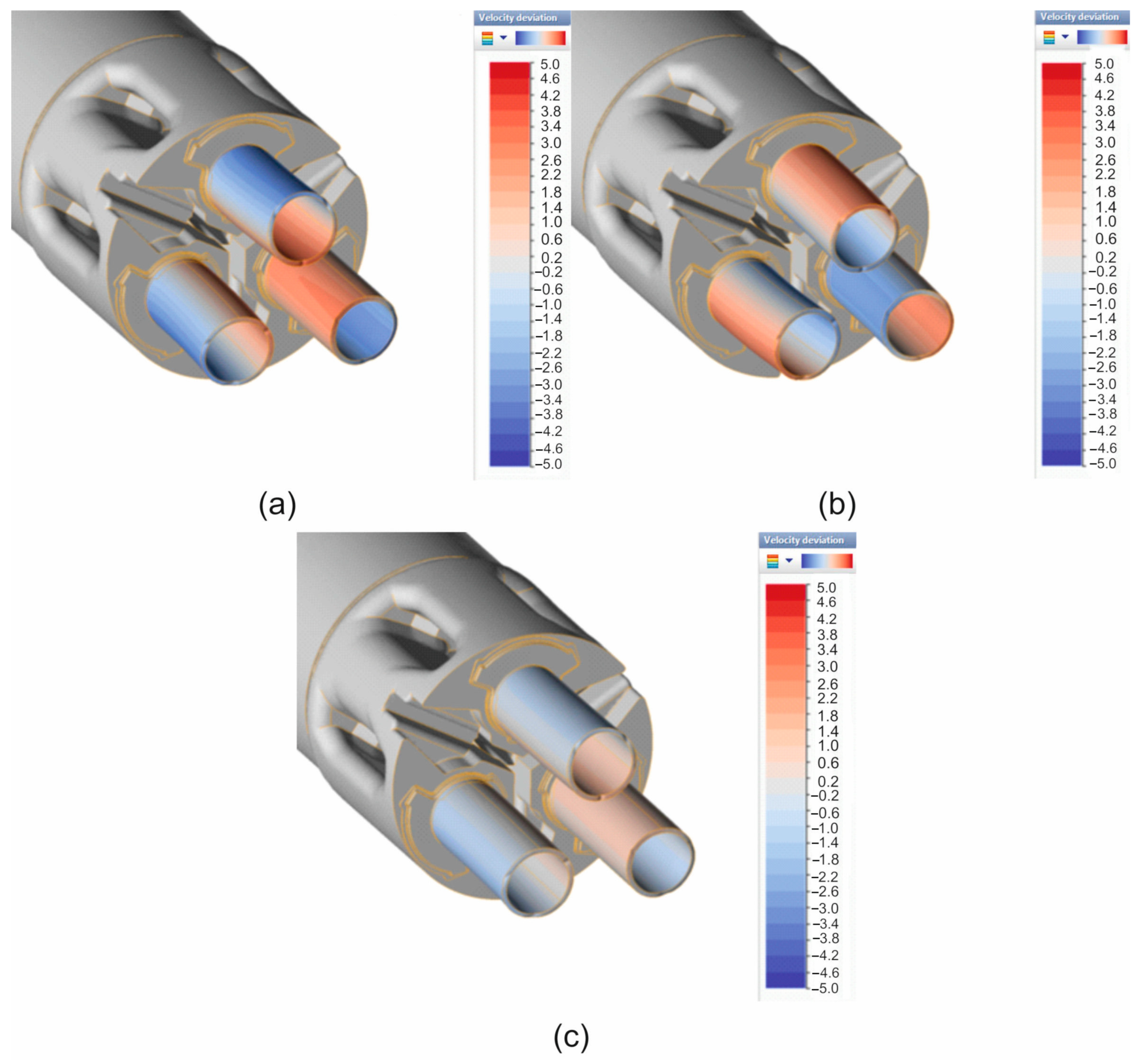
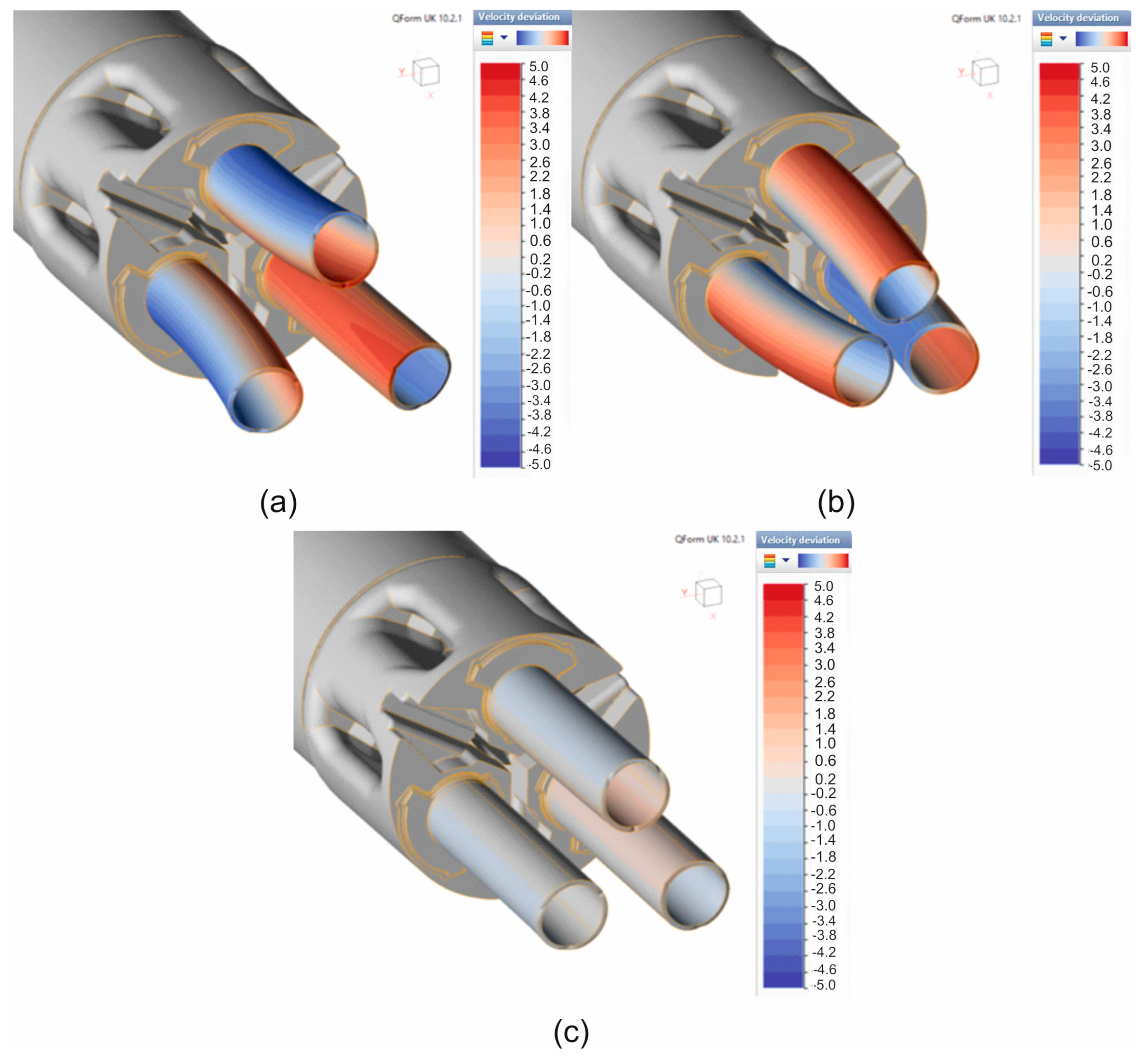
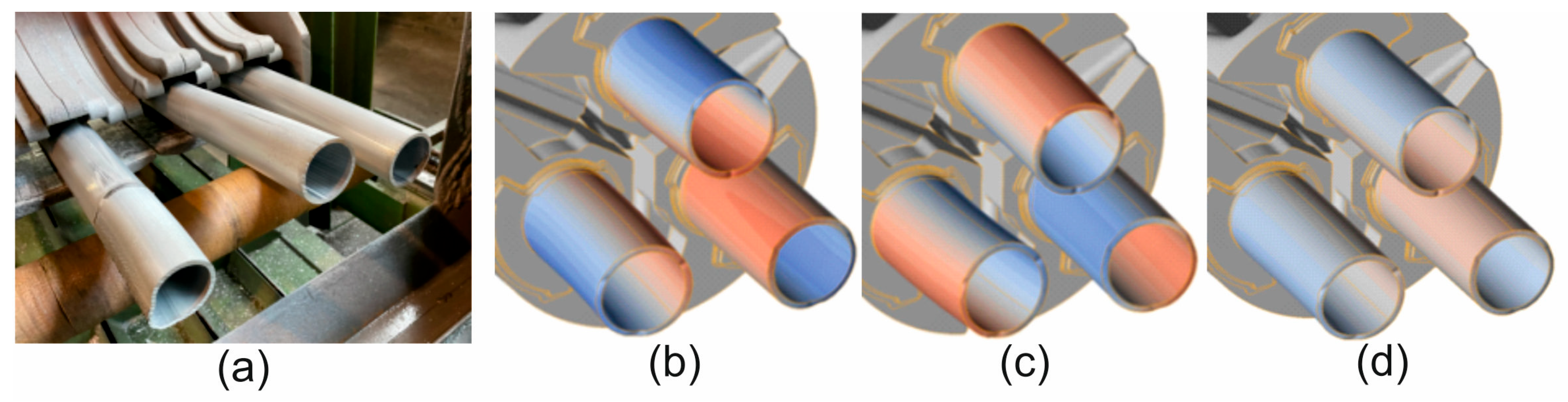
A comparison of metal flow in the industrial extrusion process of Ø50 × 3 mm tubes of 7075 aluminium alloy using porthole dies for billet heating temperatures of 480 °C and 510 °C was presented in
Figure 22 and
Figure 23. As can be seen, the greatest similarity in the manner in which metal flows out of the die opening and, consequently, in the geometric stability of the extruded tubes occurs for material model no. 1 for both analysed ingot heating temperatures. In particular, a high degree of consistency can be observed between the FEM calculation results for material model no. 1 and the actual extrusion process for a higher billet heating temperature of 510 °C, where a fairly strong outward bending of the extruded tubes is observed, indicating a faster metal flow in the central segment of the die. In stark contrast to material model no. 1, material model no. 2 indicates a completely different flow of metal from the die opening, resulting in a strong inward bend of the extruded tubes. In the case of material model no. 3, for a billet heating temperature of 510 °C, we obtain uniform flow and a geometrically simple product, which is not reflected in reality. For a lower heating temperature of 480 °C, a very even flow of metal from the die holes and a geometrically stable product with slight bending of the extruded tubes towards the outside were observed during industrial tests. In principle, for all three material models analysed, a high degree of consistency between the results of the FEM numerical calculations and the extrusion tests was found, with material model no. 1 being the most favourable.
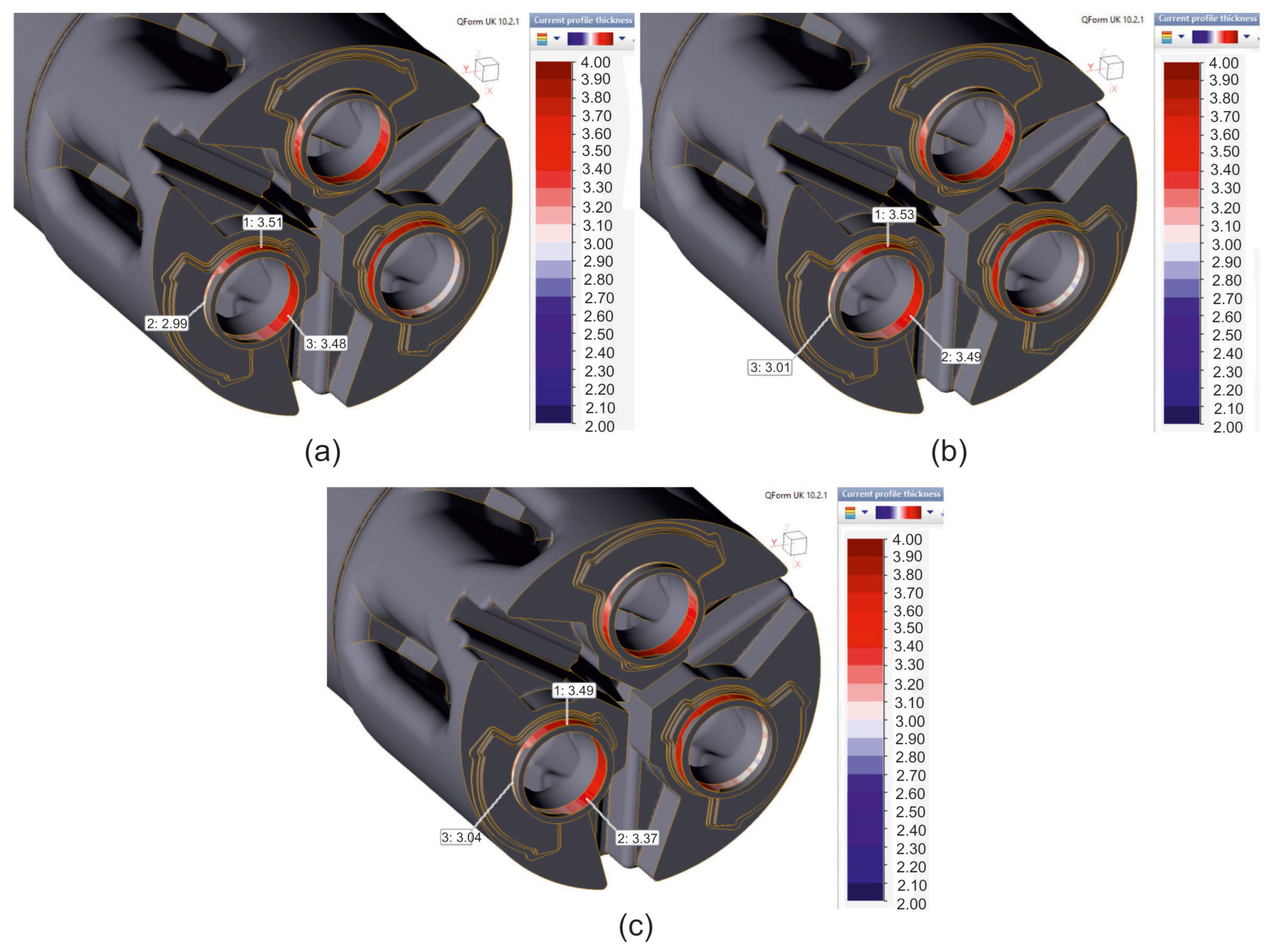
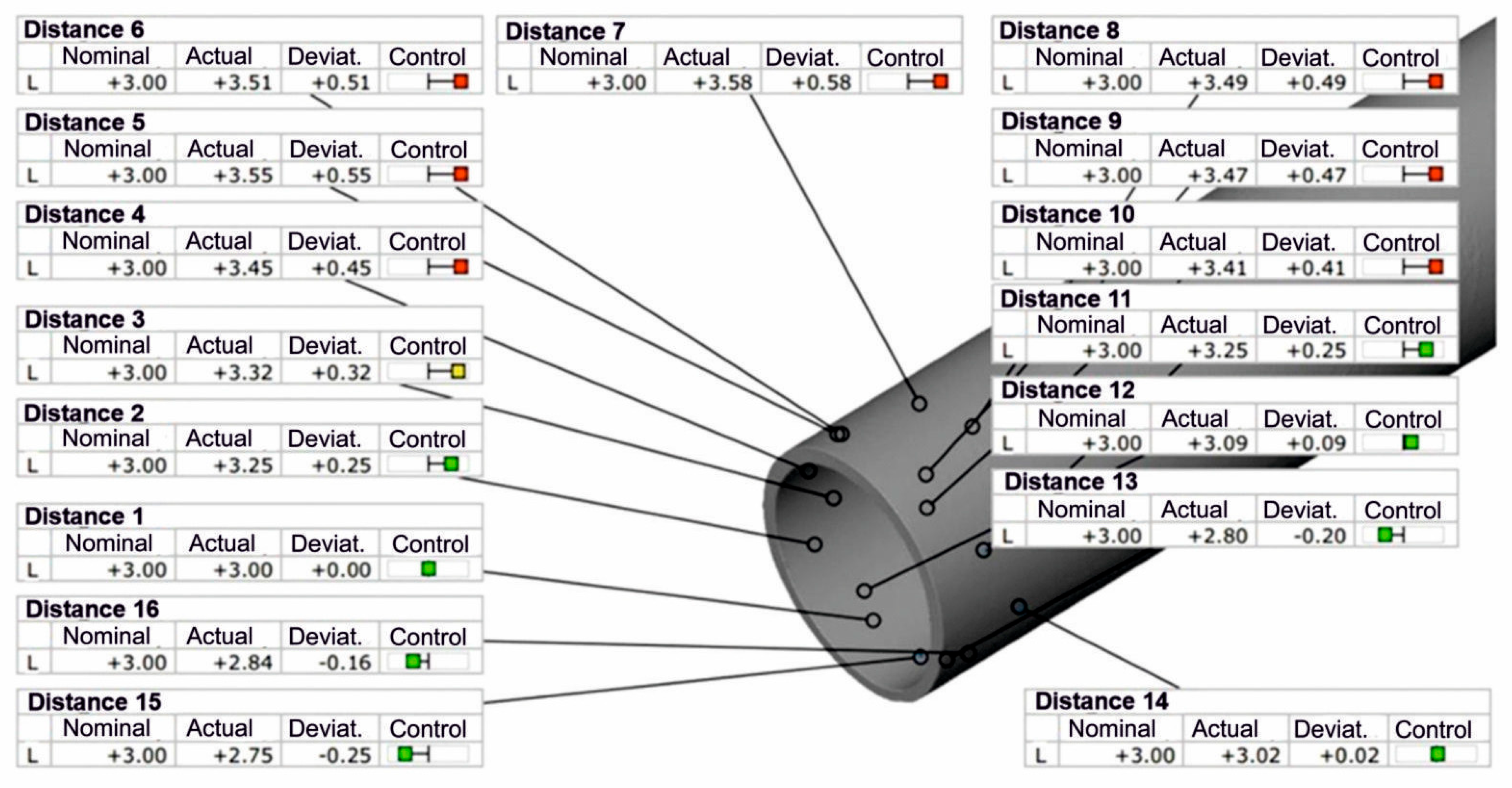
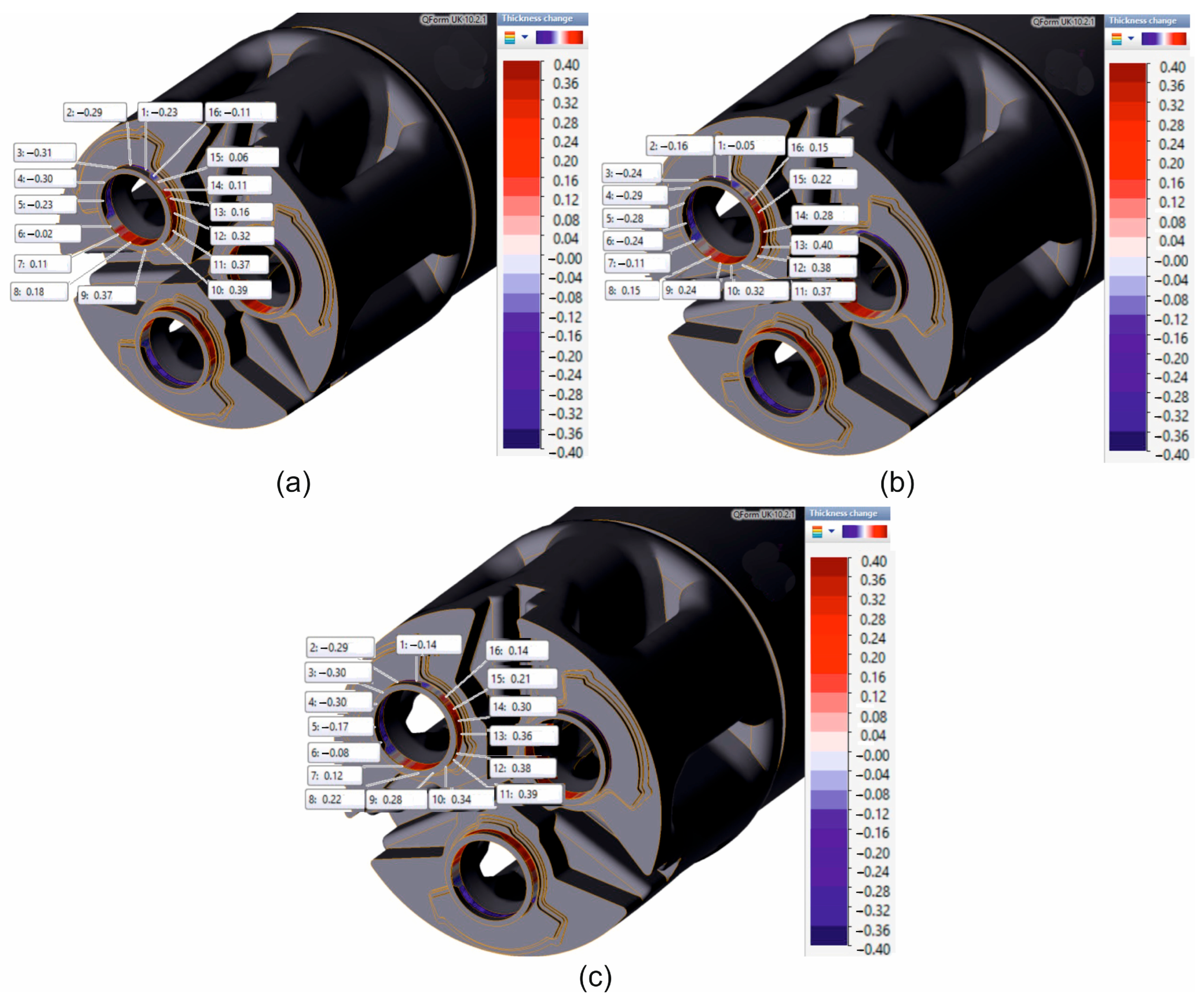
FEM numerically calculated dimensional deviations in the wall thickness of Ø50 × 3 mm tubes extruded from 7075 aluminium alloy using porthole dies for a billet heating temperature of 480 °C, and the results from the three different mathematical material models are shown in
Figure 24. For each of the analysed material models, numerical FEM calculations of the hot extrusion process revealed significant variations in the wall thickness of the 7075 aluminium alloy tubes, with a high positive dimensional deviation of +0.41 mm and a high negative dimensional deviation of −0.31 mm. However, positive wall thickness deviations clearly predominate on the circumference of the extruded tubes. In
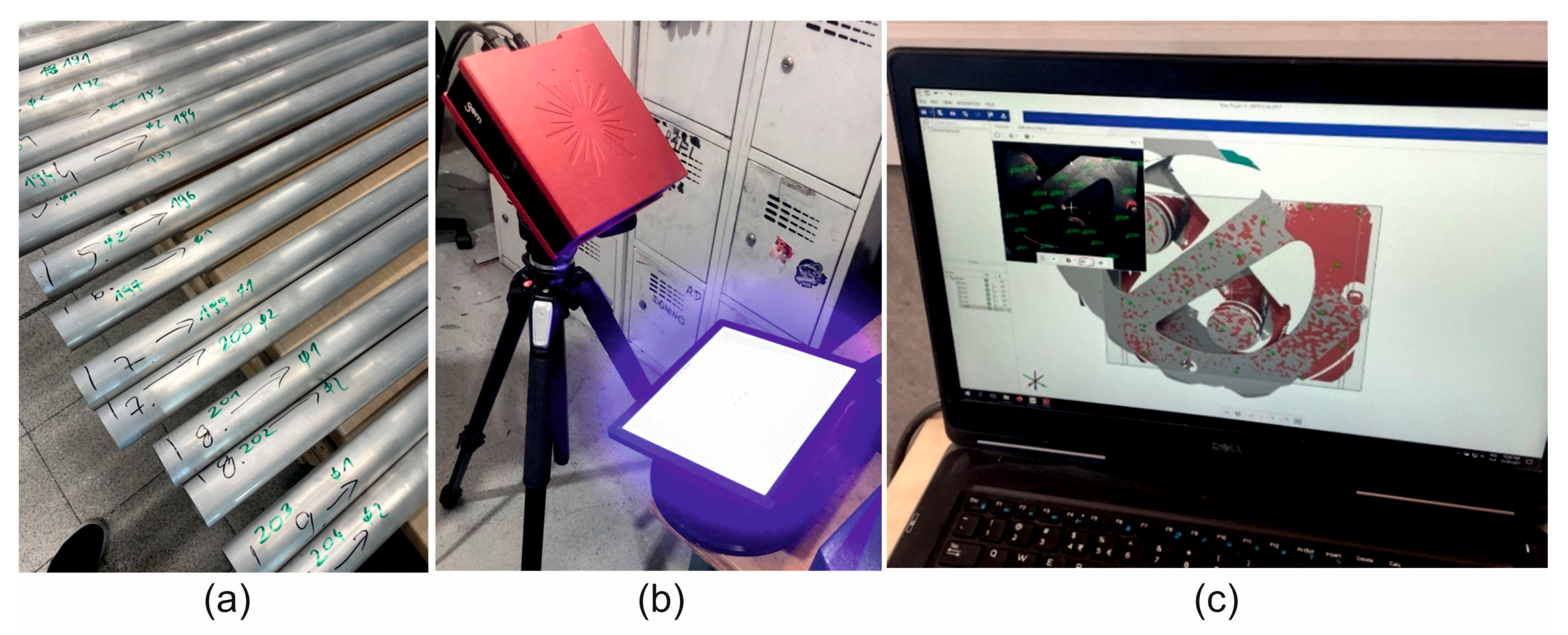
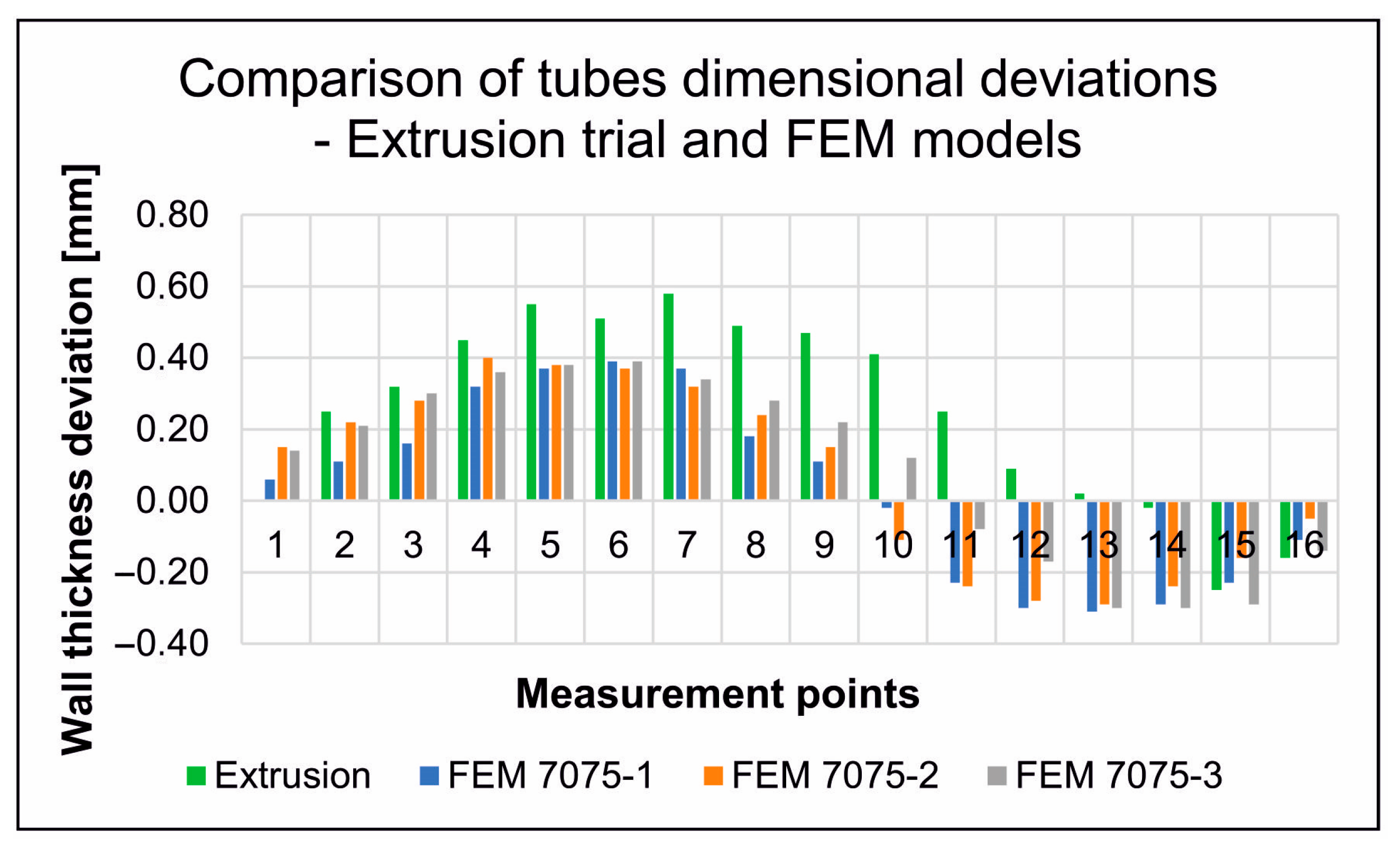
Figure 25, the comparison of wall thickness deviations was presented (industrial extrusion process and FEM numerical calculations) for tubes Ø50 × 3 mm extruded from 7075 aluminium alloy for a billet heating temperature of 480 °C. In general, a high degree of convergence was found in the distribution of wall thickness deviations around the circumference of the tubes in question for the results of numerical FEM calculations, regardless of the material model used, and for the data obtained from 3D optical scanning of tubes extruded under industrial conditions. However, in terms of the maximum wall thickness deviations obtained in reality (positive deviation +0.58 mm and negative deviation −0.25 mm), the closest values are the FEM results for material model no. 2 (positive deviation +0.40 mm and negative deviation −0.29 mm). On the other hand, the very nature of the transition of dimensional deviations in the wall thickness of extruded tubes from positive to negative is most closely reflected by material model no. 3.
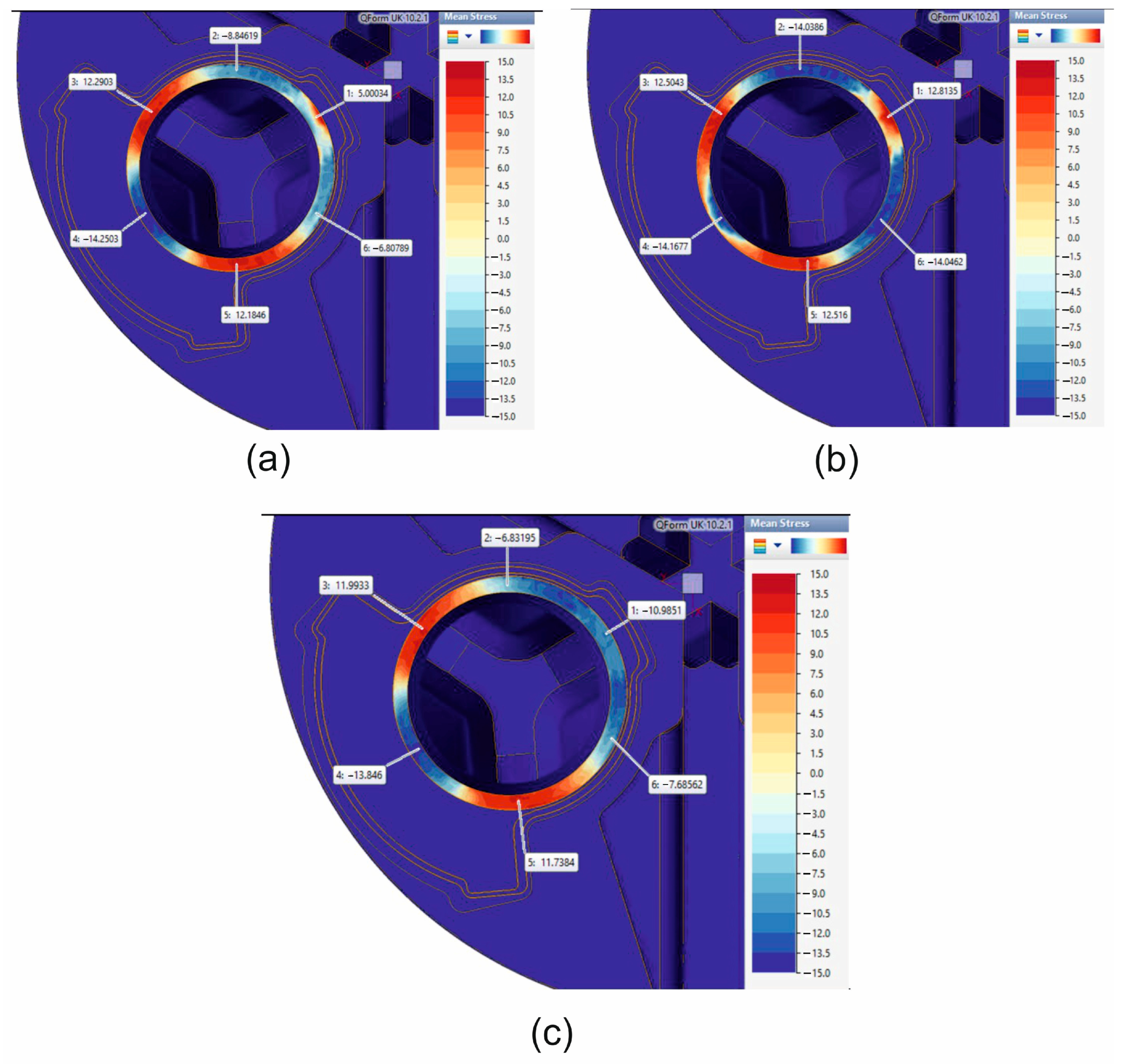
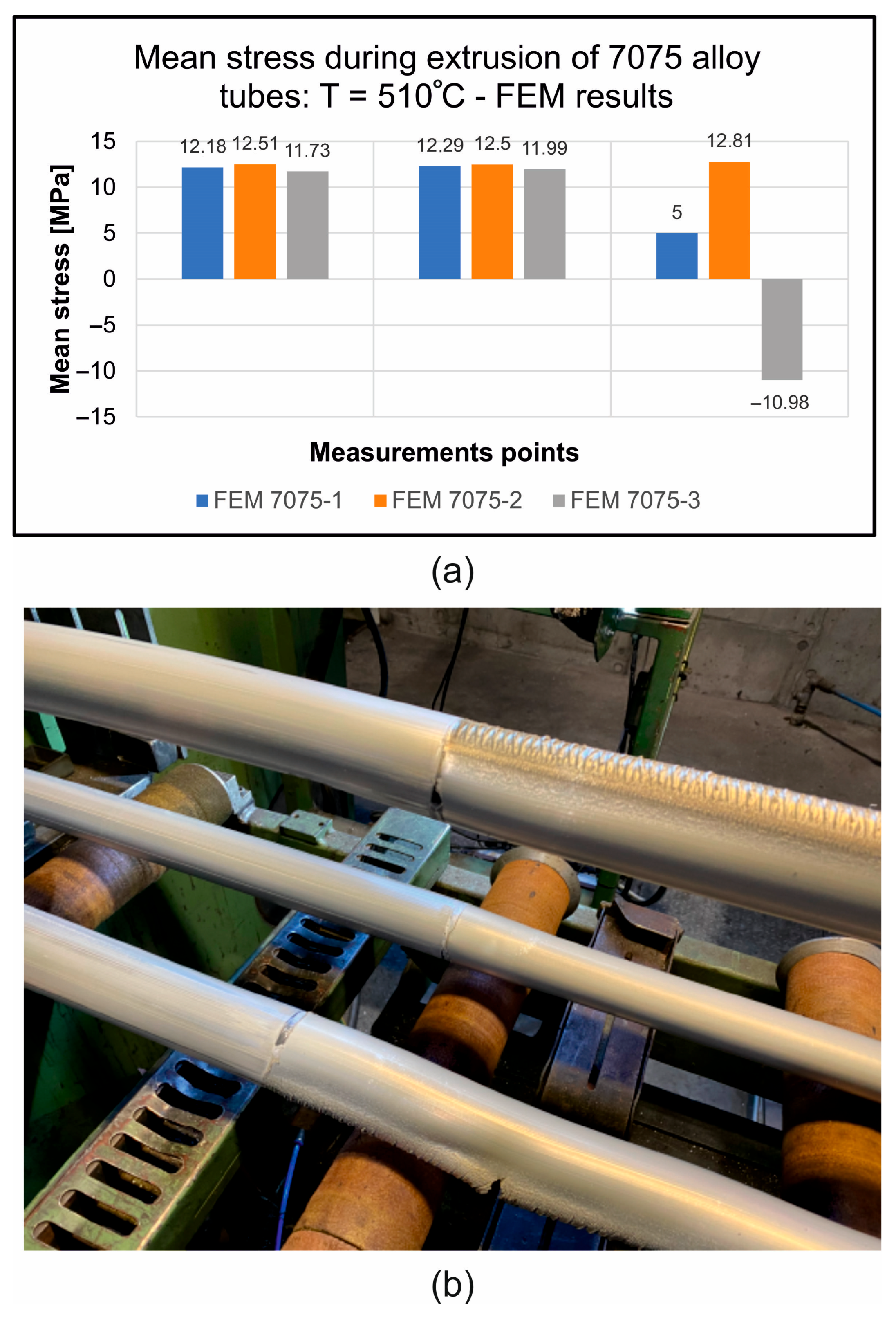
Figure 26 presents a summary of numerically calculated FEM stress conditions in the die clearance (in three different tube segments) during the extrusion of 50 × 3 mm tubes made of 7075 aluminium alloy for three different material models (
Figure 26a) with images of the surfaces of the tubes extruded under industrial conditions (
Figure 26b).
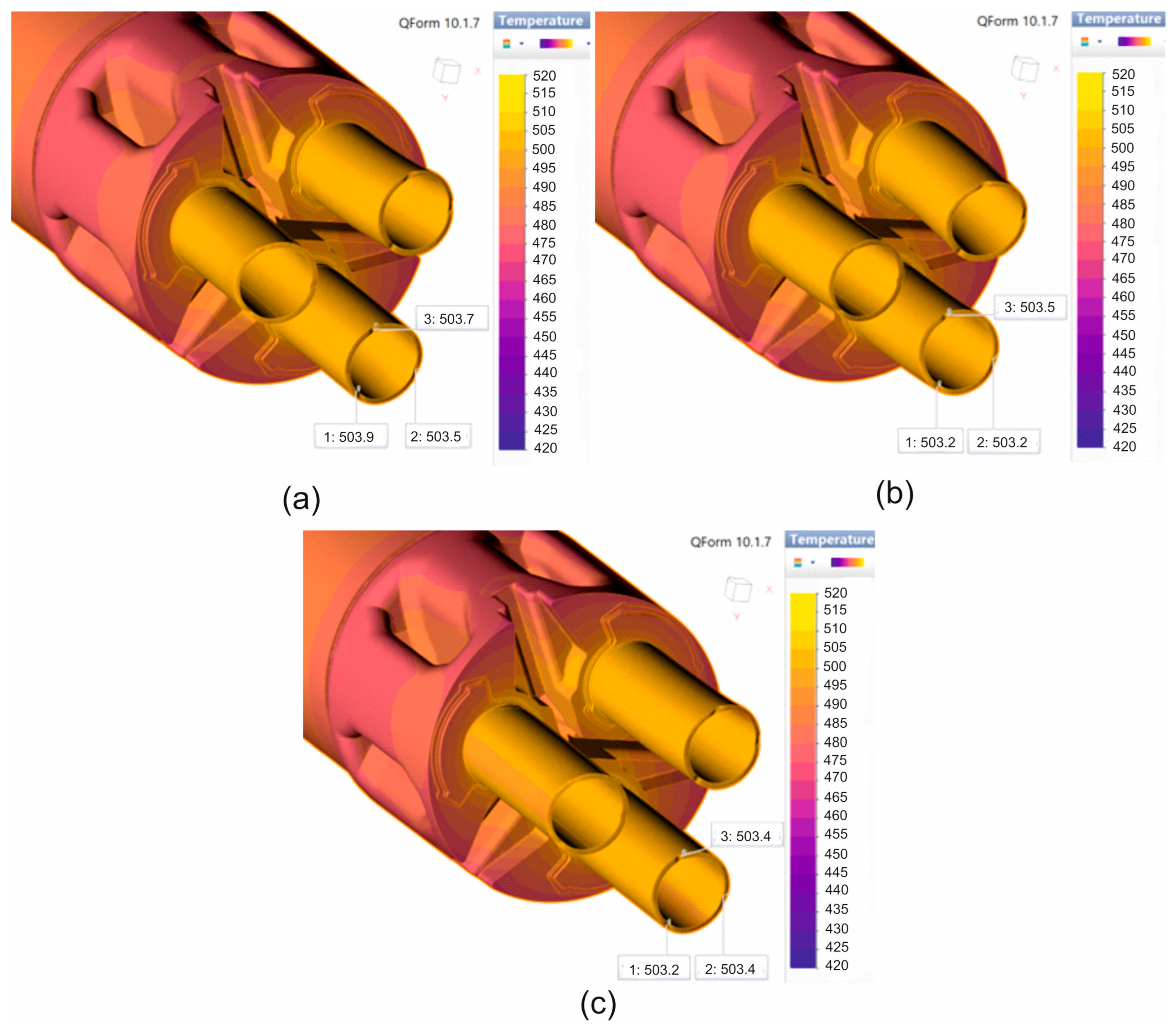
In the first segment of the extruded tubes, only tensile stresses were obtained, which are responsible for the material’s cohesion loss. In the second segment of the extruded tubes, all positive tensile stresses were again recorded, creating a risk of a loss of cohesion in the plastically formed material. Finally, in the third segment of the extruded tubes, unfavourable positive tensile stresses were observed for material models no. 1 and no. 2, with the highest positive stress close to 13 MPa for material model no. 2. and negative compressive stress for the material model no. 3.
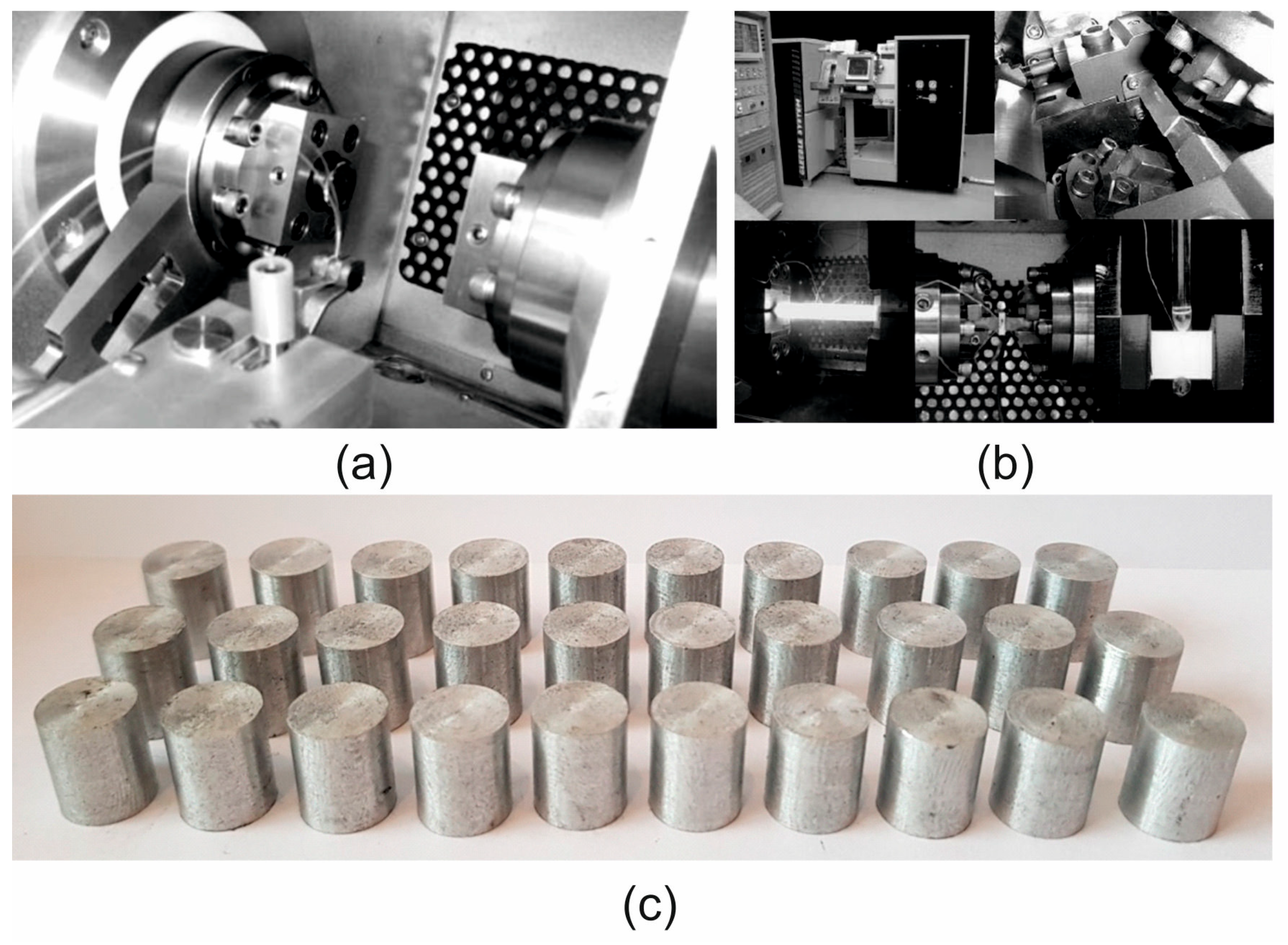
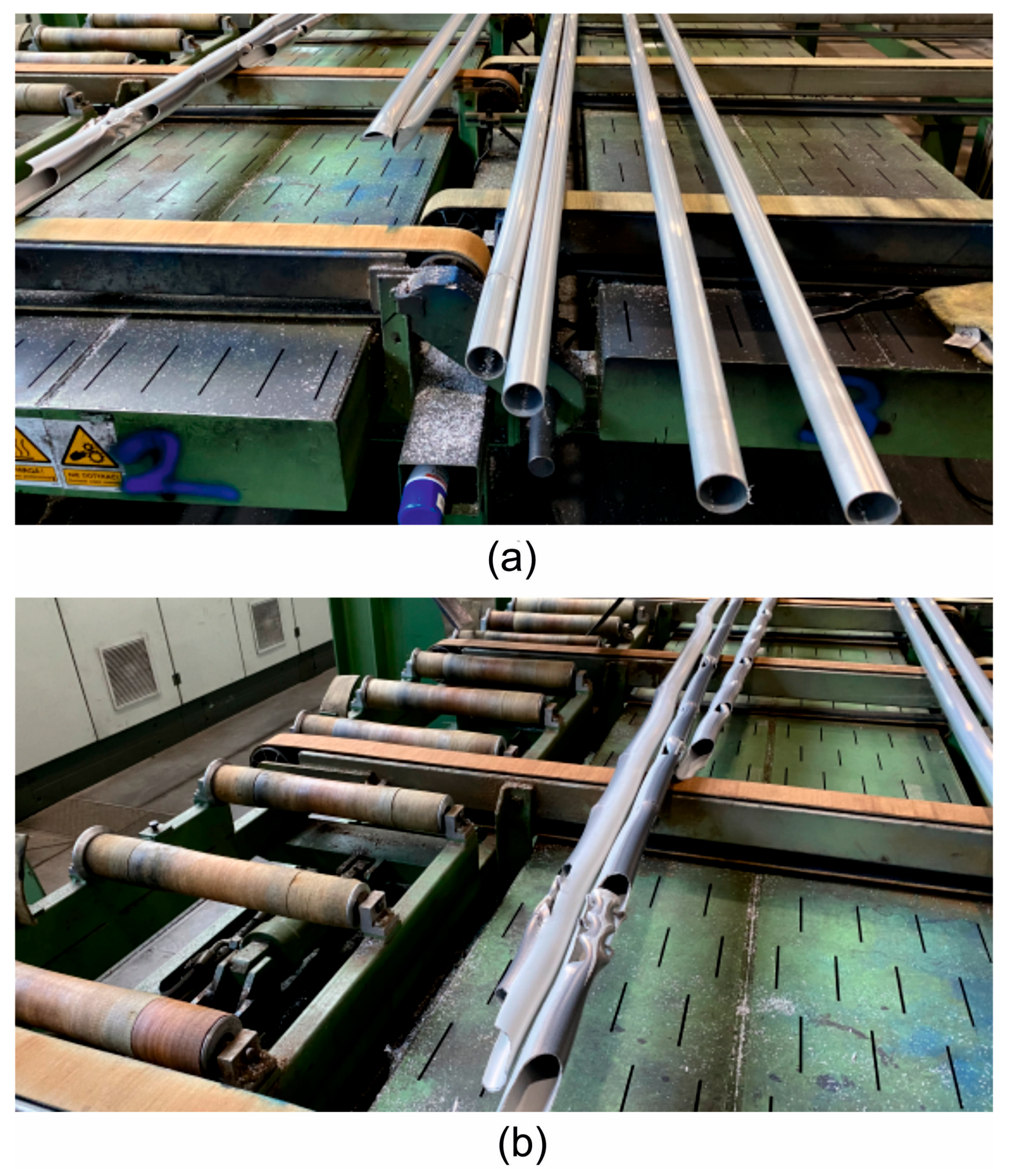
Figure 1b,c show the surface quality of the extruded tubes in industrial conditions with numerous surface cracks caused by unfavourable tensile stresses. In summary, in the case of material models no. 1 and no. 2, tensile stresses responsible for the loss of material cohesion were found in three out of three segments of the die clearance, which is the closest reflection of actual conditions (for material model no. 3, tensile stresses were obtained in two out of three segments of the die clearance).
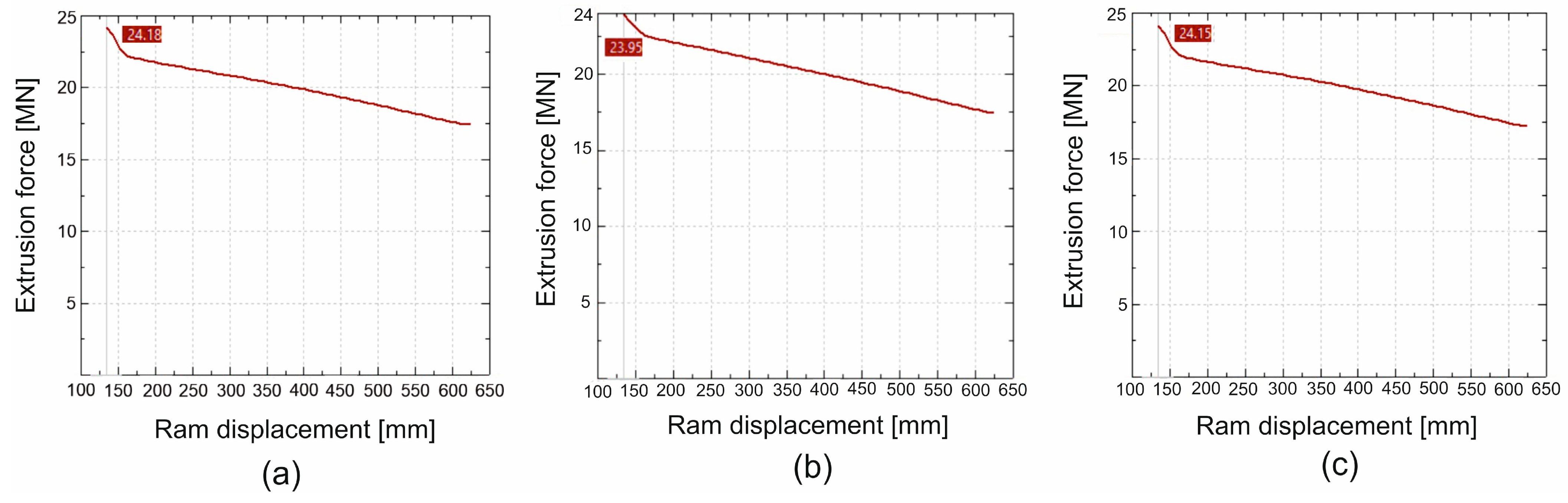
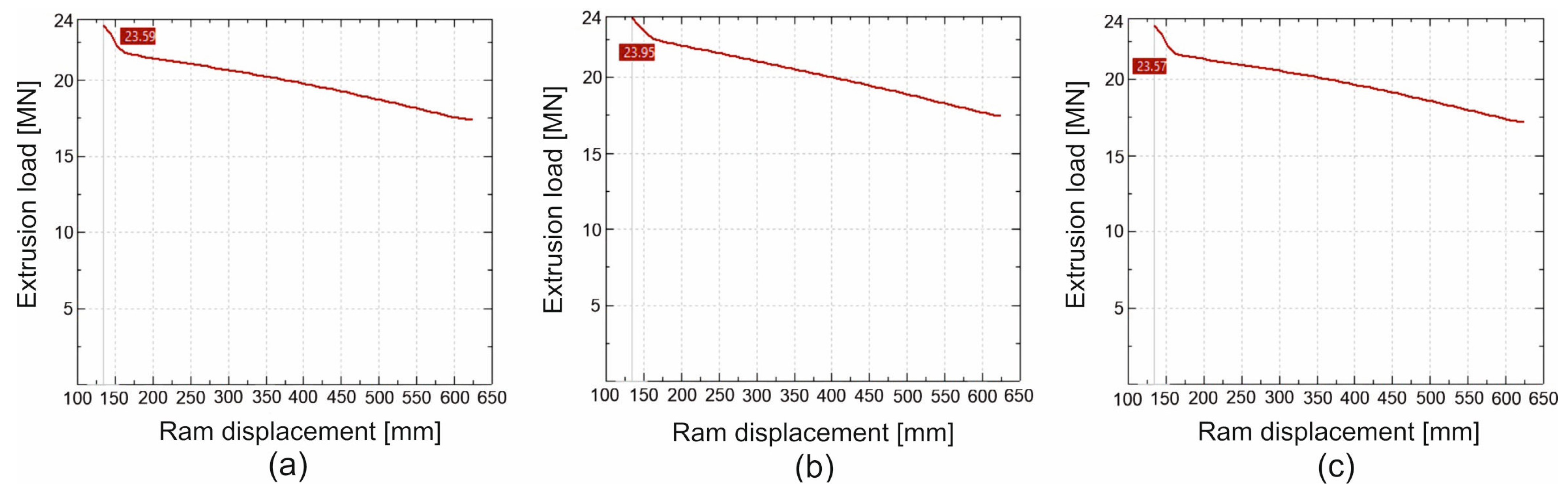
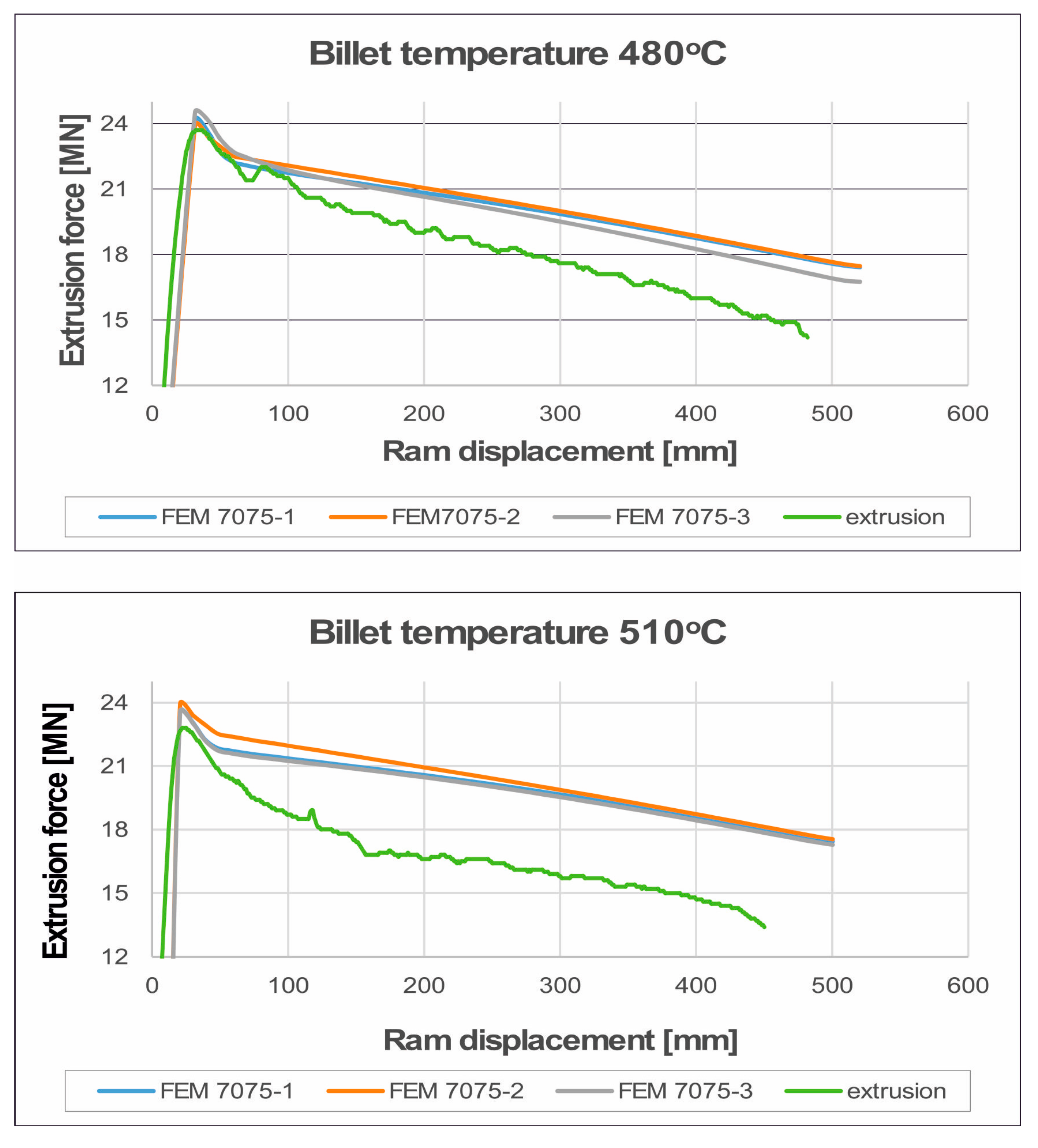
Comparison of the extrusion force as a function of the punch travel–numerically calculated FEM as recorded in industrial tests during the extrusion welding of tubes of Ø50 × 3 mm made of 7075 aluminium alloy for different ingot heating temperatures is presented in
Figure 27. In general, the maximum extrusion force values from industrial trials are very similar to those obtained in the FEM calculations for the three different material models used. For a billet heating temperature of 480 °C, the maximum extrusion force obtained from FEM numerical calculations that was closest to the corresponding maximum value from the real extrusion process was obtained from material model no. 2 (23.95 MN in FEM and 23.70 MN in real extrusion process:
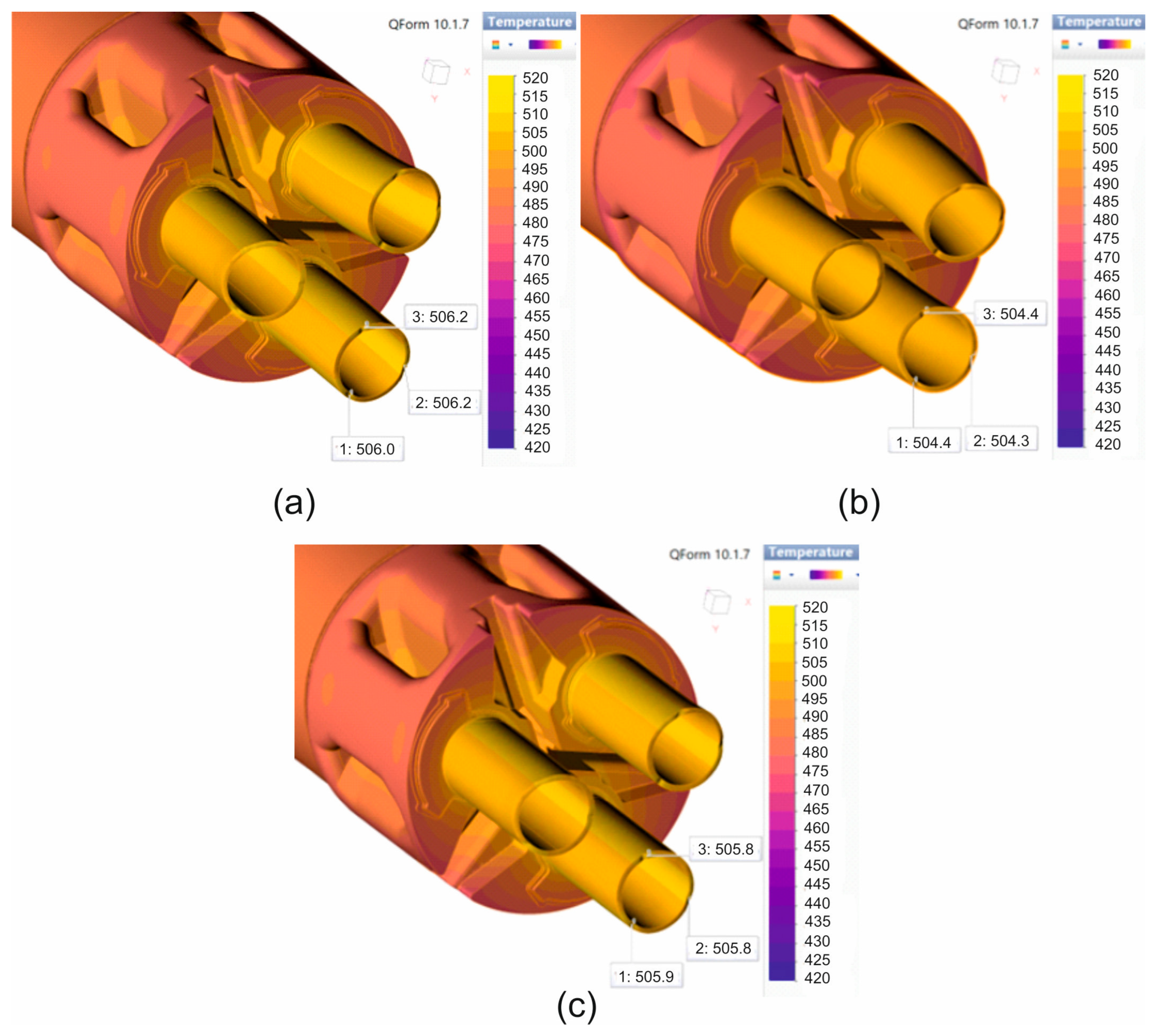
Figure 27 upper). Similarly, with regard to the minimum extrusion force obtained as a result of FEM numerical calculations, the closest value to the corresponding minimum value from the real extrusion process refers to material model no. 2 (16.70 MN in FEM, while 14.2 MN in the real extrusion process). It is important to note the slight difference in the values of the predicted FEM maximum extrusion force for individual material models, which amounts to only 2.5%. Slightly lower extrusion force values, but also very similar to those from the FEM calculations for the three different material models, were obtained for a higher billet heating temperature of 510 °C (
Figure 27 lower). The closest maximum extrusion force for this increased billet heating temperature was 23.57 MN for FEM and material model no. 3 and 22.80 MN for the real extrusion process. Here, we have an even smaller difference in the predicted FEM maximum extrusion force for individual material models, which was only 1.6%.
In summary, it should be noted that the numerical FEM calculations of the maximum extrusion force of the aluminium alloy 7075 tubes in question are very accurate: 96.5–99.0% for a billet heating temperature of 480 °C, and 95.0–96.6% for a billet heating temperature of 510 °C. The prediction of the minimum extrusion force at the end of the extrusion process was less accurate, but this force has no practical significance because, unlike the maximum extrusion force, it does not determine the possibility of performing the extrusion process on a press with given force capabilities. The numerically calculated FEM minimum extrusion force was approximately 18–20% higher than that in the actual extrusion process. It can be concluded that the analysed material models were unable to effectively model the significant softening of the material during extrusion at the minimum force, which was significantly lower in the actual extrusion process.
In general, for all three analysed material models, a high degree of convergence was found between the results of the FEM numerical calculations and the extrusion trials, with material model no. 1 proving the most favourable. This is primarily due to the small differences between the actual yield stress values and the values approximated using material model no. 1. This is crucial because yield stress (and its distribution within the material volume) determines the material flow pattern, particularly the deformation of the blank during die clearance, which in turn directly affects the direction of metal bending as it exits the die opening. Furthermore, characterising the metal flow pattern over a wide temperature range allows us to determine the mechanisms of elastic deformation, the values of mean and effective stress, and friction on the die surface. These values, varying for individual alloys, determine the behaviour of the die during the process, primarily by deflecting the bridges and mandrel bodies, and especially the bearings, and by decalibration of the die clearance itself, which directly translates into the geometric accuracy of the product.
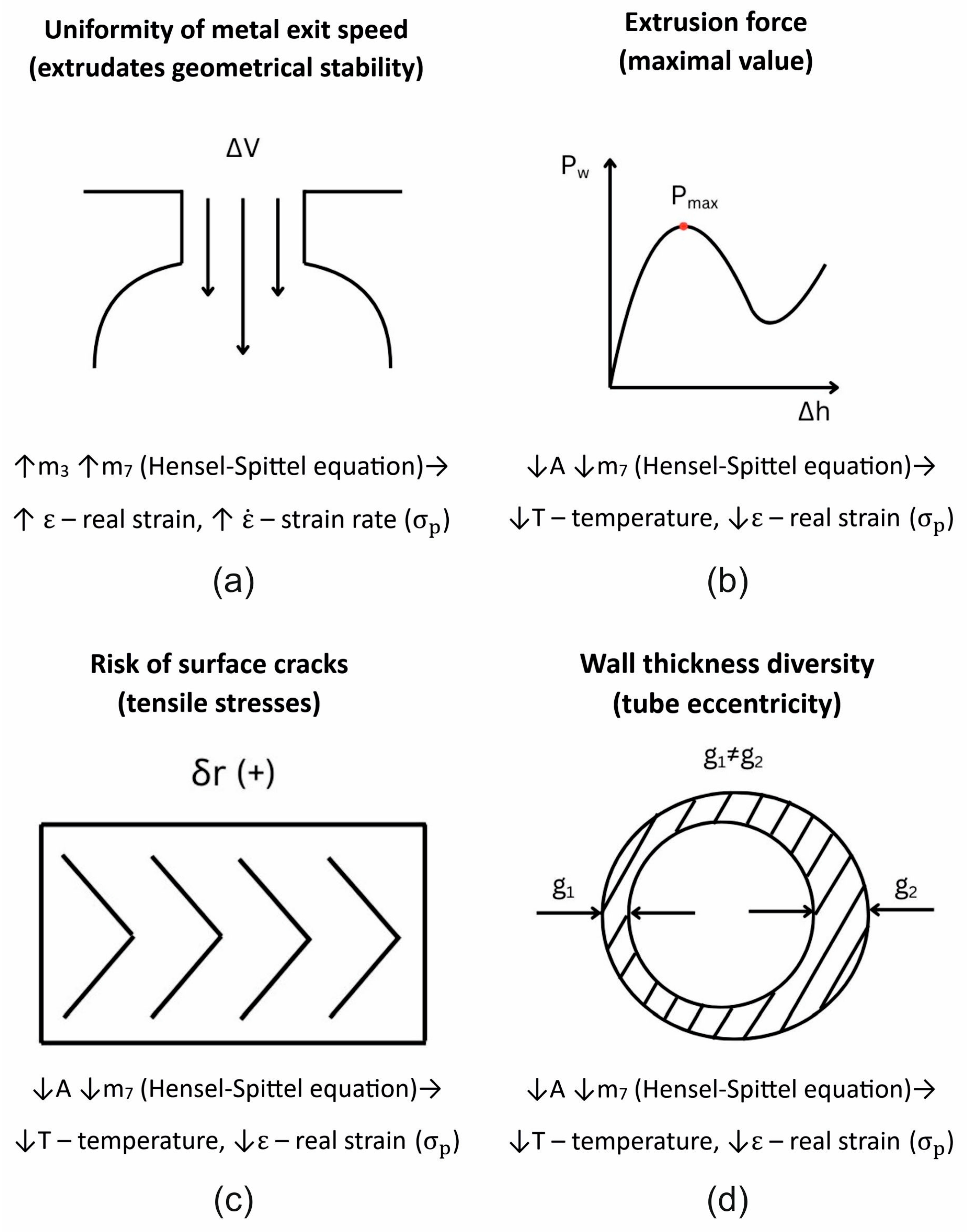
The mind map (
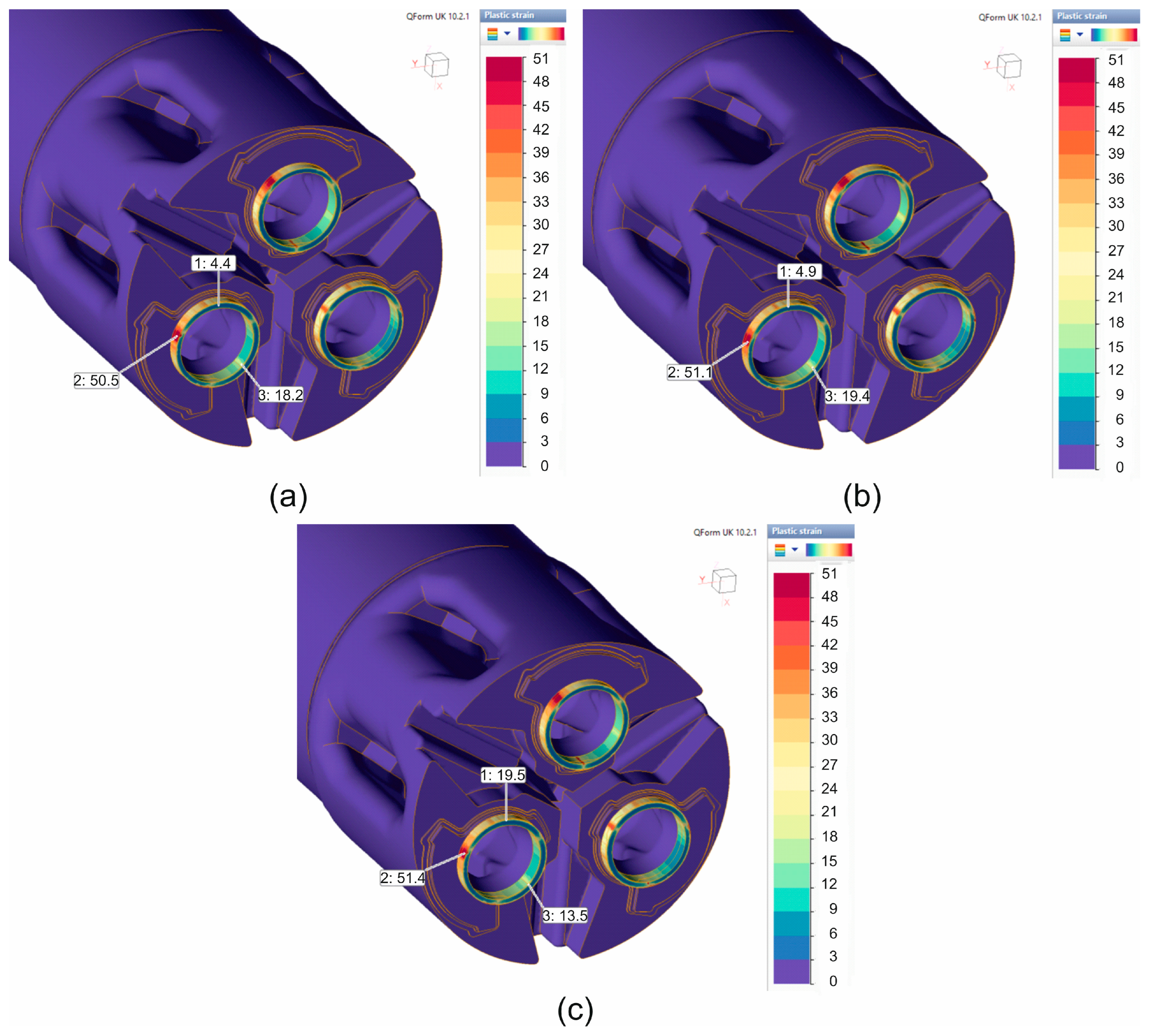
Figure 28) shows the accuracy of reflecting the actual state of process and product parameters using FEM numerical calculations with the assignment of appropriate coefficients from the Hensel–Spittel equation for individual material models and their impact on plastic strain.
Thus, the constants m3 and m7 in the Hensel–Spittel equation, representing the deformation rate and deformation, respectively, are highest for material model no. 1. Material model no. 1 allows for the most accurate prediction of the uniformity of metal flow in extruded tubes, which would mean the relatively strongest influence of the real strain and strain rate on the yield stress. The constant A in the Hensel–Spittel equation at the deformation temperature is smallest for material model no. 2. Material model no. 2 allows for the most accurate prediction of the extrusion force, wall thickness instability, and extrudate cracking, which would mean a relatively weak influence of the extrusion temperature and real strain on the yield stress. In the case of the least accurate material model, no. 3, we had the largest constant A in the Hensel–Spittel equation at the deformation temperature, which means that the extrusion temperature had the greatest influence out of all those analysed on the level of yield stress of the hot-extruded difficult-to-form aluminium alloy 7075.