Snake Scanning for SEM: Quantification and Correction of Its Inherent Misalignment Distortion Using an External Scan Controller
Abstract
1. Introduction
2. Methods
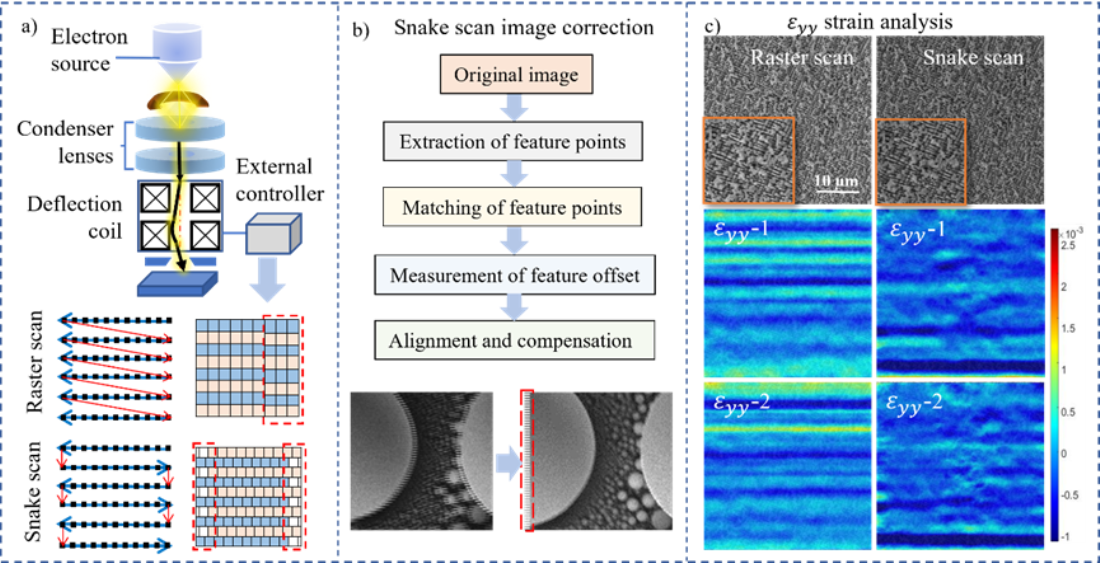
2.1. Overview
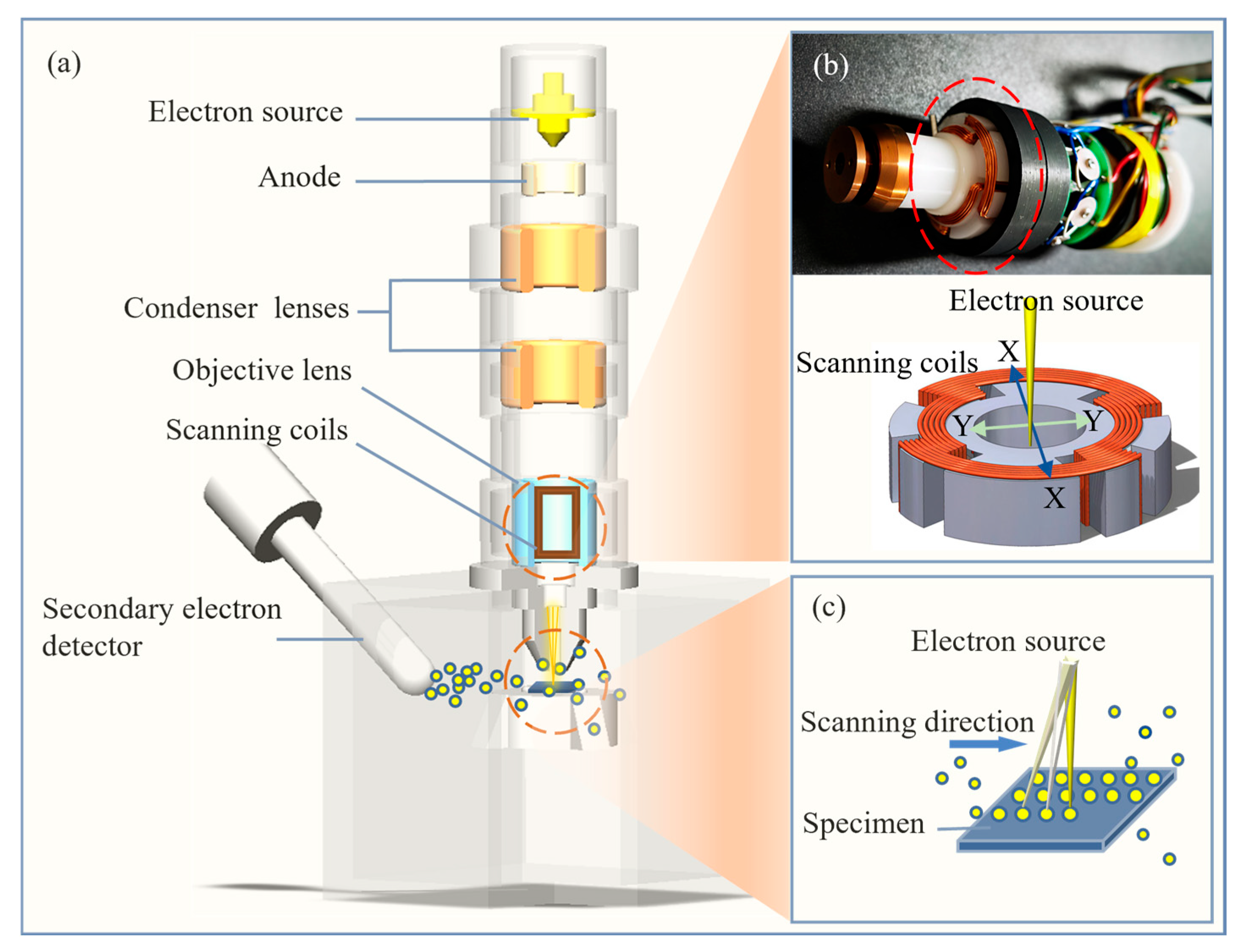
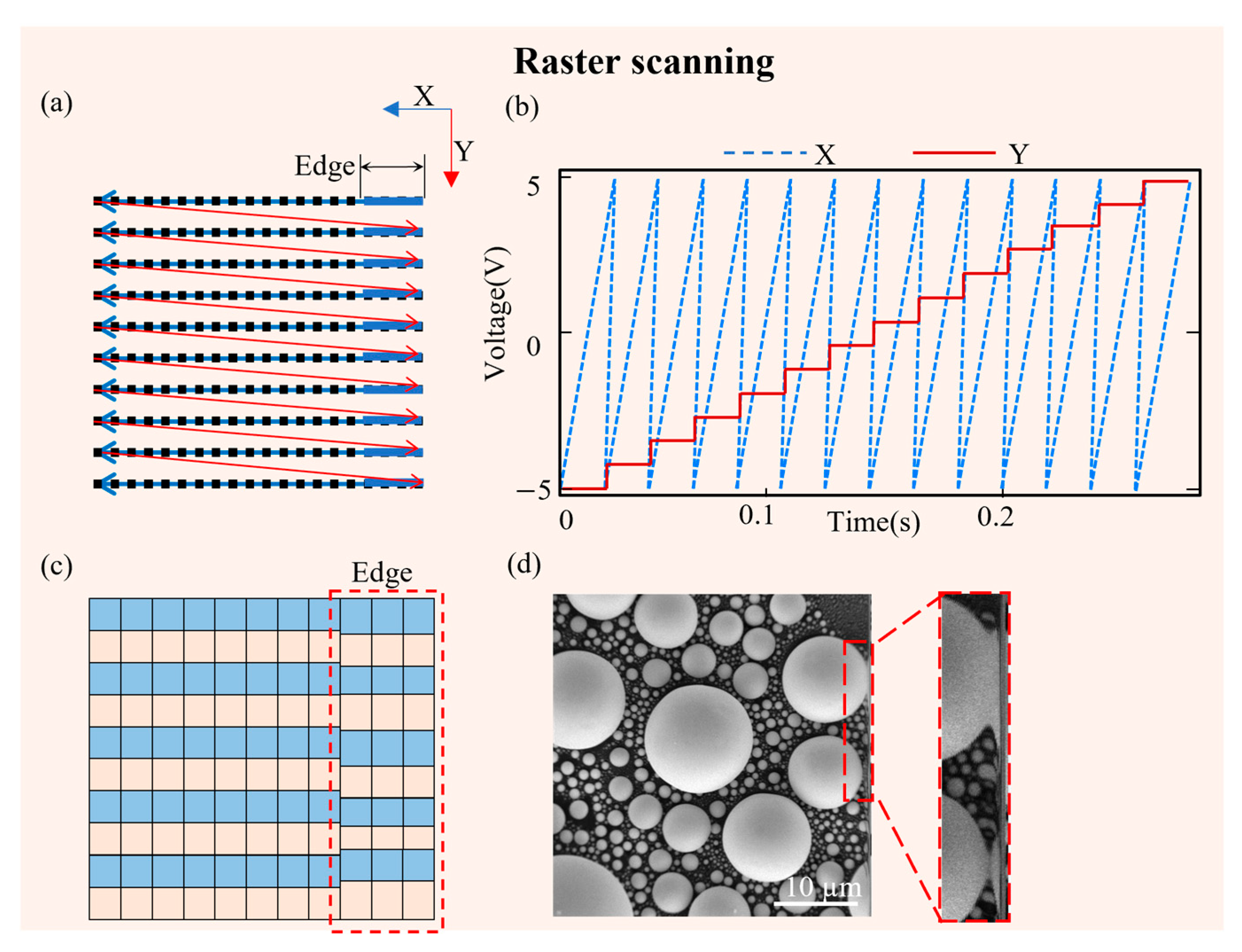
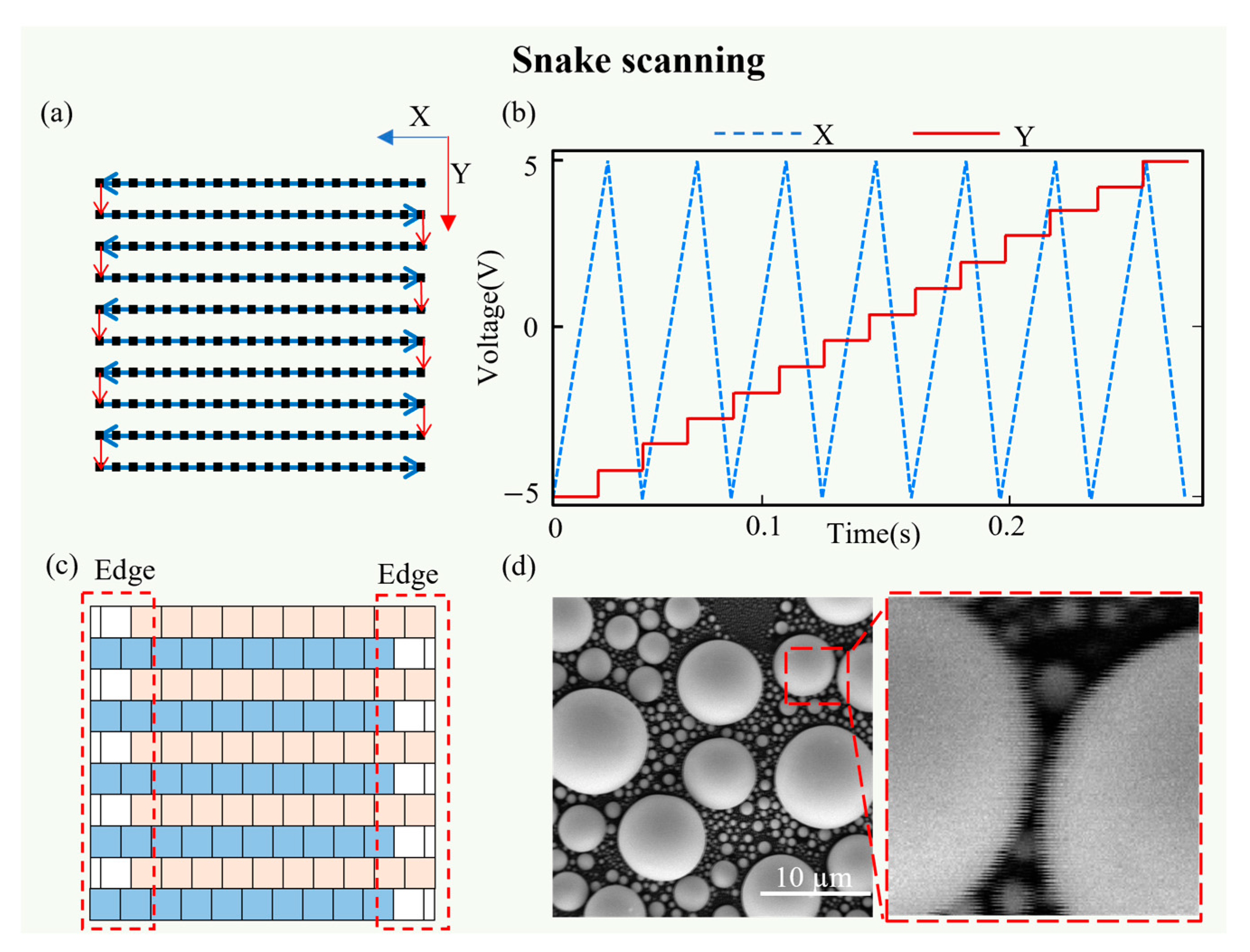
2.2. Imaging Principles and Image Distortion
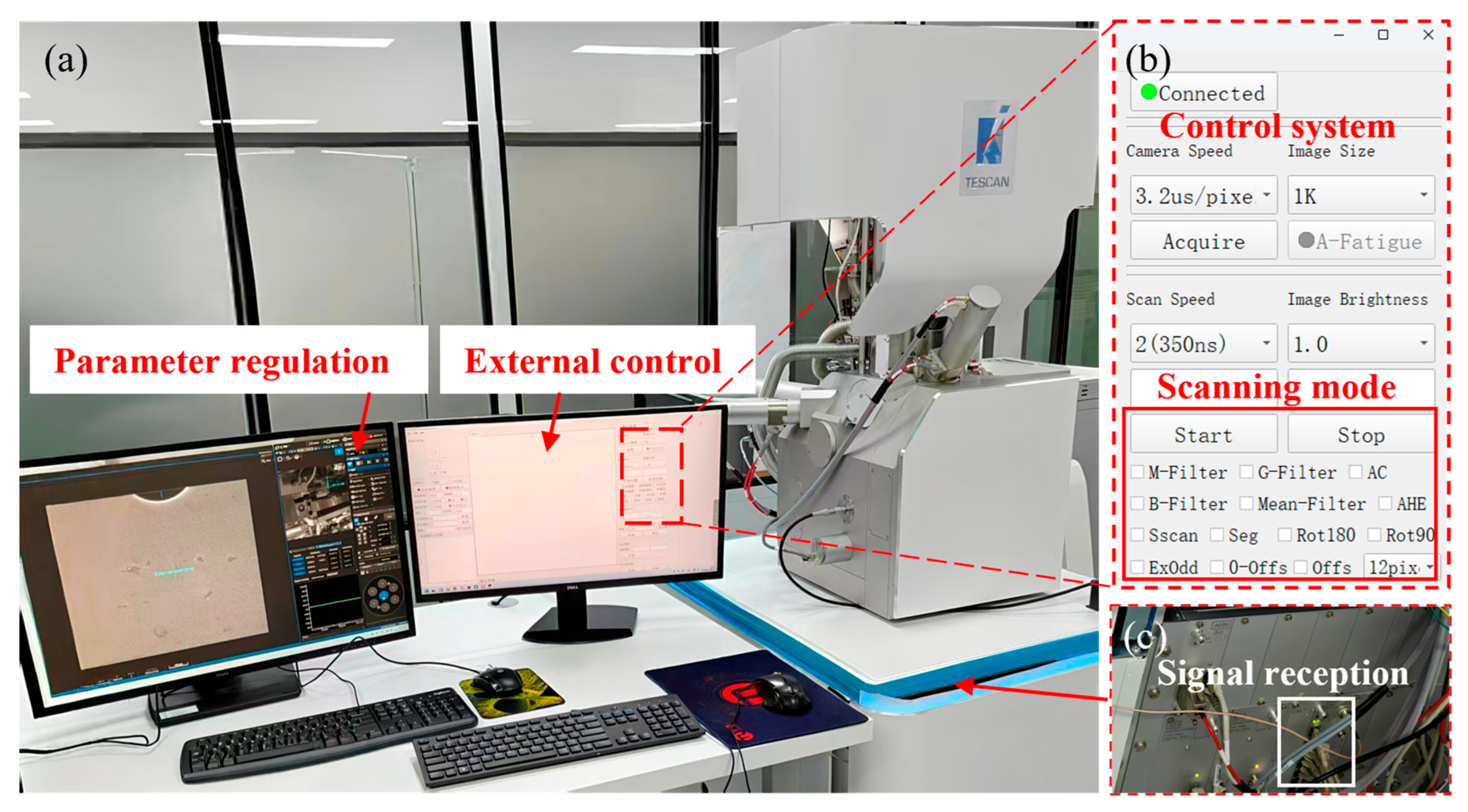
2.3. Experimental Techniques
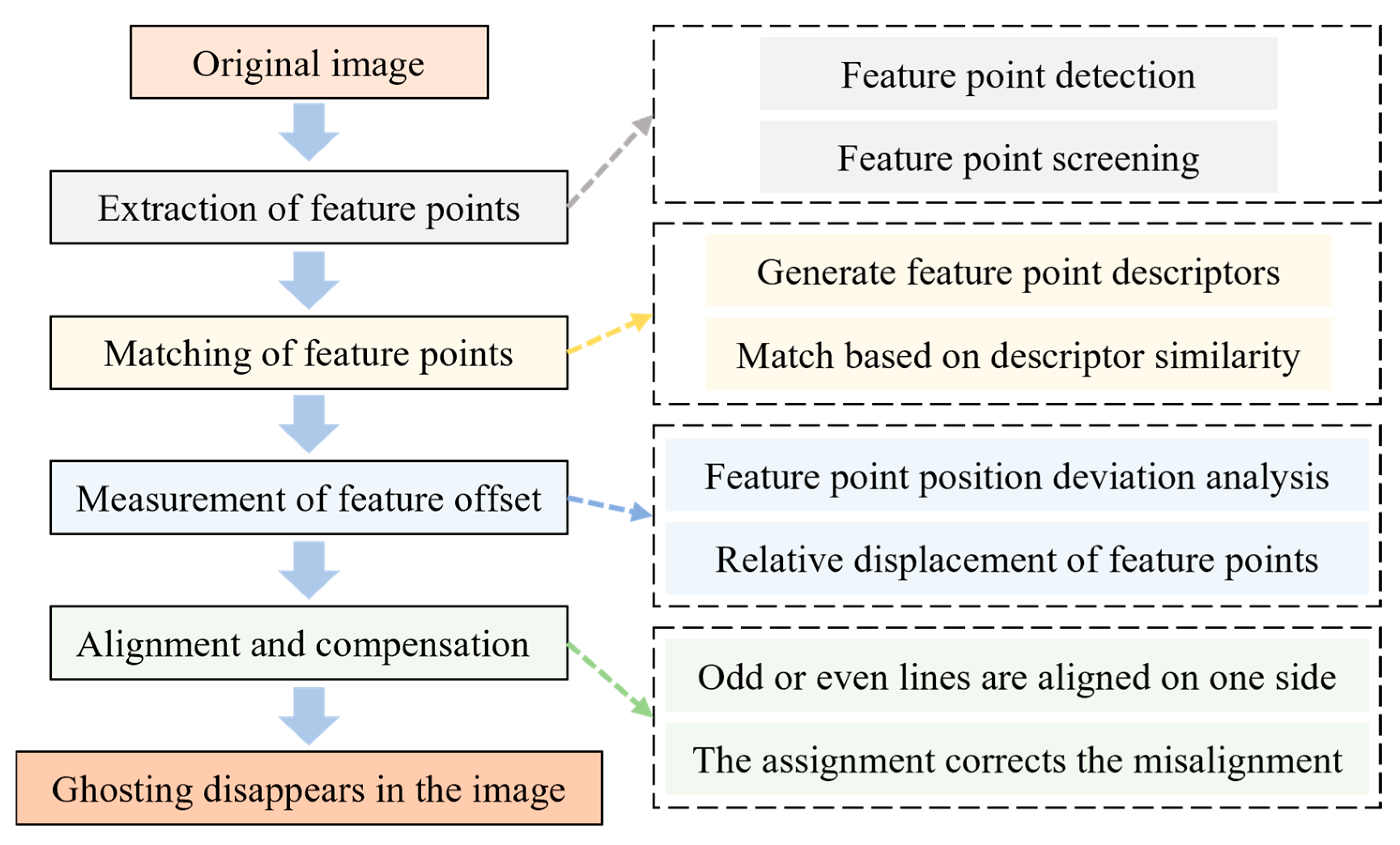
2.4. Measurement and Compensation of Image Distortion
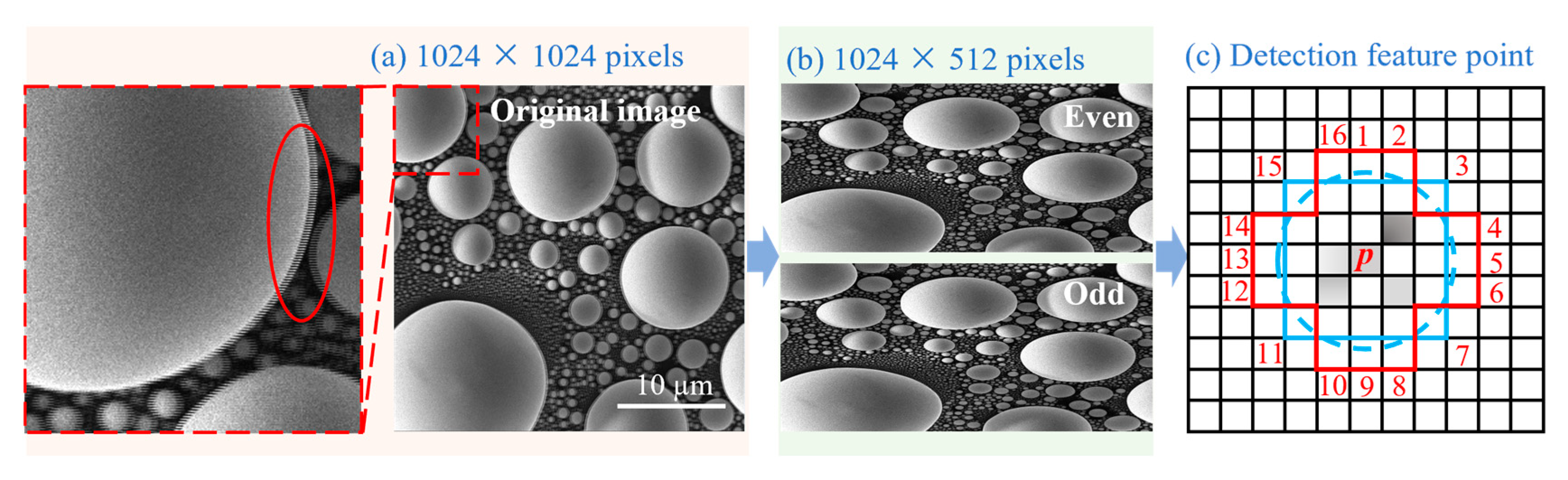
2.4.1. Feature Points Extraction and Matching
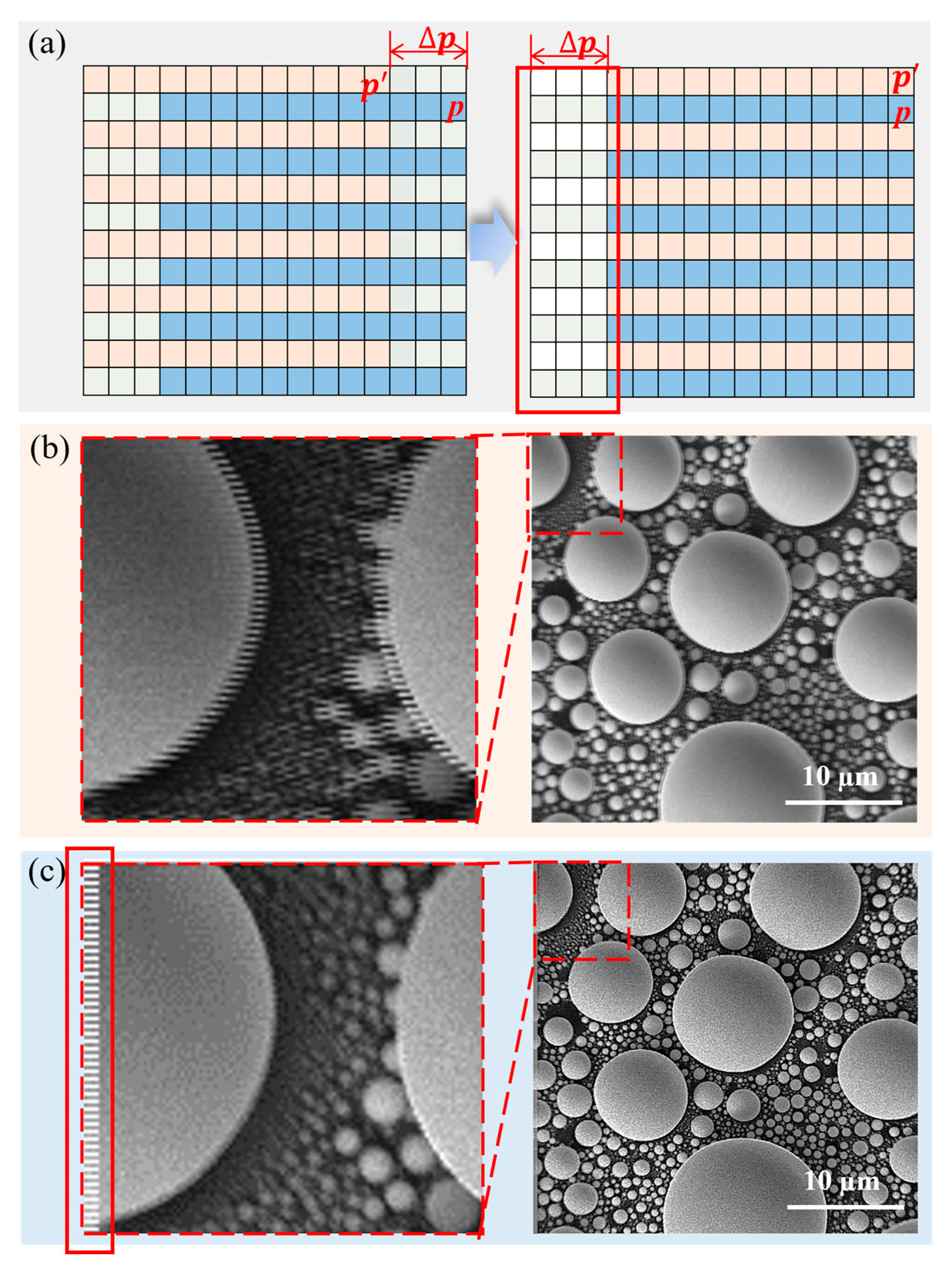
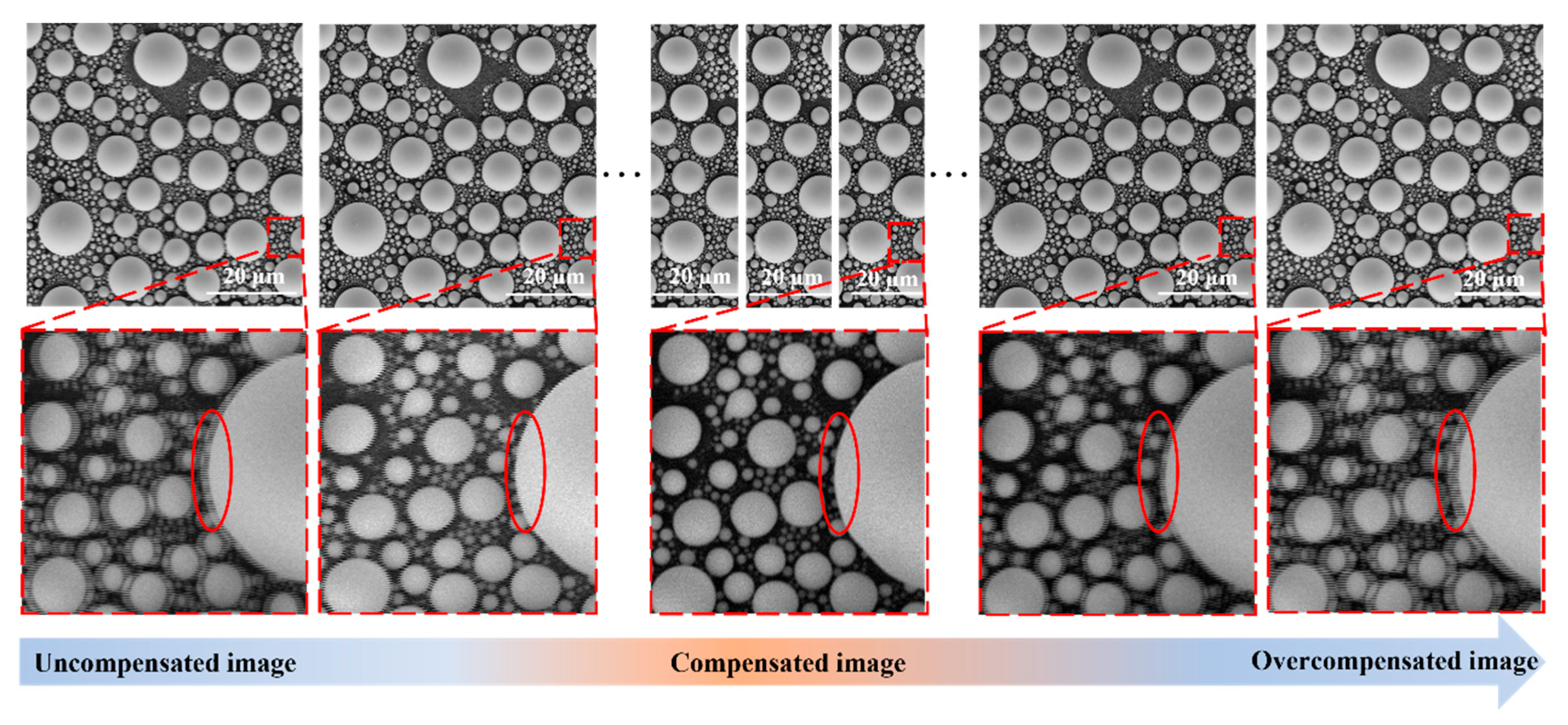
2.4.2. Compensation Process and Impact
2.5. Image Quality Assessment
3. Results and Discussions
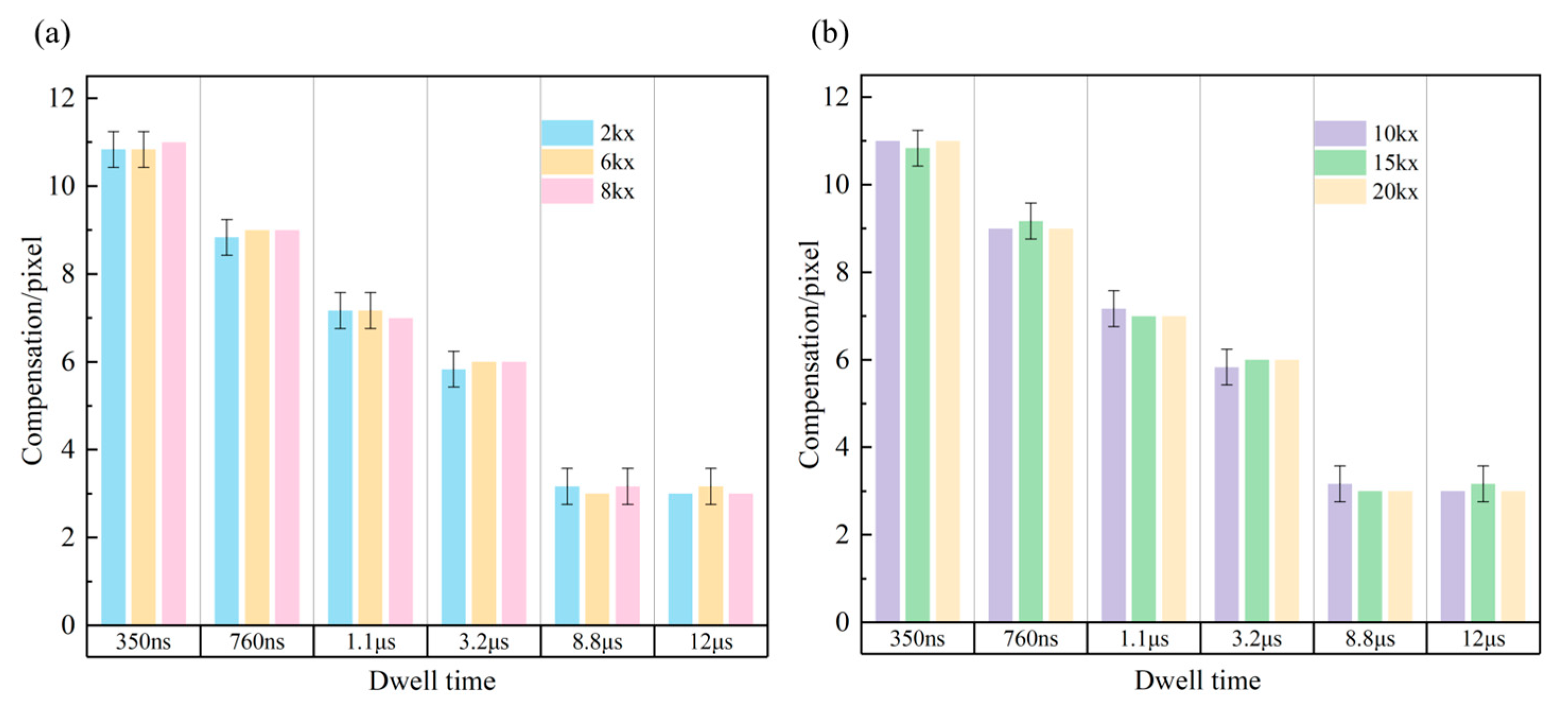
3.1. Effect of Scanning Parameters on Distortion
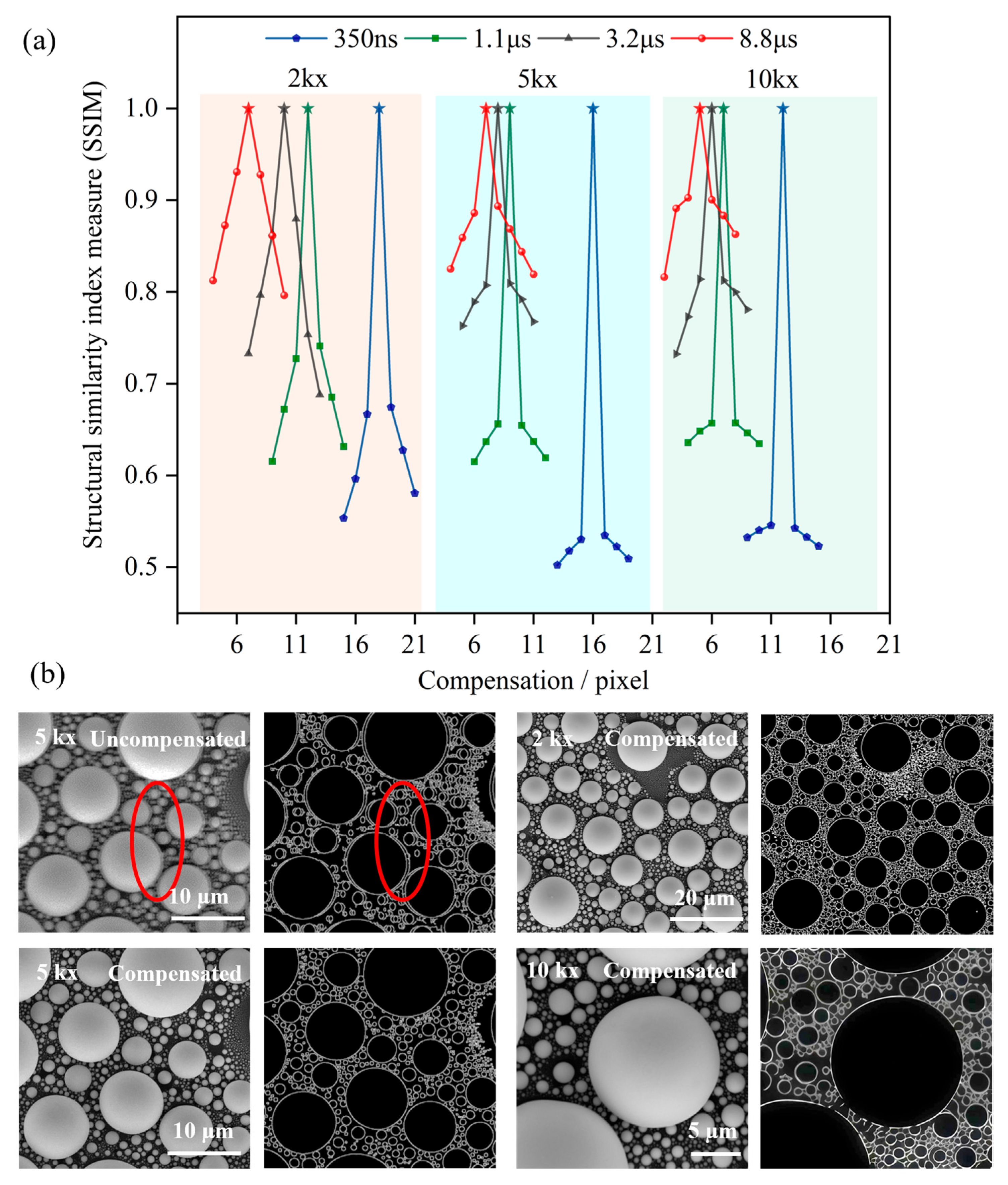
3.2. Evaluation of Image Distortion Correction
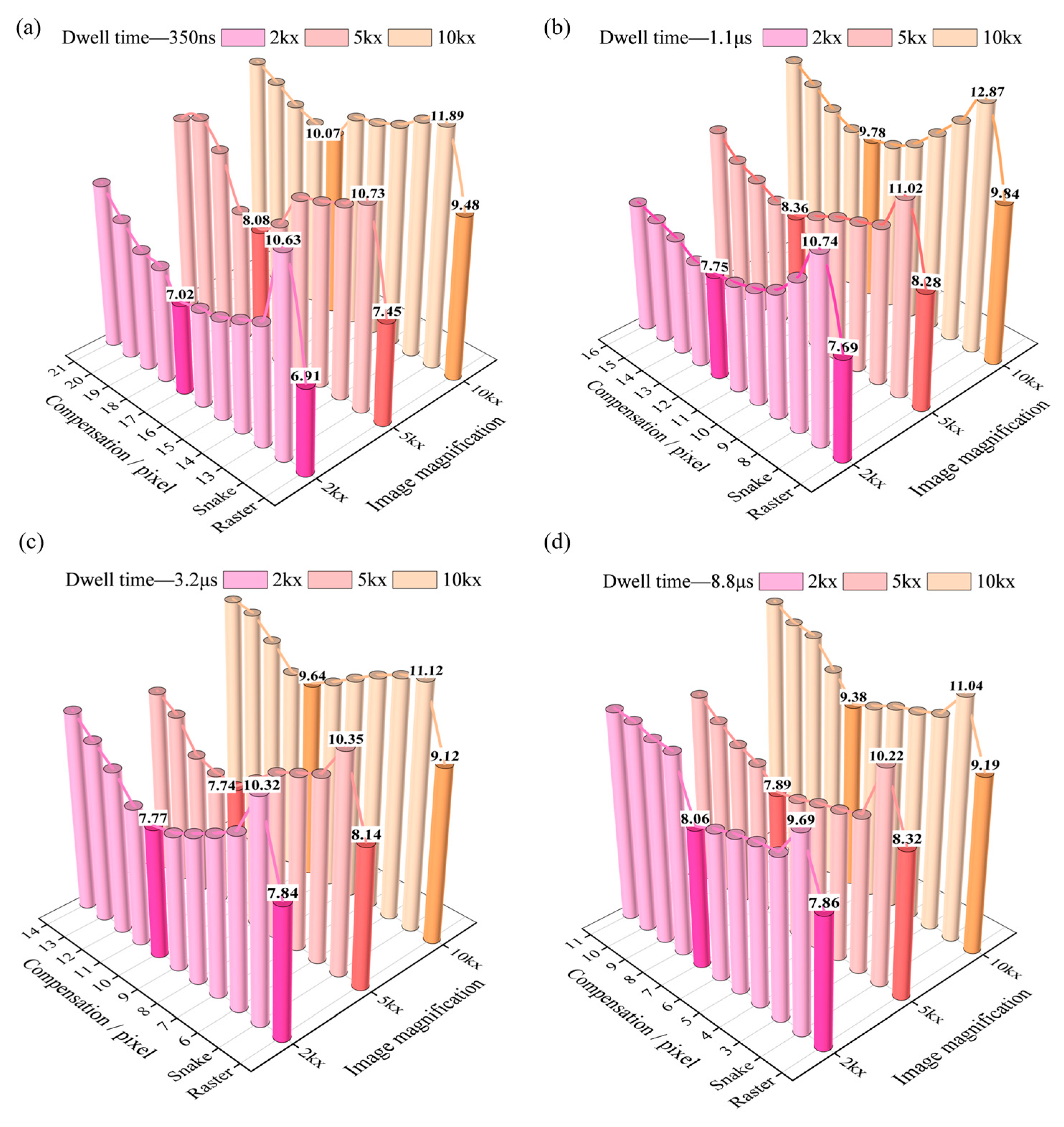
3.3. Scanning Strategies and Imaging
4. Conclusions
Supplementary Materials
Author Contributions
Funding
Data Availability Statement
Conflicts of Interest
References
- Hashimoto, Y.; Muto, A.; Shigeto, K.; Ito, H.; Itabashi, H.; Ohno, M.; Saito, T.; Tachibana, S. Development of in situ Imaging Capabilities in SEM and Their Applications. Microsc. Microanal. 2019, 25, 564–565. [Google Scholar] [CrossRef]
- Zhang, B.; Li, L.; Zhang, X.; Sun, X.; Zhao, X.; Zhang, Y.; Zhang, Z. In situ SEM fatigue testing technology for metallic materials: A review. Nanoscale 2024, 16, 13300–13330. [Google Scholar] [CrossRef] [PubMed]
- Zhang, Y.; Zhou, J.; Wang, N.; Yan, H.; Gao, W.; Wang, J.; Tang, L.; Zhang, Y.; Zhang, Z. Spatiotemporal prediction and characterization of microstructure evolution during in-situ heat treatment using a deep learning algorithm. Mater. Today Nano 2024, 26, 100471. [Google Scholar] [CrossRef]
- Lech, S.; Kruk, A.; Gil, A.; Cempura, G.; Agüero, A.; Czyrska-Filemonowicz, A. Three-dimensional imaging and characterization of the oxide scale formed on a polycrystalline nickel-based superalloy. Scr. Mater. 2019, 167, 16–20. [Google Scholar] [CrossRef]
- Li, W.; Field, K.G.; Morgan, D. Automated defect analysis in electron microscopic images. npj Comput. Mater. 2018, 4, 36. [Google Scholar] [CrossRef]
- Norouzpour, M.; Herring, R. Phase and Atomic Displacement Profiles within Crystals Measured and Simulated using the Self-interference of Split HOLZ Lines. Microsc. Microanal. 2017, 23, 1418–1419. [Google Scholar] [CrossRef][Green Version]
- López de la Rosa, F.; Sánchez-Reolid, R.; Gómez-Sirvent, J.L.; Morales, R.; Fernández-Caballero, A. A Review on Machine and Deep Learning for Semiconductor Defect Classification in Scanning Electron Microscope Images. Appl. Sci. 2021, 11, 9508. [Google Scholar] [CrossRef]
- Park, Y.-J.; Pan, R.; Montgomery, D.C. Analysis of Electromagnetic Interference Effect on Semiconductor Scanning Electron Microscope Image Distortion. Appl. Sci. 2023, 14, 223. [Google Scholar] [CrossRef]
- Jin, P.; Li, X. Correction of image drift and distortion in a scanning electron microscopy. J. Microsc. 2015, 260, 268–280. [Google Scholar] [CrossRef]
- Płuska, M.; Czerwinski, A.; Ratajczak, J.; Kątcki, J.; Rak, R. Elimination of scanning electron microscopy image periodic distortions with digital signal-processing methods. J. Microsc. 2006, 224, 89–92. [Google Scholar] [CrossRef] [PubMed]
- Płuska, M.; Czerwinski, A.; Ratajczak, J.; Kątcki, J.; Oskwarek, Ł.; Rak, R. Separation of image-distortion sources and magnetic-field measurement in scanning electron microscope (SEM). Micron 2009, 40, 46–50. [Google Scholar] [CrossRef] [PubMed]
- Guery, A.; Hild, F.; Roux, S. Characterization of SEM speckle pattern marking and imaging distortion by Digital Image Correlation. Meas. Sci. Technol. 2014, 25, 015401. [Google Scholar] [CrossRef]
- Zhang, Y.; Feng, L.; Dillon, S.; Lambros, J. Full-field deformation measurements in the transmission electron microscope using digital image correlation and particle tracking. Mater. Charact. 2022, 183, 111598. [Google Scholar] [CrossRef]
- Zhang, Q.; Xie, H.; Shi, W.; Fan, B. A novel sampling moiré method and its application for distortion calibration in scanning electron microscope. Opt. Lasers Eng. 2020, 127, 105990. [Google Scholar] [CrossRef]
- Zhang, H.; Liu, Z.; Wen, H.; Xie, H.; Liu, C. Subset geometric phase analysis method for deformation evaluation of HRTEM images. Ultramicroscopy 2016, 171, 34–42. [Google Scholar] [CrossRef]
- Lenthe, W.C.; Stinville, J.C.; Echlin, M.P.; Chen, Z.; Daly, S.; Pollock, T.M. Advanced detector signal acquisition and electron beam scanning for high resolution SEM imaging. Ultramicroscopy 2018, 195, 93–100. [Google Scholar] [CrossRef]
- Levinson, A.J.; Rowenhorst, D.J.; Lewis, A.C. Automated Image Alignment and Distortion Removal for 3-D Serial Sectioning with Electron Backscatter Diffraction. Microsc. Microanal. 2015, 21, 1673–1674. [Google Scholar] [CrossRef]
- Liu, J.; Niu, S.; Li, G.; Du, Z.; Zhang, Y.; Yang, J. Reconstructing 3D digital model without distortion for poorly conductive porous rock by nanoprobe-assisted FIB-SEM tomography. J. Microsc. 2021, 282, 258–266. [Google Scholar] [CrossRef]
- Lobato, I.; Friedrich, T.; Van Aert, S. Deep convolutional neural networks to restore single-shot electron microscopy images. npj Comput. Mater. 2024, 10, 10. [Google Scholar] [CrossRef]
- Hu, X.; An, Y.; Shao, C.; Hu, H. Distortion Convolution Module for Semantic Segmentation of Panoramic Images Based on the Image-Forming Principle. IEEE Trans. Instrum. Meas. 2022, 71, 2500612. [Google Scholar] [CrossRef]
- Li, S.; Chu, Y.; Zhao, Y.; Zhao, P. An efficient deep learning-based framework for image distortion correction. Vis. Comput. 2024, 40, 6955–6967. [Google Scholar] [CrossRef]
- Fu, J.; Tang, X.; Wang, X.; Jin, Z.; Fu, Y.; Zhang, H.; Xu, X.; Qin, H. Fully dense generative adversarial network for removing artifacts caused by microwave dielectric effect in thermoacoustic imaging. Opt. Express 2024, 32, 17464. [Google Scholar] [CrossRef]
- Velazco, A.; Nord, M.; Béché, A.; Verbeeck, J. Evaluation of different rectangular scan strategies for STEM imaging. Ultramicroscopy 2020, 215, 113021. [Google Scholar] [CrossRef] [PubMed]
- Sang, X.; Lupini, A.R.; Unocic, R.R.; Chi, M.; Borisevich, A.Y.; Kalinin, S.V.; Endeve, E.; Archibald, R.K.; Jesse, S. Dynamic scan control in STEM: Spiral scans. Adv. Struct. Chem. Imaging 2016, 2, 6. [Google Scholar] [CrossRef]
- Sang, X.; Ding, J.; Kalinin, S.V.; Jesse, S.; Unocic, R.R. Precision controlled atomic resolution scanning transmission electron microscopy using spiral scan pathways. Sci. Rep. 2017, 7, 43585. [Google Scholar] [CrossRef]
- Ida, N. Engineering Electromagnetics, 3rd ed.; Springer International Publishing: Cham, Switzerland, 2015. [Google Scholar]
- Wang, J.; Liu, G.; Liu, Z.; Wu, Z.; Wang, Q.; Jie, S.; Zhang, S. In-situ coil constant calibration method based on electron paramagnetic resonance magnetometer response. Measurement 2025, 244, 116328. [Google Scholar] [CrossRef]
- Giuliani, G. A general law for electromagnetic induction. Europhys. Lett. 2008, 81, 60002. [Google Scholar] [CrossRef]
- Sowa, M.; Majka, Ł. Ferromagnetic core coil hysteresis modeling using fractional derivatives. Nonlinear Dyn. 2020, 101, 775–793. [Google Scholar] [CrossRef]
- Karami, E.; Prasad, S.; Shehata, M. Image matching using SIFT, SURF, BRIEF and ORB: Performance comparison for distorted images. arXiv 2017. [Google Scholar] [CrossRef]
- Luo, C.; Yang, W.; Huang, P.; Zhou, J. Overview of image matching based on ORB algorithm. J. Phys. Conf. Ser. 2019, 1237, 032020. [Google Scholar] [CrossRef]
- Zhang, W. Combination of SIFT and Canny edge detection for registration between SAR and optical images. IEEE Geosci. Remote Sens. Lett. 2020, 19, 4007205. [Google Scholar] [CrossRef]
- Elseberg, J.; Magnenat, S.; Siegwart, R.; Nüchter, A. Comparison of nearest-neighbor-search strategies and implementations for efficient shape registration. J. Softw. Eng. Robot. 2012, 3, 2–12. [Google Scholar]
- Setiadi, D.R.I.M. PSNR vs SSIM: Imperceptibility quality assessment for image steganography. Multimed. Tools Appl. 2021, 80, 8423–8444. [Google Scholar] [CrossRef]
- Mittal, A.; Soundararajan, R.; Bovik, A.C. Making a “Completely Blind” Image Quality Analyzer. IEEE Signal Process. Lett. 2013, 20, 209–212. [Google Scholar] [CrossRef]
- Temel, D.; AlRegib, G. Perceptual image quality assessment through spectral analysis of error representations. Signal Process. Image Commun. 2019, 70, 37–46. [Google Scholar] [CrossRef]
- Trauth, M.H. Spectral analysis in Quaternary sciences. Quat. Sci. Rev. 2021, 270, 107157. [Google Scholar] [CrossRef]
- Chen, Z.; Zhou, W.; Zhang, H.; Yu, Y. Phase aberration adaptive compensation in digital holography based on phase imitation and metric optimization. Opt. Express 2023, 31, 21048–21062. [Google Scholar] [CrossRef] [PubMed]
- Li, L.; Huang, J.; Aphale, S.S.; Zhu, L. A smoothed raster scanning trajectory based on acceleration-continuous B-spline transition for high-speed atomic force microscopy. IEEE/ASME Trans. Mechatron. 2020, 26, 24–32. [Google Scholar] [CrossRef]
- Liu, L.; Zhang, Y.; Wang, N.; Tang, L.; Yan, C.; Zhou, J.; Gao, W.; Zhang, Y.; Lv, J.; Zhang, Z. Image drift compensation in scanning electron microscopy facilitated by an external scanning and imaging system. Micron 2025, 196–197, 103848. [Google Scholar] [CrossRef]



| Offset in the X-Direction | Offset in the Y-Direction | |||||||||||
|---|---|---|---|---|---|---|---|---|---|---|---|---|
| 3kx | 4kx | 5kx | 6kx | 10kx | 20kx | 3kx | 4kx | 5kx | 6kx | 10kx | 20kx | |
| 350 ns | 11 | 11 | 11 | 11 | 11 | 11 | 0 | 0 | 0 | 0 | 0 | 0 |
| 760 ns | 10 | 10 | 10 | 10 | 10 | 10 | 0 | 0 | 0 | 0 | 0 | 0 |
| 1.1 μs | 7 | 7 | 6 | 7 | 7 | 6 | −1 | −1 | 0 | 0 | 0 | 0 |
| 3.2 μs | 6 | 6 | 6 | 6 | 6 | 6 | 0 | 0 | −1 | 0 | 0 | 0 |
| 8.8 μs | 3 | 3 | 4 | 3 | 3 | 3 | −1 | −1 | 0 | 0 | 0 | 0 |
| Image Quality | Spectrum Analysis | SSIM | NIQE | |
|---|---|---|---|---|
| High-Frequency Proportion | Low-Frequency Distribution Range | |||
| Raster scanning | 0.1605 | 81,896,931,073.8228 | 1 | 7.84 |
| Snake scanning | 0.1579 | 81,729,043,840.3511 | 0.8975 | 7.77 |
Disclaimer/Publisher’s Note: The statements, opinions and data contained in all publications are solely those of the individual author(s) and contributor(s) and not of MDPI and/or the editor(s). MDPI and/or the editor(s) disclaim responsibility for any injury to people or property resulting from any ideas, methods, instructions or products referred to in the content. |
© 2025 by the authors. Licensee MDPI, Basel, Switzerland. This article is an open access article distributed under the terms and conditions of the Creative Commons Attribution (CC BY) license.
Share and Cite
Ding, J.; Liu, L.; Wang, N.; Zhang, Y.; Tang, L.; Lu, J.; Zhang, Y.; Zhang, Z. Snake Scanning for SEM: Quantification and Correction of Its Inherent Misalignment Distortion Using an External Scan Controller. Materials 2026, 19, 16. https://doi.org/10.3390/ma19010016
Ding J, Liu L, Wang N, Zhang Y, Tang L, Lu J, Zhang Y, Zhang Z. Snake Scanning for SEM: Quantification and Correction of Its Inherent Misalignment Distortion Using an External Scan Controller. Materials. 2026; 19(1):16. https://doi.org/10.3390/ma19010016
Chicago/Turabian StyleDing, Jieping, Ling’en Liu, Ni Wang, Yixu Zhang, Liang Tang, Junxia Lu, Yuefei Zhang, and Ze Zhang. 2026. "Snake Scanning for SEM: Quantification and Correction of Its Inherent Misalignment Distortion Using an External Scan Controller" Materials 19, no. 1: 16. https://doi.org/10.3390/ma19010016
APA StyleDing, J., Liu, L., Wang, N., Zhang, Y., Tang, L., Lu, J., Zhang, Y., & Zhang, Z. (2026). Snake Scanning for SEM: Quantification and Correction of Its Inherent Misalignment Distortion Using an External Scan Controller. Materials, 19(1), 16. https://doi.org/10.3390/ma19010016