Microtensile Bond Strength of CAD-CAM Restorative Dental Material Blocks to Resin Cement: An In Vitro Study

 ,
,  ,
,  and
and
Abstract
1. Introduction
2. Material and Methods
3. Results
4. Discussion
5. Conclusions
- All materials used with the bonding protocols recommended by their manufacturers and evaluated in this study achieve clinically adequate bond strengths.
- Lava Ultimate® is the material that, when used with its bonding protocol, achieves the best results in bond strength. Slightly higher values are obtained when silica coating rather than sandblasting.
Author Contributions
Funding
Institutional Review Board Statement
Informed Consent Statement
Data Availability Statement
Conflicts of Interest
References
- Edelhoff, D.; Sorensen, J.A. Tooth structure removal associated with various preparation designs for posterior teeth. Int. J. Periodontics Restor. Dent. 2002, 22, 241–249. [Google Scholar]
- Al-Fouzan, A.F.; Tashkandi, E.A. Volumetric measurements of removed tooth structure associated with various preparation designs. Int. J. Prosthodont. 2013, 26, 545–548. [Google Scholar] [CrossRef] [PubMed]
- Kois, D.E.; Isvilanonda, V.; Chaiyabutr, Y.; Kois, J.C. Evaluation of fracture resistance and failure risks of posterior partial coverage restorations. J. Esthet. Restor. Dent. 2013, 25, 110–122. [Google Scholar] [CrossRef] [PubMed]
- Dal Piva, A.M.D.O.; Tribst, J.P.M.; Borges, A.L.S.; Souza, R.O.D.A.E.; Bottino, M.A. CAD-FEA modeling and analysis of different full crown monolithic restorations. Dent. Mater. 2018, 34, 1342–1350. [Google Scholar] [CrossRef] [PubMed]
- Lauvahutanon, S.; Takahashi, H.; Shiozawa, M.; Iwasaki, N.; Asakawa, Y.; Oki, M.; Arksornnukit, M. Mechanical properties of composite resin blocks for CAD/CAM. Dent. Mater. J. 2014, 33, 705–710. [Google Scholar] [CrossRef] [PubMed]
- Awada, A.; Nathanson, D. Mechanical properties of resin-ceramic CAD/CAM restorative materials. J. Prosthet. Dent. 2015, 114, 587–593. [Google Scholar] [CrossRef]
- Gracis, S.; Thompson, V.P.; Ferencz, J.L.; Silva, N.R.; Bonfante, E.A. A new classification system for all-ceramic and ceramic-like restorative materials. Int. J. Prosthodont. 2015, 28, 227–235. [Google Scholar] [CrossRef]
- Sillas-Duarte, J.R.; Sartori, N.; Phark, J. Ceramic-reinforced polymers: CAD/CAM Hybrid Restorative Materials. Curr. Oral Health 2016, 3, 198–202. [Google Scholar] [CrossRef]
- Tekçe, N.; Tuncer, S.; Demirci, M. The effect of sandblasting duration on the bond durability of dual-cure adhesive cement to CAD/CAM resin restoratives. J. Adv. Prosthodont. 2018, 10, 211–217. [Google Scholar] [CrossRef]
- Spitznagel, F.A.; Vuck, A.; Gierthmühlen, P.C.; Blatz, M.B.; Horvath, S.D. Adhesive bonding to hybrid materials: An overview of materials and recommendations. Compend. Contin. Educ. Dent. 2016, 37, 630–637. [Google Scholar]
- Driscoll, C.F.; Freilich, M.A.; Guckes, A.D.; Knoernschild, K.L.; Mcgarry, T.J.; Goldstein, G.; Goodacre, C. The Glossary of Prosthodontic Terms. J. Prosthet. Dent. 2017, 1, e1–e105. [Google Scholar]
- IPS, e.max CAD Product Data Sheet. Available online: https://www.ivoclarvivadent.es/es-es/ (accessed on 1 January 2023).
- Lührs, A.K.; Pongprueksa, P.; de Munck, J.; Geurtsen, W.; Van Meerbeek, B. Curing mode affects bond strength of adhesively luted composite CAD/CAM restorations to dentin. Dent. Mater. 2014, 30, 281–291. [Google Scholar] [CrossRef]
- LavaTM Ultimate Product Data Sheet. Available online: https://www.3m.com.es/3M/es_ES/empresa-es/ (accessed on 1 January 2023).
- Mainjot, A.K.; Dupont, N.M.; Oudkerk, J.C.; Dewael, T.Y.; Sadoun, M.J. From Artisanal to CAD-CAM Blocks: State of the Art of Indirect Composites. J. Dent. Res. 2016, 95, 487–495. [Google Scholar] [CrossRef]
- Vita Enamic Product Data Sheet. Available online: https://www.vita-zahnfabrik.com/ (accessed on 1 January 2023).
- Román-Rodríguez, J.L.; Roig-Vanaclocha, A.; Fons-Font, A.; Granell-Ruiz, M.; Solá-Ruiz, M.F.; Amigó-Borrás, V.; Busquets-Mataix, D.; Vicente-Escuder, A. In vitro experimental study of bonding between aluminium oxide ceramics and resin cements. Med. Oral Pathol. Oral Cir. Oral Cir. 2010, 15, e95–e100. [Google Scholar] [CrossRef]
- Fasbinder, D.J.; Dennison, J.B.; Heys, D.; Neiva, G. A clinical evaluation of chairside lithium disilicate CAD/CAM crowns: A two-year report. J. Am. Dent. Assoc. 2010, 141, 10S–14S. [Google Scholar] [CrossRef]
- Albero, A.; Pascual, A.; Camps, I.; Grau-Benitez, M. Comparative characterization of a novel cad-cam polymer-infiltrated-ceramic-network. J. Clin. Exp. Dent. 2015, 7, e495–e500. [Google Scholar] [CrossRef]
- Lawson, N.C.; Bansal, R.; Burgess, J.O. Wear, strength, modulus and hardness of CAD/CAM restorative materials. Dent. Mater. 2016, 32, e275–e283. [Google Scholar] [CrossRef]
- Frankenberger, R.; Hartmann, V.E.; Krech, M.; Krämerd, N.; Reiche, S.; Braunf, A.; Roggendorfg, M. Adhesive luting of new CAD/CAM materials. Int. J. Comput. Dent. 2015, 18, 9–20. [Google Scholar]
- Duzyol, M.; Sagsoz, O.; Krämer, N.; Reich, S.; Braun, A.; Roggendorf, M. The Effect of Surface Treatments on the Bond Strength between CAD/CAM Blocks and Composite Resin. J. Prosthodont. 2016, 25, 466–471. [Google Scholar] [CrossRef]
- Emsermann, I.; Eggmann, F.; Krastl, G.; Weiger, R.; Amato, J. Influence of Pretreatment Methods on the Adhesion of Composite and Polymer Infiltrated Ceramic CAD-CAM Blocks. J. Adhes. Dent. 2019, 21, 433–443. [Google Scholar]
- Guess, P.C.; Zavanelli, R.A.; Silva, N.R.; Bonfante, E.A.; Coelho, P.G.; Thompson, V.P. Monolithic CAD/CAM lithium disilicate versus veneered Y-TZP crowns: Comparison of failure modes and reliability after fatigue. Int. J. Prosthodont. 2010, 23, 434–442. [Google Scholar] [PubMed]
- Elsaka, S.E. Bond strength of novel CAD/CAM restorative materials to self-adhesive resin cement: The effect of surface treatments. J. Adhes. Dent. 2014, 16, 531–540. [Google Scholar] [PubMed]
- Colombo, L.D.A.; Murillo-Gómez, F.; de Goes, M.F. Bond Strength of CAD/CAM Restorative Materials Treated with Different Surface Etching Protocols. J. Adhes. Dent. 2019, 21, 307–317. [Google Scholar] [PubMed]
- Peumans, M.; Valjakova, E.B.; De Munck, J.; Mishevska, C.B.; Van Meerbeek, B. Bonding Effectiveness of Luting Composites to Different CAD/CAM Materials. J. Adhes. Dent. 2016, 18, 289–302. [Google Scholar]
- Bayazıt, E.Ö. Microtensile Bond Strength of Self-Adhesive Resin Cements to CAD/CAM Resin-Matrix Ceramics Prepared with Different Surface Treatments. Int. J. Prosthodont. 2019, 32, 433–438. [Google Scholar] [CrossRef]
- Tekçe, N.; Tuncer, S.; Demirci, M.; Kara, D.; Baydemir, C. Microtensile Bond Strength of CAD/CAM Resin Blocks to Dual-Cure Adhesive Cement: The Effect of Different Sandblasting Procedures. J. Prosthodont. 2019, 28, e485–e490. [Google Scholar] [CrossRef]
- Atsu, S.S.; Kilicarslan, M.A.; Kucukesmen, H.C.; Aka, P.S. Effect of zirconium-oxide ceramic surface treatments on the bond strength to adhesive resin. J. Prosthet. Dent. 2006, 95, 430–436. [Google Scholar] [CrossRef]
- García-Engra, G.; Fernandez-Estevan, L.; Casas-Terrón, J.; Fons-Font, A.; Castelo-Baz, P.; Agustín-Panadero, R.; Román-Rodriguez, J.L. Fracture Resistance of New Metal-Free Materials Used for CAD-CAM Fabrication of Partial Posterior Restorations. Medicine 2020, 56, 132. [Google Scholar] [CrossRef]
- Comba, A.; Baldi, A.; Carossa, M.; Michelotto Tempesta, R.; Garino, E.; Llubani, X.; Rozzi, D.; Mikonis, J.; Paolone, G.; Scotti, N. Post-Fatigue Fracture Resistance of Lithium Disilicate and Polymer-Infiltrated Ceramic Network Indirect Restorations over Endodontically-Treated Molars with Different Preparation Designs: An In-Vitro Study. Polymers 2022, 14, 5084. [Google Scholar] [CrossRef]
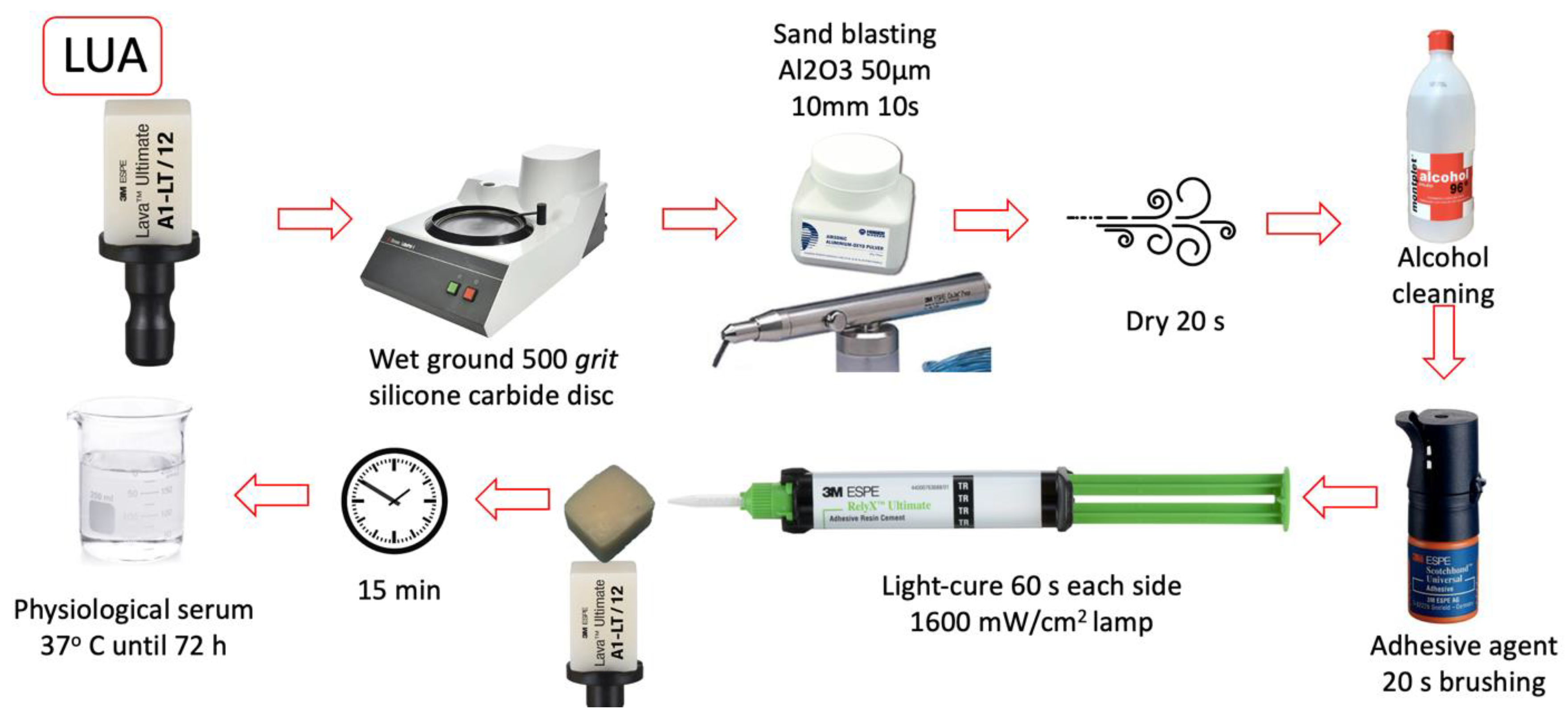
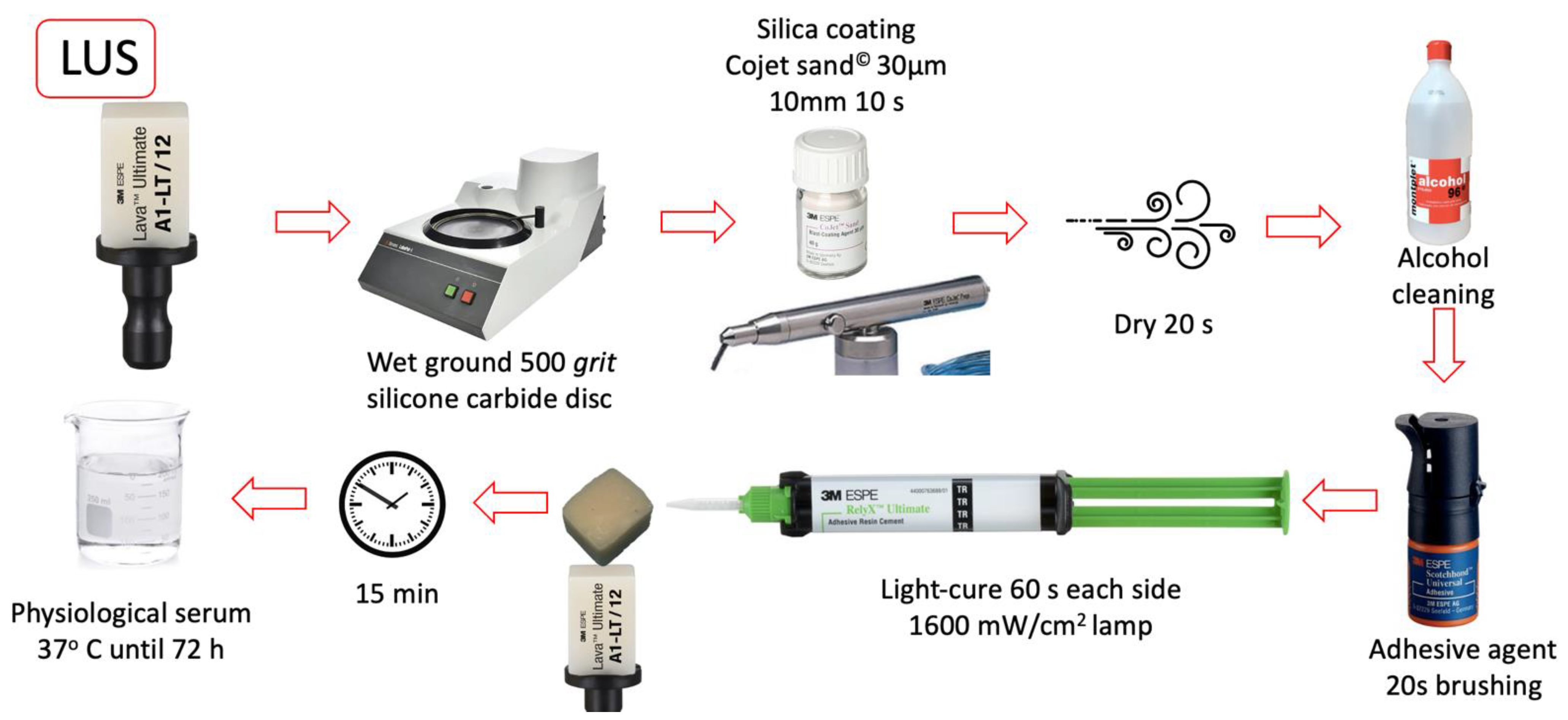

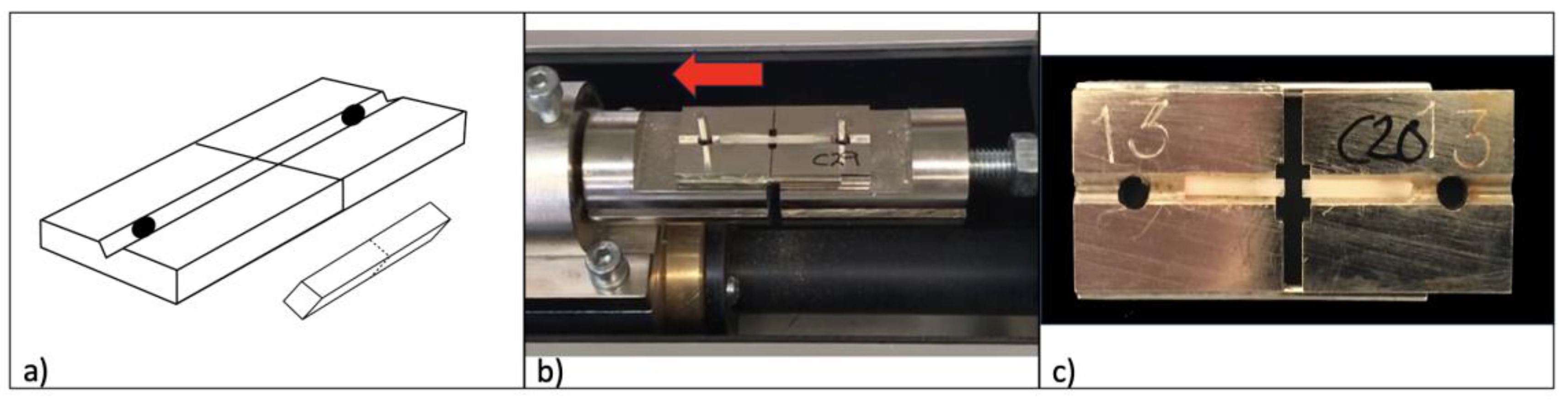
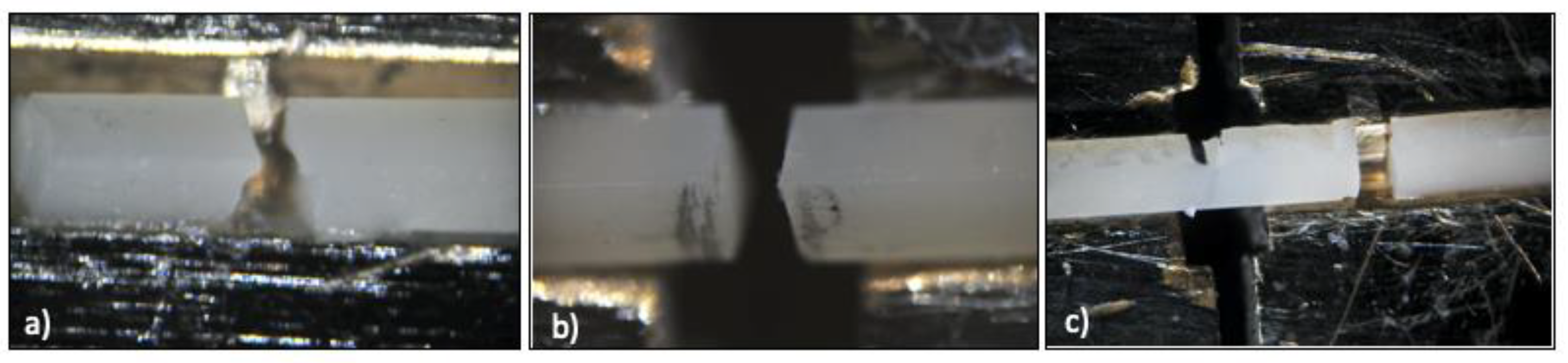


| Group | Material and Cementation Sequence | Type | Chemical Composition | Duration | Manufacturer’s Data | Lot Number |
|---|---|---|---|---|---|---|
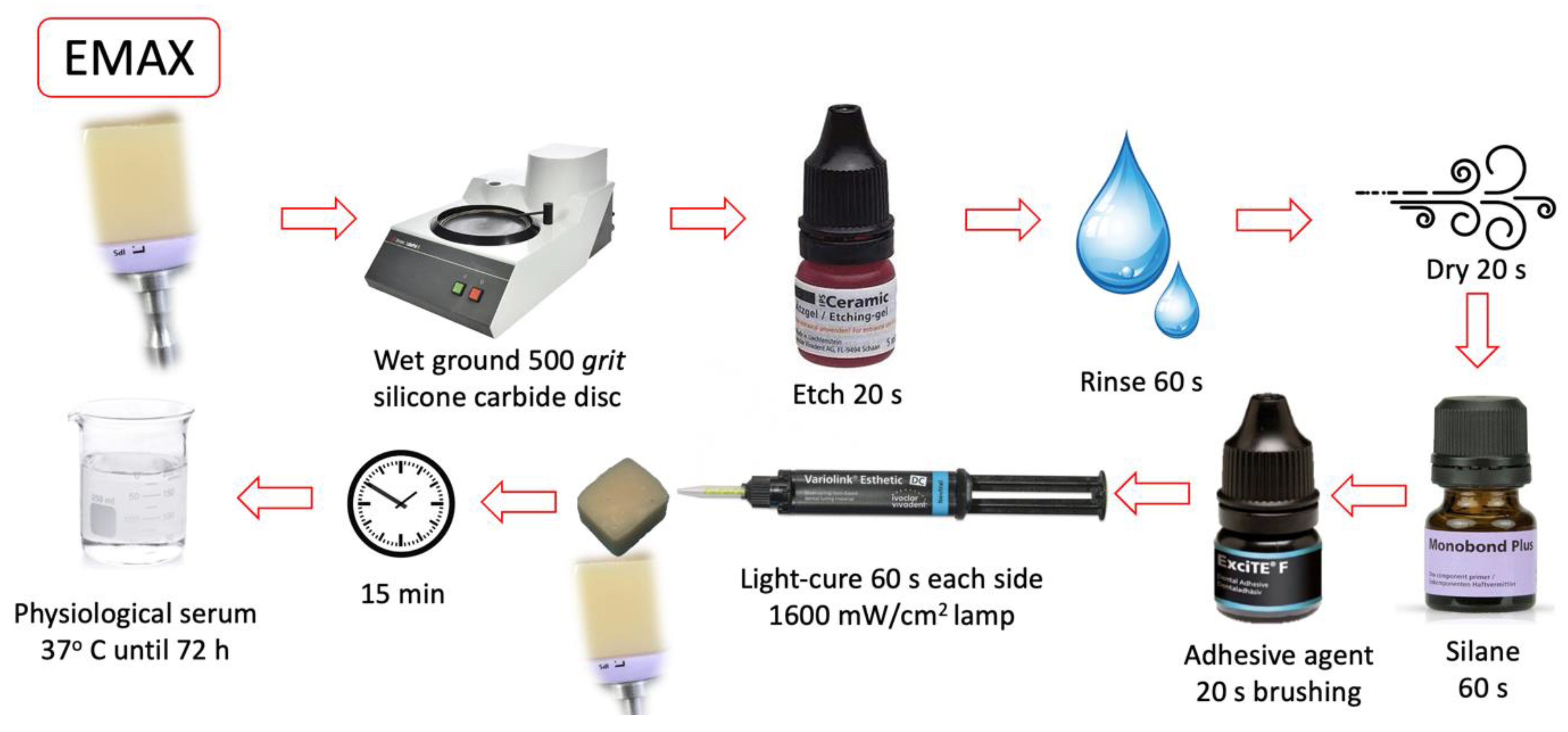
| EMAX | 1. IPS Ceramic etching gel | Ceramic acid etching | Hydrofluoric acid 4.9% | 20 s | Ivoclar Vivadent | T76221 |
| 2. Monobond Plus | Silane | Adhesive monomers 4%, Ethanol 96% | 60 s | Ivoclar Vivadent | X43365 | |
| 3. Excite | Bonding agent | Phosphonic acid acrylate, dimethacrylates, hydroxyethyl methacrylate, highly dispersed silicon dioxide, ethanol, catalysts, stabilizers, and fluoride | 20 s agitate | Ivoclar Vivadent | Z33289 | |
| 4. Variolink Esthetic DC Neutral | Dual resin cement | Barium glass filling, mixture of oxide 52.2%, dimethacrylate 22%, high dispersion silica, ytterbium trifluoride 25%, initiators and stabilizers 0.8%, pigments <0.1% | 60 s each side | Ivoclar Vivadent | W95568 | |
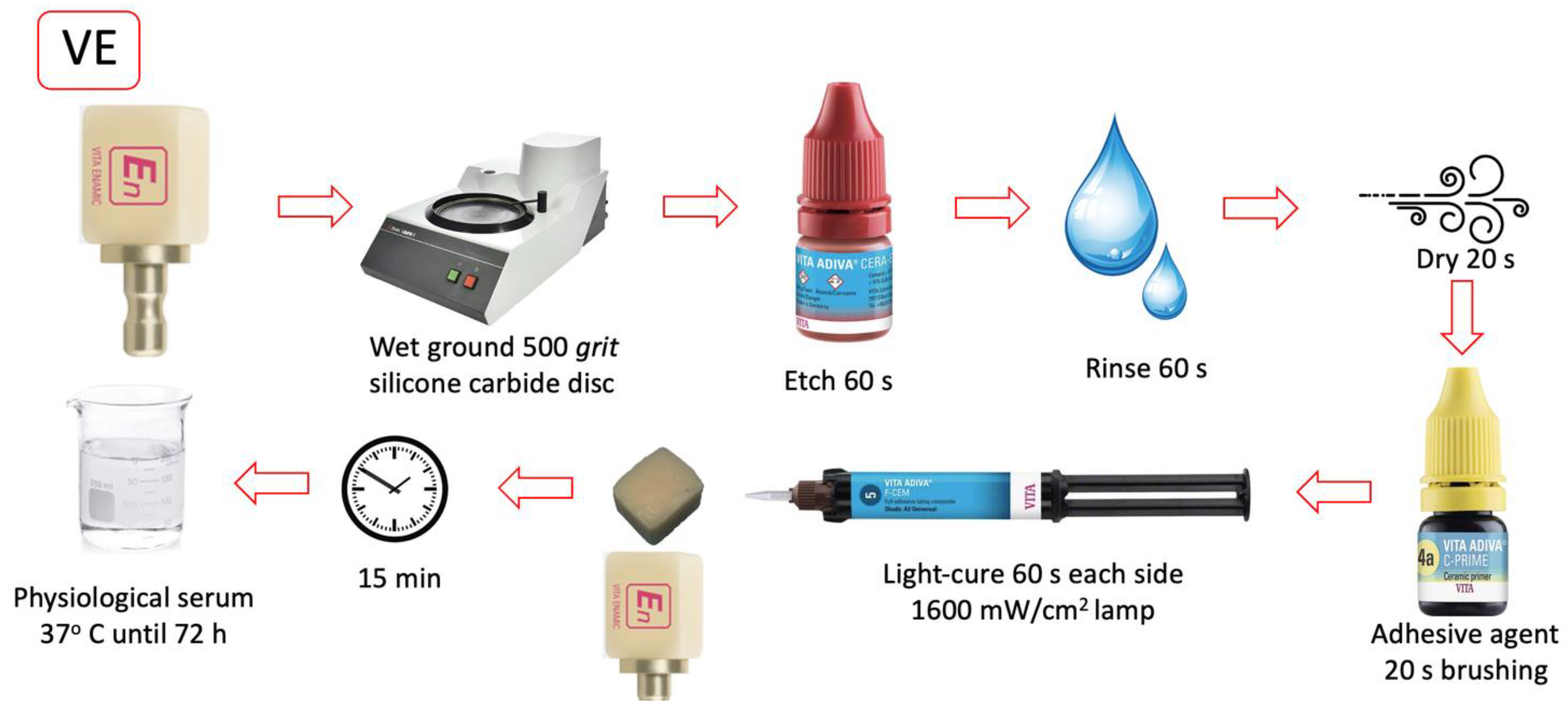
| VE | 1. VITA Adiva Cera-Etch | Ceramic acid etching | Hydrofluoric acid 5% | 60 s | VITA Zahnfabrik | G32620 |
| 2. VITA Adiva C-Prime | Silane | Metracrylsilane solution in ethanol | 60 s | VITA Zahnfabrik | I18534 | |
| 3. VITA Adiva F-Cem | Dual resin cement | Mixture of bis-GMA-based resins, catalysts, stabilisers, pigments, and inorganic filler particles in a distribution of 0.05–1 μm | 60 s each side | VITA Zahnfabrik | F72621 | |
| LUA | 1. Rondoflex | Sandblasting powder | Aluminium oxide powder, particle size: 50 μm, pressure: 2.0 bars | 15 s | KaVo | 041025 |
| 2. Scotchbond Universal | Universal bonding agent | HEMA 2-hydroxyethyl methacrylate; MDP 2-methyl-, 2-propenoic acid, reaction products with 1, 10-decanediol and phosphoric oxide (P2O5), (1-methylethylidene)bis [4,1-phenylenxy(2-hydroxy-3,1-propanediyl) bismethacrylate, Decamethylene dimethacrylate | 20 s agitate | 3M ESPE | 4636140 | |
| 3. RelyX Ultimate | Dual resin cement | Base paste: silane-treated glass powder, 2-propenoic acid, 2-methyl, reaction products with 2-hydroxy-1,3-propanedyl dimethacrylate and phosphorus oxide, TEGDMA, silane-treated silica, oxide glass chemicals, sodium persulfate, tertbutyl peroxy-3.5,5-trimethylhexanoate, copper acetate monohydrate Catalyst paste: silane-treated glass powder, substituted dimethacrylate, 1.12-dodecane dimethacrylate, silane-treated silica, 1-benzyl-5-phentyl-barbic-acid, calcium salt, sodium p-toluenesulfinate, 2-propenic acid, 2-methyl-, di-2.1-ethanediyl ester, calcium hydroxide, titanium dioxide | 60 s each side | 3M ESPE | 4751537 | |
| LUS | 1. Cojet Sand | Silica coating powder | Silica-coated aluminium oxide powder, particle size: 30 μm, pressure: 2.0 bars | 15 s | 3M ESPE | 3454446 |
| 2. Scotchbond Universal | Universal bonding agent | HEMA 2-hydroxyethyl methacrylate; MDP 2-methyl-, 2-propenoic acid, reaction products with 1, 10-decanediol and phosphoric oxide (P2O5), (1-methylethylidene)bis [4.1-phenyleneiminoxy(2-hydroxy-3.1-propanediyl)] bis-methacrylate, Decamethylene dimethacrylate | 20 s agitate | 3M ESPE | 4636140 | |
| 3. RelyX Ultimate | Dual resin cement | Base paste: silane-treated glass powder, 2-propenoic acid, 2-methyl, reaction products with 2-hydroxy-1.3-propanedyl dimethacrylate and phosphorus oxide, TEGDMA, silane-treated silica, oxide glass chemicals, sodium persulfate, tertbutyl peroxy-3.5,5-trimethylhexanoate, copper acetate monohydrate Catalyst paste: silane-treated glass powder, substituted dimethacrylate, 1.12-dodecane dimethacrylate, silane-treated silica, 1-benzyl-5-phentyl-barbic-acid, calcium salt, sodium p-toluenesulfinate, 2-propenic acid, 2-methyl-, di-2.1-ethanediyl ester, calcium hydroxide, titanium dioxide | 60 s each side | 3M ESPE | 4751537 |
| GROUP | ||||
|---|---|---|---|---|
| EMAX | VE | LUA | LUS | |
| N | 70 | 57 | 77 | 65 |
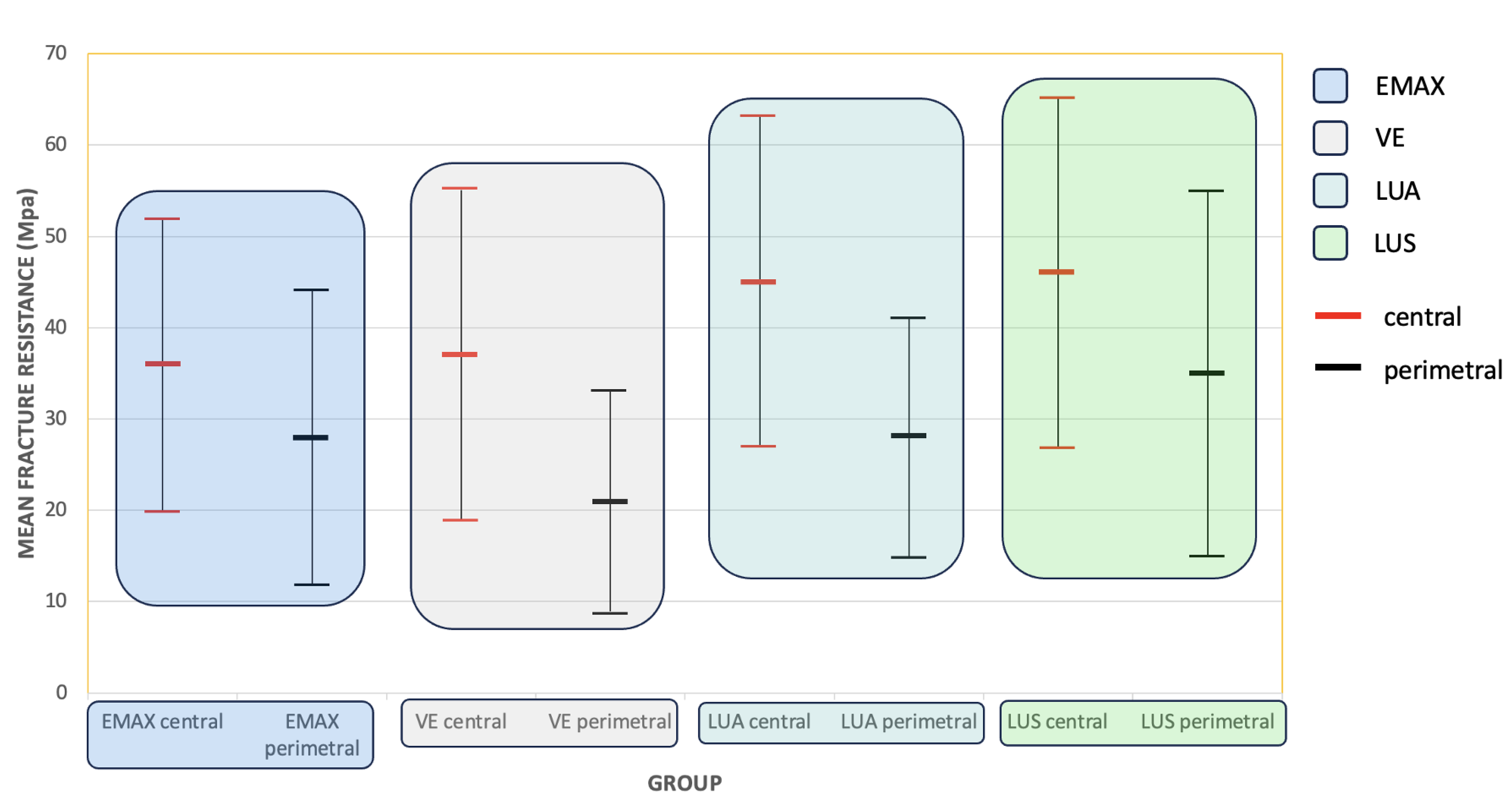
| Mean | 33.68 | 29.68 | 38.17 | 42.07 |
| SD | 16.27 | 17.26 | 18.36 | 19.67 |
| GROUP | ||||
|---|---|---|---|---|
| EMAX | VE | LUA | LUS | |
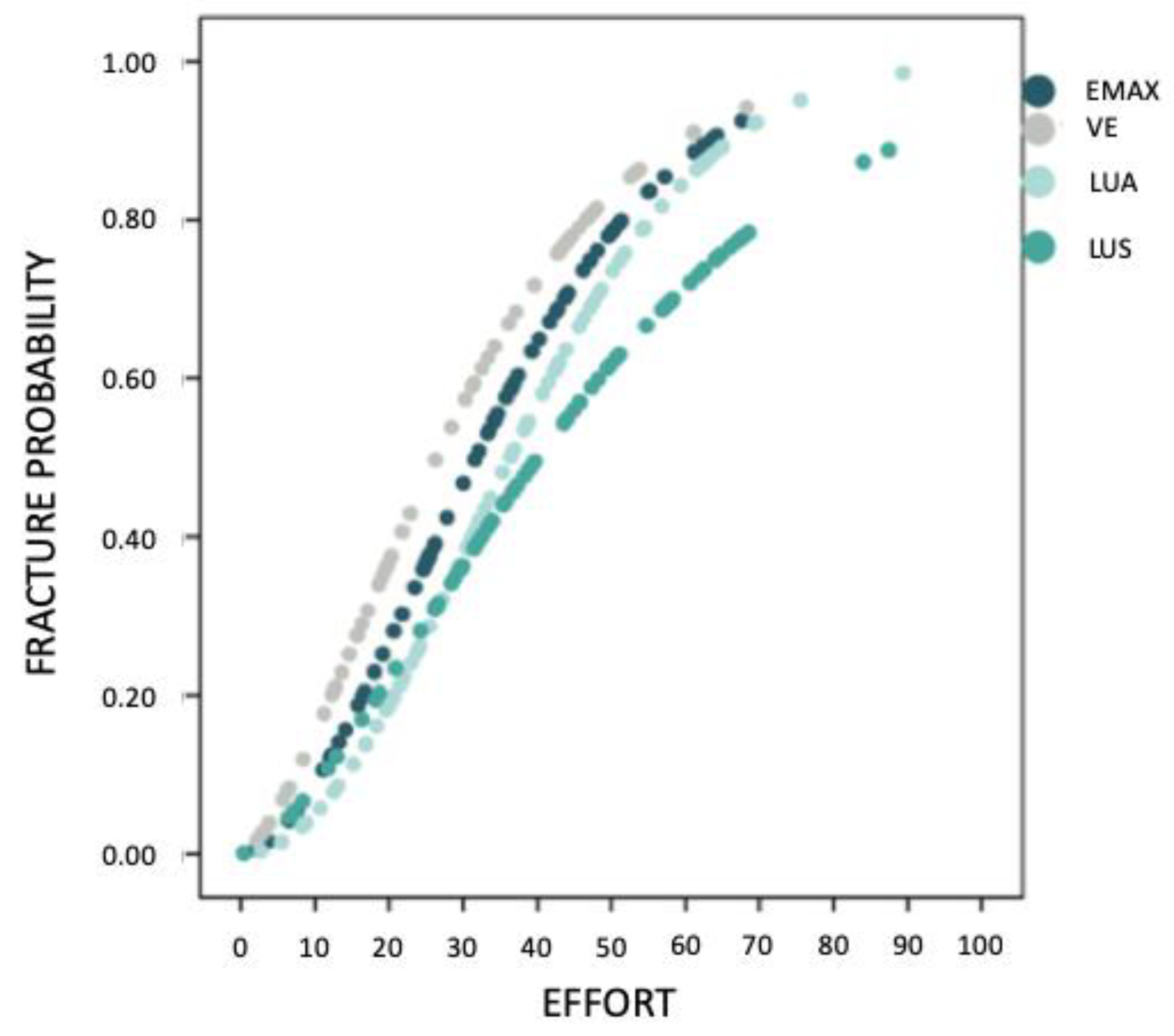
| Characteristic stress σ0 | 202.05 | 33.76 | 177.63 | 156.28 |
| Weibull modulus m | 7.59 | 1.48 | 8.64 | 10.76 |
Disclaimer/Publisher’s Note: The statements, opinions and data contained in all publications are solely those of the individual author(s) and contributor(s) and not of MDPI and/or the editor(s). MDPI and/or the editor(s) disclaim responsibility for any injury to people or property resulting from any ideas, methods, instructions or products referred to in the content. |
© 2023 by the authors. Licensee MDPI, Basel, Switzerland. This article is an open access article distributed under the terms and conditions of the Creative Commons Attribution (CC BY) license (https://creativecommons.org/licenses/by/4.0/).
Share and Cite
González-Angulo, E.; Fernández-Estevan, L.; Casas-Terrón, J.; Senent-Vicente, G.; Fons-Badal, C.; García-Sala Bonmatí, F.; Agustín-Panadero, R.; Román-Rodríguez, J.L. Microtensile Bond Strength of CAD-CAM Restorative Dental Material Blocks to Resin Cement: An In Vitro Study. Materials 2023, 16, 4796. https://doi.org/10.3390/ma16134796
González-Angulo E, Fernández-Estevan L, Casas-Terrón J, Senent-Vicente G, Fons-Badal C, García-Sala Bonmatí F, Agustín-Panadero R, Román-Rodríguez JL. Microtensile Bond Strength of CAD-CAM Restorative Dental Material Blocks to Resin Cement: An In Vitro Study. Materials. 2023; 16(13):4796. https://doi.org/10.3390/ma16134796
Chicago/Turabian StyleGonzález-Angulo, Eva, Lucía Fernández-Estevan, Javier Casas-Terrón, Gisela Senent-Vicente, Carla Fons-Badal, Fernando García-Sala Bonmatí, Rubén Agustín-Panadero, and Juan Luis Román-Rodríguez. 2023. "Microtensile Bond Strength of CAD-CAM Restorative Dental Material Blocks to Resin Cement: An In Vitro Study" Materials 16, no. 13: 4796. https://doi.org/10.3390/ma16134796
APA StyleGonzález-Angulo, E., Fernández-Estevan, L., Casas-Terrón, J., Senent-Vicente, G., Fons-Badal, C., García-Sala Bonmatí, F., Agustín-Panadero, R., & Román-Rodríguez, J. L. (2023). Microtensile Bond Strength of CAD-CAM Restorative Dental Material Blocks to Resin Cement: An In Vitro Study. Materials, 16(13), 4796. https://doi.org/10.3390/ma16134796