Savings in Cooling Energy with a Thermal Management System for LED Lighting in Office Buildings
Abstract
1. Introduction
2. Methodology
2.1. LED Lighting Thermal Management System
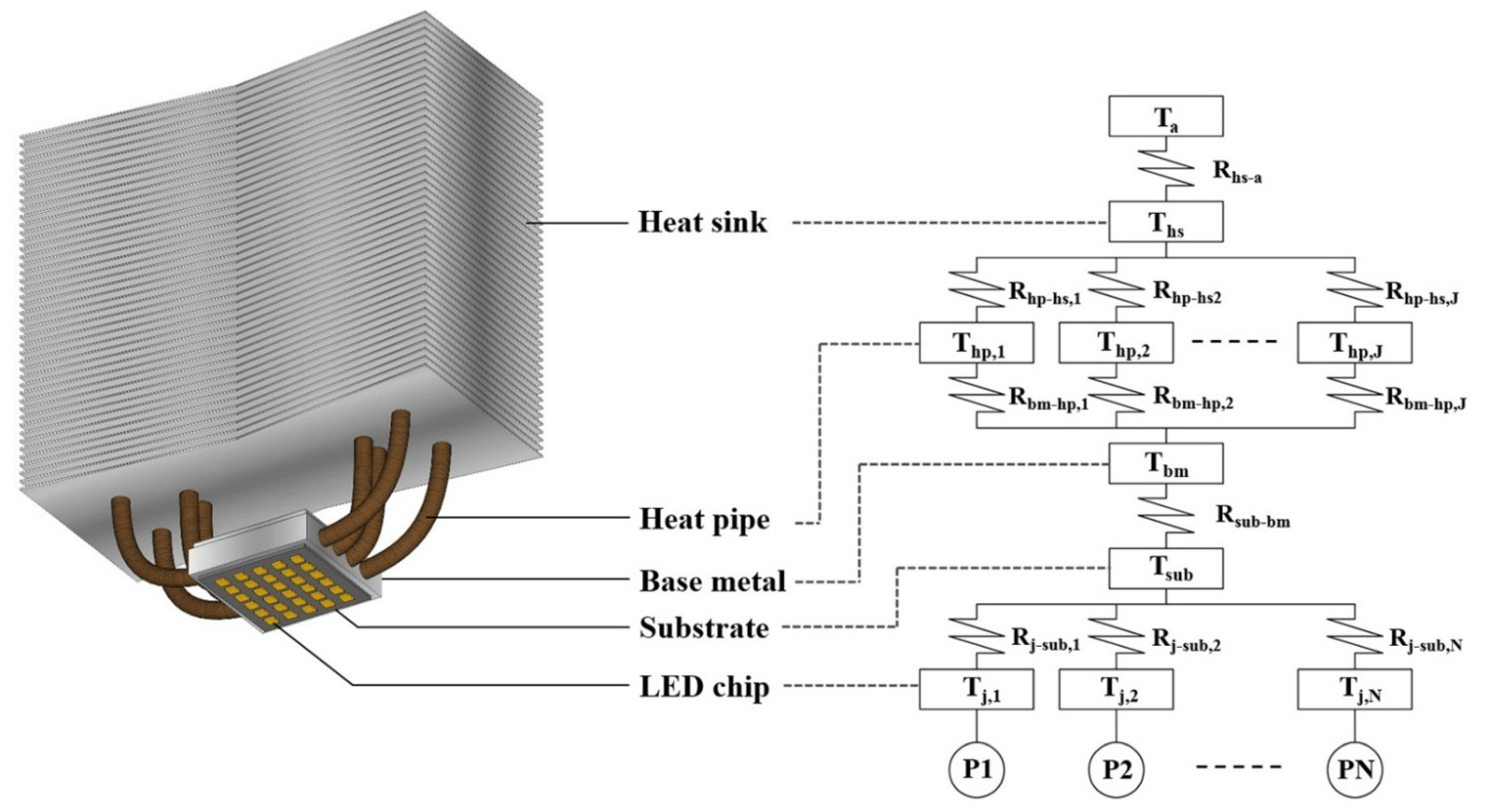
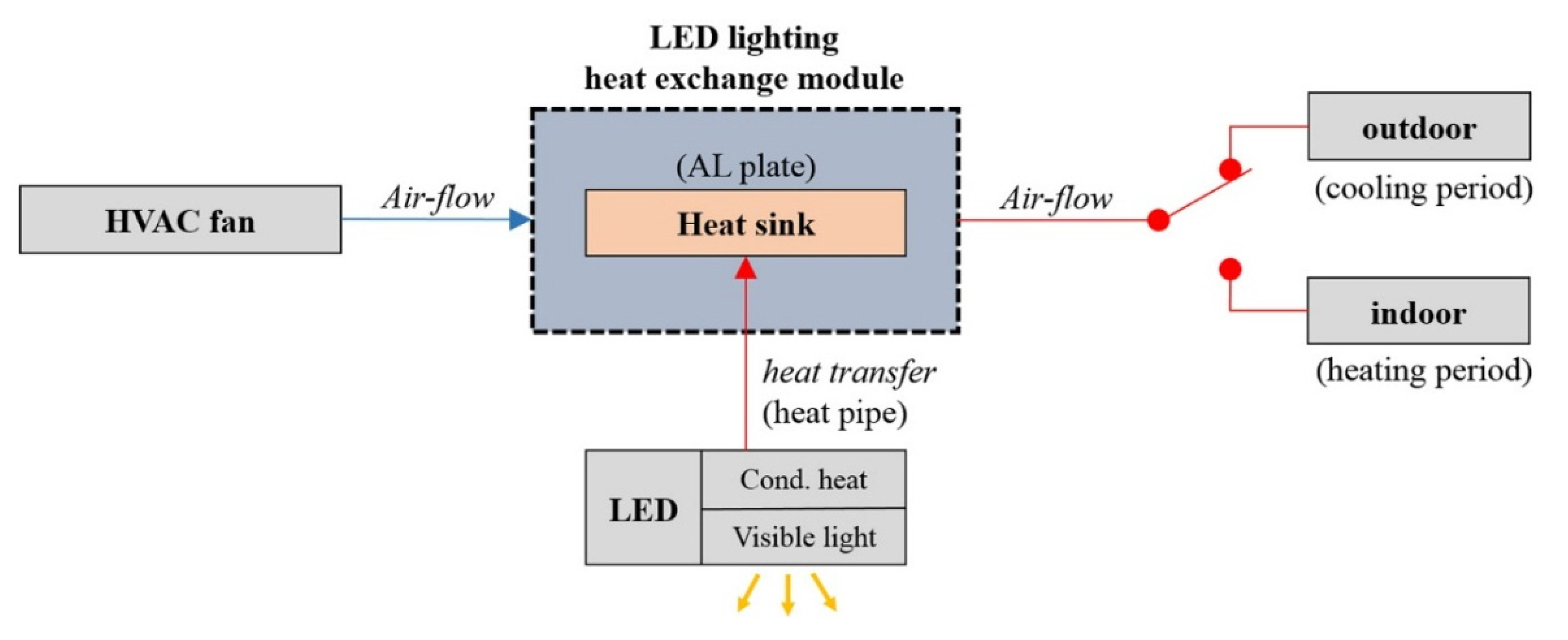
2.2. Experimental System and Theoretical Method
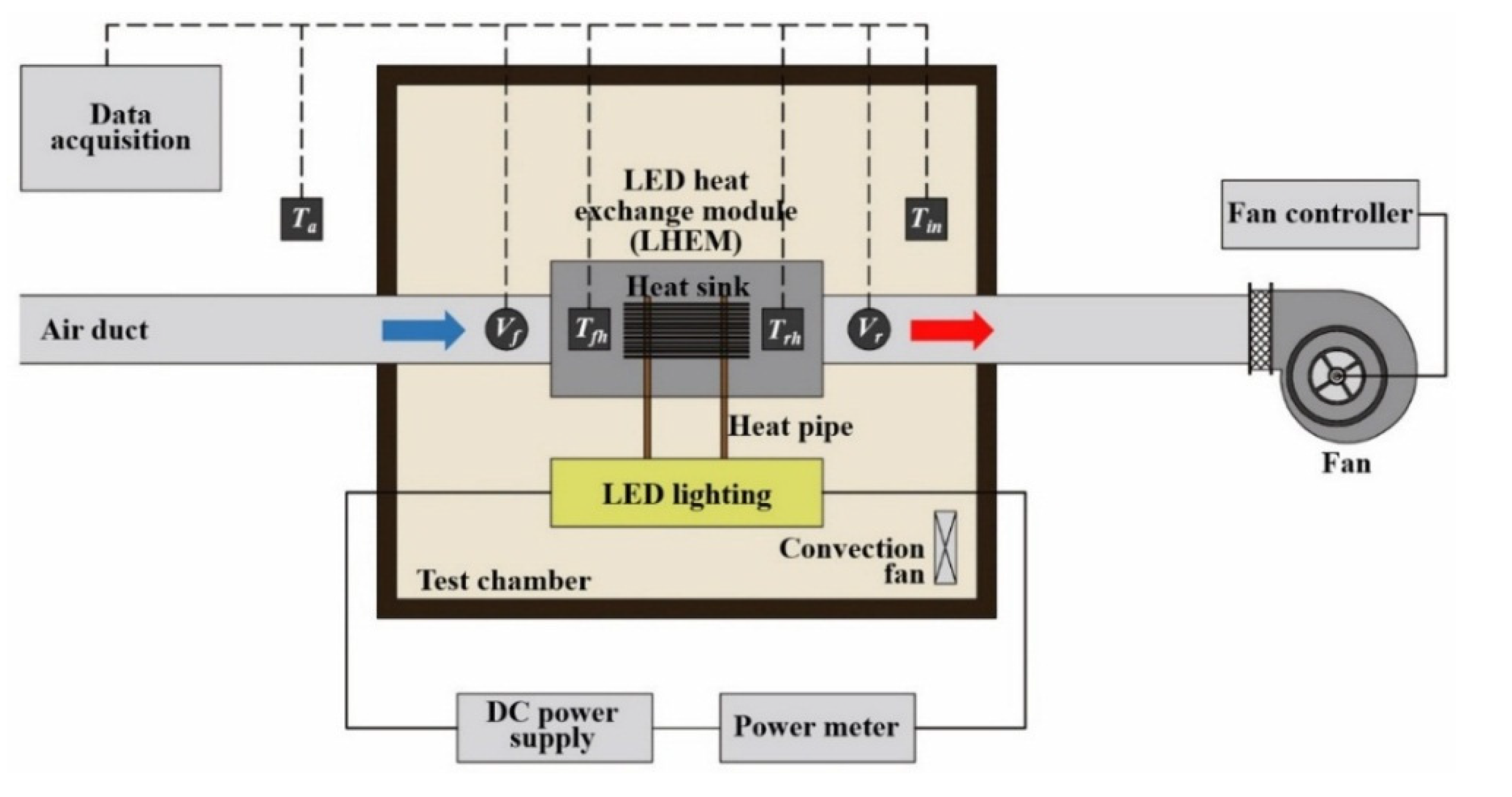
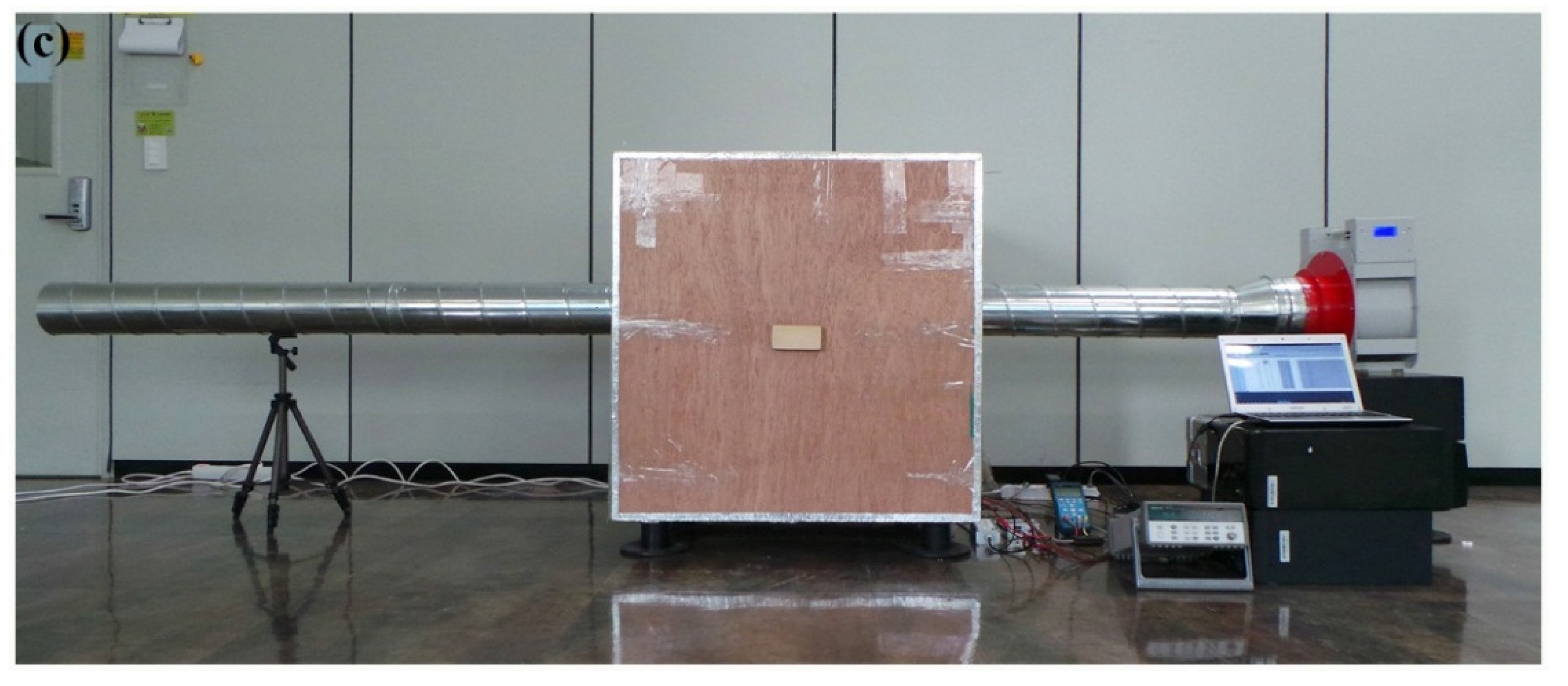
2.3. Experimental Setup
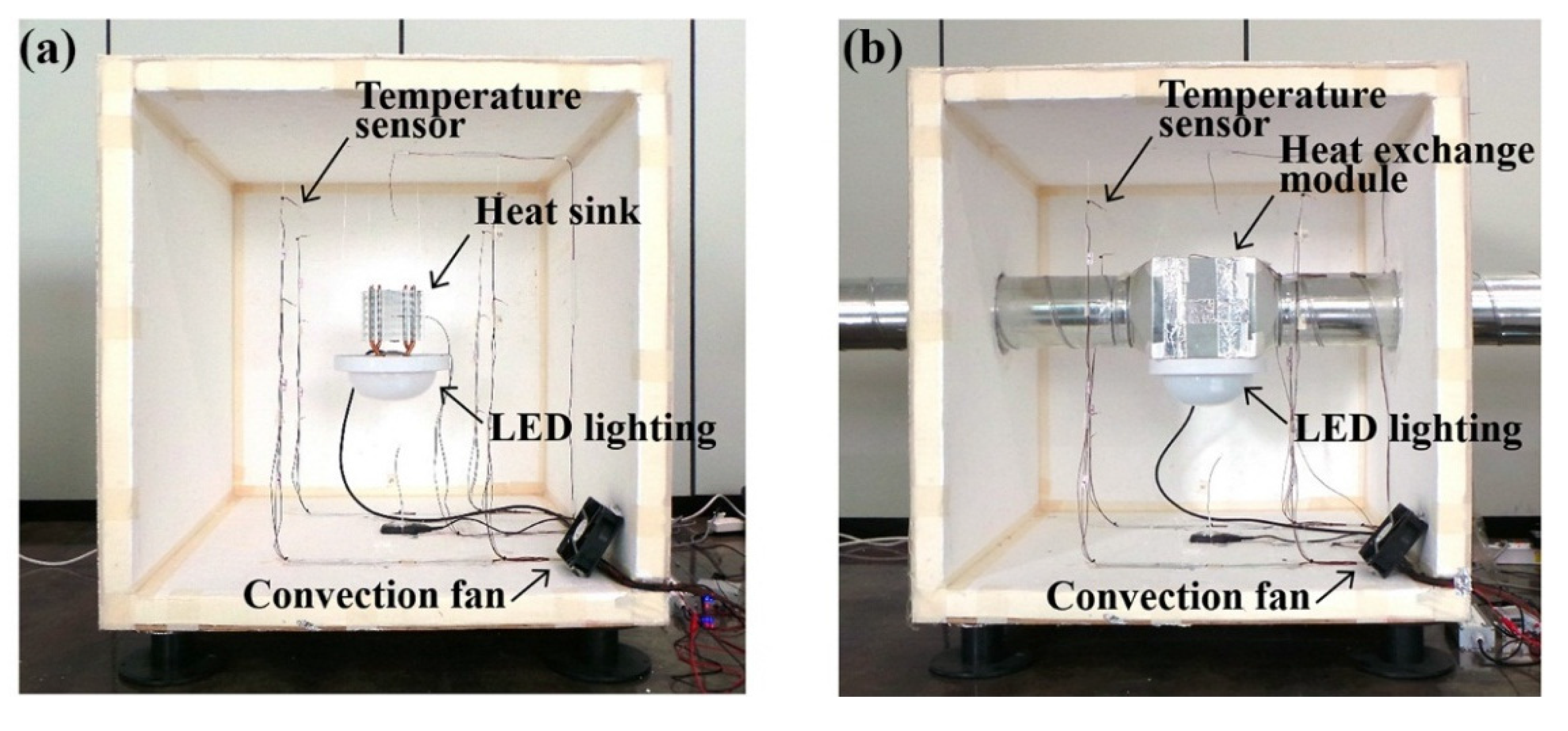

3. Results and Discussion
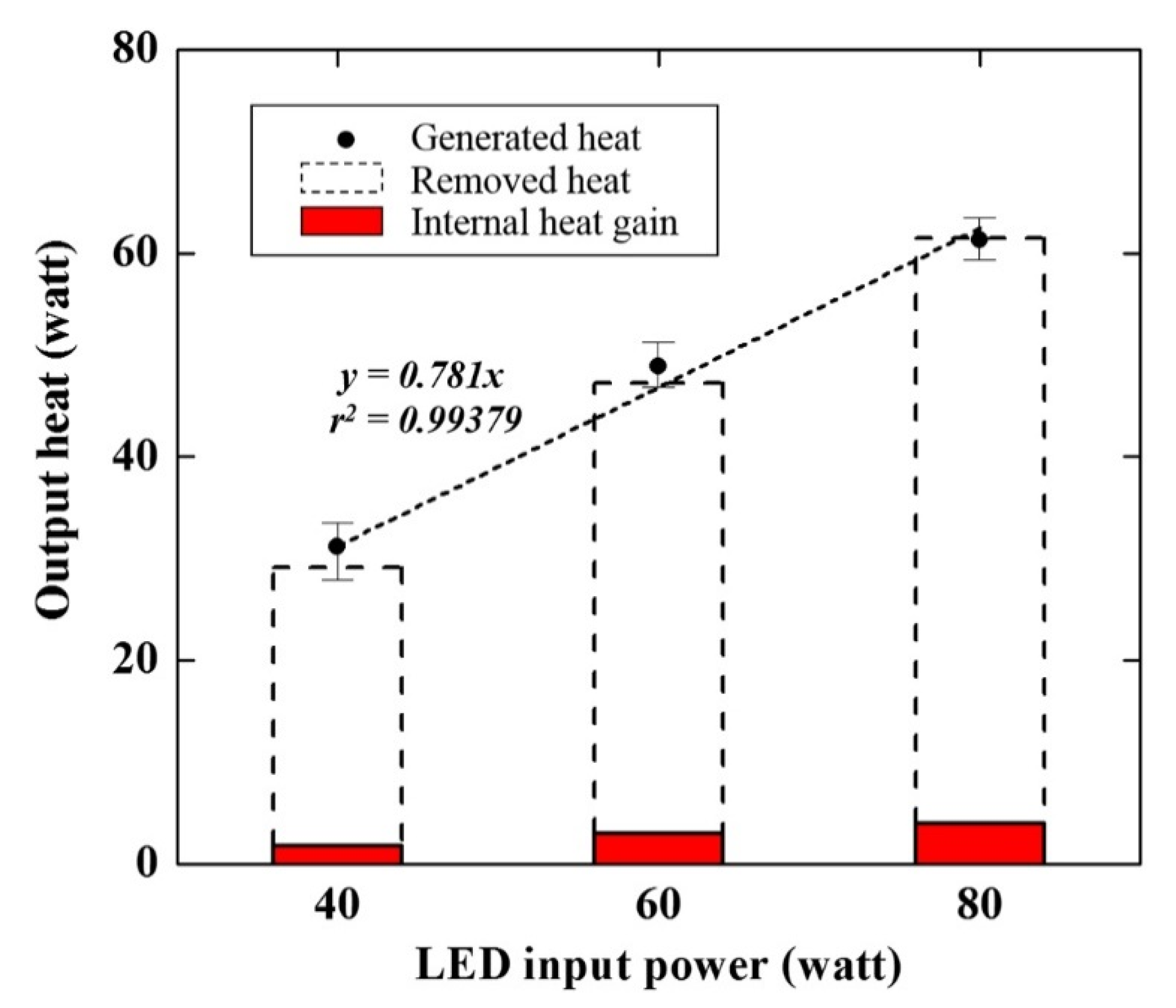
3.1. Experimental Results
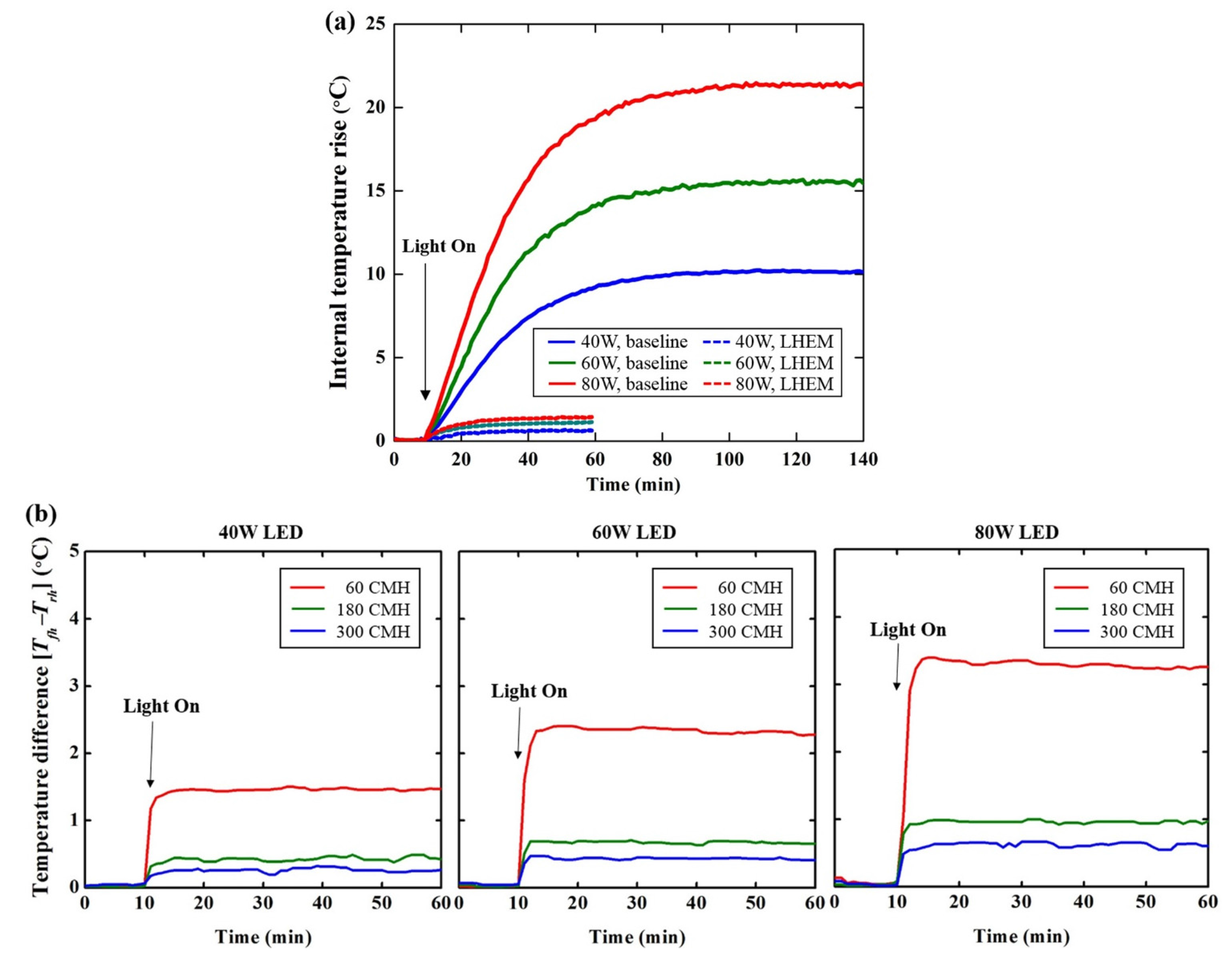


| Title | 40 W LED | 60 W LED | 80 W LED | |||
|---|---|---|---|---|---|---|
| Internal Heat Gain (Qin) | Contribution Rate (Qin / PLED) | Internal Heat Gain (Qin) | Contribution Rate (Qin / PLED) | Internal Heat Gain (Qin) | Contribution Rate (Qin / PLED) | |
| Baseline | 31.2 W | 78.1% | 46.9 W | 78.1% | 62.5 W | 78.1% |
| LHEM System | 1.7 W | 4.3% | 3.0 W | 5.1% | 4.1 W | 5.1% |
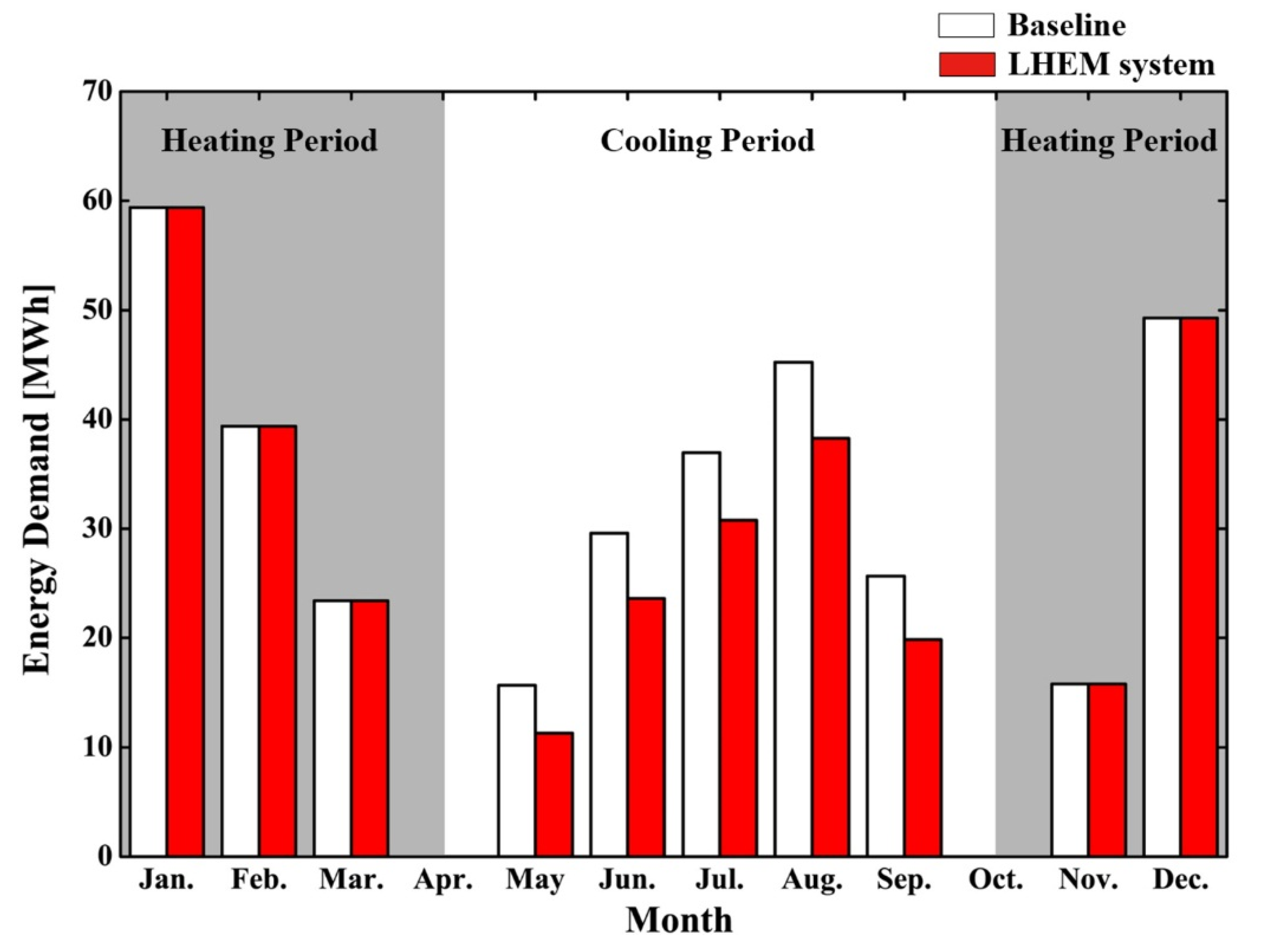
3.2. Heating and Cooling Energy Savings in an Office Building
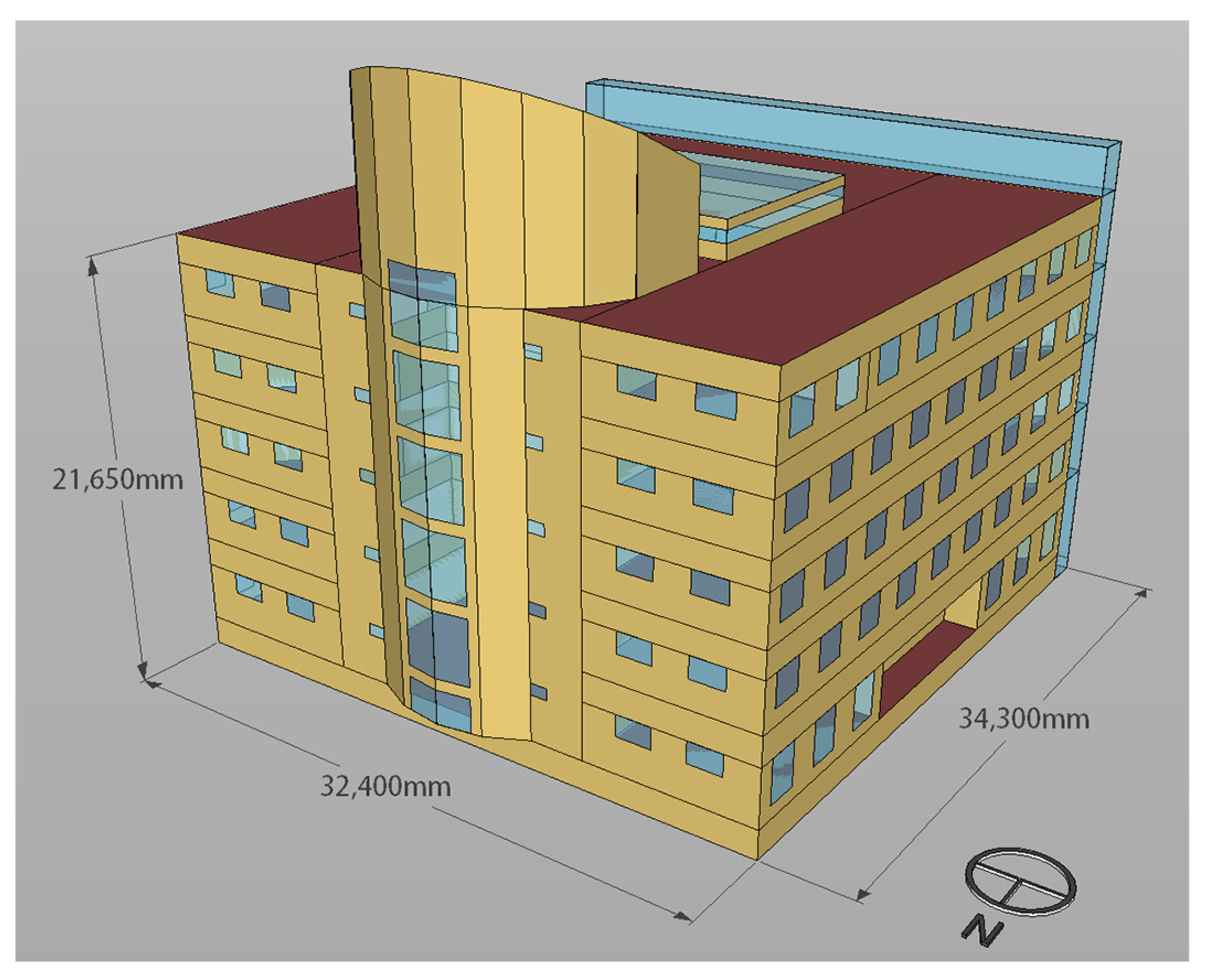
| Title | Heat gain fraction | Period | ||
|---|---|---|---|---|
| Visible Light | Convection Heat | Heat Removal | ||
| Baseline | 0.22 | 0.78 | - | for all period |
| LHEM System | 0.22 | 0.05 | 0.73 | for cooling period |
| 0.22 | 0.78 | - | for heating period | |

4. Conclusions
Acknowledgments
Author Contributions
Conflicts of Interest
Nomenclature
heat generated by the LED, W | |
thermal resistance from LED to ambient surroundings, K/W | |
thermal resistance from junction to substrate, K/W | |
thermal resistance from substrate to base metal, K/W | |
thermal resistance from base metal to heat pipe, K/W | |
thermal resistance from heat pipe to heat sink, K/W | |
thermal resistance from heat sink to ambient surroundings, K/W | |
junction temperature of the LED, K | |
internal air temperature, K | |
ambient temperature, K | |
air temperature at the front of heat sink, K | |
air temperature at the rear of heat sink, K | |
number of LEDs | |
number of heat pipes | |
heat lost from the internal test chamber to ambient surroundings, W | |
heat removed by the air flow, W | |
thermal transmittance of the envelopes, W/(m2K) | |
surface area of the test chamber, m2 | |
cross-sectional area of the air duct, m2 | |
air density, kg/m3 | |
specific heat of air, kJ/(kgK) | |
air velocity, m/s |
Appendix
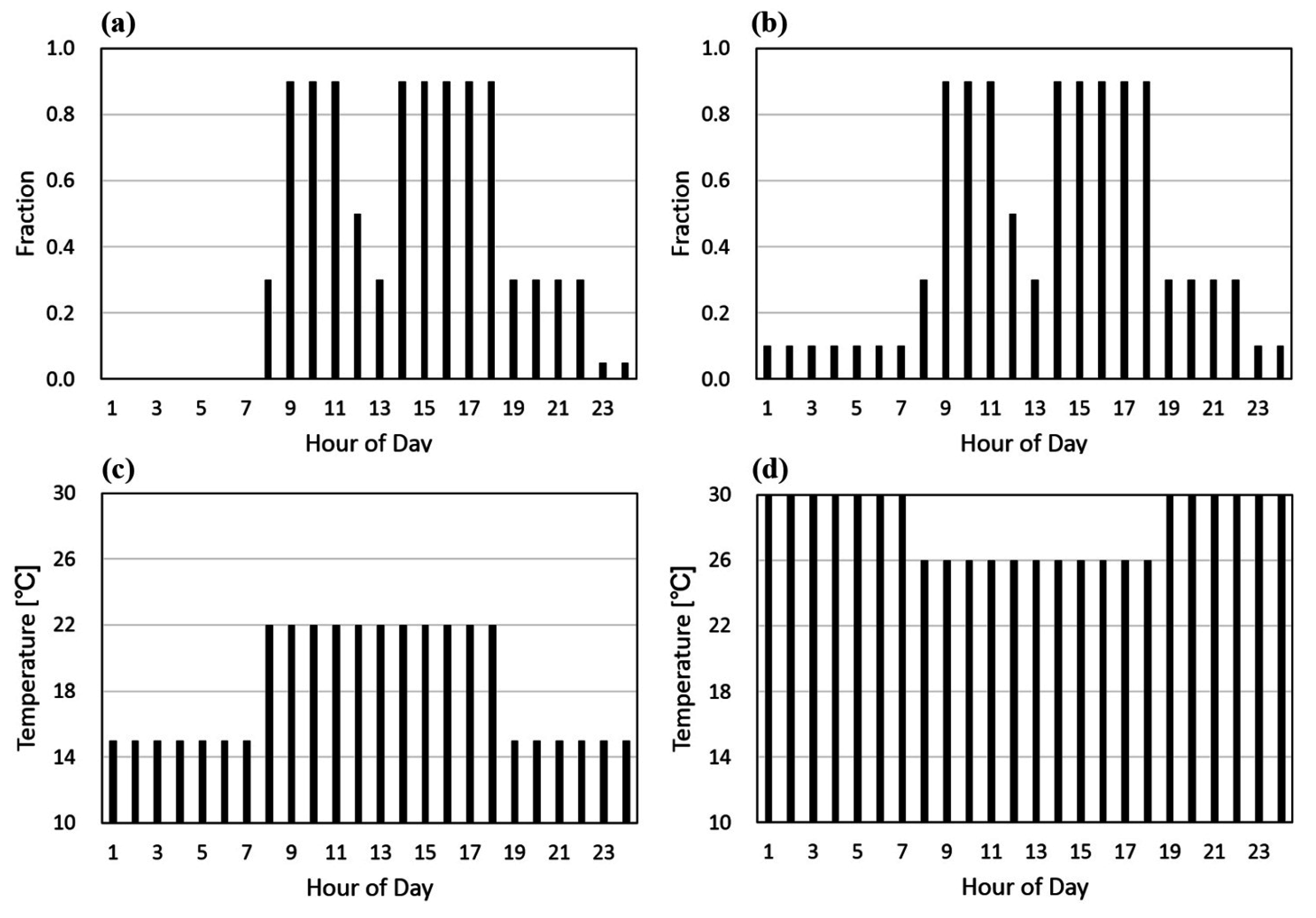
| Title | Input Parameter |
|---|---|
| Location | Daejeon, Republic of Korea (36° N, 127° E) |
| Number of floors | 6 floors (B1F, 1f-5F) |
| Net floor area | 6164.8 m2 |
| Internal heat gains: Equipment | 15.5 W/m2 |
| Lights | 8.0 W/m2 |
| Occupancy | 120 W/person |
| U-value of Envelopes: Exterior wall | 0.45 W/(m2K) |
| Roof | 0.29 W/(m2K) |
| Floor | 0.35 W/(m2K) |
| Window | 2.60 W/(m2K) |
| Ventilation rate | 0.51 L/(sm2) (flow per exterior surface area) |
| Infiltration rate | 0.30 L/(sm2) (flow per exterior surface area) |
References
- Gutierrez-Escolar, A.; Castillo-Martinez, A.; Gomez-Pulido, J.M.; Gutierrez-Martinez, J.-M.; Stapic, Z.; Medina-Merodio, J.-A. A Study to Improve the Quality of Street Lighting in Spain. Energies 2015, 8, 976–994. [Google Scholar] [CrossRef]
- Han, J.-H.; Lim, Y.-C. Design of an LLC Resonant Converter for Driving Multiple LED Lights Using Current Balancing of Capacitor and Transformer. Energies 2015, 8, 2125–2144. [Google Scholar] [CrossRef]
- Weng, C.-J. Advanced thermal enhancement and management of LED packages. Int. Commun. Heat Mass Transf. 2009, 36, 245–248. [Google Scholar] [CrossRef]
- Yoon, Y.B.; Manandhar, R.; Lee, K.H. Comparative Study of Two Daylighting Analysis Methods with Regard to Window Orientation and Interior Wall Reflectance. Energies 2014, 7, 5825–5846. [Google Scholar] [CrossRef]
- Yoo, S.; Kim, J.; Jang, C.-Y.; Jeong, H. A sensor-less LED dimming system based on daylight harvesting with BIPV systems. Opt. Express 2014, 22, A132–A143. [Google Scholar] [CrossRef] [PubMed]
- Wermager, S.; Baur, S. Energy Analysis of a Student-Designed Solar House. Energies 2013, 6, 6373–6390. [Google Scholar] [CrossRef]
- Yung, K.C.; Liem, H.; Choy, H.S. Heat transfer analysis of a high-brightness LED array on PCB under different placement configurations. Int. Commun. Heat Mass Transf. 2014, 53, 79–86. [Google Scholar] [CrossRef]
- Yoon, Y.B.; Jeong, W.R.; Lee, K.H. Window Material Daylighting Performance Assessment Algorithm: Comparing Radiosity and Split-Flux Methods. Energies 2014, 7, 2362–2376. [Google Scholar] [CrossRef]
- Djavid, M.; Liu, X.; Mi, Z. Improvement of the light extraction efficiency of GaN-based LEDs using rolled-up nanotube arrays. Opt. Express 2014, 22, A1680–A1686. [Google Scholar] [CrossRef] [PubMed]
- Wei, T.; Huo, Z.; Zhang, Y.; Zheng, H.; Chen, Y.; Yang, J.; Hu, Q.; Duan, R.; Wang, J.; Zeng, Y.; et al. Efficiency enhancement of homoepitaxial InGaN/GaN light-emitting diodes on free-standing GaN substrate with double embedded SiO2 photonic crystals. Opt. Express 2014, 22, A1093–A1100. [Google Scholar] [CrossRef] [PubMed]
- Wang, J.-C. Thermal module design and analysis of a 230 W LED illumination lamp under three incline angles. Microelectron. J. 2014, 45, 416–423. [Google Scholar] [CrossRef]
- Chen, Y.; Sun, B.; Ma, T.; Sun, X. Thermal management for high-power photonic crystal light emitting diodes. Microelectron. Reliab. 2014, 54, 124–130. [Google Scholar] [CrossRef]
- Yung, K.C.; Liem, H.; Choy, H.S.; Cai, Z.X. Thermal investigation of a high brightness LED array package assemply for various placement algorithms. Appl. Therm. Eng. 2014, 63, 105–118. [Google Scholar] [CrossRef]
- Jang, D.; Kim, D.R.; Lee, K.-S. Correlation of cross-cut cylindrical heat sink to improve the orientation effect of LED light bulbs. Int. Commun. Heat Mass Transf. 2015, 84, 821–826. [Google Scholar] [CrossRef]
- Li, J.; Lin, F.; Wang, D.; Tian, W. A loop-heat-pipe heat sink with parallel condensers for high-power integrated LED chips. Appl. Therm. Eng. 2013, 56, 18–26. [Google Scholar] [CrossRef]
- Lu, X.; Hua, T.-C.; Wang, Y. Thermal analysis of high power LED package with heat pipe heat sink. Microelectron. J. 2011, 42, 1257–1262. [Google Scholar] [CrossRef]
- Shen, Q.; Sun, D.; Xu, Y.; Jin, T.; Zhao, X. Orientation effects on natural convection heat dissipation of rectangular fin heat sinks mounted on LEDs. Int. Commun. Heat Mass Transf. 2014, 75, 462–469. [Google Scholar] [CrossRef]
- Lam, J.C.; Tsang, C.L.; Yang, L. Impacts of lighting density on heating and cooling loads in different climates in China. Energy Convers. Manag. 2006, 47, 1942–1953. [Google Scholar] [CrossRef]
- Sezgen, O.; Koomey, J.G. Interactions between lighting and space conditioning energy use in US commercial buildings. Energy 2000, 25, 793–805. [Google Scholar] [CrossRef]
- Sezgen, O.; Koomey, J.G. Natural light controls and guides in buildings. Energy saving for electrical lighting, reduction of cooling load. Renew. Sustain. Energy Rev. 2015, 41, 1–13. [Google Scholar]
- Ahn, B.-L.; Jang, C.-Y.; Leigh, S.-B.; Jeong, H. Analysis of the Effect of Artificial Lighting on Heating and Cooling Energy in Commercial Buildings. Energy Procedia 2014, 61, 928–932. [Google Scholar] [CrossRef]
- Ahn, B.-L.; Jang, C.-Y.; Leigh, S.-B.; Yoo, S.; Jeong, H. Effect of LED lighting on the cooling heating loads in office buildings. Appl. Energy 2014, 113, 1484–1489. [Google Scholar] [CrossRef]
- Minseok, H.; Samuel, G. Development of a thermal resistance model for chip-on-board packaging of high power LED arrays. Microelectron. Reliab. 2012, 52, 836–844. [Google Scholar]
- Wang, J.-C. Superposition method to investigate the thermal performance of heat sink with embedded heat pipes. Int. Commun. Heat Mass Transf. 2009, 36, 686–692. [Google Scholar] [CrossRef]
- Wu, H.-H.; Lin, K.-H.; Lin, S.-T. A study on the heat dissipation of high power multi-chip COB LEDs. Microelectron. J. 2012, 43, 280–287. [Google Scholar] [CrossRef]
- He, F.; Chen, Q.; Liu, J.; Liu, J. Thermal analysis of COB array soldered on heat sink. Int. Commun. Heat Mass Transf. 2014, 59, 55–60. [Google Scholar] [CrossRef]
- American Society of Heating, Refrigerating and Air-Conditioning Engineers (ASHRAE), Inc. 2013 ASHRAE Handbook––Fundamentals, Ventilation and Infiltration, American Society of Heating; ASHRAE Inc.: Atlanta, GA, USA, 2013; pp. 16.27–16.28. [Google Scholar]
- Crawley, D.; Lawrie, L.; Winkelmann, F.; Buhl, W.F.; Huang, H.J.; Pedersen, C. EnergyPlus: Creating a new-generation building energy simulation program. Energy Build. 2001, 33, 319–331. [Google Scholar] [CrossRef]
- Deru, M.; Field, K.; Studer, D.; Benne, K.; Griffith, B.; Torcellini, P.; Liu, B.; Halverson, M.; Winiarski, D.; Rosenberg, M.; et al. U.S. Department of Energy Commercial Reference Building Models of the National Building Stock; National Renewable Energy Laboratory: Golden, CO, USA, 2011. [Google Scholar]
- American Society of Heating, Refrigerating and Air-Conditioning Engineers (ASHRAE), Inc. ASHRAE Standard 90.1 (2004),Energy Standard for Buildings except Low Rise Residential Buildings; ASHRAE Inc.: Atlanta, GA, USA, 2010. [Google Scholar]
© 2015 by the authors; licensee MDPI, Basel, Switzerland. This article is an open access article distributed under the terms and conditions of the Creative Commons Attribution license (http://creativecommons.org/licenses/by/4.0/).
Share and Cite
Ahn, B.-L.; Park, J.-W.; Yoo, S.; Kim, J.; Leigh, S.-B.; Jang, C.-Y. Savings in Cooling Energy with a Thermal Management System for LED Lighting in Office Buildings. Energies 2015, 8, 6658-6671. https://doi.org/10.3390/en8076658
Ahn B-L, Park J-W, Yoo S, Kim J, Leigh S-B, Jang C-Y. Savings in Cooling Energy with a Thermal Management System for LED Lighting in Office Buildings. Energies. 2015; 8(7):6658-6671. https://doi.org/10.3390/en8076658
Chicago/Turabian StyleAhn, Byung-Lip, Ji-Woo Park, Seunghwan Yoo, Jonghun Kim, Seung-Bok Leigh, and Cheol-Yong Jang. 2015. "Savings in Cooling Energy with a Thermal Management System for LED Lighting in Office Buildings" Energies 8, no. 7: 6658-6671. https://doi.org/10.3390/en8076658
APA StyleAhn, B.-L., Park, J.-W., Yoo, S., Kim, J., Leigh, S.-B., & Jang, C.-Y. (2015). Savings in Cooling Energy with a Thermal Management System for LED Lighting in Office Buildings. Energies, 8(7), 6658-6671. https://doi.org/10.3390/en8076658