5.2. Results of RSM
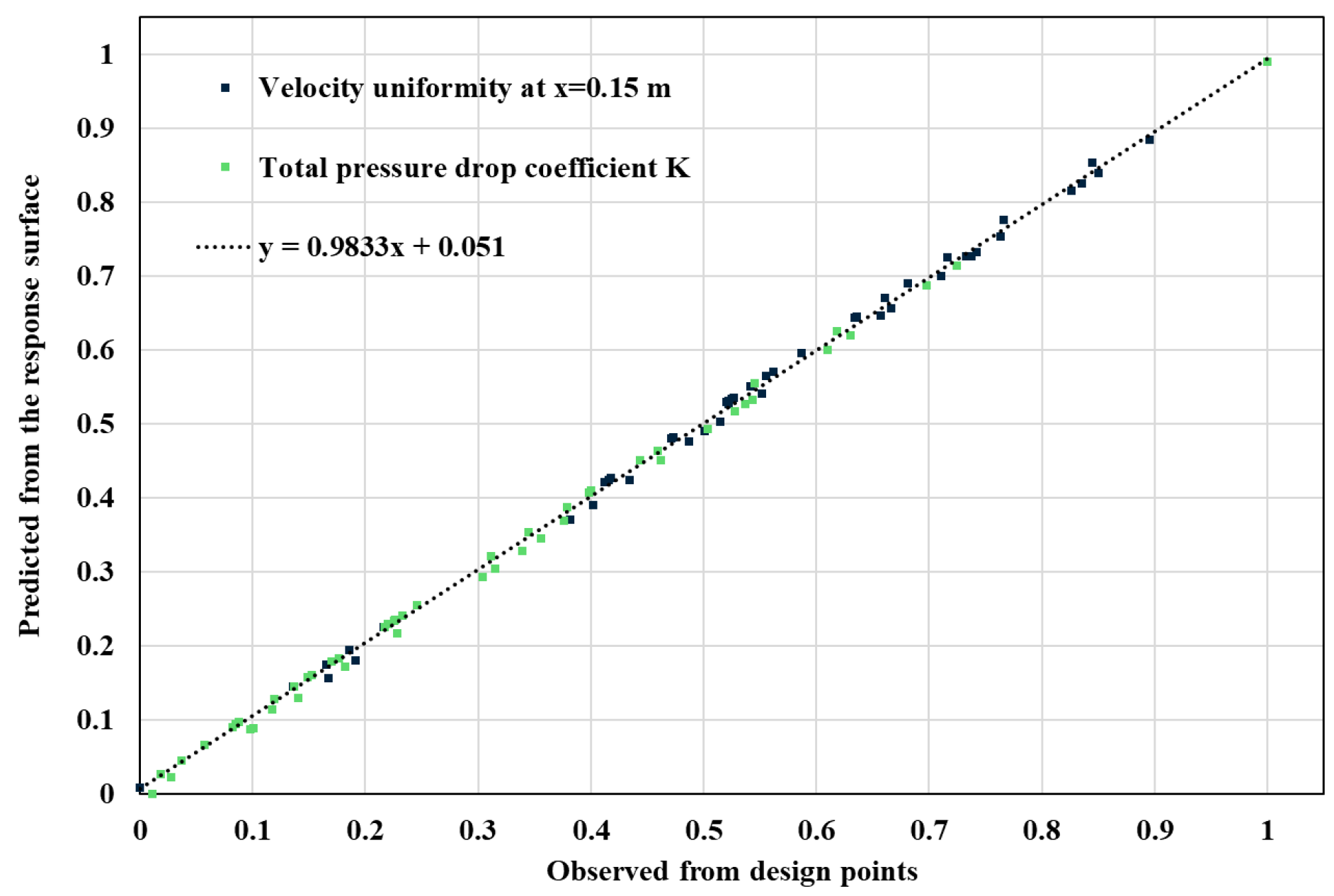
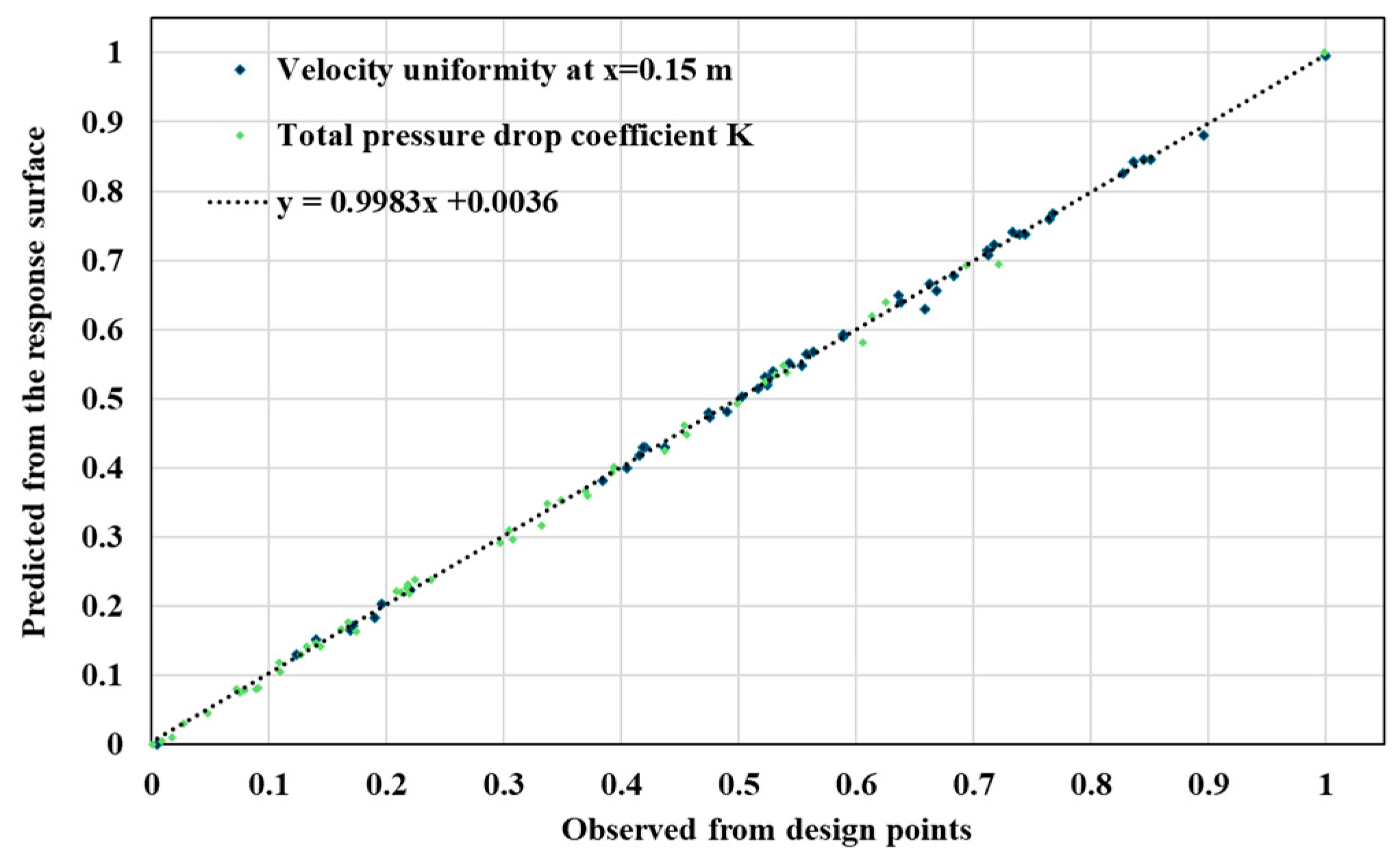
The response surface was evaluated by comparing observed (
x-axis) and model-predicted (
y-axis) values at the design points. Observed values were obtained from the simulations, and predicted values were generated by the NPR and GA surrogate models trained using the observed data. This comparison is an important criterion for validating the prediction accuracy and evaluating the reliability of the response surface model to be used in the optimization process. A tighter clustering of points around the diagonal line reflects higher predictive accuracy. The fit of the response surface was evaluated quantitatively by calculating
and RMSE from the NPR- and GA-based predictions. The coefficient of determination,
, represents the proportion of the variance in the response that is accounted for by the regression model. An
value of 1 indicates a perfect fit of the response surface to the data. Accordingly, response-surface quality improves as
approaches 1 and the root mean square error approaches 0:
where
denotes the predicted value of y, and
denotes the average value of y.
Figure 8 shows a graph comparing observed and predicted values using NPR, which approximates a linear correlation between the predicted values and observed ones, resulting in the following trend line:
A trend line with a slope close to 1 and a y-intercept close to 0 means that the model’s predictions are in good agreement with the actual observed values. For NPR, the slope of the trend line is 0.9833, which is close to 1, meaning that as the observed value changes, the predicted value changes at about the same rate. The y-intercept is 0.051, which is close to 0, indicating that there is no significant bias in the model. Of the two outcome variables, the coefficient of determination, , for velocity uniformity is 0.99806 with a root mean square deviation, RMSE, of 0.0014735, and for total pressure drop coefficient (K) is 0.9981 with a root mean square deviation of 0.007431. This indicates that the quality of the response surface generated by NPR for the two outcome variables is validated.
Figure 9 is a graph comparing observed and predicted values using GA, which approximates a linear relationship between the predicted values and observed ones, resulting in the following trend line:
The slope of the trend line is 0.9983, which is close to 1, meaning that as the observed values change, the predicted values change at about the same rate. The y-intercept is 0.0036, which is close to 0, indicating that there is no significant bias in the model. Of the two outcome variables, for velocity uniformity is 0.99883 with an RMSE of 0.0011426, and for total pressure drop coefficient is 0.99828 with an RMSE of 0.0070706. This indicates that the quality of the GA-generated response surface for the two outcome variables is validated.
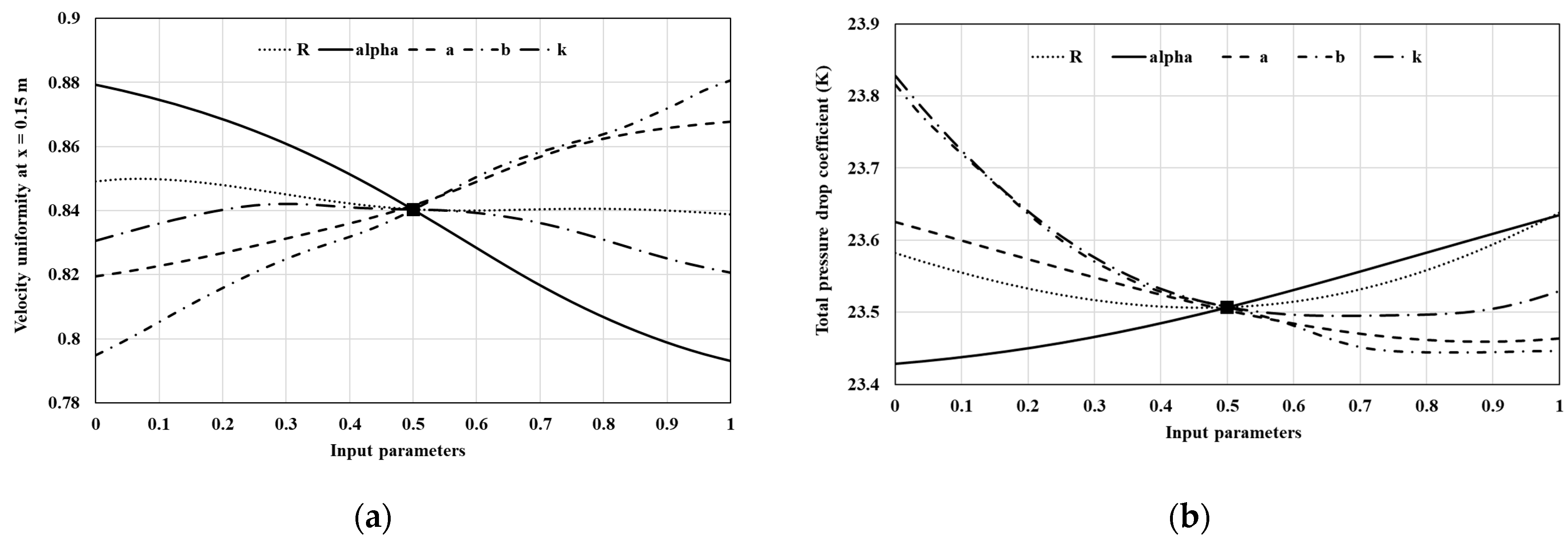
Based on the two qualitatively validated response surface models, the sensitivity of the outcome variable to the input variables is shown in
Figure 10. Sensitivity analysis quantitatively identifies the magnitude and direction of the effect of each design variable on the objective function, providing important insights and criteria for determining which variables should be focused on more during the optimization process [
33].
Figure 10a shows the sensitivity of the input variables to the velocity uniformity on the response surface using NPR. For the input variables related to the guide vane, the velocity uniformity decreased as the position of the guide vane (R) moved away from the center of the rotation radius and then increased again with a minimum value at 0.5. For the angle from the bend exit of the guide vane (
), the velocity uniformity decreased as the value increased. For the variables related to the nature-inspired geometry, the velocity uniformity increased as the offset from the existing bend radius (k) increased and then decreased again after 0.4. For the major axis (a), the velocity uniformity increased with increasing values, while the minor axis (b) showed the same trend but with a larger slope than the major axis.
Figure 10b shows the sensitivity of the input variables to the total pressure drop coefficient (K) on the response surface using NPR. As R increases, K decreases and then increases again after 0.6, and as
increases, it decreases slightly and then increases again after 0.2. Also, as the offset k increases, K decreases and then increases again after 0.6. For a and K tended to decrease with increasing values of a and increase again after 0.8, while b showed a similar trend but with a larger slope than a, decreasing after 0.65 and increasing again after 0.2.
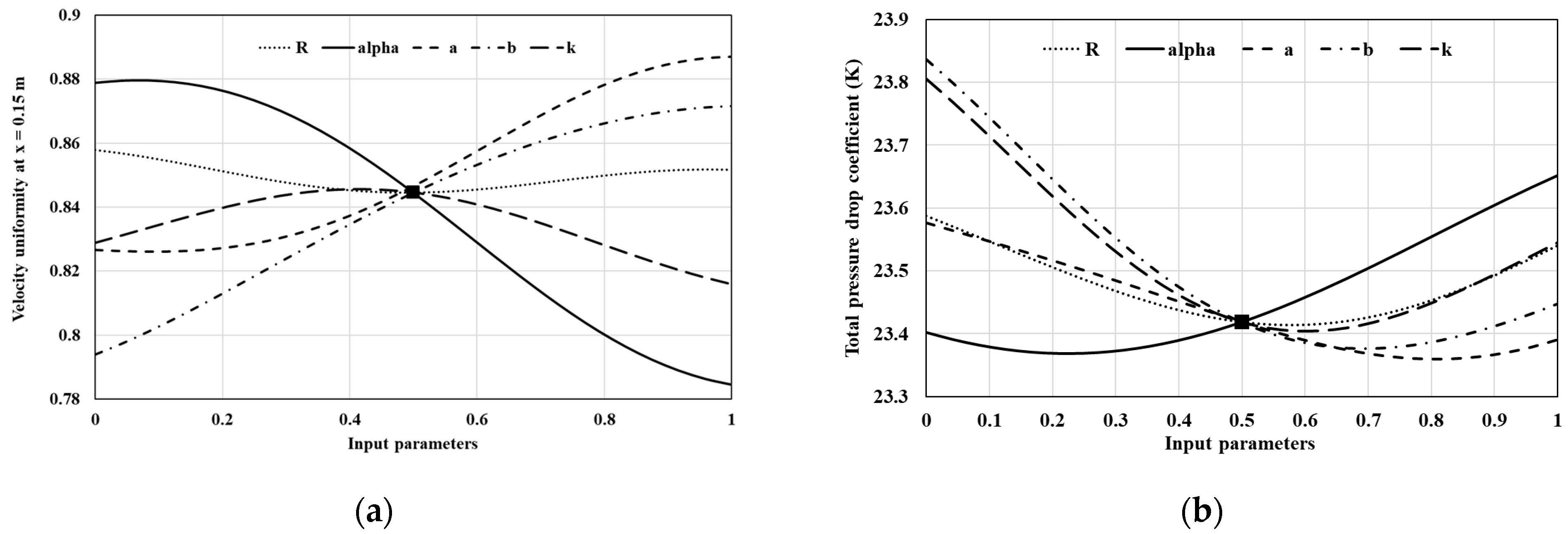
Figure 11a shows the sensitivity of the input variables to the velocity uniformity on the response surface using GA. For the input variable R related to the guide vane, the velocity uniformity showed relatively small changes compared to the other variables, but for
, the velocity uniformity decreased steeply as the value increased. For the input variable k, which is related to nature inspired, the velocity uniformity increased slightly as the value increased and then decreased after 0.3. For a and b, the velocity uniformity increased as the value increased, especially for b, which showed a larger change.
Figure 10b is the sensitivity of the input variables to the total pressure drop coefficient (K). The sensitivity analysis of the total pressure drop coefficient in the genetic aggregation model shows that it decreases with increasing R, has a minimum value at 0.5, and then tends to increase again. For
and K also tended to increase moderately as the value increased. For the variable k, which is related to the nature inspired shape, K decreased as the value increased, with a minimum value of 0.67, and then tended to increase again. The geometric parameters, a and b decreased as the value increased, with the effect of b being stronger than that of a. The sensitivity analysis for
showed that K also tended to increase moderately as the value increased.
The results of the sensitivity analysis of the response surfaces using NPR and GA were similar to each other. This similarity suggests that both models effectively capture complex nonlinear relationships and are consistent in their predictions. Both results also suggest that there are trade-offs between each variable. For the input variables related to the guide vane, the trade-off between velocity uniformity and total pressure drop coefficient shows that for , the velocity uniformity is maximized at 0.1, but the total pressure drop coefficient does not show a minimum at the same point, indicating a trade-off between the two objective functions. Also, for R, the velocity uniformity is maximized at 0, but the total pressure drop coefficient does not have a minimum at the same point. The nature inspired input variables also have different locations for the maximum value of velocity uniformity and the minimum value of total pressure drop coefficient, which clearly shows the trade-off between the design variables. Therefore, to account for these trade-offs, a multi-objective optimization design is required to explore how the input variables influence the responses and to simultaneously optimize velocity uniformity and the total pressure drop coefficient.
5.4. Comparison Between Non-Parametric Regression and Genetic Aggregation Models
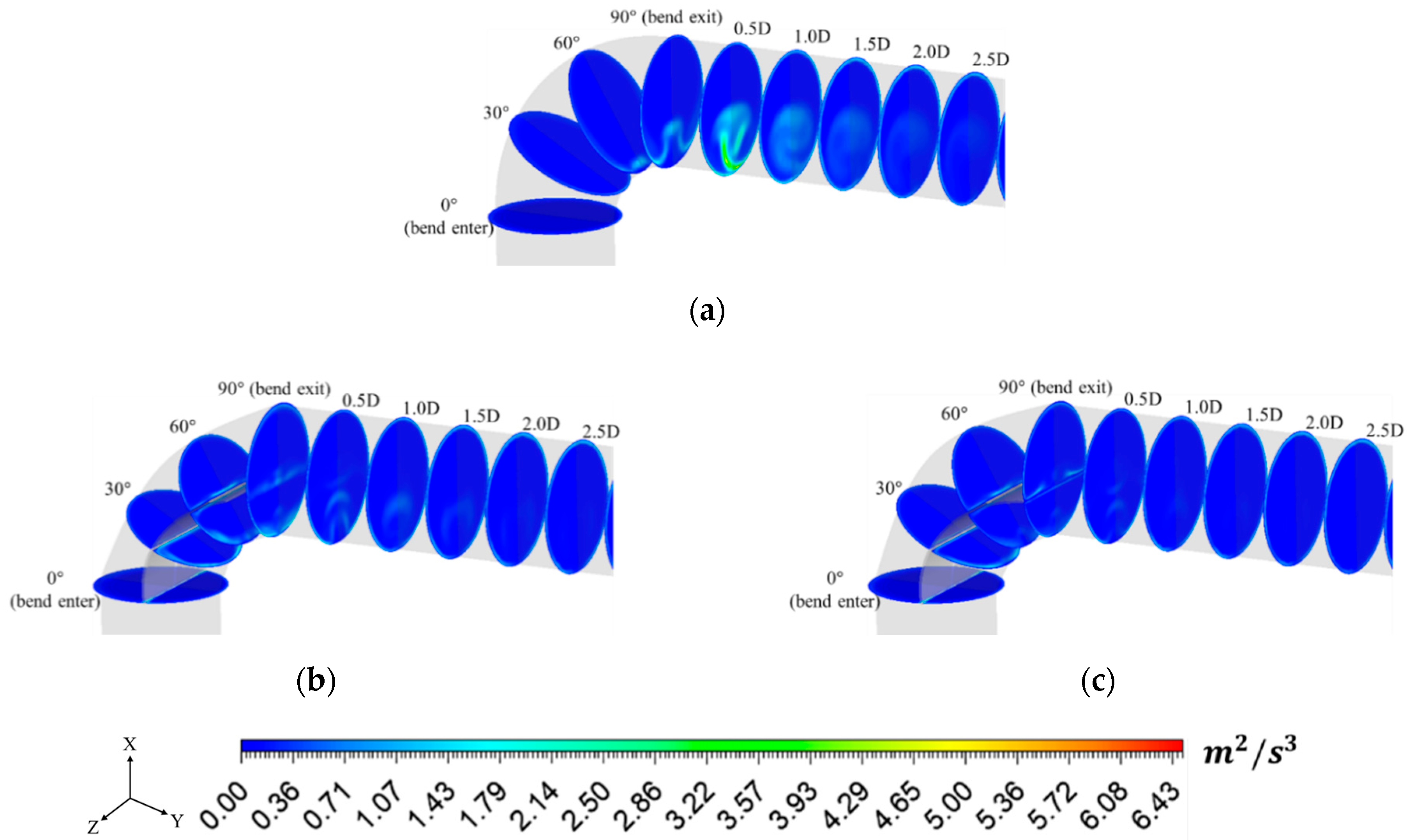
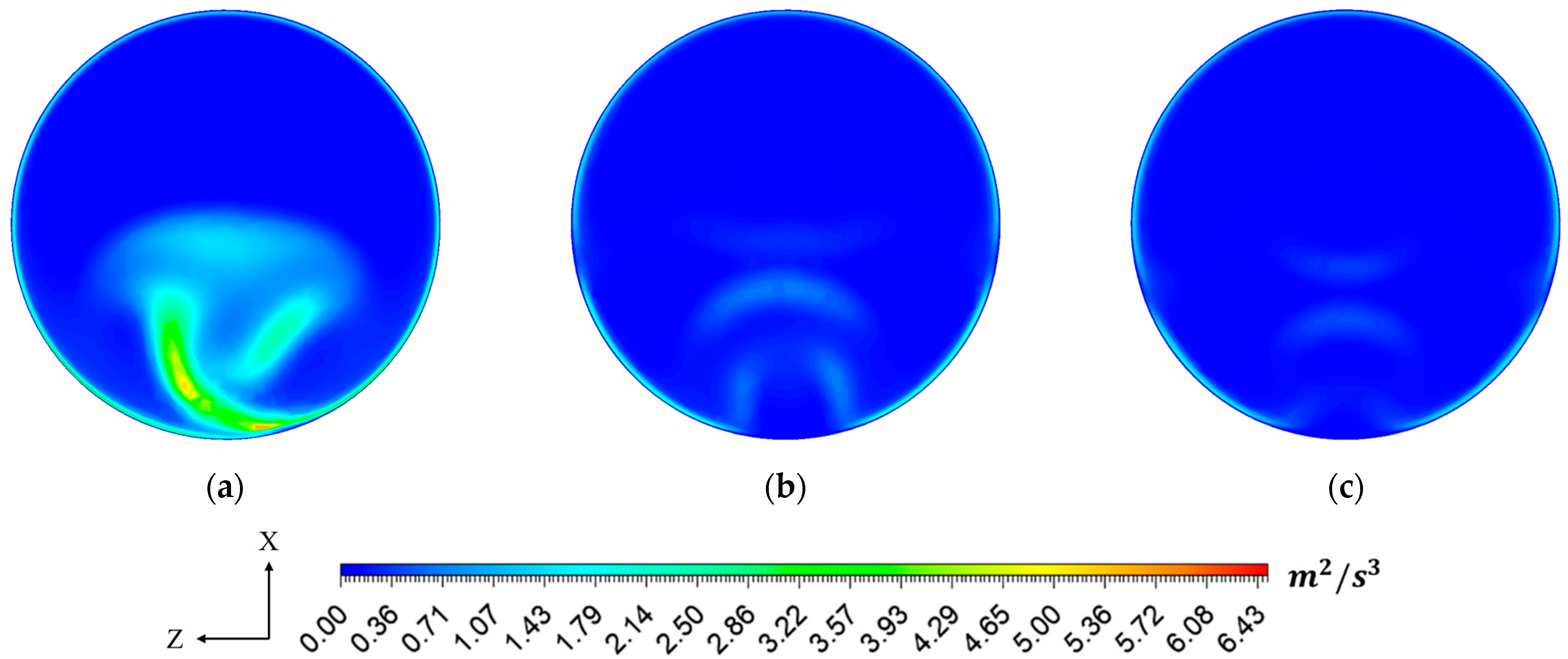
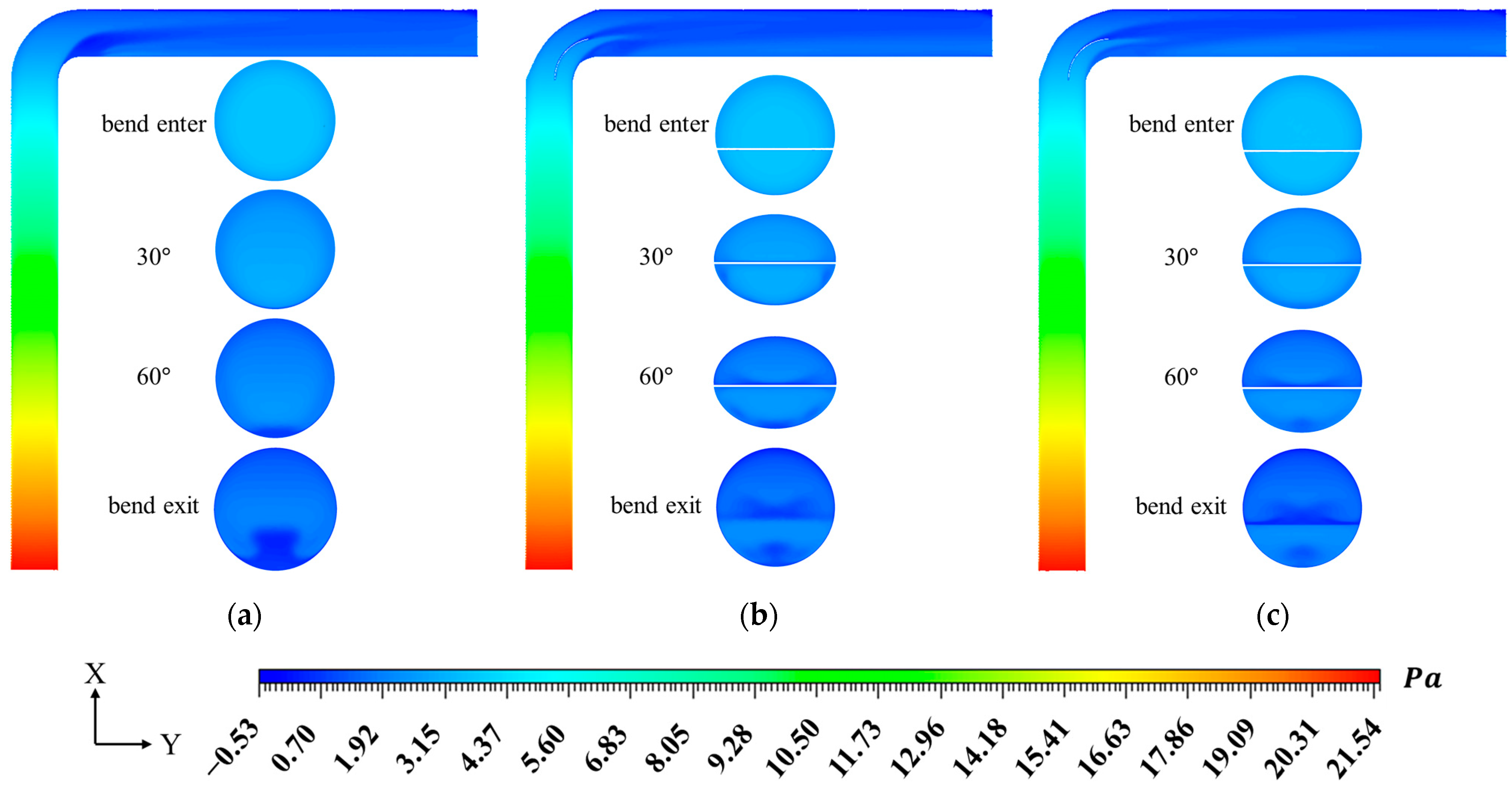
During the optimization process, NPR and GA response surface models were used to accurately predict the complex relationships between the design variables and the objective function. A comprehensive comparison of these two models shows that GA performs better than NPR in both prediction accuracy and final optimization results. The results of comparing the quality of the response surfaces are shown in
Table 7 and
Table 8.
Table 7 shows the difference in coefficients of determination,
, and root mean square deviations, RSME, between NPR and GA. The
for velocity uniformity is 0.08% higher for GA, with a 22.46% lower RSME. The
for the total pressure drop coefficient was 0.02% higher for GA and 4.85% lower for RSME. These results confirm that GA performs slightly better than NPR.
Table 8 shows the difference in the slope and y-intercept of the trend lines for each model. GA has a slope 1.53% closer to 1 and a y-intercept 92.94% closer to 0 than the NPR, demonstrating that the GA exhibits higher fidelity to the observations.
Compared with NPR, GA can provide higher predictive accuracy in this study because it offers greater functional flexibility for capturing strong nonlinearity and variable interactions in the design space. While NPR represents the response using a fixed polynomial structure, GA can adapt to locally different trends and reduce systematic bias when the response surface changes rapidly across the parameter space. This property is advantageous for elbow-shape optimization where the objectives are highly nonlinear with respect to vane parameters and cross-sectional morphing [
28,
29]. This multi-model aggregation strategy enables GA to learn a wider range of data patterns than NPR, a single-model approach, and to reflect complex nonlinear relationships between variables in a sophisticated manner. This allows GAs to better explore hidden optima within the design space and minimize overall prediction error.
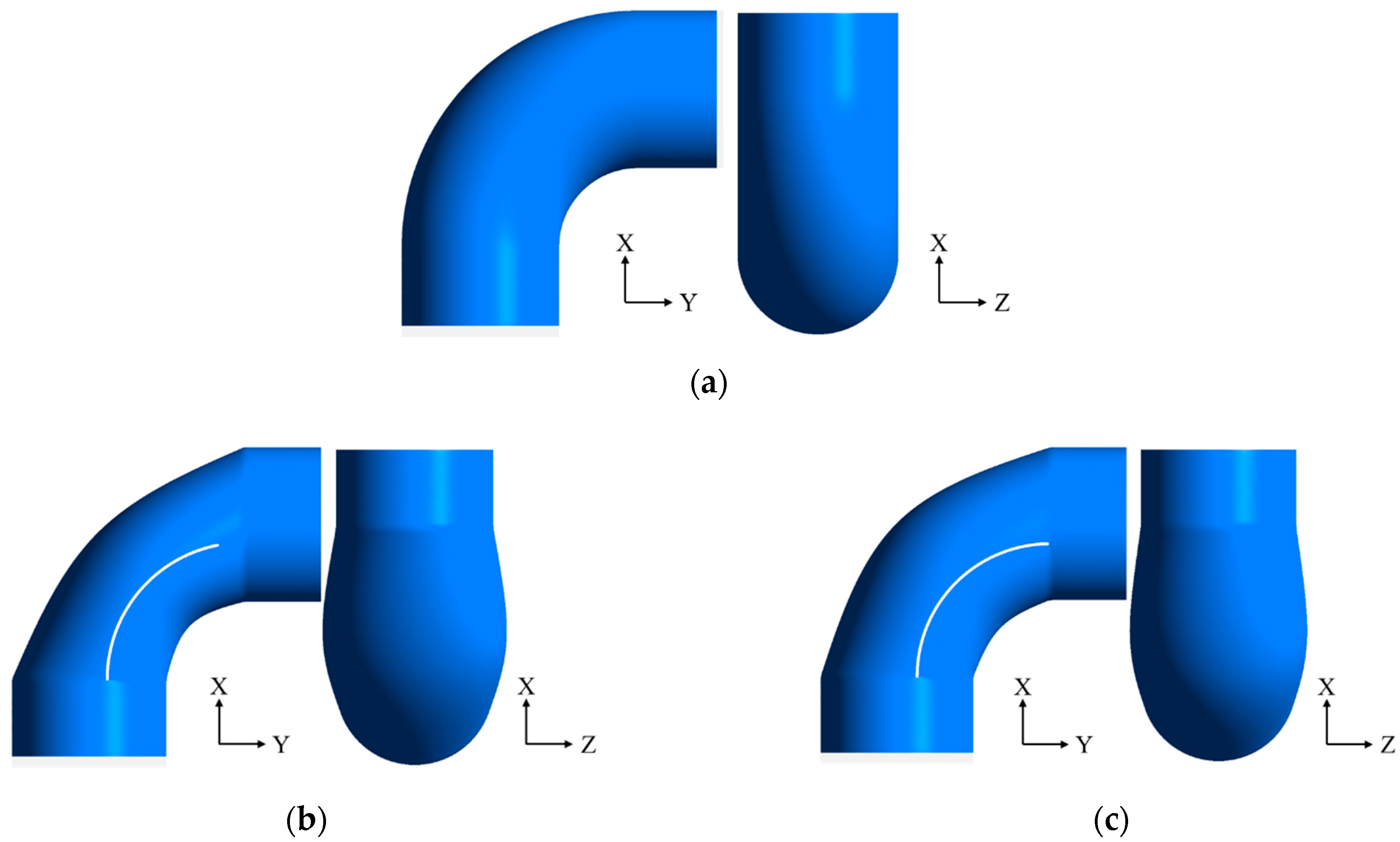
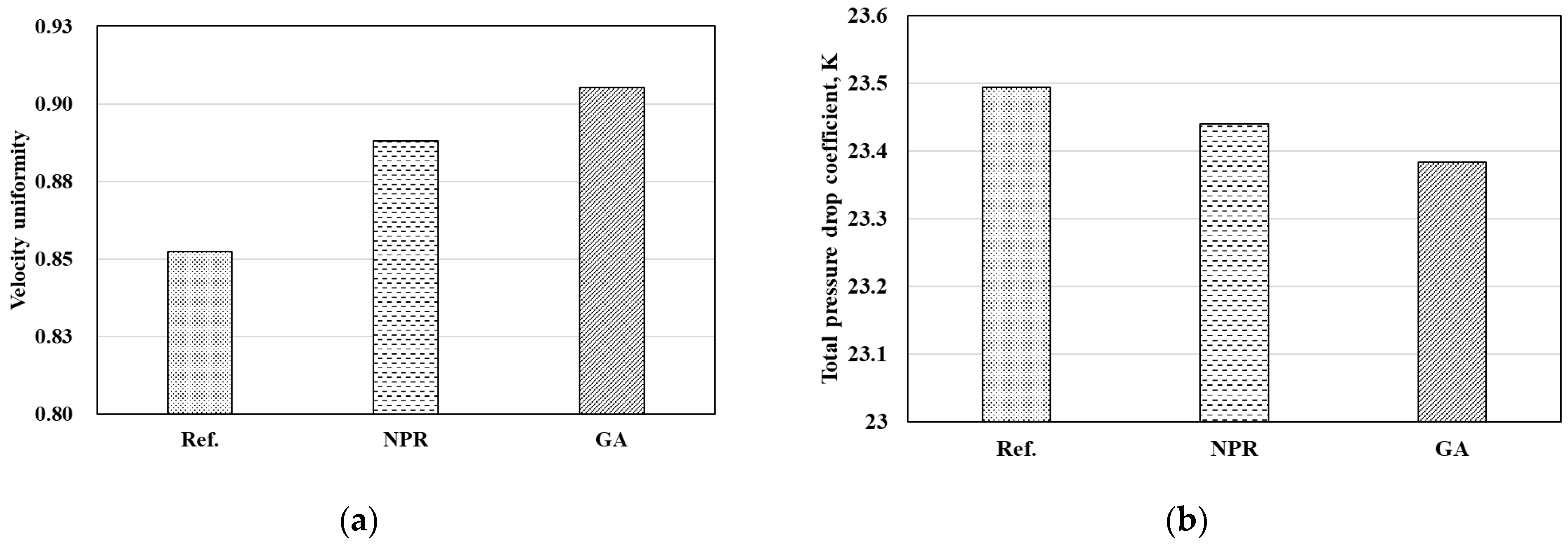
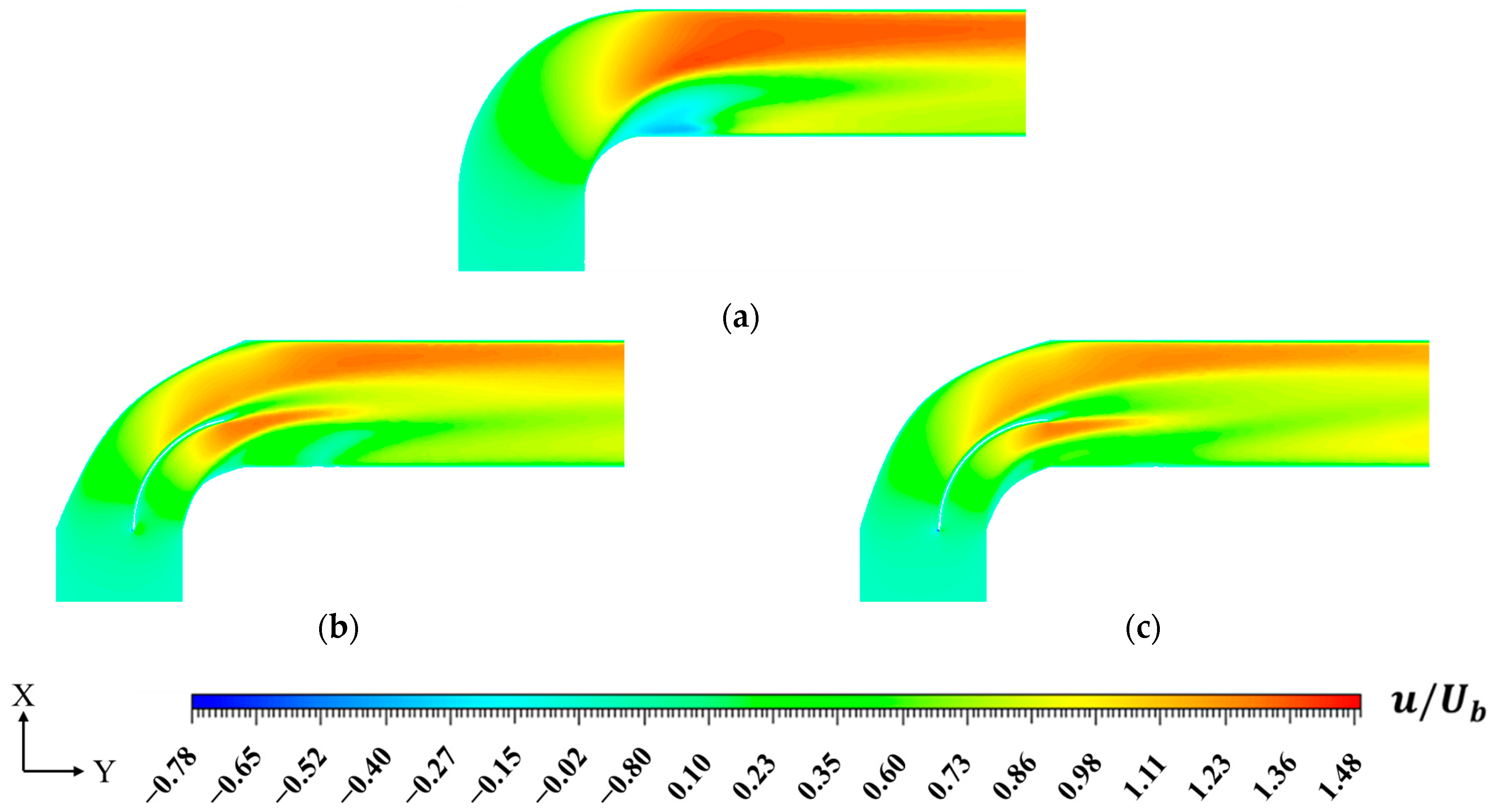
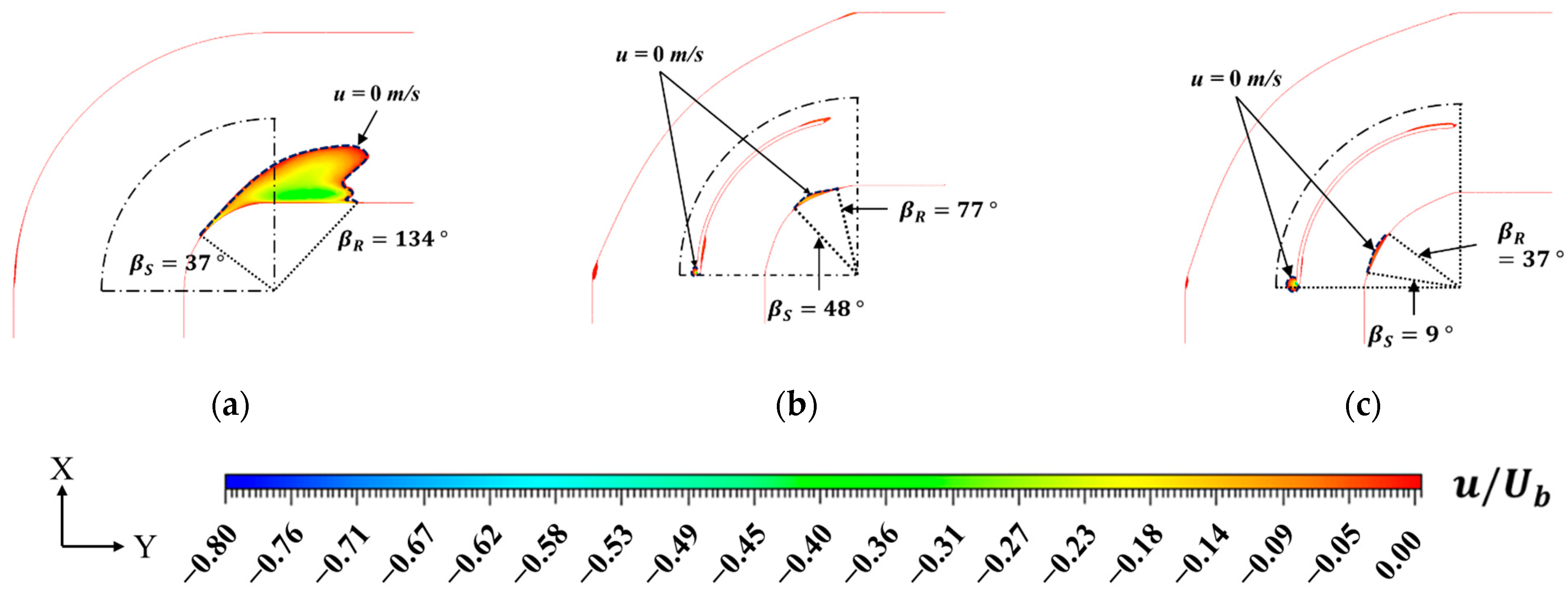
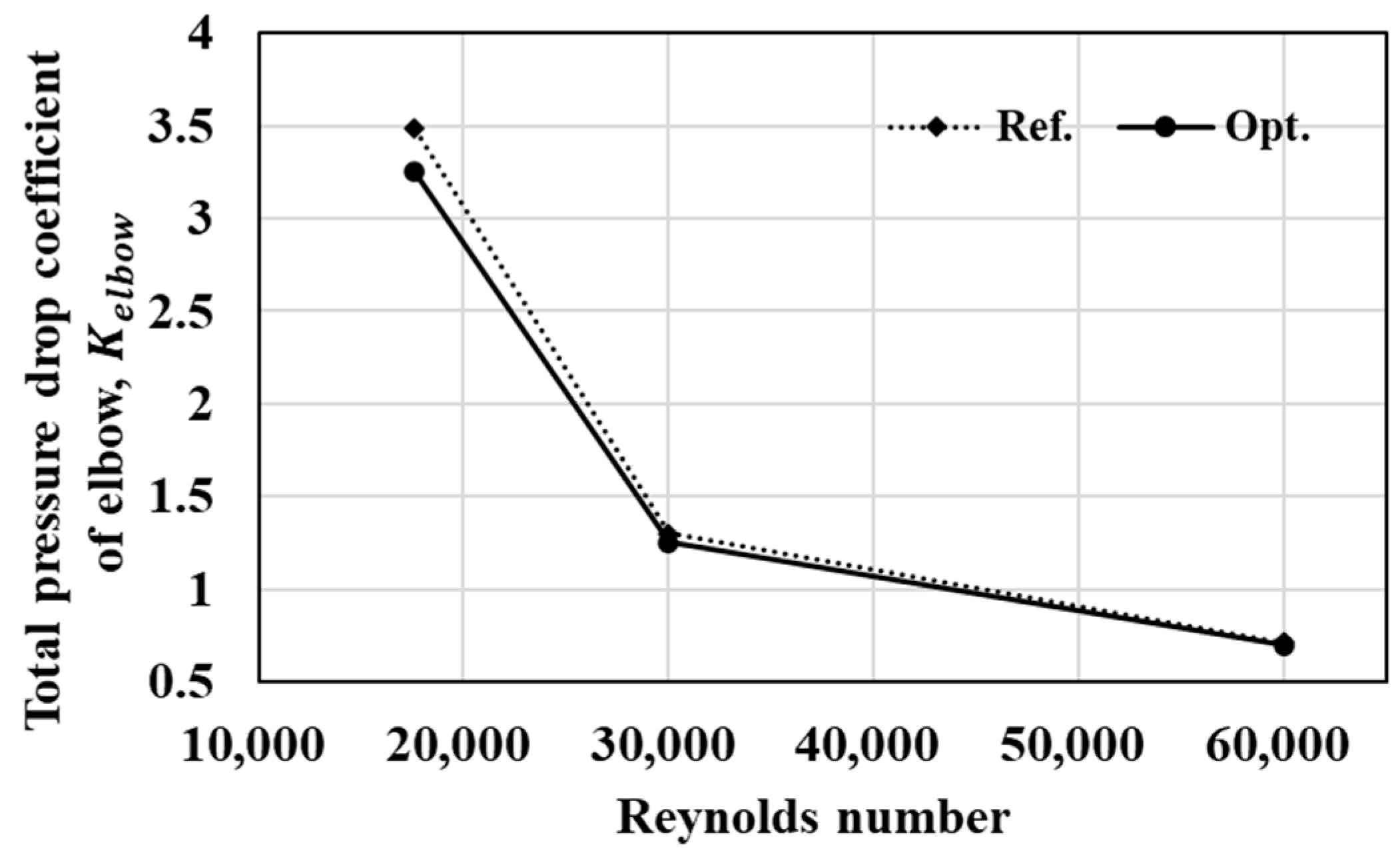
The superior response surface generated by the GA model led to more effective optimization results. As shown in
Table 6 and
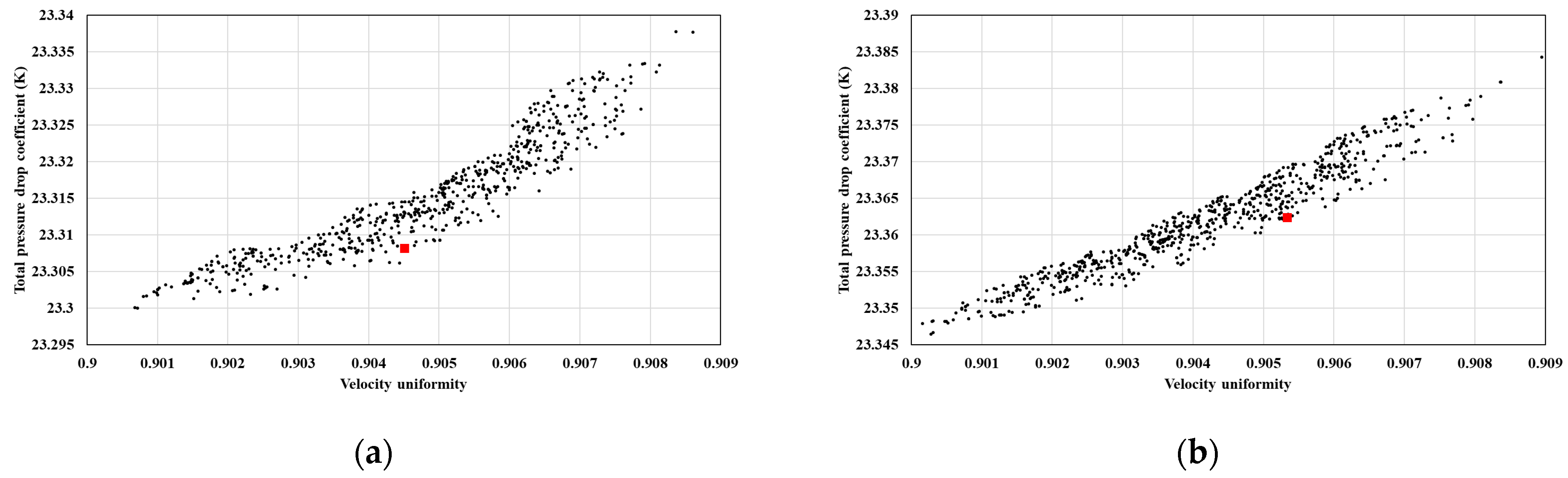
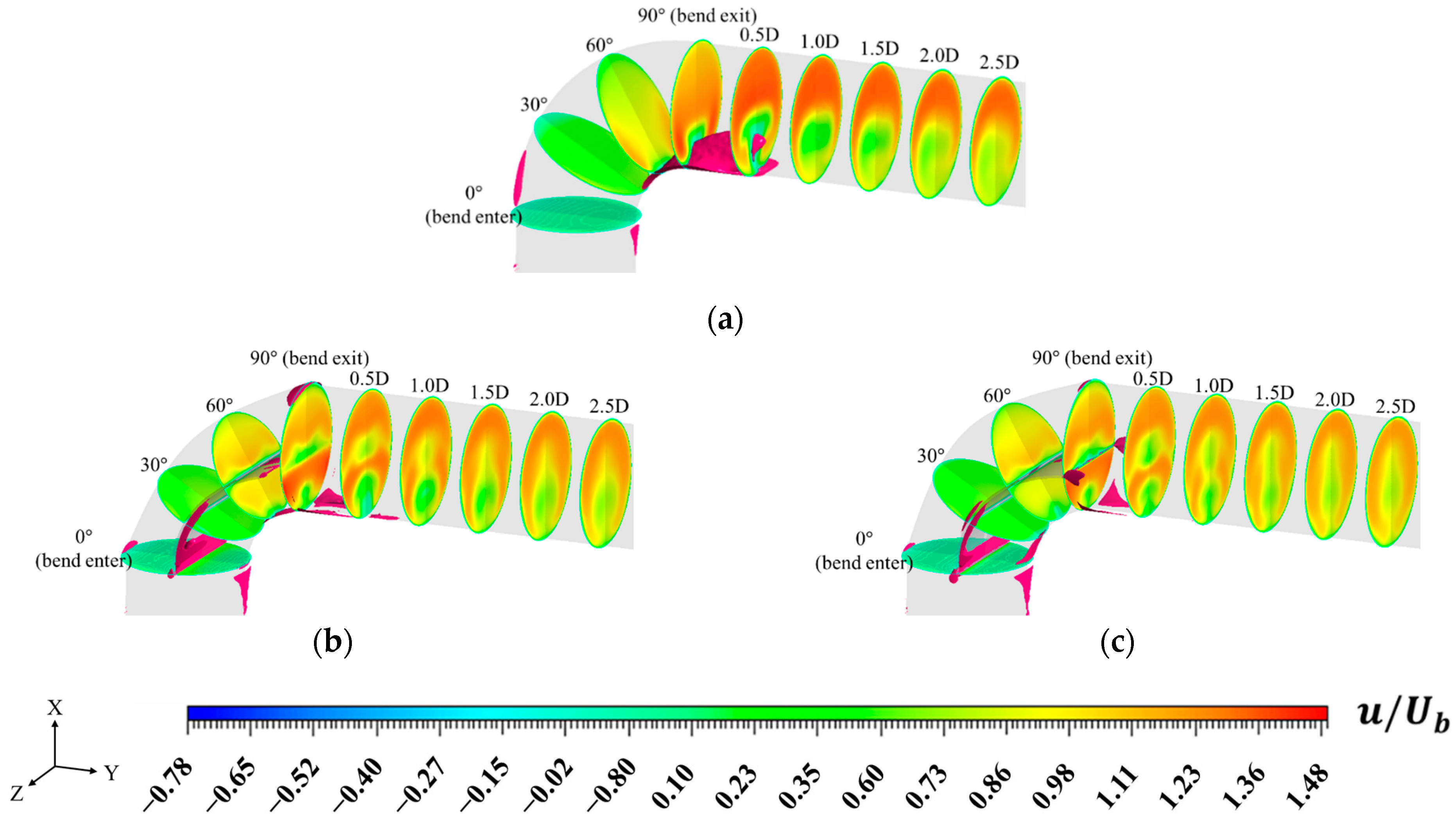
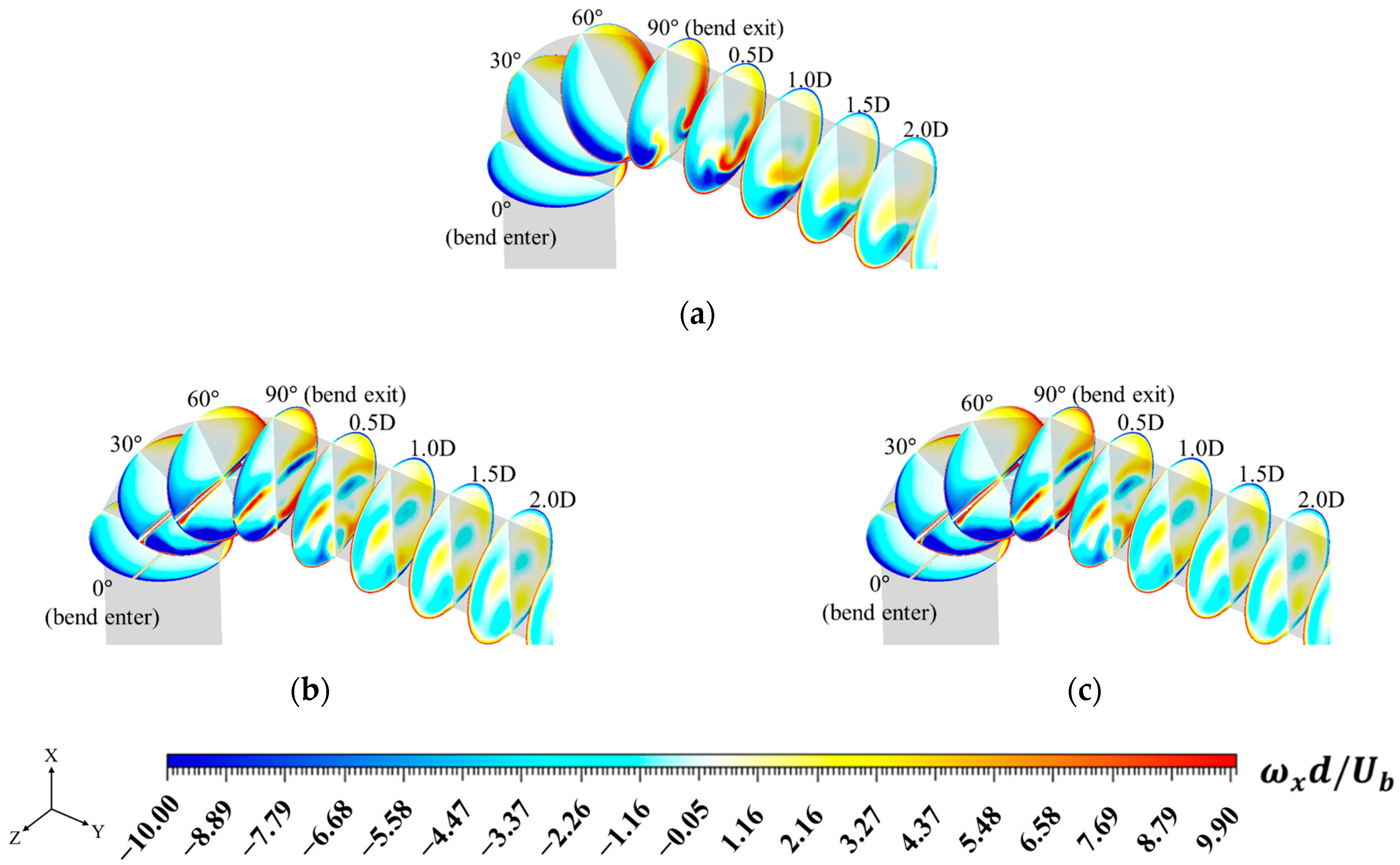
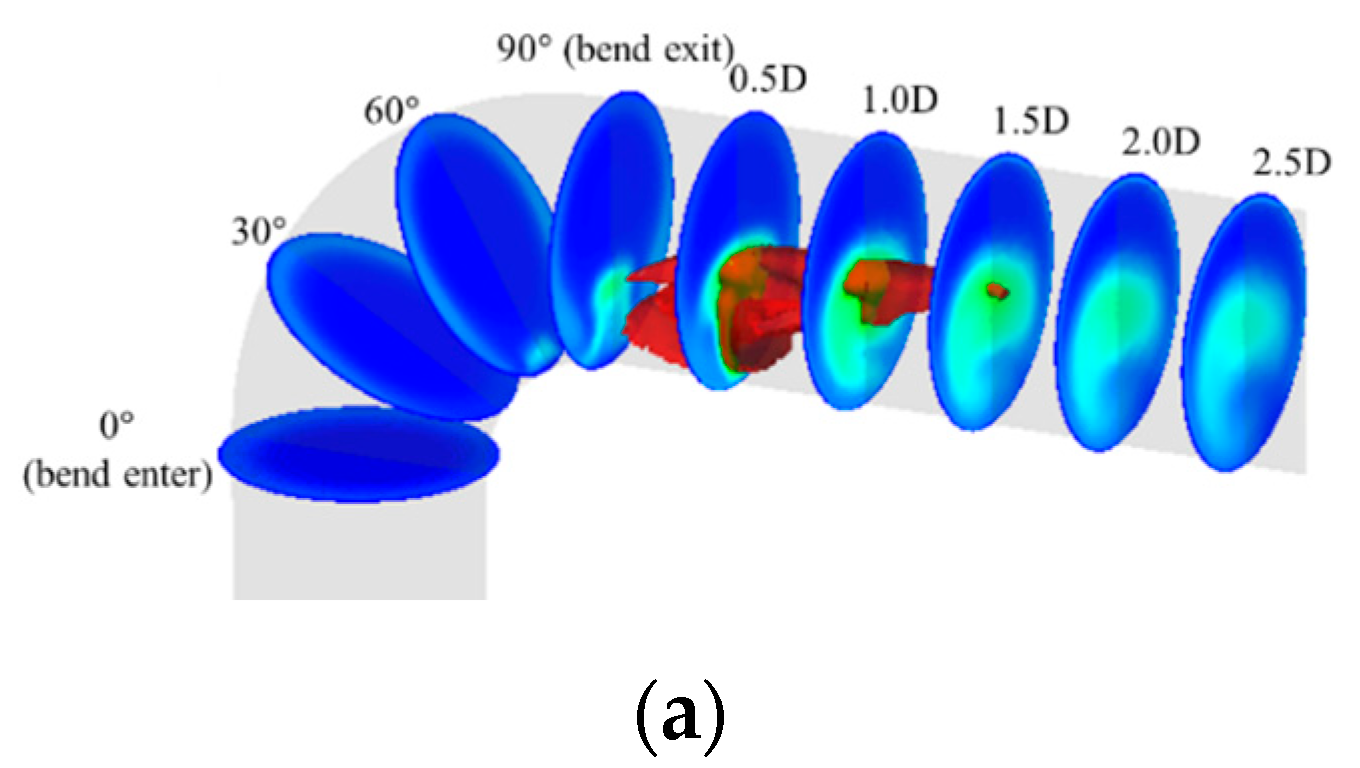
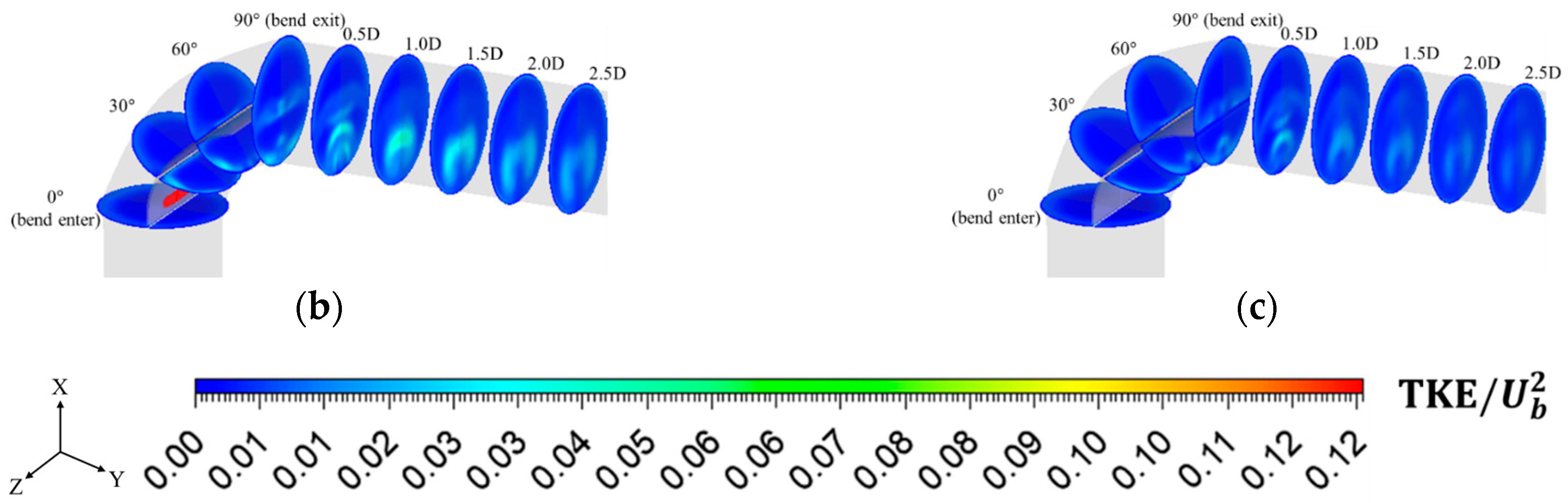
Figure 13, the optimized elbow using GA improved the velocity uniformity by 6.186% and reduced the total pressure drop coefficient by 0.470% compared to the reference elbow. This is a 1.997% improvement in velocity uniformity and a 0.241% reduction in total pressure drop coefficient compared to the NPR results. Axial vorticity was reduced by 22.64% compared to 36.74% of NPR, turbulent kinetic energy was reduced by 9.2% compared to 60.08% of NPR, and turbulent energy dissipation was reduced by 9.21% compared to 71.34% of NPR. These improvements confirm that GA was more effective in suppressing secondary flow within the hydrogen pipeline elbow, reducing flow separation, and improving overall flow uniformity. In the end, both NPR and GA provided valuable insights, but GA was more effective in accurately modeling the complex hydrogen flow in the optimized elbow, which led to a design that substantially improved the transport performance of the hydrogen pipeline.