1. Introduction
The global transition towards low-carbon economies underscores the critical role of new energy (NE) technologies in addressing climate change and ensuring energy security [
1]. As the world’s largest carbon emitter and a leading investor in renewable energy, China’s NE sector serves as a prime example of this transformative shift, with its renewable electricity generation now constituting a significant portion of the national total [
2]. However, the sector’s rapid expansion is accompanied by significant challenges. Technological fragmentation, characterized by isolated R&D efforts, impedes efficient knowledge diffusion, while pronounced regional disparities marginalize firms in inland and western regions within national innovation networks. These issues threaten the sector’s sustainable and balanced development [
3,
4]. Addressing these challenges necessitates a comprehensive analysis of the spatiotemporal evolution of Technological Correlation Networks (TCNs) and the dynamic interplay between their structure and policy changes.
Research on TCNs has progressively evolved from analyzing static, macro-level topology to examining dynamic, policy-driven evolution. Early studies primarily focused on the structural impacts of firm collaboration, establishing foundational network metrics [
5]. With the rise in the NE industry, scholarly interest has shifted towards understanding how policies shape these networks. For instance, Ren et al. [
6] introduced the concept of a policy-driven effect, illustrating how subsidies may correlate with optimized network structures. Similarly, Yin and Huang [
7] demonstrated how China’s NE vehicle policies expedite technology diffusion through the reconfiguration of regional clusters. Despite these valuable contributions, the literature remains fragmented. Many studies offer static snapshots or focus on single policy instruments, failing to capture the dynamic, sequential nature of policy-network co-evolution [
8]. There is a notable lack of phase-based segmentation that aligns policy cycles with the endogenous evolution of network structures [
9]. Furthermore, micro-level analyses often overlook firm-level topological metrics (e.g., weighted degree, clustering coefficient) as dynamic indicators of network transformation, and the processes through which policies are associated with the restructuring of innovation hierarchies through resource reallocation remain inadequately understood [
10].
Recent research continues to highlight these gaps. Studies quantifying network structures, such as those detecting intra-city clustering and inter-city bridging effects [
11], often stop at describing patterns without elucidating the underlying policy mechanisms [
12]. Conversely, analyses of policy responses [
13] may document fluctuations in network density due to subsidy changes but typically lack a granular, firm-level dynamic framework to explain how these changes occur. Key limitations persist, including an under-examination of spatial heterogeneous impact on network cohesion (e.g., regional gradients in clustering coefficients) and a reliance on generic metrics that neglect industry-specific dynamics, such as rapid technological iteration and policy interdependencies in the NE sector [
14,
15].
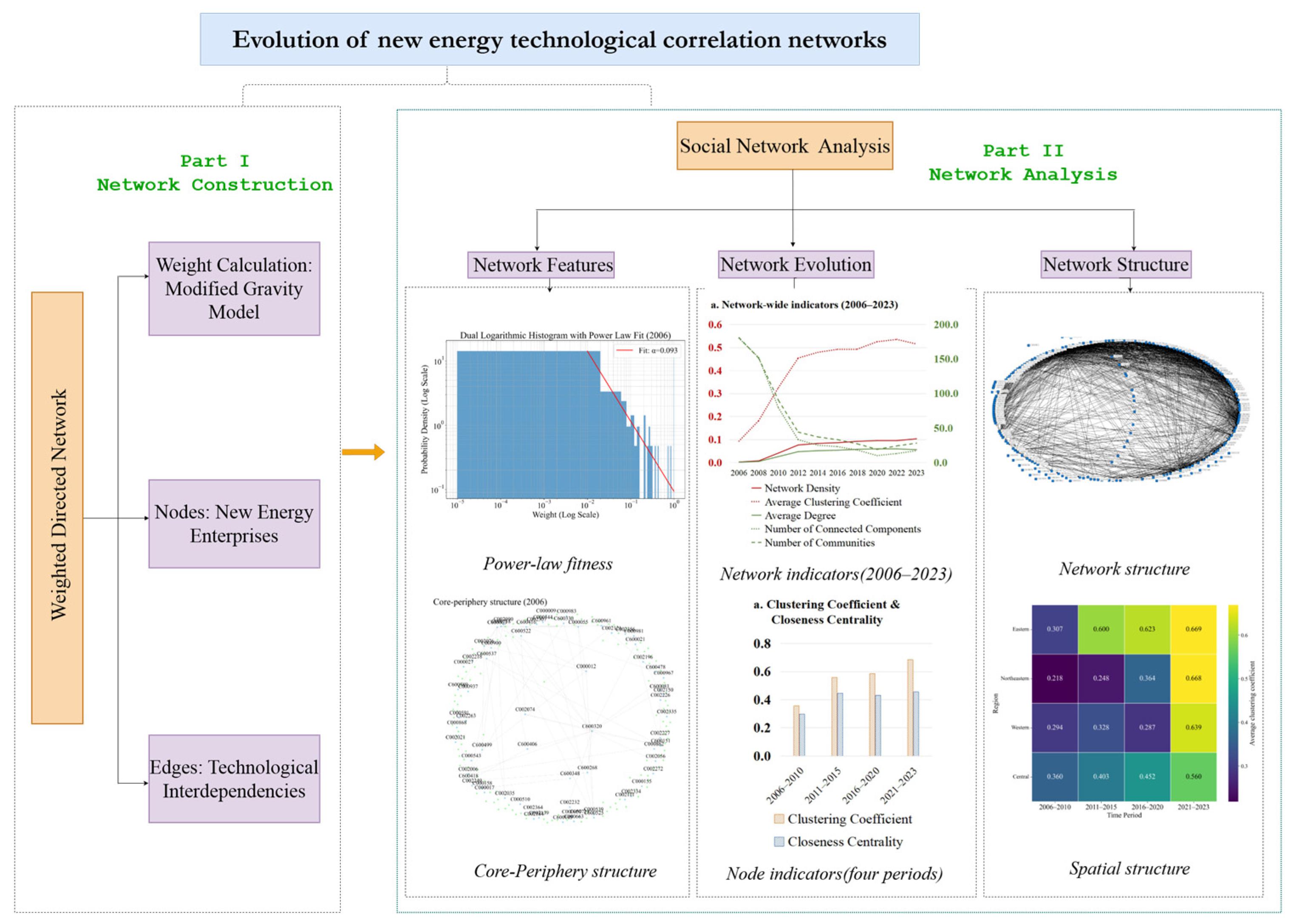
To address these gaps, this study moves beyond macro-level or static analyses by constructing firm-level TCNs and tracing their co-evolution with policy cycles over an 18-year period (2006–2023). The primary methodological contribution of this study lies in introducing and operationalizing an integrated ‘policy-driven effect’ framework. We conceptualize this effect not as a simple causal claim, but as a dynamic, co-evolutionary process. It is defined by the observed close correspondence whereby the sequencing of distinct policy instruments (e.g., initial subsidies versus subsequent phase-outs) is systematically associated with the phased structural transformation of the technological correlation networks, from fragmentation to hierarchical integration. Grounded in this framework, this study is designed to address the following research questions: (1) How does the structure of China’s NE TCNs evolve spatiotemporally across different phases of policy intervention? (2) What are the mechanistic roles of distinct policy instruments (e.g., initial subsidies vs. subsequent phase-outs) in the sequential transition of the network from fragmentation to integration? (3) How does spatial heterogeneity influence the formation of regional innovation clusters within the national network?
To operationalize this framework and answer the research questions, the study synthesizes discrete observations from the literature and leverages a four-phase temporal segmentation (2006–2010, 2011–2015, 2016–2020, 2021–2023) aligned with China’s Five-Year Plans. This design enables a granular examination of how policy cycles sequentially align with the structural transformation of TCNs. Furthermore, a modified gravity model that incorporates firm-level characteristics (e.g., R&D investment, operating revenue) and technological similarity (patent holdings) is employed. This approach allows us to move beyond descriptive claims and quantitatively demonstrate the associations (e.g., the enhancement of local clustering and inter-community connectivity) that coincide with policy interventions and network evolution. The model’s parameters are calibrated to reflect policy contexts and technology-specific characteristics, striking a balance between data requirements and analytical rigor. To capture spatial divergence, the 208 sample firms across 88 cities are aggregated into four major economic zones (Eastern, Northeastern, Western, Central), enabling a systematic assessment of regional clustering patterns and spatial heterogeneity. This comprehensive methodology—integrating temporal, topological, and spatial dimensions—provides a robust empirical foundation for testing the hypotheses generated by the ‘policy-driven effect’ framework, thereby offering a more granular and dynamic analysis than prior static or macro-level studies.
The remainder of this paper is organized as follows.
Section 2 describes the methodology, including the modified gravity model for network construction, the social network analysis (SNA) metrics, and data sources.
Section 3 presents the empirical results on the structural evolution of the networks, node-level dynamics, and spatial divergence.
Section 4 discusses the theoretical implications of the policy-driven effect and offers phase-adaptive policy recommendations.
Section 5 concludes by summarizing the key findings and suggesting avenues for future research.
3. Results
The structural dynamics of networks correlating to NE technologies reflect processes such as technology diffusion, innovative interactions amongst enterprises and spatial resource reconfiguration. This section delves into the evolutionary patterns and dynamic mechanisms of network structures with a specific focus on three core dimensions: (1) the long-term transformation of the overall topology from ‘fragmentation’ to ‘hierarchical integration’ in response to the evolving organizational modes of technological ecosystems; (2) the phased restructuring of node attributes (core–periphery status) that reveals the hierarchical mobility logic of firms’ technological innovation capabilities; and (3) spatial structural divergence patterns that elucidate the non-equilibrium in regional technological resource allocation and its driving factors. By dissecting the ‘evolutionary trajectory’ and ‘dynamic logic’ of network structures across multiple dimensions, this analysis provides crucial structural evidence for comprehending the systemic changes in NE technological ecosystems.
3.1. Global Topology Shifts: Fragmentation to Hierarchical Integration
This section focuses on the long-term evolution of the global topological structure of NE TCNs. By employing power-law distribution fitting, core–periphery structure analysis and time series analysis of multi-dimensional network indicators, this section uncovers the transformation trajectory of the network from ‘fragmented dispersion’ to ‘hierarchical integration’.
3.1.1. Power–Law Distribution and Evolution of Small-World Characteristics
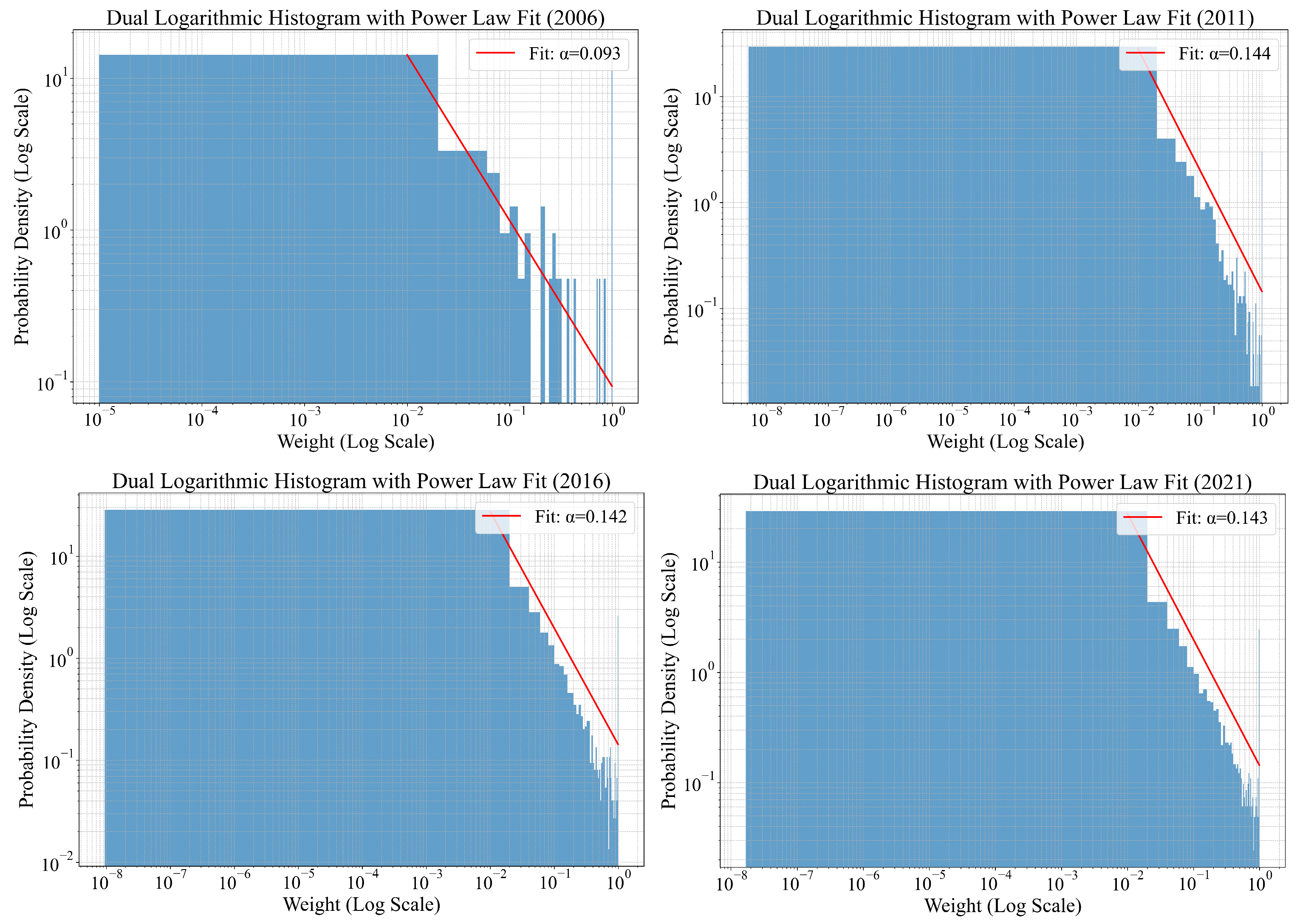
The power-law distribution of network weights is an important characteristic in analyzing network structures. The analysis shown in
Figure 2 indicates that in 2006, the probability density of network weights shows a typical right-skewed decline, with a power-law exponent of α = 0.093. The minor deviations in the lower-weight range suggest the presence of residual random weak connections. These can be seen as a result of the early-stage policy environment, which was exploratory in nature, similar to ‘resource seeding’. Broad, initial subsidies under the early NE plans offered basic incentives for connection formation but lacked precision, leading to a somewhat fragmented network with a relatively weak connection preference mechanism [
20]. Subsequently, the stability of power-law exponents in 2011 (α = 0.144) and 2016 (α = 0.142) implies the establishment of a policy-consolidated connection preference mechanism. The significant and targeted subsidies implemented during the aggregation phase (2011–2015) systematically channeled resources towards established firms with existing connections, actively strengthening the ‘rich-get-richer’ dynamic. This policy-driven resource allocation effectively filtered out noise and enhanced the network’s structural characteristics, indicating a transition from random exploration to a policy-influenced network with features of a small-world network [
21].
3.1.2. Hierarchical Solidification of the Core–Periphery Structure: A Policy-Driven Interpretation
The evolution of the core–periphery structure provides compelling evidence for the policy-driven effect, transitioning from a fragmented state to a hierarchically integrated system. The analysis moves beyond mere description of structural changes to elucidate the mechanistic role of policy instruments in sequentially driving this transformation.
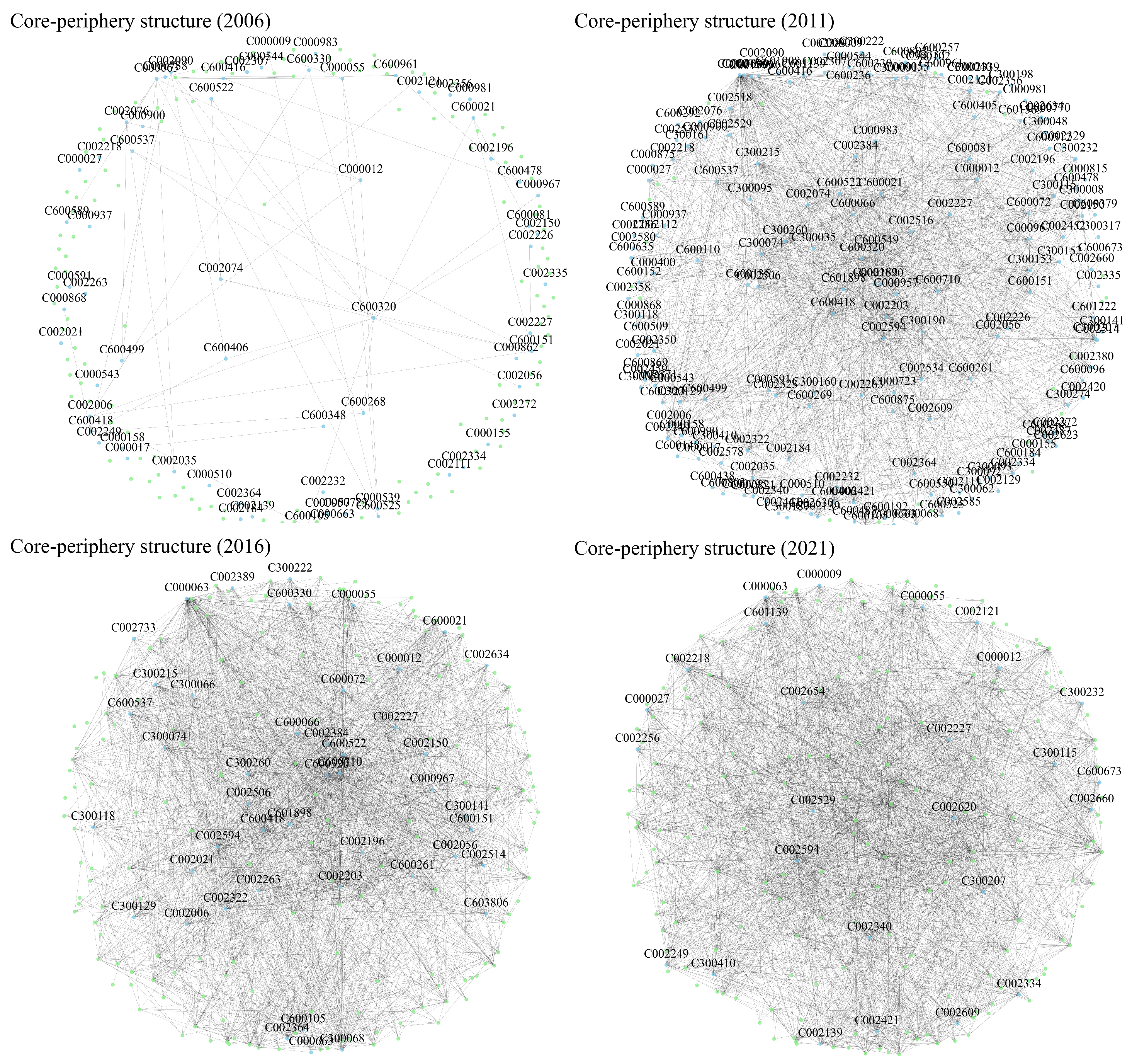
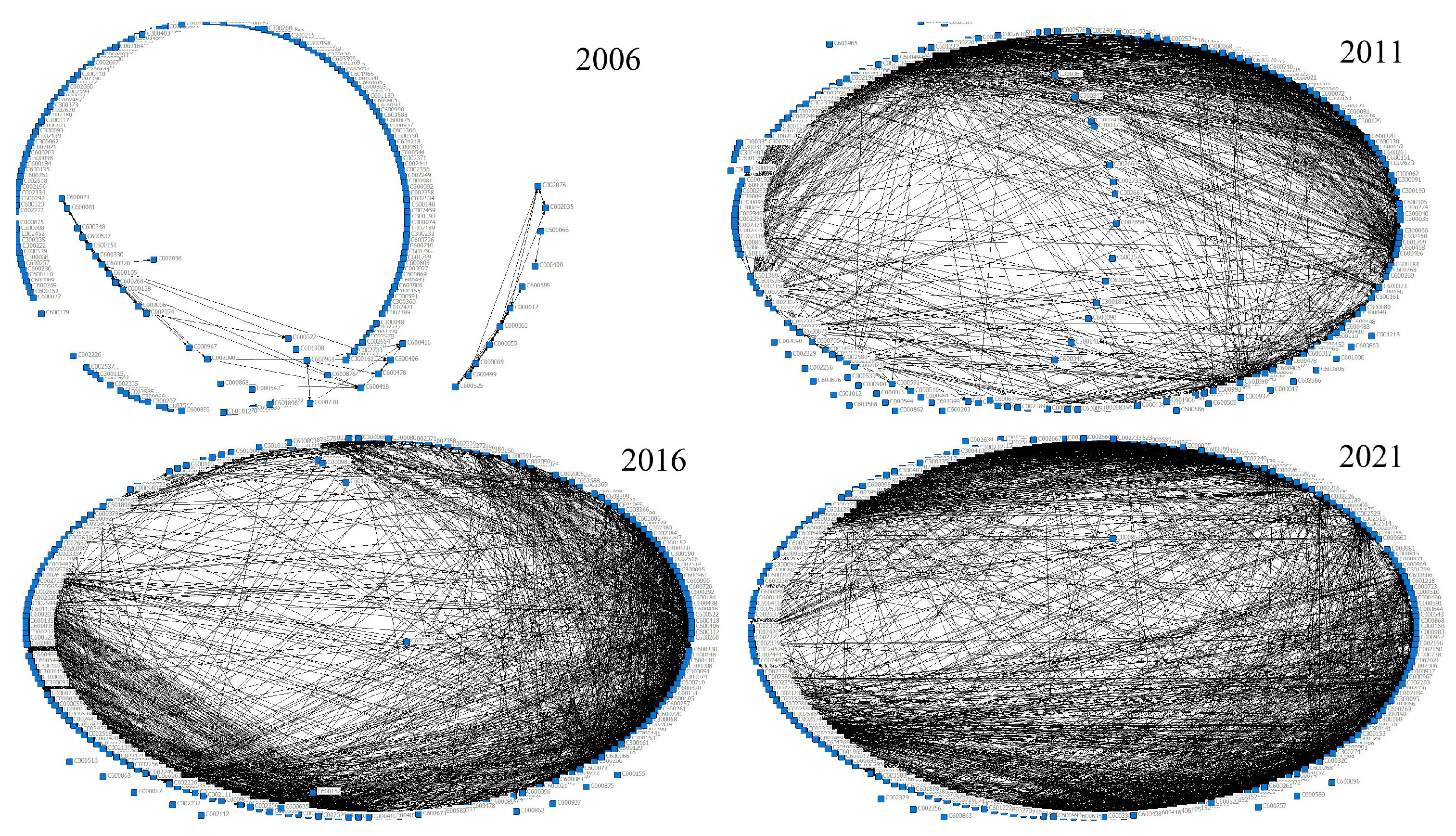
In the initial fragmentation phase (2006–2010), the network exhibited a loosely connected core, as depicted in
Figure 3. This nascent hierarchy can be interpreted as a consequence of the early-stage policy environment, which was characterized by broad, exploratory subsidies under the initial NE development plans during 2006–2010. These policies acted as a ‘resource seeding’ mechanism, providing initial incentives for connection formation. However, the lack of targeted industrial focus resulted in dispersed linkages and a high number of isolated components, explaining the initial fragmented topology observed in
Figure 3 (2006).
The subsequent aggregation phase (2011–2015) marked a critical shift, driven by more targeted policy interventions aligned with the 12th Five-Year Plan. The observed expansion of the core region and the significant surge in connection density (
Figure 3, 2011) can be directly attributed to these policies. The substantial and focused subsidies introduced during this period functioned as a ‘resource allocation and clustering’ mechanism. By lowering the cost and risk of collaboration, these incentives actively promoted connection formation and aggregation around emerging regional hubs (e.g., the growing linkage between C000009 and C000063). This policy-driven reduction in collaboration barriers directly explains the structural shift from fragmentation to regional clustering.
During the integration phase (2016–2020), a policy transition began with the initial phase-out of universal subsidies. The contraction of the core into a dense ‘technology command centre’ and the specialization of the periphery (
Figure 3, 2016) are outcomes of this shift. The move away from blanket subsidies triggered a ‘market screening’ mechanism. As policy support became more selective, resources were funneled towards the most technologically competitive and efficient firms (e.g., C000063 and C000055), forcing a market-led consolidation. This mechanism naturally selected for a strong core–periphery structure, characterized by core coordination and specialized edge execution.
Finally, in the synergy phase (2021–2023), the consolidation of the core–periphery structure (
Figure 3, 2021) reflects the mature phase of policy-driven effect. Under the “dual carbon goals” announced in 2020, policies evolved to orchestrate an ‘ecosystem integration’ mechanism. Instead of merely allocating resources, policies now aimed to foster synergistic interactions between the established core (technology diffusion hubs) and the specialized periphery (e.g., firms in emerging sectors like hydrogen storage). This is evidenced by the intensified, directional links from the periphery to the core, indicating a system optimized for integrated innovation.
In summary, the spatial progression visualized in
Figure 3—from dispersed rings to layered ellipses—is not a mere descriptive sequence but a visual testament to the policy-driven effect. The sequential action of policy mechanisms—from ‘resource seeding’ to ‘clustering’, then ‘market screening’, and finally ‘ecosystem integration’—provides a causal explanation for the hierarchical solidification of the network, effectively addressing the critique of purely descriptive analysis.
3.1.3. Quantitative Verification of Overall Topological Indicators
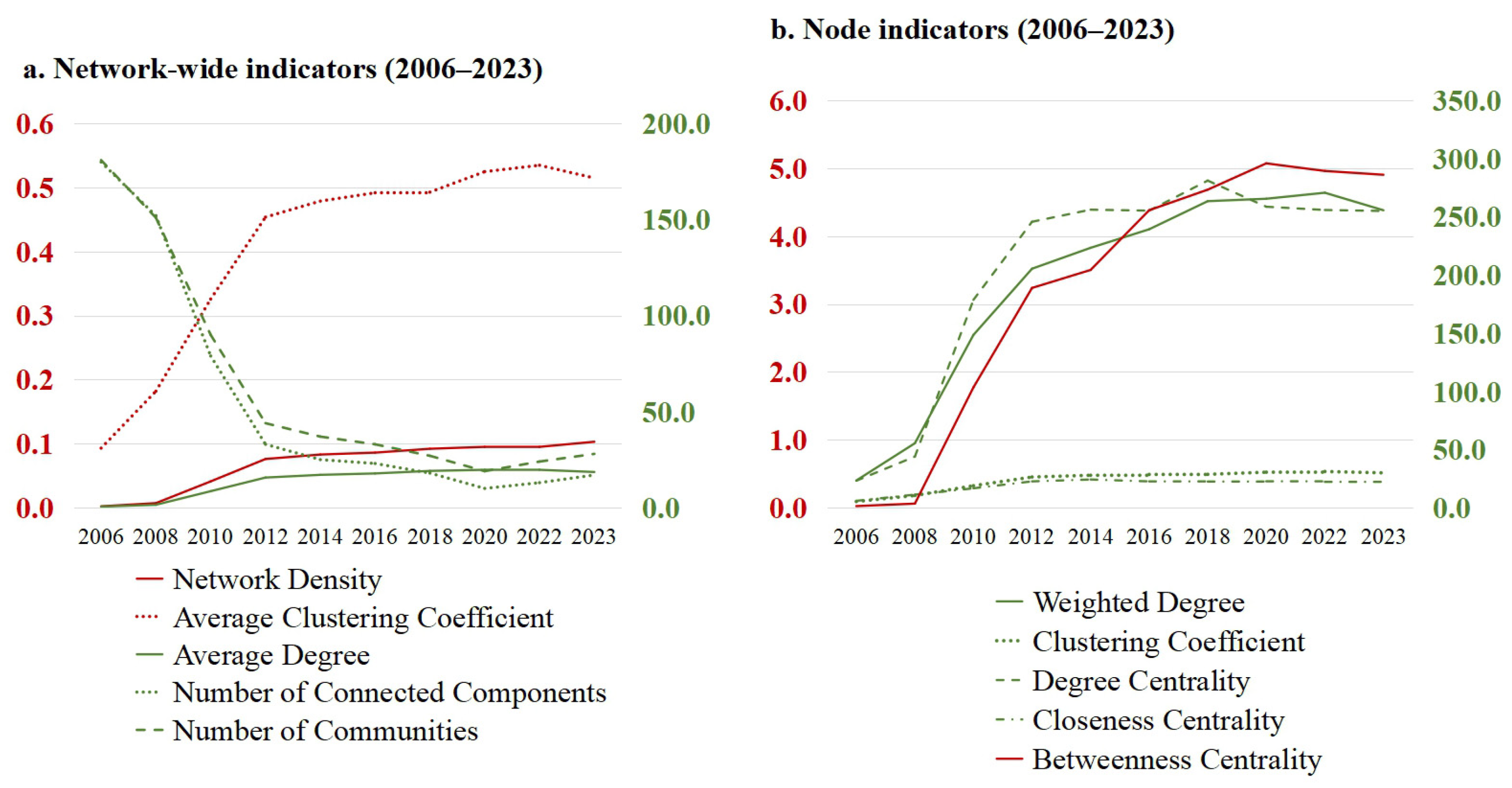
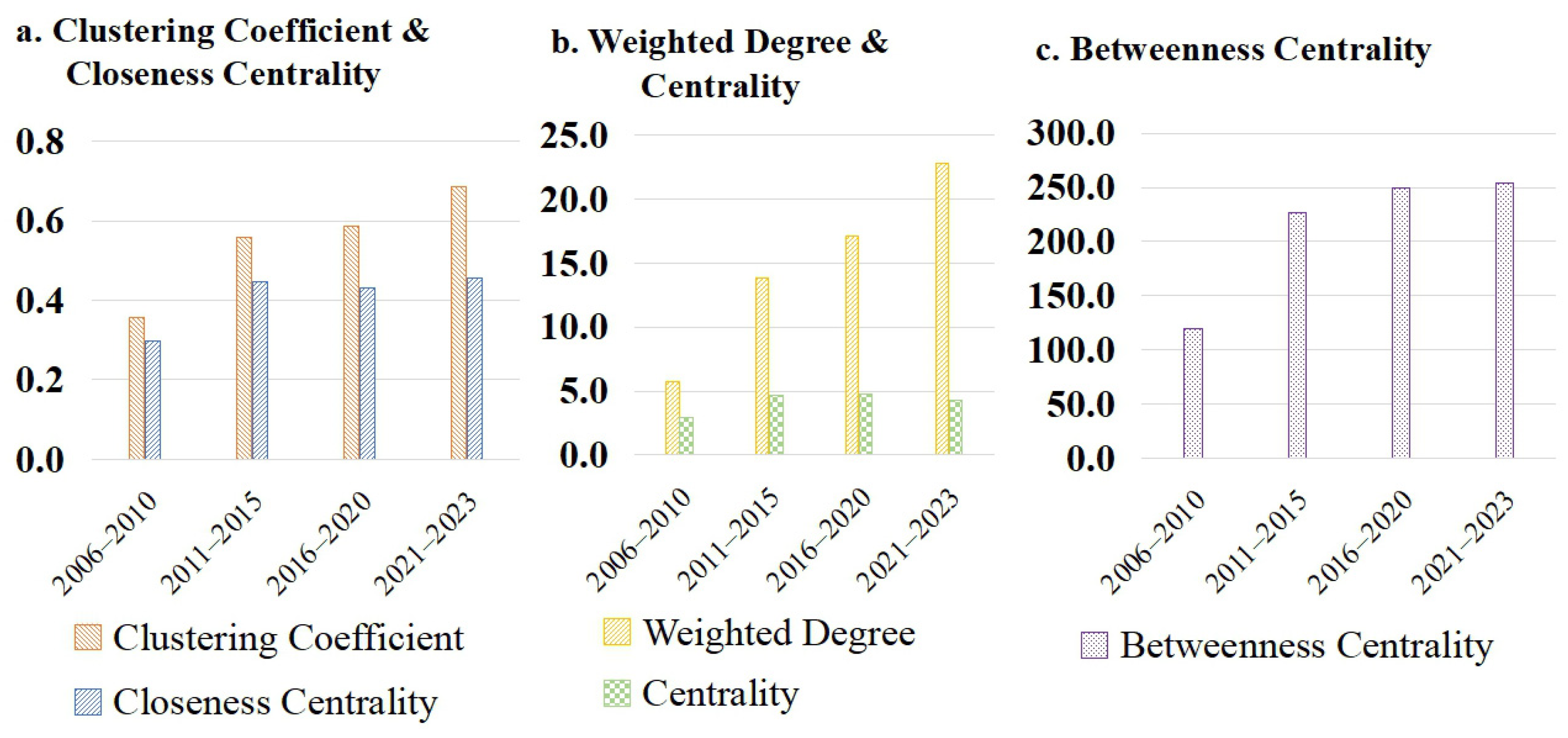
Figure 4 presents temporal changes in network and node indicators, which provide quantitative evidence for the policy-driven mechanisms underlying the topological evolution. The network-level metrics (
Figure 4a) show a surge in network density and average degree between 2011 and 2015, followed by stabilization. This pattern can be attributed to the ‘network anchoring and expansion’ mechanism of large-scale subsidies during the aggregation phase, which drastically lowered collaboration costs and incentivized widespread tie formation. The concurrent sharp decrease in the number of connected components signifies the policy-driven integration of previously isolated technological partnerships into a cohesive whole. The steady growth of the average clustering coefficient reflects the success of regional industrial policies in fostering ‘localized synergy mechanisms’ through the formation of dense, geographically bounded innovation clusters. At the node level (
Figure 4b), the significant increases in weighted degree and betweenness centrality highlight the emergence of central hubs, a direct result of the ‘collaboration optimization’ mechanism where policies channeled resources to the most competitive nodes. The consistent upward trends in clustering and closeness centrality underscore an overall optimization of local and global information efficiency, driven by the maturation of the policy-shaped ecosystem.
3.2. Node Attribute Dynamics: Core–Periphery Restructuring
This section systematically analyses the evolving node attributes within NE TCNs by integrating data from
Table 2 (structural indicators at four stages),
Figure 5 (temporal metric changes) and
Figure 6 (spatial network visualization). The combined quantitative and spatial evidence elucidates the concurrent development of increased core dominance and specialized peripheral differentiation, thereby illustrating network progression from a state of ‘fragmented experimentation’ to one of ‘hierarchical integration’.
3.2.1. Functional Differentiation Quantified by Indicators
A comprehensive examination of
Table 2, which presents network-wide metrics, and
Figure 5, which depicts node-specific indicators, uncovers a consistent scale, intensified connections and localized agglomeration changes throughout the four-phase evolution spanning the years 2006 to 2023. On a macroscopic scale (
Table 2), the number of nodes remains constant at 208, indicating a lack of significant expansion in technology-related entities. By contrast, the number of edges steadily increases from 1872 to 6855, showing a rapid growth in the initial stages followed by a more moderate expansion. Concurrently, network density (0.043 → 0.150 → 0.112) and average degree (9.000 → 31.010 → 23.183) follow a trajectory of growth, peak and convergence, reflecting an increase in connection complexity before reaching stability. The average clustering coefficient increases from 0.357 to 0.673 before slightly decreasing to 0.590, suggesting periodic adjustments amidst strengthening local collaborative relationships. At a micro level (
Figure 5), node-specific metrics reveal a core–periphery functional divide, where the weighted degree (
Figure 5b) increases from ≈5.76 to ≈22.79 (a 295% increase), which emphasizes the role of central nodes as hubs for integrating resources. Simultaneous increases in the clustering coefficient and betweenness centrality (
Figure 5a,c) point to improved specialization-driven synergy in the peripheral nodes. Meanwhile, minor fluctuations in degree centrality and closeness centrality (
Figure 5b,c) indicate that the fundamental connections remain stable. This functional divide signifies an enhancement in collaborative depth rather than the breadth of connections [
22]. The combined macro-integration and micro-deepening mechanisms signify the network transition from a loosely connected collaborative entity to a core-driven hierarchical system.
3.2.2. Hierarchical Integration Visualized Spatially
The three-dimensional visualization in
Figure 6 illustrates the evolution of network structures across four time points—2006, 2011, 2016 and 2021—depicting a transition from ‘fragmented rings’ to ‘layered ellipses’. In 2006, a sparse ring-like pattern characterized by dispersed nodes and isolated peripheries denotes an ‘exploratory fragmentation’ phase, with core nodes such as C000009 sparsely connected through linear ties (e.g., to C000063). In 2011, the increased density has resulted in the formation of regional sub-clusters, with triangular connections emerging around core nodes (e.g., the NE battery triangle centered on C000063) and peripheries integrating through single-point core binding, thereby indicating an initial core–periphery stratification. In 2016, the network transforms into a compact ellipse, with the core nodes converging towards the geometric center (e.g., C000063) to create hub-spoke architectures, whilst the peripheries specializing (e.g., in energy-storage materials) through intensified knowledge exchange. In 2021, the elliptical shape remains, but the peripheral nodes experience a resurgence, with emerging technology sectors such as hydrogen storage giving rise to local clusters—a testament to the network’s structural resilience in adapting to technological advancements. This spatial progression, which is supported by quantitative measures, serves as conclusive evidence for the systemic hierarchical integration within the network.
3.3. Spatial Divergence Patterns: Quantitative Evidence
The spatial differentiation of New Energy (NE) Technological Correlation Networks (TCNs) provides a geographical lens through which to examine the intensity of technological cooperation among urban centers. This study selects the clustering coefficient as the principal metric because it effectively captures the likelihood of forming tightly knit, triangular collaborations within a specific locality—a hallmark of robust local innovation systems. High clustering coefficients signify strong reciprocal technological linkages between a city and its neighbors, fostering the development of sustainable local innovation clusters. Conversely, low coefficients indicate fragmented collaboration and limited knowledge spillovers. The sensitivity of the clustering coefficient to micro-level collaboration density makes it a powerful instrument for revealing variations in urban technological environments.
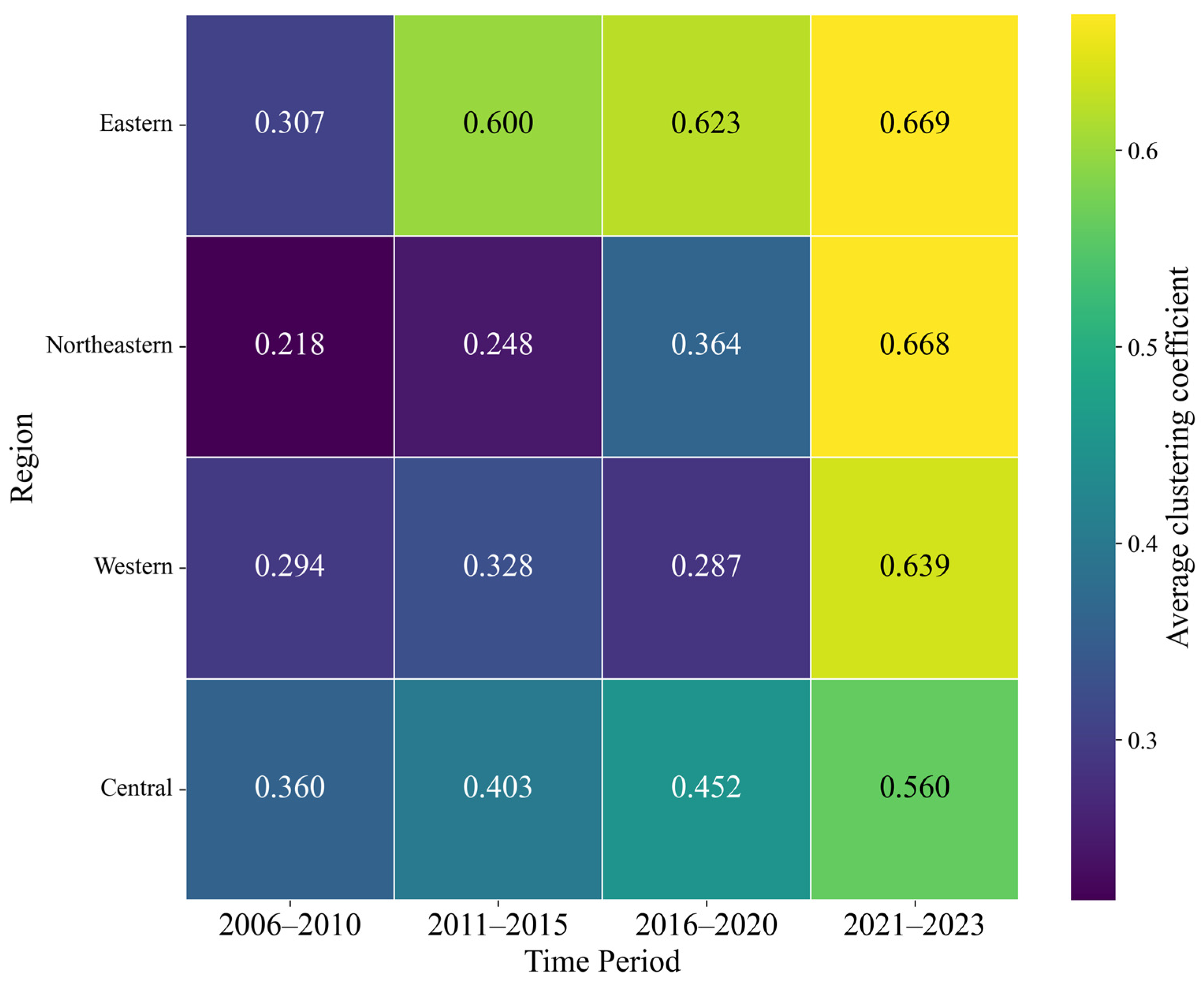
This section analyses the spatial divergence characteristics and evolutionary trends of China’s NE TCNs by aggregating the 88 cities—derived from the geographical locations of the 208 sample firms—into four macro-regions aligned with China’s official economic zoning: the Eastern, Northeastern, Western, and Central regions (
Table 3). This framework allows a systematic comparison of how network cohesion evolved across broader geographical and developmental contexts over four periods (2006–2010, 2011–2015, 2016–2020, and 2021–2023).
Figure 7 presents a heatmap of the average clustering coefficients for these four regions, revealing both commonalities and striking cross-period divergences. Across the timeline, a clear shared trend emerges: except for the Western region, which exhibited a mild fluctuation (0.294 → 0.328 → 0.287 → 0.639), the other three regions—Eastern, Northeastern, and Central—all demonstrated a consistent growth trajectory in local collaboration intensity. This suggests that, beyond regional idiosyncrasies, national-level policy impetus created a generally conducive environment for strengthening intra-regional technological synergies.
Examining the cross-sectional differences among regions within each period unveils a dynamic reconfiguration of spatial hierarchy. In the initial phase (2006–2010), the Northeastern region recorded the lowest clustering coefficient (0.218), reflecting relatively fragmented local networks, whereas the Central region started with the highest value (0.360), indicating initially strong internal cohesion. The Eastern region, while not the highest at the outset (0.307), laid the foundation for superior performance in subsequent phases. By the final period (2021–2023), the spatial ranking underwent a notable shift: the Northeastern region surged to second place (0.668), a leap that can be directly attributed to the revitalization policies implemented under the “Northeast Revitalization Strategy”—initiated in the early 2000s and receiving renewed emphasis post-2015. This national initiative, targeting the traditional heavy-industrial base of the region (home to 9 of the 208 sample firms across five cities including Changchun, Dalian, Fuxin, Harbin, and Yichun, see
Table 3), facilitated industrial upgrading, resource reallocation, and enhanced inter-firm technological linkages, thereby accelerating the formation of cohesive local networks. In contrast, the Central region, despite starting ahead, registered the lowest coefficient (0.560) by the end, possibly reflecting a relative slowdown in its policy-driven technological integration compared to others. Throughout all periods, the Eastern region maintained the best overall performance, reaching 0.669 in 2021–2023, underpinned by its mature industrial ecosystem and concentration of high-capability firms (136 of 208 sample firms, see
Table 3).
The trajectory of the Western region is particularly illustrative of the phased impact of broad national strategies. Its coefficient showed initial stability (0.294 to 0.328) followed by a dip to 0.287 in 2016–2020, before a remarkable surge to 0.639 in the final phase. This pattern can be directly linked to the Western Development Strategy, which was launched in 2000 and has increasingly focused on green energy since approximately 2016, driving the observed regional transformation. The initial phase focused on large-scale infrastructure investment, which had a limited immediate effect on deep technological collaboration. The subsequent dip may reflect the challenges of transitioning from basic development to fostering sophisticated innovation networks. However, the strategic shift in later stages of the policy towards promoting indigenous innovation and green industry development, specifically targeting the new energy sector, ultimately catalyzed a breakthrough in regional synergy. This late-stage explosive growth demonstrates how long-term, adaptive regional policies can fundamentally reshape local technological ecosystems after a period of capacity building.
In summary, these patterns highlight the policy-driven nature of spatial evolution in NE TCNs. The Eastern region’s steady ascent reflects continuous investment in innovation capacity. The Northeastern region’s leap exemplifies how the “Northeast Revitalization Strategy” can rapidly reconfigure historically fragmented local networks into highly synergistic structures. The Central region’s relative decline underscores how the shifting focus of national policies over time can alter regional trajectories. Meanwhile, the Western region’s transformation, from laggard to a region with a clustering coefficient rivaling the East by 2023, serves as a powerful testament to the profound, albeit delayed, impact of concerted regional development policies like the “Western Development Strategy” in enabling technological catch-up. This interplay of national strategic orientation and localized implementation has thus produced a multi-speed convergence pattern, reshaping China’s NE innovation geography from an initial core–periphery structure toward a more balanced, yet still hierarchically organized, landscape by 2023.
4. Discussion
This section addresses two main goals. It first delineates the theoretical contributions of the four-phase evolution and policy-driven effect framework. It then advances tailored policy recommendations to steer the NE sector from scale-driven growth toward an innovation-quality paradigm.
4.1. Core Contributions and Scholarly Dialogue
This study contributes to the existing literature by systematically delineating the spatiotemporal evolution of China’s NE TCNs and proposing a novel ‘policy-driven co-evolution’ framework to interpret the sequential alignment between policy and network changes. Rather than providing definitive causal tests, which are recommended by the reviewer as a valuable next step, this paper aims to establish a robust descriptive foundation and generate testable hypotheses about the policy-network interplay. Our primary contributions are threefold: advancing a phase-based evolutionary framework, providing a granular analysis of policy-network dynamics, and introducing a methodological approach for capturing network transformation.
This study reframes the conventional understanding of technology network life cycles by introducing a four-phase ‘fragmentation-clustering-integration-synergy’ framework, which suggests that the progression from exploration to maturity is driven by sequential policy interventions. For instance, the critical aggregation phase (2011–2015), for instance, is interpreted as a period where a ‘subsidy-induced clustering’ mechanism was particularly active. The observed surge in local collaboration density (a 43% rise in the average clustering coefficient) and the formation of regional clusters (
Figure 6) are consistent with the effects of targeted fiscal incentives under the 12th Five-Year Plan. We propose that these policies decreased collaboration costs, thereby encouraging connection formation around regional hubs. This work moves beyond static description by offering an interpretive framework that explains how policy instruments may catalyze the structural transition from fragmentation to integration, addressing a key gap in transitional theory. In contrast to assertions [
23] that ICT networks reach a plateau, the synergy phase in NE TCNs shows continued evolution under the ‘ecosystem integration’ mechanism of later-stage policies (e.g., the ‘dual carbon goals’ announced in 2020), highlighting the distinct, policy-responsive nature of strategic emerging industry networks.
Furthermore, our analysis offers a nuanced perspective on the interplay between policies and network structures. While existing literature (e.g., [
24]) often examines static policy effects, the temporal analysis of network metrics in this study reveals a dynamic transition (
Figure 5). The notable increase in network edges during 2011–2015 coincides with large-scale subsidies, suggesting a role for policy in anchoring scale expansion through resource allocation. Conversely, the stabilization and qualitative changes in network metrics following the subsidy phase-outs after 2018 are indicative of a shift towards market-led consolidation. This observed pattern challenges a purely market-driven narrative and points to a distinctive trajectory shaped by ‘policy–technology phase differences’ [
25], where policy acts as both an accelerator and a calibrator.
The credibility of the aforementioned policy-driven mechanisms and the network dynamics they produce is further bolstered by validating the constructed TCNs against real-world collaboration data. To address the validity of the constructed TCNs, an indirect validation was performed. The macro-level structure of our network shows strong alignment with findings from studies based on formal collaboration data, such as patent co-applications [
26]. For instance, the core firms identified in our network (e.g., C000063) correspond to recognized innovation leaders in China’s NE sector. Furthermore, a case examination of a high-weight tie (e.g., between C000009 and C000063) revealed documented R&D collaborations, supporting the association strength calculated by our model. This suggests that while our TCN represents potential technological correlations, it effectively captures meaningful affinities and potential knowledge spillover channels that may precede or coexist with formal collaborations, thus complementing direct collaboration data.
Finally, the dynamic analysis framework developed in this study—integrating temporal metrics and spatial visualization—successfully maps the evolutionary patterns and transition points of the NE TCNs, such as the inflection in network density growth observed around 2015. In contrast to macro-location analysis [
27], It also effectively quantifies the persistent spatial heterogeneity, exemplified by the divergent clustering coefficients between coastal and inland cities. This research provides the essential descriptive and theoretical groundwork by establishing a clear spatiotemporal evolution trajectory and generating robust, testable hypotheses. The natural next step, building directly upon this foundational mapping, is to rigorously test the causal mechanisms underlying these patterns, for instance, by examining the impact of specific policy shocks through advanced econometric methods in future research.
4.2. Policy Implications
Drawing on the theoretical insights from four-phase evolution and the policy-driven effect, this study proposes a ‘phase-adaptive, dynamically calibrated’ policy framework for steering the high-quality advancement of China’s NE TCNs.
Drawing on the policy-driven effects identified, we propose a phase-adaptive policy framework. During the expansion phase (2006–2010), the primary goal should be to activate the ‘precise node anchoring’ mechanism. Instead of dispersing resources broadly, initial subsidies must be strategically targeted towards high-potential technical incubators (e.g., university-enterprise labs) and emerging innovators. This approach prevents the ‘pseudo-innovation’ associated with fragmented resource allocation by ensuring that early-stage support effectively seeds the formation of future core nodes, rather than diluting impact across a weak network [
28].
During the aggregation phase (2011–2015), policy should focus on optimizing the ‘cluster cultivation’ mechanism. This involves supplementing broad subsidies with technical standards and platform support to structure the rapidly forming connections revealed in our analysis (e.g., the surge in density in
Figure 4a). Policies should guide the formation of meaningful clusters rather than allowing connections to form chaotically.
For the integration phase (2016–2020), the policy focus must shift to managing the ‘market screening’ mechanism triggered by subsidy phase-outs. The goal is to ensure this natural consolidation enhances quality. Policy should provide safety nets (e.g., intellectual property sharing platforms) for valuable peripheral firms specialized in niche technologies to prevent excessive fragmentation and foster complementary strengths within the core–periphery structure.
Finally, in the synergy phase (2021–2023), policy should act as a system orchestrator, enabling the ‘cross-domain integration’ mechanism. This involves using grand challenges like the ‘dual carbon goals’ to create mission-oriented programs that incentivize collaboration between the mature core and specialized periphery, pushing the network towards higher-order, systemic innovation.
5. Conclusions
This study employs a modified gravity model and SNA to systematically investigate the spatiotemporal evolution and hierarchical integration mechanisms of China’s NE TCNs from 2006 to 2023. The findings delineate a four-phase progression commencing with fragmented exploration (2006–2010) characterized by dispersed connections, transitioning to regional clustering (2011–2015) facilitated by localized integration, advancing to the functional differentiation of core–periphery structures (2016–2020) that fosters deep synergy and culminating in multipolar co-evolution (2021–2023) that is characterized by systemic interdependence. This evolution shows a strong correlation with the policy-driven effect, with the initial subsidies expediting scale expansion by directing resources, whilst the cessation of subsidies after 2018 is associated with a shift towards quality optimization. Geographically, coastal cities capitalize on policy and industrial advantages to establish high-cohesion innovation clusters, whilst inland regions pursue catch-up growth through technology diffusion and regional equilibrium strategies as demonstrated by the notable advancements in core cities (e.g., Chengdu and Xi’an) and the steady progress in emerging cities (e.g., Jingmen and Suzhou) under several initiatives (e.g., Yangtze River Economic Belt and Rise of Central China). This study introduces a four-phase evolution termed ‘fragmentation- clustering- integration- synergy’ that transcends conventional technology life cycle frameworks and elucidates a policy-driven transition to elucidate how policy–market dynamics influence network structure. This transition advocates for stage-specific policies: nurturing targeted nodes during the expansion phase, regulating regional clusters during the aggregation phase, fostering core–periphery synergy during the integration phase and promoting cross-domain ecosystems during the synergy phase.
Three main limitations of this work should be acknowledged. First, the reliance on patent data, while systematic, may not fully capture informal knowledge exchanges, such as tacit experience sharing and non-codified collaborations, which are potentially important channels for technology diffusion, especially in the early stages of an industry. Second, the study’s temporal scope (2006–2023) captures long-term trends but may not account for short-term disruptions or immediate responses to sudden policy shifts, such as the detailed market reactions following the 2018 subsidy phase-out; future research could employ event-study methodologies to explore these transient effects. Third, the sample is confined to listed companies due to data availability constraints. While this offers a consistent and comparable firm-level dataset, it necessarily excludes a vast segment of small and medium-sized enterprises (SMEs) and private firms that are crucial drivers of innovation, particularly in emerging sectors. This sampling focus may lead to an overestimation of network cohesion and centralization, as listed firms are typically larger, more established entities with greater resources for formal collaboration. Consequently, the innovation dynamics of more agile, niche SMEs are not captured, potentially overlooking important grassroots innovation pathways and alternative network formation mechanisms. Future studies should seek to incorporate data on SMEs, possibly from alternative sources such as startup databases or regional innovation surveys, to validate and extend the findings presented here, thereby providing a more comprehensive picture of the entire innovation ecosystem.